As filmmaker Sean Stone suggests Ghislaine Maxwell could expose unpleasant truths for Hollywood, Virginia Giuffre scores another blow against the mucky madam
Asked during an interview last week: “What is up with Hollywood? Can it come back? Can it survive COVID-19?” by Russia Today America’sRick Sanchez, Oliver Stone’s son and fellow filmmaker, Sean, responded: “Can it survive Ghislaine Maxwell is the question, actually.”
He continued: “I still think there is a lot more that is going to come out here with this Ghislaine trial because remember who, all, has been on Jeffrey Epstein island. And there’s been more in terms of the private jets and there’s been more than Chris Tucker and Kevin Spacey and the Clintons. I think you are going to see other Hollywood icons involved… More than we imagine.”
“I don’t think it’s even about her spilling the beans. I think there is case and evidence that is being drawn up that is in conjunction with the investigation into her. A lot more will be exposed about Epstein and Epstein island. I am 100% positive on that. And the question is who will be involved, who will be implicated, who will talk.”
“Look, we haven’t seen the end of it. ‘Me Too’ was the beginning of this, we haven’t seen the end of it. So, COVID is a wonderful opportunity for everything to shut down and restructure, but I think there is a lot of concern in Hollywood across the board from the exposure on the Epstein thing.”
Elsewhere yesterday, Virginia Giuffre told the 2nd U.S. Circuit Court of Appeals in Manhattan that “Ghislaine Maxwell’s desire for privacy failed to justify the continued sealing of a deposition that the British socialite has fought to keep out of the public eye” according to Byline.
Giuffre’s lawyers, Sigrid McCawley and David Boies, remarked: “Maxwell’s vague argument about privacy interests cannot justify total closure of the deposition materials [and overcome] the public’s presumption of access.”
Going further, of moaning Maxwell’s attempts to suggest she was getting “unfair pretrial publicity” and her belief that she will be place before “a tainted jury pool, especially in large metropolitan areas such as New York,” the lawyers added:
“The size and heterogeneity of such communities make it unlikely that even the most sensational case will become ‘a cause célèbre’ where the whole community becomes interested in all the morbid details.”
Still very much in their early stages, the unravelling of Miss Maxwell’s grubby activities has barely begun and now, as Sean Stone has rightly observed, there will be a lot of well-known people who’ll be resorting to the Donald Trump school of “good wishes.” It’ll be fascinating to watch them fall like dominoes.
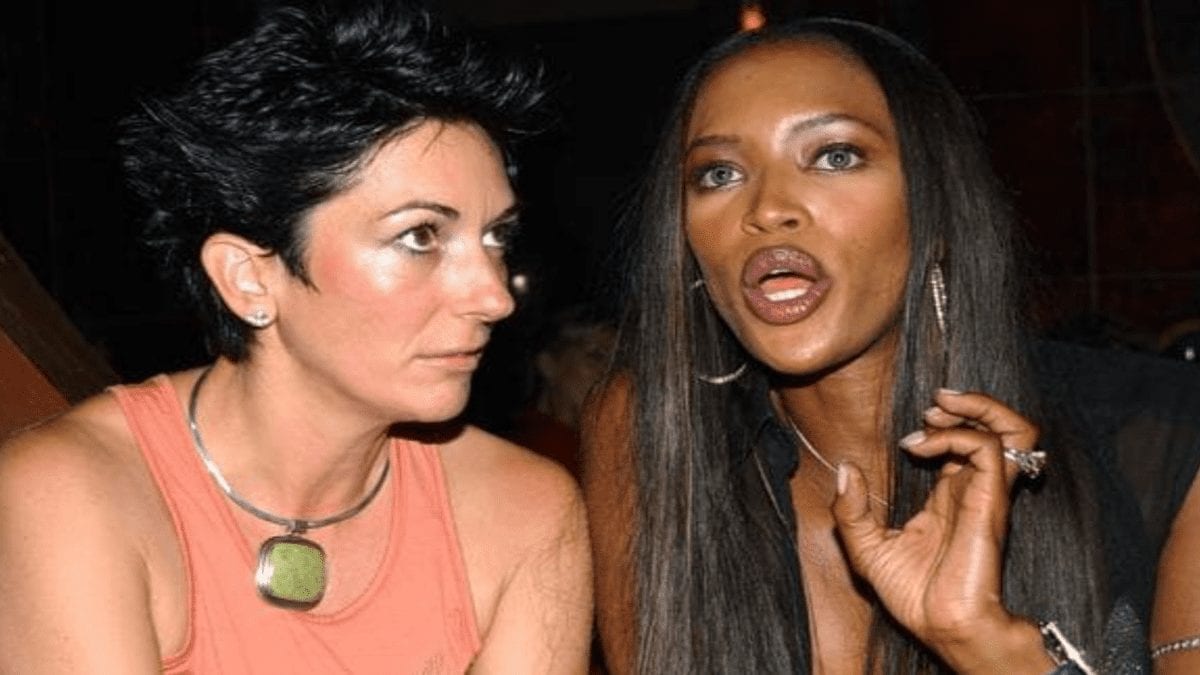
Pictured top: Mendacious mucky madam Ghislaine Maxwell with the catty catwalk calamity Naomi Campbell at a party in New York in 2002.
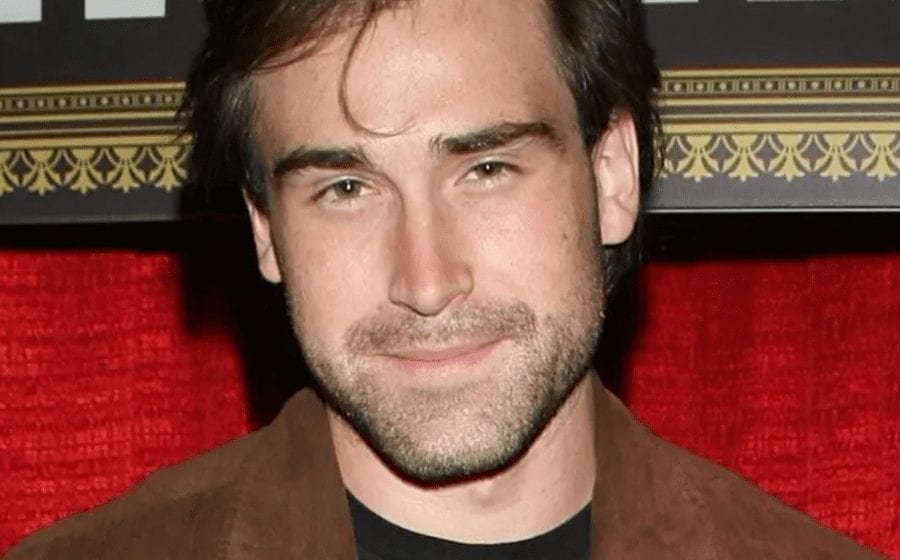
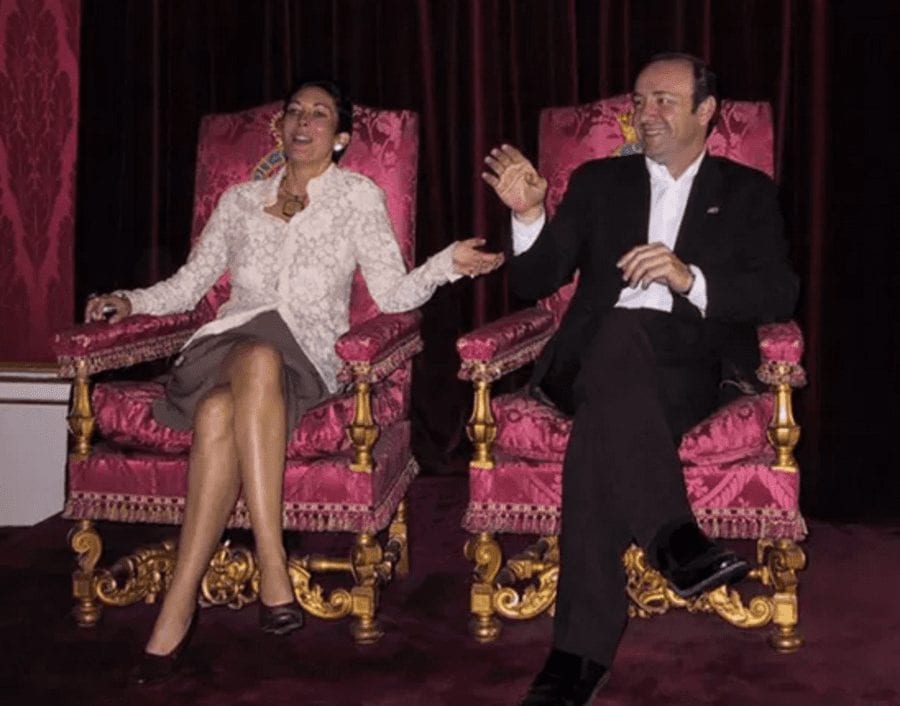
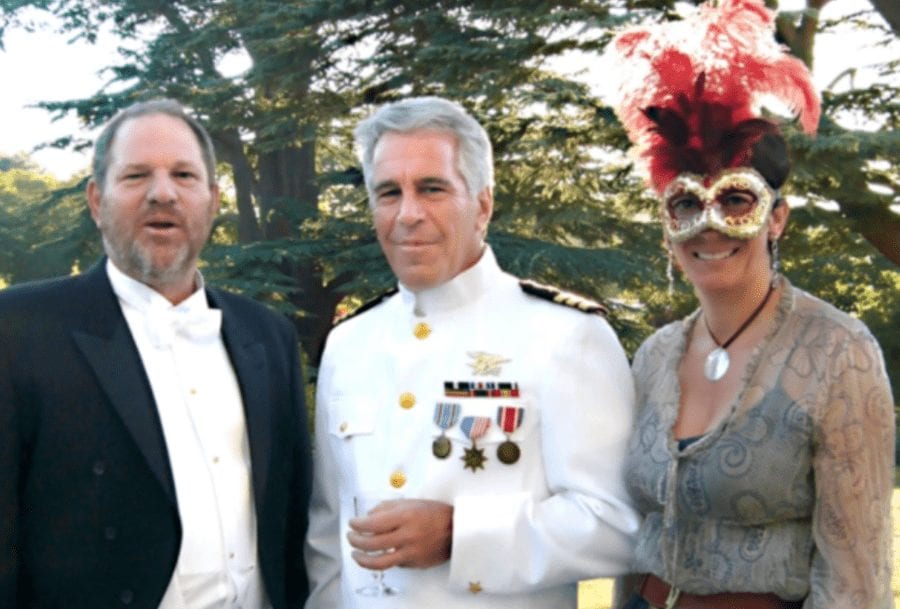
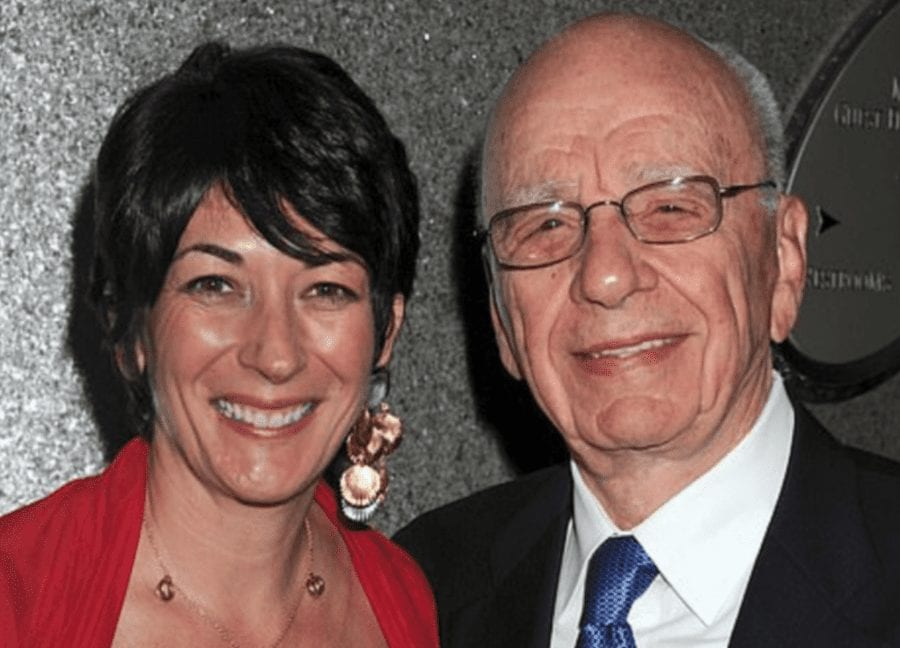
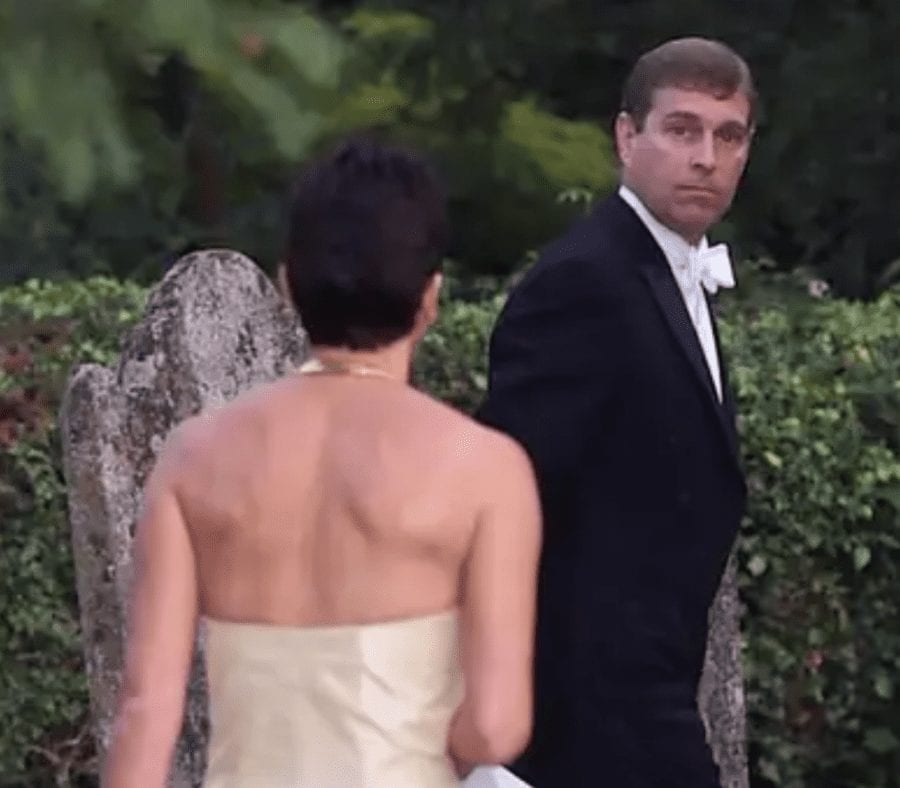
Stoning the Mucky Madam – Oliver Stone’s son Sean has suggested Ghislaine Maxwell could do a lot of damage to the Hollywood elite as further details about her activities with the paedophile Jeffrey Epstein are revealed.Stoning the Mucky Madam – Ghislaine Maxwell even sat on thrones in Buckingham Palace with the Hollywood horror Kevin Spacey. Yesterday in Manhattan, actor Anthony Rapp and another man filed a lawsuit seeking unspecified damages against Spacey, accusing him of sexual assaults in the 1980s when they were teenagers.Ghislaine Maxwell’s Hollywood connections numbered the likes of the now jailed producer Harvey Weinstein. Here, she is pictured at a party for one of Prince Andrew’s daughters with that particular paedophile and her ex-lover and now deceased paedophile Jeffrey Epstein.No wonder she had an interest in the oceans – Miss Maxwell’s octopus-like tentacles have stretched far and wide and her address book included everyone from media moguls such as Rupert Murdoch (pictured) to aristocrats and actors.Prince Andrew – accused of abuse by the at-the-time underage Virginia Giuffre – is another associate who has much to fear from his long-time friend. Will she do the right thing and finally tell the truth about what he got upto on 10th March 2001 in her house at 44 Kinnerton Street, Belgravia, London SW1X 8ES? Somehow, that seems unlikely, but stranger things have indeed happened.
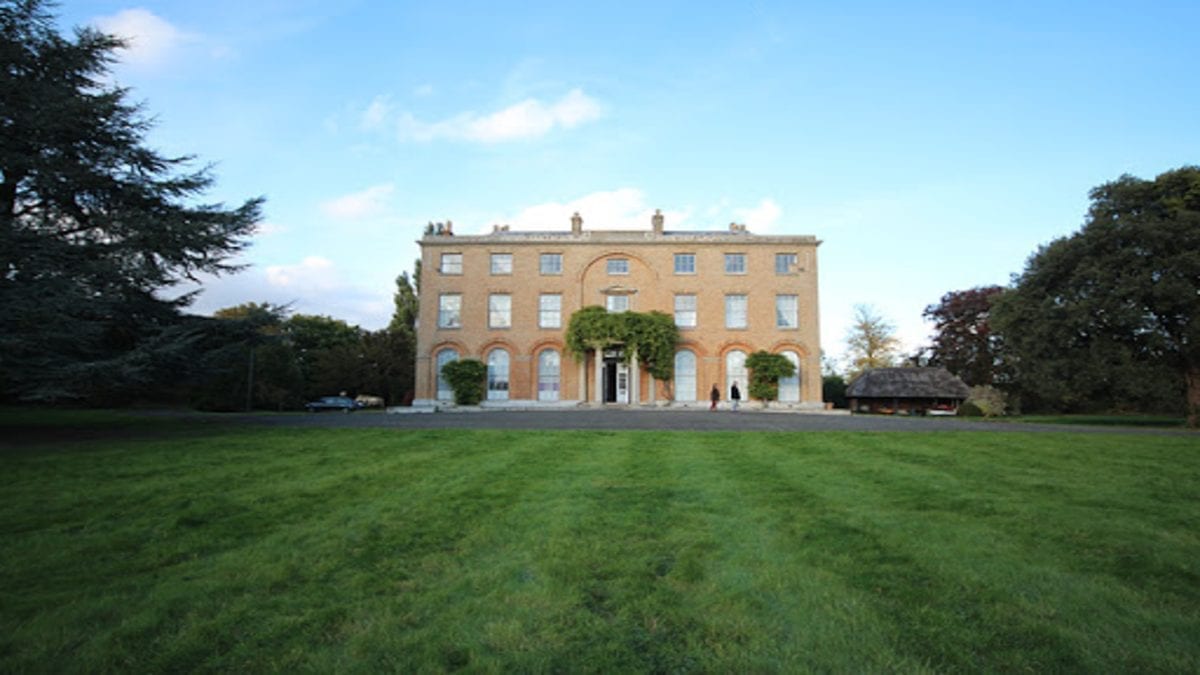
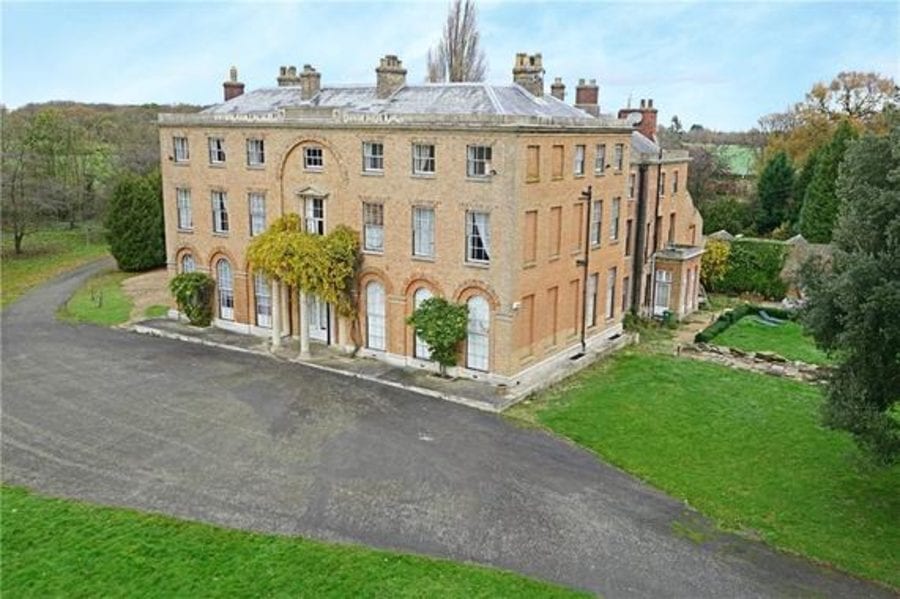
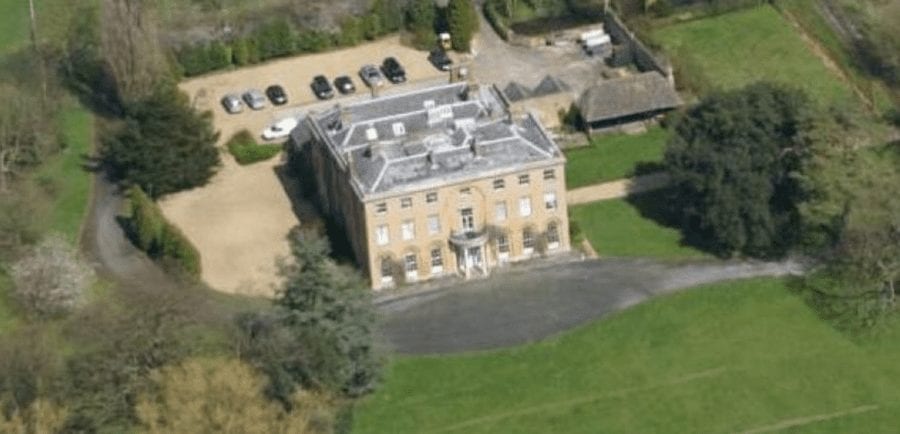
Cambridgeshire mansion used by Special Operations Executives in the Second World War and as a borstal subsequently for sale; Gaynes Hall is next to the prison that housed Max Clifford and was briefly a cannabis farm in 2019
Grade II* listed Georgian mansion in Cambridgeshire for sale for £2.65 million in spite of being in far from perfect condition and next door to a prison housing 1,220 convicted sex offenders.
The estate was owned by the aristocratic Duberly family from 1798 until 1940. An earlier house on the house had been home to Oliver Cromwell’s namesake and uncle.
It was requisitioned in the Second World War by the Special Operations Executive. Hitler was so annoyed by the operations at Gaynes Hall that he supposedly nicknamed the place “the hornet’s nest.”
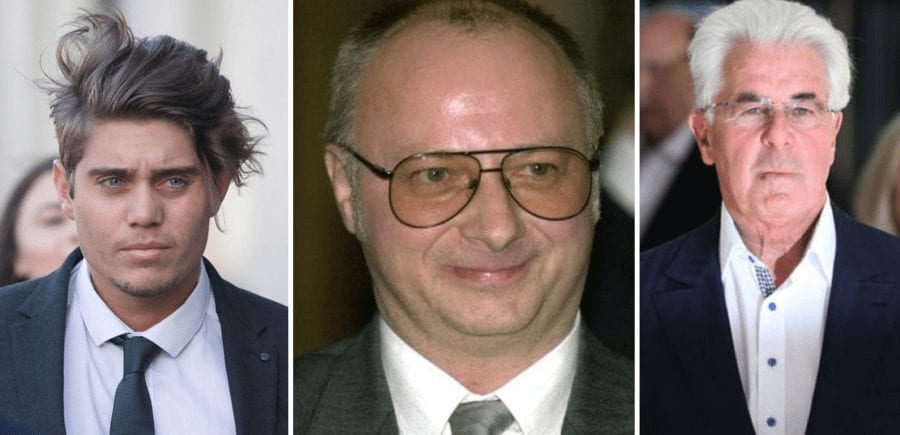
After the war, the hall became a borstal and after that closed, part of the estate became HM Prison Littlehey – famous for housing PR ‘guru’ Max Clifford, victim of a miscarriage of justiceStephen Downing and Australian cricketer Alex Hepburn.
More recently, the estate came to public attention after being discovered to be the centre of operations for drug lords. £250,000 of cannabis were seized there in 2019.
In June 2019, once ritzy Gaynes Hall at Perry, near Huntingdon in Cambridgeshire came to public attention when a drugs baron who’d turned part of the building into a cannabis farm was jailed. For his troubles, Nebir Tahiraj was relieved of £250,000 of drugs and ‘gained’ a sentence of 13 months.
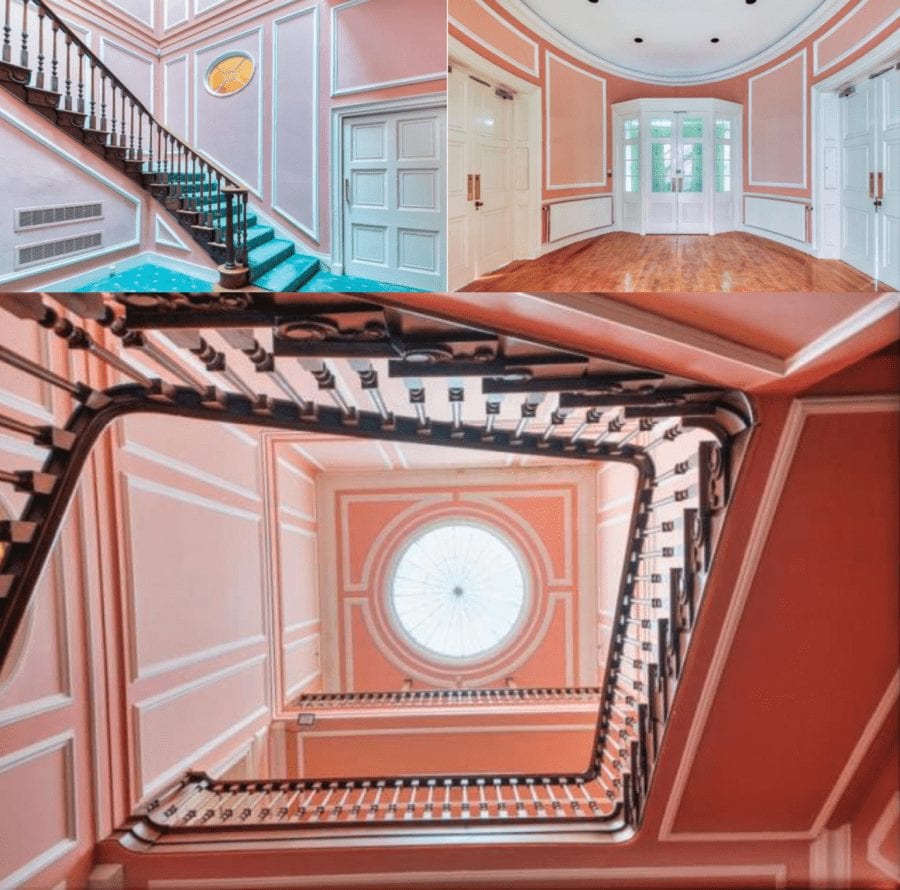
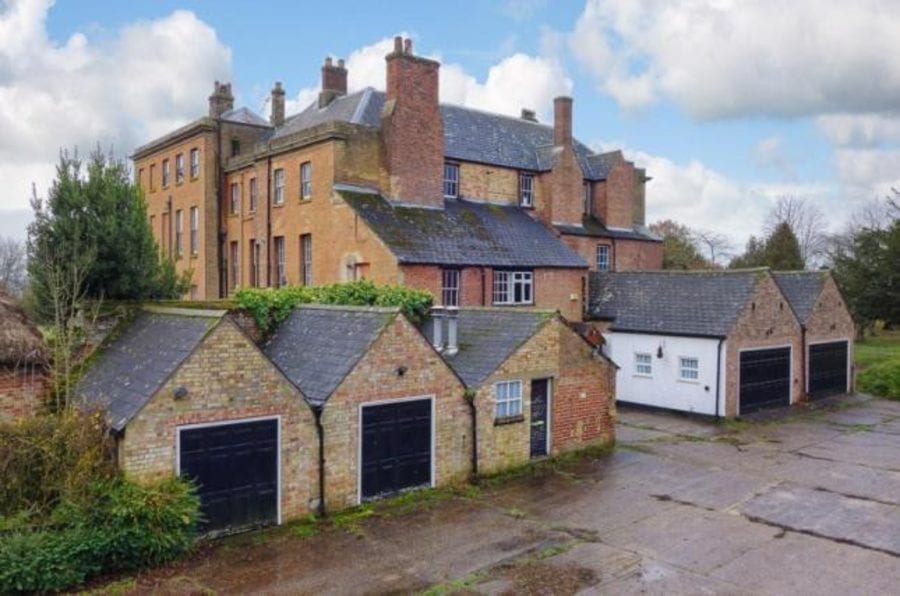
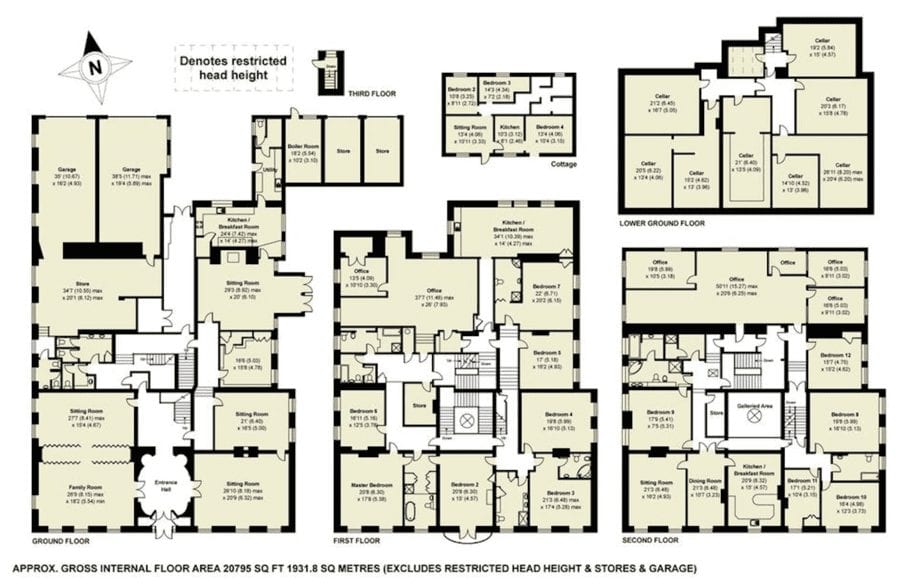
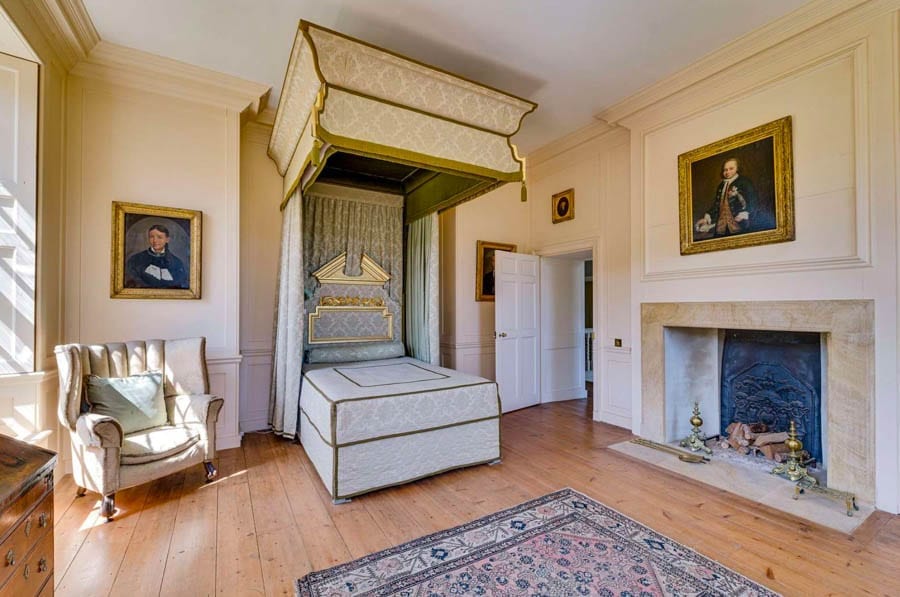
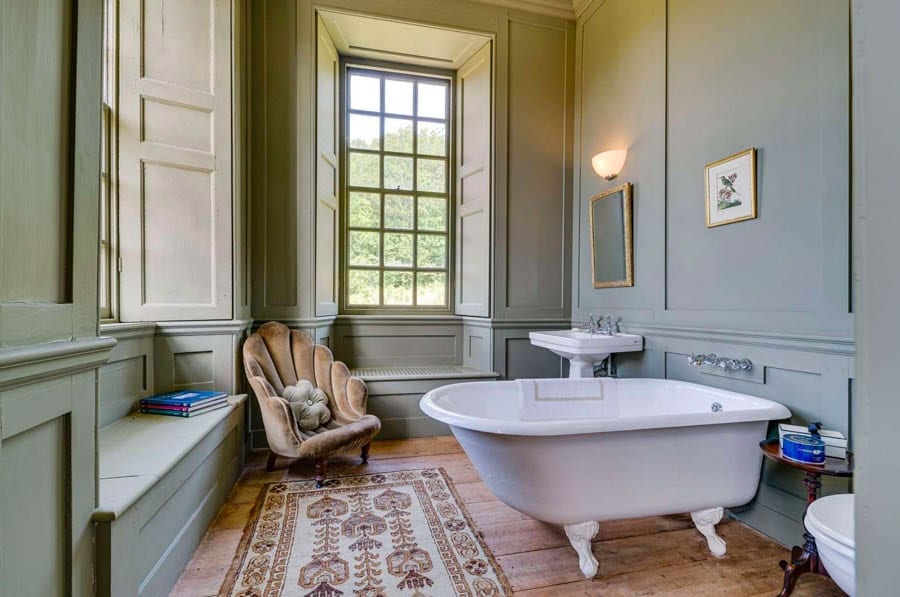
Grade II* listed and built circa 1800 for Sir James Duberly (1758 – 1832), the gault brick house was originally plaster rendered. Of three storeys plus cellars and seven bays, the 20,795 square foot building is currently being marketed by agents Wilson Peacock for £2.65 million – up from £2.2 million back in 2019.
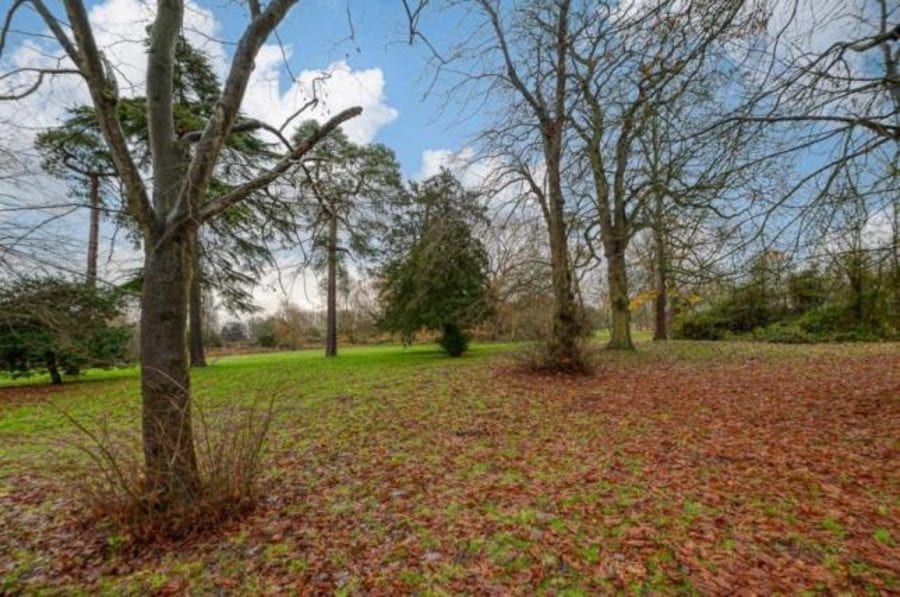
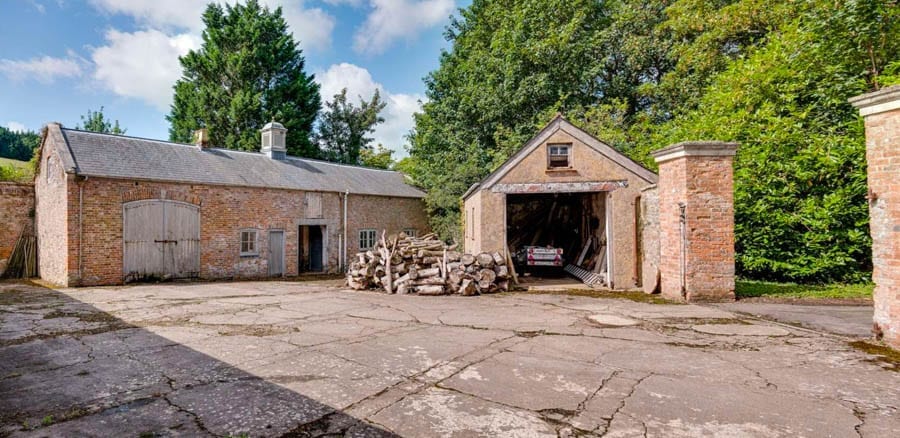
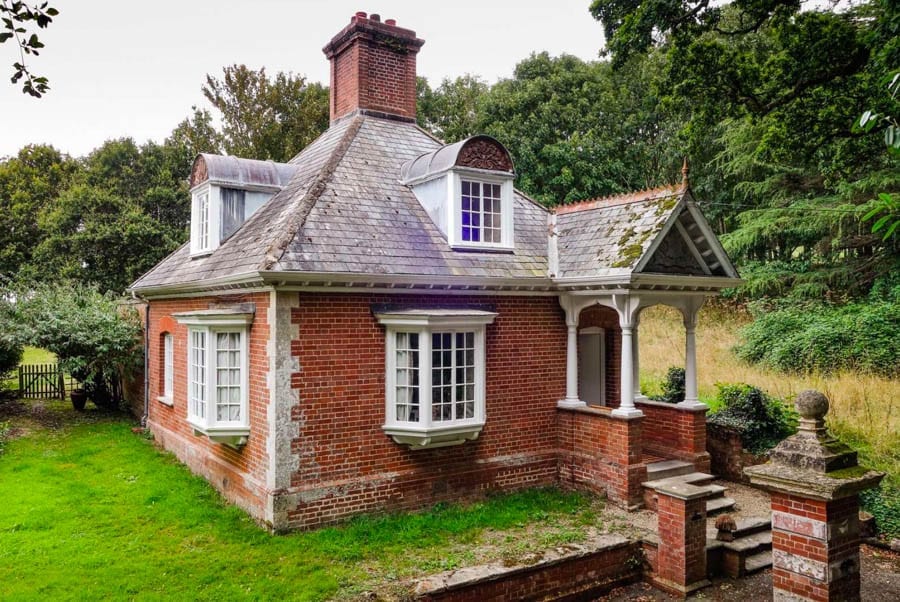
Gaynes Hall (also known as ‘Gaines Hall’ occasionally) stands in 16 acres of grounds including lakes and a moat and comes with a three bedroom cottage “requiring full modernisation and refurbishment.” It was home to the Duberly family until 1940 when it was requisitioned by Special Operations Executives (SOE) on the instructions of Winston Churchill.
Supposedly, according to the local Parish Council’s website, Hitler was so exasperated by the activities at Gaynes Park that he referenced the house “the hornet’s nest.” It was known locally during this period as a “spy school” and its master, Wing Commander Thomas Odett, was nicknamed ‘The White Rabbit’ on the basis that “he was always popping up in unexpected places.”
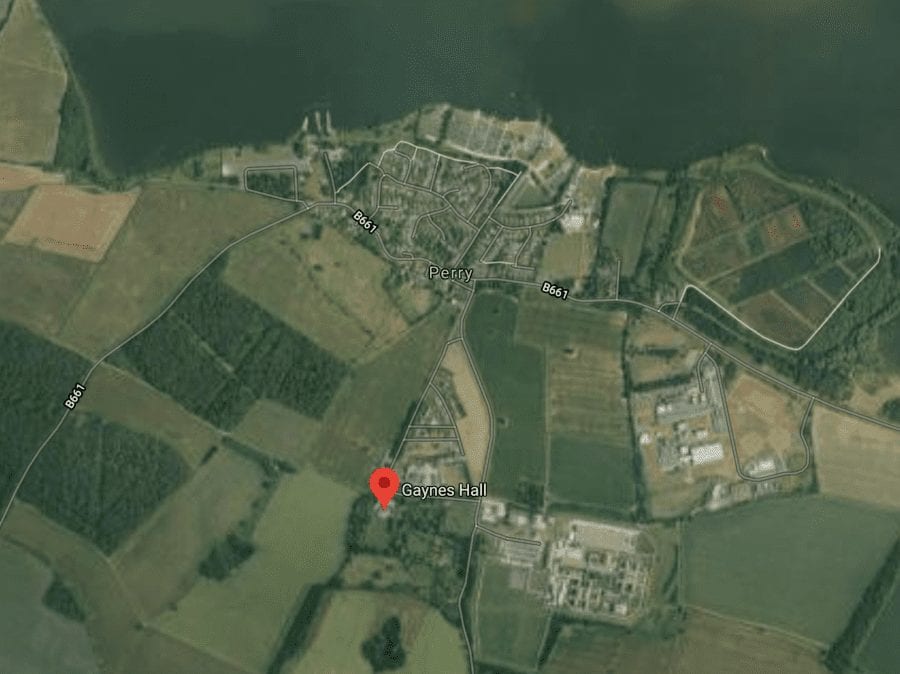
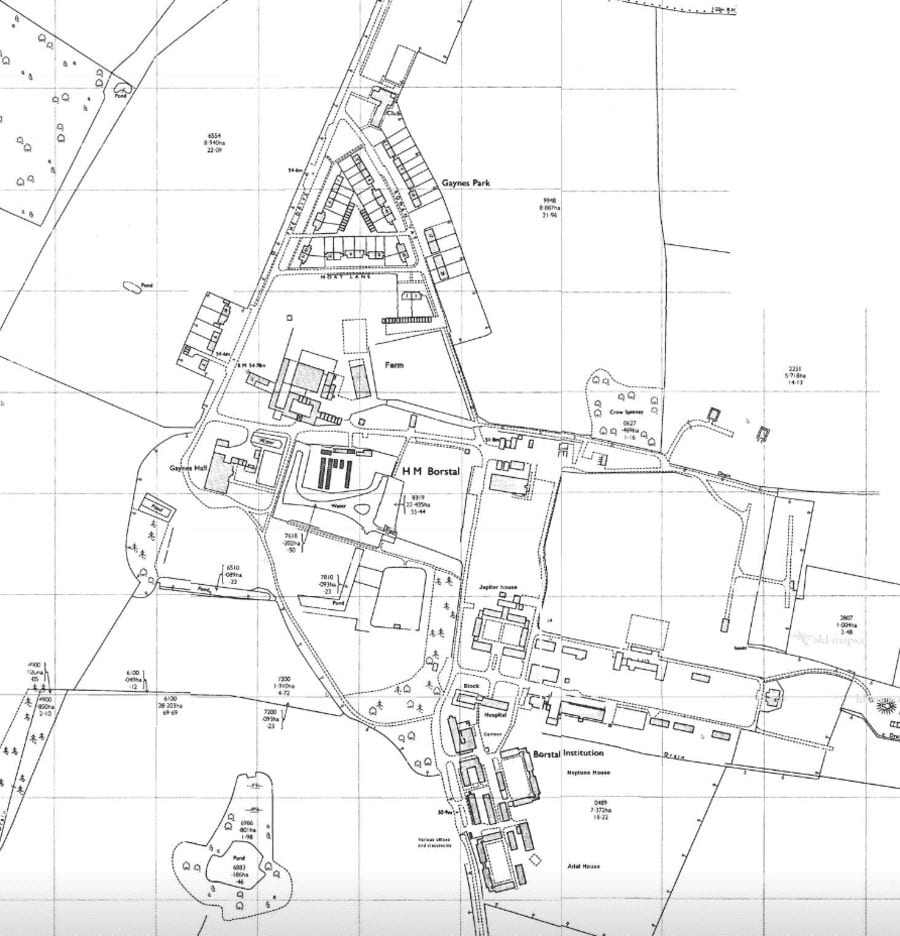
After the war, the mansion became the governor’s residence and administrative offices of the newly created Her Majesty’s Borstal Gaynes Hall and remained in that use until 1983 when the borstal closed. Her Majesty’s Prison Littlehey, which is best known as the place of death of the public relations ‘guru’ paedophile Max Clifford, was subsequently opened next door and residents of Perry get to hear its sirens periodically if a prisoner escapes or there is a disturbance.
In 1985, AIM Cambridge (later AIM Technology) leased the hall and from the Ministry of Defence and converted it into offices. When their business failed, the building became empty and in 1990, Gaynes Hall was sold again. In the years since, it has been in mixed use.
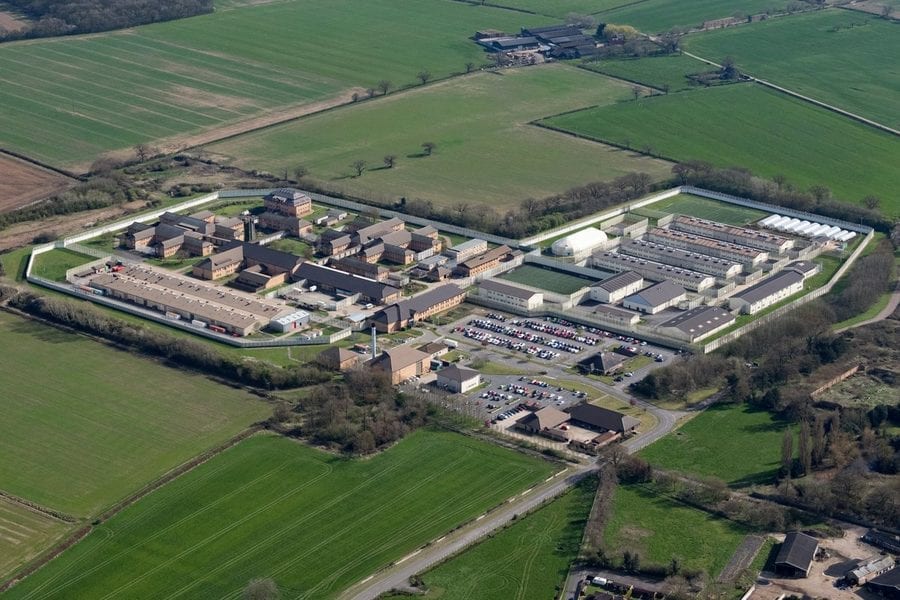
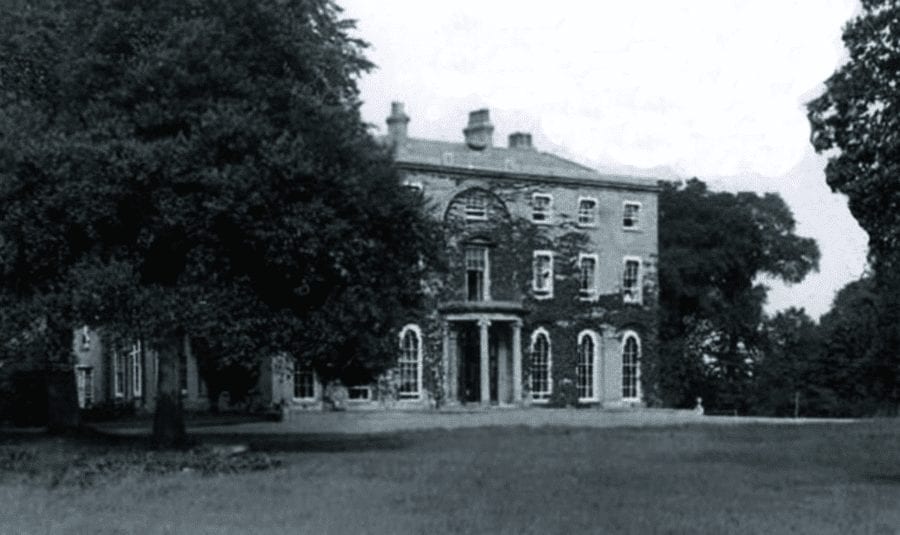
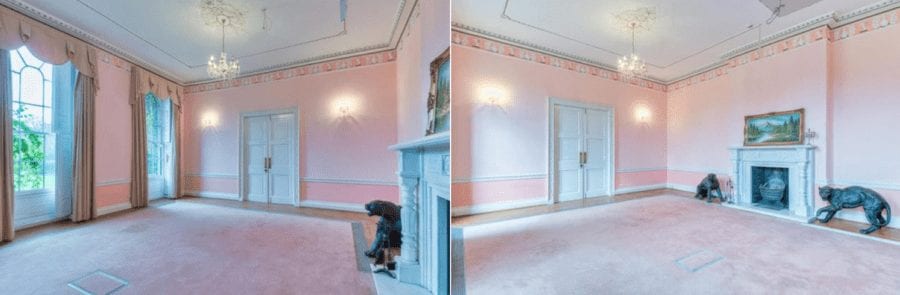
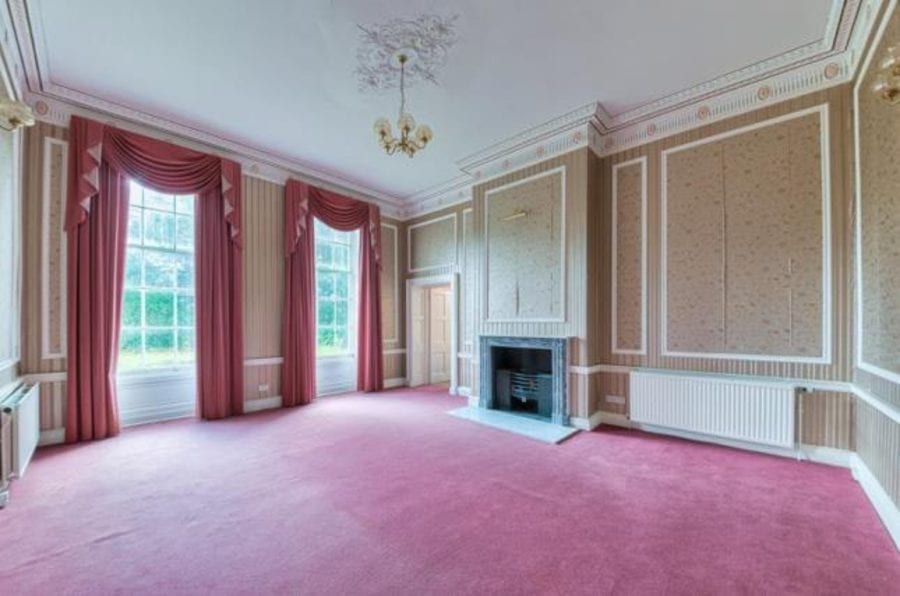
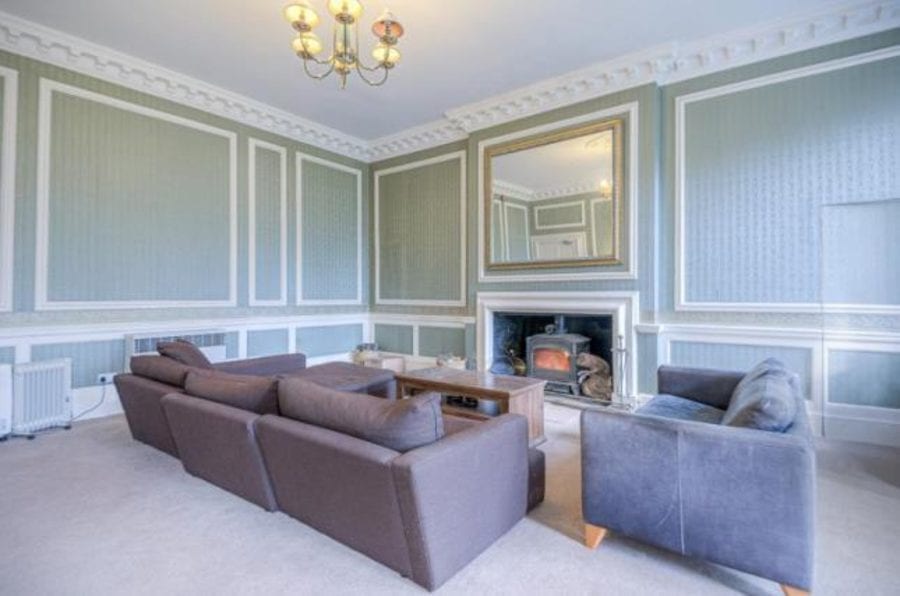
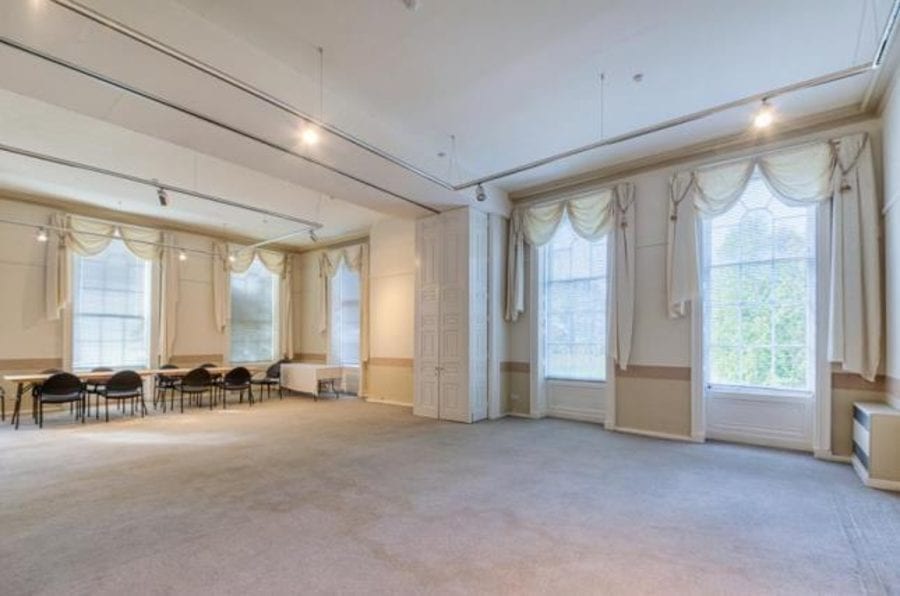
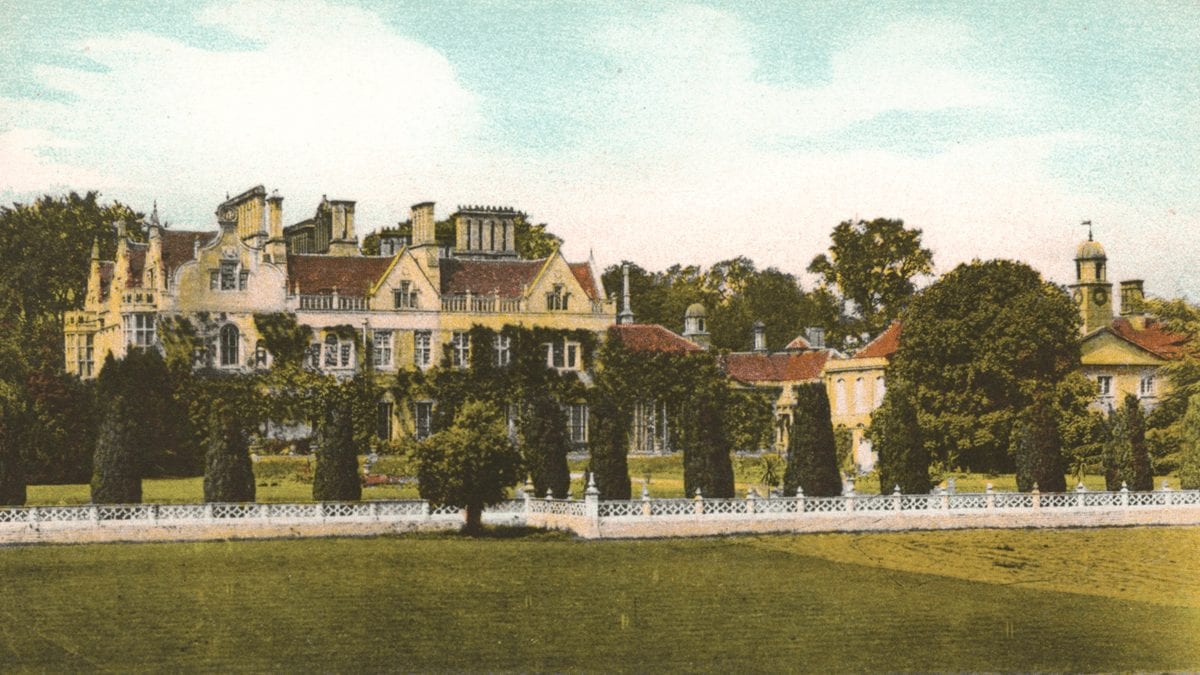
In need of some attention – Gaynes Hall has variously been used as a grand residence by aristocracy, requisitioned for use by Special Services Executives (SOE), served as an administrative office and governor’s house for a borstal and been converted to offices. It is currently configured in ‘mixed-use’ format and includes 20,975 square foot of accommodation.An aristocratic drug farm – Nebir Tahiraj was imprisoned in 2019 after having turned part of Gaynes Hall into a cannabis farm. He was caught with over £250,000 of drugs on the premises after neighbours complained about the noxious smell.Proximity to a prison – An aerial view of Her Majesty’s Prison Littlehey. Gaynes Hall is situated just to the west.Rapists next door – Convicted rapist and ex-cricketer cricketer Alex Hepburn, Stephen Downing (whose conviction for murder was overturned in 2002 after he had served 27 years in prison) and paedophile Max Clifford (who died in the prison) are connected by having been imprisoned at the Category C male prison HM Prison Littlehey. It has a capacity for 1,200 male prisoners – who all have been convicted of sexual offences.A once grand gentleman’s residence – Gaynes Hall in an image taken circa 1913. An earlier house on the site was leased for 21 years by Sir Oliver Cromwell (1566 – 1655), the uncle and namesake of the lord protector, from 1599.
The Names & Numbers – Gaynes Hall, Perry, Great Staughton, Huntingdon, Cambridgeshire, PE28 0ST, United Kingdom
December 2019 – Listed for sale by Wilson Peacock Country Homes at the increased price of £2.65 million ($3.35 million, €2.96 million or درهم12.32 million).
14th June 2019 – 35-yeard old Nebir Tahiraj found guilty at Cambridge Crown Court of “being concerned in the production of cannabis” in his flat at Gaynes Hall and jailed for 13 months. When police raided the property, they “found more than 200 plants at varying stages of growth, growing equipment and two large bags of cannabis ready to be sold” worth circa £250,000 ($316,000, €279,000 or درهم1.2 million). He attempted to claim “he was being exploited and kept at the flat against his will,” but the National Crime Agency (NCA) discovered he had been willingly involved.
Mid 2019 – For Sale for £2.2 million ($2.8 million, €2.5 million or درهم10.2 million) through Michael Graham.
March 2019 – Fleet Assist announce they will be moving their business from Gaynes Hall to Ermine Business Park in Huntingdon.
2002 – Purchased by the Malik family (according to Wikipedia).
1994 – 2002 – Owned by the McCallion family (according to Wikipedia).
1985 – Converted to offices and used by firms including AIM Cambridge (AIM Technology) and Fleet Assist in the years subsequently. Part-let as apartments and by the room also for residential use.
1945 – 1983 – Used as the governor’s residence and administrative officers of the Her Majesty’s Borstal Gaynes Hall. ‘Boys’ who were detained there have recounted their experiences on this fascinating Facebook page; it plainly was not an especially pleasant place.
1940 – Requisitioned for use by Special Operations Executive (SOE). Gaynes Hall – under the codename ‘Station 61’ – became the headquarters for Air Liason Officers and used as a ‘hotel’ for them prior to their being dropped into occupied Europe.
1798 – 1940 – Owned by the Duberly family. The present house was constructed for them circa 1800 to the designs of architect George Byfield (circa 1756 – 1813).
Crumbling Northamptonshire estate Lilford Hall – where the little owl was introduced to Britain – for sale for £10 million, a sum £35 million lower than in 2014
Grade I listed Jacobean mansion with 13 chimney stacks for sale for £10 million; it was for sale last for £44.9 million in 2014 in spite of being listed on English Heritage’s ‘At Risk Register.’
Lilford Hall – parts of which have not been occupied since 1947 –is currently owned by a businessman who tried to sell burial plots in the grounds for £1,250 a pop and shares in a yacht loosely associated with Frank Sinatra for £23 each.
The 321-acre estate includes not only overgrown parkland, but also a zoo with cages that formerly housed bears and a lake for flamingos.
From 1711 until 1990, Lilford House was the seat of the Powys family – the 4th baron is credited with introducing the little owl to the UK.
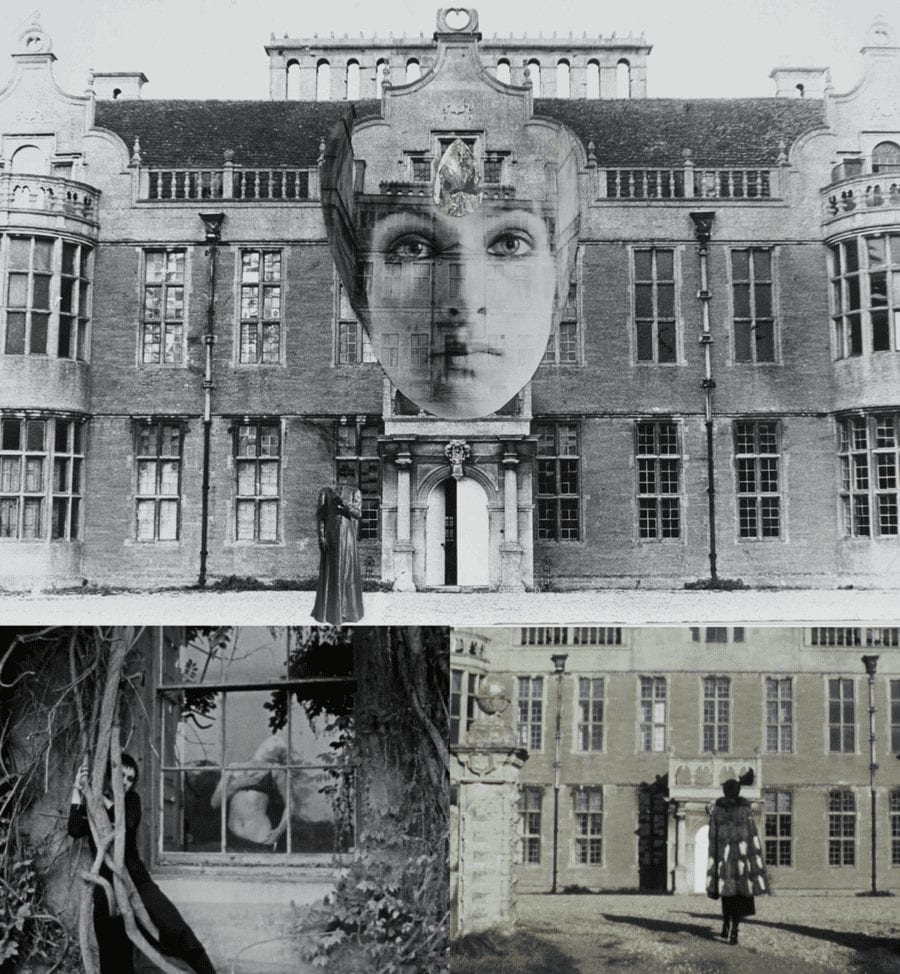
More recently, in 1969, the “sexual mystic” artist Penny Slinger used the at-the-time derelict mansion in one of her best-known works.
A 32,406 square foot Grade I listed Jacobean mansion 82 miles from Central London has gone on sale for £10 million – or the equivalent of just £308 per square foot.
On this basis, Lilford Hall – set in 321 acres near Oundle – seems a comparative bargain when considered against the £4,786 per square foot sought for a Lennox Gardens, Knightsbridge triplex flatThe Steeple Times featured in May, but buyers need to remember this – parts of this crumbling building, most notably the major state rooms, have not been used since 1947.
Marketed last in 2014 for the even more punchy sum of £45 million, the “exceptional residential and amenity estate located on the River Nene,” is now offered by agents Savills. The “wonderfully proportioned” U-shaped mansion itself is constructed of grey limestone and includes over 100 rooms and amongst them are 7 “impressive” reception rooms, a ballroom, a ‘great chamber’ and 9 bedrooms. In addition, there are two Georgian pavilions that were formerly coach houses and stabling, three cottages, a former zoo, the oldest private softball court in the world, a former flamingo enclosure and a deer park.
“Impressiveness in the chief attribute of Lilford Hall as a specimen of architecture” claimed County Life in 1990 and as the seat of the Powys family from 1711 until 1990, it became not only a Downton Abbey-esque entertaining pad, but also housed nurses in the Second World War. Here, indeed, is an English country house that has seen lavishness and decline and thankfully here is an example that thankfully escaped the wrecking ball wrought so disgracefully on such houses in the 1950s and 1960s.
Fascinatingly in the 1880s, Thomas Powys, 4th Baron Lilford filled his aviaries on the estate with rheas, kiwis, pink-headed ducks, free-flying lammergeiers and it was from here that he also introduced the little owl into the UK. There are said to be around 5,700 breeding pairs today, but sadly, according to the RSPB, their numbers are now in decline.
More recently, in 1969, “sexually erotic” performance artist Penny Slinger took over the by then “derelict” mansion in conjunction with the filmmaker Peter Whitehead. Their resulting work, titled An Exorcism, was exhibited internationally and in 2004, after the current owners, Charles and Aziza Micklewright, acquired the house, they did something equally avant-garde; they attempted to sell burial plots in the grounds to Americans by citing the estate’s connections to the founder of the Brownists, Robert Browne – a man better known as ‘The Father of the Pilgrims’ and ‘The Grandfather of the Nation’ (of the United States of America).
Whilst Mr and Mrs Micklewright were lauded for their considerable efforts towards the “huge task” of restoring Lilford Hall, they came to the attention of Historic England in May 2019 when the building was listed on the At Risk Register. At that time, the Oundle Chronicle reported: “The roof covering is in poor condition leading to water ingress and distress to the upper storeys. The front bays require structural attention. A schedule of urgent repairs has been identified but not implemented, and no long-term solution has been agreed.”
Now, someone with very, very deep pockets is required to restore this gem. It would be helpful if they liked erotic art, bears, squash and owls also.
The Names & Numbers – The Lilford Hall Estate, Lilford, Oundle, Peterborough, Northamptonshire, PE8 5SG, United Kingdom
June 2020 – The estate is listed sale for £10 million ($12.5 million, €11.1 million or درهم46 million) through Savills. It includes 321.31 acres, of which 148.17 acres are pasture land whilst 157.48 acres are woodland. The majority of the estate is held on a freehold title, whilst the remaining 127.6 acres – known as ‘The Linches’ and ‘Lilford Woods’ – are held on a lease with 91 years remaining.
2015 – Promoted as ‘The National Memorial Gardens,’ burial plots in the gardens of the hall were offered “available to any UK resident or national for an outstanding price of only £1,250 ($1,568, €1,393 or درهم5,758)” by Mark Bailey of Harley Investments. Around the same time, a website dedicated to Lilford Hall marketed “a piece of the formal gardens” for sale for £299 ($375, €333 or درهم1,377) to include “an officially certified ‘Squire of Lilford’ [title] … with this little piece of history.”
March 2014 – The Irish Times reported that the asking price for the estate had been increased to £44.9 million ($56.3 million, €50 million or 206.8درهم million). They claimed the agents Coldwell Banker blamed “confusion over currency conversion rates and new instructions from the owner.”
April 2014 – The Lilford Hall Estate is listed for sale through Coldwell Banker on MyHome.ie for £33.7 million ($44.2 million, €37.5 million or درهم155 million) on behalf of “an English gentleman.”
2004 – The estate is acquired by the Micklewright family. Little information is available online about the Old Framlingham Charles Micklewright (born July 1958), but he is described as a “patent attorney” on Companies Houses pages. The businessman is mentioned also as a publisher and trustee of the Marsh Christian Trust elsewhere, whilst his Singaporean born wife, Aziza (born 1964), was a director of Lilford Properties Limited from 2013 to 2018.
A website operated by Sign of the Times Limited, a Hong Kong company of Lilford Hall, Lilford, Oundle, Northamptonshire, PE8 5SG, currently offers shares in a yacht named ‘Sinatra the Voice’ for £23.91 ($29.99, €26.64 or درهم110.14) per share. The boat was built in 1956 and is tenuously linked to Frank Sinatra by the fact that a one-time owner, Beale Poste, loaned it occasionally to the crooner between 1968 and 1974 in West Palm Beach, Florida.
1990 – The estate is closed to the public.
1980s – The house is used as a location in the BBC English Civil War inspired historical drama series By the Sword Divided.
1970s – Aviaries on the estate restocked by George Powys, 7th Baron Lilford (1931 – 2005). He “opened [the estate] to the public as a leisure park” and housed more than 350 birds of 110 species there. It remained thus for around 20 years and included a restaurant and shop. The aviaries and the 1,896 square foot restaurant building remain present still today.
1969 – 1970 – American British “sexual mystic” artist Penny Slinger (born 1947) and Liverpudlian filmmaker Peter Whitehead used the “derelict mansion” as the setting for their works An Exorcism and Lilford Hall. They are lauded as a “photo romance” and exhibited at the Blum and Poe Gallery in Los Angeles in 2014, at the Haywood Gallery in London in 2015 and at the Fortnight Institute in New York in 2019.
1949 – Stephen Powys, 6th Baron Lilford (1869 – 1949) died without having married or having had children. His properties aside from Lilford – a house in Mayfair, Bank Hall in Lancashire and the Bewsey Estate in Cheshire – passed to his second cousin twice removed.
1947 – The estate is sold to a company named Merchant Ventures by the Powys family (though they remain present on the estate until 1990).
1939 – 1945 – During the Second World War, the parkland of the estate was used as a military hospital for nearby airfields. From 1949 to 1954, some of the buildings constructed during this period were then used as a Polish school.
1923 – First-class Northamptonshire cricketer Major John Powys, 5th Baron Lilford (1863 – 1945) built the first private softball court in the world in the grounds of the hall. It is now in disrepair and the roof has fallen into the inner court.
1909 – 1910 – The hall was extended in the Edwardian manner including the provision of a new master bedroom with dressing room and bathroom by William Dunn and Robert Watson of Dunn & Watson.
1901 – The estate surrounding the hall reaches its largest size and totals a vast 8,000 acres of land. Around this time, Queen Mary, wife of King George V, is said to have visited the gardens.
1880s – Ornithologist and expert on the fauna of the Balearics Thomas Littleton Powys, 4th Baron Lilford (1833 – 1896) introduces the little owl into England on the estate. His aviaries were said to “feature exotic birds from all around the world” and a species of European lizard, the Lilford’s wall lizard (Podarcis lilfordi), is named in his honour. The 4th baron is repeatedly mentioned in the works of Charles Darwin for his contribution to the study of the science of evolution.
1840s – Further changes to the building are orchestrated by the architect William Gilbee Habershon (circa 1818 – 1891). The Campaign to Protect Rural England described these Victorian extensions as “sensitive” in 2006 – a rare accolade given most additions to English country houses during this period were simply brash and vulgar.
1740s – The Palladian architect Henry Flitcroft (1697 – 1769) adds “outstanding” Georgian interiors whilst “respecting the hall’s Jacobean exterior.” He “softened and brightened” the building as a result and also “constructed the Georgian pavilions and additional storeys to the east end of the two wings.” Other works by Flitcroft can be seen at Bower House in Essex, Wentworth Woodhouse in Yorkshire and Woburn Abbey in Bedfordshire.
1711 – Lilford Hall is sold to the judge and Tory politician Sir Thomas Powys (1649 – 1719), Attorney General to King James II. Powys is best remembered for conducting the prosecution of the Seven Bishops in 1699. He is buried at Lilford.
1630s – Construction of the main exterior of what to this day remains Lilford Hall as a “Jacobean-style gentry house” by William Elmes (the younger).
1473 – The land that forms the estate is acquired by William Browne (1410 – 1489), a wealthy wool merchant and landowner from Stamford, from the estate of Baron Welles (who was beheaded by King Edward IV for treason). In 1495, “in a Tudor style,” he built a hall on the site and it passed to Robert Browne (1550 – 1633), the founder of the Brownists, ‘The Father of the Pilgrims’ and ‘The Grandfather of the Nation’ (of the United States of America).
Just as ultimate dumbo Lady Victoria Hervey shows herself up in stating “Fuck Black Lives Matter,” fellow aristo Dr. Bendor Grosvenor calls for the return of objects “looted during the British Empire”
Dimwitted dope Lady Victoria Hervey just cannot help but shove her stilettos straight into the proverbial. Whether be it her short-lived relationship with “he who doesn’t sweat in Pizza Express (Woking branch’)” ‘Randy’ Prince Andrew, or flogging knickers in her long since gone-bust shop in Knightsbridge displaying the words “Yes Please” across the crotch, here is a woman with utterly no shame and an utter incapacity to accept any kind of blame for her own failings.
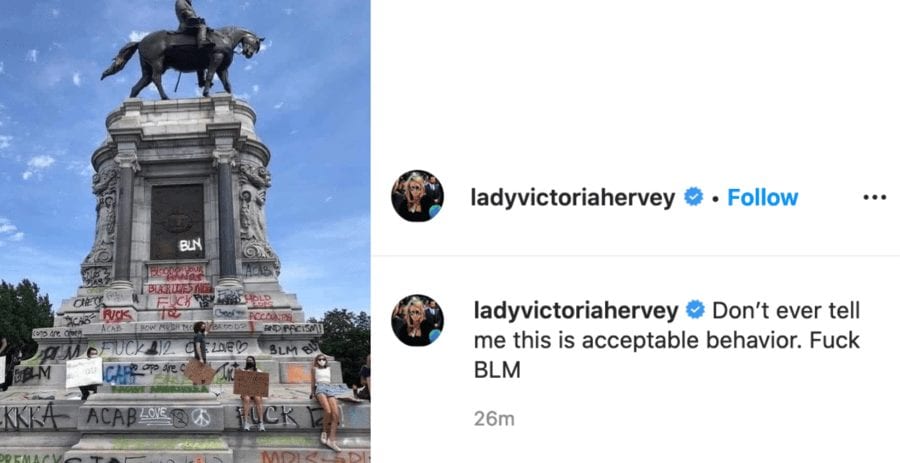
Formerly nicknamed ‘Toff Totty Vicky,’ Lady Victoria predictably showed herself up by banging on about her associations with Jeffrey Epstein and Ghislaine Maxwell last year. This weekend, the bubbly blonde went further in posting a picture of the defaced statute of the Confederate general Robert E. Lee in Richmond, Virginia on her Instagram page. She not-so charmingly captioned the snap: “Don’t ever tell me this is acceptable behavior [sic]. Fuck BLM [Black Lives Matter].”
Described by even a fellow socialite, the late Tara Palmer-Tomkinson, as “unpleasant” and “a right snob” previously, “luxury is in my blood” Lady Victoria was contradicted by the Reverend Robert W. Lee IV, the general’s great-great-grandson. He “gave his blessing for the monument to be removed” on Thursday according to the BBC and asked: “If today is not the right time, when will it be the right time [to remove the statue]?”
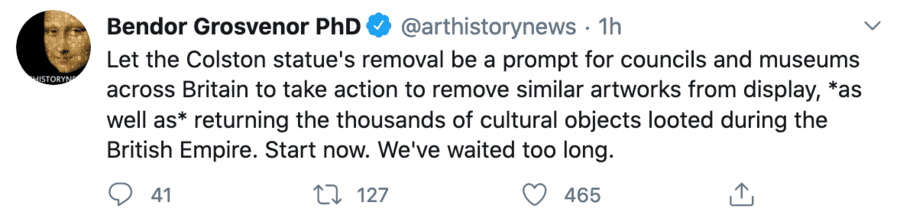
Going further of this situation on Twitter on Sunday, though talking in the context of the related British protests, fellow aristocrat Dr. Bendor Grosvenor – a distant relative of the present Duke of Westminster and a man best known for his stint on the BBC’s Fake or Fortune? art documentary series – tweeted:
“Let the Colston statue’s removal be a prompt for councils and museums across Britain to take action to remove similar artworks from display, *as well as* returning the thousands of cultural objects looted during the British Empire. Start now. We’ve waited too long.”
Sadly, yet not unsurprisingly, Lady Victoria – whose ancestor Frederick Hervey, 1stMarquess of Bristol ironically is best remembered as a “social reformer” and “an MP [who] voted for the abolition of slavery in 1807” – has previous form. In 2003, this ‘aristoprat’ stated: “It’s so bad being homeless in winter. They should go somewhere warm like the Caribbean where they can eat fresh fish all day.”
Shame on this irrelevant ignoramus; it’s not Black Lives that don’t matter, it’s instead Victoria Hervey that doesn’t matter.
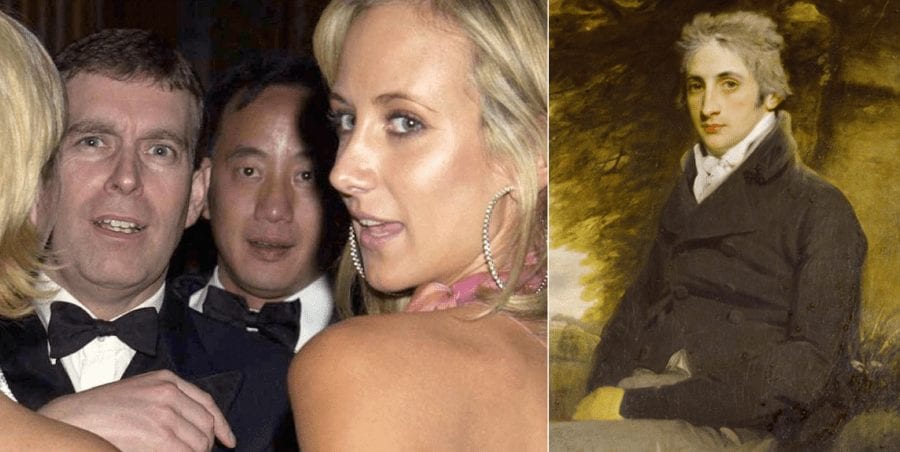
Lady Victoria Hervey with the Duke of York at a social gathering; supporter of the abolition of slavery and “social reformer” Frederick William Hervey, 5th Earl and 1st Marquess of Bristol (1769 – 1859).Lady Victoria Hervey’s offensive Instagram post was unsurprisingly met with disdain by many. One responded: “Wait, hold up Lady are you saying Fuck Black Lives ???” Another added: “But think you got to be careful saying fuck BLM… That’s not acceptable TBH. It’s offensive.” Dr. Bendor Grosvenor’s, by contrast, sensible tweet.
Classic clangers from former ‘It Girl’ Lady Victoria Hervey:
“I am Lady Victoria Hervey – it doesn’t get more British than that.”
“Unless it’s champagne, I can’t handle it.”
“I do have a day job.”
“My career always goes much better when I haven’t got a man.”
“A baby is easy – you hand them over to a nanny!”
“I’m not stupid. I’m not a dumb model.”
“[I aim to become] the next Kate Winslet – but with class.”
“I have had four past lives, three of them as a man. I was a composer in 17th-century Paris, I made materials in India and in Ancient Greece I was a famous politician. In Ancient Egypt I was keeper of the oils for the Pharaoh’s wife, and I love oils so it all kind of fits.”
“What annoys me is when these families have got like 12 children and we’re paying for these kids… They work out that they make more money being on the dole than having a job, they just laze around.”
“The real irony of this is that the poor get poorer and the rich get richer.”
“Travelling is in my blood, and so is liking luxurious things and spending.”
“I haven’t given up on men, there are a few of them around, but I keep leaving every city I meet them in.”
“Everyone from Europe wants to buy houses in LA.”
“I was too old for Jeffrey Epstein… [He seemed] very charming… He was a very well-liked guy.”
“I’m not one of those kind of girls, I don’t like going to dinners with ten models invited… I was very young and impressionable, Jeffrey was a very charismatic man.”
“I haven’t seen [Ghislaine Maxwell] since September [2018] at a friend’s baby shower… I don’t think anyone is going to find her. She’s gone far away. She’s a bit like a James Bond character. She’s quite a unique person and I don’t believe anyone is going to find her… I don’t think we will ever see her again, it’s going to be like Robert Maxwell continued; she will continue that family mystery.”
“I had no idea what was going on [with Jeffrey Epstein]… It’s extraordinary it’s the case, it’s a wild story.”
“I suddenly thought, I’m just Victoria Hervey… Horrible.”
“I don’t want to make enemies.”
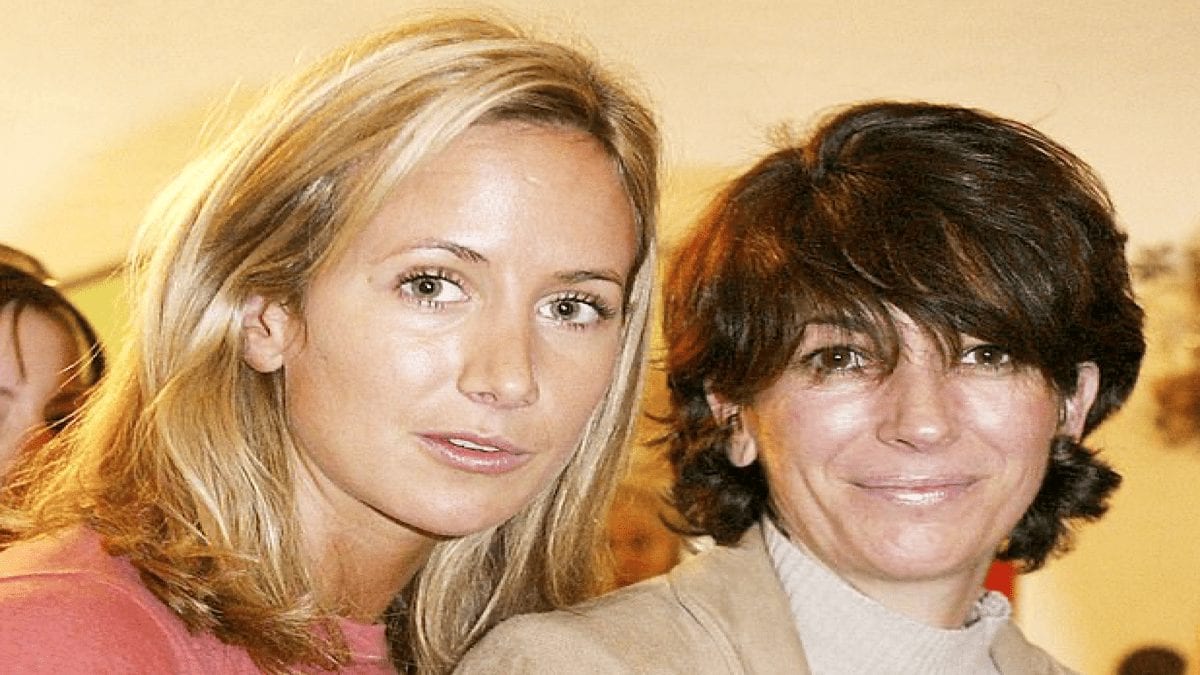
Pictured top: Lady Victoria Hervey with Ghislaine Maxwell, the alleged madam and procurer of girls for paedophile Jeffey Epstein.
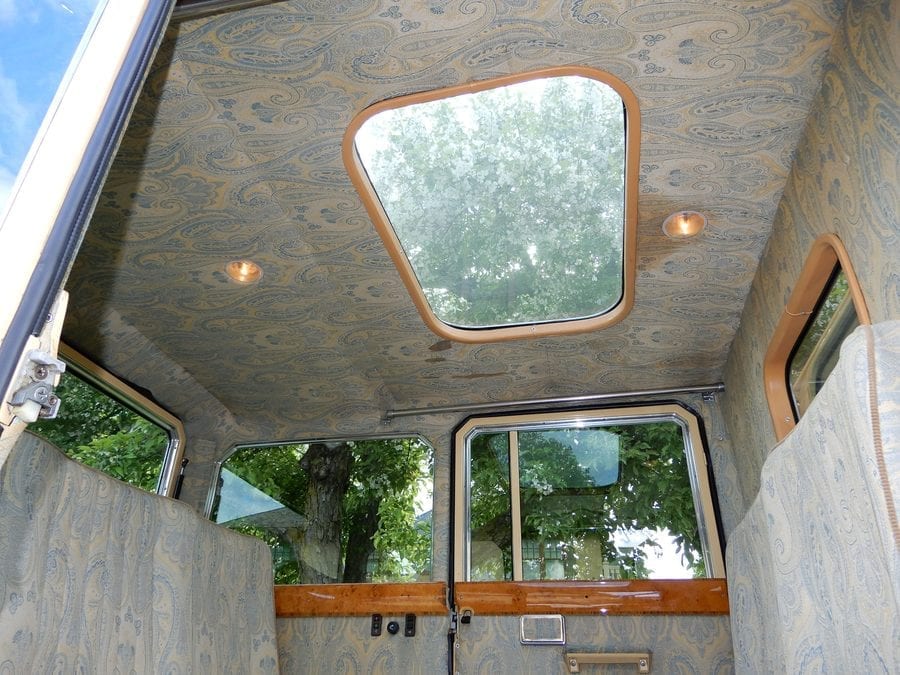
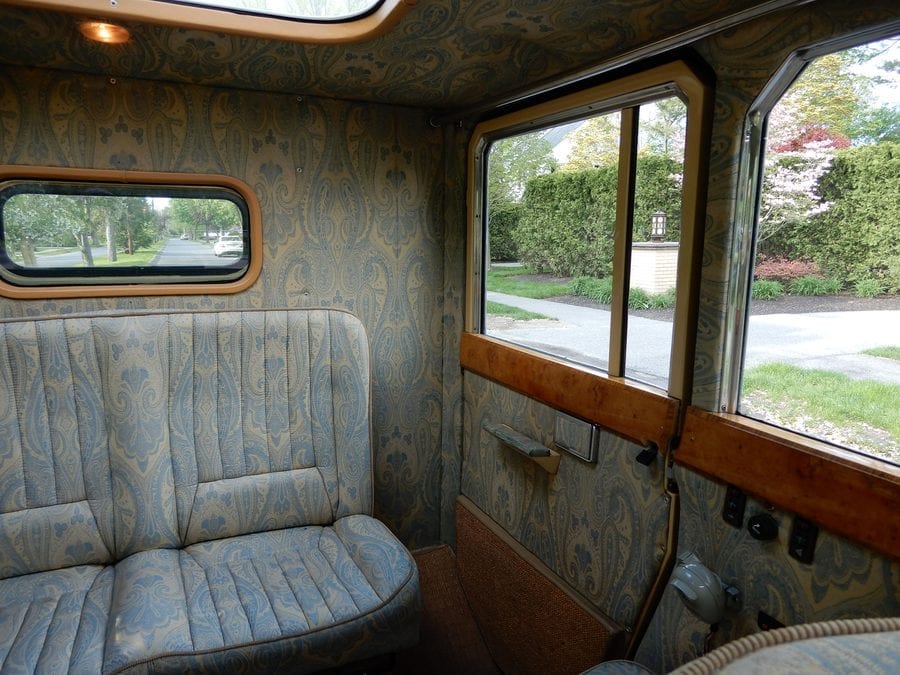
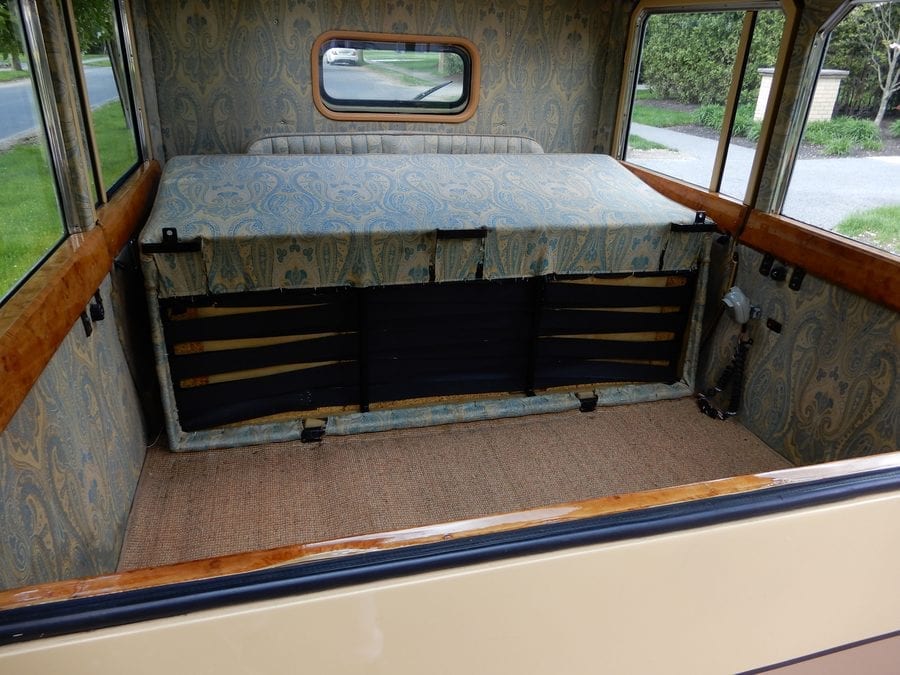
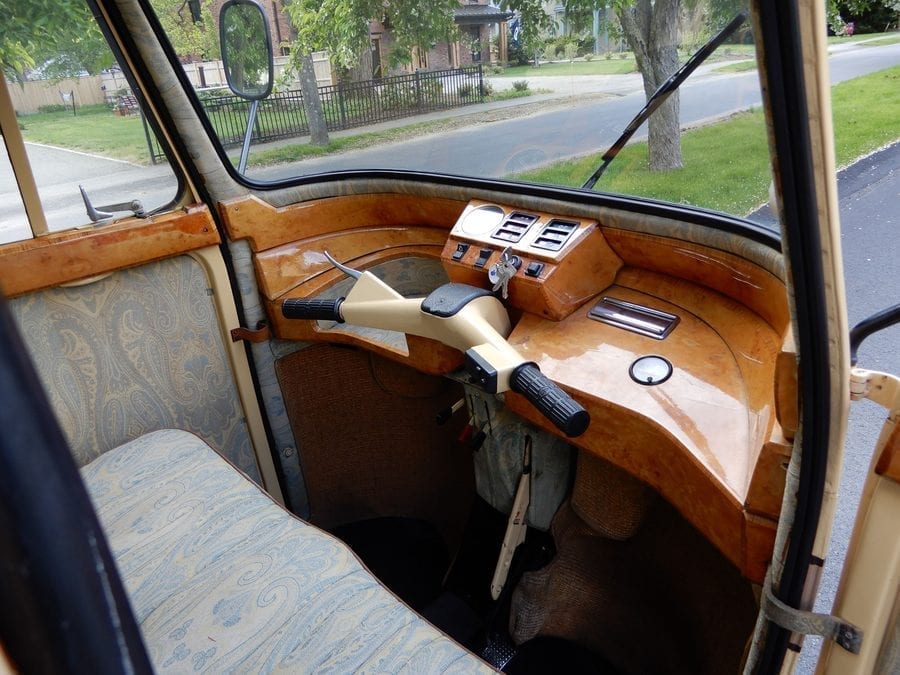
1978 Piaggio Ape ‘limousine’ used by the controversial Countess Agusta – a woman who either fell or was pushed to her death from her home above Portofino in 2001 – to be auctioned
On 8th January 2001, “shop assistant turned model turned multi-millionairess many times over turned fugitive” (via a stretch in what American’s so pleasantly term ‘pokey’) Countess Francesca Vacca Agusta “disappeared” from the terrace of her Ligurian seaside home. The series of events that preceded and followed could have featured in an Agatha Christie novel or a Sherlock Holmes story.
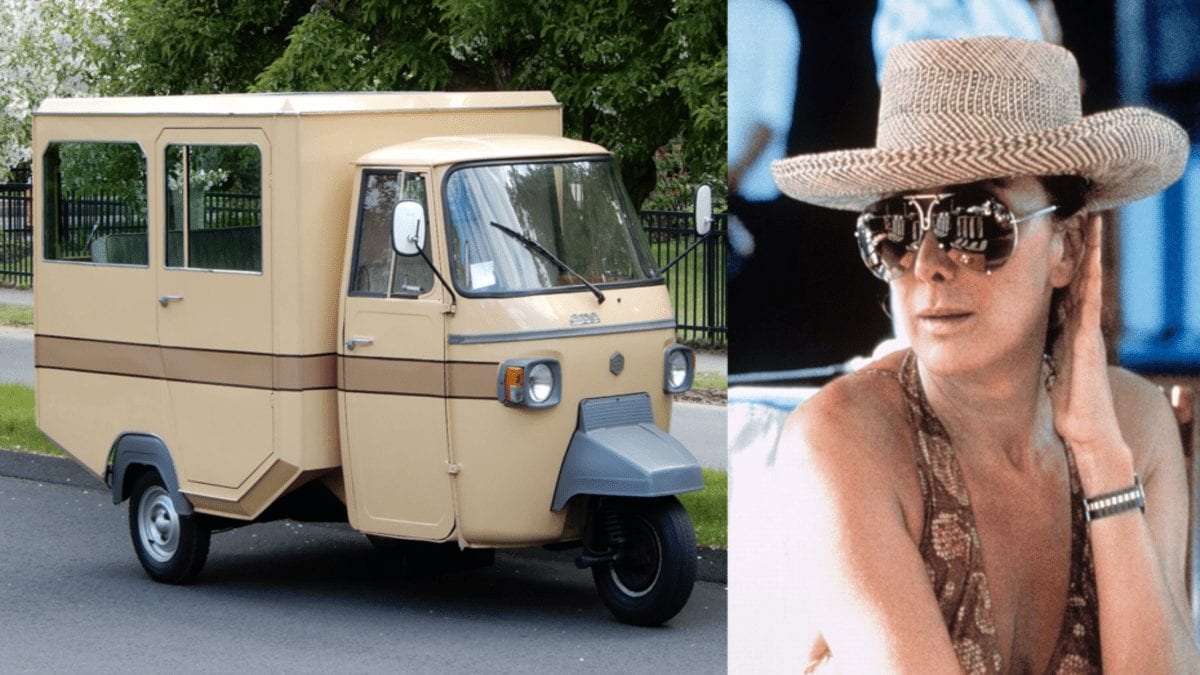
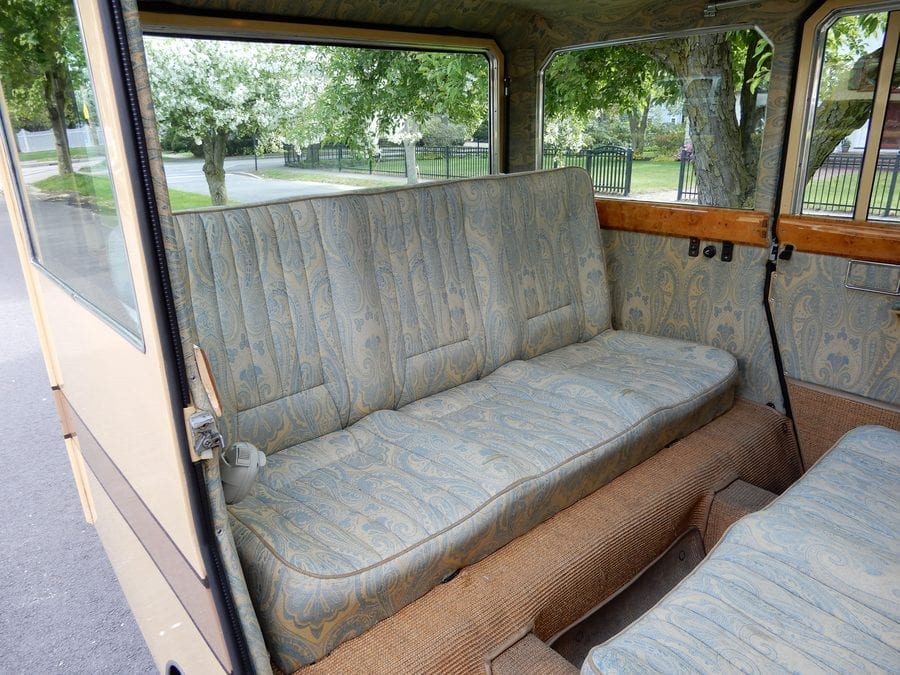
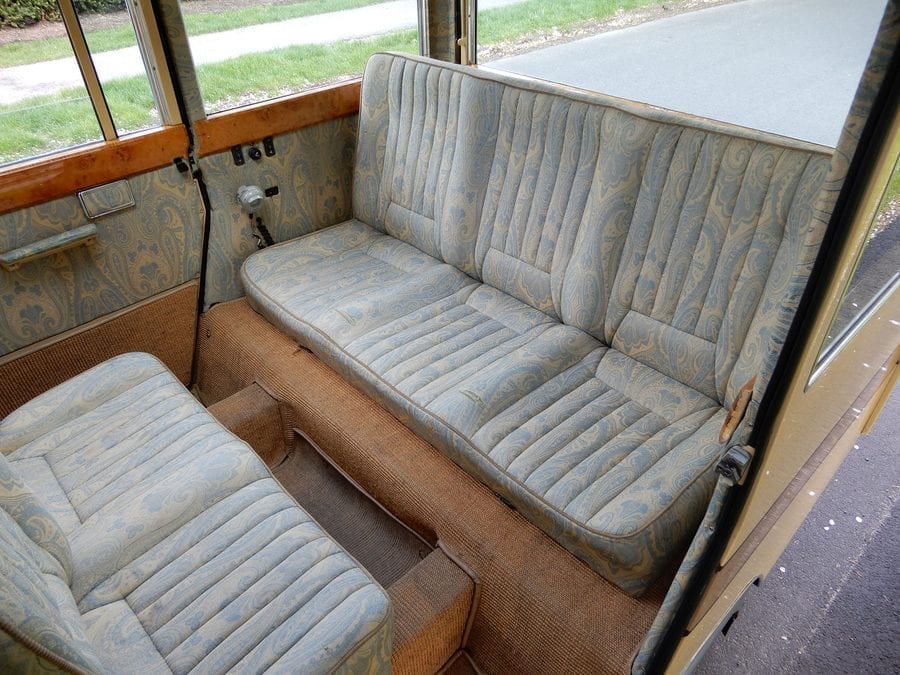
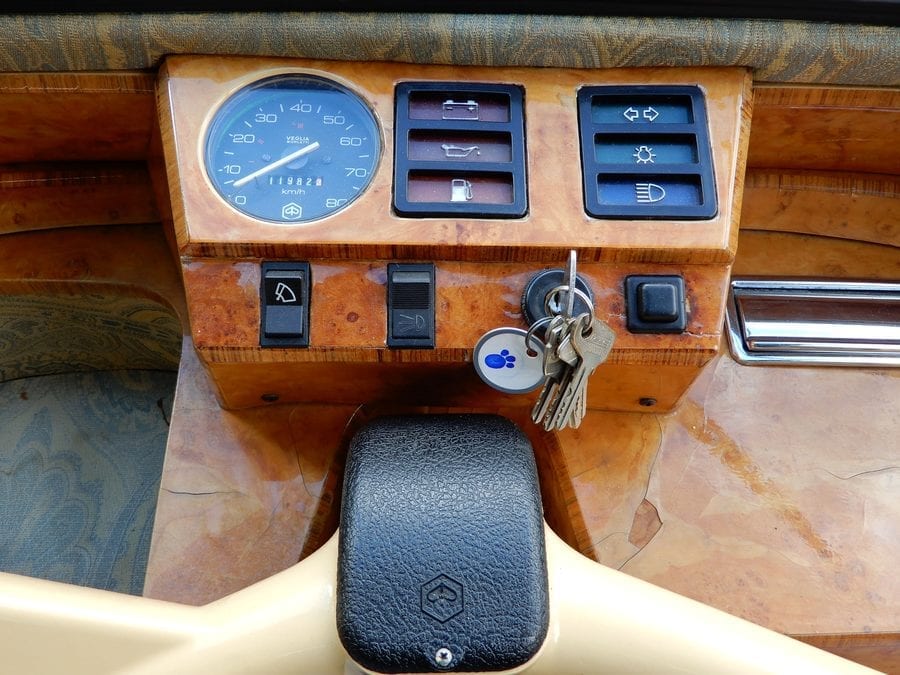
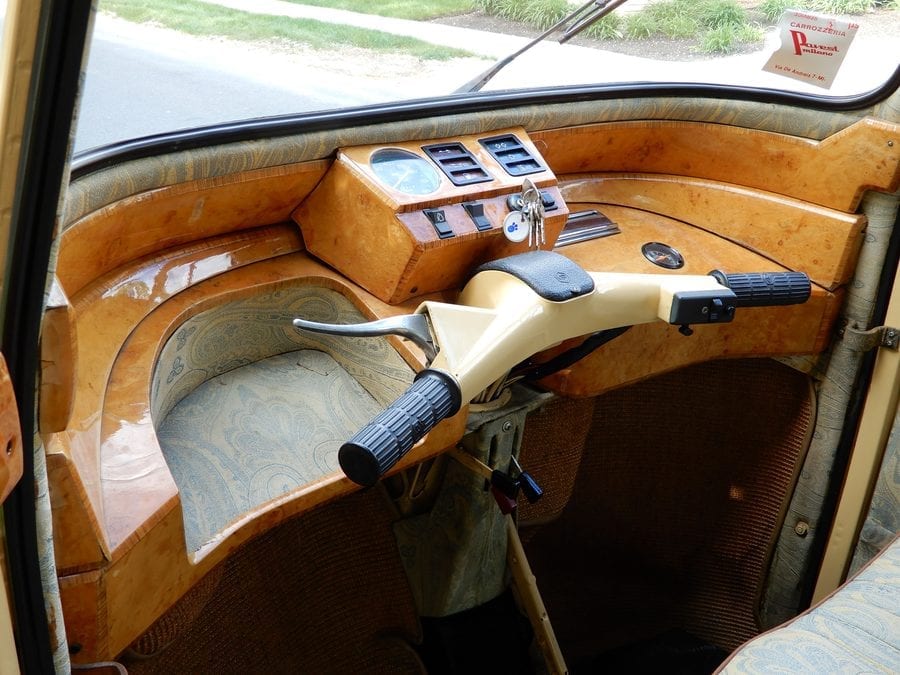
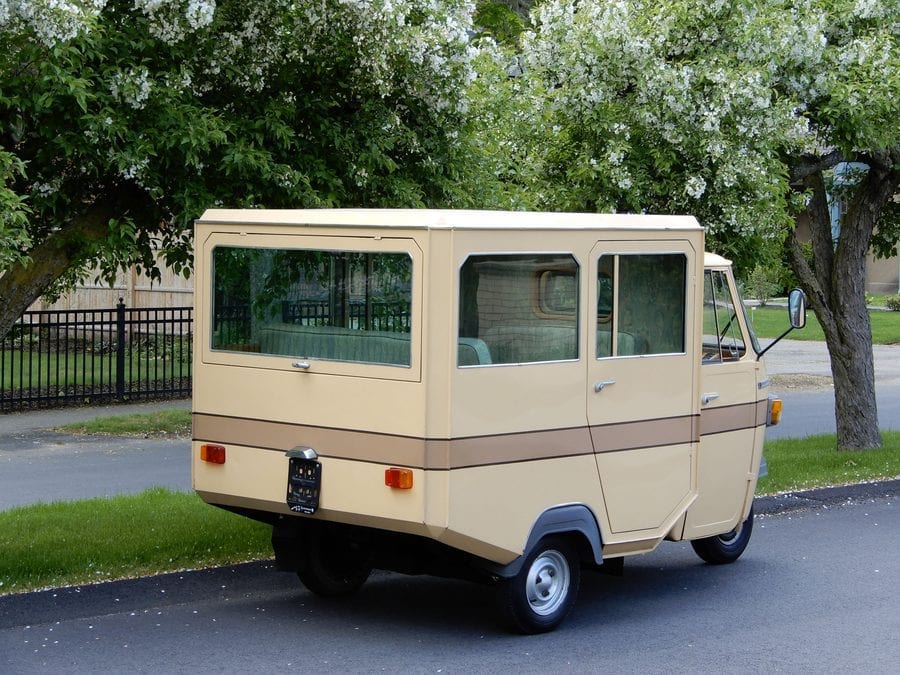
Graffagni saw off the business tycoon’s first wife, Pupetta Maresca, after a torrid affair and following their marriage in 1974, amongst other things, became chatelaine of a 40-room property complete with a helipad. It had been built in 1870 by George Herbert, 4th Earl of Carnarvon – whose death was attributed by amongst others Sir Arthur Conan Doyle to the “curse of King Tut” – as his holiday home and during the 1970s and 1980s guests to “jet-set parties” given at the house by the socialite Countess were ferried back and forth from their dock in Portofino harbour in a custom built 1978 Piaggio Ape coachbuilt ‘limousine.’ This vehicle, described as a “perfect yacht tender” with its opulently patterned interior and passenger-driver intercom, is now for sale.
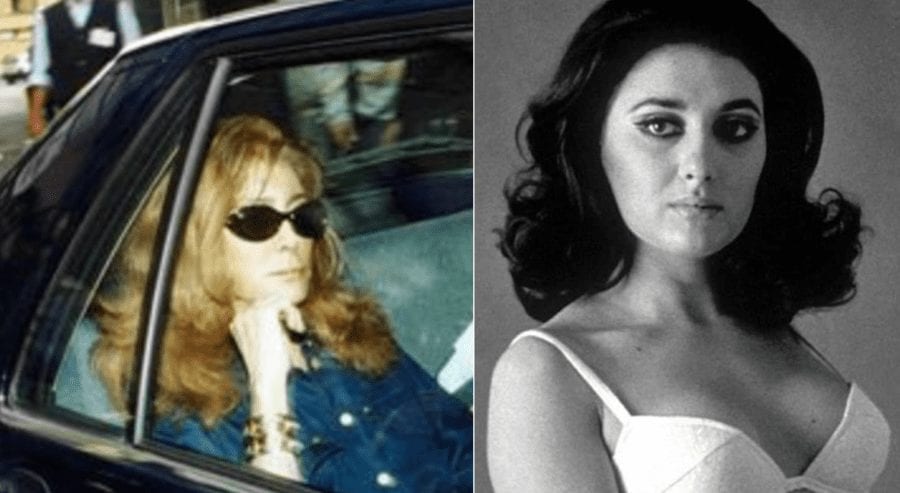
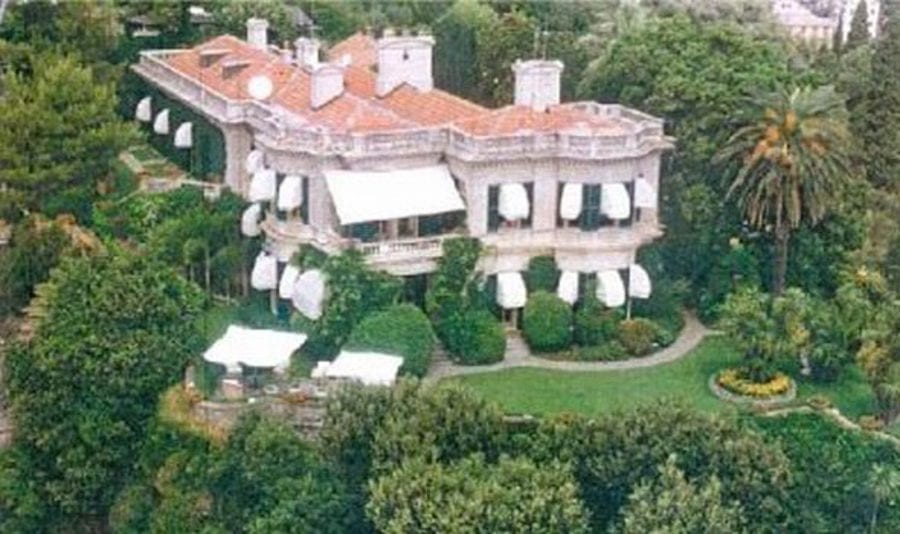
Countess Francesca Agusta (née Francesca Vacca Graffagni, 29th October 1942 – 8th January 2001). It is most surprising that the late Dominick Dunne did not make a television programme about her life and demise.Villa Altachiara (alternatively known as ‘Villa Alta Chiara’ or ‘Villa Carnarvon’) was one of Countess Agusta’s homes from the 1960s until her death in 2001; it was originally built as a holiday home for Lord Carnarvon (26th June 1866 – 5th April 1923) – the financier of Howard Carter’s explorations of Egypt’s Valley of the Kings that led to the discovery of Tutankhamen’s tomb. The Carnarvon family hosted many guests during their ownership, amongst them Brooke Astor and Evelyn Waugh.
Count Agusta died in 1989 without divorcing his second wife in spite of separating from her in 1985. At that time, in addition to Villa Altachiara, he had given her four apartments in Milan, an estate in Cuernavaca, Mexico, family jewellery and an undisclosed cash sum. With his demise, she came into yet further fortune.
This by-then “very wealthy woman” hit the headlines again in 1994 when she and her new lover, a “former Portofino playboy politician [named] Maurizio Raggio,” were discovered to have been part of a corruption scandal involving Bettino Craxi, the Prime Minister of Italy from 1983 to 1987. Before police could apprehend them to charge them with amongst other things money laundering, the pair fled to Mexico and lived on her estate until 1997 as fugitives. During this period, the Countess reportedly attempted suicide at least once.
Upon her return to Italy, the Countess plea-bargained and spent just three months in Milan’s Opera prison for her crimes in spite of receiving a two-year jail sentence. After “some further time under house arrest” in the Villa Altachiara, the “retired” gadabout then took up with a Mexican, Tirso ‘Tito’ Chazaro (also known as ‘Tirso Di Ricardo’ and ‘Rafael Tirso Roncado Gonzales’), and lived in the style of Miss Havisham. She was rarely seen in public and having become dependent on drink and drugs, was known for her erratic behaviour and temper.
“Considerably the worse for wear and muttering she would not be coming back” on the night of 8th January 2001, the Countess supposedly told her lover and two others present that she was going for a swim, but either slipped on wet leaves or was pushed off a veranda into the sea. A search followed, but after the only traces found were the Countess’s dressing gown on the seabed close to the Villa Altachiara and her slippers on nearby rocks, press reports suggested she had either committed suicide or, given her past form, staged an “elaborate disappearing act.”
Countess Agusta’s badly decomposed body washed up three weeks later on a beach at Toulon on the French Riviera. Her feet had been gnawed off by fish, her skull was smashed and her face was disfigured. She could only be identified by two rings she was wearing and her exact cause of death could thus not be determined.
As an autopsy found no trace of water in her lungs, she plainly did not die by drowning, but in in 2004 the Countess’s brother, Domenico Vacca Graffagni, was quoted in the Independent as stating: “The [original] inquiry was closed in a hasty fashion because of absence of proof, relying too readily on ‘reasonable doubt’ … It was manslaughter. He [Chazaro] was always beating her. He didn’t mean to kill her. But that evening things didn’t go the way the Carabinieri said, my sister was not drunk and she did not slip on wet leaves on the veranda.”
Adding further to speculation, much earlier, the Countess’s step-son, racing driver and team owner Rocky Agusta (1950 – 2018), told Corriere della Sera in 2001: “Francesca was a beautiful woman, simpatica, very rich… People have written that she inherited 500bn lire, but if it had been only 50 or 25, who commits suicide with 25bn lire set aside? … The people who were around her certainly did not help her… It’s not up to me to formulate accusations, but Francesca was not alone that night. She was very upset. She should have been put to bed. Instead, they let her go out into a dark, wet, cold night, not even dressed.”
In due course, the last of many wills left by Countess Agusta revealed Tirso Chazaro to be her sole beneficiary, but after this was challenged in court by her former lover, Maurizio Raggio, the pair split the legacy – reported to be worth as much as £165 million ($201 million, €186 million or درهم738 million) according to the Guardian in 2001 – sixty-forty between them.
In 2009, the Villa Altachiara was offered for sale initially for £44 million ($54 million, €50 million or درهم198 million) and then for £30 million ($37 million, €34 million or درهم135 million) in 2014. It supposedly eventually sold for less than half that sum to a Russian billionaire a number of years later in spite of an estate agent remarking: “Some say the spirit of Countess Francesca Vacca Agusta still walks the estate looking for her husband and you can hear her shouting for him on the wind.”
An estimate of £37,000 to £49,000 ($45,000 to $60,000, €42,000 to €55,000 or درهم165,000 to درهم220,000) for the Countess’s Piaggio Ape. Described as “sweet” and “[anything but] an Italian tuk-tuk” by RideApart, the one-off private taxi will be auctioned as part of the forthcoming RM Sotheby’s ‘Driving Into Summer’ 21st to 29th May 2020 online sale. One can only hope it finds a happier home than it encountered at that of its former mistress.
Eaton Square apartment in a Grade II* listed building that has been home to both Bond star Sir Roger Moore and aristocrat-who-went-missing Lord Lucan for sale for staggering sum given it is on a lease of just 15 years
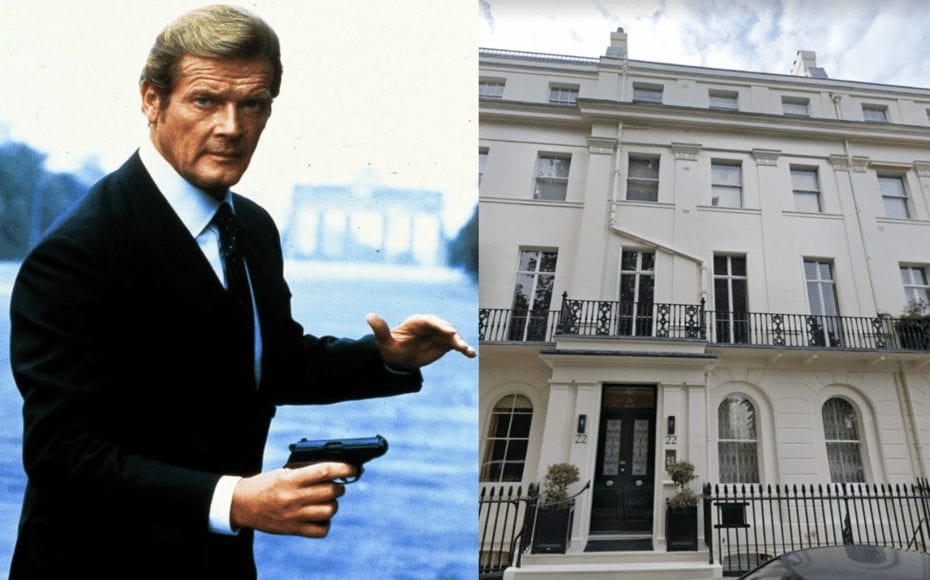
Best known for playing the British secret agent James Bond in seven feature films from 1973 to 1985, Sir Roger Moore KBE (1927 – 2017) once remarked: “I enjoy being a highly paid actor.” He added: “It’s easy to sit in relative luxury and peace and pontificate on the subject of the Third World debts,” though in his various homes in such places as London, Monaco and Switzerland, he certainly illustrated that he took the bit about opulence seriously indeed.
Now, someone with aspirations to live like “the definitive Bond” has the opportunity to purchase an apartment in an Eaton Square building where not only he resided, but one that was also a childhood home of the most famous aristocrat to go missing ever, the 7th Earl of Lucan (born 1934, last seen alive in 1974, declared dead in 2016).
John Bingham, better known as ‘Lucky’ or Lord Lucan, is said to have returned to London from wartime exile in New York in February 1945 with his siblings to find: “As they walked past their home at Cheyne Walk, they realised the whole building had been bombed. Their other family home at 22 Eaton Square had no windows due to the blow of a bomb and rationing was in full swing.”
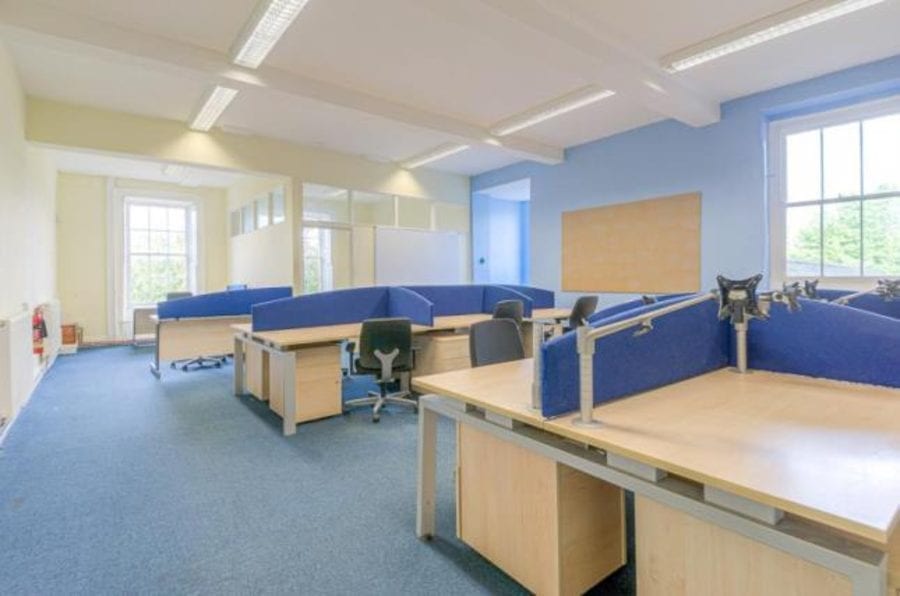
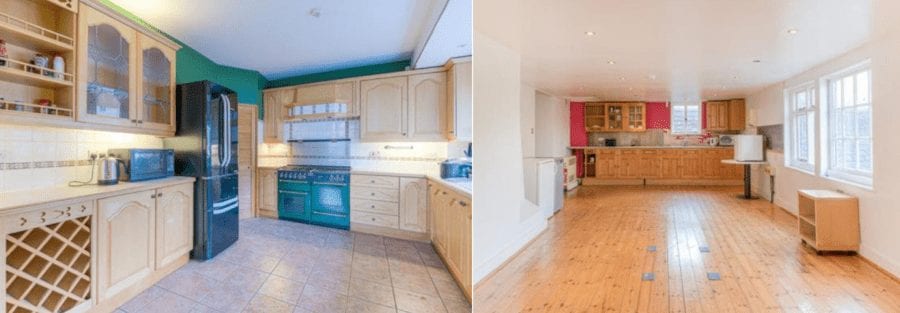
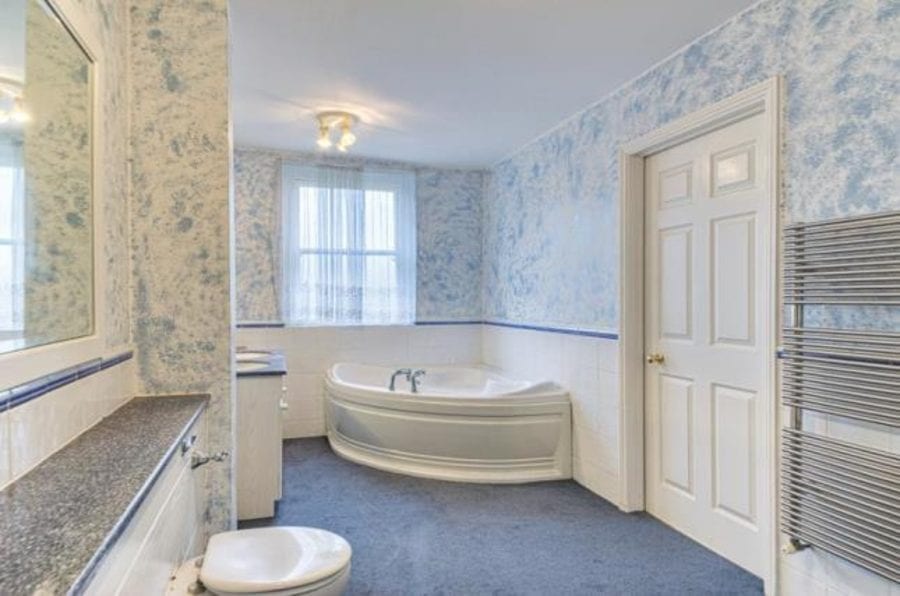
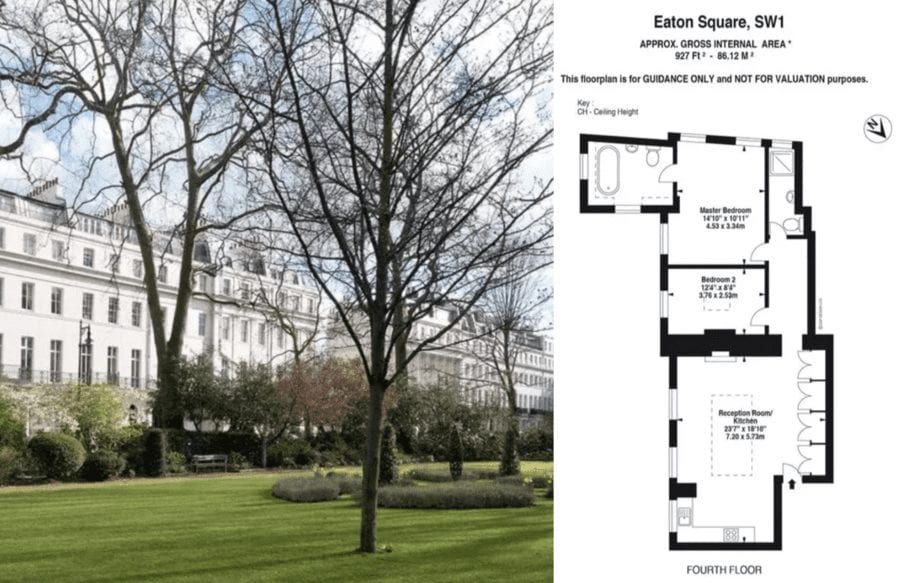
The apartment available now has windows complete with actual glass in-situ and is situated in what was once a single-family residence. It extends to 927 square foot and consists of a reception room with open plan kitchen, two bedrooms, one bathroom and one shower room. There are wooden floors throughout and the space has air conditioning also.
The fourth floor flat at 22 Eaton Square is offered by estate agents Ayrton Wylie at a price of £795,000 ($1 million, €914,000 or درهم3.7 million) or the equivalent of £53,000 per year ($66,700, €60,900 or درهم244,800 per year). Its lease expires on the 23rd February 2035 and an annual service charge of £6,779 per year ($8,526, €7,791 or درهم31,313 per year) is payable also.
Criticism of the 29-year-old Duke of Westminster for quietly giving £12.5 million to the UK’s coronavirus response is most unfair; any anger should instead be directed at bailout demanding billionaires like Sir Richard Branson and Sir Philip Green
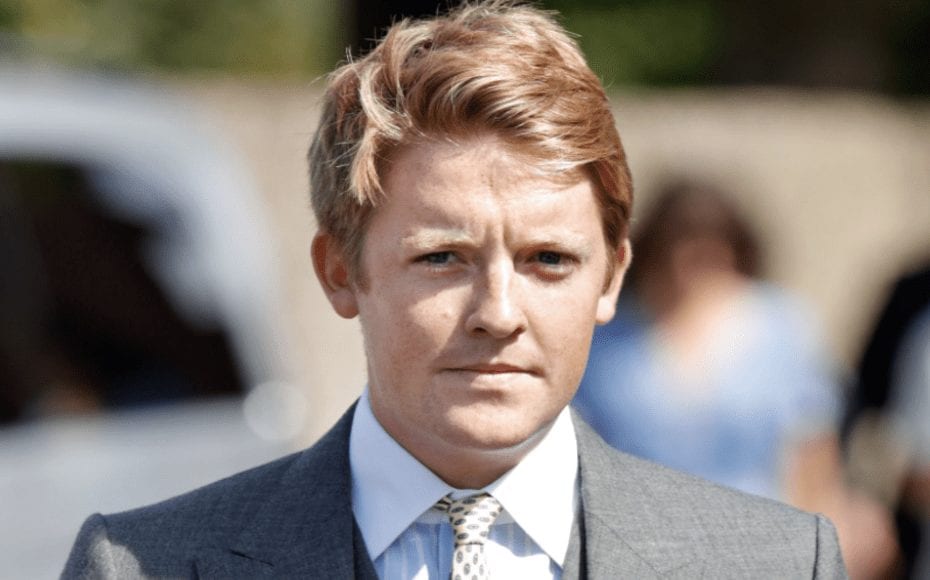
The richest under thirty in the world, 29-year-old landowner, Hugh Grosvenor, Duke of Westminster has shown generosity in giving £12.5 million to “provide support to NHS staff, key workers and their children and families.”
Quietly announcing his move without seeking any fanfare through his Westminster Foundation on Twitter, the seventh Duke – known to his friends as ‘Hughie’ and like his prison reform campaigner sister, Lady Edwina, credited for being both “low key” and “down to earth” – commented:
“On behalf of my family and everyone at the Grosvenor Estate, I want to say a huge thank you to all our amazing NHS staff and everyone providing critical frontline services. We are all humbled and incredibly grateful that you are working tirelessly to keep us safe and keep the country functioning.”
“NHS staff and key workers don’t work in isolation. They have children and families whose health and wellbeing will also be highly impacted by this crisis. As they keep us safe, I want to help provide as much support to them and their families as we can. Our donation will help create a Family Fund within NHS Charities Together to provide food, respite, rehabilitation and positive mental health support to NHS staff and their families.”
“While the impact of this crisis is being felt immediately, the virus will sadly also affect people’s lives long into the future. That’s why I’m keen to support the longer-term scientific and socio-economic response to the epidemic. Through these donations, my Foundation will work with a range of fantastic charities and organisations who are able to help vulnerable people in the difficult months ahead.”
We join those saluting the Duke of Westminster for his laudable donations and suggest others with similarly large bank balances follow suit. It is now time for the likes of the greedy pigs Sir Richard Branson and Sir Philip Green to take heed of this generous young man’s actions and put a stop to their nefarious demands for government bailouts; instead, they too ought to dip their hands into their very deep pockets and finally put their money where their almightily large mouths are.
Nicky Haslam designed Belgravia house for sale for 33% less than in 2010 in spite of yoyo-ing up and down in price for ten years
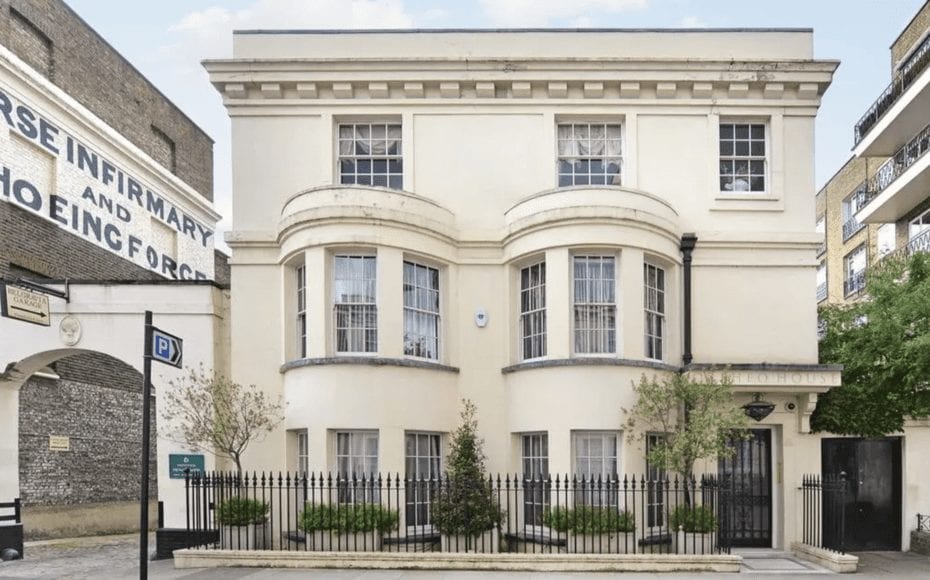
Estate agents like to make things sound grander generally and often give a house a name rather than a number. In the case of ‘Orpheo House’ in Belgravia, they’ve done the opposite and even though technically it stands in Elizabeth Street, its listed address is the rather grander sounding ‘50a Eaton Square.’
Grosvenor Estate owned Eaton Square, developed from 1827 onwards, has variously been home to actors, politicians and statesmen. Amongst them have been Stanley Baldwin, Sean Connery, Rex Harrison, Vivien Leigh, Joachim von Ribbentrop, George Soros and Queen Wilhelmina of the Netherlands and most recently in 2019, the square was used as a location in the hit BBC drama series The Capture.
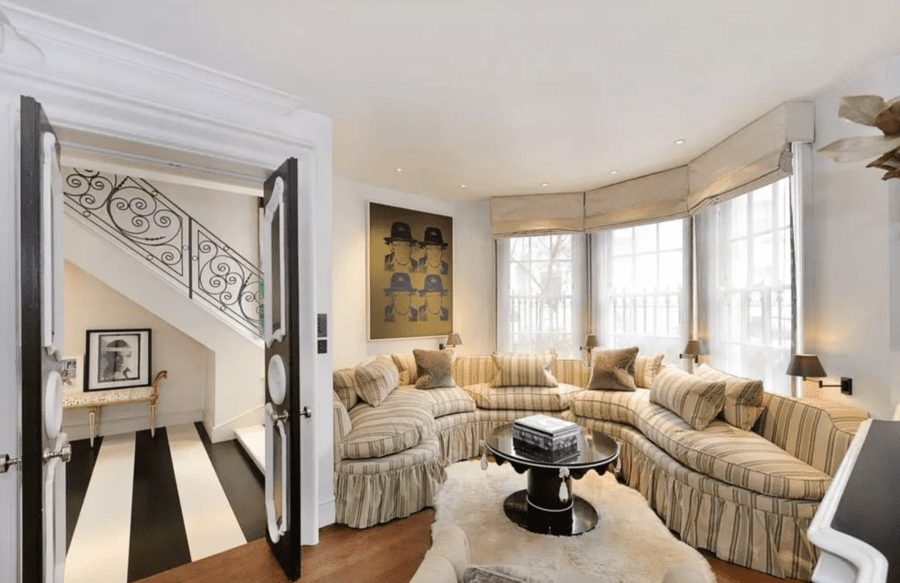
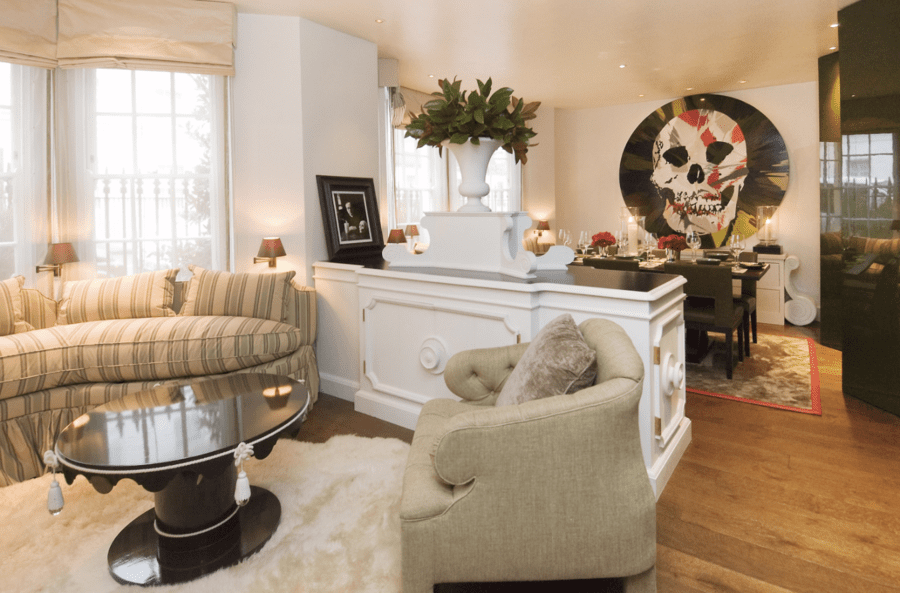
50a Eaton Square has had a curious history. In 1992, it was listed as the final address of the fourth and last Baron of Southborough on his death and subsequently, in 2009, it was sold to a “British music executive” according to Financial News. In 2010, he commissioned the renowned interior designer Nicky Haslam to turn it into a “trophy home” and the “epitome of comfortable luxury.” It now includes not only air conditioning and underfloor heating, but also has “secret drawers for DVDs” and “display cabinets for watches and sunglasses.”
“Super-stylish… [and] whimsical… with a Parisienne theme” according to the Evening Standard in 2016, the three-storey property fronts Elizabeth Street, but can also be accessed from a side door into Eaton Mews West – a cobbled street that has been home to Belgravia Garage since 1930.
Plainly, being next to the busy garage and car wash has put off buyers given that the property has yoyo-ed on and off the market at prices as high as £4.5 million since 2010. The real problem, however, is that the remaining 26-year lease is not enfranchisable.
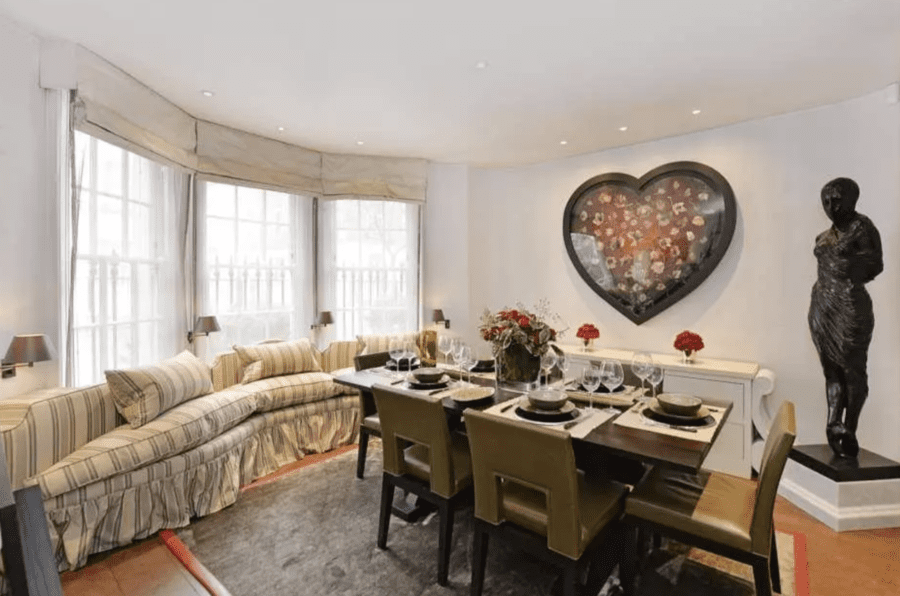
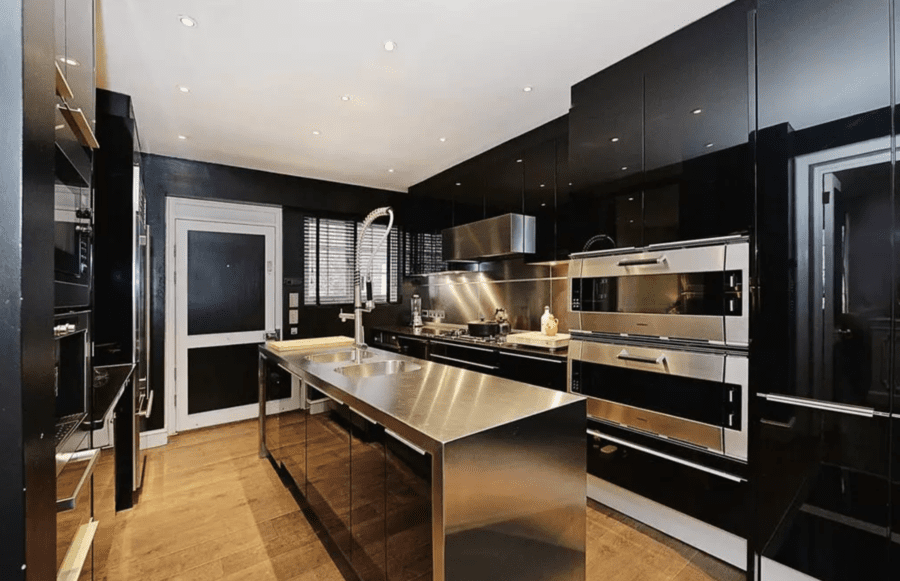
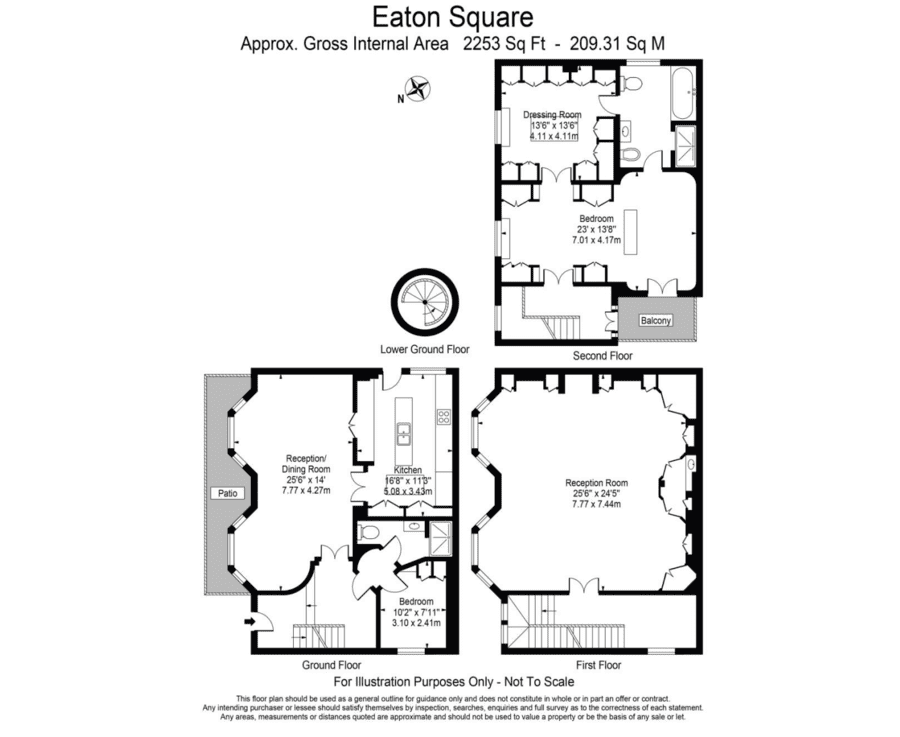
Extending to 2,253 square feet, 50a Eaton Square features a double reception room, an Italian black lacquer kitchen and a small bedroom suite on its ground floor, a 25-foot by 24-foot reception on its first floor whilst a “generous” bedroom suite with dressing room, bathroom and west facing roof terrace takes up the entire second floor. A spiral wine cellar is located on the lower ground floor and a parking space within the mews is also included.
Agents Rokstone now seek the very much reduced sum of £3 million for the property.
March 2020 – Reduced in price to £3 million ($3.5 million, €3.3 million or درهم12.9 million) and still available through agents Rokstone.
November 2019 – Listed for sale on Zoopla.com for £3.45 million ($4 million, €3.7 million or درهم14.8 million).
June 2018 – Listed for sale in Square Mile magazine for £4.25 million ($5 million, €4.6 million or درهم18.3 million).
October 2016 – Featured in the Evening Standard’s ‘Homes & Property’ section at a price of £4.25 million ($5 million, €4.6 million or درهم18.3 million) with agents Rokstone.
July 2011 – Listed as the ‘House of the Day’ on the Financial News website at a price of £3.95 million ($4.6 million, €4.3 million or درهم17 million) through agents Savills.
January 2010 – Listed for sale in Square Mile magazine for £4.5 million ($5.3 million, €4.9 million or درهم19.4 million) with agents Aylesford.
2009 – Sold to a “British music executive” according to Financial News. They state: “He moved out last year while [Nicky] Haslam completely gutted the house, taking it back to bare brick and changing the ceiling heights.”
June 1992 – Described as the last address of Francis Michael Hopwood, Lord Southborough, whom died on 15th June 1992 (born 1922). Given the fourth Baron of Southborough had no offspring, the title (which was created in 1917 by King George V) then became extinct.
June 1955 – Featured in The Gazette as the address of Ambrose Dasent, an engineer and relative of the Sir George Webbe Dasent (1817 – 1896), the renowned translator of Scandinavian literature and mythology.
February 1936 – Featured in The Times as having “been sold by Messrs.’ George Trollope and Sons before auction.
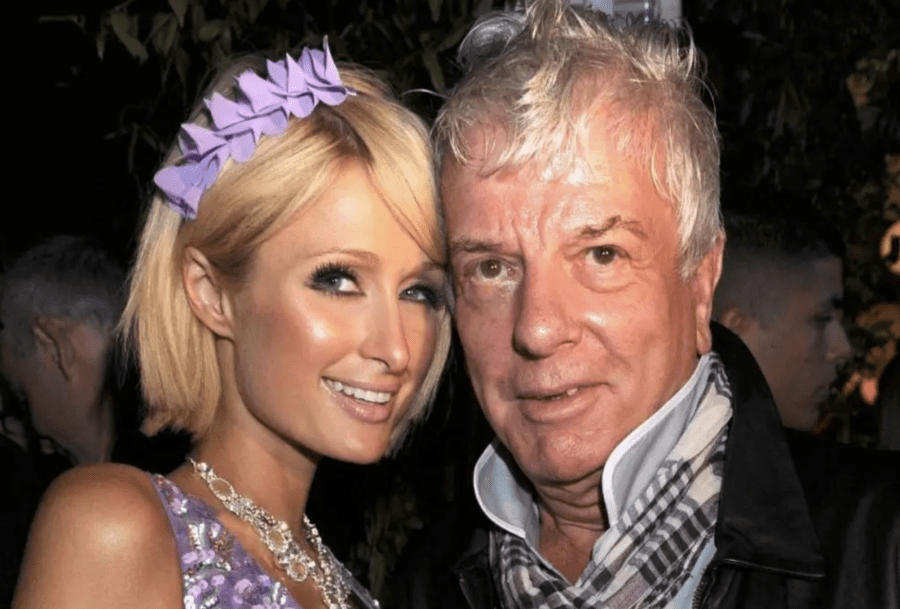
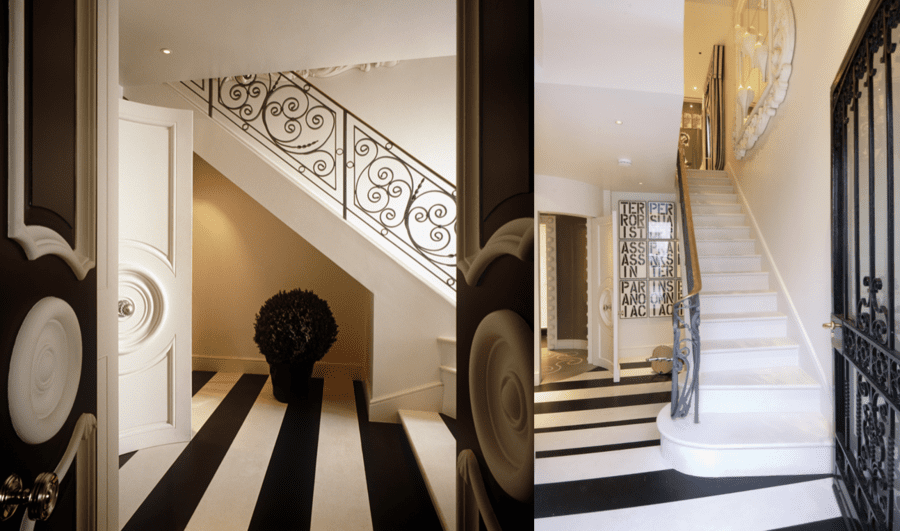
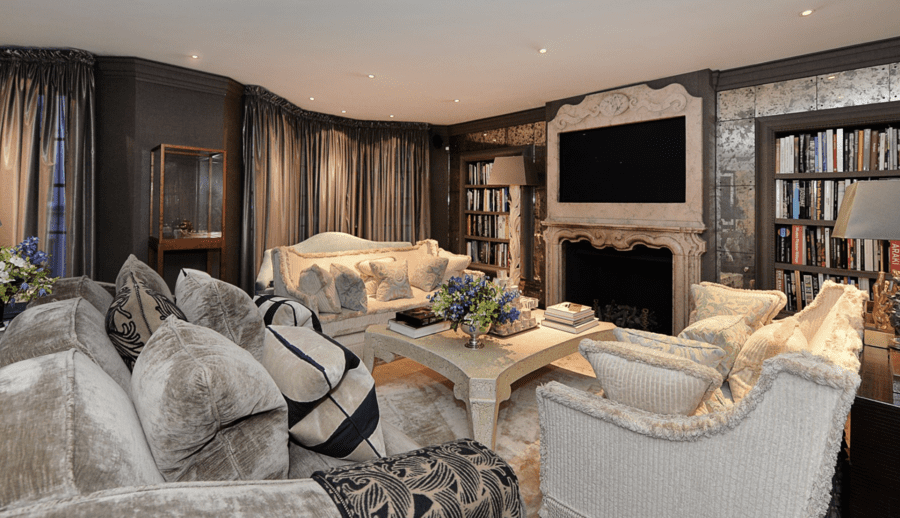
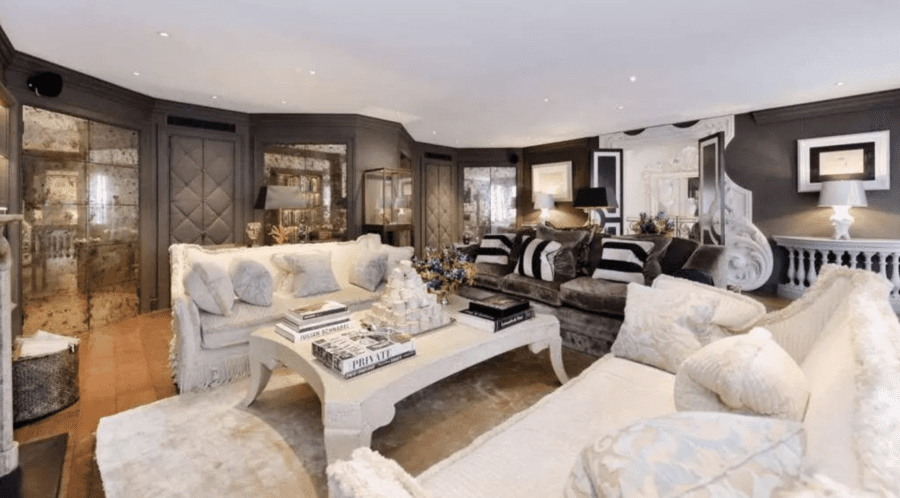
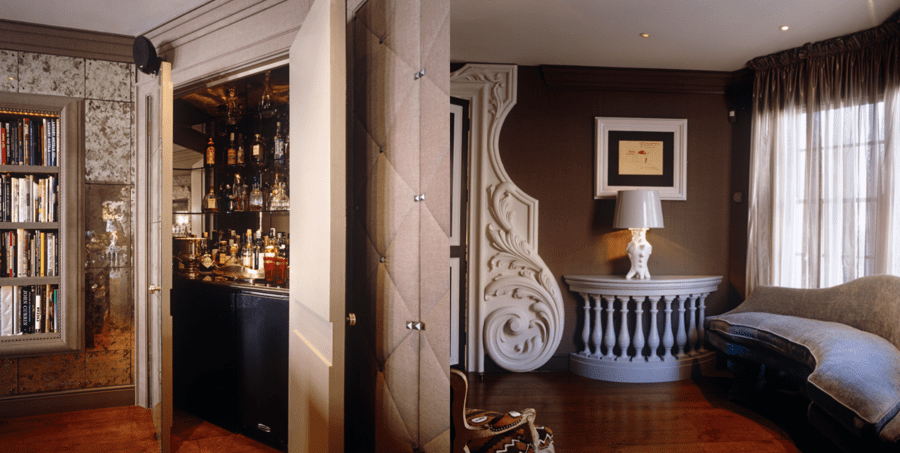
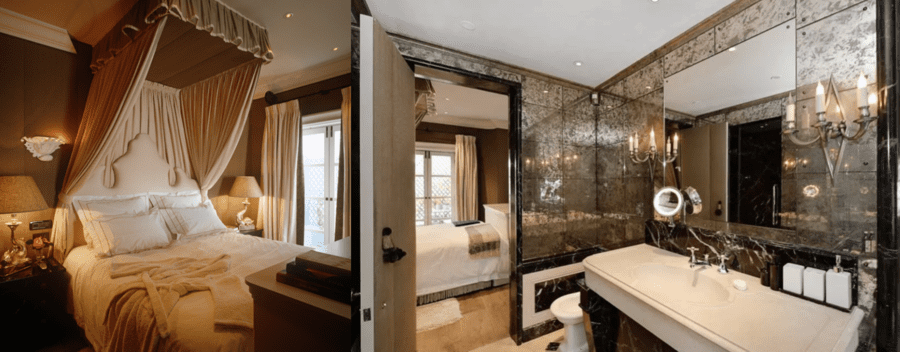
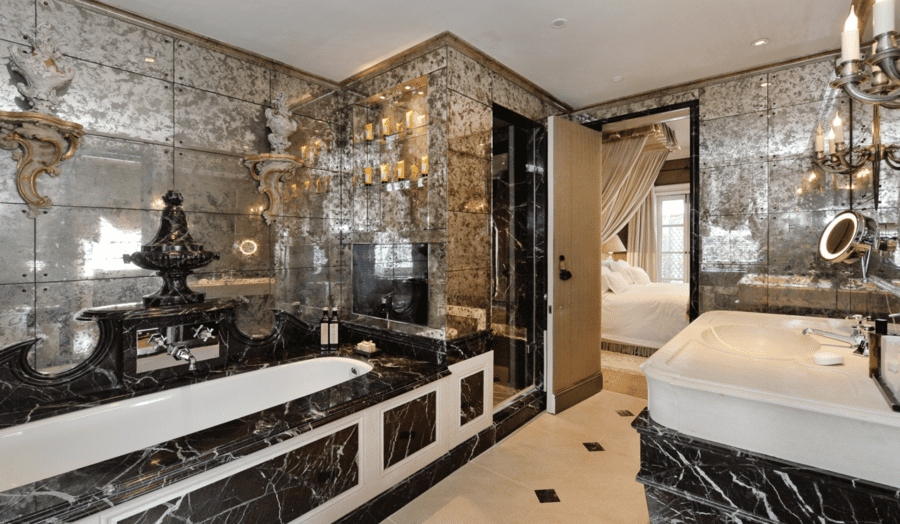
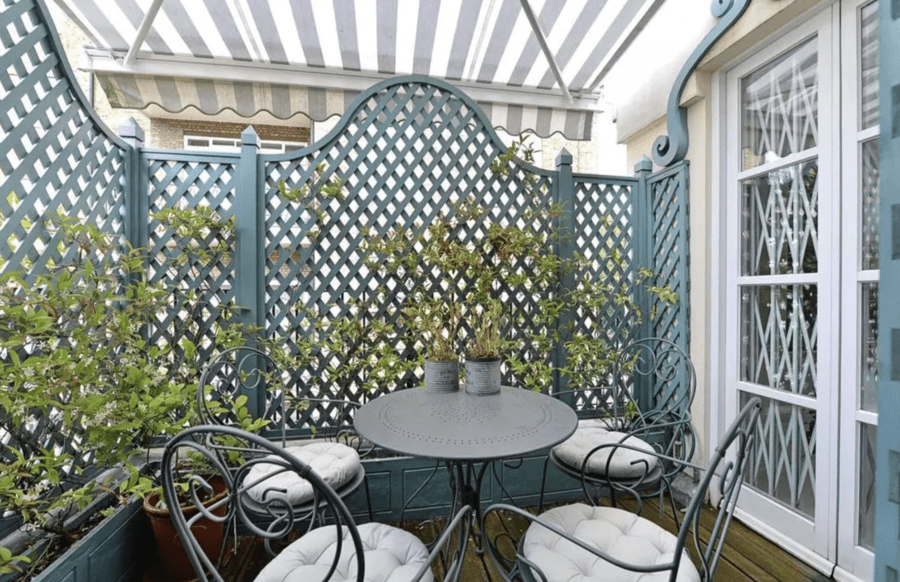
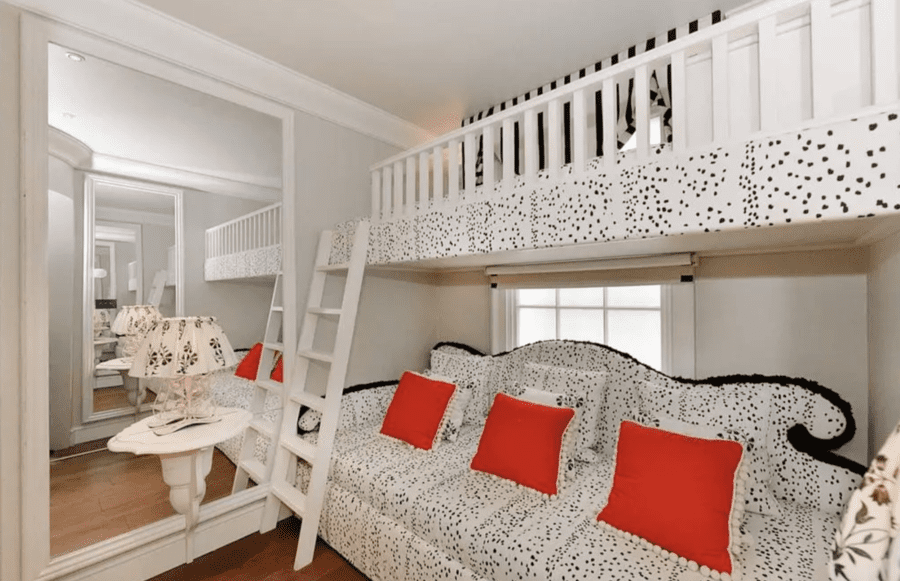
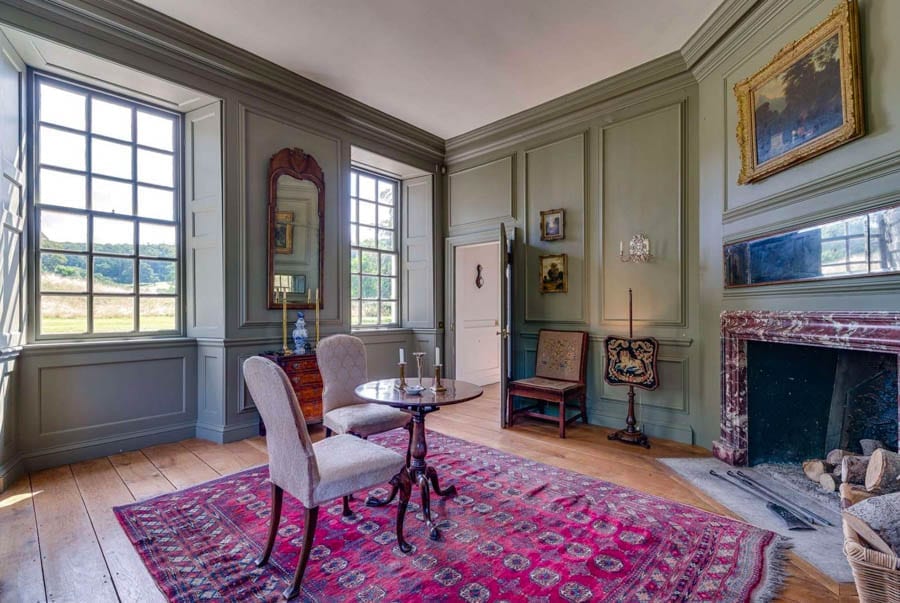
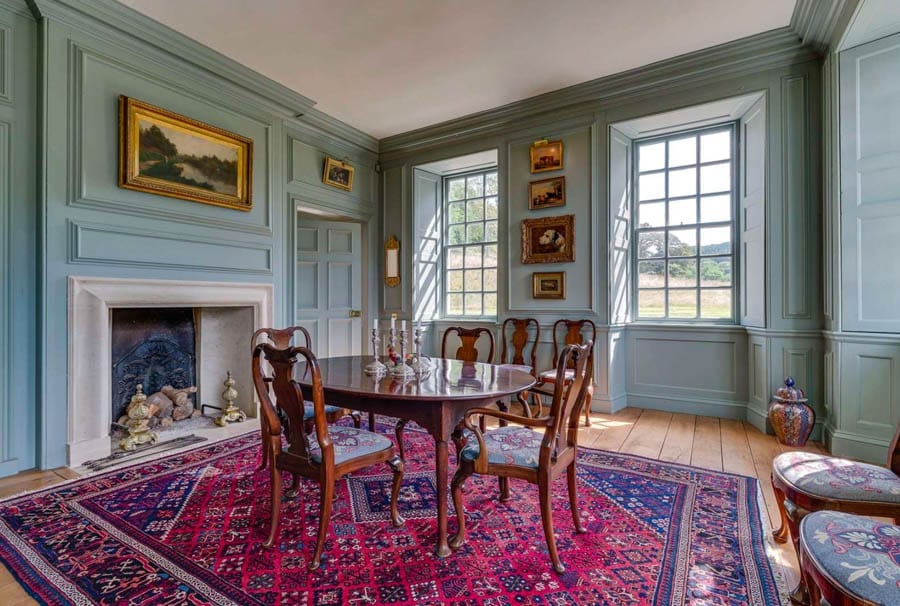
The designer of the interior of 50a Eaton Square, Nicky Haslam (pictured with fellow socialite Paris Hilton).The entrance hall and staircase.The main reception room.Viewed from another angle.The room includes a bar and is opulent in its styling.A second reception room, on the ground floor, features a sitting area within a bay window.It is has a division.With a dining area beyond.The kitchen features a central island.The main bedroom suite.Another view of that suite’s bathroom.The suite comes with its own roof terrace.The second bedroom is situated on the ground floor.A floor plan of the property.
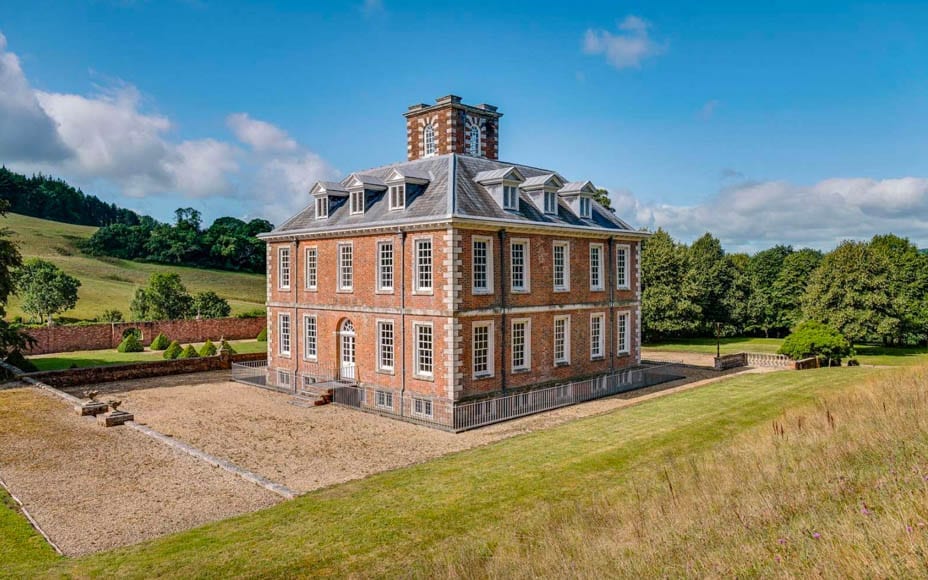
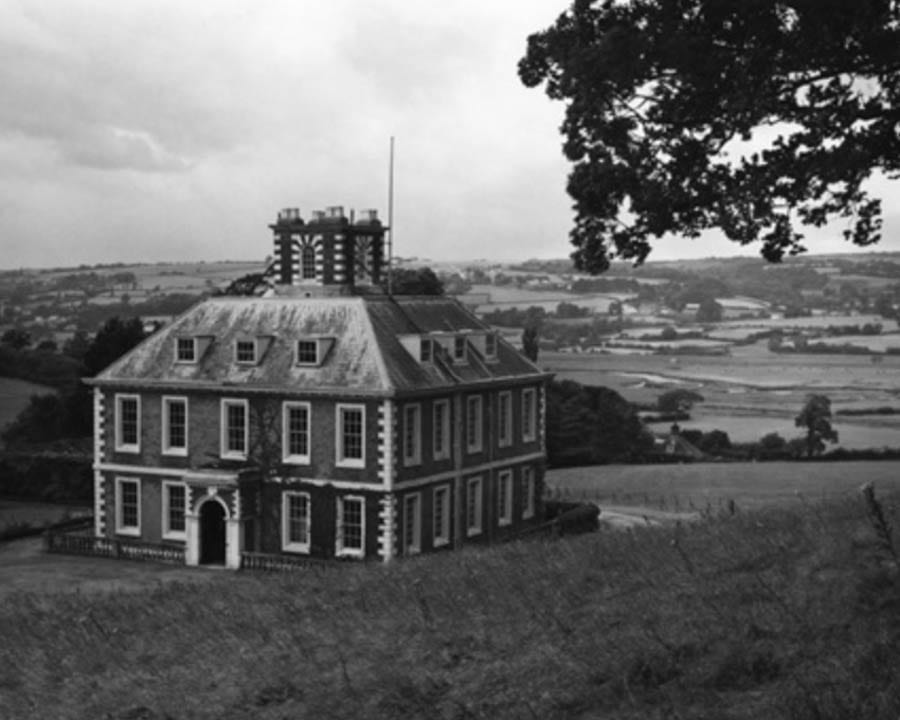
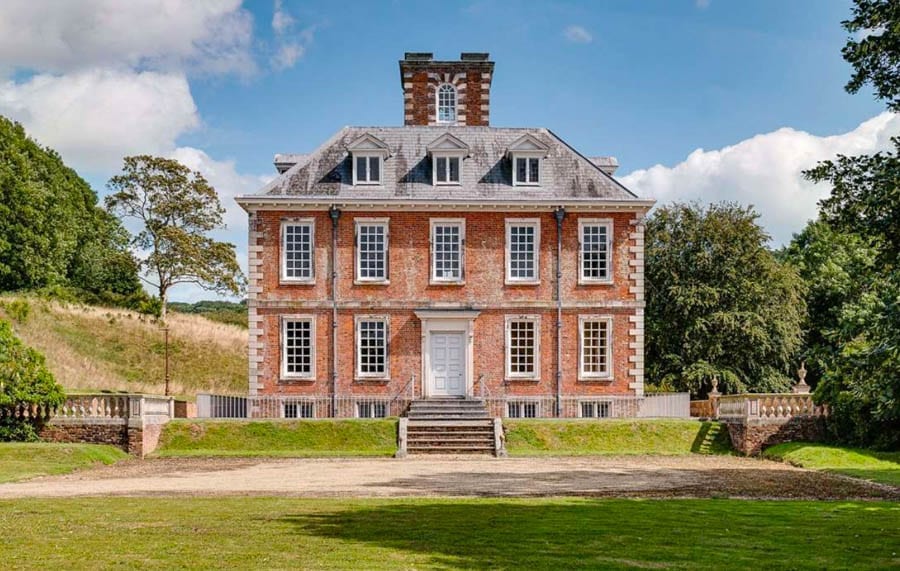
Standing on the site of a manor house destroyed in the Civil War in 1645, Grade I listed Stedcombe House was built in 1697 by the Hallett family on their return from Barbados. It was occupied by them until their bankruptcy in 1889 and passed to the Stephens family, whom remained resident until 1960.
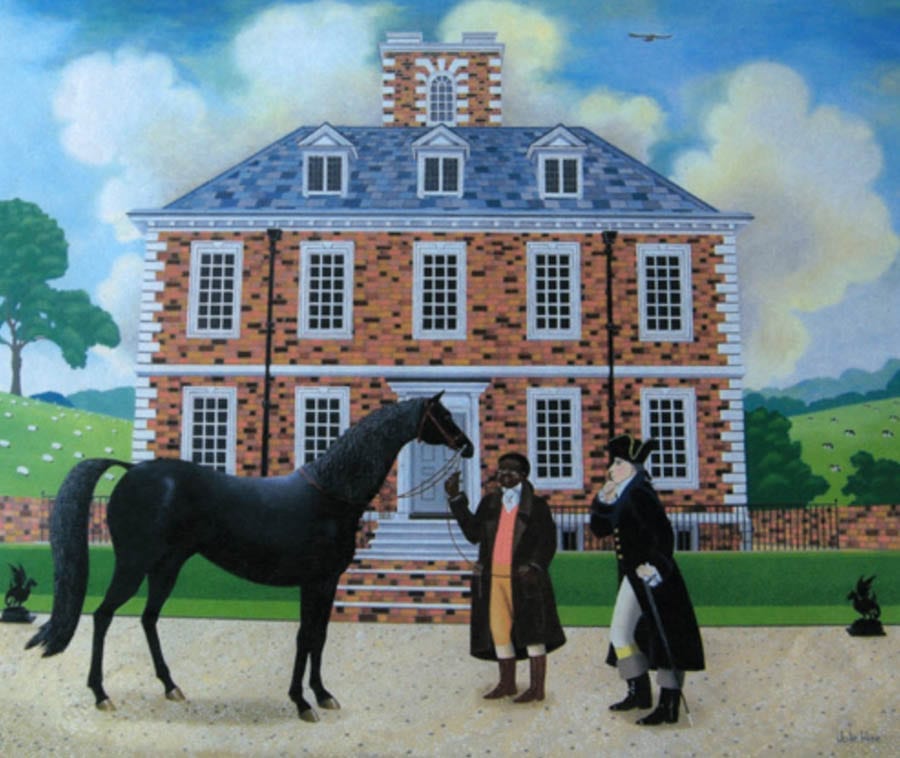
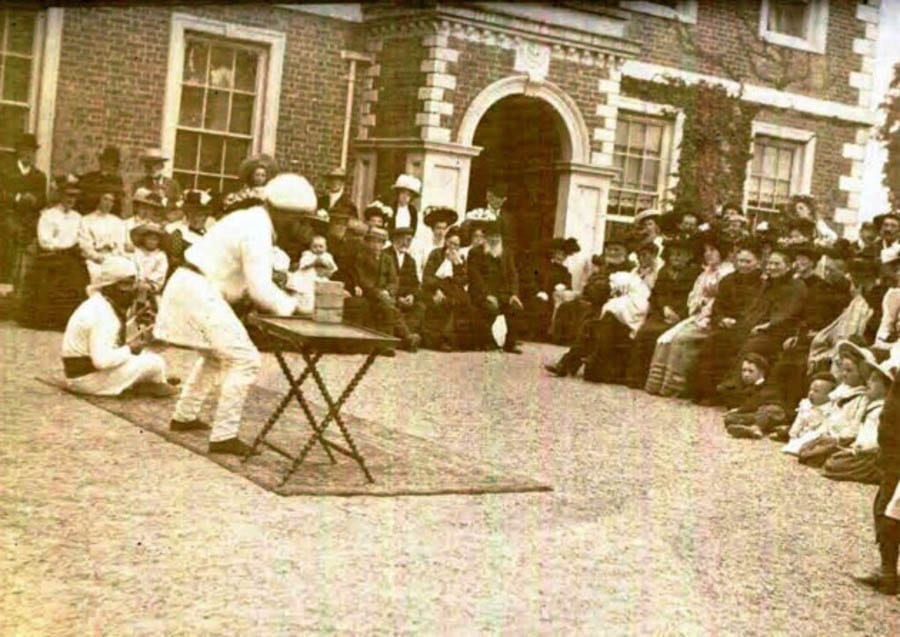
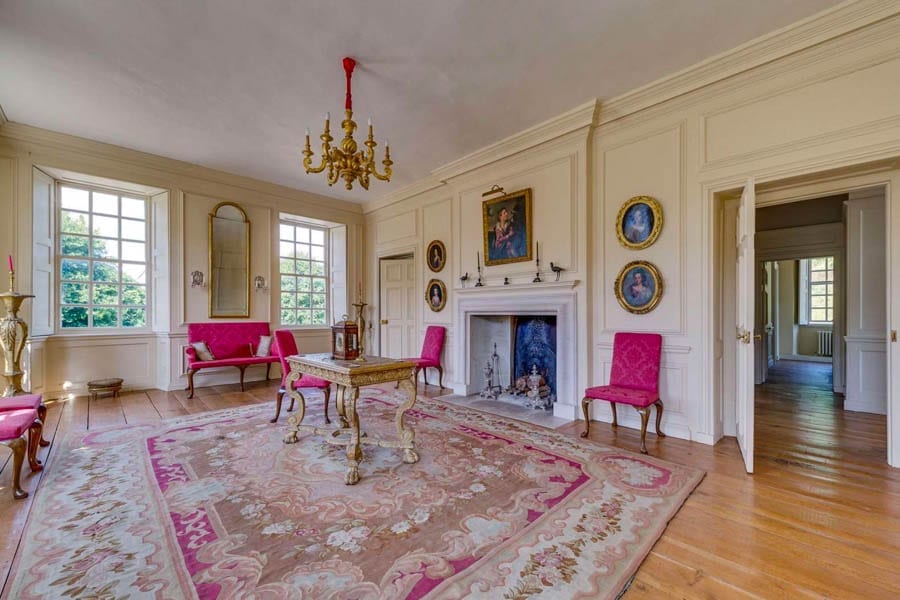
The house in 1961; note the 19th century porch (which was later removed). The house has the typical William and Mary look; we featured another example of such when we featured the sale of Oswaldkirk Hall in Yorkshire in October 2013.The front elevation of Stedcombe House, Axmouth, Devon, EX12 4BJ, United Kingdom today (without the porch).A painting of Richard Hallett at Stedcombe House with his black servant Ando by Julie Hine (painted 1992).A birthday party with “exotic performers” at Stedcombe House in March 1907 (again, note the later removed 19th century porch).This grand reception room in the house provides indication of the quality of the refurbishment carried out since 1988.
Left vacant and rotting subsequently, the house became infected by “serious dry rot,” but upon purchase by the current owner it was subject to a “meticulous and sympathetic renovation” according to selling agents Savills.
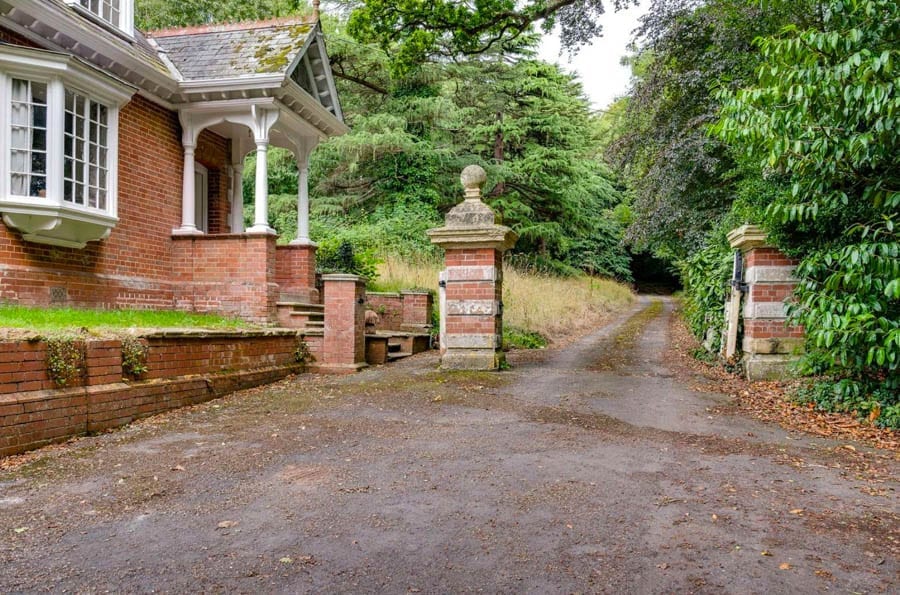
Described as a “large house overlooking the Axe valley” of “red brick in Flemish bond with Beer and Portland stone dressings” by Historic England, Stedcombe is a four storey symmetrical residence with a belvedere crowning its pinnacle. It is grand yet manageable and features 4 reception rooms, 9 bedrooms and 5 bathrooms and comes with a 3 bedroom gate lodge, a stable block and “numerous outbuildings” requiring renovation also.
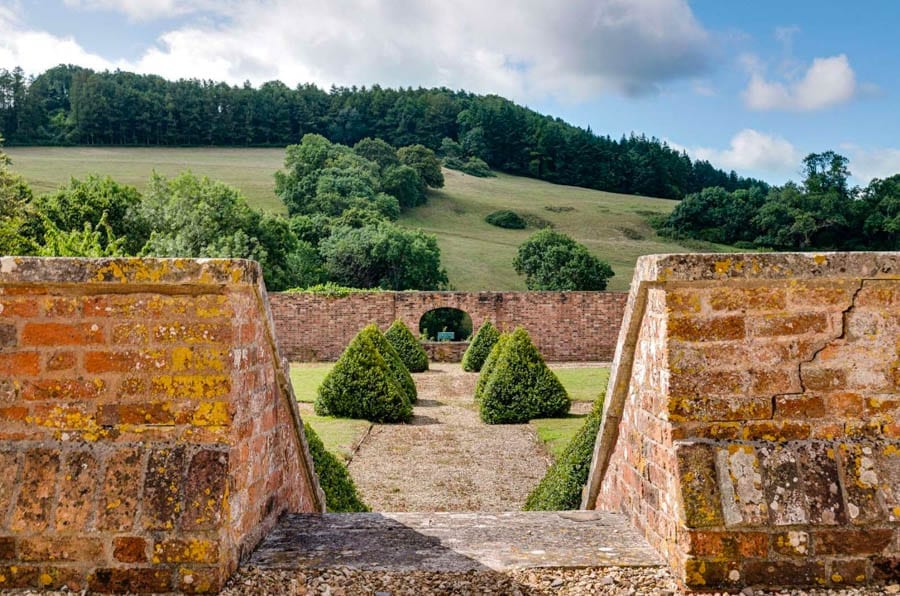
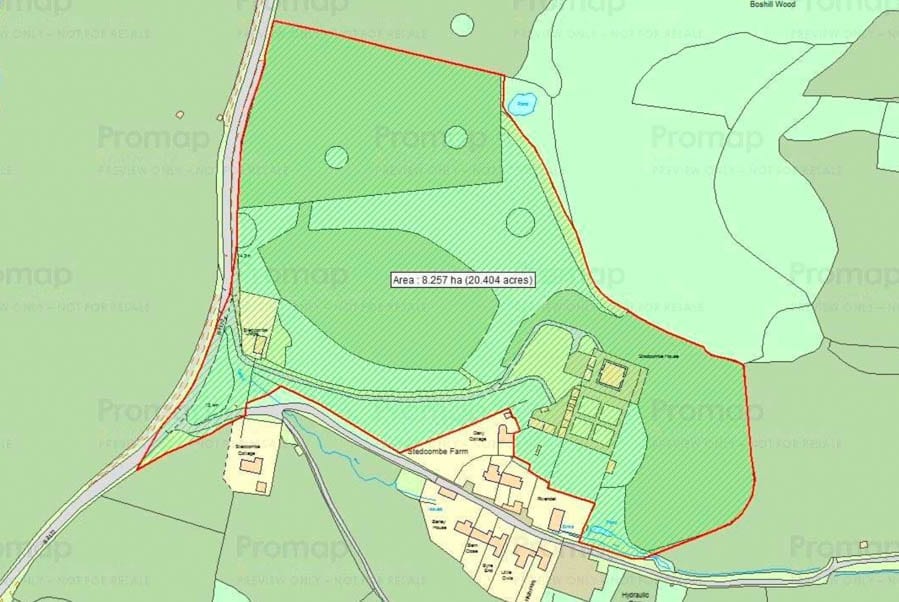
Standing on a plot of 20 acres that includes three walled gardens, pastureland and woodland, the only limitation of this home is that its once vast estate is now separate from it. Otherwise, here is probably the quintessential example of one of Britain’s most stunning homes.
Of the 8,039 square foot main house, Savills note: “Several things about it are unusual, but its most significant characteristics are its easy flow of rooms and the quality of design. In keeping with its era, all the rooms benefit from high ceilings and excellent proportions.” Pevsner and Cherry (1988) add: “[Stedcombe House is] an exceptionally fine and complete example of this type of small late 17th Century country house, the compact and centralised plan being an early example.”
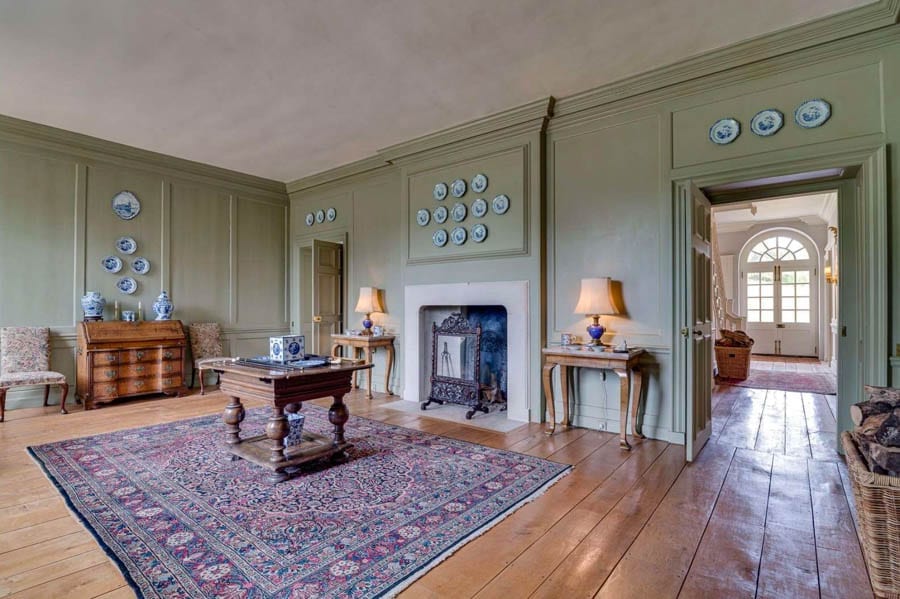
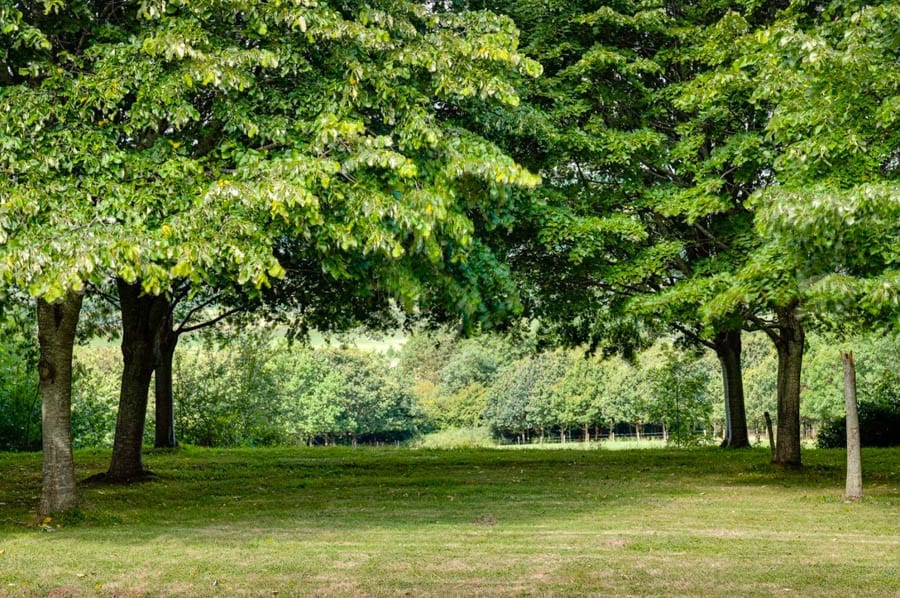
The house viewed from the garden elevation; the grounds are laid out formally, but plainly are ready for a new owner with deep pockets to lavish attention on them.The decorative style of the current owner is simple, but tasteful.A room for reflection.The dining room.A more informal sitting space is to be found at basement level.One can imagine hosting similar kitchen table suppers in this room very easily.One of the grand bedrooms of the house.Guests would not fail to be impressed by this canopy.Even the bathrooms at Stedcombe House are grand.The outbuildings at Stedcombe provide potential for conversion to other uses; office space, staff or guest accommodation or for use to provide a cinema room, games room or gym perhaps.The sale price includes this gate house. It was built at a much later date, but is of a reflective architectural design.The setting is unspoilt and the gardens roll into the countryside beyond.Stedcombe’s acreage is split into gardens, woodland and parkland.The entrance to the property is simple, but could be improved by a new owner.A site plan of Stedcombe indicates its proximity to a neighbouring farm and other properties.A glorious view of this stunning house from its gardens.
Though considered one of society’s “Bright Young Things,” the “morally dubious” daughter of Sir John and Lady Mullens was just a tempestuous coke addict who got away with murder.
Separated from her supposedly violent American singer husband, John Sterling Barney, and living with an “extravagant, bisexual waster” named Michael Scott Stephen in 1932, Elvira Mullens Barney gave a dinner party at her “prodigally furnished” Knightsbridge home – known as the ‘Love Hut’ – at 21 William Mews on the 30th May that year. Early the next morning, shouts of: “Get out, get out! I will shoot you! I will shoot you!” were heard in the mews followed by: “Chicken, chicken, come back to me. I will do anything you want me to.”
Undoubtedly the inspiration for Eveleyn Waugh’s character Agatha Runcible in Vile Bodies and possibly also Elvira in Noel Coward’s Blithe Spirit, Mullens Barney’s single shot at close range with a .32 Smith & Wesson revolver killed her lover in the doorway of their bedroom. On her arrest, she launched into an “uncontrollable violent outburst and paroxysm of rage” and “slapped a policeman in the face when he suggested she put on a warmer fur coat.” She is said to have then added: “I’ll teach you to say you will take me to a police station. Now you know who my mother is you’ll be a little more careful in what you say and do to me!”
Placed in a private cell at Holloway Prison with a “telephone, powder-puffs and a grand tea-gown” whilst awaiting trial at the Old Bailey, Mullens Barney was ultimately surprisingly cleared of both murder and manslaughter on 5th July 1932. As he left court, the judge at the trial, Mr Justice Humphreys exclaimed: “Most extraordinary! Apparently we should have given her a pat on the back” whilst Mullens Barney was said to have headed to a celebration party and shouted: “I am the one who shot her lover – so take a good look at me” as she took to the dance floor.
To escape public and press outrage, “spoilt child of fortune” Mullens Barney moved to France. She was found dead on Christmas Day 1936 after “a typical long night of drinking and taking cocaine” in a hotel room in Paris with signs of haemorrhage around her mouth. Her sister, Avril, meanwhile made her third husband divorcé Ernest Simpson (whose ex-wife Wallis had become wife to Edward VIII in 1937) in 1948 and was killed in a car crash in Mexico in 1978.