Matthew Steeples takes a look at a £36 million Kensington mansion formerly owned by disgraced business tycoons Alan Bond and Lord Black; its former chatelaine was known for stating “I have an extravagance that know no bounds”
Sir Winston Churchill’s daughter Mary Soames once described the buccaneering businessman and media tycoon Lord Black of Crossharbour as “London’s biggest bore unhung” whilst his wife, Lady Black – better known as the author and journalist Barbara Amiel – was suggested to be just a “rich bitch” by Sarah Sands in a “case for the defence” article in the Independent in October 2006.
“Poster boy for the 80s” turned fraudster and jailbird Alan Bond (1938 – 2015) was an English-Australian businessman equally Marmite-like in being liked or loathed and now a Kensington mansion owned for a time by both subsequently disgraced businessmen is once again for sale.
14 Cottesmore Gardens, formerly known as 12 – 14 Cottesmore Gardens, was purchased by Alan Bond’s Satellite Group for £7 million in the 1980s and sold by administrators of that business to Conrad Black and his wife for the knockdown sum of just £3.5 million in 1992.
Plain old Mr and Mrs Black (as they then were) lavished further millions – some of which came from the company Hollinger International, Inc., which ultimately resulted in their downfall – on the double fronted 19th century mansion and used it for entertaining on a lavish scale. Guests, including the likes of Prince and Princess Michael of Kent, Joan Collins, Margaret Thatcher, Henry Kissinger, Jimmy Goldsmith, James Hanson, Arnold Weinstock, Jacob Rothschild, Peter Mandelson and Tony Blair, were said to flock to the parties they gave there, but in 2005 these gatherings of upto 400 people at a time came to an almighty end.
Forced to sell at a bargain basement price of just £13.1 million on an ask of £17.5 million as the Canadian born billionaire faced jail time in America, Lord and Lady Black’s tenure was over and the residence saw its “arriviste torch” passed to Juan and Adriana Villalonga, a couple described as “a Mexican telecom czar and his beauty-queen wife.” Of what came next, The Globe And Mail’s Paul Waldie pointedly penned in February 2007: “[They] quickly erased many of the features that the Blacks prized.”
Once again for sale as of April 2023, the value of 14 Cottesmore Gardens has again been deemed to have substantially risen. Knight Frank offer the 12,310 square foot, five-storey residence at a punchy price of £36 million and laud it as “imposing” and “presented in good order throughout.” They add that a “pre-planning consultation” has found that further accommodation could be added that would take the internal space to more than 15,000 square feet; business barons with deep pockets only need apply.
Editor’s Note – Unlike as is the case in many publications, this article was NOT sponsored or supported by a third-party. Follow Matthew Steeples on Twitter at @M_Steeples.
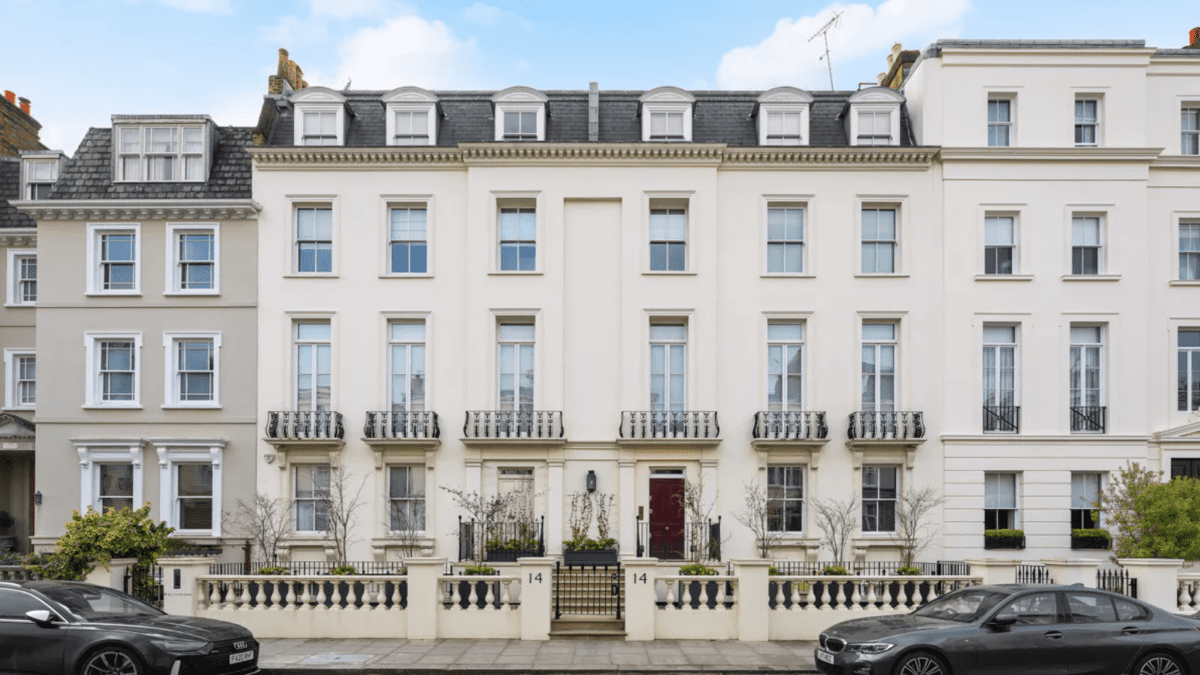
Pictured Top – 54-foot wide 14 Cottesmore Gardens is described by selling agents Knight Frank as “offering lateral living so often requested but so hard to find in central London.” They neglect to mention that with its hedges cut back to the minimum, the place actually looks extremely forlorn.
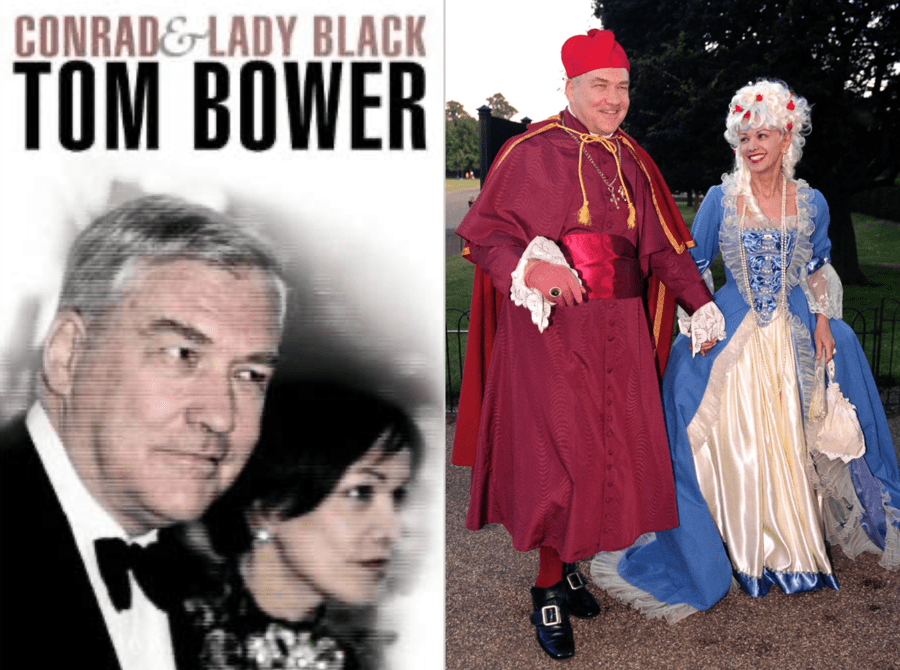
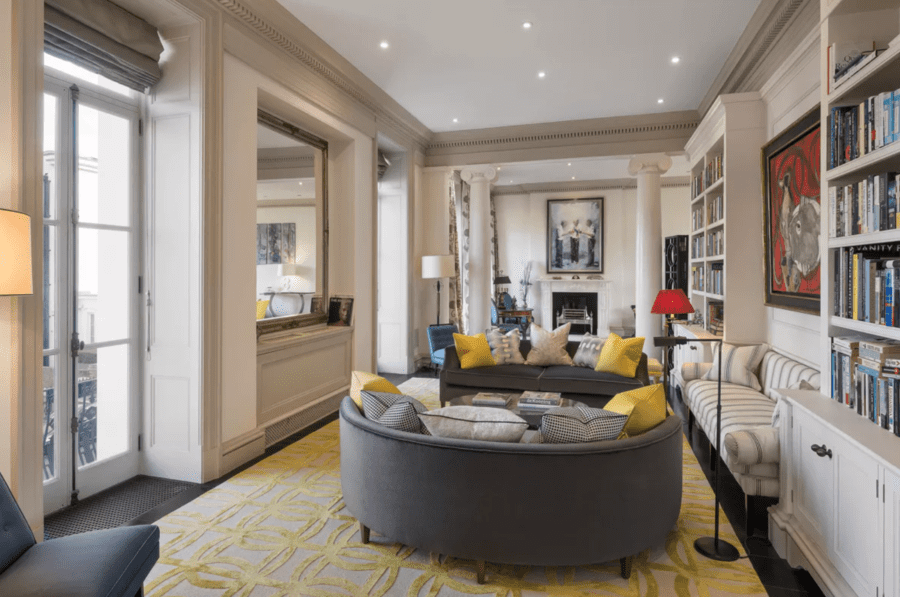
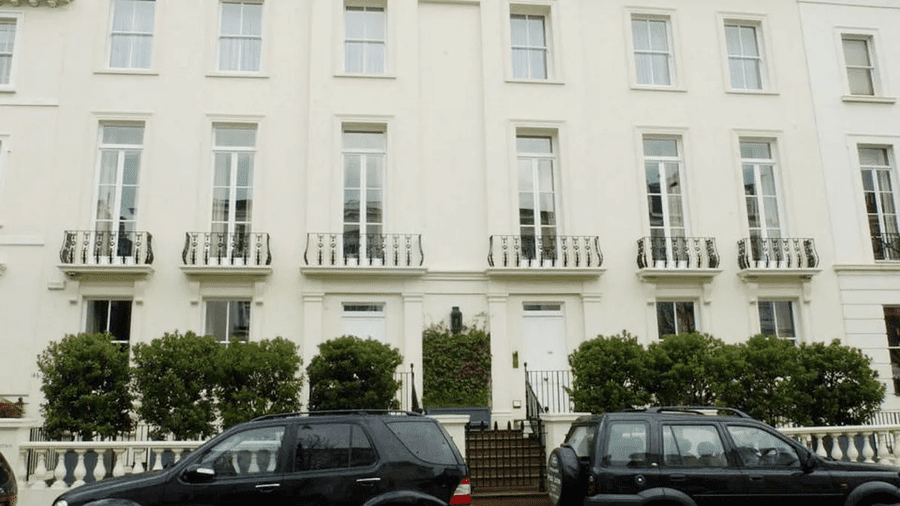
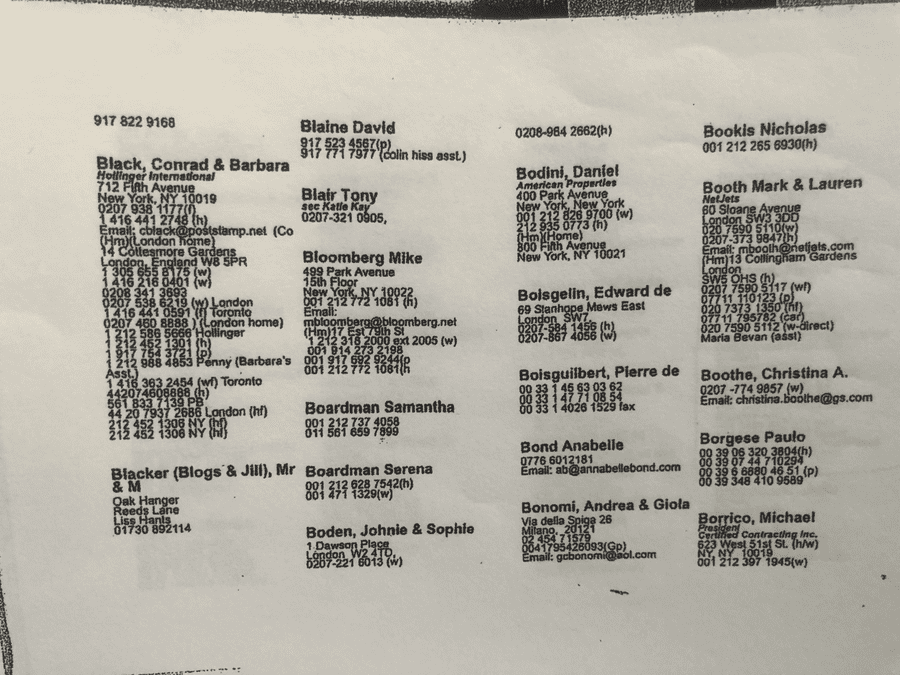
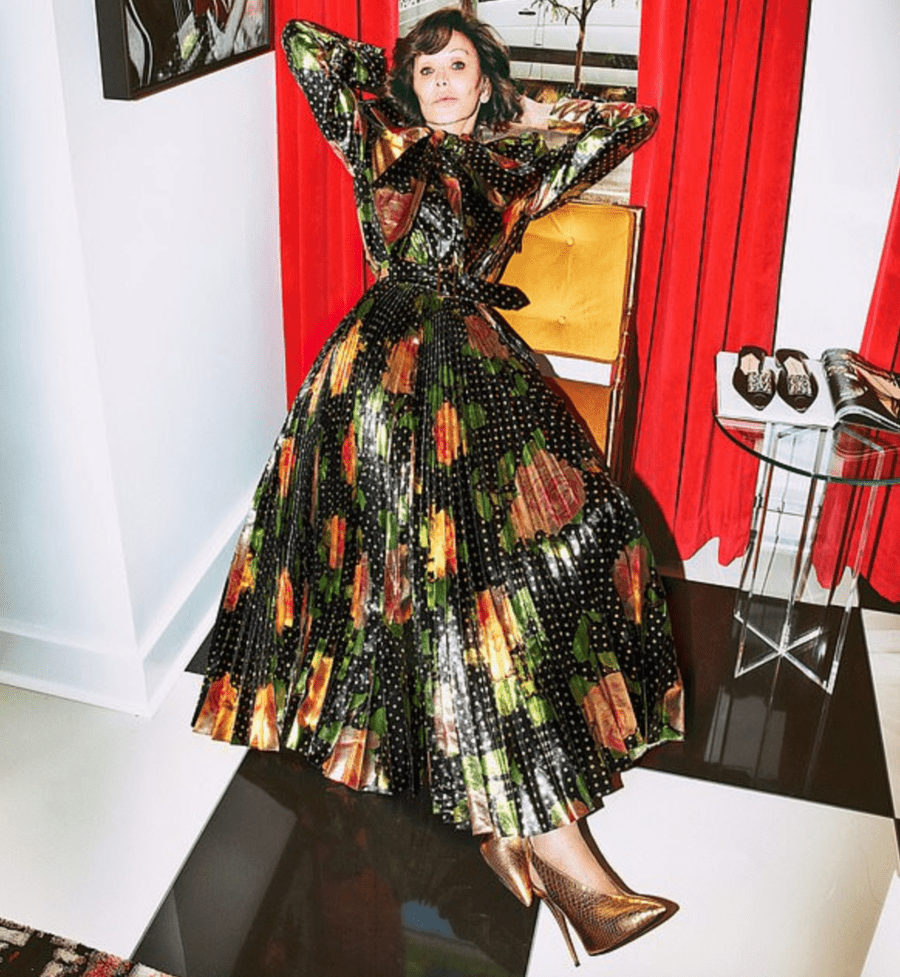
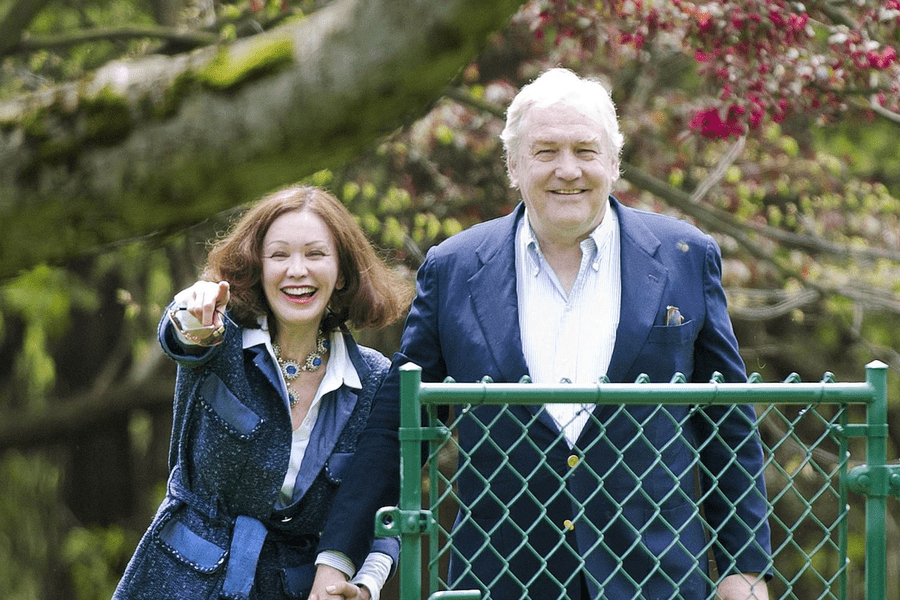
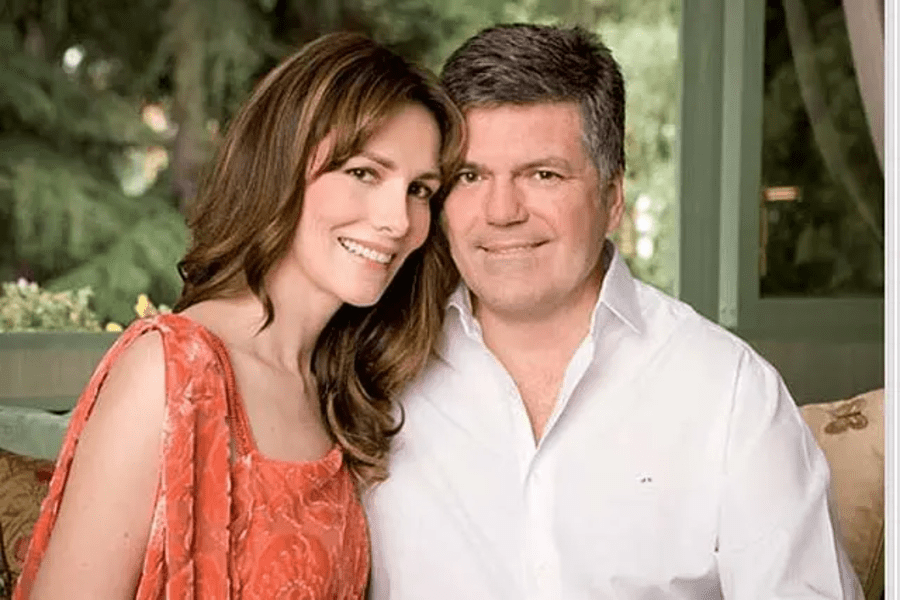
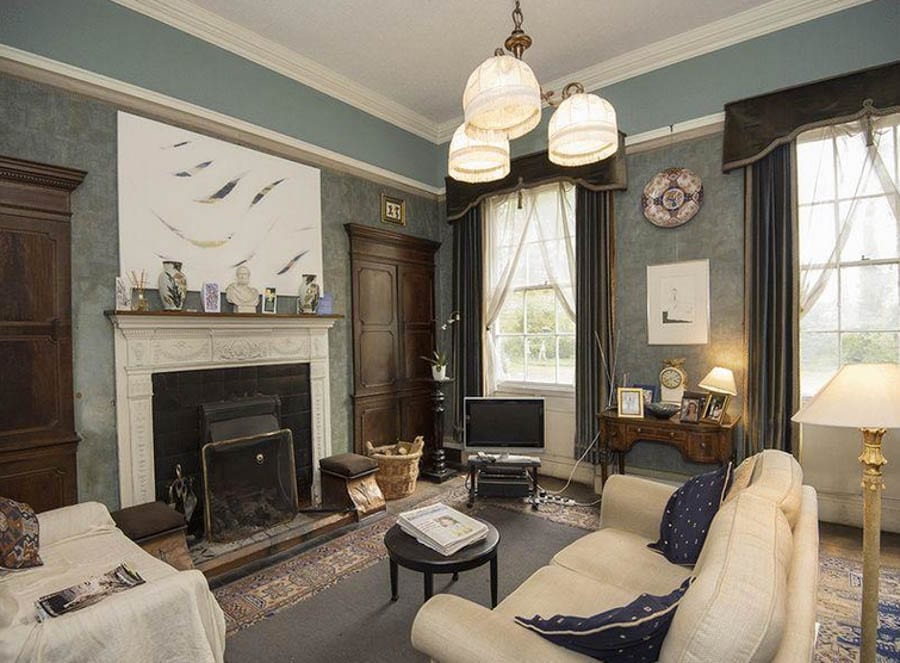
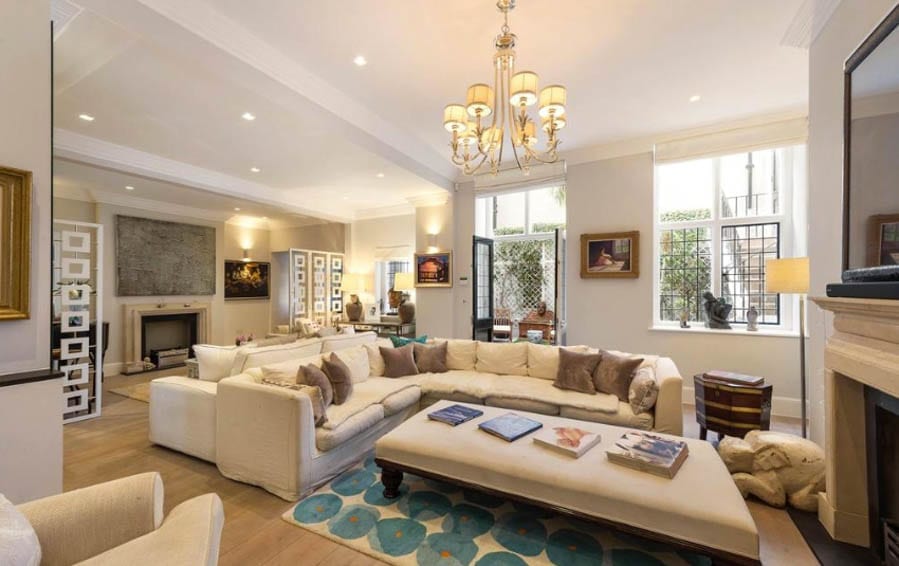
Flamboyant Lord and Lady Black dressed as Cardinal Richelieu and Marie Antoinette for a party at Kensington Palace in 2000. For a time, the couple employed 17 butlers (if Tom Bower is to be believed) and had two private jets and homes – aside from the 19th Cottesmore Gardens mansion – in New York, Palm Beach and Toronto. “Guests packed into their parties at Cottesmore Gardens,” Bower remarked in his 2006 book the couple, adding: “Amiel was a big spender… Under the control of senior butler Andrew Lightwood, second butler Peter Wilson and a succession of third butlers, Amiel’s life in Kensington had become what her constantly changing staff called ‘bizarre.’ Each recruit was taken by Lightwood on an introductory tour of the house, ending on the roof. ‘Make sure the landing lights are on at all times,’ instructed Lightwood solemnly, ‘because Madame takes off from here on her broomstick looking for cats. She needs the lights to guide her return.’ His face would crack into a smile. ‘Most important, take care that she never sees you. She hates seeing any of us.’ Amiel’s eccentricity demanded that her staff hid whenever she approached, diving into cupboards if necessary, and never entered her quarters when she was present. Every day, all the bed linen was changed and subjected to ‘the penny test.’ A coin was dropped onto the sheets. If it failed to bounce they were not drawn sufficiently tight. Every cushion was arranged to a precise pre-ordained position, and each towel placed exactly as Amiel had predetermined. ‘Andrew!’ she screamed down the telephone on one memorable occasion, ‘the towels are in the wrong place!’ Lightwood, as Amiel knew, was in New York, but he was expected to telephone the staff in the house in London to rectify the error. ‘You f**king pillock!’ she yelled at another member of staff for reading her ‘Daily Mail’ before it was delivered to her.”Barbara Amiel Black (or ‘Lady Black’ as she prefers to be known) in her drawing room at Cottesmore Gardens (pictured). Of her, Sarah Sands on Lord and Lady Black in the ‘Independent’ in October 2006 opined: “Conrad and Barbara in their monstrous, glamorous way, knew how to throw parties. The talk was of geo-politics and hemlines. Nowadays, we scorn their extravagance and doubt the source of their wealth with prune-faced hindsight. Meanwhile, everyone is sucking up to Russians…. Barbara would disingenuously begin her midnight calls to me by saying in her low, breathy voice: ‘I hope I am not disturbing you.’ She would then offer little glimpses of her own home life. I remember her mentioning that Conrad Black was upstairs playing with his fleet of toy gun ships in the bath… I remember her examining an exhibition of doll’s houses at the Chelsea Flower Show and sighing how restful it would be to live in this cosy little home. How she envied people in small houses. The burden of wealth was one of her more dangerous fantasies. At one of her Gatsby-style parties in Kensington, she flinched at the elaborate canapés on offer: ‘Really, all I want is a sausage,’ she said, piteously. Then, she ran a hand down her inconceivably expensive dress and whispered: ‘I hate these parties, I am so shy.’ Later, I was invited to her boudoir, where she lay on cushion surrounded by her women friends. She was Kensington’s Cleopatra, surrounded by maidens such as the designer and Forte daughter Olga Polizzi, the political thinker Tessa Keswick and the writer Miriam Gross.”The very same drawing room at 14 Cottesmore Gardens today. The décor is now somewhat more modern and less ‘classical country house-ified.’ It’s certainly more Soho Farmhouse than Alberto Pinto in style; it is currently a space that the former Meghan Markle would feel more at home than say, perhaps, the likes of Lord and Lady Black’s chum Ghislaine Maxwell and her fellow noxious nonce Ponzi scheming paedophile boyfriend Jeffrey Epstein. Mr Pinto was responsible, it should be noted, for the designs of most of Epstein’s residences.The front elevation of 12 – 14 Cottesmore Gardens during the era it was owned by Lord and Lady Black.Multiple entries for Lord and Lady Black during the time they owned 14 Cottesmore Gardens appeared in the ‘Little Black Book’ address book often attributed as being that of the friends and associates of Jeffrey Epstein, but that featured more of the contacts of Ghislaine Maxwell in fact. In October 2020, Barbara Amiel took revenge on the pension pot plunderer’s padeophile sex trafficker daughter by featuring her in her “score-settling” memoir ‘Friends & Enemies: A Life in Vogue, Prison, & Park Avenue.” Maxwell had “dumped” Lady Black when Lord Black was being investigated for fraud. She wrote of their last meeting: “We were friends – so putting on my ‘So good to see you’ face, I headed for her. She bolted. Turned that sharp tight little turn when you really want to get away. And that was it.” Of the clear lover of plastic surgery Lady Black, in October 2020, Sarah Sands remarked in ‘The Mail on Sunday’: “She had a bohemian, almost masculine, view of opportunistic sex. She describes, for instance, accompanying an early love in his white Triumph sports car ‘in which once or twice I had performed fellatio to the fascination of passing truck drivers, all for fun.’”After getting out of the clink in 2012, Lord and Lady Black decided to go back on the ‘razzle-dazzle’ and posed for photographers before heading back to London to party with friends. In May 2019, the rambunctious peer arrogantly announced he’d be returning to the House of Lords after President Donald Trump pardoned and praised him. Commenting, of this pardon, Lord Black declared: “I’m not bitter… Officially in the United States, I’ve never been charged and I won in the end. It was a war and there are casualties in wars. I lost the time, I lost a lot of money, but as you can see my standards of living isn’t bad… The truth is, these, last 15 years, I haven’t been as interested in British politics as I was before – in the Thatcher years. It could be quite interesting again, in fact it is as of right now – it’s very interesting… It’s my good fortune that at a time when it is feasible, it happens – by happy coincidence – that it is a time of great fermentation in British public affairs.” Surprisingly, he doesn’t seem to have turned up on occasions since.The previous owner of 14 Cottesmore Gardens, Alan Bond (1938 – 2015), will forever be remembered as “Australia’s most notorious corporate criminal.” Born in Hammersmith, London, Bond’s first crime occurred when he was charged with theft aged 14 in Fremantle in Australia and whilst he is remembered for bankrolling the successful challenge for the 1983 America’s Cup, it is for causing the then biggest corporate collapse in Australian history that he will be go down in history. Former Miss Mexico Adriana Abascal López-Cisneros (at the time Adriana Villalonga) bought the house in 2005. She divorced the Spanish businessman Juan Villalonga in 2009 and married the French businessman Emmanuel Schreder in Ibiza in June 2013. In August 2014, the magazine ‘Quién’ featured the model and television presenter on its cover and at that time she described her new husband as “the love of my life.”Madrid born Juan Villalonga became the joint owner of 14 Cottesmore Gardens with his then wife Adriana Abascal – the couple were married between 2000 and 2009 – in 2005. He is listed on Companies House as being a director of the now dissolved Medikidz Foundation at the address between August 2009 and November 2013. Married since 2011 to a photographer named Vanessa Von Zitewitz, Mr Villalonga was a partner at McKinsey & Company in the 1980s, CEO for Credit Suisse First Boston and Bankers Trust in Spain in the early 1990s and CEO of Telefónica from 1996 to 2000. He was named as one of the best performing chief executive officers in the world by ‘Harvard Business Review’ in 2010 and is also linked to addresses in Monaco.
The Names & Numbers – 14 Cottesmore Gardens (formerly known as ’12 – 14 Cottesmore Gardens’), Kensington, London, W8 5PR, United Kingdom
April 2023 – Offered for sale for £36 million ($44.4 million, €40.9 million or درهم163.2 million) through Knight Frank. Valued on Homipi at an upper sum of £28.558 million ($35.250 million, €32.440 million or درهم129.456 million).
2009 – Mr and Mrs Villalonga divorce and subsequently Adriana Abascal married Emmanuel Schreder, a French businessman, in Ibiza in June 2013.
2005 – Sold by Lord and Lady Black for £13.1 million ($16.2 million, €14.9 million or درهم59.4 million) to Spanish businessman Juan Villalonga Navarro and Mexican model, Miss Mexico winner and television presenter Adriana Abascal López-Cisneros Villalonga.
October 2004 – Placed for sale for £17.5 million ($21.6 million, €19.9 million or درهم79.3 million) according to NZ Herald.
January 2004 – Valued at £14 million ($17.3 million, €15.9 million or درهم63.5 million) according to The Globe And Mail. At the time, the “mansion” in “the upscale Kensington neighbourhood” was described as having “10 bedrooms, 6 bathrooms and a swimming pool.”
Featured also in The Guardian in an article by Chris Tryhorn. Quoting Lord Black, he shared: “At a certain price, anything is for sale. [It has] been shown to people in the not-too-distant-past.”
Going further, Tryhorn added: “Artwork from the 18th and 19th centuries lines the walls, and there is plenty of storage space for the extensive wardrobe and shoe collection of Lord Black’s wife, Barbara Amiel, who famously declared once that her ‘extravagence knows no bounds.’ … It was originally two homes and one of the two original front doors is now a ‘deliveries’ entrance. He has used it in the past to host dinners with butler and maid service that was part-paid by Hollinger.”
Also in 2004, in a profile in The Spectator, Peter Oborne wrote:
“Every year the Blacks threw two parties, one at Christmas and one summer event, at their double-fronted 11-bedroom mansion in Cottesmore Gardens. Everybody who mattered at the time went: Margaret Thatcher, Henry Kissinger, Jimmy Goldsmith, James Hanson, Arnold Weinstock, Jacob Rothschild, royalty, the playwright Tom Stoppard.”
“Some of these, injudiciously as it turned out, agreed to join the main Hollinger board. The luckier ones – Peter Carrington, Robert Salisbury – got away with being made directors of TheTelegraph. As the Tories faded out, Labour ministers started to arrive, the indefatigable Peter Mandelson, David Blunkett and other ministers eager to ingratiate themselves with the Tory press. Prince and Princess Michael of Kent were assiduous in attendance. In London, the Nineties belonged to the Blacks. They were London’s most glamorous power couple.”
“There had been a time when both Blacks had kept their feet on the ground. This ceased to be the case. One evening Barbara Black rang Charles Moore panic-stricken from her Kensington home. There had been a last-minute drop-out from one of the famous Black dinner parties. ‘I’m short of a woman,’ she told Moore. Moore surveyed the newsroom. His gaze alighted on the journalist Eleanor Mills, by chance the stepdaughter of the Cabinet minister Tessa Jowell.”
“An hour later, hastily groomed, made-up and brushed, Mills was sipping pre-dinner drinks in Cottesmore Gardens. Then disaster struck. A male guest, Max Fisher, dropped out. Mills was approached by Conrad Black. ‘Finish your drink and skedaddle,’ he told her. Barbara Black then told her to go to the kitchen and out through the servants’ door, where the driver would pick her up and take her home.”
2001 – Conrad Black is elevated to a life peerage in the United Kingdom at the suggestion of Tony Blair. He sat on the Conservative benches in the House of Lords until 2007 as The Right Honourable The Lord Black of Crossharbour KCSG, but took a “leave of absence” between 2012 and 2019.
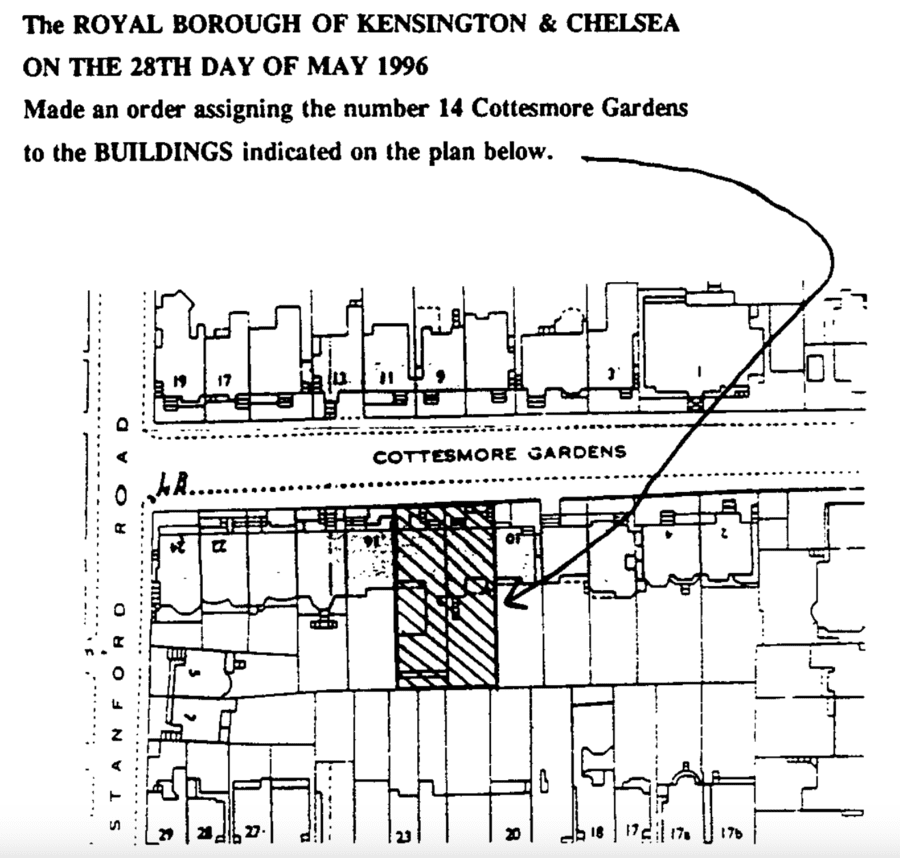
28th May 1996 – The Royal Borough of Kensington And Chelsea ordered that 12 – 14 Cottesmore Gardens “shall be known and described” simply instead as 14 Cottesmore Gardens.
Mid 1990s – The Blacks set about renovating 12 and 14 Cottesmore Gardens with the help of J. E. Evans Associates. Of the work in October 2006, The Sunday Times shared a segment of Tom Bower’s 2006 hatchet job Conrad and Lady Black that read: “Amiel vowed to create a palace that would attract celebrity worshipers of a power couple. Part of the first floor was to be removed to create a huge ground floor reception area.”
1992 – 12 and 14 Cottesmore Gardens sold by the administrators of the affairs of Alan Bond through estate agents Savills to media tycoon Conrad Black and his Watford born journalist wife Barbara Amiel Black for “well under the asking price” for a sum of £3.5 million ($4.3 million, €4 million or درهم15.9 million).
Mr Bond had been granted mortgages valued at £16.2 million ($20 million, €18.4 million or درهم73.5 million) on the property by Bell Satellite Services on the property along with two others at 4 and 16 Belgrave Mews in London, SW1 previously according to a report published by Financial Review in March 1990.
1991 – Rented to an American businessman for £6,000 per week ($7,400, €6,800 or درهم27,200 per week).
1990 – Placed in the hands of administrators of Mr Bond’s and placed for sale through Savills for a bargain basement sum of £3.8 million ($4.7 million, €4.3 million or درهم17.2 million) according to Financial Review.
1980s – Sold to Alan Bond’s Bell Satellite Group for £7 million ($8.6 million, €8 million or درهم31.7 million).
Circa 1905 – Walter Tapper is said to have “designed a library with handsome Arts and Crafts plasterwork (now removed) at the rear of the building.”
1869 – In their current marketing blurb, Knight Frank suggest: “There has been a house on the site of 12 – 14 Cottesmore Gardens since at least 1869. The current house has been altered, extended and most notably joined over the subsequent century and a half. With the local planning department strongly opposed to further amalgamation of homes, opportunities to acquire a house of this width will be rarer still in the future.”
1850s to 1860s – Built “under the direction of David Howell, of Serjeants Inn, Fleet Street.” Mr Howell was described in 1853 as an “articled clerk to a solicitor, lately carrying on business as a solicitor.” The architecture was lauded as: “Designed in a bold classical manner, with rather fleshy consoles and modillions… and bands of Vitruvian scroll between the bases of the ground-floor windows.”
More photographs of the £36 million mansion…
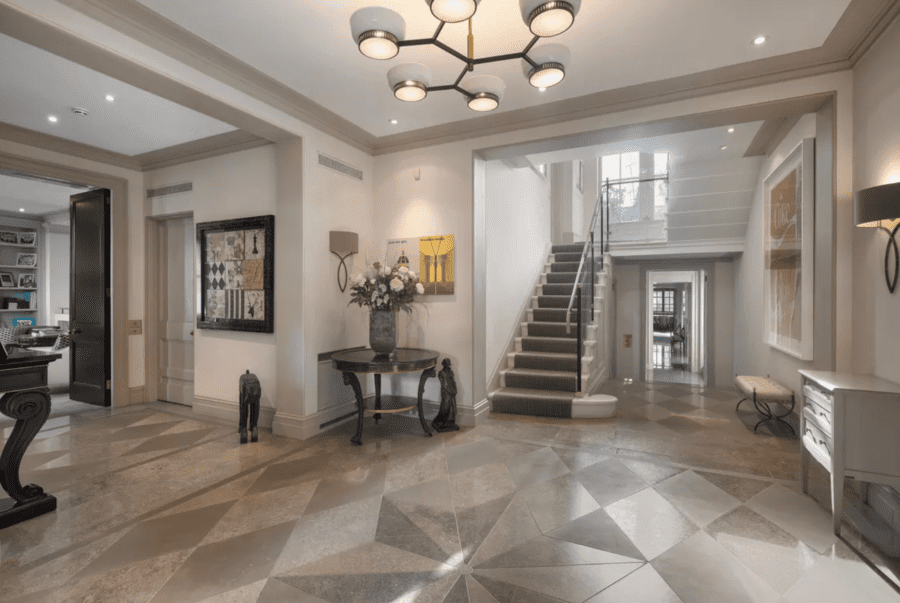
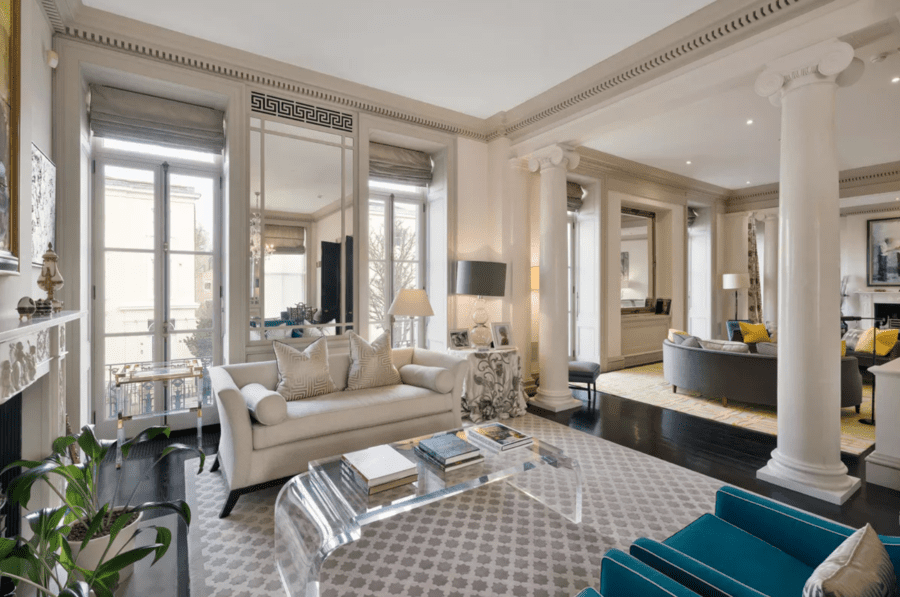
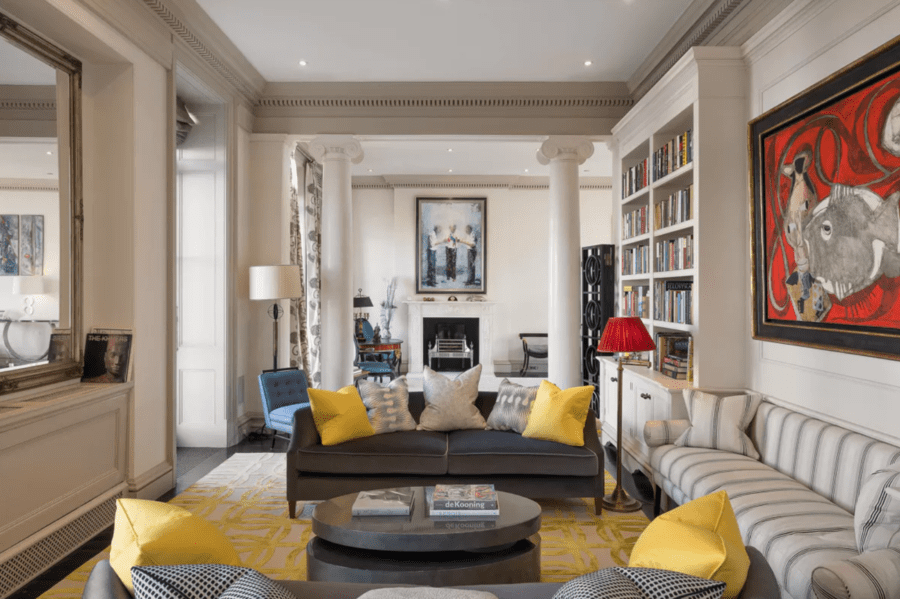
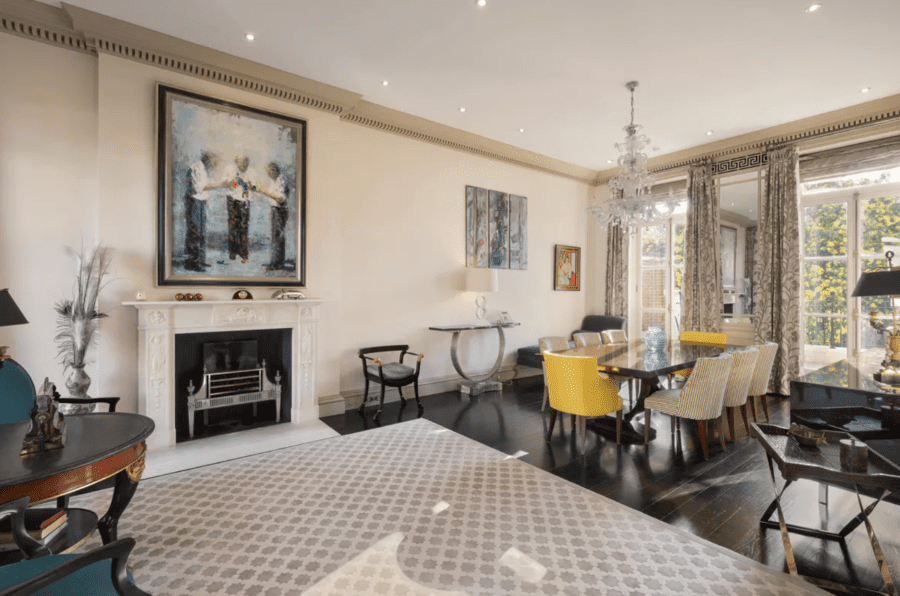
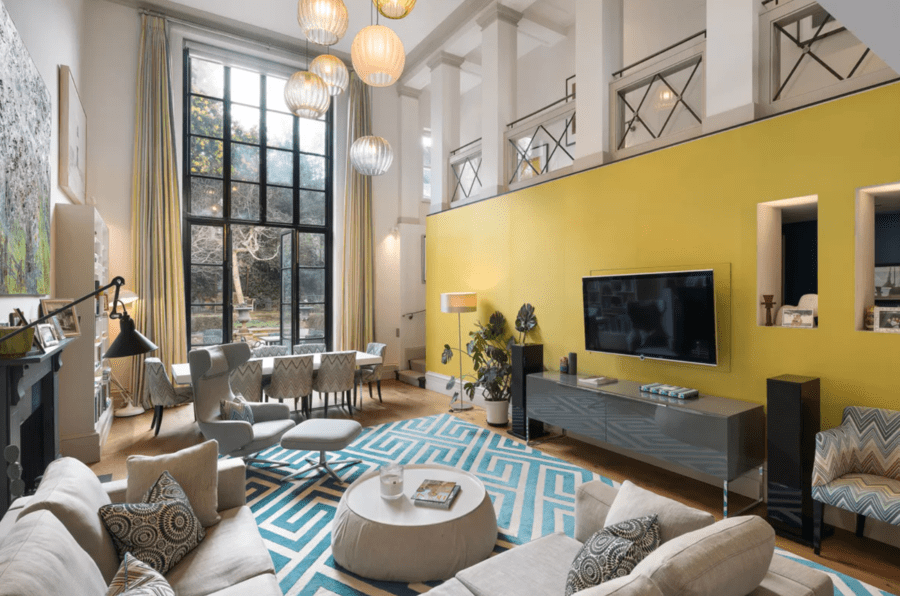
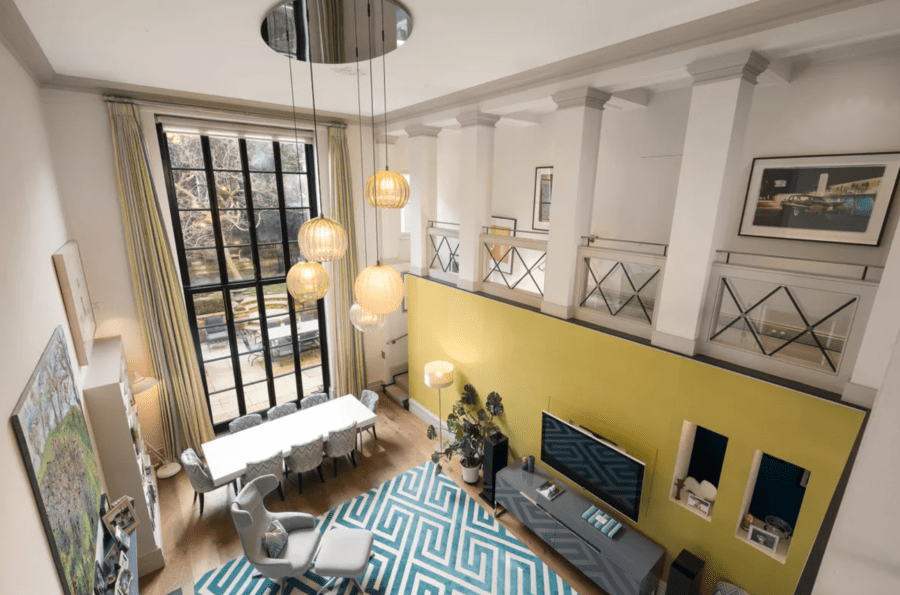
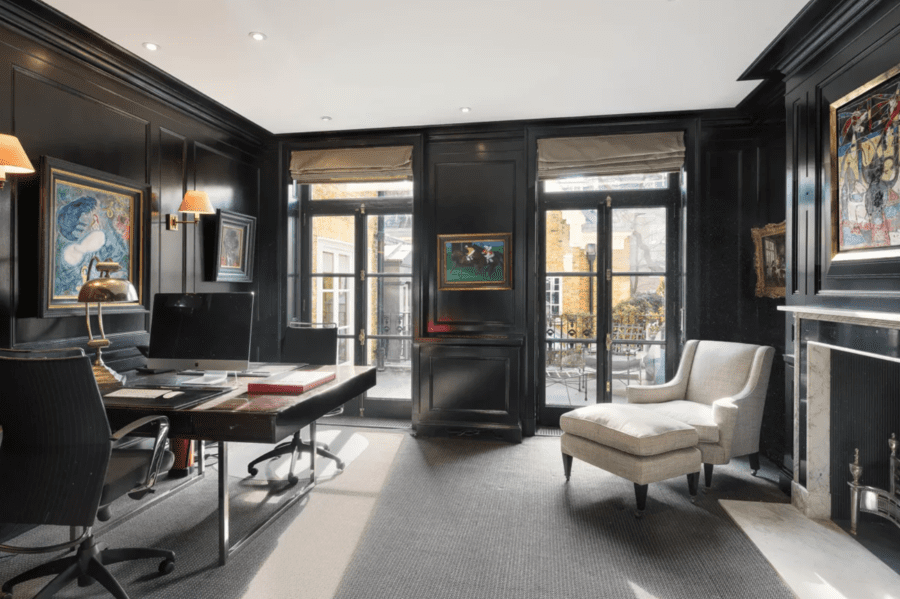
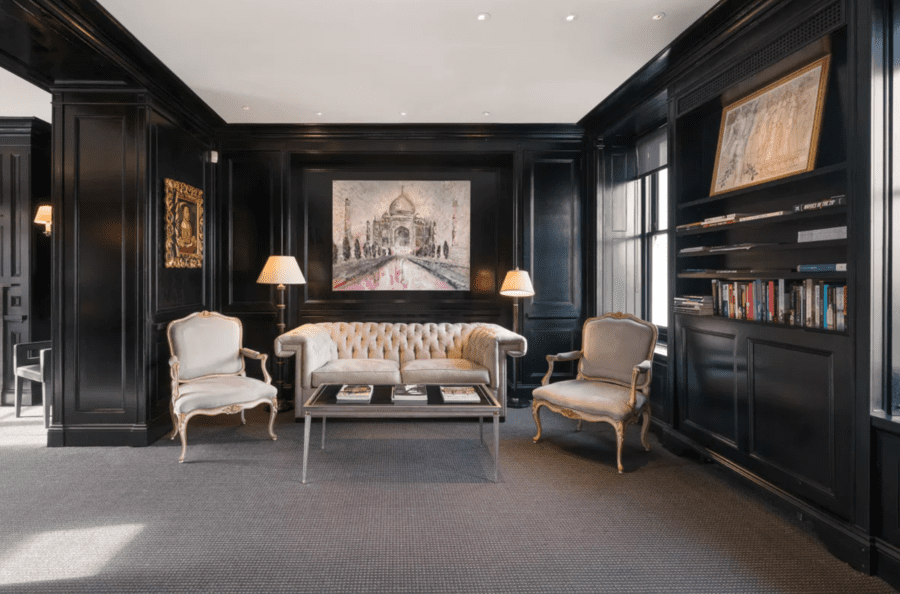
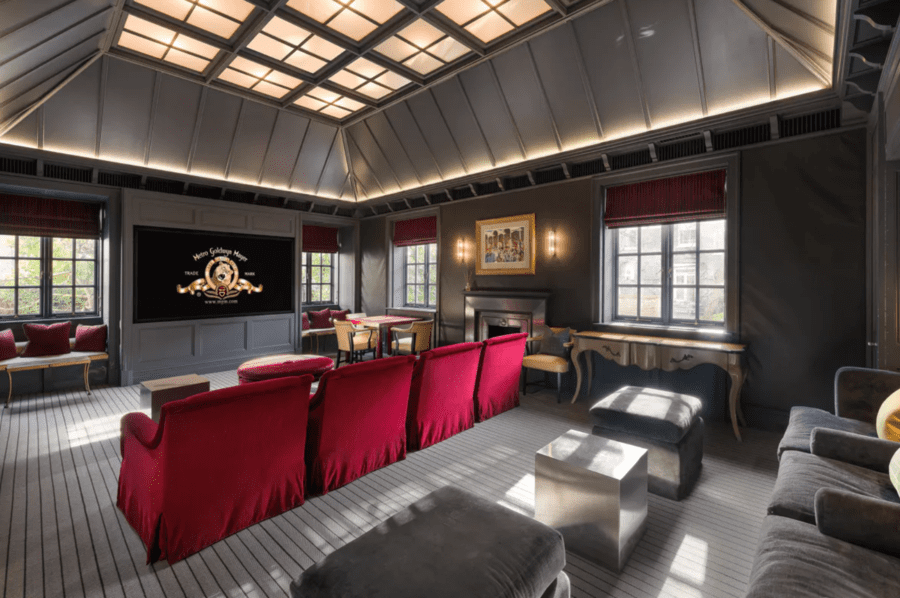
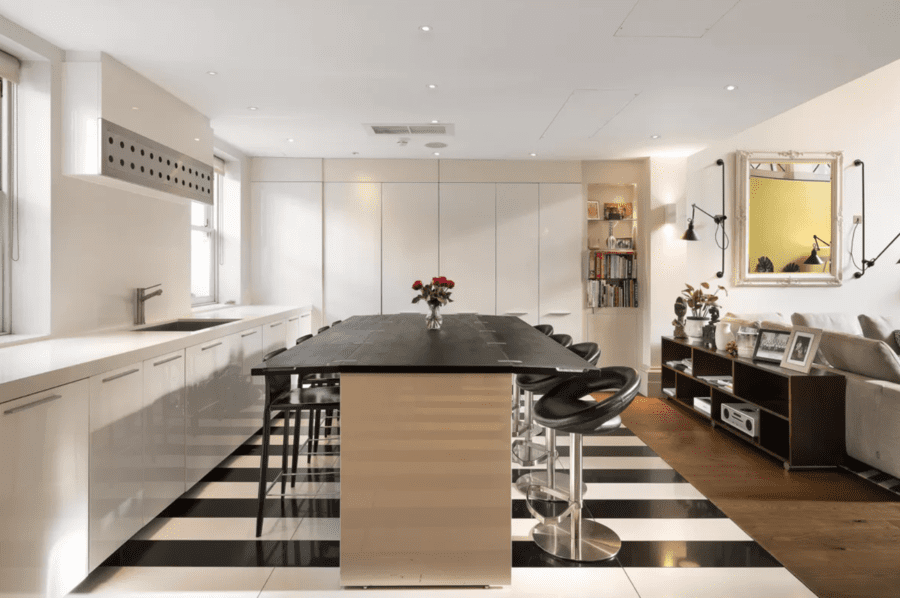
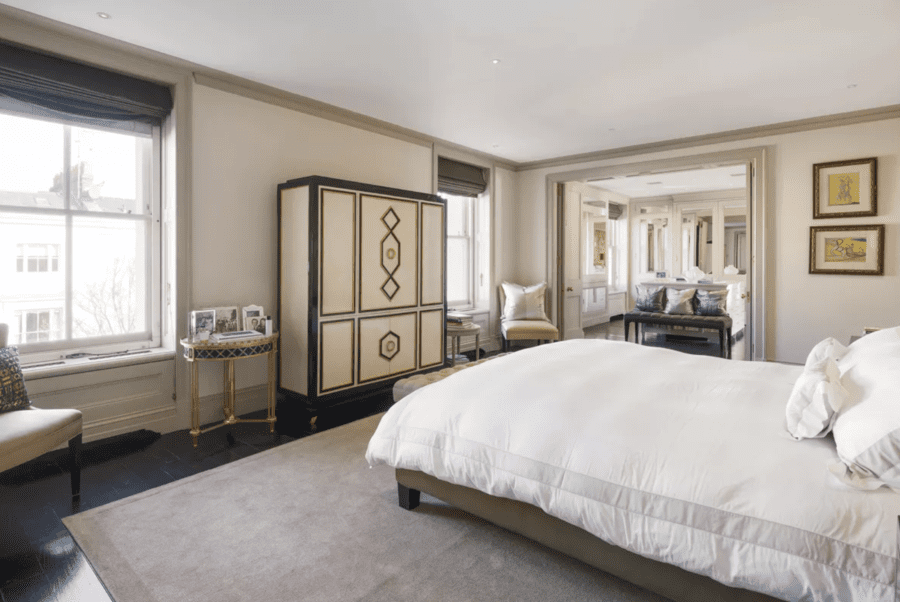
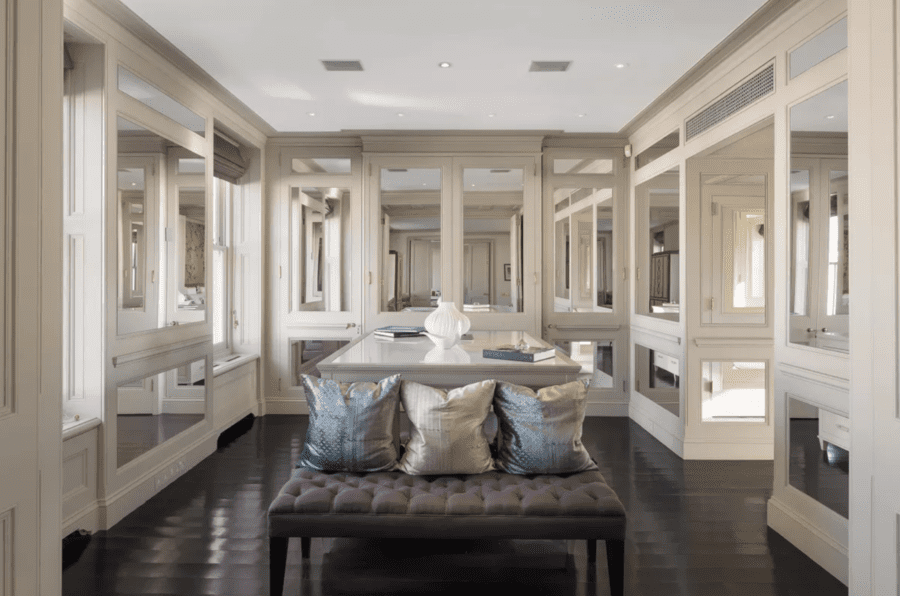
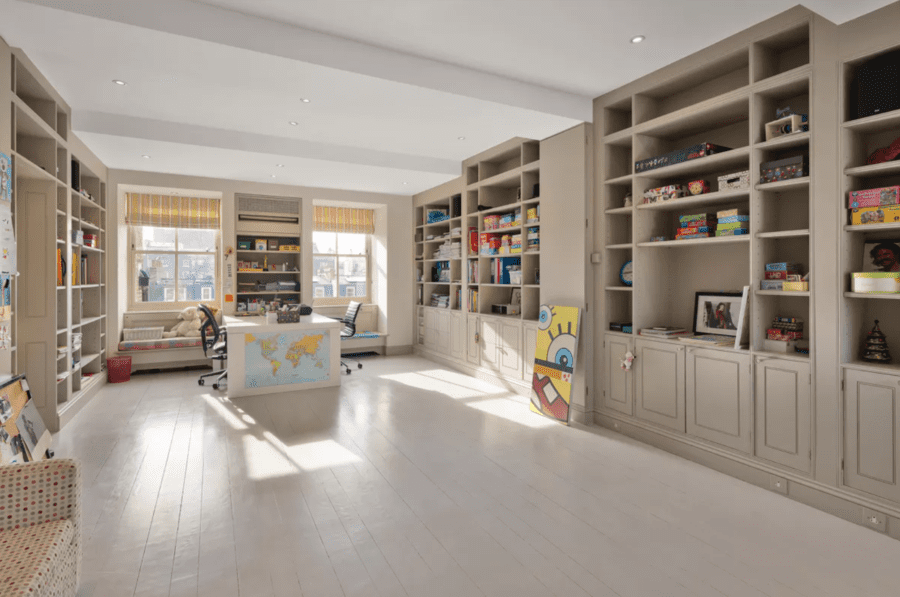
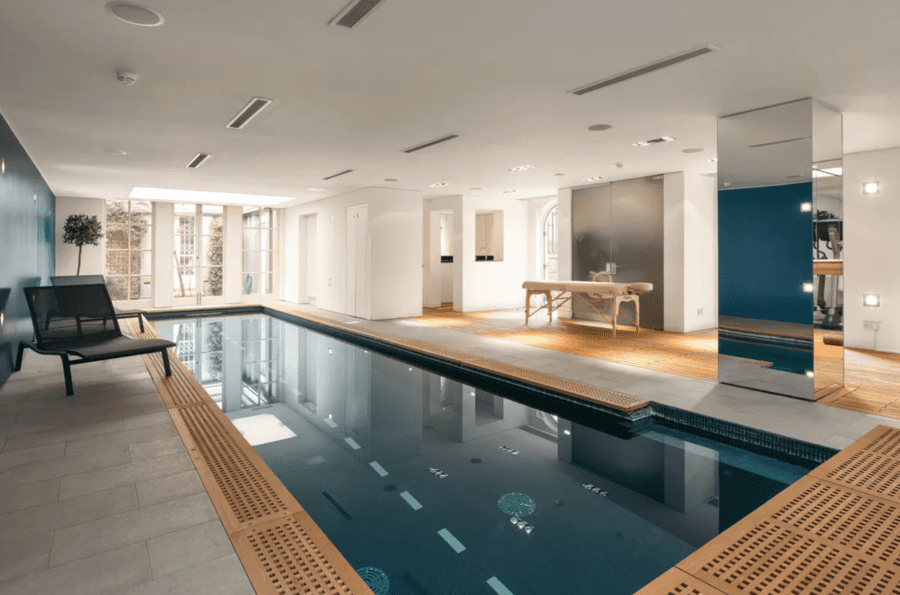
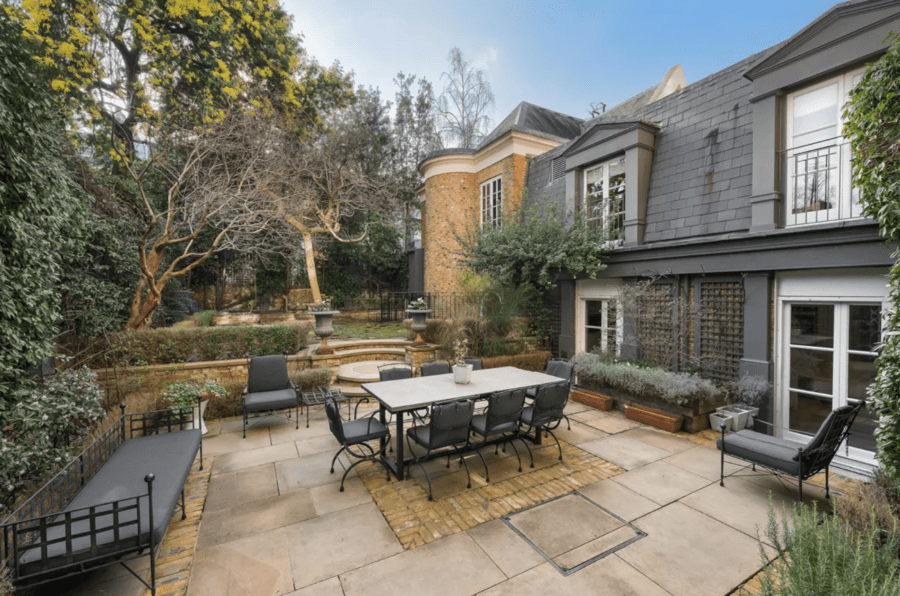
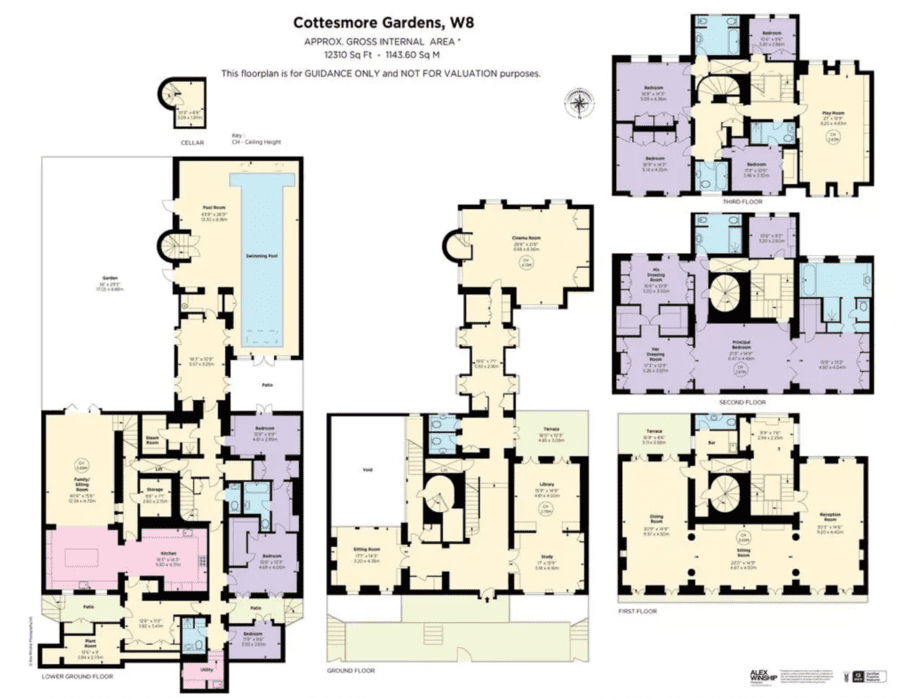
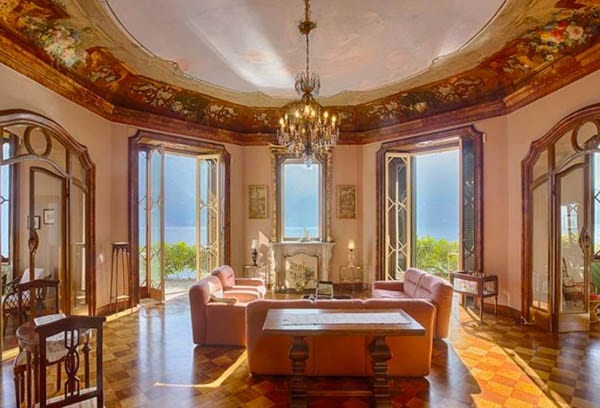
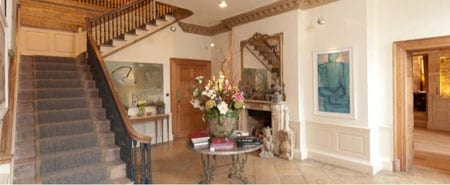
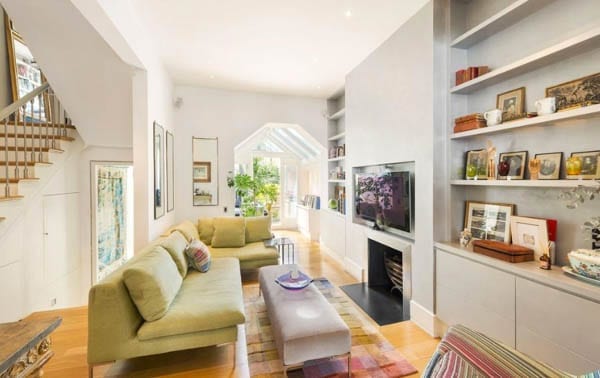
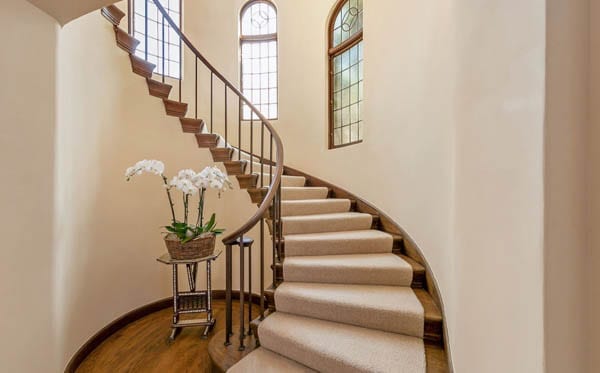
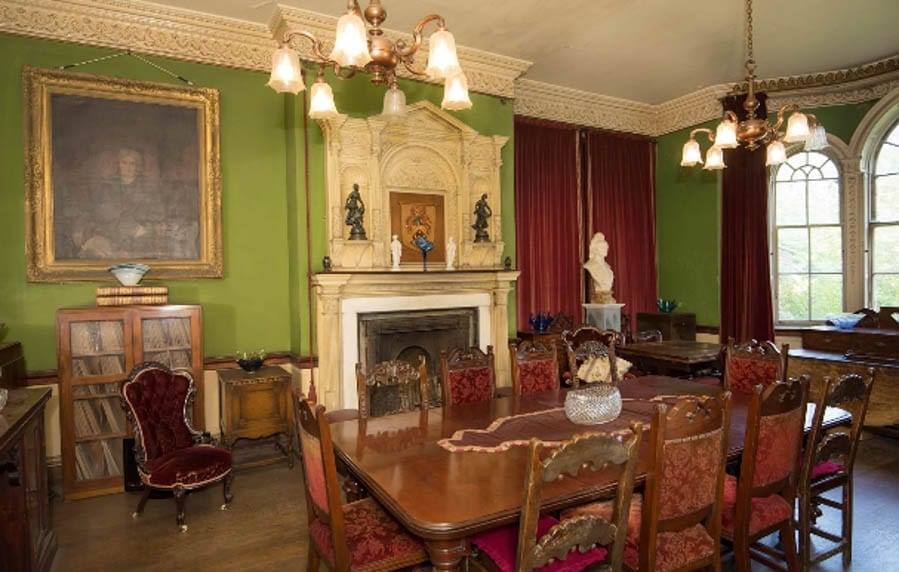
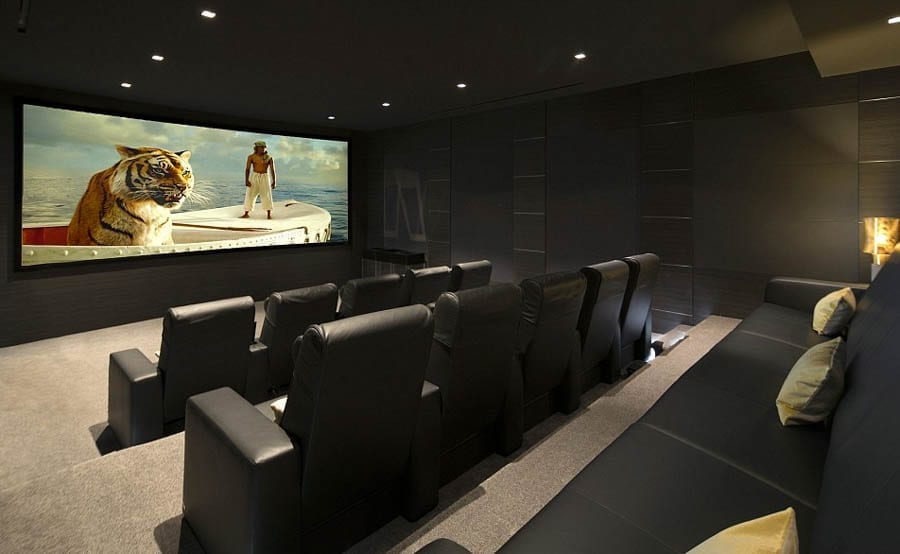
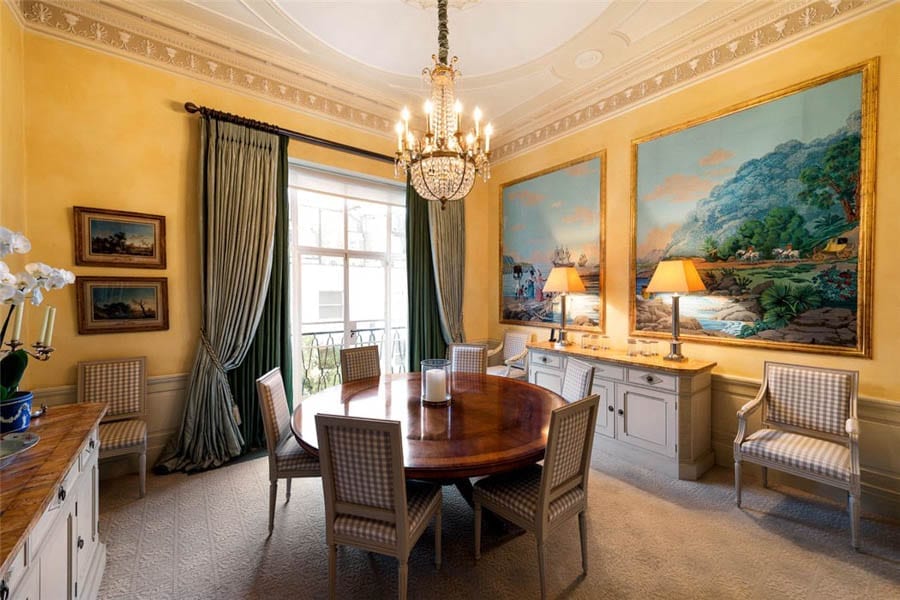
An entrance hall where power and privilege have most certainly mingled previously.The 54-foot wide drawing is lauded by selling realtors Knight Frank as “arguably the best room in the house” and “double aspect.” They add: “[It has] six windows overlooking the street and additional views over the private garden to the rear.”The columns where Barbara Amiel Black once posed for photographs remain, but the subsequent owners eliminated much of the 1990s ‘brash’ that had been installed by a Watford born woman whose excess clearly offended so many.This dining room, where Conrad Black hosted presidents and prime ministers, is now somewhat diminished. The table for eight looks completely out of place and a future owner would do well to install something a little grander.A double height entertaining space was installed at the insistence of the loftier-than-lofty Lady Black in the 1990s and it remains today. However, it is now currently being used for more casual affairs such as Netflix viewing rather than being the scene of something that you’d more likely find in the ‘House of Cards’ in fact.A new owner might reinstate the grandeur of the past; sadly, however, this seems unlikely and the purchaser is more likely to be a footballer or Internet tycoon than a super-connected business tycoon.This currently very dark and very depressing study would most certainly not appeal to the very clearly very, very bright yet very, very pompous The Right Honourable The Lord Black of Crossharbour KCSG – a man who is said to count Julius Caesar and Napoleon Bonaparte as “his military heroes.” Of him in July 1997, Mark Honigsbaum in the ‘Independent’ remarked: “Although Black’s grandfather had briefly been a business partner of Harold Harmsworth, the original Viscount Rothermere, it was from his father, George Montegu Black Jr, that Black learned the art of corporate warfare, the importance of historical perspective and that gambling provides a disappointing rate of return compared to the Dow Jones index… The young Conrad was precocious. At the age of eight he sank his life savings of $60 into a single share of General Motors. He also became obsessed with Napoleon, and would astound his father’s friends by reeling off details of campaigns. Another story has him washing dollar bills and hanging them out to dry on a line outside his father’s home in Toronto. The last is apocryphal – Black says he slipped in the mud and was cleaning his change – but the image of the young capitalist, wise beyond his years, is accurate. His childhood tutor, the historian Laurier LaPierre, once asked Black why he always seemed to have the air of someone waiting for something to happen… A few years ago, for instance, the rumour went round Fleet Street that Black had bought Napoleon’s preserved penis at an auction. Black denied it, but many remain convinced that Bonaparte’s body part sits in Black’s collection of military curios… Black is no philanderer and is devoted to his second wife, the former ‘Sunday Times’ columnist Barbara Amiel. They are said to be intellectual soul mates and the parties at their four-storey mansion in Kensington are famous for bringing together a cross-section of the great and good.”One could not imagine the likes of the late great Baroness Thatcher, for example, liking the idea of sitting in this extremely depressing and dark waiting area. A new owner would do well to obliterate a décor scheme that could have only been favoured by a completely colour blind banker.A room currently described as a ‘cinema room’ measures 28’6” by 21’6” and is situated at the rear of the house. One can imagine Conrad Black having sat here for hour upon hour watching historical dramas about Napoleon with the likes of chums such as the acclaimed historian Andrew Roberts, the gambling tycoon John Aspinall and the politician and diarist Alan Clark, but a new owner will be more likely next showing episodes of ‘Succession’ – based on ‘The Telegraph’ tycoon’s rival Rupert Murdoch – than viewing historical works one most definitely suspects.Dining whilst the staff cook would NEVER have been on the agenda in the era that pomposity reigned whilst Lady Black was chatelaine of 14 Cottesmore Gardens.A 2,000 square foot entire floor fit for a tycoon… The master bedroom suite of the house takes up the entirety of the second floor of the building. It incorporates not only the principal bedroom, but also a “his” dressing room and a “her” dressing room as well as a sitting area, a bathroom, a shower room and storage rooms. It has direct lift access and is bigger than the average Brit’s entire house.A dressing room in the house where Barbara Black opened up to ‘Vogue’ and displayed “closets overflowing with dazzling evening gowns, designer handbags and 100 pairs of Manolo Blahnik shoes. ‘I have an extravagance that knows no bounds,’ she famously declared. Unfortunately for Lady Black, the article was closely perused at investment company Tweedy, Browne, a Hollinger International shareholder.”This playroom certainly did not exist in the era that Lord and Lady Black owned the property. It would be more likely crammed with books or stuffed with Manolo Blahnik shoes than toys from Toys ‘R Us. A new owner may likely reinstate it as an additional bedroom or office or games room perhaps.The pool room measures 43’9” by 26’9” and is no doubt where Lady Black spent many an hour relaxing.The garden to the rear was where Lord and Lady Black hosted their annual summer party (with guests “spilling” into their drawing room also). In surprisingly Tardis-like fashion, the duo were able to supposedly squeeze in upto 400 guests at such occasions. Amongst those said to have enjoyed hospitality there were Joan Collins and of such, magazine publisher Nicholas Coleridge wrote: “If you get a kick out of milling about with present and former prime ministers, cabinet ministers, minor royals, dukes, editors, vastly rich Americans, distinguished historians, gossip columnists, playboys and lots of pretty ‘it’ girls, then this was the place to be.”The existing floor plan of the property illustrates the vast scale of the building offered. A buyer, Knight Frank observe, has additional options and “a pre-planning consultation has been carried out with RBKC by leading architects Studio Indigo.” They add: “[It] would completely reconfigure the house adding an additional basement floor and taking the internal space to more than 15,000 square foot. The resulting house would have a 40-foot by 41-foot south-facing rear garden.”A plan of the site as presented in 1996 when 12 and 14 became known just as 14 Cottesmore Gardens.
Grand Grade I listed Shropshire mansion Kinlet Hall for sale after coronavirus forced the closure of its wedding venue and summer school
Striking Grade I listed Palladian mansion in Shropshire for sale.
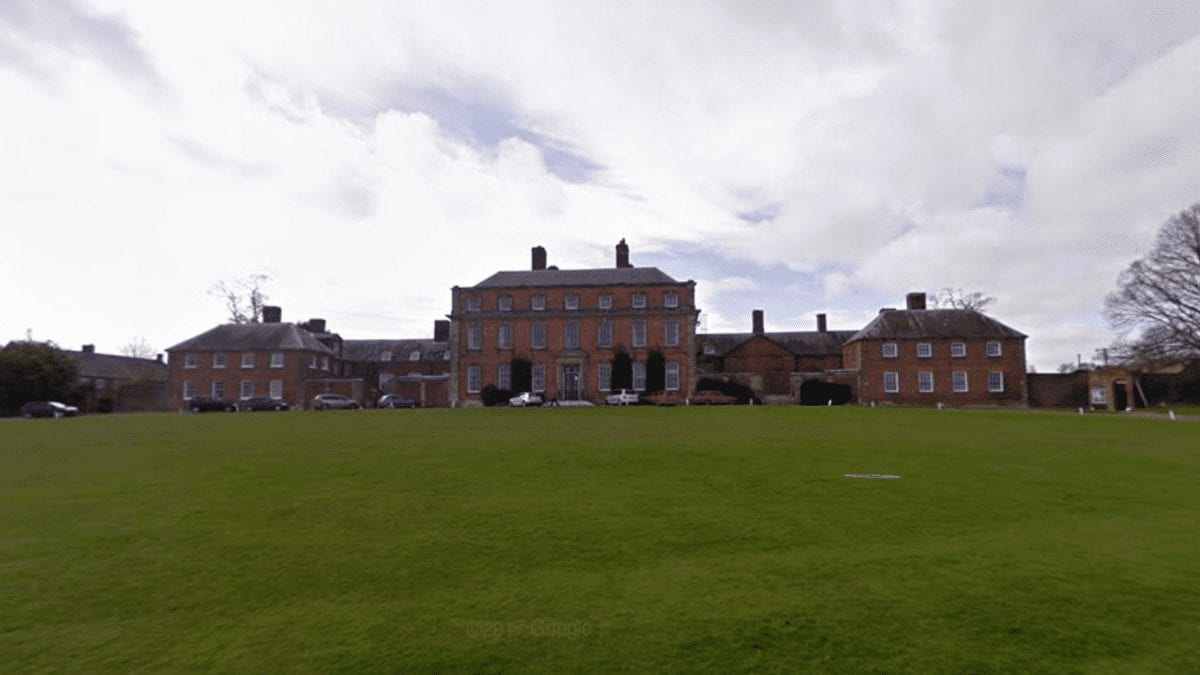
Kinlet Hall is priced at £3.5 million or just £104 per square foot.
The house has until recently been a school and wedding venue, but this usage has been stopped because of the coronavirus lockdown.
A cricket ground included with the property was lauded as one of “Britain’s most scenic” by ‘The Telegraph’ whilst HRH Princess Anne has competed in horse trials in the parkland.
Coinciding with the partial relaxation of the coronavirus lockdown, the ‘trophy country house’ market seems to be revving up with the commencement of marketing of several historically significant residences.
Significantly cheaper at £3.5 million or £104 per square foot and in far better condition than 33,406 square foot Lilford Hall, the 33,609 square foot Grade I listed Kinlet Hall comes with less land – 102 acres as opposed to 321 acres. It is further from London, which may limit its appeal to wealthy city sorts, but given it has been used as both a school and wedding venue until lockdown, it is in actual “working condition” as opposed to the perilously falling down state that Lilford is sadly currently in. That is, indeed, a major plus.
Featuring a seven-bayed central block of three storeys plus cellars, the hall is flanked by two two-storey wings. Presently configured to provide 5 reception rooms and 15 bedrooms, there are classrooms, gyms and flats also. Surprisingly, unlike with many residential to school conversions of mansions in the 1940s where ugly modern extensions were distastefully tacked on, damage to the integrity of the original structure has been minimal.
In addition, to a 5-bedroom detached house named ‘The Old House’ and a range of farm buildings within the grounds, there is a cricket pavilion and a cricket pitch. The Telegraph named its runner-up for “Britain’s most scenic cricket ground” in 2008 and interestingly amongst the many established plant and tree species in the grounds is a Wellingtonia that allegedly came as a seed in a matchbox from the Americas.
Of Kinlet Hall, Tony Morris-Eyton of Savills comments: “[This is] an exquisitely beautiful Palladian country house, formerly a prep school, awaiting its next chapter with enormous potential as either a private home or [for] other uses.”
The village of Kinlet is situated on the northern edge of the Wyre Forest about 18 miles from Telford and 23 miles from Birmingham.
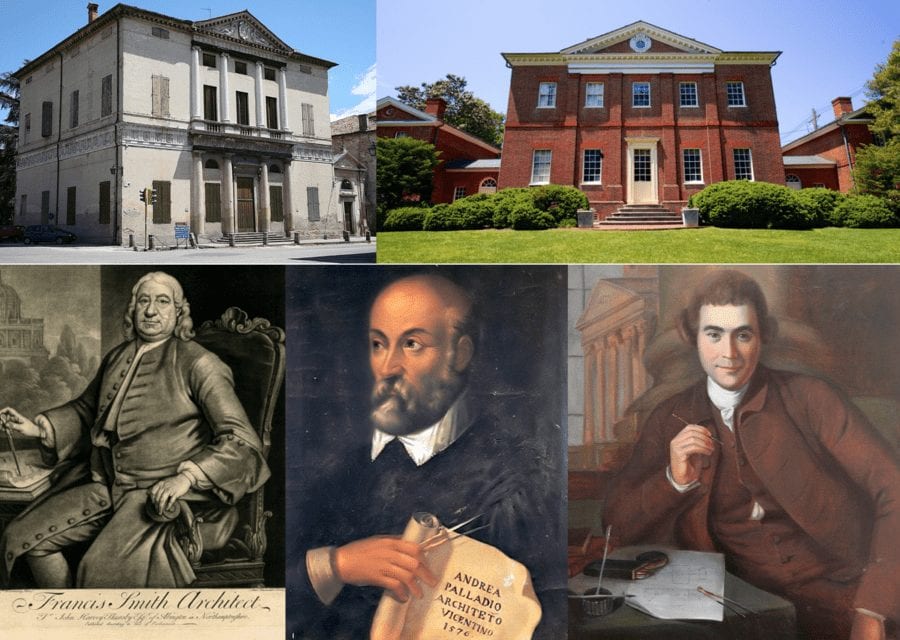
Design Maestros – Villa Pisani, Montagnana (top left) by Andrea Palladio (lower centre) inspired both Francis Smith of Warwick (lower left) in his designs for Kinlet Hall and William Buckland (lower right) in his creation of the Hammond-Harwood House (top right).
The Names & Numbers – Kinlet Hall, Kinlet, Bewdley, Shropshire, DY12 3AY, United Kingdom
June 2020 – Put up for sale for £3.5 million ($4.4 million, €3.9 million or درهم16.3 million) through agents Savills. Orchard Lodge, a 4-bedroom cottage with an acre of paddock, is available by separate negotiation.
July 2017 – Moffats School closes for the final time citing financial pressures. Of the decision, school chairman Julian Engleheart told the Shropshire Star: “We have always been a small school by choice, maintaining the family ethos of our founders. However, the current financial climate is putting enormous pressure on small schools and we have decided that it would be unwise to commit to a new year this September. However, we will continue to run educational activities in our lovely house and grounds, which provide such a wonderful environment for learning.”
1946 – Moffats School (founded in 1934 by the children’s writer Natalie Engleheart in a Hertfordshire house called Moffats) is relocated to Kinlet Hall.
1939 – 1945 – The house was temporarily home to a school for the blind; the parkland became a camp for the US army as part of their preparations for the Normandy Landings.
1827 – Ballroom added to the designs of Sir Jeffrey Wyattville (1766 – 1840) trained architect Edward Haycock (1790 – 1870) for William Baldwyn Childe. He died three years before it was completed and “this is the only significant part of the house not dating from 1729.”
1727 – 1729 – Kinlet Hall is “built in a classic early Georgian style with the symmetry and grand elevations synonymous with [the English master-builder and architect] Francis Smith of Warwick (1672 – 1738)” for Tory politician William Lacon Childe (1700 – 1757) close to the site of an older Tudor manor house.
Other notable works by Smith and his family include Calke Abbey, Fawsley Hall, Kirtlington House, Ombersley Court and Stoneleigh Abbey. His design was said to be inspired by Andrea Palladio’s (1508 – 1580) Villa Pisani at Montagnana – which also reportedly was the influence for the ‘Anglo-Palladian’ Hammond-Harwood House by the English architect William Buckland (1734 – 1774) in Annapolois, Maryland, USA.
During construction, the old village was removed to “improve” the setting. Only the original church, St. John the Baptist, which contains monuments dating to the 1580s, was left as a “remnant.” It was restored subsequently in 1892.
Prolific party pest David Pun spotted wandering in Waterloo having a coronavirus canapé crisis
Spare a thought for David Pun, a deviant, degenerate door list dodger who has most certainly lost out more than most as a result of the coronavirus lockdown.
When free-flowing champagne and crateloads of canapés are the epicentre of your world, the effects of the outbreak of a pandemic plainly were going to be life-changing. In his mind only “director of Harvey Nichols” and in reality, the best-known party crasher in London if not the world, Pun has – much to the delight of his Twitterati following – reemerged.
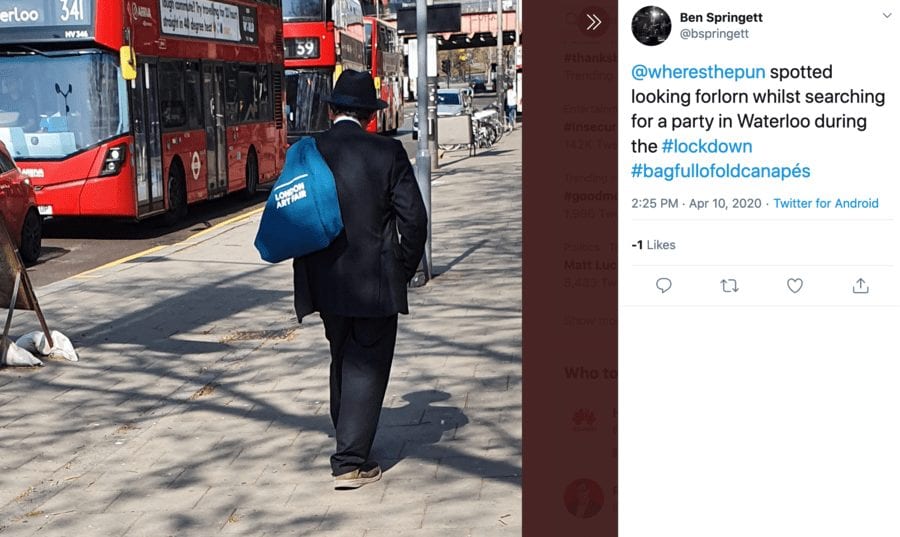
Looking as disheveled as ever, an image of this washed-up wastrel was shared on social media by one Ben Springett. In the picture, normally ‘any party, anywhere’ Pun appeared next to a bus “looking forlorn whilst searching for a party in Waterloo” along with a swag bag he’d “liberated” from the London Art Fair and the hashtags #lockdown #bagfullofoldcanapes.
Sadly for ‘The Pun,’ not one canapé was harmed in the making of this lockdown episode.
‘Tables d’Exception’ launched at Rolls-Royce in Mayfair
On 29th November 2018, the extremely connected and delightfully affable Alexandra Foley organised a party for her client the French interior architect and antique tableware collector Hubert de Vinols at Rolls-Royce Motor Cars London’s Berkeley Square showroom in Mayfair.
Showcasing Mr de Vinols’ ‘Tables d’Exception’ concept – whereby the ultimate lunch and dinner parties are created with antique ‘tablescapes’ inspired by the grand styles of the 18th and 19th centuries – the event not only offered guests a chance to view these ‘for hire’ works of art, but also a chance to begin what was one of the busiest Christmas party seasons in recent years in London in style.
Amongst those present were Heather Bird Tchenguiz, Liz Brewer, Basia Briggs, Dr Mark Collins, Navjot Dhanoa, Constantin Gordon, William Hanson, Christopher Hargreaves, Christian Huhnt, David Jenkins, Richard Martyn-Hemphill, Lord Oxmantown, Marie-Athena Papathanasiou, Alexis Parr, Melleney Samsudin and Matthew Steeples.
Of his reasoning to introduce his company into the UK to serve “à la française,” Vinols told The Steeple Times:
“I wish for Tables d’Exception to enable a return to refined entertaining, where a beautiful setting inspires convivial discourse. Tables d’Exception is the ‘Go To’ for generous hosts who want to entertain at the highest level, in the spirit of the Gilded Age and Belle Époque.”
Britain’s weirdest home for sale for a sum 61% lower than the £13 million sum asked for it in 2016; it has been repossessed and comes with a 69-foot long indoor beach
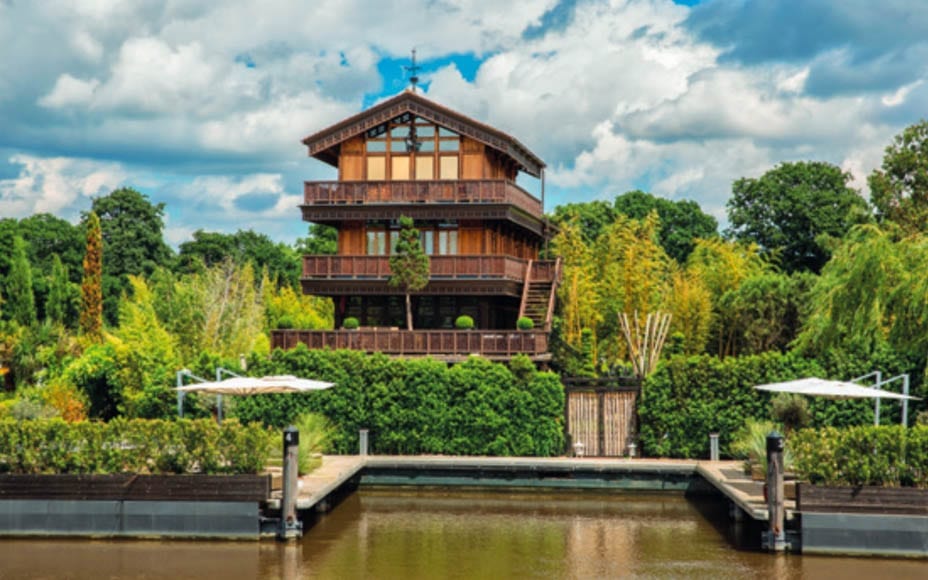
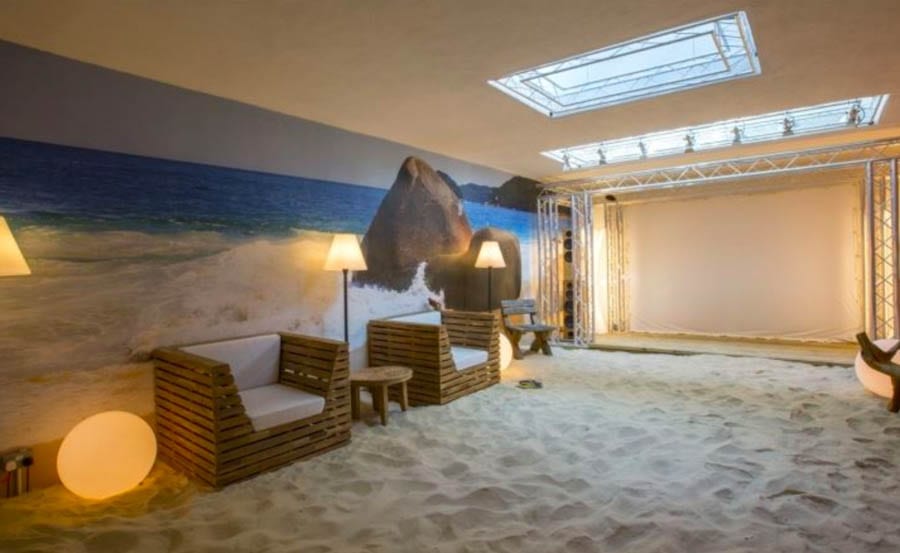
In October 2016, The Steeple Times featured what could quite possibly be Britain’s weirdest home. Offered then for £10 million, The Chalet at East Molesey in Surrey has now been repossessed and is being marketed for just £5 million – or a sum 61% lower than its initial asking price of £13 million in August 2016.
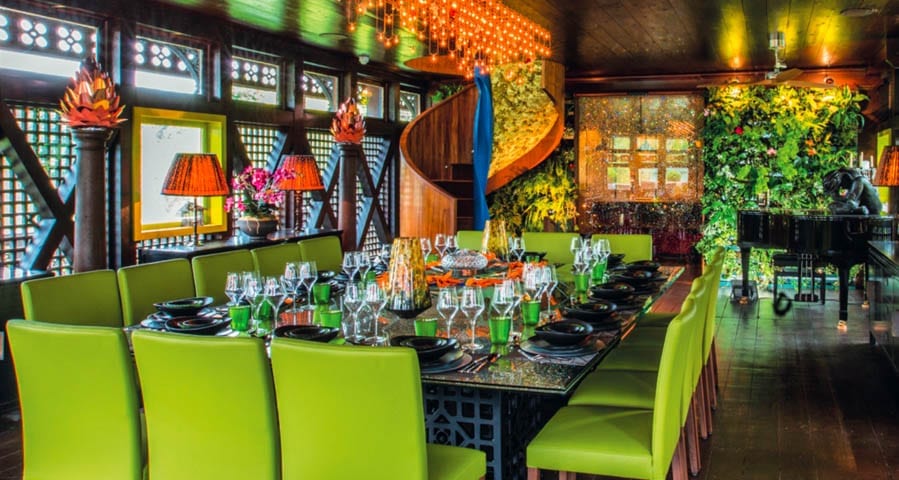
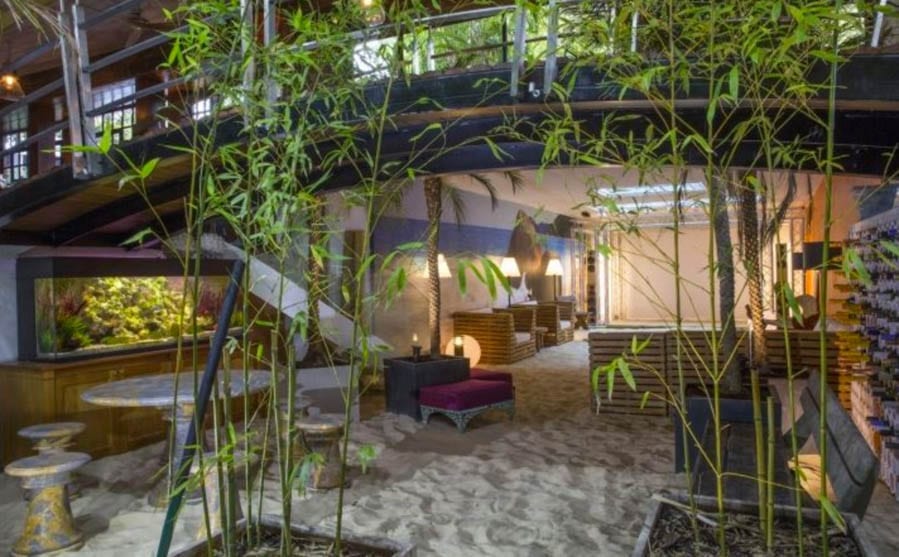
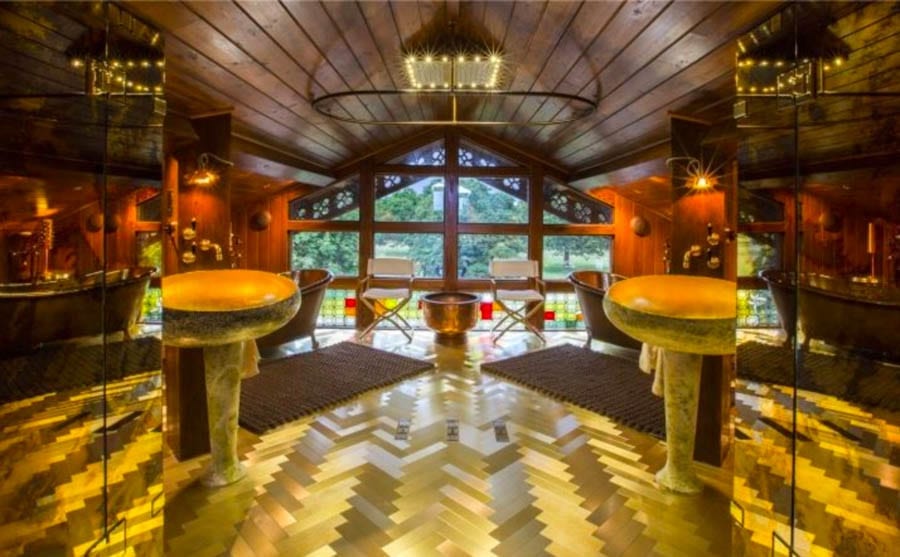
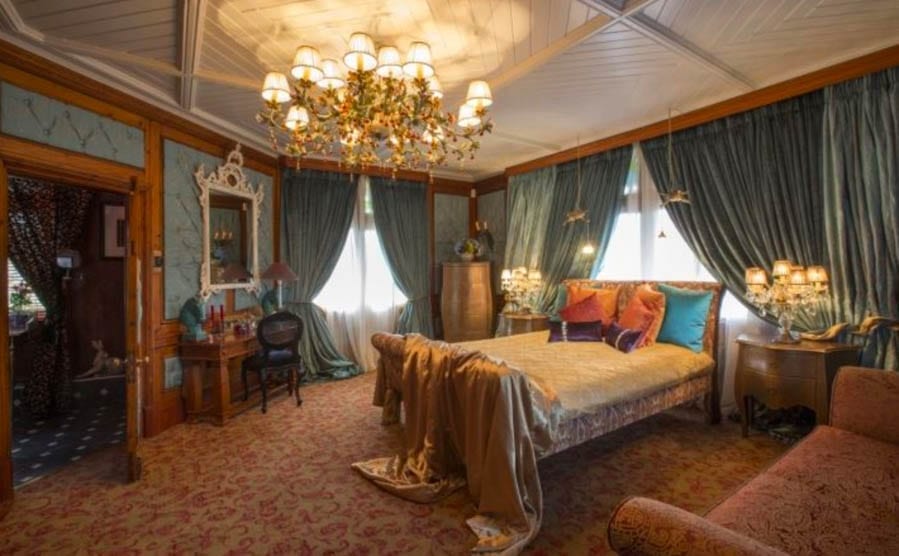
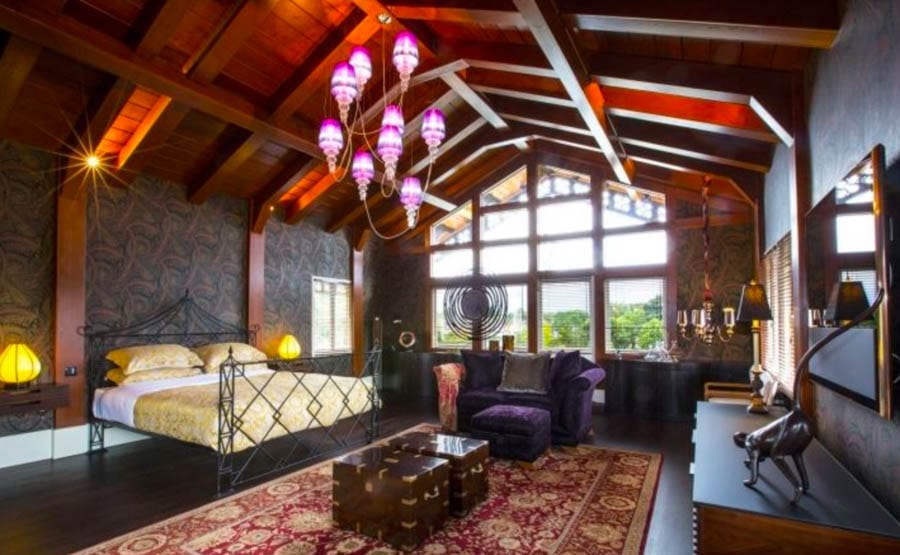
Now marketed by Savills on behalf of LPA Receivers, the Grade II listed chalet was imported from Switzerland in 1882. It includes an indoor 69-foot man-made beach filled with 40 tonnes of sand, a dining room with an especially vulgar 18-seat Swarovski crystal table and a kitchen with just what any budding Mary Berry couldn’t live without – five Gaggenau fridges.
Extending to 5,478 square foot in total, The Chalet also comes with a number of private moorings on the River Thames.
The Chalet, Hampton Court Road, East Molesey, Surrey, KT8 9BP – The Numbers
March 2018 – £5 million ($6.9 million, €5.6 million or درهم25.3 million).
October 2016 – £10 million ($13.8 million, €11.2 million or درهم50.7 million).
August 2016 – £13 million ($17.9 million, €14.6 million or درهم65.9 million).
Follow The Steeple Times on Twitter at @SteepleTimes.
Octagonal Victorian Gothic landmark in Westchester County, New York available for rent; Bono was filmed there and it includes the only domestic Egyptian Revival room in existence
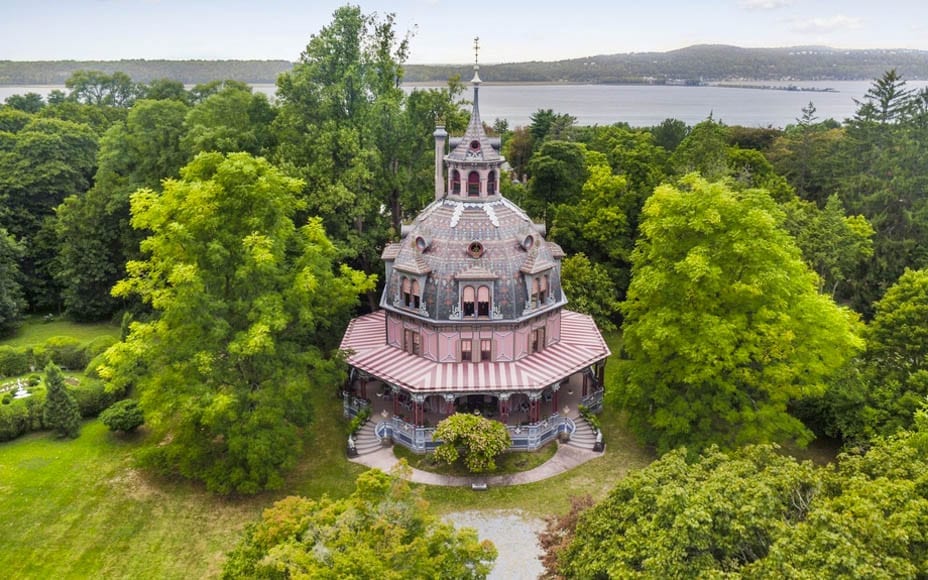
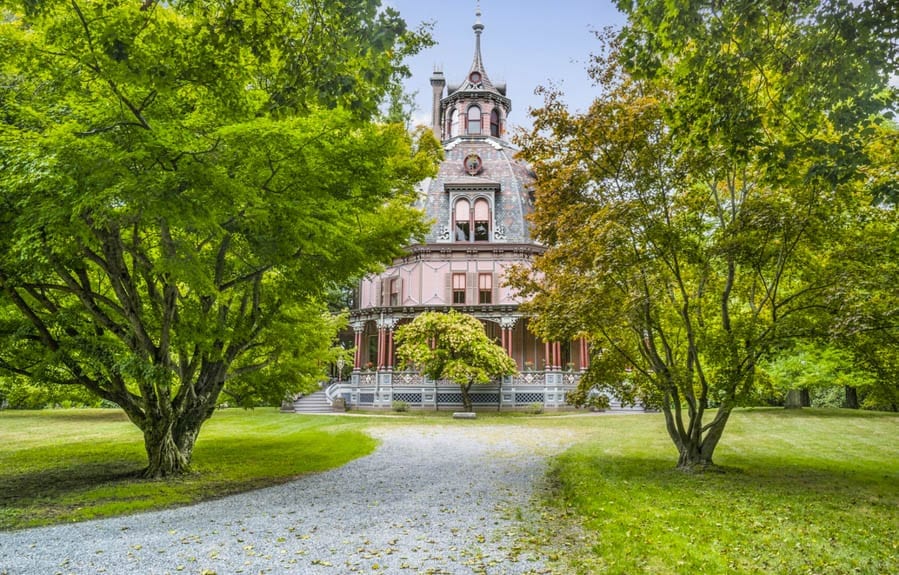
A Victorian Gothic house in Irvington, Westchester County, New York that resembles a wedding cake has been put on the market to rent for £30,300 per month ($40,000, €33,200 or درهم147,000 per month).
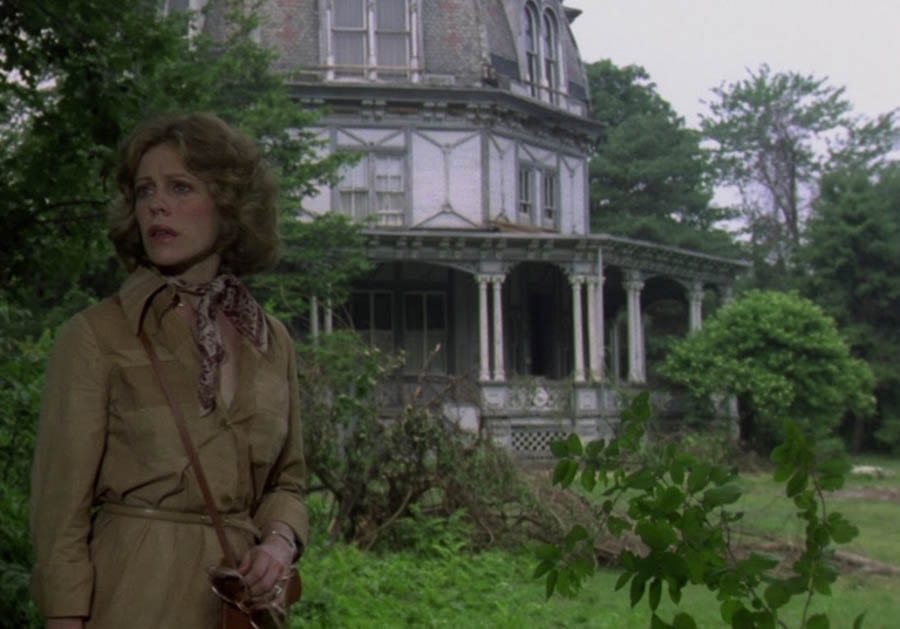
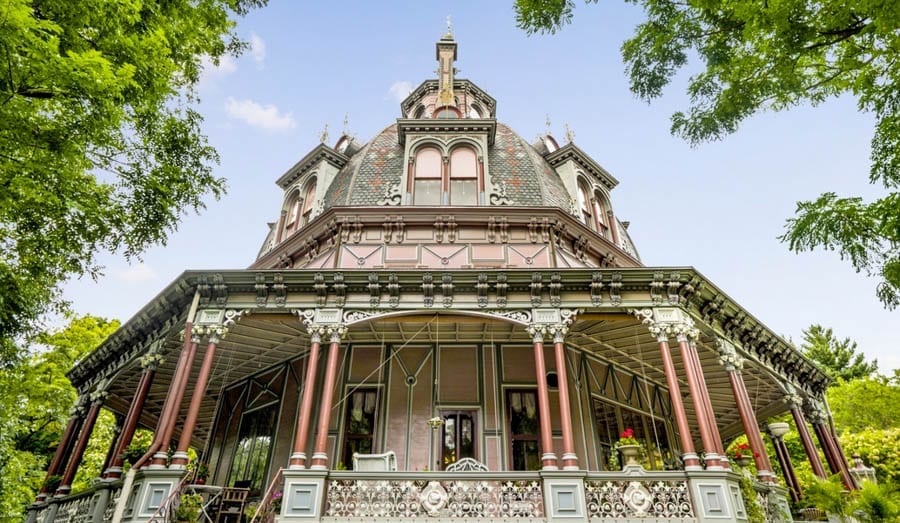
Built for a financier named Paul J. Armour between 1859 and 1860, this octagon shaped and domed landmark was subsequently home to the author Carl Carmer (1893 – 1976) – best known for his widely praised book Stars Fell on Alabama – between 1940 and his death. The building was later the main setting for the less popular (and seized and confiscated in the UK under Section 3 of the Obscene Publications Act 1959) 1981 horror film The Nesting and then completely renovated by the award winning conservationist architect Joseph Pell Lombardi.
The Octagon House in 1882 and 1975
The Octagon House in the 1981 film “The Nesting”; the then owner launched a $1 million lawsuit against the filmmakers after they supposedly trashed the building
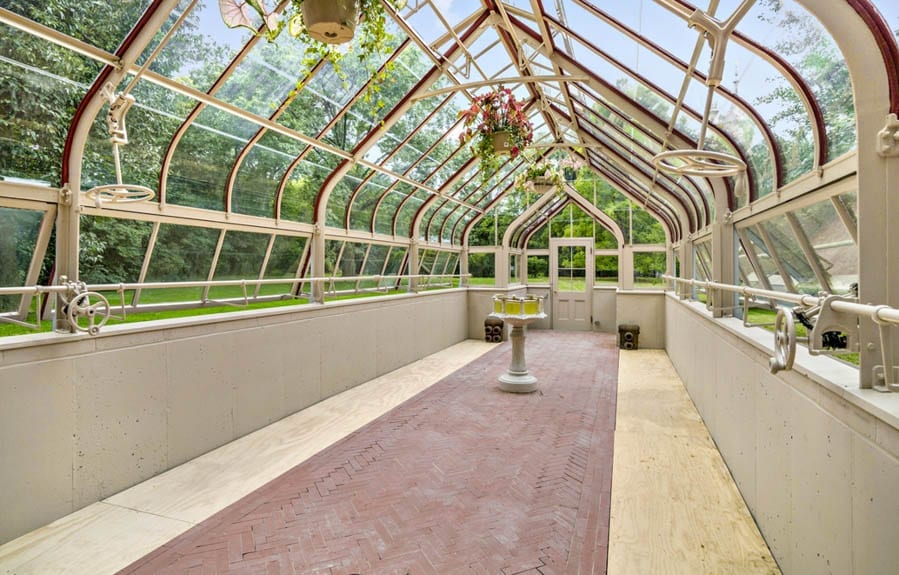
Known alternatively as the Armour-Stiner House, the Carmer Octagon House, The Octagon House or simply 45 West Clinton Avenue, the National Register of Historic Places listed residence is being marketed by agents William Pitt Sotheby’s International Realty as “one of the most visually unique homes in the world.” It stands on a plot close to the Hudson River of 3.05 acres, provides 8,400 square foot of accommodation and has a drawing room, dining room, ballroom, 7 bedrooms and 3 bathrooms. Within the grounds is an original Lord & Banham conservatory and a carriage house that provides garaging for 4 vehicles.
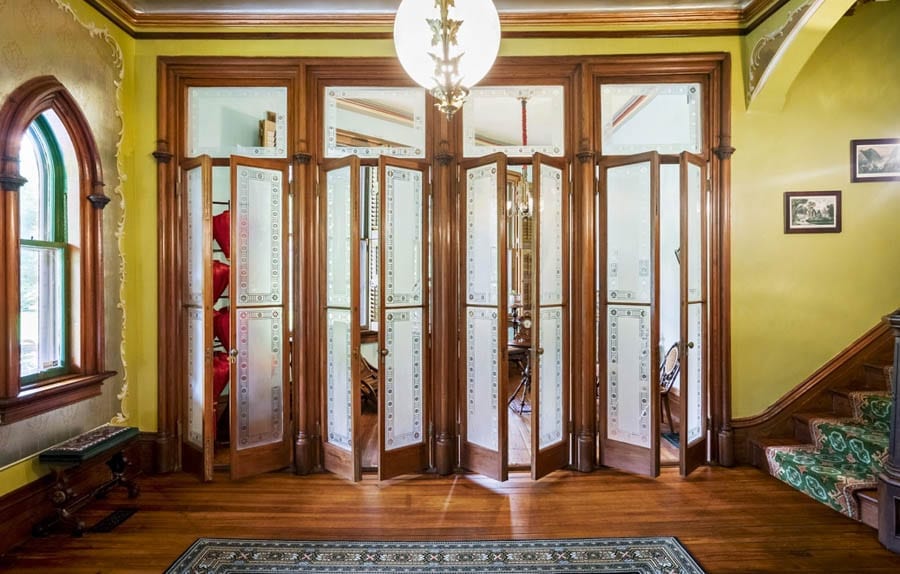
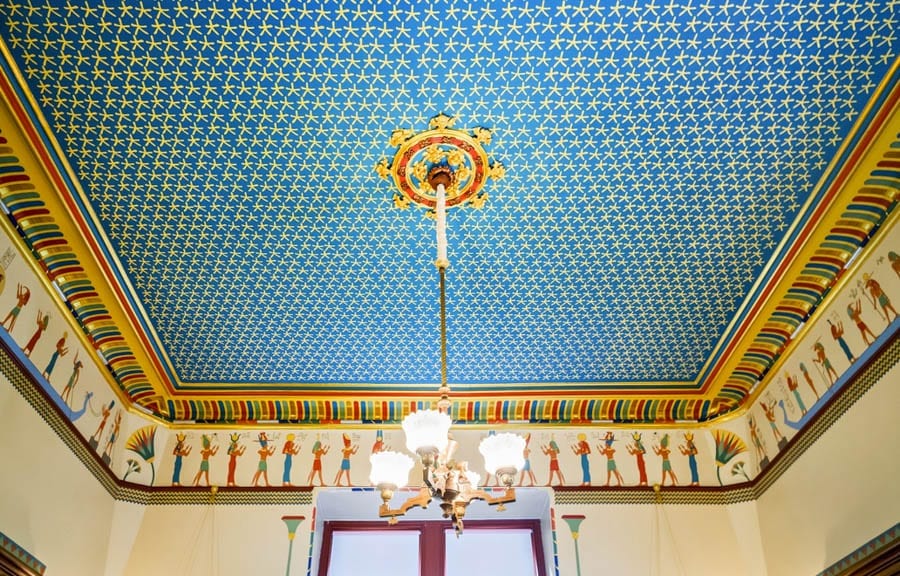
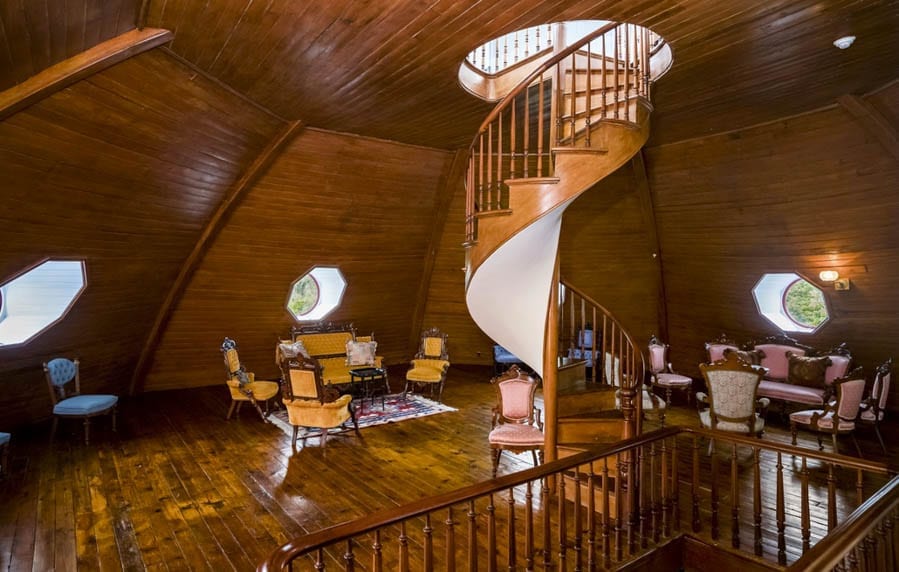
Especially impressive architectural features of the building number the only domestic Egyptian Revival room still in existence, an attic with a staircase to a stunning cupola and a wraparound veranda with 56 columns. In the 2007 film Across the Universe, the billionaire Irish singer-songwriter Bono (playing a character named ‘Dr Robert’) described The Octagon House as the “Headquarters of the League of Spiritual Deliverance.” It most definitely abounds in such.
David Pun gobbled his way through General Election 2017 and was captured on camera by a Mail on Sunday reporter
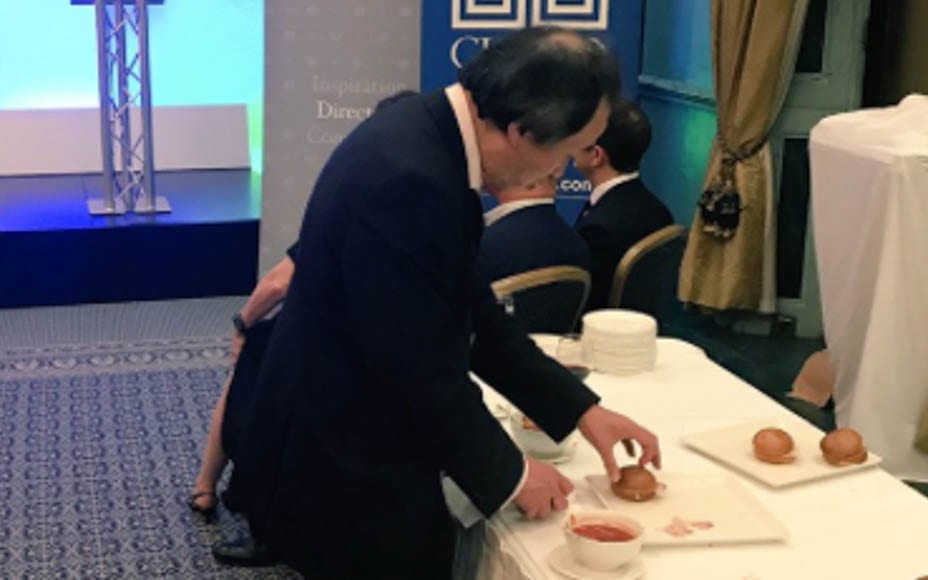
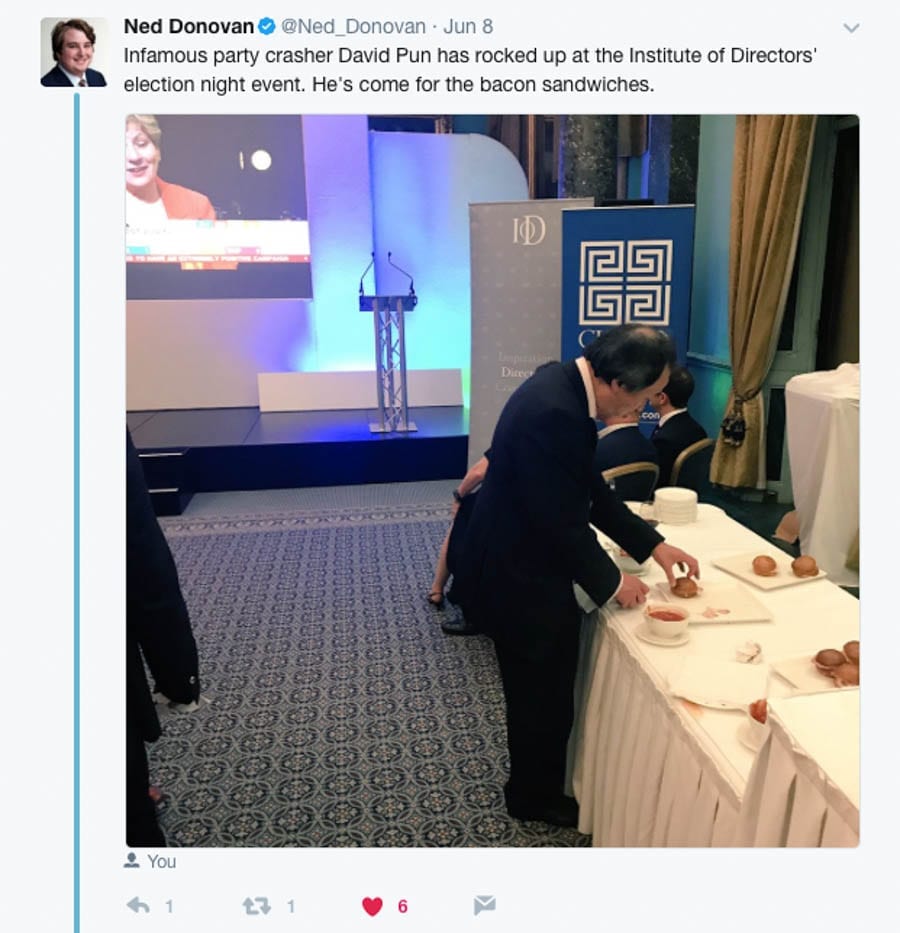
Mail on Sunday reporter Ned Donovan secured the photo of the evening on General Election night 2017 in capturing party crasher extraordinaire David Pun at the Institute of Directors in Pall Mall, London in the early hours of 9th June.
In the image, shared on Twitter, Pun – whose claims to his connections at both Harvey Nichols and Peninsula Hotels frequently astound those he meets and whose position on a roll call of ‘shoppers’ in Queensway brought laughter to readers of The Steeple Times in April this year – is pictured raiding a tray of bacon baps as Lady Nugee (AKA Emily Thornberry MP) looks down from an overhead television screen.
Whilst Pun’s voting preferences got no mention, sadly nor did where fellow liggers Denis Doble and Sandra Shevey ended up on that night’s rampage. Whether they got trolleyed with ‘Team Theresa’ at Conservative Central Office or naughty with Nigel Farage at 5 Hertford Street, no doubt canapés aplenty were snaffled.
“Grand” Grade II* listed Midlands manor for sale for just £350,000; it comes with a 49-seat cinema and several unexpected catches
Where there’s muck, there’s money and a late 18th century Midlands manor house currently for sale for just £350,000 ($451,000, €402,000 or درهم1.65 million) provides an example of the tale of the progress and decline of industrial wealth in once Great Britain.
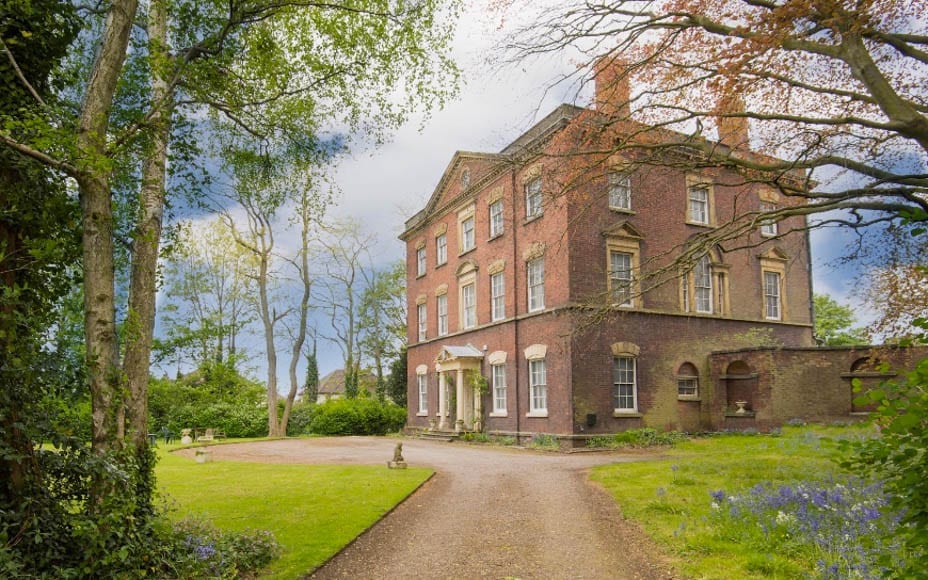
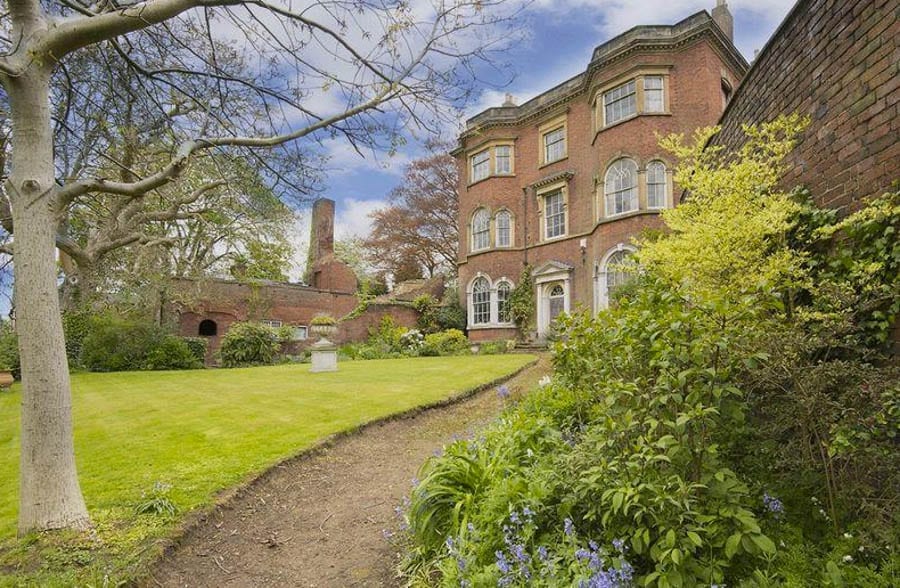
Built in 1757 for a family of Black Country industrialists, Wordsley Manor in Wordsley, near Stourbridge has been owned by the Firmstone family and their relatives since around 1850. A red brick built, four floor “small mansion” that extends to 7,464 square foot in total, the building has been Grade II* listed since 1976 and was expanded in the 19th century with the addition of two service wings.
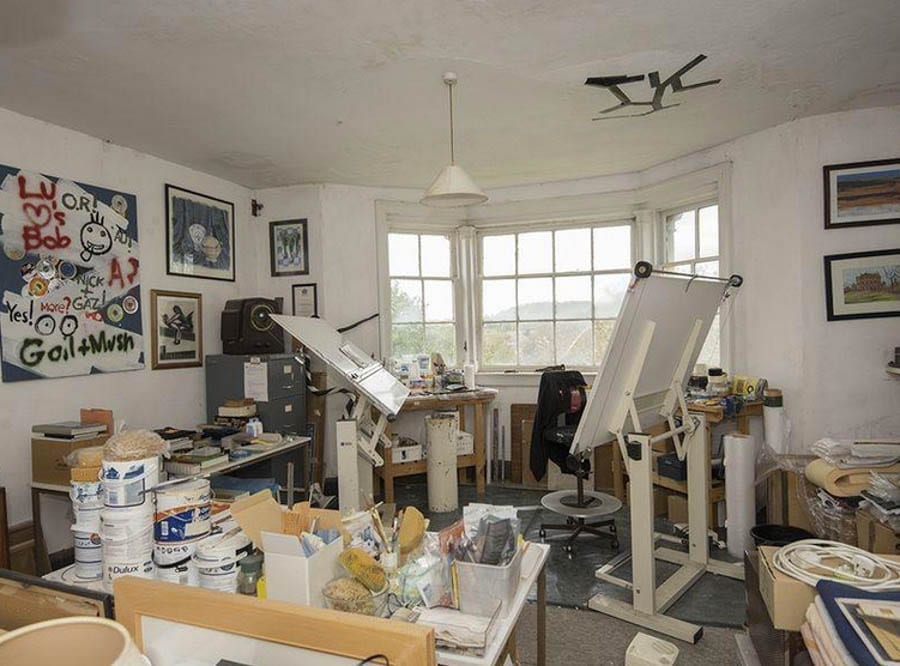
Comprising of 3 reception rooms, 7 cellar rooms, 4 bedrooms and just 1 bathroom, dilapidated Wordsley Manor is – giving explanation for its extremely low asking price – in need of complete renovation. It comes, however, with an unexpected bonus: Where bedrooms previously existed on its second floor, there is currently an art studio and a quirky 49-seat cinema with a Christie organ, box office and projection and switch rooms.
Architect Christopher Firmstone and wife Joan have been occupants of Wordsley since inheriting it in 1991. They have attempted to maintain the house but in 2011, Mr Firmstone told the Birmingham Mail:
“I took it on and sorted it out as best I could. Most people would have run a mile, but I had a real sense of attachment to it [he spent his childhood there also]”.
“I spent a bit more than I could afford on it, but I was unable to do everything that needed doing”.
In 2013, the couple followed in the footsteps of relatives who had sold off much of the surrounding land for housing in the mid 20th century and agreed a deal with a firm of developers named David Alexander Homes. In exchange for yet another parcel of the former estate’s grounds – that was subsequently marketed rather cheesily as a residential complex named “To the Manor Bourne” – a £400,000 ($512,000, €460,000 or درهم1.88 million) payment is to be made towards the restoration of Wordsley Manor.
In their sales brochure, agents The Lee, Shaw Partnership state: “Best and final offers must be made for Wordsley Manor by 5.30pm on Tuesday 27th June”. They add: “Only cash purchasers” need apply.
With such a name, this suave gent just had to design landmarks. University of Westminster educated and Hampshire based Robert Adam (born 1948) followed his more famous namesake (1728 – 1792) and became a designer of “progressive neo-classical style buildings” in 1975. He won “the richest prize in architecture” in January 2017 and counts the Sackler Library at the University of Oxford, a “miniature Baroque mansion” at Eastwood Farm – complete with a lion on the roof – in Herstmonceux, East Sussex and the “KGB proof” Ingliston House on the Wentworth Estate in Surrey amongst his notable works.
Refurbished Surrey manor house with connections to Detmar Blow and Gertrude Jekyll for sale for £2.55 million
Reduced in price by £200,000 since when it was previously on the market in June 2015, a Surrey manor house is again for sale – but this time for £2.55 million ($3.32 million, €2.96 million or درهم12.20 million).
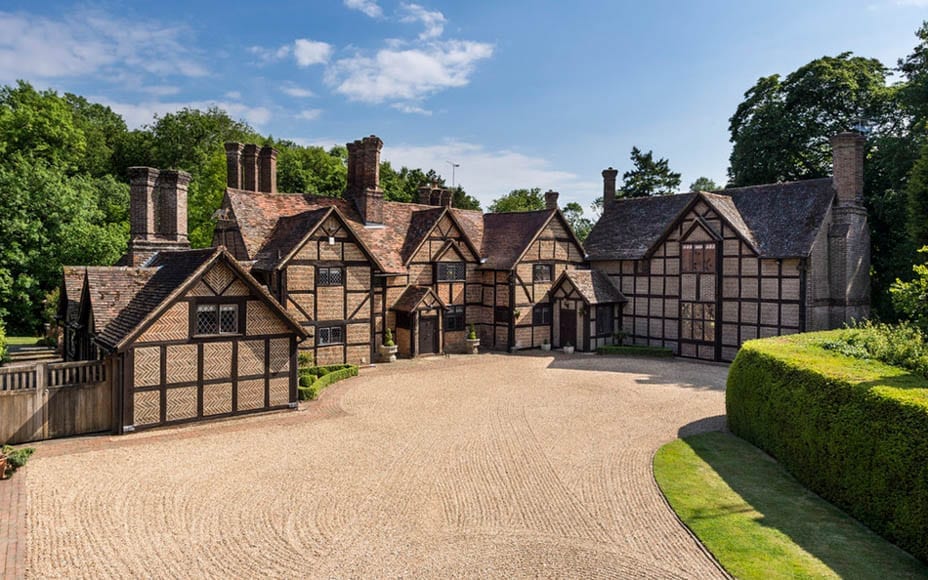
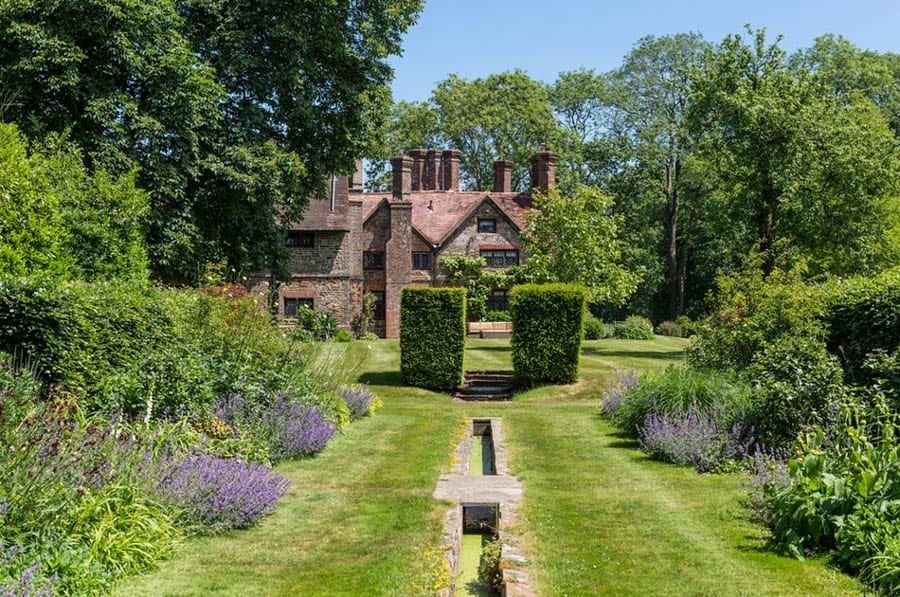
First mentioned in association with Robert de Upbroke in 1282, Osbrooks at Capel, near Dorking was built as a hall and smoke bay house in the 15th and 16th centuries. Subsequently redeveloped in the 17th century and then extended by Detmar Blow (1867 – 1939) – an architect, contemporary of Edwin Lutyens and disciple of John Ruskin – in the arts and crafts style in the early 20th century. The building was given Grade II listed status in November 1966 and more recently had a swimming pool, gym and garaging added.
Osbrooks in 1890
Osbrooks today (with 20th century extension to left)
Standing in 14 acres of gardens and grounds designed by amongst others the especially prolific Gertrude Jekyll (1843 – 1932), Osbrooks now provides 4,987 square foot and features 4 reception rooms, a bar, 8 bedrooms and 5 bathrooms. It includes such details as oak joinery, leaded windows and tall, diagonal chimney stacks and could very easily be used as a location in a Midsomer Murders or Miss Marple murder mystery television drama.
Of the property, in April, John Fisher of selling agents Sotheby’s International Realty told The Times: “It could be a house for entertaining as well as comfortable living. It has all the space you could require, as well as proximity to good schools”.
An adjoining 4-acre plot with stabling and planning permission for a 1,959 square foot, single storey dwelling is also available through Sotheby’s. It is offered for £450,000 ($586,000, €523,000 or درهم2.2 million).