Tag: abuse

  • Maxed Out

    Maxed Out

    Scumbag paedophile Max Clifford bankrupts himself leaving his victims without compensation


    Since being jailed, paedophile Max Clifford has shown absolutely no contrition and utterly no remorse. He’s sued newspapers, let his equally arrogant daughter, Louise, buy the “goodwill” – if such bizarrely even exists – of his former PR firm and tried to sell his ghastly Surrey home for £3.45 million. Now, in spite of reportedly being worth around £10 million prior to going on trial, this arrogant one-time friend of everyone from Simon Cowell to James Hewitt has pulled another scam and bankrupted himself this week.


    Maxed Out – Jailed paedophile Max Clifford bankrupts himself – Scumbag paedophile Max Clifford bankrupts himself leaving his victims without compensation.
    Max Clifford on the day of his marriage to his now ex-wife, Jo, with (left to right) Theo Paphitis, Bobby Davro, Pauline Quirke and Des O’Connor


    In walking away from debts of £7.5 million, Clifford has effectively limited what compensation he has to pay to the women and children he sexually abused. One was aged just 14 when he sexually abused her and of the news an unnamed female victim remarked: “His recent behaviour illustrates his complete arrogance and denial that his actions had any impact on his victims”.


    74-year old Clifford’s lawyer, John Szepietowski, told The Times: “Mr Clifford has always honoured his debts and finds this situation completely alien to him. He deeply regrets being in this situation”.


    Currently serving eight years at Her Majesty’s Prison Littlehey in Cambridgeshire, Max Clifford has yet again proven his entire worth. Here is a cretinous creature who’ll forever be remembered as nothing but a scumbag and a disgrace.


    Pictured above: Disgraced former PR Max Clifford with his daughter Louise Clifford, proprietor of Borne Media.


  • Theresa’s Trumped

    Theresa’s Trumped

    Blundering bin bag Theresa May will form a minority government today, but it won’t last; the nation want her and her nasty party gone


    From the moment Theresa May awkwardly held Donald Trump’s hand in Washington back in January, it was all but over. Cursed by appearing a poodle to the worst POTUS in history, Britain’s then unelected Prime Minister showed herself as a kowtowing coward and a mandateless moron.


    May – a self-declared “goody two shoes” whose outfits are supposedly chosen with the help of her ‘charitable’ chum Lady Meyer and whose “most naughty moment ever” was supposedly “golly gosh, running through fields of wheat” – had not needed to call an election but doing so has rightly cost her dear. When the contest was announced back in May, the public, represented best by ‘Brenda from Bristol’, told her: “Not another [election]. Oh for God’s sake, I can’t honestly… I can’t stand this”, but on this Lady Macbeth-like harridan blundered.


    Theresa’s Trumped – Theresa Trump got it so wrong and should go – Blundering bin bag Conservative leader Theresa May will form a minority government today, but it won’t last; the nation want her and her nasty party gone
    Philip and Theresa May – a bumbling ‘Wallace & Gromit-like’ duo unsuitable for the task of steering our nation through Brexit and beyond


    Appearing on the BBC’s One Show with her garden gnome-like husband, Philip, foolish Mrs May car-crashingly joked about whose responsibility it was to take the bins out – there are, after all, “boys jobs” and “girls jobs” – and kept repeating her mantra of “Strong and Stable”. It was no longer about parties, it was “Theresa’s Team” but what the nation rightly came to understand her as was as one of the worst Home Secretary’s in modern history. Here, indeed, was a woman who’d closed our police stations and here was one who’d shut our fire stations; here was a woman whose friendship with the McCanns had resulted in them getting £11 million for their pointless search and here was a woman whose inquiry into historic abuse cost £100 million, yet, again achieved nothing for victims.


    Though, surprisingly, for once, former UKIP’s former leader Nigel Farage got it right in stating: “The vicar’s daughter came across as insincere and establishment… Jeremy Corbyn fought and an amazing campaign and came across well”, it took Labour’s Tom Watson to sum up the mood of the nation when he remarked: “She said she was strong and stable. The public saw she was weak and wobbly”.


    The Tory leader shot herself in the foot yesterday and as Paddy Ashdown concluded: “Mrs May: Enough is enough”. Let’s now put the rubbish out and let’s consign Theresa May to the bin bag of history.


  • A Question of Borwick

    A Question of Borwick

    Matthew Steeples asks Conservative candidate for Kensington Lady Borwick five questions; he put the same to the Liberal Democrats Annabel Mullin also whilst Labour’s Emma Dent Coad failed to respond


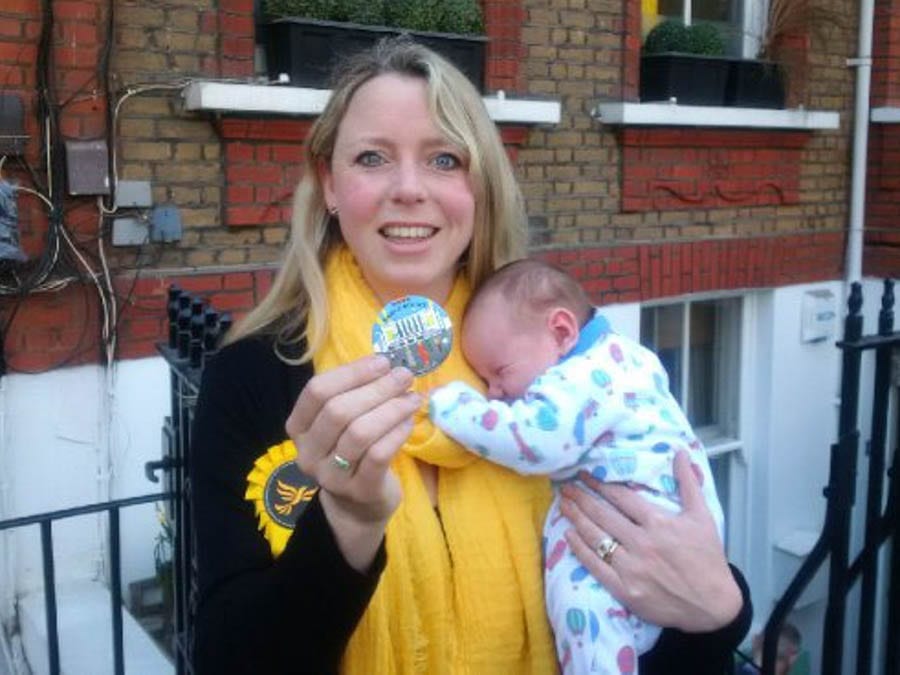
    In the final hours of the 2017 General Election campaign, I asked the Conservative candidate for Kensington, Lady Borwick, five questions I considered relevant to voters in one of Britain’s most wealthy constituencies. I publish below her answers in full and unedited form and beneath also include the responses of the Liberal Democrat candidate, Annabel Mullin, to the same questions.


    Emma Dent Coad, Labour’s candidate, was also given the opportunity to answer but failed to respond to several requests.


    The five questions to Lady Borwick (initially and then more generally to Annabel Mullin and Emma Dent Coad) were:


    • Hidden homeless: “What will you do to help the ‘hidden homeless’ of Kensington?”
    • Money park Kensington: “How will you help local businesses counter such decline if re-elected?”
    • Brexit: “How, going forward, will you credibly represent the 48% who voted to ‘remain’, as someone who went on the phones to support ‘leave’?”
    • Answering constituents: “How will you improve your pathetically low 18% response rate to constituents’ correspondence, as registered on TheyWorkForYou.com if re-elected?”
    • Ivory: “Will you continue to lobby Theresa May about ivory in spite of such being highly unpopular with constituents and others such as Deborah Meaden?”


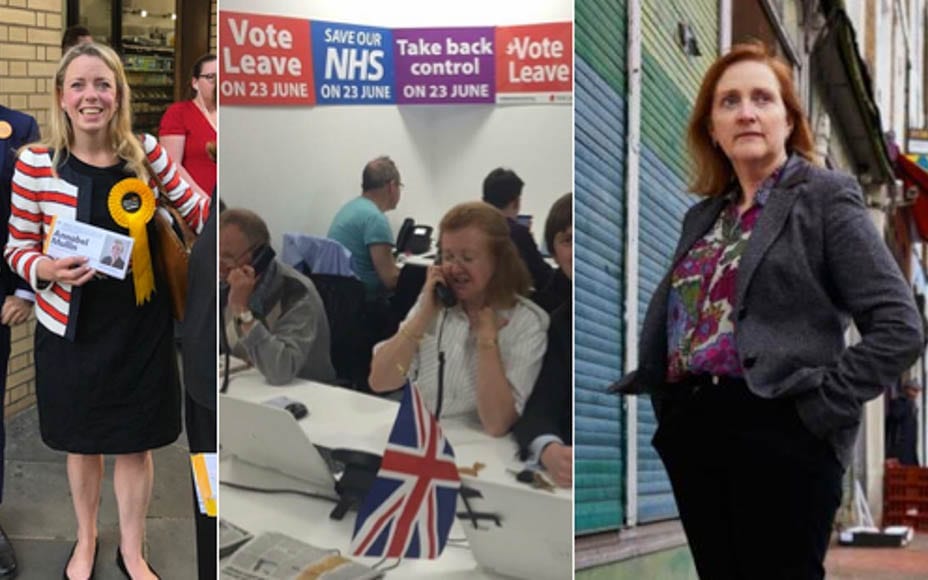
    Pictured above: Annabel Mullin campaigning, Lady Borwick during the Brexit referendum and Emma Dent Coad


    Pictured above: Annabel Mullin campaigning, Lady Borwick during the Brexit referendum and Emma Dent Coad


    Victoria Borwick, Conservative Party A Question of Borwick – Matthew Steeples of The Steeple Times asks Conservative candidate for Kensington Lady Borwick five questions; he put the same to the Liberal Democrats Annabel Mullin also whilst Labour’s Emma Dent Coad failed to respond


    What will you do to help the ‘hidden homeless’ of Kensington?”


    In Parliament, the Homeless Reduction Bill was recently passed –which was almost the last bill to be “signed off” before Parliament broke for the election. This puts pressure on local councillors to provide a range of early intervention solutions.


    Current local services – There are a number of local churches who are working in this sector such as St Cuthbert’s (who I visited earlier this week) and our local charities.

    From my previous work at the GLA, I know that although there is a hostel place for everyone that is not enough. People need more and longer-term help which is why there are some good charities working locally, for example the Glass Door Project and Homeless Link. I have also worked with several of the veterans’ charities whose aim is not “no second night out” but “no first night out”.


    The situation with those that are “street homeless” – these are the people who, for a complex number of reasons, spend time living on the streets. Some do have somewhere to sleep at night, but spend the day on the streets and some live on the streets full time, including overnight.


    The first port of call for street homeless people is a hostel and these fall into two categories. “Direct access” and those that require a referral from an agency. These agencies provide not only shelter but some way to address the terrible loneliness, mental health and other problems that most street homeless people feel. We need to look at the provision of hostels, but also work with the organisations that provide longer term support, to help people get over their crisis and get back on their feet – and this can take months, and sometimes longer.


    There has to be short-term accommodation but also ways of dealing with the causes of street homelessness. There needs to be “move on” accommodation, for those that have managed to get themselves into a stable state, and where they are becoming independent, but may still need some ongoing support. I have visited services where they have a range of provision in the same location, I.E. those in immediate crisis and those that are more capable.


    We need to provide services to help people with drug and alcohol problems which causes so many people to become street homeless, and also with the mental health problems that afflict so many of these people. The council’s Public Health Department has made this a high priority. I particularly welcome the changes to our mental health laws that the Prime Minister has pledged to bring in. These should make a big difference for homeless people with mental health problems.


    Money park Kensington: “How will you help local businesses counter such decline if re-elected?”

    I have grown up in Kensington and lived here all my life, with my family.

    Supporting our small and medium sized local businesses is very important for all of us in Kensington. Local businesses are the backbone of our economy and provide employment and opportunities in our community.

    Firstly we have to stop losing small independent businesses, as you have refereed to, so that people do not lose their opportunity to be working locally and also to start business locally. RBKC has continued with our planning exemptions, otherwise across London small businesses were being turfed out of their premises. Many local restaurants have sadly closed.


    I have lobbied the Chancellor, and if re-elected will continue to lobby the Chancellor against the rash of additional regulations for small business – the proposed quarterly reporting, the apprenticeship levy – should be for larger firms, the pensions levy and of course the revaluation which has negatively impacted on our shops – and not on the out of town warehouses for mail order.


    I recently undertook a survey of many local shops and businesses, either in writing or by visiting in person. On the basis of the response, I wrote to the Treasury, as indeed did the Borough, and also raised it personally with the Chancellor to see if there is any other way of looking at the rates – so that rateable value could be examined to take into account factors such as turnover, size of premises, whether the shop is independent or a chain of premises and so on. If re-elected, I shall continue to raise these concerns with other central London MPs as they affect us all.


    I will continue to support local businesses by supporting any legislation in Parliament which will promote businesses and support our local economy.


    Buy to Leave – This is a real issue in Central London, and this is something that, as an MP, I discussed with other Central London MPs from all parties. As we are aware this is “investment purchasing” where investors buy, usually a new property, and then do not live in it, and treat it as “money in the bank” which is why they don’t want it to be lived in as they want to keep it new.


    When discussing this and researching what is actually happening – RBKC undertook a survey, as have Westminster Council on this topic. There is a pocket of properties where this is very prevalent, however there is not overall interest in this because it affect so very few nationally.


    That does not make it any less of a problem – the previous Mayor tried to address this by saying that properties have to be marketed in the UK first, but we are often used to getting a mortgage first and these overseas buyers are cash buyers so naturally they can jump in. The new Mayor is also examining what measures can be taken.


    There are examples in Switzerland and Australia where they have tried to tackle this issue. Buy to leave homes have a very negative effect on the community as there are less “eyes on the streets” less community activity and it is difficult for local business to survive.

    By continuing to have schools and local amenities it brings together a community and encourages homes for families.


    Brexit: “How, going forward, will you credibly represent the 48% who voted to ‘remain’, as someone who went on the phones to support ‘leave’?”


    I previously worked for Open Europe which was working with the previous administration on renegotiation, which was my preferred stance. I had hoped that the EU would and could use this time to examine its own processes and undertake reform. I realise the result of the referendum is not the outcome for which everyone might have hoped. My chief concern was accountability, and it became clear there was little that could be done to persuade the Commission towards greater transparency.


    As a country we voted to leave the EU. Parliament has voted on two occasions to implement the result, with cross-party support. All sides have agreed to respect the referendum and to get on with the re-negotiations. The Lib Dems may have also offered a second referendum on the result of the negotiations. Theresa May has said she will bring the final agreement to Parliament for a vote.


    For Kensington, if re-elected, my role will be to lobby for reciprocal rights for all our long-term residents. Over 50% of the residents in Kensington were not born here and many have made Kensington their home for many years. We should continue to make sure they are welcomed and can continue to play an active part in our community. Many are also great contributors to voluntary and charitable works.


    I will represent the views of Kensington in Westminster if I am re-elected; working closely with Ministers to make sure they understand the complexity of Kensington.

    The choice for everyone is: “Who should be leading the Brexit negotiations?” Which team do you want? I am supporting Theresa May and her team. I support the PMs ambition to strive for a good outcome for the country.


    Answering constituents: “How will you improve your pathetically low 18% response rate to constituents’ correspondence, as registered on TheyWorkForYou.com if re-elected?”


    I have always prioritised urgent casework when responding to the vast amount of correspondence my office receives. I receive referrals and pleas for help from individual constituents, charities, churches, the mosque and other religious groups, along with organisations such as the Citizens Advice Bureau and free legal advice clinics. We have helped several thousand families over my time in Parliament. These referrals, usually from someone in crisis, do not come through “They Work for You” thus they are not logged in this way.

    People tend to write to us on “They Work for You” if they are asking for our views on a particular campaign. If the campaign has nothing to do with Kensington residents, then I put my views on the website, so that people can see my opinion. However, I try not to comment on things that are not directly relevant to the majority of Kensington residents.


    As a team – my priority is casework and dealing directly with residents, and meeting residents each week. I try to avoid “lobbying emails”. Obviously with complex cases we need to see the residents a number of times, and help them with their various meetings with officers or officials and if appropriate I also work with their local councillors (from any party) to make sure they are not left without support.


    A Member of Parliament is often the last resort for people on housing, immigration and benefits. I have been able to help a great many residents since elected and I hope to continue to do this if re-elected.


    Ivory: “Will you continue to lobby Theresa May about ivory in spite of such being highly unpopular with constituents and others such as Deborah Meaden?”


    I supplied a full response to Deborah Meaden who said she was content with my response and why I am representing the antiques trade in Kensington and our great museums. She kindly offered to send my response to others who were concerned. I have offered to meet her should I get re-elected.


    I support the current proposals which are to make sure we enforce the ban on trading in modern ivory.


    No antique dealer wants to kill elephants; no antique dealer supports poaching. The only ivory that can be sold in this country is antique and carved. However, there are countries, including those in Europe who still permit the trading of tusks, although this is shortly to be outlawed – not before time.


    We can and should preserve works of art that are our shared cultural inheritance for future generations, while at the same time doing everything in our power to ensure that these terrible assaults on wildlife do not continue. The next generation need to be able to grow up in a world with healthy herds of elephants. However, these are not mutually exclusive positions. This is a view expressed by some of our leading museums, such as the Victoria and Albert Museum and the British Museum.


    As you will be aware many musical instruments contain ivory “tinkling the ivories – playing the piano” comes to mind as well as significant treasures in our churches. In our area we have three magnificent museums – the Natural History, V&A and Science Museums – and they all have ivory – antique and old ivory.


    Both elephants and our shared cultural inheritance are there for us all; we need to work together to look after both, and I have no doubt that this is possible.


    Annabel Mullin, Liberal Democratic Party

    A Question of Borwick – Matthew Steeples of The Steeple Times asks Conservative candidate for Kensington Lady Borwick five questions; he put the same to the Liberal Democrats Annabel Mullin also whilst Labour’s Emma Dent Coad failed to respond 

    What will you do to help the ‘hidden homeless’ of Kensington?”


    Rough sleepers and the homesless have had a very tough time of late. Funding has dried up, centres have closed and specialist help has become less frequent. We need to provide holistic care – that means that we must look at social care with mental health for these individuals alongside.


    Money park Kensington: “How will you help local businesses counter such decline if re-elected?”


    I would like to bring a private members’ bill to fundamentally change business rates as they are killing our local businesses.


    Brexit: “How, going forward, will you credibly represent the 48% who voted to ‘remain’, as someone who went on the phones to support ‘leave’?”


    As a passionate European and Remainer who feels we are best placed in the European Union, I will fight especially for being in the single market (not just access) and to protect the rights of all EU citizens and their freedom of movement.


    Answering constituents: “How will you improve your pathetically low 18% response rate to constituents’ correspondence, as registered on TheyWorkForYou.com if re-elected?”


    It has been an absolute pleasure getting to know people in and around Kensington over the last nearly seven weeks. It would be a privilege to serve Kensington and communicate with everyone.


    Ivory: “Will you continue to lobby Theresa May about ivory in spite of such being highly unpopular with constituents and others such as Deborah Meaden?”


    I find it incredible that China has a ban but the current MP for Kensington does not support it.


    Emma Dent Coad, Labour Party

    A Question of Borwick – Matthew Steeples of The Steeple Times asks Conservative candidate for Kensington Lady Borwick five questions; he put the same to the Liberal Democrats Annabel Mullin also whilst Labour’s Emma Dent Coad failed to respond
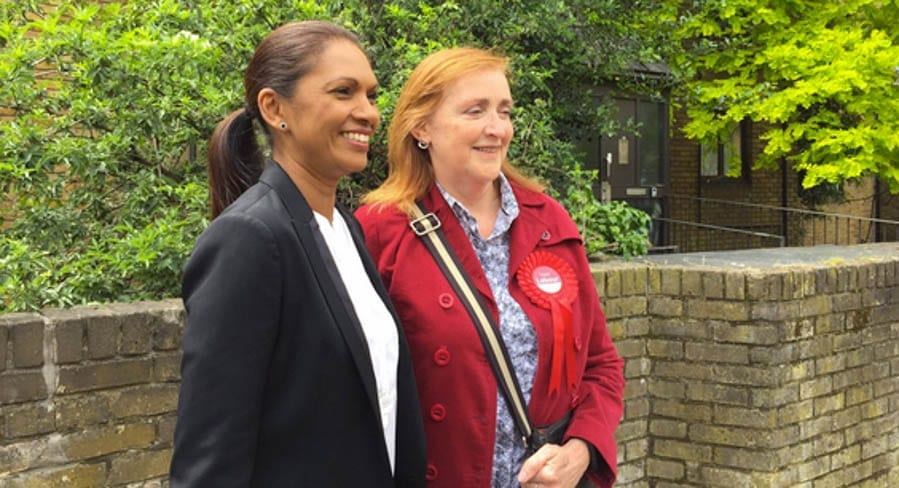
    Emma Dent Coad (pictured with Gina Miller of Best For Britain)


    Ms Dent Coad failed to respond to repeated requests from The Steeple Times to answer the five questions. They were put to her via email.


  • Rotten Rolf

    Rotten Rolf

    As convicted paedo Rolf Harris walks free from court and his nutty supporters once again reveal themselves, it must be remembered he is still a convicted abuser of girls as young as eight


    Rolf Harris might well have walked free from court on Monday after a jury failed to reach a verdict on historical assault charges against three teenagers, but the public should remember one thing: This monster is still a monster and he is still a man convicted of 12 counts of indecent assault on victims as young as 8 years old.


    Outside the court and once again failing to show an ounce of compassion to those he had previously been jailed for molesting, a spokesman for Harris read out a statement. In it, Harris remarked:


    “While I’m pleased that this is all I over I feel no sense of victory, just relief. I’m 87 years old, my wife is in ill health and we simply want to spend our remaining time together in peace”.


    Rightly stripped of his MBE, OBE and CBE, the former television presenter and shockingly bad performer – best known for now seemingly rather inappropriate renditions such as Two Little Boys – should now do the decent thing. ‘Rotten Rolf’ should simply fade into obscurity and forever be consigned to social Siberia.


    Elsewhere, on Change.org, loopy ‘fans’ of the paedophile took the opportunity to brag about the verdict on a page titled: “A man who is innocent and knows he is innocent”. One, Cardiff based, Milford Haven School educated Sally Roberts, ridiculously commented: “This is as good as an innocent verdict considering there was no evidence to prove either way” before delusionally adding: “And an appeal over his first trial is imminent!!”


    Pictured above: Paedophile Rolf Harris with his “tireless [or ‘blind to his guilt’] supporter”, niece Jenny Harris.


    Rotten Rolf – Paedo Rolf Harris might be free but he’s still a paedo
    Rolf Harris was mobbed by the media as he left court with Jenny Harris on Tuesday 30th May 2017
  • A Brylcream Bigot

    A Brylcream Bigot

    Nigel Farage’s communications man, “political poet” Dan Jukes, sinks to a new low in the wake of the attack on innocence in Manchester; this beer swilling bigot should henceforth be ignored


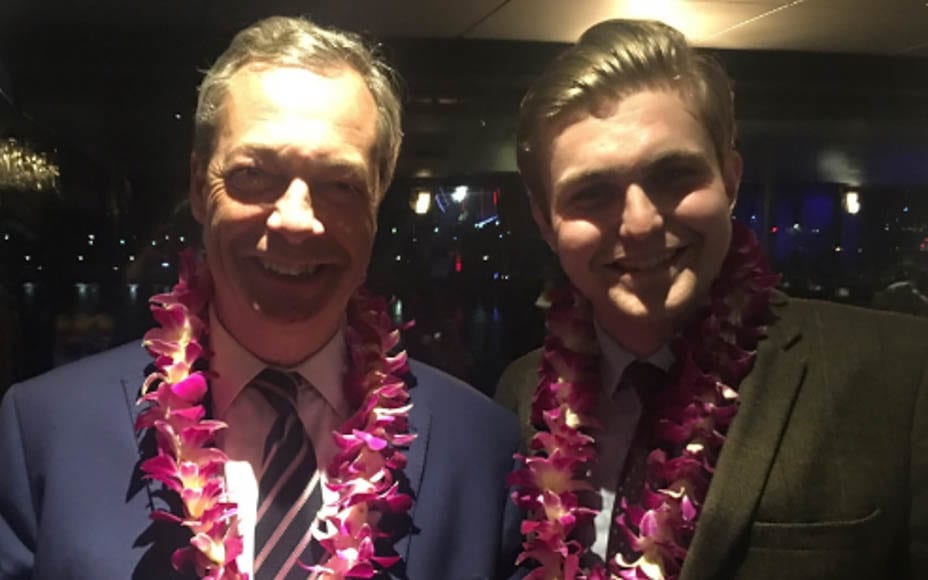
    In the aftermath of the appalling terrorist attack in Manchester on Monday night, Nigel Farage’s communications man, Dan Jukes, did not unite with those sharing grief. Instead, this bombastic “political poet” – one half of a duo previously known as the ‘Brylcream Boys’ – spent the next hours telling his 5,088 Twitterfollowers to “get angry, get mad” and “#sigh[ed]” of the Eiffel Tower going dark in solidarity with victims.


    Jukes, a man plainly lacking in any form of nuance of appropriateness, also shared a tweet that announced: “There’s no such thing as Islamophobia. It’s a word designed by Muslim Brotherhood [sic] to shut down debate” and another that read: “That’s enough hashtags and vigils. What we need now is public anger”. As well as retweeting wild and as of yet unproven suggestions that the date of the atrocity was linked to the fourth anniversary of the murder of Lee Rigby, Jukes also termed a missive by the respected human rights barrister Adam Wagner “dog shit” and then remarked: “Don’t trust this pair any further than I can throw them to sort out terrorism” alongside of an image of Theresa May and Amber Rudd.


    Jukes’ inane ramblings did not stop there. He continued by repeating unconfirmed information about the Manchester suicide bomber having allegedly been heard “chanting Islamic prayers loudly in the street outside his home in the week leading up [to the attack]” and then concluded: “Parents of terrorist escaped Libya and came to Britain as refugees. This is how that family repay us… Change needed… This is war”.


    At a time when tolerance between communities is especially essential, there’s only one thing worth doing with Dan Jukes: Let’s unite in turning off this pint-swilling little horror’s volume switch.


    #Manchester


  • Mugged by May

    Mugged by May

    Theresa May’s gamble to go to the country will likely pay off, but is it good for Britain?


    Theresa May supposedly decided to go call a snap election after a trip to church and a walking holiday with her garden gnome-like husband, Philip, in Wales over Easter. She has taken a gamble but given that Sky News are projecting the Tories are likely to win 44% of the vote against Labour on 23%, it is one that will likely pay off.


    Unsurprisingly and in a coward-like fashion, Mrs May has declined to partake in television debates but given her opponent Jeremy Corbyn is so hopeless, it would take only a calamity to unsettle any chances of her winning. Only the left-leaning Mirror is backing Corbyn and in spite of the Liberal Democrats likely to make a number of gains in the south-west, May will certainly hit Labour hardest.


    Mrs May, however, is not good for Britain. Since taking office last year, she has performed eight U-turns on policy and as Home Secretary she was a total disgrace. One only has to remember that this is the woman who closed the police stations and this is the woman who closed the fire stations. This, also, is the politician who wastefully funded her friends Gerry and Kate McCann’s search for their missing child to the tune of £11 million and this is the woman whose inquiry into historic abuse has cost £100 million and delivered nothing.


    Lady Macbeth-like May is a self-serving woman and she is not a good premier. This power grabbing vicar’s daughter’s about turn on Brexit is bad for Britain and her harshness towards immigrants is bad for business. She must be stopped and we urge our readers to vote for anyone but her on 8th June.


  • The Business of Blair

    The Business of Blair

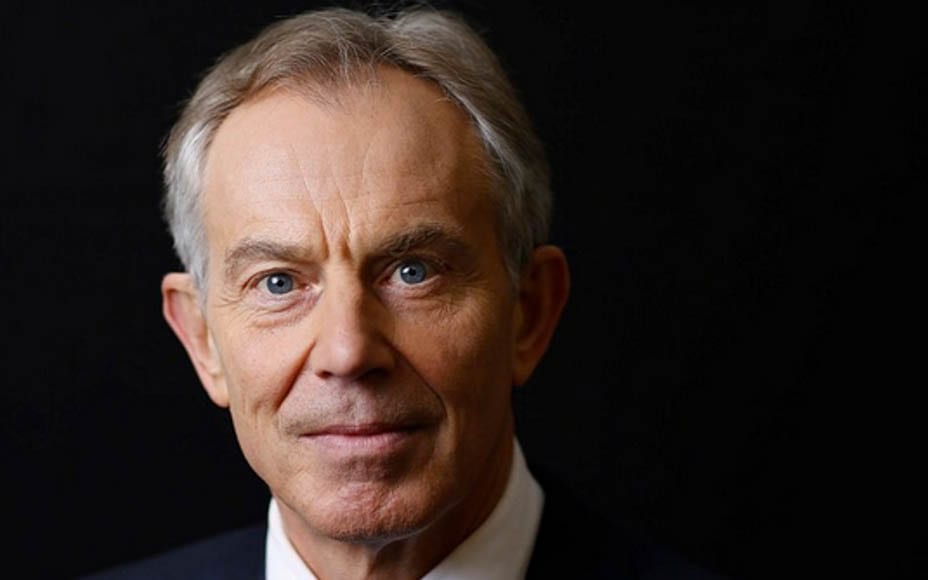
    Tony Blair ditches business and also denies a return to public office


    For weeks, the mainstream media have claimed Tony Blair is preparing to return to public office to save Britain from the nightmare of Brexit. They have claimed he’s ready to seize the support of the 48% and that him and Nick Clegg are colluding to create a new ‘centre left’. He did little to deny it at first but late last week, he shared a post on Facebook that frankly puts a stop to this kind of nonsense.


    Blair, a plainly toxic force in politics due to his highly unpopular backing of George W. over the War on Iraq (and because of his refusal to confine his equally disliked weirdo wife to social Siberia), will never make a comeback and now he’s finally acknowledged that in a very public way.


    In our view, Mr Blair is actually wrong. He’s not nearly as bad as #DarthVader Theresa May and he’s not nearly as ghastly as either the worst Prime Minister’s-in-living-history John Major and Gordon Brown and though we share with you his justifications for not getting involved again, we weirdly find ourselves actually lauding Mr Blair for saying the right thing (for once in his sorry lifetime).


    Mr Blair’s comment, in full, follows:


    Over the past nine years we have built a family of organisations which together employ nearly 200 people; have worked in over 30 countries; and have produced some real and lasting achievements. I am very proud of the commitment and impact of the people I have had the privilege to work with.


    The Africa Governance Initiative has become a respected partner and leader in effective governance where we have worked in 10 different African countries.


    The work we are doing in Africa has been right at the centre of government covering everything from boosting electricity, to improving child and maternal mortality rates to helping on the ground during the Ebola crisis in West Africa, a contribution praised for its impact by both the Presidents of the countries concerned and the international community.


    Outside of Africa in the work done by the commercial governance arm, we again made successful interventions in over 12 countries with 30 different projects promoting reform and change programmes with governments.


    The Tony Blair Faith Foundation has done ground-breaking work in interfaith relations, education and leadership, and most recently in the research and policy work on religiously based extremism through the Centre on Religion and Geopolitics which has been widely recognised as authoritative. 


    In the first years of the Quartet role in the Middle East, we hit double digit growth on the West Bank, drew up ambitious plans for Gaza’s infrastructure and changed the rules around entry of materials into Gaza. In 2011, we played a significant part in the attempt to agree terms of reference for a renewal of the peace process.


    Progress became much more difficult once the peace process stalled. We were partners in the later fresh attempts by the USA to revive the peace process, particularly around plans for the economy to support a future Palestinian state. Unfortunately these attempts also failed.


    Nonetheless, after stepping down from the Quartet position, our new Initiative for the Middle East has re-vitalised our work and means this stays a large part of what we do. I have made over 35 visits to the region this year alone.


    During the time since leaving office, I have learnt a huge amount about the world and frankly what I can do and can’t do to affect it positively.


    We built up a successful business side, though attracted a large measure of criticism for it, much of it inaccurate. It was entirely necessary to build the business to help with the funding to grow the organisations; but it was open to misrepresentation and to criticism either that we were conflating private and public roles or that we were working in countries which aroused controversy.


    Having said that, I also learnt a lot about the way the global economy functions from that experience and pay tribute to the great team I worked with who made much of the development of our work across the organisations possible.


    We are now at the stage and have built the financial infrastructure where it is time to enter a new phase. First we can take the work we have done in Africa, in governance, on extremism and in the Middle East to a new and more effective level; and secondly, in the past six months we have seen political earthquakes in the UK with Brexit and in the American election, as well as an explosion in populist movements all over the European continent. This impacts profoundly all the work we do and the future of globalisation.


    So I want us to bring all the different organisations together under one roof and to re-orient our mission.


    We have deliberately focused, up to now, on some of the greatest and most difficult challenges faced in the era of globalisation: how to give nations the governing capacity to overcome the problems of development and lift their people out of poverty; how to combat the religiously based extremism which threatens global security; how to resolve the most intractable peace process in the world.


    In each case, we have presented a new approach, with the aim of providing new ideas and thinking.


    In governance, especially in Africa, our analysis is that, today, building the capacity to govern effectively – making the way government works efficient as well as transparent – is as important for developing nations as aid.


    Look around the world, and see countries living next to each other – same size population, same resources, same natural potential – one succeeding, one failing. The reason for the difference is found in the quality of governance. Take the following examples: Venezuela and Colombia; Poland and Ukraine; Rwanda and Burundi. And the greatest example in contrasting, contiguous systems of governance the world has seen in modern political history – the Korean Peninsula, North and South Korea. The nation which is succeeding is applying the best rules and lessons of governance; the failing nation is ignoring or defying them.


    On religious extremism, we believe it is essential to widen the struggle, to tackle the ideology behind the violence and not simply the violence itself. So we can defeat ISIS militarily but unless we defeat the ideas behind Islamism – the belief that a particular view of religion should dominate society, politics and the economy, something incompatible with a modern world in which pluralism is the essence – we will never win this battle.


    On the Middle East peace process, we are convinced that a traditional peace process between Israelis and Palestinians with US guidance alone is inadequate; that what is required is a new approach which involves the wider region and the Arab nations and which resolves not just the final status issues like borders but which also resolves the underlying issues of cultural acceptance and regional stability. So we are now working on Arab-Israeli relations, and not simply Israeli-Palestinian relations.


    But it has become clear that there is much overlap between these different areas of work. Extremism is also today a barrier to development. The Middle East conflict impacts extremism. Changing and reforming government applies to Middle East nations as well.


    And since all of these approaches basically represent the open-minded response to global problems, the salience of these new approaches depends on us having an answer to the new populism of left and right which exploits the anger and drives the world apart.


    This new populism may differ in some respects between left and right – the left anti-business, the right anti-immigrant – but in others what is remarkable is the convergence between them, especially around isolationism and protectionism, in what is an essentially closed-minded approach to globalisation and its benefits and to international engagement.


    So we want to add a fourth pillar to what we do. I emphasise this is not in place of our other work but in addition to it.


    This is the creation of a platform designed to build a new policy agenda for the centre ground together with the networks which link people up, and allow a reasonable and evidence based discussion of the future which avoids the plague of social media-led exchanges of abuse. 


    This platform will have a policy unit which will draw on the best ideas and practical solutions, building partnerships with other organisations, in the public policy and private spheres, so that those in the frontline of politics have a bigger and better policy agenda to reflect upon; and a networking capability to join like-minded people up. 


    This is not a think tank. There are enough of those, many doing excellent work we would want to utilise. It is a platform for engagement to inform and support the practising politician.


    It is what I know I would want were I still in the frontline of politics.


    Part of its focus will plainly be around the European debate; but this will not be its exclusive domain. It has to go far wider than that since in many ways the Europe debate is a lightning rod for the whole of politics.


    We’re now planning to bring all of these four parts together in one new Not For Profit Institute. 


    The business side has been shut down and the assets, running into many millions of pounds, gifted to the Institute. In the New Year, we plan to merge the activities of the different organisations into the Institute, with any charitable funds used exclusively for the purposes for which they were originally given.


    This will allow us to work more coherently across the board; use the obvious synergies between the different elements of the work; and to be far stronger on the global policy side than we have been up to now. The focus previously was mainly on programmes. These will remain but the organisation will also be far more about thought leadership.


    This is not about my returning to the front line of politics. I have made it abundantly clear that this is not possible.


    However, I care about my country and the world my children and grandchildren will grow up in; and want to play at least a small part in contributing to the debate about the future of both.  


    The Africa Governance Initiative has become a respected partner and leader in effective governance where we have worked in 10 different African countries.


    The work we are doing in Africa has been right at the centre of government covering everything from boosting electricity, to improving child and maternal mortality rates to helping on the ground during the Ebola crisis in West Africa, a contribution praised for its impact by both the Presidents of the countries concerned and the international community.


    Outside of Africa in the work done by the commercial governance arm, we again made successful interventions in over 12 countries with 30 different projects promoting reform and change programmes with governments.


    The Tony Blair Faith Foundation has done ground-breaking work in interfaith relations, education and leadership, and most recently in the research and policy work on religiously based extremism through the Centre on Religion and Geopolitics which has been widely recognised as authoritative. 


    In the first years of the Quartet role in the Middle East, we hit double digit growth on the West Bank, drew up ambitious plans for Gaza’s infrastructure and changed the rules around entry of materials into Gaza. In 2011, we played a significant part in the attempt to agree terms of reference for a renewal of the peace process.


    Progress became much more difficult once the peace process stalled. We were partners in the later fresh attempts by the USA to revive the peace process, particularly around plans for the economy to support a future Palestinian state. Unfortunately these attempts also failed.


    Nonetheless, after stepping down from the Quartet position, our new Initiative for the Middle East has re-vitalised our work and means this stays a large part of what we do. I have made over 35 visits to the region this year alone.


    During the time since leaving office, I have learnt a huge amount about the world and frankly what I can do and can’t do to affect it positively.


    We built up a successful business side, though attracted a large measure of criticism for it, much of it inaccurate. It was entirely necessary to build the business to help with the funding to grow the organisations; but it was open to misrepresentation and to criticism either that we were conflating private and public roles or that we were working in countries which aroused controversy.


    Having said that, I also learnt a lot about the way the global economy functions from that experience and pay tribute to the great team I worked with who made much of the development of our work across the organisations possible.


    We are now at the stage and have built the financial infrastructure where it is time to enter a new phase. First we can take the work we have done in Africa, in governance, on extremism and in the Middle East to a new and more effective level; and secondly, in the past six months we have seen political earthquakes in the UK with Brexit and in the American election, as well as an explosion in populist movements all over the European continent. This impacts profoundly all the work we do and the future of globalisation.


    So I want us to bring all the different organisations together under one roof and to re-orient our mission.


    We have deliberately focused, up to now, on some of the greatest and most difficult challenges faced in the era of globalisation: how to give nations the governing capacity to overcome the problems of development and lift their people out of poverty; how to combat the religiously based extremism which threatens global security; how to resolve the most intractable peace process in the world.


    In each case, we have presented a new approach, with the aim of providing new ideas and thinking.


    In governance, especially in Africa, our analysis is that, today, building the capacity to govern effectively – making the way government works efficient as well as transparent – is as important for developing nations as aid.


    Look around the world, and see countries living next to each other – same size population, same resources, same natural potential – one succeeding, one failing. The reason for the difference is found in the quality of governance. Take the following examples: Venezuela and Colombia; Poland and Ukraine; Rwanda and Burundi. And the greatest example in contrasting, contiguous systems of governance the world has seen in modern political history – the Korean Peninsula, North and South Korea. The nation which is succeeding is applying the best rules and lessons of governance; the failing nation is ignoring or defying them.


    On religious extremism, we believe it is essential to widen the struggle, to tackle the ideology behind the violence and not simply the violence itself. So we can defeat ISIS militarily but unless we defeat the ideas behind Islamism – the belief that a particular view of religion should dominate society, politics and the economy, something incompatible with a modern world in which pluralism is the essence – we will never win this battle.


    On the Middle East peace process, we are convinced that a traditional peace process between Israelis and Palestinians with US guidance alone is inadequate; that what is required is a new approach which involves the wider region and the Arab nations and which resolves not just the final status issues like borders but which also resolves the underlying issues of cultural acceptance and regional stability. So we are now working on Arab-Israeli relations, and not simply Israeli-Palestinian relations.


    But it has become clear that there is much overlap between these different areas of work. Extremism is also today a barrier to development. The Middle East conflict impacts extremism. Changing and reforming government applies to Middle East nations as well.


    And since all of these approaches basically represent the open-minded response to global problems, the salience of these new approaches depends on us having an answer to the new populism of left and right which exploits the anger and drives the world apart.


    This new populism may differ in some respects between left and right – the left anti-business, the right anti-immigrant – but in others what is remarkable is the convergence between them, especially around isolationism and protectionism, in what is an essentially closed-minded approach to globalisation and its benefits and to international engagement.


    So we want to add a fourth pillar to what we do. I emphasise this is not in place of our other work but in addition to it.


    This is the creation of a platform designed to build a new policy agenda for the centre ground together with the networks which link people up, and allow a reasonable and evidence based discussion of the future which avoids the plague of social media-led exchanges of abuse.


    This platform will have a policy unit which will draw on the best ideas and practical solutions, building partnerships with other organisations, in the public policy and private spheres, so that those in the frontline of politics have a bigger and better policy agenda to reflect upon; and a networking capability to join like-minded people up. 


    This is not a think tank. There are enough of those, many doing excellent work we would want to utilise. It is a platform for engagement to inform and support the practising politician.


    It is what I know I would want were I still in the frontline of politics.


    Part of its focus will plainly be around the European debate; but this will not be its exclusive domain. It has to go far wider than that since in many ways the Europe debate is a lightning rod for the whole of politics.


    We’re now planning to bring all of these four parts together in one new Not For Profit Institute. 


    The business side has been shut down and the assets, running into many millions of pounds, gifted to the Institute. In the New Year, we plan to merge the activities of the different organisations into the Institute, with any charitable funds used exclusively for the purposes for which they were originally given.


    This will allow us to work more coherently across the board; use the obvious synergies between the different elements of the work; and to be far stronger on the global policy side than we have been up to now. The focus previously was mainly on programmes. These will remain but the organisation will also be far more about thought leadership.


    This is not about my returning to the front line of politics. I have made it abundantly clear that this is not possible.


    However, I care about my country and the world my children and grandchildren will grow up in; and want to play at least a small part in contributing to the debate about the future of both.  


  • Don’t forget to catch me

    Don’t forget to catch me

    File on Sir Cliff Richard sent to the CPS (more…)

  • The death of The Archers

    The death of The Archers

    Matthew Steeples asks: Was Helen Titchener killing her husband in The Archers last night a plot too far? (more…)

  • Blocked by Boy George

    Blocked by Boy George

    Boy George blocks ‘The Steeple Times’ on Twitter after we criticised the BBC’s promotion of this convicted repeat offender (more…)