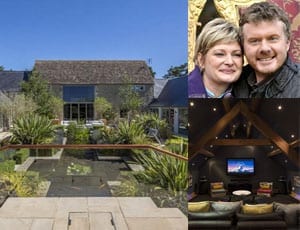
£56 million EuroMillions winners to sell their £4.5 million Cotswolds “eco mansion” – Viewers would do well to not mention cleaners (more…)
Tag: £4 million
-
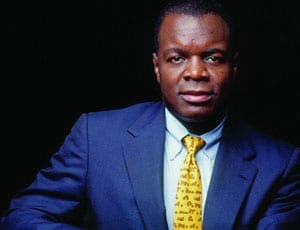
Alphonse Fletcher, Jr. (AKA “Buddy Fletcher”)
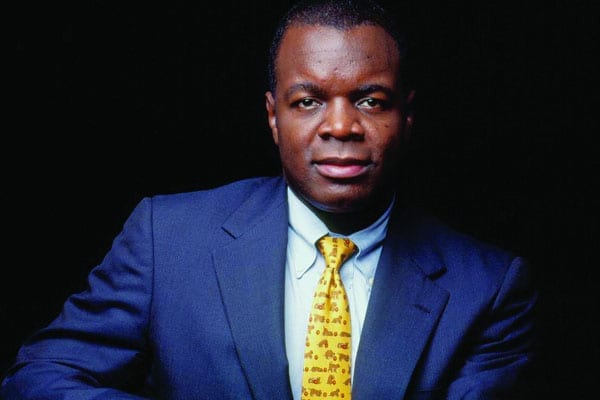 The fund founded by “The Black Madoff” was bankrupted in 2012 after Alphonse Fletcher, Jr.’s firms, Fletcher Asset Management and Fletcher International, failed to meet redemption requests of £97 million ($144 million). (more…)
 -
Northern glory
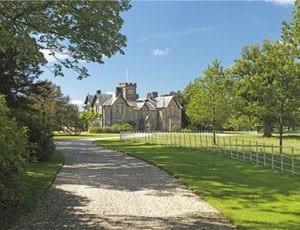
Reconfigured Lancashire estate for sale for £4.25 million
Businessman Martin Higginson and his wife Maggie have reversed what has happened to most English country estates in buying back properties and land around their Lancashire home, Hay Carr at Bay Horse, near Lancaster. They are now selling the whole property with a price of offers over £4.25 million. (more…)
-

Won and lost
Gamblers are the winners and losers of Scotland’s independence referendum
Whilst Great Britain was undoubtedly the winner when the result of Scotland’s independence referendum came in at 6am on Friday, there were other clear winners and losers. United as gamblers, the first comes in the form of a punter who bet £900,000 on a ‘no’ vote whilst the second are the EuroMillions winners Colin and Christine Weir –who foolishly handed some £4,000,000 to Alex Salmond’s disastrous campaign. (more…)
-
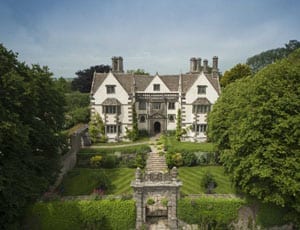
Citizen of the Manor
Manor house owned by one of the McAlpine family comes to the market
The McAlpine family have construction in their blood. They’ve built everything from The Dorchester to the Millennium Dome and one of the current generation, Cullum McAlpine, is no different. His Cotswolds country house, Cold Ashton Manor, is currently for sale for £4 million and its architectural features are stunning. (more…)
-
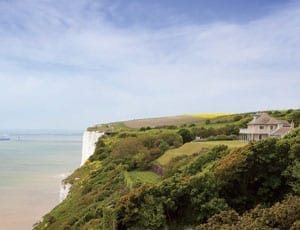
A Front and a half
A coastal estate in a spectacular setting on the White Cliffs of Dover
Known as The South Foreland Estate, an 11.5-acre parcel of land overlooking the English Channel at The Front, St Margaret’s Bay in Kent includes a main house, three further residences and a decommissioned lighthouse that was used in a film starring Oliver Reed. (more…)
-
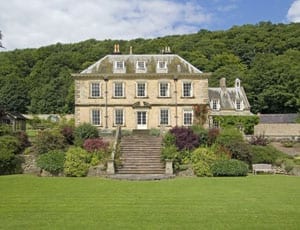
The Perfect English Country House
17th century Oswaldkirk Hall for sale for £4 million
Described by Candida Lycett Green as “a fine and architecturally distinguished house, built in the reign of William and Mary” in her 1994 book The Perfect English Country House, Oswaldkirk Hall in the North Riding of Yorkshire is at the heart of the setting of Julian Fellowes’s fictional Downton Abbey. It was “built to impress” and could indeed have been a perfect starter home for Lady Mary Crawley and her late husband Matthew. (more…)
-

Cheers to Assange!
Another cocktail for Julian Assange
Yesterday, we suggested five of the best things that could be sent to cheer up Wikileaks founder Julian Assange, who “celebrates” a year of costing the taxpayer some £4 million policing his having fled bail, in the Ecuadorian Embassy in Knightsbridge.
(more…) -
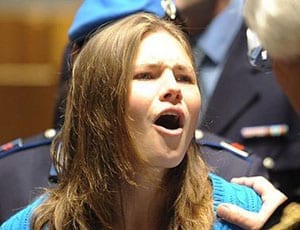
Amanda Knox
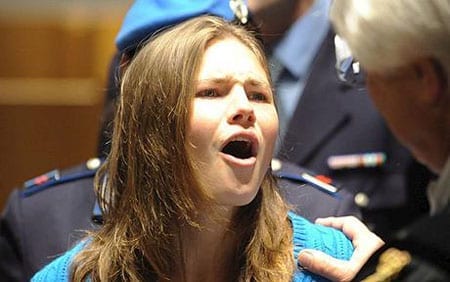 Whether innocent or guilty of the murder she’s repeatedly been accused of, this American has made $4 million from her memoir deal with HarperCollins. The family of Meredith Kercher, the true victim in all of this, have rightly stated that they “do not believe anyone should profit from the murder” but Knox, whose conviction for calunnia stands, is therefore indeed proof that crime can indeed pay.
 -
Rocking with royalty
A £26 million residence with connections to rock, royalty and rectors
Built in the early 1500s, The Old Rectory is Wimbledon’s oldest house. Standing in grounds of 2.5 acres, this 16,200 square foot property was once described by a biographer of Sir Henry Cecil as being “not luxurious, but adequate” but now once again it finds itself in an entirely different league.
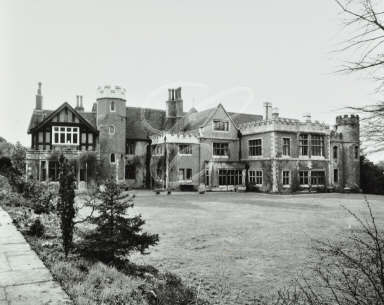
An image of The Old Rectory, 82 Church Road, Wimbledon, London, SW19 5AA in 1978. Present day imagery has been removed at the request of agents acting for the current owners. Priced at £26,000,000, it is almost certainly one of the most expensive homes to ever come to the market in Wimbledon and whoever moves there next will undoubtedly be either an oligarch, an A-list personality or a top achieving business person.
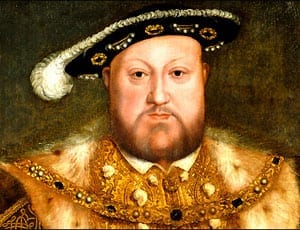
The purchaser will follow in the footsteps of a fascinating array of historically important residents, the first of whom was Henry VIII (1491 – 1547). The King took up residence in 1547 in the months prior to his death and is said, as he was so bloated, to have been unable to climb the stairs to his sleeping chambers. His bed was relocated to the great hall of the house and here he slept next to the fire. Historical research recounts that, with a brewhouse, beer and wine cellars, a coal cellar, meat room, buttery and two dairy rooms, this was a “house fit for a king.”
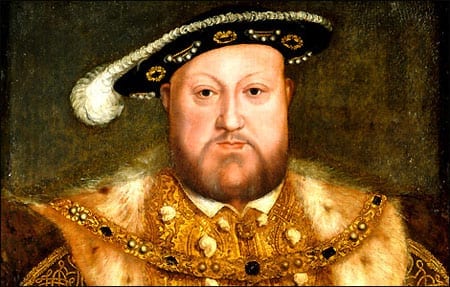
Henry VIII (1491 – 1547) 
Catherine Parr (1512 – 1548) Henry VIII gave The Old Rectory, which was originally called The Parsonage House, to his sixth and final wife, Catherine Parr (1512 – 1548). Preferring a residence in Chelsea, Parr left and the Dean and Chapter of Worcester Cathedral took possession. A lease was sold to Sir William Cecil (1520 – 1598), later Lord Burgley, and the manor then passed to his son Thomas Cecil (1542 – 1623), the 1st Earl of Exeter.
In 1639, Charles I (1600 – 1649) bought the entire manor and gave it to Queen Henrietta Maria (1609 – 1669) but with the era of Comwell, The Old Rectory found itself occupied by General John Lambert (1619 – 1684). Shortly after, when a grander house was built next door, the property became first a laundry house and then servant accommodation and gradually fell into decline.
The Old Rectory passed next to Sir Theodore Janssen (1658 – 1748) in 1720. This French-born English financier, who was said to be worth the staggering sum of £250,000 at the time of his purchase of the house, was a founder member of the Bank of English but later disgraced for his part in the South Sea Bubble. He was expelled from the House of Commons and with his ruination, The Old Rectory saw yet another chapter of abandonment.
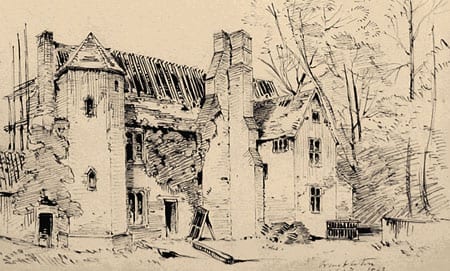
The garden front of The Old Rectory by Charles Henry Money Mileham (1837 – 1917) By 1802, the house was described as an “uninhabited” ruin. A speculator credited with developing “modern Wimbledon” named John Augustus Beaumont bought it and restored and extended it but when it was sold to a Samuel Wilson in 1882 for £6,000, an era of truly comprehensive upgrades was to begin. Wilson added a pebble-dashed two-storey drawing room wing, carved oak doors and installed English, Flemish and Italian chimneypieces.
The next owner was a marine engineer named Matthias Jacobs who had been responsible for the construction of tunnels in Paris and New York. After having purchased The Old Rectory in 1909, he commissioned his brother to add a new single storey billiards room, a service wing and a study extension to mask the medieval chapel of the house. Jacobs sold up in 1923 to a Thomas Lethaby, who fitted oak paneling from Chantry House in Newark and a plaster ceiling based on the one at Knole House, Kent.
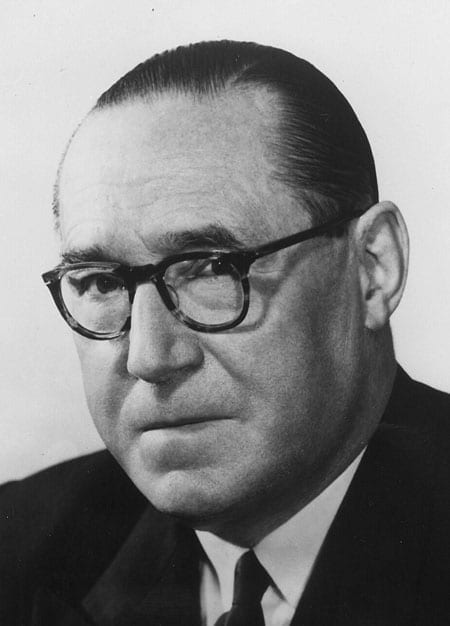
Lord Brock FRCS, FRCP (1903 – 1980) In 1953, the eminent London surgeon and cardiologist, Lord Brock FRCS, FRCP (1903 – 1980), took possession of The Old Rectory after having paid £13,750 for it. Brock is credited as on of the pioneers of modern open heart surgery and also founded the Lord Brock Memorial Trust that to this day funds the museum he founded, The Old Operating Theatre Museum and Herb Garret in Southwark, SE1.
Following the death of his first wife Germaine Louise Ladavèze, Brock sold to an Iraqi entrepreneur and philanthropist named Basil Faidhi in 1978. Faidhi had fled Iraq for Britain and though he spent vast sums restoring the house with assistance from English Heritage, he also created a basement discotheque for his daughter, Nina, and a bar. Aside from bringing the house into the “yuppie era,” Faidhi also commissioned a historian named Richard Milward MA to write a history of the building in 1992 entitled: The Rectory – Wimbledon’s Oldest House.
The Queen lead vocalist and anti-badger cull campaigner Brian May CBE purchased The Old Rectory in 1994 for £4,000,000 with the intention of living there with the Eastenders actress Anita Dobson.
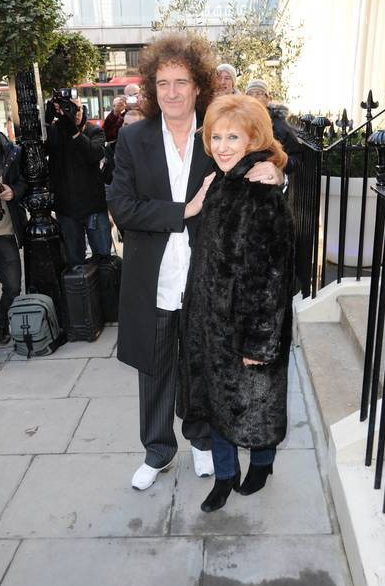
Brian May CBE with his second wife Anita Dobson Dobson, who didn’t marry May until 2008, had other ideas and refused to move in. It was suggested that she preferred a smaller house the pair occupied in Kensington and, at the time, a friend commented:
“[May] begged her to move into the new house so they can make a fresh start. Nobody can believe that Anita doesn’t want to be the lady of this fabulous house. But Brian says he can’t get through to her.”
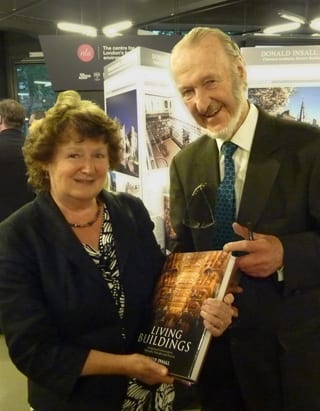
Sir Donald Insall CBE As a result, May never properly moved into The Old Rectory and eventually decided to sell. In 2006, it achieved a record price of £16,000,000 and in the ensuing years, an Italian architect-owner named Antonella Carminati and her husband have lavished time and money on further restorations with the help of Sir Donald Insall CBE’s Insall Associates firm of architects.
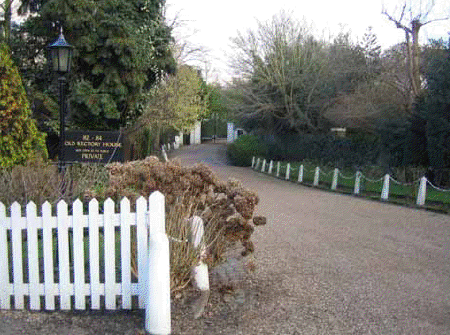
The driveway that leads to The Old Rectory from Church Road gives plenty of privacy New fittings have been installed throughout and substantial extensions to the house have included a new kitchen and breakfast room with garaging beneath. The couple have demolished an early 20th century porch and an “unsightly” oak conservatory, remodeled the billiards room as a drawing room and removed a “bilious” blue swimming pool from the east lawn.
Now featuring 12,882 square foot of accommodation in the main house and 3,320 square foot of additional accommodation, The Old Rectory has been planned to include 8 reception rooms; a vast kitchen with La Cornue appliances and an adjoining breakfast room; master bedroom suite with two dressing rooms, his and her bathrooms and a sitting room and 7 further bedrooms.
Outside, the gardens feature an original medieval fig tree trail, shaded paths, lawns and a large pond as well as garaging for six cars. Planning permission for an indoor swimming pool complex has also been granted and ample staff accommodation is provided above one of the garages and in the gate lodge.
Given the now limited financial resources of the traditional religious houses of Britain, will it be rock, royalty or new money that next takes possession of The Old Rectory? The historians of Wimbledon will undoubtedly be watching.
The Old Rectory, 82 Church Road, Wimbledon, London, SW19 5AA is for sale through the Wimbledon office of Knight Frank. For more information call: +44 (0) 20 8946 0026.