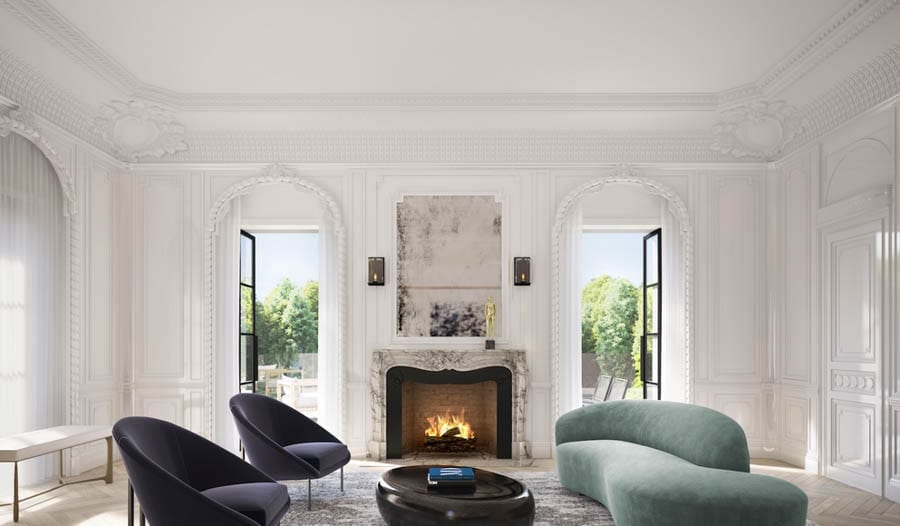
Matthew Steeples takes a look at a £36 million Kensington mansion formerly owned by disgraced business tycoons Alan Bond and Lord Black; its former chatelaine was known for stating “I have an extravagance that know no bounds”
Sir Winston Churchill’s daughter Mary Soames once described the buccaneering businessman and media tycoon Lord Black of Crossharbour as “London’s biggest bore unhung” whilst his wife, Lady Black – better known as the author and journalist Barbara Amiel – was suggested to be just a “rich bitch” by Sarah Sands in a “case for the defence” article in the Independent in October 2006.
“Poster boy for the 80s” turned fraudster and jailbird Alan Bond (1938 – 2015) was an English-Australian businessman equally Marmite-like in being liked or loathed and now a Kensington mansion owned for a time by both subsequently disgraced businessmen is once again for sale.
14 Cottesmore Gardens, formerly known as 12 – 14 Cottesmore Gardens, was purchased by Alan Bond’s Satellite Group for £7 million in the 1980s and sold by administrators of that business to Conrad Black and his wife for the knockdown sum of just £3.5 million in 1992.
Plain old Mr and Mrs Black (as they then were) lavished further millions – some of which came from the company Hollinger International, Inc., which ultimately resulted in their downfall – on the double fronted 19th century mansion and used it for entertaining on a lavish scale. Guests, including the likes of Prince and Princess Michael of Kent, Joan Collins, Margaret Thatcher, Henry Kissinger, Jimmy Goldsmith, James Hanson, Arnold Weinstock, Jacob Rothschild, Peter Mandelson and Tony Blair, were said to flock to the parties they gave there, but in 2005 these gatherings of upto 400 people at a time came to an almighty end.
Forced to sell at a bargain basement price of just £13.1 million on an ask of £17.5 million as the Canadian born billionaire faced jail time in America, Lord and Lady Black’s tenure was over and the residence saw its “arriviste torch” passed to Juan and Adriana Villalonga, a couple described as “a Mexican telecom czar and his beauty-queen wife.” Of what came next, The Globe And Mail’s Paul Waldie pointedly penned in February 2007: “[They] quickly erased many of the features that the Blacks prized.”
Once again for sale as of April 2023, the value of 14 Cottesmore Gardens has again been deemed to have substantially risen. Knight Frank offer the 12,310 square foot, five-storey residence at a punchy price of £36 million and laud it as “imposing” and “presented in good order throughout.” They add that a “pre-planning consultation” has found that further accommodation could be added that would take the internal space to more than 15,000 square feet; business barons with deep pockets only need apply.
Editor’s Note – Unlike as is the case in many publications, this article was NOT sponsored or supported by a third-party. Follow Matthew Steeples on Twitter at @M_Steeples.
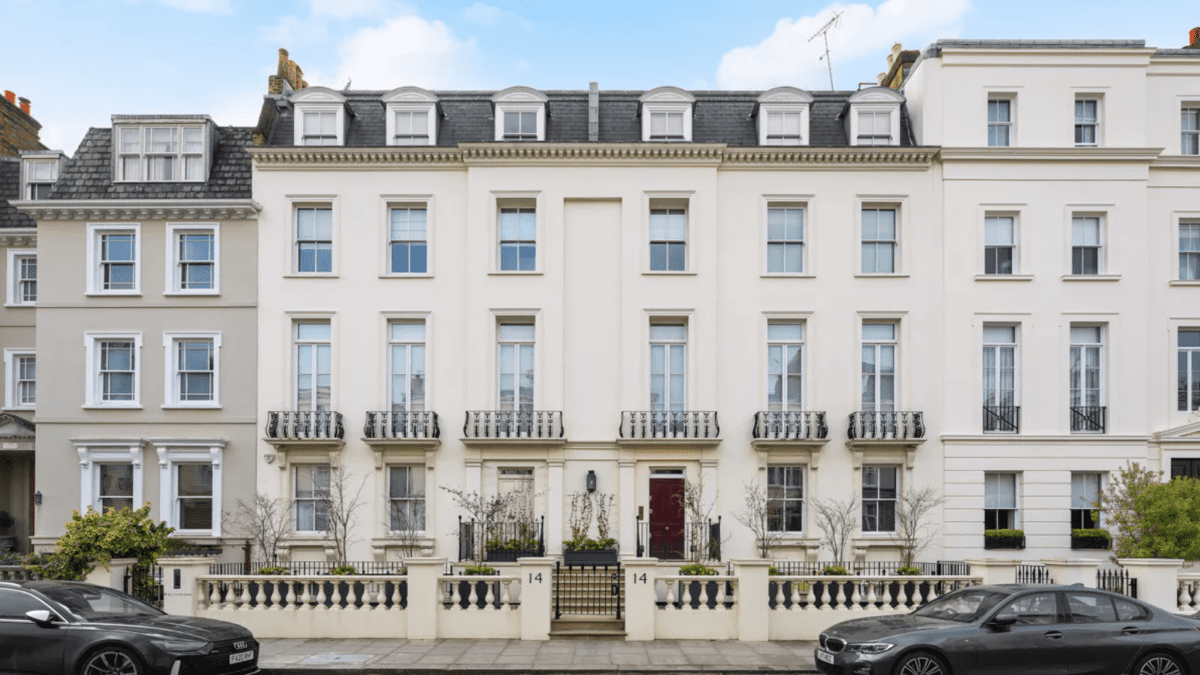
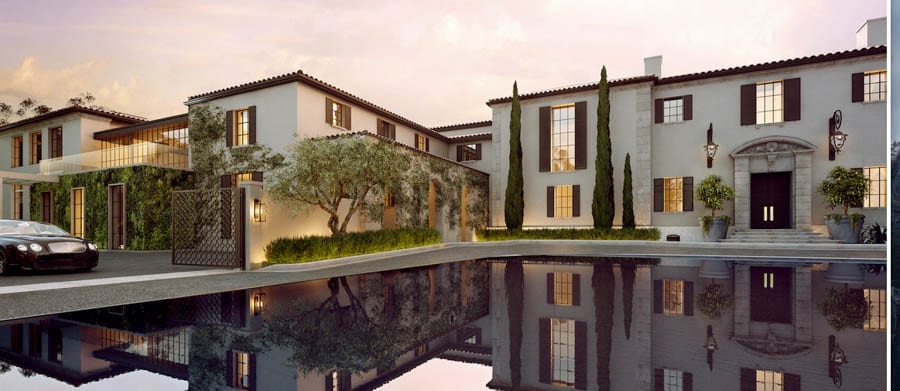
Pictured Top – 54-foot wide 14 Cottesmore Gardens is described by selling agents Knight Frank as “offering lateral living so often requested but so hard to find in central London.” They neglect to mention that with its hedges cut back to the minimum, the place actually looks extremely forlorn.
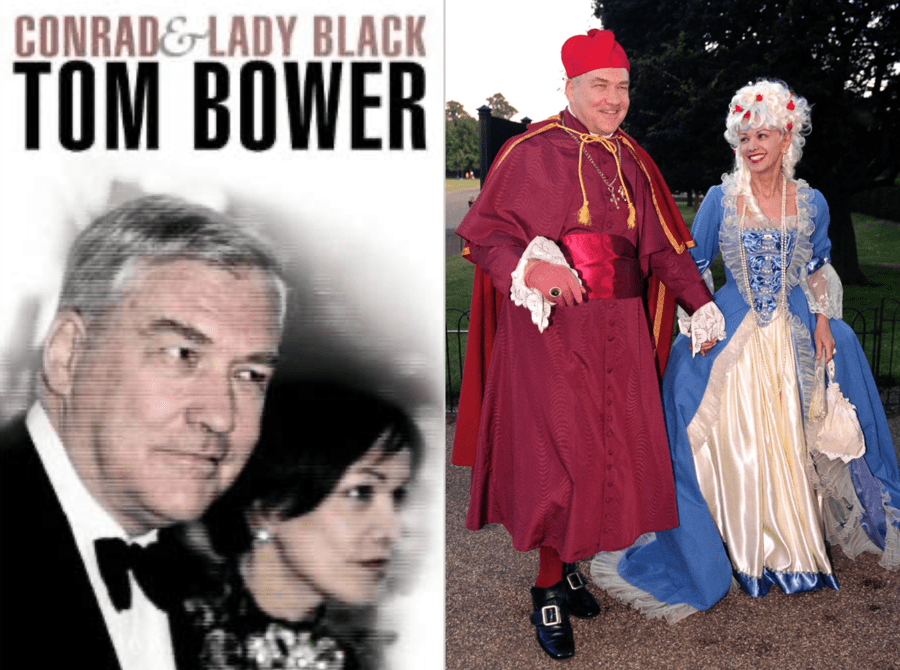
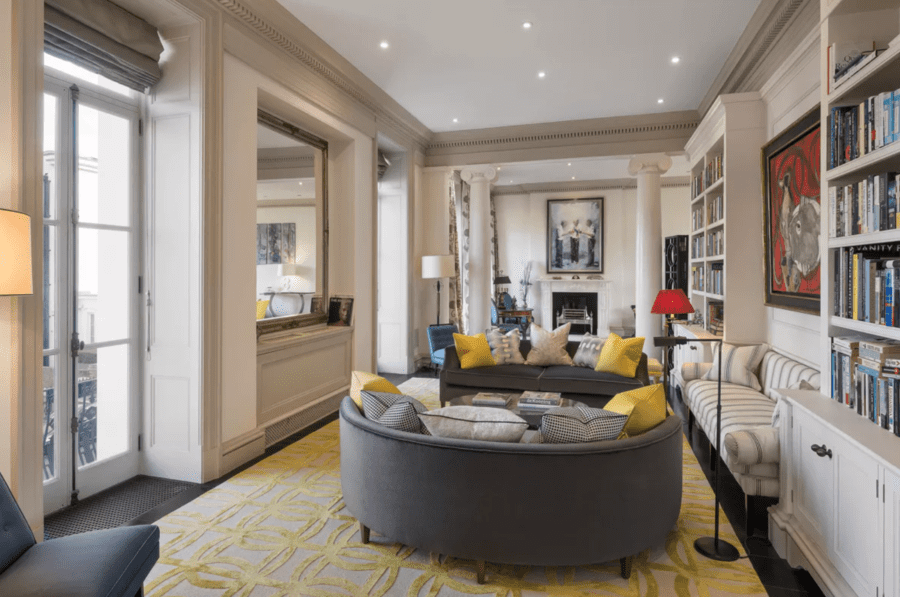
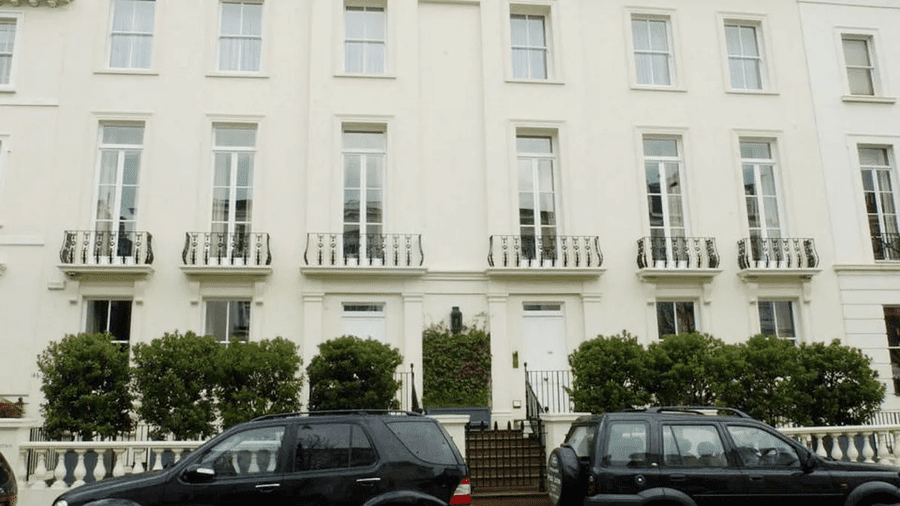
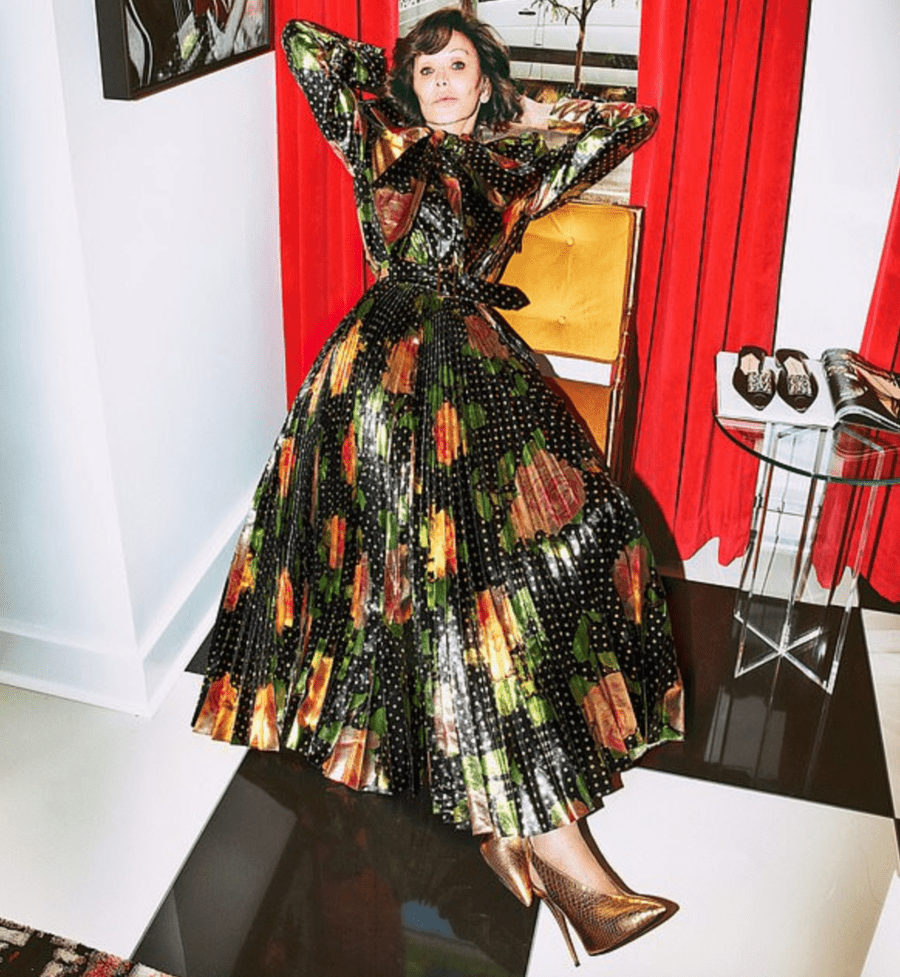
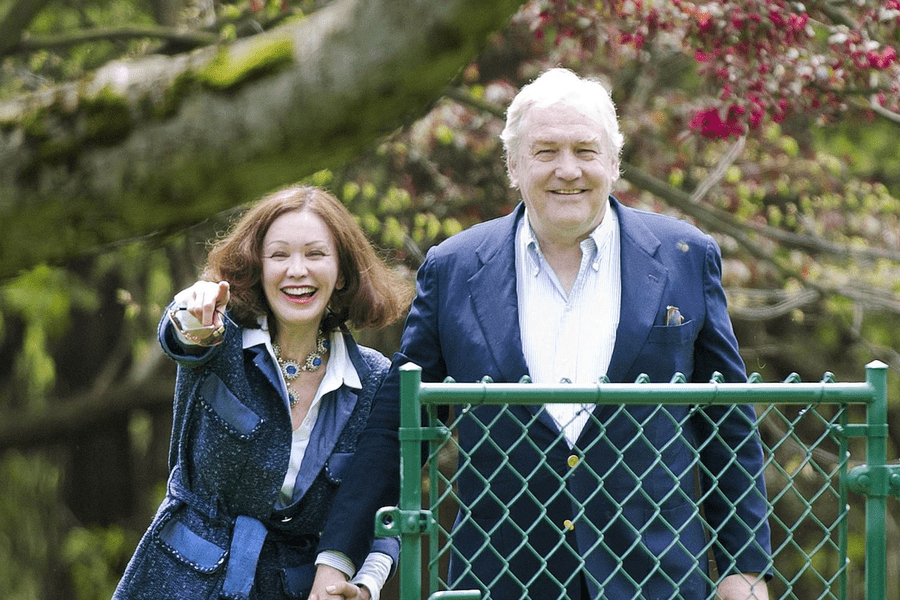
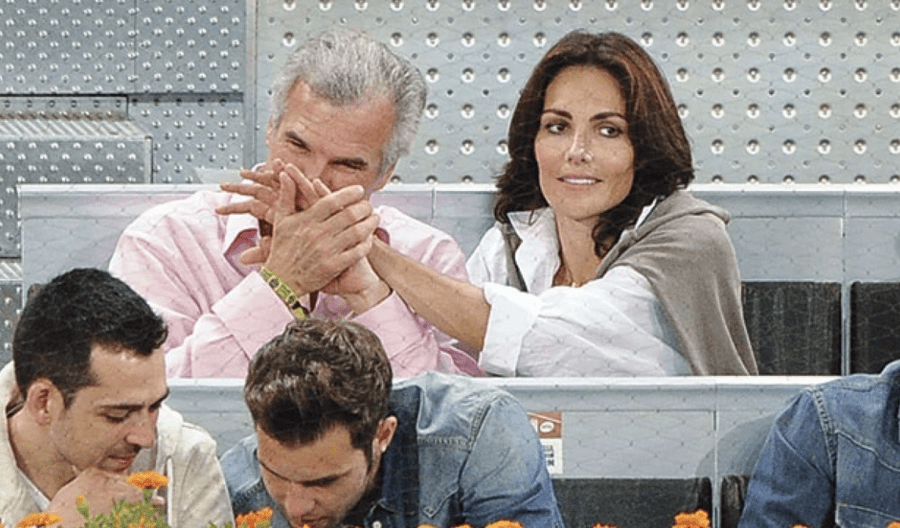
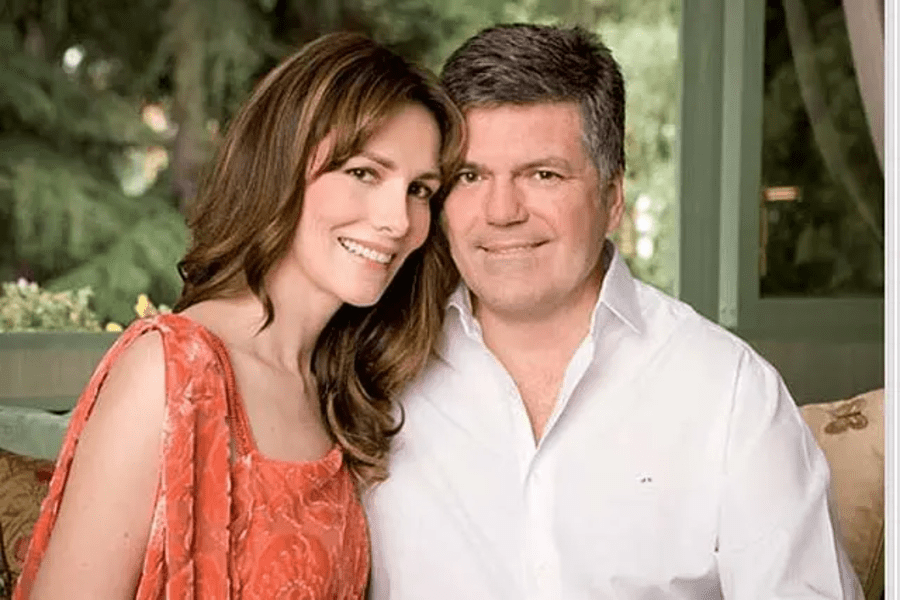
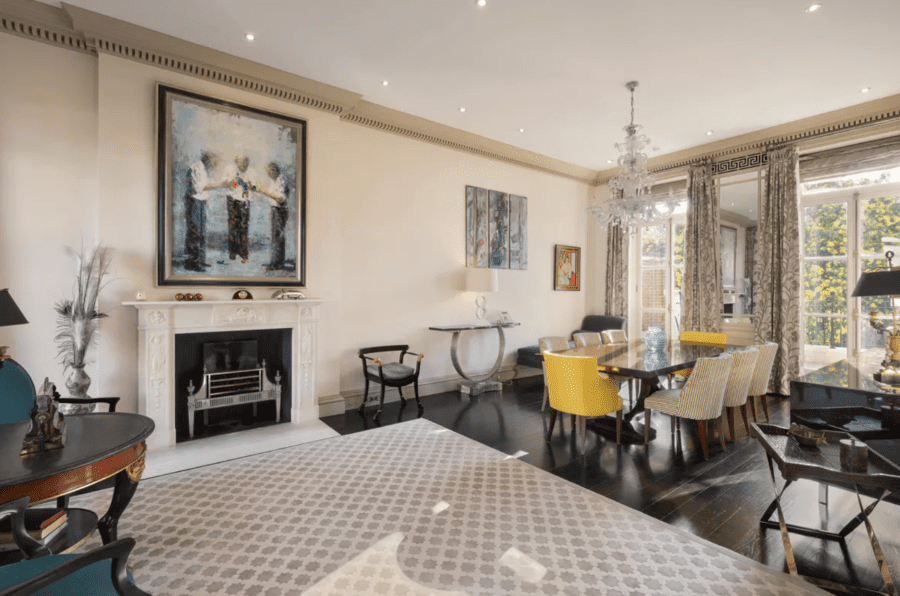
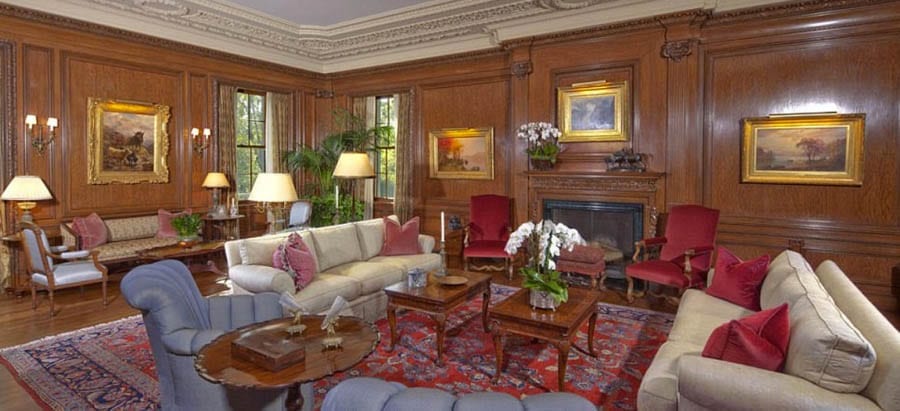
Flamboyant Lord and Lady Black dressed as Cardinal Richelieu and Marie Antoinette for a party at Kensington Palace in 2000. For a time, the couple employed 17 butlers (if Tom Bower is to be believed) and had two private jets and homes – aside from the 19th Cottesmore Gardens mansion – in New York, Palm Beach and Toronto. “Guests packed into their parties at Cottesmore Gardens,” Bower remarked in his 2006 book the couple, adding: “Amiel was a big spender… Under the control of senior butler Andrew Lightwood, second butler Peter Wilson and a succession of third butlers, Amiel’s life in Kensington had become what her constantly changing staff called ‘bizarre.’ Each recruit was taken by Lightwood on an introductory tour of the house, ending on the roof. ‘Make sure the landing lights are on at all times,’ instructed Lightwood solemnly, ‘because Madame takes off from here on her broomstick looking for cats. She needs the lights to guide her return.’ His face would crack into a smile. ‘Most important, take care that she never sees you. She hates seeing any of us.’ Amiel’s eccentricity demanded that her staff hid whenever she approached, diving into cupboards if necessary, and never entered her quarters when she was present. Every day, all the bed linen was changed and subjected to ‘the penny test.’ A coin was dropped onto the sheets. If it failed to bounce they were not drawn sufficiently tight. Every cushion was arranged to a precise pre-ordained position, and each towel placed exactly as Amiel had predetermined. ‘Andrew!’ she screamed down the telephone on one memorable occasion, ‘the towels are in the wrong place!’ Lightwood, as Amiel knew, was in New York, but he was expected to telephone the staff in the house in London to rectify the error. ‘You f**king pillock!’ she yelled at another member of staff for reading her ‘Daily Mail’ before it was delivered to her.”Barbara Amiel Black (or ‘Lady Black’ as she prefers to be known) in her drawing room at Cottesmore Gardens (pictured). Of her, Sarah Sands on Lord and Lady Black in the ‘Independent’ in October 2006 opined: “Conrad and Barbara in their monstrous, glamorous way, knew how to throw parties. The talk was of geo-politics and hemlines. Nowadays, we scorn their extravagance and doubt the source of their wealth with prune-faced hindsight. Meanwhile, everyone is sucking up to Russians…. Barbara would disingenuously begin her midnight calls to me by saying in her low, breathy voice: ‘I hope I am not disturbing you.’ She would then offer little glimpses of her own home life. I remember her mentioning that Conrad Black was upstairs playing with his fleet of toy gun ships in the bath… I remember her examining an exhibition of doll’s houses at the Chelsea Flower Show and sighing how restful it would be to live in this cosy little home. How she envied people in small houses. The burden of wealth was one of her more dangerous fantasies. At one of her Gatsby-style parties in Kensington, she flinched at the elaborate canapés on offer: ‘Really, all I want is a sausage,’ she said, piteously. Then, she ran a hand down her inconceivably expensive dress and whispered: ‘I hate these parties, I am so shy.’ Later, I was invited to her boudoir, where she lay on cushion surrounded by her women friends. She was Kensington’s Cleopatra, surrounded by maidens such as the designer and Forte daughter Olga Polizzi, the political thinker Tessa Keswick and the writer Miriam Gross.”The very same drawing room at 14 Cottesmore Gardens today. The décor is now somewhat more modern and less ‘classical country house-ified.’ It’s certainly more Soho Farmhouse than Alberto Pinto in style; it is currently a space that the former Meghan Markle would feel more at home than say, perhaps, the likes of Lord and Lady Black’s chum Ghislaine Maxwell and her fellow noxious nonce Ponzi scheming paedophile boyfriend Jeffrey Epstein. Mr Pinto was responsible, it should be noted, for the designs of most of Epstein’s residences.The front elevation of 12 – 14 Cottesmore Gardens during the era it was owned by Lord and Lady Black.Multiple entries for Lord and Lady Black during the time they owned 14 Cottesmore Gardens appeared in the ‘Little Black Book’ address book often attributed as being that of the friends and associates of Jeffrey Epstein, but that featured more of the contacts of Ghislaine Maxwell in fact. In October 2020, Barbara Amiel took revenge on the pension pot plunderer’s padeophile sex trafficker daughter by featuring her in her “score-settling” memoir ‘Friends & Enemies: A Life in Vogue, Prison, & Park Avenue.” Maxwell had “dumped” Lady Black when Lord Black was being investigated for fraud. She wrote of their last meeting: “We were friends – so putting on my ‘So good to see you’ face, I headed for her. She bolted. Turned that sharp tight little turn when you really want to get away. And that was it.” Of the clear lover of plastic surgery Lady Black, in October 2020, Sarah Sands remarked in ‘The Mail on Sunday’: “She had a bohemian, almost masculine, view of opportunistic sex. She describes, for instance, accompanying an early love in his white Triumph sports car ‘in which once or twice I had performed fellatio to the fascination of passing truck drivers, all for fun.’”After getting out of the clink in 2012, Lord and Lady Black decided to go back on the ‘razzle-dazzle’ and posed for photographers before heading back to London to party with friends. In May 2019, the rambunctious peer arrogantly announced he’d be returning to the House of Lords after President Donald Trump pardoned and praised him. Commenting, of this pardon, Lord Black declared: “I’m not bitter… Officially in the United States, I’ve never been charged and I won in the end. It was a war and there are casualties in wars. I lost the time, I lost a lot of money, but as you can see my standards of living isn’t bad… The truth is, these, last 15 years, I haven’t been as interested in British politics as I was before – in the Thatcher years. It could be quite interesting again, in fact it is as of right now – it’s very interesting… It’s my good fortune that at a time when it is feasible, it happens – by happy coincidence – that it is a time of great fermentation in British public affairs.” Surprisingly, he doesn’t seem to have turned up on occasions since.The previous owner of 14 Cottesmore Gardens, Alan Bond (1938 – 2015), will forever be remembered as “Australia’s most notorious corporate criminal.” Born in Hammersmith, London, Bond’s first crime occurred when he was charged with theft aged 14 in Fremantle in Australia and whilst he is remembered for bankrolling the successful challenge for the 1983 America’s Cup, it is for causing the then biggest corporate collapse in Australian history that he will be go down in history. Former Miss Mexico Adriana Abascal López-Cisneros (at the time Adriana Villalonga) bought the house in 2005. She divorced the Spanish businessman Juan Villalonga in 2009 and married the French businessman Emmanuel Schreder in Ibiza in June 2013. In August 2014, the magazine ‘Quién’ featured the model and television presenter on its cover and at that time she described her new husband as “the love of my life.”Madrid born Juan Villalonga became the joint owner of 14 Cottesmore Gardens with his then wife Adriana Abascal – the couple were married between 2000 and 2009 – in 2005. He is listed on Companies House as being a director of the now dissolved Medikidz Foundation at the address between August 2009 and November 2013. Married since 2011 to a photographer named Vanessa Von Zitewitz, Mr Villalonga was a partner at McKinsey & Company in the 1980s, CEO for Credit Suisse First Boston and Bankers Trust in Spain in the early 1990s and CEO of Telefónica from 1996 to 2000. He was named as one of the best performing chief executive officers in the world by ‘Harvard Business Review’ in 2010 and is also linked to addresses in Monaco.
The Names & Numbers – 14 Cottesmore Gardens (formerly known as ’12 – 14 Cottesmore Gardens’), Kensington, London, W8 5PR, United Kingdom
April 2023 – Offered for sale for £36 million ($44.4 million, €40.9 million or درهم163.2 million) through Knight Frank. Valued on Homipi at an upper sum of £28.558 million ($35.250 million, €32.440 million or درهم129.456 million).
2009 – Mr and Mrs Villalonga divorce and subsequently Adriana Abascal married Emmanuel Schreder, a French businessman, in Ibiza in June 2013.
2005 – Sold by Lord and Lady Black for £13.1 million ($16.2 million, €14.9 million or درهم59.4 million) to Spanish businessman Juan Villalonga Navarro and Mexican model, Miss Mexico winner and television presenter Adriana Abascal López-Cisneros Villalonga.
October 2004 – Placed for sale for £17.5 million ($21.6 million, €19.9 million or درهم79.3 million) according to NZ Herald.
January 2004 – Valued at £14 million ($17.3 million, €15.9 million or درهم63.5 million) according to The Globe And Mail. At the time, the “mansion” in “the upscale Kensington neighbourhood” was described as having “10 bedrooms, 6 bathrooms and a swimming pool.”
Featured also in The Guardian in an article by Chris Tryhorn. Quoting Lord Black, he shared: “At a certain price, anything is for sale. [It has] been shown to people in the not-too-distant-past.”
Going further, Tryhorn added: “Artwork from the 18th and 19th centuries lines the walls, and there is plenty of storage space for the extensive wardrobe and shoe collection of Lord Black’s wife, Barbara Amiel, who famously declared once that her ‘extravagence knows no bounds.’ … It was originally two homes and one of the two original front doors is now a ‘deliveries’ entrance. He has used it in the past to host dinners with butler and maid service that was part-paid by Hollinger.”
Also in 2004, in a profile in The Spectator, Peter Oborne wrote:
“Every year the Blacks threw two parties, one at Christmas and one summer event, at their double-fronted 11-bedroom mansion in Cottesmore Gardens. Everybody who mattered at the time went: Margaret Thatcher, Henry Kissinger, Jimmy Goldsmith, James Hanson, Arnold Weinstock, Jacob Rothschild, royalty, the playwright Tom Stoppard.”
“Some of these, injudiciously as it turned out, agreed to join the main Hollinger board. The luckier ones – Peter Carrington, Robert Salisbury – got away with being made directors of TheTelegraph. As the Tories faded out, Labour ministers started to arrive, the indefatigable Peter Mandelson, David Blunkett and other ministers eager to ingratiate themselves with the Tory press. Prince and Princess Michael of Kent were assiduous in attendance. In London, the Nineties belonged to the Blacks. They were London’s most glamorous power couple.”
“There had been a time when both Blacks had kept their feet on the ground. This ceased to be the case. One evening Barbara Black rang Charles Moore panic-stricken from her Kensington home. There had been a last-minute drop-out from one of the famous Black dinner parties. ‘I’m short of a woman,’ she told Moore. Moore surveyed the newsroom. His gaze alighted on the journalist Eleanor Mills, by chance the stepdaughter of the Cabinet minister Tessa Jowell.”
“An hour later, hastily groomed, made-up and brushed, Mills was sipping pre-dinner drinks in Cottesmore Gardens. Then disaster struck. A male guest, Max Fisher, dropped out. Mills was approached by Conrad Black. ‘Finish your drink and skedaddle,’ he told her. Barbara Black then told her to go to the kitchen and out through the servants’ door, where the driver would pick her up and take her home.”
2001 – Conrad Black is elevated to a life peerage in the United Kingdom at the suggestion of Tony Blair. He sat on the Conservative benches in the House of Lords until 2007 as The Right Honourable The Lord Black of Crossharbour KCSG, but took a “leave of absence” between 2012 and 2019.
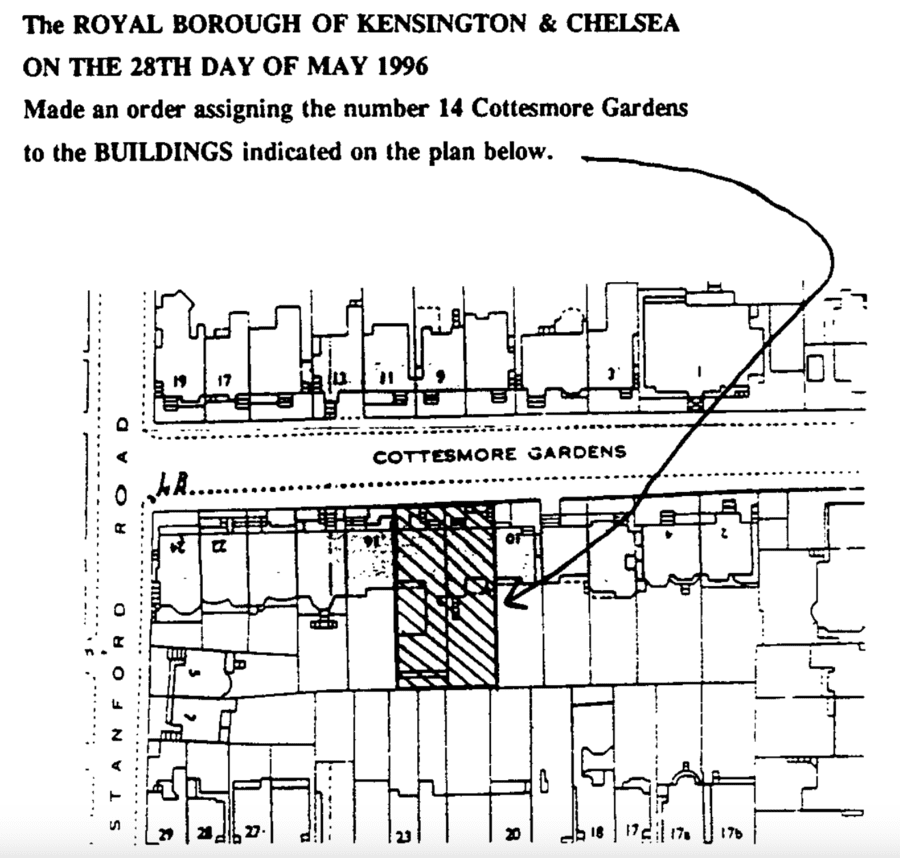
28th May 1996 – The Royal Borough of Kensington And Chelsea ordered that 12 – 14 Cottesmore Gardens “shall be known and described” simply instead as 14 Cottesmore Gardens.
Mid 1990s – The Blacks set about renovating 12 and 14 Cottesmore Gardens with the help of J. E. Evans Associates. Of the work in October 2006, The Sunday Times shared a segment of Tom Bower’s 2006 hatchet job Conrad and Lady Black that read: “Amiel vowed to create a palace that would attract celebrity worshipers of a power couple. Part of the first floor was to be removed to create a huge ground floor reception area.”
1992 – 12 and 14 Cottesmore Gardens sold by the administrators of the affairs of Alan Bond through estate agents Savills to media tycoon Conrad Black and his Watford born journalist wife Barbara Amiel Black for “well under the asking price” for a sum of £3.5 million ($4.3 million, €4 million or درهم15.9 million).
Mr Bond had been granted mortgages valued at £16.2 million ($20 million, €18.4 million or درهم73.5 million) on the property by Bell Satellite Services on the property along with two others at 4 and 16 Belgrave Mews in London, SW1 previously according to a report published by Financial Review in March 1990.
1991 – Rented to an American businessman for £6,000 per week ($7,400, €6,800 or درهم27,200 per week).
1990 – Placed in the hands of administrators of Mr Bond’s and placed for sale through Savills for a bargain basement sum of £3.8 million ($4.7 million, €4.3 million or درهم17.2 million) according to Financial Review.
1980s – Sold to Alan Bond’s Bell Satellite Group for £7 million ($8.6 million, €8 million or درهم31.7 million).
Circa 1905 – Walter Tapper is said to have “designed a library with handsome Arts and Crafts plasterwork (now removed) at the rear of the building.”
1869 – In their current marketing blurb, Knight Frank suggest: “There has been a house on the site of 12 – 14 Cottesmore Gardens since at least 1869. The current house has been altered, extended and most notably joined over the subsequent century and a half. With the local planning department strongly opposed to further amalgamation of homes, opportunities to acquire a house of this width will be rarer still in the future.”
1850s to 1860s – Built “under the direction of David Howell, of Serjeants Inn, Fleet Street.” Mr Howell was described in 1853 as an “articled clerk to a solicitor, lately carrying on business as a solicitor.” The architecture was lauded as: “Designed in a bold classical manner, with rather fleshy consoles and modillions… and bands of Vitruvian scroll between the bases of the ground-floor windows.”
More photographs of the £36 million mansion…
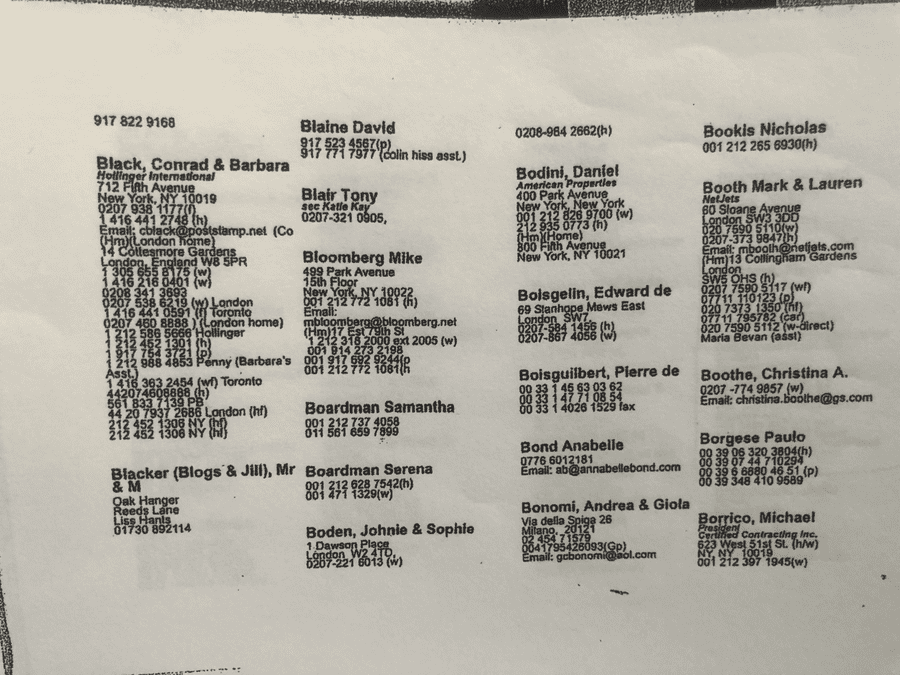
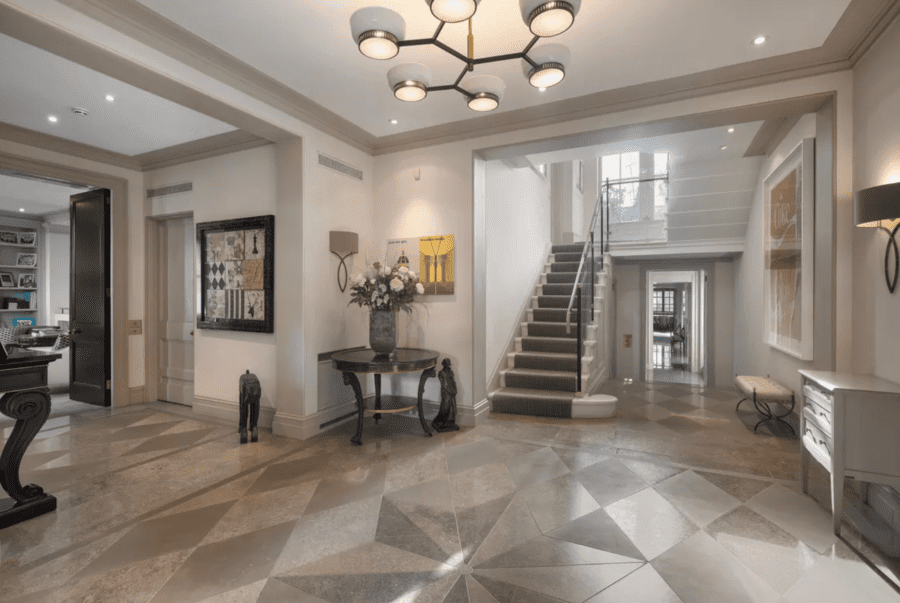
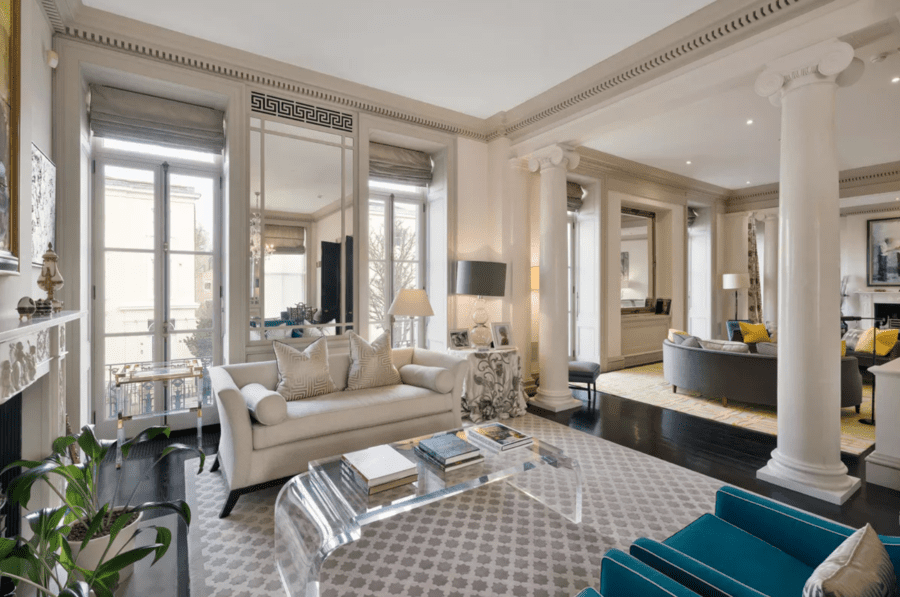
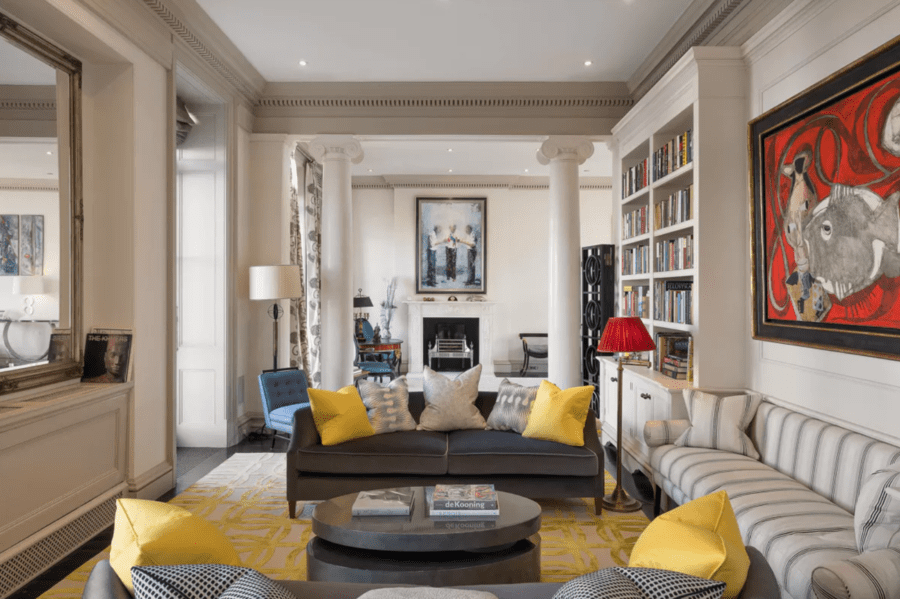
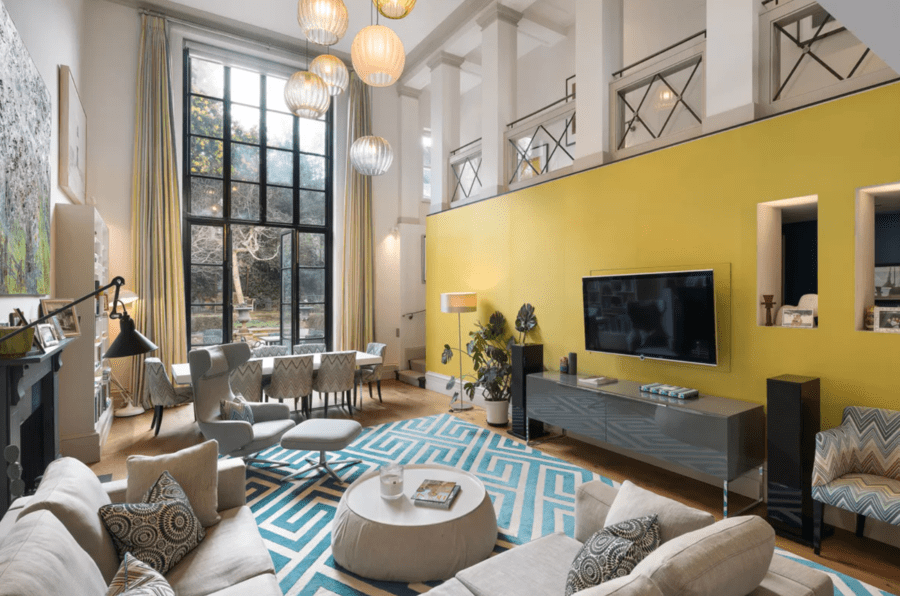
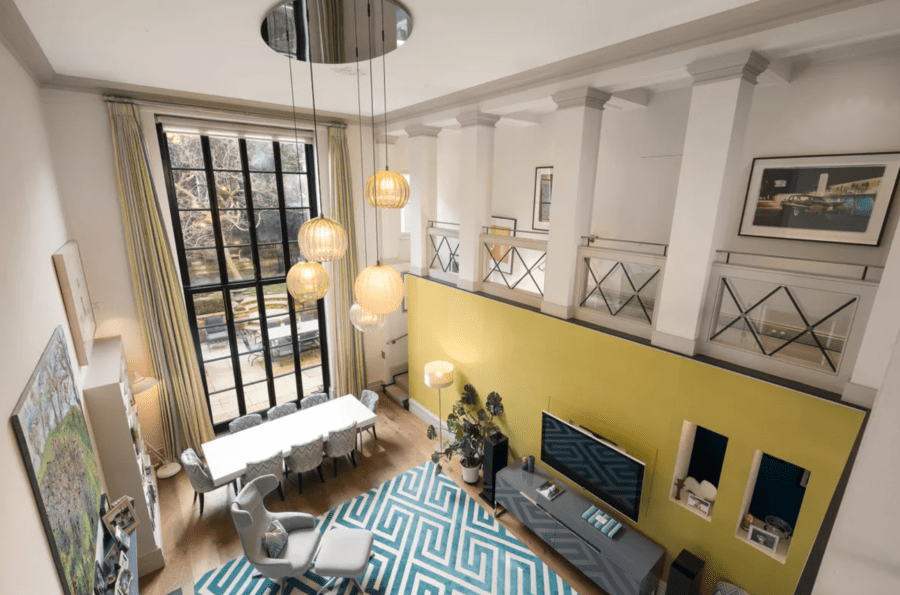
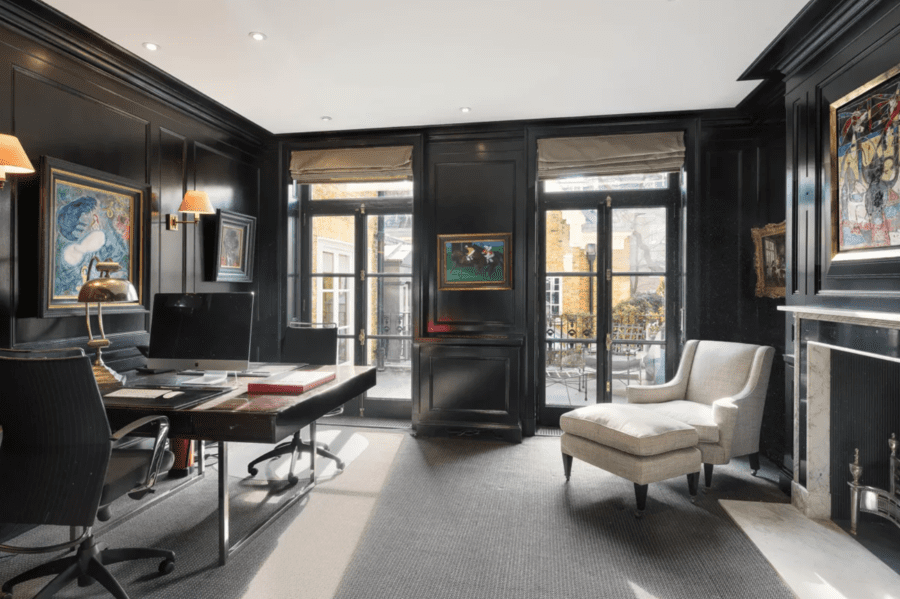
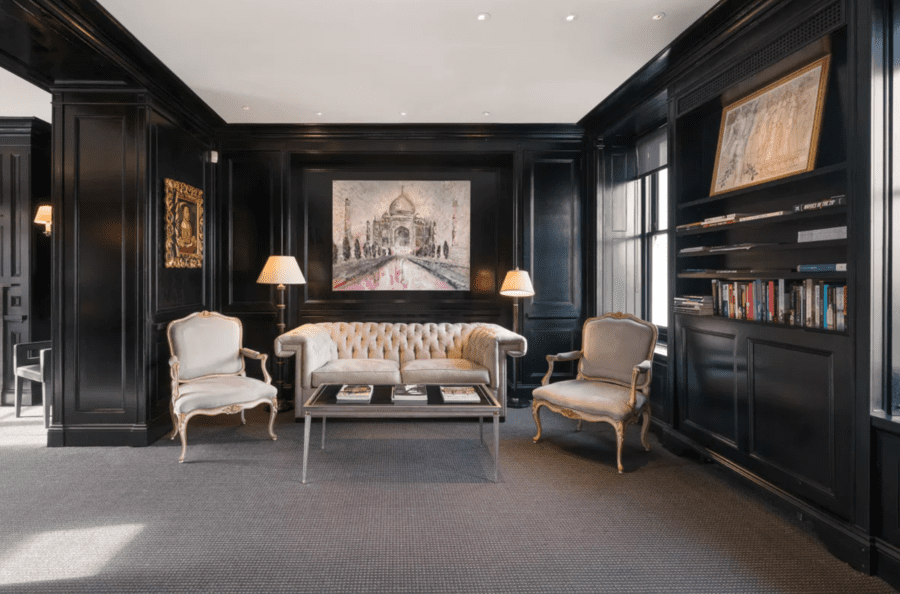
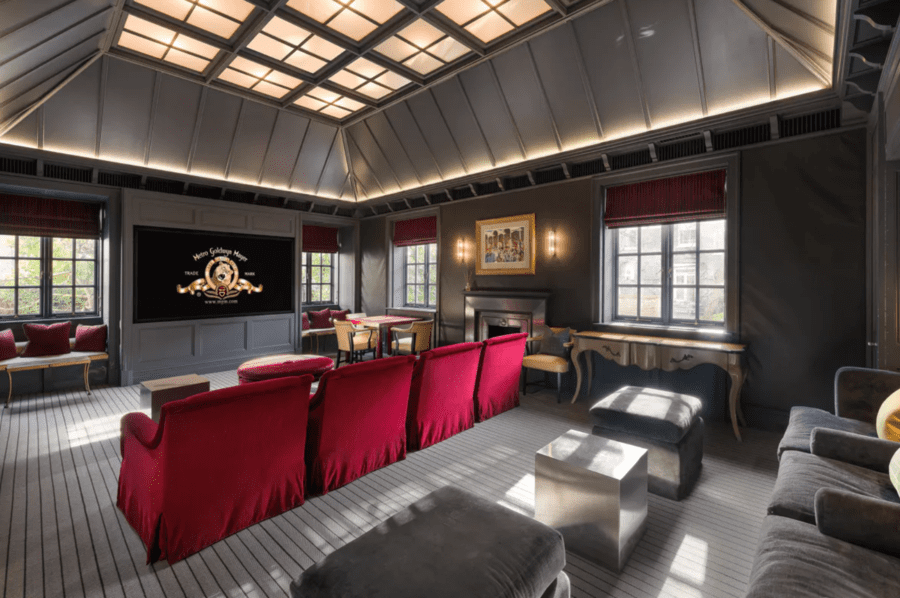
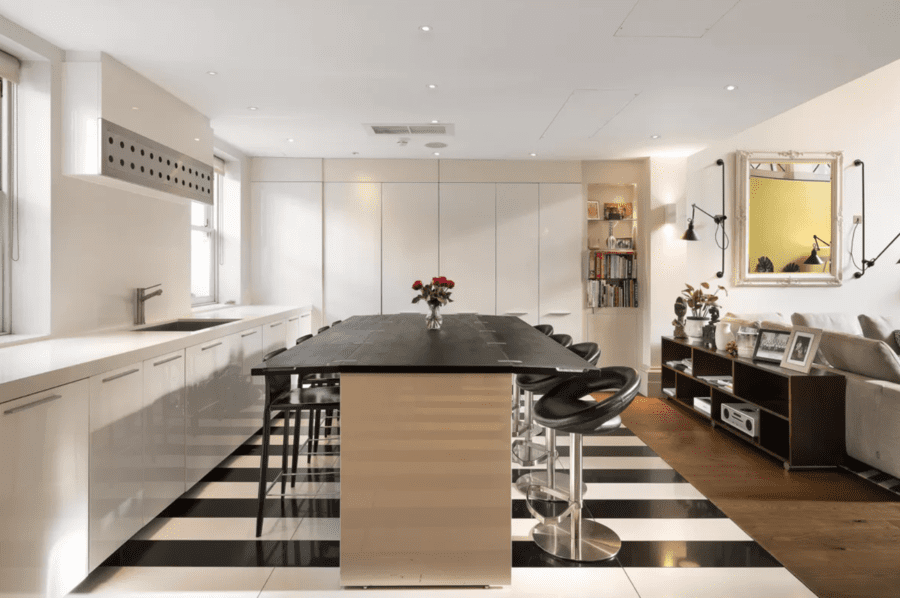
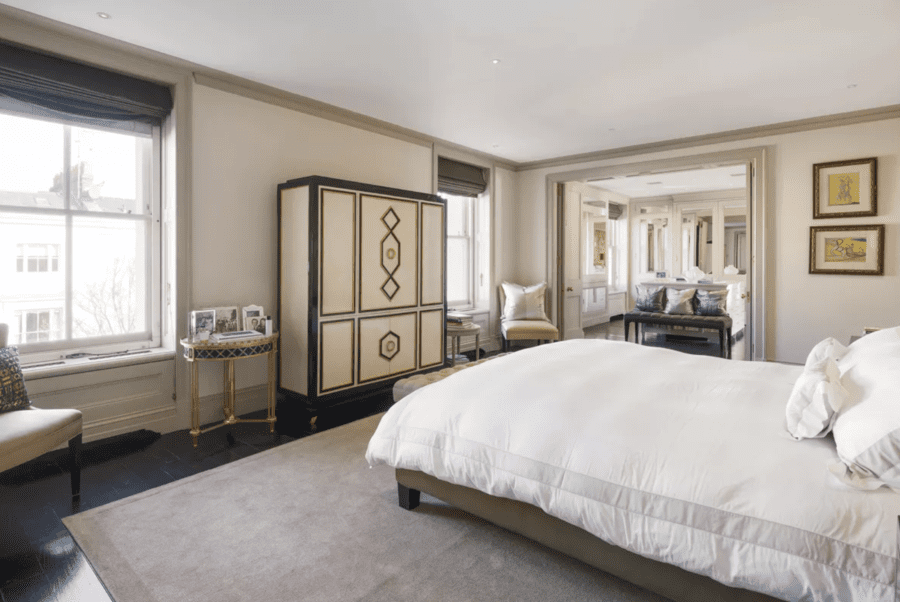
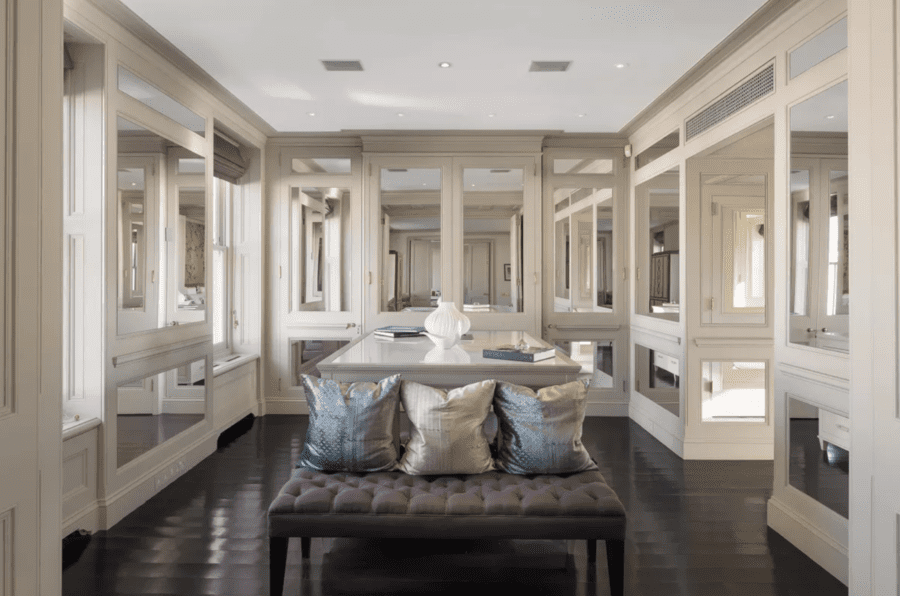
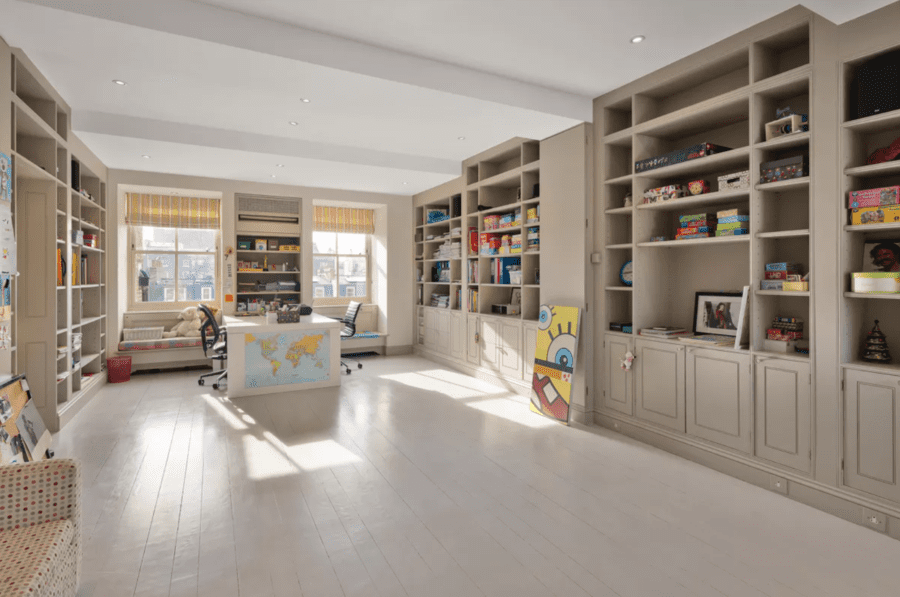
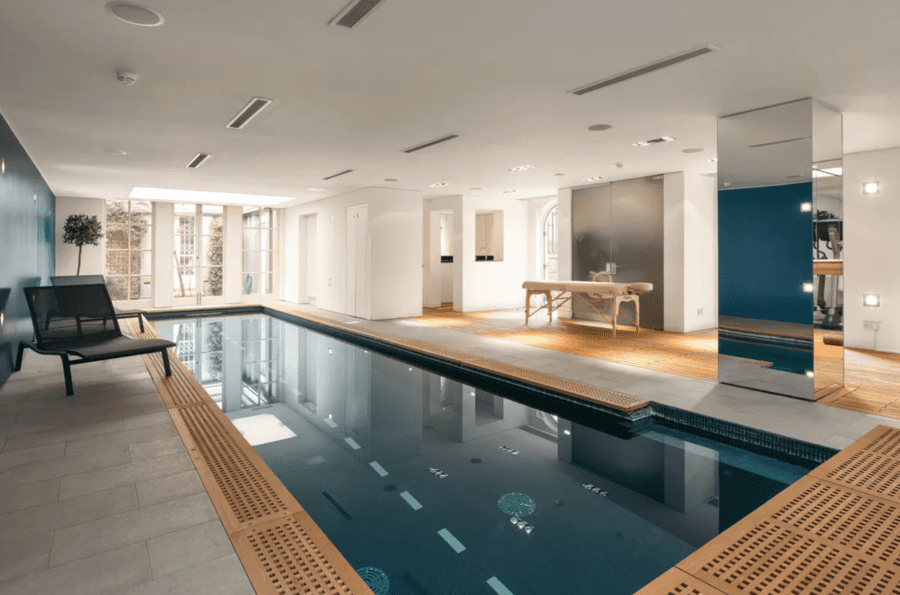
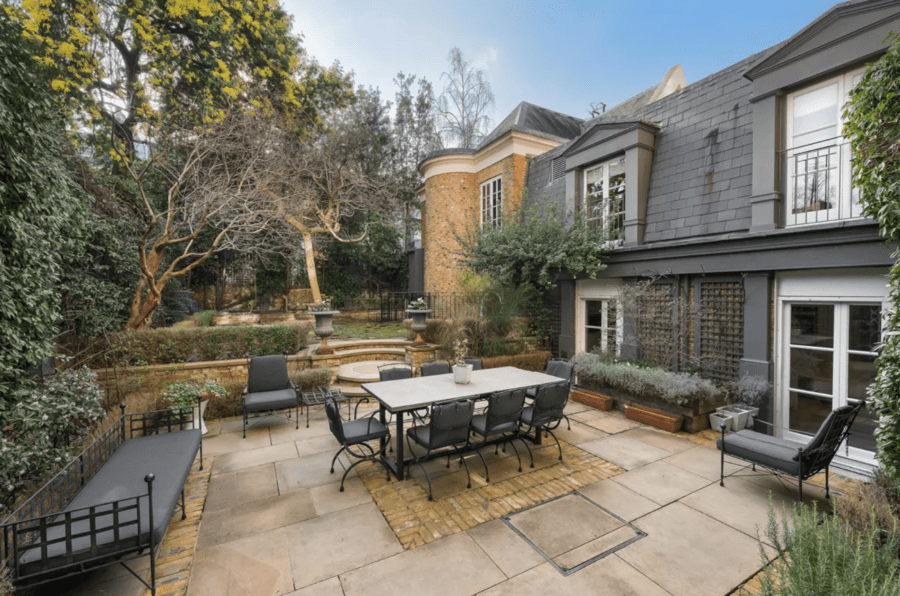
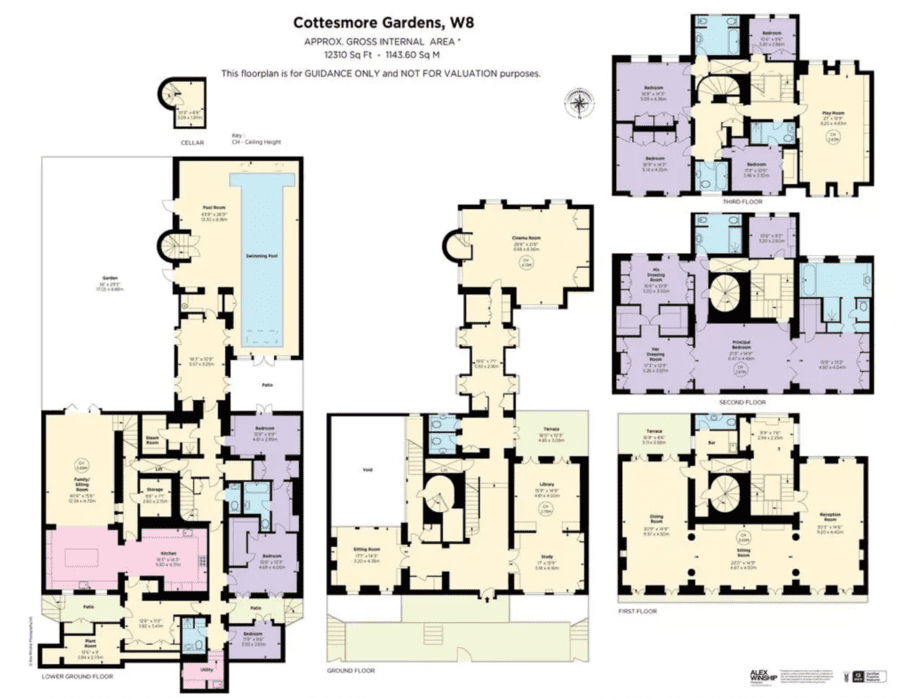
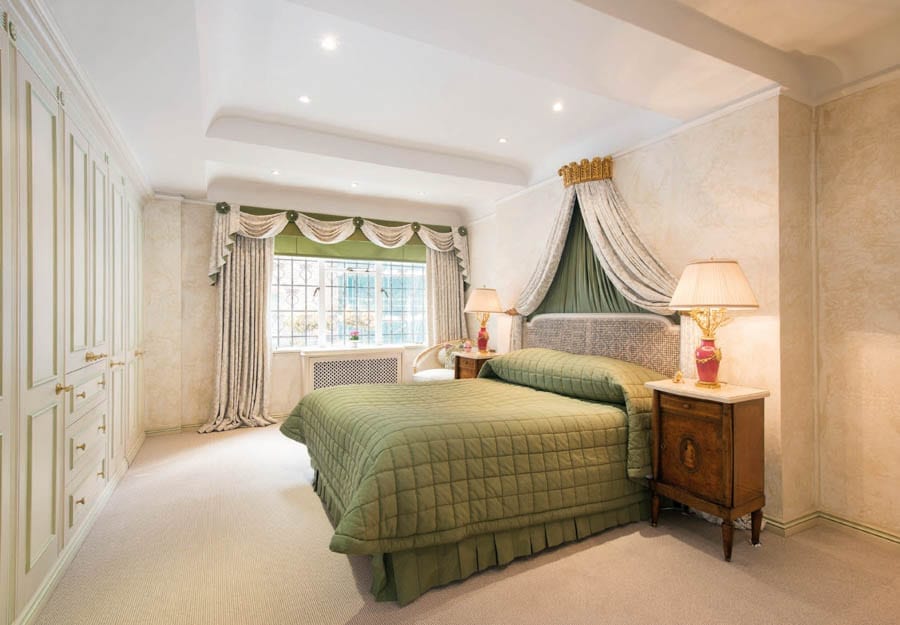
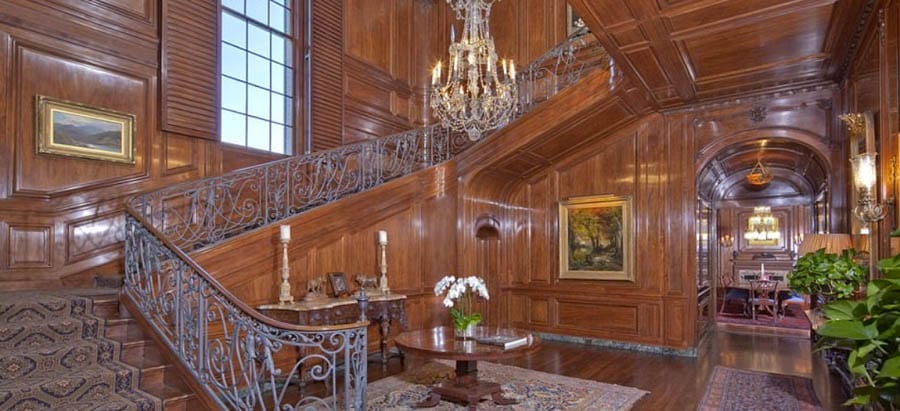
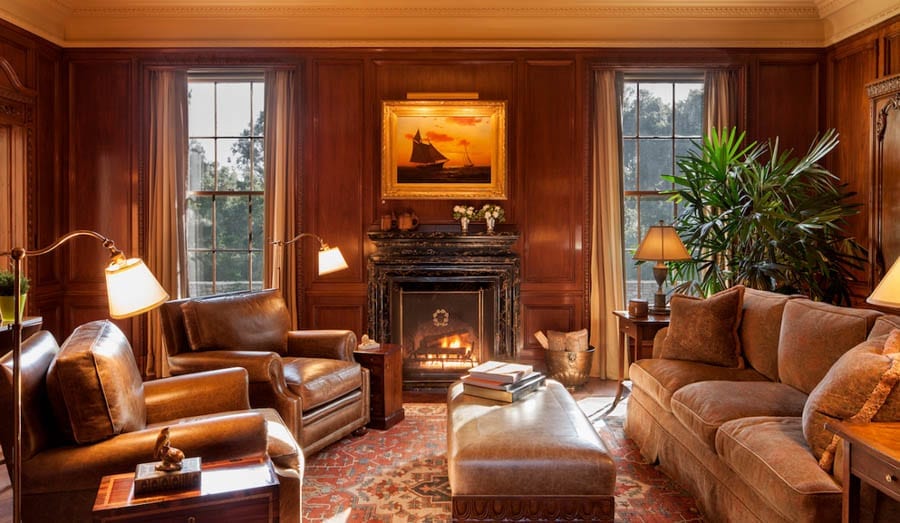
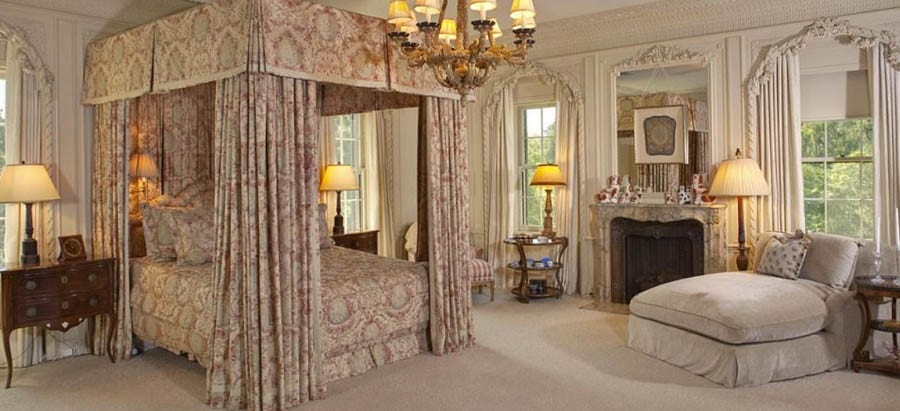
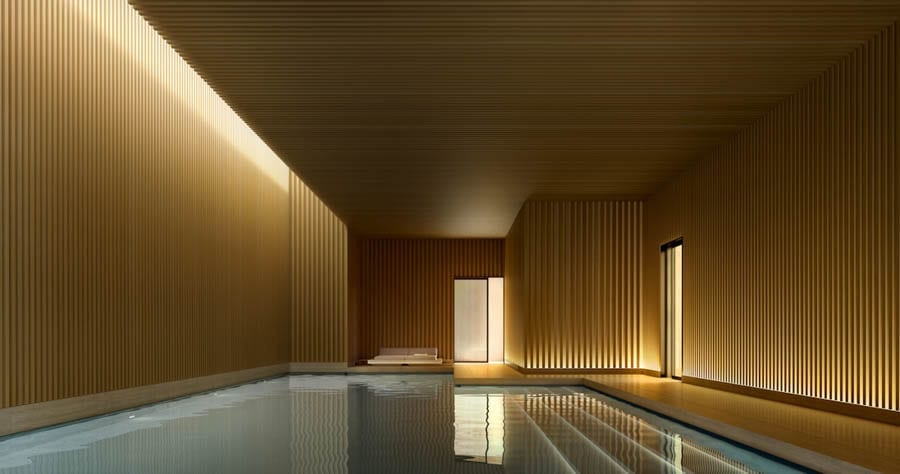
An entrance hall where power and privilege have most certainly mingled previously.The 54-foot wide drawing is lauded by selling realtors Knight Frank as “arguably the best room in the house” and “double aspect.” They add: “[It has] six windows overlooking the street and additional views over the private garden to the rear.”The columns where Barbara Amiel Black once posed for photographs remain, but the subsequent owners eliminated much of the 1990s ‘brash’ that had been installed by a Watford born woman whose excess clearly offended so many.This dining room, where Conrad Black hosted presidents and prime ministers, is now somewhat diminished. The table for eight looks completely out of place and a future owner would do well to install something a little grander.A double height entertaining space was installed at the insistence of the loftier-than-lofty Lady Black in the 1990s and it remains today. However, it is now currently being used for more casual affairs such as Netflix viewing rather than being the scene of something that you’d more likely find in the ‘House of Cards’ in fact.A new owner might reinstate the grandeur of the past; sadly, however, this seems unlikely and the purchaser is more likely to be a footballer or Internet tycoon than a super-connected business tycoon.This currently very dark and very depressing study would most certainly not appeal to the very clearly very, very bright yet very, very pompous The Right Honourable The Lord Black of Crossharbour KCSG – a man who is said to count Julius Caesar and Napoleon Bonaparte as “his military heroes.” Of him in July 1997, Mark Honigsbaum in the ‘Independent’ remarked: “Although Black’s grandfather had briefly been a business partner of Harold Harmsworth, the original Viscount Rothermere, it was from his father, George Montegu Black Jr, that Black learned the art of corporate warfare, the importance of historical perspective and that gambling provides a disappointing rate of return compared to the Dow Jones index… The young Conrad was precocious. At the age of eight he sank his life savings of $60 into a single share of General Motors. He also became obsessed with Napoleon, and would astound his father’s friends by reeling off details of campaigns. Another story has him washing dollar bills and hanging them out to dry on a line outside his father’s home in Toronto. The last is apocryphal – Black says he slipped in the mud and was cleaning his change – but the image of the young capitalist, wise beyond his years, is accurate. His childhood tutor, the historian Laurier LaPierre, once asked Black why he always seemed to have the air of someone waiting for something to happen… A few years ago, for instance, the rumour went round Fleet Street that Black had bought Napoleon’s preserved penis at an auction. Black denied it, but many remain convinced that Bonaparte’s body part sits in Black’s collection of military curios… Black is no philanderer and is devoted to his second wife, the former ‘Sunday Times’ columnist Barbara Amiel. They are said to be intellectual soul mates and the parties at their four-storey mansion in Kensington are famous for bringing together a cross-section of the great and good.”One could not imagine the likes of the late great Baroness Thatcher, for example, liking the idea of sitting in this extremely depressing and dark waiting area. A new owner would do well to obliterate a décor scheme that could have only been favoured by a completely colour blind banker.A room currently described as a ‘cinema room’ measures 28’6” by 21’6” and is situated at the rear of the house. One can imagine Conrad Black having sat here for hour upon hour watching historical dramas about Napoleon with the likes of chums such as the acclaimed historian Andrew Roberts, the gambling tycoon John Aspinall and the politician and diarist Alan Clark, but a new owner will be more likely next showing episodes of ‘Succession’ – based on ‘The Telegraph’ tycoon’s rival Rupert Murdoch – than viewing historical works one most definitely suspects.Dining whilst the staff cook would NEVER have been on the agenda in the era that pomposity reigned whilst Lady Black was chatelaine of 14 Cottesmore Gardens.A 2,000 square foot entire floor fit for a tycoon… The master bedroom suite of the house takes up the entirety of the second floor of the building. It incorporates not only the principal bedroom, but also a “his” dressing room and a “her” dressing room as well as a sitting area, a bathroom, a shower room and storage rooms. It has direct lift access and is bigger than the average Brit’s entire house.A dressing room in the house where Barbara Black opened up to ‘Vogue’ and displayed “closets overflowing with dazzling evening gowns, designer handbags and 100 pairs of Manolo Blahnik shoes. ‘I have an extravagance that knows no bounds,’ she famously declared. Unfortunately for Lady Black, the article was closely perused at investment company Tweedy, Browne, a Hollinger International shareholder.”This playroom certainly did not exist in the era that Lord and Lady Black owned the property. It would be more likely crammed with books or stuffed with Manolo Blahnik shoes than toys from Toys ‘R Us. A new owner may likely reinstate it as an additional bedroom or office or games room perhaps.The pool room measures 43’9” by 26’9” and is no doubt where Lady Black spent many an hour relaxing.The garden to the rear was where Lord and Lady Black hosted their annual summer party (with guests “spilling” into their drawing room also). In surprisingly Tardis-like fashion, the duo were able to supposedly squeeze in upto 400 guests at such occasions. Amongst those said to have enjoyed hospitality there were Joan Collins and of such, magazine publisher Nicholas Coleridge wrote: “If you get a kick out of milling about with present and former prime ministers, cabinet ministers, minor royals, dukes, editors, vastly rich Americans, distinguished historians, gossip columnists, playboys and lots of pretty ‘it’ girls, then this was the place to be.”The existing floor plan of the property illustrates the vast scale of the building offered. A buyer, Knight Frank observe, has additional options and “a pre-planning consultation has been carried out with RBKC by leading architects Studio Indigo.” They add: “[It] would completely reconfigure the house adding an additional basement floor and taking the internal space to more than 15,000 square foot. The resulting house would have a 40-foot by 41-foot south-facing rear garden.”A plan of the site as presented in 1996 when 12 and 14 became known just as 14 Cottesmore Gardens.
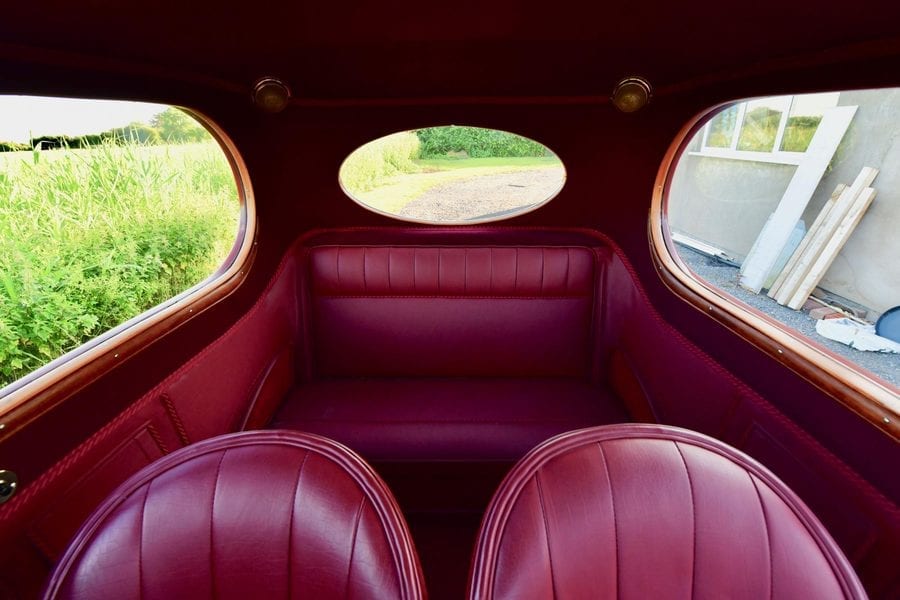
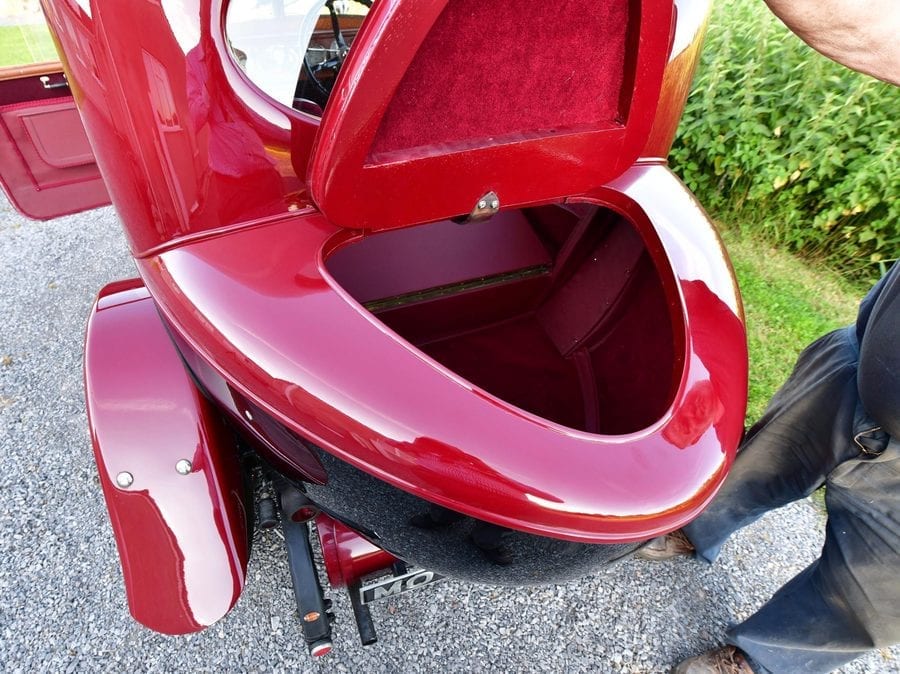
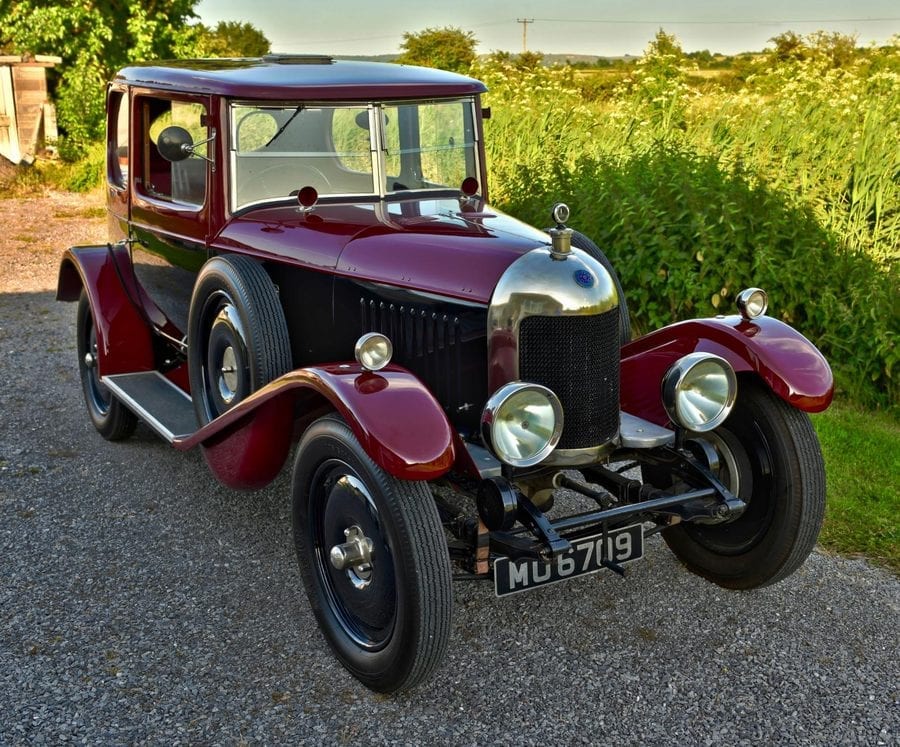
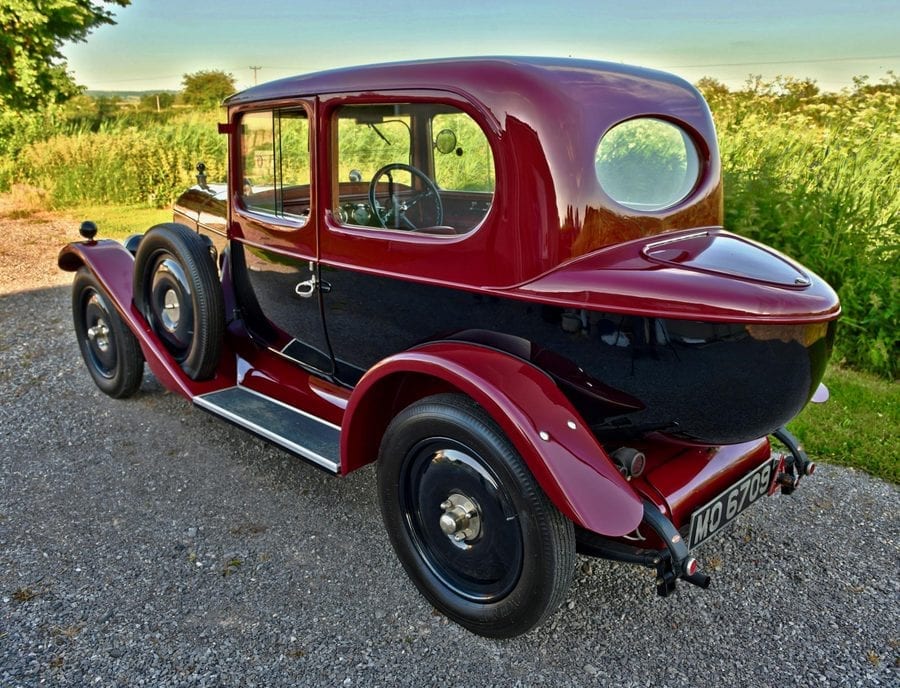
“Meticulously restored” MG 14/28 Super Sports bullnose two-door salonette for sale; it is the only surviving example of just six made in 1925
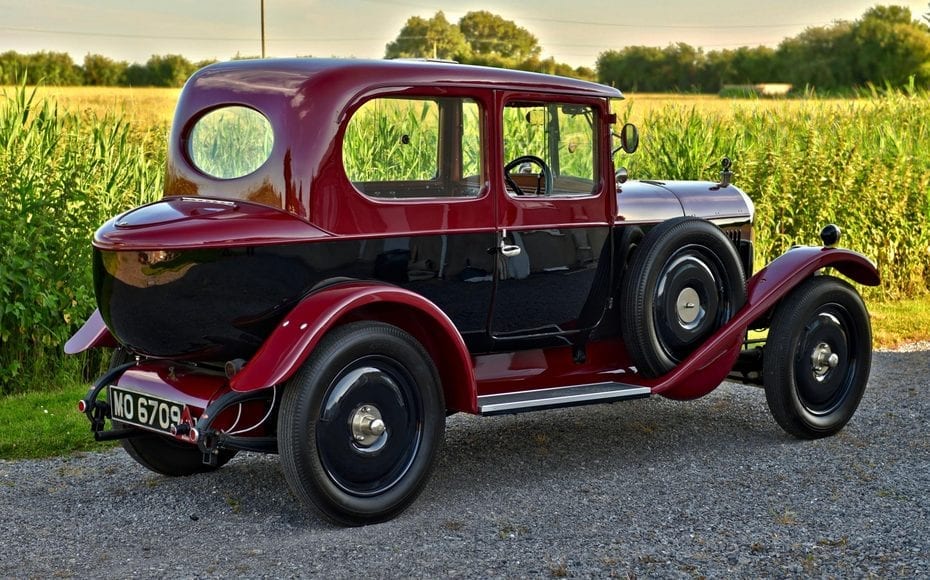
Just 400 MG 14/28 Super Sports were produced between 1924 and 1927. Of these, only five made in 1925 were ‘bullnose’ salonettes and of these only one of these is still in existence. Now, that car – which cost £475 or the equivalent of £29,100 today ($36,400, €33,000 or درهم133,500 today) when new at a time when the equivalent open top version cost £350 or the equivalent of £21,400 today ($26,700, €24,300 or درهم98,200 today) when new – is for sale.
Built at the Morris Garages Works and loaned to the Ramsgate Motor Museum during the ownership of a family named Sharpe from the 1970s until 2005, it was subsequently purchased in “well preserved condition” by the amusingly named “famed early MG restorer” Mr Fred Body.
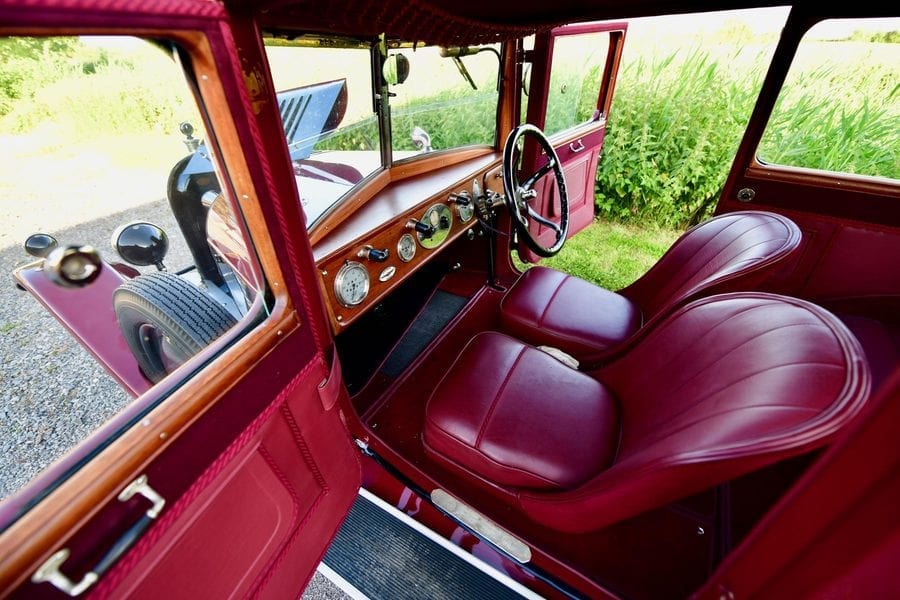
“Very sparingly used” in the years since, this quirky red and black with red leather interior car is described as being “in immaculate order throughout” and capable of “quite happily gracing a concours field [to] win prizes.” It was displayed as part of MG’s 90th anniversary celebration at Silverstone in 2014.
Offered previously at auction at the Royal Automobile Club, Woodcote Park, Epsom in June 2018, Vintage & Prestige Classic Cars now seek £75,000 ($94,000, €85,000 or درهم344,000) for the last surviving 1925 MG 14/28 Super Sports bullnose salonette, registration ‘MO 6709.’
“I’m sorry I still love him” unabashedly declared author, journalist and “stationary addict” Susie Steiner of Tony Blair on Twitter during the coronavirus lockdown whilst amusingly adding of Boris Johnson: “If only I could retreat to Chequers.” Registered fully blind and a mother of two, this former Guardian commissioning editor did a “little one-page feature, showing the ‘Keep Calm’ poster as one of her favourite things” in 2005. “After that, all hell broke loose,” according to Stuart Manley, co-owner of Barter Books of Alnwick, and what Steiner terms a “message of stoicism and patience” went viral. She thinks “it’s had its day now” and after publishing her first novel, Homecoming, in 2013, this West Hampstead based Londoner signed “significant six-figure” deals for her subsequent works. “Susie is a joy to publish” remarked Suzie Dooré of Borough Press, whilst she herself gave away the secret to her much deserved success in a 2016 interview with TheHampstead & Highgate Express: “I’m very disciplined about my work… The daily-ness is what matters; it’s being in contact with it all the time that keeps the work alive in your mind. Your mind is doing it even when your trogging up the hill from school or waiting in the hairdressers. It fingers it like a pebble in your pocket.”
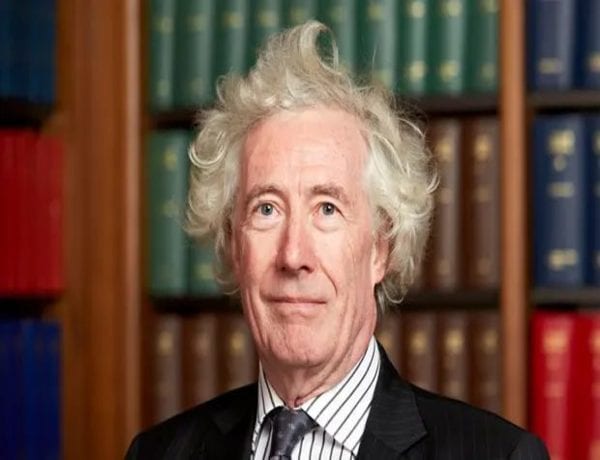
Eton and Oxford educated former Supreme Court judge and historian Jonathan Sumption, as a barrister, successfully represented the billionaire Roman Abramovich against the late oligarch Boris Berezovsky. Formerly one of the highest paid legal eagles in Britain, this father of three termed his £1.6 million salary “puny” in 2001 in a letter to the Guardian and subsequently charged the extraordinary sum of £800,000 to successfully represent the UK government in what was then then the largest class actions against the state ever in 2005. The trial lasted just four weeks. Sumption speaks French and Italian fluently, owns a chateau in South West France and serves as a director of the English National Opera. He became an outspoken critic of the “hysteria” over the police reaction to coronavirus outbreak in the UK in March 2020. Of this “frightening opponent” with an “icy analytical instinct,” the Guardian’s Wendell Steavenson suggested: “Sumption is a man who cannot stop thinking” whilst the former Labour spinner Alastair Campbell more simply concluded: “Brain the size of a planet.”
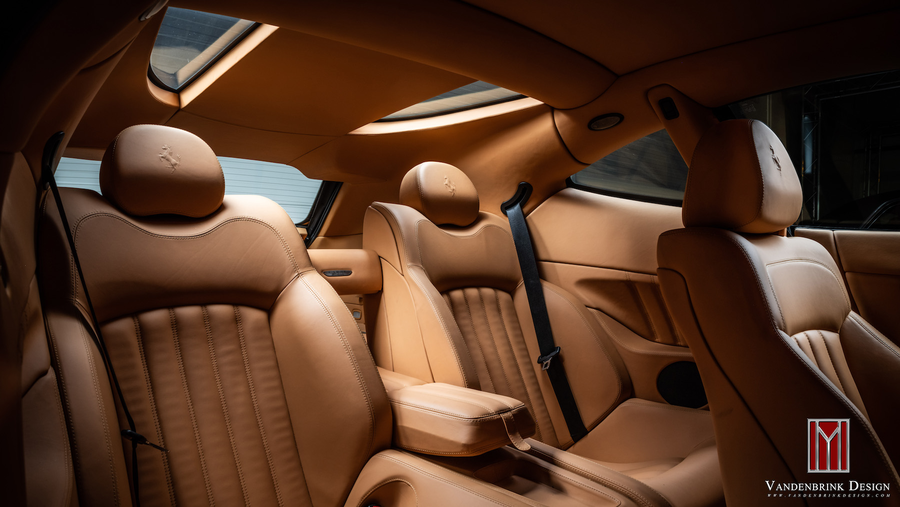
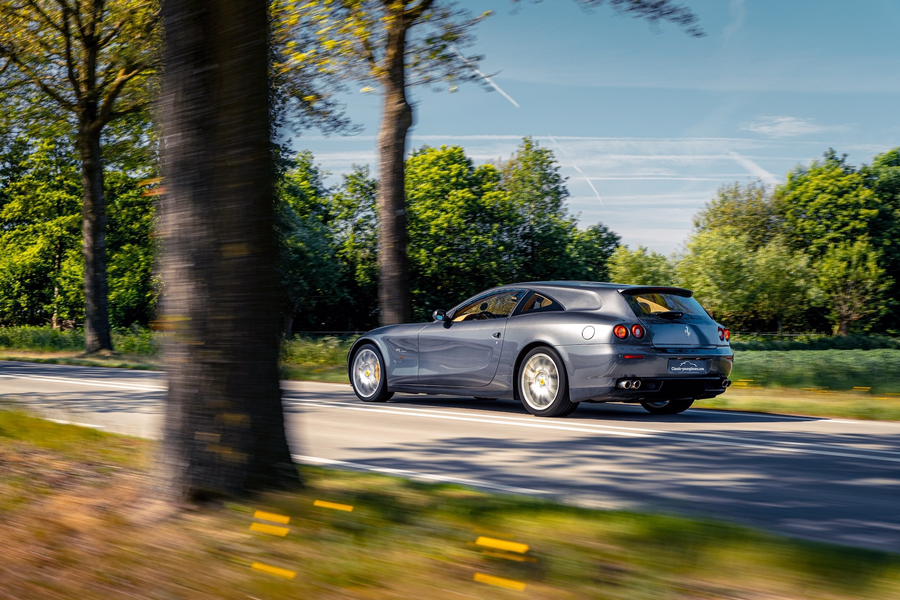
One-of-one 2005 Ferrari 612 shooting brake by Vanderbrink to be auctioned in Monte Carlo; unlike other Ferrari estates, it’s not from the ownership of Brunei royalty
One wouldn’t normally associate Ferrari with shooting brakes – combinations of coupés and estate cars – but now, one that symbolises the reverse of Enzo Ferrari’s mantra of “I build engines and attach wheels to them” is going to auction.
Whilst little information is supplied on the firm’s website other than to list the 2005 Ferrari 612 shooting brake with an estimate of £130,000 to £220,000 ($161,000 to $273,000, €146,000 to €247,000 or درهم592,000 to درهم1 million), much more has been written about it elsewhere online.
The car, it transpires, is the brainchild of Amsterdam based Vandenbrink Design. The firm took a 2005 Ferrari 612 and reconfigured it to include what is described by Take to the Road as the “low roof and sleek lines of a coupé.” The magazine argue that it “thus [retains] sporting appeal, whilst adding the practicality of a wagon.”
They enthusiastically continue: “The extended roof line isn’t exaggerated and preserves the distinctive sporting look of the 612 Scaglietti. Plus the addition of the wonderfully sculpted twin roof glass provides rear passengers with enough light to ensure they are not completely cocooned in darkness. The real talking point however is the boot which is cavernous, when compared to traditional Ferrari standards. It is a true all-round practical Ferrari with enough luggage room for extended trips well beyond just ‘weekend bags.’”
Previously listed for sale on Classic Driver, the grey with beige leather interior, left-hand-drive car has covered about 18,000 miles and seats 2+2. In spite of having a “cavernous” boot lined with vast expanses of hide, one won’t likely see this shooting brake on a pheasant shoot or grouse moor any day soon. Instead, it’ll more likely be found in the future parked outside the smartest spots on the Côte d’Azur.
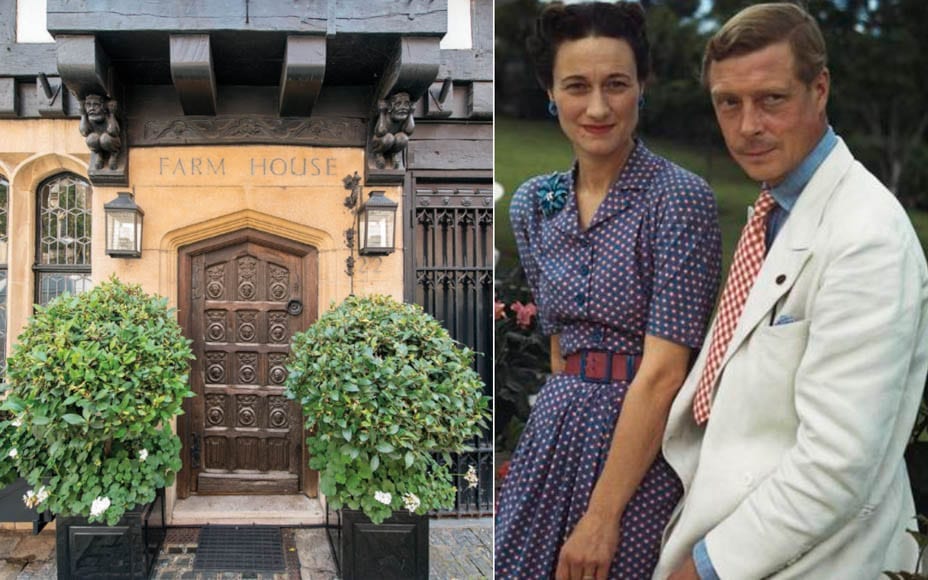
Mayfair “farmhouse” where Mrs Simpson began her affair with the then Prince of Wales for sale for 147% more than it was marketed for in 2012
Last marketed at a price of £4.75 million ($6.04 million, €5.30 million or درهم22.19 million) in 2012 and offered for sale in 2005 at an undisclosed sum also, a house where the then Mrs Simpson began her affair with the then Prince of Wales is again for sale.
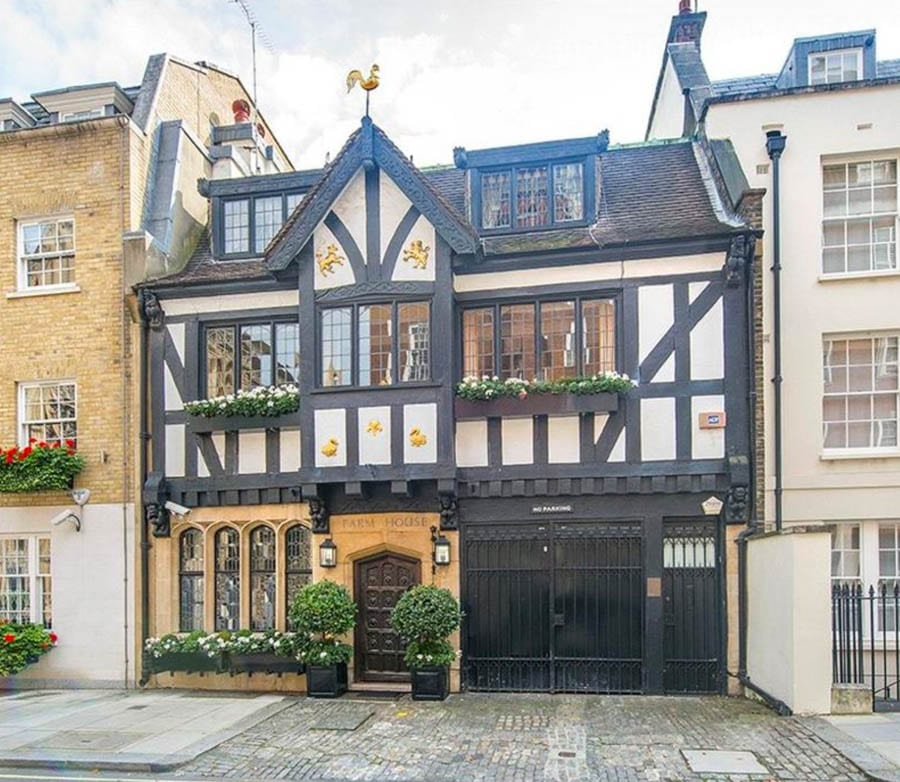
Rebuilt in the early 1900s by a Mrs M. Strakosch in “the Gothic style,” Farm House – or 22 Farm Street as it is more simply known – stands on the site of a farmhouse that predated the development of Mayfair.
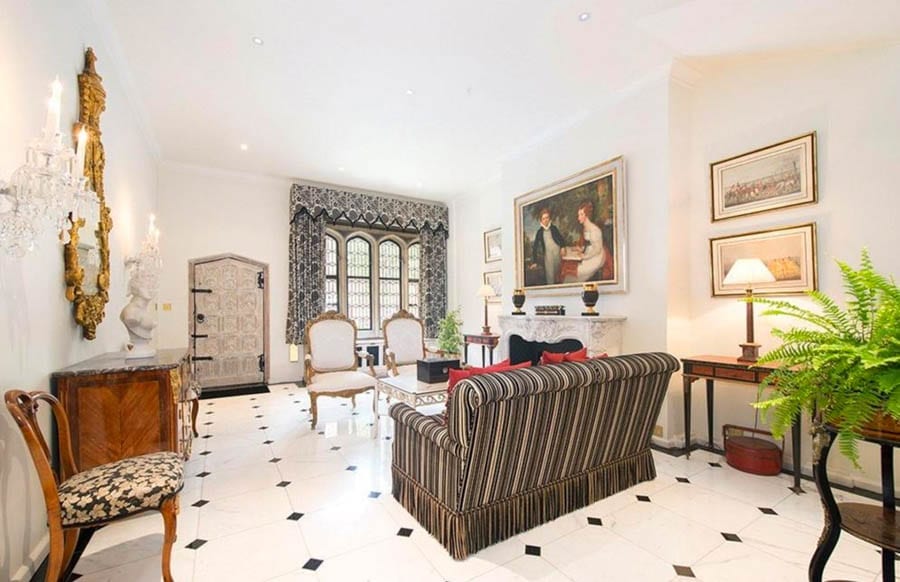
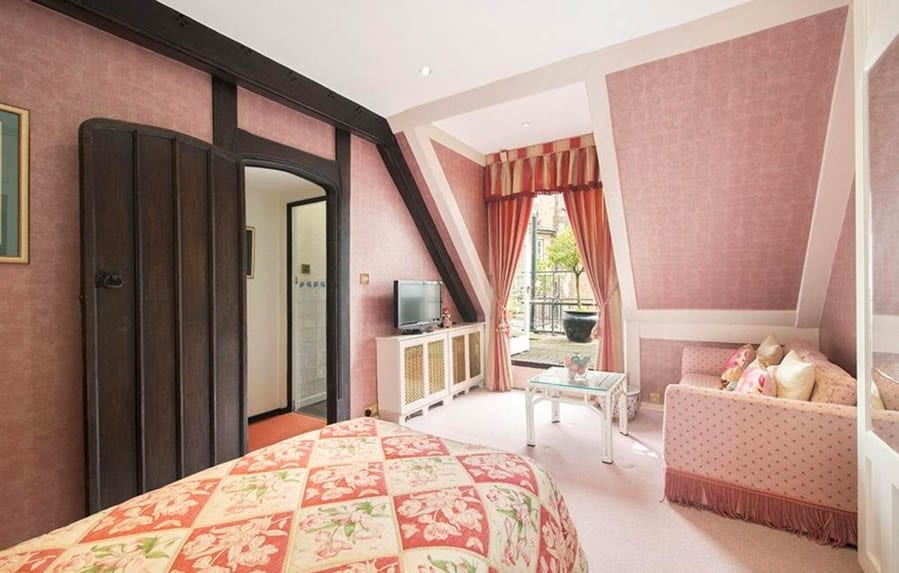
Entered through a large oak front door that feature the heads of the twelve apostles, the half-timbered house Mrs Strakosch commissioned featured Flemish linenfold paneling and 17th century doors. Though much of this has now gone, a number of Jacobean and medieval features remain and what is now offered is described as “the perfect space for modern entertaining.”
Farm House, 22 Farm Street, Mayfair, London, W1J 5RQ – For sale for £11.75 million
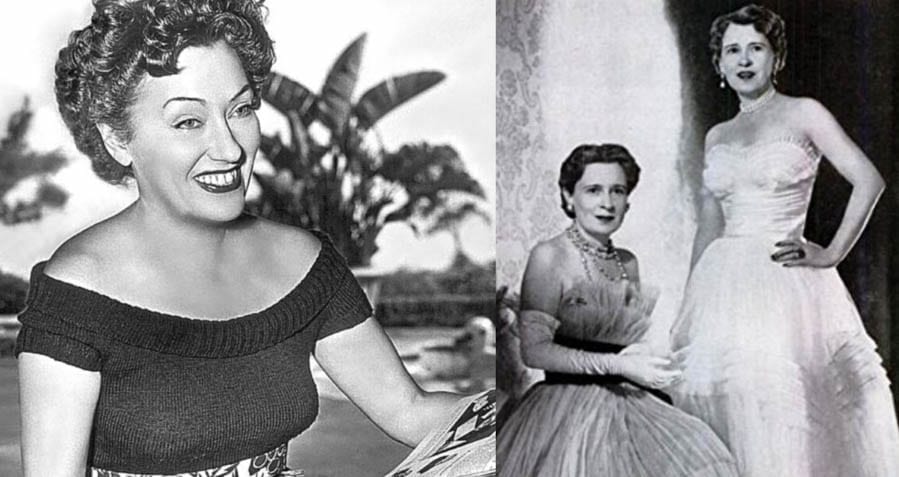
Gloria Swanson, Gloria Vanderbilt and Thelma Furness
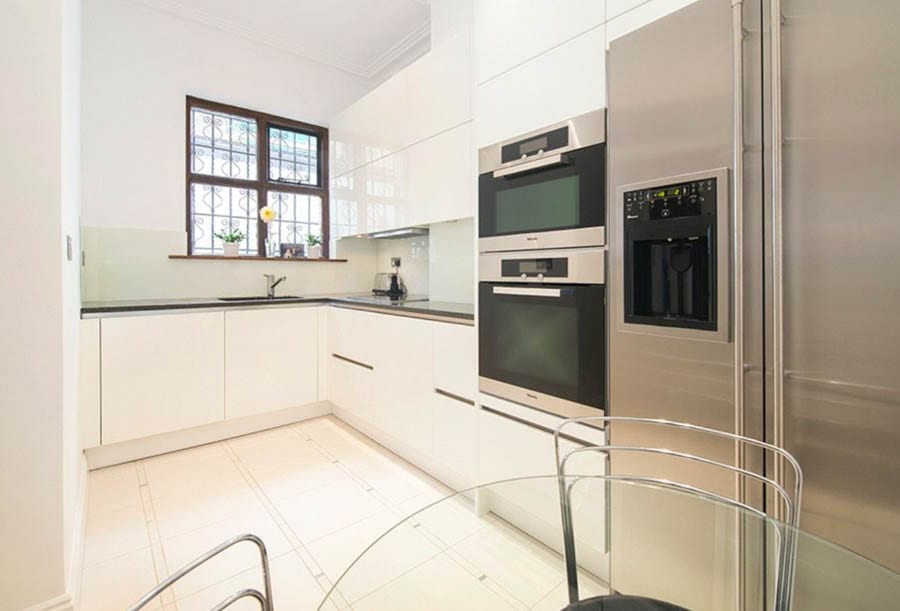
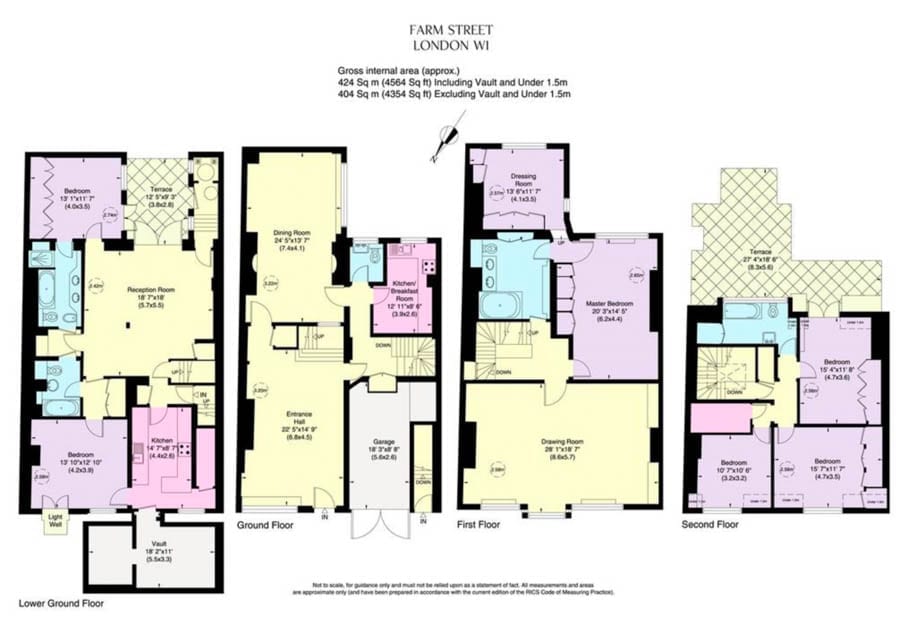
Farm House includes three reception rooms, two kitchens, six bedrooms, four bathrooms, two terraces and a garage. It extends to 4,564 square foot over four floors and was home to the Swiss born Thelma Furness, Viscountess Furness (1904 – 1970), the twice married mistress of the then Prince of Wales and later King Edward VIII between 1930 and 1934, during their relationship.
Furness, whose twin sister Gloria (1904 – 1965) became a Vanderbilt and was also the maternal grandmother of the American news anchor Anderson Cooper, at this time, was friends with Wallis Simpson. She introduced her American friend to the prince at her country house, Burrough Court, near Melton Mowbray, first in 1931 but then became supplanted in his affections in 1934.
With their relationship approaching its end, Furness embarked on a short affair with Prince Aly Khan whilst in America and whilst there allowed Simpson to live in her Farm Street home according to the actress Gloria Swanson (1899 – 1983). Later, in her autobiography Silent Boulevard, Swanson wrote:
“Lady Thelma Furness had a charming house on Farm Street, where her friend Wallis Simpson has kept the Prince of Wales company while Thelma was away in the States.”
Swanson, whilst pregnant, and her then husband Michael Farmer subsequently rented Farm House from Furness and of their time there wrote: “The house was empty for the moment, so we settled in to wait for the baby and see old friends.”
Knight Frank now seek £11.75 million ($14.95 million, €13.12 million or درهم54.90 million) for Farm House. Reportedly, according to a 2012 Mayfair Times article, the property comes with deeds that specifically mention that it still has a “right of way for sheep.”
1985 MG Metro 6R4 to be auctioned; it has an extraordinary estimate of £180,000 to £200,000 and just 175 miles on the clock
With over 1.5 million built during its production run, the Austin (and later Rover) Metro is in the top ten of car models sold by number in the UK ever. Lady Diana Spencer – later the Princess of Wales – drove a W-reg example prior to her marriage and the actor Peter Bowles was also said to have been a fan.
Promoted in jingoistic style by its manufacturer as “A British Car To Beat The World,” the Metro also found fame on the rally circuit. Created for the short-lived ‘Group B’ rally category, the MG Metro 6R4 bore a cosmetic resemblance to its city car parent, but in fact was something completely different and something that packed a bit of a punch.
Developed by Williams Grand Prix Engineering, this turbocharged 3-litre V6 engined car came in the form of a ‘Clubman’ model, a road-going version developing about 250 bhp, and a more powerful 410 bhp International ‘Group B’ specification rally car. Around 200 of the former were built and sold to the public whilst 20 of the latter were made.
In January, a 1985 ‘Group B’ example that has covered just 175 miles from new and was part of Williams Grand Prix Engineering’s collection from 1988 to 2005 will be sold at auction. It is presented in “sparkling condition” and was fully recommissioned and overhauled by BGM Sport in 2016/2017.
Silverstone Auctions will sell the car at their Autosport International Sale 2019 on 12th January at the NEC, Birmingham with an estimate of £180,000 to £200,000 ($227,000 to $253,000, €200,000 to €222,000 or درهم835,000 to درهم928,000).
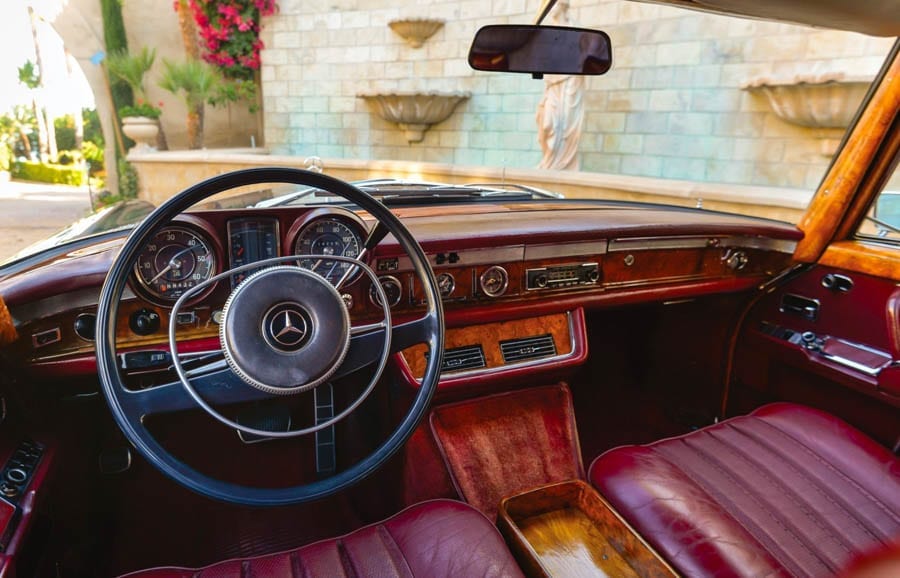
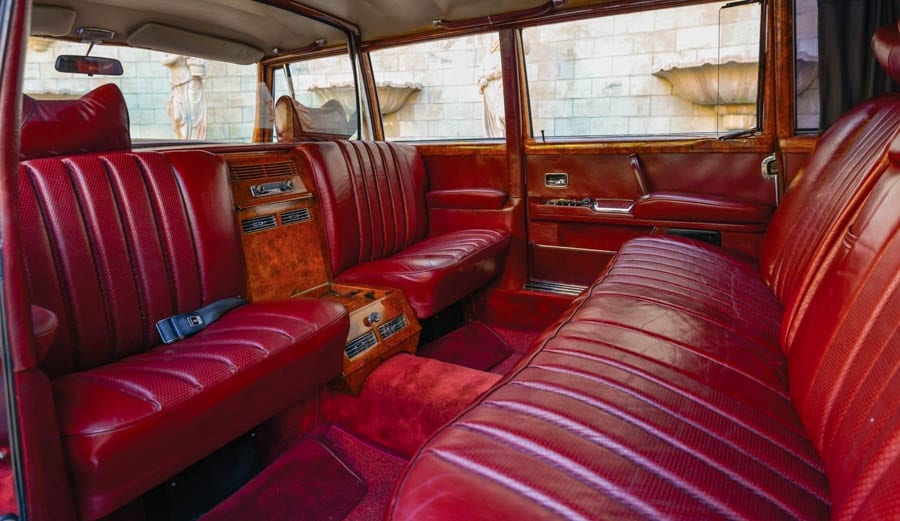
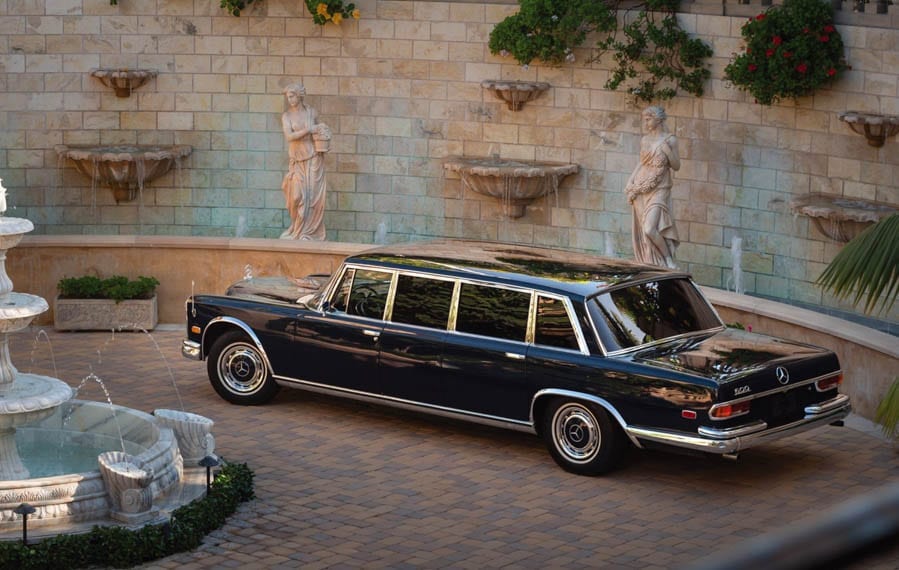
Superb example of the “world’s ultimate limousine” to be auctioned; the Mercedes-Benz 600 Pullman was the favourite of dictators across the globe
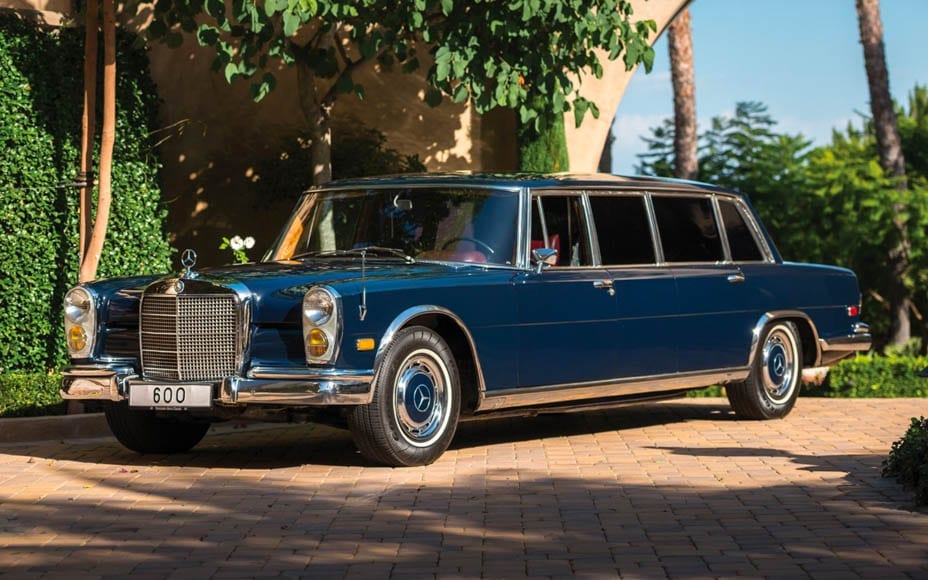
Produced from 1963 to 1981 with a run of 2,677 units made, the Mercedes-Benz 600 Pullman – also known as the ‘Grosser’ or ‘Grand Mercedes’ – is undoubtedly a star amongst cars.
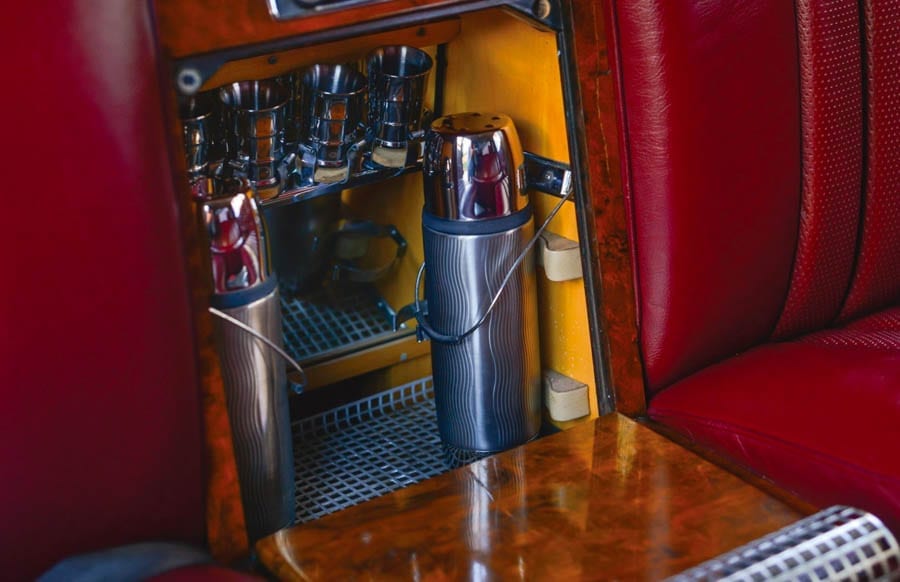
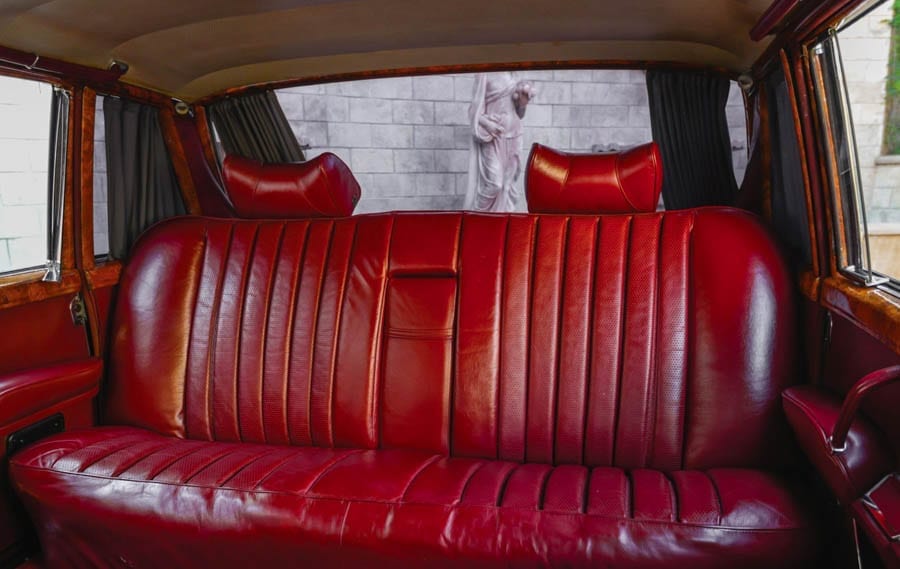
With owners having included politicians such as Ferdinand and Imelda Marcos (who had four) and Robert Mugabe and personalities including Coco Chanel and Elvis Presley, these high-end king of sedans has not only presence but also provide a smooth and quiet ride and extreme levels of comfort.
Later this month in California, a fine example of such a car will be sold at auction. Presented in dark blue (which is rare given most ‘Grossers’s’ are in black) with red leather, the 1969 Pullman offered has a 6,332-cc overhead-cam V8 engine and has been subject to a comprehensive renovation since being purchased by its current owner in 2005.
An estimate of £157,000 to £196,000 ($200,000 to $250,000, €176,000 to €220,000 or درهم735,000 to درهم918,000) has been set for the vehicle. It will be sold at RM Sotheby’sPeterson Automotive Museum auction on 8th December and seems like a veritable bargain given that Yugoslavian president Josip Broz Tito’s ‘Grosser’ sold for £2.5 million ($3.2 million, €2.8 million or درهم11.7 million) in 2017.
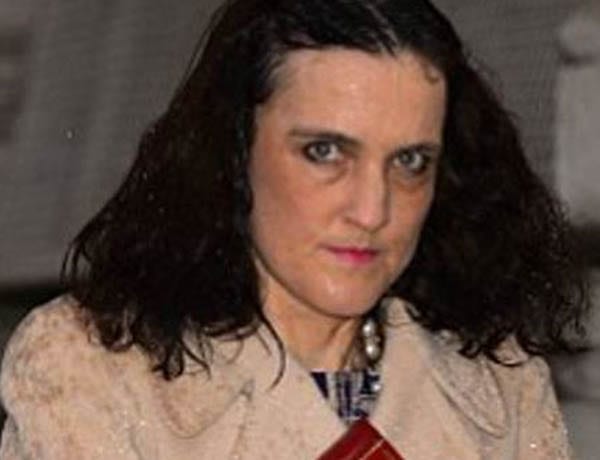
Aside from spending more time in television studios than working for the good of her constituents, this crow-like creature is a “hard Brexiteer” with a penchant for claiming expenses for a second home despite representing a North London constituency. Bombastic to her core and a one-time friend of the “arse grabber” Brian Coleman, Theresa Villiers has been described as “divorced, dogmatic and dreadful.” She has bizarrely used three word alliterative phrases at least 724 times in debates, is anti-fox hunting and staunchly pro-Israel.
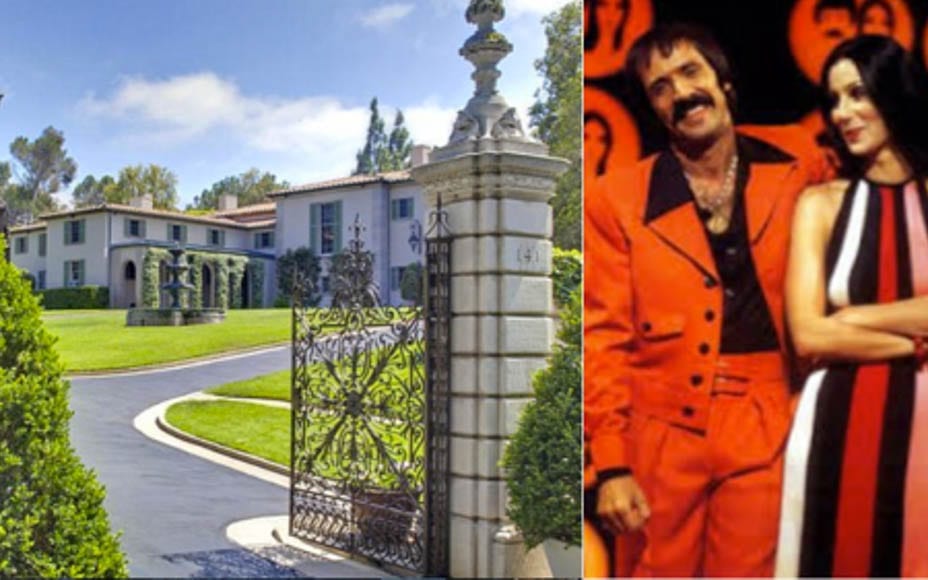
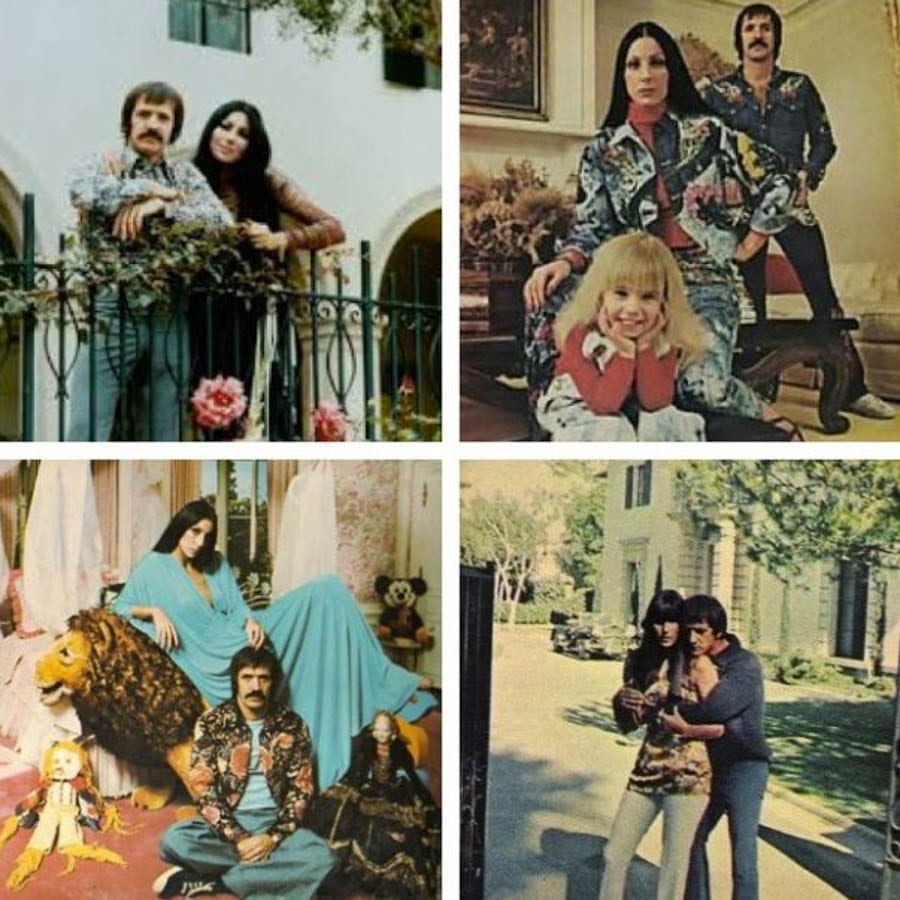
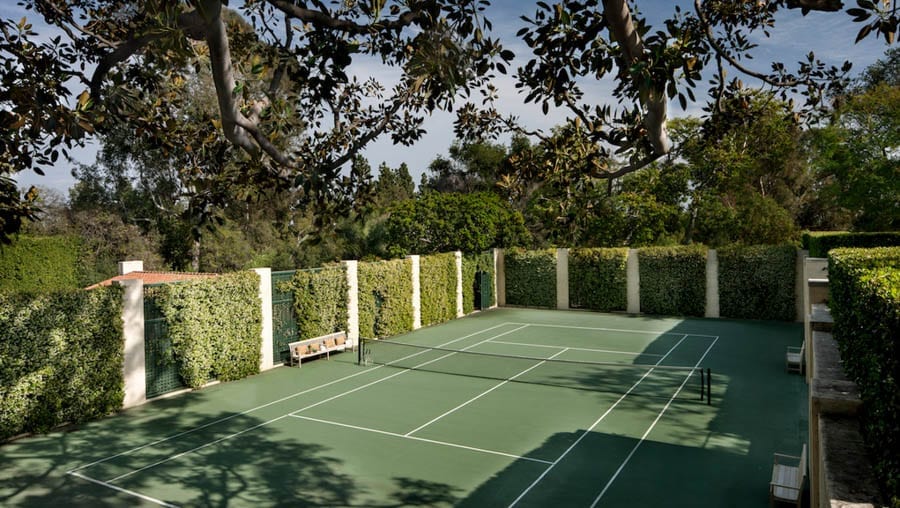
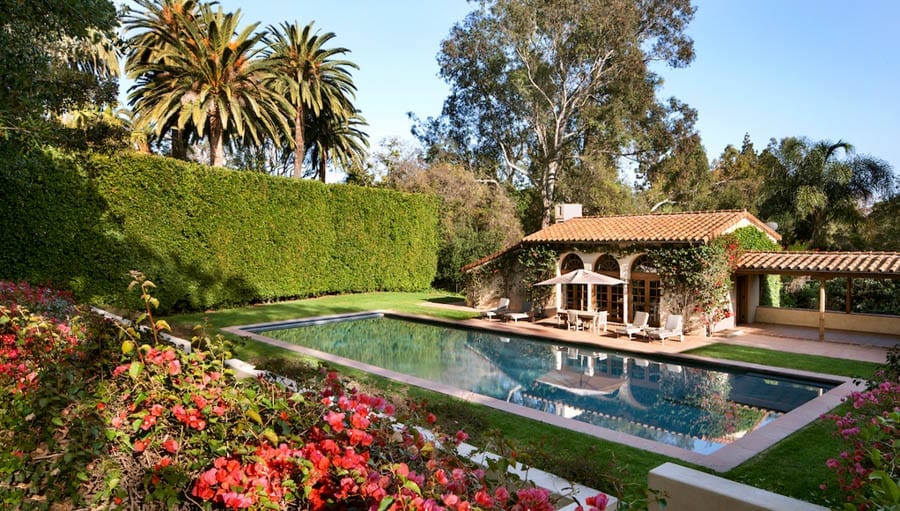
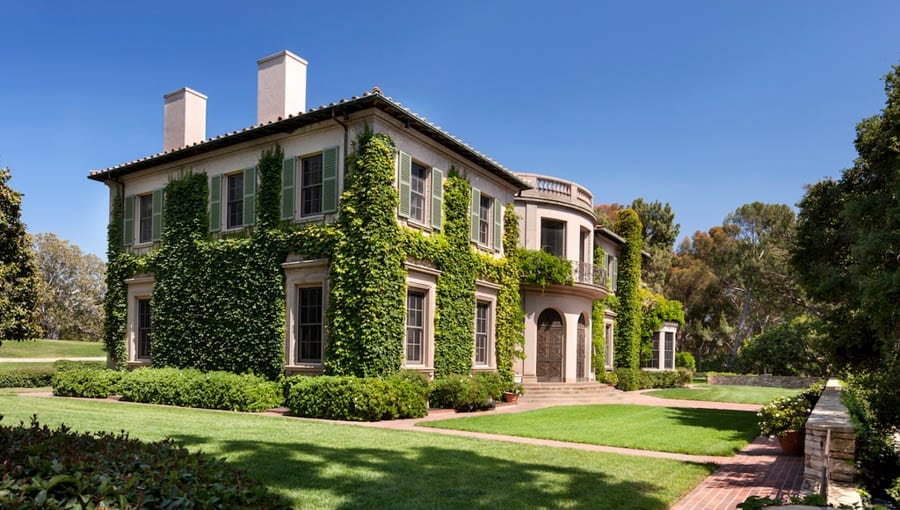
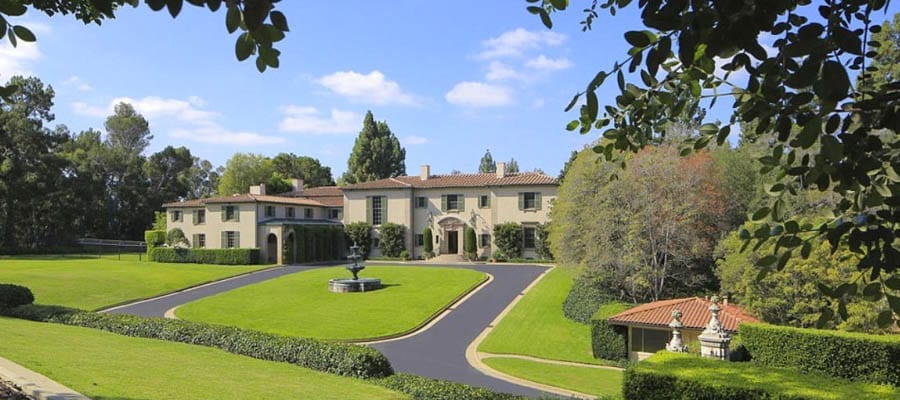
Featuring 9 bedrooms and 10 bathrooms, ‘The Owlwood Estate’ or more simply 141 South Carolwood Drive is described as “easily one of the city’s most iconic and historically significant properties.” Built in 1937 to the designs of Robert D. Farquhar in a “classic European Italian Renaissance” style, the estate was owned by Tony Curtis and Sonny Bono and Cher in the 1960s and has also been home to Joe Schenck, the first president of United Artists and a chairman of 20th Century Fox.
Now offered with designs for redevelopment by Bob Shapiro, the head of Sturmer Pippin Investments and CEO of Woodbridge Luxury Homes, the property offered also includes a sunken tennis court, a swimming pool and two guest houses.
Adam Rosenfeld of Mercer Vine is the realtor handling the sale.
The Owlwood Estate – The Numbers
July 2017 – Placed on the market for £136 million ($180 million, €153 million or درهم661 million).
September 2016 – Sold for £68 million ($90 million, €76 million or درهم331 million) to developer Bob Shapiro.
July 2012 – Placed on the market for £114 million ($150 million, €127 million or درهم551 million) by Dawn Arnall, “the widow of subprime mortgage profiteer Roland Arnall.”
2002 – Sold for £25 million ($33 million, €28 million or درهم121 million).
1999 – Listed for sale for £44 million ($58 million, €49 million or دره213 million) by Ghazi Aita complete with an adjacent property.
1978 – Sold to a “shadowy businessman” named Ghazi Aita for £3.2 million ($4.2 million, €3.6 million or درهم15 million).
1970 – Sold to Sonny and Cher for £568,000 ($750,000, €636,000 or درهم2.8 million).
Follow The Steeple Times on Twitter at @SteepleTimes.