Tag: 1950s

  • Magnificently CUT

    Magnificently CUT

    A review of Wolfgang Puck’s CUT at 45 Park Lane


    Continuing our series of revisiting articles from the blog that preceded The Steeple Times, today we re-publish our review of CUT at 45 Park Lane. We’re delighted to report that it’s just as good today.


    Wolfgang Puck once commented that he “learned more from the one restaurant that didn’t work than from all the ones that were successes.” With the opening of his new restaurant, CUT, at The Dorchester Collection’s newest hotel, 45 Park Lane, he certainly proves that he learnt well.

     

    Wolfgang Puck
    Wolfgang Puck

    Now magnificently illuminated at night and featuring 24 metal panels by Thierry Despont, this narrow Park Lane building was unoccupied for 13 years until The Dorchester Collection creatively brought it back to life. The building has a fascinating history having been owned in the 1950s by one George Parkin Catchpole, a liquidator, who rented it out “for anything legal.” He is said to have told a group of artists named the Park Lane Group: “When I’m not using it, you can – and I won’t charge you” and they did. They set up a 150-seat theatre and the pianist John Ogdon and the Welsh soprano Dame Gwyneth Jones DBE performed there.


    The magnificently lit exterior of 45 Park Lane at night
    The magnificently lit exterior of 45 Park Lane at night

    In the 1960s Catchpole sold the building and 45 Park Lane took on a new life as the Playboy Club. Run by Victor Lownes, the casino at the club became the most profitable in the world by 1981 but following a decision to revoke the club’s gambling licence and a row between Lownes and Hugh Hefner, the venue closed.


    45 Park Lane is now well and truly back on the map of the international jet-set following this latest refurbishment. Angelina Jolie and Brad Pitt stayed in September and the opening party was itself attended by Philip Green and his daughter, Chloe, as well as Kate Moss, Jamie Hince, Matt Bellamy and Kate Hudson.


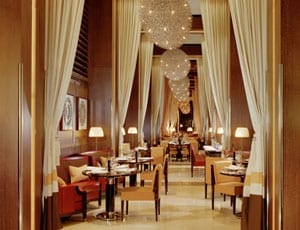
    CUT itself is a stylish space that seats 70 guests that is managed by the most personable Loyd Loudy, formerly of the OXO Tower, Hakkasan, China Tang, Shoreditch House and Sartoria. This is a slickly run dining room that has art deco hints and is dominated by Damien Hirst artwork.
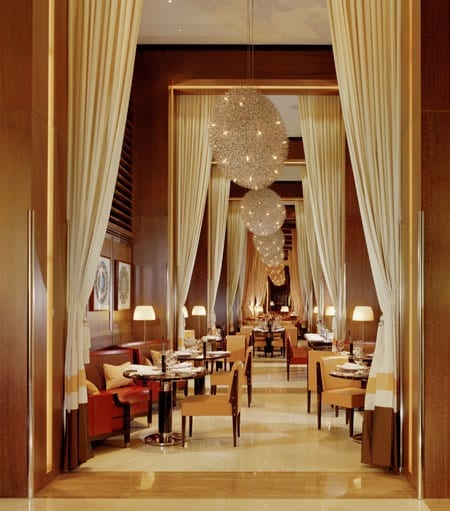
     

    CUT's narrow but stylish dining space
    CUT’s narrow but stylish dining space

    When I told a friend that I was going to CUT, he complained that the music there was a “horrible mixture” of 1970s and 1980s rock music chosen by Puck himself. My dining companion, a fan of such tunes as KC and The Sunshine Band’s Come To My Island, was delighted, however, by this prospect and only disappointed that his favourite tune didn’t get an outing. I was hoping for a rendition of the Strawbs’ Part of the Union in honour of, excuse the pun, those protesting about the government’s ongoing economic cuts, but I guess that would hardly have gone down well with the Mayfair hedgies and well heeled hotel guests who flock to this glamorous dining destination.


    John Walsh, in his review of CUT for the Independent, describes Wolfgang Puck’s name as being “Mozart-meets-Shakespeare” and this culinary maestro is himself worthy of note. Austrian by birth, Puck began his career at Maxim’s in Paris, the Hotel de Paris in Monaco and the Michelin 3-starred L’Oustau de Baumanière in Provence. In the 1970s he moved to the United States and set up his first flagship restaurant, Spago, in 1982 on the Sunset Strip of West Hollywood. Spago became known for its signature dishes of haute cuisine pizzas topped with smoked salmon and caviar and awards galore and a burgeoning restaurant empire followed in the 1990s and 2000s with further openings in LA, Las Vegas and Singapore.


    Puck has brought in David McIntyre as executive chef at CUT at 45 Park Lane. Part of his team in Los Angeles for the last 13 years, McIntyre’s career began at the Culinary Institute of America and progressed eventually to a “strong culinary partnership” with Puck first at Spago and then at CUT, Beverly Hills and WP24.


    Puck and McIntyre offer a menu that most certainly couldn’t fail to please any meat lover. Though not designed for those on a budget, the focus here is on cuts of beef, be they from Casterbridge in Devon or Creekstone Farms in Arkansas City, Kansas, that are grilled over hard wood and charcoal then finished under a 650 degree broiler.


    To start, I began with an Australian wagyū steak sashimi with spicy radishes and a Greek cress (£22). It was truly delicious and the envy of my companion who found his bigeye tuna tartar with wasabi ailoli, ginger, tōgarashi crisps and tosa sauce (£21) just as enjoyable. For those looking for a meatier option the Austrian oxtail bouillon (£9) certainly should appeal and vegetarians could definitely enjoy the roasted baby beetroot salad with goat cheese (£12).


    For our main courses we naturally both chose to try out the cuts but those looking for something different could opt for a sautéed dover sole (£45) or a warm lobster club sandwich (£24). Both my 6oz filet mignon (£30) and my companion’s 35 day aged 10oz New York sirloin (£34) melted in the mouth and truly top my list for the best steak of the year. The accompanying Armagnac and green peppercorn sauce was a phenomenal choice and utterly perfect. Though slightly over salted, the French fries with herbs (£5.50) were pleasant and the tempura onion rings (also £5.50) could not be faulted.


    To conclude, though somewhat conquered by the feast we’d just enjoyed, we moved on to a light banoffee pie and a delicious chocolate dish that tasted akin to a Kit-Kat with blackberries. Here ended a meal that was most certainly one of the best I’ve enjoyed in 2011.


    The wine list is exactly what you’d expect to find in an establishment of this stature. Staring at £7 a glass for whites by the glass and £16 for Laurent Perrier 2002 champagne, key highlights include a Château Petrus 1988 for £4,900 a bottle and a 2009 offering from the estate of Sir Peter Michael at £270 a bottle.
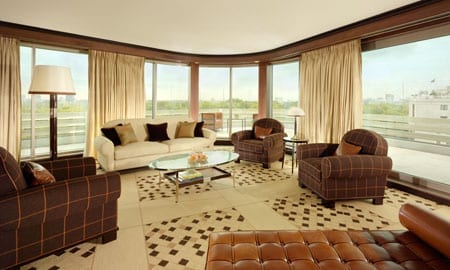
     

    One of 45 Park Lane's 45 rooms and suites
    One of 45 Park Lane’s 45 rooms and suites
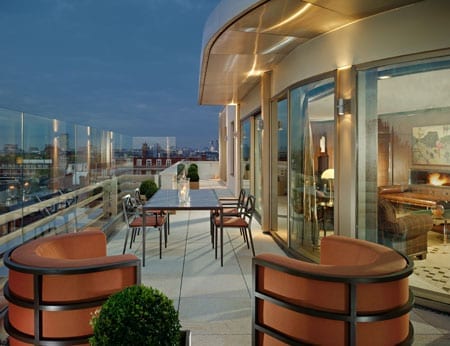
    Suites with terraces boast views over Hyde Park and the rooftops of Mayfair
    Suites with terraces boast views over Hyde Park and the rooftops of Mayfair


    Above the restaurant a striking staircase leads to Bar 45, a chic space serving cocktails and offering bar-dining for 30. Adjoining this is media room with 10 comfortable armchairs and a library. The remainder of the building appropriately consists of 45 stylish rooms and suites that include a most impressive penthouse suite with a wrap-around balcony that offers expansive views across Hyde Park.


    Fay Maschler concluded her review of CUT with the words: “Cut and come again.” I’d only add that this is a restaurant that is cuttingly magnificent.


    CUT, 45 Park Lane, London, W1K 1PN. Telephone: +44 (0) 20 7493 4554. Website: http://www.45parklane.com


    Follow CUT on Twitter at: http://www.twitter.com/WolfgangBuzz

    Follow 45 Park Lane at: http://www.twiter.com/45ParkLane
  • A Smart move

    A Smart move

    The sale of the home of a circus heir and the revival of Billy Smart’s Circus


    Billy Smart, Sr. (1894 – 1966), a travelling showman and father of 10 children (he was himself one of 23), bought a circus in 1946 and quickly became known as an extraordinary entertainer. One of his son’s, Billy Smart, Jr. (1934 – 2005), made his debut at the age of 12 as an assistant ringmaster in Billy Smart’s New World Circus and performed with ponies, horses and eventually elephants. (more…)

  • A Gipsy flies

    A Gipsy flies

    The story of a 1929 bi-plane with a truly fascinating pedigree


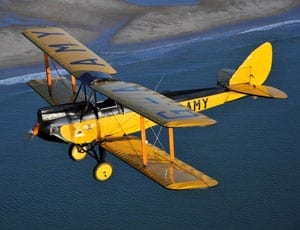
    Britain’s best-known wartime Prime Minister piloted a Gipsy Moth aeroplane that will be sold by auctioneers Bonhams in February 2013 at a guide of £120,000. The same craft was also featured in an iconic 1980s film and was also supposedly flown by a member of the Fiennes family who mysteriously disappeared in 1998.


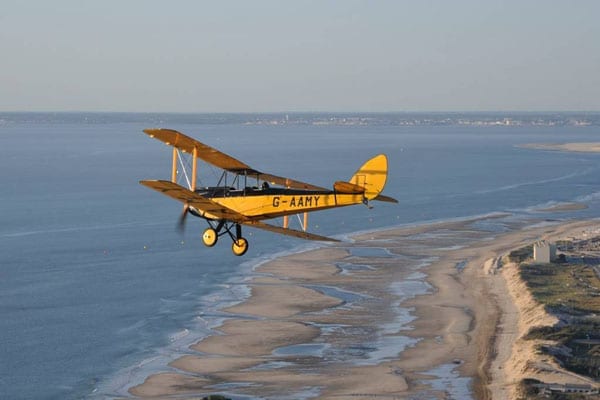
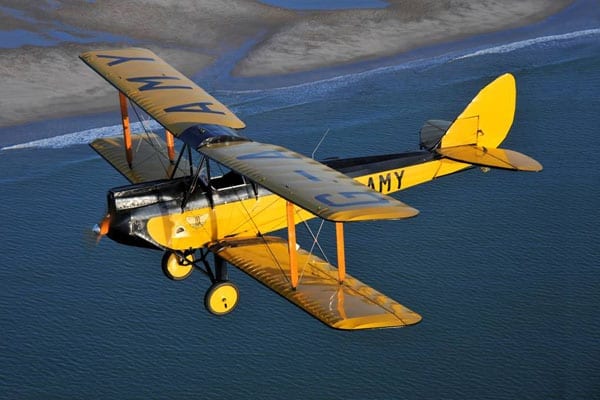
    The 1929 De Havilland DH 60 GMW Gipsy Moth bi-plane G-AAMY that will be sold by Bonhams at the Grand Palais in Paris in February 2013
    Sir Winston Churchill (1874 – 1965)

    Piloted several times by Sir Winston Churchill (1874 – 1965) and used in the Oscar award winning Out of Africa, this 1929 De Havilland Gipsy Moth bi-plane is 24-foot long and has a 30-foot wingspan. It is capable of a maximum speed of 105mph and “wears” a yellow and black livery. It’s registration is G-AAMY in homage to the pioneering English aviatrix Amy Johnson (1903 – 1941).


    In the film, the plane was flown by Robert Redford but though the life of the big game hunter Denys Finch Hatton he played is intriguing; the exploits of Redford’s aviator double are just as fascinating a story.


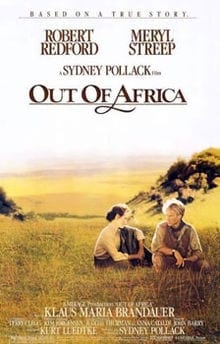
    Sydney Pollack’s “Out of Africa” (1985) starred Robert Redford and Meryl Streep
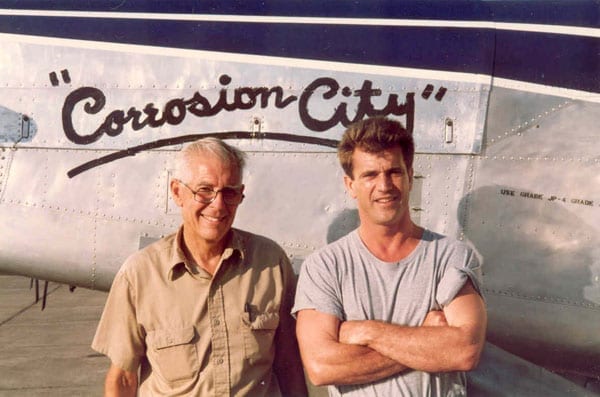
    Tom Danaher pictured whilst filming with Mel Gibson

    Few outside of the aviation world will have heard of Tom Danaher (1929 – ) but aside from Out of Africa, he’s pretty much done it all. After graduating from a high school in Dallas in 1941, he became a Marine Corps fighter pilot. Stationed on Okiwana in August 1945, he shot down the last Japanese bomber on the final night of the Second World War and also made history, aged 21, for downing three other Japanese “Betty” bombers in the eight nights before the ceasefire.


    Recalled to active service in 1951, Danaher flew one of the earliest jets, the F3D Skynight, with the Marines in Korea on night combat patrols and then was part of the last combat mission on a high altitude bombing strike over Pyongyang, North Korea in July 1953.


    Danaher’s passion for flying continued after the war and in 1954 he flew his own plane, a 1948 Bonanza, to England to visit friends he’d made from the RAF whilst in Korea. To make the journey, he built a 109-gallon auxiliary fuel tank so that he could fly straight across the Atlantic. On the way home he called in for an audience with Pope Pius XII in Rome.


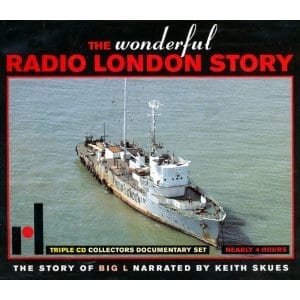
    The surplus Second World War minesweeper from which Wonderful Radio London operated in the 1960s

    Danaher’s visits to England led to him becoming involved in a pirate radio station in from 1944 to 1967 named Wonderful Radio London. Like many others, Danaher was not impressed by the BBC’s monopolistic attitude to radio programming and so helped build a 17,000-watt station on a surplus Second World War minesweeper. It was anchored three and a half miles off the English coast and outside of Britain’s territorial limit. Of the experience, Danaher told Airport Journals:


    “We had someone in Dallas who would record KLIF, a top 40 station, and we put it right on the air… The Englishmen over there just ate it up… The station programmed news and top 40 music and was very successful. It had the largest listening audience of any of any commercial broadcast station at the time.”


    Back in America, Danaher owned three car dealerships in Wichita Falls, Texas but sold them in 1972 to open his own airport, the Tom Danaher Airport. Lake Wichita Airport (7TXO), as it was also known, kept the aviator busy but he has also piloted in films numbering Empire of the Sun, Sky Bandits, Air America, Bad Medicine, The Pleasure of Love, White Hunter Black Heart, Cliffhanger and Goldeneye.


    In 1985, Danaher was recruited to fly Gipsy Moth G-AAMY by Sydney Pollack (1934 – 2008), the American director of Out of Africa. He recounted his six week experience on set in Masai Mara, Kenya in an interview for his local Texan newspaper, the TimesRecordNews, in 2008. Here, he highlighted the problems of trying to film with a vintage plane that “has no brakes and is difficult to steer”:


    “Robert Redford couldn’t make the thing turn. It took considerable finesse to turn it on the ground… The third time, he gave it full throttle… The left wing contacted a thick thorn bush and it tore some of the fabric off the lower left wing of the plane. We couldn’t fly it the rest of the day.”


    Other dramas arose with G-AAMY in terms of Meryl Streep’s body double refusing to fly in it and the craft struggling to reach the high altitudes necessary to film a sweeping shot of the plane flying past a waterfall. Danaher took charge stating: “If I can get a piece of string and a ruler, I can fix this.” He found just such, cleverly installed them and Pollack: “got every single shot he wanted.”


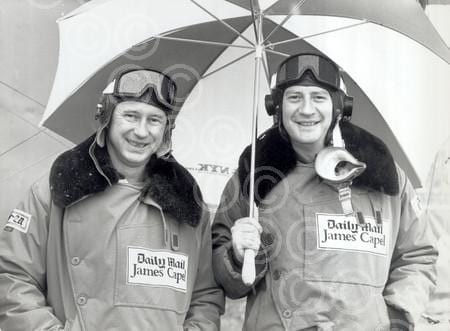
    Pilot Roger Fiennes (1944 – 1998) pictured with Alexy Zaitov during the 1989 Glasmoth project expedition to Moscow and back

    Another person to have piloted the Gipsy Moth G-AAMY, according to a comment left in the PPRuNe Professional Pilots Rumour Network forum, was a man named Roger Fiennes. Whether this “rumour” is true or not, the cousin of the actor Ralph Fiennes and the explorer Sir Ranulph Fiennes, is another character with a flying history as fascinating as his true family name – which turns out to be “Twisleton-Wykeham-Fiennes” when presented in full. Of why he did not use this lengthy and historic surname, Fiennes is said to have once commented:


    “You try writing that signature on a 6 foot long cheque book.”


    Fiennes flew many hours in a variety of planes and one of the best documented was an expedition supported by the Daily Mail from White Waltham Airfield in Berkshire to Sheremetyevo Airport in the Soviet Union in April 1989 and back. He flew one of three Tiger Moth bi-planes with a Russian navigator named Alexy Zaitov. The journey took three weeks to complete, involved 33 perilous stops and covered 5,000 miles.


    On 19th April 1998, Fiennes was piloting a 1941 DH82A Tiger Moth, G-BALX, from Dieppe to Headcorn Aerodrome in Kent but he failed to reach his destination. The Air Accidents Investigation Branch (AAIB) report into the disappearance concluded:


    “Although the pilot contacted Paris Information by radio, in the absence of a specific request, the flight plan was not activated. Lashenden was therefore unaware of the flight’s departure and ETA. When the aircraft was reported missing overdue action, and the subsequent Search and Rescue operation, which was activated on the morning of 21 April 1998. Since then there has been no sign of the aircraft or pilot.”


    Articles at the time and forums since are sparse in detail but several forum posters and articles suggest that Mr Fiennes had “mounting debts and a string of business collapses.” Whilst some go as far as to suggest a “Lord Lucan” style disappearance and make references to “paddling canoes” and “check[ing] the Panamanian register,” others remember a “nice guy, sadly missed.” Whatever really happened that fateful day, though, will probably never be solved.


    Another image of Gipsy Moth G-AAMY

    G-AAMY, which was marked G-AAMT for the filming of Out of Africa, is a plane with a remarkable past. We suspect there’ll be a few more dramas for this craft yet.

    The 1929 De Havilland DH 60 GMW Gipsy Moth bi-plane G-AAMY will be sold by Bonhams at the Grand Palais in Paris, France sale during Rétromobile week (6th to 7th February 2013). For more information telephone +33 1 42 61 10 11 or go to: http://www.bonhams.com


    To learn more about Tom Danaher’s experience flying G-AAMY in Out of Africa, read the full TimesRecordNews report by Lara K. Richards at: http://www.timesrecordnews.com/news/2008/jun/08/fly/?print=1


    To read the AAIB account of the disappearance of Roger Fiennes and DH82A Tiger Moth, G-BALX, go to: http://www.aaib.gov.uk/cms_resources.cfm?file=/dft_avsafety_pdf_502449.pdf


  • Ecstasy and Babycham

    Ecstasy and Babycham

    A marine residence with a history tied to the Rolls-Royce Spirit of Ecstasy, the Special Operations Executive and Babycham


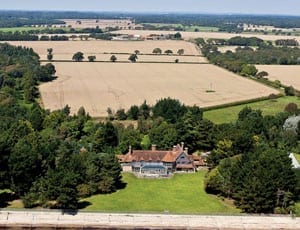
    The House on the Shore on Thorns Beach at Beaulieu in Hampshire is a home that wouldn’t look out of place in the Hamptons or Rhode Island. Dramatically situated next to the Solent waters to the north of the Isle of Wight, this suitably named building wouldn’t have been out of place in the 1980s BBC series Howards’ Way. It could. Indeed, have been an ideal home for Gerald and Polly Urquhart. (more…)

  • Patricia Kluge (née Rose)

    Patricia Kluge (née Rose)

    The rise and fall of the “wealthiest divorcee in history” has been extraordinary. A former nude model for her first husband’s Knave magazine and star of adult films such as “The Nine Acres of Nakedness,” Patricia Kluge is the daughter of an Englishman and a Scots-Iraqi. She married her second husband, the late John Kluge, chairman of Metromedia and once the richest man in America, in 1981 after belly dancing for him at a dinner party in New York. As part of her plan to dovetail herself into the top drawer of American society, the couple built a 24,000 square foot mock 18th century English-style mansion, Albermarle, in Virginia and stuffed it full of Chippendale furniture. She got this as part of her $100 million divorce settlement in 1990 and wisely invested part of the payoff in a highly successful business trading football cards but then vanity struck. The Kluge Estate Winery project that she started with her third husband, William Moses, bankrupted the pair in June 2011 and the Bank of America foreclosed on her properties. A lifeline came from “longtime friend” Donald Trump who purchased the vineyard and employed her, but even he’s now uttered the words: “You’re fired!” and sent her packing. Of her newfound predicament Kluge commented: “What did we lose? Material things, nothing too important. When something like this happens you really see who your friends are, those you can rely on, and we have many friends.” Here is a lady with fortitude that can only be described as admirable. It’s probably best, however, to keep her away from the cash register.

  • Boujis in the basement?

    Boujis in the basement?

    Matthew Steeples explores the story of an empty Kensington mansion


    A multi-million pound 8-bedroomed house in Kensington isn’t anything unusual. In fact, rather, they’re ten a penny. In this, one of the wealthiest boroughs in the land, large, expensive homes are just the norm.


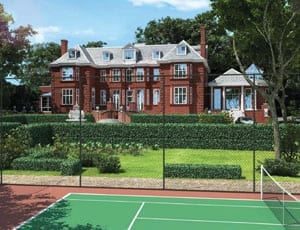
    An image of the existing exterior of No. 1 Campden Hill, London, W8 7AD
    A rendered image of how the exterior of the renovated property might look
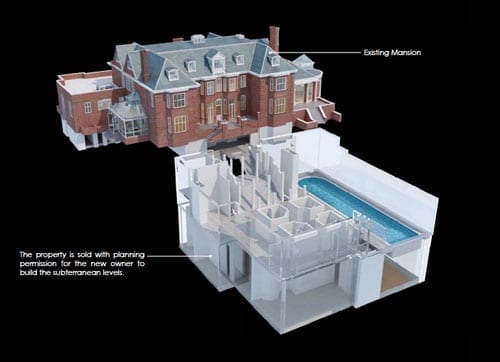
    The plans show a vast subterranean development that will vastly increase the size of No. 1 Campden Hill

    No. 1 Campden Hill, which is being marketed for an undisclosed eight-figure sum, is in a quite different league. Here is a detached Edwardian house in an acre of grounds just to the north of Kensington High Street. It’s an unrenovated property but it attracted much press attention in October 2011 because it was place on the market in October 2011 at a price of £75,000,000. Yes, you heard it right: £75 million for a fixer-upper. Last week, Radio 4 made a hell of a fuss about a derelict semi-detached house in Newcastle selling for just £14,000 so this truly must be something special.


    Architect Edward P. Warren (1856 – 1937), far right, in the offices of Bodley & Garner, 14 South Square, Gray’s Inn, London

    The architect of the house Edward Prioleau Warren (1856 – 1937), a Bristol born architect and archaeologist, was best known for “Oxford colleges and minor country houses” but also designed the War Cemetery at Basra. He was a friend and adviser to the American novelist Henry James and in addition to building No. 1 Campden Hill in 1915, he also designed a house at 5 Palace Green in 1906 and another, Estcort House in Kensington Palace Gardens, in 1904. Warren’s guiding style is described as having been to recreate an “understated revival of English late 17th century” architecture and at No. 1 Campden Hill he created just that.


    Colonel Edmond Grove-Hills (1864 – 1922), born Edmond Hills, and his wife, Juliet Spencer-Bell, were the architect’s clients. A plaque on the building bares their names and the following dedication:


    This House I built for Me & Mine

    May it be of Peace A Shrine

    And no Enmity or Sin

    Ever find its way therein

    AD 1915


    Sadly for the Grove-Hills, the following year, their son, Second Lieutenant Charles Herbert-Hills (1895 – 1916) was killed on the Somme aged just 21. His father, meanwhile, was awarded a CBE in 1918 after having served as the Assistant Chief Engineer of Eastern Command during the war.


    Aside from his military exploits, Edmond Grove-Hills is best known for his role as president of the Royal Astronomical Society. He took part in observations of eclipse of the sun in Japan in 1896, India in 1898 and Russia in 1914 and contributed papers analysing both this and the causes of the irregular movements of the earth’s axis of rotation.


    In 1951, No. 1 Campden Hill was purchased by the government of Uruguay and it became the residence of their ambassador to the United Kingdom. For the next fifty years the building was barely altered but when the lease from the Phillimore Kensington Estate came to an end, there were legal problems as the 1951 transfer had never been stamped. Of this, Sharon Mulroney of Forsters, the legal representatives of Phillimore, commented:


    “It is highly unusual to be faced with complications of this kind when dealing with a registered London title, but this made the transaction all the more fascinating. Even the decision to allow ambassadorial staff to return to the property for security purposes after completion was fraught with potential problems about security of tenure, employment and tax.”


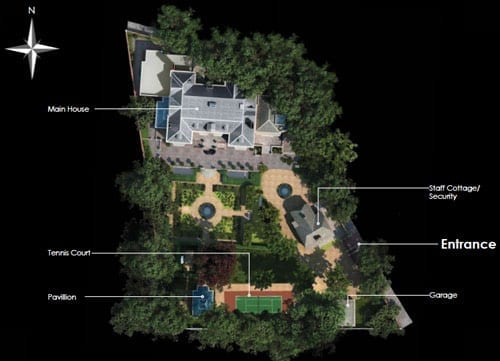
    The proposed site plan shows the addition of a garden pavilion, staff/security cottage and a tennis court

    Eventually, without issue, the Phillimore Estate sold on the house in 2001 for a price of approximately £17,000,000. In the years since, the property was effectively mothballed as all the purchasers have done is to have obtained planning permission to redevelop the building into a mammoth mansion of epic proportions.


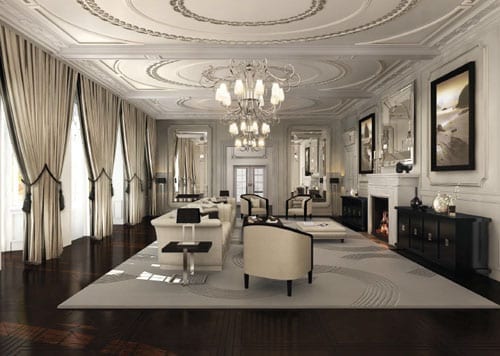
    A computer rendered image of how the drawing room might look
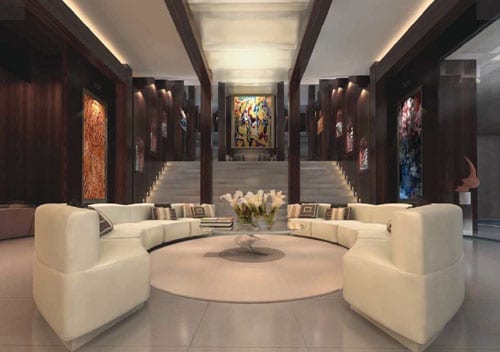
    The “leisure area” is reminiscent of the entrance to The Mandarin Oriental Hyde Park Hotel
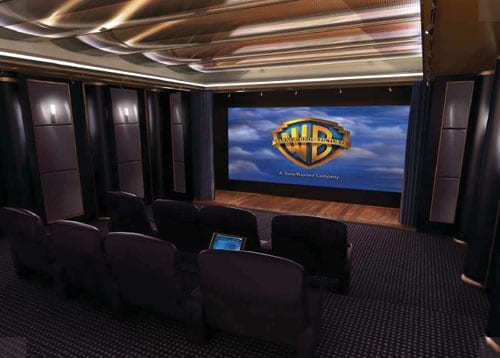
    The private home cinema would be the envy of any movie buff
    The swimming pool
    The wine cellar is rather like a contemporary take on Berry Bros. & Rudd’s flagship store in St. James’s Street
    And to complete it all… The plans include your own version of Boujis in the basement

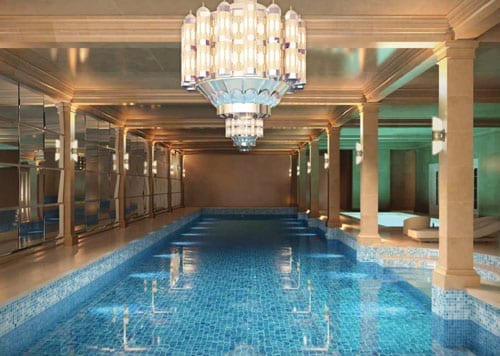
    The approved plans show designs for something quite remarkable. Warren’s “understated” residence will be replaced with 8 vast bedroom suites, grand entertaining spaces, a lift and even bedrooms for 5 staff. In addition to a full-scale renovation of the original freehold house, there is scope to provide a total of 30,000 square feet of accommodation by adding a huge subterranean complex that will include a 25-metre swimming pool, court, squash court, gym, sauna, steam room, function room, entertainment room, home cinema, wine tasting room and even a nightclub to rival any of Kensington’s trendiest haunts.


    On that basis alone, No. 1 Campden Hill is surely the ideal residence for Prince Harry: “Who needs Boujis?” we hear him cry.


    No. 1 Campden Hill, London, W8 7AD is for sale through Knight Frank. For more details contact Roddy Craggs on +44 (0) 20 7938 4311 or go to: http://search.knightfrank.com/ken100161 to download a brochure.


    For more information about The Phillimore Estate, go to: http://www.phillimore-kensington-estate.co.uk

  • Charmian Brent (better known as Charmian Biggs)

    Charmian Brent (better known as Charmian Biggs)

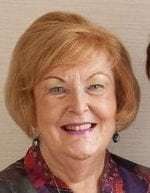
    In the autumn of 2012, an ITV1 series, Mrs Biggs, dramatised the life story of this headmaster’s daughter from Reigate, Surrey. In it, Sheridan Smith (pictured here with the real Mrs Biggs) portrayed a lady of steely reserve who is intelligent, articulate and courageous. The former wife of the Great Train Robber Ronnie Biggs has now built a new life for herself in Melbourne, Australia as an editor, publisher and journalist and on crime, her views are simple: “[It] doesn’t pay in any way, shape or form.”

  • Charles Morgan

    Charles Morgan

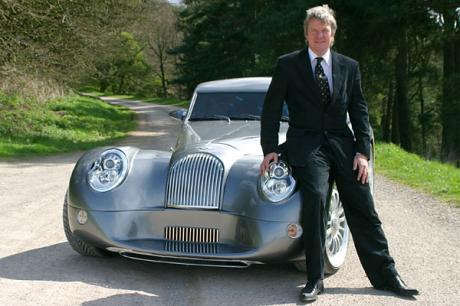
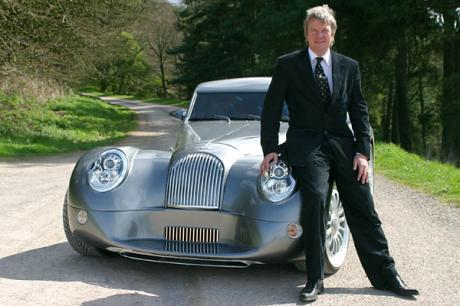
    He’s a member of the family who created and still own the legendary Morgan Motor Company. He’s also worked in television news as a cameraman for ITN and is a motivational speaker specialising in change management. Morgan lists his quirk to be: “Looking English in spite of buying Italian jackets.”