Category: THE FOG

The economy, politics and current affairs.

Money, power and its guiding forces

  • Picture of the Week – Mistress May

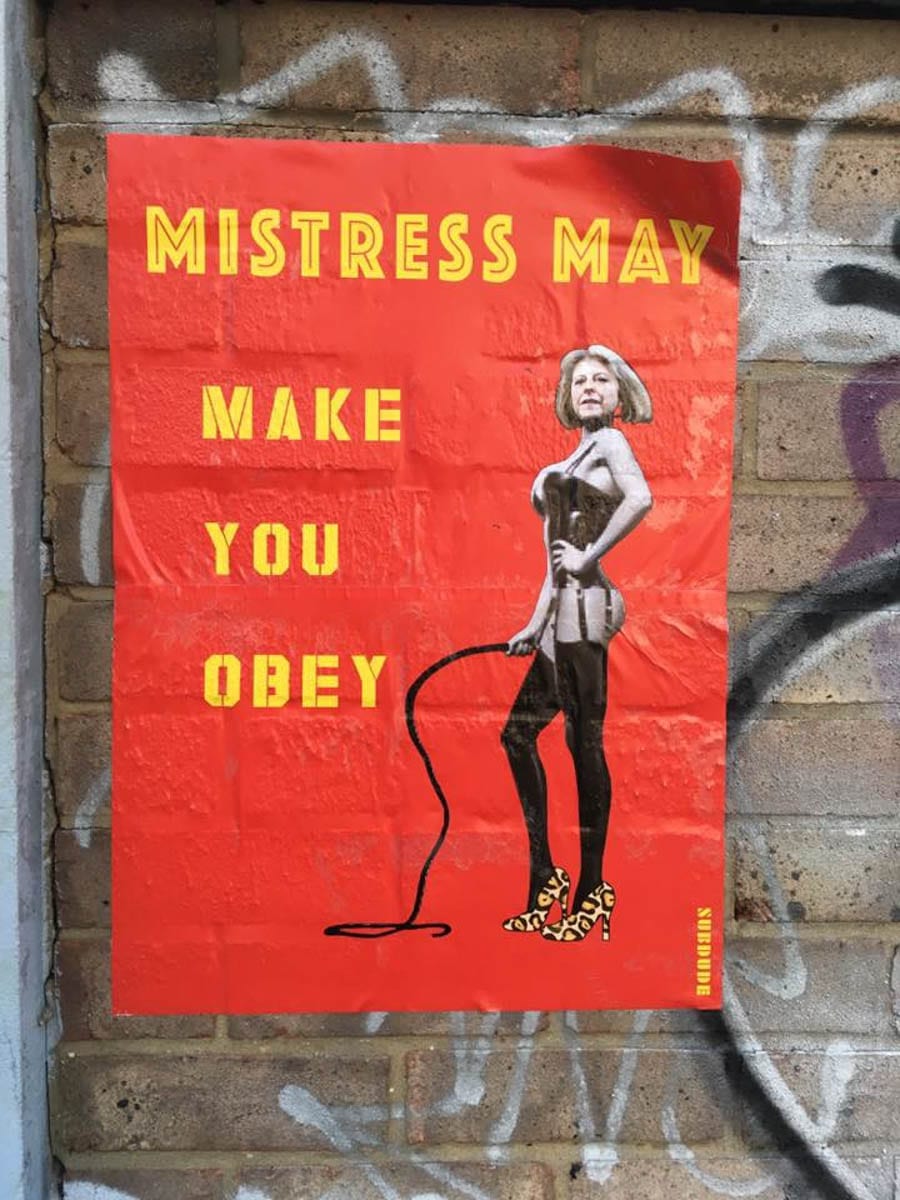
    Picture of the Week – Mistress May

    Theresa May rebranded in Hackney Wick; it might put you off your lunch


    A group named ‘Shit London’ on Facebook has over 68,000 members and regularly features images of the sublime and the ridiculous taken in Britain’s capital. This week, one, in particular, shared there caught our eye.


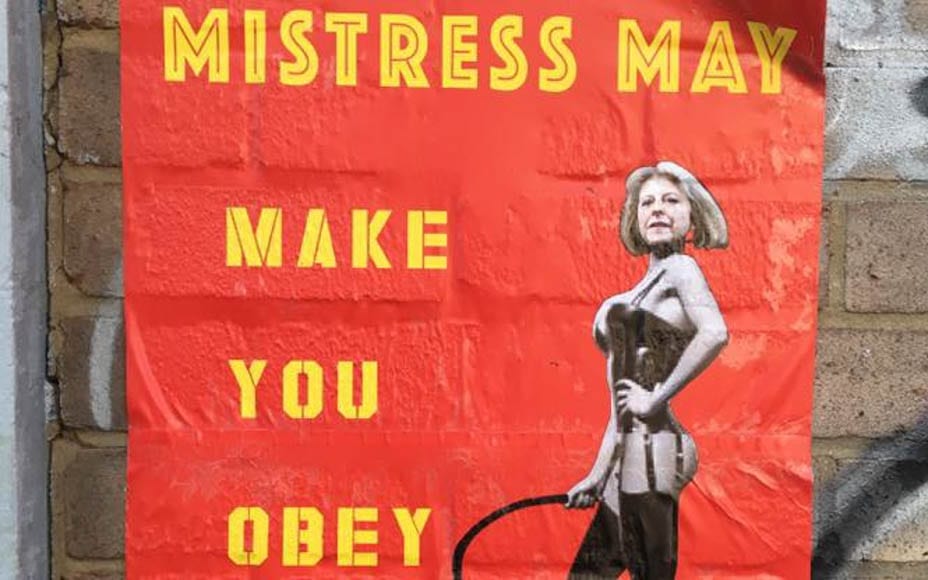
    An image, taken by an individual named ‘Oli Jpeg Coupe’, features Theresa May holding a whip and in lingerie alongside the caption: “Mistress May Make You Obey”.


    Mrs May’s trademark kitten heels also secure a look-in, but what doesn’t make it is her “Brexit means Brexit” baloney. One has to be thankful for that.


    Picture of the Week – Mistress May – Theresa May rebranded in Hackney Wick; it might put you off your lunch – Facebook Shit London group – Mistress May Make You Obey

  • Daughter to Daughter

    Daughter to Daughter

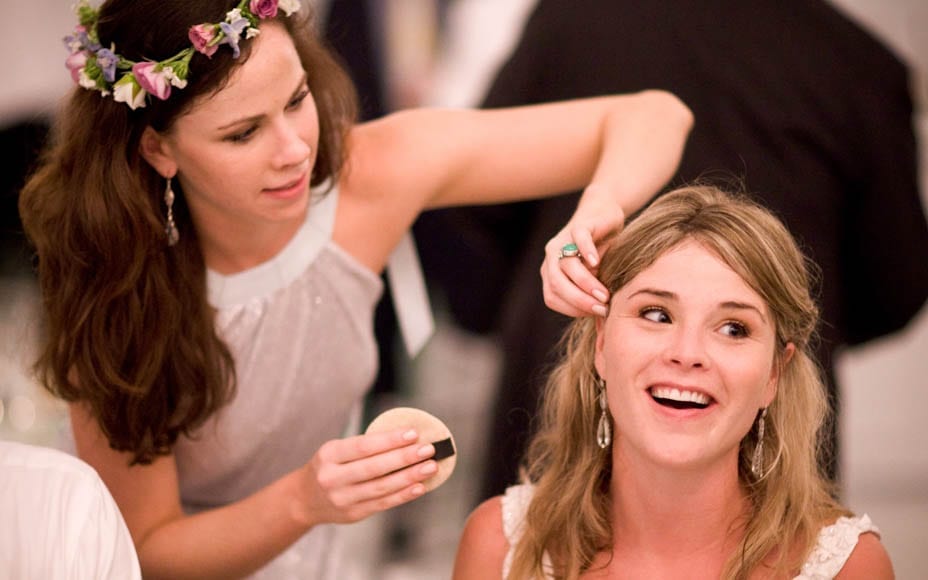
    George W’s daughters pen a charming letter to Obama’s daughters


    On Thursday, in TIME, President George W. Bush’s daughter penned a letter to President Obama’s daughters. In it, they praised the 44th President’s children and in it they lauded them as growing “from girls to impressive young women with grace and ease”.


    The Bush girls described the Obama girls as “former First Children” and as individuals in “a position [they] didn’t seek out and one with no guidelines”. They told them: “You won’t have the weight of the world on your young shoulders anymore” post Trump’s inauguration and urged them to “explore [their] passions” and “make mistakes”. They concluded: “Your parents, who put you first and who not only showed you but gave you the world. As always, they will be rooting for you as you begin your next chapter. And so will we”.


    The letter in full follows:


    Malia and Sasha, eight years ago on a cold November day, we greeted you on the steps of the White House. We saw both the light and wariness in your eyes as you gazed at your new home. We left our jobs in Baltimore and New York early and traveled to Washington to show you around. To show you the Lincoln Bedroom, and the bedrooms that were once ours, to introduce you to all the people—the florists, the grounds-keepers and the butlers—who dedicate themselves to making this historic house a home. The four of us wandered the majestic halls of the house you had no choice but to move in to. When you slid down the banister of the solarium, just as we had done as 8-year-olds and again as 20-year-olds chasing our youth, your joy and laughter were contagious.


    In eight years, you have done so much. Seen so much. You stood at the gates of the Robben Island cell where South Africa’s Nelson Mandela was imprisoned for decades, your arms around your father. You traveled to Liberia and Morocco with your mom to talk with girls about the importance of education—girls who saw themselves in you, saw themselves in your parents, saw who they could become if they continued to study and learn. You attended state dinners, hiked in national parks, met international leaders and managed to laugh at your dad’s jokes during the annual Thanksgiving turkey pardon, all while being kids, attending school and making friends. We have watched you grow from girls to impressive young women with grace and ease.


    And through it all you had each other. Just like we did.


    Now you are about to join another rarified club, one of former First Children—a position you didn’t seek and one with no guidelines. But you have so much to look forward to. You will be writing the story of your lives, beyond the shadow of your famous parents, yet you will always carry with you the experiences of the past eight years.


    Never forget the wonderful people who work at the White House. Our greeter as 7-year-olds at our grandfather’s Inauguration was Nancy, the White House florist, who ushered us in from the cold. She helped us make colorful bouquets of winter flowers for our grandparents’ bedside. Twenty years later, Nancy did the flowers for Jenna’s wedding. Cherish your own Nancy. We stay in touch with our Secret Service. They were part of growing up for us: there for first dates, first days and even an engagement and a honeymoon. We know it wasn’t always easy—the two of you and the two of us were teenagers trailed by men in backpacks—but they put their lives on hold for us.


    Enjoy college. As most of the world knows, we did. And you won’t have the weight of the world on your young shoulders anymore. Explore your passions. Learn who you are. Make mistakes—you are allowed to. Continue to surround yourself with loyal friends who know you, adore you and will fiercely protect you. Those who judge you don’t love you, and their voices shouldn’t hold weight. Rather, it’s your own hearts that matter.


    Take all that you have seen, the people you have met, the lessons you have learned, and let that help guide you in making positive change. We have no doubt you will. Traveling with our parents taught us more than any class could. It opened our eyes to new people as well as new cultures and ideas. We met factory workers in Michigan, teachers in California, doctors healing people on the Burmese border, kids who lined the dusty streets of Kampala to see the American President, and kids with HIV waiting to get the antiretroviral drugs that would save their lives. One tiny girl wearing her finest lavender dress looked young, which she was not. She was little because she was sick. Her mom admitted that she might not live to see these drugs work, but her brothers and sisters would. After meeting this girl, Barbara went back to school and changed her major, and her life’s path.


    You have lived through the unbelievable pressure of the White House. You have listened to harsh criticism of your parents by people who had never even met them. You stood by as your precious parents were reduced to headlines. Your parents, who put you first and who not only showed you but gave you the world. As always, they will be rooting for you as you begin your next chapter. And so will we.


  • Stupid Trump

    Stupid Trump

    Donald Trump illustrates why he is nothing but stupid


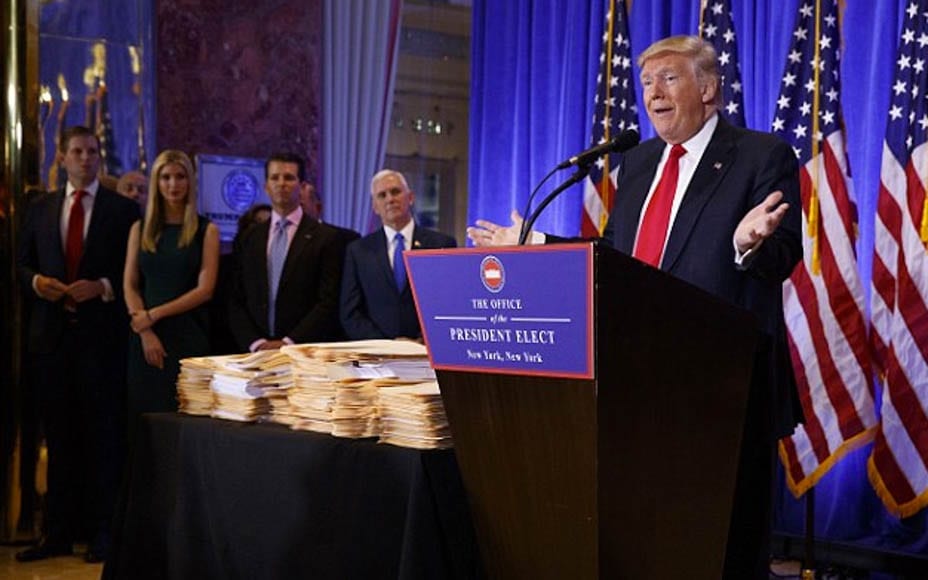
    Yesterday in New York, Donald Trump gave a press conference and it was one like no other. In it, he proved one thing and one thing alone: That is that Donald Trump is stupid.


    Aside from telling a CNN reporter he could not ask a question as he worked for a “fake news” organisation and was “rude” and describing Buzzfeed as “run by sick people – that put c**p together”, ‘The Donald’ claimed Mexico would “thank him” when “they pay” for his ridiculous wall and said he didn’t know whether he’d get along with Putin. He berated China and raged about the US Security Services; he announced he was turning his companies over to his sons but tempered that with a threat: “I hope at the end of eight years that I come back, otherwise if they did a bad job I’ll come back and say ‘you’re fired’”. He was basically like an Icelandic geyser on acid and that he could not handle this is indicative of what’s to come: An almighty messy four years.


    Elsewhere, last week Keith Olbermann defined exactly why Mr Trump is “stupid” in a video for GQ. In it, he remarked: “Some day, probably soon, something bad will happen and whatever [Trump] does will make it worse. And it will all be clear that he is not healthy enough to be the President and they will have to remove him. By the way, it will be the Republicans that have to remove him”. It is well worth watching and we urge all readers to watch it.


    Watch yesterday’s full press conference by clicking here.


  • Quote of the Week – A Moron in the White House

    Quote of the Week – A Moron in the White House

    Donald Trump’s presidency was worryingly first predicted in July 1920


    In ten days time, on 20th January 2017, the world will watch in horror as a reality television “star” is sworn in as the 45th President of the United States of America.


    Bizarrely, this was predicted in July 1920 by H. L. Mencken, a journalist known as the ‘Sage of Baltimore’, in a column for the city’s Evening Sun newspaper. He wrote:


    The larger the mob, the harder the test. In small areas, before small electorates, a first-rate man occasionally fights his way through, carrying even the mob with him by force of his personality. But when the field is nationwide, and the fight must be waged chiefly at second and third hand, and the force of personality cannot so readily make itself felt, then all the odds are on the man who is, intrinsically, the most devious and mediocre – the man who can most easily adeptly disperse the notion that his mind is a virtual vacuum.


    The Presidency tends, year by year, to go to such men. As democracy is perfected, the office represents, more and more closely, the inner soul of the people. We move toward a lofty ideal. On some great and glorious day the plain folks of the land will reach their heart’s desire at last, and the White House will be adorned by a downright moron.


    Mencken plainly foresaw the Presidency of Donald Trump and he equally surmised how Twitter would play its part in his rise. America has ditched reason and its chosen deviousness and mediocrity. God help us all.


  • Unlikely Bedfellows

    Unlikely Bedfellows

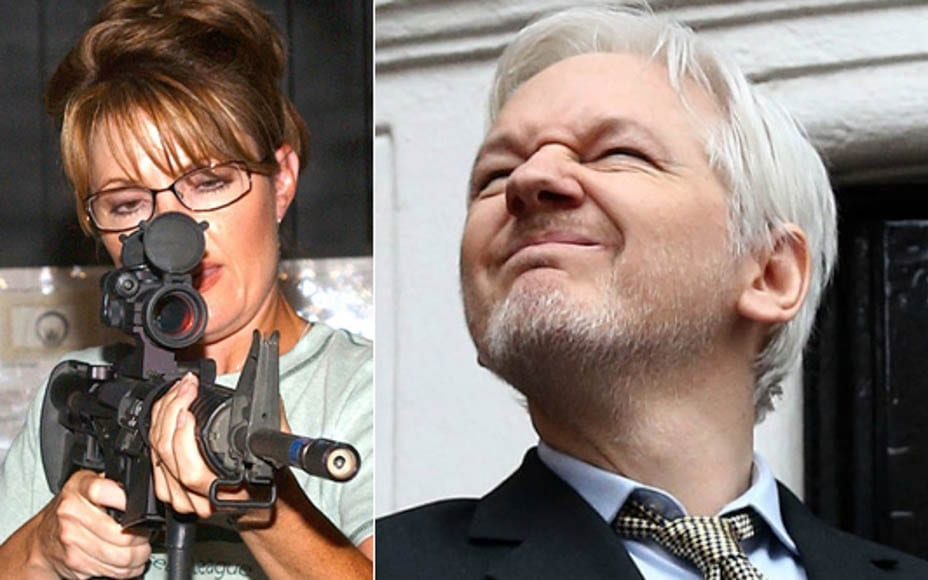
    Sarah Palin’s attempt to gain the support of Julian Assange shows that conventional politics have been consigned to history


    In a post Wednesday on her Facebook account, batty Sarah Palin did an about turn and apologised to Julian Assange – a man she’d described as “an anti-American operative with blood on his hands” in 2010.


    In a missive to her followers, the dimmest politician on the planet stated the Wikileaks founder had “exposed the truth” about what Assange had described as “the Obama administration’s attempt to delegitimise Donald Trump”. She went on to claim the fugitive, who remains holed up in the Ecuadorian Embassy in Knightsbridge, had shared “important information that finally opened people’s eyes to Democrat candidates and operatives” and concluded: “This would not have been exposed were it not for Julian Assange”.


    That Republican firebrand Mrs Palin said such a thing is yet another example of conventional politics being turned on its head. The election of Donald Trump and Brexit in Britain seemed bonkers but that this unhinged woman is seeking out the support of a man who is an evader of justice and a self-appointed crusader of vanity is something one simply could never have made up.


    2017 looks set to be the year when the loopy people of the world unite. God help us all.


    Sarah Palin’s Facebook post in full:


    To Julian Assange: I apologize.


    Please watch Sean Hannity’s interview with Julian Assange (Wikileaks).


    Exposing the truth re: the Left having been oh-so-guilty of atrocious actions and attitudes of which they’ve falsely accused others. The media collusion that hid what many on the Left have been supporting is shocking. This important information that finally opened people’s eyes to democrat candidates and operatives would not have been exposed were it not for Julian Assange.


    I apologize for condemning Assange when he published my infamous (and proven noncontroversial, relatively boring) emails years ago.


    As I said at the time of being targeted and my subsequent condemnation, though, the line must be drawn before our troops or innocent lives deserving protection would be put at risk as a result of published emails.


    Julian, I apologize.


    Sarah Palin


    P.S. If you get the chance, catch the movie “Snowden.” That movie and Hannity’s interview tonight are quite enlightening.


  • Maniac Milo

    Maniac Milo

    Right-wing extremist Milo Yiannopolous lands £200,000 book deal with Simon & Schuster; it should be boycotted


    Despite being permanently banned from Twitter and mocked for a whole slay of ridiculous, offensive and extremist comments over the years, Breitbart’s Milo Yiannopoulous – born Milo Wagner – has surprisingly just secured a £203,000 ($250,000) book deal with Simon & Schuster.


    Of the news, Yiannopolous told The Hollywood Reporter:


    “They said banning me from Twitter would finish me off. Just as I predicted, the opposite has happened. I met with top execs at Simon & Schuster in the year and spent half an hour trying to shock them with lewd jokes and outrageous opinions. I thought they were going to have me escorted from the building – but instead they offered me a wheelbarrow full of money”.


    “Did it hurt Madonna being banned from MTV in the 1990s? Did all that negative press hurt Donald Trump’s chances of winning the election?”


    “Every line of attack the forces of political correctness try on me fails pathetically. I’m more powerful, more influential and more fabulous than ever before, and this book is the moment Milo goes mainstream. Social justice warriors should be scared – very scared”.


    Simon & Schuster should be ashamed of themselves. Yiannopolous, who continues to tour the US with his obnoxiously named The Dangerous Faggot speaking tour, is a thoroughly offensive individual. He regularly tells his critics that they “deserve to be harassed” and frankly, since he is just trying to become a younger version of the banned-from-Britain bore Michael Savage, his book deserves to be boycotted by rational people everywhere.


  • Terrible Tracey

    Terrible Tracey

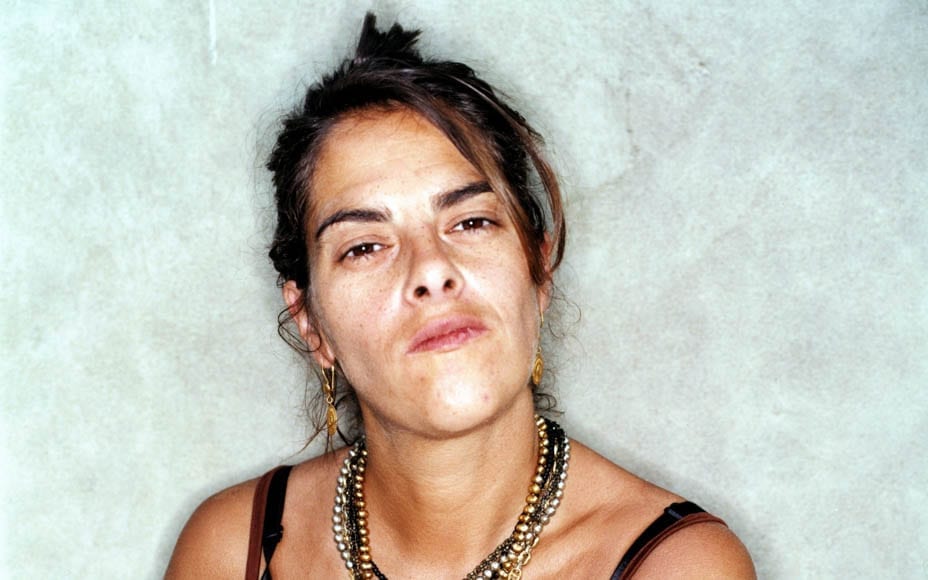
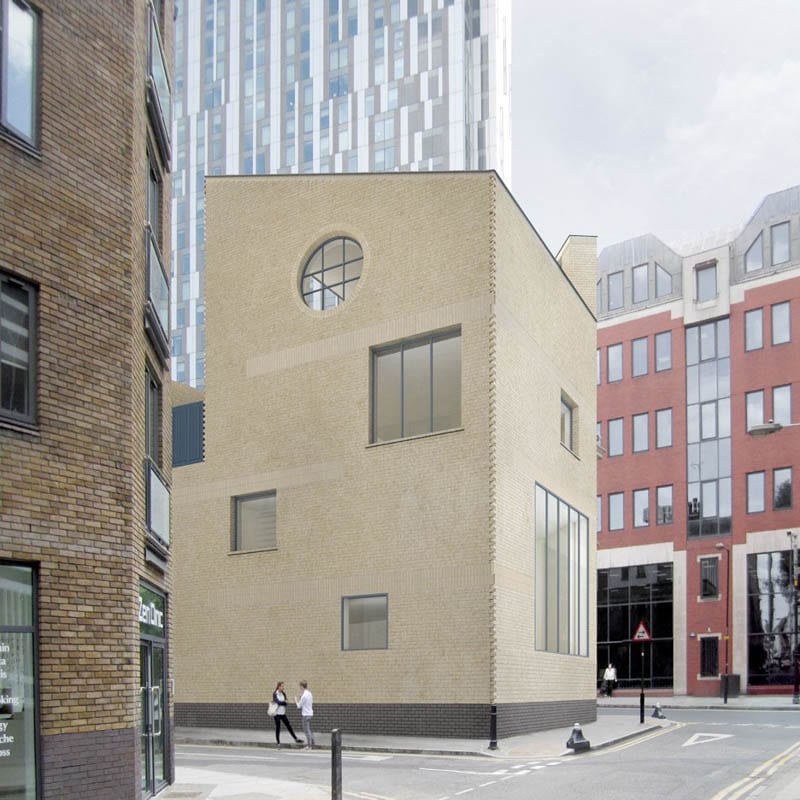
    Tracey Emin announces she’s quitting London after her plans to construct a carbuncle that resembles a Hitler-esque oven are rejected; Londoners rejoice


    Tracey Emin CBE, RA is no doubt liked by somebody, somewhere. She’s made a fortune from what she calls “art” and though her unmade bed is often derided as one of the most stupid creations ever, she had the last laugh when it sold for millions.


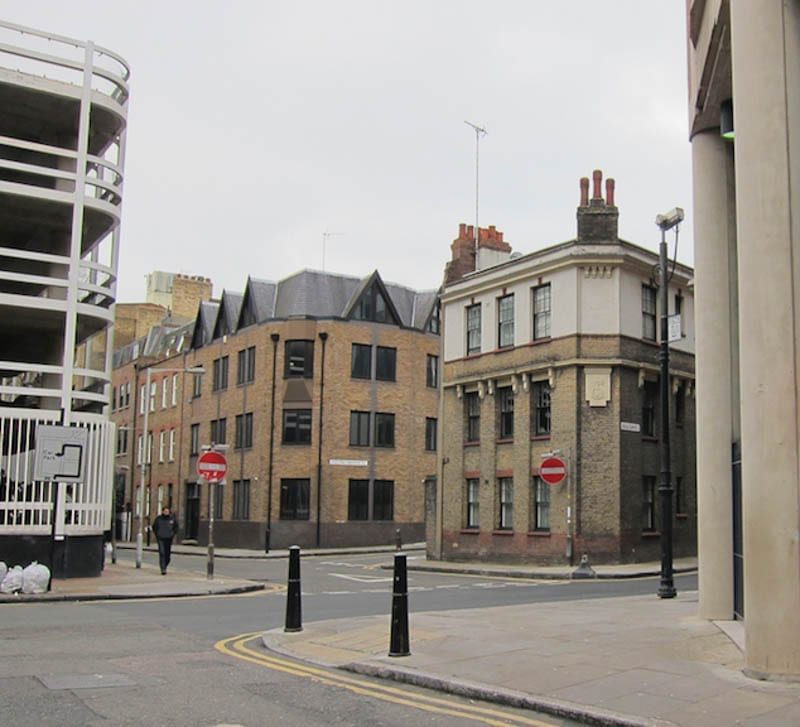
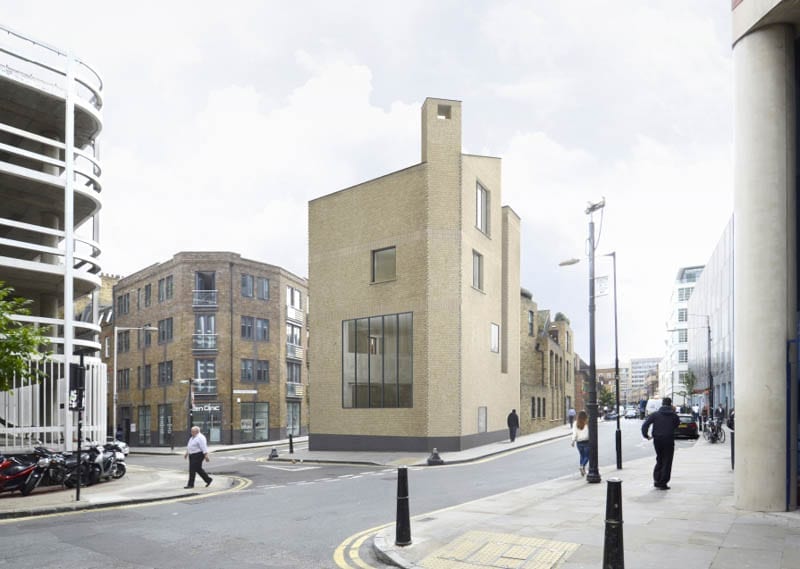
    Now, though, this vastly overrated multi-millionairess member of ‘The Club’ is moaning that she’s “not wanted” in London anymore and is quitting for pastures new. Her reason? Tower Hamlets Council rejected her plans to demolish a listed building in Spitalfields and replace it with a carbuncle resembling one of Hitler’s ovens.


    Terrible Tracey – Tracey Emin announces she’s quitting London after her plans to construct a carbuncle that resembles a Hitler-esque oven are rejected; Londoners rejoice
    A perfectly fine listed 1920s building stands on the site currently (centre right)
    Terrible Tracey – Tracey Emin announces she’s quitting London after her plans to construct a carbuncle that resembles a Hitler-esque oven are rejected; Londoners rejoice
    Ms Emin wished to replace it with this hideous carbuncle
    Terrible Tracey – Tracey Emin announces she’s quitting London after her plans to construct a carbuncle that resembles a Hitler-esque oven are rejected; Londoners rejoice
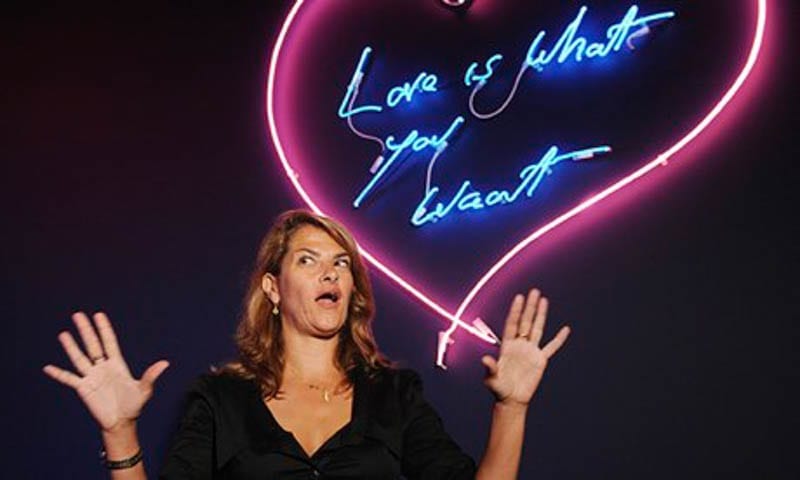
    Tracey Emin believes people should “love is what you want”; the people spoke and showed they did not love her terrible proposal


    In an interview with The Guardian, Emin – whom bizarrely married a “big f**king stone” earlier this year as she “no longer wants to be alone” and whose palatial East End residence already includes a swimming pool – angrily justified her decision. She remarked:


    “Tower Hamlets says: ‘We don’t want you’… Well, there’s plenty of other places that do. It’s that simple”.


    “Why would you want to be somewhere you’re not wanted? What I’m going to do now is move out of London. I don’t have any choice on that… There’s places now in Britain that are desperate for artists – Margate’s thriving, Folkestone, Hastings. All that Kent coast. And I could have a giant studio and be really relaxed”.


    “I’m an international artist who hasn’t got enough room to swing a cat at the moment… If I knocked it down and built a hotel or flats I could greatly benefit. I could build eight, nine, ten flats in here”.


    Of the objections to her proposals, she added:


    “I’m in a vulnerable place right now… I was scared about having to take all these people on my own – it’s a big thing”.


    “I just feel I’ve been pretty bullied by the whole thing and I don’t want to be bullied any more… I don’t get the reaction I get from people”.


    In response to Ms Emin’s remarks, local resident Susie Stape told The Steeple Times:


    “What this woman, best known for her ghastly unmade bed ‘artwork’, wanted to build looked like something straight out of Auschwitz. It was highly offensive in an area traditionally linked to refugees and all I can say is that I pity wherever Tracey Emin heads next. She’s a blight on any community and we’re so delighted that we’ll soon be rid of her”.


    Ms Stape is right: God helps whatever community Terrible Tracey descends on next.


    Terrible Tracey – Tracey Emin announces she’s quitting London after her plans to construct a carbuncle that resembles a Hitler-esque oven are rejected; Londoners rejoice
    A side view of the rejected design
    Terrible Tracey – Tracey Emin announces she’s quitting London after her plans to construct a carbuncle that resembles a Hitler-esque oven are rejected; Londoners rejoice
    Another projection of the ugly building that has thankfully been rejected
  • Animals and Animals

    Animals and Animals

    Social media has given a gang of angry old men a voice that is truly repugnant; weirdly they’re united by their adoration of cats and dogs


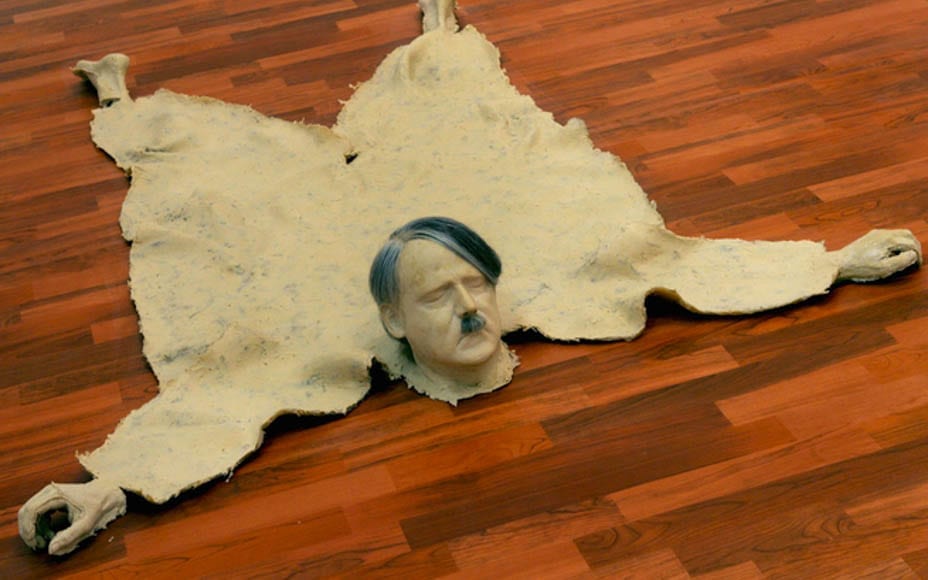
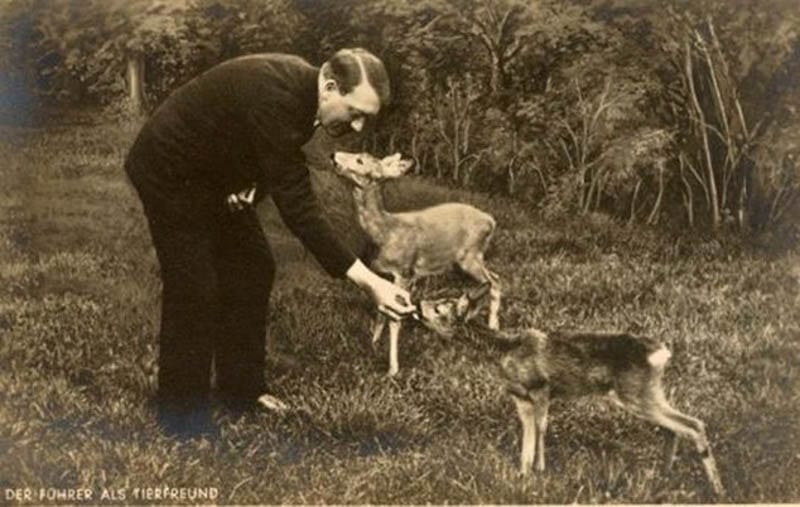
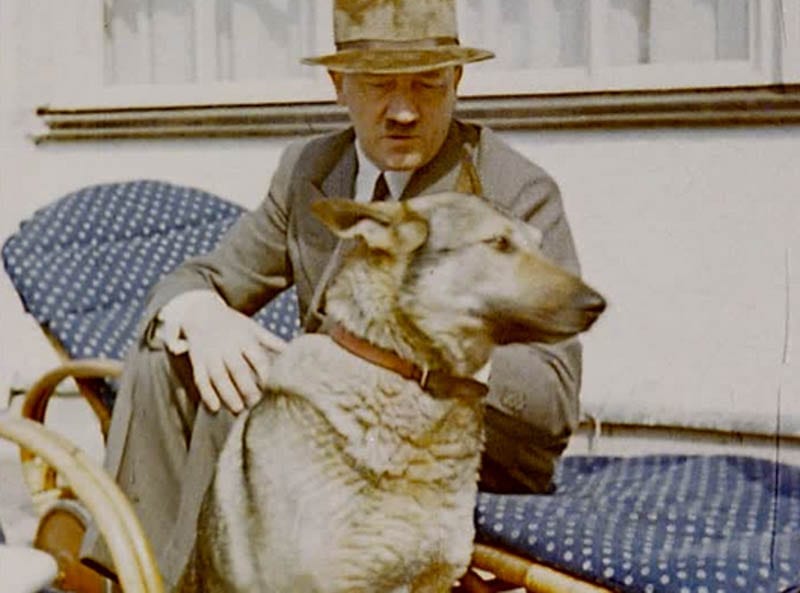
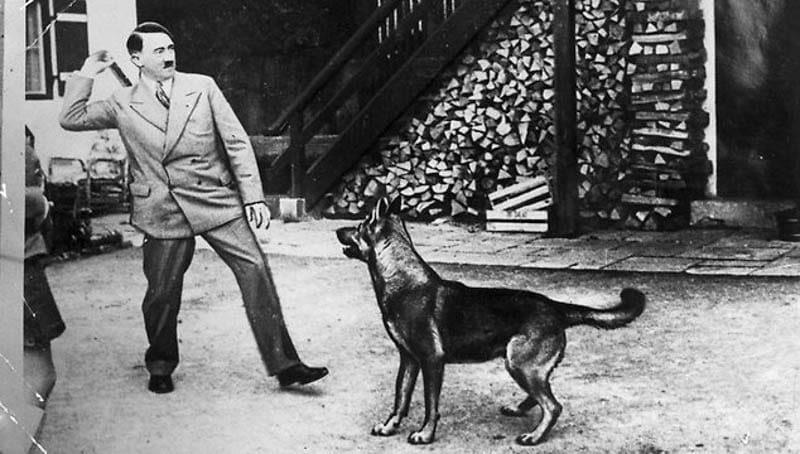
    Hitler loved animals. He didn’t like most humans and he especially didn’t like Jews, gypsies and gays. Now, a group of angry, bitter men have taken to social media in the wake of Brexit and the election of Trump and surprisingly, the one thing that unites them is that this mob also like sharing pictures of cats, dogs and other animals.


    Aside from their vile rants about Gina Miller – one offered a reward of £5,000 to anyone who might “accidentally run her over” – this nasty gaggle talk of how they “want to piss off the PC” and link to articles about robberies where they claim “blacks carry on this kind of work”. They brand anyone they don’t like “PC c**ts”, term them “feral dogs” and refer to Bernie Sanders as “a fascist neo-Liberal alt-left clown”. Surprisingly, however, these sorry excuses for humans also pepper their posts with images of wolves playing – accompanied by caption such as “how lovely” – and “lions running on grass for the first time” – “stunning, delightful”.


    Follow these people on Facebook and Twitter at your peril as all you’ll see is angry Middle England at its worst; the most intolerant animals have taken over the asylum and they love only the animals that can’t answer them back.


    Animals and Animals – Social media has given a gang of angry old men a voice that is truly repugnant; weirdly they’re united by a love of animals Animals and Animals – Social media has given a gang of angry old men a voice that is truly repugnant; weirdly they’re united by a love of animals Animals and Animals – Social media has given a gang of angry old men a voice that is truly repugnant; weirdly they’re united by a love of animals

  • Sexing up Brexit

    Sexing up Brexit

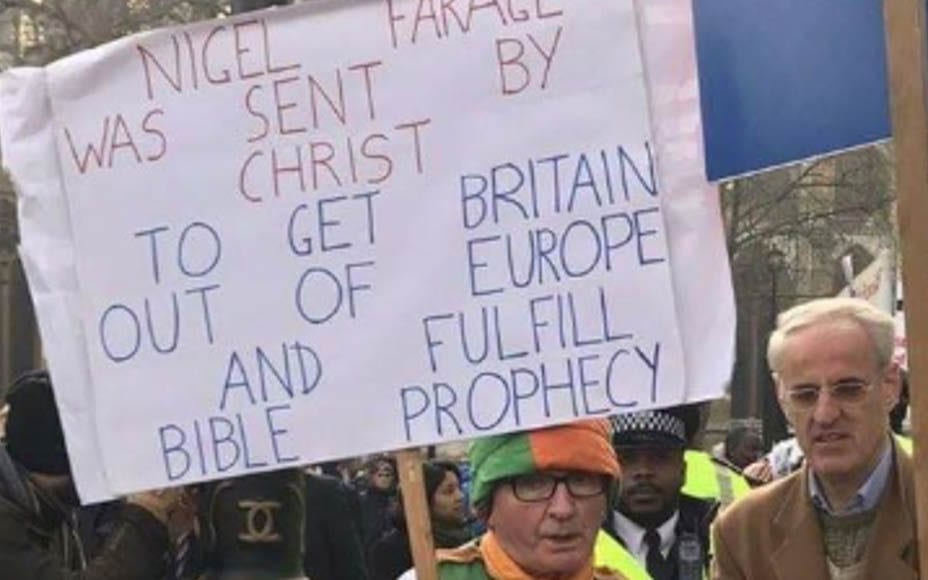
    Defrocked priest appears outside the Supreme Court dancing a jig without any trousers; he believes Nigel Farage was “sent by Christ”


    This week, as the Supreme Court debated one of the most serious constitutional cases in history, a strange little man dressed as a leprechaun danced a jig whilst holding placards about Nigel Farage, a Third World War and Brexit.


    The strange, trouser-less pensioner’s banners bizarrely were captioned:


    “Nigel Farage was sent by Christ to get Britain out of Europe and fulfill [sic] Bible prophecy”.


    “Britain will fight for Israel in the Third World War whereas Europe will fight against Israel and against Christ”.


    Dubbed a “sex elf” in one tweet, The Huffington Post later suggested the man to be Neil Horan, “a defrocked Irish Catholic priest who has previously disrupted major events like the Grand Prix and the Olympics and appeared on Britain’s Got Talent”. Horan was given an ASBO for attempting to disrupt the London Marathon in 2007 and his published works number A Glorious New World Very Soon to Come and Christ Will Soon Take Power From All Governments.


    In 2006, Horan was held for two months in custody in Germany during the World Cup. He had announced that he had planned to carry posters that declared “Adolf Hitler was a good leader who was following the word of Christ”.


    You truly couldn’t make it up.


    Sexing up Brexit – Defrocked priest Neil Horan appears outside the Supreme Court dancing a jig without any trousers; he believes Nigel Farage was “sent by Christ”Sexing up Brexit – Defrocked priest Neil Horan appears outside the Supreme Court dancing a jig without any trousers; he believes Nigel Farage was “sent by Christ”

  • The Business of Blair

    The Business of Blair

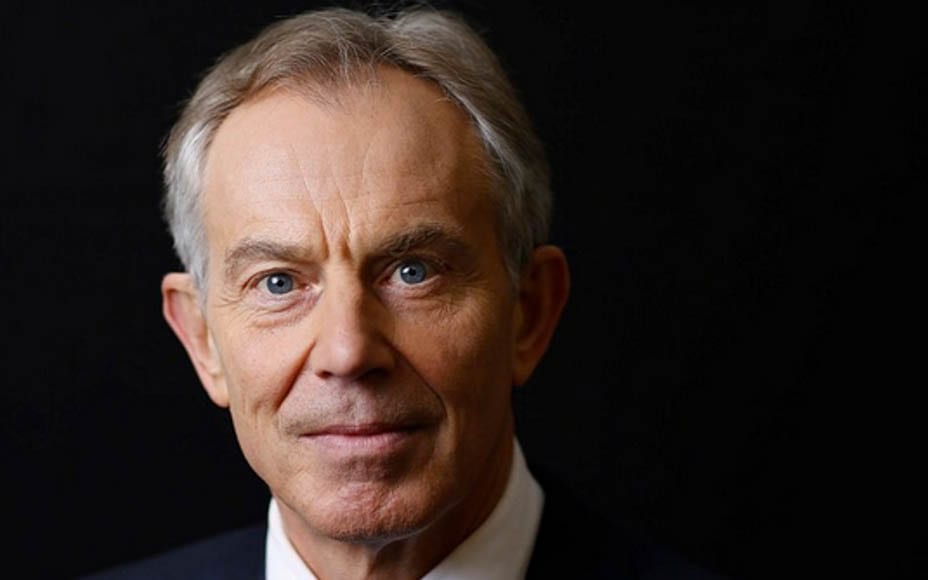
    Tony Blair ditches business and also denies a return to public office


    For weeks, the mainstream media have claimed Tony Blair is preparing to return to public office to save Britain from the nightmare of Brexit. They have claimed he’s ready to seize the support of the 48% and that him and Nick Clegg are colluding to create a new ‘centre left’. He did little to deny it at first but late last week, he shared a post on Facebook that frankly puts a stop to this kind of nonsense.


    Blair, a plainly toxic force in politics due to his highly unpopular backing of George W. over the War on Iraq (and because of his refusal to confine his equally disliked weirdo wife to social Siberia), will never make a comeback and now he’s finally acknowledged that in a very public way.


    In our view, Mr Blair is actually wrong. He’s not nearly as bad as #DarthVader Theresa May and he’s not nearly as ghastly as either the worst Prime Minister’s-in-living-history John Major and Gordon Brown and though we share with you his justifications for not getting involved again, we weirdly find ourselves actually lauding Mr Blair for saying the right thing (for once in his sorry lifetime).


    Mr Blair’s comment, in full, follows:


    Over the past nine years we have built a family of organisations which together employ nearly 200 people; have worked in over 30 countries; and have produced some real and lasting achievements. I am very proud of the commitment and impact of the people I have had the privilege to work with.


    The Africa Governance Initiative has become a respected partner and leader in effective governance where we have worked in 10 different African countries.


    The work we are doing in Africa has been right at the centre of government covering everything from boosting electricity, to improving child and maternal mortality rates to helping on the ground during the Ebola crisis in West Africa, a contribution praised for its impact by both the Presidents of the countries concerned and the international community.


    Outside of Africa in the work done by the commercial governance arm, we again made successful interventions in over 12 countries with 30 different projects promoting reform and change programmes with governments.


    The Tony Blair Faith Foundation has done ground-breaking work in interfaith relations, education and leadership, and most recently in the research and policy work on religiously based extremism through the Centre on Religion and Geopolitics which has been widely recognised as authoritative. 


    In the first years of the Quartet role in the Middle East, we hit double digit growth on the West Bank, drew up ambitious plans for Gaza’s infrastructure and changed the rules around entry of materials into Gaza. In 2011, we played a significant part in the attempt to agree terms of reference for a renewal of the peace process.


    Progress became much more difficult once the peace process stalled. We were partners in the later fresh attempts by the USA to revive the peace process, particularly around plans for the economy to support a future Palestinian state. Unfortunately these attempts also failed.


    Nonetheless, after stepping down from the Quartet position, our new Initiative for the Middle East has re-vitalised our work and means this stays a large part of what we do. I have made over 35 visits to the region this year alone.


    During the time since leaving office, I have learnt a huge amount about the world and frankly what I can do and can’t do to affect it positively.


    We built up a successful business side, though attracted a large measure of criticism for it, much of it inaccurate. It was entirely necessary to build the business to help with the funding to grow the organisations; but it was open to misrepresentation and to criticism either that we were conflating private and public roles or that we were working in countries which aroused controversy.


    Having said that, I also learnt a lot about the way the global economy functions from that experience and pay tribute to the great team I worked with who made much of the development of our work across the organisations possible.


    We are now at the stage and have built the financial infrastructure where it is time to enter a new phase. First we can take the work we have done in Africa, in governance, on extremism and in the Middle East to a new and more effective level; and secondly, in the past six months we have seen political earthquakes in the UK with Brexit and in the American election, as well as an explosion in populist movements all over the European continent. This impacts profoundly all the work we do and the future of globalisation.


    So I want us to bring all the different organisations together under one roof and to re-orient our mission.


    We have deliberately focused, up to now, on some of the greatest and most difficult challenges faced in the era of globalisation: how to give nations the governing capacity to overcome the problems of development and lift their people out of poverty; how to combat the religiously based extremism which threatens global security; how to resolve the most intractable peace process in the world.


    In each case, we have presented a new approach, with the aim of providing new ideas and thinking.


    In governance, especially in Africa, our analysis is that, today, building the capacity to govern effectively – making the way government works efficient as well as transparent – is as important for developing nations as aid.


    Look around the world, and see countries living next to each other – same size population, same resources, same natural potential – one succeeding, one failing. The reason for the difference is found in the quality of governance. Take the following examples: Venezuela and Colombia; Poland and Ukraine; Rwanda and Burundi. And the greatest example in contrasting, contiguous systems of governance the world has seen in modern political history – the Korean Peninsula, North and South Korea. The nation which is succeeding is applying the best rules and lessons of governance; the failing nation is ignoring or defying them.


    On religious extremism, we believe it is essential to widen the struggle, to tackle the ideology behind the violence and not simply the violence itself. So we can defeat ISIS militarily but unless we defeat the ideas behind Islamism – the belief that a particular view of religion should dominate society, politics and the economy, something incompatible with a modern world in which pluralism is the essence – we will never win this battle.


    On the Middle East peace process, we are convinced that a traditional peace process between Israelis and Palestinians with US guidance alone is inadequate; that what is required is a new approach which involves the wider region and the Arab nations and which resolves not just the final status issues like borders but which also resolves the underlying issues of cultural acceptance and regional stability. So we are now working on Arab-Israeli relations, and not simply Israeli-Palestinian relations.


    But it has become clear that there is much overlap between these different areas of work. Extremism is also today a barrier to development. The Middle East conflict impacts extremism. Changing and reforming government applies to Middle East nations as well.


    And since all of these approaches basically represent the open-minded response to global problems, the salience of these new approaches depends on us having an answer to the new populism of left and right which exploits the anger and drives the world apart.


    This new populism may differ in some respects between left and right – the left anti-business, the right anti-immigrant – but in others what is remarkable is the convergence between them, especially around isolationism and protectionism, in what is an essentially closed-minded approach to globalisation and its benefits and to international engagement.


    So we want to add a fourth pillar to what we do. I emphasise this is not in place of our other work but in addition to it.


    This is the creation of a platform designed to build a new policy agenda for the centre ground together with the networks which link people up, and allow a reasonable and evidence based discussion of the future which avoids the plague of social media-led exchanges of abuse. 


    This platform will have a policy unit which will draw on the best ideas and practical solutions, building partnerships with other organisations, in the public policy and private spheres, so that those in the frontline of politics have a bigger and better policy agenda to reflect upon; and a networking capability to join like-minded people up. 


    This is not a think tank. There are enough of those, many doing excellent work we would want to utilise. It is a platform for engagement to inform and support the practising politician.


    It is what I know I would want were I still in the frontline of politics.


    Part of its focus will plainly be around the European debate; but this will not be its exclusive domain. It has to go far wider than that since in many ways the Europe debate is a lightning rod for the whole of politics.


    We’re now planning to bring all of these four parts together in one new Not For Profit Institute. 


    The business side has been shut down and the assets, running into many millions of pounds, gifted to the Institute. In the New Year, we plan to merge the activities of the different organisations into the Institute, with any charitable funds used exclusively for the purposes for which they were originally given.


    This will allow us to work more coherently across the board; use the obvious synergies between the different elements of the work; and to be far stronger on the global policy side than we have been up to now. The focus previously was mainly on programmes. These will remain but the organisation will also be far more about thought leadership.


    This is not about my returning to the front line of politics. I have made it abundantly clear that this is not possible.


    However, I care about my country and the world my children and grandchildren will grow up in; and want to play at least a small part in contributing to the debate about the future of both.  
     

    The Africa Governance Initiative has become a respected partner and leader in effective governance where we have worked in 10 different African countries.


    The work we are doing in Africa has been right at the centre of government covering everything from boosting electricity, to improving child and maternal mortality rates to helping on the ground during the Ebola crisis in West Africa, a contribution praised for its impact by both the Presidents of the countries concerned and the international community.


    Outside of Africa in the work done by the commercial governance arm, we again made successful interventions in over 12 countries with 30 different projects promoting reform and change programmes with governments.


    The Tony Blair Faith Foundation has done ground-breaking work in interfaith relations, education and leadership, and most recently in the research and policy work on religiously based extremism through the Centre on Religion and Geopolitics which has been widely recognised as authoritative. 


    In the first years of the Quartet role in the Middle East, we hit double digit growth on the West Bank, drew up ambitious plans for Gaza’s infrastructure and changed the rules around entry of materials into Gaza. In 2011, we played a significant part in the attempt to agree terms of reference for a renewal of the peace process.


    Progress became much more difficult once the peace process stalled. We were partners in the later fresh attempts by the USA to revive the peace process, particularly around plans for the economy to support a future Palestinian state. Unfortunately these attempts also failed.


    Nonetheless, after stepping down from the Quartet position, our new Initiative for the Middle East has re-vitalised our work and means this stays a large part of what we do. I have made over 35 visits to the region this year alone.


    During the time since leaving office, I have learnt a huge amount about the world and frankly what I can do and can’t do to affect it positively.


    We built up a successful business side, though attracted a large measure of criticism for it, much of it inaccurate. It was entirely necessary to build the business to help with the funding to grow the organisations; but it was open to misrepresentation and to criticism either that we were conflating private and public roles or that we were working in countries which aroused controversy.


    Having said that, I also learnt a lot about the way the global economy functions from that experience and pay tribute to the great team I worked with who made much of the development of our work across the organisations possible.


    We are now at the stage and have built the financial infrastructure where it is time to enter a new phase. First we can take the work we have done in Africa, in governance, on extremism and in the Middle East to a new and more effective level; and secondly, in the past six months we have seen political earthquakes in the UK with Brexit and in the American election, as well as an explosion in populist movements all over the European continent. This impacts profoundly all the work we do and the future of globalisation.


    So I want us to bring all the different organisations together under one roof and to re-orient our mission.


    We have deliberately focused, up to now, on some of the greatest and most difficult challenges faced in the era of globalisation: how to give nations the governing capacity to overcome the problems of development and lift their people out of poverty; how to combat the religiously based extremism which threatens global security; how to resolve the most intractable peace process in the world.


    In each case, we have presented a new approach, with the aim of providing new ideas and thinking.


    In governance, especially in Africa, our analysis is that, today, building the capacity to govern effectively – making the way government works efficient as well as transparent – is as important for developing nations as aid.


    Look around the world, and see countries living next to each other – same size population, same resources, same natural potential – one succeeding, one failing. The reason for the difference is found in the quality of governance. Take the following examples: Venezuela and Colombia; Poland and Ukraine; Rwanda and Burundi. And the greatest example in contrasting, contiguous systems of governance the world has seen in modern political history – the Korean Peninsula, North and South Korea. The nation which is succeeding is applying the best rules and lessons of governance; the failing nation is ignoring or defying them.


    On religious extremism, we believe it is essential to widen the struggle, to tackle the ideology behind the violence and not simply the violence itself. So we can defeat ISIS militarily but unless we defeat the ideas behind Islamism – the belief that a particular view of religion should dominate society, politics and the economy, something incompatible with a modern world in which pluralism is the essence – we will never win this battle.


    On the Middle East peace process, we are convinced that a traditional peace process between Israelis and Palestinians with US guidance alone is inadequate; that what is required is a new approach which involves the wider region and the Arab nations and which resolves not just the final status issues like borders but which also resolves the underlying issues of cultural acceptance and regional stability. So we are now working on Arab-Israeli relations, and not simply Israeli-Palestinian relations.


    But it has become clear that there is much overlap between these different areas of work. Extremism is also today a barrier to development. The Middle East conflict impacts extremism. Changing and reforming government applies to Middle East nations as well.


    And since all of these approaches basically represent the open-minded response to global problems, the salience of these new approaches depends on us having an answer to the new populism of left and right which exploits the anger and drives the world apart.


    This new populism may differ in some respects between left and right – the left anti-business, the right anti-immigrant – but in others what is remarkable is the convergence between them, especially around isolationism and protectionism, in what is an essentially closed-minded approach to globalisation and its benefits and to international engagement.


    So we want to add a fourth pillar to what we do. I emphasise this is not in place of our other work but in addition to it.


    This is the creation of a platform designed to build a new policy agenda for the centre ground together with the networks which link people up, and allow a reasonable and evidence based discussion of the future which avoids the plague of social media-led exchanges of abuse.


    This platform will have a policy unit which will draw on the best ideas and practical solutions, building partnerships with other organisations, in the public policy and private spheres, so that those in the frontline of politics have a bigger and better policy agenda to reflect upon; and a networking capability to join like-minded people up. 


    This is not a think tank. There are enough of those, many doing excellent work we would want to utilise. It is a platform for engagement to inform and support the practising politician.


    It is what I know I would want were I still in the frontline of politics.


    Part of its focus will plainly be around the European debate; but this will not be its exclusive domain. It has to go far wider than that since in many ways the Europe debate is a lightning rod for the whole of politics.


    We’re now planning to bring all of these four parts together in one new Not For Profit Institute. 


    The business side has been shut down and the assets, running into many millions of pounds, gifted to the Institute. In the New Year, we plan to merge the activities of the different organisations into the Institute, with any charitable funds used exclusively for the purposes for which they were originally given.


    This will allow us to work more coherently across the board; use the obvious synergies between the different elements of the work; and to be far stronger on the global policy side than we have been up to now. The focus previously was mainly on programmes. These will remain but the organisation will also be far more about thought leadership.


    This is not about my returning to the front line of politics. I have made it abundantly clear that this is not possible.


    However, I care about my country and the world my children and grandchildren will grow up in; and want to play at least a small part in contributing to the debate about the future of both.