Category: Mark Alexander

  • Media Matters Mark Alexander – High Court Victory For Sir Terry Waite Supported Prisoner

    Media Matters Mark Alexander – High Court Victory For Sir Terry Waite Supported Prisoner

    As humanitarian hero Terry Waite is knighted, a prisoner he has campaigned in support of, Mark Alexander, finally gets good news with a landmark judgment at the High Court

    This morning, in King Charles III’s clearly well thought out Birthday Honours list, a genuinely wonderful gentleman, Terry Waite received what he’s described as one of his life’s “peak” achievements when this former envoy for the Church of England was appointed a Knight Commander of the Order of St Michael and St George (KCMG) for his services to charity.


    The now elevated Sir Terry modestly commented that he was “really amazed that I’ve got it; I’m getting on, but I’m still working at 84.” He added: “I’m still very active” and yesterday came good news also for a campaign the former hostage has long been involved with, that of the case of the clearly dubious conviction of Mark Alexander.


    Sir Terry has repeatedly suggested the September 2010 conviction of Alexander of the murder of his conman father in Buckinghamshire on a date unknown between September 2009 and February 2010 to be based on “circumstantial evidence” and that this is a case being in need of being “reviewed without further delay.”


    Yesterday in London, the High Court decided a legal challenge against the government over a jail interview by telephone by journalist Robin Eveleigh with Alexander was “misdirected and irrational.” Mr Justice Andrew Baker said a decision by the governor of HMP Coldingley in Surrey, where Alexander is currently held, should be “quashed” and added that “the claimant’s request [will need to be considered] afresh.”


    Responding, through the ‘Justice for Mark Alexander’ campaign website, Mark Alexander announced:


    “Today’s ruling is an important milestone in the fight for an open, transparent and accountable justice system in which prisoners’ voices are heard; wrongful convictions can be properly scrutinised; and our free press is able to work without resistance or obfuscation from government. More needs to be done to address other systemic failings at the heart of our penal and justice system, but today at least marks a step in the right direction and will hopefully enable more recognition to be given to miscarriages of justice here in the UK.”


    Going further, Eveleigh explained:


    “The role of the media in highlighting and exposing miscarriages of justice cannot be overstated. The BBC’s pioneering investigative documentary Rough Justice led to 18 convictions being overturned.”


    “Mr Alexander’s story is never going to reach the audience it needs and deserves via print media, nor would a print media commission or commissions go anywhere near supporting the volume of work required to investigate his case thoroughly. It is telling that in response to the quashing of Adnan Syed’s conviction – following the global attention his case received through the American podcast Serial – veteran BBC journalist Justin Webb told Radio 4’s Today programme that podcasts were now ‘the place to go’ for innocent people wrongly convicted.”


    Mark Alexander’s grandmother added:


    “As a family we need this documentary to happen. We all feel it can bring about fair justice, to prove Mark’s innocence and clear his name. I will always support Mark, because I know in my heart that he is innocent.”


    Production of the podcast series about Mark Alexander’s case by Robin Eveleigh now ought to be given the go-ahead and this, a conviction based very much on a very much botched investigation, must now be reexamined. Such should be done urgently, but given how slowly the wheels of justice move in once Great Britain, sadly, don’t hold your breath.


    Editor’s note – Unlike as is the case in many publications, this article was NOT sponsored or supported by a third-party. Follow Matthew Steeples on Twitter at @M_Steeples.


    A message from our editorial team – Thank you for reading this article. We’re more reliant on your support than ever as the shift in consumer habits brought about by coronavirus and the cost-of-living crisis impacts our advertisers. If you haven’t already, please consider supporting our trusted, fact-checked journalism by supporting our work via Patreon.


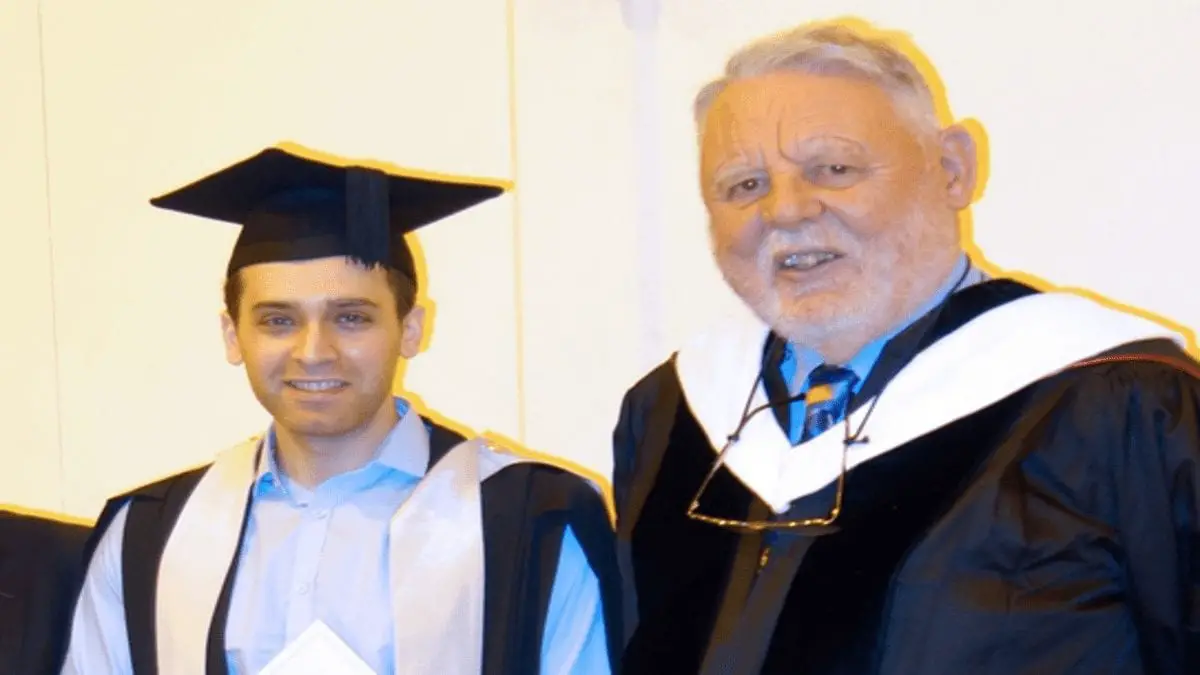
    Pictured top – Mark Alexander at his graduation ceremony with Sir Terry Waite KCMG CBE.


    To follow the ‘Justice for Mark Alexander’ group on Facebook, click here, and to follow the campaign seeking a review of the case on Twitter go to @PatientCaptive. Prominent supporters include the former Conservative MP for Westminster The Rt. Hon. Mark Field, the Reverend Canon Grant Fellows, the Right Reverend Bishop Tim Stevens and the hostage-turned-humanitarian Sir Terry Waite KCMG CBE. Supplied images: © http://freeMarkAlexander.org (CC BY-ND 4.0).

     

    This morning on Twitter, Matthew Steeples asked: “Is it time for the case of Mark Alexander @PatientCaptive to be reinvestigated?” He linked to this article and added: “Context of murder conviction based on circumstantial evidence only according to Sir Terry Waite in today’s ‘The Steeple Times.’” By 12 noon on Saturday 17th June 2023, the very clear majority of respondents favoured the answer: “Yes; Mark Alexander is innocent.”
    Mark Alexander
    Found guilty without any forensic evidence and with the help of ‘Midsomer Murders-esque’ “suspicious neighbours primarily, supporters of Mark Alexander rightly highlight that the prosecution withheld critical information from trial that included that four potential suspects – who police never bothered to speak to – were never even mentioned to the jury. Going further and summing up what led to the conviction of Alexander, Progressing Prisoners Maintaining Innocence (PPMI), observed: “Another example of typical factors in a wrongful conviction: no forensic evidence, impossible time frame for the crime to be committed, witness put off by the police, important witnesses not interviewed, lurid allegations in the press published before they could be countered, all racked up by such sad personal circumstances.”

    Issues with the 2010 murder conviction and jailing for life with a minimum of 16 years of Mark Alexander:

    • Not one iota of forensic evidence links the convicted now 35-year-old to the murder and much of the police case against him was based on the word of “suspicious neighbours” with attitudes akin to characters from the TV drama series Midsomer Murders.
    • On the homepage of the campaign supporting him, it is stated: “Mark has always maintained his innocence… Mark was found guilty on the basis of doubt created about his version of events rather than any evidence of his involvement in a murder. No such evidence exists. There is no known cause, or date, of death – and there were no traces of DNA, blood, or even fingerprints linking Mark to the crime.”
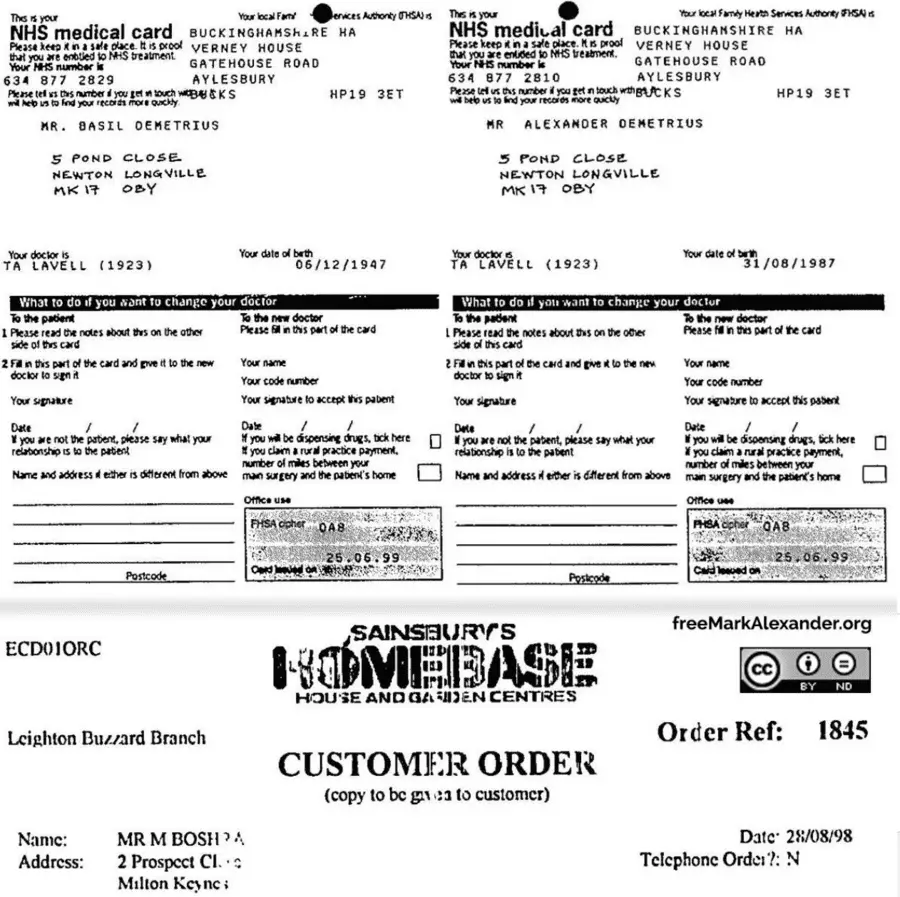
    • The convicted man’s father, Samuel, had a string of at least eleven aliases and was a known confidence trickster.
    • The deceased man was cautioned for shoplifting in 1995 and had been involved in mortgage frauds involving a number of properties. He was described by his son tellingly when he remarked: “Dad always seemed to be running or hiding from something.”
    • Samuel Alexander lied also to his son about what had happened to his mother and cruelly told him she had died of cancer. The pair were only reunited after Mark Alexander’s arrest and it then became known that Samuel Alexander had also cheated her as part of a property scam also.
    • It was also revealed at sentencing that the deceased pensioner spent “long hours on the computer surfing teenage chat rooms and sex websites, sometimes posing as a man in his late teens or early 20.” Could it be that he upset someone in the process and could they be his true killer?
    • Mark Alexander has produced evidence showing that there were four potential suspects working at his father’s home around the time of his death. Police never spoke to these suspects and the jury were never made aware of them.
    • The convicted man has never admitted his guilt of this shocking crime in spite of the fact that in doing so he could have seen his sentence reduced.
    • Using human rights laws, Mark Alexander was, in March 2020, able to finally obtain files documenting his father’s multiple identities from Her Majesty’s Revenue & Customs. He became supposedly the first person in Britain to achieve such access and now also, according to the Daily Mail’s Alice Cachia and Robin Eveleigh: “[The Justice for Mark Alexander’ campaign] are also developing new mobile phone cell site evidence which they hope will provide proof of Alexander’s movements around the time of his father’s death.” They hint that this will show he could not possibly have been present at the time of the murder and burial.
    • Mark Alexander told The Mirror’s crime editor Tom Pettifor in May 2020: “I’ve always always maintained my innocence, you just assume the system will work, but we didn’t have enough time or evidence to prove it, particularly against the story the prosecution were spinning… Nothing will ever justify what they did to [my father], but I just need some answers.”

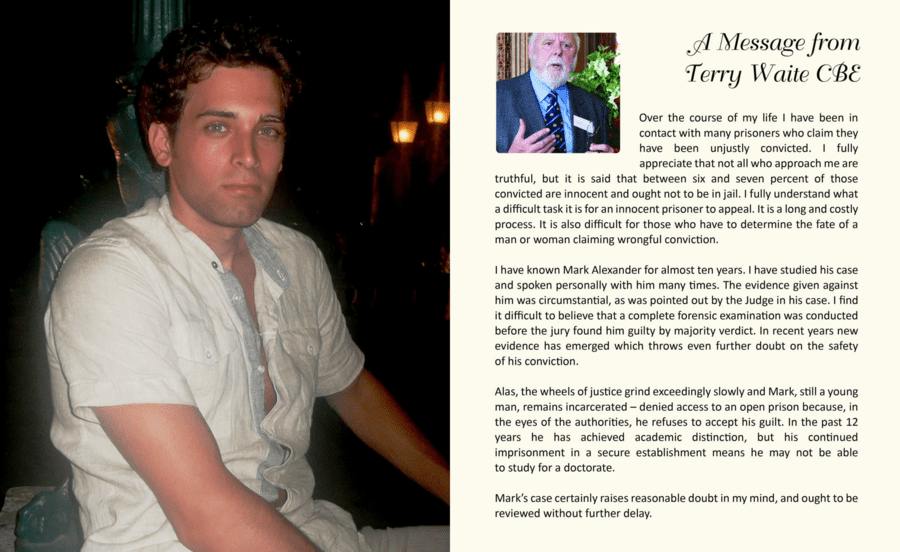
    Humanitarian hero Sir Terry Waite KCMG CBE’s 22nd November 2022 message in full:

    Over the course of my life I have been in contact with many prisoners who claim they have been unjustly convicted.


    I fully appreciate that not all who approach me are truthful, but it is said that between six and seven percent of those convicted are innocent and ought not to be in jail.


    I fully understand what a difficult task it is for an innocent prisoner to appeal. It is a long and costly process. It is also difficult for those who have to determine the fate of a man or woman claiming wrongful conviction.


    I have known Mark Alexander for almost ten years. I have studied his case and spoken personally with him many times. The evidence against him was circumstantial, as was pointed out by the judge in his case.


    I find it difficult to believe that a complete forensic examination was conducted before the jury found him guilty by majority verdict. In recent years, new evidence has emerged which throws even further doubt on the safety of his conviction.


    Alas, the wheels of justice grind exceedingly slowly and Mark, still a young man, remains incarcerated – denied access to an open prison because, in the eyes of the authorities, he refuses to accept his guilt.


    In the past 12 years, he has achieved academic distinction, but his continued imprisonment in a secure establishment means he may not be able to study for a doctorate.


    Mark’s case certainly raises reasonable doubt in my mind and, ought to be reviewed without further delay.


     

    Mark-Alexander-Samuel-Alexander
    Mark Alexander and his late father Samuel Alexander.
    2-Prospect-Close-Drayton-Parslow
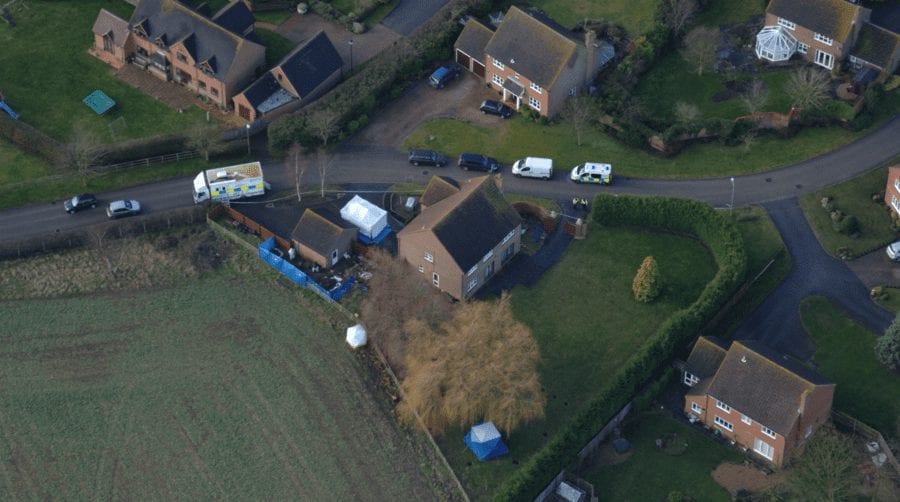
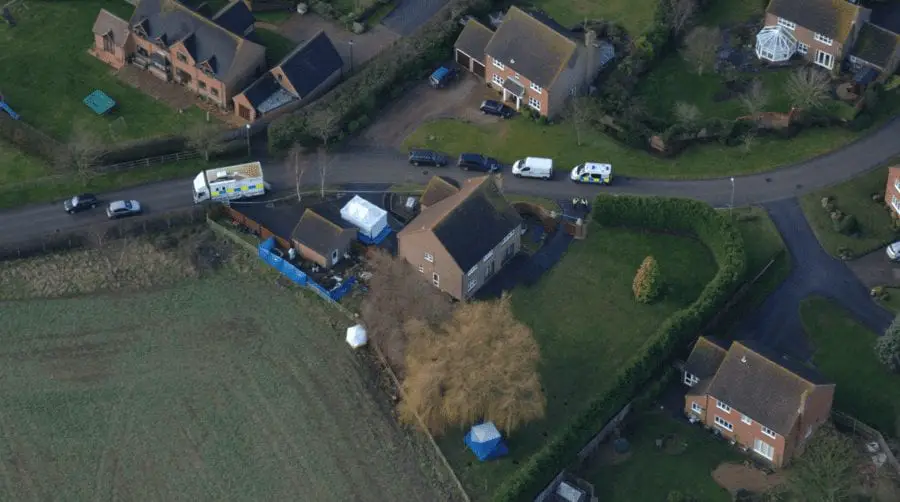
    The scene of the burial (but not necessarily the killing) of Samuel Alexander – 2 Prospect Close, Drayton Parslow, Milton Keynes, Buckinghamshire, MK17 0JB.
    2-Prospect-Close-Drayton-Parslow-aerial-view
    An aerial shot of the property.
    Documentary-evidence-Samuel-Alexander-fraud
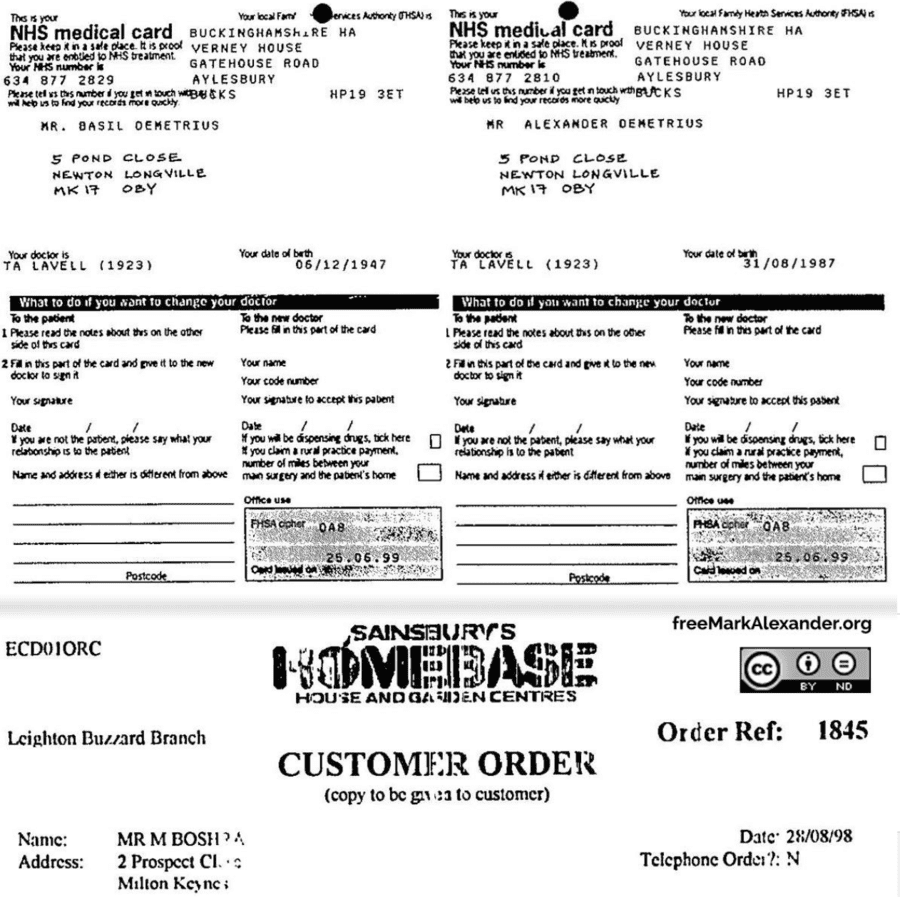
    Documentary evidence of Samuel Alexander using aliases that show him to have been a man capable of perpetrating fraud and deception.
    Terry-Waite-Mark-Alexander-HM-Prison-Coldingley
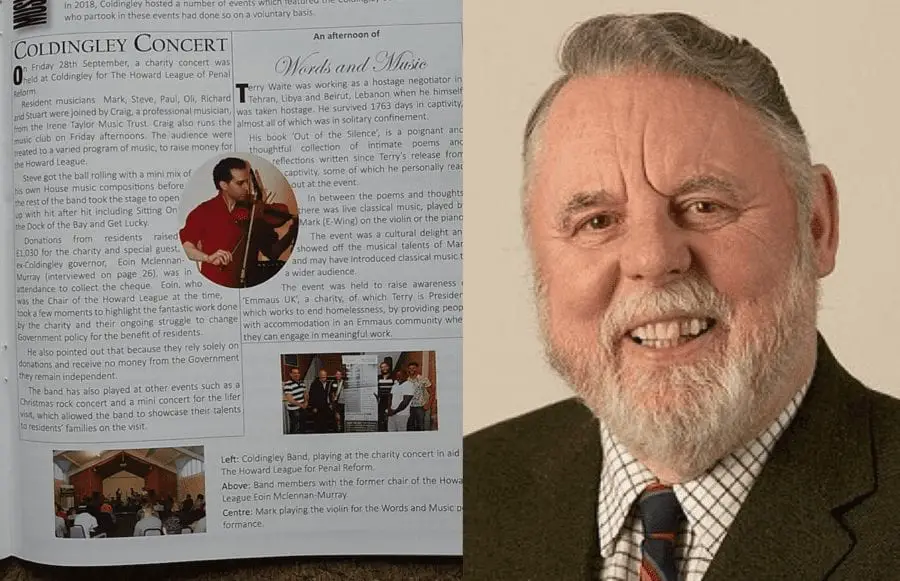
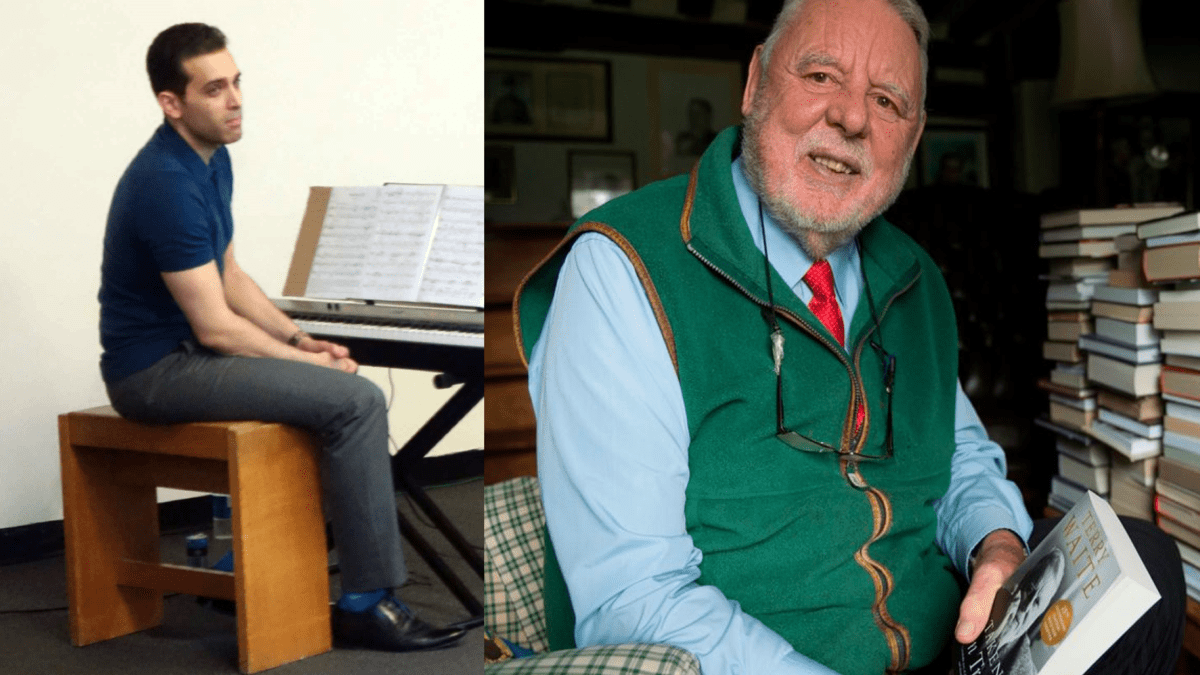
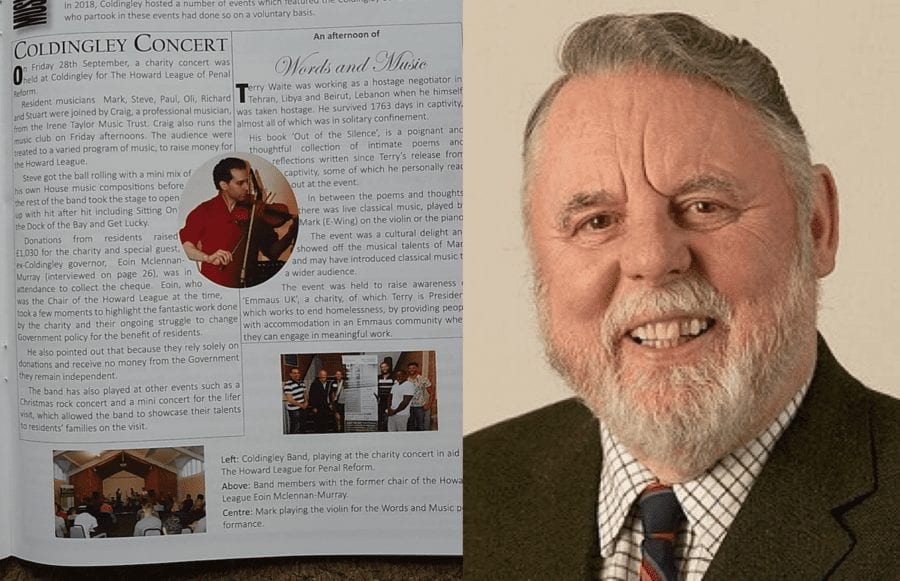
    On Friday 28th September 2018, Mark Alexander played at a charity concert for The Howard League of Penal Reform at HM Prison Coldingley in Bisley, Surrey. Terry Waite CBE read from ‘Out of the Silence,’ his book about his 1,763 days in captivity from 1987 to 1991 in Lebanon.
  • Why Destroy Evidence? Shocking Evidence Destruction By Police: Mark Alexander, Jeremy Bamber & Luke Mitchell Cases

    Why Destroy Evidence? Shocking Evidence Destruction By Police: Mark Alexander, Jeremy Bamber & Luke Mitchell Cases

    As it is revealed that Scottish police disgracefully destroyed evidence in the Luke Mitchell case, we highlight two other equally shocking examples of police evidence destruction and call for reinvestigations of all three cases

    Last night, in what he justifiably called a “bombshell” and announced as an “exclusive,” The Scottish Sun’s Douglas Walker revealed that Luke Mitchell, convicted of killing his girlfriend Jodi Jones in Dalkeith, Midloathian in 2003, “could sue prosecutors after it emerged they sanctioned the police to destroy evidence from the murder case.”


    According to the paper:


    “Cops illicitly destroyed protected evidence from the Jodi Jones murder case, we can reveal. More than 100 legal productions including burnt clothes were secretly uplifted for disposal – against police rules.”


    “Now it’s emerged that Mitchell’s legal team could sue prosecutors after it emerged they sanctioned the police to destroy evidence from the murder case.”


    “An insider revealed he could argue his right to an appeal has been hampered with Crown Office lawyers now desperate for assurances he won’t take them to court.”


    “A letter from the Lord Advocate’s government solicitors admitted the evidence had been taken away – and confirmed destruction had now been halted.”


    Continuing, “an insider told The Scottish Sun” that:


    “A load of officers from the Major Investigation Team went to Edinburgh to remove over 100 productions. This included some burnt clothes found about a thousand metres from the locus.”


    “They loaded boxes into a police van and took them to Livingston police station. The Crown Office had signed off the items to be returned to the owner or destroyed. This is not normal procedure, especially in a murder case.”


    “Mitchell could now argue his right to a fair appeal has been denied as evidence has been destroyed. This could lead to a judicial review which could even pave a way to his release.”


    Far from being this a lone example of incompetence on the part of Lothian and Borders Police, as we highlighted in our article yesterday about the ongoing campaign to get the 1986 conviction of Jeremy Bamber revisited by the Criminal Cases Review Commission (CCRC), there are sadly many more examples where similar antics have gone on.


    In the case of Bamber, critical evidence was burnt in the garden of White House Farm and taken home by officers by Essex Police even and in a further example, that of Mark Alexander, who has been in jail for killing his conman father since 2010, it was just as bad.


    Found guilty without any forensic evidence and with the help of Midsomer Murders-esque “suspicious neighbours primarily, supporters of Alexander rightly highlight that the prosecution withheld critical information from trial that included that four potential suspects – who police never bothered to speak to – were never even mentioned to the jury.


    Going further and summing up what led to the conviction of Alexander, Progressing Prisoners Maintaining Innocence (PPMI), observed: “Another example of typical factors in a wrongful conviction: no forensic evidence, impossible time frame for the crime to be committed, witness put off by the police, important witnesses not interviewed, lurid allegations in the press published before they could be countered, all racked up by such sad personal circumstances.”


    It is time for all three cases to be revisited and at the very least those officers that destroyed key documents and items must be quite rightly be brought to book. Justice is never just if it is based on the police manipulating the evidence that gets that very justice.


    Editor’s Note – Unlike as is the case in many publications, this article was NOT sponsored or supported by a third-party.


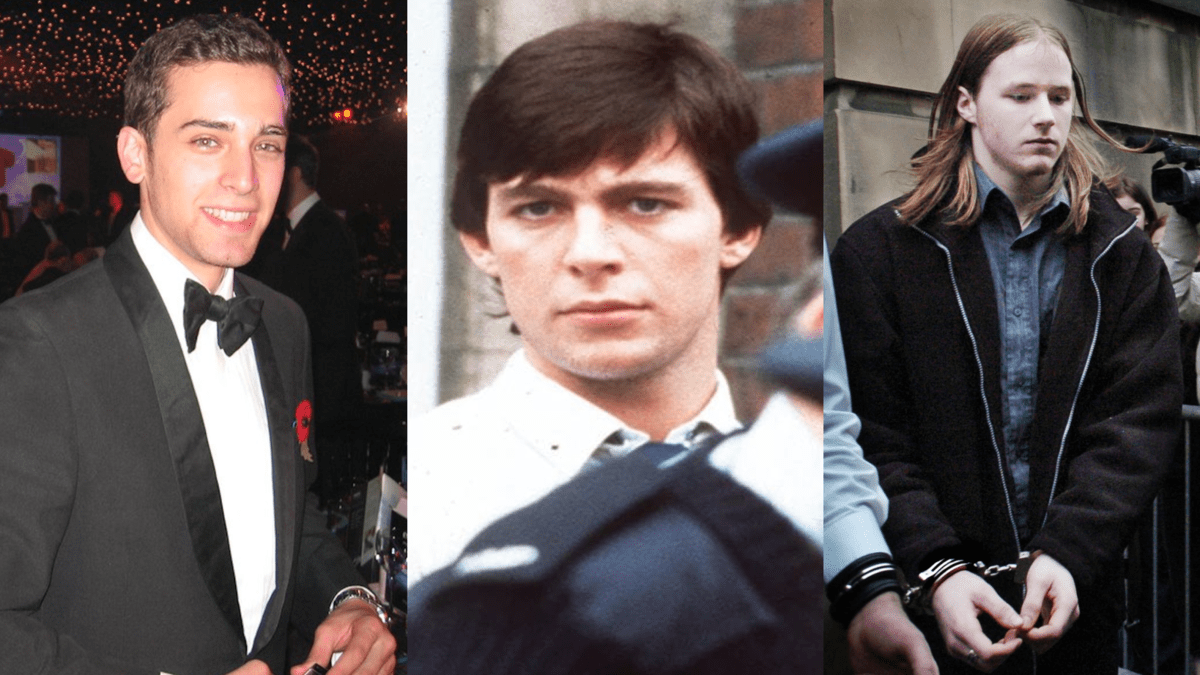
    Pictured Top – Left to right: Luke Mitchell, Jeremy Bamber and Mark Alexander; three men who remain in prison and convicted of murder in spite of there being significant evidence of police mishandling of evidence in each of their unlinked cases.


    Evidence Destruction By Police – Campaigns Supporting Mark Alexander, Jeremy Bamber and Luke Mitchell

    Here are three men who continue to rot in prison. Each may or may not be guilty of the murders they were convicted of committing. However, though, the protests of innocence of each man should be judged on the merits and failings of each case alone, what links these three men is that the police very, very clearly shockingly botched the handling of evidence that led to each of their convictions.


    Each man – Mark Alexander, Jeremy Bamber and Luke Mitchell – as a result of a questioning public and critical experts highlighting the flaws in their cases, has attracted large support. More details about the campaigns seeking reinvestigations into each of their cases follows:


    MARK ALEXANDER – Convicted of the murder of his father in 2010; has never ceased maintaining his innocence

    To follow the ‘Justice for Mark Alexander’ group on Facebook, click here, and to follow the campaign seeking a review of the case on Twitter go to @PatientCaptive. Prominent supporters include the former Conservative MP for Westminster The Rt. Hon. Mark Field, the Reverend Canon Grant Fellows, the Right Reverend Bishop Tim Stevens and the hostage-turned-humanitarian Terry Waite CBE


    JEREMY BAMBER – Convicted of murder of 5 members of his family in 1986; has never ceased maintaining his innocence

    To learn more about the Jeremy Bamber Innocence Campaign – whose supporters number former MP Andrew Hunter, barrister Flo Krause, human rights campaigner Peter Tatchell and magistrate Lady Waterlow – and to join those calling for a reinvestigation of this case, click here. Follow on Twitter at @BamberTweets and join the ‘Jeremy Bamber Justice Group’ by clicking here.


    LUKE MITCHELL – Convicted of the murder of his girlfriend in 2005; has never ceased maintaining his innocence

    To join the official Facebook group focused on highlighting the supposed flaws in the police investigation that led to the conviction of Luke Mitchell, click here. To join the 25,400 people who have already signed the Change.org petition requesting a “full, independent review” of the Luke Mitchell case, click here.


    Tom Halliday
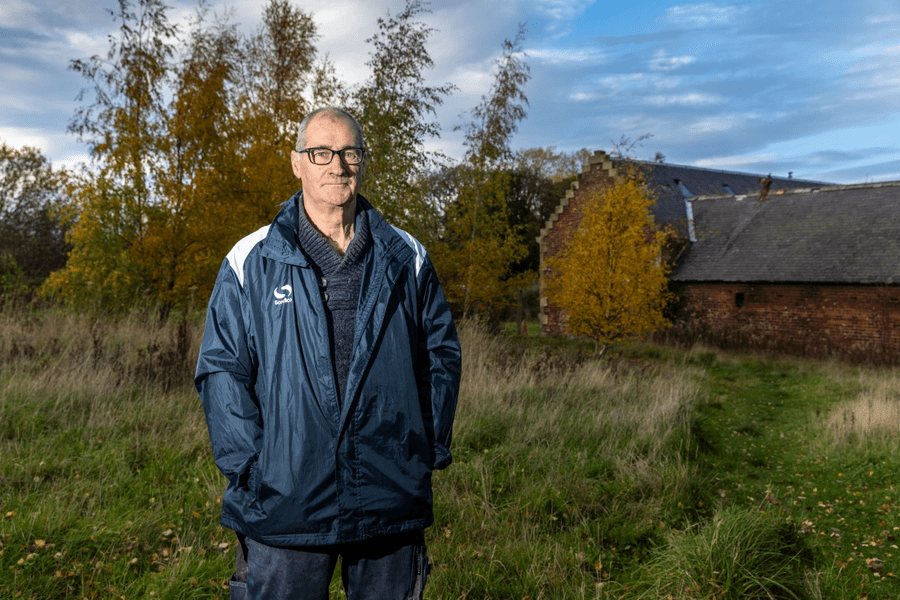
    Earlier this month, Tom Halliday (pictured), a Midlothian car mechanic turned bathroom designer and fitter, revealed that he found a knife in a skip just 500 yards from where the body of schoolgirl Jodi Jones was found just days after her 30th June 2003 murder. He reported it the police and spoke out again now after recently finding out that his find was never even mentioned let alone submitted during the trial. Mr Halliday commented: “Nobody placed any importance on that knife. When I learned it wasn’t documented, it raised my suspicions the police may have tried to conceal the discovery.” Going further, a lawyer for Luke Mitchell, Scott Forbes, added: “This is the real missing knife… It was either destroyed went missing if it didn’t fit the police narrative.”
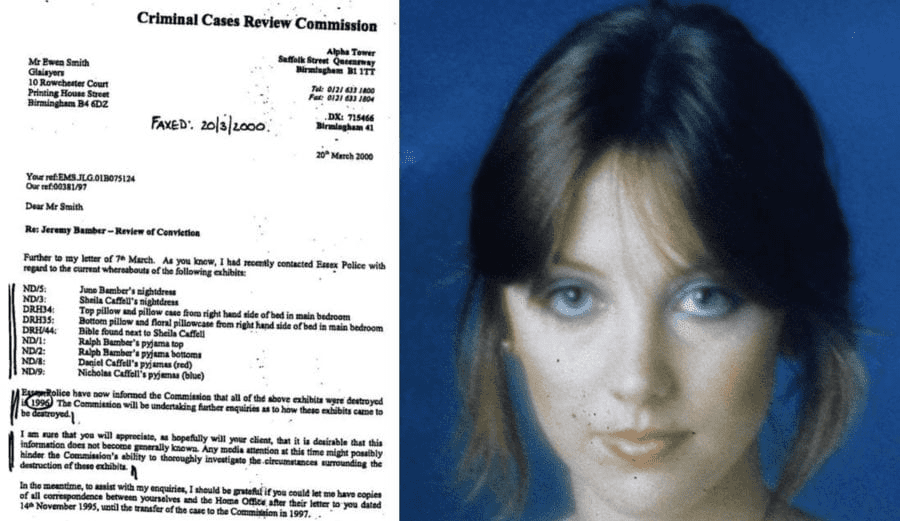
    Amongst items not only never shown to the court at the trial of Jeremy Bamber was this bible. Though photographed by Essex Police at the crime scene next to the body of Sheila Caffell – the only other suspect in these familial murders – it was shockingly destroyed. “What motivated officers to do this?” remains a question that very clearly ought to be answered.
    Shelia Caffell
    In April 2020, ‘The Steeple Times’ reported that “further questions about the conduct of Essex Police [were] raised as it [was] revealed they destroyed the bible, nightclothes and pillows that were found with the victims at White House Farm on the night of the 1985 murders. The 20th March 2000 letter from the Criminal Cases Review Commission to Glaisyers Solicitors LLP and Sheila Caffell is truly a shocking example of a bungling balls-up.
    2 Prospect Close, Drayton Parslow, Milton Keynes, Buckinghamshire, MK17 0JB
    Of how the police handled the investigation into his father’s murder in 2009 and the discovery of his body subsequently at his home at 2 Prospect Close, Drayton Parslow, Milton Keynes, Buckinghamshire, MK17 0JB, Mark Alexander observed: “Once I was in their sights, things went downhill pretty quickly. Supporting testimony offered by my mum in police interview wasn’t shared with my defence team. Samples taken at the burial site weren’t bagged correctly, so degraded in transit before they could ever be tested. When I gave officers a list of dad’s aliases, the leads weren’t followed. And despite there being no sign of the murder itself having taken place at the house, no efforts were made to search the local area for clues. Instead of being guided by the facts, the facts were reinterpreted to fit the suspect, me. The pathology reports gave a two-month window within which dad’s death might have occurred. Everything then focused on fixing the murder as close as possible to the beginning of that window in order to provide me with just enough time and motive to render what they already believed to be true plausible. It was classic confirmation bias.”
  • Waite Urges No Further Wait – Terry Waite CBE Calls For No Further Delay In Reviewing The Case Of Mark Alexander

    Waite Urges No Further Wait – Terry Waite CBE Calls For No Further Delay In Reviewing The Case Of Mark Alexander

    ‘The Steeple Times’ backs respected humanitarian Terry Waite CBE’s calls for a review “without further delay” of the conviction of Mark Alexander; the now 35-year-old was found guilty of killing his conman father on “circumstantial evidence alone” in 2010

    Mark Alexander has been a prisoner for more than 12 years, but was deemed to exhibit “no historic or current issues of concern” after completing 45-hours of therapy and counselling in October 2015. In September 2018, the Offender Assessment System observed he had shown “no evidence of negative or pro-criminal attitudes,” yet simply because he has refused to take a guilty plea, a 2-years and 8-months (16%) penalty was added to his sentence in September 2010.


    Subsequently, in spite of being recommended for being transferred to an open prison in October 2021 and March 2022 at Sentence Planning Review Meetings (SPRM), Alexander currently remains in closed conditions because the Public Protection Casework Section (PPCS) has deemed his maintenance of his innocence undermines “public confidence” in the justice system.


    When The Steeple Times first delved into this case in May 2020, we asked: “Could Mark Alexander be innocent?” In our article, we highlighted flaws with the safety of the conviction of a law student currently locked up for 16 years for supposedly murdering his 70-year-old “controlling” conman father, Samuel Alexander, in Buckinghamshire on a date unknown between September 2009 and February 2010. The then 22-year-old Mr Alexander was found guilty “by a majority verdict and on the basis of circumstantial evidence only” in September 2010.


    Yesterday, sharing his continuing belief that there has been shown to be “further doubt on the safety” of this conviction, a message was shared from the greatly respected humanitarian Terry Waite CBE on the Twitter handle that communicates the “thoughts and journey” of Mark Alexander via “tweets from prison via letter.”


    In it, this “long-standing advocate for justice in Mark’s case” suggested: “[This] case certainly raises reasonable doubt in my mind, and ought to be reviewed without further delay.”


    The full text of Mr Waite’s missive follows below. It is well worth reading.


    To follow the ‘Justice for Mark Alexander’ group on Facebook, click here, and to follow the campaign on Twitter go to @PatientCaptive.


    Editor’s Note – Unlike as is the case in many publications, this article was NOT sponsored or supported by a third-party.


    Images: © http://freeMarkAlexander.org (CC BY-ND 4.0).


    Mark Alexander (left) in happier times prior to his September 2010 and Terry Waite CBE’s 22nd November 2022 missive sharing his views on why he views this case needs to be “reviewed without further delay.”

    Terry Waite CBE’s 22nd November 2022 message in full:

    Over the course of my life I have been in contact with many prisoners who claim they have been unjustly convicted.


    I fully appreciate that not all who approach me are truthful, but it is said that between six and seven percent of those convicted are innocent and ought not to be in jail.


    I fully understand what a difficult task it is for an innocent prisoner to appeal. It is a long and costly process. It is also difficult for those who have to determine the fate of a man or woman claiming wrongful conviction.


    I have known Mark Alexander for almost ten years. I have studied his case and spoken personally with him many times. The evidence against him was circumstantial, as was pointed out by the judge in his case.


    I find it difficult to believe that a complete forensic examination was conducted before the jury found him guilty by majority verdict. In recent years, new evidence has emerged which throws even further doubt on the safety of his conviction.


    Alas, the wheels of justice grind exceedingly slowly and Mark, still a young man, remains incarcerated – denied access to an open prison because, in the eyes of the authorities, he refuses to accept his guilt.


    In the past 12 years, he has achieved academic distinction, but his continued imprisonment in a secure establishment means he may not be able to study for a doctorate.


    Mark’s case certainly raises reasonable doubt in my mind and, ought to be reviewed without further delay.
     

    Issues with the 2010 murder conviction and jailing for life with a minimum of 16 years of Mark Alexander:

    • Not one iota of forensic evidence links the convicted now 35-year-old to the murder and much of the police case against him was based on the word of “suspicious neighbours” with attitudes akin to characters from the TV drama series Midsomer Murders.
    • On the homepage of the campaign supporting him, it is stated: “Mark has always maintained his innocence… Mark was found guilty on the basis of doubt created about his version of events rather than any evidence of his involvement in a murder. No such evidence exists. There is no known cause, or date, of death – and there were no traces of DNA, blood, or even fingerprints linking Mark to the crime.”
    • The convicted man’s father, Samuel, had a string of at least eleven aliases and was a known confidence trickster.
    • The deceased man was cautioned for shoplifting in 1995 and had been involved in mortgage frauds involving a number of properties. He was described by his son tellingly when he remarked: “Dad always seemed to be running or hiding from something.”
    • Samuel Alexander lied also to his son about what had happened to his mother and cruelly told him she had died of cancer. The pair were only reunited after Mark Alexander’s arrest and it then became known that Samuel Alexander had also cheated her as part of a property scam also.
    • It was also revealed at sentencing that the deceased pensioner spent “long hours on the computer surfing teenage chat rooms and sex websites, sometimes posing as a man in his late teens or early 20.” Could it be that he upset someone in the process and could they be his true killer?
    • Mark Alexander has produced evidence showing that there were four potential suspects working at his father’s home around the time of his death. Police never spoke to these suspects and the jury were never made aware of them.
    • The convicted man has never admitted his guilt of this shocking crime in spite of the fact that in doing so he could have seen his sentence reduced.
    • Using human rights laws, Mark Alexander was, in March 2020, able to finally obtain files documenting his father’s multiple identities from Her Majesty’s Revenue & Customs. He became supposedly the first person in Britain to achieve such access and now also, according to the Daily Mail’s Alice Cachia and Robin Eveleigh: “[The Justice for Mark Alexander’ campaign] are also developing new mobile phone cell site evidence which they hope will provide proof of Alexander’s movements around the time of his father’s death.” They hint that this will show he could not possibly have been present at the time of the murder and burial.
    • Mark Alexander told The Mirror’s crime editor Tom Pettifor in May 2020: “I’ve always always maintained my innocence, you just assume the system will work, but we didn’t have enough time or evidence to prove it, particularly against the story the prosecution were spinning… Nothing will ever justify what they did to [my father], but I just need some answers.”


    Mark Alexander Samuel Alexander
    Mark Alexander and his late father Samuel Alexander.
    2 Prospect Close, Drayton Parslow
    The scene of the burial (but not necessarily the killing) of Samuel Alexander – 2 Prospect Close, Drayton Parslow, Milton Keynes, Buckinghamshire, MK17 0JB.
    An aerial shot of the property.
    Documentary evidence Samuel Alexander fraud
    Documentary evidence of Samuel Alexander using aliases that show him to have been a man capable of perpetrating fraud and deception.
    On Friday 28th September 2018, Mark Alexander played at a charity concert for The Howard League of Penal Reform at HM Prison Coldingley in Bisley, Surrey. Terry Waite CBE read from ‘Out of the Silence,’ his book about his 1,763 days in captivity from 1987 to 1991 in Lebanon.