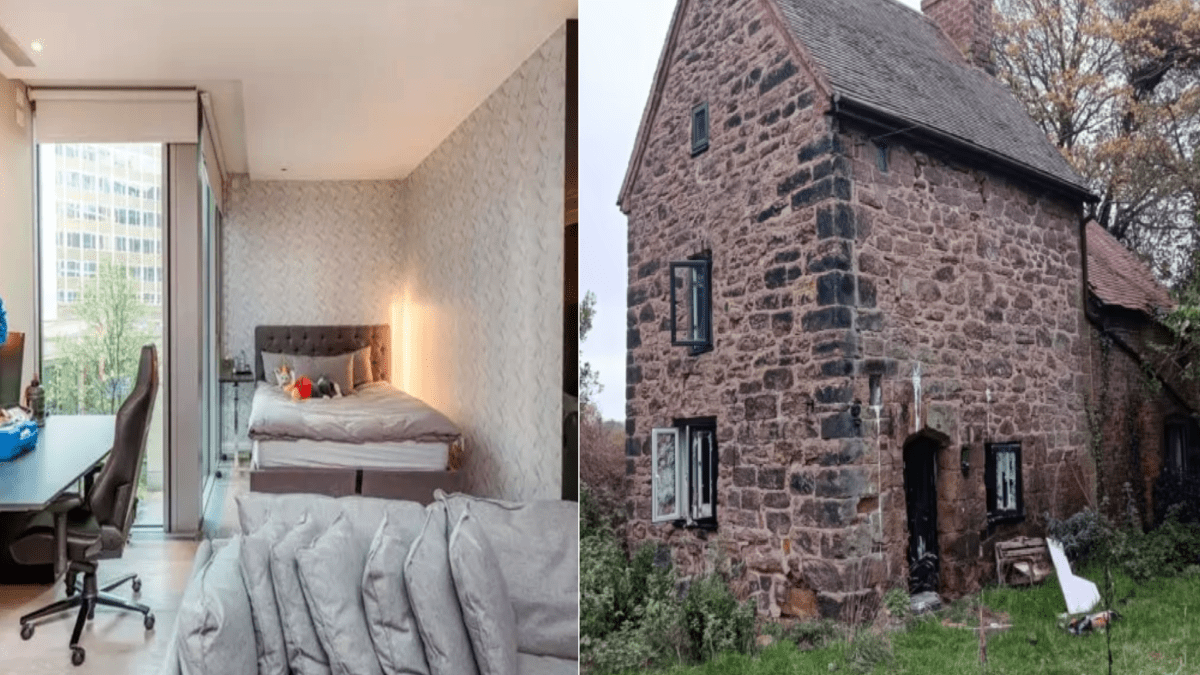
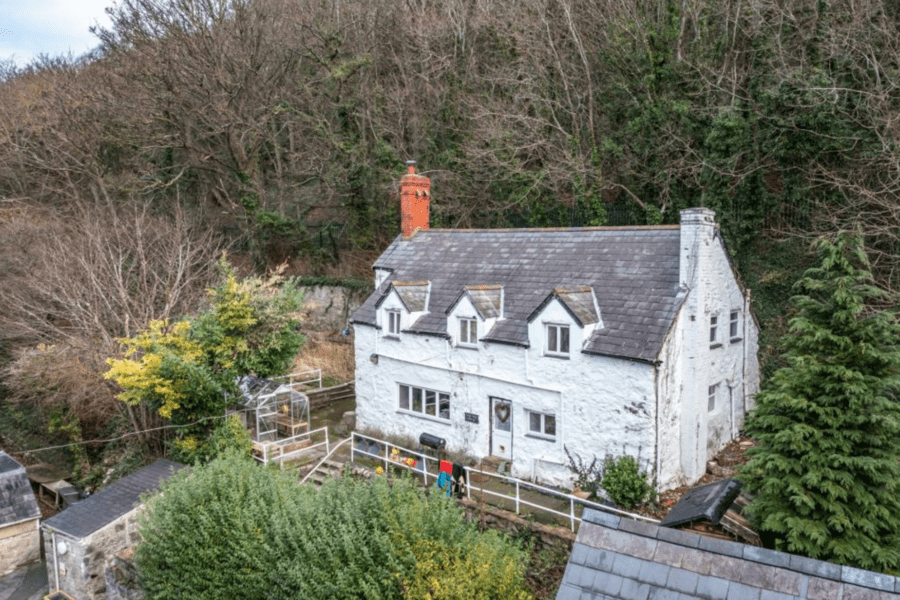
Which would you prefer? One room in Knightsbridge for a punchy payment of £3 million or a detached 16th century cottage for the paltry price of £1 in the West Midlands?
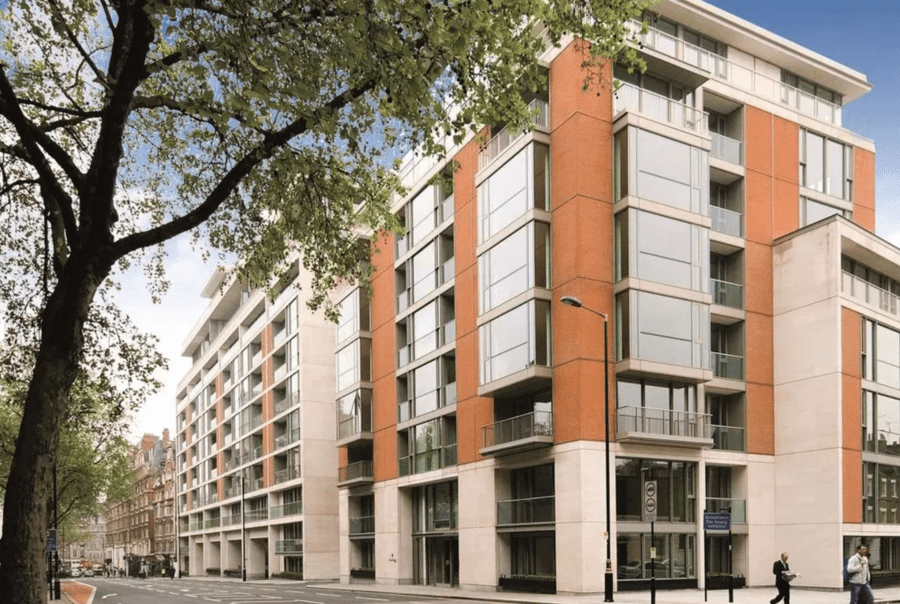
In April 2017, an apartment at 199 Knightsbridge – a ritzy residence formed of 205 flats, penthouses and mews house opposite the Hyde Park Barracks that houses the Household Cavalry – sold for an astonishing sum of £90 million ($109 million, €104 million or درهم400 million).
Now, whilst Harrods Estates currently offer a 4-bedroom, 4-bathroom lateral unit that extends to 3,145 square foot in the building for £13.95 million ($16.9 million, €16.2 million or درهم61.9 million), someone on a lower budget could get just one room there for £3 million ($3.6 million, €3.5 million or درهم13.3 million). A veritable bargain or yet another indication of ‘Bonkers Britain’?
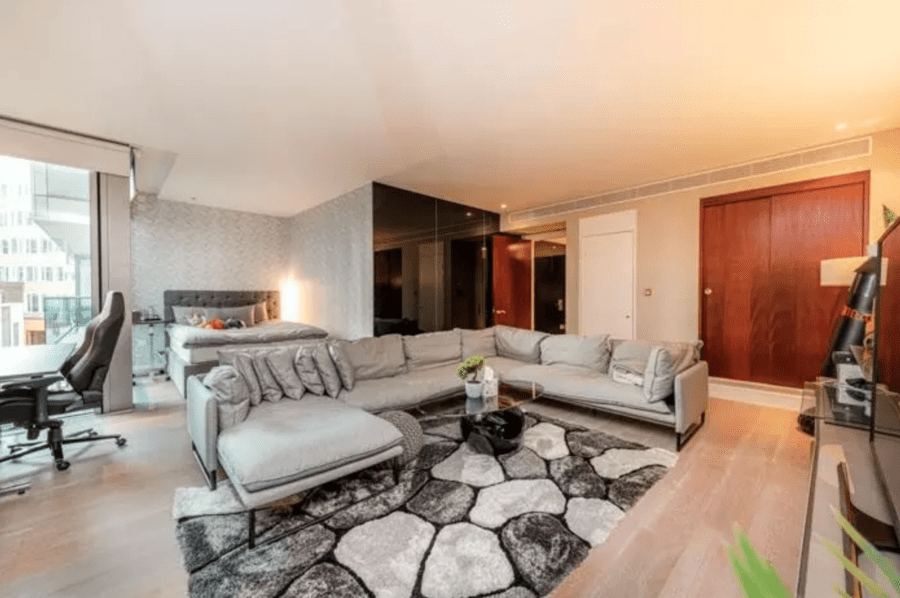
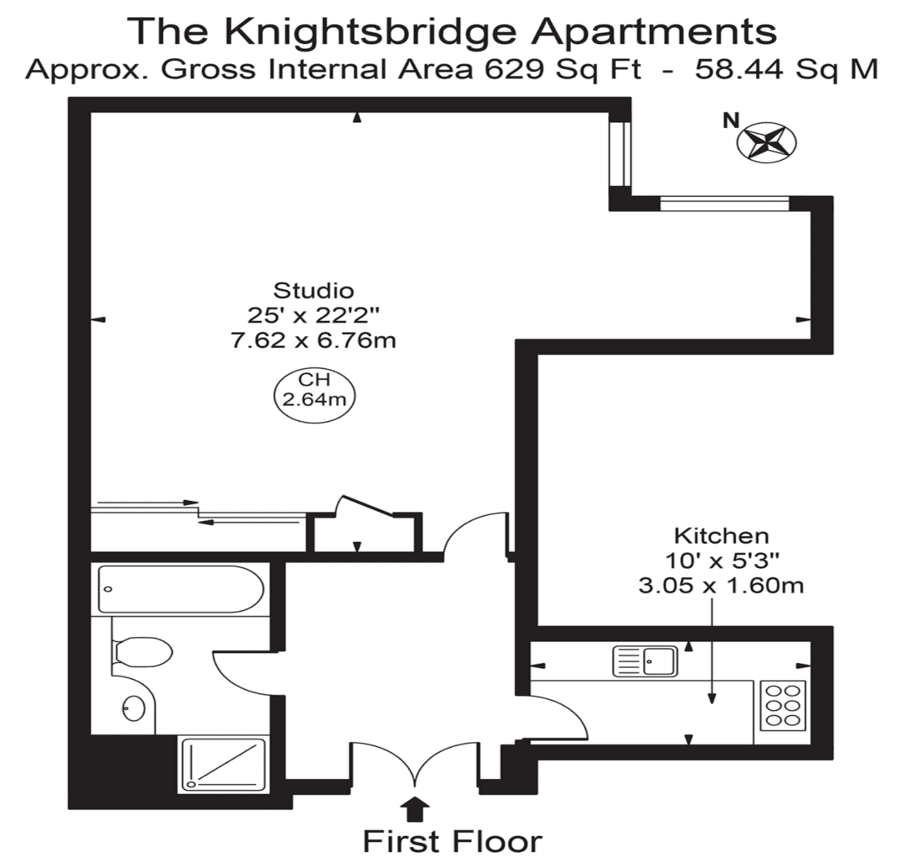
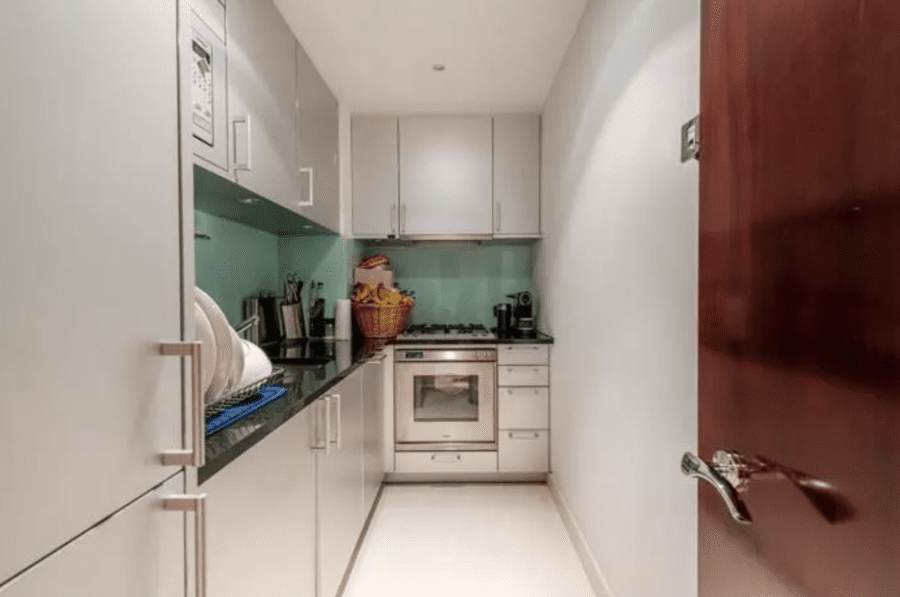
Marketed for a somewhat punchy £4,769 per square foot ($5,766, €5,537 or درهم21,177 per square foot) at asking price, a first-floor space offered by agents The Cloister is formed of a 25-foot by 22-foot living room that forms the only bedroom also. There is also a kitchen and bathroom – the former being just 5-foot wide and just 10-foot long – and frankly one is left realising this is actually a ‘home’ where only the multi-millionaire capable of buying it will clearly have “barely enough room to swing a cat.”
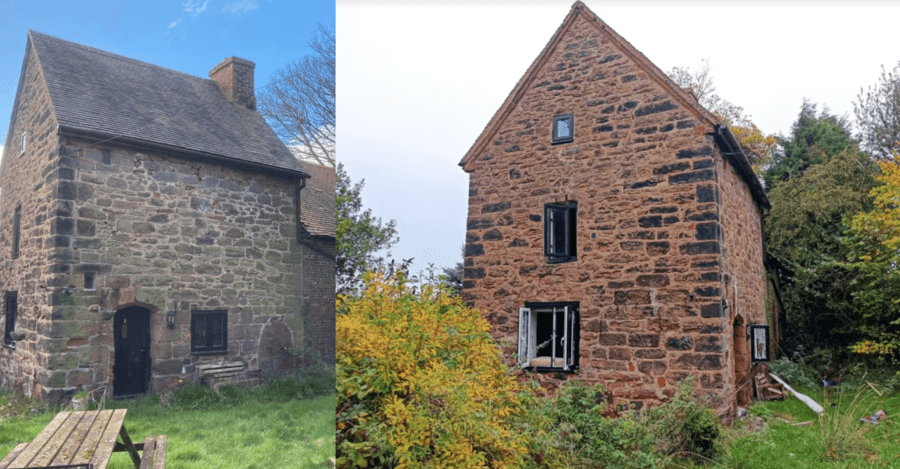
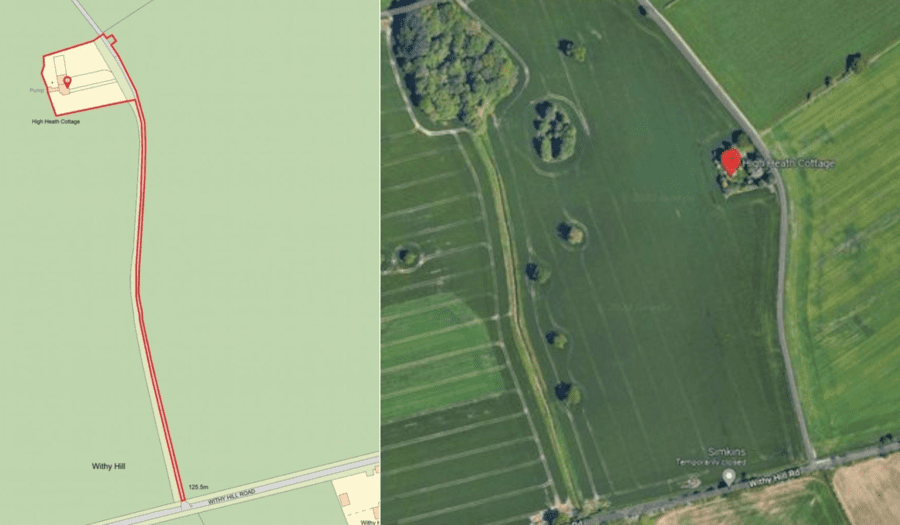
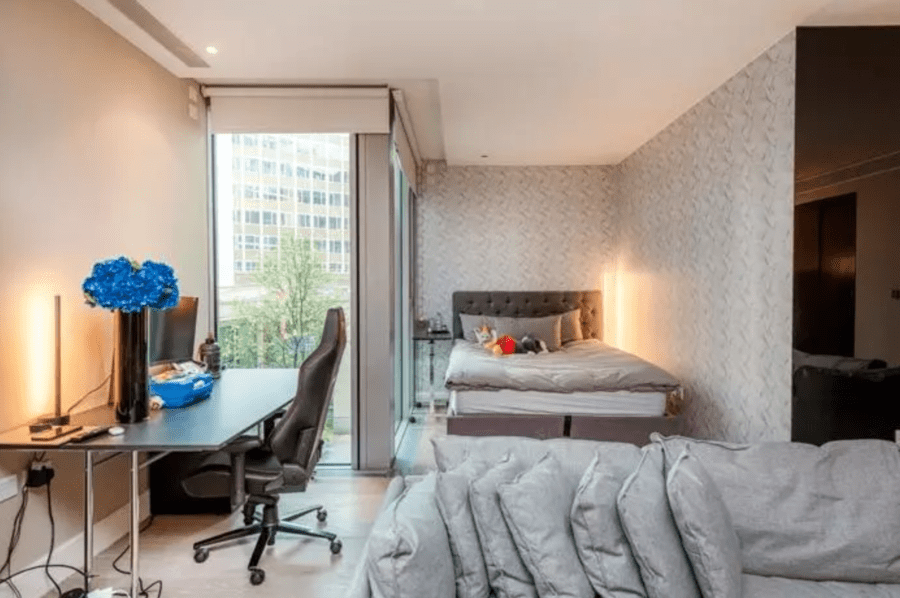
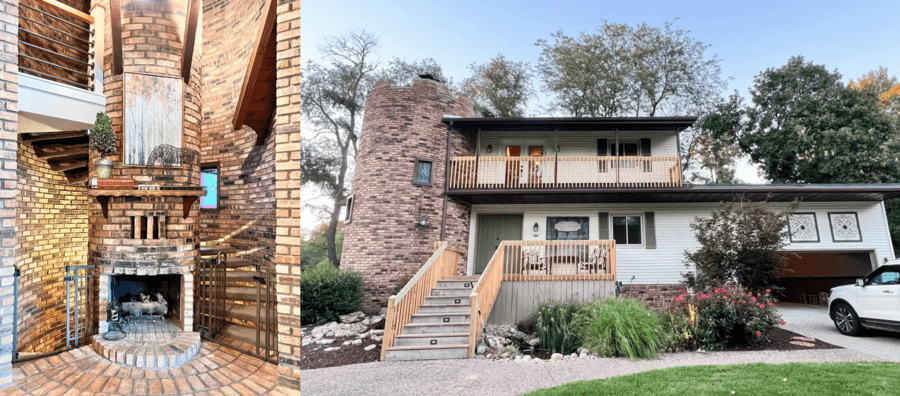
Situated opposite Hyde Park Barracks – more commonly known as Knightsbridge Barracks – this 629 square foot space has just two small windows and is rather awkwardly shaped. In its current configuration there’s a slimline double bed crammed into a nook with just one beside table but there’s not even a dining table. In spite of its £3 million price tag, this is a pad for those who simply want sofa suppers rather than to entertain on a grand scale.The floor plan of the space on offer illustrates just how little a multi-millionaire can actually get for their money in this neck of SW7. This is a property that is smaller than most hotel rooms and agents The Cloister make no mention of the no doubt very hefty accompanying service charges.Paltry priced High Heath Cottage – also known as ‘Mutton Castle’ due to a local tradition that a man who had stolen a sheep barricaded himself in the structure to avoid the hanging offence of being caught stealing sheep – is situated on Withy Hill Road, Sutton Coldfield, B75 6JR. It was constructed as one of around fifty servant’s cottages by The Right Reverend John Vessey (born John Harman, 1519 – 1551), who became Bishop of Exeter, and of it auctioneer Gupreet Bassi of Bond Wolfe told ITV: “This property has a fascinating history and the appearance of a mini watchtower, looking out across the valley to a lonely stretch of the old coach road from Coleshill to Lichfield, now the A446, where highwaymen could lurk. By the 19th century, the cottage was part of the Moor Hall Estate, and there was once a row of three cottages adjoining it, occupied by farm labourers in 1851. But the adjoining cottages fell into disrepair, and the present-day High Heath Cottage stands alone in the landscape much as it did nearly 500 years ago. This three-storey property is suitable for development but requires refurbishment and modernisation within the Grade II* building and green belt regulations, as well as the usual planning permission.”The cottage has two rooms on the ground floor, one room on the first floor and one room on the second floor. It has gardens to all sides and the agents add: “We understand the cottage incorporates a fireplace in each floor and is connected via a stone spiral staircase.” Sutton Coldfield town centre is approximately two miles distant.
Providing a stark contrast at the opposite end of the market, yet apparently something far more idyllic in its setting, Birmingham based auctioneers Bond Wolfe will be hoping to hammer down what they describe as “a vacant freehold Grade II* listed cottage in disrepair constructed in the 1530s by Bishop Vesey” in the “rural part of Sutton Coldfield” in the West Midlands next month.
They offer the three-storey stone-built structure with a paltry guide price of just £1 ($1.21, €1.16 or درهم4.44) and will sell the detached building on 14th December by public auction.
Editor’s Note – Unlike as is the case in many publications, this article was NOT sponsored or supported by a third-party.
‘The Punchy’ and ‘The Paltry’ – Five properties at both ends of the price spectrum…
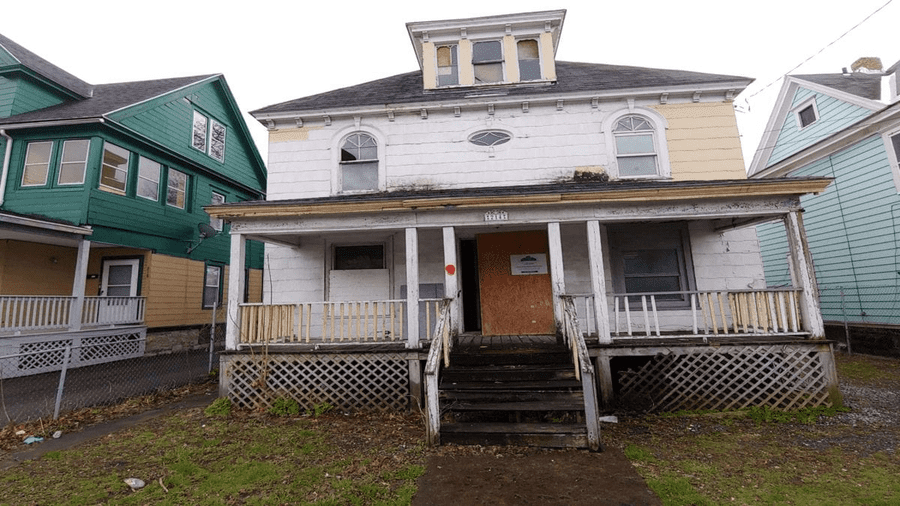
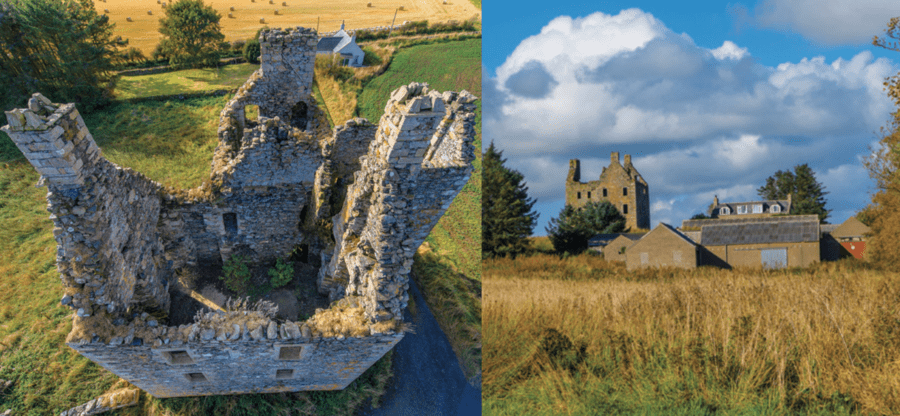
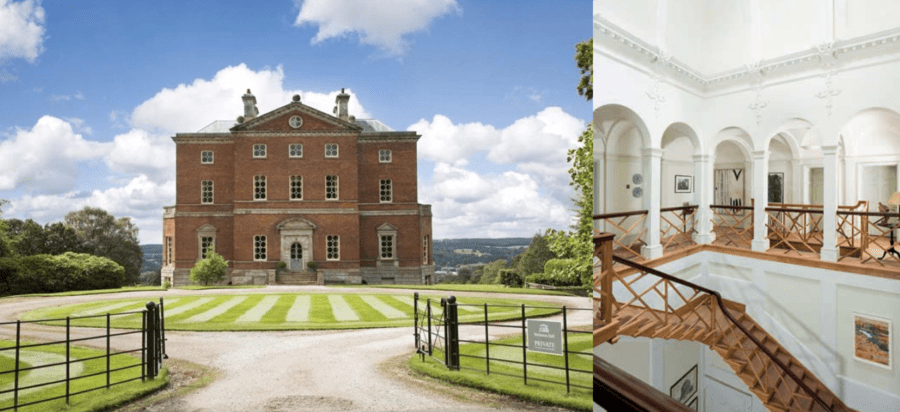
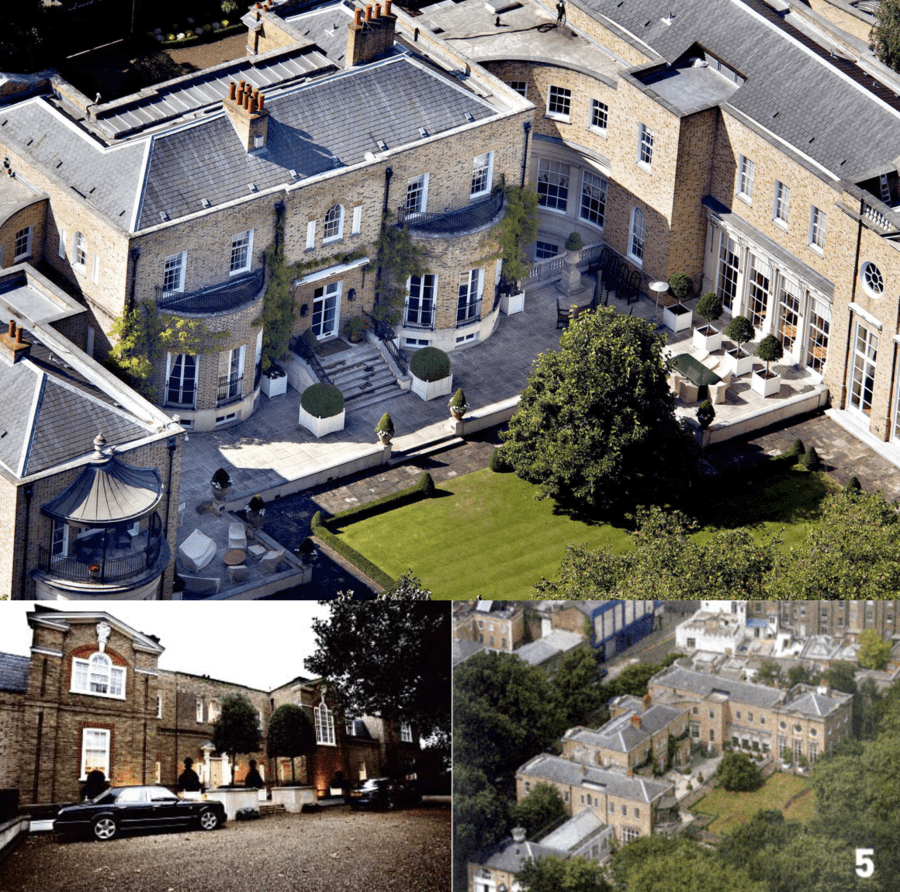
This detached, 2,061 square foot Edwardian house featured in Syracuse, New York featured in ‘The Steeple Times’ in September 2020 when it was offered for just £827 ($1,000, €960 or درهم3,673). It eventually sold in March 2021 for that sum though the buyer would have had to have shown proof of funds available to guarantee the £63,200 ($76,416, €73,375 or درهم280,639) costs of renovation required. The property’s most famous resident prior had been a German police dog named Jack that latched onto the building’s owner, Dr. Scott R. Fisher, on the Hindenburg line in France in October 1918. Supposedly, “when Jack spotted Dr. Fisher, he stuck to him and refused to leave his side – ensuring he found a way to be with Fisher his entire way back to base. Dr. Fisher told the paper that, ‘such devotion deserves reward,’ and decided to take Jack back home with him… Jack was stowed away in an overcrowded ship which was bringing American soldiers home and where each man was allowed only a certain poundage of baggage. Dr. Fisher shared his own rations with Jack because dog food was not available in the ship’s stores. When they arrived back in America, the pair settled here on Syracuse’s Southside.”In August 2017, ‘The Steeple Times’ shared news of a castle in Aberdeenshire for sale for just £130,000 ($157,000, €151,000 or درهم577,000). In “stablised” condition, but roofless the structure was lauded by Savills as “a blank canvas for someone to develop the building’s full potential as a spectacular family home or business.” Knockhall Castle had still not sold by January 2020 and was described in April this year as still being a “tumbled down romantic ruin.”In a state of collapse when sold to former ‘Country Life’ editor Marcus Binney for £1 ($1.21, €1.16 or درهم4.44) in 1981, 16,409 square foot, Grade I listed Barlaston Hall in Staffordshire – complete with a Chinese Chippendale staircase – was made safe and sold on for £300,000 ($363,000, €348,000 or درهم1.2 million) in 1992 and then offered for sale again in June 2014 for £2.3 million ($2.8 million, €2.7 million or درهم10.2 million). It was purchased for £2 million ($2.4 million, €2.3 million or درهم8.9 million) by Cameron and Claire Gilchrist-Dick since November 2020 and in a “separate sale,” the pair also snapped up the neighbouring 12th century church to use as a wedding venue.In July this year, a derelict Second World War fort in the Humber Estuary, once planned to be an ‘Island of Hope’ for detoxing drug addicts was offered for sale for £50,000 ($60,100, €58,700 or درهم220,600) at auction by Savills. Bull Sand Fort, near Hull hammered down for a punchy sum 880% higher at £490,000 ($588,500, €575,000 or درهم2.2 million) to a mystery bidder.At the top end of the market, in May 2019, we featured the possible sale of The Old Rectory in Old Church Street, Chelsea, London, SW3 for at least £200 million ($242 million, €232 million or درهم888 million). Its current owner, shipping magnate John Fredriksen, merging two adjoining properties paid a combined £70 million ($85 million, €81 million or درهم311 million) to create a two-acre compound between 2001 and 2006. It is believed that the house remains in the ownership of the Fredriksen family currently.
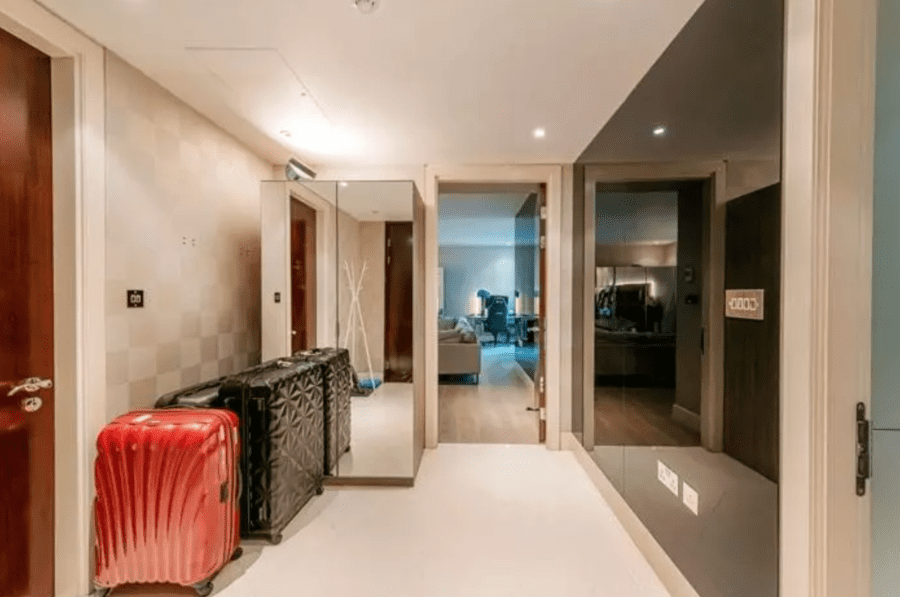
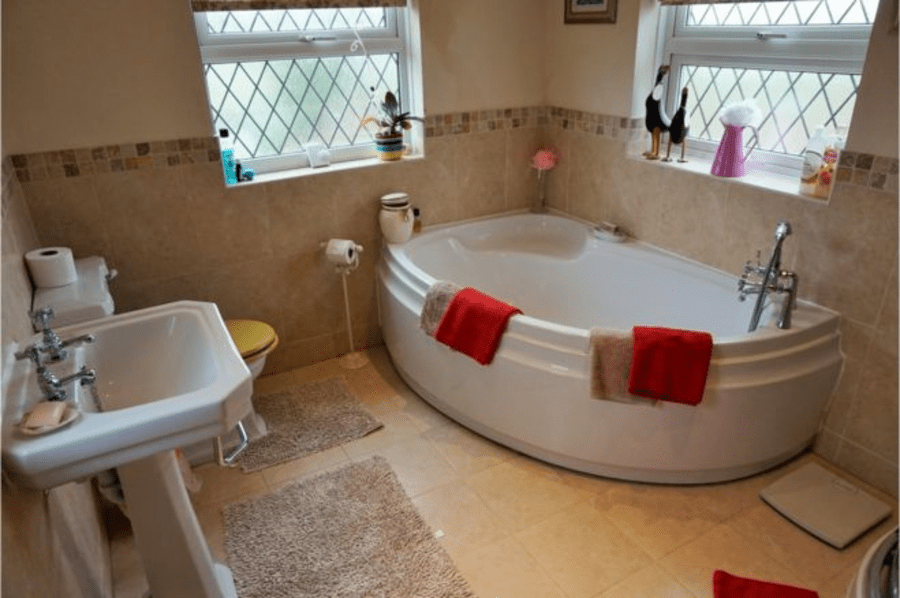
The Punchy – More images of the first-floor studio apartment in The Knightsbridge, 199 Knightsbridge, London, SW7 1RH offered for the outrageous sum of £3 million…
Described on the official website of what they somewhat lavishly laud as ‘The Residence,’ one room boxes in this building are somewhat laughably shouted instead as “executive studios” that are “perfect pied-à-terres.”
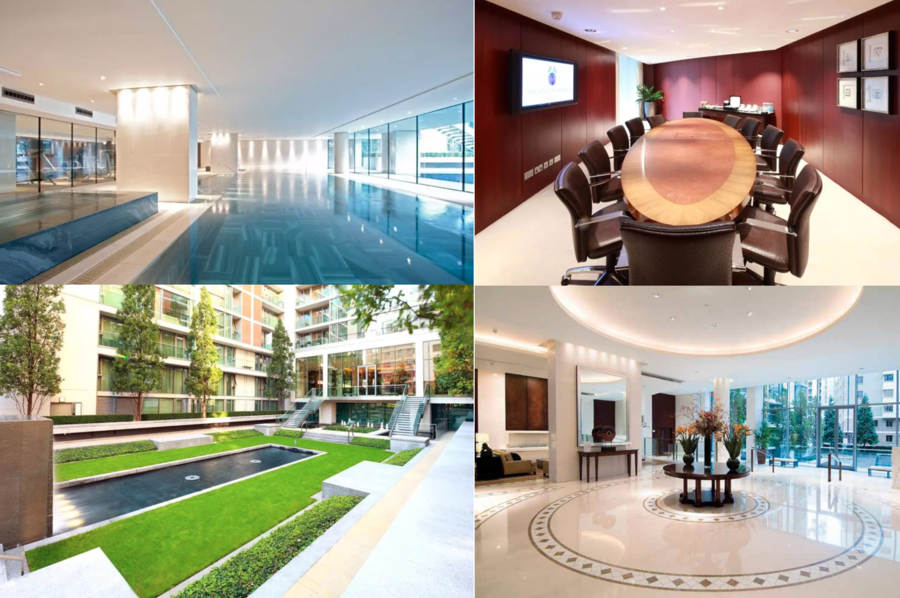
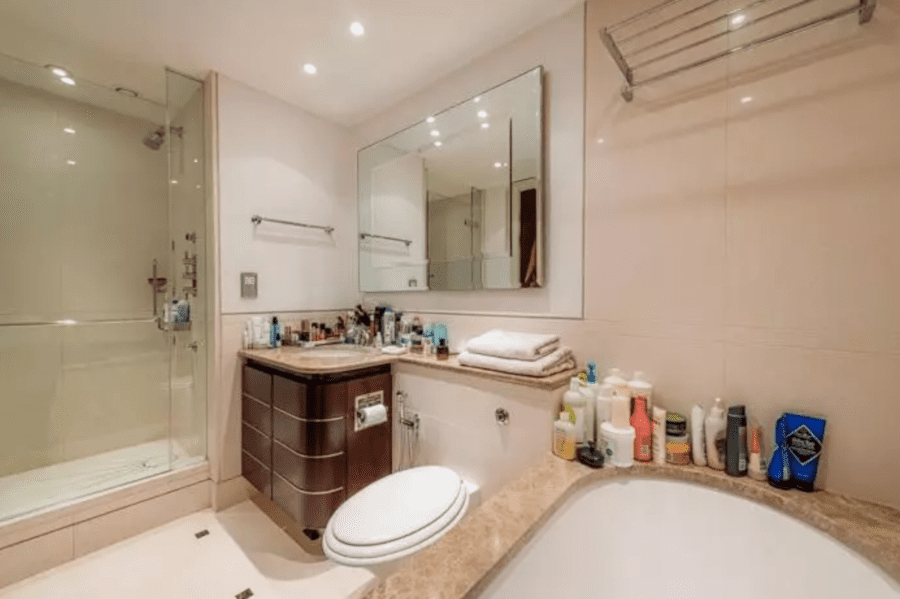
The exterior of ‘The Knightsbridge’ was never going to go down in history as an example of fantastic architectural design. It has a closer resemblance to a budget hotel or an office block that might appeal to David Brent.Facilities for residents number a 24-hour concierge, security, valet parking and use of ‘leisure facilities’ such as a swimming pool and business facilities including a 12-seat boardroom (which has “complimentary refreshments available”). The annual charges for such are not listed for the £3 million studio offered, but for the £13.95 million apartment also on sale currently the charges are £78,900 per annum plus £5,700 per annum per car parking space included.There’s so little space in the “executive studio” that the current resident has put a wardrobe in the hall and keeps their suitcases there also.The minute, windowless kitchen is most definitely not a space for an aspiring Nigella Lawson or Delia Smith.The current decoration scheme wouldn’t look out of place in student digs. It’s hardly what anyone would expect in a £3 million pad.The bathroom, equally, is hardly opulent.
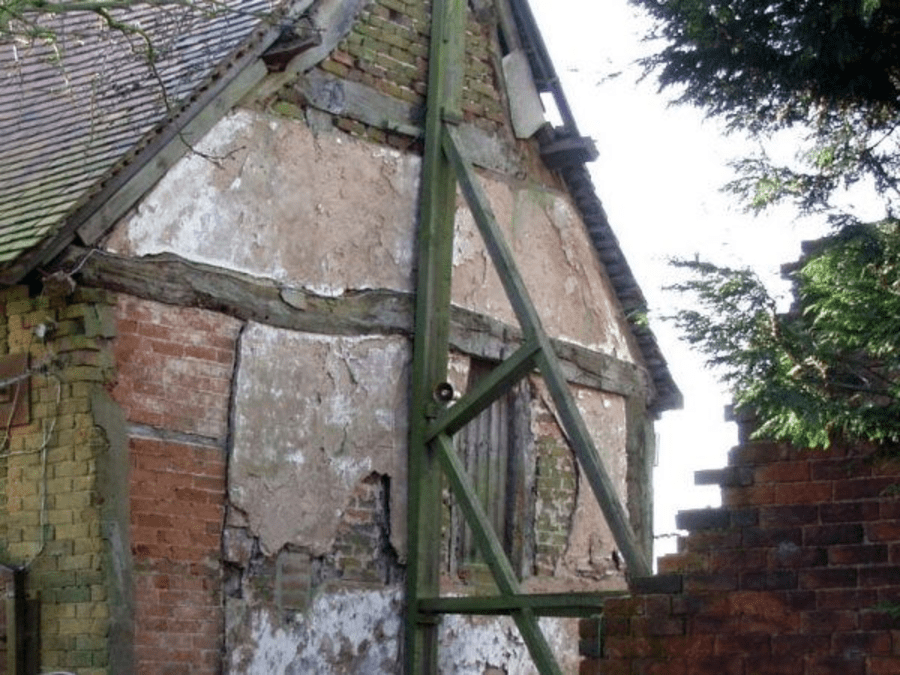
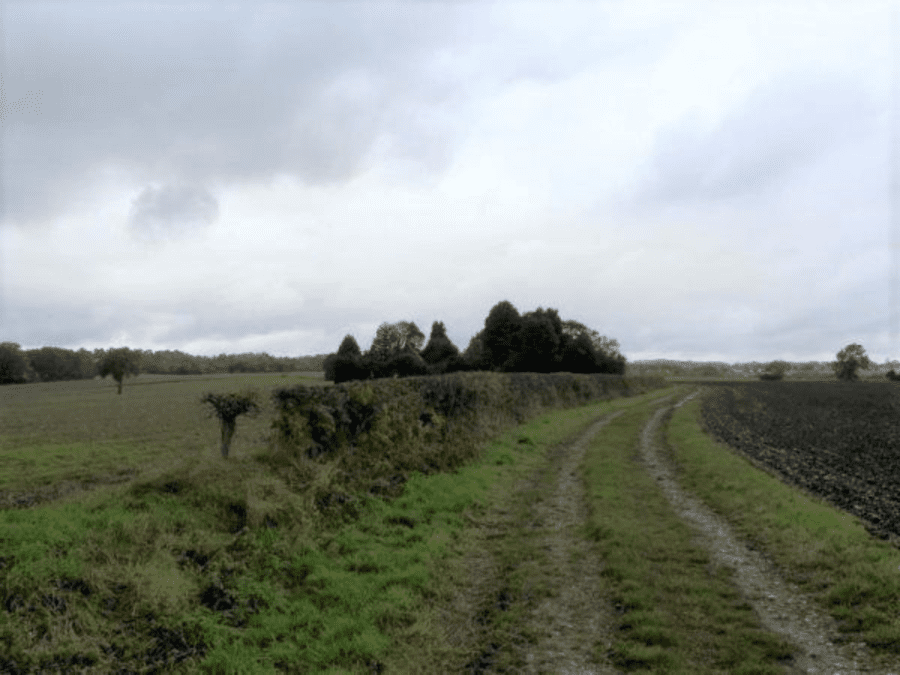
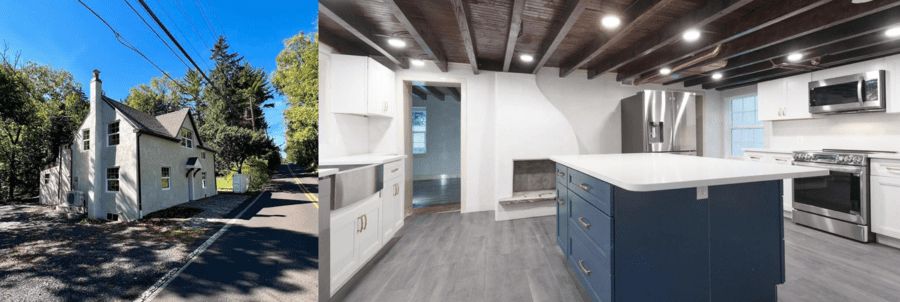
The Paltry – More images of the £1 cottage, High Heath Cottage (AKA ‘Mutton’s Castle’), Withy Hill Road, Sutton Coldfield, West Midlands, B75 6JR…
Whilst this stone-built cottage might be cheap and off-the-beaten-track, it certainly will require a lot of work. Undoubtedly, however, the £1 price tag will encourage many to dig deeper – so do anticipate a bidding war on 14th December that will actually take the ultimate sale price of this property far, far higher.
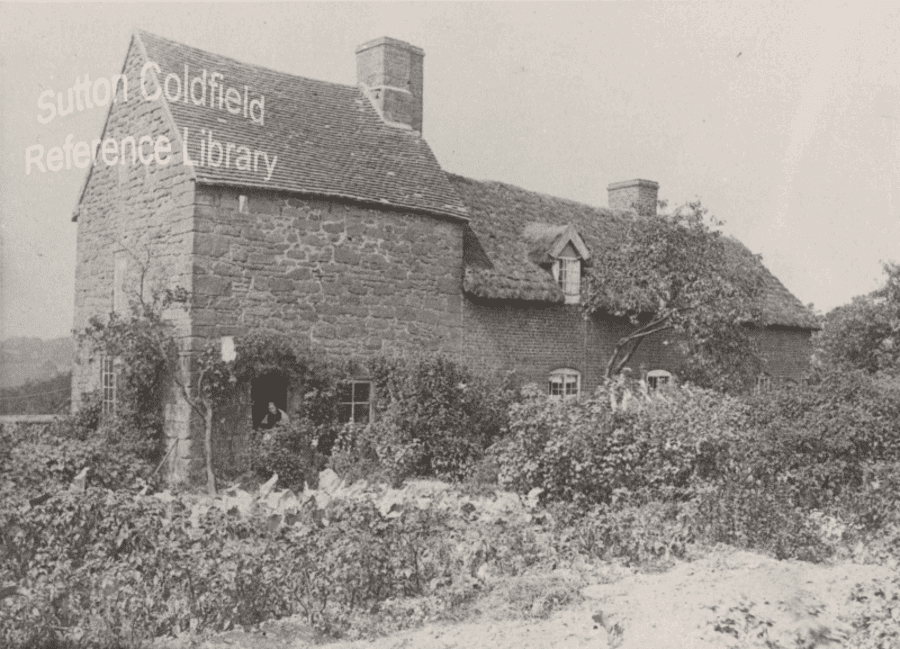
An image of High Heath Cottage from the Sutton Reference Library taken circa 1908. Of it, in 2008 the Sutton Coldfield Local History Research Group observed: “Sutton Coldfield has a number of stone houses dating from the sixteenth century of a kind not found anywhere else in England. According to the great historian Sir William Dugdale, Bishop Vesey built fifty-one of these stone houses here, where previously almost all the houses had been timber-framed. High Heath Cottage is the smallest of the surviving stone houses, built in an isolated spot. In the 1530s it was surrounded by the open commons of High Heath, and today it stands alone in the middle of bleak hedgeless farmland. It is a tall house, with three storeys connected by a stone spiral staircase, but narrow, with only one room on each floor, and a massive chimney. Writing in 1544, John Leland said that Vesey built the houses for his poor kinsmen, but other sources suggest that they were built to house servants of the Bishop who would keep order in outlying parts of Sutton. The house at High Heath has the appearance of a watchtower, and it looks across the valley to a lonely stretch of the old coach road from Coleshill to Lichfield (now the A446) where highwaymen could lurk. The cottage was easy to defend from attack, having, originally, only one ground-floor window. There is a local tradition that a man who had stolen a sheep barricaded himself in the cottage – this at a time when sheep-stealing was a hanging offence. He is supposed to have held out for a considerable time, and so the cottage used to be known locally as ‘Mutton Castle.’ In the nineteenth century the cottage was part of the Moor Hall Estate belonging to the Hacketts of Moxhull, and by 1824 a row of three cottages had been built adjoining it. All four of the cottages were occupied by farm labourers in 1851; one of them, William Lunt, had seven children. The adjoining cottages fell into disrepair, and eventually the end one was converted to form an extension to the stone house to make a single dwelling – the present-day High Heath Cottage stands alone in the landscape much as it did 460 years ago.”The building is clearly in a perilous state, but any of those who enthuse about Channel 4’s ‘Grand Designs’ could find far worse projects than this.If wandering like Heathcliff is your desire, ‘Mutton Castle’ could be the perfect spot for someone with £1 going spare.
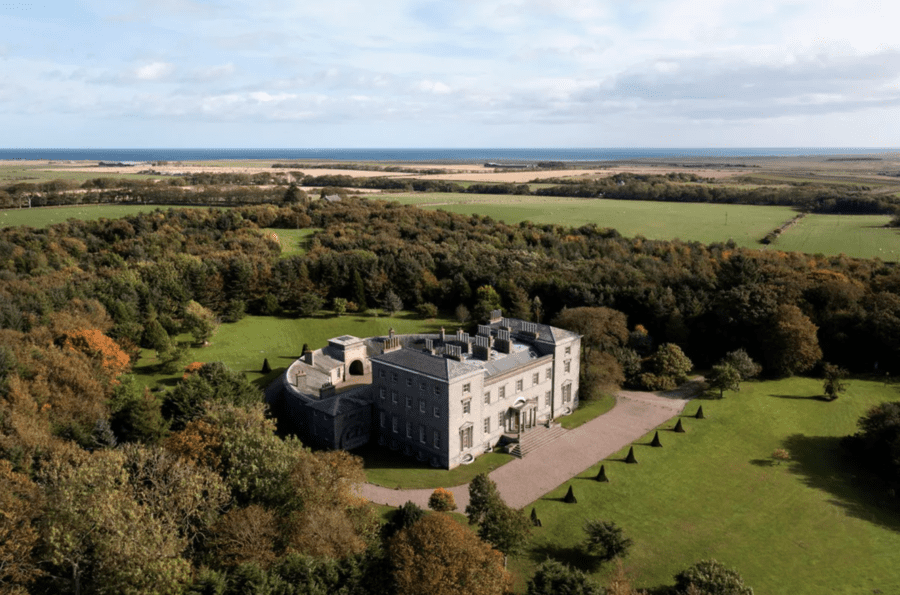
“Internationally important” Greek Revival Cairness House has its price slashed from £3 million to just £1.25 million in spite of it having been given a renovation that supposedly cost over £1 million
Featured in The Steeple Times when last for sale in January 2015, a 10-bedroomed Scottish mansion once lauded by Country Life as “Scotland’s most important Greek Revival house” is back on the market.
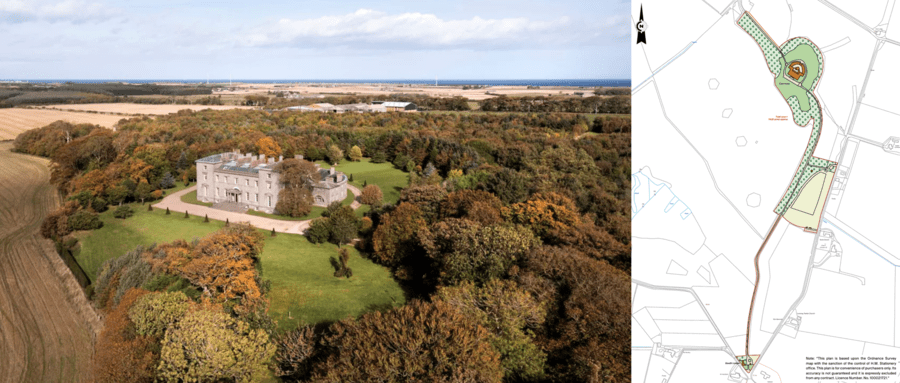
Priced this time at just £1.25 million as opposed to the £2 million it was promoted for back then – and at a staggering sum 58% lower than its £3 million tag in May 2011 – Cairness House at Lonmay, near Fraserburgh is being promoted by Knight Frank. This time round, they hail it as “being a 45-minute drive from city centre of Aberdeen, the oil capital of Europe.”
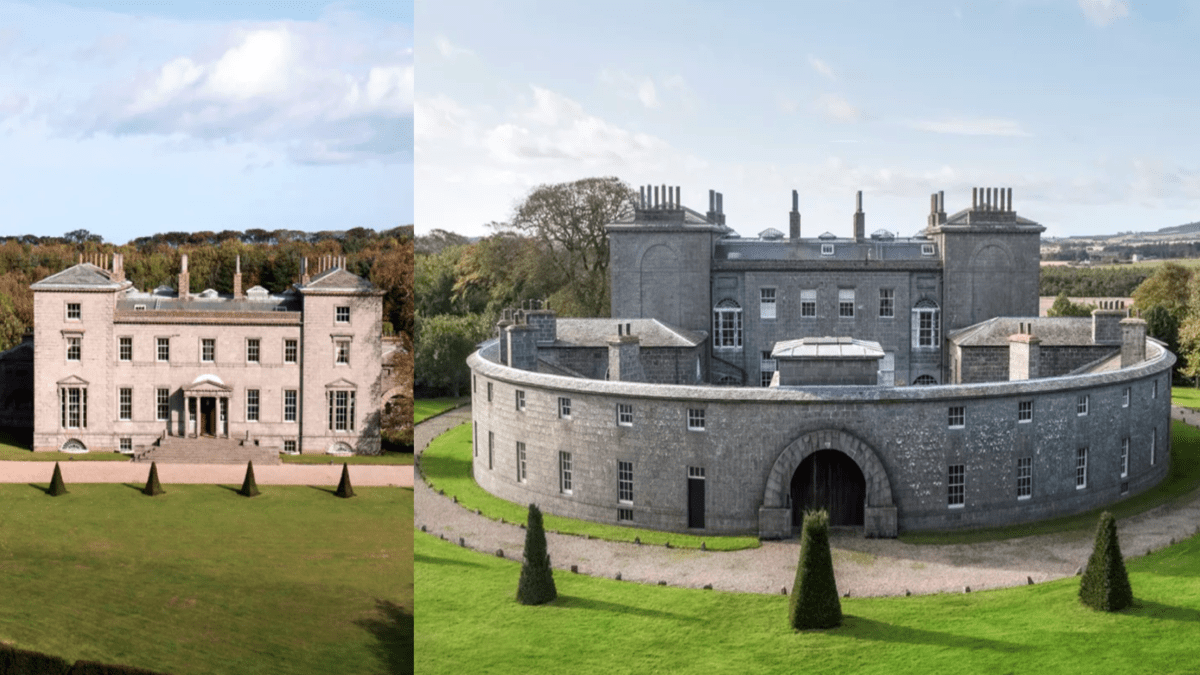
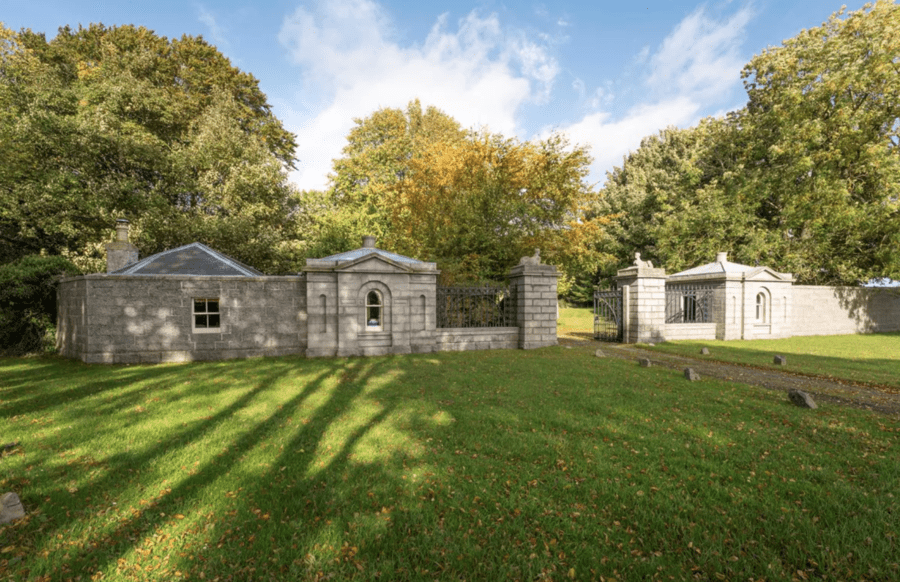
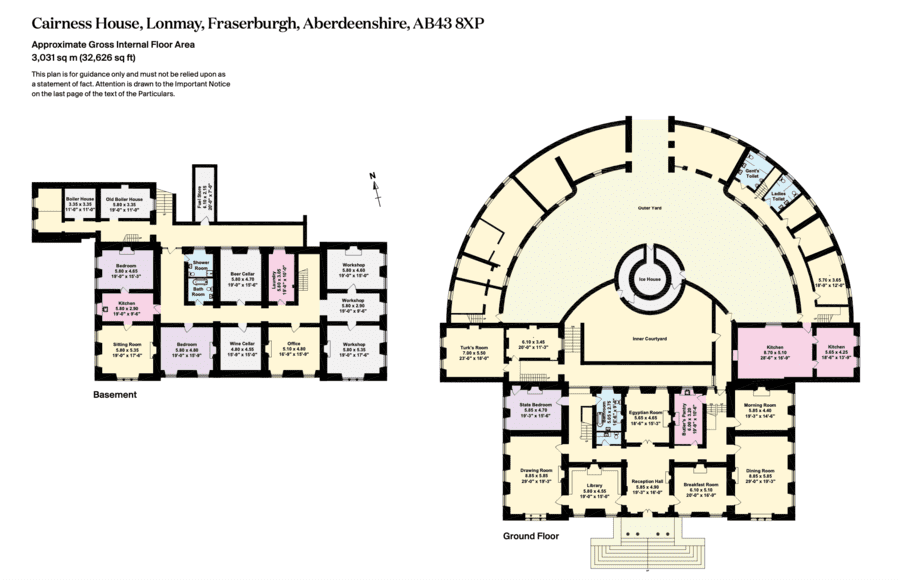
Built to the designs of the much celebrated though very short-lived architect James Playfair (1755 to 1794) using “revolutionary forms of neoclassicism,” here is a truly spectacular residence constructed from finely detailed ashlar. It was designed as a ‘calendar house’ and consists of a 110-foot long main block flanked by two raised ‘bookend’ wings with a 270-foot long ‘hemicycle’ behind.
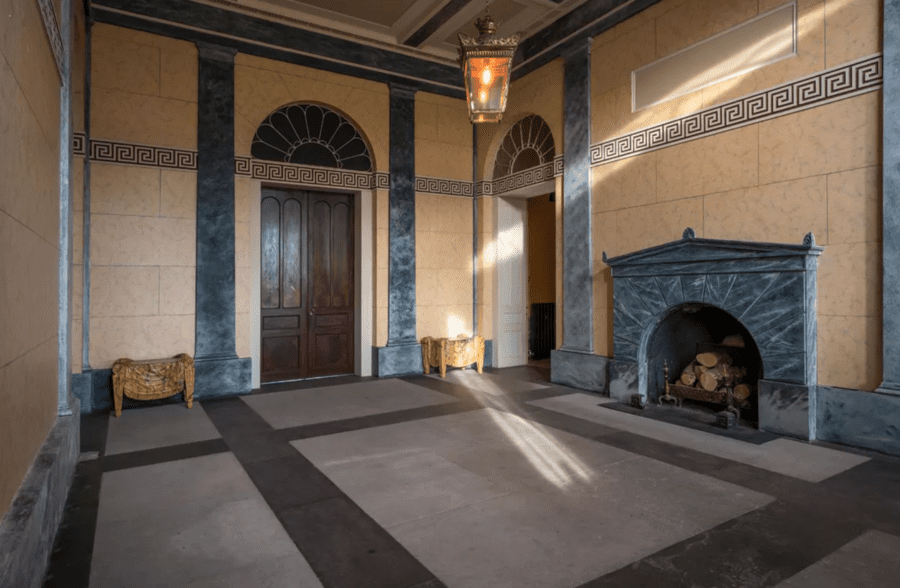
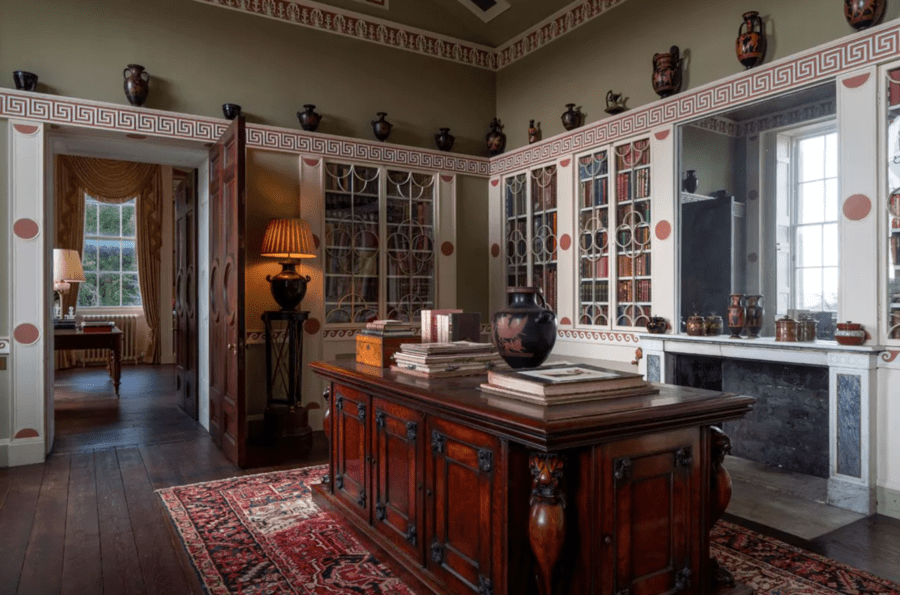
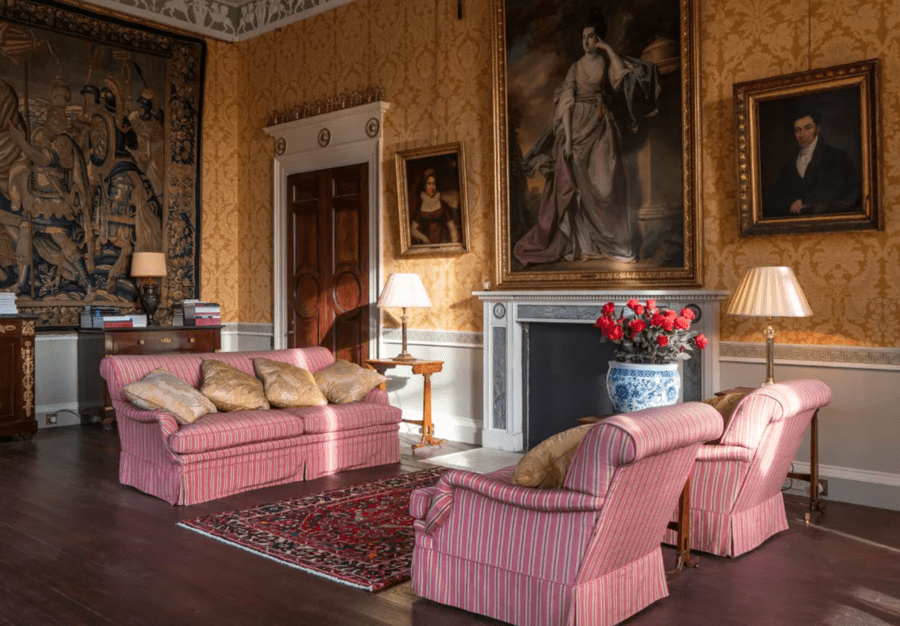
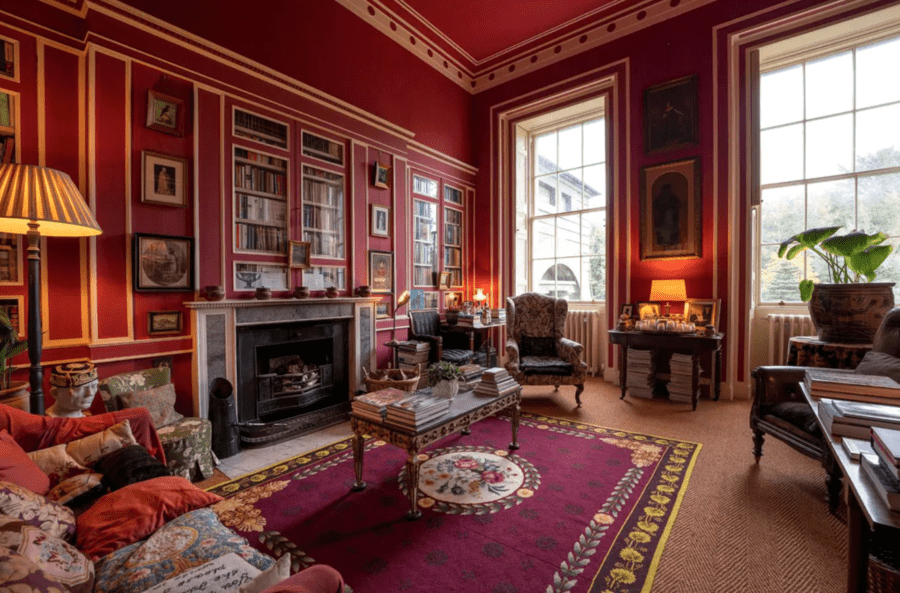
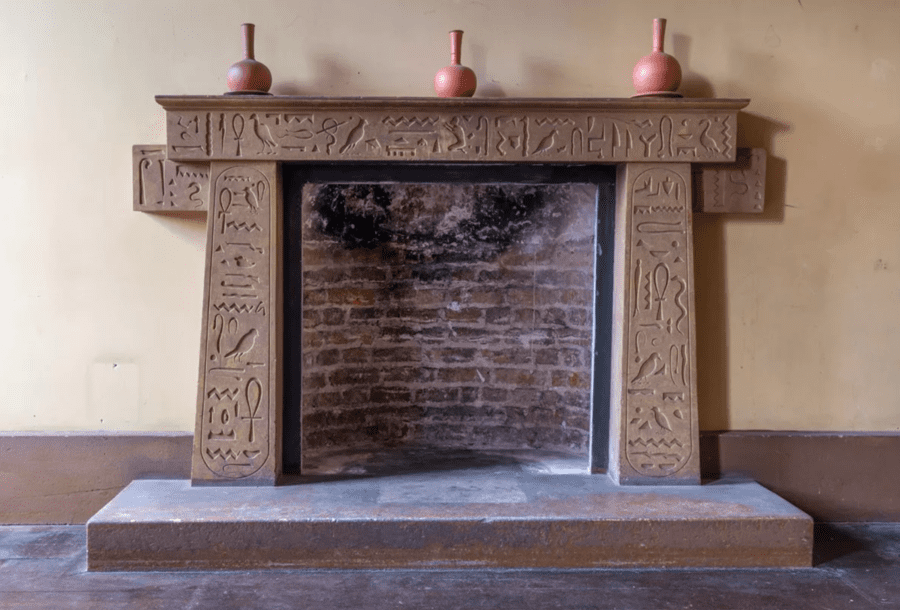
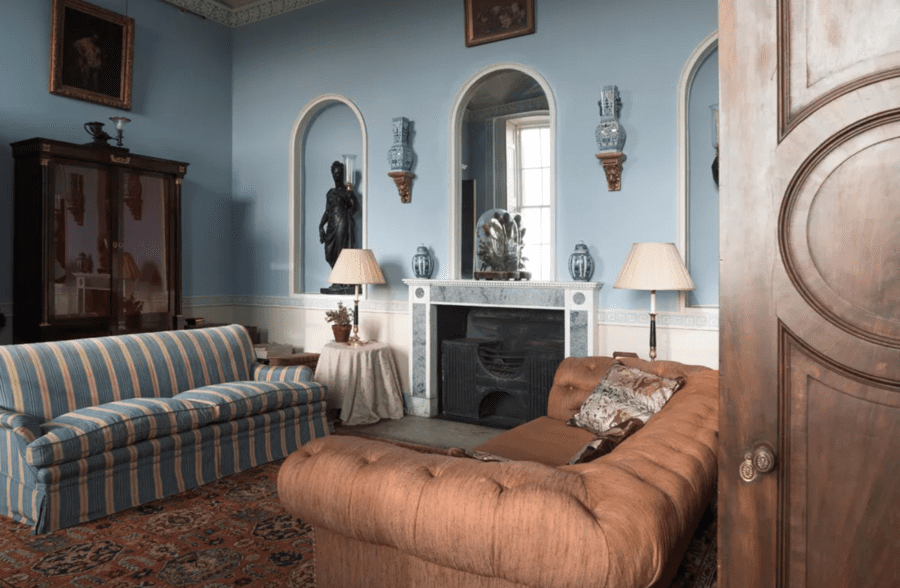
Featuring the earliest surviving ‘Egyptian Revival Room’ in the world – complete with elaborate hieroglyph plasterwork – this is an elegantly proportioned building that extends to some 32,626 square foot.
Speaking of Cairness House to The Scotsman in late October, Tom Stewart-Moore remarked:
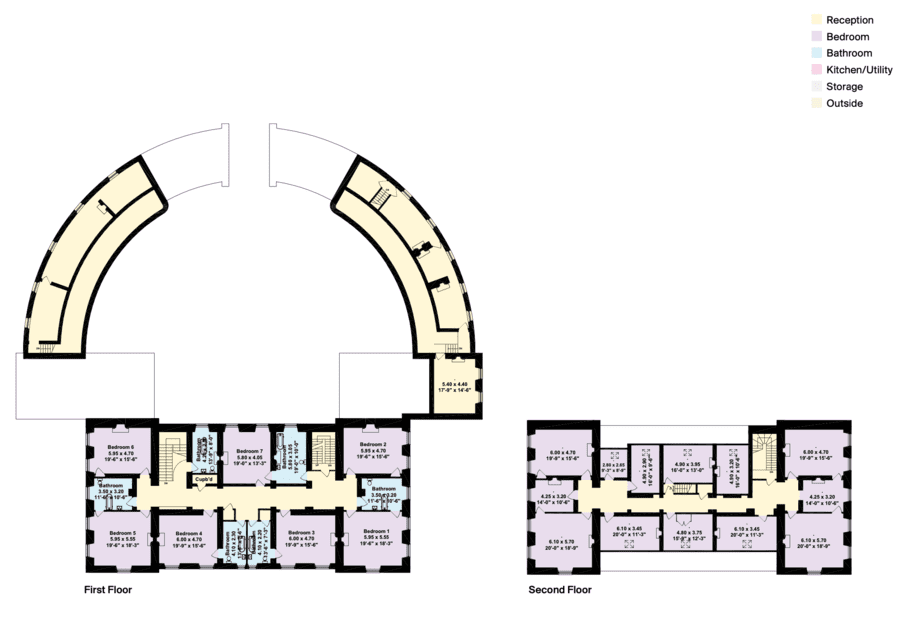
“The main part of the house is finished – the impressive public rooms and the grand bedrooms above. But there is further scope for the bedrooms on the second floor and the extra space in the semi-circle of buildings at the back.”
“The buyer could be someone who loves the architecture and has the budget to develop it further for their own use. Others will want to make the most of the asset to develop as a venue – you have the whisky trail not far away, so it is an interesting hospitality package.”
“But whoever buys it will have to understand the history and its importance – it is an architectural gem and deserves an understanding owner.”
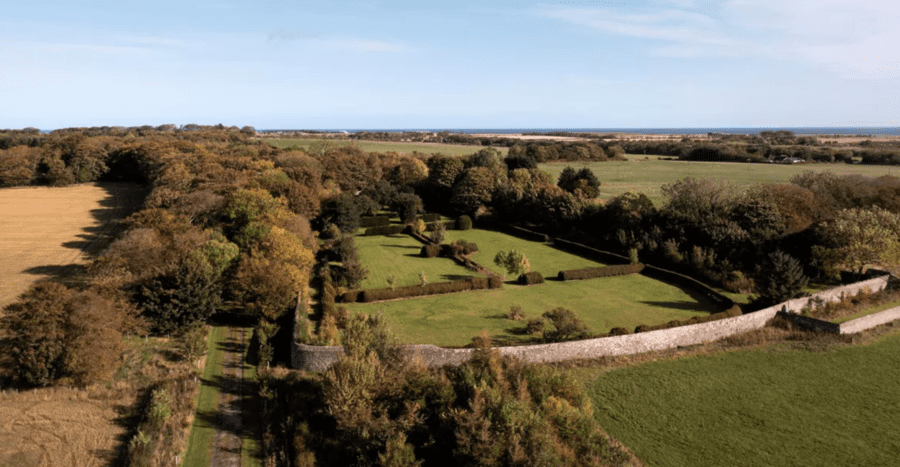
Sadly, of the 9,000 acres that this palatial pad stood in when it was built between 1791 and 1797, just 16 acres remain. The current owners have, however, made the most of what they have and in 2002 planted 150 young specimen trees that created an arboretum that marked the Queen’s Golden Jubilee.
Editor’s Note – Unlike as is the case in many publications, this article was NOT sponsored or supported by a third-party.
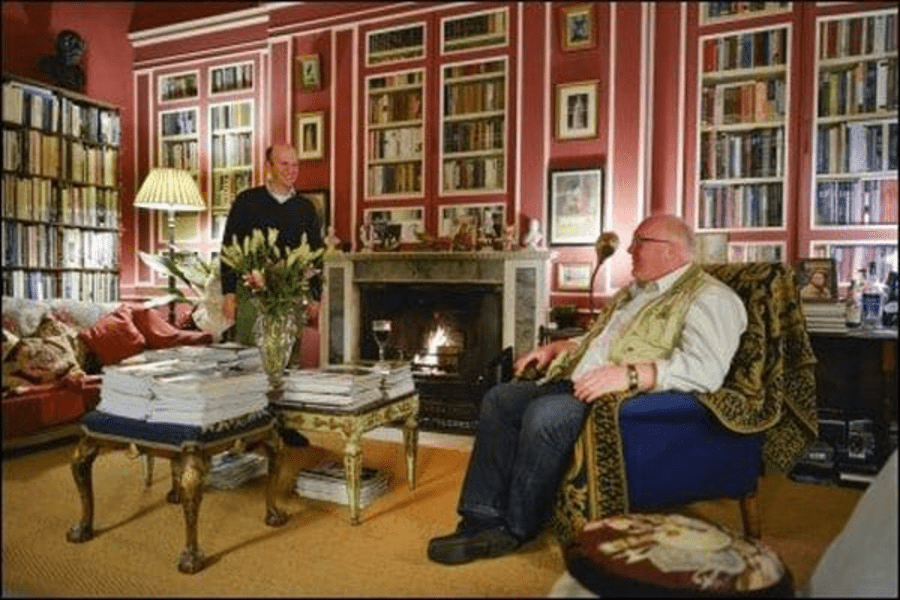
Current owners Khalil Hafiz-Khairallah and Julio Soriano-Ruiz in one of the many reception rooms in a house they have clearly lavished great amounts of money restoring.
The Names & Numbers – Cairness House, St Combs, Lonmay, Fraserburgh, Buchan, Aberdeenshire, AB43 8XP, United Kingdom
November 2022 – Placed for sale with Knight Frank again for the much lower sum of £1.25 million ($1.48 million, €1.44 million or درهم5.44 million), a sum 58% lower than the asking price in 2011.
January 2015 – On sale with Knight Frank for a significantly reduced price of £2 million ($2.4 million, €2.3 million or درهم8.7 million) after four years on the market.
May 2011 – Placed for sale for £3 million ($3.6 million, €3.5 million or درهم13.1 million).
2009 – The restoration works carried out by Khairallah and Soriano-Ruiz were commended by the Duke of Gloucester when their project won the Georgian Group prize for the best restoration of a Georgian house in Britain. In a statement, the group observed: “From being a moribund building at risk riddled with dry rot, Cairness is now a magnificent private home.”
2000 – Sold to Lebanese journalist Khalili Hafiz Khairallah and his Spanish art historian partner Julio Soriano-Ruiz for an undisclosed sum.
The pair subsequently claimed to have spent over £1 million ($1.2 million, €1.2 million or درهم4.4 million) on renovations that included their having “retiled the roof, installed central heating, restored 180 windows and spent a year and a half removing and recasting 51 cast-iron chimney pots.”
“We spent a couple of years looking for a neoclassical house. It’s perhaps surprising that we found it in this part of Scotland, but there are lots of hidden gems in Scotland. It’s the best Greek revival house of its type in Scotland, if not Britain. It’s got the most exquisite neoclassical interiors.”
“It needed an awful lot of work done to it. It was a ‘building at risk’, but we were looking for a house to restore and that was the challenge. We wanted a house that we could bring back to life.”
“It’s actually very easy to live in because all the rooms are on a very human scale. There’s nothing vast or difficult to heat.”
1994 – Offered to the National Trust of Scotland, but turned down by the organisation as “being too costly to repair” and sold to an architect named Philip Miller and his interior designer wife, Patricia, for a sum unknown. They “significantly renovated the property but after Mr Miller suffered a mild stroke, they ‘could no longer undertake such a large task and were forced to sell [in 2000] and find a less demanding project.’”
1991 – Added to the Building at Risk Register by the Scottish Civic Trust.
1950s onwards – The house becomes used as a farmhouse and falls into decline; its park is decimated and subjected to a “mass clearance of trees” to make way for the land being used for agricultural use.
1939 to 1945 – Used by the Consolidated Pneumatic Tool Company of Fraserburgh as evacuation premises for their London head office.
1937 – Sold by the Gordon family to Ethel, Countess of Southesk.
1791 to 1797 – Constructed in the neoclassical style for Charles Gordon of Cairness and Buthlaw to the designs of architect James Playfair assisted by Sir John Soane. At this time the accompanying estate extended to some 9,000 acres of land.
The building is subsequently described in the Pevsner Architectural Guides as: “Of international importance as the only house in Britain, the design and construction of which reflected and evolved with the rapid advances in French neoclassicism towards the end of the C18… Its survival is the more precious as so many of Playfair’s other designs were either not built or have been lost or altered.”
‘The Steeple Times’ selects five houses currently for sale that were decked out with “police line do not cross” tape after murders occurred there; would you want to live in a ‘murder house’?
Since September 2020, when we featured ‘Five of the Worst – Undesirable Homes Currently For Sale’ – amongst them Jeffrey Epstein’s since sold New York “paedo pad” and a Gothic villa in Cheshire where a lawyer stabbed his Sotheby’s auctioneer wife to death in March 2005 – we were inundated with additional suggestions.
In September, the New York Post’s Katie Jackson penned an article on ‘murder houses’ in which she quoted a YouGov poll that found 30% of Americans “wouldn’t hesitate to buy and live in a house where a previous owner was murdered.” The study also found that “only 32% of Americans would deem murder a dealbreaker.”
Going further, Jackson quoted Tony Mariotti, a California listing agent. He shared: “Only California, South Dakota, Alaska and Vermont have laws requiring sellers to disclose a recent death in a home, including murders or suicides.” In Britain, where shockingly estate agents aren’t even regulated, no such declaration has even been on the statute.
Now, following up two years after our previous feature, we today showcase five properties that even the most gung-ho realtor or estate agent would find hard to flog on. “Why?” we hear you ask; the answer: All of them have been the scenes of murders most horrid.
A Double Glazed, Double Murder – Pingle House, The Pingle, Upwell, Wisbech, Cambridgeshire, PE14 9BN, United Kingdom
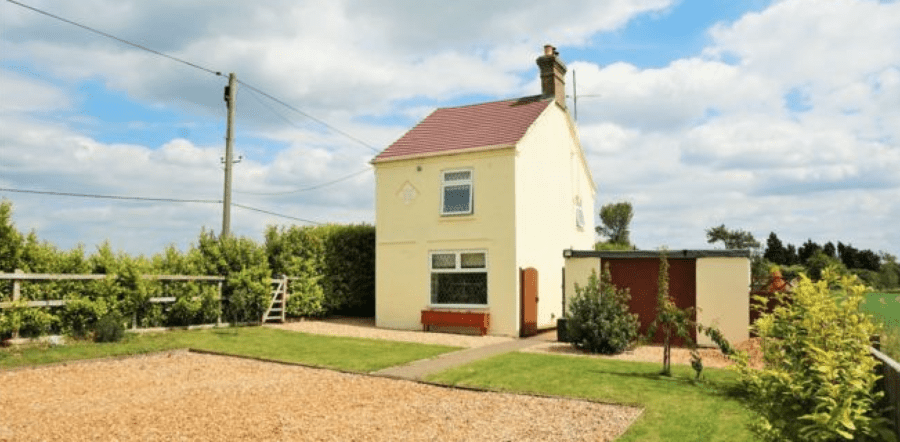
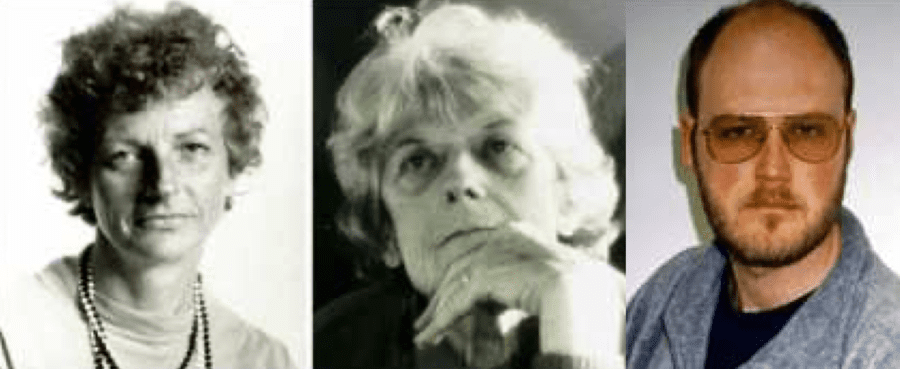
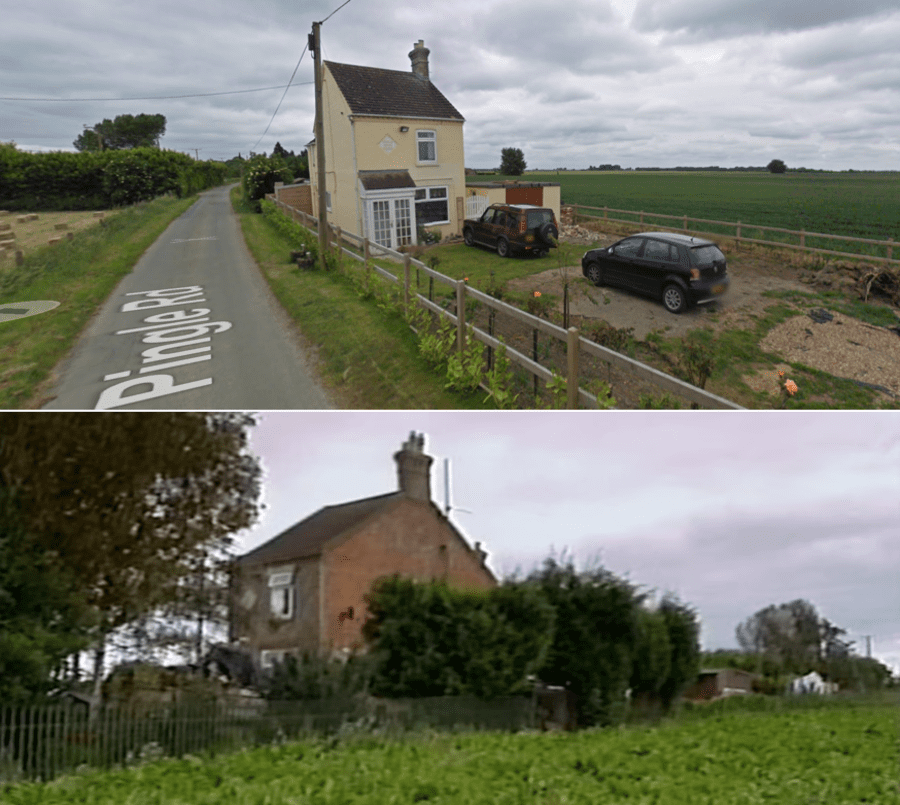
Pingle House as presented in the current marketing brochure from Purple Bricks. No mention is made of the gruesome events that occurred there in January 1999 and instead the agents laud a “spacious home within a rural setting with views over open countryside.”The reasoning for the brutal slayings of Janice Sheridan (left) and her mother Constance Sheridan (centre) has never been revealed as the man convicted of killing them, Kevin Cottrell (right), put in a guilty plea and thus never explained himself. Some still claim him not to be the killer and suggest that the Sheridans had upset travelers in the locality. Whatever the case, they clearly did not deserve to be subjected to multiple stabbings and torture before their untimely deaths.The detached property – which pictures show to have dramatically altered overs the years – was sold at a bargain basement price after the 1999 killings for just £30,000 in 2000. The then purchaser, builder Patrick Withers later told Channel 4: “One person’s misfortune is another person’s gain” of the ‘bargain’ he believed he’d got himself whilst bizarrely his wife, Eileen, recalled having known the Sheridans as she, like them, was also a dog breeder.In the Channel 4 programme ‘Blood Under The Carpet’ – broadcast in 2003 – the Withers showed viewers around the ‘murder house’ they’d purchased. They noted all the changes they’d made, but it seems the original sink present from the time of the killings still remains in the property’s bathroom.
For sale for £200,000($230,000, €233,000 or درهم845,000) through Purple Bricks.
Whilst the property valuation site The Move Market suggests Pingle House should be worth around £251,000 today, it is currently on the market for a sum 20% lower. Sold previously in 2001 for just £30,000, for a remarkable profit at £155,000 in August 2006 and £191,000 in April 2017, here is a 3-bedroom detached house that was the scene of two killings sometime in the days between the 7th and 10th January 1999.
Lived in at that time by Constance Sheridan, 70, and her “successful dog breeder” daughter, Janice, 45, this is an isolated home on the border of Norfolk and Cambridgeshire where both ladies were viciously stabbed to death in what was termed a killing “ruthless and determined.” The case subsequently featured in a Channel 4 programme, Blood Under The Carpet.
A then 33-year-old double glazing salesman with two juvenile convictions for burglary and “indecent acts” in 1983, Kevin Cottrell – who “claimed to be ‘the friendly face of home shopping’” according to The Guardian and who had sold the Sheridans a single UPVC window in 1998 – was convicted and jailed for life for the apparently “motiveless” double murder in April 2000.
Cottrell’s decision to enter switch his not guilty plea to guilty at the last minute left the Sheridans family “devastated.” Though, at the time, Miss Sheridan’s half-sister, Diana Penfold, remarked: “We just want to know why. We were hoping that we might get some answers during the trial, but still we won’t,” bizarrely the website JustJustice.org continues to suggest that “the wrong man is [in] jail.”
Purple Bricks make no mention of the since totally reconfigured property’s past in its sale brochure, but if it does achieve asking price, the current owners will achieve a sum 567% higher than when it was sold after the gruesome slayings that occurred there.
An Evidence Hideway – 2827 Aquetong Road, Solebury Township, New Hope, Pennsylvania, PA 18938, United States of America
2827 Aquetong Road in New Hope, Pennsylvania was where Cosmo DiNardo and Sean Michael Kratz hid “key evidence” that connected them to the 2017 killings. The car of Thomas Meo was found in a shed at the property along with title documents, keys and a diabetes kit that the victim needed to survive. It has been renovated by Cosmo DiNardo’s aunt – who purchased it from his mother in December last year for just $1.Serial killer Cosmo DiNardo (left); victims Thomas C. Meo, 21, and Dean A. Finocchiaro, 19 (top row centre) and Jimi T. Patrick, 21 and Mark R. Sturgis, 22 (bottom row centre) and serial killer Sean Michael Kratz (right). Both DiNardo and and Kratz were 20 at the time of the murders.
For sale for £624,000 ($700,000, €716,000 or درهم2.6 million) through Tony Esposito of REMAX Aspire.
Sold previously for £285,000 in May 2005, £401,000 in August 2006 and for just £1 in December 2021, this 1,528 square foot detached house stands on a plot of 0.89 acres. Built in 1821 and fully renovated, this 3-bedroom property is being marketed as a place to “just unpack your bags and move right in,” but no mention is made of its connections to the murders of four young men between 5th and 7th July 2017.
Bought in 2006 and sold to her sister for a nominal sum in 2021 by Sandra Affatato DiNardo – who still owns the 90-acre farm nearby where her deranged drug dealer son Cosmo DiNardo slaughtered Dean A. Finnochiaro, Thomas C. Meo, Jimi T. Patrick and Mark R. Sturgis with the assistance of his cousin Sean Michael Kratz – a shed at 2827 Aquetong Road was where much of the evidence connected to the slayings was subsequently hidden.
DiNardo, who tried to burn the bodies of the four men in a pig roaster on his family’s farm, subsequently said he had “wanted to set the victims up when they came to the farm to buy marijuana.” He claimed he killed them simply because he “felt cheated and threatened.”
Featured in a two-hour 2020 Investigation Discovery Channel special titled The Lost Boys of Bucks County, DiNardo was sentenced to life in prison without parole in May 2018 whilst Kratz received the same in November that year. DiNardo’s claims that he was “responsible” for at least two other killings in the previous five years remain to this day unverified.
Of her spawn of the devil child, in 2017, Sandra DiNardo pathetically bleated: “My son wasn’t this horrible animal that everybody says he was. He lost his life a year before those kids. He’s a prisoner in his own brain. He’s lost forever.” A neighbour responded: “He was pretty nutty. He used to walk around here in camouflage with a gun hunting squirrels. He’s a scary kid” whilst Cosmo DiNardo himself somewhat more accurately concluded: “I threw my life away for nothing… My life’s done… For nothing.”
The Manson Murder Mansion Site – The Cielo Estate, 10066 Cielo Drive, Beverly Hills, California, CA 90210, United States of America
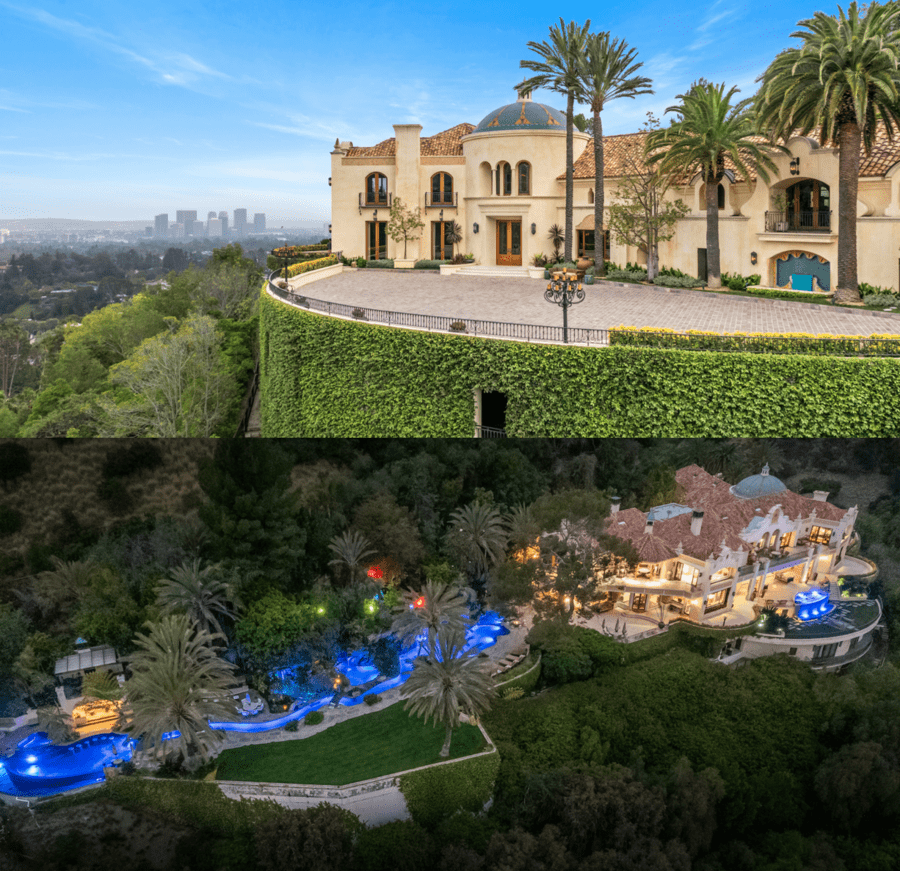
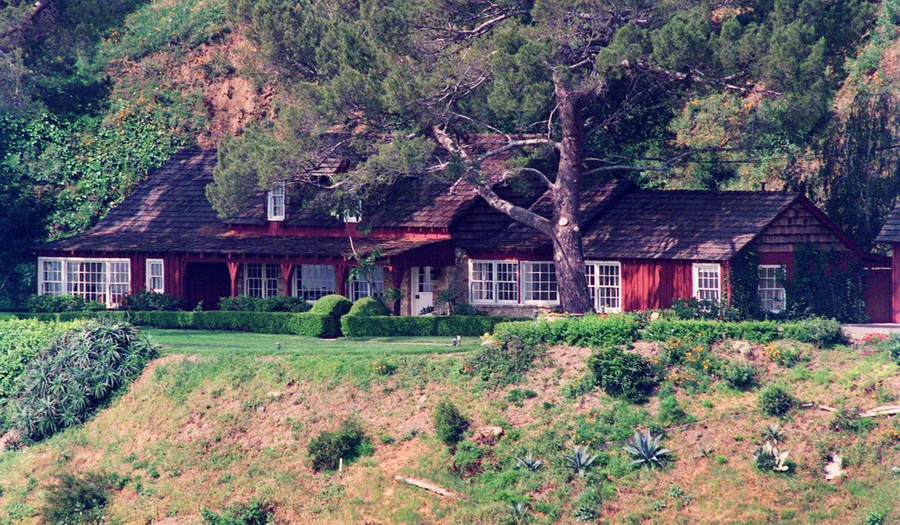
‘The Cielo Estate’ currently for sale extends to 3.6 acres and has everything from a hair salon to a 75-yard pool with 3 waterfalls, 2 Jacuzzis, a 35-foot water slide, a swim-up bar, a private grotto, a koi pond and a lazy river. It is described as “an entertainer’s dream” and “the epitome of world class Beverly Hills luxury living.” There is no mention made in the sales listing of whether there is any memorial to Sharon Tate and her friends being situated on the property.Sharon Tate Polanski (left) was just 26 years old and nearly 9 months pregnant when she was murdered. She had been stabbed 16 times by Charles Manson (centre) and his followers. Screenwriter Jeff Franklin (right) has been trying, without any signs of success, to sell ‘The Cielo Estate’ for quite some time. Before demolition in 1992, the building at 10066 Cielo Drive was a very much more modest affair.
https://www.youtube.com/watch?v=wcgFq50ll2E
For sale for £53.519 million ($59.995 million, €61.415 million or درهم220.332 million) through The Altman Brothers Team and offered for rent for £223,000 per month ($250,000, €256,000 or درهم918,000 per month) also.
A “lazy river” that winds through the 3.6-acre grounds of ‘The Cielo Estate’ is just one of its many unusual features, but what agents Joshua and Matthew Altman fail to mention is that the vast 21,000 square foot crib they’re flogging was built in the exact location where the most infamous Manson murders occurred.
Remodeled most recently by ABC’s Full House sitcom creator Jeff Franklin and listed for £76 million last year, the “mega mansion” offered stands on the rubble of a building where 1960s ‘It Girl’ Sharon Tate was slayed along with three friends on 8th August 1969 by the Californian cult commune gang, the ‘Manson Family.’
Now featuring 9 bedrooms, 18 bathrooms and a garage for 16 cars, the original house – which had been rented by Tate with her film director husband Roman Polanski – was demolished in 1994 after being sold for £5.4 million to a realtor-developer named Alvin Weintraub. He redeveloped and created what he termed an “Andalusian-style estate, in a league of its own” and added to the property by purchasing additional land.
Others to have lived in the various structures that have stood at 10066 Cielo Drive include the French actress Michèle Morgan, the talent manager Rudolph Altobelli and the musician Trent Reznor of the rock band Nine Inch Nails. The latter rented the house in 1992 and set up a recording studio which he dubbed ‘Pig’ in reference to murderer Susan Atkins writing “Pig” in Tate’s blood on the front door.
Reznor stayed in the house less than one year and subsequently explained: “There was too much history in that house for me to handle” whilst in 1998, Weintraub remarked: “We went to great pains to get rid of everything. There’s no house, no dirt, no blade of grass remotely connected to Sharon Tate.”
The Master Bedroom Dismembering – ‘The Castle House’ or ‘The Klindt Castle,’ 1220 Royal Oaks Drive, Davenport, Iowa, IA 52806, United States of America
Current owner Nancy Townsend Klemme states that she has “remodeled the entire house, including the area where the murder took place.” She adds: “[We] didn’t get a discount on the property because of its past.”Mrs Klemme (left) and her family have lived in ‘The Klindt Castle’ for 26 years; Dr James Klindt with his wife Joyce and son Bart (centre) and at his 1984 trial (right).
For sale for £329,000 ($369,000, €377,000 or درهم1.4 million) directly through its current owner, Nancy Townsend Klemme.
Sold to its current owner for £101,000 in October 1996, this is the house where Dr Jim Klindt, a chiropractor, killed his wife Joyce on 18th March 1983 by lobbing a pool ball at her head in their bedroom. He subsequently dismembered her body with a chainsaw, dumped the pieces into the Mississippi river and was sentenced to the maximum 50 years in prison in 1984 for his crimes.
Of why she bought the 3,150 square foot 3-bedroom property, Nancy Townsend Klemme – whose own mother was murdered also – told the New York Post in September: “We bought the house due to the beauty of it and the uniqueness. We were 100% aware of what happened there but it didn’t bother us… I like unique houses.” She is selling up to move to a former monastery she has purchased.
Dr Klindt was released from prison for good behaviour in 2004 and opened a taco stand named Eats and Sweets in 2006 after working for eight out of the twenty years he spent in prison as a cook. He was arrested repeatedly after his release – for drug possession, traffic offences and interfering with officers amongst other things – but later turned to charity work.
Of attempting to do good deeds, the “strong as a bull” doctor – who died in November 2010 after suffering a “bad fall” – remarked: “I figured if you can make something good out of something that wasn’t so good, that’s good. I told them they should use my notoriety to get a few bucks for the kids.”
Turning to whether he felt any remorse for killing his wife – who’d planned to divorce him – Dr Klindt added: “I apologised for the act, I apologised for the lies.” A letter he sent to Joyce Klindt’s family, Criminal revealed, was never answered and supposedly his son “doesn’t like it much when reporters write stories about his dad’s crime.”
A Coffee and Concrete Bather, Horror in Honolulu – 357 Lelekepue Place, Hawaii Loa Ridge, Diamond Head, East Honolulu, Hawaii, HI 96821, United States of America
357 Lelekepue Place looks like a dream home by the ocean; it proved the ultimate nightmare for Gary Ruby.34-year-old Scott Hannon was arrested along with his boyfriend in March 2022, but freed the next day as the police realised he “played no part in the murder” (left); victim Gary Ruby (centre) and 23-year-old Juan Tejedor Baron, confessed to the killing after being tracked down by cops in California, trying to flee on a bus to Mexico (right).The Corcoran Pacific Properties listing for the property lauds that it was “completely remodeled by a European designer in 2015” yet makes no mention of the gruesome attempt to dispose of the body of Gary Ruby in the bathroom there in Febraury 2022 (left); the agent included also a photograph of a “welcome” door mat but did not include any of the “police line do not cross” tape that was likely there previously (unsurprisingly).
Recently sold for £2.296 million ($2.575 million, €2.630 million or درهم9.457 million) by Heidi Bertucci of Corcoran Pacific Properties.
Just sold for a sum 13.7% higher than the £1.957 million it was knocked down to Gary Ruby for in November 2020, this 2,327 square foot gated community 3-bedroom, 3-bathroom residence was marketed as an “entertainer’s dream” by selling agents Corcoran Pacific Properties.
Sadly for 73-year-old Mr Ruby, the ‘entertainment’ didn’t last long at this seaside address as he was strangled to death there by his 23-year-old male lover Juan Tejedor Baron on 8th February 2022 after he had revealed to him that he had HIV.
Baron subsequently entombed Ruby’s body in concrete – to which he somewhat ludicrously added coffee beans believing they would help “better mask the smell of the decomposing body” – before stealing his victim’s Audi A6. He then fled with his other lover, 34-year-old Scott Hannon, to California.
Subsequently arrested and charged in March, Juan Tejedor Baron’s trial has now been delayed until January 2023. Whether the new owners of this murder house will serve their guests coffee remains unknown, but the Beat of Hawaii website confirmed in August that listing agent Heidi Bertucci “said the property received a true Hawaiian blessing before being listed for sale.” She graciously also added that the “bathtub has, of course, since been replaced.”
As government of Gibraltar auctions a seized £65 million oligarch superyacht with interiors by Jeffrey Epstein’s favourite designer to ‘bargain seekers,’ Matthew Steeples asks: “Why haven’t other seized ‘questionable assets’ been sold off already?”
On Tuesday in Gibraltar, the first sale of a superyacht seized from a Russian oligarch is likely to be hammered down when the government there flogs it at auction after it was detained when it docked there in March this year. It is estimated to be worth circa £65 million ($76.9 million, €76.6 million or درهم282.4 million), but may well sell for much less.
Of the gin palace, whilst Dunya Yachts laud it as “universally acclaimed” and “widely acknowledged as the finest yacht to ever come out of Turkey,” others mock it is as “Jeffrey Epstein naff” given its interiors were originally designed by the since croaked paedophile’s favourite designer’s Alberto Pinto (1943 – 2012) eponymous firm.
Having echoes of bad taste that would undoubtedly appeal to Epstein’s big bottomed boat loving mate Lord Mandelson – a chap known for bringing together George Osborne, Nat Rothschild and Oleg Deripaska on a £127 million ($150 million, €149 million or درهم551 million) 238-foot long tub off Corfu in August 2008 – also, Axioma sleeps upto 12 in 6 cabins with a crew of upto 20 individuals. It has been described by ‘Alex The Yacht Guy’ on his YouTube channel as “one of the most chartered yachts in the industry” and has been priced out from around £75,000 per night ($88,700, €88,400 or درهم326,000 per night) upwards.
Decorated to have a “beach house-style interior” according to the text of an undated marketing brochure for it prior to the exterior being part repainted in a curious-to-garish shade of baby blue, the 5 deck vessel also has a gallery, a main salon, a 14 seat dining room with Versace china and glassware, an 8 person 3D cinema, an infinity swimming pool, an alfresco dining area for upto 16, a Jacuzzi with a bar, open air and indoor gyms, a massage room, a steam room and a sun deck.
Accompanying also is a ‘chase boat and limousine tender’ capable of 40 knots, two further tenders and water toys including kayaks, wakeboards, 2 Sea-Doos and a Yamaha WaveRunner.
Offering caution about the condition of the vessel, Howe Robinson Partners state of Axioma in their marketing material: “[This is marketing material] a general overview and without guarantee and is left to buyers to form their own impression during inspection.”
Curiously, as reported this morning by The Guardian’s Rupert Neate, proceeds from the sale will benefit JP Morgan rather than the people of Ukraine as the US investment bank is owed £17 million ($20.1 million, €20 million or درهم73.9 million) by Pumpyansky – a billionaire whose worth has previously been estimated as high as £1.84 billion ($2.18 billion, €2.17 billion or درهم8 billion).
“Pumpyansky [is] a shareholder of Pyrene Investments… [They] took a loan with JP Morgan Chase & Co… [but] Pumpyansky’s involvement with Pyrene Investments breaches the loan agreement. Pyrene Investments is owned by Furdberg Holding of Cyprus and, at the time of the loan agreement, Pumpyansky was the sole shareholder.”
“As Pumpyansky was on the sanction list his assets were frozen and it was illegal for the bank to accept any repayments from him. With his superyacht Axioma seized in Gibraltar, JPMorgan Chase & Co. pursued an opportunity to see a return on their investment.”
Of interest in the sale, Nigel Hollyer, the broker to the Admirality Marshal of the Supreme Court of Gibraltar, told The Guardian that “more than 30 people had flown to inspect the yacht in person.” He added:
“[There has been an] unexpected late surge by prospective buyers. They are people from across the world. They are people who own or have owned boats of similar size, and have been attracted to this boat because of the judicial sale process – they are convinced they’re going to get a bargain.”
To date, Axioma has counted Formula 1 driver Lewis Hamilton and Kim Kardashian’s half-sister Kendall Jenner as noted names who have spent time onboard. Who’ll be next is unknown, but one thing’s for sure – it most certainly is as unlikely to be Putin’s apologist Bernie Ecclestone – who faces his first court hearing in London on Monday coming over an alleged £400 million ($473 million, €471 million or درهم1.7 billion) fraud – as any other rotten Russian oligarch.
Today, given the noted previous enthusiasm of the likes of likely next Prime Minister Liz Truss for grabbing the ill-gotten gains of Russian oligarchs, isn’t it now time that some more of the seized boats and buildings in London, Lake Como and beyond belonging to these people were put up for sale? Equally, isn’t it time that some money from such sales was actually used to help those in need in Ukraine also?
Pictured top – Dmitry Pumpyansky being awarded the 4th Degree Order ‘For Merit to the Fatherland’ on 31st July 2014 by President Vladimir Putin (left) and the Axioma superyacht formerly owned by the former in auction marketing material in August 2022.
Swanky renovated artists’ studio in ritzy South Kensington enclave for sale for just £375,000 – naturally, there’s a catch
In November 2016, The Steeple Times featured the sale of a 1,352 square foot artists’ studio behind Fulham Road favourite PJ’s when it was offered for the punchy sum of £2.7 million ($3.20 million, €3.18 million or درهم11.74 million) in spite of being in need of modernisation. Records on RightMove.com suggest it did not actually sell then and has not sold since.
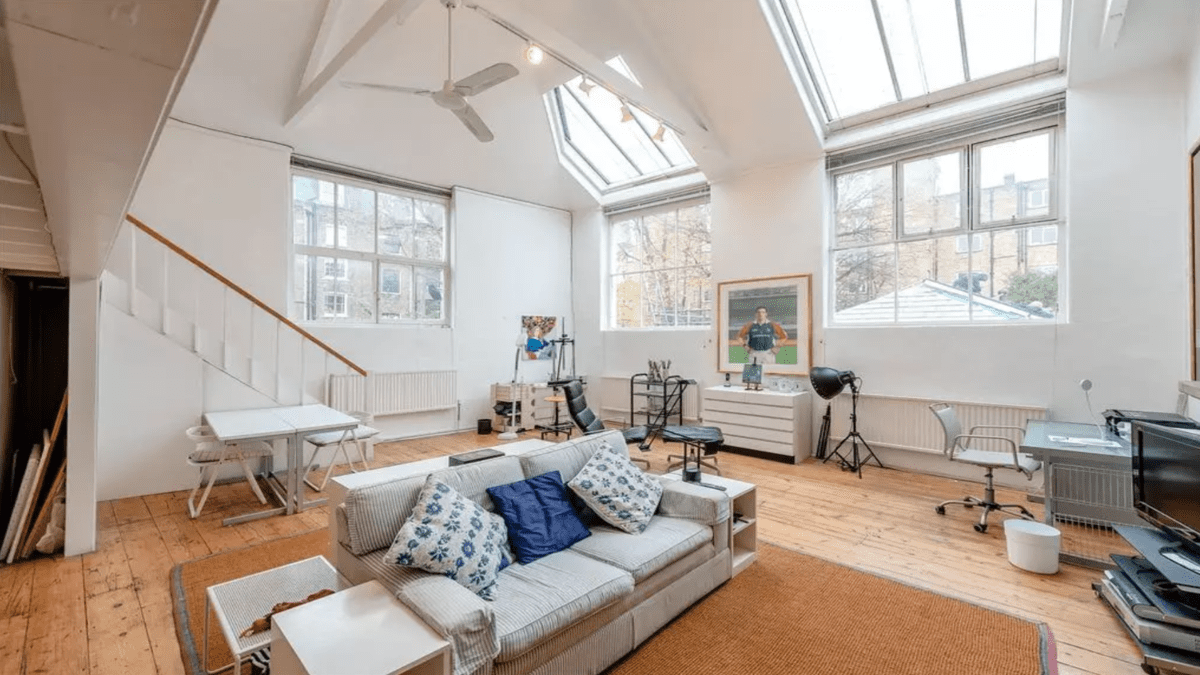
Now, six years later, when you’d have thought rocketing London property prices would have meant such properties would be selling for a hell of a lot more, another studio in the ritzy enclave of Avenue Studios, SW3 is actually for sale for just £375,000 ($444,000, €441,000 or درهم1.6 million) or £460 per square foot ($545, €541 or درهم2,000 per square foot) in spite of being in excellent condition. There is, inevitably, a catch – and a rather major one.
The 814 square foot property offered is on a lease of 13 years, expiring on 12th June 2035, and is accompanied by a rent of £12,900 per year ($15,300, €15,200 or درهم56,100 per year) and a service charge of £1,448 per year ($1,714, €1,704 or درهم6,293 per year).
Any buyer, thus, will have to pay at least £186,524 ($221,000, €220,000 or درهم811,000) on top of the asking price if they opt to stay in residence until 2035, but they will get a spectacular double height living-dining-working space with an open-plan kitchen, a mezzanine bedroom, a shower room and a parking space in the heart of the Royal Borough of Kensington and Chelsea.
Between 1850 and 1914 many artists’ studios were constructed in Kensington and Chelsea in the wake of “the pro art political climate” supported by the likes of Disraeli, Gladstone and the royal family. The first of them, ‘The Avenue’ – where the properties mentioned are situated – was built at 76 Fulham Road in 1870.
Now Grade II listed, this ‘set’ of studios has variously been the home and workplace of a number of distinguished artists including Joseph Boehm Edward Poynter, Alfred Gilbert and Philip Wilson Steer.
If you’re into the art of a bargain (that actually might not quite be such a bargain), contact agents Best Gapp. You might even, potentially, be able to follow the lead of Donald Trump and get yourself an ‘art of a deal’ at a knockdown price.
Situated on the first floor of this Victorian building, agents Best Gapp laud the space as “live-work” and a “rare opportunity… near to the excellent facilities of South Kensington and the Kings Road.”The kitchen is functional but any buyer would likely rip it out and replace with something a bit more swanky.The sleeping platform mezzanine bedroom isn’t exactly large and just 8-foot in width but does fit a double bed. There are wardrobes but those that like to shop at nearby swanky shops such as Carolina Herrera, JOSEPH and Ralph Lauren might be rather disappointed at their size.The shower room is functional and certainly far more chi-chi than the basic facilities that were probably present when actual artists lived in this space.The high-ceilinged space is bright and airy and ideal for a bachelor or bachelorette. As to whether an upcoming artist could actually afford it, that seems unlikely but if someone with the wealth of Tracey Emin is looking for a crash pad in Chelsea, this could be an ideal spot given it is especially close to inspirational locations including the Victoria & Albert Museum.The exterior of the property offered is not exactly awe inspiring in its beauty.The floor plan of the 814 square foot Sydney Close studio shows the expansive size of the 22’3” by 21’10” main area. The agents specify it as providing “sitting areas” and “dining areas” rather than actually lauding it as suitable for artistic creations.
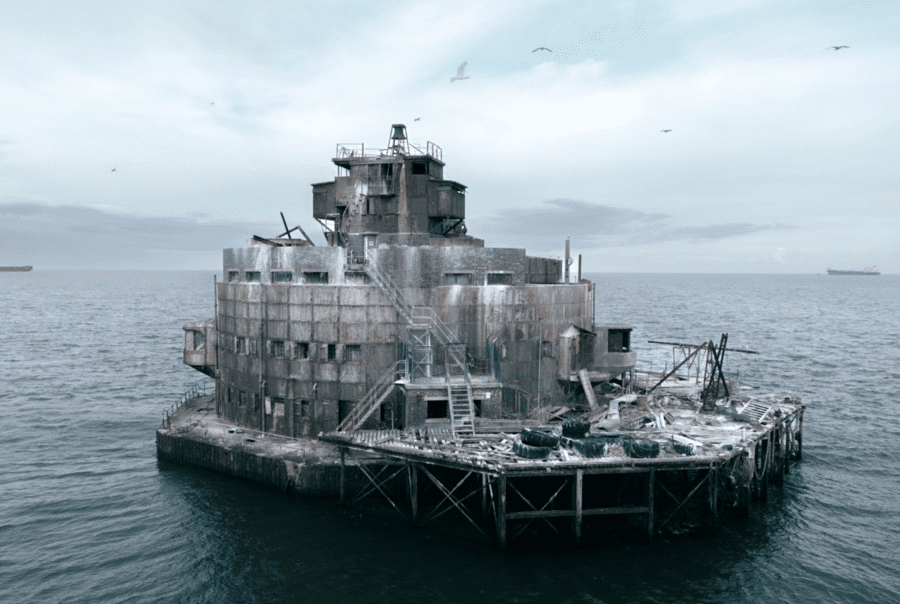
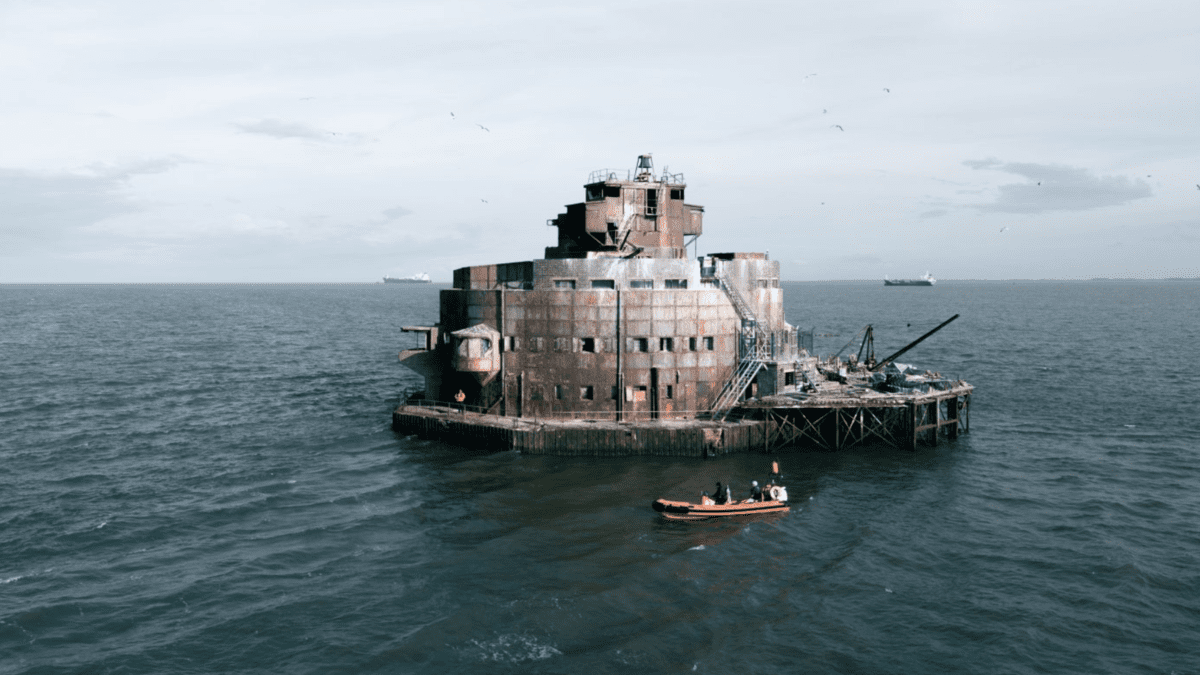
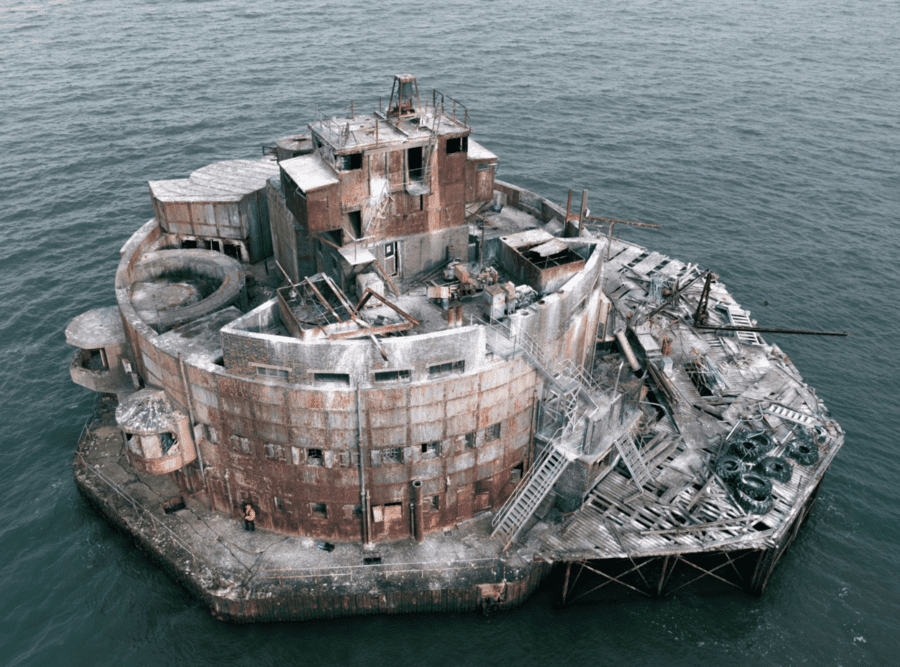
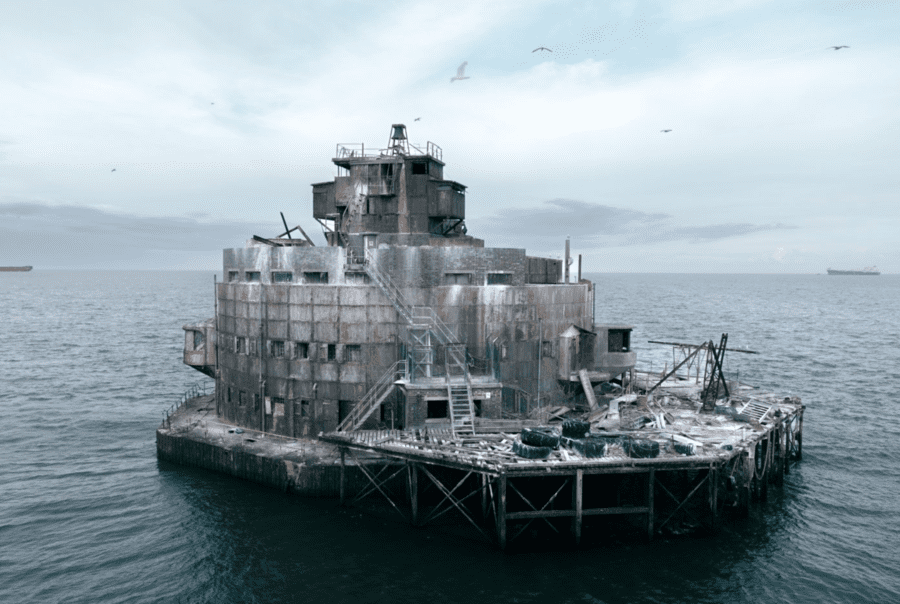
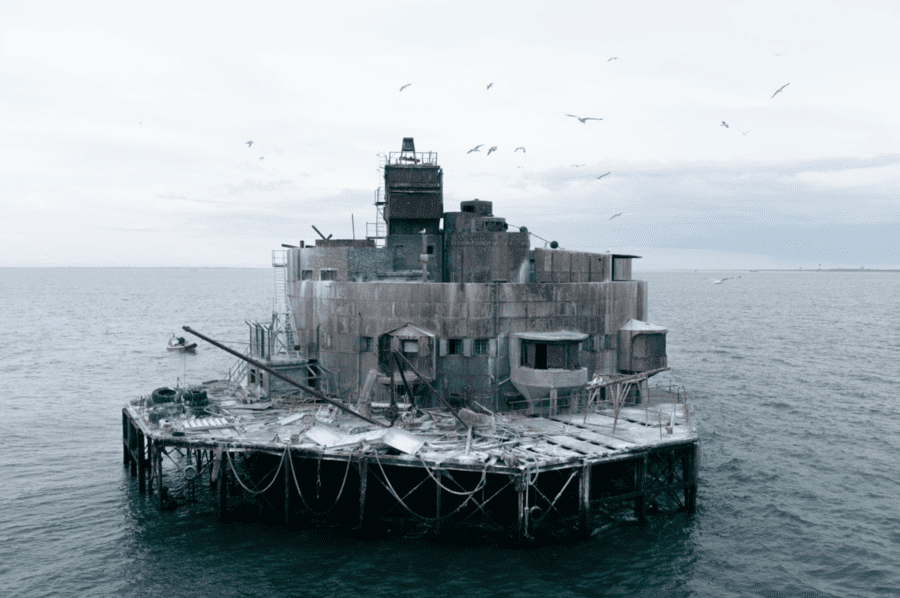
Once planned as an ‘Island of Hope’ for detoxing drug addicts, derelict Bull Sand Fort in the Humber Estuary sells at auction for 880% above its £50,000 guide price
The British get into a tizzy about islands and castles and when Bull Sand Fort in the Humber Estuary, near Hull was placed on the market recently it was inevitable that its £50,000 ($60,100, €58,700 or درهم220,600) guide price was going to attract the usual dreamers and wannabe Grand Designers.
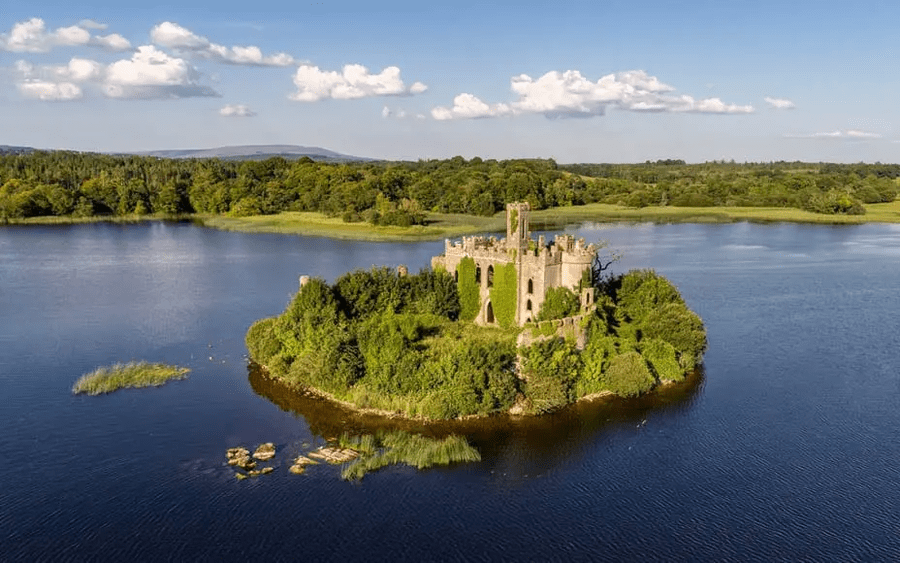
Just as with the sale of McDermott’s Island – featured in The Steeple Times in November 2018 when offered for sale at £79,000 ($94,900, €92,700 or درهم348,500) and still one of our most repeatedly opened articles to this day – interest in this kind of property clearly ignites the passions of the public.
Described as being in “need of refurbishment” but with “potential for development and alternative uses,” here is a structure that could be turned into a destination hotel, Bond villain type lair or even a truly unusual Airbnb. When it came on the market, “bemused locals” are said to have “jokingly asked: ‘Do Tesco deliver?’”McDermott’s Island at the southeastern end of Lough Key, near Boyle in County Roscommon proved very popular with readers of ‘The Steeple Times’ in spite of the castle there being in a very “perilous state.” Associated with the Legend of Una Bhan – the tragic story of a girl who fell in love with the son of the clan chief owner of the island – McDermott’s Island also featured in the works of W. B. Yeats and was visited by Sir Bob Geldoff when he made a BBC film titled ‘A Fanatic Heart’ about the Irish poet in 2016. It was previously used for the Sky One sitcom ‘Moone Boy’ starring Steve Coogan and Johnny Vegas in 2014.
Built between 1915 and 1919 with the intention of being used in the First World War but not actually put into actual operation until the Second World War, the now Grade II listed sea fort offered for sale was one of two fortifications intended to protect the strategically important ports of Hull and Grimsby from German submarines.
Originally “featuring 12-inches of armour designed to withstand gunfire from naval units,” according to the selling agents Savills, “during World War II, it was armed, besides the usual small and rapid-fire weapons, by two 6-inch guns and two 6-pounder guns. It had sufficient accommodation for a garrison of 200 men… The fort was decommissioned in 1956.”
Going further, they add: “The fort includes 3 floors with basement and magazine below sea level, and central 2-storey observation tower. Fresh water supply is available at the fort via an artesian well. Externally there is a balcony and jetty.”
Sold in 1997 to the since defunct Streetwise Charitable Trust – who intended to turn it into an ‘Island of Hope’ for detoxing drug addicts – Bull Sand Fort is of 4-storeys and the larger of the two structures. It is said to have been constructed with “great difficulty as its sandbank is 11-feet below water.”
In spite of being a rotting hunk of concrete that is 1.5 miles from dry land and only accessible by boat, Bull Sand Fort knocked down at auction yesterday for £490,000 ($588,500, €575,000 or درهم2.2 million) or 880% above the guide price by Savills.
The smaller of the two forts, Haile Sand Fort – also known as Sand Haile Fort – sold for £117,000 ($140,500, €137,300 or درهم516,000) at auction in October 2018 to a “mysterious buyer” on a guide price of £90,000 ($108,100, €105,600 or درهم397,000). It appeared in an article in GrimsbyLive this year and photographs indicated that though it appears in a better condition than Bull Sand Fort, it is still to be redeveloped.
Of the property, Steven Morish of Savills told the BBC that it was an “exciting and unique lot” and added it could be “a high-end hotel, restaurant, ‘Grand Designs’ style personal dwelling, retreat or a tourist attraction.” Honorary research fellow at the Blaydes Maritime Centre at the University of Hull Dr Robb Robinson mockingly responded: “The building would be a bit ‘short on mod cons and a bit bracing’ for anyone to live there. ‘If somebody can up with something interesting to do with it, that would be fantastic,’ he added.”During the Second World War a steel mesh was stretched between the two structures and across the mouth of the estuary to prevent enemy submarines getting to the strategically important ports of Hull and Grimsby. Now, perhaps, given his liking for warring and the fact that the country likes him out of sight, maybe the buyer could let Boris Johnson and his puppet mistress move in. They’d be far enough out to see, after all, to stop annoying the nation whilst allowing them to blast out ABBA whilst only annoying seagulls.The Streetwise Charitable Trust planned to rename the construction the ‘Island of Hope’ and had a working name of ‘Detox UK.’ They intended to provide “purposeful front-line help to people blighted by unrelenting addiction who have reached a critical point to recover from alcohol and substance abuse.” They added that they intended “to provide a free, safe and secure medical detox facility on a World War One island fort located in the River Humber estuary for 30 days.” They are now listed as a “removed charity” and the future of this very unusual structure is now in the hands of whoever paid 880% above its guide price yesterday.
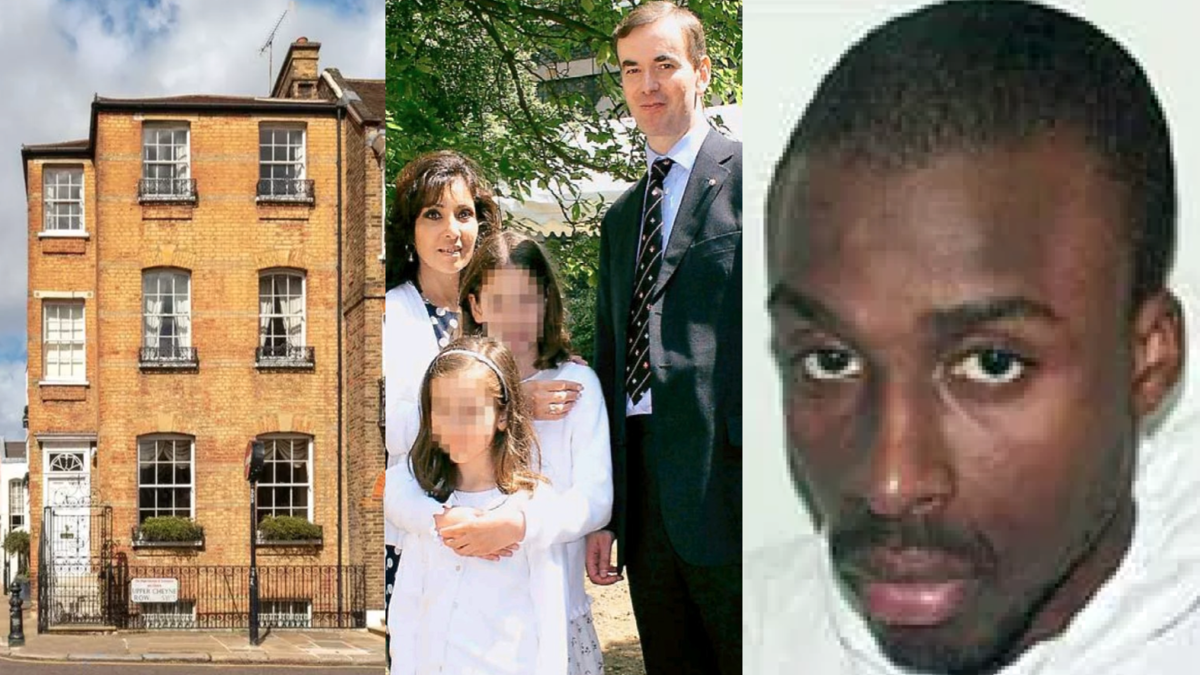
Chelsea townhouse where financier John Monckton was tragically murdered by “666 Devil’s Child” Damien Hanson in 2004 for sale for sum 18% lower than it was offered for in 2013; it is situated opposite a church where a bomb in 1940 killed 19 people
Sadly, however, behind the gate of this Old Chelsea residence, on Monday 29th November 2004 at 7.30pm in the evening, a “well-respected” 49-year-old financier named John Monckton was murdered and his wife, Homeyra, severely assaulted also in front of their nine-year-old daughter.
Attacked by two clearly deranged thugs, Damien Hanson – who was tellingly nicknamed “666 Devil’s Child” – and Elliot White, posed as postmen to “trick” their way into the house, the Downside and Oxford educated managing director of bonds at Legal and General Investment Management was repeatedly stabbed whilst his wife sustained injuries that “partly paralysed” her.
Saved by the quick-thinking actions of her daughter Isobel, who had hidden on an upper floor of the residence and who then called 999, Old Bailey judge The Hon. Mr Justice Calvert-Smith later told Hanson: “Without her prompt action Mrs Monckton would have died and you would have faced two charges of murder.”
In a statement subsequently, the Monckton family remarked of “an incredibly gentle and thoughtful man” whom “apart from his outstanding career in the City, also devoted a great deal of his time to charitable works.” Speaking to The Guardian, the now 12th Duke of Marlborough added: “It’s very out of character. SW3, and especially this area, is a very good address. It’s quiet, which I suppose is its worst offence.”
At trial in February 2006, where Hanson’s lawyer Michael Wolkind QC “said he could offer no mitigation except that some murderers were even greater monsters,” it was revealed that the killer had “kept an arsenal of knives under his bed at a children’s care home and funded his lifestyle through muggings and drug dealing.” Shockingly, he had been given early release from jail despite a parole board assessment that he had a 91% chance of reoffending whilst White was on bail on drug charges at the time of the killing.
Of him, an “ex-friend” added: “Damien was never an angel but he found an identity through hip-hop and gangsta culture. It corrupted him and fuelled an obsession with violence, guns, knives, gold and diamonds – anything luxury.”
In another development, in November 2006, Hanson’s sister, Laura Campbell, was sent down for four years for giving him a false alibi in which she claimed he had been watching EastEnders with her at a friend’s flat on the night of the murder. The clearly equally deviant then 20-year-old had even penned notes that “had the appearance of prompt cards, which would remind her of the story she would have to tell,” shared prosecutor Parmjit Cheema.
There is off-street parking for one car and a courtyard garden and since the brutal events there in November 2004, the property has had significant security measures installed.
April 2022 – Offered for sale for £4.5 million ($5.8 million, €5.4 million or درهم21.2 million) by agents The London Broker, a sum % lower than its April 2013 marketing price.
April 2013 – Offered for sale for £5.5 million ($7.1 million, €6.5 million or درهم25.9 million) by W. A. Ellis.
29th November 2004 – John Monckton (born 13th October 1955) murdered at the house. His killer Damien Hanson was subsequently sentenced to serve three life sentences for killing him and the attempted murder of his Homeyra Monckton.
His associate, Elliot White, received a sentence of 18 years for manslaughter, wounding with intent and robbery whilst the trial judge recommended that Hanson should serve a minimum of 36 years before being considered for parole.
Victim John Monckton (right), the scene in the aftermath of the murder (centre) and widow Homeyra Monckton (right). The podcast ‘Murder Mile’ – which reported on the tragic events of 29th November 2004 in May 2021 – “With two violent and dangerous men in his home, who would stop at nothing to get what they wanted, although he wasn’t a fighter, John would do anything to protect them… even if it meant his life. With his face beaten, as Elliot gripped him from behind in an immovable bear-hug, John’s fight to force both men out of his home and away from his family was failing. And yet it was then – without warning – that the Devil’s Child lashed out in a volley of frenzied stabs against an unarmed outnumbered man. John’s hands were slashed and bloodied as he valiantly fought off his attacker; as the stained six-inch blade sunk into his shoulder, his right arm and his pelvis. So ferocious was this assault, that having mistakenly stabbed Elliot, with the full length of the blade he buried the knife deep in John’s chest, as one wound ripped through his right lung, and the last, fatally skewered though this good man’s heart. John slumped to the floor in the doorway of his lounge, and as the robbers fled up Glebe Place, Elliot whooped ‘ah man, you’re the business’ and Damian giddily fingered his haul of a few hundred pounds and some inexpensive costume jewellery, as the two cowards left John and Homeyra to die… which they would have done, had it not been for Isobel, who was only nine-years-old. Doing as her mother said, Isobel locked the door, called the police and set off the panic alarm, alerting the street. Sat amongst the blood-spattered room, with Homeyra feeling weak, pale and partially paralysed, there was no denying that the quick-thinking of this little girl had saved her mother’s life. But with John lying motionless, his eyes closed and his moans barely a whisper, even the paramedics couldn’t save him.”Convicted criminals Damien Hanson and Elliot White. The former has now been in jail for 16 years whilst the current situation of the latter – who was sentenced to 18 years – is unknown. Of the murderer’s term, Wikipedia remark: “This is one of the lengthiest minimum terms ever handed out in British legal history, and is expected to keep Hanson behind bars until at least 2041 and the age of 61.”
In May 2021, ‘Murder Mile’ featured the case in a two-part podcast. They described the “brutal murder” in detail and aside from referencing the victim’s “humanity” and “goodness in his blood,” commented on his having been “a moral man who was old-fashioned but effective.” In a clearly well researched feature they referenced how the family had moved to 30 Upper Cheyne Row in 1994 and that they and their two children, Isobel and Sabrina, had lived an “idyllic” life there prior to the tragic events on Monday 29th November 2004. The podcast revealed that the killer knew the name of his victim and had tracked his wife in the days prior to the slaying and had appeared at the door to the house with a postal sack over his shoulders. Hanson and his cowardly accomplice had brought with them both a gun and six-inch blades and left the couple to die after having stolen items and money valued at just £4,000.
A photograph of the house taken in 1949 and shared on the blog ‘A London Inheritance’ shows it to then be painted white and lacking the “ornate ironwork” entrance gates now installed (left) whilst today it has exposed brickwork (right).The drawing room of the property measures 24’6” by 15’4” and is the main entertaining area in a property that the selling agent lauds as having 25 windows.The dining room is located on the ground floor and has doors onto a courtyard garden.The dining kitchen is perfectly functional, but clearly any buyer will likely rip it out and replace it with something a little more modern.One of five bedrooms in the four-floor house.The courtyard garden is enclosed and private. Note the security measures which includes bars on the windows and spikes on the entrance gates to the parking area above.The Catholic Church of Our Most Holy Redeemer and Saint Thomas More stands opposite the house where a murder most horrid occurred on 29th November 2004. The church was used as an air raid shelter during the Second World War and on the night of Saturday 14th September 1940, when 100 people were sheltering in the crypt, a high explosive bomb hit the building. It killed 19 people, but amazingly “the overall fabric of the church did not suffer major damage.”A floor plan of the 2,196 square foot property currently offered for sale for £4.5 million by The London Broker.
Chinese vase found in 2-up, 2-down house in Nottinghamshire sells for sum 29,900% higher than its estimate much to surprise of owner who was told by auction house to expect just £50 for it
A routine house clearance of an “ordinary two-up, two-down” house in Nottinghamshire led to an extraordinary result after a 38-centimetre high vase discovered there sold for a staggering sum at auction in spite of initially being considered a reproduction.
Of the remarkable story, auctioneer Charles Hanson of Hansons Auctioneers commented:
“I spotted the vase in an ordinary two-up, two-down. It was filled with a few dried flowers in a bedroom. I picked it up and asked the seller if he knew anything about it. He mentioned that it had been given to his father when he was working as a chauffeur in the 1950s.”
“That prompted me to look closer. Working in the antiques world can feel a little like being a detective at times as you have to question, probe and hunt for clues to discover treasure in unexpected places.”
“The blue and white vase embellished in typical Chinese style but it seemed incongruous. Why would a valuable piece of Chinese ceramics be tucked away in a modest house in Nottinghamshire?”
“The property was due to be cleared and an offer of £1,000 had been made for the contents – but I arranged for the vase to be auctioned. However, despite my gut instinct, I made a mistake. After examination, I decided it was repro and consigned the vase into Hansons’ March Antiques and Collectables sale with a guide price of around £50 ($65, €60 or درهم240).”
“But when the auction catalogue went live online extraordinary bids started to come in for the humble vase. I withdrew it from sale to give myself time to consult Chinese ceramics experts and, importantly, ensure we achieved the best price possible for our client.”
Subsequently presented to Chinese ceramics experts, the vase was identified as a bulbous bodied blue and white bottle vase made circa 1640. It was reconsigned with an estimate of £2,000 to £3,000 ($2,600 to $3,900, €2,400 to €3,600 or درهم9,600 to درهم14,400) and then hammered down for the extraordinary sum of £15,000 ($19,600, €18,100 or درهم72,000) on 1st April.
Concluding, Mr Hanson added:
“I was delighted and our client was astonished. I was reminded yet again that antique treasures turn up in unexpected places. Inherited pieces of staggering value sit on top of cupboards or languish in glass cabinets for decades.”
Pictured top – Auctioneer Charles Hanson with the vase.
Previously in October 2020, we featured the sale of five waste bins that had come from the home of the late American socialite and philanthropist Jayne Wrightsman. Offered with an estimate of £230 to £390 ($300 to $509, €278 to €471 or درهم1,103 to درهم1,871), the Henri Samuel designed items eventually knocked down for the astonishing sum of £33,900 ($44,300, €40,900 or درهم162,600) or 14,639% higher than the original low estimate.In November 2021, we featured the auction of a “one-of-a-kind” non-fungible token (NFT) trading card of Cristiano Ronaldo. Auctioneers Bonhams sought £597,000 to £896,000 ($800,000 to $1.2 million, €697,000 to €1 million or درهم2.9 million to درهم4.4 million) for this “something and nothing.” They managed to achieve a much lower but still ludicrous sum of £306,000 ($400,000, €370,000 or درهم1.5 million) for the “item.”
In 2016, Christie’s sold a large Ming Dynasty blue and white ‘Dragon’ jar for £15.6 million ($20.4 million, €18.9 million or درهم74.9 million) at an auction in Hong Kong. The circa 1426 to 1435 item had previously been thought to be just an “18th-century jar” and was described by the firm’s Marco Almedia as “an incredibly expensive umbrella stand.”
An 18th century Chinese vase made Chinese emperor Qianlong sold at auction in November 2010 for a record sum of £43 million ($56 million, €52 million or درهم206 million). It had been found during a house clearance in the London suburb of Pinner by a lady whose sister had died. It had been sitting on a bookshelf its owner not realising the treasure sat before her. Subsequently the story went somewhat sour when the buyer refused to pay the auction fees and ultimately sold to an “unidentified buyer from the Far East” for “up to £25 million ($33 million, €30 million or درهم120 million).
As items from the fictional home of Uncle Monty in ‘Withnail & I’ go to auction, we choose five of the best offered starting at just £100 and share also a selection of quotes from this wonderful black comedy and offer up the ingredients to play the film’s infamous accompanying drinking game
Though routinely regarded as one of the finest British films ever made, Withnail & I is most definitely like Marmite: You either get this seminal black comedy and adore its loucheness or, well, you simply don’t get its decided darkness and just don’t.
Loosely based on director and writer Bruce Robinson’s own life as a struggling actor in Camden, London in the late 1960s and starring Richard E. Grant, Richard Griffiths and Paul McGann, this iconic film has inspired not only epic drinking games but also featured one of the “flamboyantly bearded” eccentric Nubar Gulbenkian’s Rolls-Royces. That striking coachbuilt motor complete with a speedometer in the rear so Mr Gulbenkian could tell his chauffeur to “speed up and don’t spare the horses” when required featured in The Steeple Times when offered for sale for £195,000 ($265,000, €231,000 or درهم972,000) in October 2014.
https://www.youtube.com/watch?v=d9Z0DV33gAY
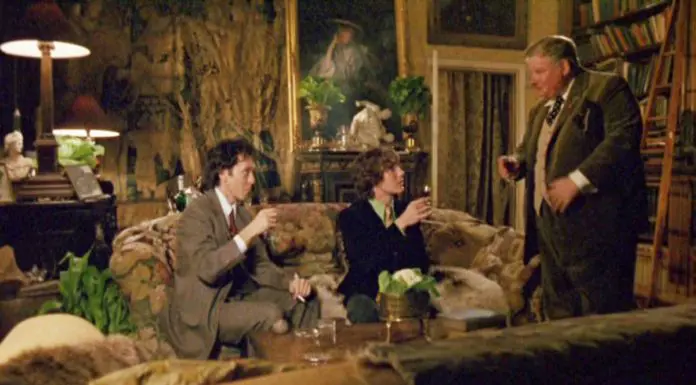
Richard E. Grant and Richard Griffiths in the library at West House, Glebe Place, Chelsea, London, SW3.Richard E. Grant, Richard Griffiths and Paul McGann in the film with the Nubar Gulbenkian Rolls-Royce.£20 million West House, Glebe Place, Chelsea, London, SW3 was home to Professor Bernard Nevill and is now owned by the billionaire retail tycoon François Pinault.
Withnail & I was filmed primarily at Sleddale Hall, near Shap in Cumbria – sold for circa £265,000 ($360,000, €314,000 or درهم1.3 million) in 2009 – and at West House in Glebe Place, Chelsea – sold to billionaire retail tycoon François Pinault for £20 million ($27 million, €24 million or درهم100 million) in 2011 – and now after a previous auction in July 2011, further contents from the latter that were used in the film are to be sold by Bellmans Fine Art Auctioneers of Wisborough Green, West Sussex between the 22nd and 24th February.
Lot 900 – A Chesterfield style sofa by Howards Limited
Estimate – £4,000 to £6,000 ($5,400 to $8,100, €4,700 to €7,100 or درهم19,900 to درهم29,900). A large Chesterfield style sofa with arched back and out swept arms on oak turned supports, 245cm wide; 90cm high.
Lot 805 – A Flemish historical tapestry
Estimate – £2,000 to £4,000 ($2,700 to $5,400, €2,400 to €4,700 or درهم10,000 to درهم19,900). First half of the 17th century, depicting a battle scene, probably Brussels, 291cm high; 504cm wide.
Lot 880 – A pair of mid 19th century Napoleon III Ormolu mounted ebonised and pietra dura side cabinets
Estimate – £2,000 to £4,000 ($2,700 to $5,400, €2,400 to €4,700 or درهم10,000 to درهم19,900). Each with marble tops over single panel door, 116cm wide; 131cm high.
Lot 870 – A pair of mahogany baluster table lamps
Estimate – £100 to £200 ($136 to $271, €119 to €237 or درهم498 to درهم997). 19th century and later, adapted, each with carved lotus leaf base, 33cm high including electrical fitment.
Lot 830 – An Italian marble bust of Apollo Belevedere
Estimate – £100 to £200 ($136 to $271, €119 to €237 or درهم498 to درهم997). After the antique, late 19th Century, weathered, 29cm high.
Withnail drinks in the order of 9 ½ glasses of red wine, 1 pint of cider, 1 shot of lighter fluid, 2 ½ shots of gin, 6 glasses of sherry, 13 whiskeys and ½ a pint of ale through the film. Here they are in order:
Mouthful of red wine
Lighter fluid (e.g. overproof rum)
Double gin
Finger of cider (with ice)
Finger of cider (with ice)
Finger of cider (with ice)
Glass of sherry
Two big chugs of sherry
Mouthful of sherry
Sip of sherry
Double whisky
Mouthful of whisky
Mouthful of whisky
Mouthful of whisky
Mouthful of whisky
Splash of whisky
Single Teachers
Double Teachers
Double Teachers
Single Teachers
Sip of sherry
Three fingers of ale
Sip of red wine
Gulp of sherry
Small glass of red wine
Sip of red wine
Half glass of red wine
Sip of Pernod
Sip of red wine
Sip of red wine
Gulp of red wine
Gulp of red wine
Finger of red wine
Finger of red wine
Gulp of red wine (1953 Margeaux)
Gulp of red wine (1953 Margeaux)
Gulp of red wine (1953 Margeaux)
Gulp of red wine (1953 Margeaux)
The Best Lines in Withnail & I
Richard E. Grant as Withnail and voted the 3rd favourite film one-liner in a 2003 poll of 1,000 film fans:
“We want the finest wines available to humanity, we want them here and we want them now.”
More on wine:
Withnail: “I’ve some extremely distressing news.”
Marwood: “I don’t want to hear it. I don’t want to hear anything. Oh God, it’s a nightmare, I tell you, it’s a nightmare.”
Withnail: “We’ve just run out of wine. What are we going to do about it?”
On being drunk:
Withnail: “I’m utterly arseholed.”
On money:
Marwood: “If my father was loaded, I’d ask him for some money.”
Withnail: “If your father was my father, you wouldn’t get it.”
On politics:
Monty: “Are you a sponge or a stone?”
Marwood: “What do you mean?”
Monty: Do you like to experience all facets of life? Or do you shut yourself off from new experience?”
Marwood: “I voted Conservative.”
Withnail on his own family:
Marwood: “How come Monty owns such a horrible little shack?”
Withnail: “No idea.”
Marwood: “You never discuss your family do you?”
Withnail: “I fail to see my family’s of any interest to you. I’ve absolutely no interest in yours. I dislike relatives in general and in particular mine.”
Marwood: “Why?”
Withnail: “I’ve told you why. We’re incompatible.”
Withnail on his own career:
Withnail: “I’m a trained actor reduced to the status of a bum!”
On the squalor they live in:
Withnail: “What is it? What have you found?”
Marwood [pulling some goo out of the sink]: “Matter.”
Withnail: “Look at us! Nothing that reasonable members of society demand as their rights! No fridges, no televisions, no phones. Much more of this and I’m going to apply for meals on wheels.”
As they drive past some schoolgirls:
Withnail [leaning out the car window]: “Scrubbers!”
Schoolgirl: “Up yours, grandad!”
Withnail: “Scrubbers! Scrubbers!”
Marwood: “Shut up.”
Withnail: “Little tarts, they love it.”
Overtaking a car on the motorway:
Withnail: “Here comes another f**ker!”
On the farmhouse they stay in:
Withnail: “This place is uninhabitable.”
Marwood: “Give it a chance. It’s got to warm up.”
Withnail: “Warm up? We may as well sit round this cigarette. This is ridiculous. We’ll be found dead in here next spring.”
Withnail: “How can it be so cold in here? It’s like Greenland in here. We’ve got to get some booze. It’s the only solution to this intense cold.”
Uncle Monty’s attempts to seduce Marwood:
Monty [entering Marwood’s room in the dark]: “Boy… boy… I know you’re not asleep, boy.”
Monty: “I had to come. I tried not to. Oh, how I tried not to.”
Marwood: “Listen, Monty, there’s something I have to explain to you.”
Monty: “You needn’t explain, [Withnail’s] told me everything. He told me that first day you came to Chelsea.”
Marwood: “What’s he told you?”
Monty: “He told me about your arrest in the Tottenham Court Road. He told me about your problems. How you feel. Your desires.”
Marwood: “Problems? What problems?”
Monty: “You are a toilet trader.”
Monty: “You mustn’t blame him. You mustn’t blame yourself. I know how you feel and how difficult it is. And that’s why you mustn’t hold back, let it ruin your youth as I nearly did over Eric. It’s like a tide. Give in to it, boy. Go with it. It’s society’s crime, not ours.”
Marwood: “I’m not homosexual, Monty.”
Monty: “Yes, you are! Of course you are! You’re simply blackmailing your emotions to avoid the realities of your relationship with him.”
Marwood: “What are you talking about?”
Monty: “You love him. And it isn’t his fault he cannot love you any more than it’s mine that I adore you.”
On taking Uncle Monty’s money to buy wellingtons:
Withnail: “I think a drink, don’t you?”
Marwood: What about the wellingtons?”
Withnail: “Oh, bollocks to the wellingtons. We’ll tell him they had a farmers’ conference and had a run on them.”
To the local poacher:
Jake: “I might come and see you lads in the week. I might fetch you up a rabbit.”
Withnail: “We don’t want a rabbit, we want a pheasant.”
Jake: “Listen, you young prat. I ain’t got no pheasants, ain’t got no birds. No more than you have.”
Withnail: “Course you have, you’re the poacher.”
Jake [pointing an eel at him]: “If I hear more words out of you, I’ll put one of these here black pods on you.
Withnail: “Don’t threaten me with a dead fish!”
Jake: “Half dead he may be, but I’ll come up after you, and I’ll wake you up with a live one.”
Returning to London:
Danny: “Where exactly have you two been?”
Marwood: Holiday in the countryside.
Danny: “That’s a very good idea. London is a country coming down from its trip. We are 91 days from the end of this decade and there’s gonna be a lot of refugees.”
On having a hangover:
Withnail: “I feel like a pig shat in my head… I’ve got a bastard behind the eyes… There must and shall be aspirin!”
On wanting yet more booze:
Withnail: “I must have some booze. I demand to have some booze!”
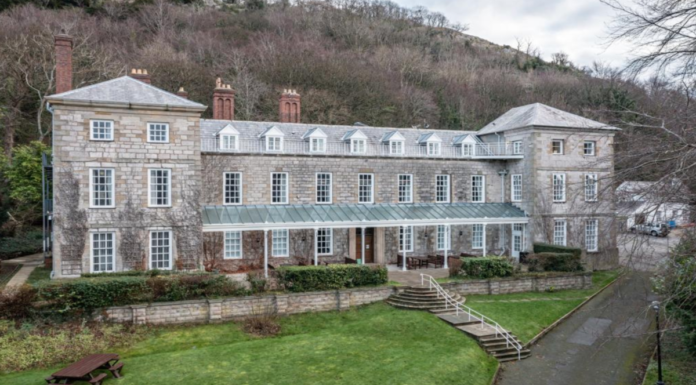
Majestic Georgian mansion Marle Hall on 3.6 acres in Wales goes on sale for just £400,000 in spite of having 16,608 square foot of accommodation and “impressive views”
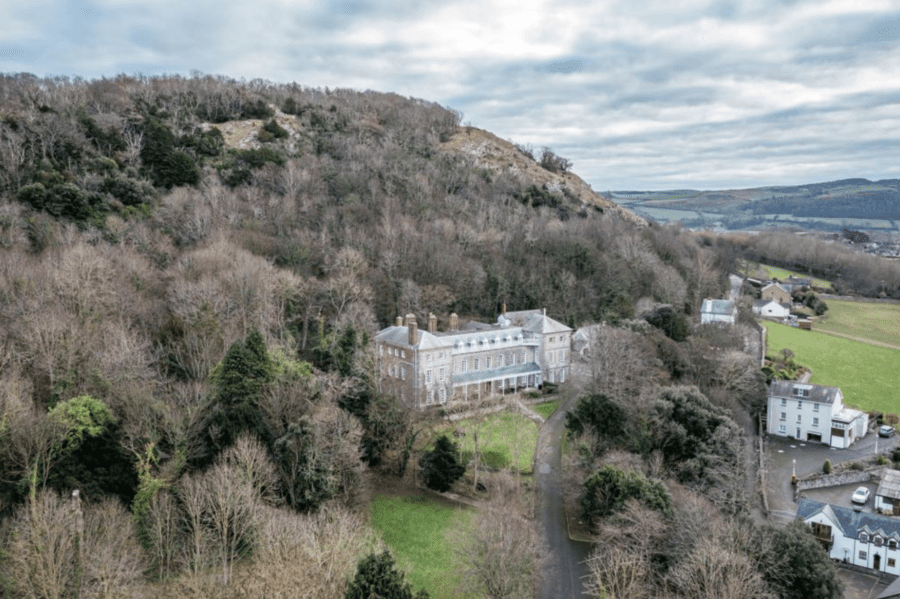
An allegedly haunted 18th century manor house in Llandudno, Wales is for sale for the bargain price of just £400,000 or just £24 per square foot.
Grade II listed Marle Hall – which was firstly built for Sir Hugh Williams, 5th Baronet (1628 – 1686) and which mostly burnt down in the 18th century – was used in the 19th century as a convalescent home and from 1971 by Warwickshire County Council as an outdoors learning centre for residential trips for Warwickshire schoolchildren.
Closed since March 2020 due to the COVID-19 pandemic, Warwickshire County Council subsequently decided to close down the facility and in spite of a 7,000 strong petition to keep it open, it is now up for auction. The authorities had estimated that it would cost over £850,000 to modernise the facility and had decided “the costs needed to maintain and develop the site to the required standard were prohibitive.”
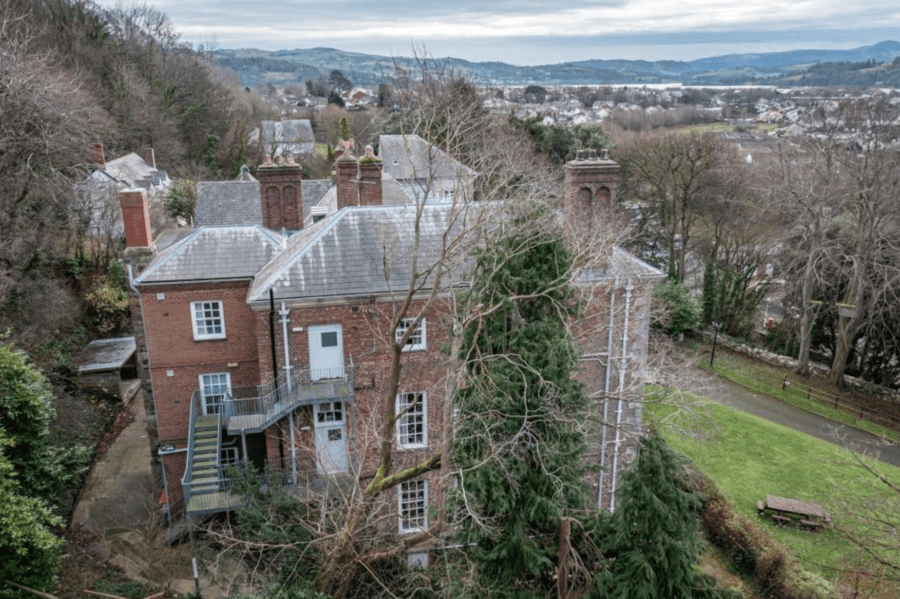
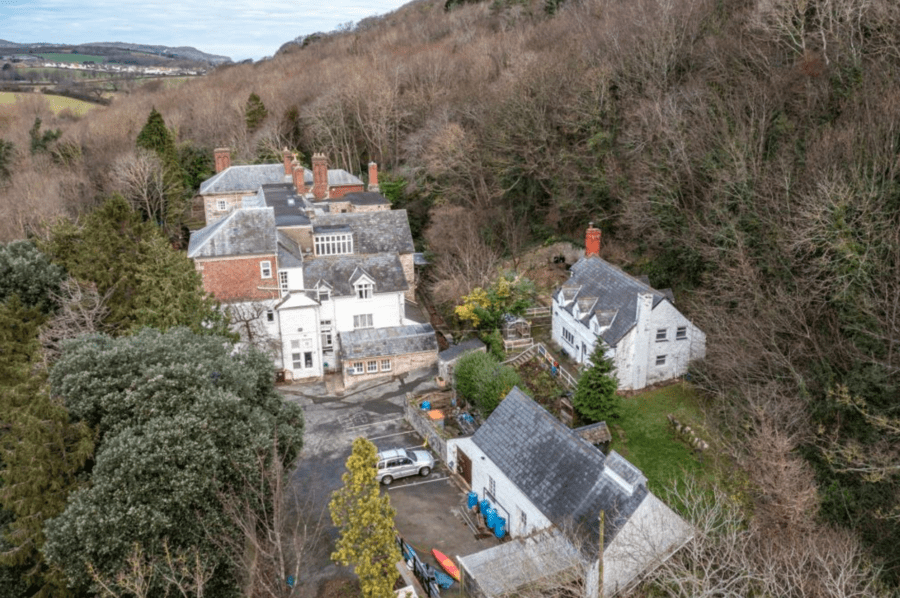
Situated on a 3.6-acre plot, the Grade II listed hall extends to 16,608 square foot in total and comes with a Grade II listed cottage and something called a “mobile classroom.”
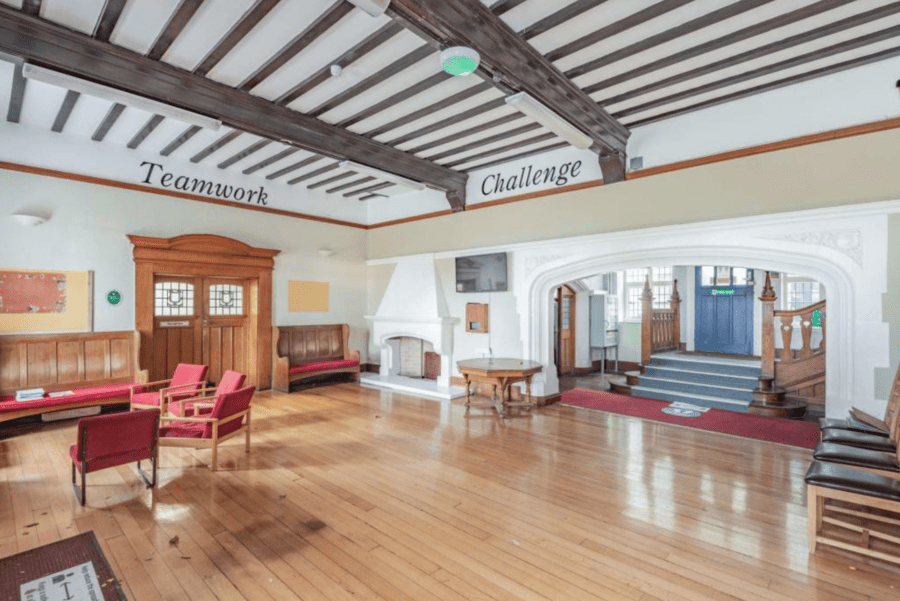
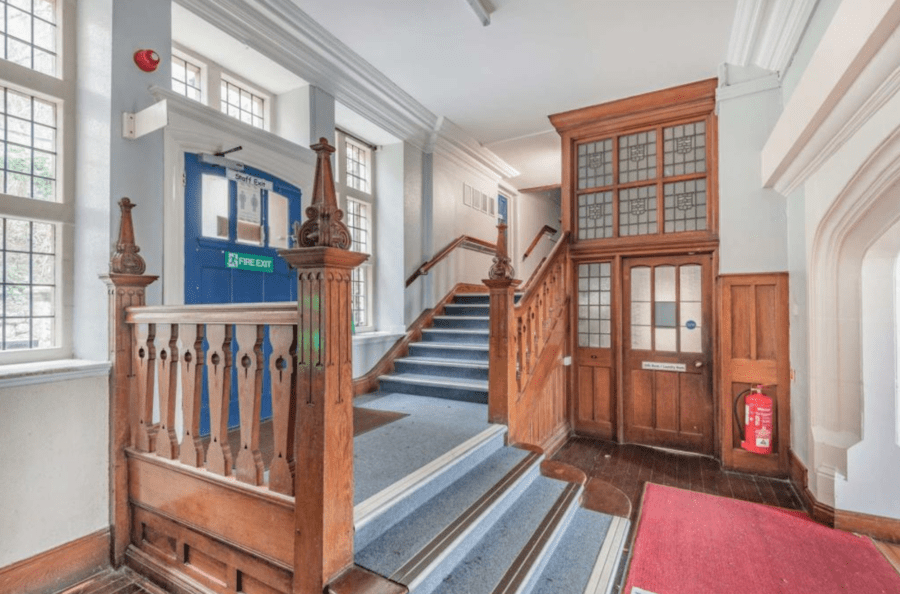
According to the Manchester Evening News: “Arguably the most glorious of the features is the entrance hall and staircase, boasting wood wall paneling, intricate carved newel posts, Jacobean-style balusters and stained glass window panels.”
“Exposed ceiling beams, a stone fireplace and fancy wooden double doors are extra features that instantly impress once you walk through the carved stone archway dating back to Tudor times, from the front door into the main reception hall.
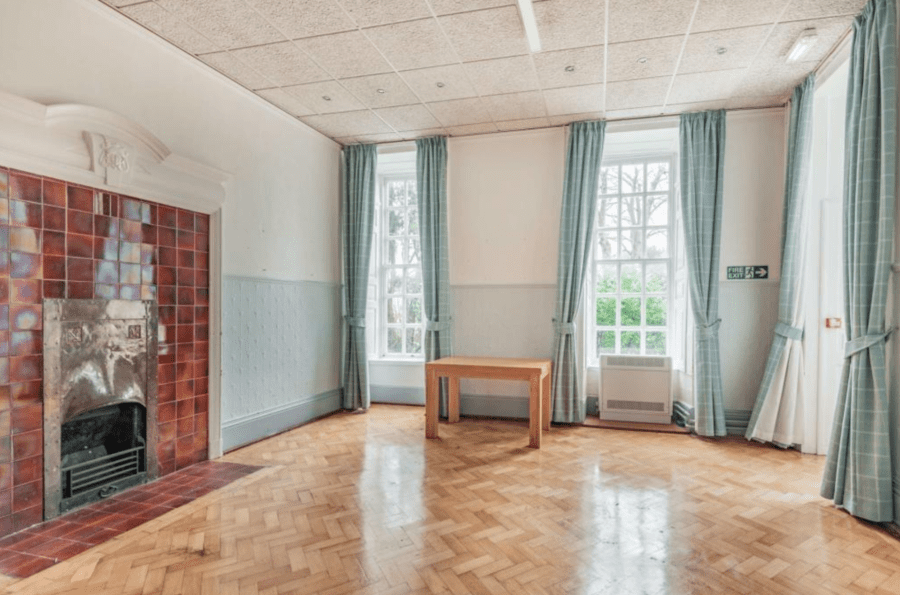
“There’s multi-layered cornicing to reward you if you look up and either tiles, wood floorboards or beautifully sanded parquet flooring if you look down within some of the main ground floor reception rooms.”
The huge, classic Georgian windows in the main rooms ensure each space is bursting with light and the abundance of wood in the primary rooms add visually warmth to the white and pale blue colour palette.”
“There’s a fancy metal and tiled fireplace in one of the reception rooms but the décor is, of course, set up to be operational as an outdoor education centre, so the interior design is minimal and simple to be ideal for its past commercial usage.
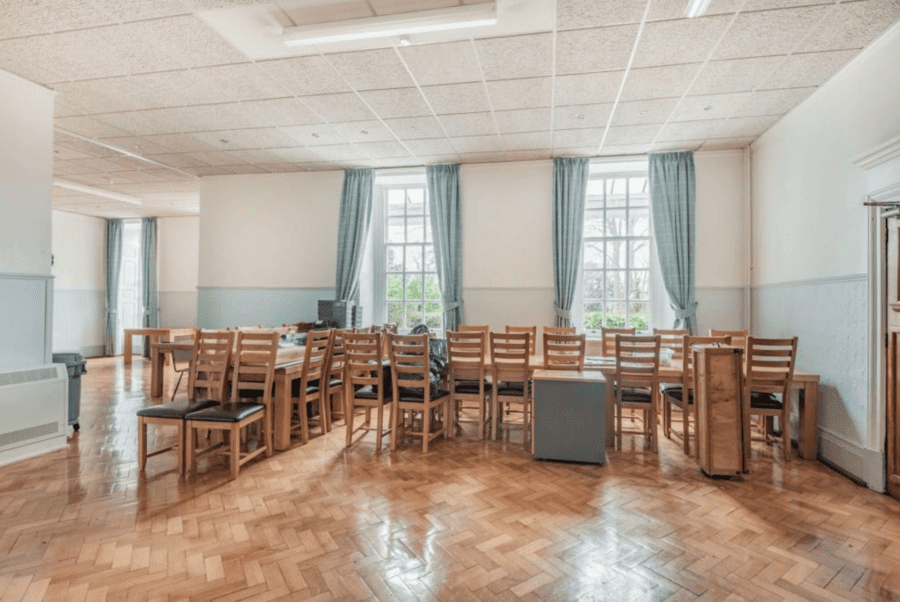
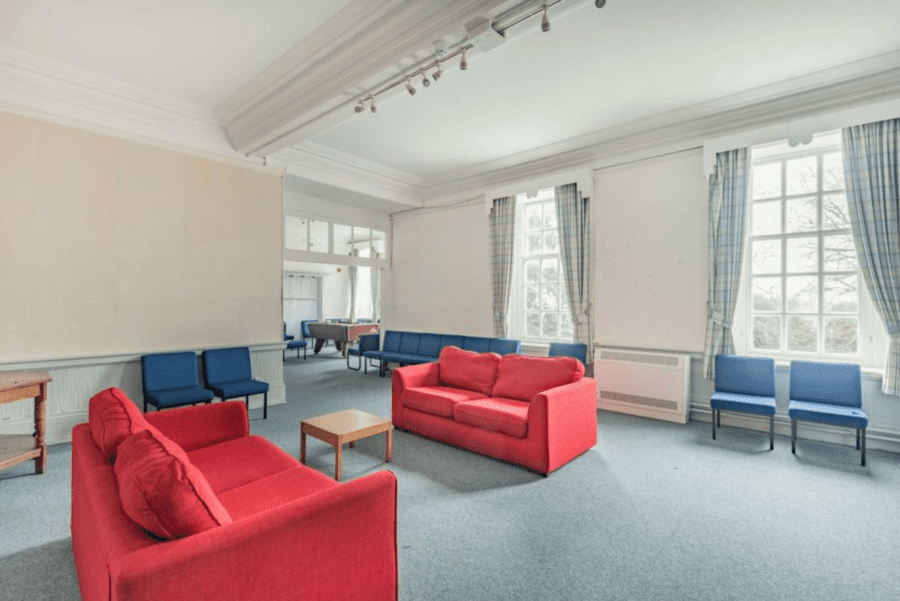
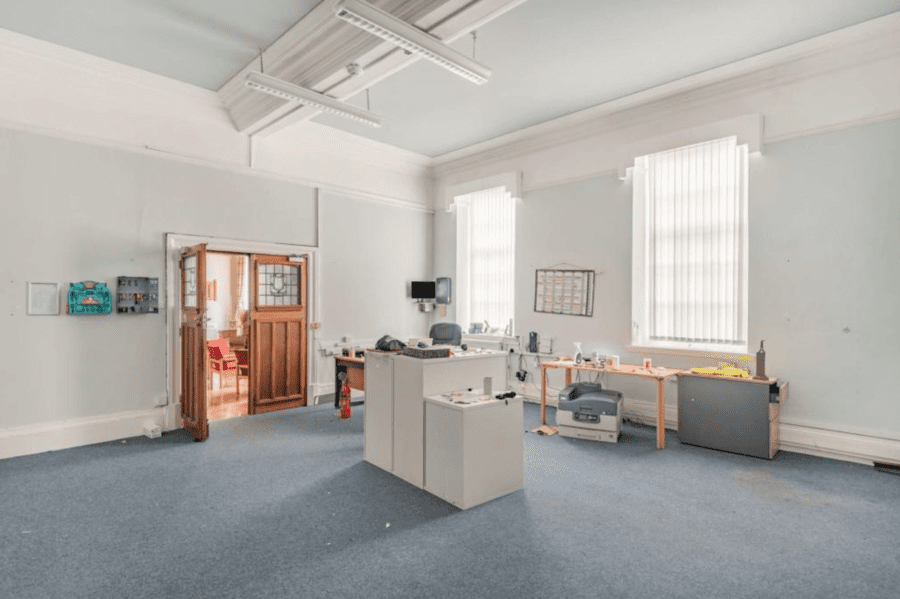
“So there’s a large, commercial kitchen, a large dining room with long tables and multiple chairs, carpeted classrooms, offices and lounges.”
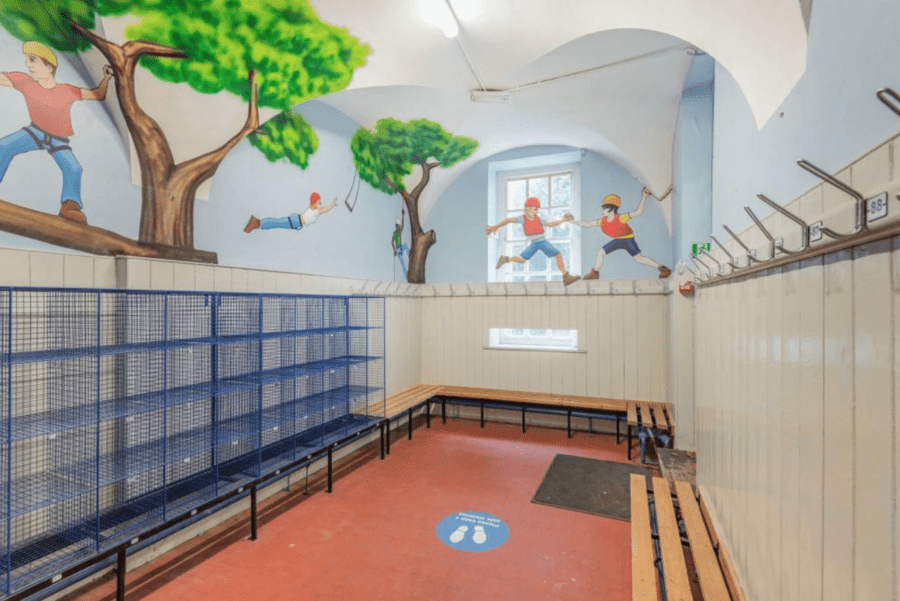
“As this property welcomed groups of children who went on treks around the surrounding countryside, the house has a large boot room and changing room, and a space allocated to drying out wet kit.”
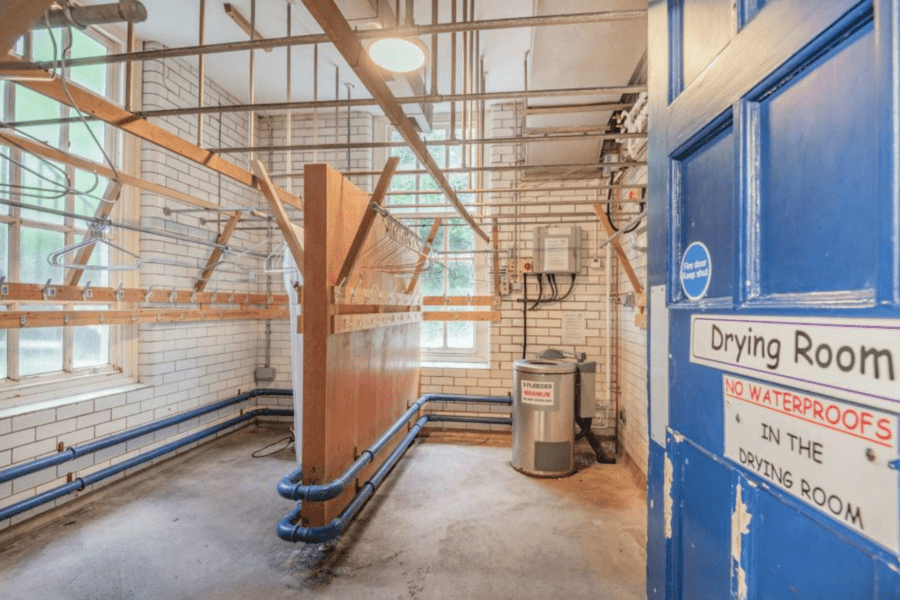
“The drying room appears to have its own boiler and an overhead hanging structure of pipes and beams allowing maximum soggy kits to feel the heat.”
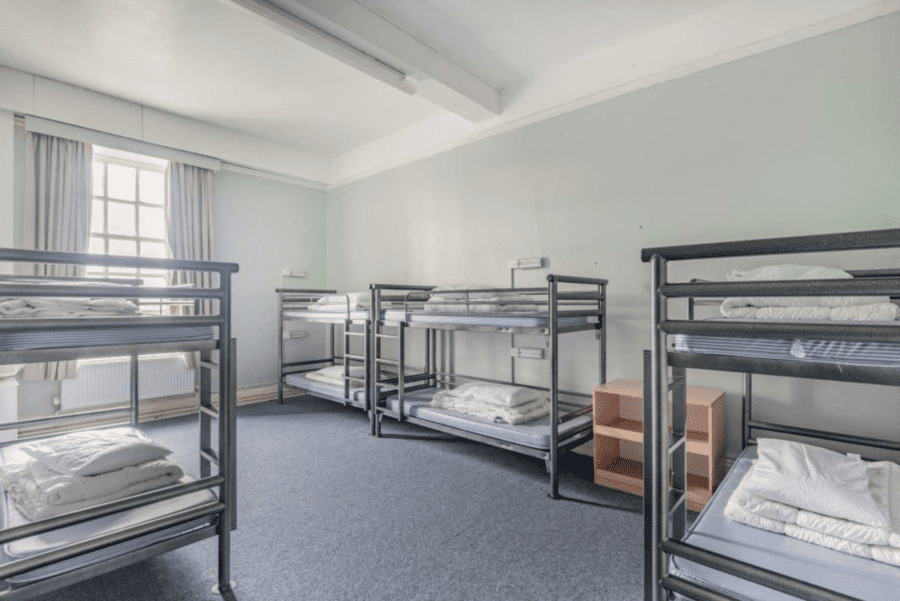
“Of course, the remaining two floors above are mainly dedicated to dormitories and washing facilities, as well as a few more classrooms and break-out rooms.”
“The accommodation in the main house is completed by a basement.”
“Outside, as well as woodland to explore and conquer, there are outbuildings to have a rummage around too.”
Savills will offer Marle Hall on 2nd March 2022 and describe what could be either a marvelous home or nothing but a money pit as being “split over four floors” and “having potential for alternative uses.” Like another former institutional mansion, Carbisdale Castle in Sutherland, Scotland – featured last in The Steeple Times in May 2021 – the potential here is for either a boutique hotel or a gargantuan private residence.
The Names & Numbers – Marle Hall (also known as ‘Marl Hall’), Marl Lane, Llandudno Junction, Llandudno, Wales, United Kingdom, LL31 9JA
2nd March 2022 – To be sold at auction by Savills with a guide price of £400,000 ($541,000, €473,000 or درهم2 million).
August 2021 – Warwickshire County Council estimates costs to renovate and modernise Marle Hall to be £850,000 ($1.2 million, €1 million or درهم4.2 million).