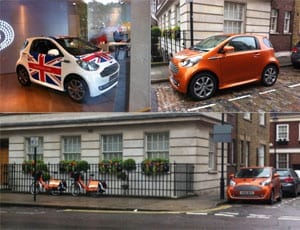
Largest proportion of axed Aston Martin Cygnets were concentrated in Central London
Yesterday, we reported that Aston Martin sold only 150 of their super-mini Cygnet vehicles between announcing it in 2009 and axing it recently. The total– we’ve now been told – may actually have been as low as 110 and given that we’ve photographed a fair few of them, here we share photographs of 15 of them (more…)
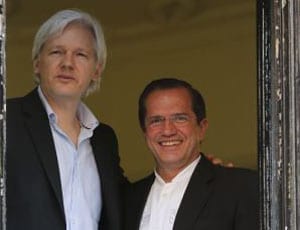
The Steeple Times suggests five things to bring cheer to Julian Assange’s grey existence
The fugitive Julian Assange will have been in the Ecuadorian Embassy in London for exactly one year tomorrow, the 19th June 2013. Last week Ecuador’s foreign minister, Ricardo Patino, commented:
“We believe he has a fundamental right to sunbathe. His right to intimacy, mobility, a normal life and health is being restricted”.
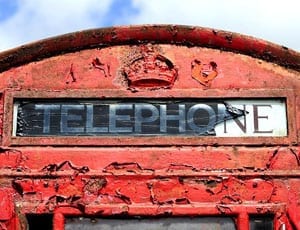
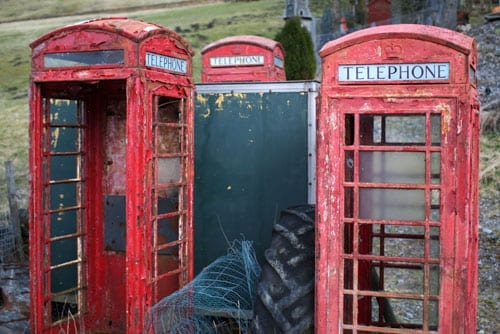
The red telephone box is something that tourists often cite as being symbolic of Britain. Just like the red London bus and the red pillar box, though, these Sir Giles Gilbert Scott designed kiosks are sadly disappearing from our streets.
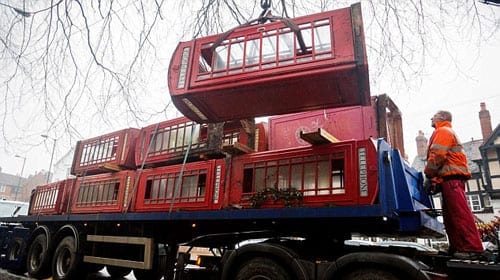
Decaying red telephone boxes are an increasingly common sight throughout BritainTraditional red “K6” model telephone boxes being removed from Warwick town centre
Killed by the mobile phone revolution, British Telecom successfully lobbied to remove public telephones as usage has declined dramatically. The company state that calls from payphones have fallen by more than 80% in the last five years and that around 60% of the boxes cost more to maintain than they generate in revenue.
Amy Childs: A brash young lady with questionable taste
Our last picture of the week featuring a Range Rover Sport was of one that had been driven by a couple described in the comments section of a Mail Online article as a “pair of pillocks in a puddle.” We subsequently received a Tweet from one of them whining about our article in which he stated that our editor was a “prat.” Those that saw this, excuse the pun, laughed like drains about such a missive coming from a person who drove their car into a flooded ford and then wondered why that vehicle sank.
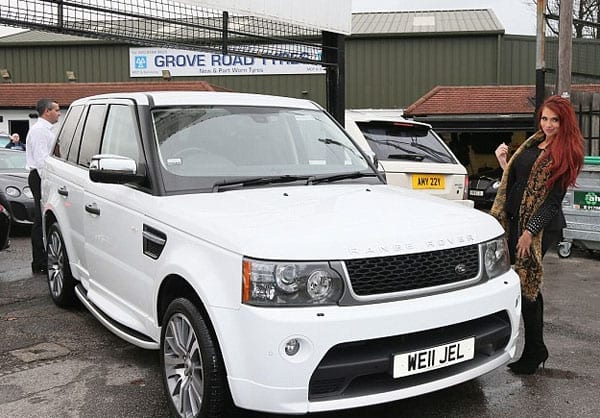
Amy Childs in a well managed pose with signage for a tyre company, a new car, a new numberplate and another of her vehicles
Mr and Mr Drewitt-Barlow, primarily known for having had five children by a surrogate, had been at an event named Essex Fashion Week on the evening in question and today’s picture features another of their number, the former The Only Way is Essex “star,” Amy Childs along with two white Range Rover Sport vehicles.
Miss Childs, a “beautician” aged 22, is someone who has been moulded into a “brand” by Claire Powell of Can Associates, a lady who variously has been the representative of Katie Price, Peter Andre and Kerry Katona. Though the appearance fees Childs received on TOWIE were “minimal,” she’s amazingly made a lot of money since “[shooting] to fame in 2010.” Childs, the Mail revealed, has just spent £80,000 of her new found wealth on a personalised plate based on her favourite phrase, WE11 JEL.
Whilst the Mail Online suggest Childs posing in the lot of Imperial Cars in Romford with her new Range Rover and its expensive plate came about because she “outbid a premiership footballer and a TOWIE producer to win” it in a DVLA auction, we’re not entirely convinced.
The Mail are especially keen to share with their readers that Amy Childs paid for the car itself on her American Express platinum card but publishing an image of her in a far from glamorous yard under a sign for “part worn tyres” and next to a wheelie bin just looks silly. This story seems just as staged and ludicrous as that of the puddle dwellers and for that reason we make this Essex girl and her pointless “purchases” our picture of the week.
Charles Mitford Cust test drives the Range Rover Evoque
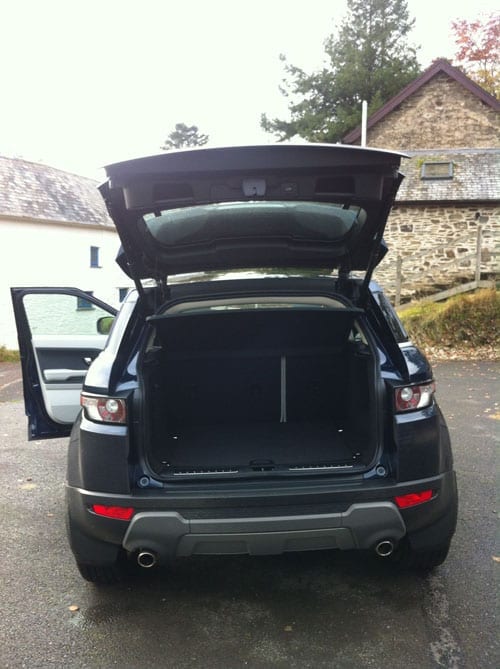
When I saw my first Range Rover Evoque coupé in the flesh I decided right then that it was time to emigrate. The actual remark I made is too rude to put in print, but the jist is that it’s ‘slammed’ rear styling reminded me of a baboon whose derriere had just suffered the unwanted amorous attentions of a short-sighted elephant.
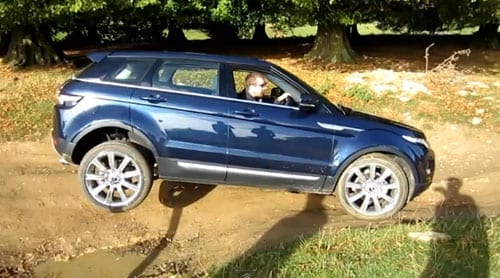
The Evoque has a lot more off-road capability than you might expect
It was my indignation that such a macho and traditional brand as Land Rover had built the thing at all, which led to me to cast unwarranted aspersions about the kind of car designers now working at the Land Rover HQ and the much-published fact that Victoria Beckham had designed the interior only added to my incandescent rage. As far I was concerned this was the ultimate example of design over function, and the last word in brand exploitation and betrayal, and to me this proved Land Rover as a British institution was dead.
You see, my family has owned every model of Land Rover since the Series One was launched in the 1948. My father even took delivery of the second privately owned Range Rover sold, just a few days after Her Majesty had taken delivery of hers. I have Land Rover in my DNA, so to me the fact that they had built something like the Evoque coupe was like Purdey deciding to give up building guns in order to make designer curtains.
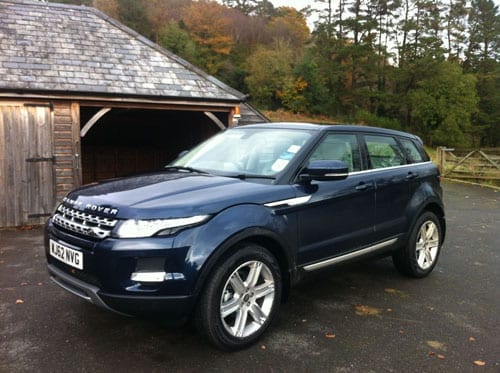
Then one day, about a month ago, out shooting, I came across an example of the 2011 5-door version of the Evoque, the roofline of which has subtly been raised some 2-inches to accommodate the rear doors without compromising the original radical design. It was finished in dark Aintree green rather than the normal footballer pearlescent white, and standing there covered in mud on the top of a rain swept hill, it looked quite at home in it’s surroundings. I looked inside fully expecting to see the usual multi coloured blinged up interior, but instead I saw a muddy Labrador panting contentedly on plain black leather seats, which were strewn with cartridge boxes and general shooting detritus.
I stepped back a couple of paces and looked at the vehicle in a new light, not as in the context of a Rangy, Disco or any full size 4×4, but as a compact SUV, or shooting break in old parlance, which is what the Evoque actually is, and do you know what? I reluctantly began to appreciate that I was looking at a work of genius, in fact quite simply the best looking SUV vehicle ever designed… in the entire world.
It was with some considerable trepidation therefore that I decided to check out the performance reviews of the machine that was now causing me some consternation. I felt sure that my brief change of heart would be proved totally unjustified by reports of laughably pathetic off-road capability and a reinforcement of my original scepticism.
Well I was to be disappointed; every test I read praised the quite unexpected off-road capability. Oh, obviously, with it’s sexy aerodynamic curves it was never destined to be a Defender, but it was more than holding it’s own against the best Jerry could build, and for that reason alone, it is a bit of a hero. Especially as whilst the efforts of BMW, Mercedes and Porsche were all incredibly ugly, in comparison, our homegrown SUV was as handsome as James Bond standing in a room full of bald, fat Blofeld clones.
My research led me to a great YouTube clip of Top Gear’s James May driving an Evoque across the Mojave Desert. I noted that he was able to talk quite normally as he traversed the rock strewn desert floor at 70 mph, praising the amazing ride. Now I have considerable respect for deserts, I have nearly died in three: in the Nullabor from sun stroke, in the Nevada from hyperthermia and in the Sahara from riding a Paris Dakar bike at 60 mph into a dry river bed hidden from view by a the dust of riders ahead of me. So, I know only too well to my cost that deserts are places without mercy but May’s Evoque was making one of the toughest of the lot look like the M4 on a sunny midweek afternoon.
It was not the high-speed desert floor performance, impressive although it was, that convinced me to look more closely at the Evoque. No, rather it was watching May climb up a horrific 40-degree rock strewn dry watercourse like the one that nearly accounted for the last of the Mitford Custs that caught my attention. I have been up these nightmares many times and take it from me, although ultimately the Evoque’s low profile road orientated tyres finally failed it about 90% of the way up, the fact it even made it that far was enough to make me pick up the phone to my local Land Rover dealer and request an immediate test drive.
I really hadn’t bothered to bone up on the different specs in which the car is built before going there but it really came down to the fact I would be testing two versions: A 2-litre 240 bhp petrol Dynamic spec model with the optional Adaptive Dynamics suspension fitted, and a 2.2-litre 190 bhp diesel version in the Prestige configuration with standard suspension.
So let’s see, one will go well and will corner like a sports car and the other will cough along like a drunk camel on roller skates. Pretty obvious which the Ferrari and Ducati loving Charlie boy is going to like best eh?
Well that’s exactly what I thought, but once again, I could not have been more wrong.
More handsome than it’s German rivals, but also tougher in the rough stuff, the Evoque is the James Bond of the SUV world
Handling and ride
What I am about to say is so extraordinary that it is essential that I establish my credibility first. As a teenager, I cut my teeth thrashing the wheel nuts off hairy arsed rear wheel drive rally cars like the 1800 BDA Mexico and RS 2000’s that only knew one way to corner, and that was completely sideways leaving a streak of molten rubber. By dealing in cars like this as a student I earned enough money to buy my first Ferrari, a black 308 GTS just in time for my 25th birthday.
That is when my real driving career started. There have been many occasions during the next two decades and a quarter of a million Ferrari miles in which I have found it necessary to prove to some upstart in a Evo or Imprezza that contrary to what he obviously read in a car magazine, his slant eyed rice burner was not in fact able to overtake Italy’s finest on a tight twisting back-road. You get the picture.
So if I say a car’s handling is crap please trust me, it truly is. If on the other hand I say that it’s cornering capability is utterly, and quite unexpectedly astonishing, well, you can take my word for it. I really do know what I am talking about.
Such was the case when I picked up the “Prestige Pack” Evoque, the cooking pot version which drinks the fuel of the Devil, I fully expected it to roll about hopelessly on the tight switchback North Devon back-roads like most top heavy tractor-fuel guzzling four wheel drives do. I was so glad when they said that I could drive this model first, because this would make driving the petrol version so much more fun afterwards. Oh boy, was I was in for a shock.
Once I turned off the main North Devon Link Road in the SD4 and on to one of the finest drivers ‘B’ roads in Devon, I found myself at the wheel of a car with truly astonishing poise. I simply could not find fault with it. The electrically powered steering was perfectly balanced, weighted and geared. It ‘turned in’ with absolute precision, no oversteer, no understeer, just right. The body control was astonishing for a vehicle of this type with no almost no roll or weave in mid corner. There was no discernable lateral pitch either under hard breaking. Believe me, I tried very hard to upset it by deliberately chucking it into corners using the wrong line or by making clumsy mid corner steering inputs, but it always kept its cool, very impressive indeed.
In fact I can honestly say that much to my absolute amazement, the Evoque SD4 prestige proved to have one of the best combinations of ride and handling of any 5-door car I have ever driven, let alone an SUV with a relatively high centre of gravity.
That said, here comes the next surprise: The petrol version, even this one which was fitted with the Adaptive Dynamics option with MagneRide dampers (which supposedly react to the road inputs 1000 times per second by employing magnetically reactive damper fluid and clever electronics), was a total disappointment. In ‘normal’ or ‘comfort’ setting it rolled around in all directions horribly, pitching and weaving like a tramp steamer in a rough sea. Unlike the SD4, the turn-in was woolly and the wheel twitched nervously whilst under-steering horribly, totally lacking the precision of the diesel.
Bizarrely, engaging ’Adaptive Dynamics’ mode did very little to cure any of this, it just seemed to make the ride harder whilst still doing the same thing. It was horrible. I simply cannot understand how two versions of the same vehicle could be so different, one utterly brilliant, the other totally crap. Clearly as even the Adaptive Dynamics option did little to improve matters the problem has to be fundamental.
All I can assume is that Land Rover must have spent the whole suspension budget perfecting the spring and damper rates for the most common model, the turbo diesel, and then just didn’t have any time resources or cash left over for the lighter engined petrol version.
Performance and economy
Other differences in the driving experience between the two models would seem to support this hypothesis. Both cars have the excellent steering wheel mounted flapper changes allowing manual override of the 6-speed auto boxes. However, whilst on the diesel the operation was seamlessly faultless, the petrol’s was jerky and rough. Presumably they haven’t bothered to re-tune the torque convertor for the higher revving petrol engine.
I would say that the diesel lacked a bit of mid-range grunt, but at least its torque was usually in the right place. The same could not be said of the petrol’s, which was simply hard work to row along if you were trying to make ‘good progress’ as my ex-Police Class 1 driving instructors, whose services I have engaged over the years would say. Again, another first for me was that whilst the diesel was quiet and refined, the petrol engine was actually intrusively noisy. Not in a good or exciting way as it is in a Ferrari, just annoyingly so.
The only good thing I can think to say about the petrol was that in a straight line, you could certainly feel the benefit of the extra 50 bhp in terms of overtaking acceleration. However, in real terms all the other drawbacks would outweigh this. On the average B-road, the diesel would win hands down with a real driver at the wheel. Plus a diesel is easy to re-programme these days. With the right engine management remap, you can claw that 50 bhp back in a few minutes.
Economy was surprisingly similar between the two models. Zeroing the average mpg on the trip computer before the back road thrash, the diesel achieved 21 mpg and the petrol 19.6 mpg. Zeroing it again just as I rejoined the North Devon Link Road and then driving very sedately at a steady 60 mph average for 25 miles, achieved almost identical mpg of 30.5 for the diesel and 30.2 for the petrol. However, undoubtedly the diesel would prove more economical around town and also would creep up nearer to mid or late 30’s mpg over a longer distance on a motorway. Although I would bet my socks that cruising at motorway speeds it would not crack 40 mpg, no matter what Land Rover claims.
An interesting insight as to why the diesel returned such poor economy could be identified when I followed up the test of these two Evoques with a test of the Discovery 4 by way of comparison. Doing exactly the same back road thrash and sedate run on the main road returned an average of 3 mpg better despite the fact that the Disco weighs nearly a tonne more than a Evoque. This can only be down to a better engine/weight ratio. This is why the 2011 Range Rover is even more economical again than the Disco. The combination of its larger 4.4 V8 engine and lighter alloy body win the day. You cannot escape the fact that big heavy cars need an appropriate engine capacity.
It seems Land Rover has missed a trick here. Had they installed the Disco’s larger 3-litre diesel engine in the Evoque it would have had a world class winner. Not only would this drop the already respectable if not exactly tarmac melting 0-60 from 8 seconds to around 6.5 seconds by my guess, whilst adding mind blowing mid range grunt to boot, but it would also achieve at least 10 mpg better economy, probably 15 mpg.
This is all down to the crazy way the green brigade force car manufacturers to create vehicles which produce fewer emissions at the exhaust pipe, whilst ignoring the reality of the fact that putting too small an engine in a vehicle will actually cause it to use far more fuel and therefore produce far more emissions over its lifetime. Just like catalytic convertors, yes they cut emissions, but fitting them causes all vehicles to use 5-10% more fuel, so the net result is far more global emissions, duh.
The only advantage of the 2.2-litre diesel is the fact that it saves you £185 per year road tax, which is only a saving if you are not doing large mileages. If you were, then this would soon be negated by the extra economy from an Evoque fitted with the larger Disco engine.
Off-road performance
I had only a limited opportunity to try the SD4 off-road, but the little I did looked promising. A muddy field can sometimes stop even the most seriously modified off-roader in it’s tracks but despite it’s low profile road tyres the SD4 had no trouble pulling itself up a 25 degree slope of muddy wet grass. When I tried to get it to break traction by flooring the accelerator it’s traction control cut in smoothly and it refused to even step out of line.
Next, I then tried it on a short stretch of green lane, which is used not only by serious offroading enthusiasts, but also several motor clubs for trials. Known locally as ‘Hell Hill’ its broken surface consists of mud covered slick rock. Very few contestants, either car drivers or dirt bikers clear the section in one attempt in a trial. The SD4 made light work of both going down and up the short section I attempted and surprisingly the road-orientated suspension did not cause it to bang or crash over the rough ground. It just absorbed it all smoothly and without drama. That’s all you could ask for on a compromise SUV like this, it does not pretend to be a Defender. I doubt any of the German competitors would have performed anywhere near as competently.
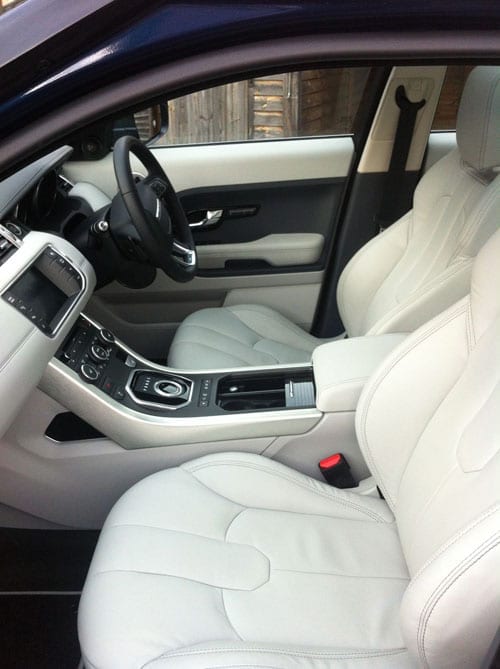
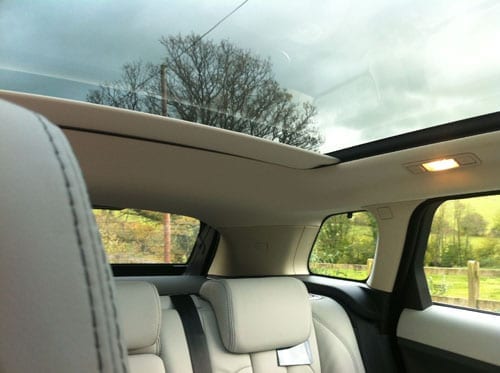
The interior of the Evoque (I’d personally ditch the WAG look and get it in black)The Evoque’s glass ceilingAmple room for a Labrador and a pair of Purdeys
Build quality and interior
The Evoque has a high quality feel about it both inside and out. Fit and finish is excellent and both examples were rattle free. I have to confess I really struggle to believe Posh had much input in the interior’s design as it appears to me to be an identical clone of the Rangy and Disco’s but more compact. Even the instruments and switchgear are identical. Sounds like PR BS to me, and you know what that stands for.
Frankly the seats could have been more comfortable, a little more front thigh support would have done wonders for long journey comfort. The sports seats in the ‘Dynamic’ package are worse than the ‘Prestige’. Why can’t car manufacturers get this simple aspect of seat design right? They only have to consult the top motor sport seat manufacturers.
I loved the full-length transparent tinted roof, which gave the interior an airy feel it might have otherwise lacked, plus more headroom. The surround camera system was a nice gimmick, which could come in handy off-road sometimes although they would need to be frequently cleaned in muddy environments. The sat nav was clear and even works off-road. The upgrade 825w sound system with 16 speakers was first class and frankly I found it like sitting in my own Albert Hall.
In conclusion
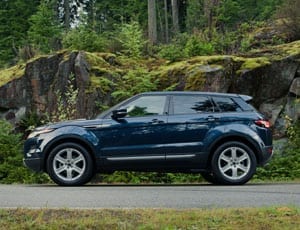
The 5-door Evoque is actually a really brilliant SUV, which in its unique way is a credit to the Land Rover brand. I started off hating it but now I am a bit in love with it. If you are going to get one, take my advice and buy the diesel Prestige in a decent colour like dark green or the very nice dark blue like the SD4 tested. Avoid the petrol version like the plague. If you want to get the Adaptive Dynamics option make sure you test it back to back with the standard suspension first. There wasn’t a diesel available with this option for me to compare. Stick to black leather and everyone will applaud your good taste. The tinted transparent roof is a must and don’t, whatever you do, dare mess up the ride and handling by fitting the optional 20-inch wheels.
What else? Oh yes, but you did not hear this from me right? Get the diesel re-programmed on the quiet to give it about 240 bhp, tons more torque and better economy. Make sure it is done by a reputable firm whose work cannot be detected so it doesn’t invalidate the warranty. Believe me, the chassis will easily handle the extra performance and it will be a lot cheaper to run. Then, I can assure you, the Evoque SD4 will become the best all round 5-door country car you ever owned.
The bonfire sale of a monster of a mansion that has had a $15 million price reduction
A property was first built at 10425 West Sunset Boulevard in Lower Bel Air, Los Angeles in 1936. Here, in this most exclusive of districts, the homes of the prosperous residents are hidden from view and this address, this day, is no exception.
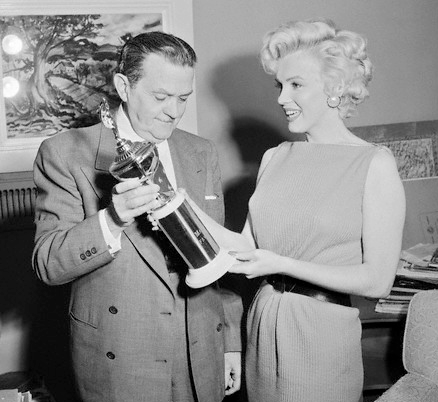
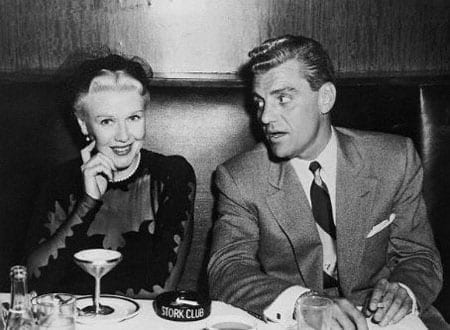
One of the original owners of a house on this site, which has a main access from the cul-de-sac Revuelta Way, was William R. Wilkerson (1890 – 1962), a nightclub owner and founder of The Hollywood Reporter. A compulsive gambler, he is also credited with contributing to Hollywood’s “Golden Era” through the venues he opened. These included Vendome, Café Tocadero, Sunset House, Ciro’s, LaRue, L’Aiglon and most famously The Flamingo Hotel. An involvement here with the ruthless gangster Ben “Bugsy” Siegel (1906 – 1947) turned sour in 1946 and resulted in him having to flee to Paris in fear of his life. Siegel’s death allowed him to return to Los Angeles in 1947 and having “quit gambling cold turkey” following the birth of a son in 1951, he led a much quieter life. He is remembered as being a man who preferred his “beloved French poodles to any wife or friend.”
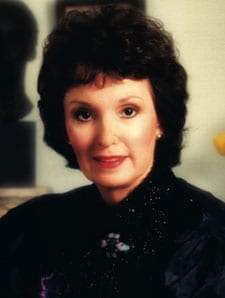
Media mogul William R. Wilkerson (1890 – 1962) pictured with Marilyn Monroe (1926 – 1962)American film personality and the publisher of “The Hollywood Reporter” Beatrice “Tichi” Wilkerson Kassel (1926 – 2004)
Wilkerson is first recorded as living at 10425 West Sunset Boulevard in the 1940 California Census with his fourth wife, Estelle Jackson Brown. He subsequently remained there with his fifth wife, Vivian DuBois, and sixth wife Beatrice “Tichi” Noble. After his death, Tichi Wilkerson (1926 – 2004) sold first 10425 West Sunset Boulevard and then, in 1988, The Hollywood Reporter for $26,700,000.
Another famous owner of 10425 West Sunset Boulevard was a “celebrity attorney” named Greg Bautzer (1911 – 1987). Bautzer is best known for having represented not only William R. Wilkerson but also Ginger Rogers, Ingrid Bergman, Joan Crawford, Kirk Kerkorian and Howard Hughes. He is described as having been “as dashing and popular as any successful Hollywood movie star” and was engaged to but did not marry the actresses Barbara Payton, Lana Turner and Dorothy Lamour. He did, however, make the actress Dana Wynter his second wife in 1956, then Buffy Cobb Chapman and finally Nicola Dantine. This “man-about-Beverly Hills,” it seems, was indeed plainly a magnet for anything dramatic.
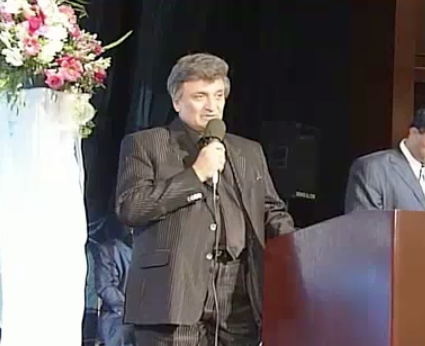
Philanthropist and Bernini owner Yousuf Tar
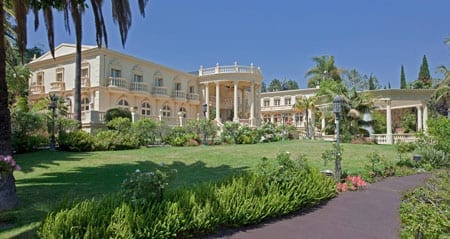
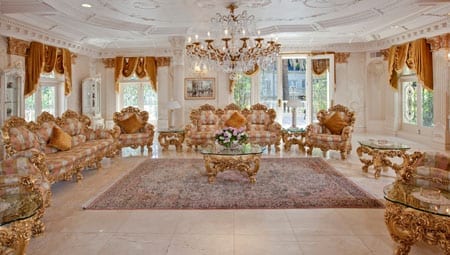
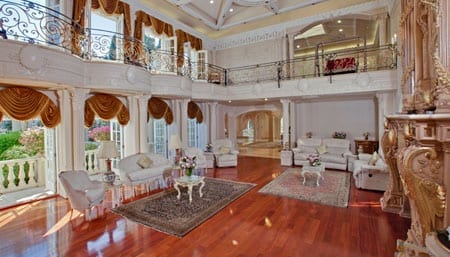
The current owner of the house, which is now somewhat ludicrously named Chateau d’Or or The House of Gold, is a man named Yousuf Tar. The president of the “faux-Italian mall fixture Bernini men’s clothing [company],” bought 10425 West Sunset Boulevard in 1992 for $6,000,000 and set about creating what his realtor, Sally Forster Jones, calls a “cross between The White House and Versailles.” The resulting remodeled residence isn’t quite either but frankly combines a mixture of one of the palaces of the deceased tyrant Colonel Gadaffi and the set of Dynasty.
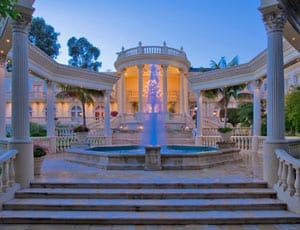
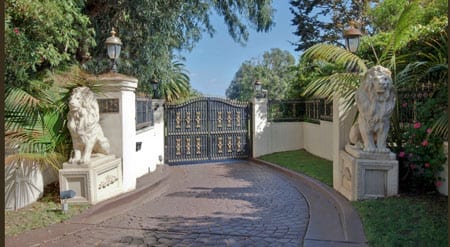
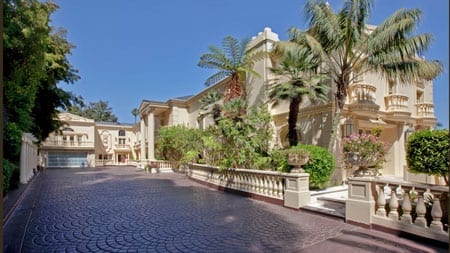
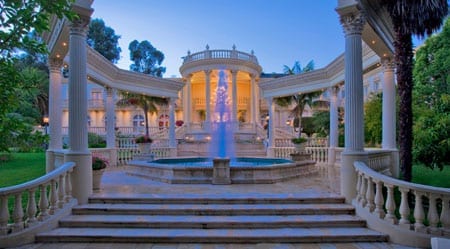
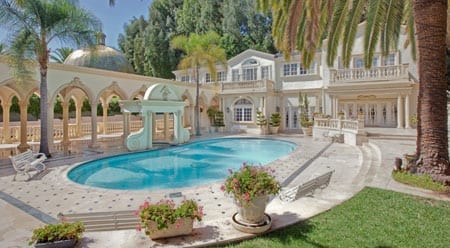
The gaudy gates to Chateau d’Or, 10425 West Sunset Boulevard, Bel Air, Los Angeles, California, CA 90077, USA are an indication of the “tackiness” that lies behindA 600ft main driveway leads to the front of the house from Revuelta Way. Secondary access comes from West Sunset Boulevard.The garden elevation of the Chateau d’OrThe exterior of Chateau d’Or is anything but understated
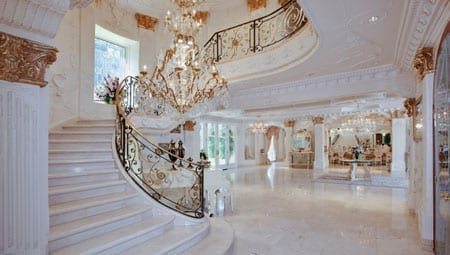
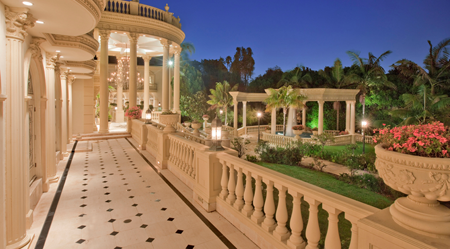
Decorated throughout in a white and gold, the aim of the redesign was to create the look of an 18th century palace complete with acres of marble, columns, cupolas, gold leaft and mouldings. Instead, the interpretation looks more Chigwell-esque than Parisian and has simply attracted criticism and mockery. An example, such as this from Curbed.com, gives a guide to the opinion of the majority about this ugly monstrosity:
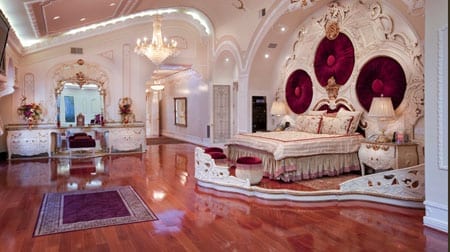
“[The mansion] houses some of the cheapest-looking French-inspired interiors ever made, highlighted (or, rather, lowlighted) by a towering, clunky fireplace and a cartoon-worthy master suite, with gilded everything. Even San Simeon’s William Randolph Hearst would object to this level of pointless expenditure.”
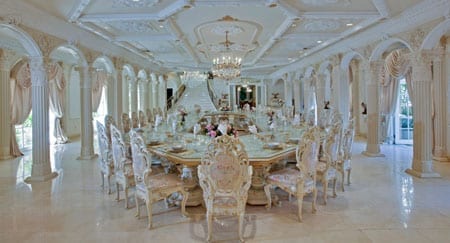
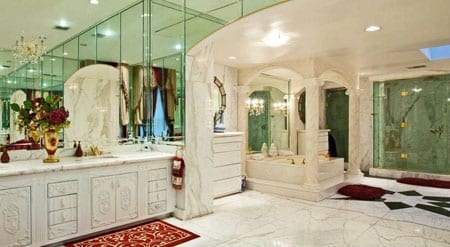
The dining hall is currently furnished with a $300,000 table capable of seating upto eighty for a formal dinner. With an entirely gold dinner service, realtor Sally Forster Jones comments: “Food tastes so much better off gold.”The opulent meets gaudy theme continues with a marble hallway and staircaseA sitting room fit for Saddam HusseinChateau d’Or’s double height media room is supposedly “styled like an opera house”The master bedroom suite is as nearly as large as most homes and is some 5,000 square foot in sizeNo restraint is shown in the choice of bathroom fittings either
Chateau d’Or, according to the listing on Forster Jones’s website, features 25,953 square foot of living space with 15 bedrooms and 16.5 bathrooms. There is a vast dining hall capable of seating upto 80 for a formal dinner which currently features a $300,000 dining table and a 1,600 square foot “oversized gourmet kitchen” complete with 800 square foot of cupboards, an “indoor sunlit gazebo” and a double Viking oven. A double height media room styled as an opera house has also been created and there’s also a cigar and wine tasting room. The Chateau d’Or is nothing other than a “home” on a lavish and ludicrous scale.
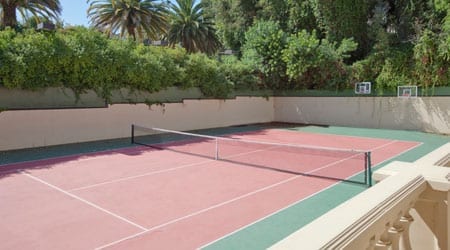
The pool sits alongside a 6-bedroomed guest houseChateau d’Or also has it’s own championship tennis courtOne of numerous terraces
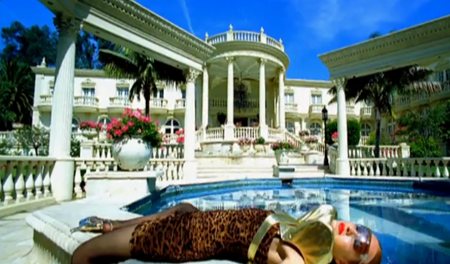
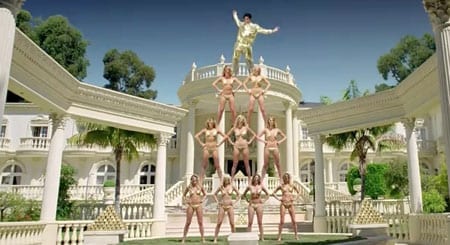
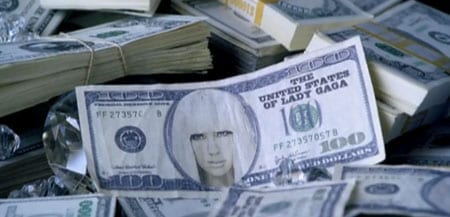
In addition to a swimming pool, spa and gym, Chateau d’Or also has a championship tennis court, guest accommodation and 1.7 acres of grounds. Accessed by a 600ft driveway and surrounded by privacy walls plainly designed to keep prying eyes out, the house featured in Lady Gaga’s 2009 video for her song Paparazzi. Mr Tar plainly isn’t that private at all.
Lady Gaga filmed the video for her 2009 song “Paparazzi” at Chateau d’OrStefani Joanne Angelina Germanotta (AKA Lady Gaga) in one of the “cheap looking” chairs at Chateau d’Or
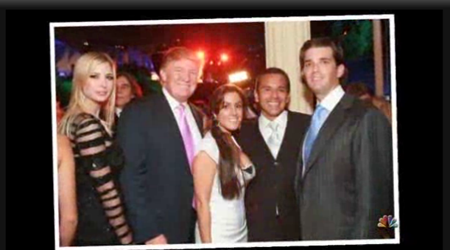
Not shy of renting the house out for other purposes, it has also been used for a photoshoot for Versace, a television advert for Foot Locker and Addidas starring Ken Jeong and as a venue for a Dubai themed party for Donald Trump where Christina Aguilera performed.
Ken Jeong in a 2010 advert for Foot Locker and Addidas at Chateau d’OrDonald Trump, Sr. with his daughter Ivanka Trump and son Donald Trump, Jr. at a party at Chateau d’Or
Yousuf Tar put Chateau d’Or on the market in 2009 for just shy of $40,000,000 and though Michael Jackson supposedly wanted to buy it to create a “new Neverland,” his sad demise meant that this fell through. Relisted repeatedly since and despite the best efforts of Sally Forster Jones, Chateau d’Or’s gaudiness plainly hasn’t appealed to the market.
You’d had to have been gaga to have paid $40,000,000 for Chateau d’Or
Reduced by nearly $15,000,000 to $25,000,000 this month, Chateau d’Or still doesn’t look like much of a bargain. Somehow, we suspect, it’ll have to be marked down a fair bit more before anyone’s even vaguely tempted.
For more information Chateau d’Or, 10425 West Sunset Boulevard, Bel Air, Los Angeles, California, CA 90077, USA contact Sally Forster Jones of the SFJ Group at +1 (310) 281 3999 or email her at:[email protected]
Christian Huhnt recounts an evening at the launch of La Suite West
I have a personal connection to Inverness Terrace as twice in my life I’ve had to crash at my friend’s place there. It’s less than a minute from the new Anouska Hempel-designed hotel, La Suite West, and runs parallel to Queensway.
Bursting with cheap Chinese, Arabic and Mediterranean restaurants, this is an area that has great transport links to Oxford Street and the city centre that is also a very short walk from Hyde Park. As a result it’s full of tourists. Here, they arrive and depart every day, wandering around with heavy luggage trying to find their way. Most of them look like they’re hopelessly lost and in need of a good scrub. The tourist density here is almost equal to that of Victoria Station’s Gatwick Express exit or the Piazza San Marco in Venice.
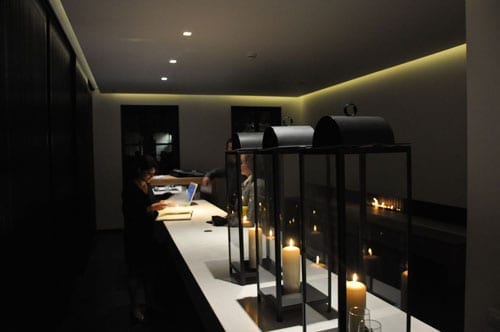
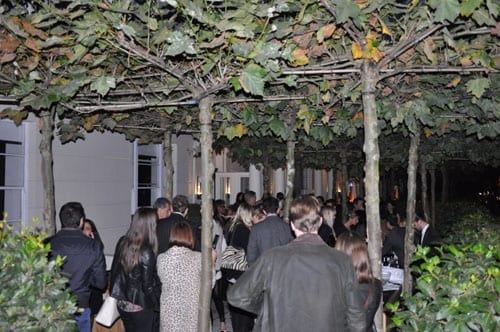
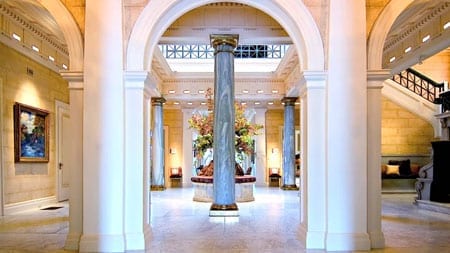
The lobby of La Suite West, 41 – 51 Inverness Terrace, London, W2 3JNParty guests at the launch of La Suite West
Please don’t get me wrong though. I have always felt that this place, the heart of Bayswater, has been totally underestimated. It is charming with lots of London Plane trees and a very cosmopolitan feel. Lady Weinberg, better known as the visionary designer and sometime actress Anouska Hempel, plainly agreed as she integrated all that was good about this atmosphere into the hotel that she has cleverly designed.
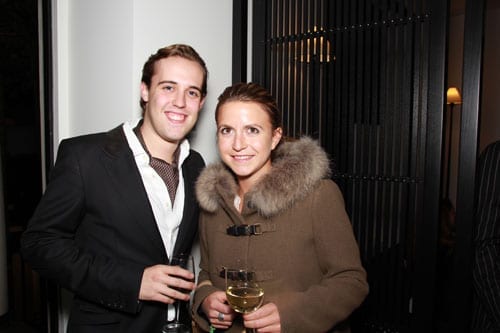
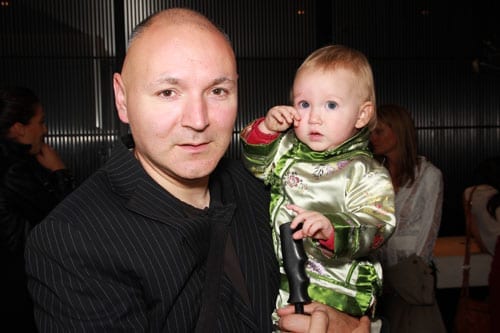
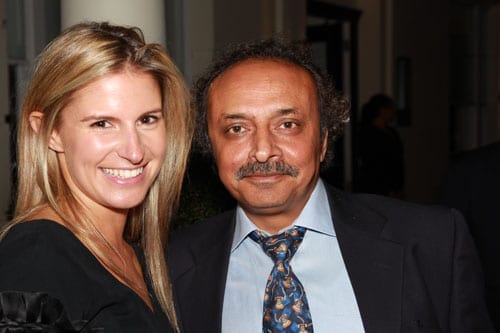
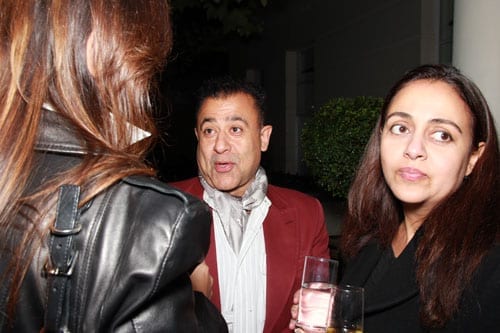
“Let’s celebrate with a little champagne”Guests at the party included the British supermodel and VogueTV presenter Jade Parfitt and Duncan McDonald of Propeller CommunicationsOur party correspondent Christian Huhnt and Inga Buschke enjoying the launch of La Suite WestAngelo Valentino also represented “The Steeple Times” with his daughterGuests at the launch of La Suite WestSusan Ansary, a regular on the party circuit, even put in an appearance
Arriving at the hotel entrance, you get a feel of how important it was for Hempel to grasp this outside space and use it as a communal environment for the guests. I was invited to visit on the evening of the hotel’s launch and this was the area where guests congregated. Here, along with the champagne, they served molecular bites including Nutella ice cream that had been shock frozen using liquid nitrogen. This, they told me, had been done to avoid ice crystals appearing and the result was a very smooth and creamy texture. I’d put money on this having left the menu now though as just days later I read news reports of a girl in Lancaster losing her stomach after drinking a cocktail made in a similar manner. With hindsight, I must say that my stomach is very glad that they got the measure just right.
When you enter the hotel, which first opened to guests three months ago, you feel as if you are visiting a Scientology church or traversing the ramp of a Star Wars space shuttle. Coming “onboard,” you enter a reception hall, in which a friendly concierge welcomes you. The whole interior is very minimalistic and has been reduced to hues of only black and white. A long fireplace leads you deeper into this shuttle, onto a main corridor, past the dining rooms and connects into to labyrinthian walkways that transport guests to their appointed suites.
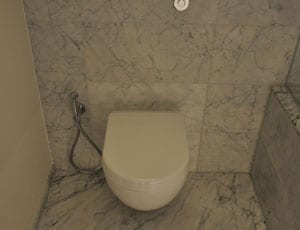
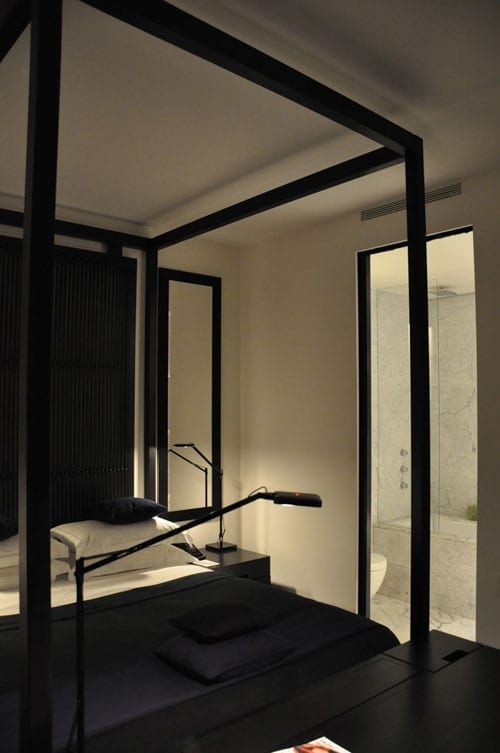
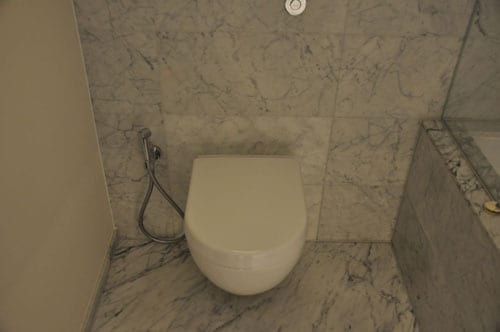
I was told that the hotel rooms are all decorated in the same style and have similar layouts. They differ only slightly in size. On the evening of the launch, the largest could be admired and all of them had a very independent feel as they benefited from their own access to the street. Essentially, the rooms are quite small but all offer the contemporary luxury that any jetsetter would expect. The bathrooms have a particularly sophisticated feel and are clad in marble throughout. The extendable televisions hidden in the bed frames perfectly fitted with the minimalist design, but where this became bizarrely rigorous was the flexible water hose in the bathrooms that dispensed with the need for good old European toilet paper.
One of the hotel’s bedroomsA toilet at La Suite West – complete with hose attachment but minus loo roll
La Suite West is a great step forward. In fact, it is a very audacious move towards upgrading a whole area that clearly has potential for more and which, at the time of writing, does not offer anything better than shabby hostels and seedy bed and breakfasts. The hotel is a well-arranged concept and evidently Hempel put a lot of thought into the execution of it. The design is well composed, but being German I did notice some of the carpets and minor details could have been a little better.
One last piece of advice: the management might want to ship in some bog roll. Some ageing Brit might decide to show up and I’m sure nobody would want a scene from Fawlty Towers to be played out in that rather smart lobby.
La Suite West, 41 – 51 Inverness Terrace, London, W2 3JN. Telephone: +44 (0) 20 3642 3928. Website:http://lasuitewest-px.rtrk.co.uk
Images by Andreas Kirchberger and Christian Huhnt.
The sale of a $25 million mansion modeled on Marie Antoinette’s favourite retreat that has connections to Levi Strauss & Co., Yehudi Menuhin, the Zodiac Killer and a controversial dot-com tycoon
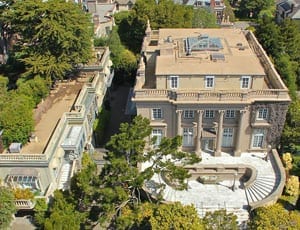
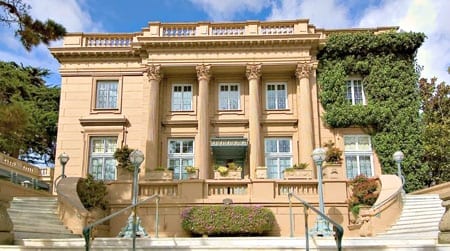
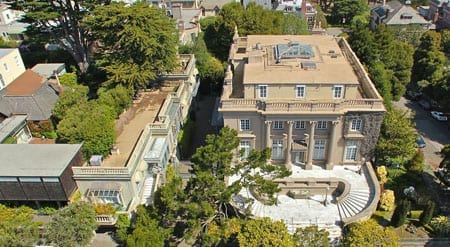
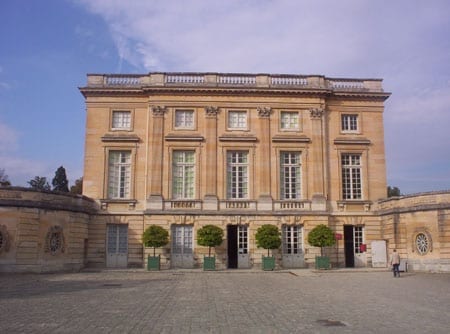
Modeled on the Petit Trianon, a small château in the grounds of Versailles that was favoured by Louis XVI’s wife Marie Antoinette, the Koshland Mansion at 3800 Washington Street in Presidio Heights, San Francisco, California was built between 1902 and 1904 for a pioneer wool, hide and fur merchant named Marcus S. Koshland and his wife, Corrine.
The Washington Street elevation of the former Koshland Mansion at 3800 Washington Street, San Francisco, California, CA 94118An aerial view of the 18,000 square foot property and the 2,600 square foot guest accommodationThe inspiration for the Koshland Mansion: The Petit Trianon, Château de Versailles, Place d’Armes – 78000 Versailles, France
The Koshlands, whose son Daniel (1920 – 2007) was to become a president of Levi Strauss & Co., commissioned an architect named Frank S. Van Tree to design a replica of the Petit Trianon after having admired it whilst on holiday in France. The front of the building, facing onto Washington Street, is considered such a faithful representation of the neoclassical building the Koshlands copied and as a result the house is now designated a San Francisco Designated Landmark.
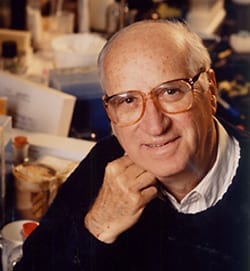
Daniel E. Koshland, Jr.
Some 20,000 square foot in size and set on a 2/3rd acre plot, the completion of this sandstone faced “single family residence” was celebrated by the Koshland family with a Marie Antoinette themed ball in 1904. The invitations to this legendary event were purchased and printed in Paris and hand delivered to the guests.
The Koshland Mansion survived San Francisco’s 1906 earthquake with only a little damage to the front elevation
The 1906 San Francisco earthquake, just two years after they’d completed the building, somewhat interrupted the Koshlands hectic party schedule at 3800 Washington Street. Though the disaster caused the front columns and roof balustrade to collapse, the couple generously opened the otherwise undamaged property to some 60 to 80 displaced family and friends. With no mains water, the guests had to fetch water from Fort Mason but they were no doubt happy to have had somewhere to take refuge.
During subsequent renovations, as well as restoring the façade, a 5-car garage was added in 1909 and a greenhouse and extension in 1912. In the ensuing years, until her death in 1953, Corrine Koshland, better known as Cora, opened up 3800 Washington Street as a venue for concerts. A founder of the San Francisco Symphony Association and one of the first directors of the San Francisco Opera Company, Koshland invited music critics to review the performances and gave both Yehudi Menuhin and Isaac Stern their musical debuts at the house as child prodigies. Amongst the other big names to play in the masnion were Igor Stravinsky, Jascha Heifitz and Leonard Bernstein.
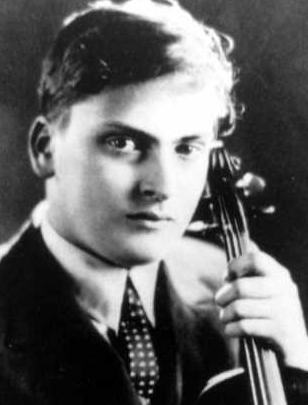
Sir Yehudi Menuhin KBE (1916 – 1999) pictured in his youth
In 1953, the Koshland Mansion was sold for $100,000 by the estate of Cora Koshland. The purchaser was Walter E. Buck (1884 – 1966), president of the American Distilling Company. Buck and his wife Emily, who were well known for “Gatsby-esque parties” at their 1,300 acre estate, Woodside, redecorated 3800 Washington Street by “painting the mahogany library white, removing the dark green, gold-tooled leather from the dining room and developing small card rooms in the basement.” It seems likely that the era of parties at 3800 Washington Street continued during their occupancy.
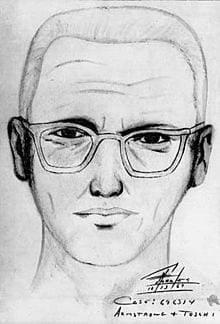
On 11th October 1969, a murder occurred on the block where 3800 Washington Street stands when the Zodiac Killer, a to this day unidentified serial killer who operated in Northern California in the 1960s and 1970s, shot and killed a cab driver named Paul Stine. Stine had collected his passenger one block west of Union Square and had, as requested, driven him to the intersection of Washington and Maple Streets in Presidio Heights. Once there, the cab driver was shot once in the head with a 9mm before the killer, observed by three teenagers across the street, took his wallet and car keys. The Zodiac Killer tore off a section of Stine’s bloodstained shirt, wiped the cab clean and walked off into the night before the police could arrive.
A sketch of the Zodiac Killer
Subsequently, on the 14th October 1969, the San Francisco Chronicle were mailed a swatch of Stine’s shirt to prove he was the killer and then on 9th November 1969, a 7-page letter followed. Excerpts from it were published from it in the newspaper on 12th November which revealed that a police officer, Don Fouke, who had responded to the teenager’s call, had actually encountered the killer for 5 to 10 seconds on a stairway of a house close to the murder scene. Fouke had been told to look for a black suspect and on seeing a white man going into the yard of a house, had discounted the individual and drove on. The Zodiac Killer, in his letter, detailed the encounter but claimed that two policemen had actually spoken with him 3-minutes after he’d shot Stine.
In 1975, a neighbour, Paul Renne purchased 3800 Washington Street for $675,000, supposedly to prevent it being acquired by property developers, but having been used as the 1982 San Francisco Decorator Showcase house, it was placed on the market and sold to a gallery owner named Heidi Betz and her business partner, an art collector named Charles Pankow. They paid $1.5 million for the house but failed in their bid to turn it into an art gallery due to objections from neighbouring residents.
Halsey Minor
In the two decades that followed 3800 Washington Street was sold several more times but finally it’s glory days looked set to return in 2007 when it was purchased by an “internet titan” named Halsey Minor and his second wife, Shannon. Having paid approximately $22 million for what essentially was going to be a very expensive renovation project, Minor supposedly assigned a further $15 million towards renovations and hired Michelle Obama’s favourite designer, Michael S. Smith, to oversee the project.
Minor founded CNET, a tech media website that published news, articles, blogs and podcasts on technology and consumer electronics, in 1992 after leaving Merrill Lynch and built it into one of the first internet companies to achieve profitability. CNET was sold for $1.8 billion in 2008 and is now CBS Interactive. Another of the companies he co-founded in 2000, salesforce.com, was “one of the most successful companies of the decade” and achieved a market capitalisation of in excess of $15 billion.
Having made a small fortune from his dot-com success, Minor diversified into investments that brought with them a lifestyle that would later be described as “a multi-millionaire who lived life as a billionaire.” In 2007, he began construction of a hotel in his hometown of Charlottesville, Virginia and announced this would be part of a series he’d open as part of the Minor Family Hotel group he planned. The hotel has never been completed.
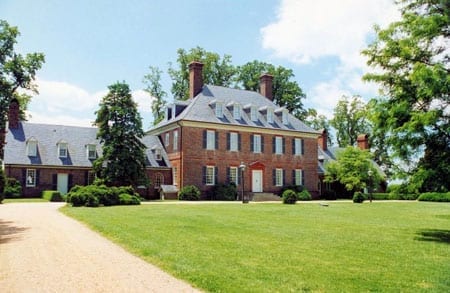
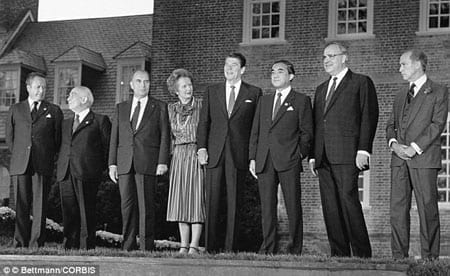
Carter’s Grove, 8797 Pocahontas Trail, Colonial Williamsburg, Virginia, VA 23187: considered to be one of America’s finest and most historic residences. It was bought by Halsey Minor in 2007 and has fallen into significant decline in the years since.The 1983 Group of Seven (G7) meeting at Carter’s Grove. Pictured outside the house are: Pierre Trudeau, Prime Minister, Canada; François Mitterrand, President, France; Helmut Kohl, Chancellor, West Germany; Amintore Fanfani, Prime Minister, Italy; Yasuhiro Nakasone, Prime Minister, Japan; Margaret Thatcher, Prime Minister, United Kingdom; Ronald Reagan, President, United States of America and Gaston Thorn, President, European Commission
In the same year, he also bought the Koshland Mansion and purchased 400 acres of land and a residence on the James River, the Carter’s Grove Plantation, for $15.3 million. Here, he planned a centre for thoroughbred horse breeding and at around the same time he attempted to buy both the Hialeah Park Race Track in Hialeah, Florida and the Pimlico Track in Baltimore. Both bids failed.
Minor’s investments were not just limited to property and the equine sector. In 2006, he placed a $3 million deposit on a $59 million Gulfstream G650 and at Sotheby’s in 2008, he was the winning bidder on a painting by Edward Hicks, The Peaceable Kingdom, at a hammer price of $9.6 million and also bought paintings by Andy Warhol and Childe Hassam.
Around this point, however, this dot-com tycoon’s fortune began to unravel when Merrill Lynch called in a $25 million loan and various legal suits connected to his art collection, investments and properties commenced. Several of his homes were repossessed and at a court hearing in August 2011, he claimed to have just $112,643 in cash and owned no publicly traded securities. Minor claimed to be majorly broke but the declaration did not cover illiquid assets such as art, real estate and shares in non-public companies. To this day, Minor remains listed in first place on the State of California’s Franchise Tax Board’s top 500 delinquent taxpayers owing some $10,455,580.69.
In response to his supposed progression from riches to rags, Minor wrote an article for The Huffington Post in July 2012 entitled “Why I Fight”:
“I often wonder what Thomas Jefferson would think of today’s America, a nation that is rapidly but silently abandoning the individual in favour of faceless corporations, rapacious banks and a collusive, unresponsive government… The simple answer is that someone must [fight] or we will emerge from this recession with wealth and power concentrated in a few tiny financial institutions representing a new ruling elite, not unlike the one that inspired Thomas Jefferson’s generation to revolution.”
Somehow, in spite of his changed circumstances, Minor has managed to hold on to 3800 Washington Street. Though, during his tenure, the house has fallen into decline and is now half covered in ivy, it is still one of San Francisco’s finest properties and it is still situated in one of the city’s best neighbourhoods. It is still an asset of considerable value and Minor’s decision to sell may well help him rake back some of what he has lost.
The hallway at 3800 Washington StreetA drawing room at 3800 Washington StreetOne of the property’s dining roomsThe opulent ballroom at 3800 Washington Street
Steven Mavromihalis of Pacific Union International launched 3800 Washington Street onto the market in May 2012 for $25,000,000. This move came just after two Abandoned Building Notices had been issued on the property by the City and County of San Francisco Department of Building Inspection. On offer is the 18,000 square foot main house at 3800 Washington Street, a 2,600 square foot 3-bedroom house at 3810 Washington Street and a vacant lot at 125 Maple Street. Though the agents don’t give much more in the way of details, they do refer to the house having a double marble Palladian staircase, 22 rooms, a “spectacular ballroom,” 8 bedrooms, 7 bathrooms, 9 fireplaces, 3 kitchens, an elevator and three original stained glass windows by the San Francisco poet, writer sculptor and artist Bruce Porter (1865 – 1964).
According to the agents, 3800 Washington Street is second only to Danielle Steele’s 55-room residence, The Spreckels Mansion, at 2080 Washington Street in the rankings of the largest homes in San Francisco. This is most certainly a mansion with a fair few tales to tell but whoever buys it will need both Steele’s wealth and imagination to get it back into good order. Dot-com tycoons and serial killers need not apply.
All enquiries about 3800 Washington Street, Presidio Heights, San Francisco, California, CA 94118 should be directed to Steven Mavromihalis of Pacific Union International on +1 (415) 345 3030 or email him at: [email protected].
More details are available at: http://www.pacunion.com/homes/CA/San_Francisco/94118/3800__Washington_St/AGT-107397278-685992/ whilst a video tour of the property can be viewed at: http://vimeo.com/42775765
After a mixed response to our last picture of the week, taken from the Mail Online and featuring a “whingeing Brit” pensioner named Pamela Burbery, today we have chosen a more positive image from the very same title.
This week’s image is of another typically British sight, a white van. “White Van Man – The scourge of the road” was a description van drivers were christened with in 1997 by Jonathan Leake, the then transport editor of The Sunday Times, who described them as “the most feared driver on the road.”
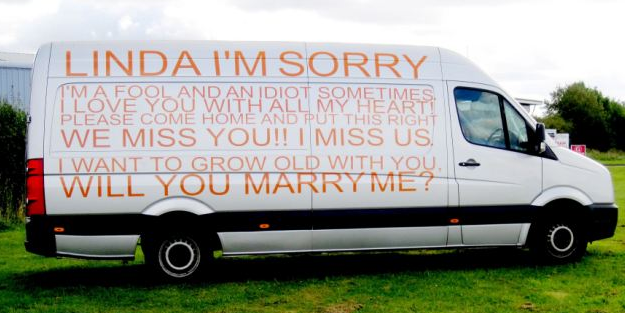
The white VW van left on a roundabout in County Durham
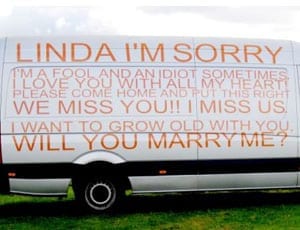
White Van Man has never been considered a particularly sensitive chap but his image may have changed this week when the Mail Online featured an image of a VW van left on the George Reynolds Industrial Estate in County Durham decorated with the following:
Linda I’m sorry
I’m a fool and an idiot sometimes.
I love you with all my heart!
Please come home and put this right
We miss you!! I miss us.
I want to grow old with you.
Will you marry me?
Here is a White Van Man with a heart but even with their resources, the Mail Online did not manage to find out the identity of the driver prior to publication.
We very much hope Linda and her mystery man are reunited.