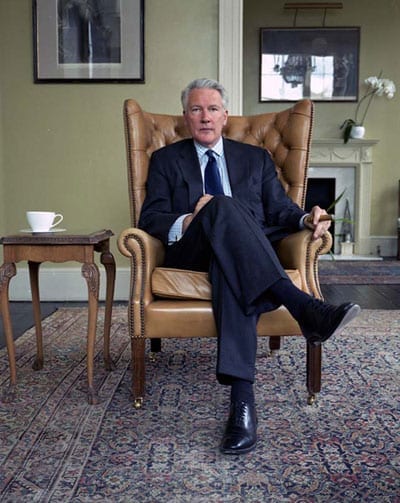
The Steeple Times asks photographer J.Harry Edmiston: “What’s on your mantelpiece?”
The Steeple Times shares “wit and wisdom.” What’s your guiding force?
The idea that the photographs I take may still be admired long after I’m gone.
“Don’t get even, get medieval” is, in our humble opinion, a great motto. What’s yours?
“If you’re given lemons, make lemonade.”
Kerry Katona was considered unacceptable in 2007. Who or what is unacceptable in 2012?
Instagram.
Tony Blair misses being Prime Minister. What do you miss most in your life?
Sunsets in Georgian Bay, Canada.
What might you swap all your wealth for?
Taking an iconic photograph that touches people around the world.
Donald Trump was once a case of: “If you owe the bank a thousand, they close you down; but if you owe the bank a billion, you own the bank.” What’s your view on the banking crisis?
While the crisis has had many bad consequences, the one bright spot has been the many people of my generation turning to creativity and entrepreneurialism in order to earn a living. The world will see the benefit.
What phrase or word do you most loathe?
“Not possible.”
In the UK, some people consider charity to “begin at home.” What’s your view and what causes do you personally support?
I am lucky to have many friends actively involved in charitable work and I look to support them when I can across a wide variety of causes.
The judge in “Law Abiding Citizen” states: “I can pretty do whatever I want” before being blown up whilst answering her mobile phone. What’s your view on the appropriate use of such devices?
Clearly using a phone that will blow you up does not seem to be a good idea. In general, so many people to do not see the world around them because they spend so much time staring at their iPhones. Keep it to a minimum and look up occasionally.
If you could fill a carriage on The Orient Express, who would be your fellow passengers?
The characters from Wes Anderson’s film The Life Aquatic.
J.Harry Edmiston
If you were unfortunate enough to end up on death row, what would be your last meal and where would you eat it?
The leaves of the female Encephalartos woodii plant. No examples have ever been found in nature and therefore their search should give me plenty of time to plan my escape. Fresh grilled lobster and a cold beer on the beach on an unnamed Caribbean island would be my reward.
What time is it acceptable to consume the first drink of the day?
After breakfast.
A Negroni, a martini or a cup of tea?
A Moscow mule at Montgomery Place. They make the best cocktails in London.
Whose parties do you enjoy the most and why?
I always look forward to my friends Istvan and Theo’s periodic parties at Daquise, a polish restaurant in South Kensington. Good vodka, good food, good music and good friends are never a bad combination.
Who is the most positive person you know?
Marta de la Mata, a DJ and club owner in Brazil and Ibiza. She has limitless energy and is amazingly fun to be around.
What’s your most guilty pleasure?
My mother’s extraordinary Christmas cake. The cognac content seems to be increasing every year.
If a tattoo were to sum you up, what would it be of?
Something by M. C. Escher.
If you were a car, what marque would you be?
A DeLorean with “Flux Capacitor.”
Cilla Black presented “Surprise, Surprise.” Tell us the most surprising thing about you.
If I had not pursued photography, I would probably be making guns with my father.
What’s currently sitting on your mantelpiece?
Some lenses, some invitations and some gold, frankincense and myrrh.
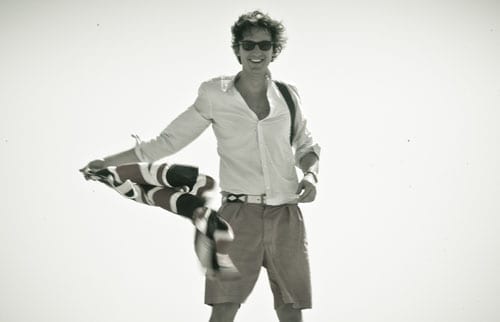
J.Harry Edmiston is a London based photographer who has also worked in film, television and commercial production. A solo exhibition of his works will be held at the Alpha Gallery at 23 Cork Street, London, W1S 3NJ from 10th to 14th December 2012.
In the first of a series, we publish a number of the most popular articles from the blog that conceived The Steeple Times. Here, in a February 2012 piece, Matthew Steeples reviews a boozy breakfast at Hawksmoor Guildhall with Anthony Brown. After seeing an image of their breakfast on Facebook this morning, we were reminded just how good it truly is, so if you haven’t tried it already – you really should.
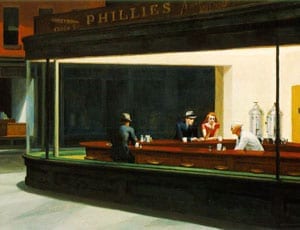
On arrival at the Hawksmoor Guildhall, in the heart of the City of London, I immediately found myself thinking about Edward Hopper’s iconic painting Nighthawks.
Nighthawks (Art Institute of Chicago, 1942) by Edward Hopper (1882 – 1967)
The main dining area at Hawksmoor Guildhall
Here, in this vast space, which can seat 160 in the restaurant and 75 in the bar, was a venue that very much combines the feel of an old banking hall with something akin to a friendlier version of the American café diner in Hopper’s Nighthawks painting. Though, to my mind, the City is indeed a lonely place, the welcoming staff and the somewhat noisy suited brokers created an atmosphere that truly reflected the stature of this fine establishment.
My companion and I wrongly assumed that this relatively new restaurant had simply taken the space of something that had been there before. In fact, this was just a clever trick. The owners, Will Beckett and Huw Gott, collaborated with the Macaulay Sinclair design studio, who were also responsible for their Seven Dials site, to create a style that combines solid mahogany panels made out of Natural History Museum specimen cabinets, a bar formed out of the counter of a Dutch bank and teak flooring taken from the University of the Arts Building near Bond Street. The result is truly impressive.
We opted to share the Hawksmoor breakfast for two priced at £35. This superb offering was served in a large pan with a smoked bacon chop, the most phenomenal sausages made from pork, beef and mutton, black pudding, short-rib bubble and squeak, trotter baked beans, fried eggs, grilled mushrooms, roast tomatoes and HP gravy. Served with unlimited toast, not that it was actually required, this bargain of a meal was a breakfast fit for a king. After this, you really won’t need to eat again for several days.
Also on offer for breakfast, on a menu designed by the Hawksmoor’s executive chef, Richard Turner, are wild mushrooms on toast with poached eggs Hollandaise (£10), a 200g fillet steak with fried eggs and hash browns (£25) and a twist on McDonalds in the form of the sausage and egg HkMufin (£8.50). Scotch pancakes come available with streaky bacon and maple syrup (£6) or with roasted plums (£5).
Urged to try the breakfast cocktails, we sampled the Hawksmoor’s Marmalade Cocktail (£8) of gin, lemon juice, homemade orange bitters and a dash of Campari and another named Shaky Pete’s Ginger Brew (£8.50) that consisted of gin, homemade ginger syrup and lemon juice topped with London Pride. The first was sharp and a perfect awakener and the second, described on the menu as “a turbo –shandy for the discerning drinker,” surprisingly worked utterly brilliant in terms of the ingredients it combined.
Open for breakfast from 7am and serving until 10.30pm at night, this is a restaurant of which the Metro’s Marina O’Loughlin rightly comments: “As Homer Simspon might say, mmmnmnhrhmm…”
Matthew Steeples delves into the history of Albany, Piccadilly and discovers an affordable way of living there
Albany, off Piccadilly in Mayfair, was most probably London’s first apartment block and it’s certainly the city’s most exclusive. It may be next to the Royal Academy and opposite Fortnum & Mason but surprisingly few have even heard of it.
Considering its location, Albany, which some make the mistake of referring to as “The Albany,” is an amazingly quiet oasis of peace and tranquility but, equally, it is a place of intrigue and drama. Residents, or “proprietors,” as they prefer to be known, of the 69 “sets” are particular about the “the” part of the name as they’d rather their residence not be confused with a public house and they are even more protective of their privacy. A porters’ lodge guards the entrance to the building and it is staffed mostly by ex-servicemen, who, until the early 2000s, had to wear top hats and tailcoats. Those allowed to pass enter a rarefied world frequented by what the Irish novelist Marmion Savage (1803 – 1872) identified as “incurable oddities” and “superannuated fops” in The Bachelor of Albany.
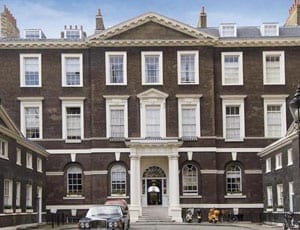
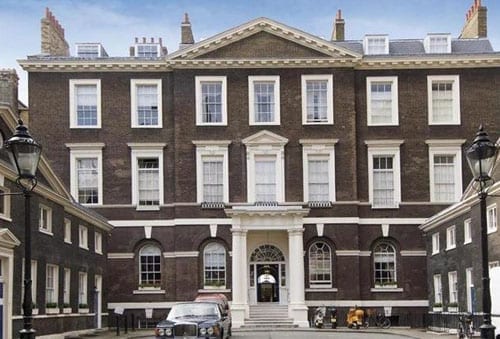
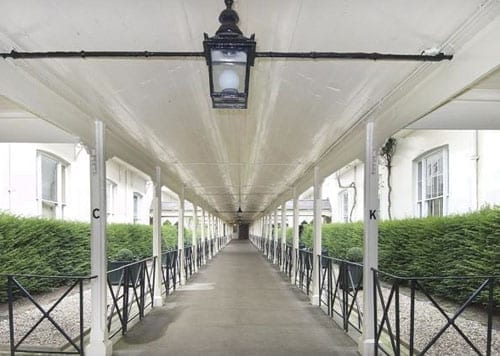
The front courtyard and façade of Albany, Piccadilly, Mayfair, London, W1J 0ALThe rope-walk connecting the various sets of Albany has been traversed by some of the greatest names in history
Built by Sir William Chambers (1723 – 1796), who also designed Somerset House and the pagoda at Kew, between 1770 and 1774 for 1st Viscount Melbourne (1745 – 1828), Albany was originally known as Melbourne House and conceived as a three-storey mansion, seven bays wide with a pair of service wings flanking a front courtyard. From 1791 to 1802, the property was occupied by George III’s son, Prince Frederick, Duke of York and Albany (1763 – 1827), but after he left, the renowned architect Henry Holland (1745 – 1806) sub-divided the existing house and added two parallel sets of buildings running the length of the garden to create 69 “bachelor apartments” which he named “sets.”
The “roll call” of residents since could easily fill our very own pages thrice over. They number royalty, politicians, artists, playwrights, academics and philosophers and here is a brief selection:
– Anthony Armstong-Jones, later 1st Earl of Snowdon
– Sir Thomas Beecham
– Sir Isaiah Berlin
– Lord Byron
– George Canning
– Sir Kenneth Clark
– Baroness Pauline de Rothschild
– William Ewart Gladstone
– Sir Edward Heath
– David Hicks
– Aldous Huxley
– Sir Simon Jenkins
– Rupert Lycett Green
– Malcolm Muggeridge
– Sir Harold Nicholson
– J. B. Priestley
– Sir Terence Rattigan
– Roger Scruton
– Baroness Sharples
– W. Somerset Maugham
– Terence Stamp
– Sir Denis and Lady Thatcher
– Sir Herbert Beerbohm Tree
Each had to pass the vetting of a committee of trustees of this Grade I listed building. That committee forbids children under 14, pets, musical instruments and commercial activities and each approved resident has undoubtedly added to the history of this den dominated by a central walkway named the “rope-walk.” Incidentally, an example of a curious quirk at Albany is that no resident is allowed to speak to another on this walkway. If they do, a fine is incurred. Albany, indeed, is rather like a college in its systems of rules, regulations, order and hierarchy.
For several centuries, women were not even allowed to cross the threshold and one legendary tale tells of Lady Caroline Lamb (1785 – 1828), disguised as a page boy, stealing into Lord Byron’s (1788 – 1824) set in 1815 to leave a note: “Remember me, Byron.” He replied with a simple verse:
Remember thee, aye, doubt it not:
Thy husband too shall think of thee.
By neither shalt thou be forgot —
Thou false to him, thou fiend to me.
The strict and formal structure that controls Albany and ensured its maintenance has succeeded in the main because 34 of the 69 sets are owned by Peterhouse College, Cambridge. They and the other owners are highly particular in whom they lease to and on one occasion on hearing of an “unsuitable tenant,” the secretary of the trustees is reported to have shouted:
“He’s a foreigner. Don’t like him. Don’t trust him.”
Needless to say, that application didn’t progress and nor did one from a physiotherapist who planned to operate from the building. Bone bashing in Albany just wouldn’t do.
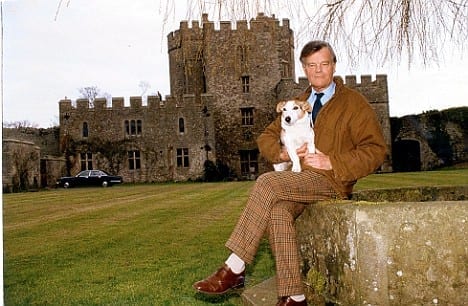
The Rt. Hon. Alan Clark MP (1928 – 1999) in the grounds of his main home, Saltwood Castle, near Hythe in Kent in 1993
A horsewhip, however, nearly crossed the threshold of set B5 in 1994, as it was here that the late Alan Clark MP (1928 – 1999) lived. The affable philanderer seduced the wife and both daughters of a certain South African named Judge Harkess and the wronged man stated he would “have horse-whipped Clark if he had known how comprehensively he had violated his honour.” B5, itself, was described as having the feel of “the straitened quarter of an Edwardian bachelor on his uppers” and the dotty, English attitude of the residents is best summed up by the reaction of Clark’s neighbour when he accidentally flooded their basement. When asked what he could do to make amends, their answer was quite simple: “Go and lie down in Piccadilly and wait for a double-decker bus.”
The dandy and journalist John Morgan (1959 – 2000) typified social change at Albany in the 20th century just as much as he himself redefined etiquette and manners at Debrett’s and The Times. Of “humble origins,” Morgan was brought up in a “modest” bungalow in St Madoes, Perth, Scotland but is credited with persuading William Hague to remove his baseball cap whilst Conservative leader and offering advice ranging from “how to eat a banana” to “how best to tell friends that the partner you would like to bring to their wedding will be of the same sex as you.”
Dandy and etiquette expert John Morgan (1959 – 2000)
For the bachelor and GQ style director, living in Albany was symbolic of his own personal social elevation but he did not disown his past. This modern day Beau Brummell was a man of social contradictions who cashed his cheques at Claridge’s but was a member of the National Union of Journalists. He was a Tory but still regularly attended chapel meetings as he had done in his youth. Here was a man of paradoxes who seemed unable to come to terms with the fact that he was a homosexual.
Morgan, an asthma sufferer, fell to his death from a fourth floor window on 9th July 2000. He was found in just a white shirt in a basement below a window whose sill was strangely undisturbed. The coroner left an open verdict with a suspicion of suicide and it was widely reported that police found 60 made-to-measure Savile row suits, 300 monogrammed shirts and 90 pairs of shoes in the etiquette expert’s small set. Mystery shrouds the story of his tragic demise to this day but Johnny Morgan will forever be remembered as an arbiter of both good taste and behaviour.
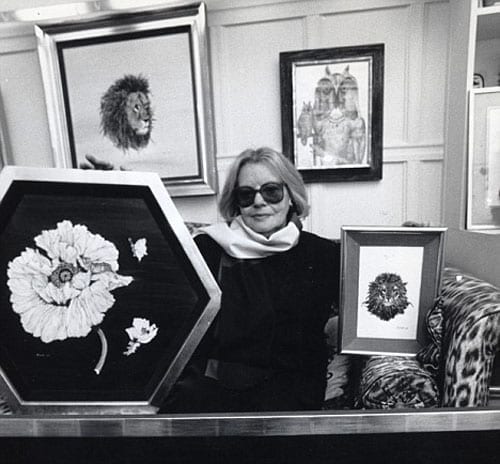
Whilst Morgan represented continuation of the trend of bachelors living in Albany, change also came in the 20th century when the building’s committee removed the restriction that allowed only bachelors to be resident. With that females were allowed in and amongst them Fleur Fenton Cowles (1908 – 2009) was one of the most fascinating.
Fleur Fenton Cowles (1908 – 2009) in her set at Albany with some of her paintings and one by Salvador Dali
This writer and artist occupied five sets knocked into one with her fourth husband, timber merchant Tom Montague Meyer, and according to the Daily Mail’s Geoffrey Levy, hosted “elite soirees of the powerful and famous.” Levy recounts them at length but here is a flavour:
“On a Wednesday evening, a typical dinner party… would include Foreign Secretary Selwyn Lloyd, Labour leader Hugh Gaitskell, entertainer Danny Kaye and film star Douglas Fairbanks Jr. The Queen Mother regularly came to tea and was once joined by Pavarotti who sang Happy Birthday for the royal guest. ‘I don’t want her to die,’ said Fleur. ‘I couldn’t bear to think she doesn’t live just down the street.’ ”
Fenton Cowles, founder of the ill-fated Flair magazine and a “woman who knew everyone,” loved Albany and an exact replica of her “windowless, milk-yellow” study there has even been recreated at the University of Texas.
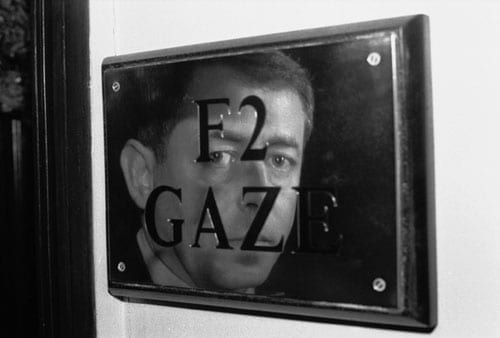
Another known for hosting extravagant bashes in Albany was my late friend, the Russian icon dealer John Gaze (1947 – 2011). Gaze had, as a boy, asked his father about the building when he passed it as a child and immediately declared he would live there one day. He took F2, the former set of Edward Heath that overlooked Savile Row to the rear, in the mid 1990s as he craved the safety that the building offered after having been kidnapped at gunpoint by an Oxford graduate conman named Sacheverell de Houghton in April 1991 from his then home in Fournier Street, E1. He made the most of his tenancy.
Russian icon dealer John Gaze (1947 – 2011) reflected in the brass plaque outside his Albany set, F2. It was formerly occupied by Sir Edward Heath.
Gaze’s parties included a fundraiser for people with AIDS hosted by a drag queen. This sparked fury with certain other residents and coverage in the Daily Telegraph and another incident there involved him encountering Alan Clark on the ropewalk carrying a portrait of Lenin. “Where the fuck are you taking that?” Clark supposedly bellowed but was “reassured” when he was told it was “destined for a less salubrious address in Whitechapel.” John Gaze remained at Albany for several years but, like a number of others I know, was forced out by ever rising rents and moved first to Chelsea and then Ennismore Gardens, Knightsbridge. He always remembered his time at Albany fondly and as a bon vivant, he truly belonged there.
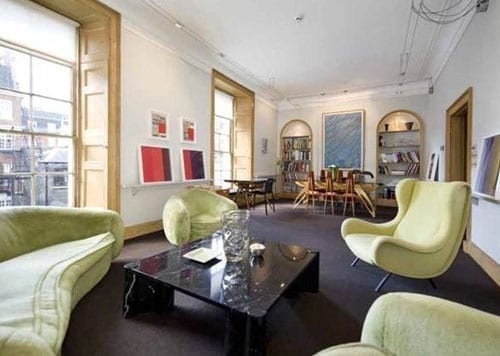
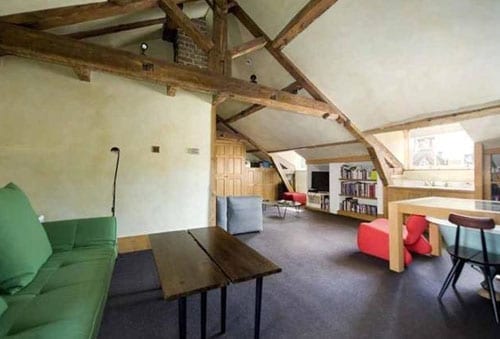
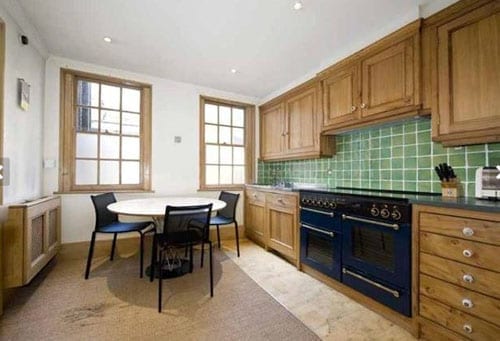
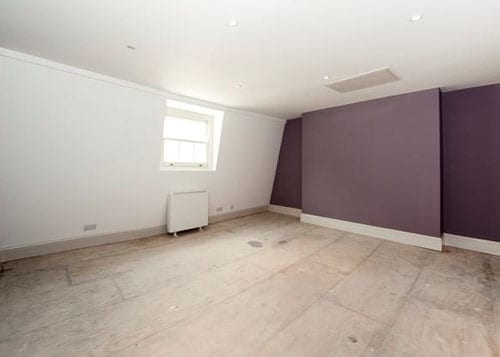
The main reception room in a £1,400 a week set currently available in AlbanyAn attic room in the set that could be used as a second reception room or second bedroomThe kitchen is lacking in character but offers ample space for informal dining
Contrary to what you’d expect, living in Albany is not quite as expensive as one might think. A 2-bedroomed 1,970 square foot set is currently available through Knight Frank for £1,400 a week: a figure that seems quite reasonable given the location, history and size of this property. Available on a minimum 8-year rental term, it includes a formal reception room, a dining kitchen, 2 bedrooms and 2 bathrooms.
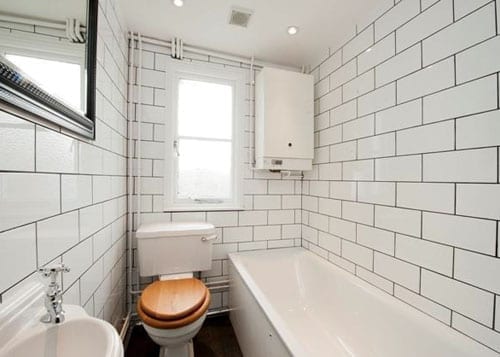
This £300 per week set, D2, consists of just one roomThe communal bathroom D2 shares with other sets is basic but clean
For those looking for something cheaper, Savills offer D2 Albany at £300 per week. This set consists of a 221 square foot third floor attic room with access to a communal bathroom and the agents suggest that it: “would make an ideal reading or writing room or an occasional bedroom for a pied-a-terre.” It’s effectively a posh form of tenement but what a way to impress your peers and subordinates.
Damon and Sandra de László in their “duplex” in Albany
Those renting either of these sets would find the likes of the industrialist Damon de László, a descendant of the Hungarian painter Philip Alexius de László (1869 – 1937), as their neighbour. The couple occupy Lord Byron’s former set, A2, and have, on occasions, opened it for a charity dinner with Matthew Parris at £1,000 a ticket as well and for members of The Portrait Institute to view their collection of de László’s works.
Professor Philip C. Bobbitt in his grand freehold set
Another present day resident is a man Henry Kissinger calls “the outstanding philosopher of our times,” Professor Philip C. Bobbitt. This Texan lawyer is a nephew of Lyndon B. Johnson and the author of Terror and Consent, which Tony Blair describes as “required reading for political leaders.” Bobbitt owns an impressive flying freehold set that is described as having a masculine style of décor and a “kitchen he has designed to look like a bar.” In an interview for TheIndependent he states that he finds Albany: “a propitious place to work.”
Though governments and bankers come and go, behind this quintessentially English façade, order and disorder have always been maintained. The wildcards of this hidden haven have a knack for living by the doctrine “to live at Albany is to live in history” and indeed they make the most of that. Those who are lucky enough to be let in, do, indeed, truly find themselves in the “Paradise of Piccadilly.”
She owns a controlling interest in the world’s third largest brewer and is married to the child star of Lawrence of Arabia, Michel de Carvalho. They live together in London with their five children, are said to be worth £5.5 billion but live “quite modestly.” Of meeting his wife, de Carvalho commented: “I met the girl of my dreams, complete with free beer. I didn’t realise then that marriage is not just about free beer.”
Could the number 13 be the reason Halcyon Hall has failed to sell?
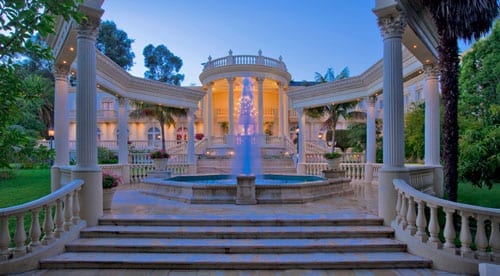
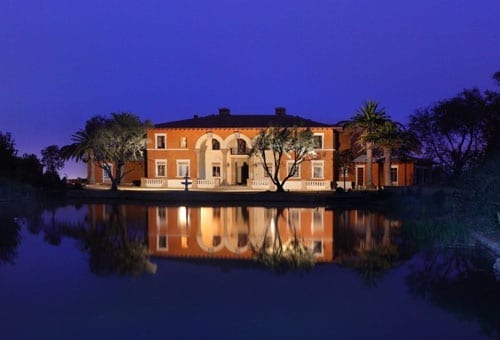
Several over the top Californian residences we’ve featured on The Steeple Times, namely the $40,000,000 Chateau d’Or in Bel Air and the $87,000,000 Villa del Lago on the Newport coast, were properties that have seen huge price reductions. Though $15,000,000 has been sliced off the asking price of the Bel Air pad, it remains unsold and meanwhile Villa del Lago, now renamed One Pelican Hill Road, achieved just $18.5 million in a bankruptcy auction. It sold for less than a quarter of what the developer originally sought for it.
The 25,000 square foot Chateau d’Or, 10425 West Sunset Boulevard, Bel Air, Los Angeles, California, CA 90077 first came on the market at $40,000,000 in 2009. At $25,000,000, it still hasn’t sold.One Pelican Hill Road North, Newport Coast, Newport Beach, Orange County, California, CA 92657 was originally on the market for $87,000,000. It eventually sold at a bankruptcy auction for just $18,500,000 and features a 17,706 square foot Italianate mansion with 8 bedrooms and 17 bathrooms. Additional features number staff accommodation, a gatehouse, garaging for 17 cars, a 1-acre lake with terraced waterfalls, a tennis court, stabling and a riding area and a private vineyard with a wine cave.
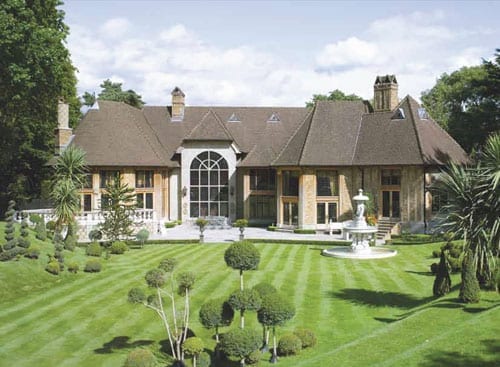
We believed monstrous white elephants like these were confined to the US, but we are afraid we’ve come across something today that truly proves otherwise. The behemoth we refer to is a 14,000 square foot house in Radlett, Hertfordshire. Built in 2005 for a businessman named Barry Beck, “Halcyon Hall” stands on the site of a far more modest property that was simply known as 11 Newlands Avenue.
The phrase “halcyon days” refers to “the seven days of winter when storms never occur” in the Greek myth of Alycone but whether this inspired Beck in naming this place is unknown. He and his wife, Pauline, did, however, decide upon an “Elizabethan theme” for the residence and our pictures illustrate their extravagantly eccentric tastes adequately.
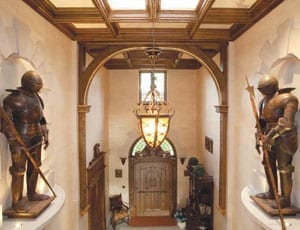
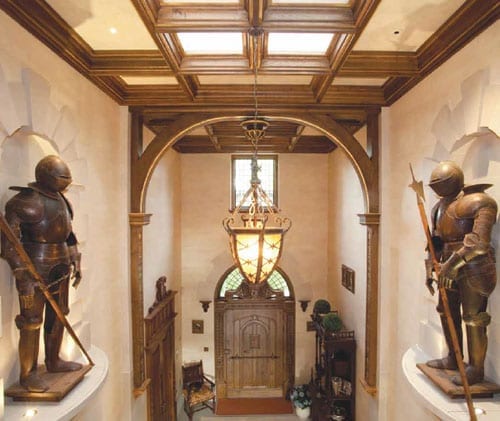
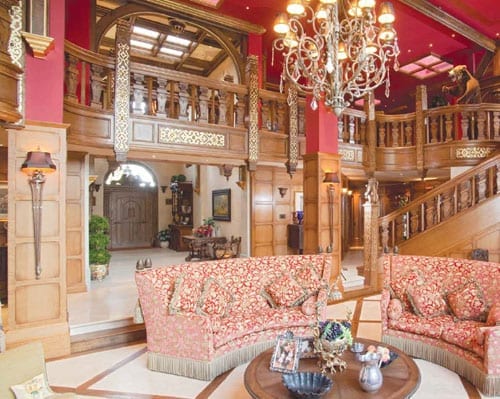
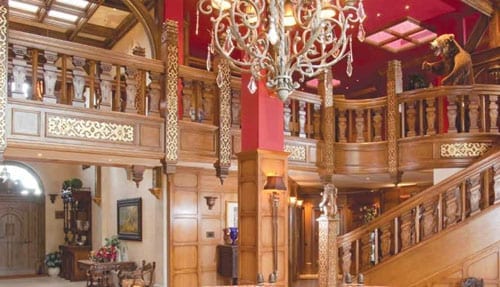
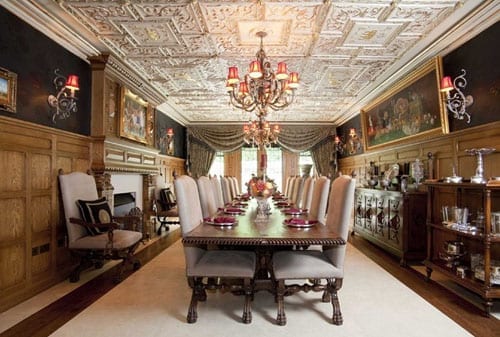
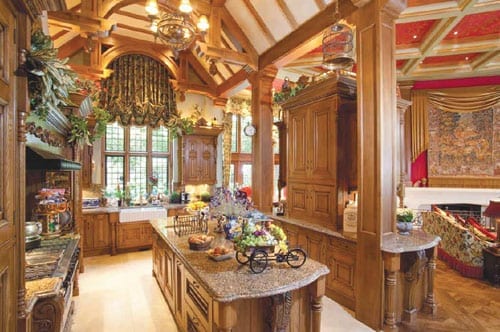
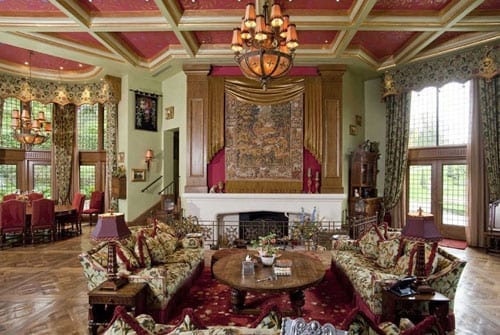
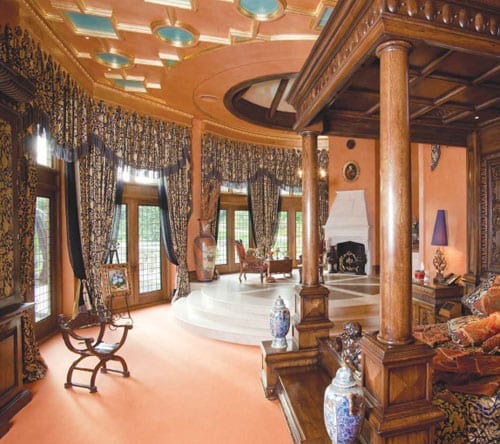
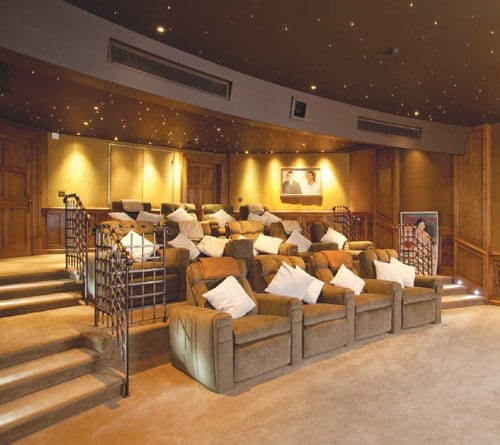
Halcyon Hall, 11 Newlands Avenue, Radlett, Hertfordshire, WD7 8EHThe entrance hall is guarded by a pair of knights in full suits of armourThe hall and entertaining salon is far from understatedThe main staircase is guarded by a life-size bearThe dining room attempts to look ElizabethanWhilst the kitchen dabbles with medieval meets “The Real Housewives of New York”Decorating mish-mash continues in a formal entertaining spaceAnd the “games gallery” isn’t exactly neutral eitherThe master bedroom suite takes “over-the-top” to another levelBut it is the thirteen seat cinema that we find most curious
Undoubtedly the construction of this vast Hertfordshire crib is of a high quality but the look is nothing other than ludicrous. Here is a mix of pastiche, ostentatiousness and just plain odd. Not even a WAG could have come up with décor this curious and such things as a private cinema with 13 seats can plainly not be the choice of someone who follows the curse of the hangman’s noose.
This 7-bedroomed house, which stands in 1.17 acres, would strangely, though, be ideal for someone who is a little paranoid. As well as all the security features you’d expect of any multi-million pound mansion in the Home Counties, it also includes a bathroom that doubles as a panic room. If you close the door in a certain way, steel bars supposedly come down making sure no intruder can follow you inside.
Two knights in full suits of armour guard the entrance hallway and a life-size stuffed bear stands dominant in the games gallery of the house. Plainly this beast’s not persuaded anyone to bite yet as whilst the price of Halcyon Hall has fallen from £15,000,000 in February 2011 to just under £13,000,000 in November 2012, the house remains on the market. We suspect that the curse of “Unlucky Thirteen” may well be alive and well somewhere between numbers 11 and 15 Newlands Avenue.
Halcyon Hall, 11 Newlands Avenue, Radlett, Hertfordshire, WD7 8EH is for sale through Statons. For more information telephone: +44 (0) 20 8445 3694 or email:[email protected]
Matthew Steeples reports on the sentencing of Maria Michaela
Today, Maria Michaela was sentenced to 9 years in jail at Harrow crown court for her role as the lynchpin in a fraud of epic proportions.
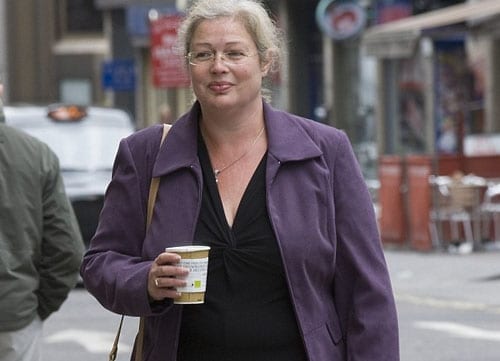
Maria Michaela attempts to look remorseful as sobs in her mugshotConvicted fraudster Mary-Jane Rathie
Termed as “Britain’s biggest female fraudster” by the Evening Standard, Michaela is someone I came across in Lennox Gardens, London. In the building where I lived, she was often spotted with an associate collecting money from a tenant, Stephen Hunter-Scott, also known as Stephen Short, who was jailed alongside her.
In due course this Knightsbridge apartment was repossessed by an Irish bank but the aforementioned associate returned a year later and forcibly took possession. The apartment concerned was eventually taken back and sold on a short lease for just £200,000 recently.
Meanwhile Michaela disappeared but it was not until she appeared on the BBC’s Crimewatch wanted list that she again came to my attention. On the show, it was reported that this woman, who operated under countless aliases that numbered “Joanne Sarah Pier,” “Anjali Sharma,” “Mia Cul” and “Nadia Ali,” had, with the help of a corrupt chartered surveyor named Mary-Jane Rathie, obtained loans of £10.5 million from HBOS and £2.5 million from the Royal Bank of Scotland in 2007 and 2008.
Michaela, who may well in reality be called Bruna Louise, had posed as a wealthy South African heiress to secure the funds she supposedly required to fund the purchase of properties in Chelsea, Belgravia, Pimlico, Greenwich, Clapham, Stoke Newington and the Docklands. In reality, Rathie, who was bribed with £910,000 in cash, a £49,000 Range Rover Sport and a £143,000 Bentley Continental, vastly overvalued each allowing Michaela to pocket, for example, £6 million for a Cheyne Walk house that was in reality worth just £3.5 million.
Whilst Rathie, a former employee of Ashdown Lyons, was jailed for 6 years in July 2011, the fraudster Michaela managed to evade capture for three years. She was eventually caught this January in Bexleyheath working as a mortgage broker. In various preliminary hearings, her pleas of insanity did not help her cause and nor did her unwillingness to provide evidence of her true identity. This morning, she got just what she deserved.
Of her conviction, Detective Inspector Andy Fife of City of London Police commented:
“Maria Michaela created a web of deception that duped banks into handing over vast sums of money and then perpetuated her crimes by assuming a new alias to try and secure more loans. False identities and a corrupt property surveyor were the tools she used to make millions, turning herself into one of the, if not the, most prolific female fraudster the UK has ever seen.”
The lesson of Michaela and her cohorts, I’d argue, is simple. Greed may well be good in the eyes of Gordon Gekko, but the greedy generally get caught in the end and generally it is down to their own vanity. As she rots in her cell, perhaps she ought to consider this folly.
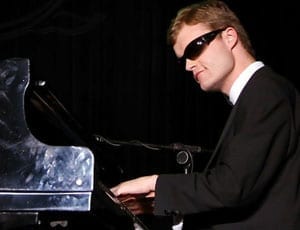
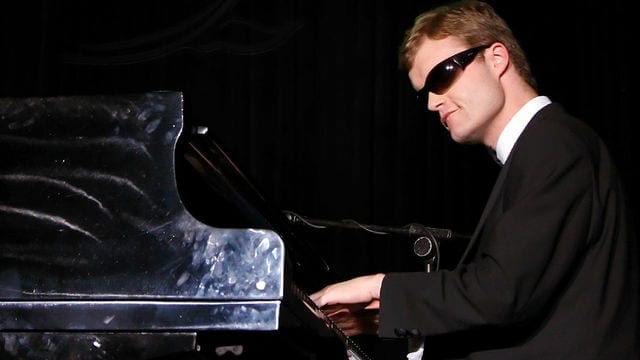
This echolaliac prodigy has absolute pitch and has been described as “the human iPod.” His abilities as a musician are amazing given that he’s both blind and autistic. The cousin of The Duchess of Cornwall’s children, Tom Parker Bowles and Laura Lopes, Paravicini unexpectedly played Big Spender to the then Chancellor of the Exchequer, Alistair Darling, in 2009 and made legal history when The Court of Protection was opened for the first time in 2010 to discuss his future care. He captivates audiences throughout the land.
Matthew Steeples explores the story of an empty Kensington mansion
A multi-million pound 8-bedroomed house in Kensington isn’t anything unusual. In fact, rather, they’re ten a penny. In this, one of the wealthiest boroughs in the land, large, expensive homes are just the norm.
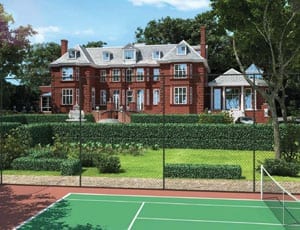
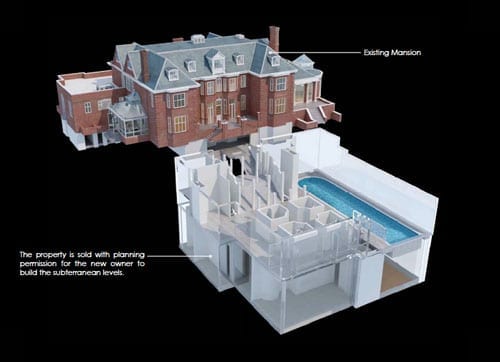
An image of the existing exterior of No. 1 Campden Hill, London, W8 7ADA rendered image of how the exterior of the renovated property might lookThe plans show a vast subterranean development that will vastly increase the size of No. 1 Campden Hill
No. 1 Campden Hill, which is being marketed for an undisclosed eight-figure sum, is in a quite different league. Here is a detached Edwardian house in an acre of grounds just to the north of Kensington High Street. It’s an unrenovated property but it attracted much press attention in October 2011 because it was place on the market in October 2011 at a price of £75,000,000. Yes, you heard it right: £75 million for a fixer-upper. Last week, Radio 4 made a hell of a fuss about a derelict semi-detached house in Newcastle selling for just £14,000 so this truly must be something special.
Architect Edward P. Warren (1856 – 1937), far right, in the offices of Bodley & Garner, 14 South Square, Gray’s Inn, London
The architect of the house Edward Prioleau Warren (1856 – 1937), a Bristol born architect and archaeologist, was best known for “Oxford colleges and minor country houses” but also designed the War Cemetery at Basra. He was a friend and adviser to the American novelist Henry James and in addition to building No. 1 Campden Hill in 1915, he also designed a house at 5 Palace Green in 1906 and another, Estcort House in Kensington Palace Gardens, in 1904. Warren’s guiding style is described as having been to recreate an “understated revival of English late 17th century” architecture and at No. 1 Campden Hill he created just that.
Colonel Edmond Grove-Hills (1864 – 1922), born Edmond Hills, and his wife, Juliet Spencer-Bell, were the architect’s clients. A plaque on the building bares their names and the following dedication:
This House I built for Me & Mine
May it be of Peace A Shrine
And no Enmity or Sin
Ever find its way therein
AD 1915
Sadly for the Grove-Hills, the following year, their son, Second Lieutenant Charles Herbert-Hills (1895 – 1916) was killed on the Somme aged just 21. His father, meanwhile, was awarded a CBE in 1918 after having served as the Assistant Chief Engineer of Eastern Command during the war.
Aside from his military exploits, Edmond Grove-Hills is best known for his role as president of the Royal Astronomical Society. He took part in observations of eclipse of the sun in Japan in 1896, India in 1898 and Russia in 1914 and contributed papers analysing both this and the causes of the irregular movements of the earth’s axis of rotation.
In 1951, No. 1 Campden Hill was purchased by the government of Uruguay and it became the residence of their ambassador to the United Kingdom. For the next fifty years the building was barely altered but when the lease from the Phillimore Kensington Estate came to an end, there were legal problems as the 1951 transfer had never been stamped. Of this, Sharon Mulroney of Forsters, the legal representatives of Phillimore, commented:
“It is highly unusual to be faced with complications of this kind when dealing with a registered London title, but this made the transaction all the more fascinating. Even the decision to allow ambassadorial staff to return to the property for security purposes after completion was fraught with potential problems about security of tenure, employment and tax.”
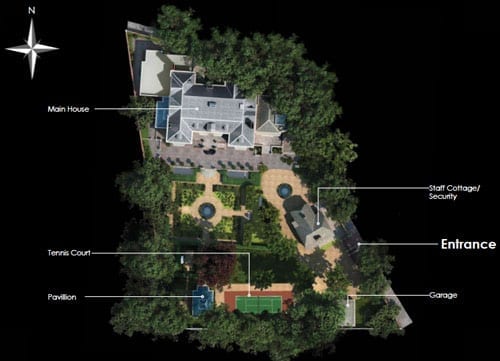
The proposed site plan shows the addition of a garden pavilion, staff/security cottage and a tennis court
Eventually, without issue, the Phillimore Estate sold on the house in 2001 for a price of approximately £17,000,000. In the years since, the property was effectively mothballed as all the purchasers have done is to have obtained planning permission to redevelop the building into a mammoth mansion of epic proportions.
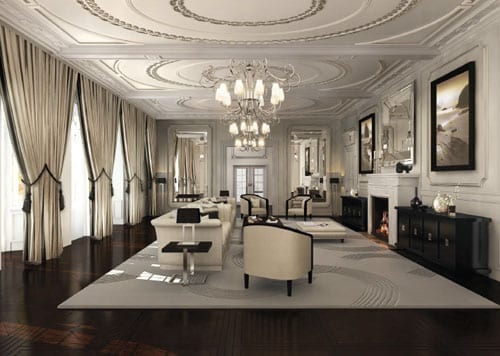
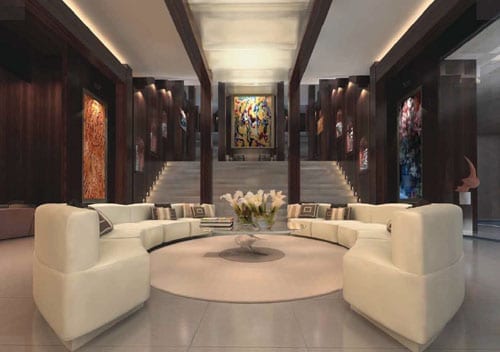
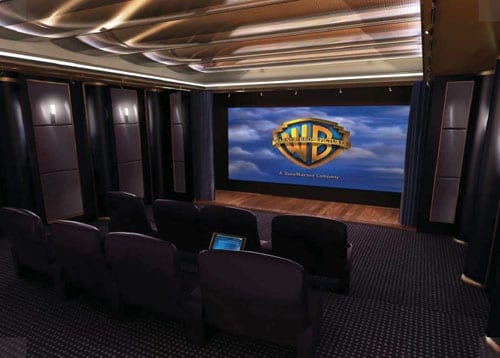
A computer rendered image of how the drawing room might lookThe “leisure area” is reminiscent of the entrance to The Mandarin Oriental Hyde Park HotelThe private home cinema would be the envy of any movie buffThe swimming poolThe wine cellar is rather like a contemporary take on Berry Bros. & Rudd’s flagship store in St. James’s StreetAnd to complete it all… The plans include your own version of Boujis in the basement
The approved plans show designs for something quite remarkable. Warren’s “understated” residence will be replaced with 8 vast bedroom suites, grand entertaining spaces, a lift and even bedrooms for 5 staff. In addition to a full-scale renovation of the original freehold house, there is scope to provide a total of 30,000 square feet of accommodation by adding a huge subterranean complex that will include a 25-metre swimming pool, court, squash court, gym, sauna, steam room, function room, entertainment room, home cinema, wine tasting room and even a nightclub to rival any of Kensington’s trendiest haunts.
On that basis alone, No. 1 Campden Hill is surely the ideal residence for Prince Harry: “Who needs Boujis?” we hear him cry.
No. 1 Campden Hill, London, W8 7AD is for sale through Knight Frank. For more details contact Roddy Craggs on +44 (0) 20 7938 4311 or go to:http://search.knightfrank.com/ken100161to download a brochure.
Edgware born Costa is best known as a member of the boy band Blue but he actually started out as an actor in the BBC’s Grange Hill. He’s sung with Stevie Wonder and Elton John and thinks that groups created via shows such as The X-Factor achieve fame “the wrong way.” We’d say he has a point.
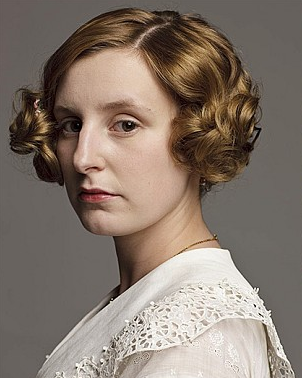
A Southampton born graduate of the Bristol Old Vic Theatre School, Laura Carmichael came to public prominence in ITV1’s Downton Abbey. Her October 2012 West End debut, opposite Anna Friel in Uncle Vanya, was briefly interrupted by Sir Peter Hall heckling. He’s since apologised and all’s well once again. With some 20,000 followers on Twitter, this rising star declares her true love to be Twiglets.