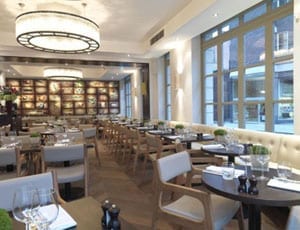
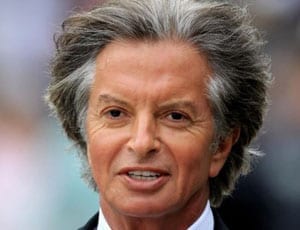
Poissonnerie on Draycott Avenue, popular with the likes of Sir Michael Caine and Sir Roger Moore, is for sale through Miles Commercial. The 6,700 square foot property, owned by respected restaurateur Peter Rosignoli, has a price tag of £14,000,000 and the agents state that it “has good redevelopment potential”. Meanwhile, around the corner in Walton Street, the same firm seeks £90,000 per year for the former Baity Kitchen premises.
Living like Lilly
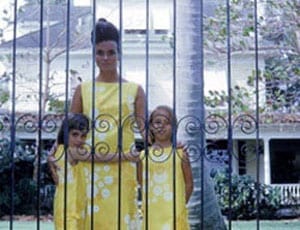
The “Queen of Prep” Lilly Pulitzer’s realtor daughter, Liza, is marketing her late mother’s former home at 710 South County Road in Palm Beach, Florida at a price of £5,500,000. Originally marketed at £7,500,000, the fashion titan told the New York Times recently that the house is “just magnificent, but I’m old and I’m cranky and I can’t keep it up the way it should be”. She now rests in peace but with the “cabana inspired” property being marketed as a “tear-down” or for subdivision into two lots, it looks like the bulldozers will be on the way.
Meyer’s kebabed
Sir Christopher Meyer was recently spotted on the steps of 17 Lincoln Street in Chelsea with a group of men who looked like builders. The same property, for which offers in excess of £2,650,000 were sought, is now “under offer/sold” on the Primelocation.com website. If indeed the former ambassador and his wife, who was described as being “Chanel-clad” by the Daily Telegraph in May 2011, have bought the house, they’ll quickly have to get used to the smell of kebabs. The 4-storey unmodernised end of terrace is right next to the Al Dar restaurant.
Monckton moves on
The house where financier John Monckton was tragically murdered in November 2004 in Upper Cheyne Row, Chelsea has recently come on the market with W. A. Ellis. Monckton’s killer Damien Hanson and his accomplice Elliott White were rightly jailed and now, his widow, Homeyra, is selling the 5-bedroomed house at a guide price of £5,500,000.
If you know of a story about someone newsworthy who is changing jobs, setting up a new business or selling an existing one or moving home, do email us at:[email protected]
Continuing our series of revisiting articles from the blog that preceded The Steeple Times, today we re-publish our review of CUT at 45 Park Lane. We’re delighted to report that it’s just as good today.
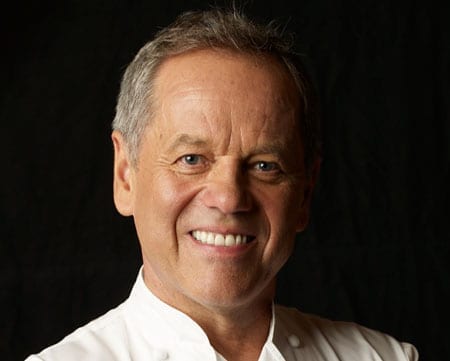
Wolfgang Puck once commented that he “learned more from the one restaurant that didn’t work than from all the ones that were successes.” With the opening of his new restaurant, CUT, at The Dorchester Collection’s newest hotel, 45 Park Lane, he certainly proves that he learnt well.
Wolfgang Puck
Now magnificently illuminated at night and featuring 24 metal panels by Thierry Despont, this narrow Park Lane building was unoccupied for 13 years until The Dorchester Collection creatively brought it back to life. The building has a fascinating history having been owned in the 1950s by one George Parkin Catchpole, a liquidator, who rented it out “for anything legal.” He is said to have told a group of artists named the Park Lane Group: “When I’m not using it, you can – and I won’t charge you” and they did. They set up a 150-seat theatre and the pianist John Ogdon and the Welsh soprano Dame Gwyneth Jones DBE performed there.
The magnificently lit exterior of 45 Park Lane at night
In the 1960s Catchpole sold the building and 45 Park Lane took on a new life as the Playboy Club. Run by Victor Lownes, the casino at the club became the most profitable in the world by 1981 but following a decision to revoke the club’s gambling licence and a row between Lownes and Hugh Hefner, the venue closed.
45 Park Lane is now well and truly back on the map of the international jet-set following this latest refurbishment. Angelina Jolie and Brad Pitt stayed in September and the opening party was itself attended by Philip Green and his daughter, Chloe, as well as Kate Moss, Jamie Hince, Matt Bellamy and Kate Hudson.
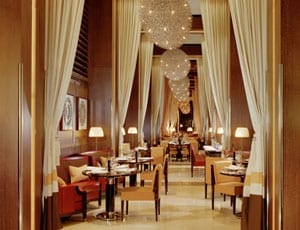
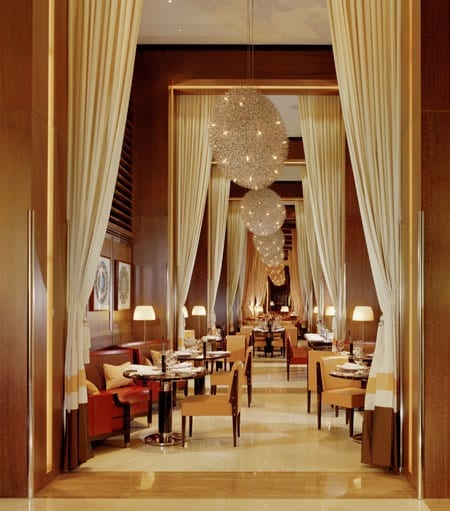
CUT itself is a stylish space that seats 70 guests that is managed by the most personable Loyd Loudy, formerly of the OXO Tower, Hakkasan, China Tang, Shoreditch House and Sartoria. This is a slickly run dining room that has art deco hints and is dominated by Damien Hirst artwork.
CUT’s narrow but stylish dining space
When I told a friend that I was going to CUT, he complained that the music there was a “horrible mixture” of 1970s and 1980s rock music chosen by Puck himself. My dining companion, a fan of such tunes as KC and The Sunshine Band’s Come To My Island, was delighted, however, by this prospect and only disappointed that his favourite tune didn’t get an outing. I was hoping for a rendition of the Strawbs’ Part of the Union in honour of, excuse the pun, those protesting about the government’s ongoing economic cuts, but I guess that would hardly have gone down well with the Mayfair hedgies and well heeled hotel guests who flock to this glamorous dining destination.
John Walsh, in his review of CUT for the Independent, describes Wolfgang Puck’s name as being “Mozart-meets-Shakespeare” and this culinary maestro is himself worthy of note. Austrian by birth, Puck began his career at Maxim’s in Paris, the Hotel de Paris in Monaco and the Michelin 3-starred L’Oustau de Baumanière in Provence. In the 1970s he moved to the United States and set up his first flagship restaurant, Spago, in 1982 on the Sunset Strip of West Hollywood. Spago became known for its signature dishes of haute cuisine pizzas topped with smoked salmon and caviar and awards galore and a burgeoning restaurant empire followed in the 1990s and 2000s with further openings in LA, Las Vegas and Singapore.
Puck has brought in David McIntyre as executive chef at CUT at 45 Park Lane. Part of his team in Los Angeles for the last 13 years, McIntyre’s career began at the Culinary Institute of America and progressed eventually to a “strong culinary partnership” with Puck first at Spago and then at CUT, Beverly Hills and WP24.
Puck and McIntyre offer a menu that most certainly couldn’t fail to please any meat lover. Though not designed for those on a budget, the focus here is on cuts of beef, be they from Casterbridge in Devon or Creekstone Farms in Arkansas City, Kansas, that are grilled over hard wood and charcoal then finished under a 650 degree broiler.
To start, I began with an Australian wagyū steak sashimi with spicy radishes and a Greek cress (£22). It was truly delicious and the envy of my companion who found his bigeye tuna tartar with wasabi ailoli, ginger, tōgarashi crisps and tosa sauce (£21) just as enjoyable. For those looking for a meatier option the Austrian oxtail bouillon (£9) certainly should appeal and vegetarians could definitely enjoy the roasted baby beetroot salad with goat cheese (£12).
For our main courses we naturally both chose to try out the cuts but those looking for something different could opt for a sautéed dover sole (£45) or a warm lobster club sandwich (£24). Both my 6oz filet mignon (£30) and my companion’s 35 day aged 10oz New York sirloin (£34) melted in the mouth and truly top my list for the best steak of the year. The accompanying Armagnac and green peppercorn sauce was a phenomenal choice and utterly perfect. Though slightly over salted, the French fries with herbs (£5.50) were pleasant and the tempura onion rings (also £5.50) could not be faulted.
To conclude, though somewhat conquered by the feast we’d just enjoyed, we moved on to a light banoffee pie and a delicious chocolate dish that tasted akin to a Kit-Kat with blackberries. Here ended a meal that was most certainly one of the best I’ve enjoyed in 2011.
The wine list is exactly what you’d expect to find in an establishment of this stature. Staring at £7 a glass for whites by the glass and £16 for Laurent Perrier 2002 champagne, key highlights include a Château Petrus 1988 for £4,900 a bottle and a 2009 offering from the estate of Sir Peter Michael at £270 a bottle.
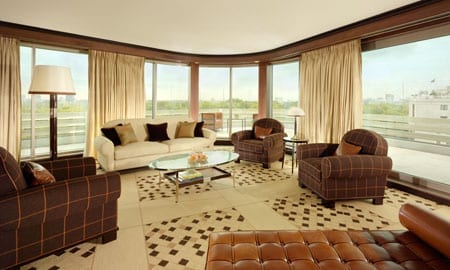
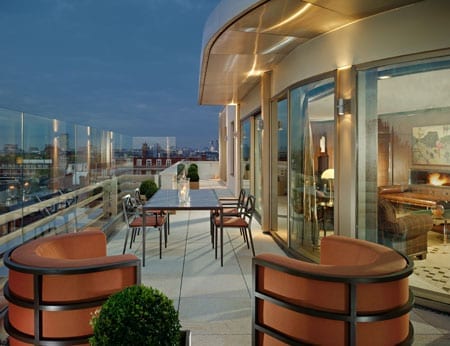
One of 45 Park Lane’s 45 rooms and suitesSuites with terraces boast views over Hyde Park and the rooftops of Mayfair
Above the restaurant a striking staircase leads to Bar 45, a chic space serving cocktails and offering bar-dining for 30. Adjoining this is media room with 10 comfortable armchairs and a library. The remainder of the building appropriately consists of 45 stylish rooms and suites that include a most impressive penthouse suite with a wrap-around balcony that offers expansive views across Hyde Park.
Fay Maschler concluded her review of CUT with the words: “Cut and come again.” I’d only add that this is a restaurant that is cuttingly magnificent.
The $95 million apartment of the world’s richest travel agent remains for sale after six months of marketing
The Sherry-Netherland is one of New York’s finest skyscraper apartment-hotels and one of the city’s best known landmarks. The world’s richest travel agent and co-founder of Liberty Travel, Gilbert Haroche, who occupies the entire 18th floor with his wife Charlene, put his apartment there on the market for $95,000,000 in September 2012 but six months later it remains for sale.
The Steeple Times asks emerging market investor David Reuben Jr: “What’s on your mantelpiece?”
The Steeple Times shares “wit and wisdom”. What’s your guiding force?
I try to follow the “Golden Rule”. Treat others the way you would prefer that they treat you. Be careful how you are with people on your way up, you just might meet them on the way down.
“Don’t get even, get medieval” is, in our humble opinion, a great motto. What’s yours?
If at first you don’t succeed, skydiving is probably not for you.
In the last couple of years, with a new management team for the landed Cadogan Estate, there have been many changes in terms of the area’s retail and culinary offerings.
Sloane Street has seen the arrival of many new luxury brands and in addition, recent restaurant openings on Sloane Square have included Jeremy King and Chris Corbyn’s Colbert on the site of the old Oriel and Côte where the Chelsea Brasserie used to be. In the same block, which forms part of the Sloane Square Hotel, Marc Burton and his partner Guy Pelly, have opened a tequila bar named Tonteria that features a steam train that delivers drinks to the patrons.
Matthew Steeples suggests Westminster City Council have no place meddling with how the humble burger is cooked
In the last week both the Evening Standard and BigHospitality.co.uk revealed that Westminster City Council had served notice on a restaurant named Davy’s for “undercooking” burgers. Current Food Standards Agency guidelines state that burger meat should be cooked at 70°C for two minutes and it is suggested that Davy’s have failed to adhere to this.
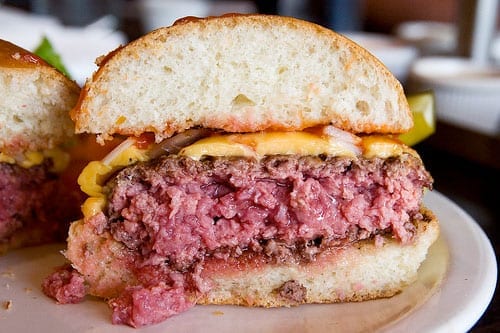
A rare burger: the pleasure of millions and something that the bureaucrats should leave be
A spokesman for Davy’s told the Evening Standard:
“[Our] burgers are produced from high quality ingredients and Davy’s contends that it has safe measures in place to serve rare or medium-rare burgers.”
John Cadieux of Burger & Lobster went further in his comment:
“If you follow the guidelines to the letter then you’re going to destroy the burger industry. Not only that but you’re opening a Pandora’s box, because where do you finish? Steak tartare, runny eggs … the list is endless.”
If this ruling is maintained, a precedent will be set and those who enjoy rare and medium-rare burgers will find that their pleasure will be taken away. The busybodies of Westminster Council and their passion for cremating meat must be stopped.
I wish the Davy’s burger crusaders all the very best when they appear at Westminster Magistrates Court in May 2013.
Of Italian-Jewish descent, Caring is of the “supermarket-sweep” school of empire building. This billionaire started out in the rag trade but now controls the majority of the top restaurants and clubs in Central London. He survived the 2004 Indian Ocean tsunami and viewed that to be a wakeup call. Since then he’s donated millions to charity and focused on his two passions: golf and shooting. This buccaneering businessman generally passes on breakfast and lunch and lives between a converted stable block set in 500 acres near Dulverton and a mansion on The Bishops Avenue. What will he buy next?
Matthew Steeples discovers Michael Winner’s links to descriptions of unwelcome “out of towners”
My last linguistic rambling explored two words, “plebs” and “ladettes,” that, like Andrew Mitchell MP, truly need to be eliminated from our culture. The next two in this series, “grockles” and “emmets,” have far more amusing origins and truly sum up the eccentricities of those living in the South of England.
I was led to believe that the word “grockle” was an ancient description of “those not from round here,” but having done a little research I now discover that it actually emanates from the 20th century TheDandy’s comic strip, “Danny and the Grockle.”
“Grockles” and caravans commonly go together“The Girl-Getters” (AKA “The System”) starred Oliver Reed, Jane Merrow, Barbara Ferris, Harry Andrews and Julia Foster and was directed by Michael Winner
The Dandy’s “grockle” was nothing other than a dragon like creature. There wasn’t anything more to the beast and it wasn’t until 1964 that the term became popularised when it was used in a film set in the Devon resort of Torquay. In The System (renamed The Girl-Getters for the US market), starring Oliver Reed and directed by Michael Winner, one of the characters states:
“Bloody grockles and their caravans, always jamming up the Devon lanes!”
Henceforth, the word became forevermore linked to tourists and thus we can hold Michael Winner responsible for bringing it to the world’s attention. Winner, who describes, himself as: “A totally insane film director, writer, producer, silk shirt cleaner, bad tempered, totally ridiculous example of humanity in deep shit” really should proudly add a reference to this to his Twitter handle.
Other definitions of the “grockle” are more specific and an especially amusing one separates these interlopers very clearly:
“It’s used as an insult towards ignorant and usually posh tourists; those with caravans; those with five kids, a dog, a grandad tagging along and those that have been coming to town for twenty years and think they know and own the place.”
The same commentator on this term continues:
“Someone holidaying in Christchurch who’s from Southampton isn’t a grockle… Foreign tourists aren’t [grockles] either as these generally tend to be considerate people when traveling and don’t make a nuisance of themselves… However, when I went to Puerto Banus near Marbella, I’d heard it was very exclusive but it was full of grockles still.”
The word is now so recognised that it was used in an a 2010 article in The Sunday Times about the sale of Lord Cowdray’s £25 million home in West Sussex:
“Bar a few open-garden events, the Cowdrays have never allowed visitor access to the property, so the eventual buyer won’t have to endure grockles coming up the drive.”
Whilst we have discovered that a “grockle” is a pretty general term, in Cornwall they have a more specific variation. The Cornish use the pejorative nickname “emmet” for tourists.
Derived from the Cornish language word for “ant,” the “emmet” is an analogy for the way in which both tourists and ants are often red in colour and appear to mill around. “Emmets,” it seems, are nuisances who get in the way and whom the locals would rather weren’t there.
Michael Winner wearing a T-shirt complete with his trademark phrase: “Calm down dear”… In this case he states: “It’s only a recession” but we do think he ought to also get one stating: “Calm down dear, they’re only grockles, they’re not from round ‘ere”
Be they a “grockle” or an “emmet,” tourists may well generate millions in revenue for the people of the South West but still, as many a local will say: “They’re not welcome round ‘ere.” I’m sure many a restaurateur feels similarly when Mr Michael Winner lands on his doorstep.
Matthew Steeples discovers the truth about the origins of the Gressingham duck
I grew up in North Lancashire and spent much time in the Lune Valley. Here, I was regularly told, in the 12th century village of Gressingham, a staple of the menus many English restaurants and the most common farmed duck had originated: the Gressingham duck.
Recently, whilst chatting to a restaurateur, the subject of Gressingham duck came up for some bizarre reason. When I told him of the bird’s Lancastrian origins, he firmly disputed this and told me that they were actually of East Anglian extraction.
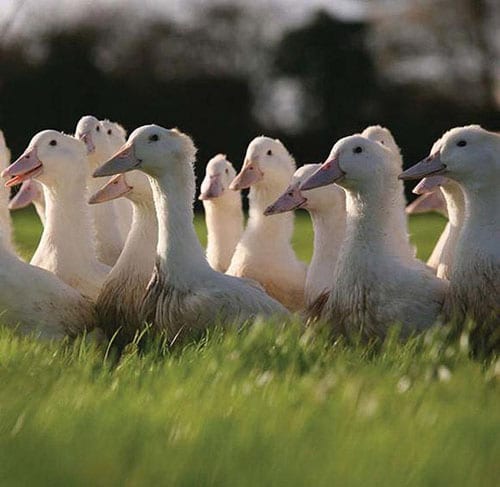
Gressingham ducksThe Loyn Bridge crosses the River Lune close to Gressingham, near LancasterGressingham duck features on many restaurant menus
Having chatted with several other foodies, they, equally, were of his opinion. After then having spotted it on yet another restaurant menu last week, I decided I simply had to establish the true origin of this bird before I went, excuse the pun, quackers.
A Google search didn’t come up with a great deal but it did produce the required evidence. As I believed, he Gressingham duck was first bred in Gressingham, Lancashire in 1980 by crossing a Pekin duck with a wild mallard.
The result was a succulent, tender bird with a high breast meat yield and a gamey flavour. Of it Delia Smith comments: “It’s the very best type of duck available… Because of it’s smaller frame, [it gives] more meat.”
A Suffolk based couple named Maurice and Miriam Buchanan began rearing and processing Gressingham ducks in 1989 and then bought the exclusive rights to breed them in 1996. Their company, Green Label Foods, now Gressingham Foods, are now the only firm licensed to produce the “Gressingham Duck®” and now employ over 500 people on their farms in East Anglia.
Gressingham Hall, Gressingham, Lancaster, LA2 8LPA view of Gressingham Hall from the road
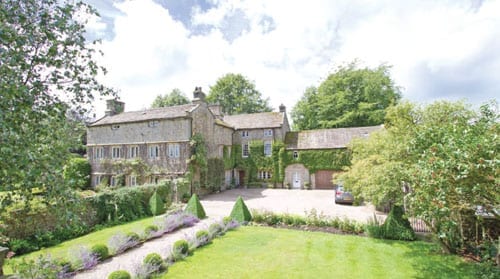
Separately in my Google search I also discovered that the main house in the village of Gressingham has recently come to the market through agents Fine & Country. 7-bedroomed Gressingham Hall, a Grade II* listed 17th century former farmhouse comes complete with 3 reception rooms, a Jacobean staircase and 10 acres of grounds.
A price of £1,350,000 is sought for Gressingham Hall whilst a separate cottage across the drive, Garden Cottage, has a guide price of £350,000. Whoever purchases it had better had get a Gressingham Duck® in the oven for their first night in residence.