Tag: quirky

  • Five of the Best – Follies for sale

    Five of the Best – Follies for sale

    A selection of five of the best follies for sale in Britain and elsewhere


    A folly is unlikely to make an ideal home for a family, but for someone a little more quirky – a writer or artist perhaps – they can easily make an ideal home.


    Our selection of five of the best currently on offer follows:


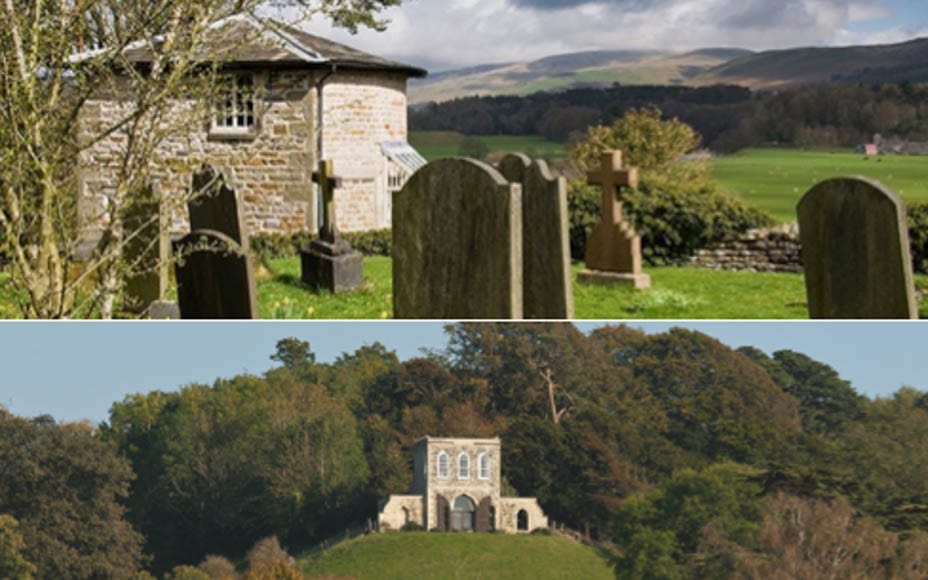
    Church Brow Cottage, Kirkby Lonsdale, Lancashire – £280,000 ($367,000 or €328,000) through Davis & Bowring
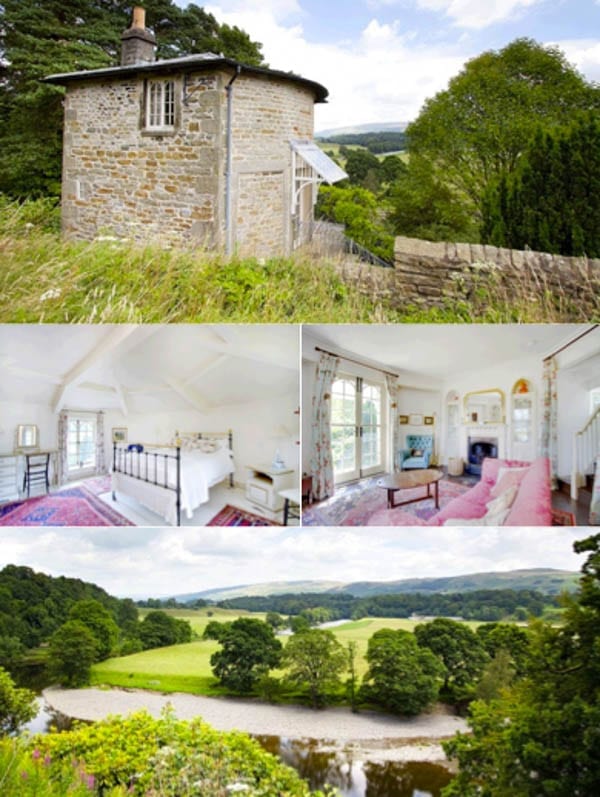
    Five of the Best – Follies for sale A selection of five of the best follies for sale including ones in Gloucestershire, Hampshire, Lancashire and Connecticut, USAOriginally built by an eccentric vicar in the 1830s and spread over three floors, this Grade II* listed folly was restored by the now defunct Vivat Trust and opened as a holiday let by HRH The Prince of Wales in March 1993. It features in JMW Turner’s painting of what is known as ‘Ruskin’s View’ (sold for £217,250 in 2012) and includes one bedroom, a sitting room with a balcony, a kitchen and a bathroom. An informally landscaped leads down to the banks of the River Lune and access – on foot only – is via the adjoining graveyard.


    Treia, Macerata, Marche, Italy – £337,000 ($441,000 or €395,000) through Cella-Shirley Immobilliare
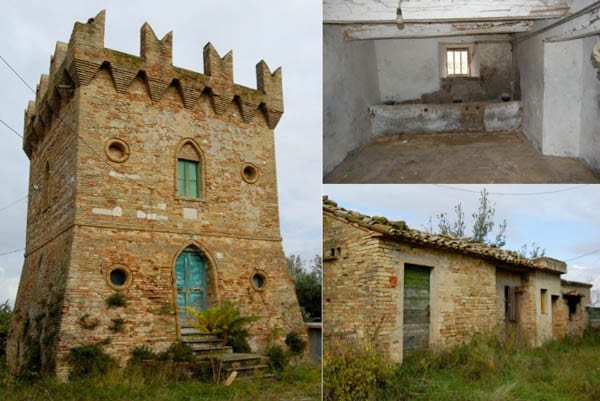
    Five of the Best – Follies for sale A selection of five of the best follies for sale including ones in Gloucestershire, Hampshire, Lancashire and Connecticut, USABuilt in medieval style in the 18th century, this “landmark building” outside the ancient walls of the town of Treia stands on a hill with about 2.5 acres of land including secular olive trees. A former farmhouse, the property needs complete renovation, currently consists of 8 rooms and a number of outbuildings and has been reduced in price from £440,000.


    The Summer House, Alderley, Gloucestershire – £990,000 ($1.3 million or €1.2 million) through Knight Frank
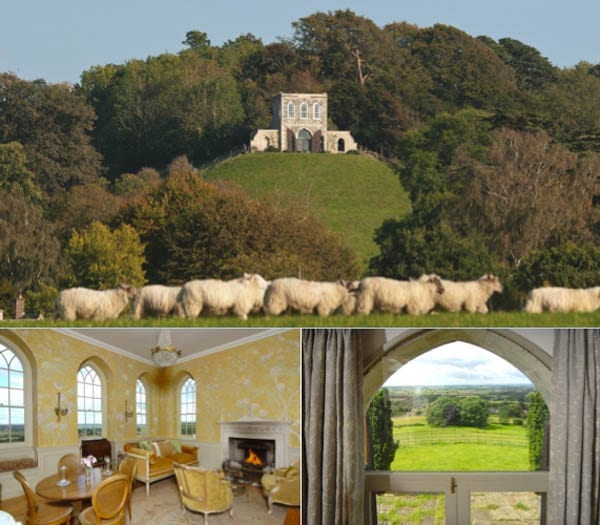
    Five of the Best – Follies for sale A selection of five of the best follies for sale including ones in Gloucestershire, Hampshire, Lancashire and Connecticut, USAGrade II listed and built circa 1770, The Summer House is a completely refurbished “perfect romantic weekend getaway” that is being sold fully furnished. Originally used as a small banqueting house by the great-great-grandson of Lord Chief Justice Matthew Hale, the 1,108 square foot Georgian property stands in 2.1 acres of gardens and woodland and features a sitting room, breakfast kitchen, two double bedrooms and a bathroom.


    The Tower, Sway, Hampshire – £2 million ($2.6 million or €2.3 million) through John D. Wood
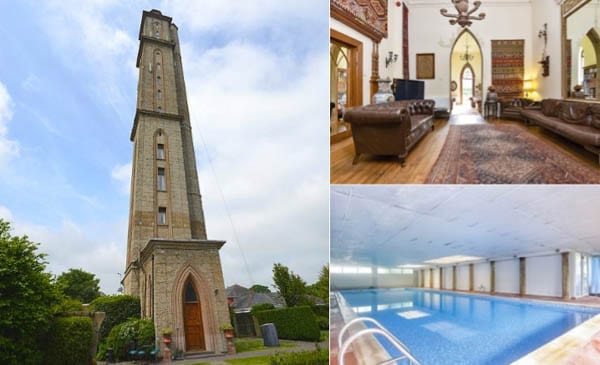
    Five of the Best – Follies for sale A selection of five of the best follies for sale including ones in Gloucestershire, Hampshire, Lancashire and Connecticut, USABelieved to be the world’s tallest unreinforced concrete structure at 218-foot tall, Sway Tower – also known as Peterson’s Folly – was constructed between 1879 and 1886. The structure cost Andrew Peterson (1813 – 1906) some £30,000 (the equivalent of £3.4 million today) and came about after a medium told the Anglo-Indian barrister, socialist and spiritualist named that Sir Christopher Wren expected him to prove concrete could be used to create such an edifice. It now provides 4,707 square foot of accommodation over a total of 14 floors and includes 4 bedrooms, 3 en-suite bathrooms and a crucifix shaped ground floor with a drawing room, dining hall, sitting room, kitchen and conservatory. The top three floors of the Grade II* listed building are let to mobile telephone providers at an annual rate of some £34,000 and within the 0.7 acre plot, there’s also an indoor swimming pool, extensive garaging and a tennis court.


    Woodstock Castle, Connecticut, USA – £24.4 million ($32 million or €28.6 million) through Christie’s
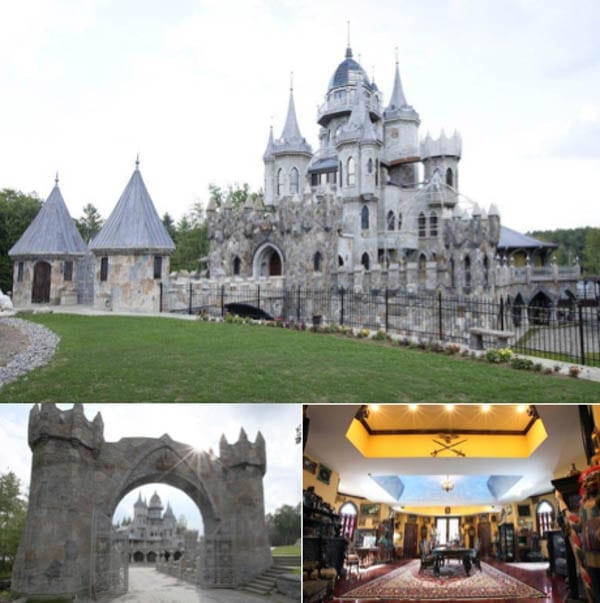
    Five of the Best – Follies for sale A selection of five of the best follies for sale including ones in Gloucestershire, Hampshire, Lancashire and Connecticut, USADescribed as “just weird”, Woodstock Castle was built “for exotic women, exotic animals, both or neither” according to a 2008 feature by the Worcester Massachusetts Telegram. John Pizzi of Randall Realtors Christie’s International Real Estate takes a different view and describes the 18,177 square foot, 126-foot tall building as “majestic” and “a dream come true”. Used by its “colourful and impulsive” owner, importer-exporter Christopher W. Mark as a home for his family and his collection of emus, zebras and camels, this oddity comes with 9 bedrooms, an auditorium with a stage and 75 acres of land.


    Subscribe to our free once daily email newsletter here:[wysija_form id=”2″]
     

  • A million pound lav

    A million pound lav

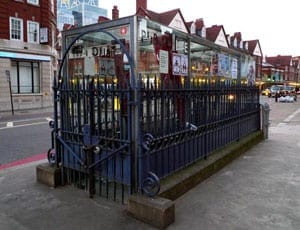
    Former public lavatory in Spitalfields, London, E1 offered for sale for a staggering £1 million (more…)

  • Richard Biddulph: “What’s on your mantelpiece?”

    Richard Biddulph: “What’s on your mantelpiece?”

    20 questions with car dealer and Rolls-Royce specialist Richard Biddulph


    The Steeple Times shares “wit and wisdom”. What’s your guiding force?

    Service, service, service and more service.


    “Don’t get even, get medieval” is, in our humble opinion, a great motto. What’s yours?

    “Life is not a dress rehearsal” is one choice and my second is: “You never heard a man on his deathbed saying: ‘Gee, I wish I had spent more time at the office’”.

      (more…)

  • Picture of the week: Doubly dumb

    Picture of the week: Doubly dumb

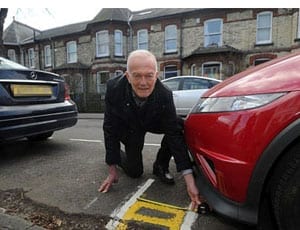
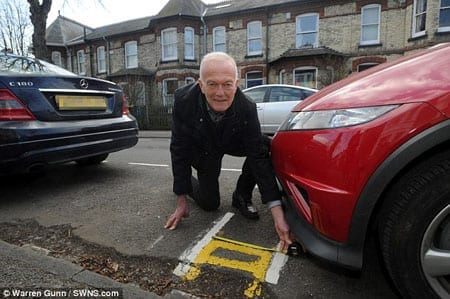
    Cambridge County Council create Britain’s shortest set of double yellow lines


    A Liberal Democrat councilor named Damien Tunnacliffe has to be the most idiotic person we’ve come across this week and an image of him beaming proudly with Britain’s shortest set of double yellow lines just had to be our picture of the week.


    Councillor Damien Tunnacliffe with Britain's shortest double yellow lines in Humberstone Road, West Chesterton, Cambridge
    Councillor Damien Tunnacliffe with Britain’s shortest double yellow lines in Humberstone Road, West Chesterton, Cambridge
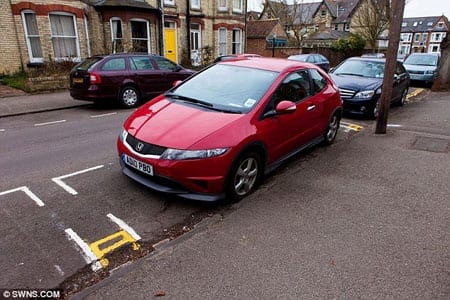
    The two sets of double yellow lines are each 33cm in length
    The two sets of double yellow lines are each 33cm in length


    The double yellow lines on Humberstone Road in Cambridge are 33cm in length and parking on either of them will result in a fine of £70. Of them, a resident of the street, Liz Hazell, told the Mail Online:


    “It’s the craziest set of double yellow lines I have ever seen.  It just defies logic as to why they bothered painting them on the road”.


    A former mayor of Cambridge, Councillor Rob Dryden added:


    “Perhaps a toy car could park there, but nothing else could”.


    Meanwhile, Mr Tunnacliffe bizarrely stated that he was “tickled pink” with the “quirky” lines. In their praise, he stated:


    “Cambridge has a reputation for breaking records and this is another one. We’re claiming it as a record for the shortest double yellows until we’re told otherwise… I think they’re cute and could be on the tourist trail. We should get the blue badge tour guides onto it”.


    Elsewhere, a biography of the councillor reveals that he wishes to encourage closer cooperation between Cambridge and France in his role as head of the Alliance Française de Cambridge. No doubt Mr Tunnacliffe will be getting a call of congratulation from tax loving President Hollande shortly.

  • Spying bees

    Spying bees

    A review of the St. Ermin’s Hotel


    I first visited the St. Ermin’s Hotel close to Scotland Yard in St James’s in June 2012 for the first Intelligence Book of the Year Awards. Today, I will return there to attend a reception to announce the second winner of this annual prize by judges Andrew Lownie, Dan Mulvenna, Glenmore Trenear-Harvey, Michael Smith and Nigel West.


    The courtyard entrance to the St. Ermin's Hotel, 2 Caxton St, London, SW1H 0QW
    The courtyard entrance to the St. Ermin’s Hotel, 2 Caxton St, London, SW1H 0QW
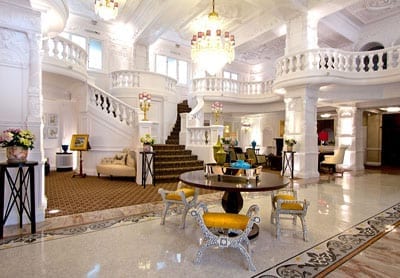
    The grand entrance lobby of the hotel
    The grand entrance lobby of the hotel


    As I reported in my last article on this Victorian property, the St. Ermin’s Hotel’s links with the worlds of politics and espionage are indeed strong. Built in the Queen Anne revival style to the designs of Edwin T. Hall (1851 – 1923) in 1887 and completed in 1889, the horse-shoe shaped building was originally a mansion block prior to being converted to a hotel that opened in 1899 after a major refurbishment by the theatre architect J. P. Briggs (1869 – 1944). Briggs remodeled the public areas and created a spectacular neo-Baroque entrance with balconies, ornate plasterwork and a double staircase.


    Due to the building’s proximity to the powerhouses of government, the St. Ermin’s Hotel became a meeting point for officers of the Secret Intelligence Service and, as a result, various traitors and spies. Some worked from offices in the building and amongst them were Kim Philby, Guy Burgess, Laurence Grand and Eric Maschwitz. Others came there to be interviewed and the hotel’s bar, The Caxton Bar, is renowned as having been a noted meeting place for secret intelligence officers.


    Intelligence officer turned Cambridge Five spy ring member Guy Francis de Moncy Burgess (1911 - 1963)
    Intelligence officer turned Cambridge Five spy ring member Guy Francis de Moncy Burgess (1911 – 1963)

    One of the most notable meetings at the St. Ermin’s Hotel was held in 1940 when Winston Churchill brought together a group to join him in “Setting Europe Ablaze”. These founding members of what was to become the Special Operations Executive (SOE) took over an entire floor of the hotel and carried out covert operations from there throughout the Second World War. MI6 were stationed two floors above and then in the 1950s, the hotel’s bar was the meeting point of Guy Burgess and his Soviet counterpoint when he passed intelligence to the USSR.


    A typical bedroom
    A typical bedroom
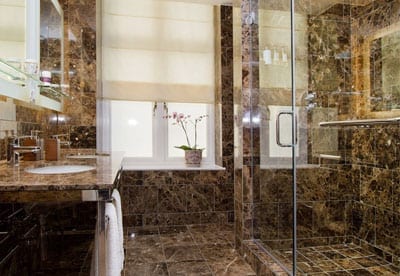
    A luxuriously appointed shower room
    A luxuriously appointed shower room

    Following on from a £30 million refurbishment to designs by Dayna Lee of Los Angeles-based Powerstrip Studio, the 331 rooms and suites at the St. Ermin’s Hotel are now comfortable, well appointed and decorated in a contemporary style. The two that I inspected, whilst perhaps lacking the charm of a boutique hotel such as Blakes, are absolutely ideal for a business traveller or tourist given the location close to the Houses of Parliament and Westminster Abbey. They are well worthy of their four star rating and I slept well given how centrally located the hotel is.


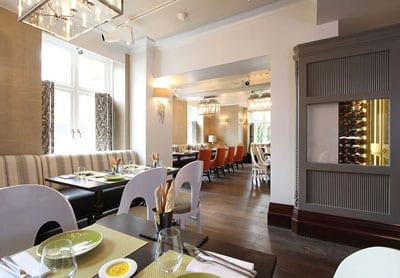
    The Caxton Grill
    The Caxton Grill
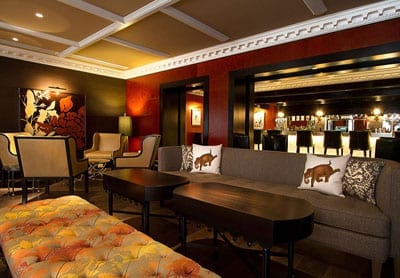
    The Caxton Bar
    The Caxton Bar

    The Caxton Grill, the hotel’s restaurant, continues the traditions of the St. Ermin’s in that it plainly is the haunt of politicians and policeman. Whilst dining there, I met an officer from Scotland Yard who was involved with Operation Yewtree. I can report that, though I had a most fascinating conversation with him about Savile, Davidson and Clifford, I did not leave with any state secrets that I could share here. The restaurant also featured on a recent episode of the BBC One’s MasterChef with Gregg Wallace and John Torode and frankly one could also imagine Hercule Poirot having taken rather a liking to it also. It is modern in style and features wooden flooring, bright décor and snazzy seating.


    The restaurant features a menu that focuses on a Josper grill. This £17,000 hybrid barbeque–oven, which I saw so cleverly used by Chris Golding at Beauchamp Place’s Galoupet, allows a chef to cook, barbeque and roast at the same time over charcoal embers at temperatures of upto 600 degrees. Filled with Kentish hardwood every morning, the Josper recirculates smoke via adjustable draughts and, for example, as a result, it takes only about a minute to char infuse lamb and thick-cut beef sirloins. The real thrill of it, though, is that the Josper process ensures that none of the flavor or natural moistness of whatever is cooked in it is lost.


    I began with a salad of soured plums, gorgonzola and blackberries (£8) that was colourful and most welcome on a grim winter’s day. My companion tried a roast celeriac and truffle veloute (£7) that though perfectly adequate, did not truly excite.


    I continued with a half Temple Farm chicken (£20) that was cooked on the Josper Grill. Well presented and served with a green peppercorn sauce and some garlic and parsley French fries (£4), the cooking process was clearly illustrated. The meat was tender and I must say it was one of the best pieces of chicken I have eaten in years. My companion, an Icelandic financial titan, maxed out on a 300g vintage dry aged sirloin steak (£30) served with béarnaise sauce. Again, cooked to perfection, he was impressed.


    Though more than amply fed, we finished by sharing a chocolate fondant (£7). This simple dish melted in the mouth and the accompanying ice cream was just superb.


    Wines in the restaurant start at a very reasonable £19.95 for the house white and rise upwards to the £300 a bottle range. A Chablis is priced at £41 and a Gavi di Gavi at £33. The restaurant’s bar, the Caxton Bar, offers a huge array of cocktails but I must say I was rather sad that none of them were spy themed.


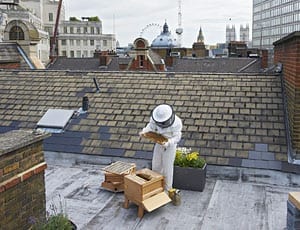
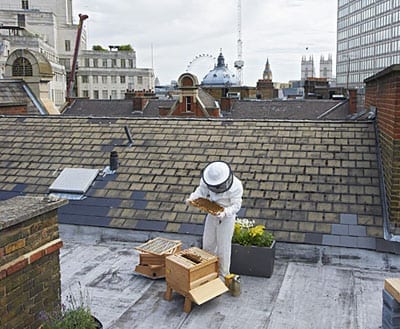
    The hotel's rooftop is home to 200,000 Buckfast bees
    The hotel’s rooftop is home to 200,000 Buckfast bees
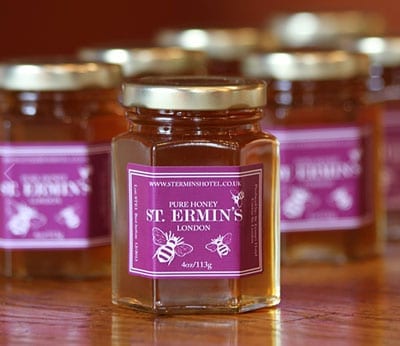
    The honey they produce is truly delicious
    The honey they produce is truly delicious


    The most quirky thing about the St. Ermin’s Hotel is that it has its own colony of bees. “Bees… In Wesminster?”, I hear you cry. Yes, indeed, 200,000 of them prosper on the roof of the hotel and produce the most delicious honey that is available to guests. From three hives, the Buckfast bees, described as being “good tempered”, have fantastic access to London’s parks and travel within a three mile radius collecting pollen and nectar. “London”, states the hotel’s website, is “a perfect environment for bees as… cities actually trap heat, which means they can start foraging earlier in the year than rural bees and continue later into the autumn”. Who’d have thought it? Where once lived spies, now prospers a colony of bees.

     
    St. Ermin’s Hotel, 2 Caxton Street, London, SW1H 0QW. Telephone: +44 (0) 20 7222 7888. Website: http://www.sterminshotel.co.uk


    Follow the St. Ermin’s Hotel on Twitter at: http://www.twitter.com/sterminshotel


    Read our report on the first Intelligence Book of the Year Awards at: http://thesteepletimes.com/da-steeps-speaks/long-live-the-spies


  • Laura Cathcart: “What’s on your mantelpiece?”

    Laura Cathcart: “What’s on your mantelpiece?”

    The Steeple Times asks milliner Laura Cathcart: “What’s on your mantelpiece?”


    The Steeple Times shares “wit and wisdom”. What’s your guiding force? 

    “No woman is a success to herself”. I’ve paraphrased this from Graham Greene but I think the thought applies to both men and women. I like originality, and pushing my own creative boundaries, which is why I chose making wacky and quirky hats for myself and my friends rather than working in a Mayfair decorating firm. 

      (more…)