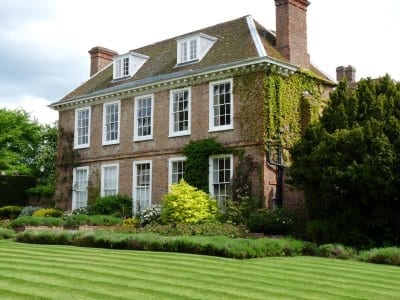
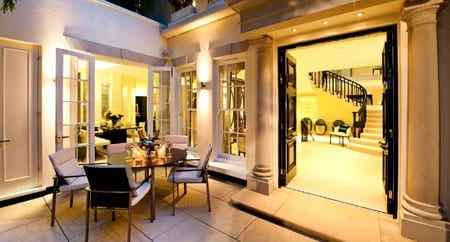
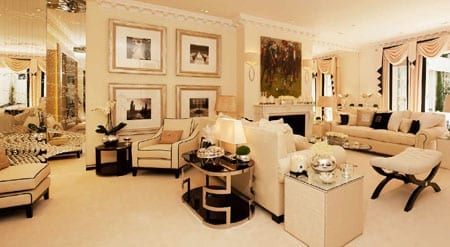
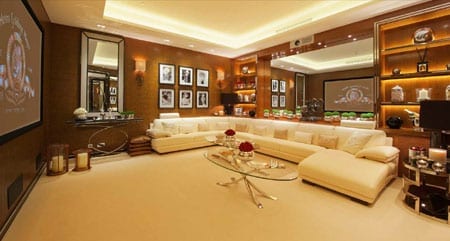
Could the number 13 be the reason Halcyon Hall has failed to sell?
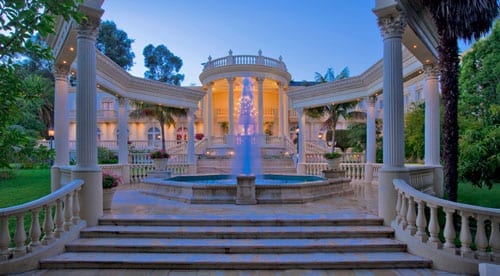
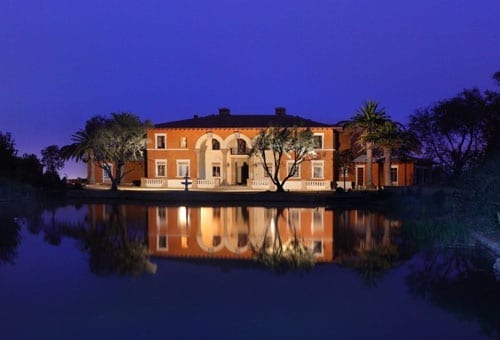
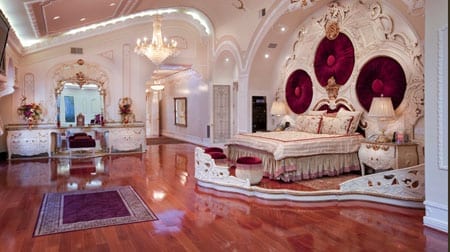
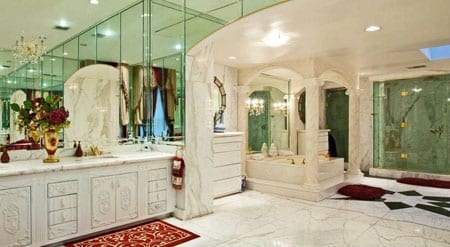
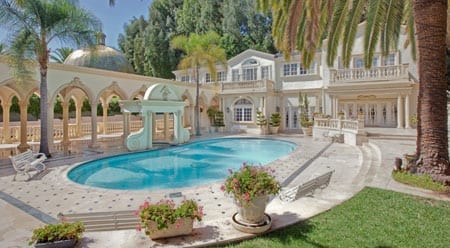
Several over the top Californian residences we’ve featured on The Steeple Times, namely the $40,000,000 Chateau d’Or in Bel Air and the $87,000,000 Villa del Lago on the Newport coast, were properties that have seen huge price reductions. Though $15,000,000 has been sliced off the asking price of the Bel Air pad, it remains unsold and meanwhile Villa del Lago, now renamed One Pelican Hill Road, achieved just $18.5 million in a bankruptcy auction. It sold for less than a quarter of what the developer originally sought for it.
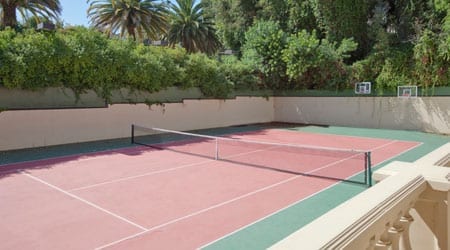
The 25,000 square foot Chateau d’Or, 10425 West Sunset Boulevard, Bel Air, Los Angeles, California, CA 90077 first came on the market at $40,000,000 in 2009. At $25,000,000, it still hasn’t sold.One Pelican Hill Road North, Newport Coast, Newport Beach, Orange County, California, CA 92657 was originally on the market for $87,000,000. It eventually sold at a bankruptcy auction for just $18,500,000 and features a 17,706 square foot Italianate mansion with 8 bedrooms and 17 bathrooms. Additional features number staff accommodation, a gatehouse, garaging for 17 cars, a 1-acre lake with terraced waterfalls, a tennis court, stabling and a riding area and a private vineyard with a wine cave.
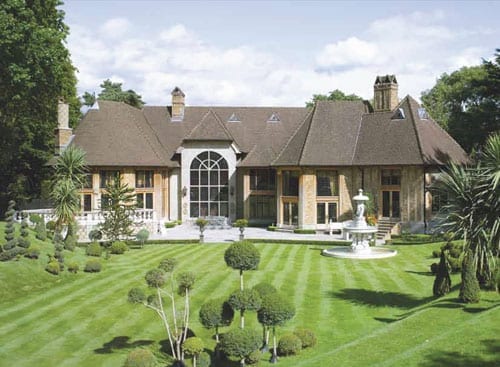
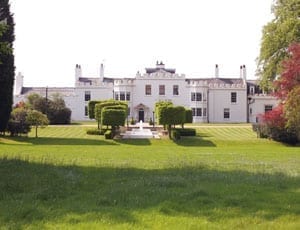
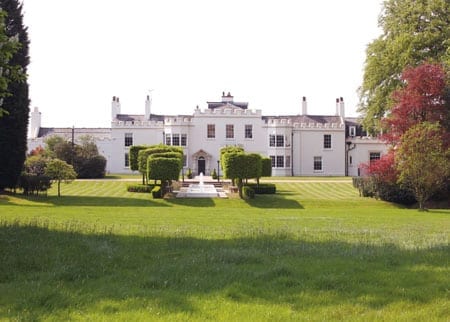
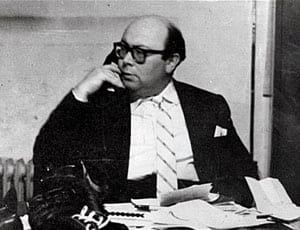
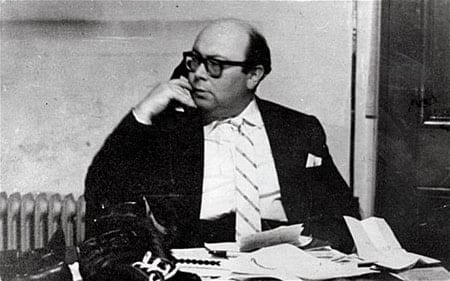
We believed monstrous white elephants like these were confined to the US, but we are afraid we’ve come across something today that truly proves otherwise. The behemoth we refer to is a 14,000 square foot house in Radlett, Hertfordshire. Built in 2005 for a businessman named Barry Beck, “Halcyon Hall” stands on the site of a far more modest property that was simply known as 11 Newlands Avenue.
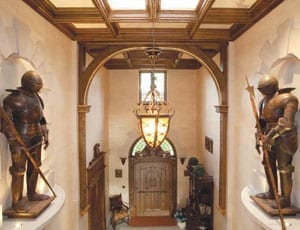
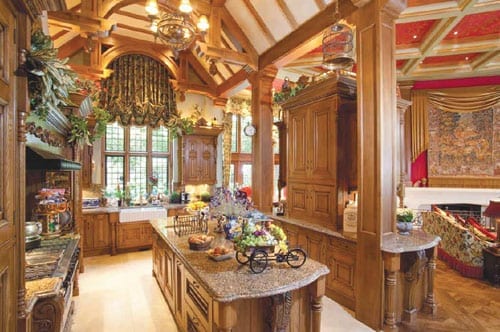
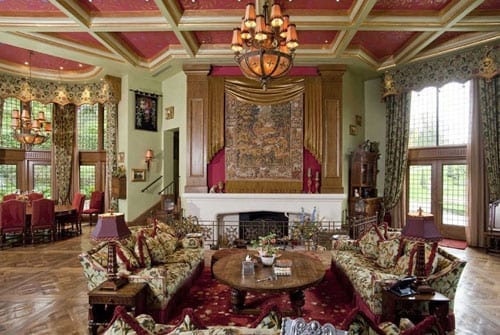
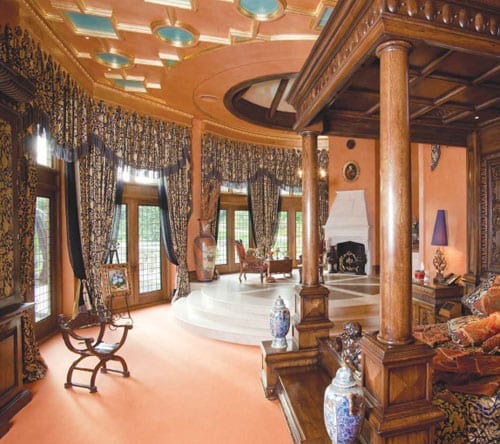
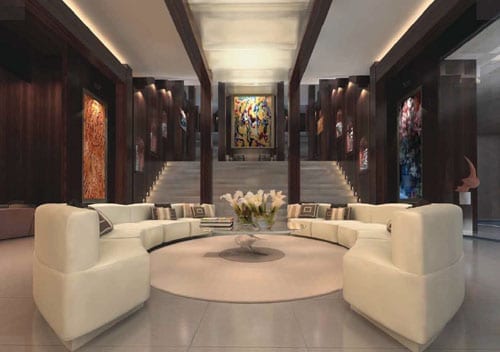
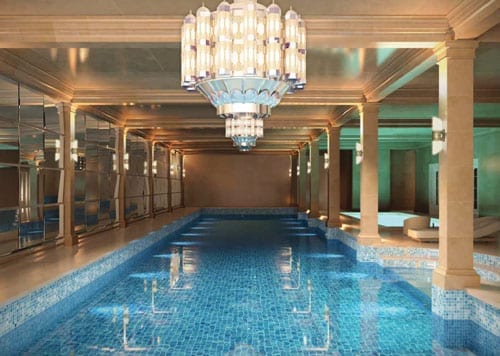
The phrase “halcyon days” refers to “the seven days of winter when storms never occur” in the Greek myth of Alycone but whether this inspired Beck in naming this place is unknown. He and his wife, Pauline, did, however, decide upon an “Elizabethan theme” for the residence and our pictures illustrate their extravagantly eccentric tastes adequately.
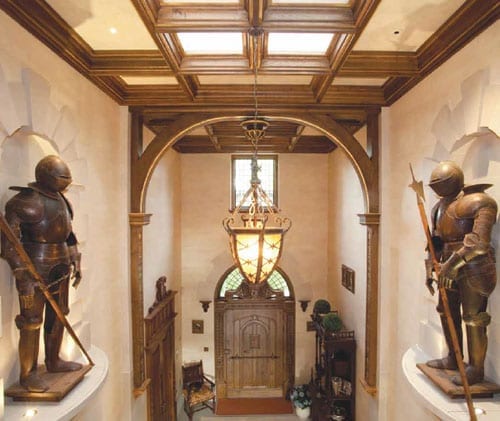
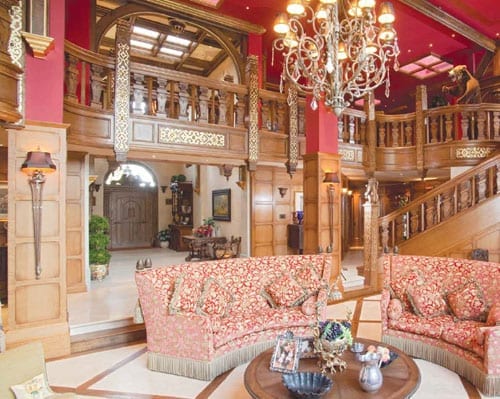
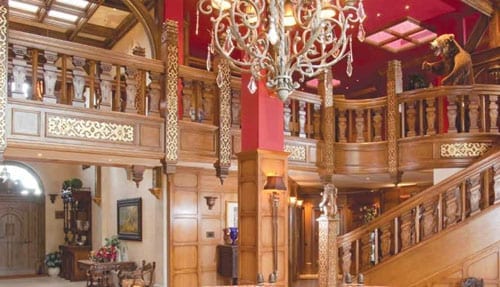
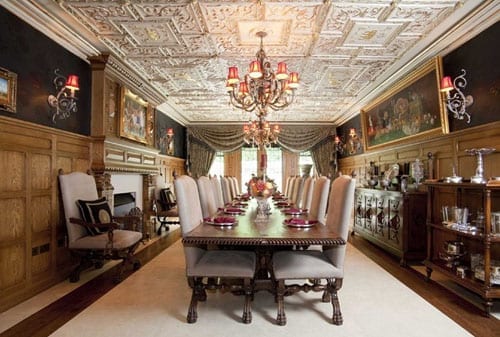
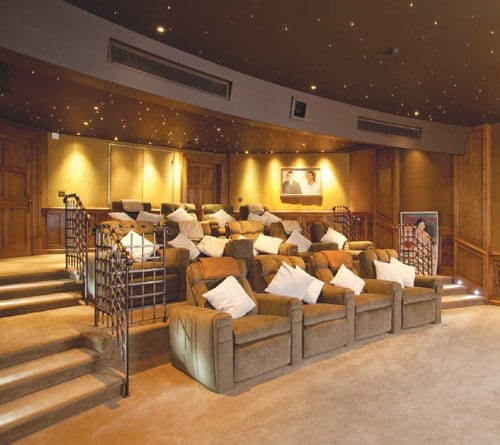
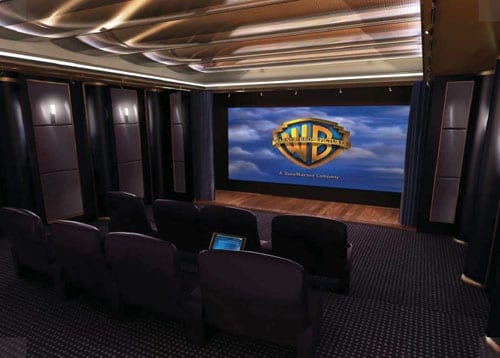
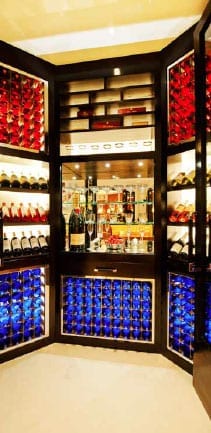
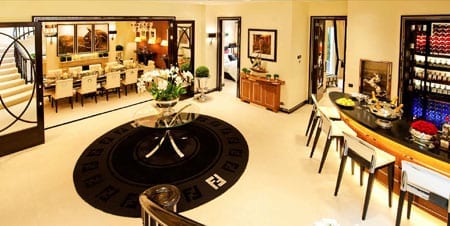
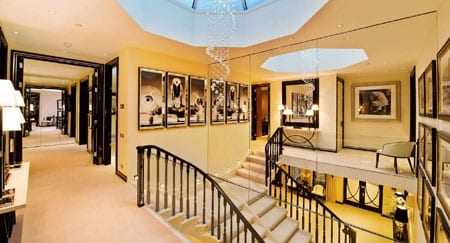
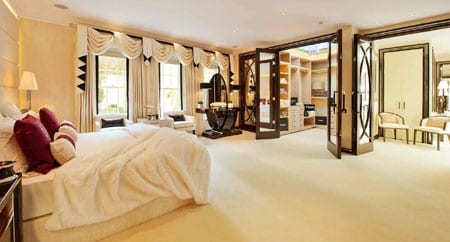
Halcyon Hall, 11 Newlands Avenue, Radlett, Hertfordshire, WD7 8EHThe entrance hall is guarded by a pair of knights in full suits of armourThe hall and entertaining salon is far from understatedThe main staircase is guarded by a life-size bearThe dining room attempts to look ElizabethanWhilst the kitchen dabbles with medieval meets “The Real Housewives of New York”Decorating mish-mash continues in a formal entertaining spaceAnd the “games gallery” isn’t exactly neutral eitherThe master bedroom suite takes “over-the-top” to another levelBut it is the thirteen seat cinema that we find most curious
Undoubtedly the construction of this vast Hertfordshire crib is of a high quality but the look is nothing other than ludicrous. Here is a mix of pastiche, ostentatiousness and just plain odd. Not even a WAG could have come up with décor this curious and such things as a private cinema with 13 seats can plainly not be the choice of someone who follows the curse of the hangman’s noose.
This 7-bedroomed house, which stands in 1.17 acres, would strangely, though, be ideal for someone who is a little paranoid. As well as all the security features you’d expect of any multi-million pound mansion in the Home Counties, it also includes a bathroom that doubles as a panic room. If you close the door in a certain way, steel bars supposedly come down making sure no intruder can follow you inside.
Two knights in full suits of armour guard the entrance hallway and a life-size stuffed bear stands dominant in the games gallery of the house. Plainly this beast’s not persuaded anyone to bite yet as whilst the price of Halcyon Hall has fallen from £15,000,000 in February 2011 to just under £13,000,000 in November 2012, the house remains on the market. We suspect that the curse of “Unlucky Thirteen” may well be alive and well somewhere between numbers 11 and 15 Newlands Avenue.
Halcyon Hall, 11 Newlands Avenue, Radlett, Hertfordshire, WD7 8EH is for sale through Statons. For more information telephone: +44 (0) 20 8445 3694 or email:[email protected]
The latest James Bond film Skyfall is the talk of the town and it’s received many a rave review. The fictional James Bond allegedly lived in Royal Avenue, off the Kings Road in SW3, but if he were looking for a house today, we think 9 Hillgate Street would be the perfect pad.
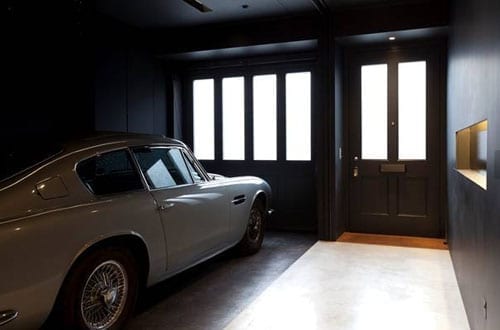
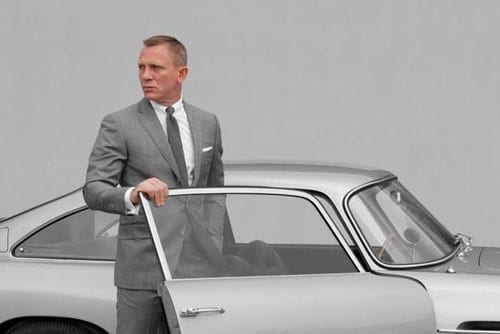
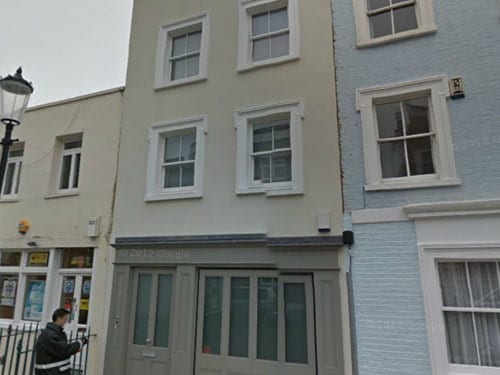
The entrance and garage at 9 Hillgate Street, London, W8 7SP. Sadly the Aston Martin isn’t included in the £7,950,000 asking price.Daniel Craig in a promotional shot for “Skyfall”The unasuming exterior of 9 Hillgate Street gives little away about what lies behind it
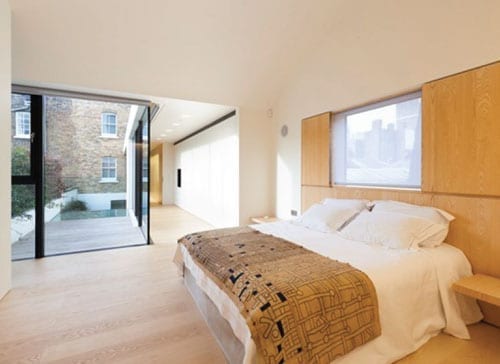
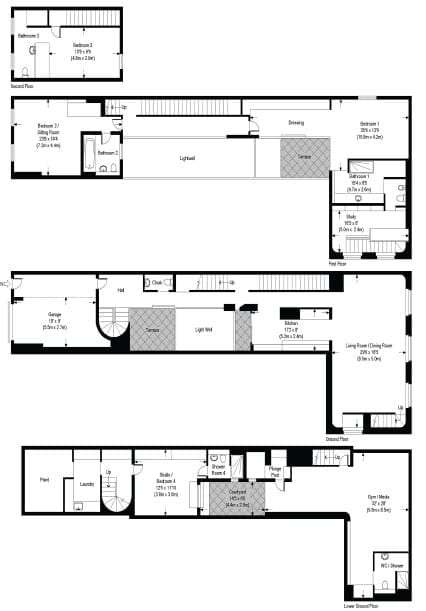
Utterly unassuming from the street, what lies behind the exterior of this four-storey building is deceptively a new build house constructed in 2010. Designed by Seth Stein Architects, the property is only 18ft wide but an amazing 85ft in length.
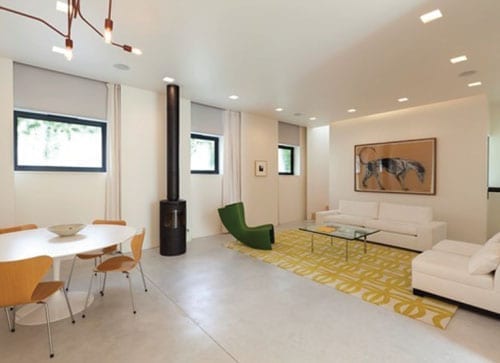
An internal lightwell and four terraces are amongst the features of the houseA reception room in the houseA bright walkway allows light to flood into the buildingThe master bedroom suite includes a bedroom, study, dressing area and bathroomSeth Stein Architects have developed a vast residence out of the tiniest of spaces
Bond would greatly appreciate the lower ground media room and gym with plunge pool and with a staff suite, there’s room to house someone to mix his martinis. A vast 29ft by 16ft living room is open plan to the kitchen and perfect for entertaining but it is most certainly the master bedroom suite that would make the perfect spot for his extra curricular activities. Four terraces arranged around a courtyard provide ample outdoor space and with all manner of techonological gadgets, 9 Hillgate Street most certainly would make an ideal bachelor pad.
What truly would suit Bond perfectly, though, in this 4,286 square foot £7,950,000 house is the garage. Cleverly disguised and decorated as a normal room, there’s even an Aston sat waiting parked there. Daniel Craig should put in a bid.
Matthew Steeples reports on the sentencing of Maria Michaela
Today, Maria Michaela was sentenced to 9 years in jail at Harrow crown court for her role as the lynchpin in a fraud of epic proportions.
Maria Michaela attempts to look remorseful as sobs in her mugshotConvicted fraudster Mary-Jane Rathie
Termed as “Britain’s biggest female fraudster” by the Evening Standard, Michaela is someone I came across in Lennox Gardens, London. In the building where I lived, she was often spotted with an associate collecting money from a tenant, Stephen Hunter-Scott, also known as Stephen Short, who was jailed alongside her.
In due course this Knightsbridge apartment was repossessed by an Irish bank but the aforementioned associate returned a year later and forcibly took possession. The apartment concerned was eventually taken back and sold on a short lease for just £200,000 recently.
Meanwhile Michaela disappeared but it was not until she appeared on the BBC’s Crimewatch wanted list that she again came to my attention. On the show, it was reported that this woman, who operated under countless aliases that numbered “Joanne Sarah Pier,” “Anjali Sharma,” “Mia Cul” and “Nadia Ali,” had, with the help of a corrupt chartered surveyor named Mary-Jane Rathie, obtained loans of £10.5 million from HBOS and £2.5 million from the Royal Bank of Scotland in 2007 and 2008.
Michaela, who may well in reality be called Bruna Louise, had posed as a wealthy South African heiress to secure the funds she supposedly required to fund the purchase of properties in Chelsea, Belgravia, Pimlico, Greenwich, Clapham, Stoke Newington and the Docklands. In reality, Rathie, who was bribed with £910,000 in cash, a £49,000 Range Rover Sport and a £143,000 Bentley Continental, vastly overvalued each allowing Michaela to pocket, for example, £6 million for a Cheyne Walk house that was in reality worth just £3.5 million.
Whilst Rathie, a former employee of Ashdown Lyons, was jailed for 6 years in July 2011, the fraudster Michaela managed to evade capture for three years. She was eventually caught this January in Bexleyheath working as a mortgage broker. In various preliminary hearings, her pleas of insanity did not help her cause and nor did her unwillingness to provide evidence of her true identity. This morning, she got just what she deserved.
Of her conviction, Detective Inspector Andy Fife of City of London Police commented:
“Maria Michaela created a web of deception that duped banks into handing over vast sums of money and then perpetuated her crimes by assuming a new alias to try and secure more loans. False identities and a corrupt property surveyor were the tools she used to make millions, turning herself into one of the, if not the, most prolific female fraudster the UK has ever seen.”
The lesson of Michaela and her cohorts, I’d argue, is simple. Greed may well be good in the eyes of Gordon Gekko, but the greedy generally get caught in the end and generally it is down to their own vanity. As she rots in her cell, perhaps she ought to consider this folly.
Matthew Steeples explores the story of an empty Kensington mansion
A multi-million pound 8-bedroomed house in Kensington isn’t anything unusual. In fact, rather, they’re ten a penny. In this, one of the wealthiest boroughs in the land, large, expensive homes are just the norm.
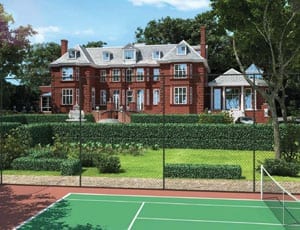
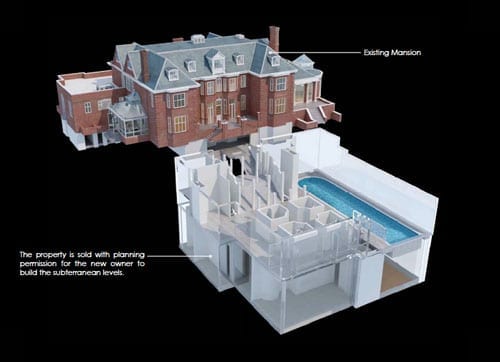
An image of the existing exterior of No. 1 Campden Hill, London, W8 7ADA rendered image of how the exterior of the renovated property might lookThe plans show a vast subterranean development that will vastly increase the size of No. 1 Campden Hill
No. 1 Campden Hill, which is being marketed for an undisclosed eight-figure sum, is in a quite different league. Here is a detached Edwardian house in an acre of grounds just to the north of Kensington High Street. It’s an unrenovated property but it attracted much press attention in October 2011 because it was place on the market in October 2011 at a price of £75,000,000. Yes, you heard it right: £75 million for a fixer-upper. Last week, Radio 4 made a hell of a fuss about a derelict semi-detached house in Newcastle selling for just £14,000 so this truly must be something special.
Architect Edward P. Warren (1856 – 1937), far right, in the offices of Bodley & Garner, 14 South Square, Gray’s Inn, London
The architect of the house Edward Prioleau Warren (1856 – 1937), a Bristol born architect and archaeologist, was best known for “Oxford colleges and minor country houses” but also designed the War Cemetery at Basra. He was a friend and adviser to the American novelist Henry James and in addition to building No. 1 Campden Hill in 1915, he also designed a house at 5 Palace Green in 1906 and another, Estcort House in Kensington Palace Gardens, in 1904. Warren’s guiding style is described as having been to recreate an “understated revival of English late 17th century” architecture and at No. 1 Campden Hill he created just that.
Colonel Edmond Grove-Hills (1864 – 1922), born Edmond Hills, and his wife, Juliet Spencer-Bell, were the architect’s clients. A plaque on the building bares their names and the following dedication:
This House I built for Me & Mine
May it be of Peace A Shrine
And no Enmity or Sin
Ever find its way therein
AD 1915
Sadly for the Grove-Hills, the following year, their son, Second Lieutenant Charles Herbert-Hills (1895 – 1916) was killed on the Somme aged just 21. His father, meanwhile, was awarded a CBE in 1918 after having served as the Assistant Chief Engineer of Eastern Command during the war.
Aside from his military exploits, Edmond Grove-Hills is best known for his role as president of the Royal Astronomical Society. He took part in observations of eclipse of the sun in Japan in 1896, India in 1898 and Russia in 1914 and contributed papers analysing both this and the causes of the irregular movements of the earth’s axis of rotation.
In 1951, No. 1 Campden Hill was purchased by the government of Uruguay and it became the residence of their ambassador to the United Kingdom. For the next fifty years the building was barely altered but when the lease from the Phillimore Kensington Estate came to an end, there were legal problems as the 1951 transfer had never been stamped. Of this, Sharon Mulroney of Forsters, the legal representatives of Phillimore, commented:
“It is highly unusual to be faced with complications of this kind when dealing with a registered London title, but this made the transaction all the more fascinating. Even the decision to allow ambassadorial staff to return to the property for security purposes after completion was fraught with potential problems about security of tenure, employment and tax.”
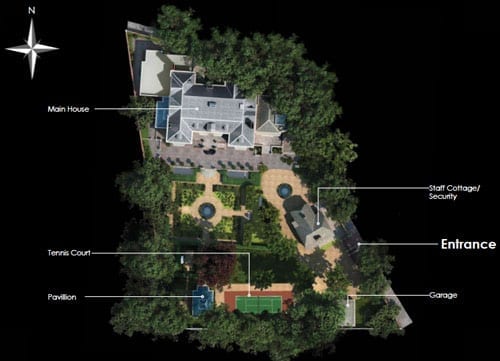
The proposed site plan shows the addition of a garden pavilion, staff/security cottage and a tennis court
Eventually, without issue, the Phillimore Estate sold on the house in 2001 for a price of approximately £17,000,000. In the years since, the property was effectively mothballed as all the purchasers have done is to have obtained planning permission to redevelop the building into a mammoth mansion of epic proportions.
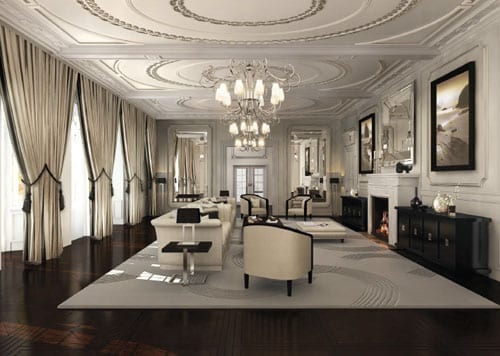
A computer rendered image of how the drawing room might lookThe “leisure area” is reminiscent of the entrance to The Mandarin Oriental Hyde Park HotelThe private home cinema would be the envy of any movie buffThe swimming poolThe wine cellar is rather like a contemporary take on Berry Bros. & Rudd’s flagship store in St. James’s StreetAnd to complete it all… The plans include your own version of Boujis in the basement
The approved plans show designs for something quite remarkable. Warren’s “understated” residence will be replaced with 8 vast bedroom suites, grand entertaining spaces, a lift and even bedrooms for 5 staff. In addition to a full-scale renovation of the original freehold house, there is scope to provide a total of 30,000 square feet of accommodation by adding a huge subterranean complex that will include a 25-metre swimming pool, court, squash court, gym, sauna, steam room, function room, entertainment room, home cinema, wine tasting room and even a nightclub to rival any of Kensington’s trendiest haunts.
On that basis alone, No. 1 Campden Hill is surely the ideal residence for Prince Harry: “Who needs Boujis?” we hear him cry.
No. 1 Campden Hill, London, W8 7AD is for sale through Knight Frank. For more details contact Roddy Craggs on +44 (0) 20 7938 4311 or go to:http://search.knightfrank.com/ken100161to download a brochure.
A £15 million mansion fit for a self-made tycoon or an upwardly mobile WAG
While the youth of the Kings Road and Loughton have featured in the reality shows Made in Chelsea and The Only Way is Essex, their counterparts in Cheshire have yet to undergo the same social experiment. Having come across a fair few of their number though, I can only imagine their antics would result in television of comparable car crash proportions.
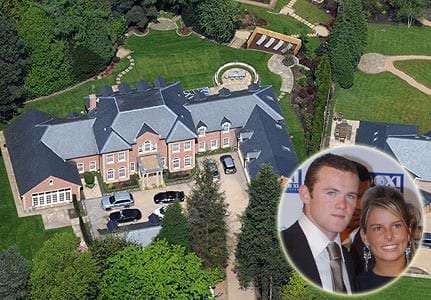
Wayne and Coleen Rooney and their home on Collar House Drive in Prestbury, East CheshireWarrington born Kerry Katona isn’t considered one of the “Cheshire set’s” finest exports
Cheshire itself is a county of contrasts: there’s the farming and hunting set and then there’s the new money. From the 1950s onwards an invasion of nouveau riche footballers and self-made business people came to Alderley Edge and Wilmslow and it is said that there are more Rolls-Royces per square mile here than anywhere else in the UK.
Though today’s Coronation Street actresses and Man United players generally favour brand new homes in Prestbury, the new wealth have not just consigned themselves to such. The likes of Take That’s Gary Barlow, for a time, owned Delamere Manor at Cuddington but sold it in 2005 due to his ever-growing commitments elsewhere. Equally, Neil Hamilton, whilst MP for Tatton, lived at The Old Rectory at Nether Alderley with his formidable wife Christine but when their days in politics came to an end, they too moved on. For a time, David and Victoria Beckham were the undoubted glitterati of this manor, but of those footballers still resident Wayne and Coleen Rooney are definitely now the best known.
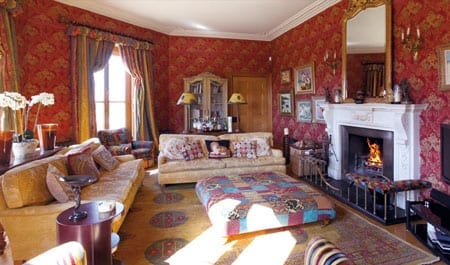
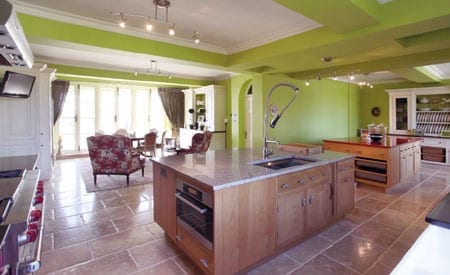
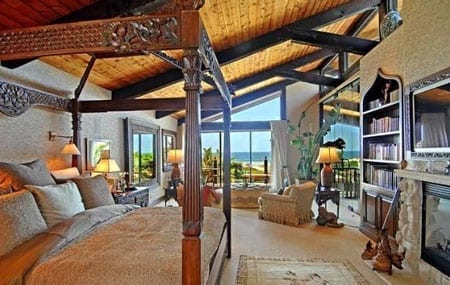
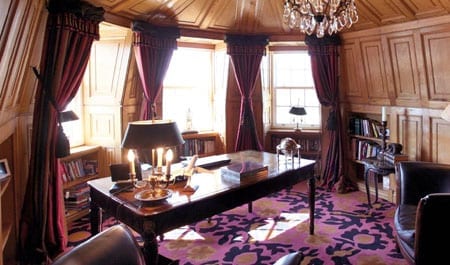
In a “grey area between old and new” sits Swettenham Hall at Swettenham near Congleton. This 12,590 square foot Georgian mansion dates to 1795 but since it was acquired by Brian Kennedy, a double glazing, home improvements and mobile telephone entrepreneur, the house has been given a total makeover. The colourful style he’s given the house can best be described as being akin to: “Laurence Llewelyn-Bowen meets Austin Powers.”
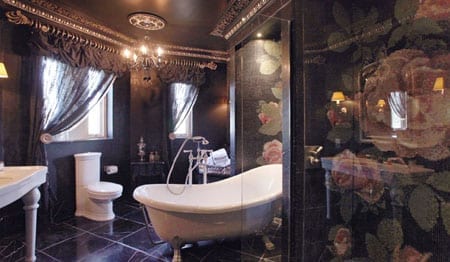
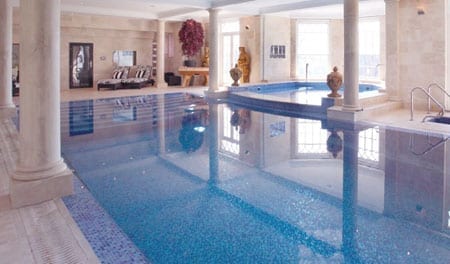
Swettenham Hall’s drawing room is decorated and furnished in a cacophony of coloursThe kitchen is painted in an equally vivid shade of lime greenA bedroom boasts a carpet that would make Austin Powers shout: “Yeah, baby, yeah!”The same carpeting continues into the wood paneled “gentleman’s study”At Swettenham Hall, bathrooms, equally, are far from neutral in their stylingMr Kennedy and his wife Christine employed Julian Bicknell Associates to design an impressive leisure wing in 2004
Swettenham Hall is most definitely a party palace and along with the addition of a leisure wing consisting of a swimming pool, Jacuzzi®, plunge pool, steam room and gymnasium in 2004, Kennedy has also constructed a 47ft by 44ft helicopter hangar complete with a retractable helicopter pad.
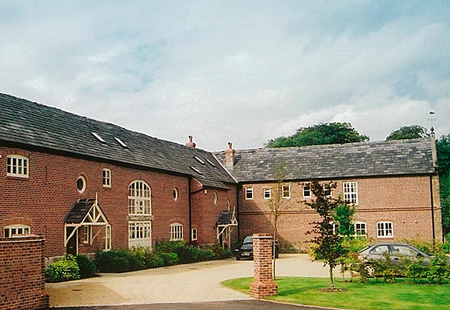
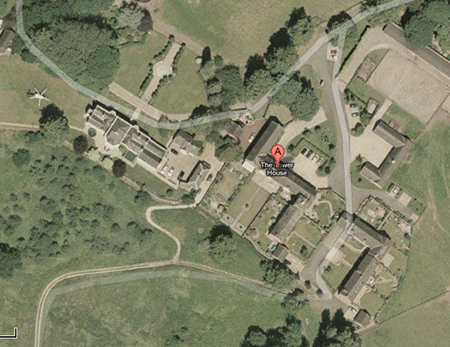
Standing in 100 acres of grounds, the house does seem a tad expensive at £15 million especially since that the adjoining former farm buildings were sold off and converted into eight homes in 1999. The driveway is partly shared with these homes and for those seeking the ultimate in privacy, this could indeed be an issue. It is perhaps why Swettenham Hall has yet to sell.
The former farm buildings next to Swettenham Hall were sold off and converted into eight homes by Egerton Estates and Watts Developments in 1999The proximity of Swettenham Hall to the neighbouring barn conversions is illustrated in this Google Earth map
Brian Kennedy is someone I hadn’t heard of until I came across Swettenham Hall but here is a fascinating man whose meteoric rise is frankly very clearly linked to windows. The son of a window cleaner from Edinburgh, this self-made tycoon started his career as a trainee manager at the Royal Bank of Scotland. He subsequently briefly worked as a trainee accountant but left when offered the chance to become youngest branch manager of Moben Kitchens at the age of 20.
At around this time, Kennedy acquired a stake in Farouche Kitchens and with a Rochdale born property entrepreneur named David Russell, he was transformed from a door-to-door salesman to a pioneer in direct sales. In 1988, when Farouche was sold, Kennedy netted circa £1 million. From here, this entrepreneur returned to his family’s roots by venturing into double glazing with Weatherseal Windows and then home improvements with Space Kitchens & Bedrooms.
In 1999, with the help of funds raised by private equity investors 3i, Kennedy paid £42 million for the well known brand Everest but sold part of his stake to the management for £63 million in 2003. In due course he added to his shareholding and then sold 21.5% of the company to Hutton Collins in a deal which valued the company at £150 million in 2007.
Ever the empire builder, Kennedy paid £29 million for a conservatory manufacturer named Ultrafame in 2006 and then also added another double glazing brand, Zenith Staybrite, to his portfolio in 2008. Many other business ventures followed but not being afraid to diversify, Kennedy formed Patrick Properties, whose portfolio is now valued in excess of £100 million, in 2002 and Kennedy Renewables, which specialises in wind energy, in 2009.
In the technology sector, a chance conversation in a Knutsford wine bar in 1995 led to him venturing into the mobile telephone market with a company named Genesis Communications. The business was sold to Dixons in 2002 for £31 million.
In January 2012, Kennedy merged his main Latium Holdings business with Jim Rawson’s Epwin Group to form Epwin Holdings. The merger resulted in a company with more than 2,500 employees and brands numbering Spectus, Swish, CET and Kestrel.
Of his success, Kennedy states:
“Business is common sense [and] dealing with people is common sense. I don’t think I have any particular flair. I think it is about common sense, taking the opportunity when it comes and hard work.”
Brian Kennedy’s wealth has allowed him to indulge many of his passions. A period of semi-retirement “drove [him] and [his] kids nuts,” but this Scotsman’s love of rugby resulted in him acquiring the Sale Sharks Rugby Club in 1999. He is said to have set the “club on a sound financial footing” and turned it into “one of the leading rugby clubs in Britain.”
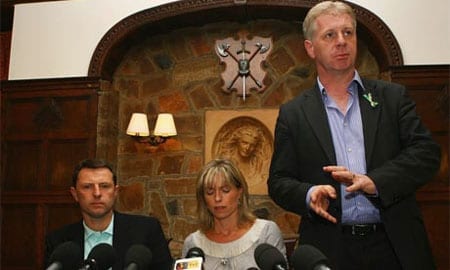
Philanthropy is something that Kennedy, a Jehovah’s Witness, has also dedicated his wealth to. Through his Brian Kennedy Trust, he has supported a number of charities and organisations but it is for his role as the main backer of Find Madeleine Fund that he has come to public attention. Of his reasoning for backing the missing child’s parents financially, he stated:
“In light of the quite literally incredible accusations against Gerry and Kate McCann, which are clearly exacerbating their emotional torture, I felt compelled to offer, along with other like-minded businessmen, financial support and the full logistical support of the Latium team. That support is principally our in-house lawyer Ed Smethurst and [official spokesman] Clarence Mitchell.”
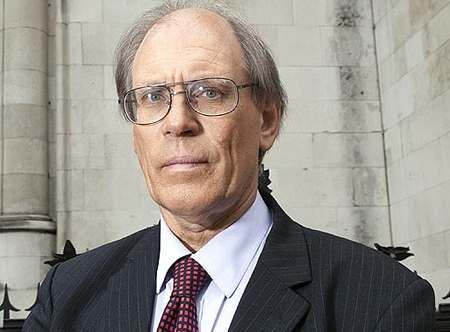
Brian Kennedy was involved in the funding of a team that included Clarence Mitchell for the Find Madeleine Fund until 2009. Here Mitchell (standing) is pictured with Gerry and Kate McCann.An ex-lawyer and campaigner Anthony “Tony” Bennett is the former secretary of The Madeleine Foundation who has been involved in various legal disputes with Brian Kennedy and Gerry and Kate McCann
Kennedy’s donation attracted much press attention in 2007 in the weeks following Madeleine McCann’s disappearance and he continues to support them to this day. A very public spat involving him, Gerry and Kate McCann and a campaigner named Tony Bennett, who also was involved in The Madeleine Foundation, has been the subject of various legal actions. In October 2011, Mr Bennett was forced to publicly apologise to Mr Kennedy and separately an August 2009 Evening Standard article by Mark Hollingsworth “investigat[ing] the investigators,” was pulled because for “legal and editorial reasons.” In it, “someone who worked closely with [Kennedy]” was quoted as saying:
“He was appalled by the Portuguese police, but he also had visions of flying in by helicopter to rescue Madeleine.”
Angelina Jolie, another avid aviator, once commented: “Wherever I am I find myself looking out of the window wishing I was somewhere else.” We do not know why Brian Kennedy is selling Swettenham Hall, but Jolie is indeed one of the few with the resources to take these particular windows off his hands.
For more information about Swettenham Hall, Swettenham, Congleton, Cheshire, CW12 2JZ, contact Edward Welton of Knight Frank on +44 (0) 20 7861 1114.
For more details about Brian Kennedy, go to: http://www.brian-kennedy.co.uk
For more details about the Find Madeleine Fund go to: http://www.findmadeleine.com and for information on The Madeleine Foundation: http://www.madeleinefoundation.org.uk/
The Steeple Times asks hotelier and chairman of Bespoke Hotels Robin Sheppard: “What’s on your mantelpiece?”
The Steeple Times shares “wit and wisdom.” What’s your guiding force?
Hunger.
“Don’t get even, get medieval” is, in our humble opinion, a great motto. What’s yours?
“While I breath, I hope.”
Kerry Katona was considered unacceptable in 2007. Who or what is unacceptable in 2012?
Piers Morgan.
Tony Blair misses being Prime Minister. What do you miss most in your life?
The ability to fit into non-elasticated trousers.
What might you swap all your wealth for?
I might swap it for anything. However, I would swap it for nothing.
Donald Trump was once a case of: “If you owe the bank a thousand, they close you down; but if you owe the bank a billion, you own the bank.” What’s your view on the banking crisis?
I think it’s a great shame that people no longer consider their bank manager to be a friend. We’ve lost the trust. It’s very different now to how it once was.
What phrase or word do you most loathe?
“At this moment in time”: What a waste of words.
In the UK, some people consider charity to “begin at home.” What’s your view and what causes do you personally support?
I am affiliated with the Guillan-Barre Syndrome Support Group.
The judge in “Law Abiding Citizen” states: “I can pretty do whatever I want” before being blown up whilst answering her mobile phone. What’s your view on the appropriate use of such devices?
Turn them off when you’re on the loo. Or at least try not to use them.
If you could fill a carriage on The Orient Express, who would be your fellow passengers?
Are we murdering or sightseeing? Either way, the answer’s probably family.
Hotelier Robin Sheppard
If you were unfortunate enough to end up on death row, what would be your last meal and where would you eat it?
Presumably I’d have to eat it in the prison I doubt they’d let me go on a picnic. I think I’d have spaghetti bolognaise with a robust Chianti.
What time is it acceptable to consume the first drink of the day?
Immediately after you finish work. Whichever time that may be.
A Negroni, a martini or a cup of tea?
Cup of tea.
Whose parties do you enjoy the most and why?
If I remembered them, they can’t have been that much fun, can they?
Who is the most positive person you know?
My golf instructor. He’s always laughing whenever I take a shot.
What’s your most guilty pleasure?
Pork scratchings.
If a tattoo were to sum you up, what would it be of?
That festival in Edinburgh.
If you were a car, what marque would you be?
A monster truck.
Cilla Black presented “Surprise, Surprise.” Tell us the most surprising thing about you.
I’m an only child.
What’s currently sitting on your mantelpiece?
A handful of birthday cards.
Robin Sheppard is a classically trained hotelier and chairman of Bespoke Hotels. He is also managing director of Alfresco, designed the iconic bottle for Ty-Nant mineral water and is the author of A Solitary Confinement (2007).
Whenever the name Rachman is mentioned, the first things that come to mind are greed, extortion and intimidation. The word is so engrained in such that “Rachmanism” now features in the dictionary, defined as:
“The exploitation of tenants of slum properties by unscrupulous landlords.”
“Notorious slum landlord” Peter Rachman (1920 – 1962)
Perec “Peter” Rachman (1920 – 1962) was born in Poland and the son of a Jewish dentist. He is best known for having built up a property empire of over 100 mansion blocks in London’s Westbourne Grove and Notting Hill areas in the 1950s where he evicted longstanding sitting tenants and replaced them with prostitutes and immigrants from the West Indies. Due to the relaxation of rent controls by the Conservative government in 1957 and as no other landlord was prepared to take them, he was able to charge these unfortunates whatever he wished.
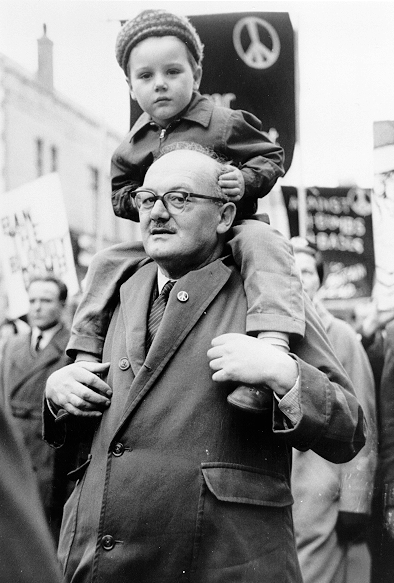
Rachman came to public attention after the Labour MP for Paddington North, Ben Parkin (1906 – 1969), became vocal about the poor housing conditions of his tenants. Parkin coined the phrase “Rachnamism” in his quest to put a stop to the activities of “rent racketeers” and highlighted him as someone who used violence to maintain control of “his manor.” The MP even went as far as to suggest that Peter Rachman’s death was merely a ploy to distract from his activities and the result was to leave the public engrained with a belief that this landlord was a “manipulative, grasping Jew” who symbolised the moral decay of Great Britain.
Ben Parkin MP (1906 – 1969) on a CND march
A Radio 4 programme this week, however, highlighted an entirely different side to Rachman. In The Real Rachman – Lord of the Slums, a “barrister turned investigative reporter” named Joshua Levine suggested that those who believe Peter Rachman just to be a sordid intimidator fail to see the true persona of the man.
Levine’s witnesses, who number former tenants and Rachman’s biographer Shirley Green, do describe him as a “chancer” who was prepared to use the system to make money, but they also portray another side of this supposed “figure of evil’s” character.
Nicholas van Hoogstraten (born 1945)
One immigrant tenant stated: “He was the only one who ever did anything for us” whilst others added that Rachman was “well-liked” and “too soft to be a landlord.” He was a “benefactor” and “jolly” commented others who’d rented from him and a truly notorious modern-day landlord, Nicholas van Hoogstraten, failed to see the opportunist in Rachman at all: “It’s laughable. He had no wealth. It’s an invented moral [mission].” Rachman, equally, was defined as a man “affected” by his imprisonment in a Soviet labour camp in the Second World War by his former lover Mandy Rice-Davis and as someone who suffered true sorrow over the deaths of his family there.
Levine’s examination recounts how Rachman, who drove a navy blue Rolls-Royce with a white interior, was built into a symbol of corruption and moral decay. Rachman, like so many other mythical scapegoats, it turns out only died with only one conviction: parking without lights. The truth, indeed, is often stranger than fiction.
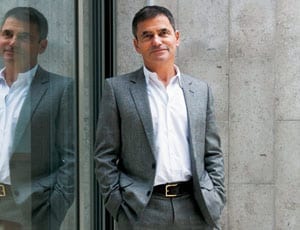
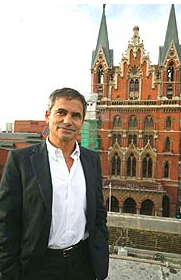
This German-born property developer is best known as the pioneer who brought “loft living” to London in the early 1990s with his Manhattan Loft Corporation. His redevelopment of the Grade I listed St Pancras railway station has resulted in accolades galore and his personal fortune has allowed him to build up a collection featuring works by Andy Warhol, Anish Kapoor, Gerald Laing, Sarah Lucas and Gerhard Richter. Handelsman’s view on money is simple: “[It’s] cynical, sometimes you have it and sometimes you don’t. You can’t take anything for granted.”
I first visited 32a Ovington Square in September 2009. At the time, this “hidden house” was the home of Lord Carrington and it had just come on the market at a price, if I recall correctly, of circa £3,000,000.
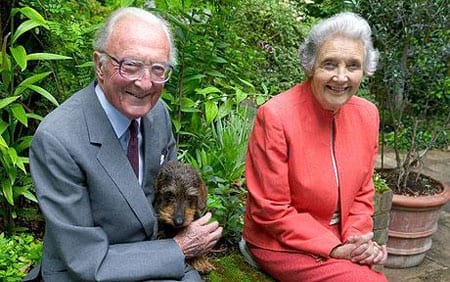
The newly redeveloped Carrington House, 32a Ovington Square, London, SW3 1LRThe Rt. Hon. The Lord Carrington KG, GCMG, CH, MC, PC, DL (born 6th June 1919) with his wife Lady Carrington (1920 – 2009) and their dog Edward
A friend was looking for somewhere to buy in London and I’d somehow come across the aforementioned property in a magazine. A detached house in Knightsbridge at this price seemed like a bargain and as he was keen to take a look and I lived round the corner, we arranged to see it together.
During this period, I had unfortunately made the mistake of making the acquaintance of a former ambassador’s wife who thought herself rather grand. Said woman somehow found out about my friend going to what Americans might term an “open house” at 32a Ovington Square and somehow muscled in. This individual happened to be selling her own home nearby and I reckon she, like my friend, thought she’d be onto a bargain. She’d previously unsuccessfully tried to persuade my friend to buy her individually styled, Ralph Lauren wallpapered home but as it actually rattled every time an underground train went underneath and as it was far from a bargain, he’d sensibly declined.
We arrived at the 2,240 square foot 32a Ovington Square to be told by a rather unhelpful estate agent that we’d have to just wander round by ourselves and that there was no brochure or floor plan. As a merry throng trailed through the house, Lord Carrington stood in the garden looking bemused and his secretary fussed around him. The pair plainly weren’t comfortable with all the interlopers and all in all, who could blame them.
The ex-ambassador’s wife, whose carelessness Rupert Everett most amusingly made reference to in his recent memoirs, spent the entire visit whingeing about the house being dark and stinking of damp. I had to agree with her as the neighbouring buildings towered over it and there was mould on the walls. My friend simply said: “It needs a fortune spending on it.” We left and later I heard that it sold for well above the asking price. The wife of the ex-ambassador thankfully departed from our lives soon after.
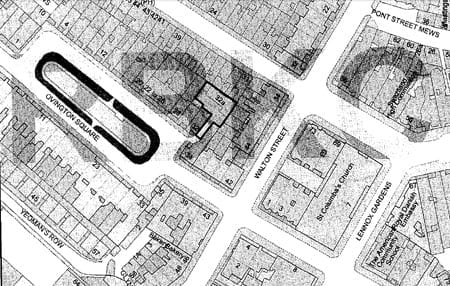
A site plan shows how hidden away 32a Ovington Square truly is – ideal for a government minister or indeed a wayward celebrity
About a year and a half later, I saw 32a Ovington Square for sale with planning permission to construct a far larger residence with a basement and sub-basement pool complex. The price was in the order of £14,000,000. I thought that somewhat ludicrous but now that the very same property is on the market at a price of £23,00,000, it seems that the world has just gone mad.
The brochure for the new residence, which has been renamed, Carrington House, reveals a three-storey low-built freehold building with 5,300 square foot of accommodation. Though 32a Ovington Square has been more than doubled in size by a developer named London City Developments, the sub-basement leisure complex has not been constructed. Could this have been because of planning problems or simply because such construction wasn’t deemed to add value?
In August 2002, Lord Carrington, whom The Mirror described as being “doddery” in a Scurra diary piece, was said to have objected to a bar named Townhouse behind his former home being given a 1am licence. That bar has since closed but as seven of the residents of Ovington Square and Beauchamp Place also took a dislike to the prospect of subterranean developments at his former home, only proposals for a single basement level were included in the January 2010 plans submitted by a Mr & Mrs R. Garner.
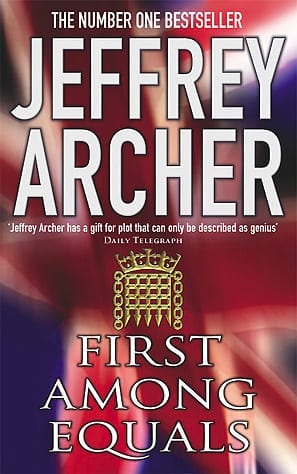
Jeffrey Archer’s 1984 novel “First Among Equals” (published in the UK by Hodder & Stoughton, ISBN: 0-340-35266-3)
Aside from controversy with residents and planning officials, this “heavily overlooked,” “dark” house gets a brief credit in Jeffrey Archer’s 1984 novel, First Among Equals:
“Charles would not have normally accepted the invitation. Lately he found cocktail parties to consist of nothing but silly little bits of food, never being able to get the right drink and rarely enjoying the trivial conversation. But when he glanced on his mantelpiece and saw an ‘At Home’ from Lady Carrington he felt it might be an amusing break from the routine he had fallen into since Fiona left. He was keen to discover more about the rumoured squabbles in Cabinet over expenditure cuts. He checked his tie in the mirror, removed an umbrella from the hat stand and left Eaton Square for Ovington Square… He arrived at Lord Carrington’s front door a little after six forty-five. A maid answered his knock, and he walked straight through to a drawing room that could have held fifty guests and very nearly did. He even managed to be served with the right blend of whiskey before joining his colleagues from both the Upper and Lower Houses.”
Turning to the real Lord Carrington, here is a man who has led a remarkable life. He served as Foreign Secretary in Margaret Thatcher’s cabinet between 1979 and 1982 and as Secretary General of NATO from 1984 to 1988. The last surviving member of the Cabinets of both Harold Macmillan and Sir Alec Douglas-Home was British High Commissioner in Australia between 1956 and 1959 and also chaired the 1979 Lancaster House conference that brought Zimbabwe’s revolutionary war to an end. In 1991, Carrington presided over diplomatic talks in the former Yugoslavia and commented:
“When I first talked to Presidents Milošević and Tudjman, it was quite clear that both of them had a solution which was mutually satisfactory – which was that they were going to carve up Bosnia between them.”
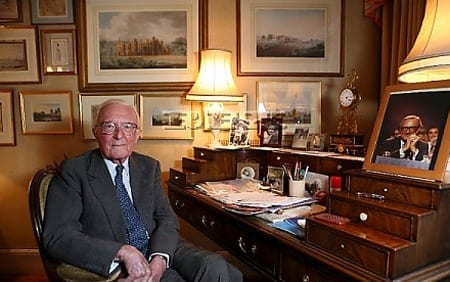
Lord Carrington at his desk in 32a Ovington Square, KnightsbridgeThe Manor House, Bledlow, Buckinghamshire, HP27 9PB is the country home of Lord Carrington
Milošević was found dead in his cell in 2006 but it is quite possible that Lord Carrington’s name will be mentioned in the trial of Goran Hadzic at the International Criminal Tribunal for the Former Yugoslavia that has just commenced at The Hague. It is amazing to think that matters involving this 93-year old politician are still current but Carrington’s stamina is shown in his roles as the longest serving member of the House of Lords and the second longest serving member of the Privy Council after HRH The Duke of Edinburgh.
Aside from politics, there is much on the internet, a considerable amount of it written by wildcards and fantasists whose number includes David Icke, about Carrington’s involvement with Henry Kissinger, the Illuminati, the Bilderberg Group and the Committee of 300. The consensus of these conspiracy theorists generally borders on the ludicrous, but it is without doubt that Lord Carrington had and continues to have influence in many high places. He was chairman of Christie’s International PLC from 1988 to 1993 and has held directorships on the boards of companies that have included Barclays Banks PLC, Hambros PLC, Cadbury Schweppes PLC, Amalgamated Metal Corporation PLC, British Metal Corpoation PLC, Rio Tinto PLC, Kissinger Associates Inc. and Hollinger Inc.
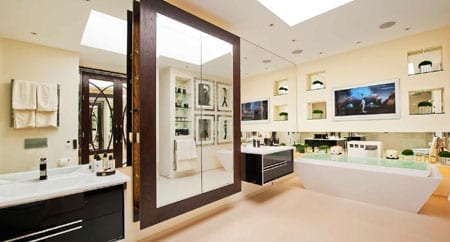
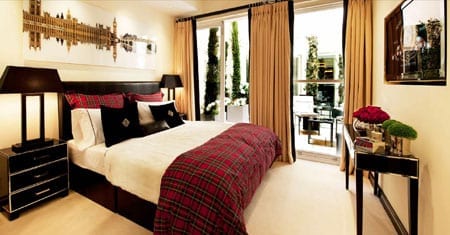
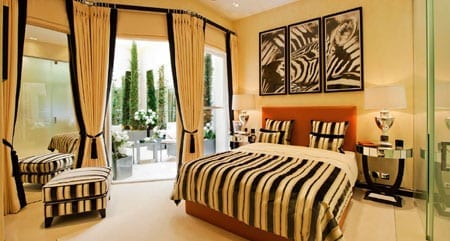
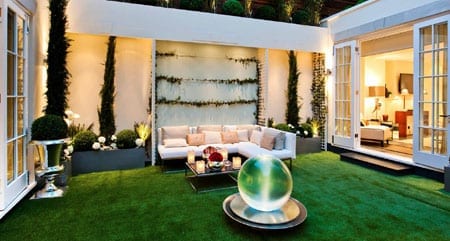
The main entrance to Carrington HouseThe main reception room of the house is decorated in a contemporary style and a far cry from the traditional decoration favoured by Lord and Lady CarringtonAn essential feature in any house priced over £10 million is a media roomCarrington House now boasts a bar that any dignitary would envyThe newly added basement level features an entertaining hall, dining room, bar, gym, media room and two bedroom suitesThe staircase is now lit by a glazed cupolaThe master bedroomThe master bathroomAnother bedroom, located at basement level, is decorated with a Scottish theme and has access to a shared courtyardThe other suite that shares the courtyard is decorated with an “Out of Africa” theme complete with an image of a zebra and matching linen and upholsteryWould the purchaser of a £23,000,000 home truly want an AstroTurf lawn?
Following on from this rather over the top redevelopment, a new chapter has certainly begun at 32a Ovington Square. Whether it is bought by a popstar or a Russian oligarch, they’ll definitely not be anywhere nearly as equal to Lord Carrington in terms of their league of influence.
Carrington House, 32a Ovington Square, London, SW3 1LR is for sale through Knight Frank. For further information contact Nick Vestey on +44 (0) 20 7591 8600. Full details of the house can be viewed at:http://search.knightfrank.com/sla100211
The bonfire sale of a monster of a mansion that has had a $15 million price reduction
A property was first built at 10425 West Sunset Boulevard in Lower Bel Air, Los Angeles in 1936. Here, in this most exclusive of districts, the homes of the prosperous residents are hidden from view and this address, this day, is no exception.
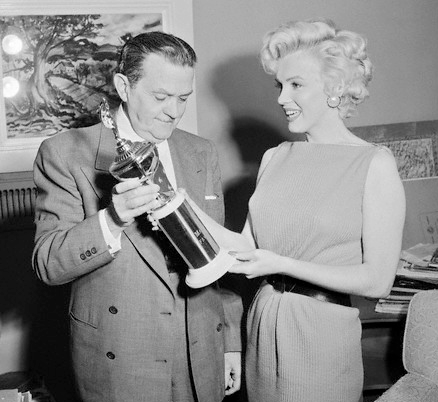
One of the original owners of a house on this site, which has a main access from the cul-de-sac Revuelta Way, was William R. Wilkerson (1890 – 1962), a nightclub owner and founder of The Hollywood Reporter. A compulsive gambler, he is also credited with contributing to Hollywood’s “Golden Era” through the venues he opened. These included Vendome, Café Tocadero, Sunset House, Ciro’s, LaRue, L’Aiglon and most famously The Flamingo Hotel. An involvement here with the ruthless gangster Ben “Bugsy” Siegel (1906 – 1947) turned sour in 1946 and resulted in him having to flee to Paris in fear of his life. Siegel’s death allowed him to return to Los Angeles in 1947 and having “quit gambling cold turkey” following the birth of a son in 1951, he led a much quieter life. He is remembered as being a man who preferred his “beloved French poodles to any wife or friend.”
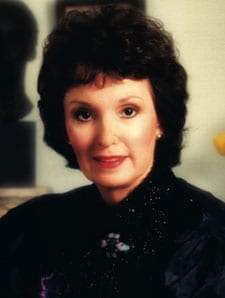
Media mogul William R. Wilkerson (1890 – 1962) pictured with Marilyn Monroe (1926 – 1962)American film personality and the publisher of “The Hollywood Reporter” Beatrice “Tichi” Wilkerson Kassel (1926 – 2004)
Wilkerson is first recorded as living at 10425 West Sunset Boulevard in the 1940 California Census with his fourth wife, Estelle Jackson Brown. He subsequently remained there with his fifth wife, Vivian DuBois, and sixth wife Beatrice “Tichi” Noble. After his death, Tichi Wilkerson (1926 – 2004) sold first 10425 West Sunset Boulevard and then, in 1988, The Hollywood Reporter for $26,700,000.
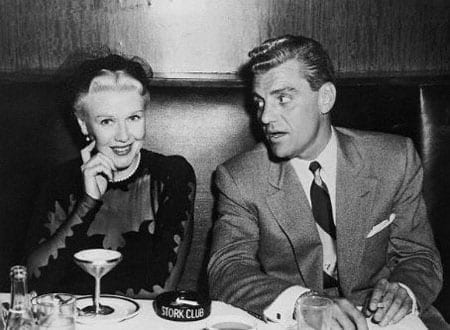
Another famous owner of 10425 West Sunset Boulevard was a “celebrity attorney” named Greg Bautzer (1911 – 1987). Bautzer is best known for having represented not only William R. Wilkerson but also Ginger Rogers, Ingrid Bergman, Joan Crawford, Kirk Kerkorian and Howard Hughes. He is described as having been “as dashing and popular as any successful Hollywood movie star” and was engaged to but did not marry the actresses Barbara Payton, Lana Turner and Dorothy Lamour. He did, however, make the actress Dana Wynter his second wife in 1956, then Buffy Cobb Chapman and finally Nicola Dantine. This “man-about-Beverly Hills,” it seems, was indeed plainly a magnet for anything dramatic.
Philanthropist and Bernini owner Yousuf Tar
The current owner of the house, which is now somewhat ludicrously named Chateau d’Or or The House of Gold, is a man named Yousuf Tar. The president of the “faux-Italian mall fixture Bernini men’s clothing [company],” bought 10425 West Sunset Boulevard in 1992 for $6,000,000 and set about creating what his realtor, Sally Forster Jones, calls a “cross between The White House and Versailles.” The resulting remodeled residence isn’t quite either but frankly combines a mixture of one of the palaces of the deceased tyrant Colonel Gadaffi and the set of Dynasty.
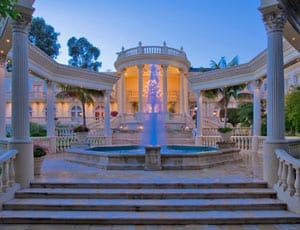
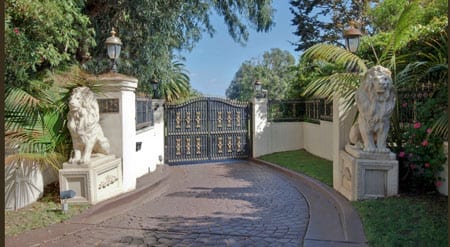
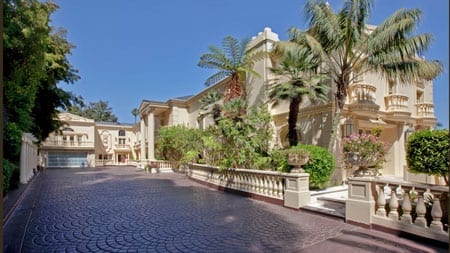
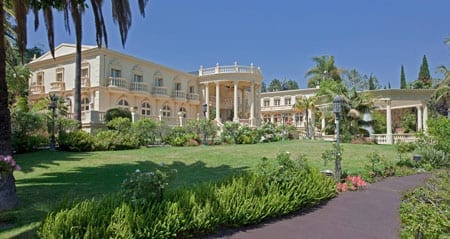
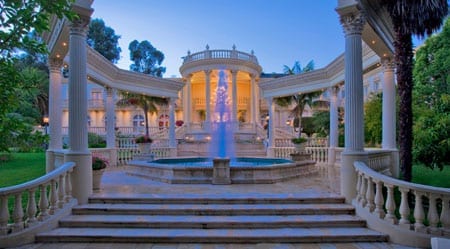
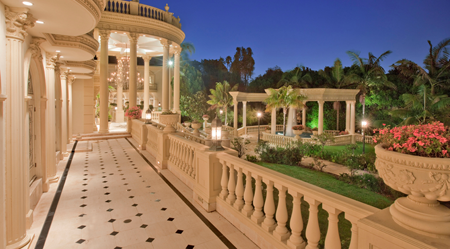
The gaudy gates to Chateau d’Or, 10425 West Sunset Boulevard, Bel Air, Los Angeles, California, CA 90077, USA are an indication of the “tackiness” that lies behindA 600ft main driveway leads to the front of the house from Revuelta Way. Secondary access comes from West Sunset Boulevard.The garden elevation of the Chateau d’OrThe exterior of Chateau d’Or is anything but understated
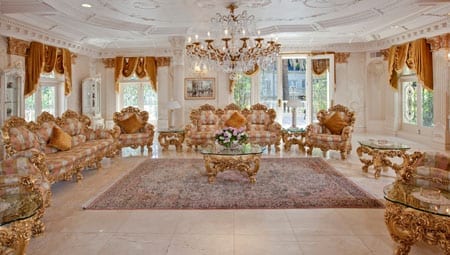
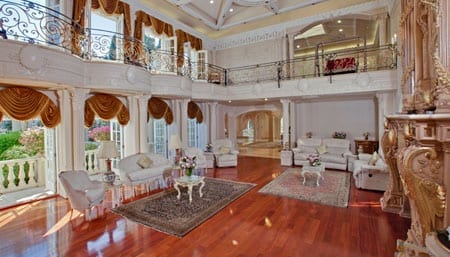
Decorated throughout in a white and gold, the aim of the redesign was to create the look of an 18th century palace complete with acres of marble, columns, cupolas, gold leaft and mouldings. Instead, the interpretation looks more Chigwell-esque than Parisian and has simply attracted criticism and mockery. An example, such as this from Curbed.com, gives a guide to the opinion of the majority about this ugly monstrosity:
“[The mansion] houses some of the cheapest-looking French-inspired interiors ever made, highlighted (or, rather, lowlighted) by a towering, clunky fireplace and a cartoon-worthy master suite, with gilded everything. Even San Simeon’s William Randolph Hearst would object to this level of pointless expenditure.”
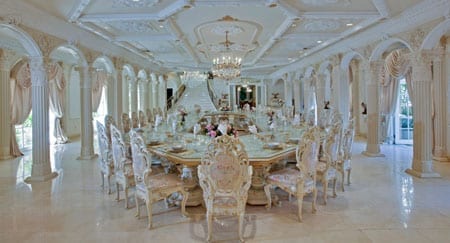
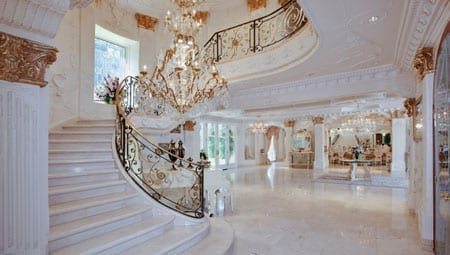
The dining hall is currently furnished with a $300,000 table capable of seating upto eighty for a formal dinner. With an entirely gold dinner service, realtor Sally Forster Jones comments: “Food tastes so much better off gold.”The opulent meets gaudy theme continues with a marble hallway and staircaseA sitting room fit for Saddam HusseinChateau d’Or’s double height media room is supposedly “styled like an opera house”The master bedroom suite is as nearly as large as most homes and is some 5,000 square foot in sizeNo restraint is shown in the choice of bathroom fittings either
Chateau d’Or, according to the listing on Forster Jones’s website, features 25,953 square foot of living space with 15 bedrooms and 16.5 bathrooms. There is a vast dining hall capable of seating upto 80 for a formal dinner which currently features a $300,000 dining table and a 1,600 square foot “oversized gourmet kitchen” complete with 800 square foot of cupboards, an “indoor sunlit gazebo” and a double Viking oven. A double height media room styled as an opera house has also been created and there’s also a cigar and wine tasting room. The Chateau d’Or is nothing other than a “home” on a lavish and ludicrous scale.
The pool sits alongside a 6-bedroomed guest houseChateau d’Or also has it’s own championship tennis courtOne of numerous terraces
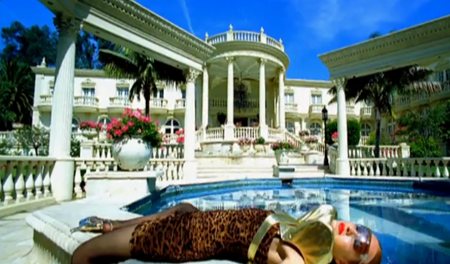
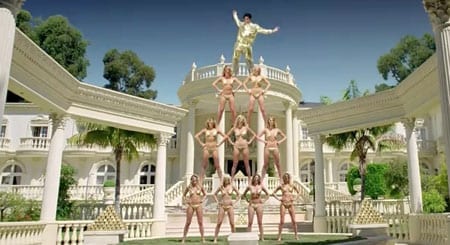
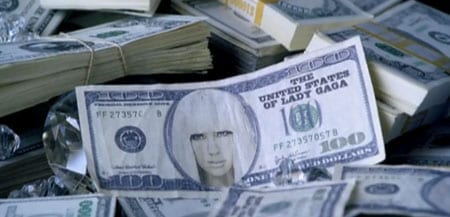
In addition to a swimming pool, spa and gym, Chateau d’Or also has a championship tennis court, guest accommodation and 1.7 acres of grounds. Accessed by a 600ft driveway and surrounded by privacy walls plainly designed to keep prying eyes out, the house featured in Lady Gaga’s 2009 video for her song Paparazzi. Mr Tar plainly isn’t that private at all.
Lady Gaga filmed the video for her 2009 song “Paparazzi” at Chateau d’OrStefani Joanne Angelina Germanotta (AKA Lady Gaga) in one of the “cheap looking” chairs at Chateau d’Or
Not shy of renting the house out for other purposes, it has also been used for a photoshoot for Versace, a television advert for Foot Locker and Addidas starring Ken Jeong and as a venue for a Dubai themed party for Donald Trump where Christina Aguilera performed.
Ken Jeong in a 2010 advert for Foot Locker and Addidas at Chateau d’OrDonald Trump, Sr. with his daughter Ivanka Trump and son Donald Trump, Jr. at a party at Chateau d’Or
Yousuf Tar put Chateau d’Or on the market in 2009 for just shy of $40,000,000 and though Michael Jackson supposedly wanted to buy it to create a “new Neverland,” his sad demise meant that this fell through. Relisted repeatedly since and despite the best efforts of Sally Forster Jones, Chateau d’Or’s gaudiness plainly hasn’t appealed to the market.
You’d had to have been gaga to have paid $40,000,000 for Chateau d’Or
Reduced by nearly $15,000,000 to $25,000,000 this month, Chateau d’Or still doesn’t look like much of a bargain. Somehow, we suspect, it’ll have to be marked down a fair bit more before anyone’s even vaguely tempted.
For more information Chateau d’Or, 10425 West Sunset Boulevard, Bel Air, Los Angeles, California, CA 90077, USA contact Sally Forster Jones of the SFJ Group at +1 (310) 281 3999 or email her at:[email protected]