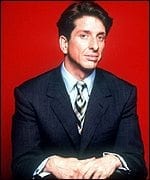
In the first of a new series, we seek to find out what has become of well-known individuals who have faded into obscurity or moved on into others arenas.
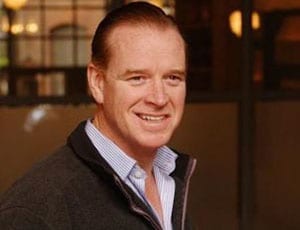
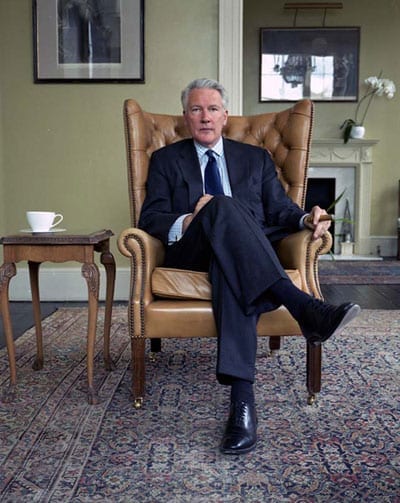
Our first subject, James Hewitt, will forever be remembered for two things: One will be his affair with Princess Diana. The second will be his “caddish” attempts to sell stories and information relating to this.
The uninvited nuisances who are the nightmare of any party host
First published in October 2011 on a blog written by Matthew Steeples, we revisit the story of the leading gatecrashers who boldly go where no others would dare.
Gatecrashers are people who get into parties without invitations. Central London seems to be awash with them and though they lack the gaul of Washington’s Michaele and Tareq Salahi (who crashed President Obama’s White House state dinner for the Indian Prime Minister), they are truly a menace wherever they go.
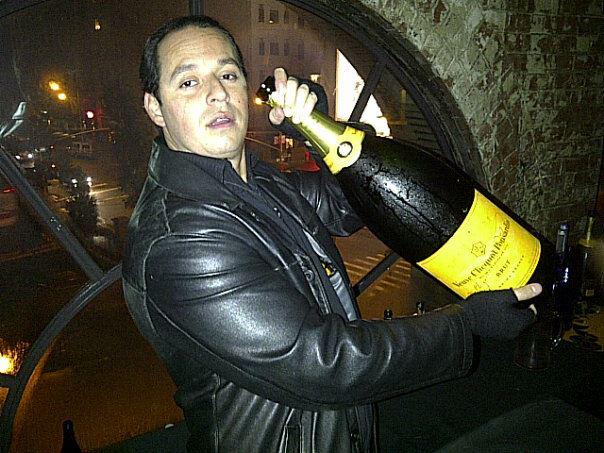
A former financier who is the brains behind New York’s Red Hot-Society media journal. He states his religious views as “crusader” to his 5,000 followers on Facebook and loves Saint Émilion wine. He certainly knows how to party and is also a whizz with a camera. Try and keep up with his itinerary at your peril.
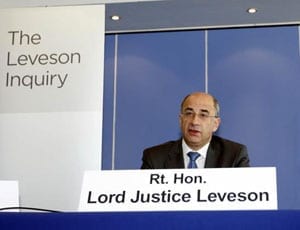
Sarah Tucker shares her experiences on a panel discussing the outcomes of Leveson
Journalist and author Sarah Tucker was one of the panelists at a talk at the Richmond Literary Festival on Thursday evening. By chance, since it coincided with the publication of the Leveson Report, the panel’s discussion naturally focused on that. Here Tucker share her thought in an article first published on her own blog:
Will the outcome of Leveson change the media?
I was in excellent company last night as part of a panel at the Richmond Literary Festival that felt almost weirdly timed to coincide with the day of the Leveson announcement.
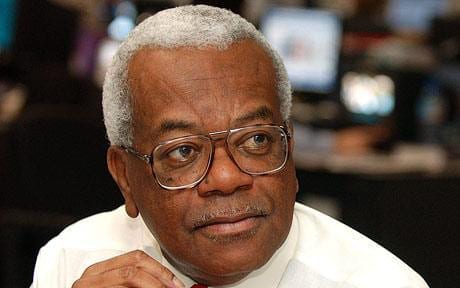
I appeared on a panel with Sir Trevor MacDonald (who needs no introduction, but got one any way), the editor of the Sheengate Titles, Richard Nye; Claire Fox, the director of the wonderfully named Institute of Ideas (which I thought sounded like something out of Hogwarts) and Matthew Syed, illustrious columnist, Times writer and former Commonwealth table tennis champion (I wanted to ask him about table tennis but felt it oddly irrelevant in context of the debate). We discussed if the media were ‘friend or foe’ (though it wasn’t specified ‘to whom’) this of course had been perfectly timed to coincide with the Leveson findings. It was pure fluke but that’s timing for you.
Sir Trevor felt Leveson would change nothing. Everything, he suggested, would be bogged down in committees and sub committees and nothing would be done. Ever. Fox and Syed felt if statute was put in place, it would potentially be very dangerous especially if you had the likes of Blair or Thatcher in charge again or some lesser megalomaniac.
As for my view, I think the politicians are playing a game. They are losers all of them, we are the biggest ones (the punter, the voter, the onlooker), but to think they could come out and out say one way or another would be a nonsense and would take a great deal of courage, which they don’t have.
When I look at politicians now I think of them as actors upon a stage, not meaning anything they are saying, not even understanding most of it, just reciting it. I don’t feel contempt because it takes courage to get up on that stage. And Sir Trevor noted that many journalists and reporters now treat politicians with barely restrained contempt when they interview them. As he noted, at least politicians enter the process to do something of good for their community (although I think some do enter it for ego), something you can never say about those who work in the city.
Sir Trevor McDonald OBE
And who will be in this ‘organisation’ that will monitor the press? Who on earth, on this earth, is so honourable, so without fault, so incorruptible to be considered for this position? A politician? No. A banker? You’re joking. A policeman. Perhaps.
I think you need a ‘common man’, or woman who has a sense, a common sense and an ability to see through the emperor with no clothes phenomenon of what is bullshit and what isn’t, what is in the public interest and what isn’t. It isn’t someone who has risen to the top. If this year has proved anything the shit rises to the top more regularly than the cream does. Although I must say I do like Eddie George. I think his contempt for the city mirrors that of my own, but then he deals with them on a daily basis so that’s understandable.
In many ways the media has been it’s own worst enemy. Editors allowing for lazy journalism – the recent article about Canada in The Telegraph being an example. I met the head of PR for Canada in the UK for lunch this week and she despaired that they usual cliché about Canadians came up without anything relevant or up to date on a country that had a government which managed to manage their bankers – something our politicians have not. As she commented: “It’s harmless but it’s pathetic.”
Then there’s the phone hacking which hacked into ‘common man’ rather than celebrity, who I am afraid I have absolutely no sympathy with. That includes the royals, both the young and old. They are sold to us as though we know them. We don’t have a clue who they are. We just think we do.
Editors encourage journalists to get stories, to hit the negative angles because they are told ‘it makes better news’ and people are more interested in bad news than good. I think it’s been proven somewhere, with stats or something, but then so have a lot of other things which also turn out to be rubbish. And all media are businesses so their bottom line is more important than anything else. Associated Papers are making money, The Times is running on a subsidy, the rest of the papers I think are losing money. The BBC may have been dented but they are respected around the world and like the NHS should not be tampered with. They should not be interested in profit and should aim in their production values at all times and at all cost. Every panelist agreed on that point.
The weave between the institutions of the police, the law, the church, the city, the media, the royals, the politicians has become so entwined. This is like a lover’s tiff that will pass over because the end game is more important. There is too much money, too much power and far far too much ego invested in these institutions for morality and integrity to get in the way of profit.
This has been a year of revelation but not revolution. And if it were it would be the wrong heads that would roll.
Sarah Tucker is an award winning travel journalist, novelist, producer and broadcaster. She has edited, produced and presented her own radio and TV series as well as presenting reports for BBC Holiday Programme and anchored I Want That House on ITV. She is the author of best selling novels The Playground Mafia (short listed for the Good Housekeeping book of the year 2007) The Battle for Big School, The Last Year of Being Single, and The Control Freak Chronicles.
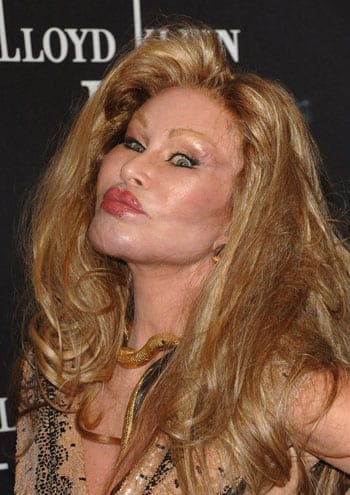
If one spent $2,000,000 on cosmetic surgery, one would expect to end up looking fantastic. It didn’t quite work out in the case of the billionairess “Bride of Wildenstein,” though, as instead she discovered the husband she thought she’d please in bed with a 19-year old Russian. Feline like in appearance, the purr of this New York socialite is said to be just as bad as her bite. She’s known to be a skilled hunter and pilot and once boasted her telephone bills were at least $60,000 a year. Surprisingly far from camera shy, what on earth will she look like at ninety?
Another rumoured sale of “Beckingham Palace” is reported
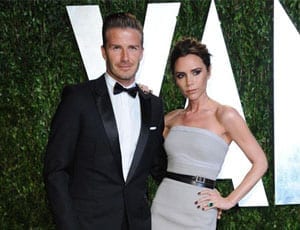
November 2012: In March this year, the blog that preceded The Steeple Times looked into reports that David and Victoria Beckham would be selling their Hertfordshire home, Rowneybury House (better known as “Beckingham Palace”). For all the talk of that sale, as far as we are aware, it still remains in their possession. In recent days another media source has reported that the house is indeed on the market and that the Beckham family are now moving to New York. This has now become a story akin to that of “the boy who cried wolf” and it’s one that we’ll only believe to be true when the removal vans actually pull up.
March 2013: In a further update, the story has resurfaced but the supposed price is allegedly now just £10 million. That’s quite a reduction.
Whenever there’s a quiet news day, British newspapers like to put out claims that David and Victoria Beckham are to sell their Hertfordshire mansion, Rowneybury House. Such a sale has never followed but that the Mail Online chose to run this as a lead article is indeed interesting in view of the footballer’s recent return to LA Galaxy.
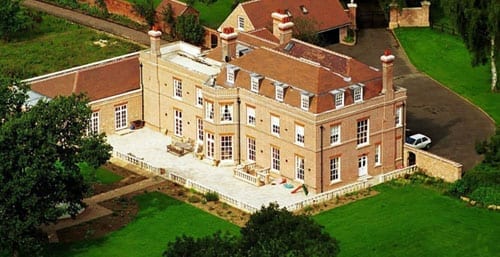
“Beckingham Palace” before it was altered: Rowneybury House, Harlow Road, Sawbridgeworth, Hertfordshire, CM21 0AJThe results of the “Posh” makeover included extensions, garden landscaping and even a soccer pitch
Similar stories, for example, ran in the Mirror in April 2007 and again in September 2010. In the latter piece, an unnamed spokesman stated:
“We can confirm David and Victoria have had their UK home valued.”
Strangely all of these stories share a lack of credited sources and are written in the same vein on each occasion. Though Rowneybury House has certainly not come to the open market to date, today’s suggestion that the couple are selling as they think it “wasteful to hold on to when they never visit” would appear a sensible course of action.
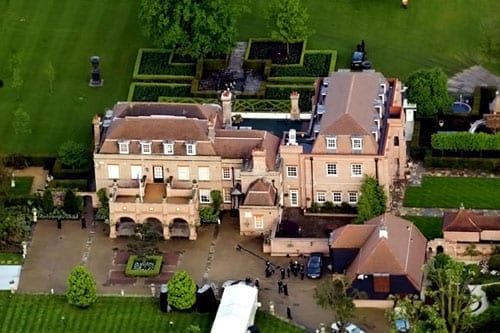
Rowneybury House itself was built in the 1930s and used as a council owned orphanage. Bought by the Beckhams in October 1999 for £2,500,000, the couple vastly altered and enlarged the Grade II listed house to include 7-bedrooms, a recording studio, gym, pool room and indoor and outdoor pools. They even added a 52ft garden pavilion complete with a huge barbecue reputed to have cost £70,000.
In the grounds, which extend to some 24 acres, the Beckhams have added a petting zoo for their children as well as a soccer pitch, two full size golf holes, a floodlit tennis court and a helicopter landing pad. Three gazebos, one “romantic,” one “lakeside” and another “ornamental” were also constructed.
The sum total for all of this work is, for some reason, always quoted in the mainstream press at £18,000,000. Though it is obvious that vast expense has indeed been spent on Rowneybury House by the couple, the figure does seem a little exaggerated. Equally ludicrous is the suggestion that they will sell at a loss.
The Beckhams’ time at Rowneybury House has not been without drama. In 2002, police foiled an Eastern European gang who planned to kidnap them from the house and on occasions intruders were caught in the grounds. Further drama ensued in 2008 when the pair’s housekeepers, Eric and June Emmett, were arrested after being accused of stealing items of memorabilia.
I myself found myself involved in a story about the house when, in 2004, I worked for a PR firm who were representing an estate agent selling an adjoining property. The owners Mick and Lynda Allen, who I believe eventually sold their home, Rowneybury Bungalow, to the Beckhams, used the surrounding publicity to attempt to launch the pop career of their daughter Nikki. I am not certain how she subsequently fared.
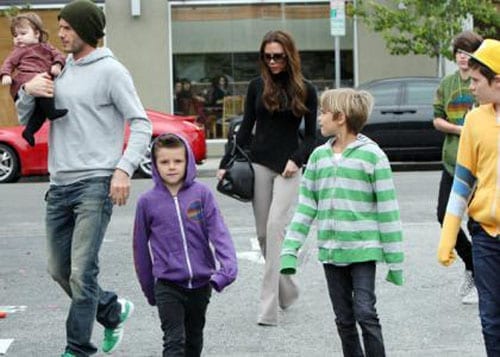
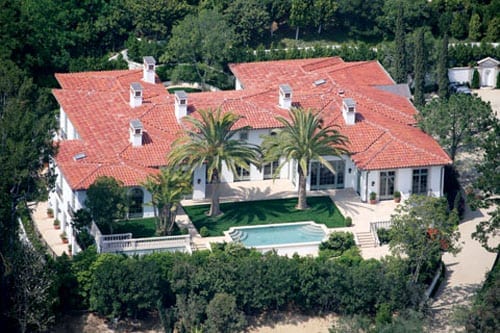
David and Victoria Beckham with their children Brooklyn Joseph, Romeo James, Cruz David and Harper SevenThe $22,000,000 “Italian style” 9-bedroom Los Angeles home the Beckhams have owned since 2007
The Beckhams, who are worth some £160,000,000, now spend the majority of their time in America and are said to prefer it there. When in the UK, they opt mainly to stay at either Claridge’s or The Savoy as both are more convenient for Mrs Beckham’s meetings at her design studio in Battersea.
Both the Mail Online and the Mirror suggest that Victoria Beckham has recently been looking at apartments “next to Hyde Park” so that she can maintain a smaller base in the UK. Perhaps a move to the £7,000 per square foot One Hyde Park development could be on the cards.
If this news is indeed finally true, it’ll certainly be the end of an era for the pad dubbed “Beckingham Palace” as a portmanteau of “Beckham” and “Buckingham Palace.”
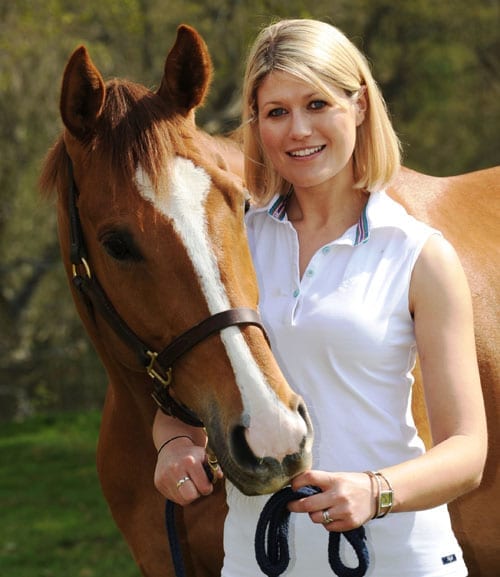
The Steeple Times asks the journalist and equestrian expert Victoria Spicer: “What’s on your mantelpiece?”
The Steeple Times shares “wit and wisdom.” What’s your guiding force?
Sat nav, usually.
“Don’t get even, get medieval” is, in our humble opinion, a great motto. What’s yours?
I’m stealing my motto from someone else – “Don’t gamble with what you can’t afford to lose.” Wise words, and not just applicable to my fairly lamentable betting technique.
Kerry Katona was considered unacceptable in 2007. Who or what is unacceptable in 2012?
Animal suit onesies.
Tony Blair misses being Prime Minister. What do you miss most in your life?
I’m in the process of moving to the Surrey countryside so I dare say I’ll miss London, easy commutes, a plethora of restaurants, twice weekly trips to the cinema and the Canary Wharf skyline.
What might you swap all your wealth for?
I’d gladly swap my wealth for somebody else’s. I doubt they’d be delighted with the deal though.
Donald Trump was once a case of: “If you owe the bank a thousand, they close you down; but if you owe the bank a billion, you own the bank.” What’s your view on the banking crisis?
I blame Kerry Katona.
What phrase or word do you most loathe?
“At the end of the day.” Ghastly.
In the UK, some people consider charity to “begin at home.” What’s your view and what causes do you personally support?
I ran the London Marathon in 2008 in aid of World Horse Welfare so that’s a biggie.
The judge in “Law Abiding Citizen” states: “I can pretty do whatever I want” before being blown up whilst answering her mobile phone. What’s your view on the appropriate use of such devices?
As my friends will tell you, I never look at my phone, and I certainly don’t pounce on it the second I see that little red flashing light.
If you could fill a carriage on The Orient Express, who would be your fellow passengers?
Scotland’s rugby team, Andy Murray, Daniel Craig, Elbow, Ross Noble, Ryan Gosling, and a handful of my closest female friends to redress the balance.
If you were unfortunate enough to end up on death row, what would be your last meal and where would you eat it?
Fillet steak, on the run.
What time is it acceptable to consume the first drink of the day?
12.01.
A Negroni, a martini or a cup of tea?
Can’t I have a cold glass of Pinot Grigio instead?
Whose parties do you enjoy the most and why?
The post-show parties during Olympia Horse Show are usually pretty memorable.
Who is the most positive person you know?
Not sure I know many – or if they start off positive, I soon drag them back down to earth with a healthy dose of cynicism.
What’s your most guilty pleasure?
Made in Chelsea.
If a tattoo were to sum you up, what would it be of?
Snow Fairy. Class mare. Unfortunately for her, I can’t stand pain and have no desire to get a tattoo.
If you were a car, what marque would you be?
I’m quite like my own car – an MX5. Looks like it could be fun to drive but is actually rubbish at getting up hills and handles terribly. Plus it’s either boiling hot or freezing cold, never in between.
Cilla Black presented “Surprise, Surprise.” Tell us the most surprising thing about you.
I’m related to Cilla Black… And I’m a compulsive liar.
What’s currently sitting on your mantelpiece?
I’m about to move house so I currently have no mantelpiece – but I’m working on it.
Victoria Spicer is a freelance journalist. She is also press officer for the All England Jumping Course at Hickstead and web editor for Horse & Country TV.
Matthew Steeples delves into the history of Albany, Piccadilly and discovers an affordable way of living there
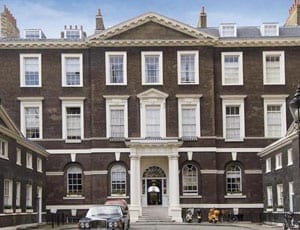
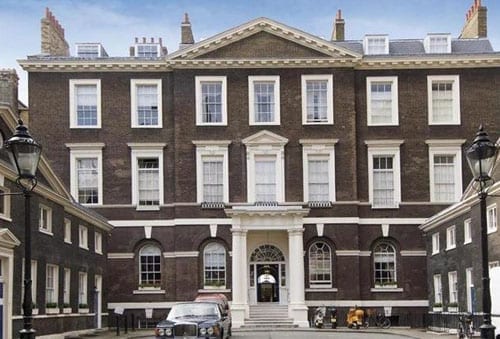
Albany, off Piccadilly in Mayfair, was most probably London’s first apartment block and it’s certainly the city’s most exclusive. It may be next to the Royal Academy and opposite Fortnum & Mason but surprisingly few have even heard of it.
Considering its location, Albany, which some make the mistake of referring to as “The Albany,” is an amazingly quiet oasis of peace and tranquility but, equally, it is a place of intrigue and drama. Residents, or “proprietors,” as they prefer to be known, of the 69 “sets” are particular about the “the” part of the name as they’d rather their residence not be confused with a public house and they are even more protective of their privacy. A porters’ lodge guards the entrance to the building and it is staffed mostly by ex-servicemen, who, until the early 2000s, had to wear top hats and tailcoats. Those allowed to pass enter a rarefied world frequented by what the Irish novelist Marmion Savage (1803 – 1872) identified as “incurable oddities” and “superannuated fops” in The Bachelor of Albany.
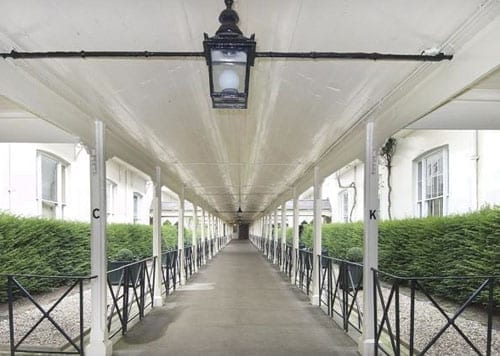
The front courtyard and façade of Albany, Piccadilly, Mayfair, London, W1J 0ALThe rope-walk connecting the various sets of Albany has been traversed by some of the greatest names in history
Built by Sir William Chambers (1723 – 1796), who also designed Somerset House and the pagoda at Kew, between 1770 and 1774 for 1st Viscount Melbourne (1745 – 1828), Albany was originally known as Melbourne House and conceived as a three-storey mansion, seven bays wide with a pair of service wings flanking a front courtyard. From 1791 to 1802, the property was occupied by George III’s son, Prince Frederick, Duke of York and Albany (1763 – 1827), but after he left, the renowned architect Henry Holland (1745 – 1806) sub-divided the existing house and added two parallel sets of buildings running the length of the garden to create 69 “bachelor apartments” which he named “sets.”
The “roll call” of residents since could easily fill our very own pages thrice over. They number royalty, politicians, artists, playwrights, academics and philosophers and here is a brief selection:
– Anthony Armstong-Jones, later 1st Earl of Snowdon
– Sir Thomas Beecham
– Sir Isaiah Berlin
– Lord Byron
– George Canning
– Sir Kenneth Clark
– Baroness Pauline de Rothschild
– William Ewart Gladstone
– Sir Edward Heath
– David Hicks
– Aldous Huxley
– Sir Simon Jenkins
– Rupert Lycett Green
– Malcolm Muggeridge
– Sir Harold Nicholson
– J. B. Priestley
– Sir Terence Rattigan
– Roger Scruton
– Baroness Sharples
– W. Somerset Maugham
– Terence Stamp
– Sir Denis and Lady Thatcher
– Sir Herbert Beerbohm Tree
Each had to pass the vetting of a committee of trustees of this Grade I listed building. That committee forbids children under 14, pets, musical instruments and commercial activities and each approved resident has undoubtedly added to the history of this den dominated by a central walkway named the “rope-walk.” Incidentally, an example of a curious quirk at Albany is that no resident is allowed to speak to another on this walkway. If they do, a fine is incurred. Albany, indeed, is rather like a college in its systems of rules, regulations, order and hierarchy.
For several centuries, women were not even allowed to cross the threshold and one legendary tale tells of Lady Caroline Lamb (1785 – 1828), disguised as a page boy, stealing into Lord Byron’s (1788 – 1824) set in 1815 to leave a note: “Remember me, Byron.” He replied with a simple verse:
Remember thee, aye, doubt it not:
Thy husband too shall think of thee.
By neither shalt thou be forgot —
Thou false to him, thou fiend to me.
The strict and formal structure that controls Albany and ensured its maintenance has succeeded in the main because 34 of the 69 sets are owned by Peterhouse College, Cambridge. They and the other owners are highly particular in whom they lease to and on one occasion on hearing of an “unsuitable tenant,” the secretary of the trustees is reported to have shouted:
“He’s a foreigner. Don’t like him. Don’t trust him.”
Needless to say, that application didn’t progress and nor did one from a physiotherapist who planned to operate from the building. Bone bashing in Albany just wouldn’t do.
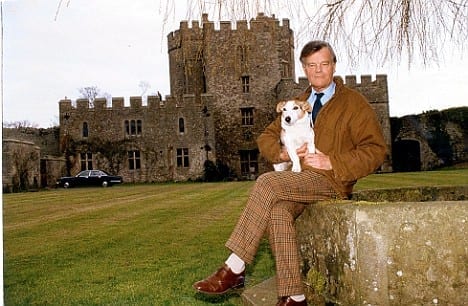
The Rt. Hon. Alan Clark MP (1928 – 1999) in the grounds of his main home, Saltwood Castle, near Hythe in Kent in 1993
A horsewhip, however, nearly crossed the threshold of set B5 in 1994, as it was here that the late Alan Clark MP (1928 – 1999) lived. The affable philanderer seduced the wife and both daughters of a certain South African named Judge Harkess and the wronged man stated he would “have horse-whipped Clark if he had known how comprehensively he had violated his honour.” B5, itself, was described as having the feel of “the straitened quarter of an Edwardian bachelor on his uppers” and the dotty, English attitude of the residents is best summed up by the reaction of Clark’s neighbour when he accidentally flooded their basement. When asked what he could do to make amends, their answer was quite simple: “Go and lie down in Piccadilly and wait for a double-decker bus.”
The dandy and journalist John Morgan (1959 – 2000) typified social change at Albany in the 20th century just as much as he himself redefined etiquette and manners at Debrett’s and The Times. Of “humble origins,” Morgan was brought up in a “modest” bungalow in St Madoes, Perth, Scotland but is credited with persuading William Hague to remove his baseball cap whilst Conservative leader and offering advice ranging from “how to eat a banana” to “how best to tell friends that the partner you would like to bring to their wedding will be of the same sex as you.”
Dandy and etiquette expert John Morgan (1959 – 2000)
For the bachelor and GQ style director, living in Albany was symbolic of his own personal social elevation but he did not disown his past. This modern day Beau Brummell was a man of social contradictions who cashed his cheques at Claridge’s but was a member of the National Union of Journalists. He was a Tory but still regularly attended chapel meetings as he had done in his youth. Here was a man of paradoxes who seemed unable to come to terms with the fact that he was a homosexual.
Morgan, an asthma sufferer, fell to his death from a fourth floor window on 9th July 2000. He was found in just a white shirt in a basement below a window whose sill was strangely undisturbed. The coroner left an open verdict with a suspicion of suicide and it was widely reported that police found 60 made-to-measure Savile row suits, 300 monogrammed shirts and 90 pairs of shoes in the etiquette expert’s small set. Mystery shrouds the story of his tragic demise to this day but Johnny Morgan will forever be remembered as an arbiter of both good taste and behaviour.
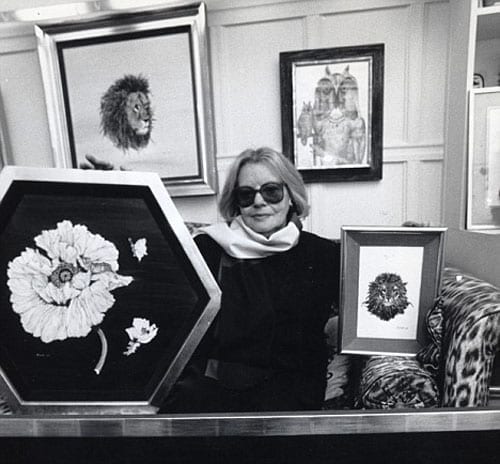
Whilst Morgan represented continuation of the trend of bachelors living in Albany, change also came in the 20th century when the building’s committee removed the restriction that allowed only bachelors to be resident. With that females were allowed in and amongst them Fleur Fenton Cowles (1908 – 2009) was one of the most fascinating.
Fleur Fenton Cowles (1908 – 2009) in her set at Albany with some of her paintings and one by Salvador Dali
This writer and artist occupied five sets knocked into one with her fourth husband, timber merchant Tom Montague Meyer, and according to the Daily Mail’s Geoffrey Levy, hosted “elite soirees of the powerful and famous.” Levy recounts them at length but here is a flavour:
“On a Wednesday evening, a typical dinner party… would include Foreign Secretary Selwyn Lloyd, Labour leader Hugh Gaitskell, entertainer Danny Kaye and film star Douglas Fairbanks Jr. The Queen Mother regularly came to tea and was once joined by Pavarotti who sang Happy Birthday for the royal guest. ‘I don’t want her to die,’ said Fleur. ‘I couldn’t bear to think she doesn’t live just down the street.’ ”
Fenton Cowles, founder of the ill-fated Flair magazine and a “woman who knew everyone,” loved Albany and an exact replica of her “windowless, milk-yellow” study there has even been recreated at the University of Texas.
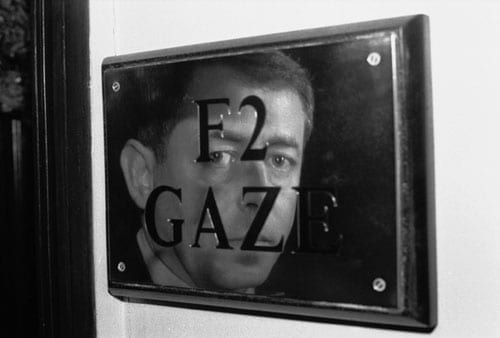
Another known for hosting extravagant bashes in Albany was my late friend, the Russian icon dealer John Gaze (1947 – 2011). Gaze had, as a boy, asked his father about the building when he passed it as a child and immediately declared he would live there one day. He took F2, the former set of Edward Heath that overlooked Savile Row to the rear, in the mid 1990s as he craved the safety that the building offered after having been kidnapped at gunpoint by an Oxford graduate conman named Sacheverell de Houghton in April 1991 from his then home in Fournier Street, E1. He made the most of his tenancy.
Russian icon dealer John Gaze (1947 – 2011) reflected in the brass plaque outside his Albany set, F2. It was formerly occupied by Sir Edward Heath.
Gaze’s parties included a fundraiser for people with AIDS hosted by a drag queen. This sparked fury with certain other residents and coverage in the Daily Telegraph and another incident there involved him encountering Alan Clark on the ropewalk carrying a portrait of Lenin. “Where the fuck are you taking that?” Clark supposedly bellowed but was “reassured” when he was told it was “destined for a less salubrious address in Whitechapel.” John Gaze remained at Albany for several years but, like a number of others I know, was forced out by ever rising rents and moved first to Chelsea and then Ennismore Gardens, Knightsbridge. He always remembered his time at Albany fondly and as a bon vivant, he truly belonged there.
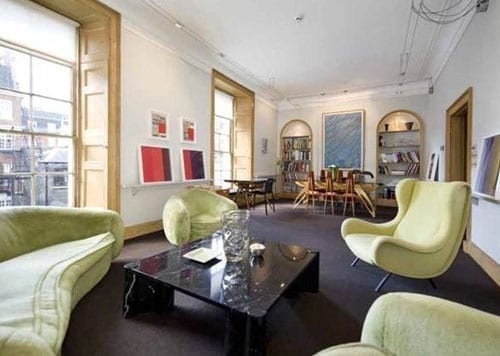
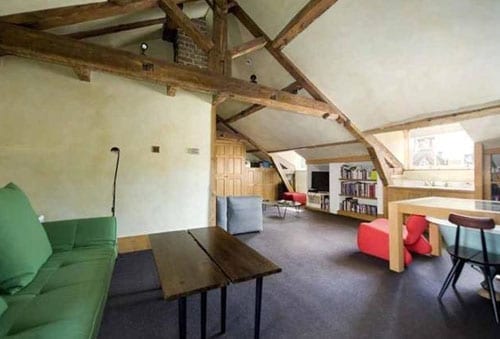
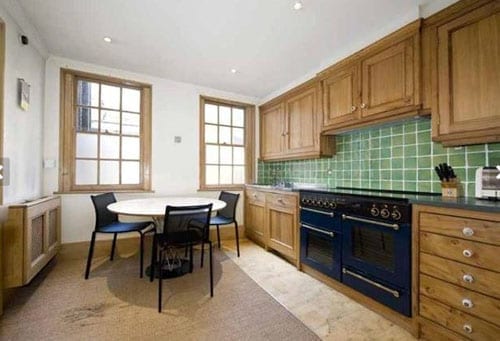
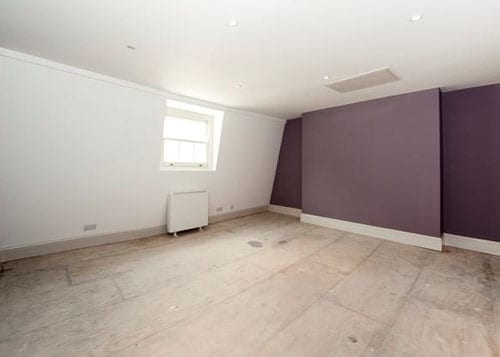
The main reception room in a £1,400 a week set currently available in AlbanyAn attic room in the set that could be used as a second reception room or second bedroomThe kitchen is lacking in character but offers ample space for informal dining
Contrary to what you’d expect, living in Albany is not quite as expensive as one might think. A 2-bedroomed 1,970 square foot set is currently available through Knight Frank for £1,400 a week: a figure that seems quite reasonable given the location, history and size of this property. Available on a minimum 8-year rental term, it includes a formal reception room, a dining kitchen, 2 bedrooms and 2 bathrooms.
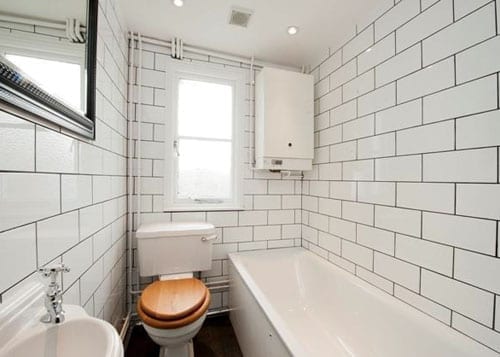
This £300 per week set, D2, consists of just one roomThe communal bathroom D2 shares with other sets is basic but clean
For those looking for something cheaper, Savills offer D2 Albany at £300 per week. This set consists of a 221 square foot third floor attic room with access to a communal bathroom and the agents suggest that it: “would make an ideal reading or writing room or an occasional bedroom for a pied-a-terre.” It’s effectively a posh form of tenement but what a way to impress your peers and subordinates.
Damon and Sandra de László in their “duplex” in Albany
Those renting either of these sets would find the likes of the industrialist Damon de László, a descendant of the Hungarian painter Philip Alexius de László (1869 – 1937), as their neighbour. The couple occupy Lord Byron’s former set, A2, and have, on occasions, opened it for a charity dinner with Matthew Parris at £1,000 a ticket as well and for members of The Portrait Institute to view their collection of de László’s works.
Professor Philip C. Bobbitt in his grand freehold set
Another present day resident is a man Henry Kissinger calls “the outstanding philosopher of our times,” Professor Philip C. Bobbitt. This Texan lawyer is a nephew of Lyndon B. Johnson and the author of Terror and Consent, which Tony Blair describes as “required reading for political leaders.” Bobbitt owns an impressive flying freehold set that is described as having a masculine style of décor and a “kitchen he has designed to look like a bar.” In an interview for TheIndependent he states that he finds Albany: “a propitious place to work.”
Though governments and bankers come and go, behind this quintessentially English façade, order and disorder have always been maintained. The wildcards of this hidden haven have a knack for living by the doctrine “to live at Albany is to live in history” and indeed they make the most of that. Those who are lucky enough to be let in, do, indeed, truly find themselves in the “Paradise of Piccadilly.”
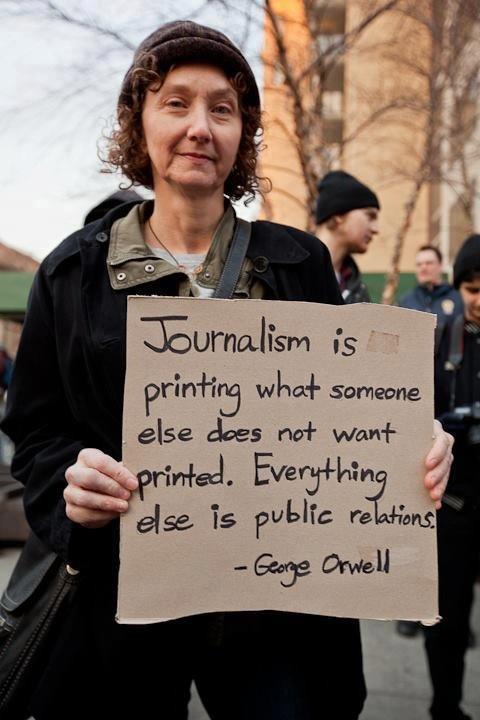
A George Orwell quotation sums up the current media firestorm perfectly
We at The Steeple Times thought this image of a lady holding up a piece of cardboard summed up the events of the weekend perfectly.
As a debate rages about the future of the BBC and the role of social media in the “outing” of personalities in connection to alleged stories of abuse, the words of George Orwell ring utterly true:
“Journalism is printing what someone else does not want printed. Everything else is public relations.”
For this simple reason, we make it our picture of the week. This scandal should not be brushed under the carpet.
Christian Huhnt recounts an evening at the launch of La Suite West
I have a personal connection to Inverness Terrace as twice in my life I’ve had to crash at my friend’s place there. It’s less than a minute from the new Anouska Hempel-designed hotel, La Suite West, and runs parallel to Queensway.
Bursting with cheap Chinese, Arabic and Mediterranean restaurants, this is an area that has great transport links to Oxford Street and the city centre that is also a very short walk from Hyde Park. As a result it’s full of tourists. Here, they arrive and depart every day, wandering around with heavy luggage trying to find their way. Most of them look like they’re hopelessly lost and in need of a good scrub. The tourist density here is almost equal to that of Victoria Station’s Gatwick Express exit or the Piazza San Marco in Venice.
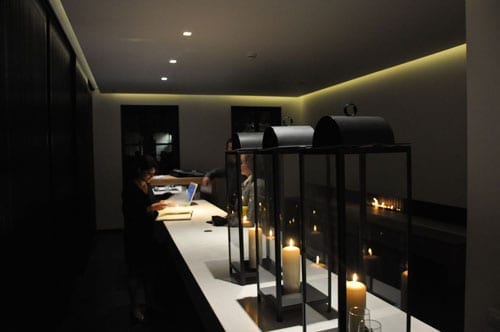
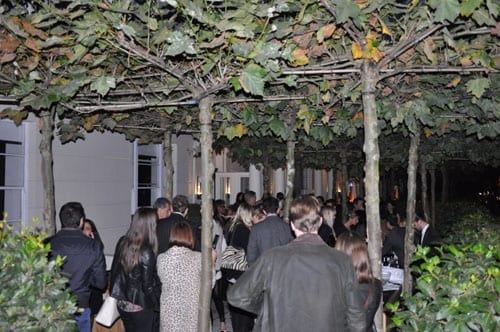
The lobby of La Suite West, 41 – 51 Inverness Terrace, London, W2 3JNParty guests at the launch of La Suite West
Please don’t get me wrong though. I have always felt that this place, the heart of Bayswater, has been totally underestimated. It is charming with lots of London Plane trees and a very cosmopolitan feel. Lady Weinberg, better known as the visionary designer and sometime actress Anouska Hempel, plainly agreed as she integrated all that was good about this atmosphere into the hotel that she has cleverly designed.
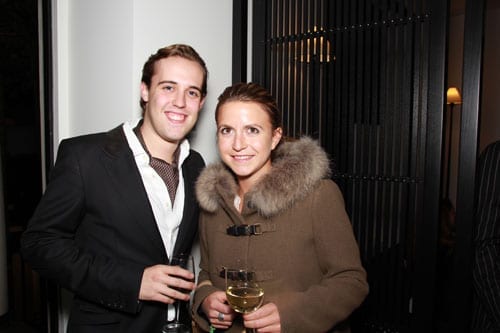
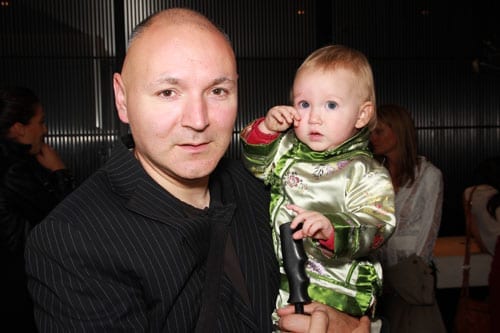
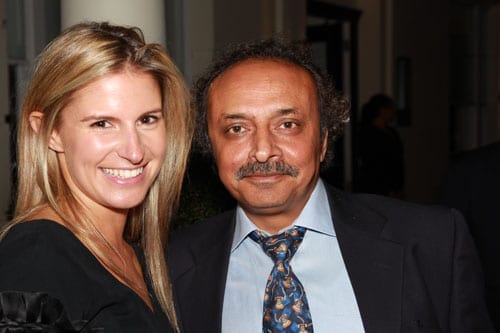
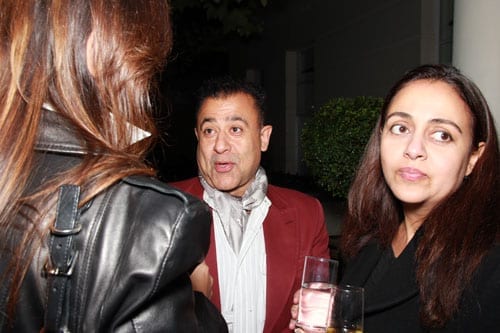
“Let’s celebrate with a little champagne”Guests at the party included the British supermodel and VogueTV presenter Jade Parfitt and Duncan McDonald of Propeller CommunicationsOur party correspondent Christian Huhnt and Inga Buschke enjoying the launch of La Suite WestAngelo Valentino also represented “The Steeple Times” with his daughterGuests at the launch of La Suite WestSusan Ansary, a regular on the party circuit, even put in an appearance
Arriving at the hotel entrance, you get a feel of how important it was for Hempel to grasp this outside space and use it as a communal environment for the guests. I was invited to visit on the evening of the hotel’s launch and this was the area where guests congregated. Here, along with the champagne, they served molecular bites including Nutella ice cream that had been shock frozen using liquid nitrogen. This, they told me, had been done to avoid ice crystals appearing and the result was a very smooth and creamy texture. I’d put money on this having left the menu now though as just days later I read news reports of a girl in Lancaster losing her stomach after drinking a cocktail made in a similar manner. With hindsight, I must say that my stomach is very glad that they got the measure just right.
When you enter the hotel, which first opened to guests three months ago, you feel as if you are visiting a Scientology church or traversing the ramp of a Star Wars space shuttle. Coming “onboard,” you enter a reception hall, in which a friendly concierge welcomes you. The whole interior is very minimalistic and has been reduced to hues of only black and white. A long fireplace leads you deeper into this shuttle, onto a main corridor, past the dining rooms and connects into to labyrinthian walkways that transport guests to their appointed suites.
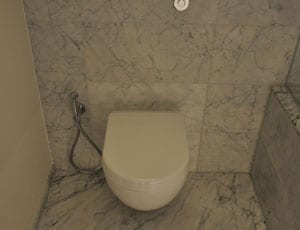
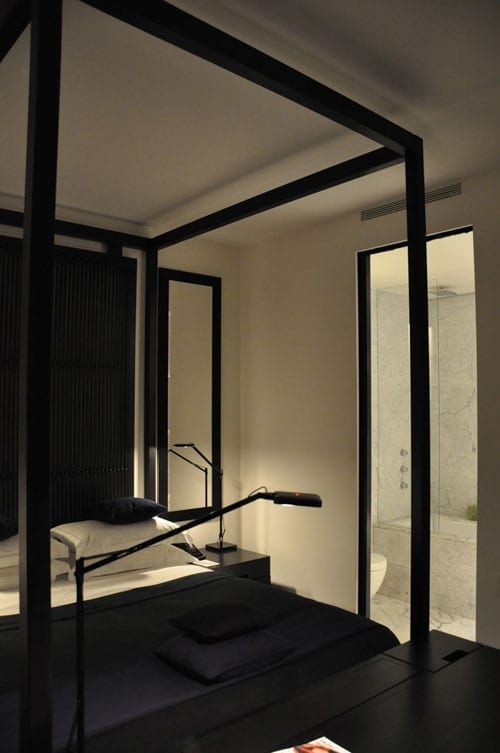
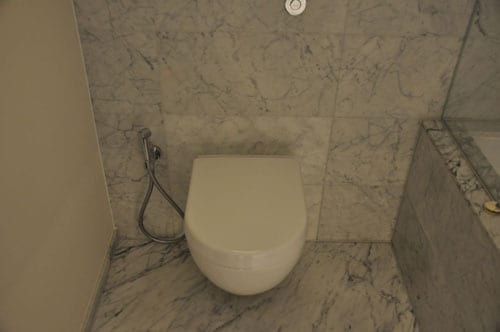
I was told that the hotel rooms are all decorated in the same style and have similar layouts. They differ only slightly in size. On the evening of the launch, the largest could be admired and all of them had a very independent feel as they benefited from their own access to the street. Essentially, the rooms are quite small but all offer the contemporary luxury that any jetsetter would expect. The bathrooms have a particularly sophisticated feel and are clad in marble throughout. The extendable televisions hidden in the bed frames perfectly fitted with the minimalist design, but where this became bizarrely rigorous was the flexible water hose in the bathrooms that dispensed with the need for good old European toilet paper.
One of the hotel’s bedroomsA toilet at La Suite West – complete with hose attachment but minus loo roll
La Suite West is a great step forward. In fact, it is a very audacious move towards upgrading a whole area that clearly has potential for more and which, at the time of writing, does not offer anything better than shabby hostels and seedy bed and breakfasts. The hotel is a well-arranged concept and evidently Hempel put a lot of thought into the execution of it. The design is well composed, but being German I did notice some of the carpets and minor details could have been a little better.
One last piece of advice: the management might want to ship in some bog roll. Some ageing Brit might decide to show up and I’m sure nobody would want a scene from Fawlty Towers to be played out in that rather smart lobby.
La Suite West, 41 – 51 Inverness Terrace, London, W2 3JN. Telephone: +44 (0) 20 3642 3928. Website:http://lasuitewest-px.rtrk.co.uk
Images by Andreas Kirchberger and Christian Huhnt.