Edward Kay takes a look at a yacht that forms part of the legacy of Steve Jobs
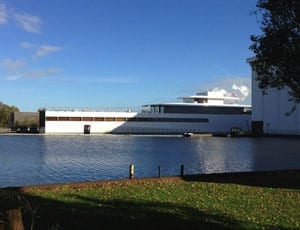
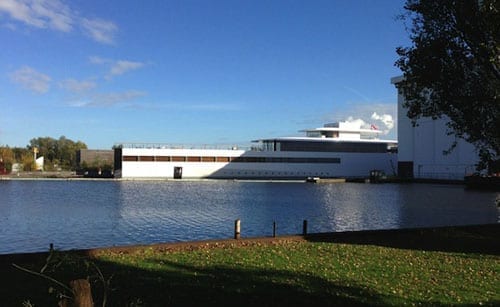
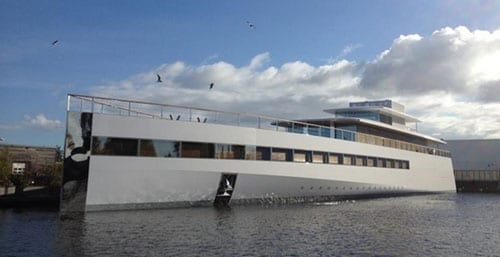
In a bittersweet moment, Steve Jobs’s yacht was launched on 29th October from the Feadship’s de Vries yard in Aalsmeer, The Netherlands with his wife and three children aboard. The Jobs family gave the members of the yard iPod’s inscribed with the name of the yacht to show their appreciation for the six-year build.
The unusual 256-foot yacht has been christened “Venus” after the Roman goddess of love and features huge floor to ceiling windows and teak decks.
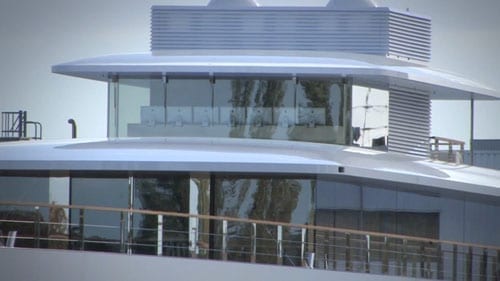
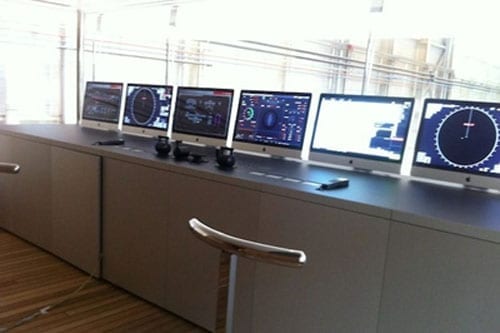
Venus emerges from the Feadship de Vries yardA closeup of the bridge deck of Venus shows seven 27-inch iMacsThe iMacs in situVenus in all her glorySteve Jobs (1955 – 2011)
The minimalist Phillipe Starck designed aluminium vessel has been described as looking like an iPhone resting on an iPad resting on a MacBook Air and there are indeed seven 27-inch Mac screens clearly visible on the bridge deck.
Jobs told his biographer Walter Isaacson: “I know it’s possible I will die and leave Laurene [his wife] with a half built boat. But I have to keep going on it. If I don’t, it’s an admission that I’m about to die.”
Of the boat itself, Starck adds:
“The idea for the boat was very simple. It was mainly philosophical. It is not like a lot of mega yachts showing the vulgarity of money. It’s a boat showing the elegance of intelligence.”
Indeed, when Jobs saw the designs, he is said to have stated: “My God, it’s better than I could have dreamt.” I quite agree. Venus is a spectacular bequest.
Matthew Steeples explores the story of an empty Kensington mansion
A multi-million pound 8-bedroomed house in Kensington isn’t anything unusual. In fact, rather, they’re ten a penny. In this, one of the wealthiest boroughs in the land, large, expensive homes are just the norm.
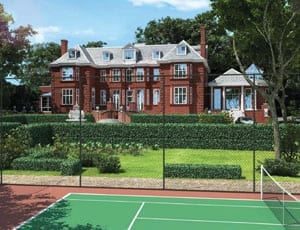
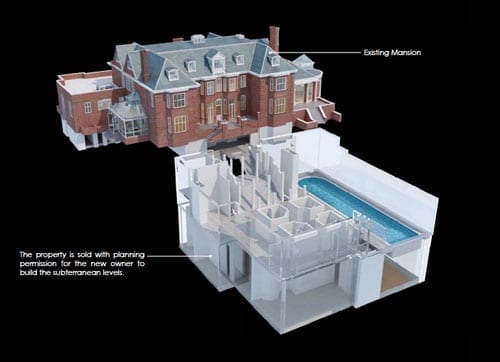
An image of the existing exterior of No. 1 Campden Hill, London, W8 7ADA rendered image of how the exterior of the renovated property might lookThe plans show a vast subterranean development that will vastly increase the size of No. 1 Campden Hill
No. 1 Campden Hill, which is being marketed for an undisclosed eight-figure sum, is in a quite different league. Here is a detached Edwardian house in an acre of grounds just to the north of Kensington High Street. It’s an unrenovated property but it attracted much press attention in October 2011 because it was place on the market in October 2011 at a price of £75,000,000. Yes, you heard it right: £75 million for a fixer-upper. Last week, Radio 4 made a hell of a fuss about a derelict semi-detached house in Newcastle selling for just £14,000 so this truly must be something special.
Architect Edward P. Warren (1856 – 1937), far right, in the offices of Bodley & Garner, 14 South Square, Gray’s Inn, London
The architect of the house Edward Prioleau Warren (1856 – 1937), a Bristol born architect and archaeologist, was best known for “Oxford colleges and minor country houses” but also designed the War Cemetery at Basra. He was a friend and adviser to the American novelist Henry James and in addition to building No. 1 Campden Hill in 1915, he also designed a house at 5 Palace Green in 1906 and another, Estcort House in Kensington Palace Gardens, in 1904. Warren’s guiding style is described as having been to recreate an “understated revival of English late 17th century” architecture and at No. 1 Campden Hill he created just that.
Colonel Edmond Grove-Hills (1864 – 1922), born Edmond Hills, and his wife, Juliet Spencer-Bell, were the architect’s clients. A plaque on the building bares their names and the following dedication:
This House I built for Me & Mine
May it be of Peace A Shrine
And no Enmity or Sin
Ever find its way therein
AD 1915
Sadly for the Grove-Hills, the following year, their son, Second Lieutenant Charles Herbert-Hills (1895 – 1916) was killed on the Somme aged just 21. His father, meanwhile, was awarded a CBE in 1918 after having served as the Assistant Chief Engineer of Eastern Command during the war.
Aside from his military exploits, Edmond Grove-Hills is best known for his role as president of the Royal Astronomical Society. He took part in observations of eclipse of the sun in Japan in 1896, India in 1898 and Russia in 1914 and contributed papers analysing both this and the causes of the irregular movements of the earth’s axis of rotation.
In 1951, No. 1 Campden Hill was purchased by the government of Uruguay and it became the residence of their ambassador to the United Kingdom. For the next fifty years the building was barely altered but when the lease from the Phillimore Kensington Estate came to an end, there were legal problems as the 1951 transfer had never been stamped. Of this, Sharon Mulroney of Forsters, the legal representatives of Phillimore, commented:
“It is highly unusual to be faced with complications of this kind when dealing with a registered London title, but this made the transaction all the more fascinating. Even the decision to allow ambassadorial staff to return to the property for security purposes after completion was fraught with potential problems about security of tenure, employment and tax.”
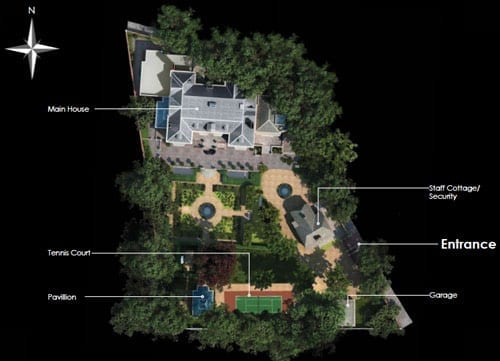
The proposed site plan shows the addition of a garden pavilion, staff/security cottage and a tennis court
Eventually, without issue, the Phillimore Estate sold on the house in 2001 for a price of approximately £17,000,000. In the years since, the property was effectively mothballed as all the purchasers have done is to have obtained planning permission to redevelop the building into a mammoth mansion of epic proportions.
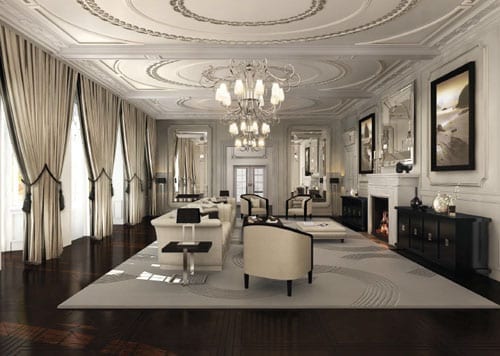
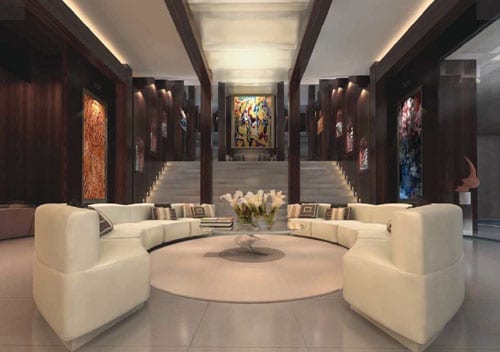
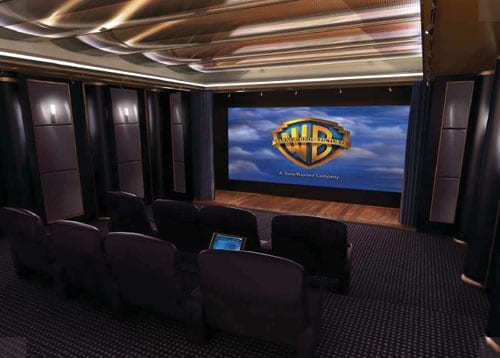
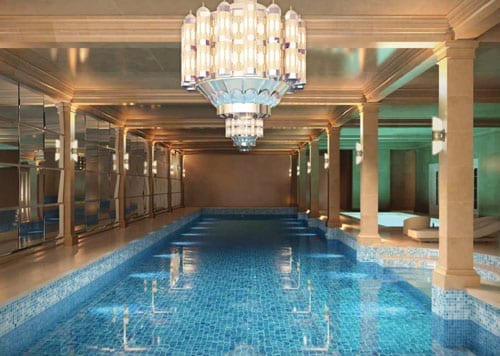
A computer rendered image of how the drawing room might lookThe “leisure area” is reminiscent of the entrance to The Mandarin Oriental Hyde Park HotelThe private home cinema would be the envy of any movie buffThe swimming poolThe wine cellar is rather like a contemporary take on Berry Bros. & Rudd’s flagship store in St. James’s StreetAnd to complete it all… The plans include your own version of Boujis in the basement
The approved plans show designs for something quite remarkable. Warren’s “understated” residence will be replaced with 8 vast bedroom suites, grand entertaining spaces, a lift and even bedrooms for 5 staff. In addition to a full-scale renovation of the original freehold house, there is scope to provide a total of 30,000 square feet of accommodation by adding a huge subterranean complex that will include a 25-metre swimming pool, court, squash court, gym, sauna, steam room, function room, entertainment room, home cinema, wine tasting room and even a nightclub to rival any of Kensington’s trendiest haunts.
On that basis alone, No. 1 Campden Hill is surely the ideal residence for Prince Harry: “Who needs Boujis?” we hear him cry.
No. 1 Campden Hill, London, W8 7AD is for sale through Knight Frank. For more details contact Roddy Craggs on +44 (0) 20 7938 4311 or go to:http://search.knightfrank.com/ken100161to download a brochure.
A £15 million mansion fit for a self-made tycoon or an upwardly mobile WAG
While the youth of the Kings Road and Loughton have featured in the reality shows Made in Chelsea and The Only Way is Essex, their counterparts in Cheshire have yet to undergo the same social experiment. Having come across a fair few of their number though, I can only imagine their antics would result in television of comparable car crash proportions.
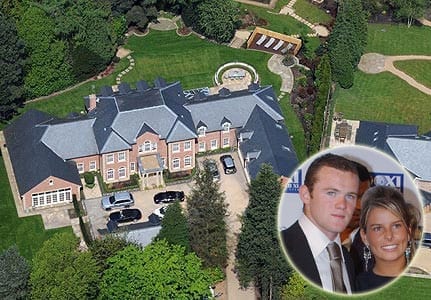
Wayne and Coleen Rooney and their home on Collar House Drive in Prestbury, East CheshireWarrington born Kerry Katona isn’t considered one of the “Cheshire set’s” finest exports
Cheshire itself is a county of contrasts: there’s the farming and hunting set and then there’s the new money. From the 1950s onwards an invasion of nouveau riche footballers and self-made business people came to Alderley Edge and Wilmslow and it is said that there are more Rolls-Royces per square mile here than anywhere else in the UK.
Though today’s Coronation Street actresses and Man United players generally favour brand new homes in Prestbury, the new wealth have not just consigned themselves to such. The likes of Take That’s Gary Barlow, for a time, owned Delamere Manor at Cuddington but sold it in 2005 due to his ever-growing commitments elsewhere. Equally, Neil Hamilton, whilst MP for Tatton, lived at The Old Rectory at Nether Alderley with his formidable wife Christine but when their days in politics came to an end, they too moved on. For a time, David and Victoria Beckham were the undoubted glitterati of this manor, but of those footballers still resident Wayne and Coleen Rooney are definitely now the best known.
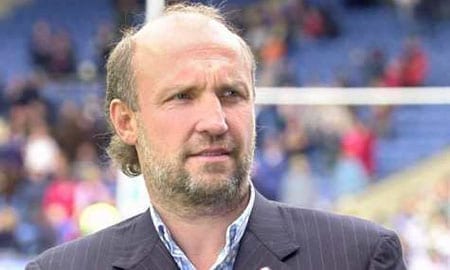
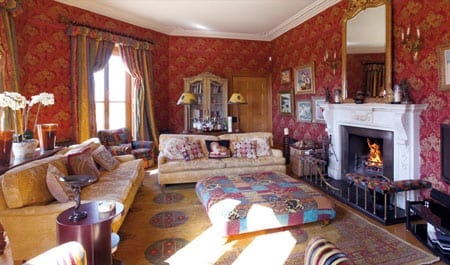
In a “grey area between old and new” sits Swettenham Hall at Swettenham near Congleton. This 12,590 square foot Georgian mansion dates to 1795 but since it was acquired by Brian Kennedy, a double glazing, home improvements and mobile telephone entrepreneur, the house has been given a total makeover. The colourful style he’s given the house can best be described as being akin to: “Laurence Llewelyn-Bowen meets Austin Powers.”
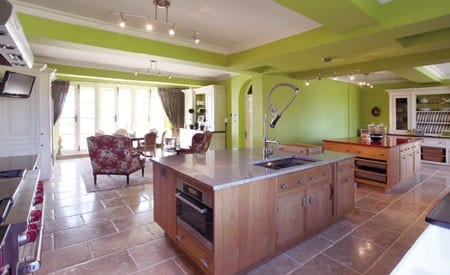
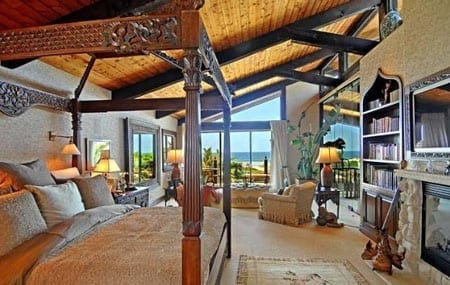
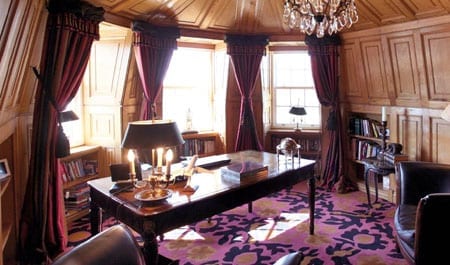
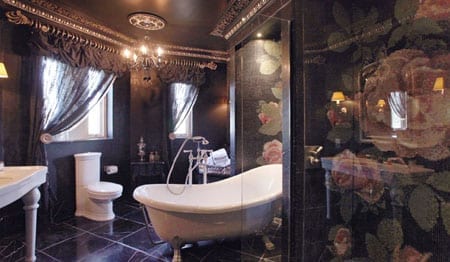
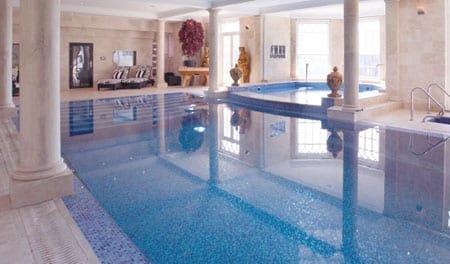
Swettenham Hall’s drawing room is decorated and furnished in a cacophony of coloursThe kitchen is painted in an equally vivid shade of lime greenA bedroom boasts a carpet that would make Austin Powers shout: “Yeah, baby, yeah!”The same carpeting continues into the wood paneled “gentleman’s study”At Swettenham Hall, bathrooms, equally, are far from neutral in their stylingMr Kennedy and his wife Christine employed Julian Bicknell Associates to design an impressive leisure wing in 2004
Swettenham Hall is most definitely a party palace and along with the addition of a leisure wing consisting of a swimming pool, Jacuzzi®, plunge pool, steam room and gymnasium in 2004, Kennedy has also constructed a 47ft by 44ft helicopter hangar complete with a retractable helicopter pad.
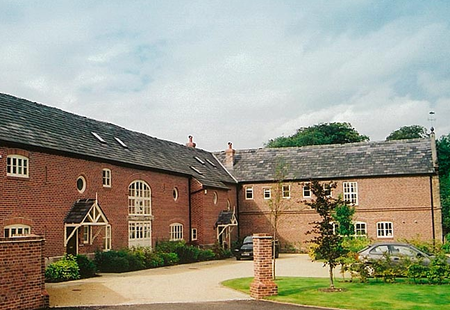
Standing in 100 acres of grounds, the house does seem a tad expensive at £15 million especially since that the adjoining former farm buildings were sold off and converted into eight homes in 1999. The driveway is partly shared with these homes and for those seeking the ultimate in privacy, this could indeed be an issue. It is perhaps why Swettenham Hall has yet to sell.
The former farm buildings next to Swettenham Hall were sold off and converted into eight homes by Egerton Estates and Watts Developments in 1999The proximity of Swettenham Hall to the neighbouring barn conversions is illustrated in this Google Earth map
Brian Kennedy is someone I hadn’t heard of until I came across Swettenham Hall but here is a fascinating man whose meteoric rise is frankly very clearly linked to windows. The son of a window cleaner from Edinburgh, this self-made tycoon started his career as a trainee manager at the Royal Bank of Scotland. He subsequently briefly worked as a trainee accountant but left when offered the chance to become youngest branch manager of Moben Kitchens at the age of 20.
At around this time, Kennedy acquired a stake in Farouche Kitchens and with a Rochdale born property entrepreneur named David Russell, he was transformed from a door-to-door salesman to a pioneer in direct sales. In 1988, when Farouche was sold, Kennedy netted circa £1 million. From here, this entrepreneur returned to his family’s roots by venturing into double glazing with Weatherseal Windows and then home improvements with Space Kitchens & Bedrooms.
In 1999, with the help of funds raised by private equity investors 3i, Kennedy paid £42 million for the well known brand Everest but sold part of his stake to the management for £63 million in 2003. In due course he added to his shareholding and then sold 21.5% of the company to Hutton Collins in a deal which valued the company at £150 million in 2007.
Ever the empire builder, Kennedy paid £29 million for a conservatory manufacturer named Ultrafame in 2006 and then also added another double glazing brand, Zenith Staybrite, to his portfolio in 2008. Many other business ventures followed but not being afraid to diversify, Kennedy formed Patrick Properties, whose portfolio is now valued in excess of £100 million, in 2002 and Kennedy Renewables, which specialises in wind energy, in 2009.
In the technology sector, a chance conversation in a Knutsford wine bar in 1995 led to him venturing into the mobile telephone market with a company named Genesis Communications. The business was sold to Dixons in 2002 for £31 million.
In January 2012, Kennedy merged his main Latium Holdings business with Jim Rawson’s Epwin Group to form Epwin Holdings. The merger resulted in a company with more than 2,500 employees and brands numbering Spectus, Swish, CET and Kestrel.
Of his success, Kennedy states:
“Business is common sense [and] dealing with people is common sense. I don’t think I have any particular flair. I think it is about common sense, taking the opportunity when it comes and hard work.”
Brian Kennedy’s wealth has allowed him to indulge many of his passions. A period of semi-retirement “drove [him] and [his] kids nuts,” but this Scotsman’s love of rugby resulted in him acquiring the Sale Sharks Rugby Club in 1999. He is said to have set the “club on a sound financial footing” and turned it into “one of the leading rugby clubs in Britain.”
Philanthropy is something that Kennedy, a Jehovah’s Witness, has also dedicated his wealth to. Through his Brian Kennedy Trust, he has supported a number of charities and organisations but it is for his role as the main backer of Find Madeleine Fund that he has come to public attention. Of his reasoning for backing the missing child’s parents financially, he stated:
“In light of the quite literally incredible accusations against Gerry and Kate McCann, which are clearly exacerbating their emotional torture, I felt compelled to offer, along with other like-minded businessmen, financial support and the full logistical support of the Latium team. That support is principally our in-house lawyer Ed Smethurst and [official spokesman] Clarence Mitchell.”
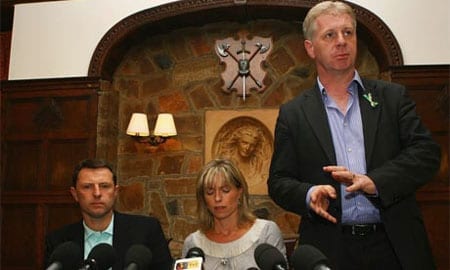
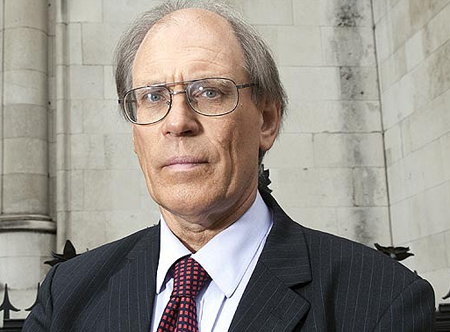
Brian Kennedy was involved in the funding of a team that included Clarence Mitchell for the Find Madeleine Fund until 2009. Here Mitchell (standing) is pictured with Gerry and Kate McCann.An ex-lawyer and campaigner Anthony “Tony” Bennett is the former secretary of The Madeleine Foundation who has been involved in various legal disputes with Brian Kennedy and Gerry and Kate McCann
Kennedy’s donation attracted much press attention in 2007 in the weeks following Madeleine McCann’s disappearance and he continues to support them to this day. A very public spat involving him, Gerry and Kate McCann and a campaigner named Tony Bennett, who also was involved in The Madeleine Foundation, has been the subject of various legal actions. In October 2011, Mr Bennett was forced to publicly apologise to Mr Kennedy and separately an August 2009 Evening Standard article by Mark Hollingsworth “investigat[ing] the investigators,” was pulled because for “legal and editorial reasons.” In it, “someone who worked closely with [Kennedy]” was quoted as saying:
“He was appalled by the Portuguese police, but he also had visions of flying in by helicopter to rescue Madeleine.”
Angelina Jolie, another avid aviator, once commented: “Wherever I am I find myself looking out of the window wishing I was somewhere else.” We do not know why Brian Kennedy is selling Swettenham Hall, but Jolie is indeed one of the few with the resources to take these particular windows off his hands.
For more information about Swettenham Hall, Swettenham, Congleton, Cheshire, CW12 2JZ, contact Edward Welton of Knight Frank on +44 (0) 20 7861 1114.
For more details about Brian Kennedy, go to: http://www.brian-kennedy.co.uk
For more details about the Find Madeleine Fund go to: http://www.findmadeleine.com and for information on The Madeleine Foundation: http://www.madeleinefoundation.org.uk/
The sale of the £20 million Bletchingdon Park, Oxfordshire
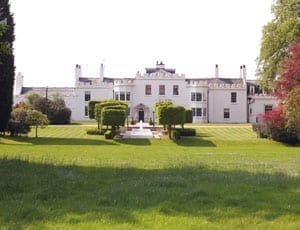
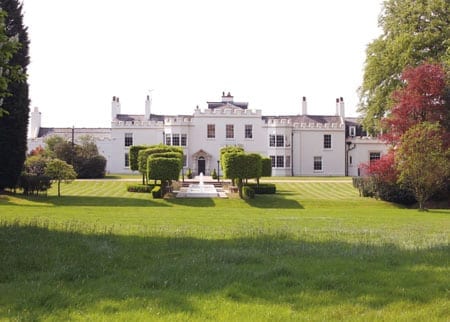
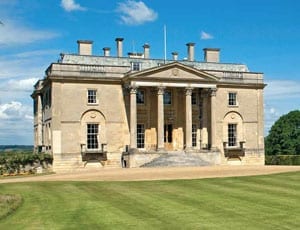
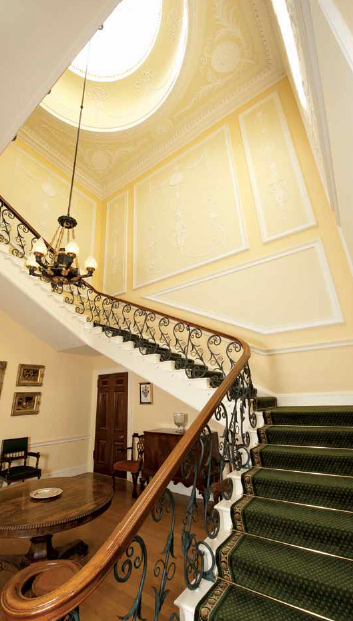
Bletchingdon Park House in Oxfordshire is one of those classic Palladian villas that would make the perfect setting for a period drama. Unlike vast Jacobean mansions like Highclere Castle, better known as Julian Fellowes’ Downton Abbey, however, Bletchingdon is of a far more manageable size.
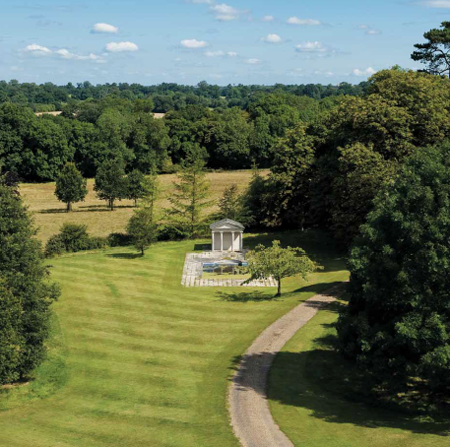
The facade of Bletchingdon Park, Bletchingdon, Kidlington, Oxfordshire, OX5 3DWThe staircase hallA formal reception roomThe grounds of Bletchingdon Park
This Grade II* listed Georgian house, built for Lord Valentina in 1782, may be some 24,600 square foot in size, but it has a layout that makes it both practical for living and suitable for entertaining on a grand scale. The accommodation, which has been renovated by the renowned building company Symm, includes 9 bedrooms and suites, well-proportioned formal reception rooms and a garden floor with further reception rooms, a billiards room and a fitness room with spa.
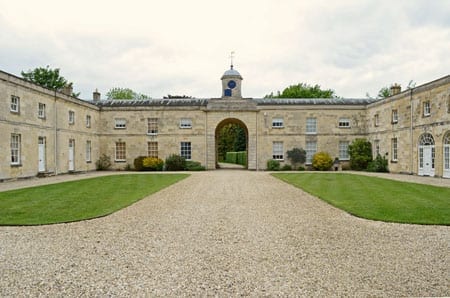
Whilst the original stable block has been sold off and converted to residential accommodation, Bletchingdon Park includes 2 staff flats, a 2-bedroomed lodge cottage and a further 3-bedroomed cottage. With parkland and grounds extending to 127 acres, maintaining Bletchingdon’s plot is large, but easily maintained.
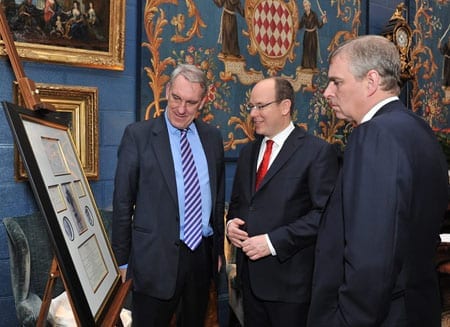
Dr Michael Peagram with Albert II, Prince of Monaco and Prince Andrew, The Duke of YorkThe former stables of Bletchingdon Park were sold off some years ago and have been converted into a number of homes
In the 20th century Bletchingdon was owned by Lord Astor and then Lord Rotherwick. The current owner, Dr Michael Peagram, purchased the estate in 1993. Peagram made his fortune in the chemicals industry after having led a management buyout of Huddersfield based Holliday Chemicals Holdings (HCH) in 1987. He revitalised the business, expanded into new markets and floated the company in 1993. The business was ultimately sold to Yule Catto for £225 million in 1997 and in 2001 Peagram sold another company for a reported £44 million.
At this point, this scientist turned tycoon moved to Monaco and saved himself, according to a 2009 Daily Mail article by Piers Morgan, some £13 million in capital gains tax. A wise businessman and a supporter of David Cameron, Peagram’s modus operandi is:
“Winning with honour and playing by the rules… And not cheating.”
In an interview with Monaco’s NeXt Generation Entrepreneur Forum, he states that he “did lots of work” to achieve his success but admits to “being a romantic at heart.” He has used much of his fortune to fund the philanthropic activities of Outward Bound Monaco with Prince Andrew, The Duke of York and Albert II, Prince of Moanco.
Peagram placed Bletchingdon Park on the market in May 2012 at a price of £20 million. Of why it hasn’t sold, one blogger commented that a footpath runs close to the house and that there is a lack of leisure facilities and outbuildings. Somehow neither seem insurmountable and whoever purchases this fine residence will be a very lucky man. If I were Dr Peagram, though, I’d keep it.
Bletchingdon Park, Bletchingdon, Kidlington, Oxfordshire, OX5 3DW is for sale through Knight Frank. For further details contact Damian Gray on +44 (0) 20 7629 8171 and to download a brochure go to: http://search.knightfrank.com/cho090098
The sale of a $25 million mansion modeled on Marie Antoinette’s favourite retreat that has connections to Levi Strauss & Co., Yehudi Menuhin, the Zodiac Killer and a controversial dot-com tycoon
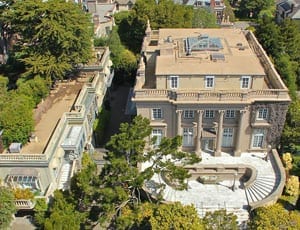
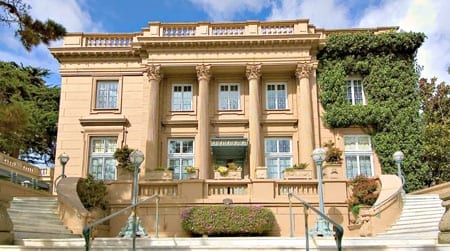
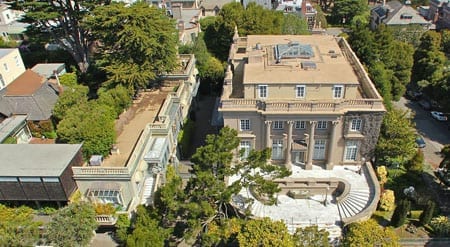
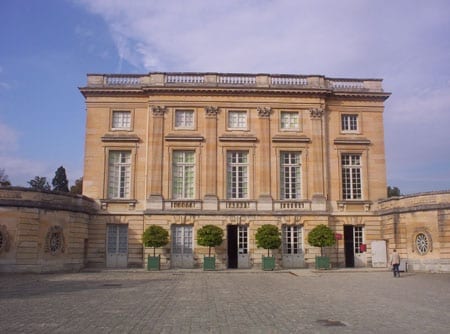
Modeled on the Petit Trianon, a small château in the grounds of Versailles that was favoured by Louis XVI’s wife Marie Antoinette, the Koshland Mansion at 3800 Washington Street in Presidio Heights, San Francisco, California was built between 1902 and 1904 for a pioneer wool, hide and fur merchant named Marcus S. Koshland and his wife, Corrine.
The Washington Street elevation of the former Koshland Mansion at 3800 Washington Street, San Francisco, California, CA 94118An aerial view of the 18,000 square foot property and the 2,600 square foot guest accommodationThe inspiration for the Koshland Mansion: The Petit Trianon, Château de Versailles, Place d’Armes – 78000 Versailles, France
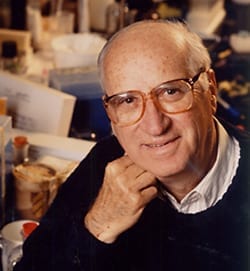
The Koshlands, whose son Daniel (1920 – 2007) was to become a president of Levi Strauss & Co., commissioned an architect named Frank S. Van Tree to design a replica of the Petit Trianon after having admired it whilst on holiday in France. The front of the building, facing onto Washington Street, is considered such a faithful representation of the neoclassical building the Koshlands copied and as a result the house is now designated a San Francisco Designated Landmark.
Daniel E. Koshland, Jr.
Some 20,000 square foot in size and set on a 2/3rd acre plot, the completion of this sandstone faced “single family residence” was celebrated by the Koshland family with a Marie Antoinette themed ball in 1904. The invitations to this legendary event were purchased and printed in Paris and hand delivered to the guests.
The Koshland Mansion survived San Francisco’s 1906 earthquake with only a little damage to the front elevation
The 1906 San Francisco earthquake, just two years after they’d completed the building, somewhat interrupted the Koshlands hectic party schedule at 3800 Washington Street. Though the disaster caused the front columns and roof balustrade to collapse, the couple generously opened the otherwise undamaged property to some 60 to 80 displaced family and friends. With no mains water, the guests had to fetch water from Fort Mason but they were no doubt happy to have had somewhere to take refuge.
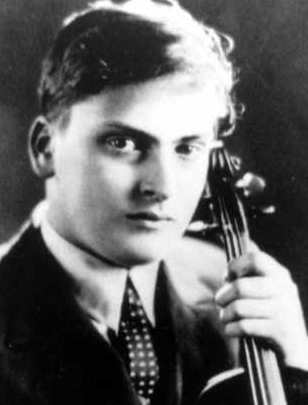
During subsequent renovations, as well as restoring the façade, a 5-car garage was added in 1909 and a greenhouse and extension in 1912. In the ensuing years, until her death in 1953, Corrine Koshland, better known as Cora, opened up 3800 Washington Street as a venue for concerts. A founder of the San Francisco Symphony Association and one of the first directors of the San Francisco Opera Company, Koshland invited music critics to review the performances and gave both Yehudi Menuhin and Isaac Stern their musical debuts at the house as child prodigies. Amongst the other big names to play in the masnion were Igor Stravinsky, Jascha Heifitz and Leonard Bernstein.
Sir Yehudi Menuhin KBE (1916 – 1999) pictured in his youth
In 1953, the Koshland Mansion was sold for $100,000 by the estate of Cora Koshland. The purchaser was Walter E. Buck (1884 – 1966), president of the American Distilling Company. Buck and his wife Emily, who were well known for “Gatsby-esque parties” at their 1,300 acre estate, Woodside, redecorated 3800 Washington Street by “painting the mahogany library white, removing the dark green, gold-tooled leather from the dining room and developing small card rooms in the basement.” It seems likely that the era of parties at 3800 Washington Street continued during their occupancy.
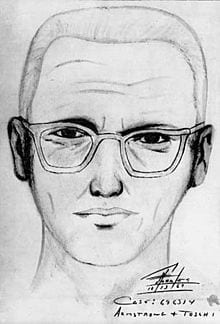
On 11th October 1969, a murder occurred on the block where 3800 Washington Street stands when the Zodiac Killer, a to this day unidentified serial killer who operated in Northern California in the 1960s and 1970s, shot and killed a cab driver named Paul Stine. Stine had collected his passenger one block west of Union Square and had, as requested, driven him to the intersection of Washington and Maple Streets in Presidio Heights. Once there, the cab driver was shot once in the head with a 9mm before the killer, observed by three teenagers across the street, took his wallet and car keys. The Zodiac Killer tore off a section of Stine’s bloodstained shirt, wiped the cab clean and walked off into the night before the police could arrive.
A sketch of the Zodiac Killer
Subsequently, on the 14th October 1969, the San Francisco Chronicle were mailed a swatch of Stine’s shirt to prove he was the killer and then on 9th November 1969, a 7-page letter followed. Excerpts from it were published from it in the newspaper on 12th November which revealed that a police officer, Don Fouke, who had responded to the teenager’s call, had actually encountered the killer for 5 to 10 seconds on a stairway of a house close to the murder scene. Fouke had been told to look for a black suspect and on seeing a white man going into the yard of a house, had discounted the individual and drove on. The Zodiac Killer, in his letter, detailed the encounter but claimed that two policemen had actually spoken with him 3-minutes after he’d shot Stine.
In 1975, a neighbour, Paul Renne purchased 3800 Washington Street for $675,000, supposedly to prevent it being acquired by property developers, but having been used as the 1982 San Francisco Decorator Showcase house, it was placed on the market and sold to a gallery owner named Heidi Betz and her business partner, an art collector named Charles Pankow. They paid $1.5 million for the house but failed in their bid to turn it into an art gallery due to objections from neighbouring residents.
Halsey Minor
In the two decades that followed 3800 Washington Street was sold several more times but finally it’s glory days looked set to return in 2007 when it was purchased by an “internet titan” named Halsey Minor and his second wife, Shannon. Having paid approximately $22 million for what essentially was going to be a very expensive renovation project, Minor supposedly assigned a further $15 million towards renovations and hired Michelle Obama’s favourite designer, Michael S. Smith, to oversee the project.
Minor founded CNET, a tech media website that published news, articles, blogs and podcasts on technology and consumer electronics, in 1992 after leaving Merrill Lynch and built it into one of the first internet companies to achieve profitability. CNET was sold for $1.8 billion in 2008 and is now CBS Interactive. Another of the companies he co-founded in 2000, salesforce.com, was “one of the most successful companies of the decade” and achieved a market capitalisation of in excess of $15 billion.
Having made a small fortune from his dot-com success, Minor diversified into investments that brought with them a lifestyle that would later be described as “a multi-millionaire who lived life as a billionaire.” In 2007, he began construction of a hotel in his hometown of Charlottesville, Virginia and announced this would be part of a series he’d open as part of the Minor Family Hotel group he planned. The hotel has never been completed.
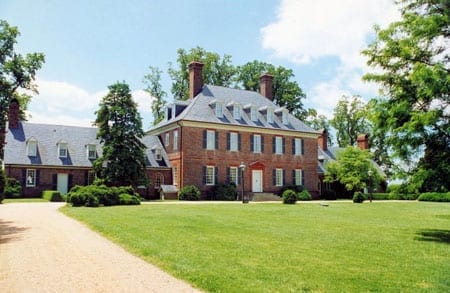
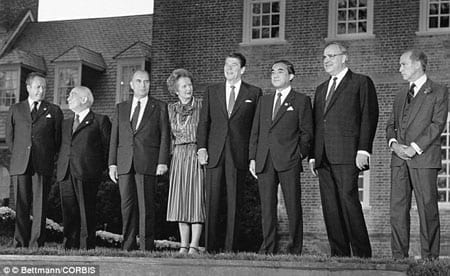
Carter’s Grove, 8797 Pocahontas Trail, Colonial Williamsburg, Virginia, VA 23187: considered to be one of America’s finest and most historic residences. It was bought by Halsey Minor in 2007 and has fallen into significant decline in the years since.The 1983 Group of Seven (G7) meeting at Carter’s Grove. Pictured outside the house are: Pierre Trudeau, Prime Minister, Canada; François Mitterrand, President, France; Helmut Kohl, Chancellor, West Germany; Amintore Fanfani, Prime Minister, Italy; Yasuhiro Nakasone, Prime Minister, Japan; Margaret Thatcher, Prime Minister, United Kingdom; Ronald Reagan, President, United States of America and Gaston Thorn, President, European Commission
In the same year, he also bought the Koshland Mansion and purchased 400 acres of land and a residence on the James River, the Carter’s Grove Plantation, for $15.3 million. Here, he planned a centre for thoroughbred horse breeding and at around the same time he attempted to buy both the Hialeah Park Race Track in Hialeah, Florida and the Pimlico Track in Baltimore. Both bids failed.
Minor’s investments were not just limited to property and the equine sector. In 2006, he placed a $3 million deposit on a $59 million Gulfstream G650 and at Sotheby’s in 2008, he was the winning bidder on a painting by Edward Hicks, The Peaceable Kingdom, at a hammer price of $9.6 million and also bought paintings by Andy Warhol and Childe Hassam.
Around this point, however, this dot-com tycoon’s fortune began to unravel when Merrill Lynch called in a $25 million loan and various legal suits connected to his art collection, investments and properties commenced. Several of his homes were repossessed and at a court hearing in August 2011, he claimed to have just $112,643 in cash and owned no publicly traded securities. Minor claimed to be majorly broke but the declaration did not cover illiquid assets such as art, real estate and shares in non-public companies. To this day, Minor remains listed in first place on the State of California’s Franchise Tax Board’s top 500 delinquent taxpayers owing some $10,455,580.69.
In response to his supposed progression from riches to rags, Minor wrote an article for The Huffington Post in July 2012 entitled “Why I Fight”:
“I often wonder what Thomas Jefferson would think of today’s America, a nation that is rapidly but silently abandoning the individual in favour of faceless corporations, rapacious banks and a collusive, unresponsive government… The simple answer is that someone must [fight] or we will emerge from this recession with wealth and power concentrated in a few tiny financial institutions representing a new ruling elite, not unlike the one that inspired Thomas Jefferson’s generation to revolution.”
Somehow, in spite of his changed circumstances, Minor has managed to hold on to 3800 Washington Street. Though, during his tenure, the house has fallen into decline and is now half covered in ivy, it is still one of San Francisco’s finest properties and it is still situated in one of the city’s best neighbourhoods. It is still an asset of considerable value and Minor’s decision to sell may well help him rake back some of what he has lost.
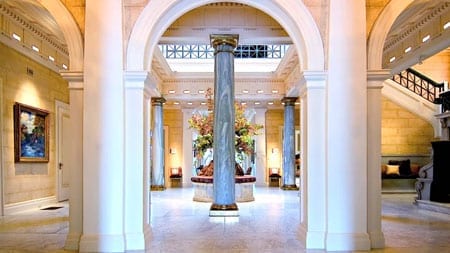
The hallway at 3800 Washington StreetA drawing room at 3800 Washington StreetOne of the property’s dining roomsThe opulent ballroom at 3800 Washington Street
Steven Mavromihalis of Pacific Union International launched 3800 Washington Street onto the market in May 2012 for $25,000,000. This move came just after two Abandoned Building Notices had been issued on the property by the City and County of San Francisco Department of Building Inspection. On offer is the 18,000 square foot main house at 3800 Washington Street, a 2,600 square foot 3-bedroom house at 3810 Washington Street and a vacant lot at 125 Maple Street. Though the agents don’t give much more in the way of details, they do refer to the house having a double marble Palladian staircase, 22 rooms, a “spectacular ballroom,” 8 bedrooms, 7 bathrooms, 9 fireplaces, 3 kitchens, an elevator and three original stained glass windows by the San Francisco poet, writer sculptor and artist Bruce Porter (1865 – 1964).
According to the agents, 3800 Washington Street is second only to Danielle Steele’s 55-room residence, The Spreckels Mansion, at 2080 Washington Street in the rankings of the largest homes in San Francisco. This is most certainly a mansion with a fair few tales to tell but whoever buys it will need both Steele’s wealth and imagination to get it back into good order. Dot-com tycoons and serial killers need not apply.
All enquiries about 3800 Washington Street, Presidio Heights, San Francisco, California, CA 94118 should be directed to Steven Mavromihalis of Pacific Union International on +1 (415) 345 3030 or email him at: [email protected].
More details are available at: http://www.pacunion.com/homes/CA/San_Francisco/94118/3800__Washington_St/AGT-107397278-685992/ whilst a video tour of the property can be viewed at: http://vimeo.com/42775765
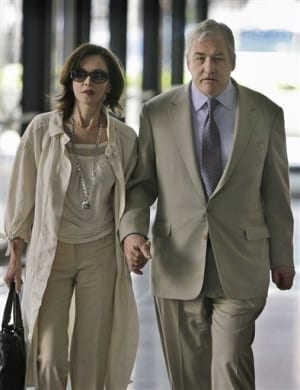
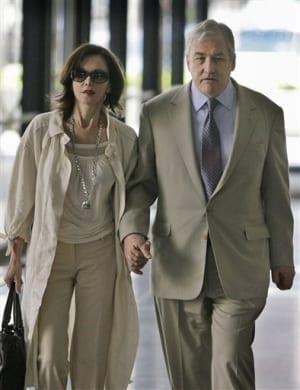
She’s a British-Canadian journalist most famous for having an “extravagance that knows no bounds.” He was a media baron who denounced his Canadian citizenship to become a British peer. Life began to unravel in 2005 when he was charged and subsequently convicted on various charges of defrauding Hollinger, the company he led. “Citizen Black” got out of jail a year early and now he and his feisty Manolo wearing sidekick are back on the rampage. Watch out.