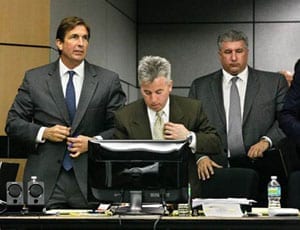
Rather like the twisters that often hit the coast of Florida, the story of the case of the polo mogul and multimillionaire Goodman stereo manufacturing heir John Goodman has again taken another turn.
On Friday, it was revealed that a juror in the case that had resulted in Goodman’s conviction had lied about his ex-wife’s own DUI during jury selection. As a result, a retrial has now been granted.
As the BBC announce an investigation into the activities of Stuart Hall, he transfers his marital home solely into the name of his wife and his son states that his OBE should not be revoked
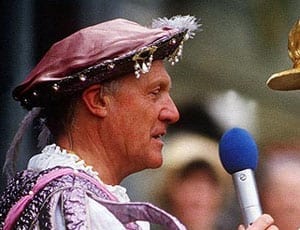
You’d have thought that after Stuart Hall OBE’s barrister said “sorry for what he has done” last week, the convicted paedophile would now be trying to do his best to show some remorse. Sadly Mr Hall is now doing just the opposite.
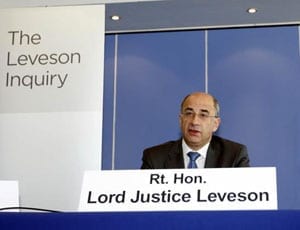
The conviction of Stuart Hall and the case of Rolf Harris illustrate the damage that Leveson has done to the free press
The British press, until the onset of the phone hacking scandal, was generally celebrated for being free, inquisitive and in the main decent. Yes, indeed, there were bad apples but it truly did its job well and in a perfectly accountable manner. Since Leveson, however, free reporting has been thrown out of the window and individuals facing exposure are using him as a protective smokescreen.
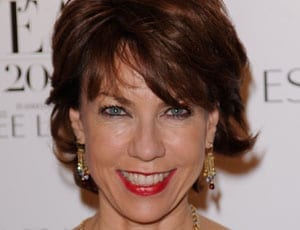
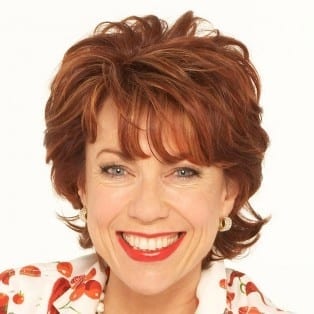
The Steeple Times asks author Kathy Lette: “What’s on your mantelpiece?”
The Steeple Times shares “wit and wisdom”. What’s your guiding force?
I only write because it’s cheaper than therapy. Therapy and revenge. You can always impale an enemy on the end of your pen. Poetic justice is the only true justice in the world, and I say that married to a lawyer!
“Don’t get even, get medieval” is, in our humble opinion, a great motto. What’s yours?
Firstly: “Don’t wait to be rescued by a Knight in Shining Armani”. Secondly: “A woman must stand on her own two stilettos”. Oh, and thirdly: “Your female friends are your human wonder bras – uplifting, supportive and making each other look bigger and better”.
Kerry Katona was considered unacceptable in 2007. Who or what is unacceptable in 2013?
I would like to say misogyny is unacceptable in 2013, but as women still don’t have equal pay – we only get 80 pence in the pound, plus we’re constantly getting concussion hitting our heads on the glass ceiling, while also being expected to Windex it whilst up there, any woman who call herself a ‘post feminist’ has kept her wonder bra and burnt her brains.
Tony Blair misses being Prime Minister. What do you miss most in your life?
I miss smooth, youthful skin with no sun-damage or wrinkles. Ageing to women is like kryptonite to superman. Show me a woman who is happy with her age and I’ll show you the electro-convulsive therapy scorch marks. The trouble is, women suffer from facial prejudice – we get judged on our looks in a way that men don’t. For women, wordplay is foreplay. How else is Woody Allen still getting laid? But don’t resort to cosmetic surgery – a woman should never pick her nose, especially from a catalogue. Dimmer switch – greatest beauty aid known to womankind!
What might you swap all your wealth for?
The best things in life really are free – walking, talking, laughter, air and orgasms. Which is just as well as authors don’t make a lot of money. We’re in a constant state of debt-lag. I don’t understand finance. I thought ‘stag flation’ meant stalking something elk-like in the Scottish highlands with minor royalty.
Donald Trump was once a case of: “If you owe the bank a thousand, they close you down; but if you owe the bank a billion, you own the bank”. What’s your view on the banking crisis?
It seems that the only banks we can count on, post crash, are sperm banks. Write a cheque these days and the whole bank bounces. And yet bankers receive bonuses for this? It’s mind-boggling.
What phrase or word do you most loathe?
“It’s not the done thing” because once I do it, its done – so then it’s the “done thing”. I adore my British pals, but they do have Eyore-itis and a sense of impending failure. But optimism is not an eye disease. If you try something new, it might just work.
In the UK, some people consider charity to “begin at home”. What’s your view and what causes do you personally support?
What I really like about the British is that you give generously to charitable causes and developing countries. You don’t believe in the skimmed milk of human kindness. As I have a child on the autistic spectrum (I adore him and he’s without doubt, the most original and interesting person I’ve ever met and the inspiration for my latest novel The Boy Who Fell To Earth, about the mother of an autistic boy and her quirky quest for love), I am an ambassador for the National Autistic Society. As I’m also a feminist, I am an ambassador for Plan, The White Ribbon Alliance and Women and Children First – three charitable organizations devoted to making sure that women are not runners up in the human race.
The judge in Law Abiding Citizen states: “I can pretty much do whatever I want” before being blown up whilst answering her mobile phone. What’s your view on the appropriate use of such devices?
I have no idea what this question means. If you’re talking about mobile phone usage, I love my phone. I’m not on the Atkins Diet, but the Talkins diet – I just talk the weight off.
Author Kathy Lette
If you could fill a carriage on The Orient Express, who would be your fellow passengers?
As I adore wit and wordplay, I would have Mae West and Dorothy Parker – two women who have black belts in the art of tongue-fu. Plus Oscar Wilde, Spike Milligan, Douglas Adams and Shakespeare – all excellent cunning linguists. And of course, Emily Pankhurst and Simone de Beauvoir and other heroines of the women’s movement because without them, where would the rest of us be? Our talents would still be lying doormat, sorry dormant for decades as men walked all over us.
If you were unfortunate enough to end up on death row, what would be your last meal and where would you eat it?
My last meal would be a toy boy on a bed of meringue, eaten in a suite at the Savoy Hotel – ah, parting would be such suite sorrow. I was writer in residence there in 2004.
What time is it acceptable to consume the first drink of the day?
Children’s bath time – a stiff G and T is mother’s little helper. This habit continues well into their teens. Advice for any mothers of teenage daughters – next time your daughter hits you and kicks you and says “I wish you’d just die!” take a big drag on your cigarette and a big gulp of wine and say “I’m doing my best darling”. No mother can remain an aqua-holic.
A Negroni, a martini or a cup of tea?
Champagne – the least calorific drink and so effervescent. Otherwise a martini. But they make me tipsy so fast I get severe bottle fatigue.
Whose parties do you enjoy the most and why?
I’m a socialist and a socialite, so my favourite parties combine a little of both – passion and politics, frivolity and fervor, flirtation and fierce debate. I’m leaving money in my will for the most chandelier-swinging send off ever. Plus I’ve thought of my epitaph – “Finally, a good plot”.
Who is the most positive person you know?
Eve Ensler who works with rape victims in the Congo and manages to restore their faith in life and humanity. She also organized One Billion Rising campaign, to stop violence againt women – one in three women on the planet will be raped or beaten in her lifetime.
What’s your most guilty pleasure?
Ah, you see, I don’t think pleasure should be guilty. Guilt – the gift that just keeps on giving! Guilt, or rather gilt should only be on rings. If you’re asking me what I like to do in sneaky moments – bubblebaths, when I should be doing housework. It’s scientifically proven that no woman ever shot her husband while she was having a soak and he was vacuuming.
If a tattoo were to sum you up, what would it be of?
My tattoo would say: “This is why I’m such a good lay. If the sex gets boring, at least I’ve given you something to read”.
If you were a car, what marque would you be?
Once again, I have no idea what this question means. The only thing I know about cars is that men thinks “sex drive” means doing it in the back seat of one – possibly because of that sign on the rear vision mirror which reads: “Objects in this mirror may appear larger than they are.”
Cilla Black presented Surprise, Surprise. Tell us the most surprising thing about you.
Even though I pretend that the only thing I run up are bills, I am actually very fit. I run, jog, swim or cycle every day.
What’s on your mantelpiece?
Well, I’d like to say “My Nobel Prize for Literature” presented to me by George Clooney who then whisked me off to tropical isle to lick the roe of virgin sturgeon from my navel – but actually it’s all the little finger-paintings my kids did when they were young, which are haphazardly but endearingly framed.
Kathy Lette is an Australian born author who lives in London. Her novels have been published in seventeen languages around the world and her first, Puberty Blues, was made into both a film and a television miniseries. She cites her career highlights as once teaching Stephen Fry a word, Salman Rushdie, the limbo and scripting Julian Assange’s cameo in the 500th episode of The Simpsons. Lette’s latest novel The Boy Who Fell to Earth has just been published in paperback by Black Swan.
The story of “fallen tycoon” Brian O’Donnell, the differences between bankruptcy in the UK and Ireland and an £11 million mansion
In these straightened times, the media in general and the Daily Mail in particular quickly latch on to stories about benefit scroungers living in luxury homes. They’re less quick, however, with the exception of the case of Grant Bovey (“Mr Anthea Turner”), to make reference to stories of bankrupt individuals remaining in multi-million pound mansions.
Brian O’Donnell with his wife Dr Mary “Pat” Patricia O’Donnell
A most newsworthy example, though, has to be that of Irish property investor Brian O’Donnell and his psychiatrist wife Dr Mary Patricia “Pat” O’Donnell. Mr O’Donnell, who bought the Sanctuary Buildings in London for £170 million and paid $172.5 million for a 199,000 square foot property on Pennsylvania Avenue in Washington in 2008, started his career as a solicitor and eventually founded his own firm, Brian O’Donnell & Partners, in 1999. In time, he and his wife diversified into property investment and at the height of his success, Mr O’Donnell was described as “the Celtic Tiger poster child”. With the recession, however, came problems and by 2011, they owed Morgan Stanley €457 million, Aareal €235 million, and the Bank of Ireland circa €75 million.
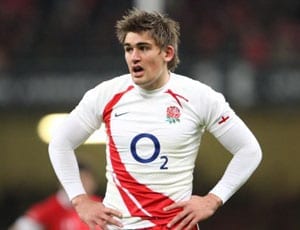
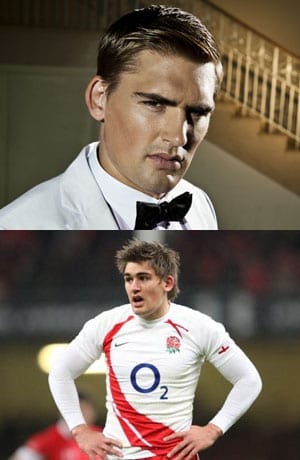
This level-headed “reluctant star” of English rugby grew up in Northumberland and describes himself as a “horse whisperer, ventriloquist, ladies swimwear model and soft play enthusiast” to his 50,000 followers on Twitter. He enjoys gardening, fishing and walking his black Labrador and eventually intends to become a lawyer. Whilst both of his grandfathers were actors, he has become an ambassador and model for the Eden Park fashion brand, official suppliers of formalwear to the RFU. His view on fame is simple: “I don’t want to be a celebrity or be on the front pages of the papers. I don’t want to be recognised. I just want to play rugby to the best of my ability and lead my own life away from the job”. His fans are rightly united in calling him a “great bloke”.
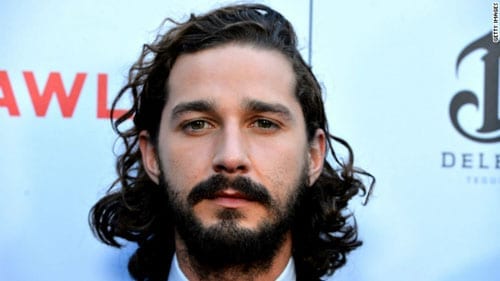
This Californian became a child star to help solve the financial woes of his family. He excelled in Wall Street: Money Never Sleeps and received a $15 million cheque for Transformers: Dark of the Moon. Aside from acting, he’s been in relationships with Carey Mulligan, Isabel Lucas and Megan Fox but it is bar brawls that seem to form a staple of his existence. LaBeouf was questioned by the Los Angeles Police Department after one at the Mad Bull’s Tavern in February 2011, thrown out of another called the Cinema Public House in Vancouver in October 2011 and lost his hat during another at the Hobgoblin in London, SE14 in November 2012. We somehow doubt this wild child will be transforming into a reformed citizen any time soon but we’re also betting his career will rocket.
Matthew Steeples delves into the history of Albany, Piccadilly and discovers an affordable way of living there
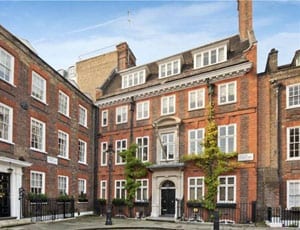
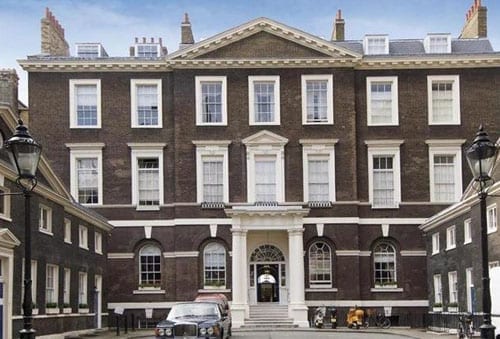
Albany, off Piccadilly in Mayfair, was most probably London’s first apartment block and it’s certainly the city’s most exclusive. It may be next to the Royal Academy and opposite Fortnum & Mason but surprisingly few have even heard of it.
Considering its location, Albany, which some make the mistake of referring to as “The Albany,” is an amazingly quiet oasis of peace and tranquility but, equally, it is a place of intrigue and drama. Residents, or “proprietors,” as they prefer to be known, of the 69 “sets” are particular about the “the” part of the name as they’d rather their residence not be confused with a public house and they are even more protective of their privacy. A porters’ lodge guards the entrance to the building and it is staffed mostly by ex-servicemen, who, until the early 2000s, had to wear top hats and tailcoats. Those allowed to pass enter a rarefied world frequented by what the Irish novelist Marmion Savage (1803 – 1872) identified as “incurable oddities” and “superannuated fops” in The Bachelor of Albany.
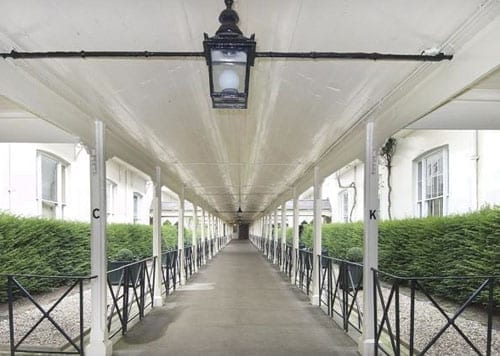
The front courtyard and façade of Albany, Piccadilly, Mayfair, London, W1J 0ALThe rope-walk connecting the various sets of Albany has been traversed by some of the greatest names in history
Built by Sir William Chambers (1723 – 1796), who also designed Somerset House and the pagoda at Kew, between 1770 and 1774 for 1st Viscount Melbourne (1745 – 1828), Albany was originally known as Melbourne House and conceived as a three-storey mansion, seven bays wide with a pair of service wings flanking a front courtyard. From 1791 to 1802, the property was occupied by George III’s son, Prince Frederick, Duke of York and Albany (1763 – 1827), but after he left, the renowned architect Henry Holland (1745 – 1806) sub-divided the existing house and added two parallel sets of buildings running the length of the garden to create 69 “bachelor apartments” which he named “sets.”
The “roll call” of residents since could easily fill our very own pages thrice over. They number royalty, politicians, artists, playwrights, academics and philosophers and here is a brief selection:
– Anthony Armstong-Jones, later 1st Earl of Snowdon
– Sir Thomas Beecham
– Sir Isaiah Berlin
– Lord Byron
– George Canning
– Sir Kenneth Clark
– Baroness Pauline de Rothschild
– William Ewart Gladstone
– Sir Edward Heath
– David Hicks
– Aldous Huxley
– Sir Simon Jenkins
– Rupert Lycett Green
– Malcolm Muggeridge
– Sir Harold Nicholson
– J. B. Priestley
– Sir Terence Rattigan
– Roger Scruton
– Baroness Sharples
– W. Somerset Maugham
– Terence Stamp
– Sir Denis and Lady Thatcher
– Sir Herbert Beerbohm Tree
Each had to pass the vetting of a committee of trustees of this Grade I listed building. That committee forbids children under 14, pets, musical instruments and commercial activities and each approved resident has undoubtedly added to the history of this den dominated by a central walkway named the “rope-walk.” Incidentally, an example of a curious quirk at Albany is that no resident is allowed to speak to another on this walkway. If they do, a fine is incurred. Albany, indeed, is rather like a college in its systems of rules, regulations, order and hierarchy.
For several centuries, women were not even allowed to cross the threshold and one legendary tale tells of Lady Caroline Lamb (1785 – 1828), disguised as a page boy, stealing into Lord Byron’s (1788 – 1824) set in 1815 to leave a note: “Remember me, Byron.” He replied with a simple verse:
Remember thee, aye, doubt it not:
Thy husband too shall think of thee.
By neither shalt thou be forgot —
Thou false to him, thou fiend to me.
The strict and formal structure that controls Albany and ensured its maintenance has succeeded in the main because 34 of the 69 sets are owned by Peterhouse College, Cambridge. They and the other owners are highly particular in whom they lease to and on one occasion on hearing of an “unsuitable tenant,” the secretary of the trustees is reported to have shouted:
“He’s a foreigner. Don’t like him. Don’t trust him.”
Needless to say, that application didn’t progress and nor did one from a physiotherapist who planned to operate from the building. Bone bashing in Albany just wouldn’t do.
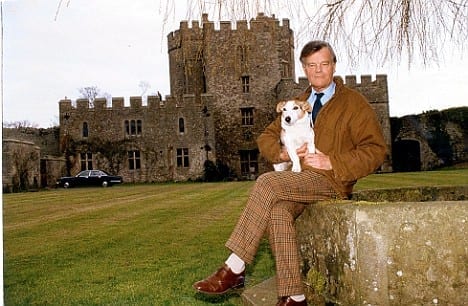
The Rt. Hon. Alan Clark MP (1928 – 1999) in the grounds of his main home, Saltwood Castle, near Hythe in Kent in 1993
A horsewhip, however, nearly crossed the threshold of set B5 in 1994, as it was here that the late Alan Clark MP (1928 – 1999) lived. The affable philanderer seduced the wife and both daughters of a certain South African named Judge Harkess and the wronged man stated he would “have horse-whipped Clark if he had known how comprehensively he had violated his honour.” B5, itself, was described as having the feel of “the straitened quarter of an Edwardian bachelor on his uppers” and the dotty, English attitude of the residents is best summed up by the reaction of Clark’s neighbour when he accidentally flooded their basement. When asked what he could do to make amends, their answer was quite simple: “Go and lie down in Piccadilly and wait for a double-decker bus.”
The dandy and journalist John Morgan (1959 – 2000) typified social change at Albany in the 20th century just as much as he himself redefined etiquette and manners at Debrett’s and The Times. Of “humble origins,” Morgan was brought up in a “modest” bungalow in St Madoes, Perth, Scotland but is credited with persuading William Hague to remove his baseball cap whilst Conservative leader and offering advice ranging from “how to eat a banana” to “how best to tell friends that the partner you would like to bring to their wedding will be of the same sex as you.”
Dandy and etiquette expert John Morgan (1959 – 2000)
For the bachelor and GQ style director, living in Albany was symbolic of his own personal social elevation but he did not disown his past. This modern day Beau Brummell was a man of social contradictions who cashed his cheques at Claridge’s but was a member of the National Union of Journalists. He was a Tory but still regularly attended chapel meetings as he had done in his youth. Here was a man of paradoxes who seemed unable to come to terms with the fact that he was a homosexual.
Morgan, an asthma sufferer, fell to his death from a fourth floor window on 9th July 2000. He was found in just a white shirt in a basement below a window whose sill was strangely undisturbed. The coroner left an open verdict with a suspicion of suicide and it was widely reported that police found 60 made-to-measure Savile row suits, 300 monogrammed shirts and 90 pairs of shoes in the etiquette expert’s small set. Mystery shrouds the story of his tragic demise to this day but Johnny Morgan will forever be remembered as an arbiter of both good taste and behaviour.
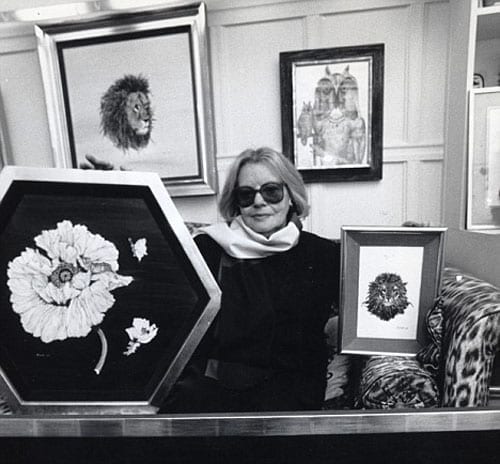
Whilst Morgan represented continuation of the trend of bachelors living in Albany, change also came in the 20th century when the building’s committee removed the restriction that allowed only bachelors to be resident. With that females were allowed in and amongst them Fleur Fenton Cowles (1908 – 2009) was one of the most fascinating.
Fleur Fenton Cowles (1908 – 2009) in her set at Albany with some of her paintings and one by Salvador Dali
This writer and artist occupied five sets knocked into one with her fourth husband, timber merchant Tom Montague Meyer, and according to the Daily Mail’s Geoffrey Levy, hosted “elite soirees of the powerful and famous.” Levy recounts them at length but here is a flavour:
“On a Wednesday evening, a typical dinner party… would include Foreign Secretary Selwyn Lloyd, Labour leader Hugh Gaitskell, entertainer Danny Kaye and film star Douglas Fairbanks Jr. The Queen Mother regularly came to tea and was once joined by Pavarotti who sang Happy Birthday for the royal guest. ‘I don’t want her to die,’ said Fleur. ‘I couldn’t bear to think she doesn’t live just down the street.’ ”
Fenton Cowles, founder of the ill-fated Flair magazine and a “woman who knew everyone,” loved Albany and an exact replica of her “windowless, milk-yellow” study there has even been recreated at the University of Texas.
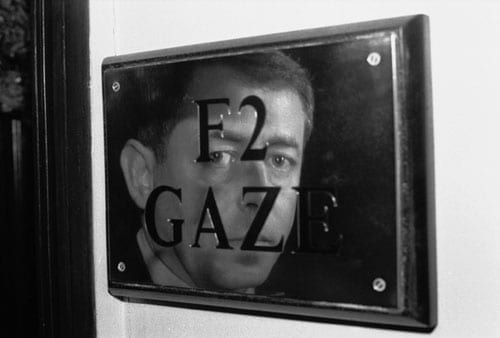
Another known for hosting extravagant bashes in Albany was my late friend, the Russian icon dealer John Gaze (1947 – 2011). Gaze had, as a boy, asked his father about the building when he passed it as a child and immediately declared he would live there one day. He took F2, the former set of Edward Heath that overlooked Savile Row to the rear, in the mid 1990s as he craved the safety that the building offered after having been kidnapped at gunpoint by an Oxford graduate conman named Sacheverell de Houghton in April 1991 from his then home in Fournier Street, E1. He made the most of his tenancy.
Russian icon dealer John Gaze (1947 – 2011) reflected in the brass plaque outside his Albany set, F2. It was formerly occupied by Sir Edward Heath.
Gaze’s parties included a fundraiser for people with AIDS hosted by a drag queen. This sparked fury with certain other residents and coverage in the Daily Telegraph and another incident there involved him encountering Alan Clark on the ropewalk carrying a portrait of Lenin. “Where the fuck are you taking that?” Clark supposedly bellowed but was “reassured” when he was told it was “destined for a less salubrious address in Whitechapel.” John Gaze remained at Albany for several years but, like a number of others I know, was forced out by ever rising rents and moved first to Chelsea and then Ennismore Gardens, Knightsbridge. He always remembered his time at Albany fondly and as a bon vivant, he truly belonged there.
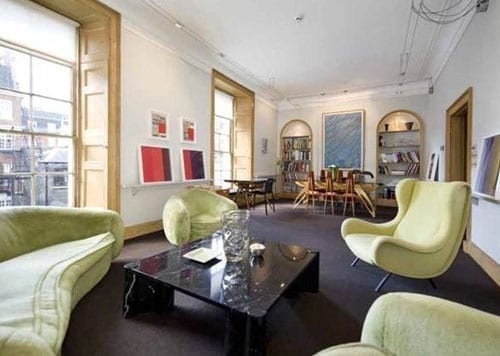
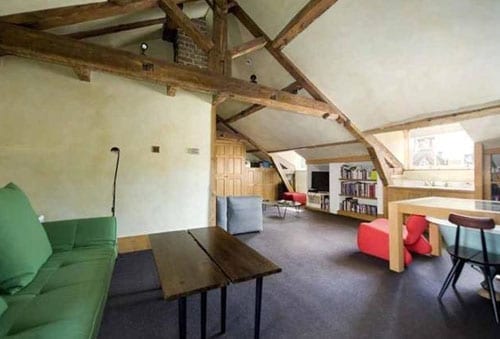
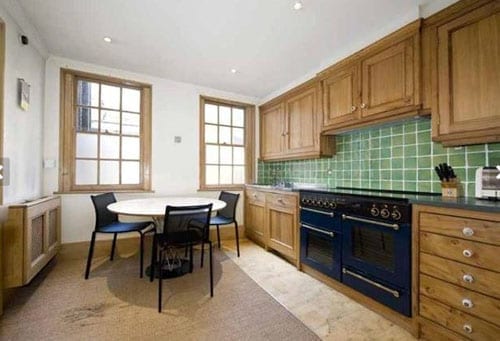
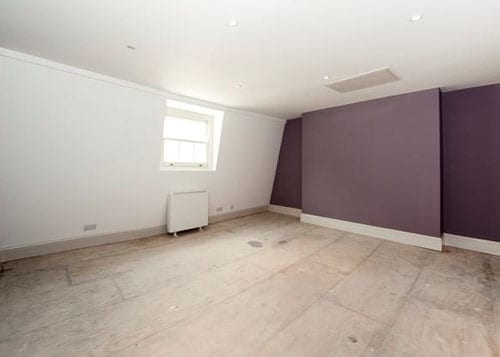
The main reception room in a £1,400 a week set currently available in AlbanyAn attic room in the set that could be used as a second reception room or second bedroomThe kitchen is lacking in character but offers ample space for informal dining
Contrary to what you’d expect, living in Albany is not quite as expensive as one might think. A 2-bedroomed 1,970 square foot set is currently available through Knight Frank for £1,400 a week: a figure that seems quite reasonable given the location, history and size of this property. Available on a minimum 8-year rental term, it includes a formal reception room, a dining kitchen, 2 bedrooms and 2 bathrooms.
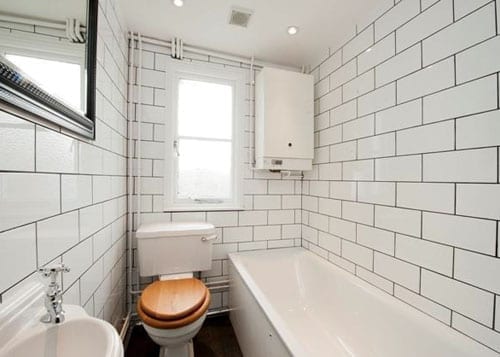
This £300 per week set, D2, consists of just one roomThe communal bathroom D2 shares with other sets is basic but clean
For those looking for something cheaper, Savills offer D2 Albany at £300 per week. This set consists of a 221 square foot third floor attic room with access to a communal bathroom and the agents suggest that it: “would make an ideal reading or writing room or an occasional bedroom for a pied-a-terre.” It’s effectively a posh form of tenement but what a way to impress your peers and subordinates.
Damon and Sandra de László in their “duplex” in Albany
Those renting either of these sets would find the likes of the industrialist Damon de László, a descendant of the Hungarian painter Philip Alexius de László (1869 – 1937), as their neighbour. The couple occupy Lord Byron’s former set, A2, and have, on occasions, opened it for a charity dinner with Matthew Parris at £1,000 a ticket as well and for members of The Portrait Institute to view their collection of de László’s works.
Professor Philip C. Bobbitt in his grand freehold set
Another present day resident is a man Henry Kissinger calls “the outstanding philosopher of our times,” Professor Philip C. Bobbitt. This Texan lawyer is a nephew of Lyndon B. Johnson and the author of Terror and Consent, which Tony Blair describes as “required reading for political leaders.” Bobbitt owns an impressive flying freehold set that is described as having a masculine style of décor and a “kitchen he has designed to look like a bar.” In an interview for TheIndependent he states that he finds Albany: “a propitious place to work.”
Though governments and bankers come and go, behind this quintessentially English façade, order and disorder have always been maintained. The wildcards of this hidden haven have a knack for living by the doctrine “to live at Albany is to live in history” and indeed they make the most of that. Those who are lucky enough to be let in, do, indeed, truly find themselves in the “Paradise of Piccadilly.”
The rise and fall of the “wealthiest divorcee in history” has been extraordinary. A former nude model for her first husband’s Knave magazine and star of adult films such as “The Nine Acres of Nakedness,” Patricia Kluge is the daughter of an Englishman and a Scots-Iraqi. She married her second husband, the late John Kluge, chairman of Metromedia and once the richest man in America, in 1981 after belly dancing for him at a dinner party in New York. As part of her plan to dovetail herself into the top drawer of American society, the couple built a 24,000 square foot mock 18th century English-style mansion, Albermarle, in Virginia and stuffed it full of Chippendale furniture. She got this as part of her $100 million divorce settlement in 1990 and wisely invested part of the payoff in a highly successful business trading football cards but then vanity struck. The Kluge Estate Winery project that she started with her third husband, William Moses, bankrupted the pair in June 2011 and the Bank of America foreclosed on her properties. A lifeline came from “longtime friend” Donald Trump who purchased the vineyard and employed her, but even he’s now uttered the words: “You’re fired!” and sent her packing. Of her newfound predicament Kluge commented: “What did we lose? Material things, nothing too important. When something like this happens you really see who your friends are, those you can rely on, and we have many friends.” Here is a lady with fortitude that can only be described as admirable. It’s probably best, however, to keep her away from the cash register.
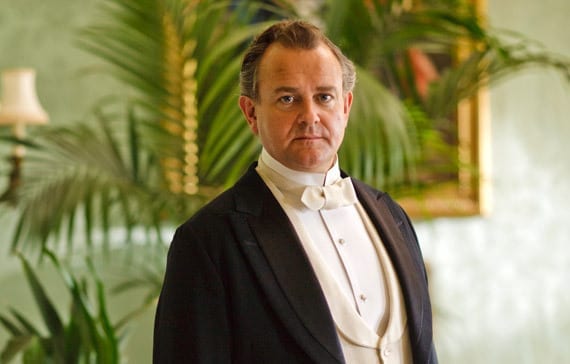
In his role as Downton Abbey’s Lord Grantham, this actor warned that “scandals” always have a habit of coming out. He graduated in Theology at Cambridge but, according to Adam Helliker of the Daily Express, Bonneville wasn’t especially keen to show Christian compassion towards Lord Archer at a party at The Cadogan Hotel when it was requested that the pair be photographed together.