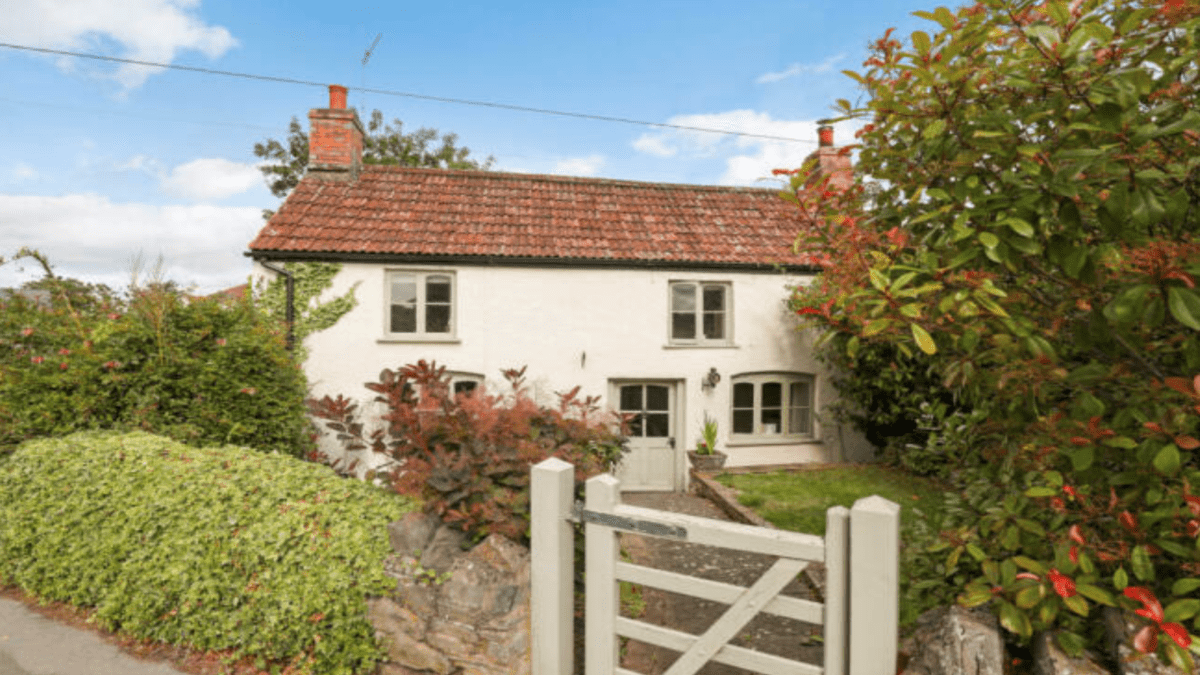
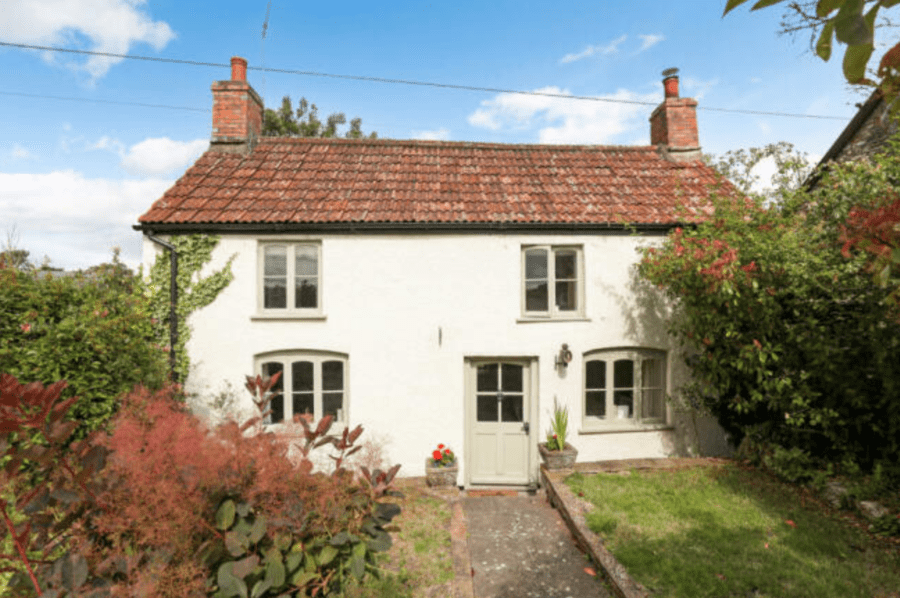
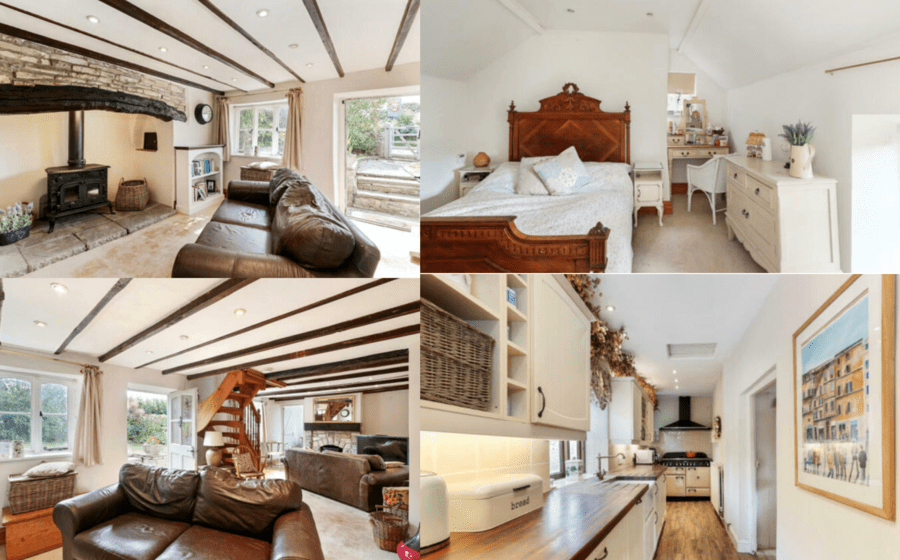
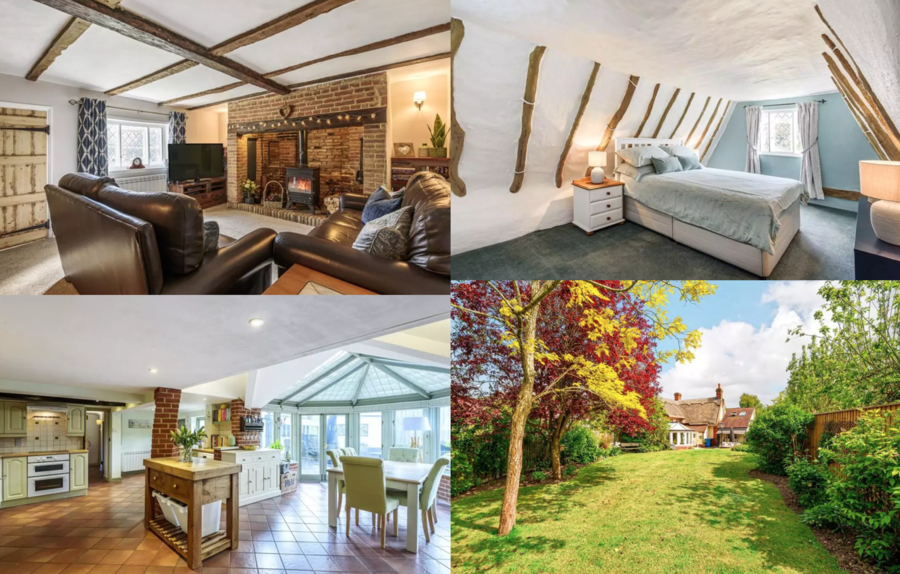
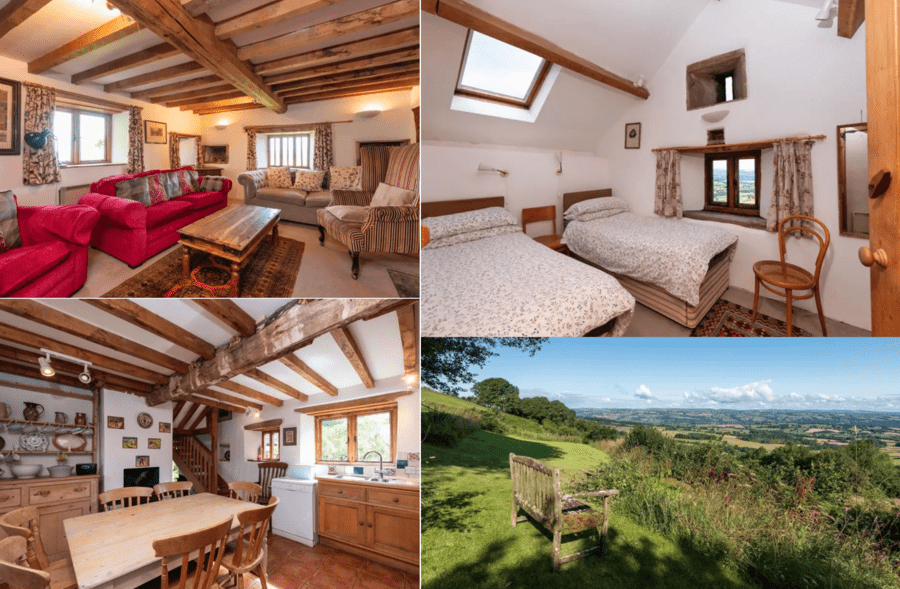
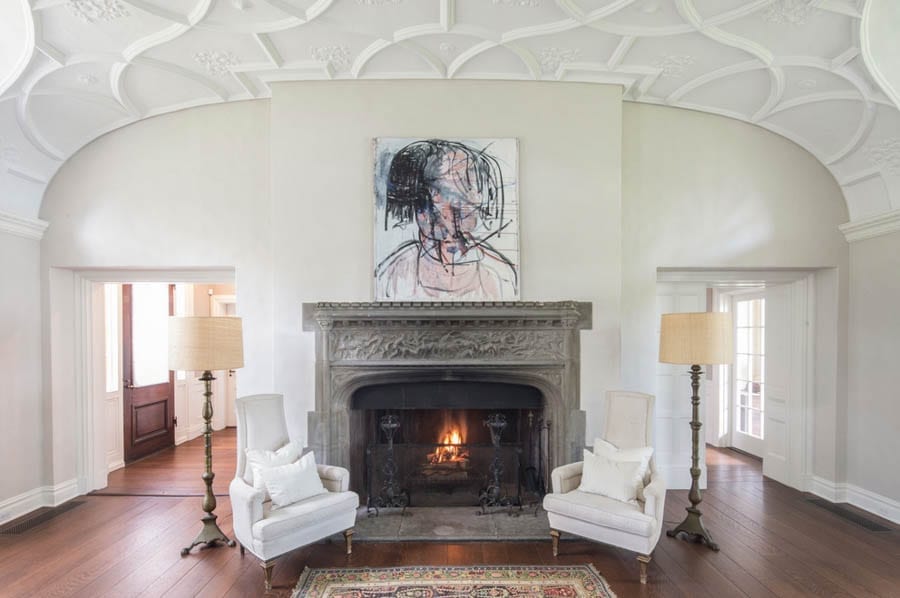
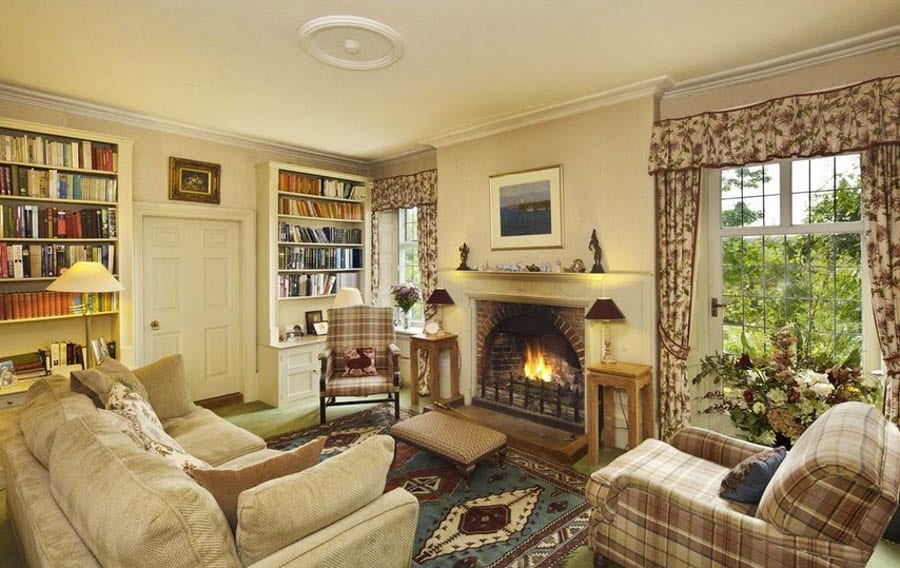
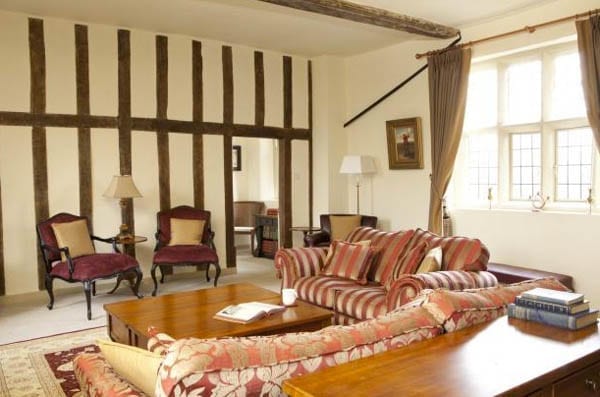
Compact yet cosy, the main attraction here is a 22-foot length sitting room with an inglenook fireplace and bread oven at one end and a natural stone fireplace at the other. It also includes a kitchen with a Rangemaster oven, a study and would make an ideal Airbnb given its proximity to Glastonbury and its annual festival.
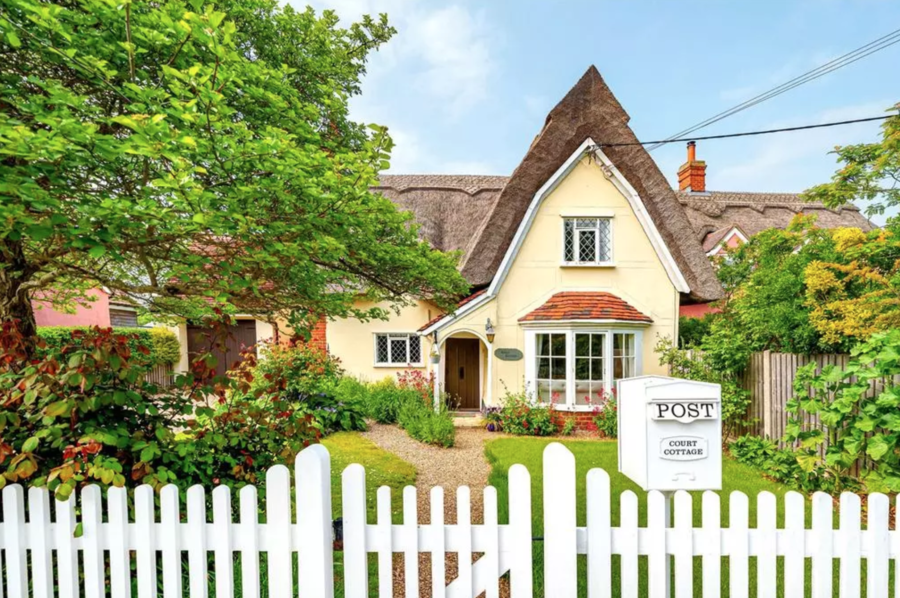
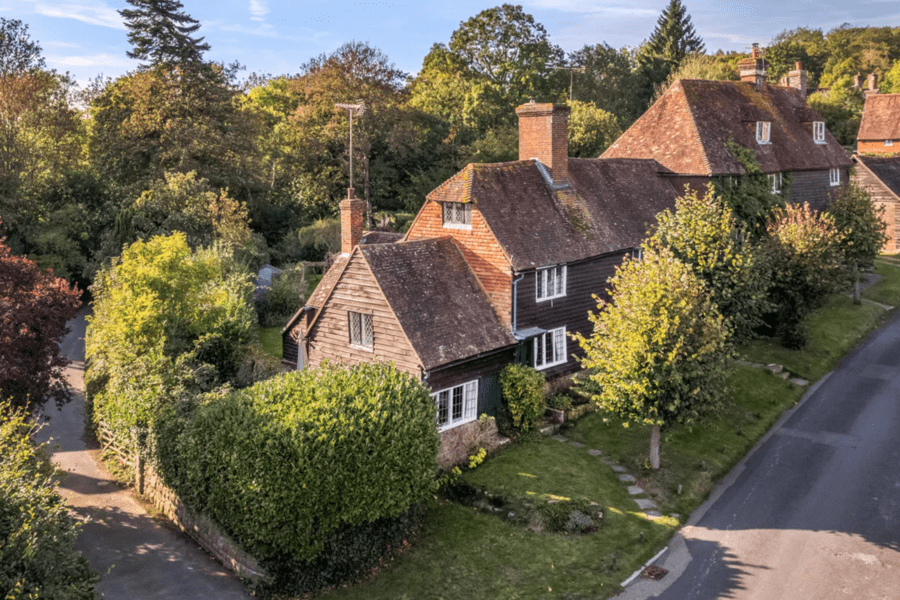
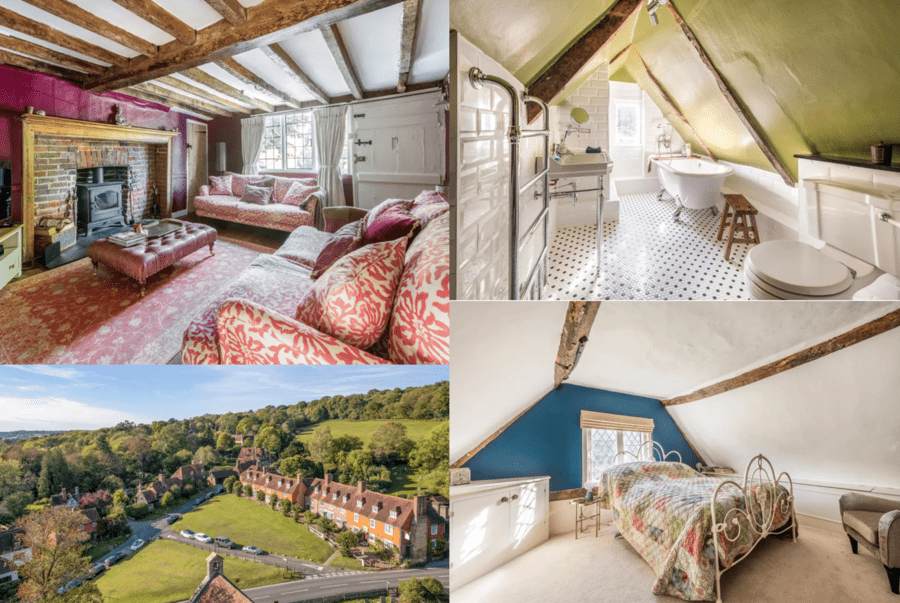
Another ‘chocolate box’ cottage comes in the form of Court Cottage – an 18th century detached property in a “highly regarded south Suffolk village” near Bury St Edmunds where one of Margaret Thatcher’s most trusted political advisers, David Hart, “lived-in-style” prior to his death in 2011.
Offered by Jackson-Stops, this 1,615 square foot thatched building includes 2 reception rooms, 3 bedrooms and 2 bathrooms. It also has a “fabulous” dining kitchen, a garage with a room above, an electric car charging point and a lawned garden.
Curiously, the property has a “flying freehold” since the neighbour’s bathroom overhangs the property’s ground floor utility room and a “creeping freehold” since its cellar lies beneath the adjoining property’s living area.
Llangain, Dorstone, Herefordshire –£695,000 ($873,300, €800,500 or درهم3.2 million)
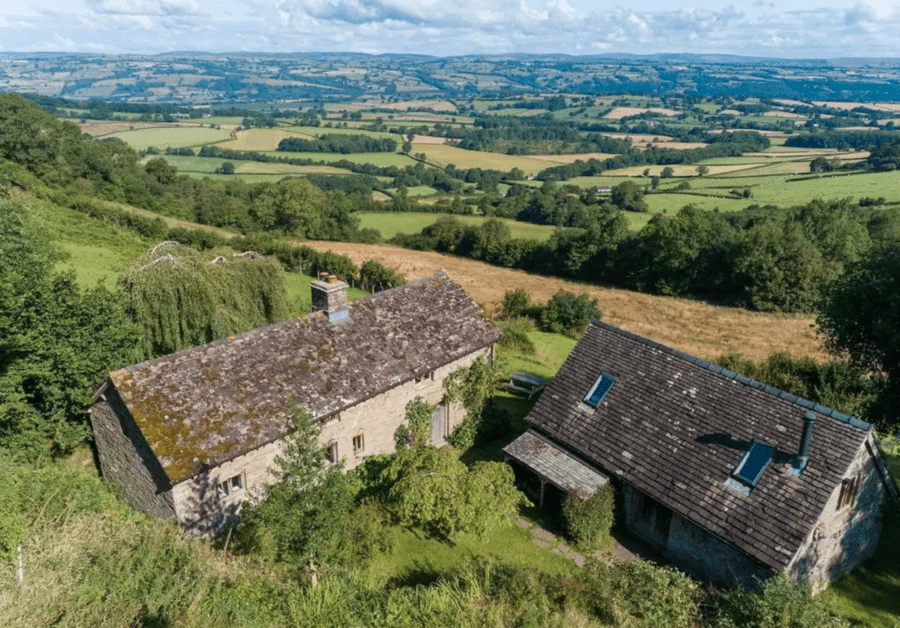
For the same sum, just 3.5 miles from the market town of Hay-on-Wye – famed as “the town of books” – this 18th century restored cottage on ½ acre is available freehold. It is situated close to the Golden Valley village of Dorstone – a settlement best known for its annual sloe gin competition where each year the winner is crowned the ‘Grand Master of the Sloes.’
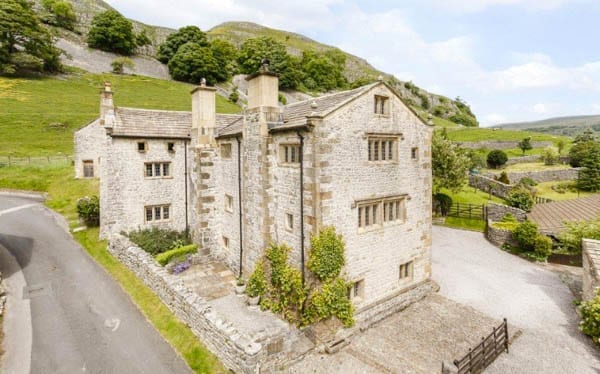
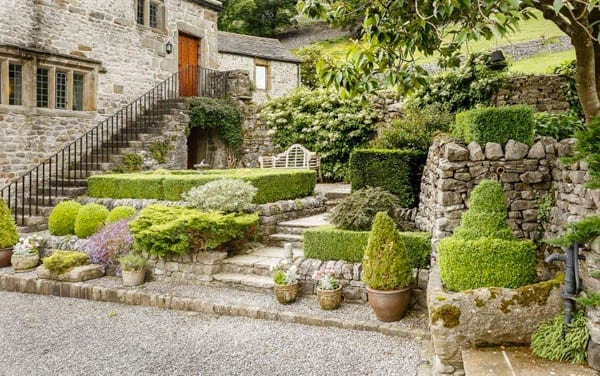
Llangain, a farmhouse that was derelict from the First World War until 1995, itself has 4 bedrooms and in addition there is a 1-bedroom barn conversion. Agents Knight Frank laud the property as being in a “picturesque setting” and having “amazing views.”
Willow Cottage, Bethersden, Kent – £1.75 million ($2.20 million, €2.01 million or درهم8.07 million)
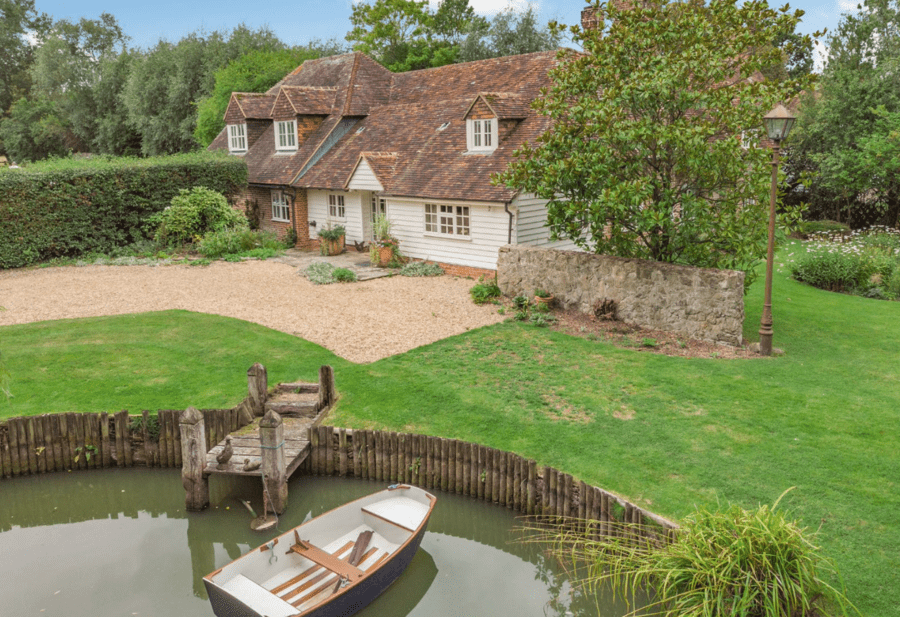
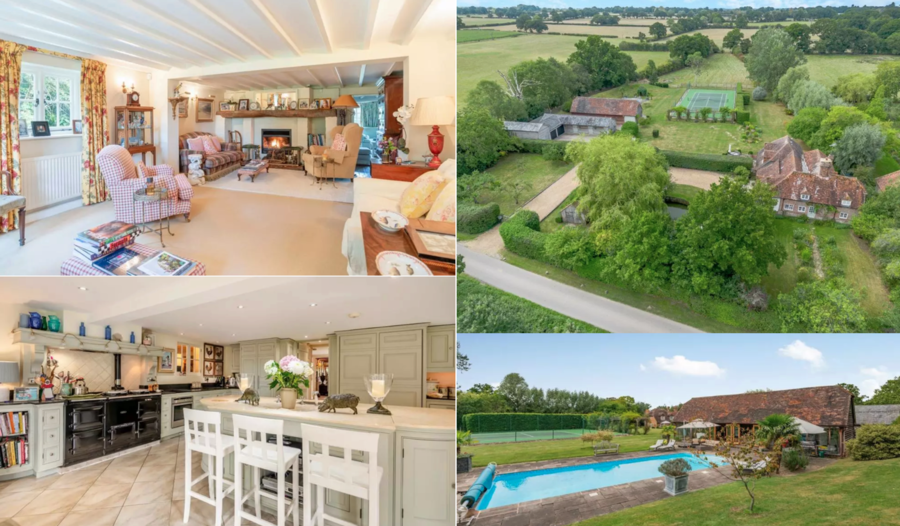
Situated in a village best known for producing rather ritzy rocking horses for everyone from the late Queen Elizabeth II to Sir Paul McCartney, Willow Cottage is being marketed by Strutt & Parker as having “evolved from the picturesque period cottage at its heart, and from which it derives its somewhat understated name” into an “elegant 4,800 square foot family house.”
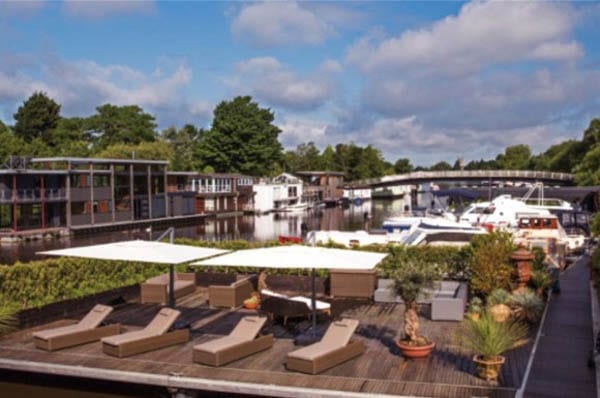
Situated on a plot of 16.5 acres and last sold for £400,000 in July 1998, this 5-bedroomed residence comes with a separate 2-bedroomed ‘guest barn’ and also has a tennis court, a swimming pool, stabling, garaging, gardens and paddocks. A “picturesque pond” currently provides opportunity for Wind in the Willows-esque Messing About in a Boat, as our main photograph suggests.
Crumbling Northamptonshire estate Lilford Hall – where the little owl was introduced to Britain – for sale for £10 million, a sum £35 million lower than in 2014
Grade I listed Jacobean mansion with 13 chimney stacks for sale for £10 million; it was for sale last for £44.9 million in 2014 in spite of being listed on English Heritage’s ‘At Risk Register.’
Lilford Hall – parts of which have not been occupied since 1947 –is currently owned by a businessman who tried to sell burial plots in the grounds for £1,250 a pop and shares in a yacht loosely associated with Frank Sinatra for £23 each.
The 321-acre estate includes not only overgrown parkland, but also a zoo with cages that formerly housed bears and a lake for flamingos.
From 1711 until 1990, Lilford House was the seat of the Powys family – the 4th baron is credited with introducing the little owl to the UK.
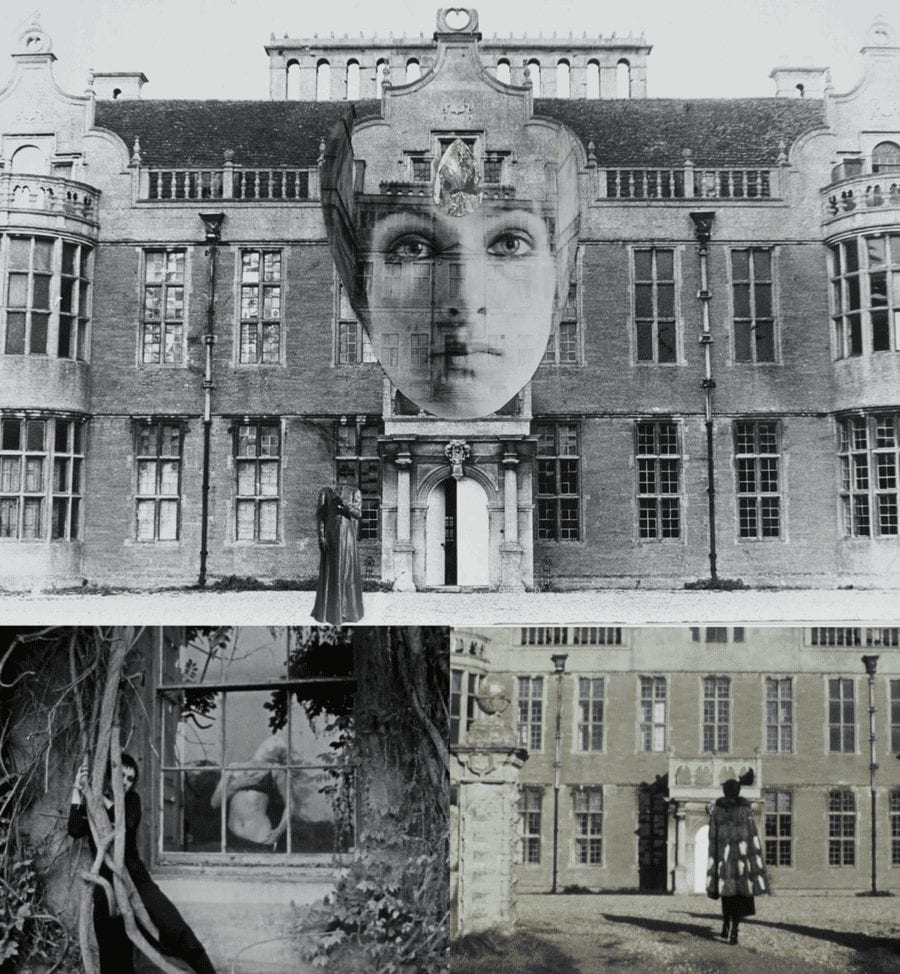
More recently, in 1969, the “sexual mystic” artist Penny Slinger used the at-the-time derelict mansion in one of her best-known works.
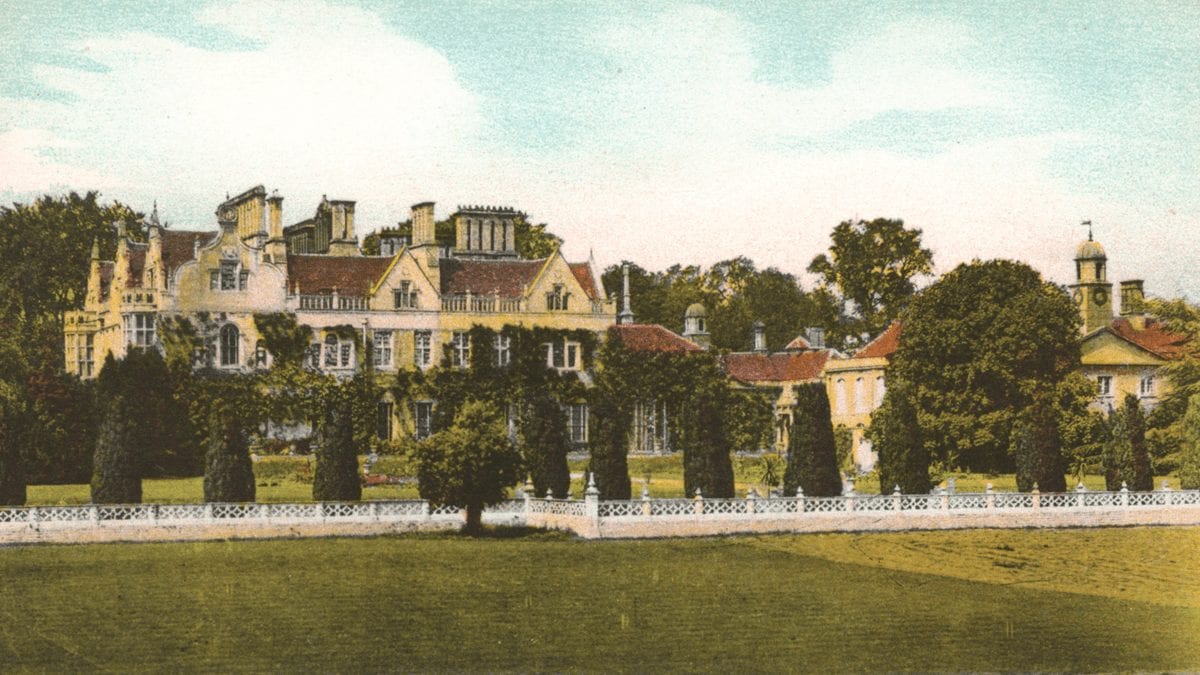
A 32,406 square foot Grade I listed Jacobean mansion 82 miles from Central London has gone on sale for £10 million – or the equivalent of just £308 per square foot.
On this basis, Lilford Hall – set in 321 acres near Oundle – seems a comparative bargain when considered against the £4,786 per square foot sought for a Lennox Gardens, Knightsbridge triplex flatThe Steeple Times featured in May, but buyers need to remember this – parts of this crumbling building, most notably the major state rooms, have not been used since 1947.
Marketed last in 2014 for the even more punchy sum of £45 million, the “exceptional residential and amenity estate located on the River Nene,” is now offered by agents Savills. The “wonderfully proportioned” U-shaped mansion itself is constructed of grey limestone and includes over 100 rooms and amongst them are 7 “impressive” reception rooms, a ballroom, a ‘great chamber’ and 9 bedrooms. In addition, there are two Georgian pavilions that were formerly coach houses and stabling, three cottages, a former zoo, the oldest private softball court in the world, a former flamingo enclosure and a deer park.
“Impressiveness in the chief attribute of Lilford Hall as a specimen of architecture” claimed County Life in 1990 and as the seat of the Powys family from 1711 until 1990, it became not only a Downton Abbey-esque entertaining pad, but also housed nurses in the Second World War. Here, indeed, is an English country house that has seen lavishness and decline and thankfully here is an example that thankfully escaped the wrecking ball wrought so disgracefully on such houses in the 1950s and 1960s.
Fascinatingly in the 1880s, Thomas Powys, 4th Baron Lilford filled his aviaries on the estate with rheas, kiwis, pink-headed ducks, free-flying lammergeiers and it was from here that he also introduced the little owl into the UK. There are said to be around 5,700 breeding pairs today, but sadly, according to the RSPB, their numbers are now in decline.
More recently, in 1969, “sexually erotic” performance artist Penny Slinger took over the by then “derelict” mansion in conjunction with the filmmaker Peter Whitehead. Their resulting work, titled An Exorcism, was exhibited internationally and in 2004, after the current owners, Charles and Aziza Micklewright, acquired the house, they did something equally avant-garde; they attempted to sell burial plots in the grounds to Americans by citing the estate’s connections to the founder of the Brownists, Robert Browne – a man better known as ‘The Father of the Pilgrims’ and ‘The Grandfather of the Nation’ (of the United States of America).
Whilst Mr and Mrs Micklewright were lauded for their considerable efforts towards the “huge task” of restoring Lilford Hall, they came to the attention of Historic England in May 2019 when the building was listed on the At Risk Register. At that time, the Oundle Chronicle reported: “The roof covering is in poor condition leading to water ingress and distress to the upper storeys. The front bays require structural attention. A schedule of urgent repairs has been identified but not implemented, and no long-term solution has been agreed.”
Now, someone with very, very deep pockets is required to restore this gem. It would be helpful if they liked erotic art, bears, squash and owls also.
The Names & Numbers – The Lilford Hall Estate, Lilford, Oundle, Peterborough, Northamptonshire, PE8 5SG, United Kingdom
June 2020 – The estate is listed sale for £10 million ($12.5 million, €11.1 million or درهم46 million) through Savills. It includes 321.31 acres, of which 148.17 acres are pasture land whilst 157.48 acres are woodland. The majority of the estate is held on a freehold title, whilst the remaining 127.6 acres – known as ‘The Linches’ and ‘Lilford Woods’ – are held on a lease with 91 years remaining.
2015 – Promoted as ‘The National Memorial Gardens,’ burial plots in the gardens of the hall were offered “available to any UK resident or national for an outstanding price of only £1,250 ($1,568, €1,393 or درهم5,758)” by Mark Bailey of Harley Investments. Around the same time, a website dedicated to Lilford Hall marketed “a piece of the formal gardens” for sale for £299 ($375, €333 or درهم1,377) to include “an officially certified ‘Squire of Lilford’ [title] … with this little piece of history.”
March 2014 – The Irish Times reported that the asking price for the estate had been increased to £44.9 million ($56.3 million, €50 million or 206.8درهم million). They claimed the agents Coldwell Banker blamed “confusion over currency conversion rates and new instructions from the owner.”
April 2014 – The Lilford Hall Estate is listed for sale through Coldwell Banker on MyHome.ie for £33.7 million ($44.2 million, €37.5 million or درهم155 million) on behalf of “an English gentleman.”
2004 – The estate is acquired by the Micklewright family. Little information is available online about the Old Framlingham Charles Micklewright (born July 1958), but he is described as a “patent attorney” on Companies Houses pages. The businessman is mentioned also as a publisher and trustee of the Marsh Christian Trust elsewhere, whilst his Singaporean born wife, Aziza (born 1964), was a director of Lilford Properties Limited from 2013 to 2018.
A website operated by Sign of the Times Limited, a Hong Kong company of Lilford Hall, Lilford, Oundle, Northamptonshire, PE8 5SG, currently offers shares in a yacht named ‘Sinatra the Voice’ for £23.91 ($29.99, €26.64 or درهم110.14) per share. The boat was built in 1956 and is tenuously linked to Frank Sinatra by the fact that a one-time owner, Beale Poste, loaned it occasionally to the crooner between 1968 and 1974 in West Palm Beach, Florida.
1990 – The estate is closed to the public.
1980s – The house is used as a location in the BBC English Civil War inspired historical drama series By the Sword Divided.
1970s – Aviaries on the estate restocked by George Powys, 7th Baron Lilford (1931 – 2005). He “opened [the estate] to the public as a leisure park” and housed more than 350 birds of 110 species there. It remained thus for around 20 years and included a restaurant and shop. The aviaries and the 1,896 square foot restaurant building remain present still today.
1969 – 1970 – American British “sexual mystic” artist Penny Slinger (born 1947) and Liverpudlian filmmaker Peter Whitehead used the “derelict mansion” as the setting for their works An Exorcism and Lilford Hall. They are lauded as a “photo romance” and exhibited at the Blum and Poe Gallery in Los Angeles in 2014, at the Haywood Gallery in London in 2015 and at the Fortnight Institute in New York in 2019.
1949 – Stephen Powys, 6th Baron Lilford (1869 – 1949) died without having married or having had children. His properties aside from Lilford – a house in Mayfair, Bank Hall in Lancashire and the Bewsey Estate in Cheshire – passed to his second cousin twice removed.
1947 – The estate is sold to a company named Merchant Ventures by the Powys family (though they remain present on the estate until 1990).
1939 – 1945 – During the Second World War, the parkland of the estate was used as a military hospital for nearby airfields. From 1949 to 1954, some of the buildings constructed during this period were then used as a Polish school.
1923 – First-class Northamptonshire cricketer Major John Powys, 5th Baron Lilford (1863 – 1945) built the first private softball court in the world in the grounds of the hall. It is now in disrepair and the roof has fallen into the inner court.
1909 – 1910 – The hall was extended in the Edwardian manner including the provision of a new master bedroom with dressing room and bathroom by William Dunn and Robert Watson of Dunn & Watson.
1901 – The estate surrounding the hall reaches its largest size and totals a vast 8,000 acres of land. Around this time, Queen Mary, wife of King George V, is said to have visited the gardens.
1880s – Ornithologist and expert on the fauna of the Balearics Thomas Littleton Powys, 4th Baron Lilford (1833 – 1896) introduces the little owl into England on the estate. His aviaries were said to “feature exotic birds from all around the world” and a species of European lizard, the Lilford’s wall lizard (Podarcis lilfordi), is named in his honour. The 4th baron is repeatedly mentioned in the works of Charles Darwin for his contribution to the study of the science of evolution.
1840s – Further changes to the building are orchestrated by the architect William Gilbee Habershon (circa 1818 – 1891). The Campaign to Protect Rural England described these Victorian extensions as “sensitive” in 2006 – a rare accolade given most additions to English country houses during this period were simply brash and vulgar.
1740s – The Palladian architect Henry Flitcroft (1697 – 1769) adds “outstanding” Georgian interiors whilst “respecting the hall’s Jacobean exterior.” He “softened and brightened” the building as a result and also “constructed the Georgian pavilions and additional storeys to the east end of the two wings.” Other works by Flitcroft can be seen at Bower House in Essex, Wentworth Woodhouse in Yorkshire and Woburn Abbey in Bedfordshire.
1711 – Lilford Hall is sold to the judge and Tory politician Sir Thomas Powys (1649 – 1719), Attorney General to King James II. Powys is best remembered for conducting the prosecution of the Seven Bishops in 1699. He is buried at Lilford.
1630s – Construction of the main exterior of what to this day remains Lilford Hall as a “Jacobean-style gentry house” by William Elmes (the younger).
1473 – The land that forms the estate is acquired by William Browne (1410 – 1489), a wealthy wool merchant and landowner from Stamford, from the estate of Baron Welles (who was beheaded by King Edward IV for treason). In 1495, “in a Tudor style,” he built a hall on the site and it passed to Robert Browne (1550 – 1633), the founder of the Brownists, ‘The Father of the Pilgrims’ and ‘The Grandfather of the Nation’ (of the United States of America).
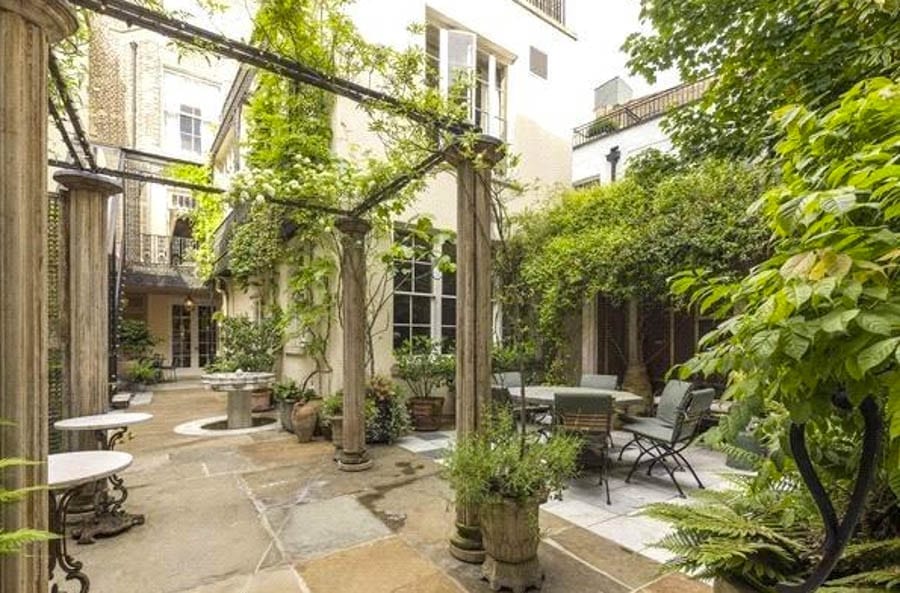
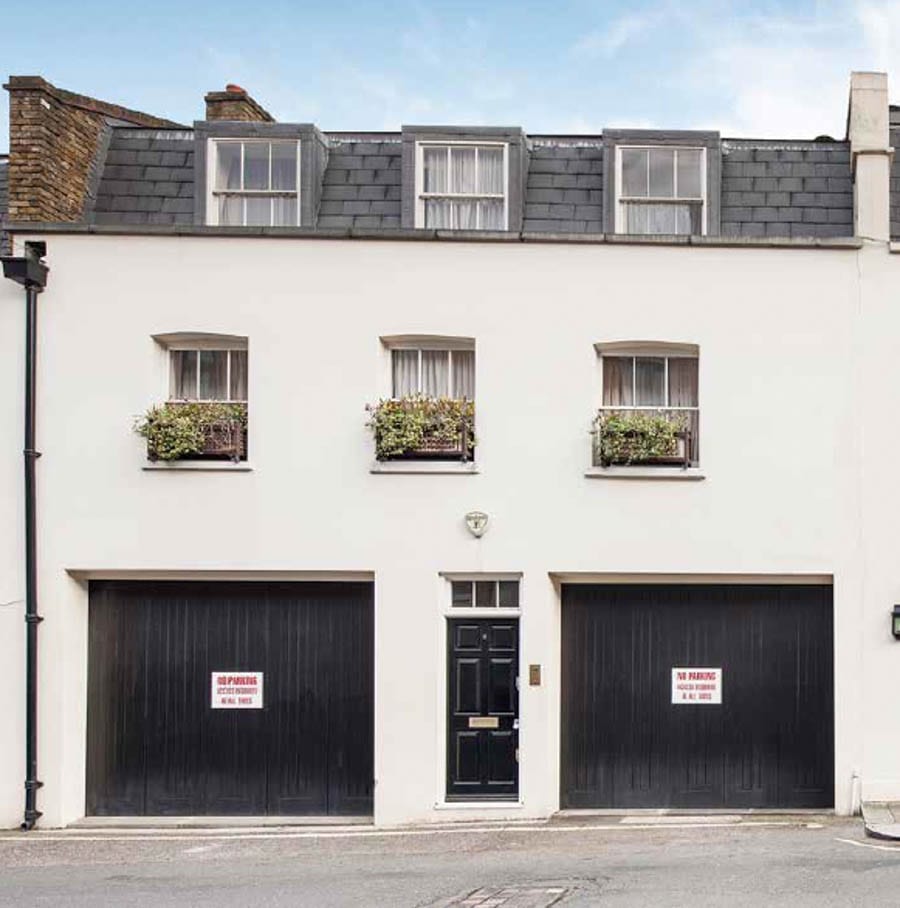
Six-storey Belgravia residence with controversial business connections goes on sale for 22% less than it was marketed for in 2015 and 3,497% more than it sold for in 1997
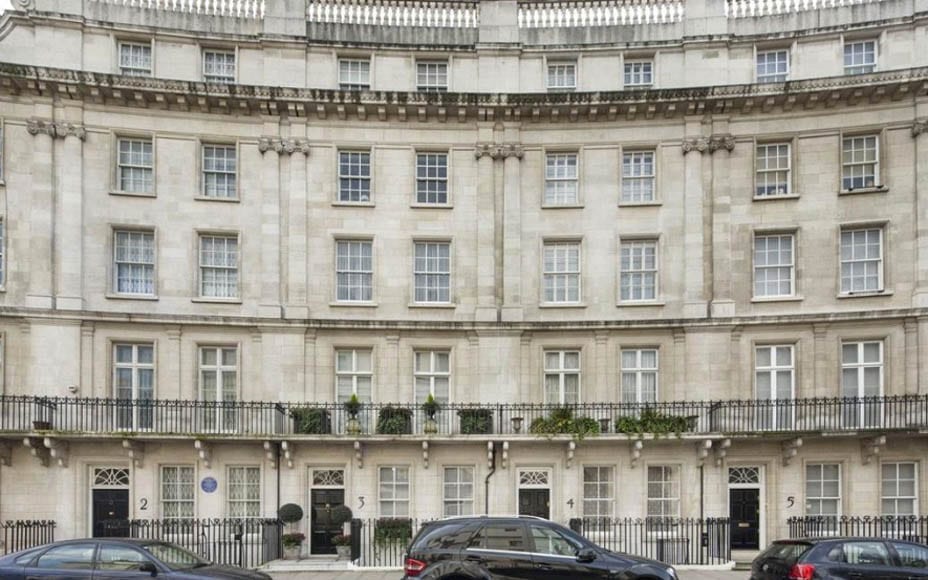
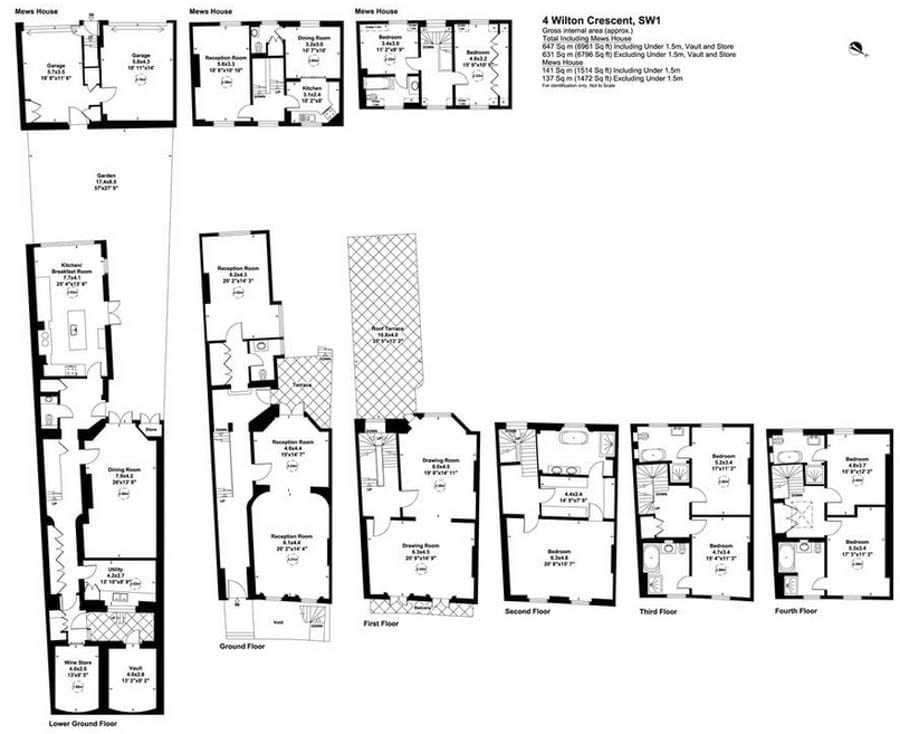
A 6,961 square foot freehold terraced townhouse in Belgravia has gone on sale for £25 million or 3,497% more than it was sold for in 1997.
4 Wilton Crescent – which sold in 1997 for what now seems like the paltry sum of just £695,000 – was marketed two years ago for £32 million and provides 5 reception rooms, 9 bedrooms, 7 bathrooms and 2 garages in an adjoining mews house.
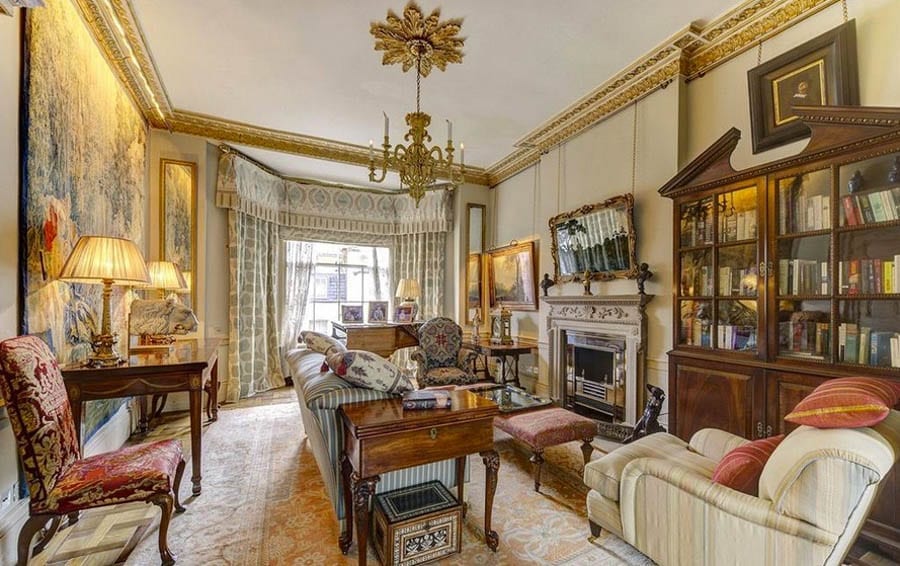
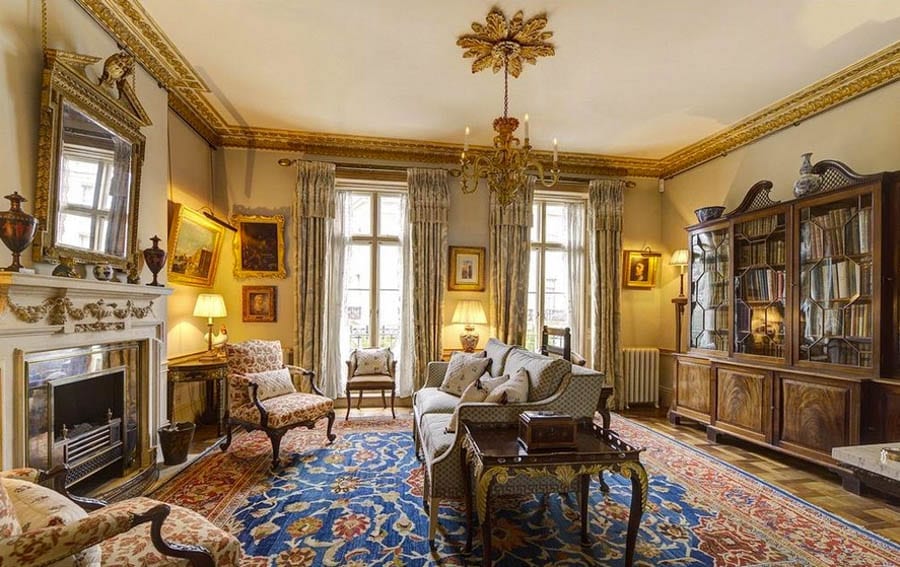
Featuring traditional interior design by Robert Kime – decorator to the Prince of Wales – the property featured in court papers in December 2015 in the context of a dispute between a lawyer turned secretive property speculator named Glenn Maud and his former associate Robert Tchenguiz. Said to be at one-time worth £4.5 billion at the height of his success and originally from Sheffield, this businessman and his wife reportedly spent some £6 million renovating the house but was ordered to live on £500 per week in 2012 by a Guernsey court.
October 2017 – On the market for £25 million ($32.8 million, €27.9 million or درهم120.5 million) through Knight Frank.
March 2016 – On the market for £30 million ($39.4 million, €33.5 million or درهم144.6 million) through Beauchamp Estates.
December 2015 – On the market for £32 million ($42 million, €35.7 million or درهم154.2 million) according to court documents. Owner Glenn Maud reportedly spent £6 million ($7.9 million, €6.7 million or درهم28.9 million) on “improvements” to the property.
September 1997 – Sold for £695,000 ($912,000, €775,000 or درهم3.3 million).
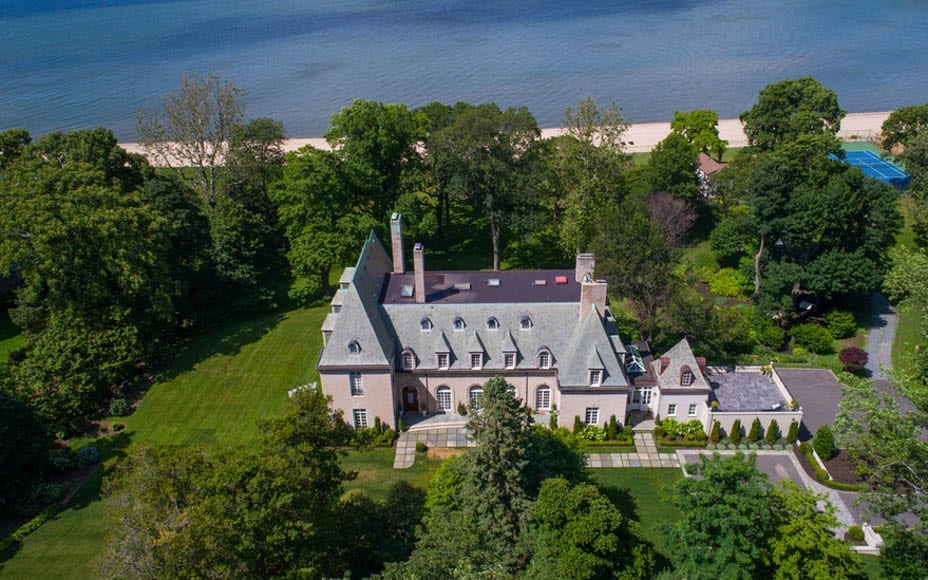
Long Island mansion with links to ‘The Great Gatsby’ and ‘The Big Short’ for sale for £13.1 million (or 152% more than it sold for in 2011)
F. Scott Fitzgerald (1896 – 1940) set his ‘Roaring Twenties’ classic The Great Gatsby in the fictional locations of East Egg and West Egg on Long Island and now one of the homes that inspired him is available for sale.
Owned by Cornwall Capital founder James Mai – a man whose firm ironically made over 80 times its capital by buying credit default swaps on CDOs prior to the 2008 financial crisis – and his wife Chiara since 2011, 235 Middle Neck Road at Sands Point on Long Island’s Gold Coast was built in 1926 and home to the Rumsey-Harriman railroad dynasty from 1929.
Fitzgerald is said to have spent time at the residence learning about “the lifestyle of the moneyed aristocracy of Old Westport, Long Island, and their involvement in the movement of eugenics” from the Rumseys and ironically, James Mai, is also representative of a clash between ‘old’ and ‘new’ money. In 2008, he and his partner are said to have been the ones “screaming about [the coming crash] as loud as they could, but everyone turned a deaf ear.” The character Jamie Shipley, played by Finn Wittrock in the 2015 film The Big Short, is loosely based upon him.
Current owners Chiara and James Mai are said to have spent vast sums on the renovation of the estate
Featuring 11,955 square foot of renovated accommodation that includes formal and informal entertaining spaces, 13 bedrooms and 8 bathrooms. There is also a 6-car garage with a 3-bedroom caretaker’s cottage, a 4-bedroom beachside cottage and a boat house.
Outside, on a plot of some 5.3 acres, there is a 391-foot private beach, a tennis court and in spite of its seeming isolation, the property is situated just 29 miles from Downtown Manhattan and 25 minutes by boat.
235 Middle Neck Road is listed by Nava Mitnick of Daniel Gale Sotheby’s International. In December 2016, of it, she commented: “Obviously, it’s so imposing – you drive down and see the sweeping views. But when we entered the house, I described it as a ‘glorified cottage’, because it’s so homey.”
North Yorkshire mill conversion with 120-foot chimney and cast iron water wheel for sale for £975,000
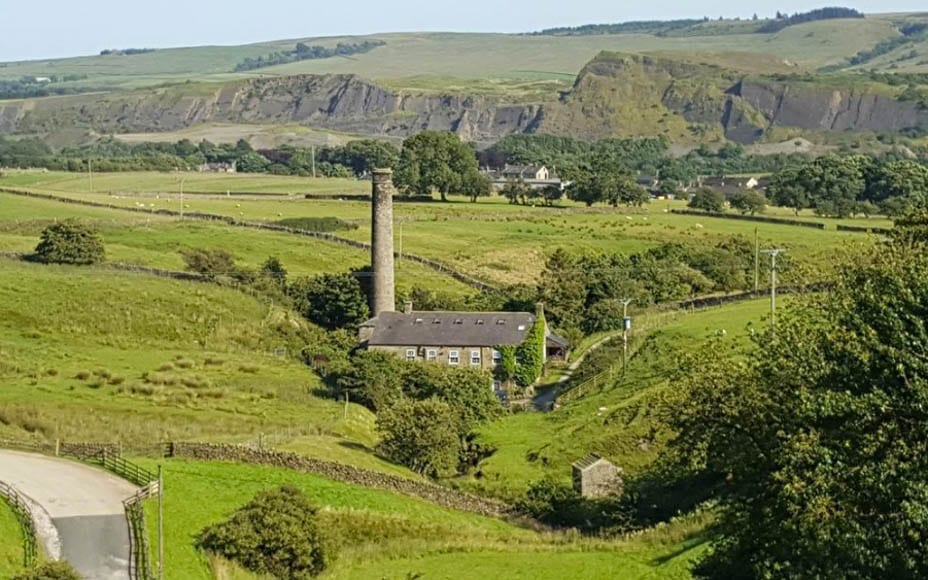
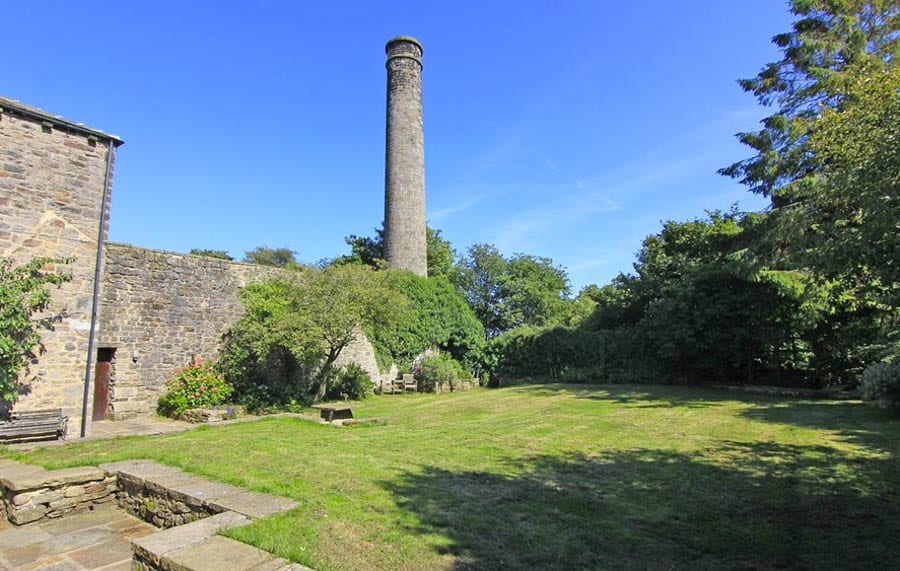
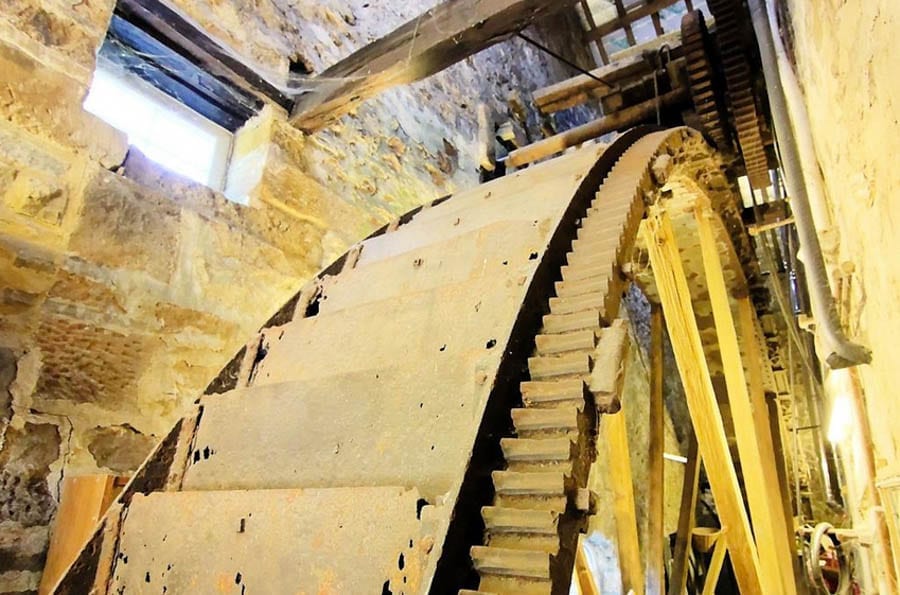
A converted mill in the Yorkshire Dales National Park has gone on sale for £975,000 ($1.3 million, €1.1 million or درهم4.7 million). It has not only its original 120-foot chimney still in-situ but also an original cast iron water wheel.
Spindle Mill near Embsay was built circa 1820 and now provides a 6 bedroomed family home, two adjoining cottages and various outbuildings. It stands in walled gardens and enjoys long distance views.
Agents Harrison Boothman have the listing and describe the property as: “Imaginatively planned” and “set amidst beautiful open countryside.”
Kensington and Chelsea – The land of the ‘have-a-lots’ and the ‘have-nothing-at-alls’; an example of a contrast too far
The mere mention of the area of Kensington and Chelsea brings all sorts of connotations: One thinks of the Albert Hall and Hyde Park, Harrods and Harvey Nicks and one imagines affluence and culture. Here is an area that one associates with a certain kind of genteel elegance and one where both dowager duchesses and an educated, international community has long lived in harmony. Sadly, however, the apple cart has tipped and the area has descended to become a place where homeless people shiver on the streets whilst multi-million pound mansions lay rotting. This is an area that has had its soul ripped from its very being and this is an area that has fast become nothing but a money park with a hidden edge.
The cause of this undoubtedly unwelcome change chiefly can be laid at the door of foreign ‘High Net Worth’ (HNW) investors – individuals and corporations who’ve brought ‘Home-aggedon’ to the Royal Borough by snapping up buildings that were once filled with families for crazy sums – and greedy landlords focused on kicking out local businesses in favour of high-paying, trophy tenants. Where once prosperous operations, such as La Brasserie on Brompton Cross, traded for nearly fifty years, are now empty units and outside them sit homeless people begging for scraps.
Yes, there are ‘fake homeless’, but the problem is real and beneath the surface one also finds what can be termed the ‘hidden homeless’. These ‘have-nots’ and ‘have-nothing-at-alls’ sit in Pret stores and mind their own business. They cause no trouble but have been let down by the system. You’d be surprised how many such people there are in the Royal Borough and you should realise one thing: Us mere non-HNW mortals are just one pay cheque away from joining them.
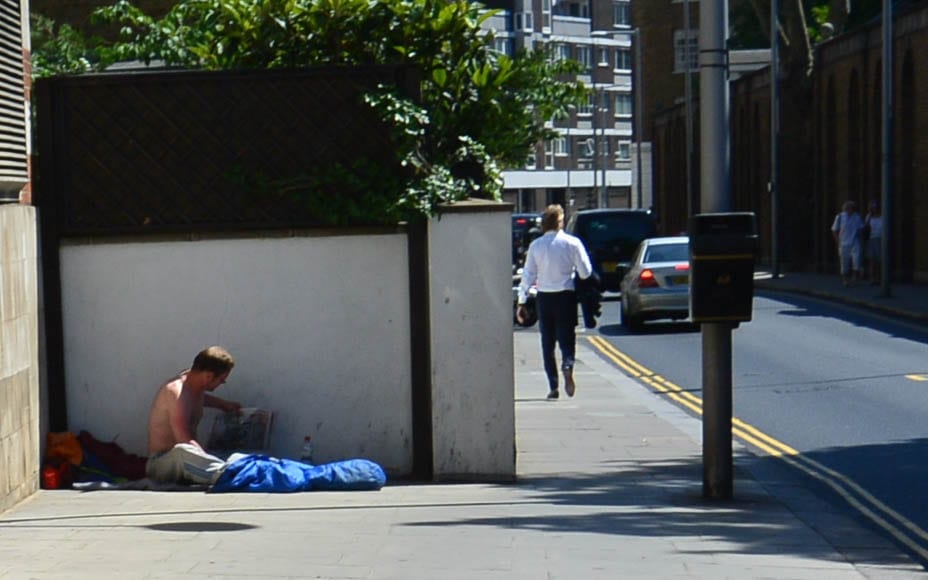
Pictured top: A homeless man in Pelham Street; he ‘lives’ just across the road from the £105 million home of billionaire Professor ‘Muck’ Flick.
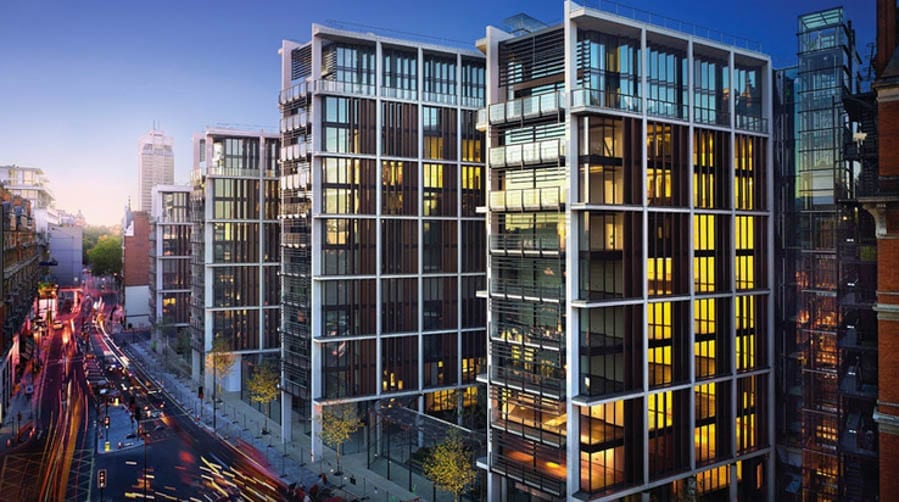
A Land of Contrasts – Meanwhile, in Knightsbridge, ‘homes’ (not that anyone lives in them) in One Hyde Park sell for up to £140 million
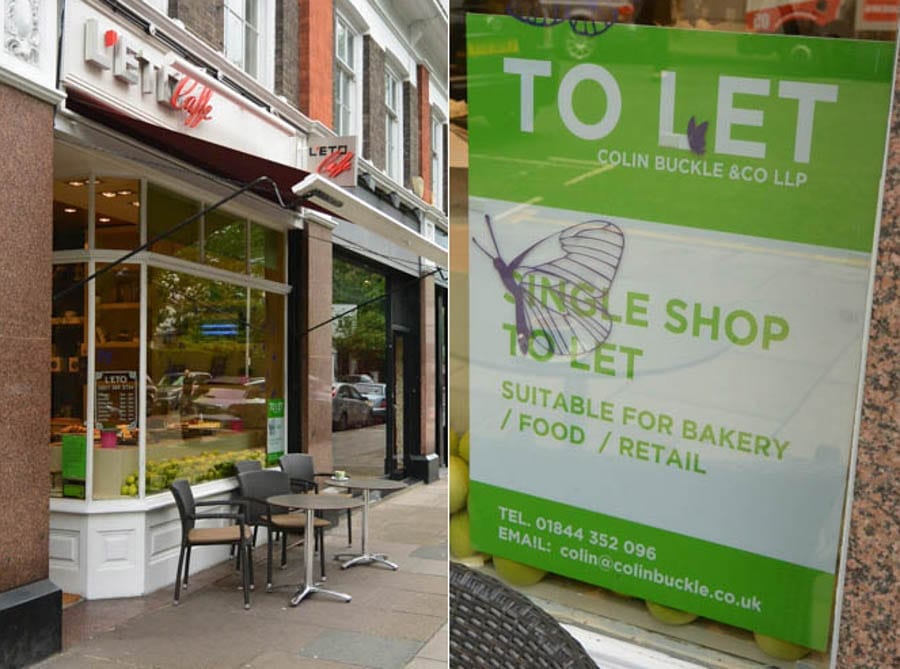
A Land of Contrasts – Now, in Fulham Road, even “trendy” cafes such as L’Eto are unable to afford their rents and are so desperate to get out of their tenancies that they display ‘to let’ signs whilst still trading
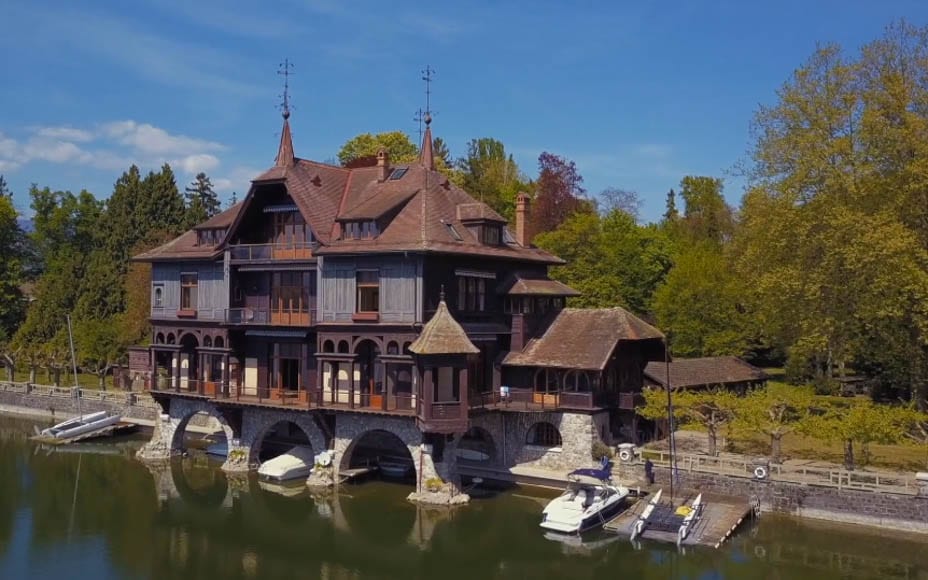
A Land of Contrasts – The area’s new wealth, meanwhile, flaunts its money in the most ostentatious fashion possible and has not a care for the community
£39 million summer house on Lake Geneva that was designed by one of the architects of the Eiffel Tower to be sold at auction without reserve
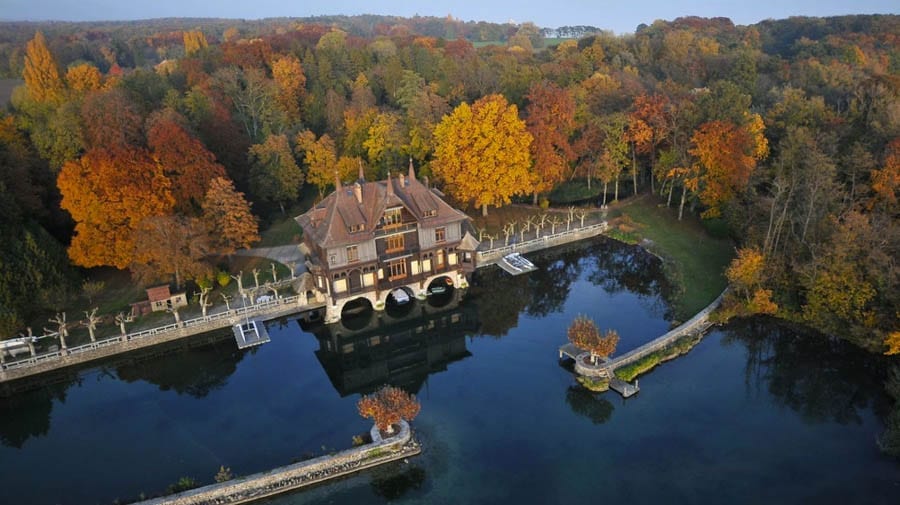
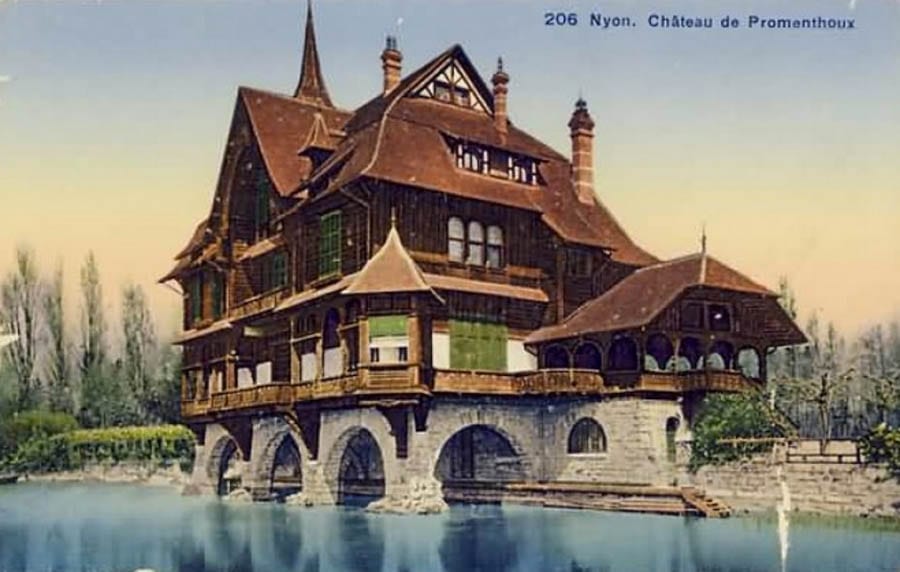
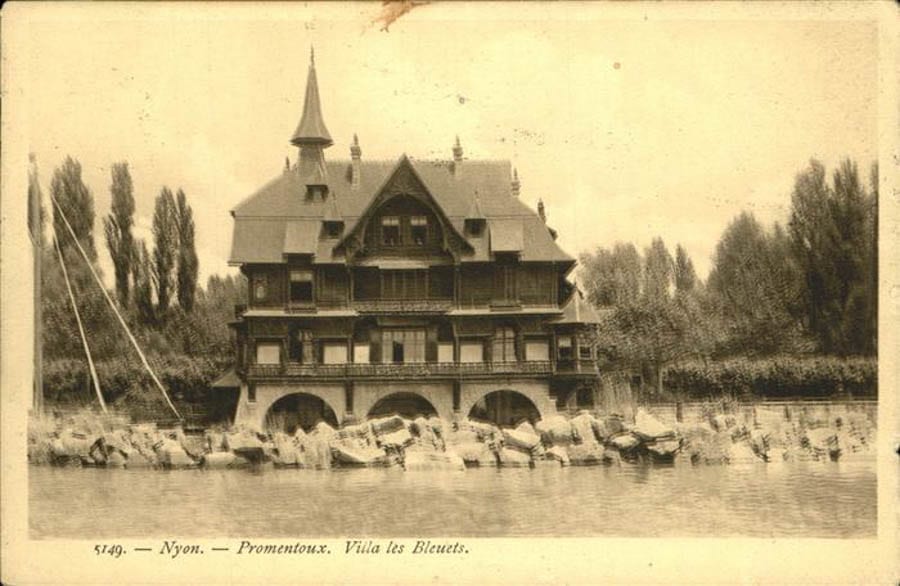
Built in the Belle Époque style on the north shore of Lake Geneva, Château de Promenthoux is a 13,988 square foot house on a plot of 9 acres. It has been on the market for £38.8 million (CHF 50 million $49.9 million, €45.7 million or درهم183.5 million) but is now to be sold at auction on the 15th June “to the highest bidder” by Concierge Auctions.
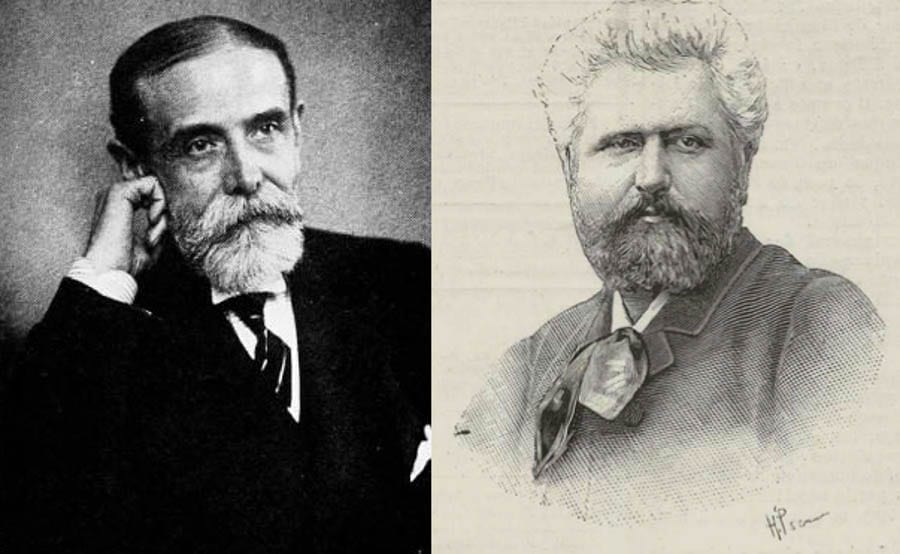
CouturierJean Philippe Worth (1856 – 1926) commissioned Stephen Sauvestre (1847 – 1919), one of the architects of the Eiffel Tower, to build Château de Promenthoux as his summer house in 1896. The son of the “father of haute couture”, Charles Frederick Worth (1825 – 1895), opted for a building that featured Meillerie stone pillars and brick walls covered by dark wood and an interior dominated by parquet flooring, paneling, velvet wall coverings and soaring ceilings.
The private harbour of Château de Promenthoux can accommodate numerous boats and is protected by two jetties built of Meillerie stone blocks and an outside break-weather
Original owner Jean Philippe Worth and his architect Stephen Sauvestre
Current owner Linda Durand
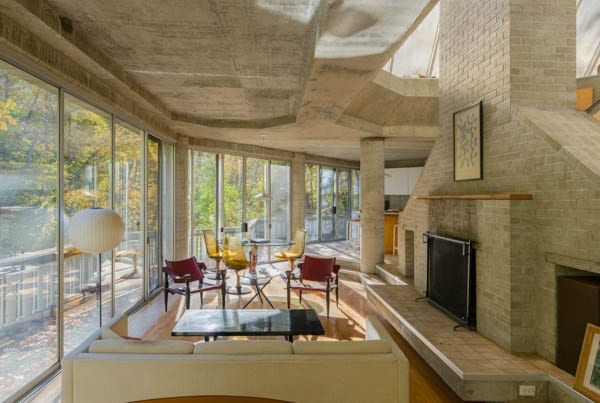
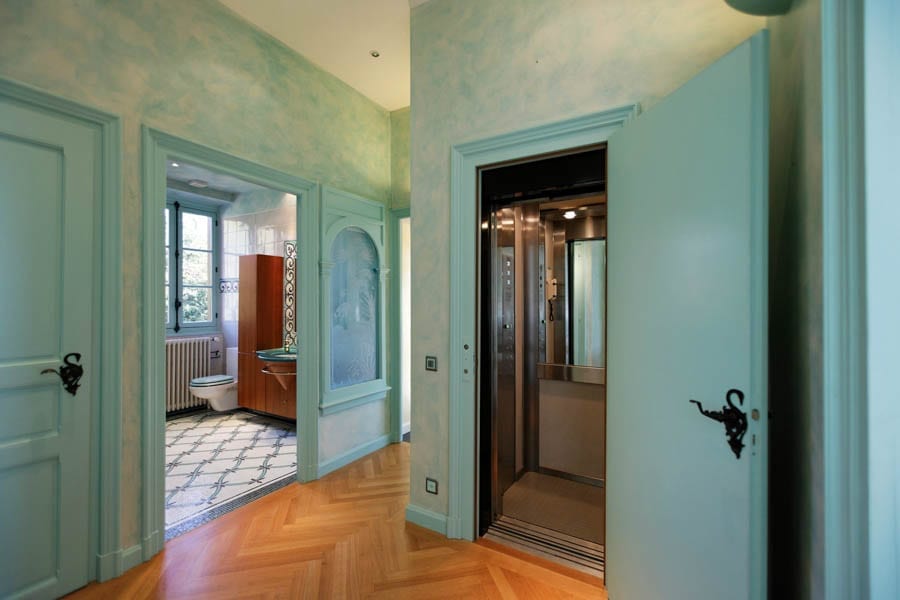
Now restored “with modern amenities”, the 4-storey house has 7 imposing reception rooms, 8 bedrooms, 6 bathrooms, 3 kitchens and separate accommodation for staff. It comes with a hydraulic lift, a gym, a sauna, the largest private harbour on Lake Geneva and also enjoys the most spectacular of views across the water.
Of why she is selling, current owner Linda Durand remarked:
The property has been in our family for almost two generations. I grew up here as a kid and then I remained in the property with my family and I raised my children here.
The property is a very large house that could be called a mansion, could be called a small castle. It’s so natural, it’s so remote, giving a big atmosphere of peace and quietness… Within just half an hour’s drive you can be skiing, sledging, cross-country.
The house is not a proper wooded house. Just the style it was given was the wood, which means the house was very safe. It is very solid, very, very well built… It was built as a family home but it could be used by an organisation for international purposes, for a consulate, by an embassy, a private club.
After discussing an auction, we decided it would be a different opportunity to sell the property in a certain time frame… We want to enable the property to continue to belong to someone in a certain time frame and not be on the market for maybe longer.
Situated within a district of Switzerland most famous for the production of white wine, Château de Promenthoux is 7.5 miles from Geneva and 27 miles from Lausanne.
12th century castle and romantic ruin in Herefordshire for sale for £1.495 million; a title to go with it is available also
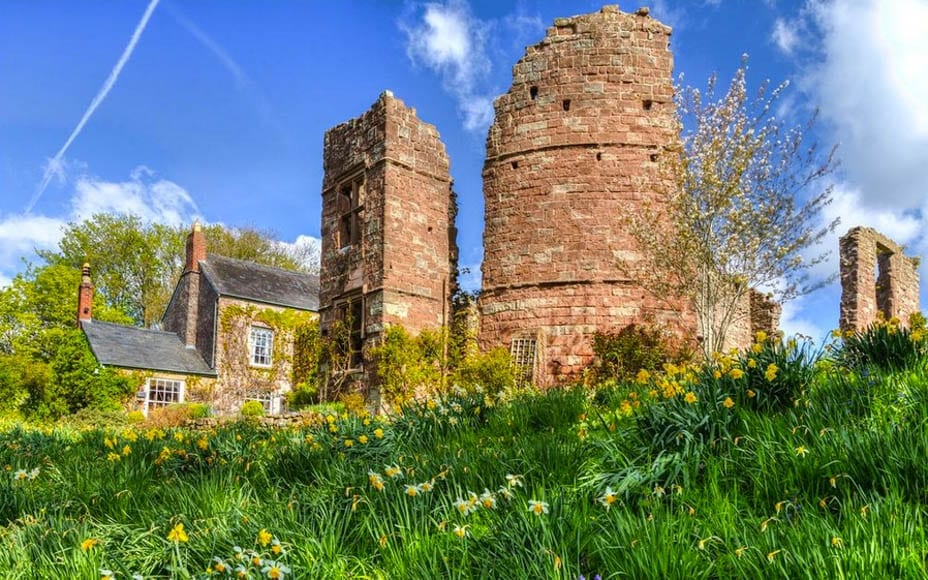
A part restored castle on the English-Welsh border is back on the market after its buyer pulled out at the end of last year. Wilton Castle-on-the-Wye at at Ross-on-Wye in Herefordshire’s story somewhat echoes that of the fictional castle in the 1949 novel I Capture the Castle by Dodie Smith – adapted to a film starring Bill Nighy and Henry Cavill in 2003 – and now, it presents an opportunity for someone wanting to own either a truly unique private home or somewhere to create a most romantic boutique hotel and events venue.
Now offered for £1.495 million ($1.94 million, €1.77 million or درهم7.12 million) and providing a total of 4,036 square foot of internal accommodation, Wilton Castle-on-the-Wye dates to the 12th century but was largely destroyed in the English Civil War (1642 – 1651).
An aerial view of Wilton Castle-on-the-Wye, Wilton, Ross-on-Wye, Herefordshire, HR9 6AD, United Kingdom with the River Wye beyond
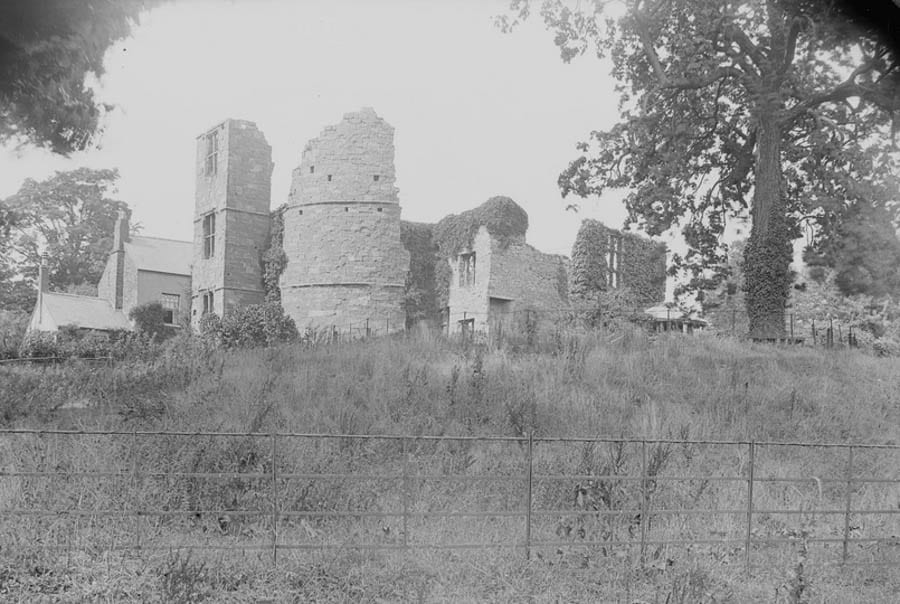
The castle as a ruin
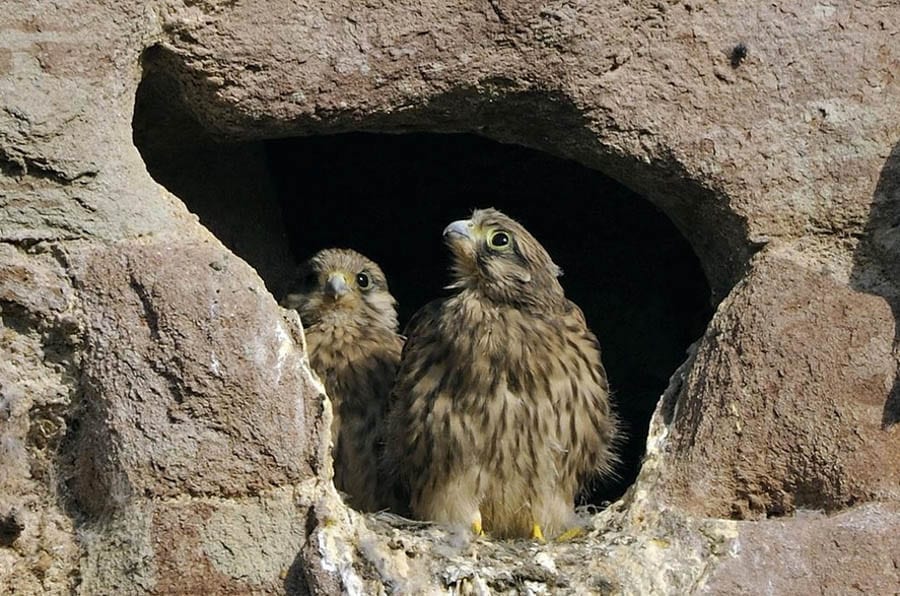
Kestrels are amongst those that make Wilton Castle-on-the-Wye their home
Subsequently abandoned until 1731, when bought by the trustees of Guy’s Hospital, the castle was bought by the legendary retail and property magnate Sir Charles Clore (1904 – 1979) in 1961 and then restored from 2002 onwards. It includes elements of architecture from the Norman, Tudor, Elizabethan, Georgian and Victorian periods and is Grade I listed Scheduled Ancient Monument.
Standing in 2 acres of gardens, primarily within the rampart walls themselves, the castle house comprises of 4 reception rooms, a galleried former chapel, 2 kitchens, 5 bedrooms and 3 bathrooms. There are three original towers (out of the five originally built inside a now dry moat) and whilst two are already back in use, the third, ‘The Great Tower’ could potentially be converted to provide 3 bedroom suites, a new glass entrance and a drawbridge.
In March, of his eccentric home, current owner Alan Parslow told the Evening Standard: “It was a bit of a wreck when we bought it, but after ten years of restorations it’s a lovely family home. We’ve loved living here. It’s a delight to wake up to, surrounded by history”.
Of the future, Parslow added: “We haven’t enough money or time to do The Great Tower up so we’d like to pass it on to someone else”.
Previously, his wife, Sue, was interviewed by The Ross Gazette about the sale. She remarked: “It is quite different from other ruined castles as it is really a garden around a castle”.
Namesake Wilton Castle, Bree, Enniscorthy, County Wexford, Ireland has similarities in that it is also part-home, part-ruin
Curiously, an unconnected Irish castle of the same name, Wilton Castle in County Wexford has had a similarly chequered history. Built first in 1247, expanded into a mansion in 1847 and burnt to the ground in 1923, this vast landmark has, like its Ross-on-Wye namesake been subject of a major renovation project since 2004 by its owners, farmers Seán and Antoinette Windsor.
Federal-style New York townhouse for sale for £3.982 million; the West Village was previously the Home of the Sons and Daughters of Israel
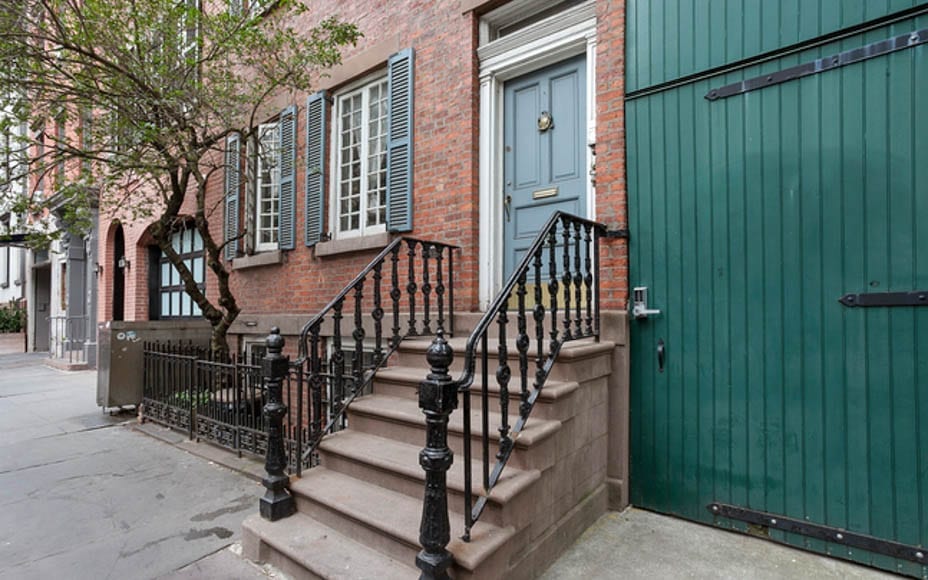
A 2,212 square foot townhouse dating to 1833 on sale in New York comes with quite a history. Built in the Federal-style by a cartman named John C. Blauvelt, the property subsequently became the Home of the Sons and Daughters of Israel – a “home for aged male and female Hebrews” – in 1913 and was then converted to two residences in 1951.
232 West 10th Street, West Village, Manhattan, New York, NY 10014, United States of America
Reduced in price from £4.772 million ($5.975 million, €5.630 million or درهم21.946 million) to £3.982 million ($4.986 million, €4.698 million or درهم18.313 million), 232 West 10th Street in West Village, Manhattan currently remains as two units and comprises of 3 reception rooms, 2 kitchens, 2 offices, 2 bedrooms and 3 bathrooms. It could, however, easily be reconfigured back into a family home and comes with both a terrace and garden.
The house is offered by the Farah team at Compass Realty and is described as “a renovator’s dream”.
Chelsea “studio with living rooms” built for Augustus John and later owned by Dame Grace Fields DBE available to rent
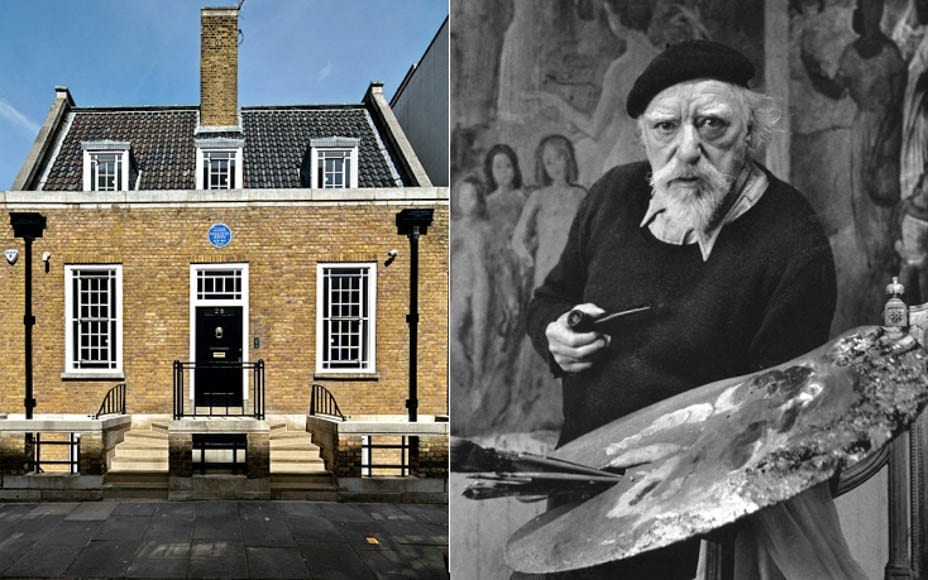
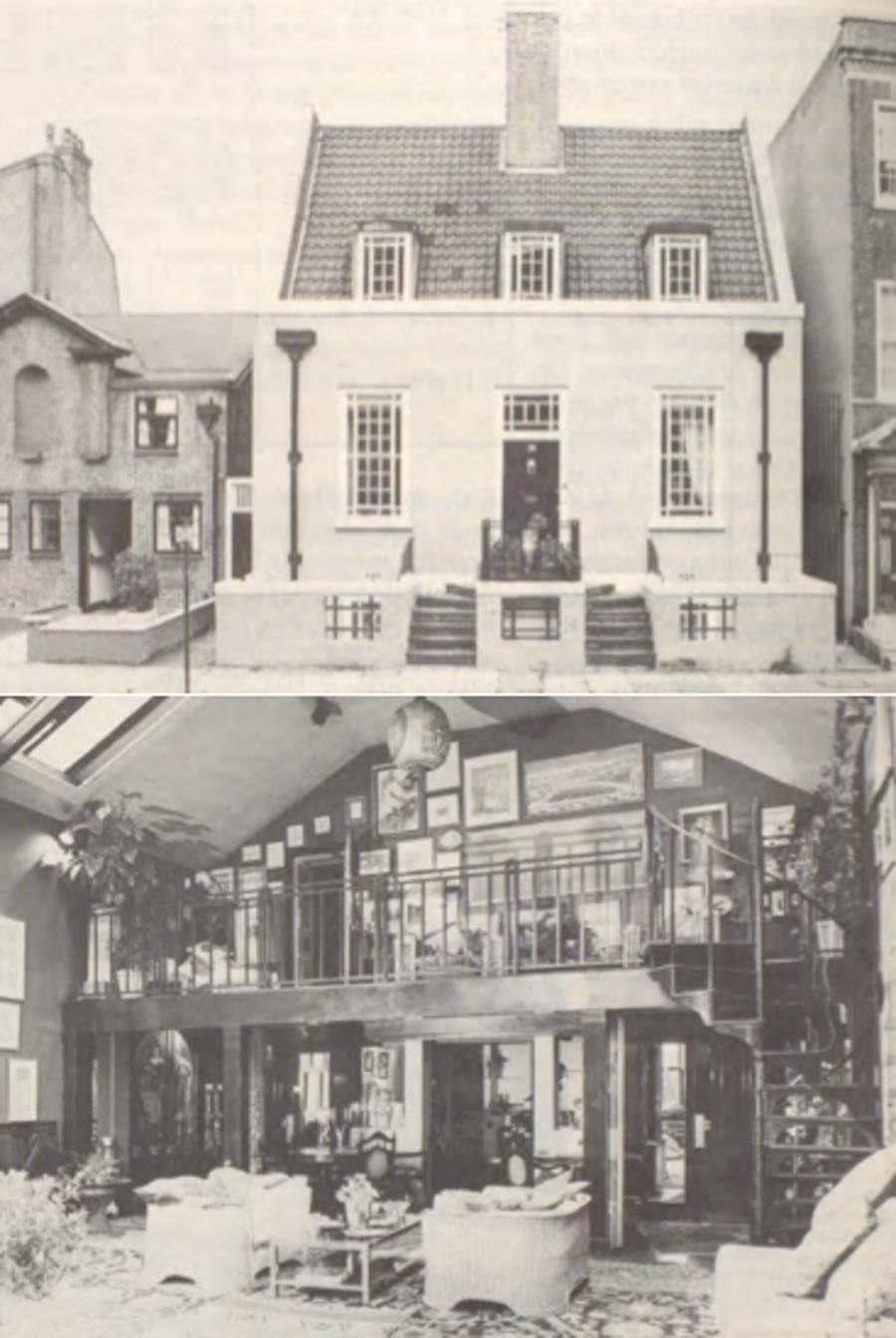
Though the Pembrokeshire born artist, bohemian and pacifist Augustus John (1878 – 1961) was best known for his portraits of Lawrence of Arabia and Dylan Thomas, he is also said to have fathered as many as 100 children over the course of his life. A Grade II listed “Dutch farmhouse-style” studio he built and occupied for twenty years in Chelsea, London is currently available to rent.
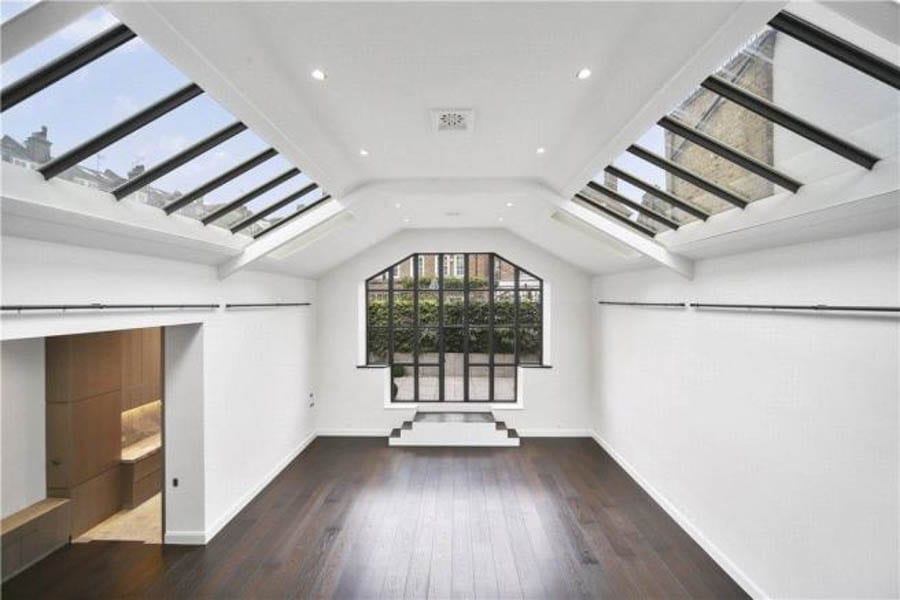
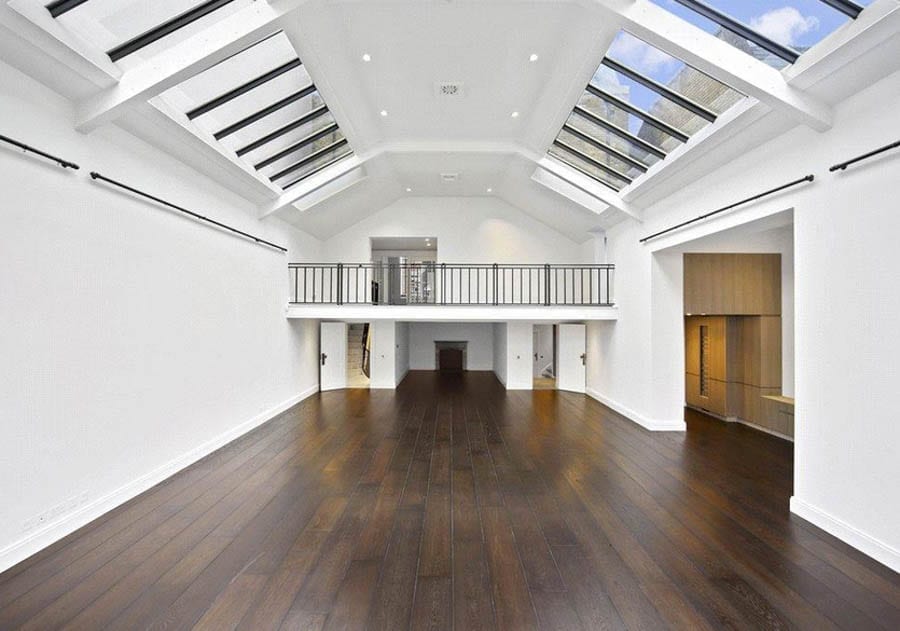
This vast studio room is the most impressive feature of 28 Mallord Street, Chelsea, London, SW3 6U
Built in 1913 to 1914 from designs by a Dutch architect named Robert van ’t Hoff and Grade II listed, 28 Mallord Street cost an estimated £2,200 to build (the equivalent of £233,000, $291,000, €272,000 or درهم1.1 million today). It includes features influenced by Frank Lloyd Wright and was described by Augustus John as “my new studio with living rooms” on completion. He lived there until 1934 and though initially delighted by the building’s “solidity and tautness”, ultimately termed it “this damned Dutch shanty” and moved to a new, purpose-built ferro-concrete at Fryern Court in Fordingbridge, Hampshire.
Owned by the thrice married actress and singer Dame Gracie Fields OBE (1898 – 1979) – who described it as “feeling like home” and “a love nest” – in the 1930s and sold for £5.4 million in 2009 (the equivalent of £6.6 million, $8.2 million, €7.7 million or درهم30.2 million today). 28 Mallord Street is now available to rent for £9,500 per week ($11,800, €11,100 or درهم43,500 per week) or £494,000 per year ($616,000, €576,000 or درهم2.3 million per year) through Aylesford International.
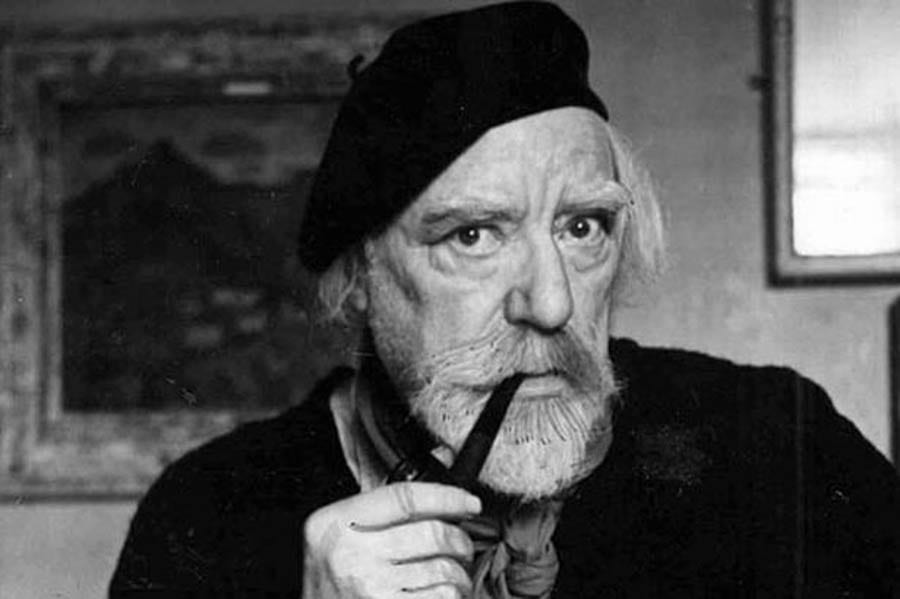
Augustus John OM, RA was celebrated for brilliant figure drawings, and for a new technique of oil sketching; his work was often favourably compared with Gauguin and Matisse
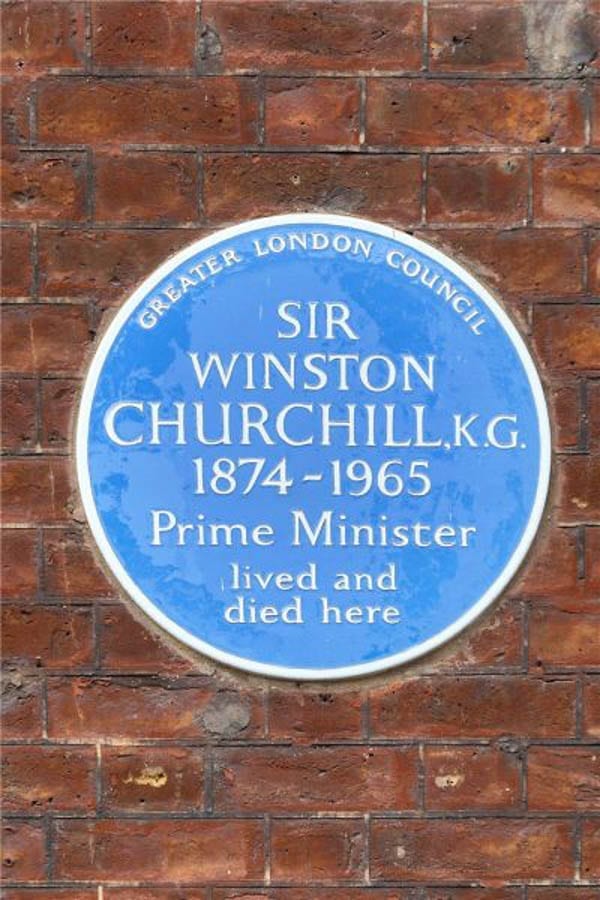
A Blue Plaque commemorating the artist was installed on the building in 1981
28 Mallord Street in 1981
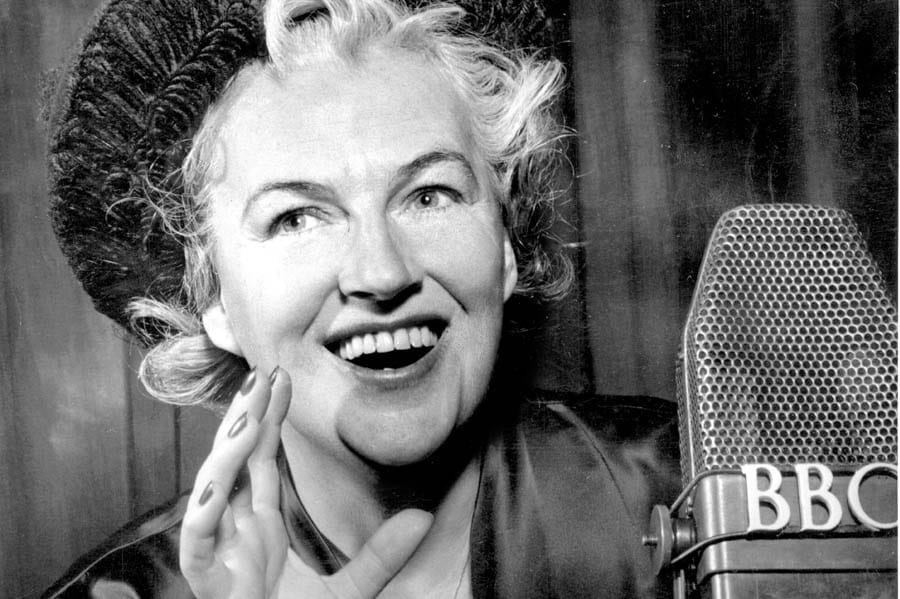
Actress and singer Dame Gracie Fields OBE took up occupancy of the building soon after Augustus John sold it
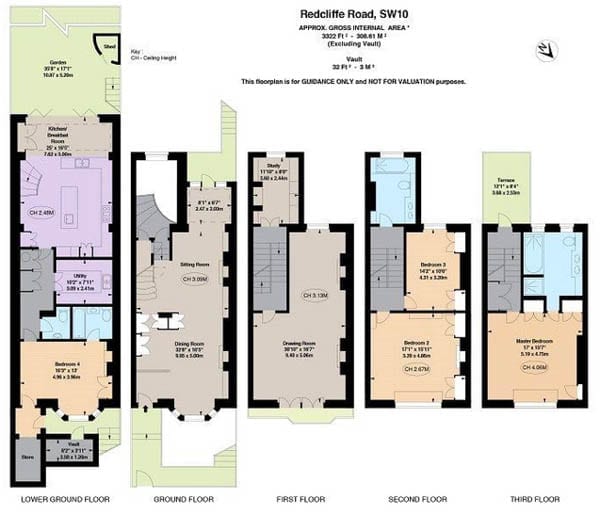
Expanded to provide 5,109 square foot of accommodation over five levels, the house is dominated by a 38’3” by 25’2” studio reception room with a ceiling height of 18’4” and also includes upto 6 bedrooms, 2 kitchens and a temperature controlled wine cellar with Hermès wallpaper.
Aylesford describe 28 Mallord Street as “a true family home, the ultimate blank canvas and ideal for any art collector”. They offer it on an unfurnished basis.