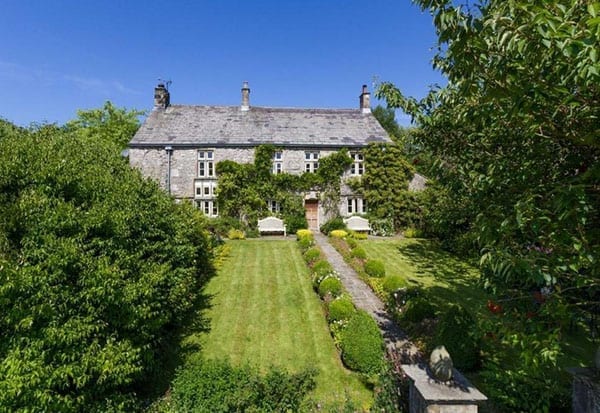
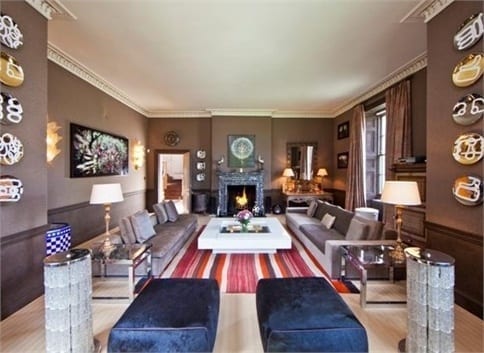
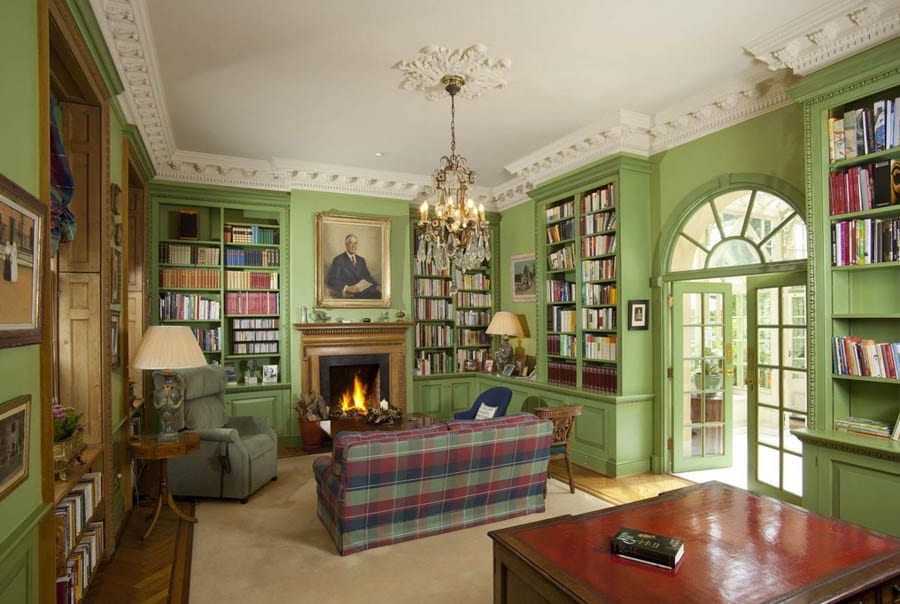
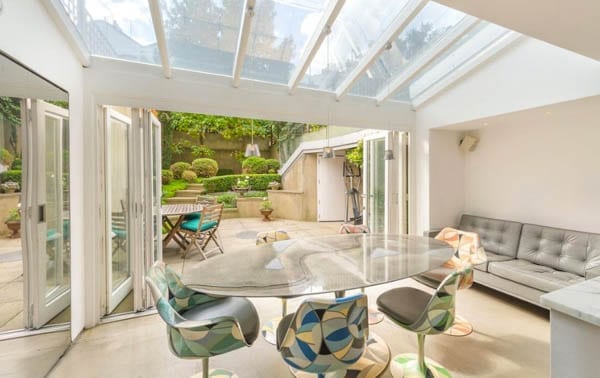
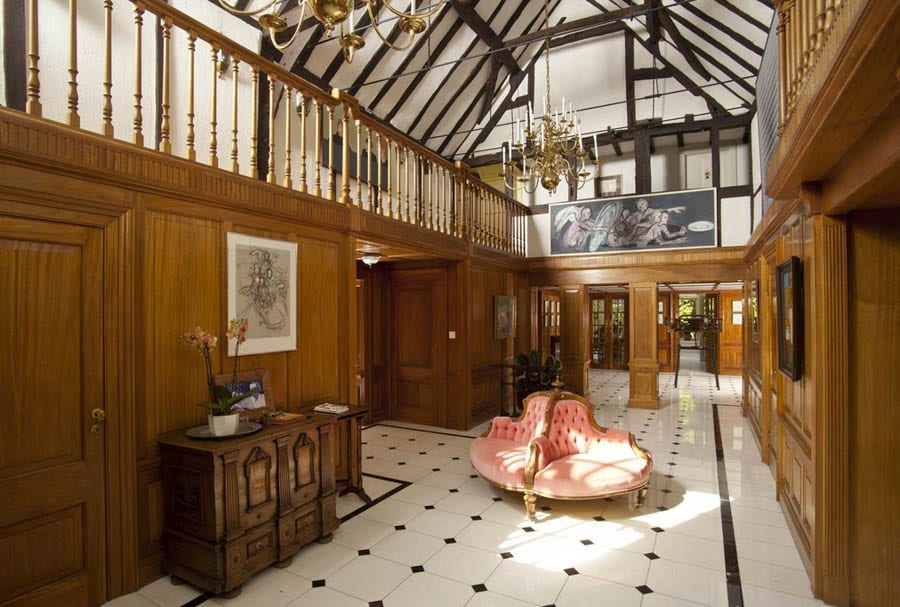
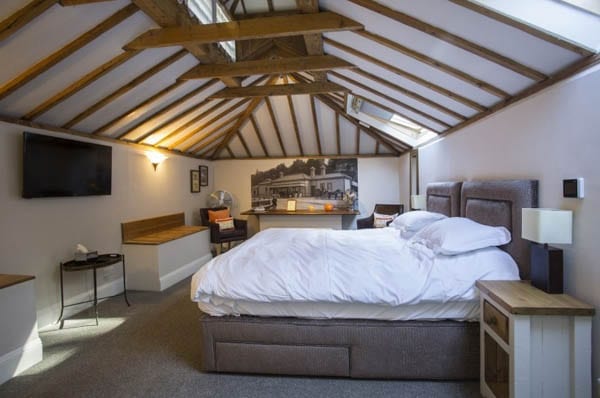
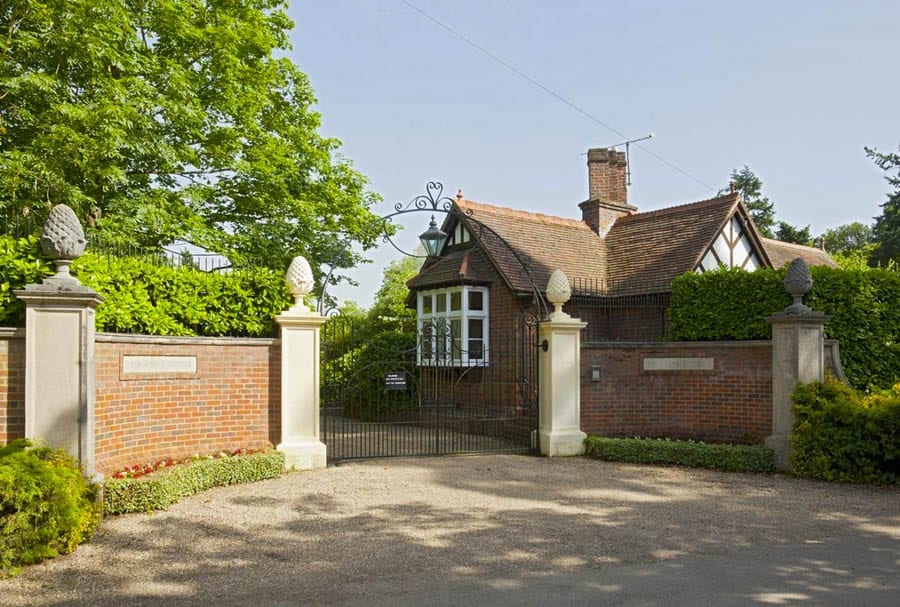
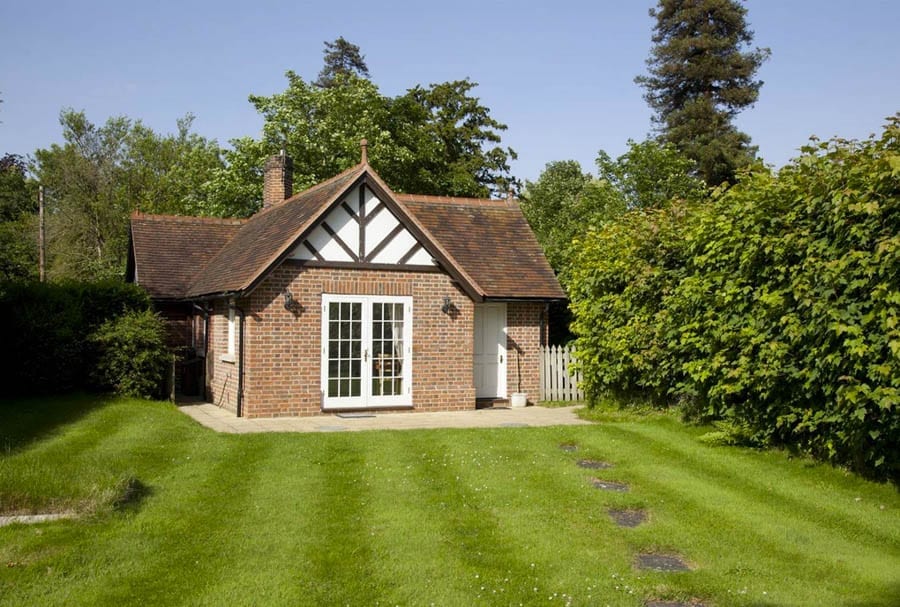
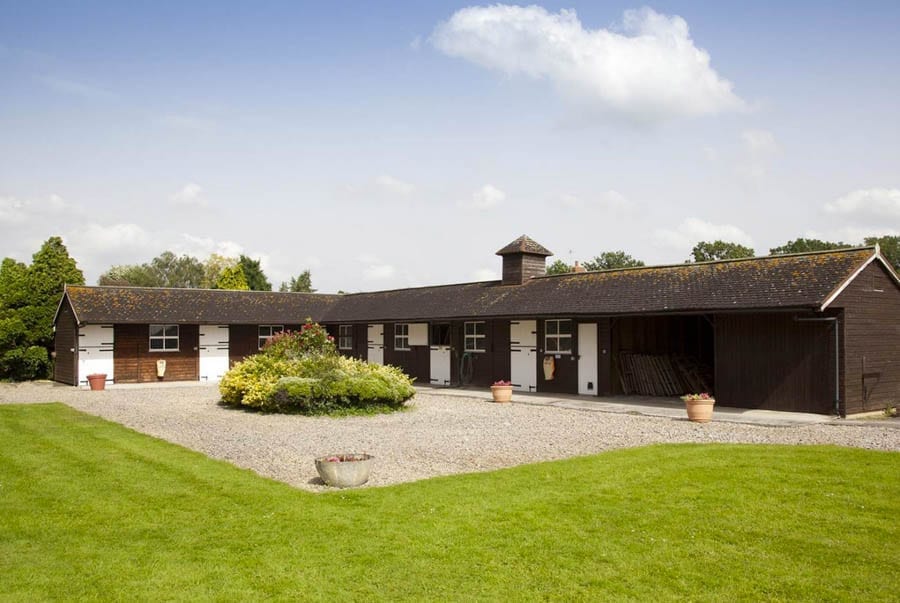
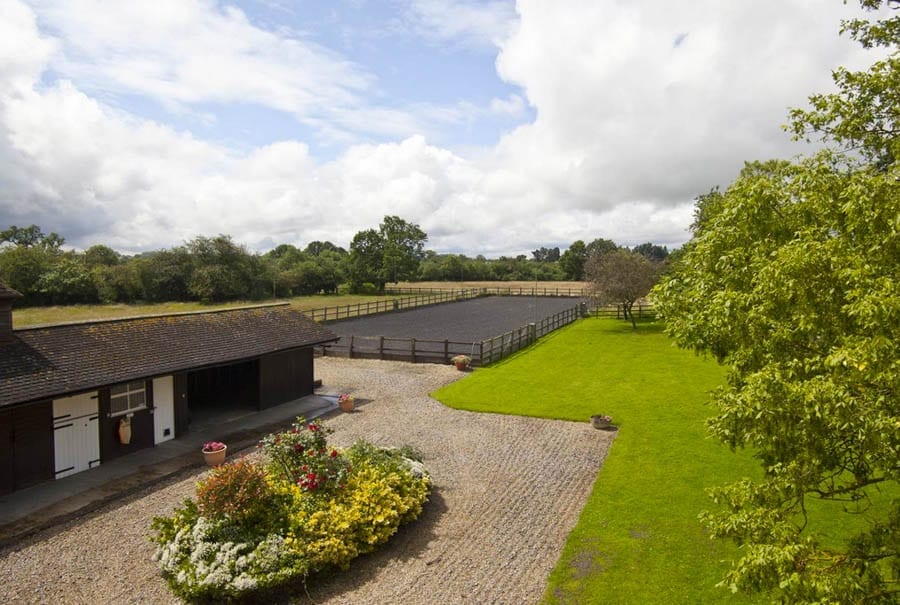
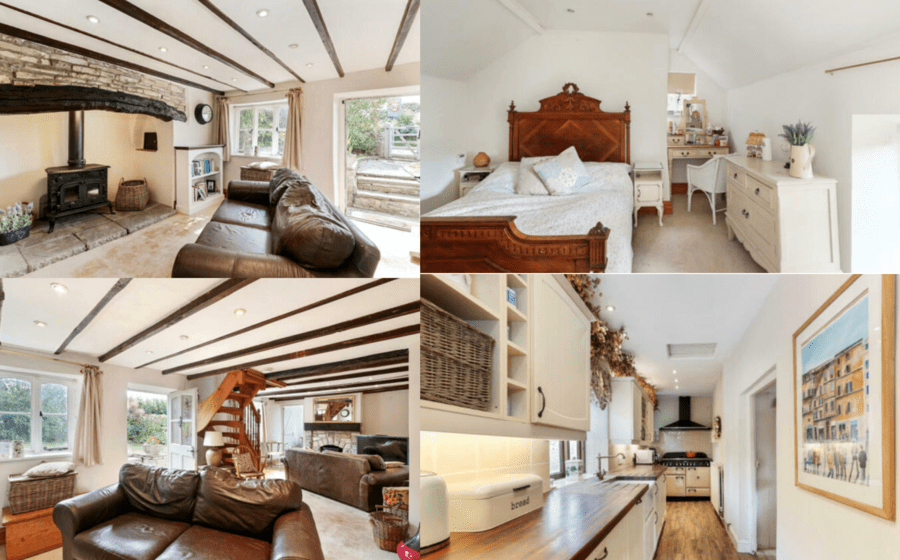
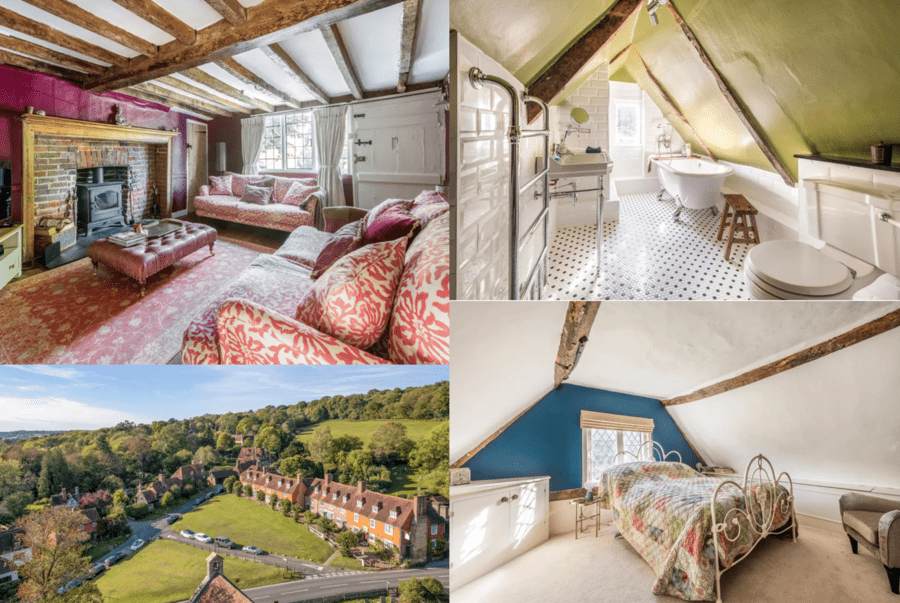
Compact yet cosy, the main attraction here is a 22-foot length sitting room with an inglenook fireplace and bread oven at one end and a natural stone fireplace at the other. It also includes a kitchen with a Rangemaster oven, a study and would make an ideal Airbnb given its proximity to Glastonbury and its annual festival.
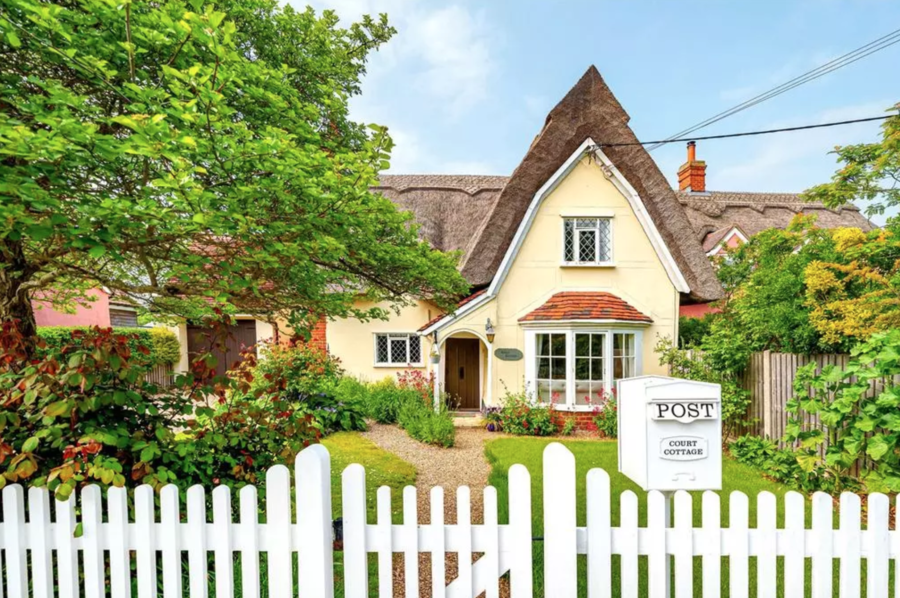
Another ‘chocolate box’ cottage comes in the form of Court Cottage – an 18th century detached property in a “highly regarded south Suffolk village” near Bury St Edmunds where one of Margaret Thatcher’s most trusted political advisers, David Hart, “lived-in-style” prior to his death in 2011.
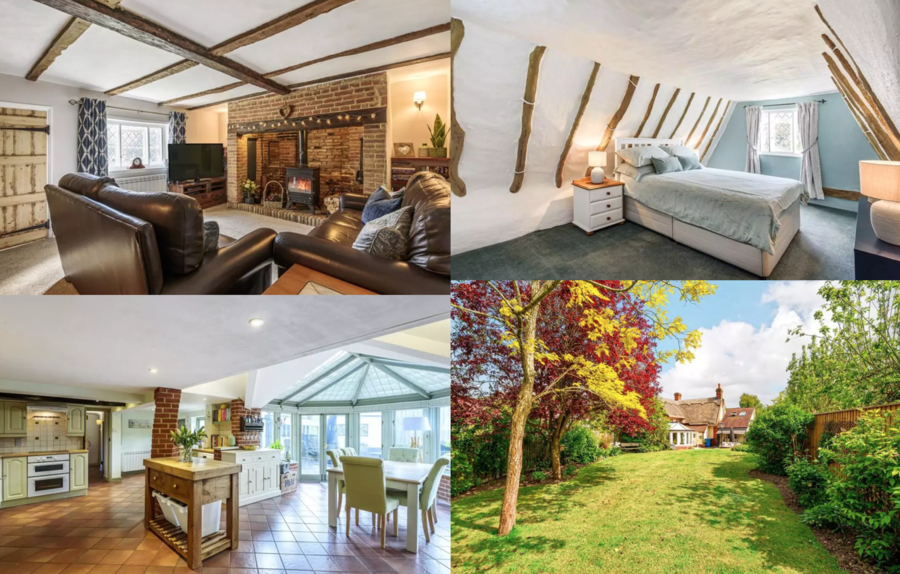
Offered by Jackson-Stops, this 1,615 square foot thatched building includes 2 reception rooms, 3 bedrooms and 2 bathrooms. It also has a “fabulous” dining kitchen, a garage with a room above, an electric car charging point and a lawned garden.
Curiously, the property has a “flying freehold” since the neighbour’s bathroom overhangs the property’s ground floor utility room and a “creeping freehold” since its cellar lies beneath the adjoining property’s living area.
Llangain, Dorstone, Herefordshire –£695,000 ($873,300, €800,500 or درهم3.2 million)
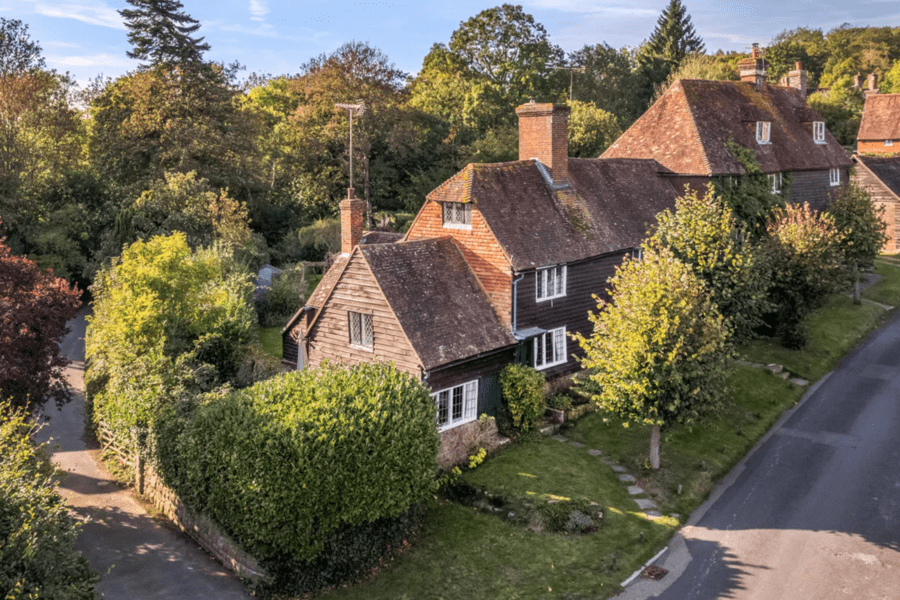
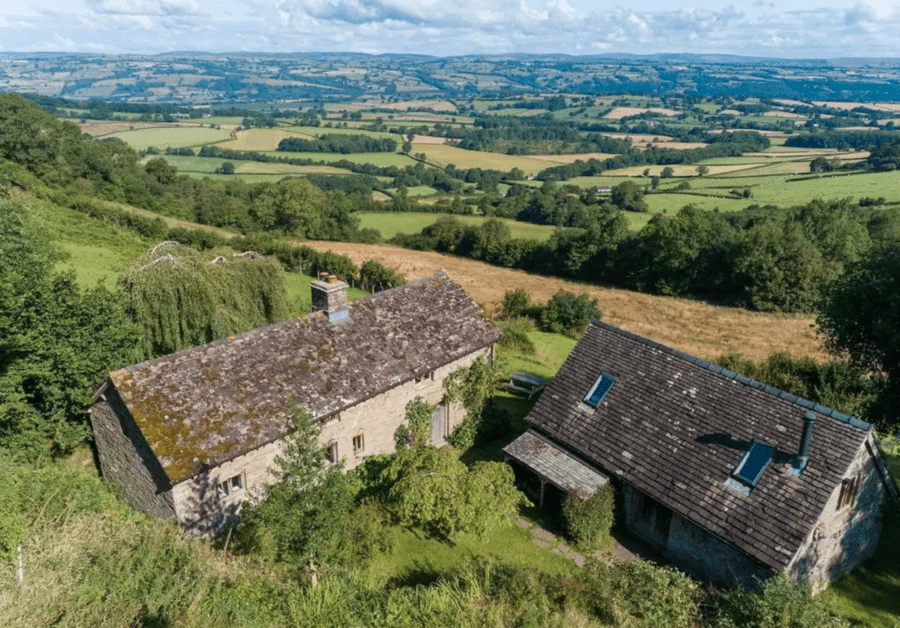
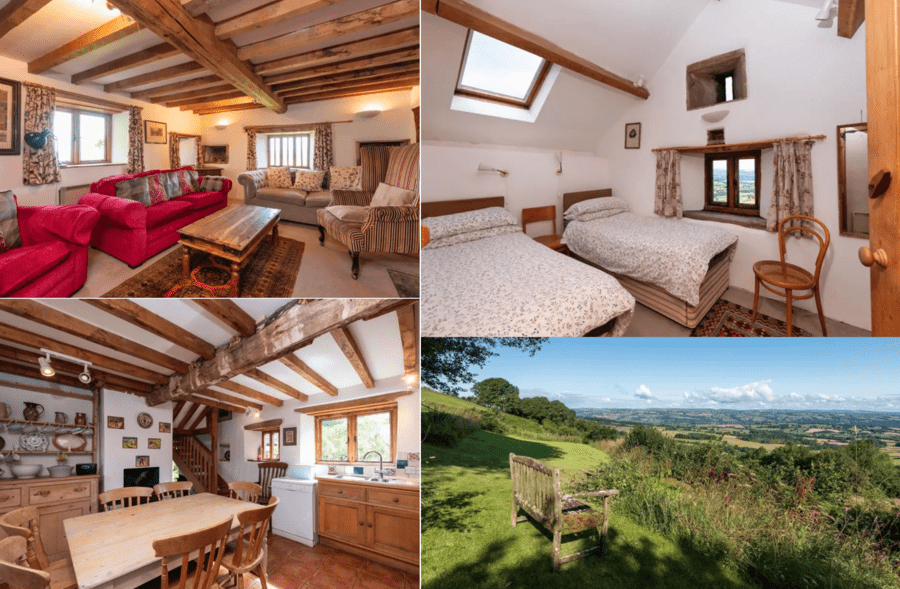
For the same sum, just 3.5 miles from the market town of Hay-on-Wye – famed as “the town of books” – this 18th century restored cottage on ½ acre is available freehold. It is situated close to the Golden Valley village of Dorstone – a settlement best known for its annual sloe gin competition where each year the winner is crowned the ‘Grand Master of the Sloes.’
Llangain, a farmhouse that was derelict from the First World War until 1995, itself has 4 bedrooms and in addition there is a 1-bedroom barn conversion. Agents Knight Frank laud the property as being in a “picturesque setting” and having “amazing views.”
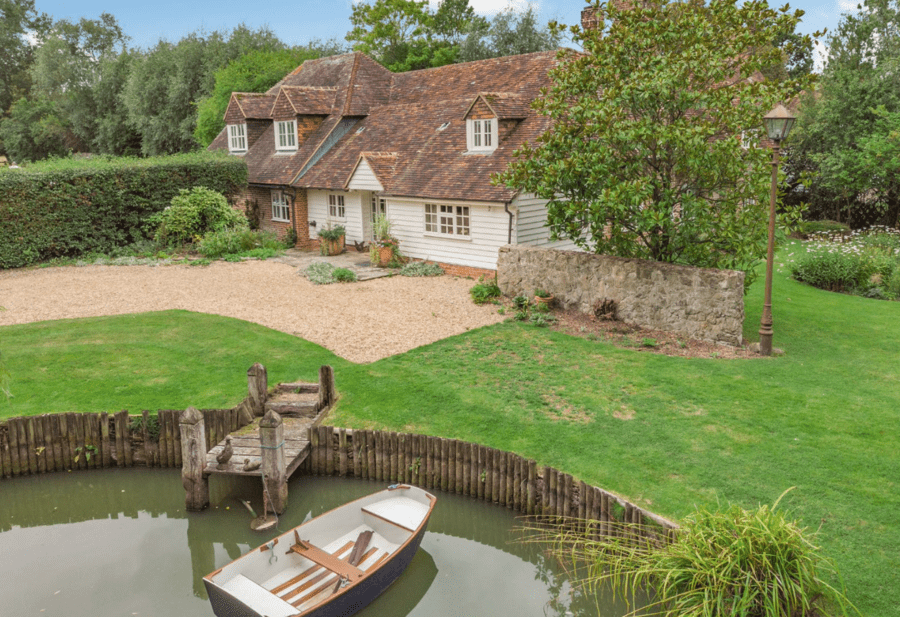
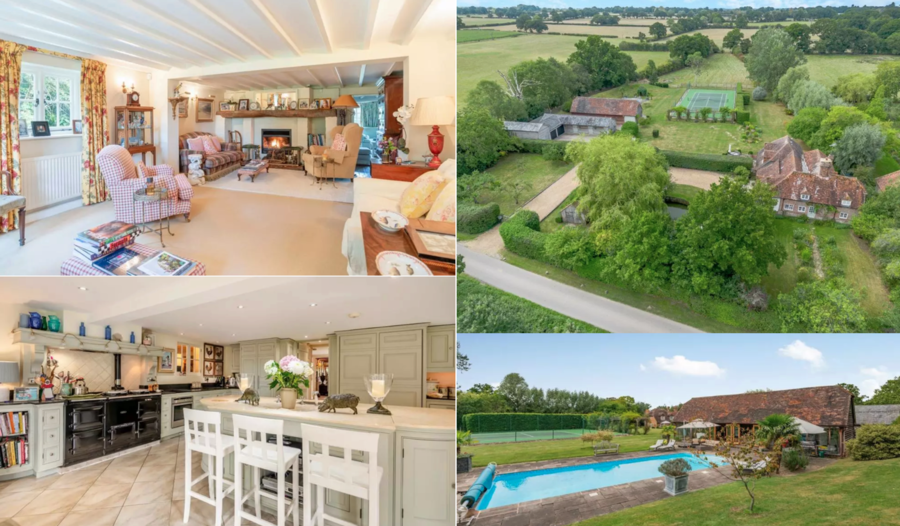
Willow Cottage, Bethersden, Kent – £1.75 million ($2.20 million, €2.01 million or درهم8.07 million)
Situated in a village best known for producing rather ritzy rocking horses for everyone from the late Queen Elizabeth II to Sir Paul McCartney, Willow Cottage is being marketed by Strutt & Parker as having “evolved from the picturesque period cottage at its heart, and from which it derives its somewhat understated name” into an “elegant 4,800 square foot family house.”
Situated on a plot of 16.5 acres and last sold for £400,000 in July 1998, this 5-bedroomed residence comes with a separate 2-bedroomed ‘guest barn’ and also has a tennis court, a swimming pool, stabling, garaging, gardens and paddocks. A “picturesque pond” currently provides opportunity for Wind in the Willows-esque Messing About in a Boat, as our main photograph suggests.
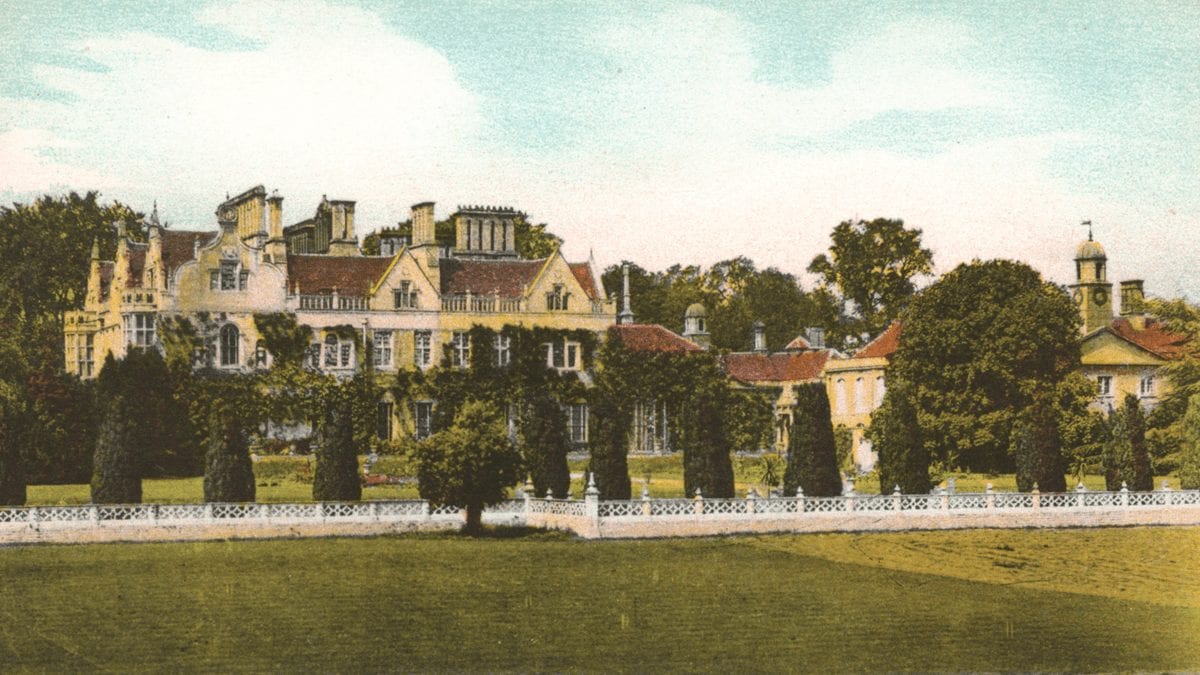
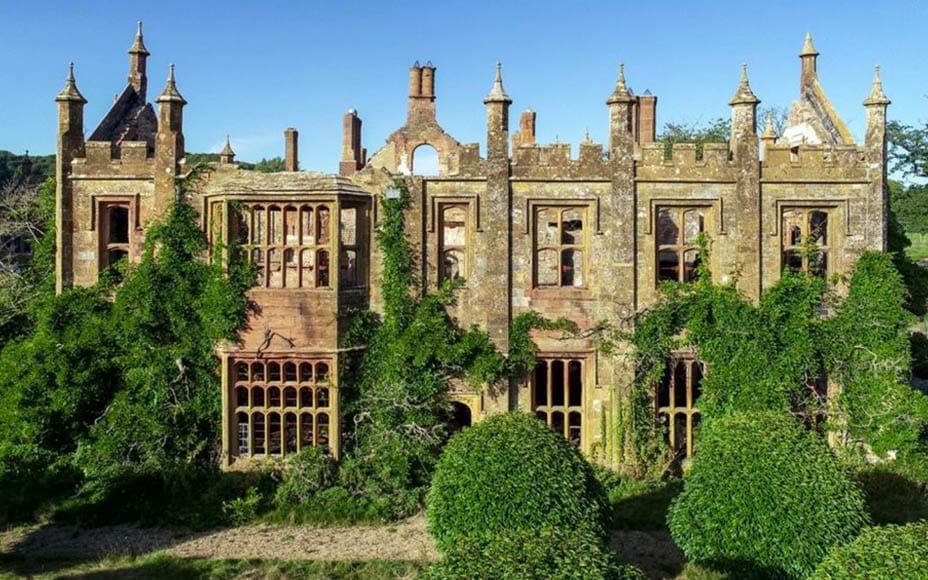
Crumbling Northamptonshire estate Lilford Hall – where the little owl was introduced to Britain – for sale for £10 million, a sum £35 million lower than in 2014
Grade I listed Jacobean mansion with 13 chimney stacks for sale for £10 million; it was for sale last for £44.9 million in 2014 in spite of being listed on English Heritage’s ‘At Risk Register.’
Lilford Hall – parts of which have not been occupied since 1947 –is currently owned by a businessman who tried to sell burial plots in the grounds for £1,250 a pop and shares in a yacht loosely associated with Frank Sinatra for £23 each.
The 321-acre estate includes not only overgrown parkland, but also a zoo with cages that formerly housed bears and a lake for flamingos.
From 1711 until 1990, Lilford House was the seat of the Powys family – the 4th baron is credited with introducing the little owl to the UK.
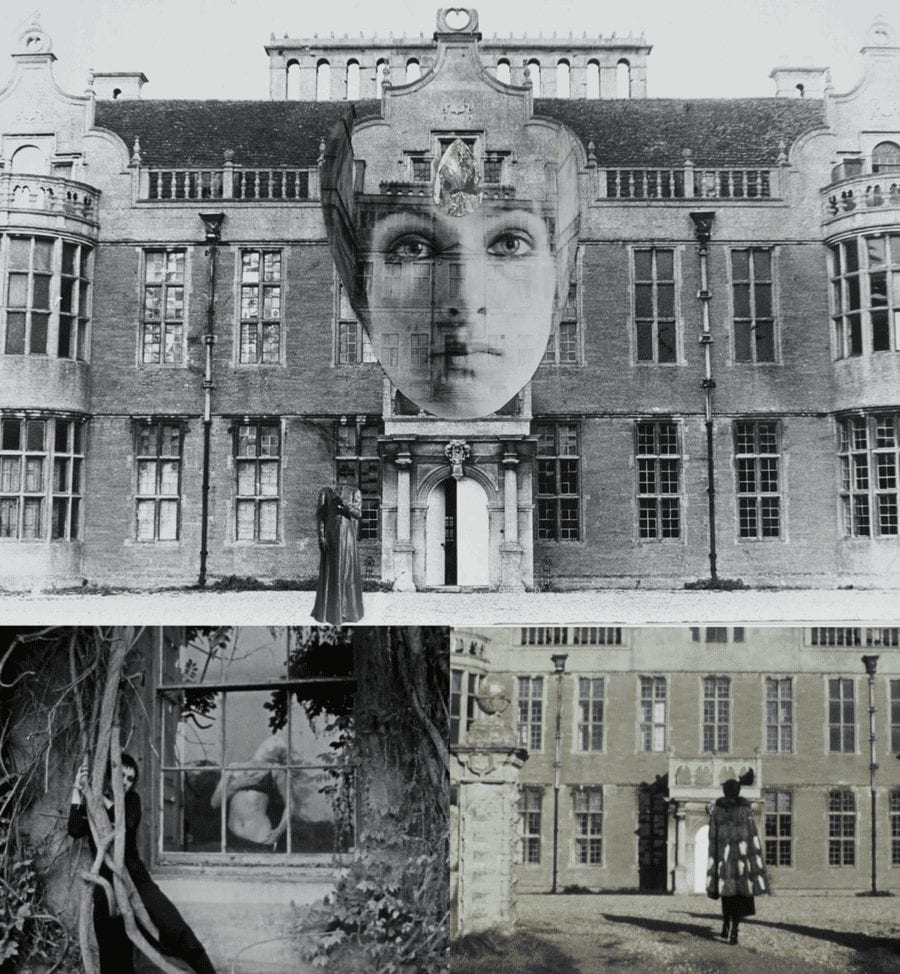
More recently, in 1969, the “sexual mystic” artist Penny Slinger used the at-the-time derelict mansion in one of her best-known works.
A 32,406 square foot Grade I listed Jacobean mansion 82 miles from Central London has gone on sale for £10 million – or the equivalent of just £308 per square foot.
On this basis, Lilford Hall – set in 321 acres near Oundle – seems a comparative bargain when considered against the £4,786 per square foot sought for a Lennox Gardens, Knightsbridge triplex flatThe Steeple Times featured in May, but buyers need to remember this – parts of this crumbling building, most notably the major state rooms, have not been used since 1947.
Marketed last in 2014 for the even more punchy sum of £45 million, the “exceptional residential and amenity estate located on the River Nene,” is now offered by agents Savills. The “wonderfully proportioned” U-shaped mansion itself is constructed of grey limestone and includes over 100 rooms and amongst them are 7 “impressive” reception rooms, a ballroom, a ‘great chamber’ and 9 bedrooms. In addition, there are two Georgian pavilions that were formerly coach houses and stabling, three cottages, a former zoo, the oldest private softball court in the world, a former flamingo enclosure and a deer park.
“Impressiveness in the chief attribute of Lilford Hall as a specimen of architecture” claimed County Life in 1990 and as the seat of the Powys family from 1711 until 1990, it became not only a Downton Abbey-esque entertaining pad, but also housed nurses in the Second World War. Here, indeed, is an English country house that has seen lavishness and decline and thankfully here is an example that thankfully escaped the wrecking ball wrought so disgracefully on such houses in the 1950s and 1960s.
Fascinatingly in the 1880s, Thomas Powys, 4th Baron Lilford filled his aviaries on the estate with rheas, kiwis, pink-headed ducks, free-flying lammergeiers and it was from here that he also introduced the little owl into the UK. There are said to be around 5,700 breeding pairs today, but sadly, according to the RSPB, their numbers are now in decline.
More recently, in 1969, “sexually erotic” performance artist Penny Slinger took over the by then “derelict” mansion in conjunction with the filmmaker Peter Whitehead. Their resulting work, titled An Exorcism, was exhibited internationally and in 2004, after the current owners, Charles and Aziza Micklewright, acquired the house, they did something equally avant-garde; they attempted to sell burial plots in the grounds to Americans by citing the estate’s connections to the founder of the Brownists, Robert Browne – a man better known as ‘The Father of the Pilgrims’ and ‘The Grandfather of the Nation’ (of the United States of America).
Whilst Mr and Mrs Micklewright were lauded for their considerable efforts towards the “huge task” of restoring Lilford Hall, they came to the attention of Historic England in May 2019 when the building was listed on the At Risk Register. At that time, the Oundle Chronicle reported: “The roof covering is in poor condition leading to water ingress and distress to the upper storeys. The front bays require structural attention. A schedule of urgent repairs has been identified but not implemented, and no long-term solution has been agreed.”
Now, someone with very, very deep pockets is required to restore this gem. It would be helpful if they liked erotic art, bears, squash and owls also.
The Names & Numbers – The Lilford Hall Estate, Lilford, Oundle, Peterborough, Northamptonshire, PE8 5SG, United Kingdom
June 2020 – The estate is listed sale for £10 million ($12.5 million, €11.1 million or درهم46 million) through Savills. It includes 321.31 acres, of which 148.17 acres are pasture land whilst 157.48 acres are woodland. The majority of the estate is held on a freehold title, whilst the remaining 127.6 acres – known as ‘The Linches’ and ‘Lilford Woods’ – are held on a lease with 91 years remaining.
2015 – Promoted as ‘The National Memorial Gardens,’ burial plots in the gardens of the hall were offered “available to any UK resident or national for an outstanding price of only £1,250 ($1,568, €1,393 or درهم5,758)” by Mark Bailey of Harley Investments. Around the same time, a website dedicated to Lilford Hall marketed “a piece of the formal gardens” for sale for £299 ($375, €333 or درهم1,377) to include “an officially certified ‘Squire of Lilford’ [title] … with this little piece of history.”
March 2014 – The Irish Times reported that the asking price for the estate had been increased to £44.9 million ($56.3 million, €50 million or 206.8درهم million). They claimed the agents Coldwell Banker blamed “confusion over currency conversion rates and new instructions from the owner.”
April 2014 – The Lilford Hall Estate is listed for sale through Coldwell Banker on MyHome.ie for £33.7 million ($44.2 million, €37.5 million or درهم155 million) on behalf of “an English gentleman.”
2004 – The estate is acquired by the Micklewright family. Little information is available online about the Old Framlingham Charles Micklewright (born July 1958), but he is described as a “patent attorney” on Companies Houses pages. The businessman is mentioned also as a publisher and trustee of the Marsh Christian Trust elsewhere, whilst his Singaporean born wife, Aziza (born 1964), was a director of Lilford Properties Limited from 2013 to 2018.
A website operated by Sign of the Times Limited, a Hong Kong company of Lilford Hall, Lilford, Oundle, Northamptonshire, PE8 5SG, currently offers shares in a yacht named ‘Sinatra the Voice’ for £23.91 ($29.99, €26.64 or درهم110.14) per share. The boat was built in 1956 and is tenuously linked to Frank Sinatra by the fact that a one-time owner, Beale Poste, loaned it occasionally to the crooner between 1968 and 1974 in West Palm Beach, Florida.
1990 – The estate is closed to the public.
1980s – The house is used as a location in the BBC English Civil War inspired historical drama series By the Sword Divided.
1970s – Aviaries on the estate restocked by George Powys, 7th Baron Lilford (1931 – 2005). He “opened [the estate] to the public as a leisure park” and housed more than 350 birds of 110 species there. It remained thus for around 20 years and included a restaurant and shop. The aviaries and the 1,896 square foot restaurant building remain present still today.
1969 – 1970 – American British “sexual mystic” artist Penny Slinger (born 1947) and Liverpudlian filmmaker Peter Whitehead used the “derelict mansion” as the setting for their works An Exorcism and Lilford Hall. They are lauded as a “photo romance” and exhibited at the Blum and Poe Gallery in Los Angeles in 2014, at the Haywood Gallery in London in 2015 and at the Fortnight Institute in New York in 2019.
1949 – Stephen Powys, 6th Baron Lilford (1869 – 1949) died without having married or having had children. His properties aside from Lilford – a house in Mayfair, Bank Hall in Lancashire and the Bewsey Estate in Cheshire – passed to his second cousin twice removed.
1947 – The estate is sold to a company named Merchant Ventures by the Powys family (though they remain present on the estate until 1990).
1939 – 1945 – During the Second World War, the parkland of the estate was used as a military hospital for nearby airfields. From 1949 to 1954, some of the buildings constructed during this period were then used as a Polish school.
1923 – First-class Northamptonshire cricketer Major John Powys, 5th Baron Lilford (1863 – 1945) built the first private softball court in the world in the grounds of the hall. It is now in disrepair and the roof has fallen into the inner court.
1909 – 1910 – The hall was extended in the Edwardian manner including the provision of a new master bedroom with dressing room and bathroom by William Dunn and Robert Watson of Dunn & Watson.
1901 – The estate surrounding the hall reaches its largest size and totals a vast 8,000 acres of land. Around this time, Queen Mary, wife of King George V, is said to have visited the gardens.
1880s – Ornithologist and expert on the fauna of the Balearics Thomas Littleton Powys, 4th Baron Lilford (1833 – 1896) introduces the little owl into England on the estate. His aviaries were said to “feature exotic birds from all around the world” and a species of European lizard, the Lilford’s wall lizard (Podarcis lilfordi), is named in his honour. The 4th baron is repeatedly mentioned in the works of Charles Darwin for his contribution to the study of the science of evolution.
1840s – Further changes to the building are orchestrated by the architect William Gilbee Habershon (circa 1818 – 1891). The Campaign to Protect Rural England described these Victorian extensions as “sensitive” in 2006 – a rare accolade given most additions to English country houses during this period were simply brash and vulgar.
1740s – The Palladian architect Henry Flitcroft (1697 – 1769) adds “outstanding” Georgian interiors whilst “respecting the hall’s Jacobean exterior.” He “softened and brightened” the building as a result and also “constructed the Georgian pavilions and additional storeys to the east end of the two wings.” Other works by Flitcroft can be seen at Bower House in Essex, Wentworth Woodhouse in Yorkshire and Woburn Abbey in Bedfordshire.
1711 – Lilford Hall is sold to the judge and Tory politician Sir Thomas Powys (1649 – 1719), Attorney General to King James II. Powys is best remembered for conducting the prosecution of the Seven Bishops in 1699. He is buried at Lilford.
1630s – Construction of the main exterior of what to this day remains Lilford Hall as a “Jacobean-style gentry house” by William Elmes (the younger).
1473 – The land that forms the estate is acquired by William Browne (1410 – 1489), a wealthy wool merchant and landowner from Stamford, from the estate of Baron Welles (who was beheaded by King Edward IV for treason). In 1495, “in a Tudor style,” he built a hall on the site and it passed to Robert Browne (1550 – 1633), the founder of the Brownists, ‘The Father of the Pilgrims’ and ‘The Grandfather of the Nation’ (of the United States of America).
Blow to British racing as Sheikh Fahad places his Longholes operation in Newmarket, Suffolk up for sale for £6 million to spend more time in California
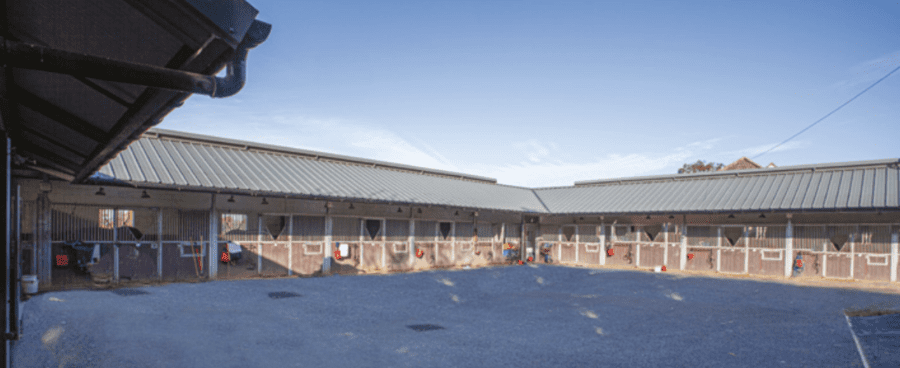
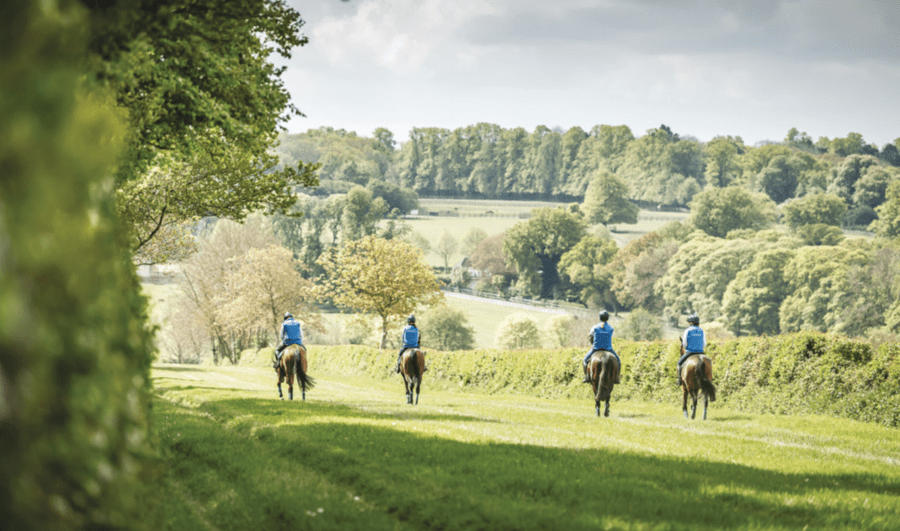
Billed as a place for “preparing champions” and run by a “dedicated team” focused on pre-training and rehabilitation, Longholes was founded by the Accrington born “playboy” textile heir and racehorse breeder Sir George Bullough (1870 – 1939) in the 1920s and bought by Sheikh Fahad in 2013.
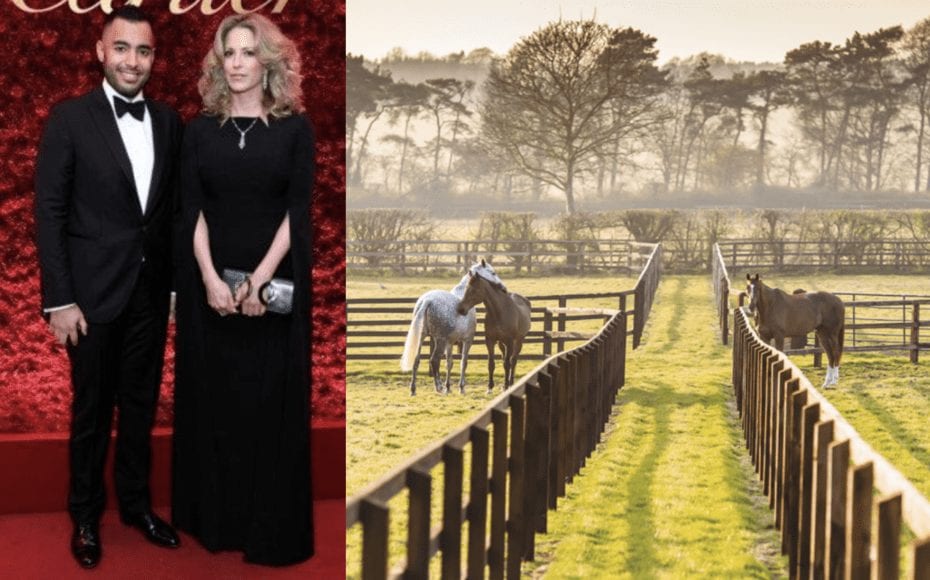
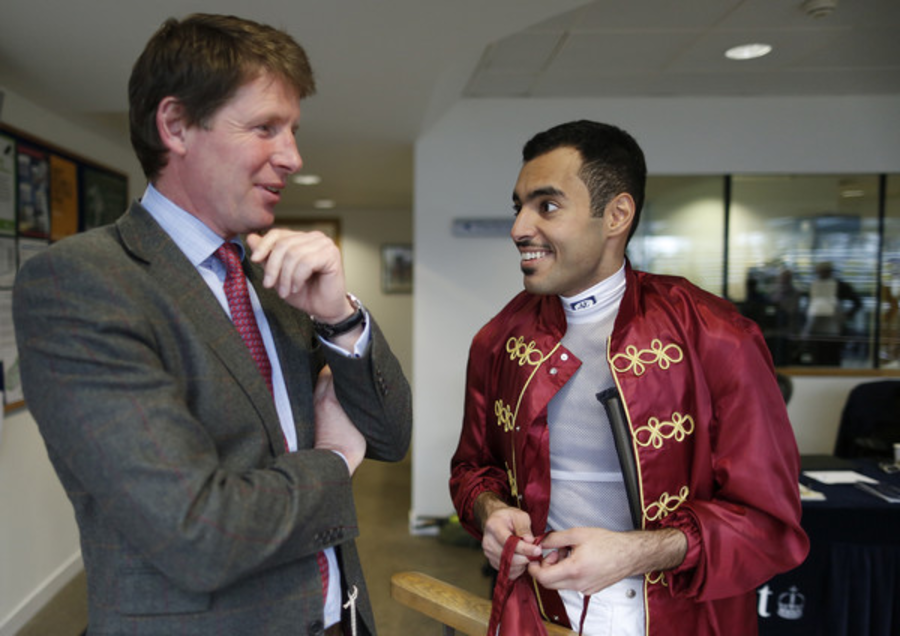
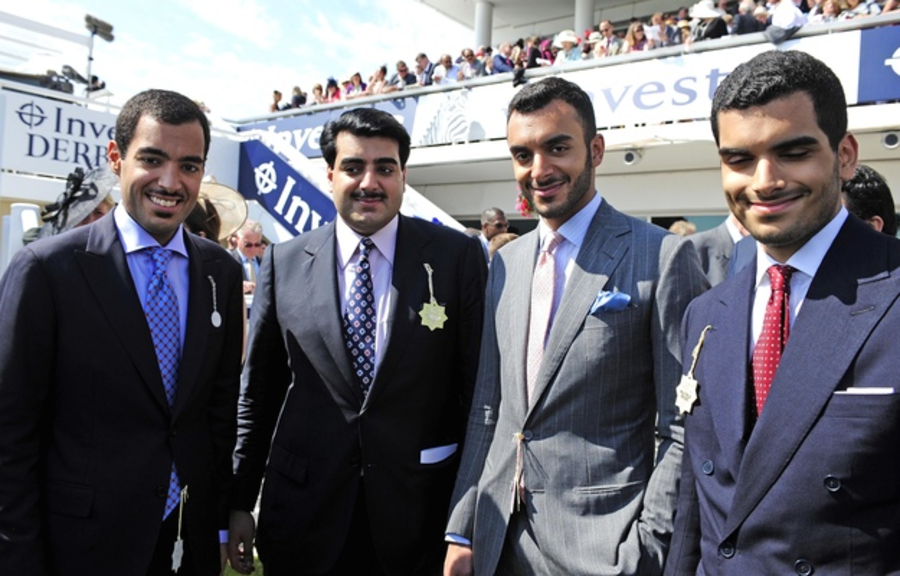
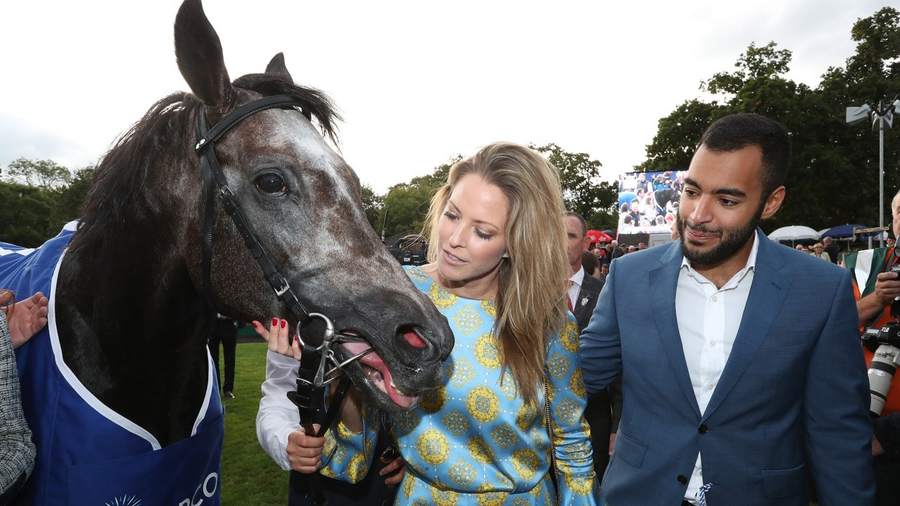
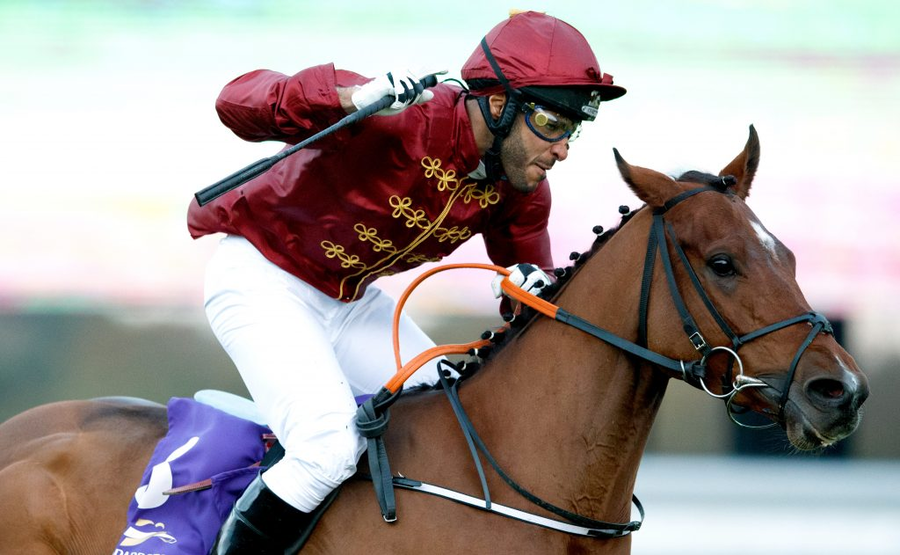
Sheikh Fahad Bin Abdullah Al Thani chats with David Redvers in 2016.Sheikh Fahad wiht his brothers Sheikh Hamad, Sheikh Suhiam and Sheikh Khalifa.Sheikh Fahad and his wife Sheikha Melissa with the late Roaring Lion.Sheikh Fahad won the Corinthian Challege at Leopardstown on the Gordon Elliott trained Brutal in October 2017.
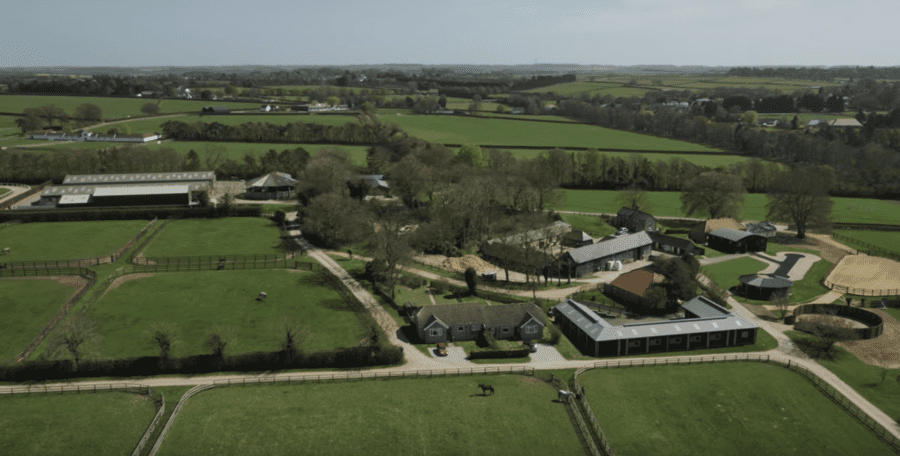
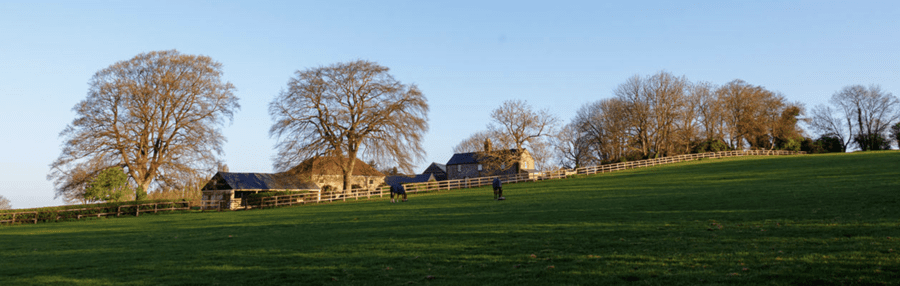
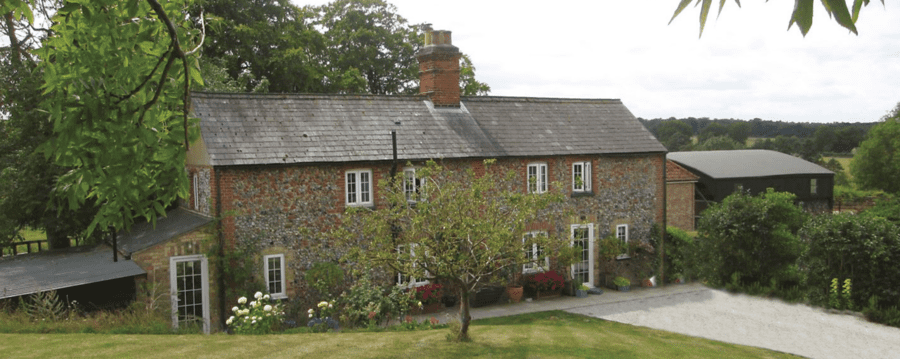
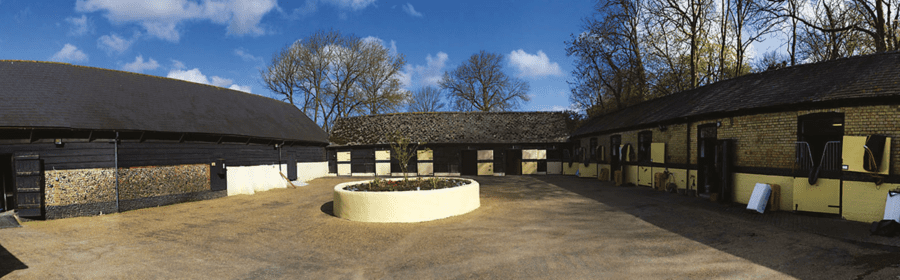
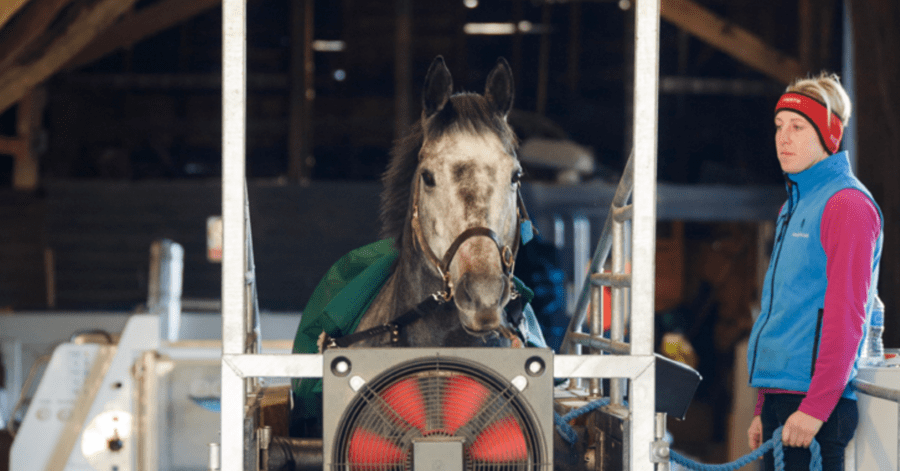
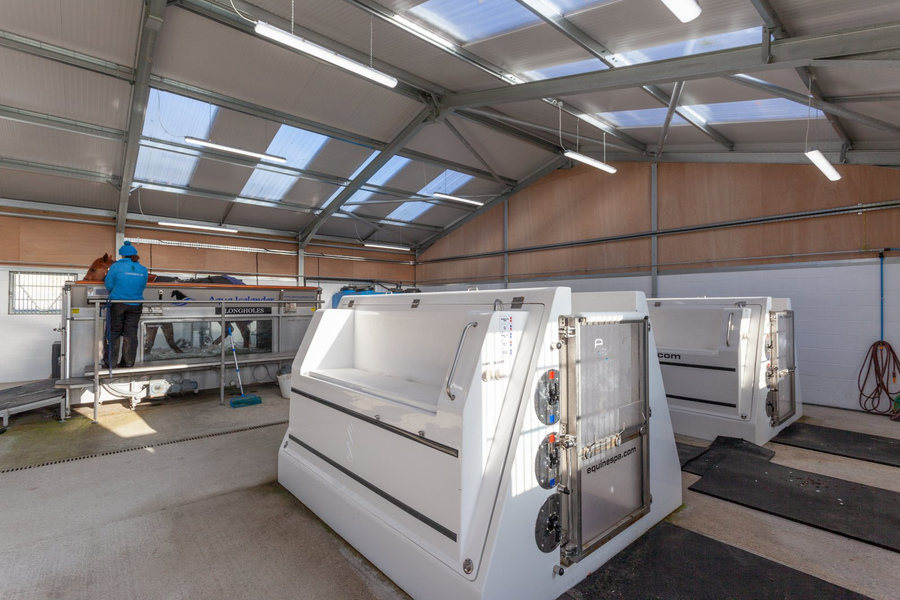
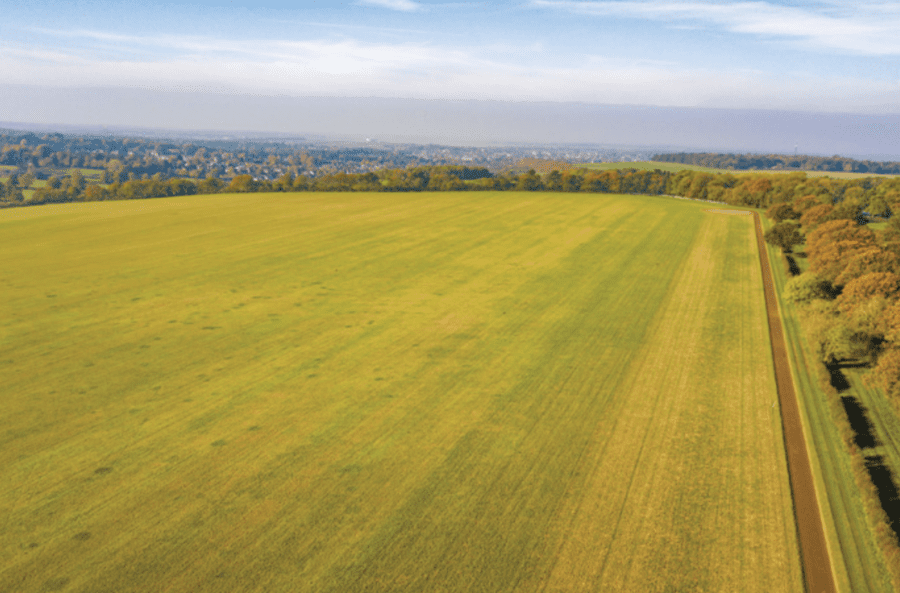
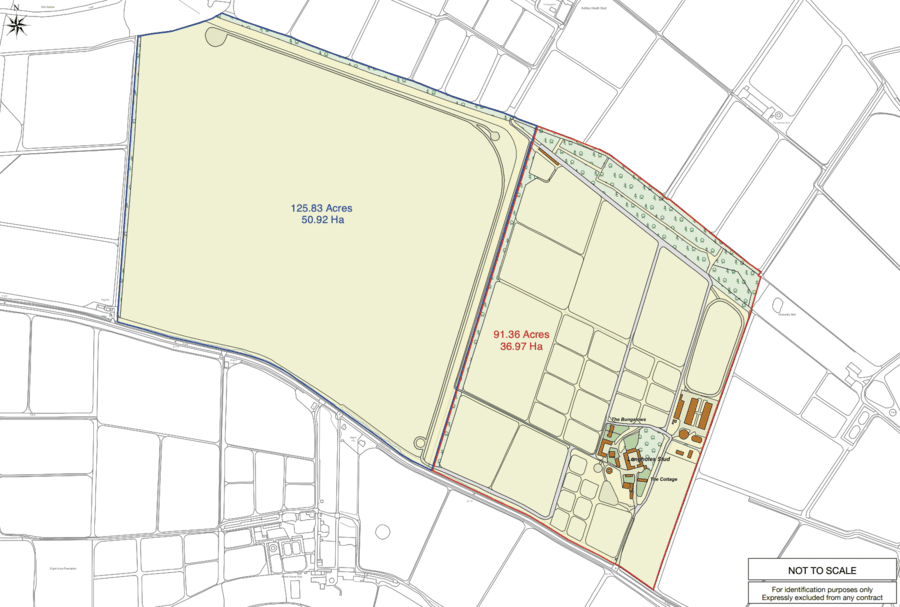
Comprising of 217 acres of paddocks, schooling grounds and a 6-furlong gallop, the “renowned Newmarket stud farm” – which is 16 miles from Cambridge and 70 miles from London – includes not only 88 boxes, but also what has been described as a state-of-the-art “feel good factor” spa with hydro and water treadmill facilities amongst other things. There is a stud manager’s house, a guest cottage, a pair of staff bungalows and a pair of workers’ log cabins also.
“Sheikh Fahad purchased Longholes in 2013 with a view to turning the attractive and historic stud farm into a state-of-the-art pre-training and rehabilitation establishment servicing the requirements of his own Qatar Racing and also the wider training centre of Newmarket. Seven years later and Longholes boasts an incredible array of modern facilities, an outstanding team of committed and highly trained professional staff and a client list that boasts many of the most recognised names in horse racing, eventing and show jumping.”
“Sheikh Fahad is proud of what has been achieved at Longholes but a change in his own personal circumstances means that the farm’s exciting future now needs to be in another’s hands.”
Speaking to Nick Luck of Racing TV in April 2019, Sheikh Fahad remarked:
“We love horses, we’ve grown up with horses, me and my brothers. The idea was always to build something for the future, hopefully the long-term future, for generations to come. I’d like to see my kids grow up into a dynasty of breeding operations, of racing operations that they can take on from there.”
“I watched I think, my early memories… I watched Channel 4 Racing, I think the Cheltenham Festival. It was very different to racing back home. We only had one racetrack and it was flat racing and they go round in the circle. My dad was the leading Arab racehorse owner in the country, so he won everything. It seemed like it was that easy to do and I started watching racing here and I saw all the different racecourses and National Hunt. And we don’t have National Hunt back home, so I was very curious about the whole industry. I wanted to learn as much as possible from every angle of it.”
“I think the quality of racing, as you watch racing around the world, the biggest quality of racing is in England and Ireland in terms of top-class racing… It is good for the breed, it shows the best horses to breed onwards. The classics in Britain always prove to be the best source of that.”
Of the flaws of British racing in general and perhaps hinting at a move to spending more time participating in American racing, the Sheikh continued:
“It needs to up its game. It needs to find ways to attract more people into the sport. At the moment we are very grateful for the Sheikh Mohammeds in the business… Without Sheikh Mohammed [Bin Rashid Al Maktoum], this year would have been a disaster for a lot of people. The thing is that British racing needs to find more ways to attract quality. I think quality is very important.”
“If you look at, for instance, Japanese racing, they have got a two-tier system. They have the JRA and the NRA. The JRA is the elite class of racehorses and horse racing and I think if you don’t break your maiden as a three year-old, then I think, that horse is not allowed to run in the JRA anymore. They have to go down to the NRA. Why can’t that some way be explored in British racing? We can’t be racing, I think you’re asking people to race for two grand or three grand… whilst in Australia they have Saturday races with a minimum of a hundred grand a race. And in America, maidens are worth a hundred grand. And in California, I’ve got horses, and it seems ridiculous that, if you are taking a business point of view of racing and you open your books, that it would be ridiculous to have horses [in Britain] in comparison to there. The only reason we’re racing here is for the quality and prestige that we have at the moment, but you can’t rest on that. You have to change.”
Later, in September 2019, the Sheikh’s Californian trainer, Simon Callaghan, told TheRacing Post:
“Sheikh Fahad is upping his interest in racing in America. He’s spending more time in California, so he wants to go after some of these high-end colts and go down the road of the Derby, we hope… I think his Californian wife has something to do with it.”
Agents Windsor Clive seek £6 million ($7.5 million, €6.8 million or درهم27.4 million) for Longholes and offer it as a whole or in two lots. For the firm, George Windsor Clive remarked: “We’re still bringing Longholes to the market in these strange times [in the middle of the coronavirus pandemic] so that buyers can react quickly once restrictions are lifted.”
For now, the other European racing operations of the Sheikh and his brothers and their Qatar Racing Ltd. company – which includes a presence at the David Redvers owned Tweenhills Farm in Gloucestershire and their own Spring Lodge stud farm in County Limerick – remain unaffected.
Repossessed Grade I listed Dorset mansion once worth circa £15 million for sale for £3 million; the catch? It’s burnt to the ground
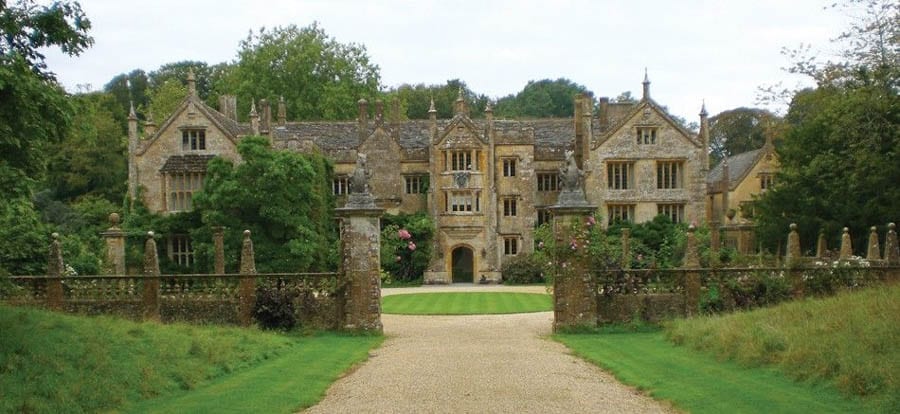
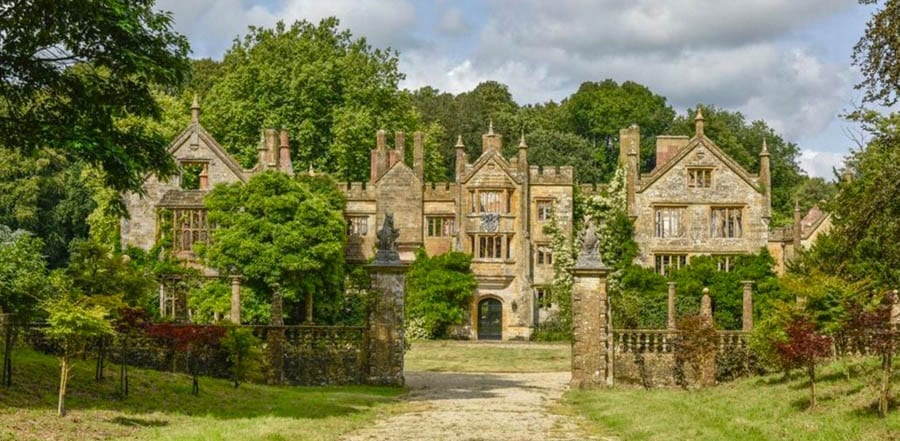
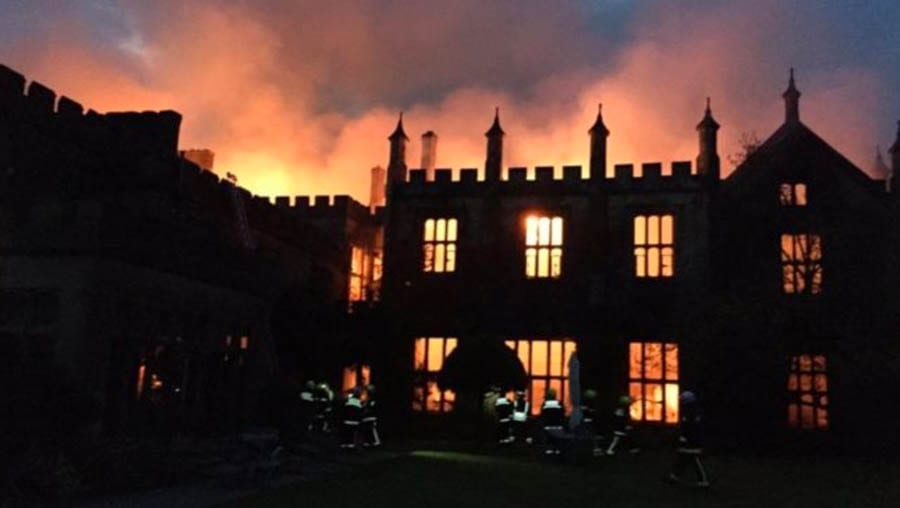
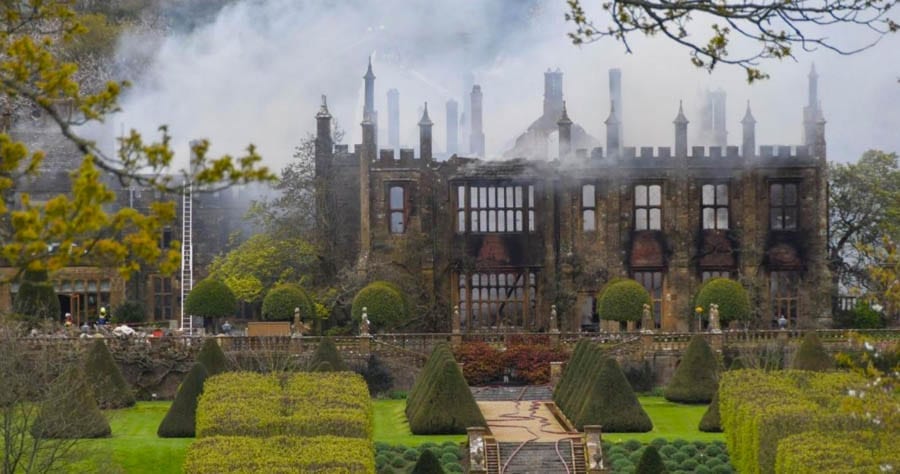
An “exceptionally important,” Grade I listed, 38,000 square foot, 16th century country house in Dorset with 131.6 acres for just £3 million is certainly something that sounds like a bargain. Sadly, however, Parnham House, near Beaminster comes with a catch: it burnt to the ground in April 2017 and doesn’t even have a roof.
Remodeled by the architect John Nash in 1810 and subject to a costly renovation – sadly now obviously gone – since being bought by the late financier Michael Treichl and his wife Emma in 2001 for £4 million, Parnham House has variously been a family home, was requisitioned during World War II by American troops and was the School for Craftmanship in Wood from 1976 to 2001.
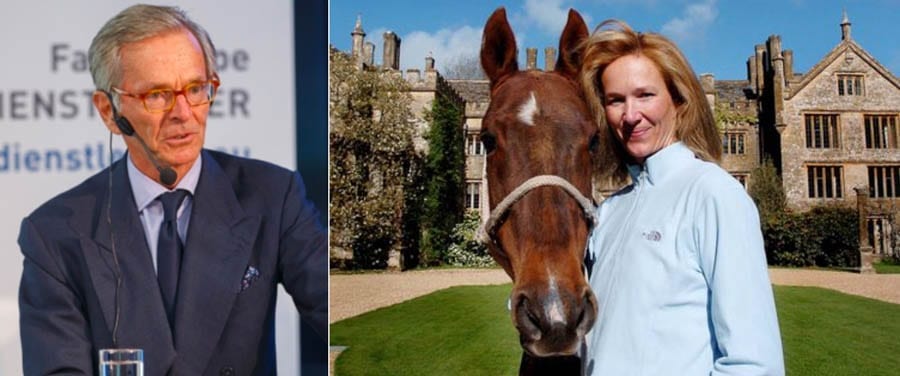
Michael and Emma Treichl
The front elevation of Parnham House before the fire
The front elevation of Parnham House after the fire
The fire in full force
The aftermath
Now listed on the Heritage at Risk Register and likely to cost millions to restore, Parnham House’s destruction came about as a result of an arson attack on the property. The wealthy financier Treichl, who subsequently strangely left just £10,000 in assets in his will after drowning himself on Lake Geneva in June 2017. He is said to have suffered severe depression and possibly suffered catastrophic losses after betting on Brexit.
Offered for sale by Sanderson Weatherall, the estate also includes an undamaged dower house, an undamaged cottage and equestrian facilities. In addition there is a mature park, formal gardens, a lake, walled gardens, a deer park, a tennis court, a bowling green, a swimming pool, fields, woodland and a stream.
Parnham House – The Numbers
2018 – For sale for £3 million ($3.8 million, €3.3 million or درهم13.8 million).
2017 – Said to be worth £15 million ($18.8 million, €16.6 million or درهم69.1 million).
2001 – Sold to Michael and Emma Treichl for £4 million ($5 million, €4.4 million or درهم18.4 million).
“One of Britain’s finest 20th-century country houses” has been placed for sale for £20 million; it comes with 530 acres and was built by the late businessman Sebastian de Ferranti in the 1980s
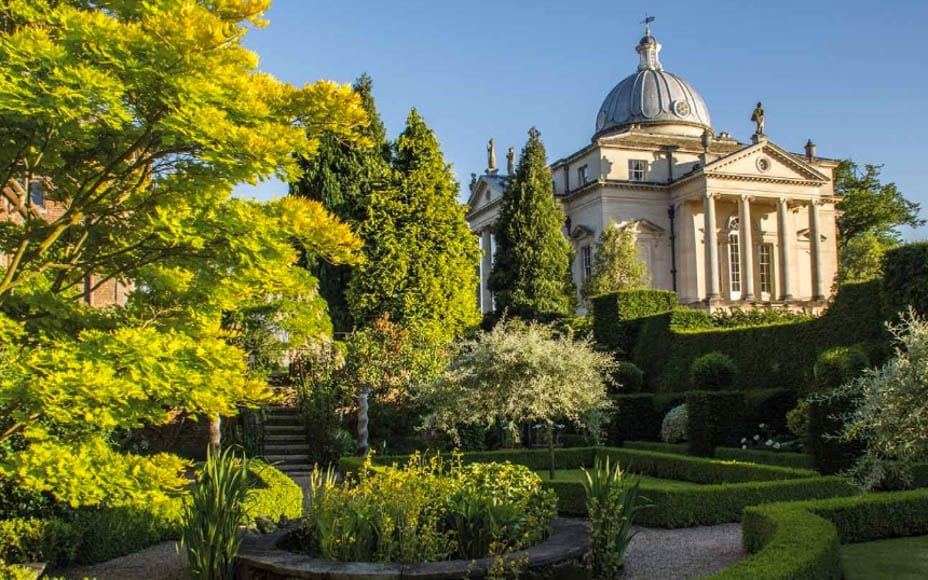
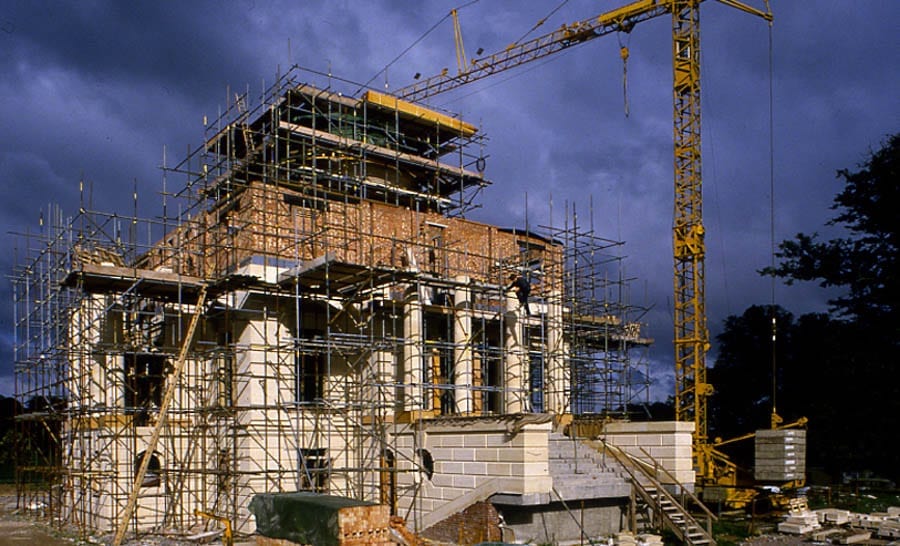
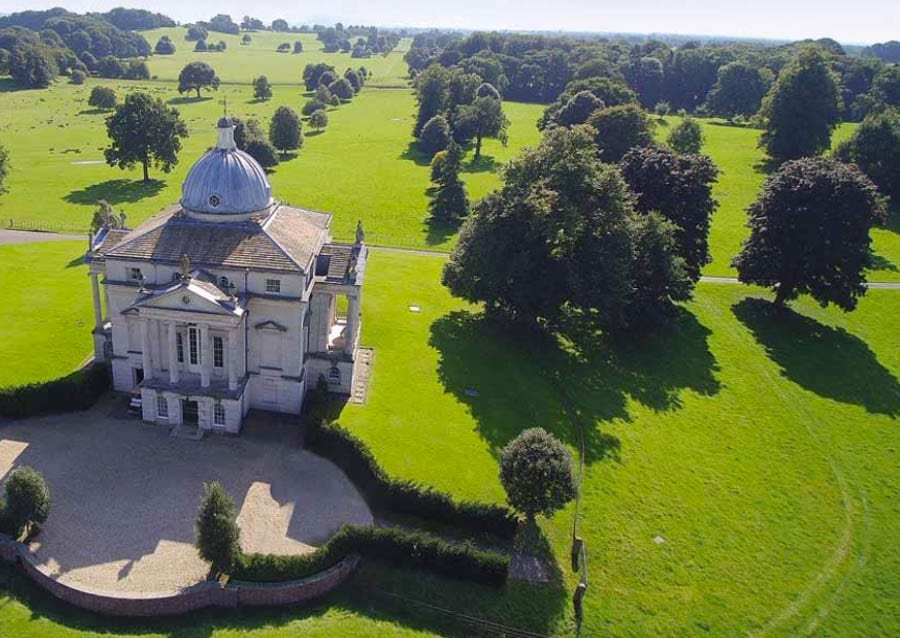
One could imagine being in the early 18th century or in Italy even on first taking a look at the Palladian style Henbury Hall, near Macclesfield in Cheshire. However, as Moliere said: “One is easily fooled by that one loves” and in reality this 12,496 square foot beauty was actually constructed between 1980 and 1986.
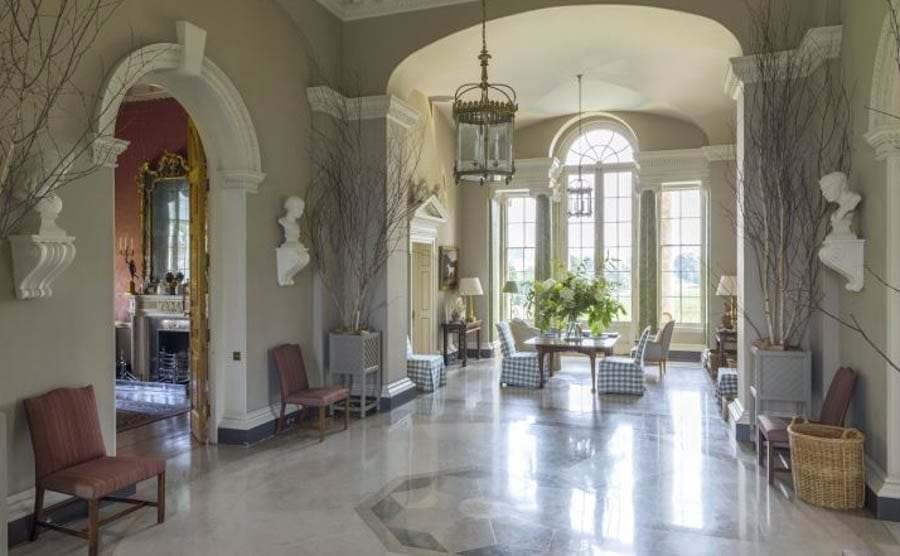
The vision of the buccaneer businessman and patron of the arts Sebastian de Ferranti (1927 – 2015) and based upon Palladio’s Villa Rotunda at Vizenza, the 6-bedroomed main residence stands on the site of an earlier mansion demolished in the 1950s. It was designed by the architect Julian Bicknell in conjunction with Felix Kelly and David Mlinaric, was constructed by Tarmac Construction and is faced with warm-toned limestone from north east France. The estate also includes a Grade II listed dower house, five further houses and cottages, a Grade II listed and stable block and courtyard.
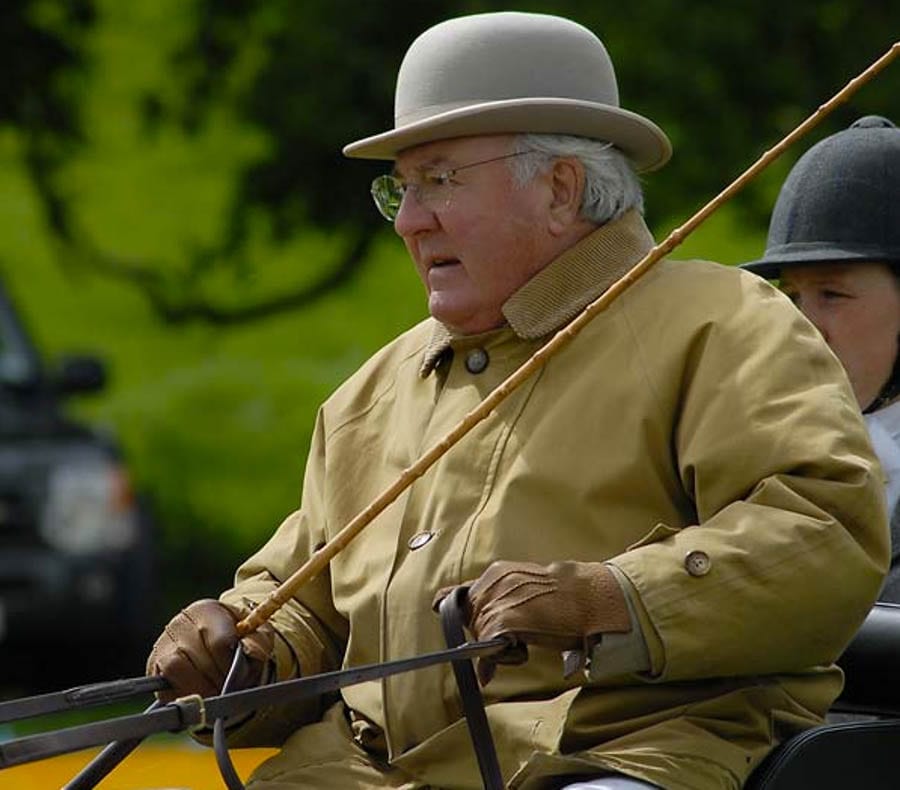
The late Sebastian de Ferranti
Henbury Hall during construction
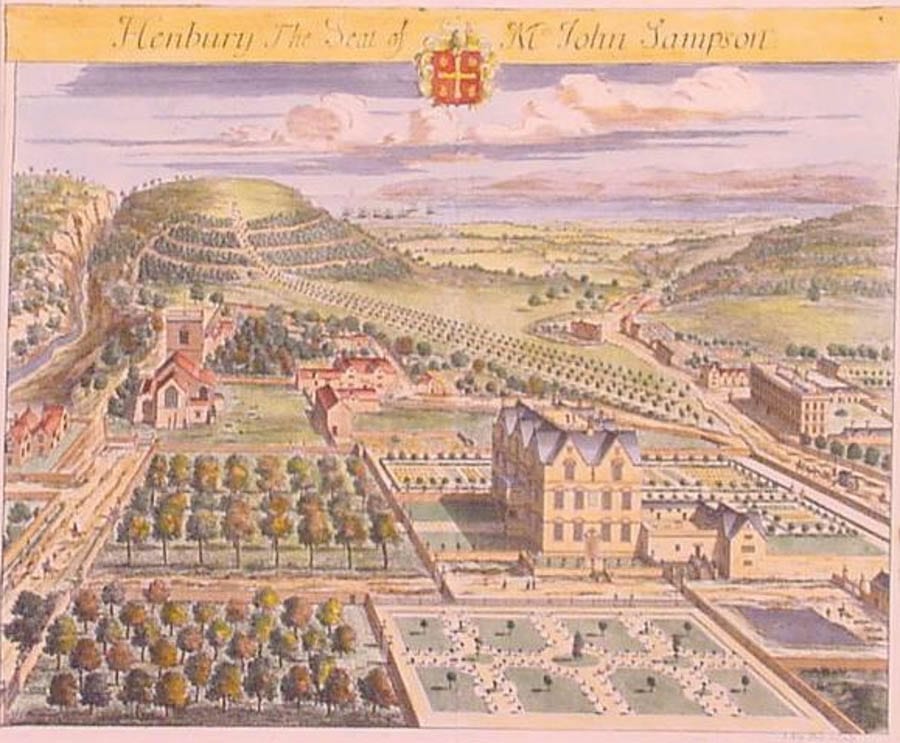
A depiction of the original Henbury Hall in 1707
The front elevation of the current Henbury Hall with parkland beyond
Aside from 12 acres of immaculate gardens with a series of lakes, there is a 200 year old landscaped park, woodland, agricultural land, a beautifully designed swimming pool, a tennis court and a polo field.
Selling agents Savills offer the Henbury Hall Estate as a whole for a guide price of £20 million – a world away from the £9,000 sum the estate sold for in 1872 (the equivalent of £934,000 today).
Derelict 18th century Oxfordshire mansion with 125 acres of land for sale for £10 million
A 125-acre Oxfordshire estate with Humphrey Repton landscaped grounds has gone on sale for £10 million ($13.2 million, €11.3 million or درهم48.7 million) in spite of being described as being “in poor order.”
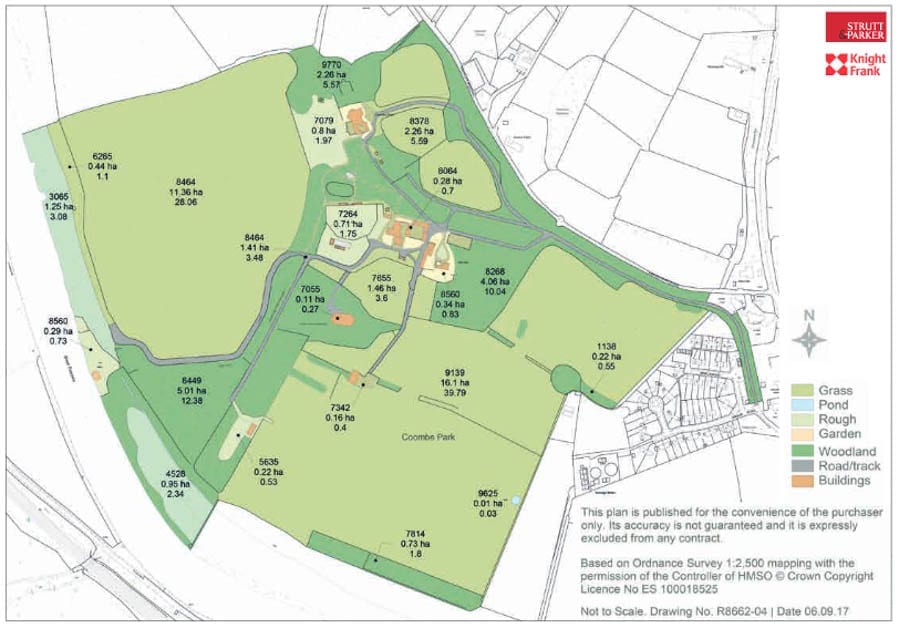
The Coombe Park Estate at Whitchurch-on-Thames is situated at the end of a ¾ of a mile long private drive just 49 miles from Central London. Constructed in 1865, the original mansion was later demolished and what now remains consists of a 13,368 square foot house created from the original servants’ quarters, a coach house and an extension built in 1982.
Featuring 4 main reception rooms, an indoor swimming pool, 6 bedrooms and 5 bathrooms, Coombe Park itself “has been unoccupied a number of years” but now presents an opportunity for a buyer to unleash its “enormous potential” according to selling agents Strutt & Parker.
In addition to the main residence, there are three additional houses, an orangery, a coach house, offices, a sports pavilion, an indoor tennis court, stabling and a boat house included in the sale.
According to a blog from 2008, the estate – which was used by the American military as a rest and recuperation ‘flak house’ during the Second World War – has been in the ownership of an individual from Rotterdam since 1982. He is described as having now “sadly lost his fortune.”
EXCLUSIVE – “Nationally important” Grade II* listed Berkshire mansion in 130 acres for sale for £26 million; its interior is yet to be renovated
A Grade II* listed building capable of being reinstated as one of Britain’s finest country houses has just been placed on the market for £26 million.
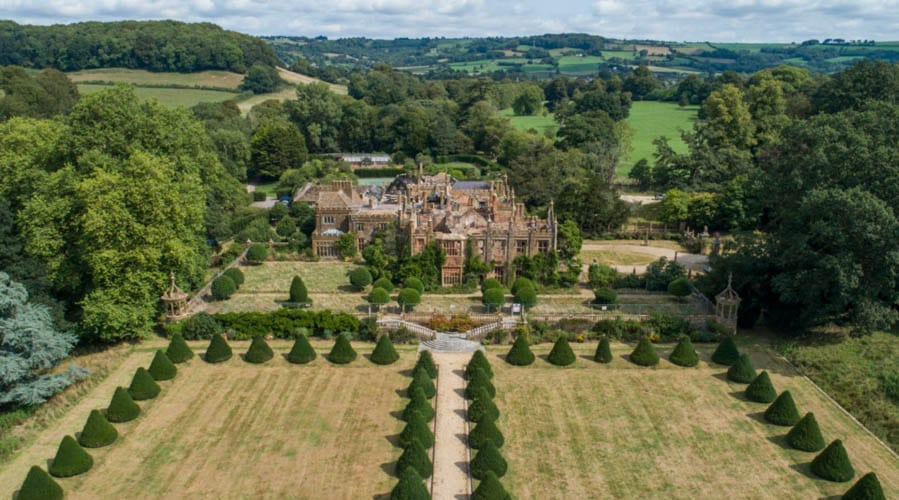
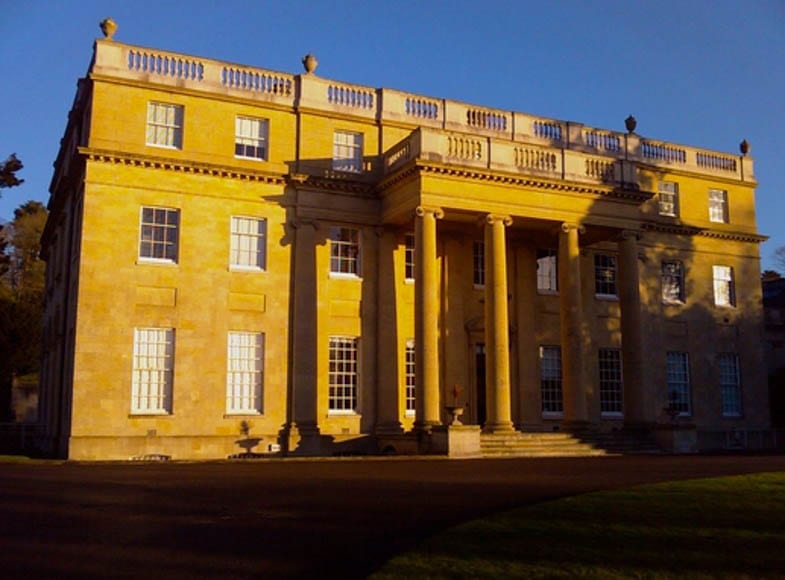
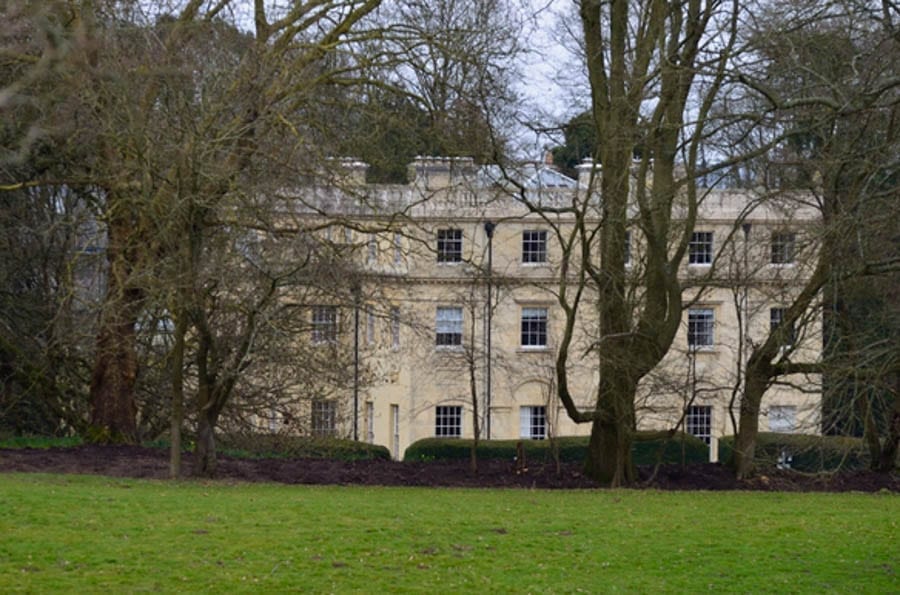
Benham Park – formerly known as Benham Vallence – at Marsh Benham, near Newbury comes with around 130 acres of Grade II listed Capability Brown (1716 – 1783) designed parkland and currently extends to 27,620 square foot. It has planning permission in place to either revert to a truly epic single family mansion or to convert into a 100 bedroom ‘wellness centre’ to rival Champneys in Hertfordshire and Clinique La Prairie in Switzerland. The schemes proposed would provide between 50,000 and 140,000 square foot of accommodation and, already, businessmen Harry Marriott and Michael Fresson, owners since 2011, have restored the exterior of the building along with its gardens and park.
Built at the behest of the nobleman William Craven (1738 – 1791) to designs of the Fulham born architect Henry Holland (1745 – 1806) in 1774 – 1775, this fine neoclassical house was constructed from Bath stone and later altered by the extremely wealthy Sutton baronets during their tenure in the late 19th and early 20th centuries. The estate was sold for £1 million to the innovative computer manufacturers Norsk Data in 1983 and remained in the firm’s ownership until it was dissolved in 1992. It then became the offices of other technology companies until again being placed for sale for £6 million in 2010.
Benham Park in the era when it was used as offices; the modern buildings have now been demolished and the car park landscaped
The main mansion prior to renovation of its exterior
A view from another angle (after external renovation)
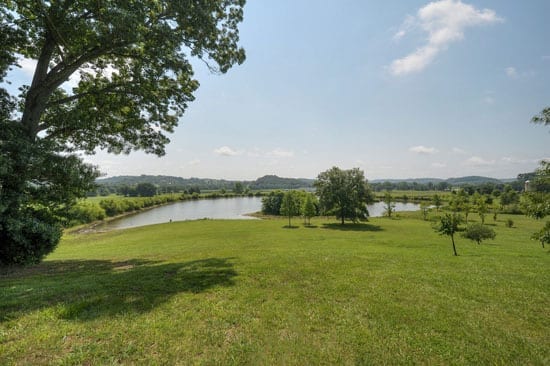
From the lake
And from its imposing entrance
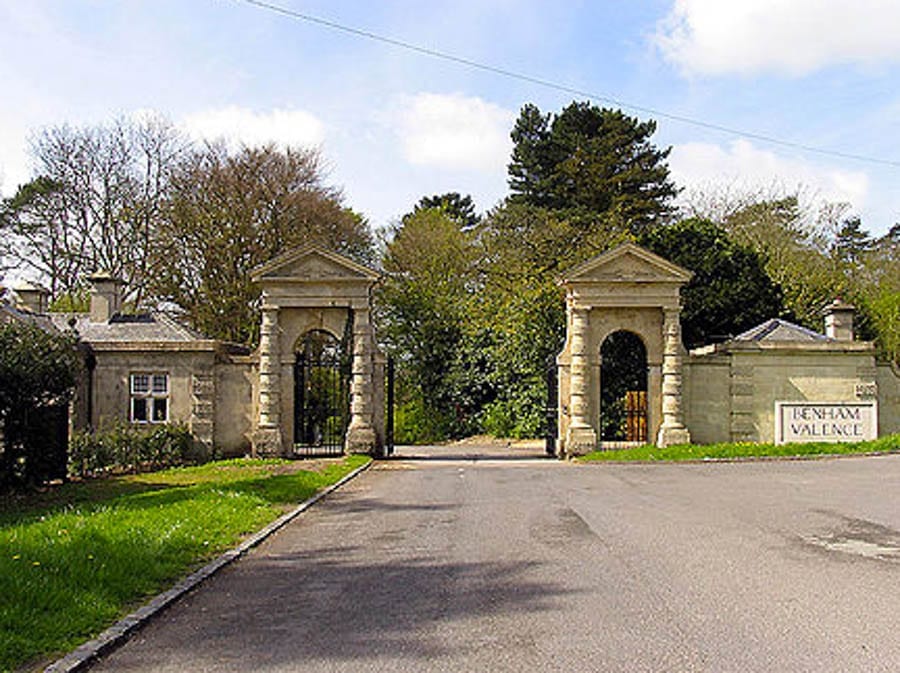
One of several entrances to the estate
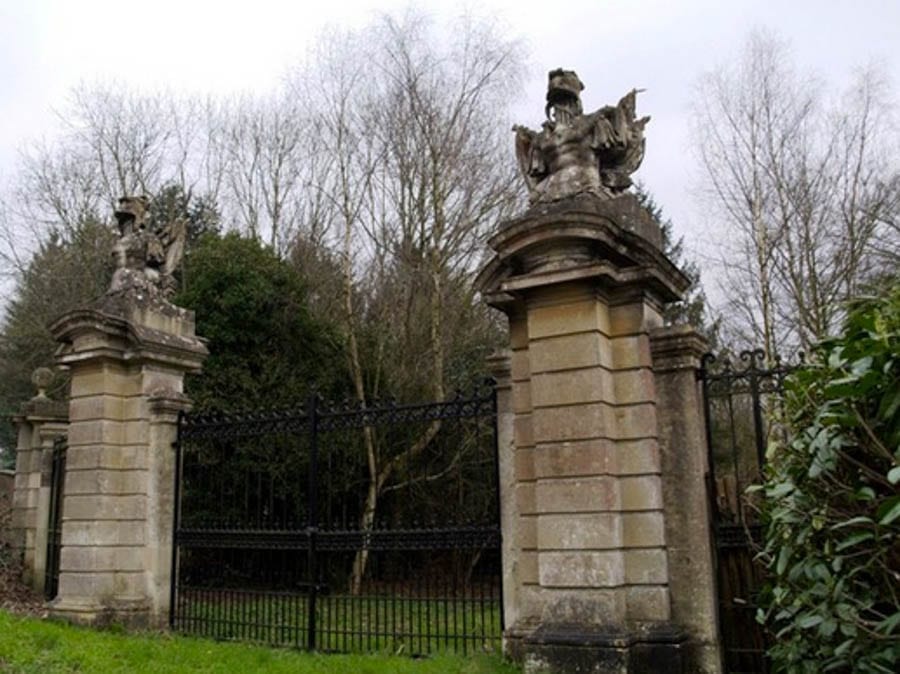
Another set of impressive gates
Should a buyer use the existing designs for a residential scheme, they would find themselves owning a house that would not only come with 12 reception rooms and 29 bedroom suites, but also one with a sports complex, a sculpture gallery, a 40-seat cinema and garaging for 50 cars. Aside from an existing 5-bedroom mill house on the estate’s 10 acre lake and a gate lodge, the proposals would add a further 8 additional ancillary houses also.
Of Benham Park, Crispin Holborow of selling agent Savills commented:
“[This] is a nationally important stately home so its sale presents a very exciting proposition for a future owner to oversee its transformation. The prospect of restoring a property of such magnificent proportions with excellent access to London has not arisen for many years, and we expect interest from potential buyers for either its reinstatement as a significant country residence or its repurpose into a world leading wellness centre”.
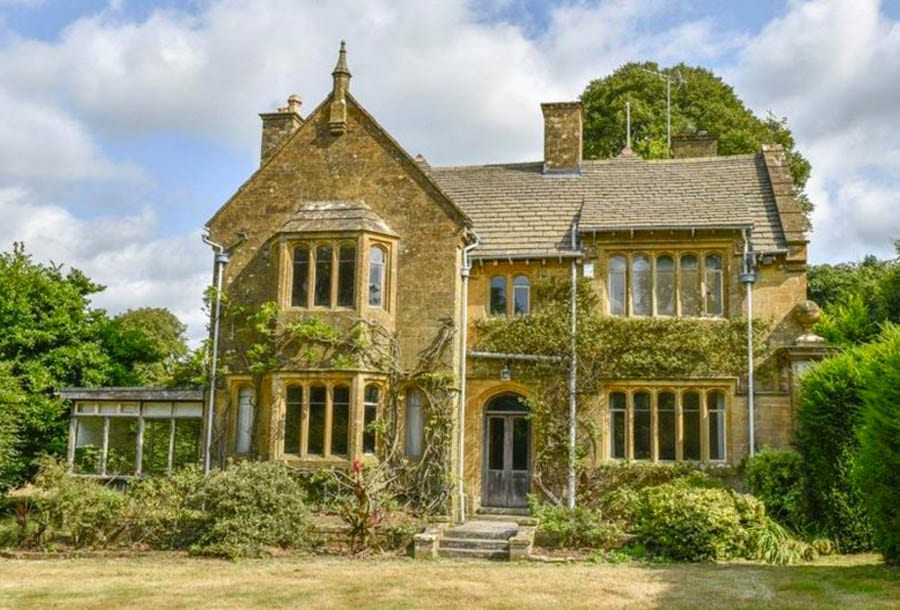
Those looking to extend the compound further have the option to purchase two separately owned properties that were formerly part of the estate. A house known as ‘Greenhouses’, for sale with Savills, is offered for £1.3 million and comes with 1.47 acres of land whilst Mill Bank House, which stands in 2 acres, is on the market through Strutt & Parker.
The Numbers – Benham Park
1771 – 1774
William Craven, 6th Baron Craven paid Capability Brown £7,150 for works to the house and grounds. This sum is the equivalent of £989,000 today ($1.3 million, €1.1 million or درهم4.7 million).
1982
Sold to Norsk Data for £1 million (the equivalent of £3.2 million, $4.1 million, €3.7 million or درهم15.1 million today) by Sir Richard Sutton (born 1937).
2010
Placed on the market for £6 million ($7.7 million, €6.9 million or درهم28.3 million).
2011
Sold to Harry Marriott and Michael Fresson for £5 million ($6.4 million, €5.7 million or درهم23.6 million).
2017
Benham Park placed on the market for £26 million ($33.4 million, €29.9 million or درهم123 million).
Separately owned estate houses
Mill Bank House – On the market for £1.4 million ($1.8 million, €1.6 million or درهم6.6 million).
Greenhouses – On the market for £1.3 million ($1.7 million, €1.5 million or درهم6.1 million).
Essex “neo Georgian Palladian” residence created from an ordinary detached house marketed for £5.4 million; it is a bit of a mish-mash and described as “over-engineered”
Estate agents normally wax lyrical about properties they are marketing but in the case of £5.4 million ($6.7 million, €6.3 million or درهم24.8million) Threshers House at Threshers Bush, near Harlow in Essex, Beresfords bizarrely go as far as to describe it as “over-engineered”.
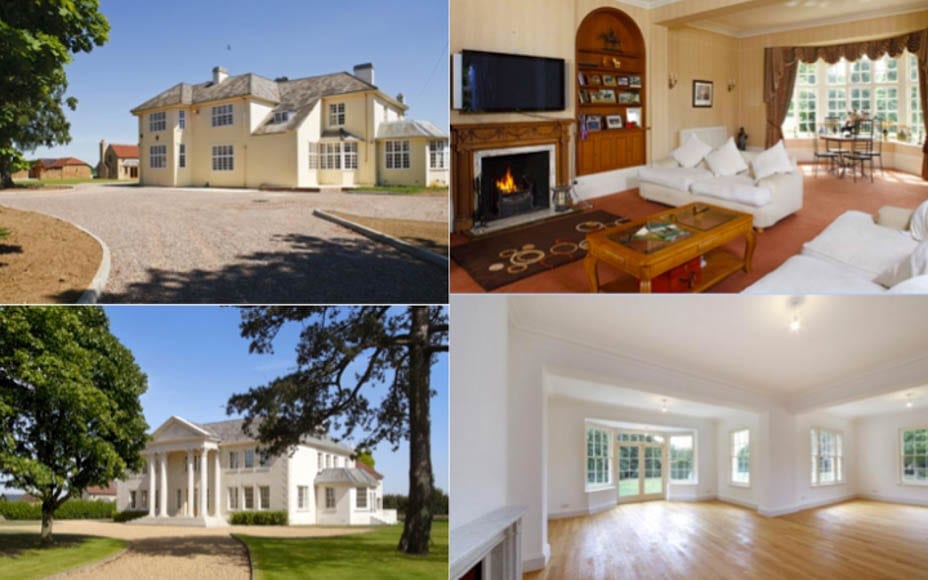
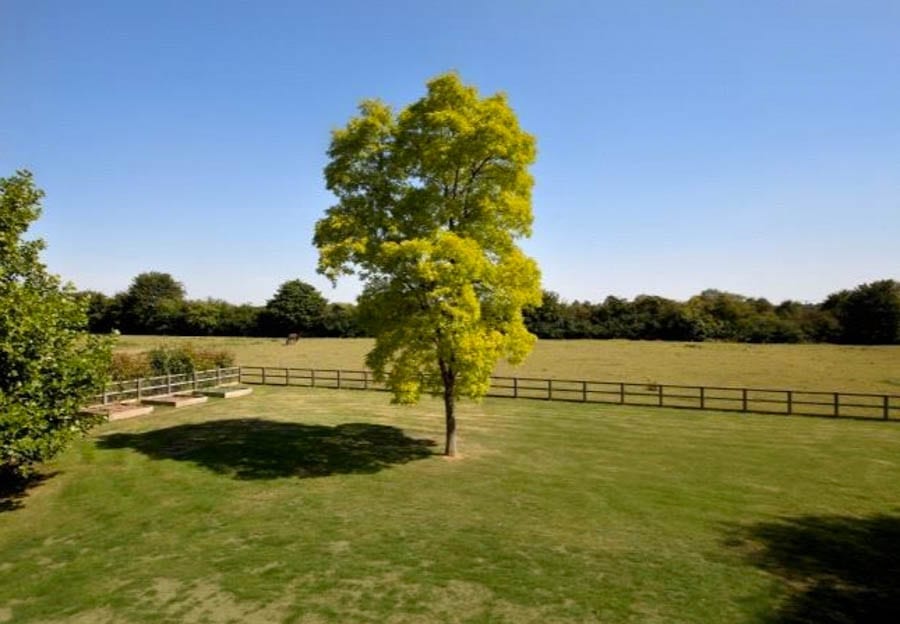
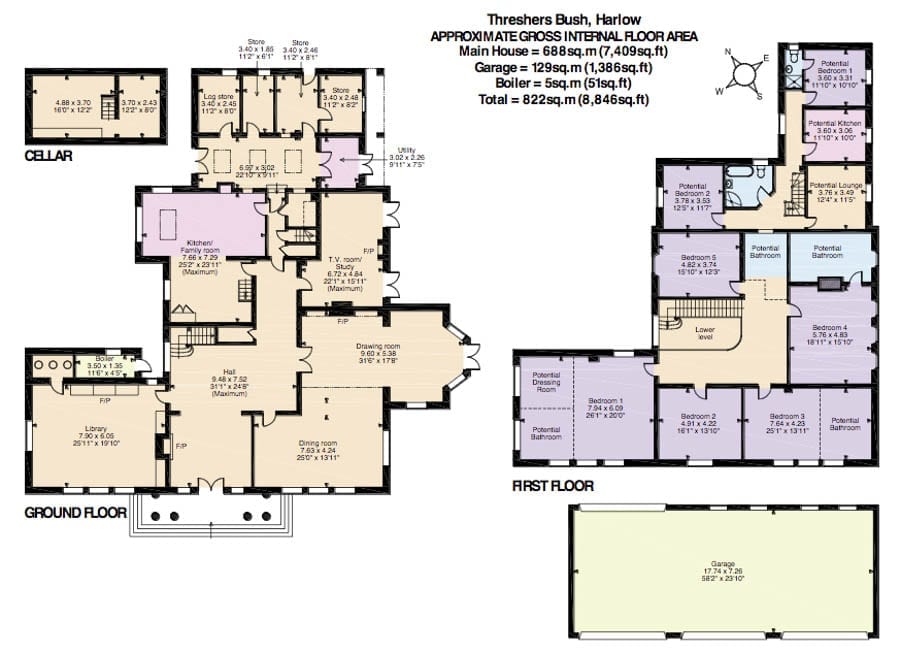
Situated on a plot of 11.5 acres and redeveloped and extended since 2010 by an “award winning builder” named Paul Pickering, the 7,409 square foot main residence offered is described as being “neo Georgian Palladian” in style. Given such an architectural period doesn’t exist as a sole entity, it is a bit of a mish-mash but given the new building is an improvement on the plain house that it has been created from, one can be forgiving of the result.
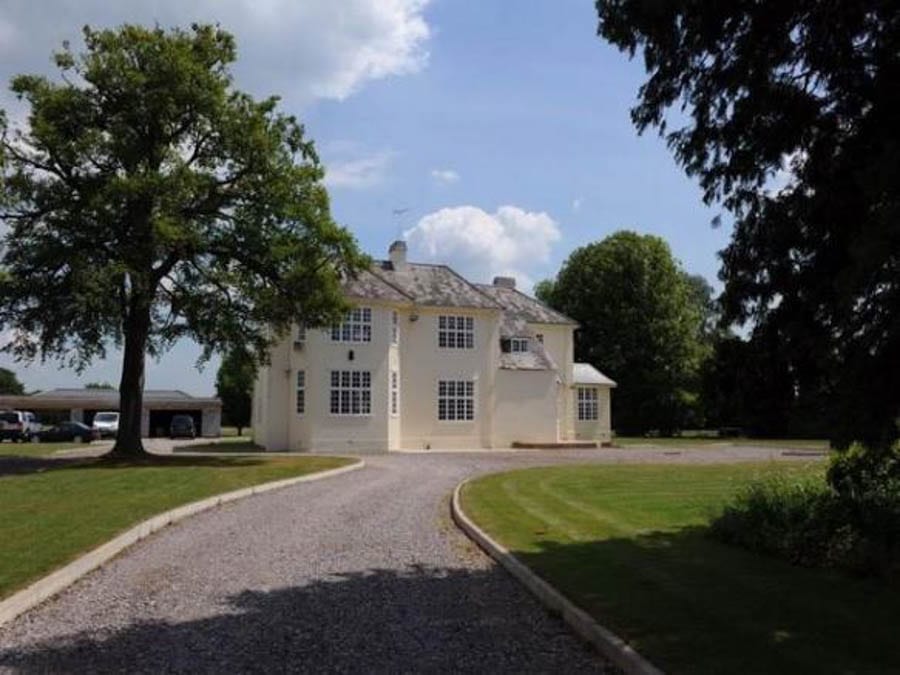
The old Threshers House, Hobbs Cross Road, Threshers Bush, Harlow, Essex, CM17 0NP
The new Threshers House, Hobbs Cross Road, Threshers Bush, Harlow, Essex, CM17 0NP
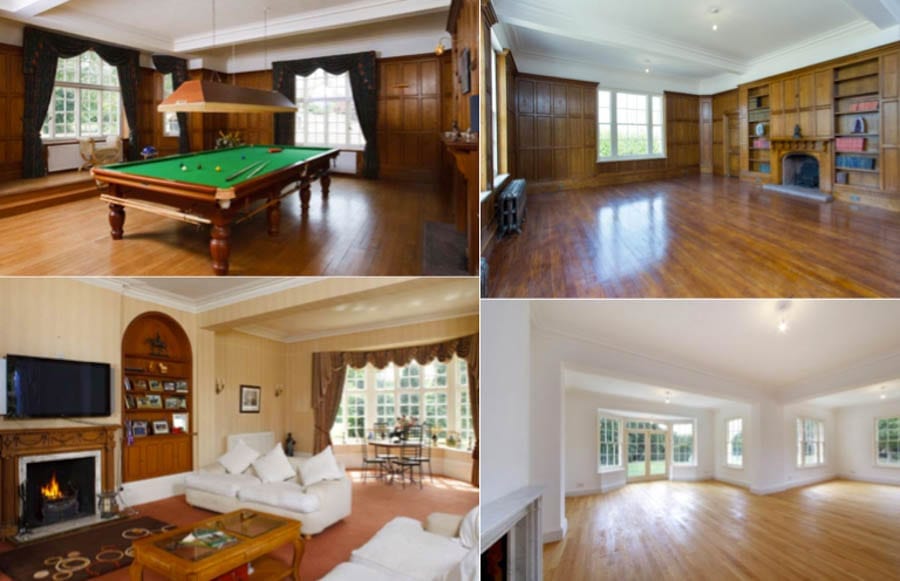
The old interior of the building and the new interior
A proposed design that was ultimately rejected by planning officials at Epping Forest District Council
Aside from a somewhat ostentatious South Fork-esque portico entrance, Threshers House is presented without kitchens and bathrooms so as to allow “incoming purchasers to design to their own requirements”. It includes 5 reception rooms, 5 bedrooms and a 2-bedroom first floor flat and comes with planning permission for a 1,400 square foot orangery and underground leisure facility. Within the grounds is a completed 1,988 square foot 3 bedroom cottage, a 886 square foot bungalow, a 768 square foot bungalow and a 1,386 square foot six car garage.
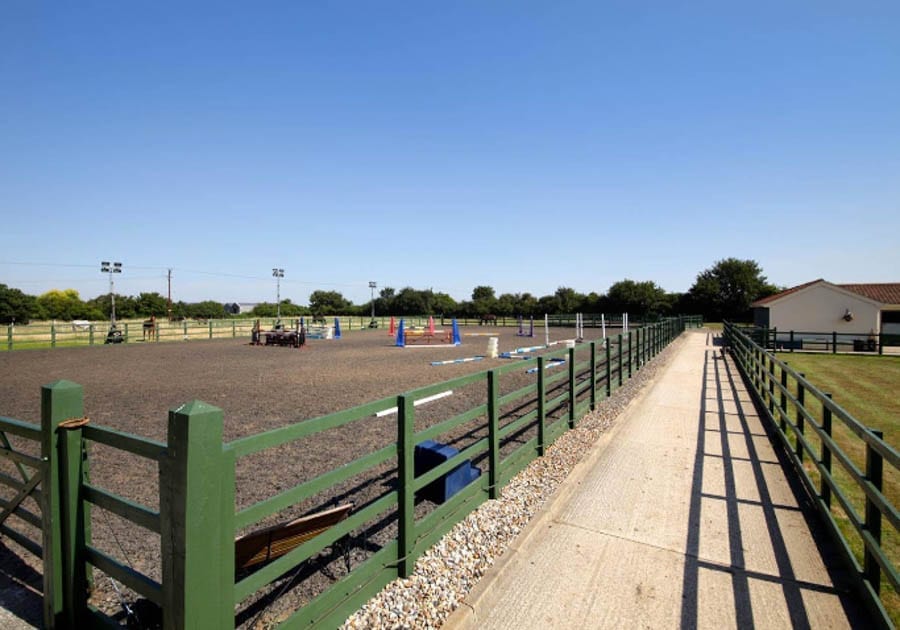
Elsewhere and benefitting from separate access, a tiled stable and thatched barn complex provides accommodation for 14 horses and was previously run as a business named Threshers Equestrian. It comes with a horse walker, floodlit manège, lunging room and hard standing as well as a number of paddocks.
Threshers House – which is situated about 40 minutes drive from Canary Wharf – is also available for £3.25 million ($4.06 million, €3.81 million or درهم14.92 million) with just 5 acres of land and minus the ancillary accommodation.
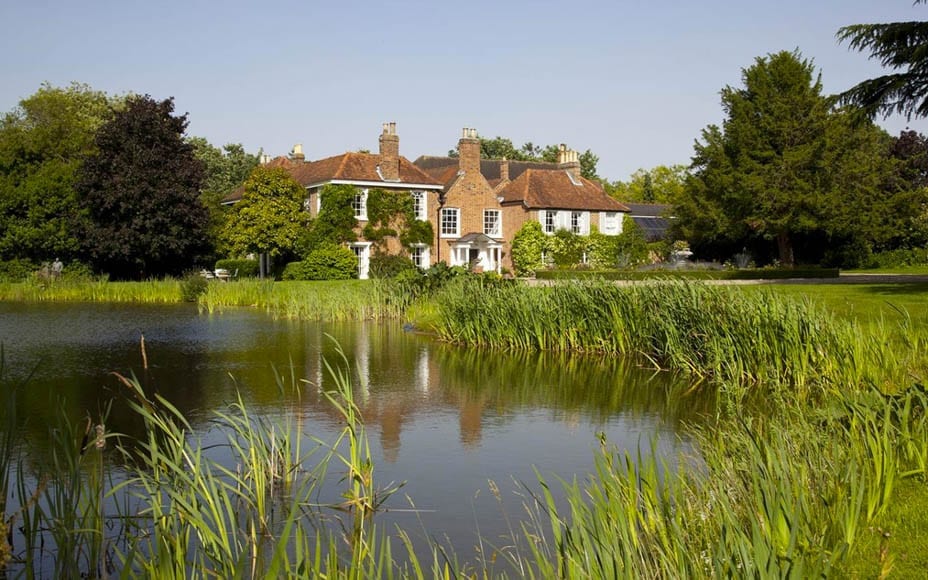
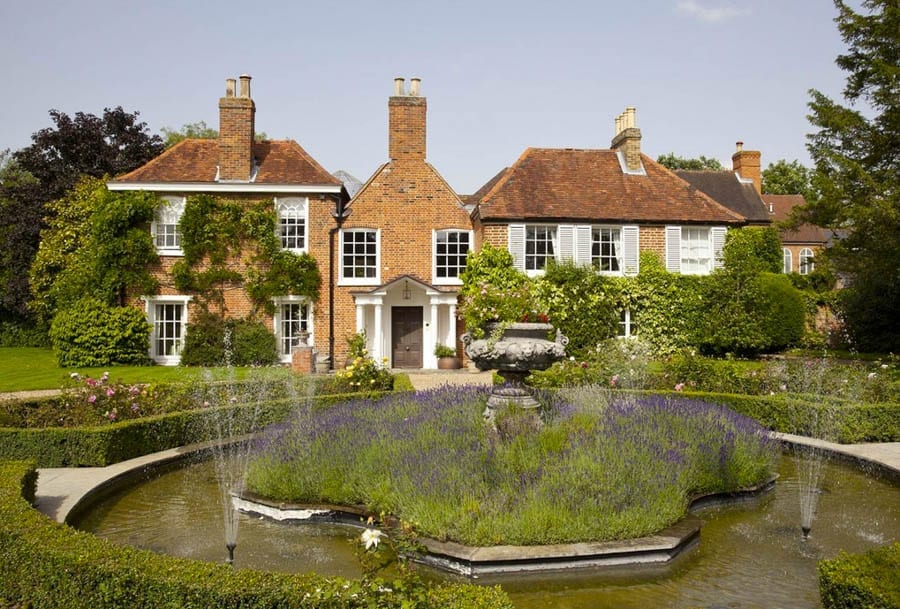
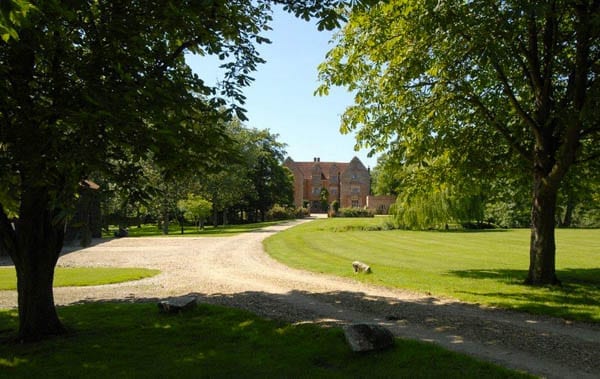
Not connected with the LGBT community in any way, but in fact named after a man named John Gays, “Gays” at Holyport, near Maidenhead in Berkshire dates to around 1456 and is currently for sale for £5.95 million ($7.36 million, €6.88 million or درهم27.05 million).
Gays or John Gays House, Langworthy Lane, Holyport, Maidenhead, Berkshire, SL6 2HN, England, United Kingdom
Also referred to as “John Gays House” and offered to the market by Christie’s Real Estate, this 12,482 square foot “bijou old world residence” stands in 20.75 acres and is predominantly built of red brick elevations with attractive sash fenestration, under a tile roof. It is Grade II listed, dates to the Tudor period and also includes later Queen Anne, Georgian, Victorian and 20th century additions.
Less than 30 miles from central London, Gays has been owned by a Swiss family for 20 years according to Country Life and includes 6 reception rooms, a conservatory, a master bedroom suite with 2 bedrooms, a bathroom and 2 dressing rooms, 6 further bedrooms and 5 further bathrooms. In addition, the property also comes with a 2-bedroom lodge cottage, a 2-bedroom staff cottage, an indoor swimming pool, wine store and 4-car garage.
Aside from a large lawned garden with an irrigation system, a lake adjoins the house and there is also an orchard with apple and pear trees. A stable block, a manège and paddocks stand beyond whilst a 1-kilometre long sand and rubber chip horse exercise track circles it. The Duke of York, it transpires, borrowed these facilities in the late 1990s for his own horses.
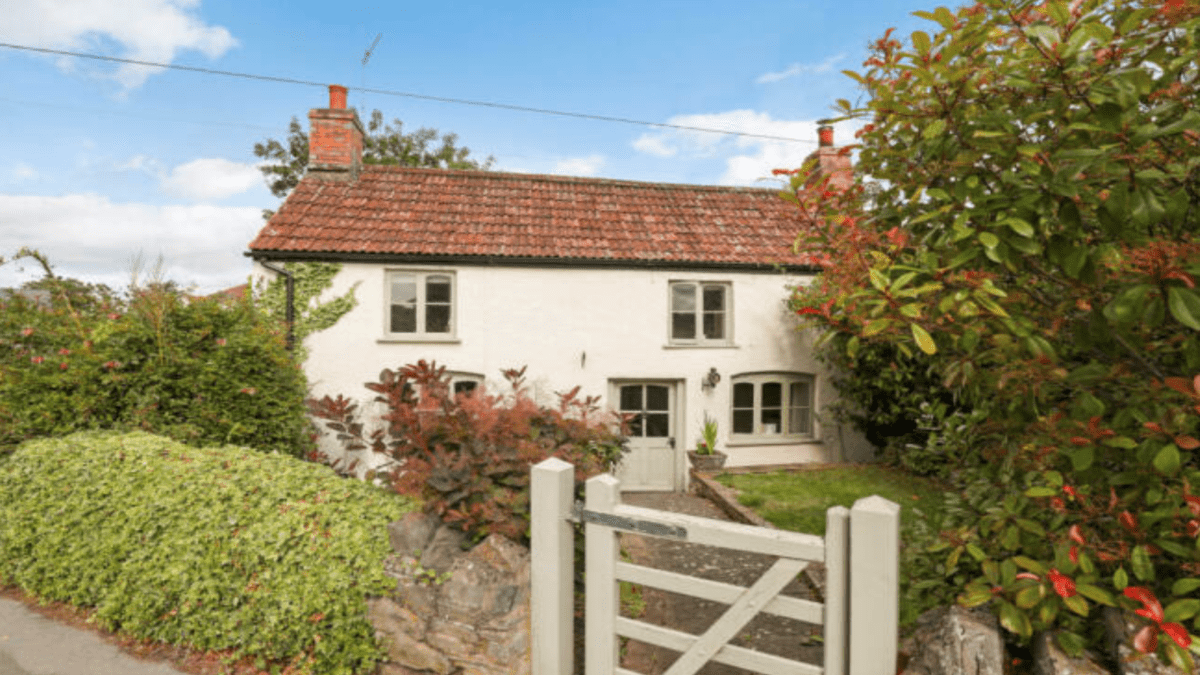


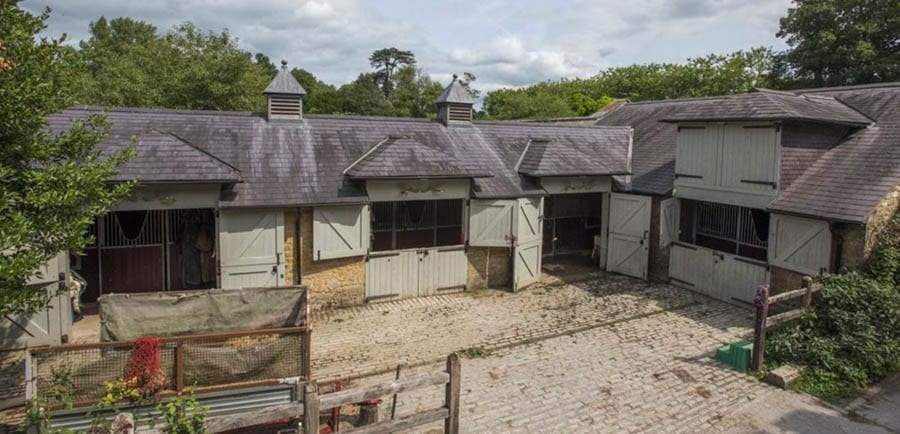
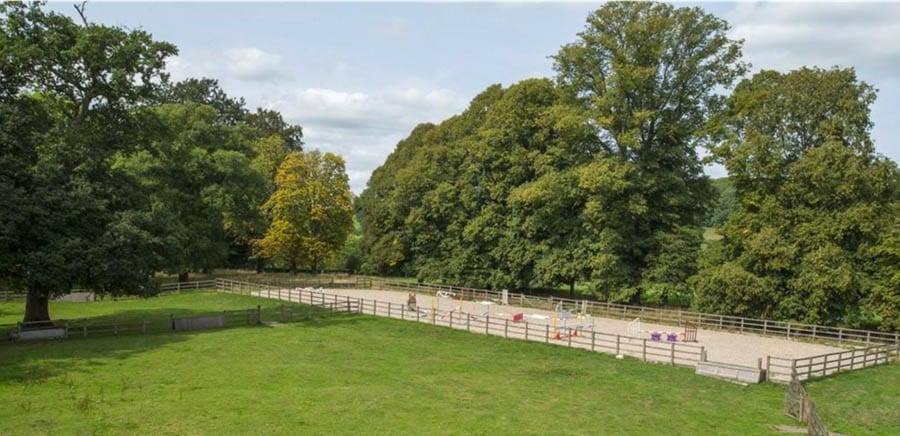
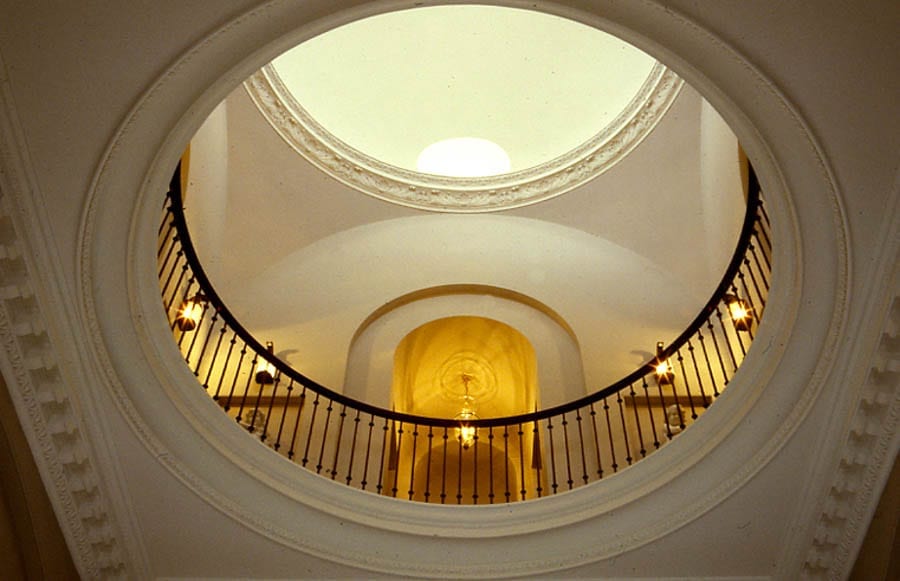
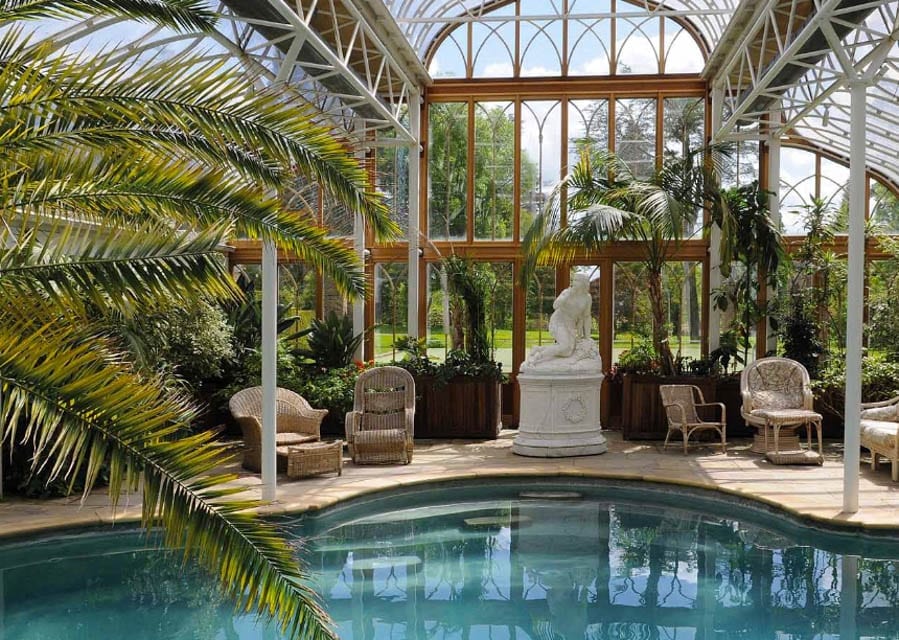
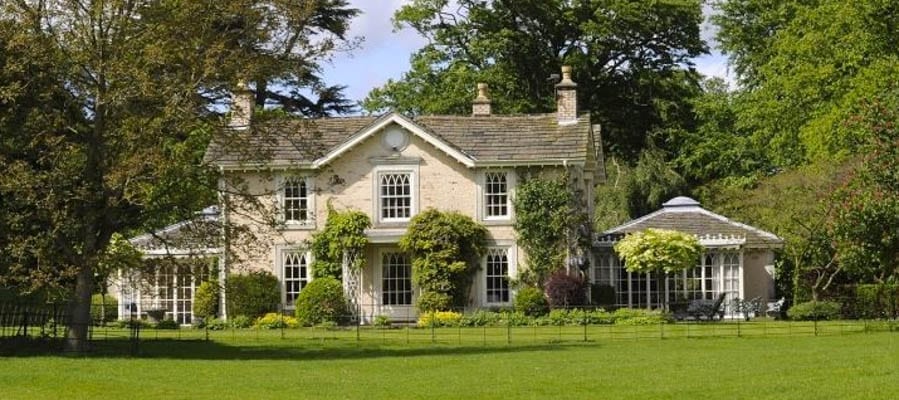
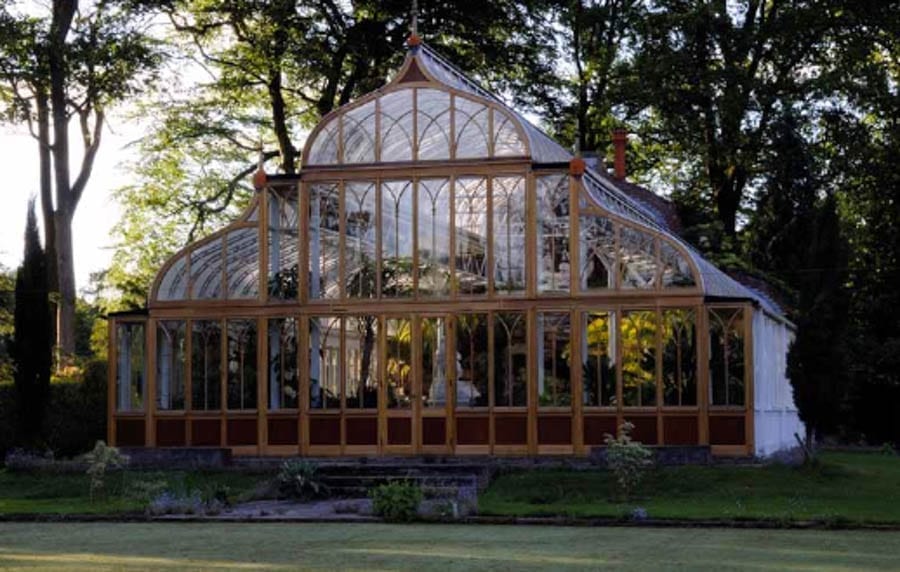
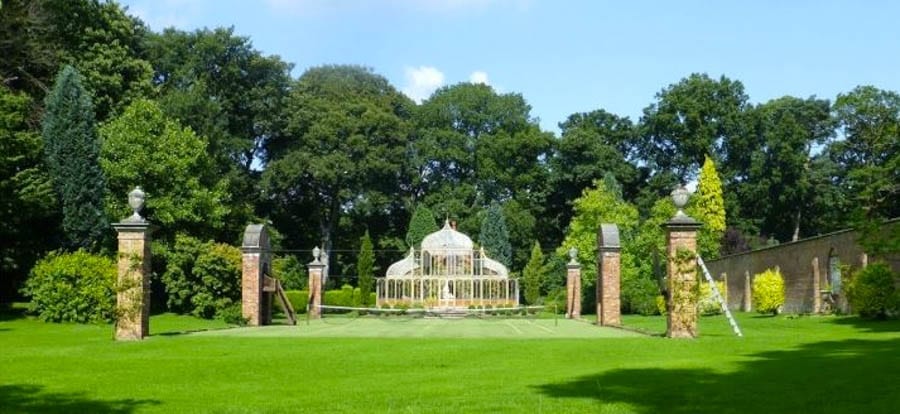
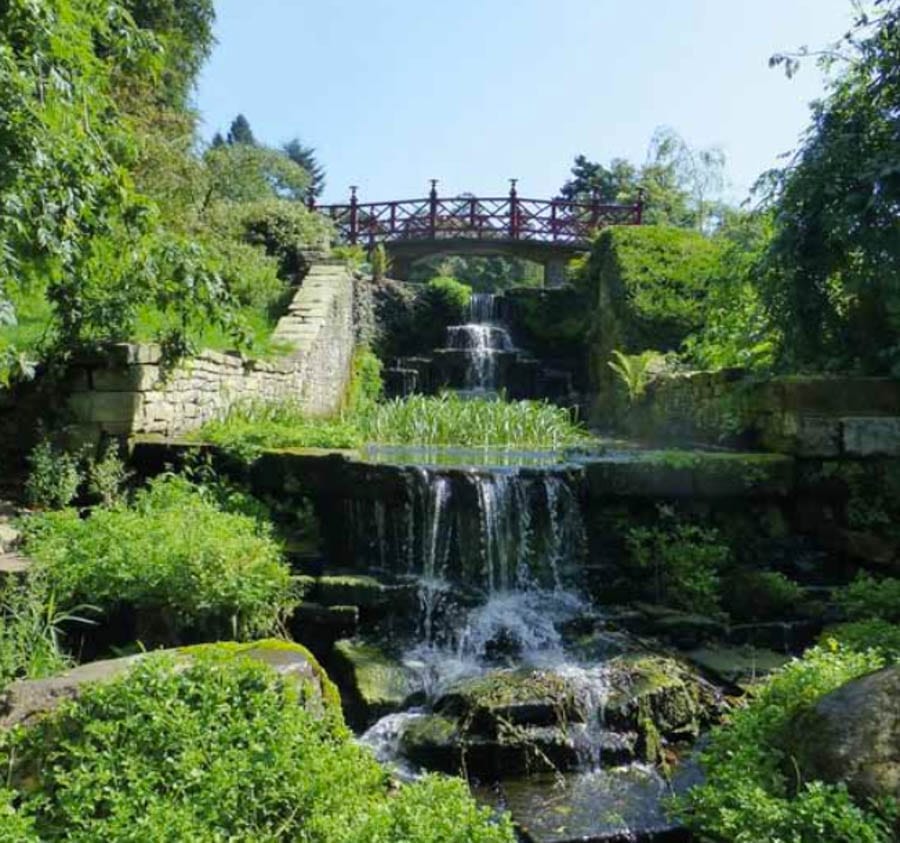
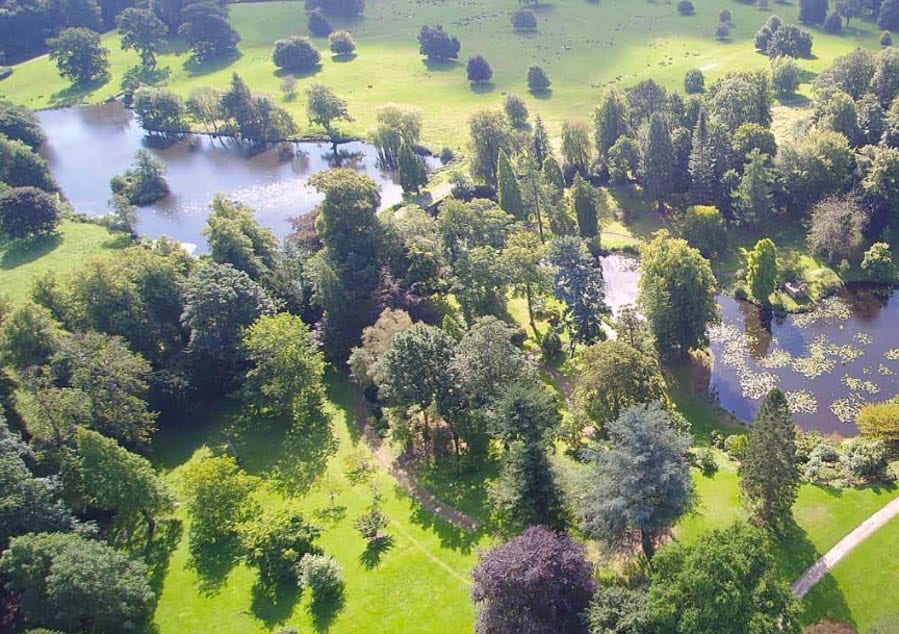
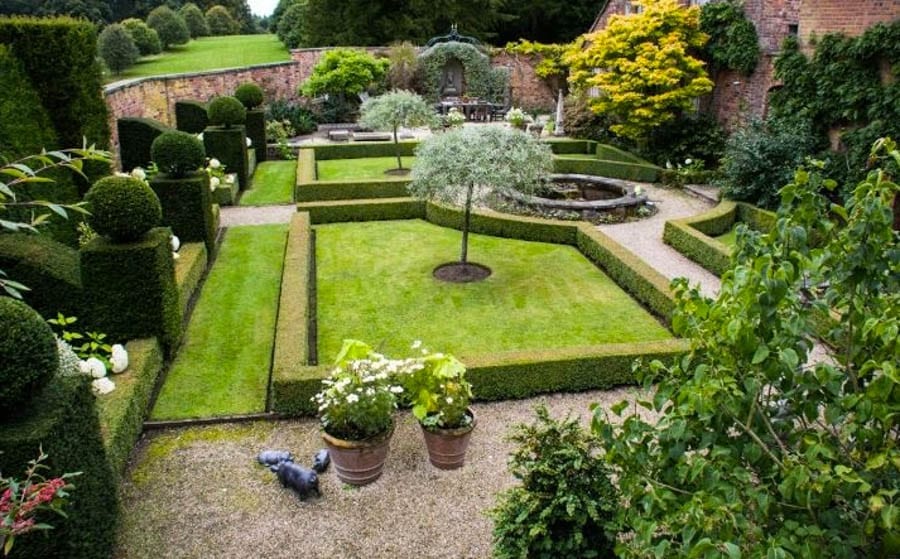
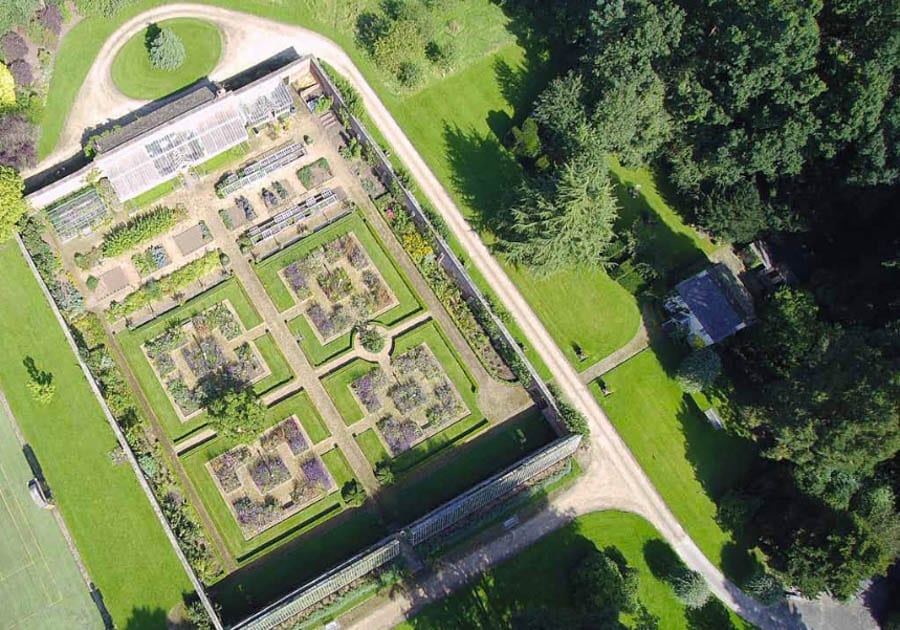
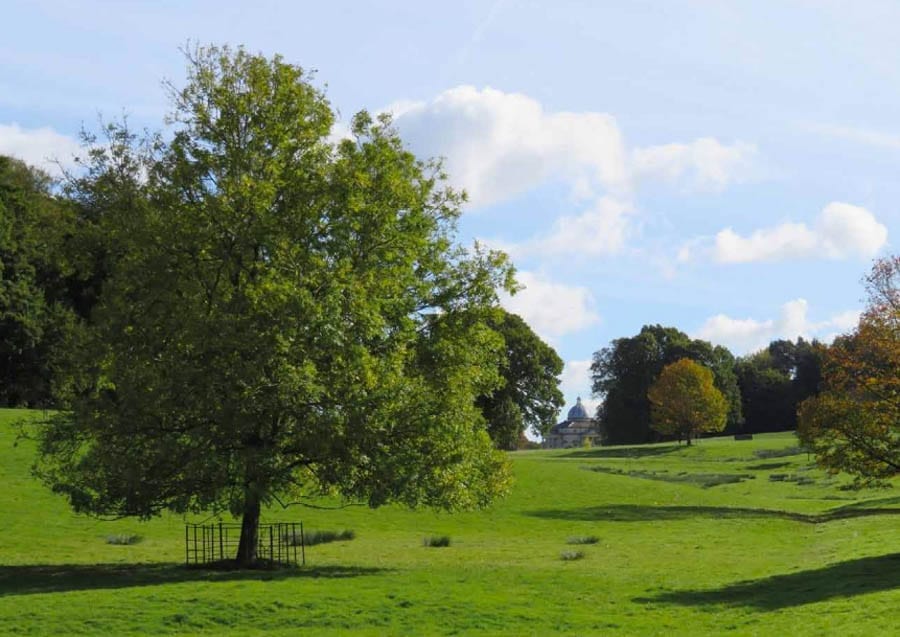
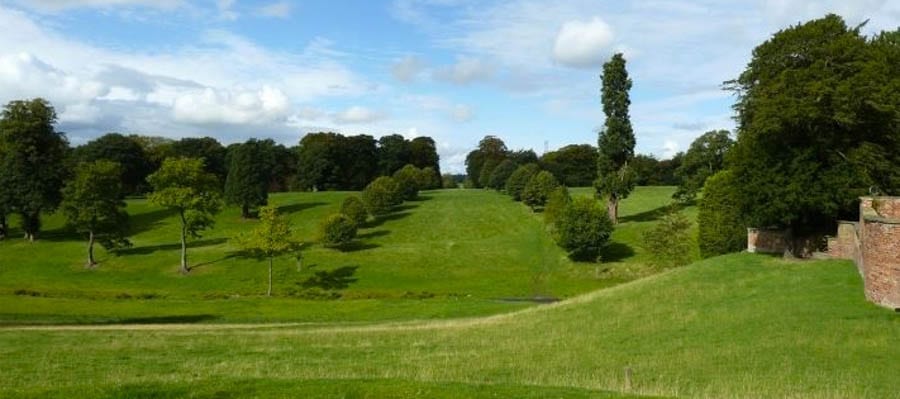
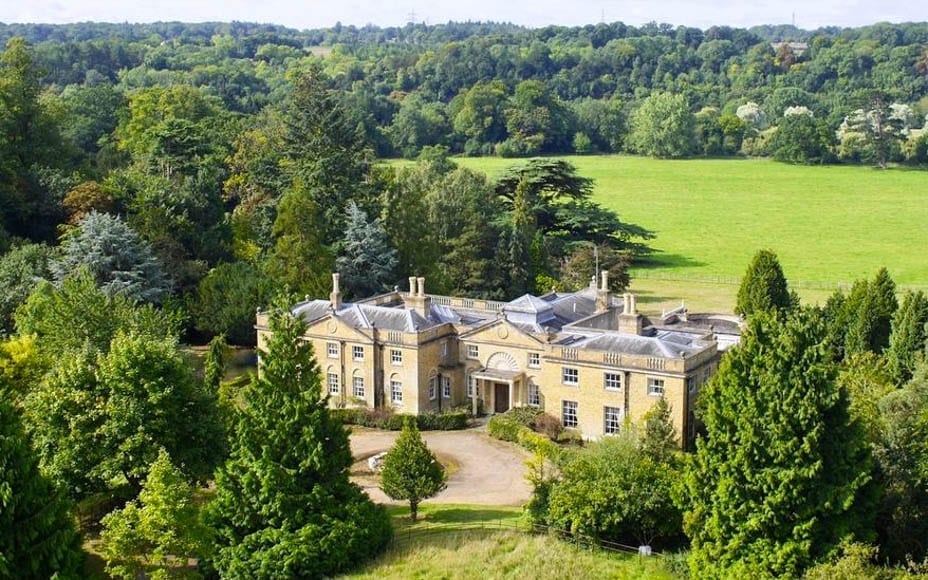
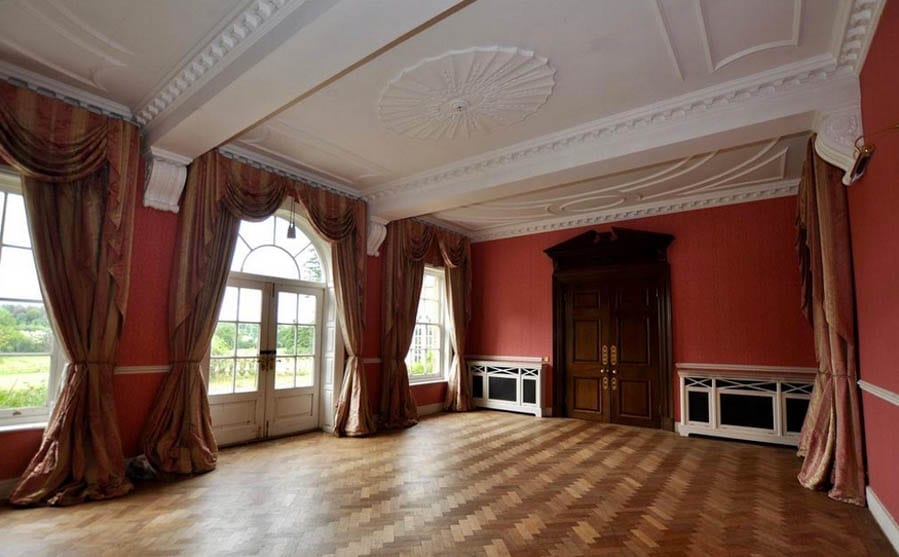
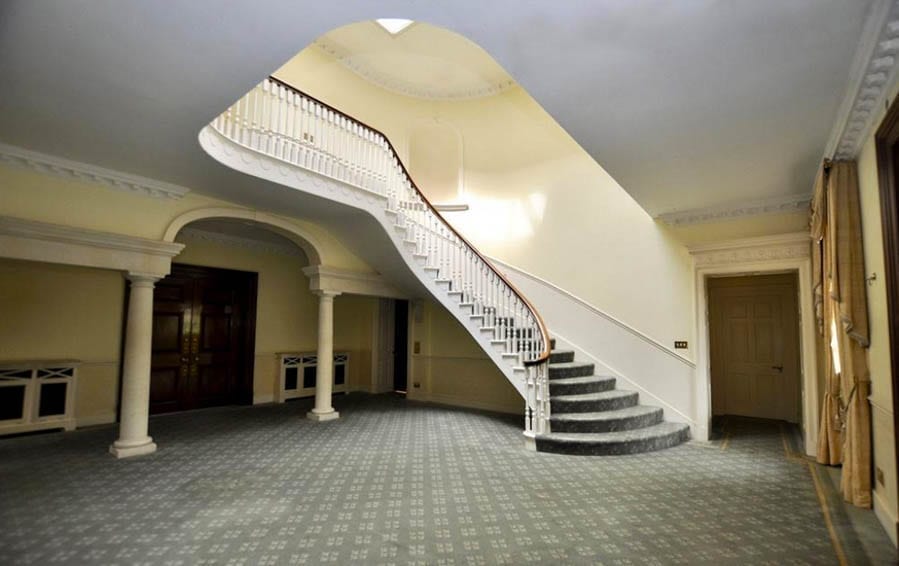
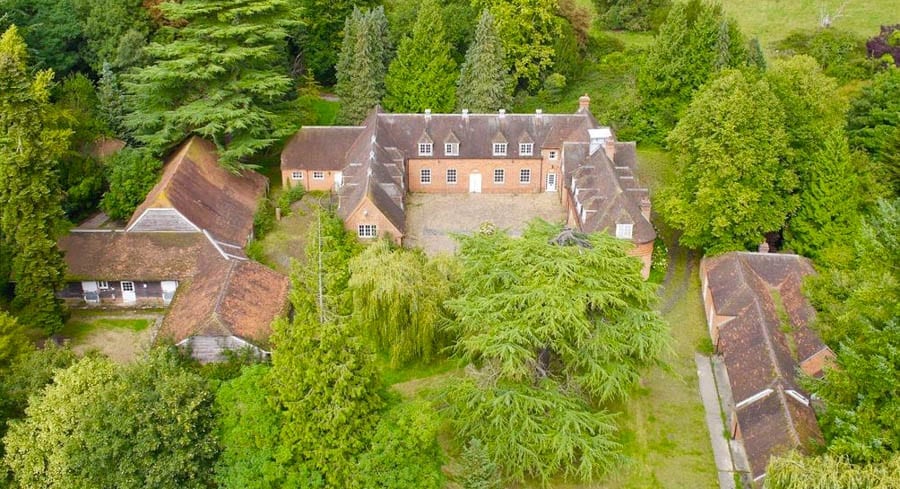
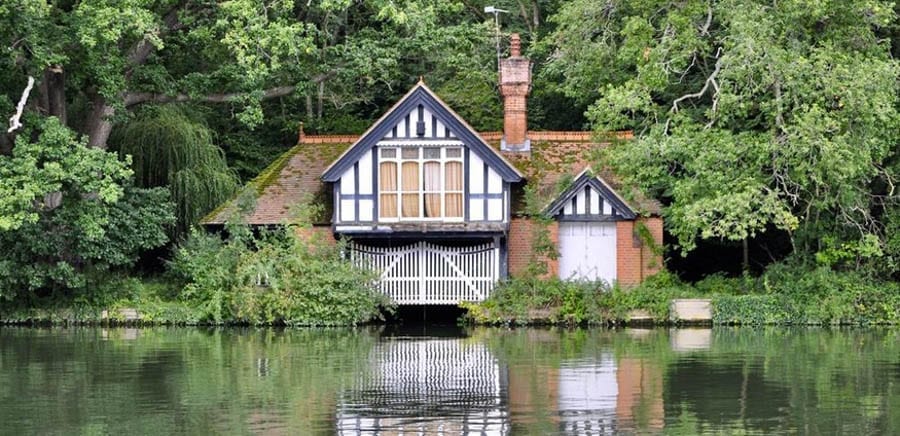
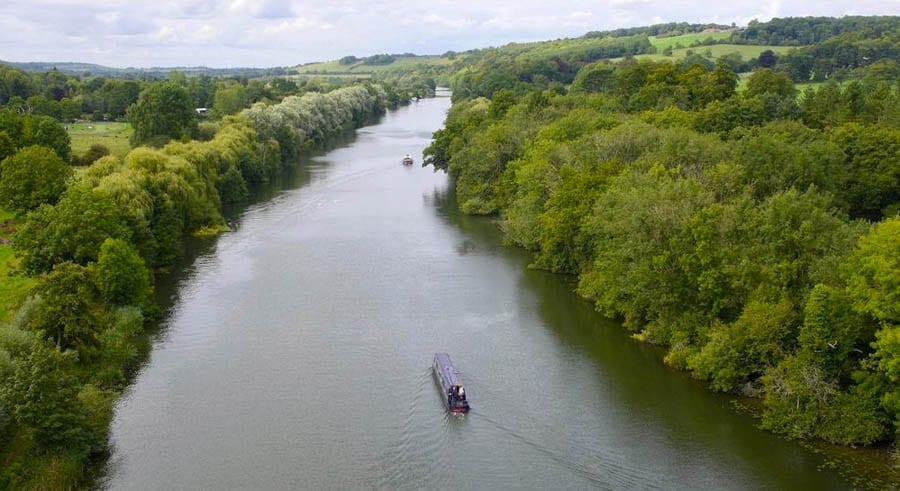

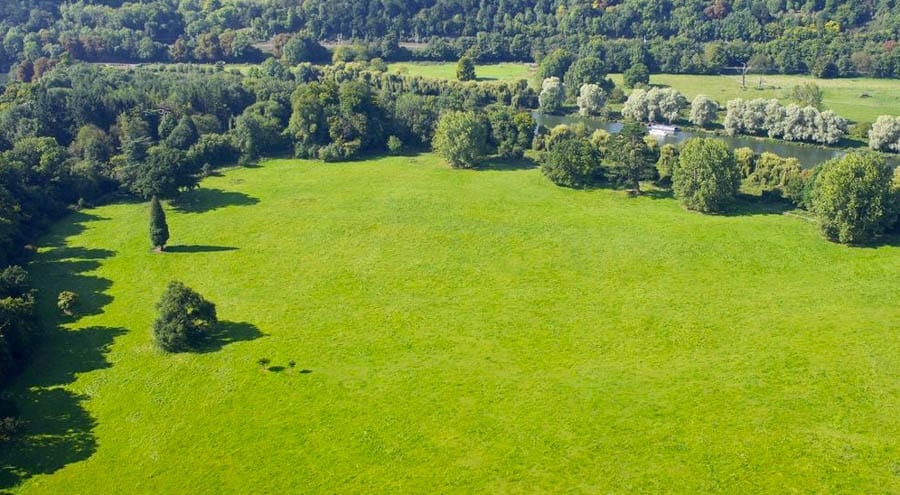
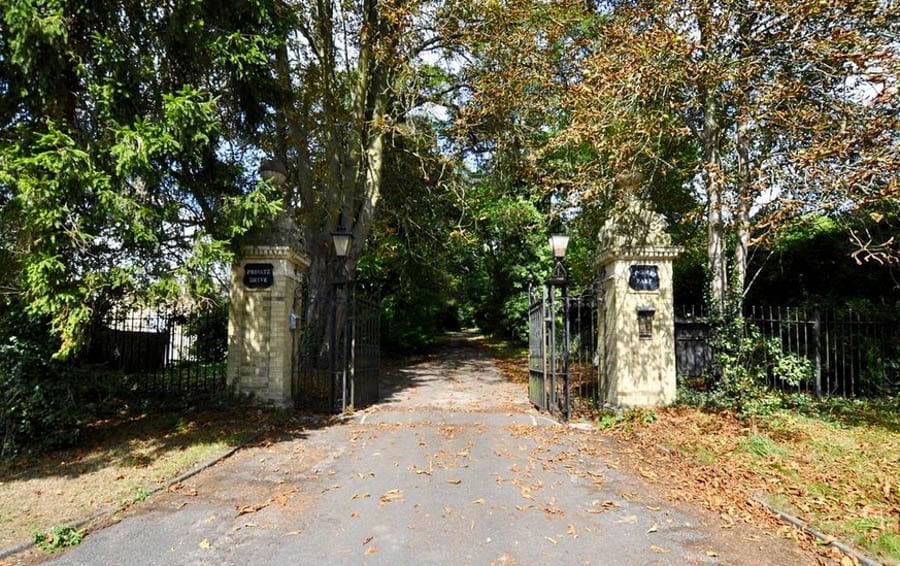

 Mill Bank House – On the market for £1.4 million ($1.8 million, €1.6 million or درهم6.6 million).
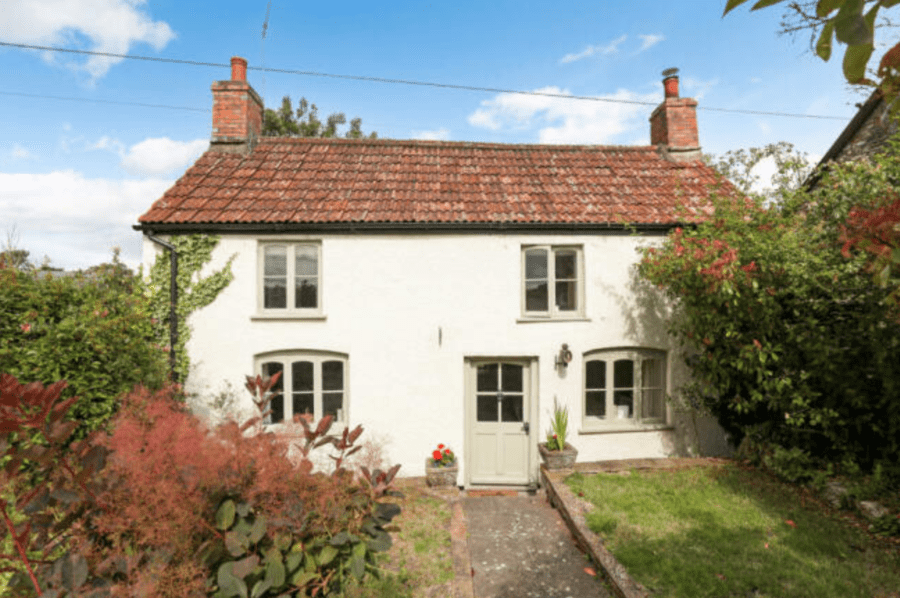
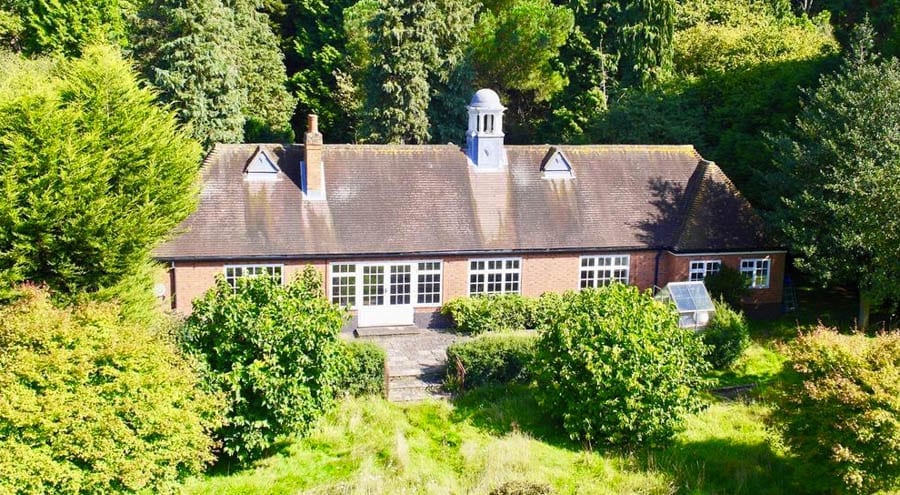
 Greenhouses – On the market for £1.3 million ($1.7 million, €1.5 million or درهم6.1 million).