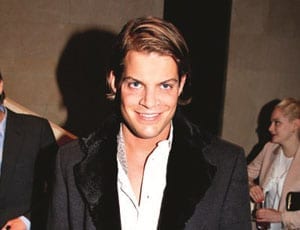
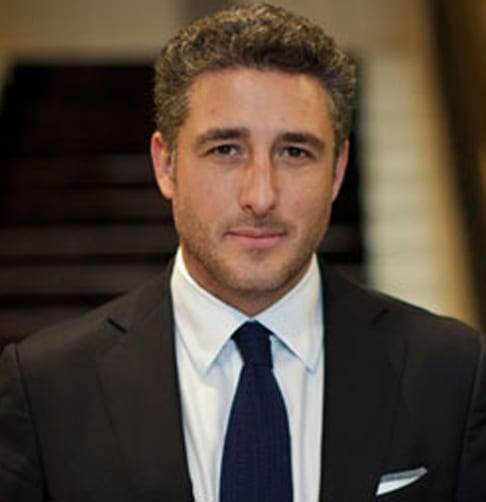
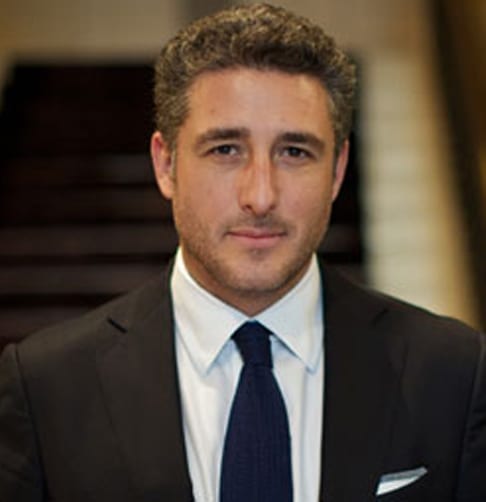
The Steeple Times asks emerging market investor David Reuben Jr: “What’s on your mantelpiece?”
The Steeple Times shares “wit and wisdom”. What’s your guiding force?
I try to follow the “Golden Rule”. Treat others the way you would prefer that they treat you. Be careful how you are with people on your way up, you just might meet them on the way down.
“Don’t get even, get medieval” is, in our humble opinion, a great motto. What’s yours?
If at first you don’t succeed, skydiving is probably not for you.
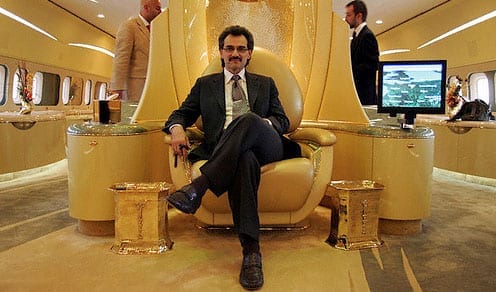
Ranked as “the most influential Arab in the world”, Al-Waleed has at various times held investments in News Corp, AOL, Apple Inc., Motorola, Fox News, Eastman Kodak, TWA, Twitter, The Savoy, the Four Seasons hotel chain and Euro Disney SCA. Not afraid to back his beliefs financially, the “Buffett of Arabia” gave £18.5 million to the families of Palestinian “martyrs” in 2002 and sent a cheque for $10 million to New York City Mayor Rudy Giuliani after the 9/11 attacks. In exchange he requested “a more balanced stance toward the Palestinian cause”. The cheque was returned. When Forbes magazine listed him as being worth £13 billion in March 2013 he was irate at the use of “incorrect data” that “seemed designed to disadvantage Middle Eastern investors”. Al-Waleed, whom rival publication Bloomberg list as being worth £18.5 billion, indignantly told Steve Forbes to remove him from his list and announced through his office that would he would “sever ties” with it. Surely, this dispute could be easily solved as, after all, what’s a billion or two between friends?
Victoria Beckham tours Brian Blessed’s former home
In April, the blog that preceded The Steeple Times featured an article on Clarence House in Richmond.
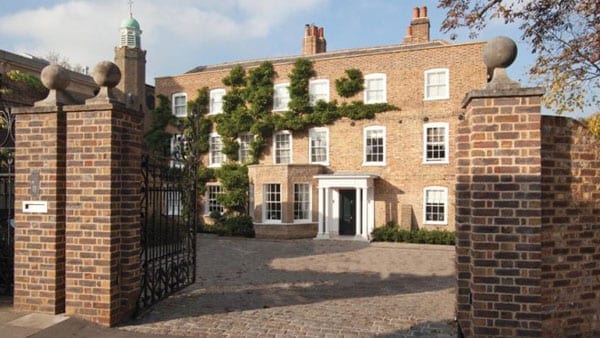
At the time this former school and home of actor Brian Blessed was priced at £22,500,000 but after languishing on the market, the price has been slashed by £4,500,000 to £18,000,000.
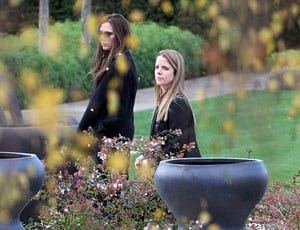
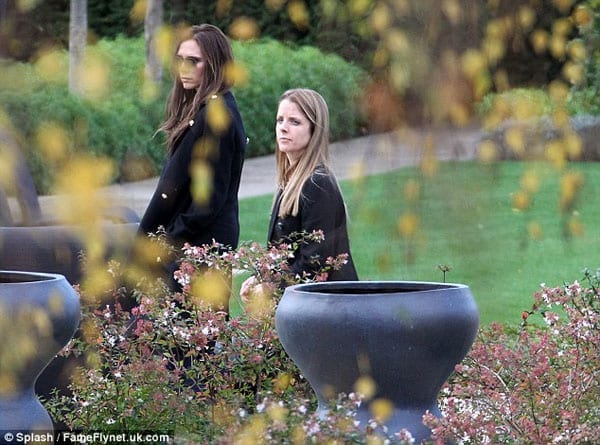
Victoria Beckham pictured in the garden of Clarence House, 2 The Vineyard, Richmond Hill, Surrey, TW10 6AQThe front of Clarence House would no doubt need “pap proofing” to suit the privacy requirements of David and Victoria Beckham and their family
In recent days Victoria Beckham has been pictured touring this and other properties in south-west London. No stranger to securing a bargain and worth some £160 million, Mrs Beckham could no doubt slice a little extra off if she decided to proceed. She and her husband are allegedly set to return to the UK and an unnamed source is quoted as revealing:
“David has been really missing London and the UK recently. The royal wedding, the Olympics and now Christmas coming up have all made him long for the UK. He talks about being in London a lot and he misses his family, so it would make perfect sense for the family to all move back to Britain. For the Beckhams, Eton [as a school for their sons] would be the ultimate arrival.”
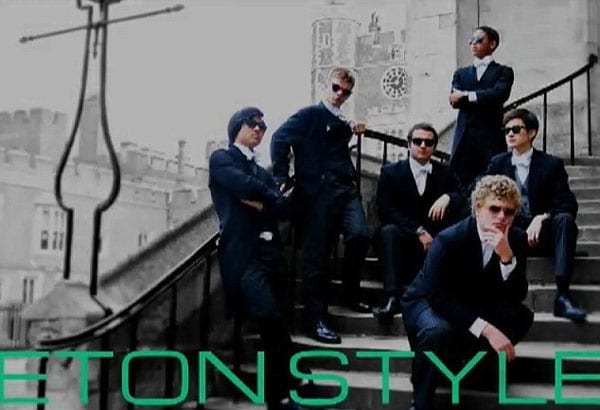
Since the pupils of Eton College recently parodied the ‘Gangnam Style’ high-energy Korean disco music, maybe they’ll also embrace the Beckham boys
Perhaps if the couple don’t manage to get their sons to “go Eton Style,” they could reopen Clarence House as a school. The most famous pupil to pass through the doors was Bernardo O’Higgins (1778 – 1842), the liberator and founding father of Chile.
This affable German’s address book spans continents and cultures. A graduate of the Cass Business School and the University of Madrid, Weber’s projects have variously included The Cuckoo Club, Salon Club and Wanted Gallery. Here’s a gent who knows how to combining partying and business and one whose invites are most definitely like gold dust.
Matthew Steeples explores the story of an empty Kensington mansion
A multi-million pound 8-bedroomed house in Kensington isn’t anything unusual. In fact, rather, they’re ten a penny. In this, one of the wealthiest boroughs in the land, large, expensive homes are just the norm.
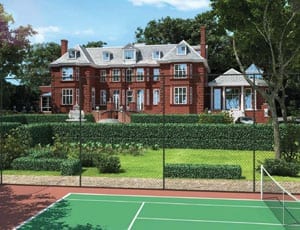
An image of the existing exterior of No. 1 Campden Hill, London, W8 7ADA rendered image of how the exterior of the renovated property might lookThe plans show a vast subterranean development that will vastly increase the size of No. 1 Campden Hill
No. 1 Campden Hill, which is being marketed for an undisclosed eight-figure sum, is in a quite different league. Here is a detached Edwardian house in an acre of grounds just to the north of Kensington High Street. It’s an unrenovated property but it attracted much press attention in October 2011 because it was place on the market in October 2011 at a price of £75,000,000. Yes, you heard it right: £75 million for a fixer-upper. Last week, Radio 4 made a hell of a fuss about a derelict semi-detached house in Newcastle selling for just £14,000 so this truly must be something special.
Architect Edward P. Warren (1856 – 1937), far right, in the offices of Bodley & Garner, 14 South Square, Gray’s Inn, London
The architect of the house Edward Prioleau Warren (1856 – 1937), a Bristol born architect and archaeologist, was best known for “Oxford colleges and minor country houses” but also designed the War Cemetery at Basra. He was a friend and adviser to the American novelist Henry James and in addition to building No. 1 Campden Hill in 1915, he also designed a house at 5 Palace Green in 1906 and another, Estcort House in Kensington Palace Gardens, in 1904. Warren’s guiding style is described as having been to recreate an “understated revival of English late 17th century” architecture and at No. 1 Campden Hill he created just that.
Colonel Edmond Grove-Hills (1864 – 1922), born Edmond Hills, and his wife, Juliet Spencer-Bell, were the architect’s clients. A plaque on the building bares their names and the following dedication:
This House I built for Me & Mine
May it be of Peace A Shrine
And no Enmity or Sin
Ever find its way therein
AD 1915
Sadly for the Grove-Hills, the following year, their son, Second Lieutenant Charles Herbert-Hills (1895 – 1916) was killed on the Somme aged just 21. His father, meanwhile, was awarded a CBE in 1918 after having served as the Assistant Chief Engineer of Eastern Command during the war.
Aside from his military exploits, Edmond Grove-Hills is best known for his role as president of the Royal Astronomical Society. He took part in observations of eclipse of the sun in Japan in 1896, India in 1898 and Russia in 1914 and contributed papers analysing both this and the causes of the irregular movements of the earth’s axis of rotation.
In 1951, No. 1 Campden Hill was purchased by the government of Uruguay and it became the residence of their ambassador to the United Kingdom. For the next fifty years the building was barely altered but when the lease from the Phillimore Kensington Estate came to an end, there were legal problems as the 1951 transfer had never been stamped. Of this, Sharon Mulroney of Forsters, the legal representatives of Phillimore, commented:
“It is highly unusual to be faced with complications of this kind when dealing with a registered London title, but this made the transaction all the more fascinating. Even the decision to allow ambassadorial staff to return to the property for security purposes after completion was fraught with potential problems about security of tenure, employment and tax.”
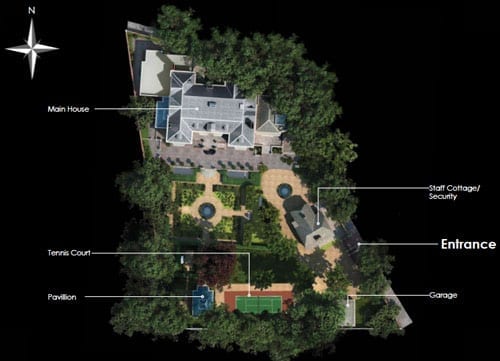
The proposed site plan shows the addition of a garden pavilion, staff/security cottage and a tennis court
Eventually, without issue, the Phillimore Estate sold on the house in 2001 for a price of approximately £17,000,000. In the years since, the property was effectively mothballed as all the purchasers have done is to have obtained planning permission to redevelop the building into a mammoth mansion of epic proportions.
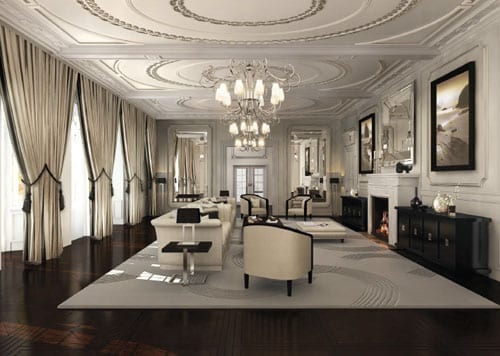
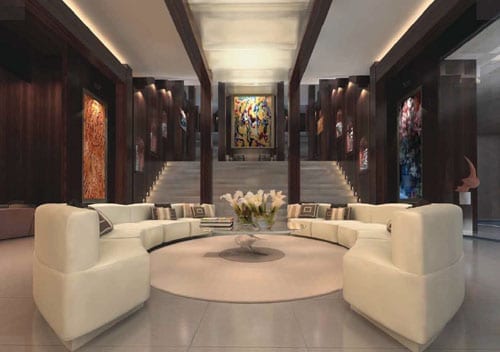
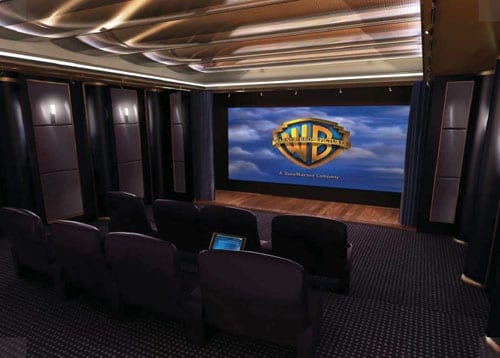
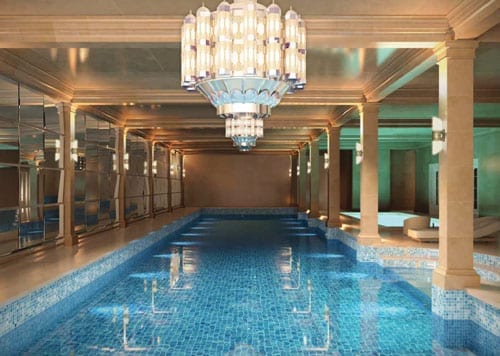
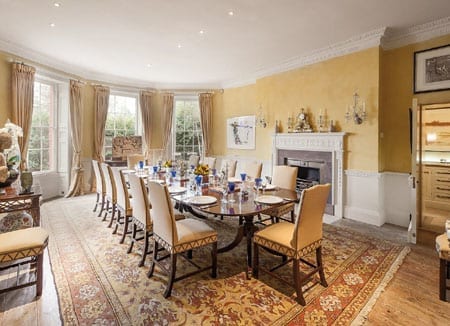
A computer rendered image of how the drawing room might lookThe “leisure area” is reminiscent of the entrance to The Mandarin Oriental Hyde Park HotelThe private home cinema would be the envy of any movie buffThe swimming poolThe wine cellar is rather like a contemporary take on Berry Bros. & Rudd’s flagship store in St. James’s StreetAnd to complete it all… The plans include your own version of Boujis in the basement
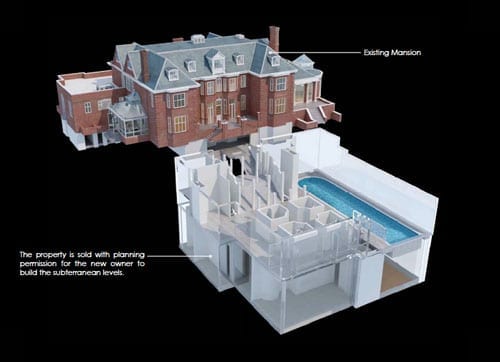
The approved plans show designs for something quite remarkable. Warren’s “understated” residence will be replaced with 8 vast bedroom suites, grand entertaining spaces, a lift and even bedrooms for 5 staff. In addition to a full-scale renovation of the original freehold house, there is scope to provide a total of 30,000 square feet of accommodation by adding a huge subterranean complex that will include a 25-metre swimming pool, court, squash court, gym, sauna, steam room, function room, entertainment room, home cinema, wine tasting room and even a nightclub to rival any of Kensington’s trendiest haunts.
On that basis alone, No. 1 Campden Hill is surely the ideal residence for Prince Harry: “Who needs Boujis?” we hear him cry.
No. 1 Campden Hill, London, W8 7AD is for sale through Knight Frank. For more details contact Roddy Craggs on +44 (0) 20 7938 4311 or go to:http://search.knightfrank.com/ken100161to download a brochure.
Whenever the name Rachman is mentioned, the first things that come to mind are greed, extortion and intimidation. The word is so engrained in such that “Rachmanism” now features in the dictionary, defined as:
“The exploitation of tenants of slum properties by unscrupulous landlords.”
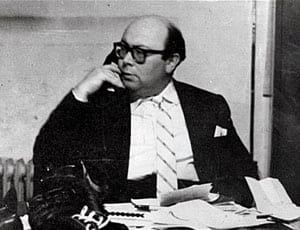
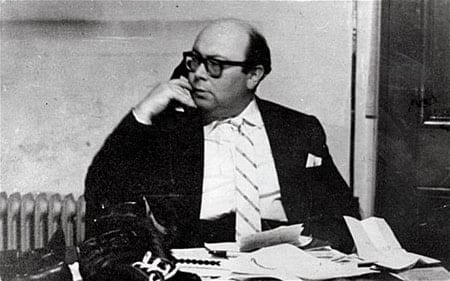
“Notorious slum landlord” Peter Rachman (1920 – 1962)
Perec “Peter” Rachman (1920 – 1962) was born in Poland and the son of a Jewish dentist. He is best known for having built up a property empire of over 100 mansion blocks in London’s Westbourne Grove and Notting Hill areas in the 1950s where he evicted longstanding sitting tenants and replaced them with prostitutes and immigrants from the West Indies. Due to the relaxation of rent controls by the Conservative government in 1957 and as no other landlord was prepared to take them, he was able to charge these unfortunates whatever he wished.
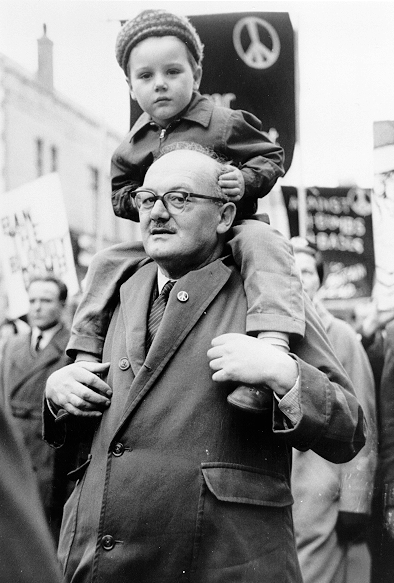
Rachman came to public attention after the Labour MP for Paddington North, Ben Parkin (1906 – 1969), became vocal about the poor housing conditions of his tenants. Parkin coined the phrase “Rachnamism” in his quest to put a stop to the activities of “rent racketeers” and highlighted him as someone who used violence to maintain control of “his manor.” The MP even went as far as to suggest that Peter Rachman’s death was merely a ploy to distract from his activities and the result was to leave the public engrained with a belief that this landlord was a “manipulative, grasping Jew” who symbolised the moral decay of Great Britain.
Ben Parkin MP (1906 – 1969) on a CND march
A Radio 4 programme this week, however, highlighted an entirely different side to Rachman. In The Real Rachman – Lord of the Slums, a “barrister turned investigative reporter” named Joshua Levine suggested that those who believe Peter Rachman just to be a sordid intimidator fail to see the true persona of the man.
Levine’s witnesses, who number former tenants and Rachman’s biographer Shirley Green, do describe him as a “chancer” who was prepared to use the system to make money, but they also portray another side of this supposed “figure of evil’s” character.
Nicholas van Hoogstraten (born 1945)
One immigrant tenant stated: “He was the only one who ever did anything for us” whilst others added that Rachman was “well-liked” and “too soft to be a landlord.” He was a “benefactor” and “jolly” commented others who’d rented from him and a truly notorious modern-day landlord, Nicholas van Hoogstraten, failed to see the opportunist in Rachman at all: “It’s laughable. He had no wealth. It’s an invented moral [mission].” Rachman, equally, was defined as a man “affected” by his imprisonment in a Soviet labour camp in the Second World War by his former lover Mandy Rice-Davis and as someone who suffered true sorrow over the deaths of his family there.
Levine’s examination recounts how Rachman, who drove a navy blue Rolls-Royce with a white interior, was built into a symbol of corruption and moral decay. Rachman, like so many other mythical scapegoats, it turns out only died with only one conviction: parking without lights. The truth, indeed, is often stranger than fiction.
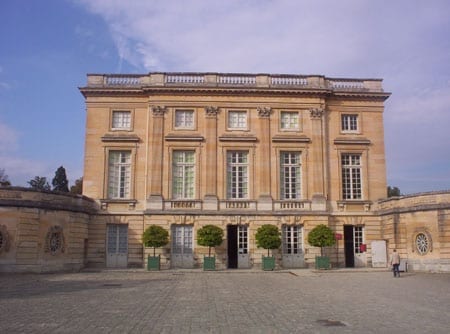
The sale of a $25 million mansion modeled on Marie Antoinette’s favourite retreat that has connections to Levi Strauss & Co., Yehudi Menuhin, the Zodiac Killer and a controversial dot-com tycoon
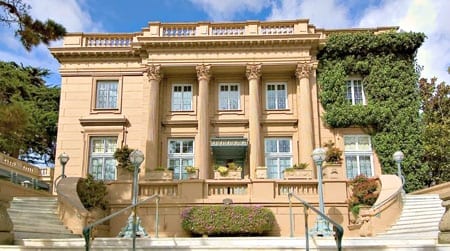
Modeled on the Petit Trianon, a small château in the grounds of Versailles that was favoured by Louis XVI’s wife Marie Antoinette, the Koshland Mansion at 3800 Washington Street in Presidio Heights, San Francisco, California was built between 1902 and 1904 for a pioneer wool, hide and fur merchant named Marcus S. Koshland and his wife, Corrine.
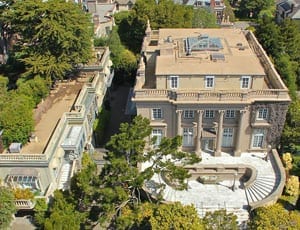
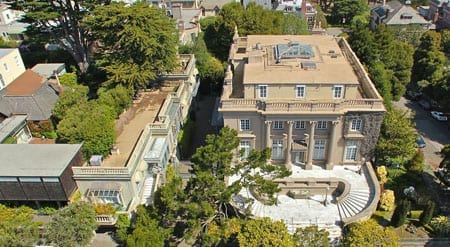
The Washington Street elevation of the former Koshland Mansion at 3800 Washington Street, San Francisco, California, CA 94118An aerial view of the 18,000 square foot property and the 2,600 square foot guest accommodationThe inspiration for the Koshland Mansion: The Petit Trianon, Château de Versailles, Place d’Armes – 78000 Versailles, France
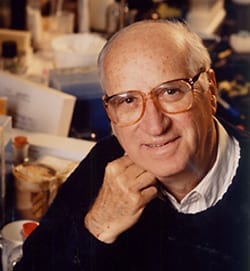
The Koshlands, whose son Daniel (1920 – 2007) was to become a president of Levi Strauss & Co., commissioned an architect named Frank S. Van Tree to design a replica of the Petit Trianon after having admired it whilst on holiday in France. The front of the building, facing onto Washington Street, is considered such a faithful representation of the neoclassical building the Koshlands copied and as a result the house is now designated a San Francisco Designated Landmark.
Daniel E. Koshland, Jr.
Some 20,000 square foot in size and set on a 2/3rd acre plot, the completion of this sandstone faced “single family residence” was celebrated by the Koshland family with a Marie Antoinette themed ball in 1904. The invitations to this legendary event were purchased and printed in Paris and hand delivered to the guests.
The Koshland Mansion survived San Francisco’s 1906 earthquake with only a little damage to the front elevation
The 1906 San Francisco earthquake, just two years after they’d completed the building, somewhat interrupted the Koshlands hectic party schedule at 3800 Washington Street. Though the disaster caused the front columns and roof balustrade to collapse, the couple generously opened the otherwise undamaged property to some 60 to 80 displaced family and friends. With no mains water, the guests had to fetch water from Fort Mason but they were no doubt happy to have had somewhere to take refuge.
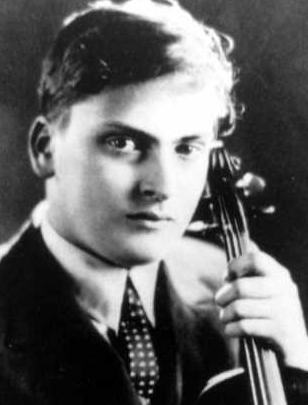
During subsequent renovations, as well as restoring the façade, a 5-car garage was added in 1909 and a greenhouse and extension in 1912. In the ensuing years, until her death in 1953, Corrine Koshland, better known as Cora, opened up 3800 Washington Street as a venue for concerts. A founder of the San Francisco Symphony Association and one of the first directors of the San Francisco Opera Company, Koshland invited music critics to review the performances and gave both Yehudi Menuhin and Isaac Stern their musical debuts at the house as child prodigies. Amongst the other big names to play in the masnion were Igor Stravinsky, Jascha Heifitz and Leonard Bernstein.
Sir Yehudi Menuhin KBE (1916 – 1999) pictured in his youth
In 1953, the Koshland Mansion was sold for $100,000 by the estate of Cora Koshland. The purchaser was Walter E. Buck (1884 – 1966), president of the American Distilling Company. Buck and his wife Emily, who were well known for “Gatsby-esque parties” at their 1,300 acre estate, Woodside, redecorated 3800 Washington Street by “painting the mahogany library white, removing the dark green, gold-tooled leather from the dining room and developing small card rooms in the basement.” It seems likely that the era of parties at 3800 Washington Street continued during their occupancy.
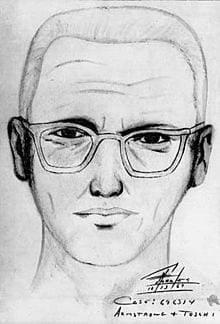
On 11th October 1969, a murder occurred on the block where 3800 Washington Street stands when the Zodiac Killer, a to this day unidentified serial killer who operated in Northern California in the 1960s and 1970s, shot and killed a cab driver named Paul Stine. Stine had collected his passenger one block west of Union Square and had, as requested, driven him to the intersection of Washington and Maple Streets in Presidio Heights. Once there, the cab driver was shot once in the head with a 9mm before the killer, observed by three teenagers across the street, took his wallet and car keys. The Zodiac Killer tore off a section of Stine’s bloodstained shirt, wiped the cab clean and walked off into the night before the police could arrive.
A sketch of the Zodiac Killer
Subsequently, on the 14th October 1969, the San Francisco Chronicle were mailed a swatch of Stine’s shirt to prove he was the killer and then on 9th November 1969, a 7-page letter followed. Excerpts from it were published from it in the newspaper on 12th November which revealed that a police officer, Don Fouke, who had responded to the teenager’s call, had actually encountered the killer for 5 to 10 seconds on a stairway of a house close to the murder scene. Fouke had been told to look for a black suspect and on seeing a white man going into the yard of a house, had discounted the individual and drove on. The Zodiac Killer, in his letter, detailed the encounter but claimed that two policemen had actually spoken with him 3-minutes after he’d shot Stine.
In 1975, a neighbour, Paul Renne purchased 3800 Washington Street for $675,000, supposedly to prevent it being acquired by property developers, but having been used as the 1982 San Francisco Decorator Showcase house, it was placed on the market and sold to a gallery owner named Heidi Betz and her business partner, an art collector named Charles Pankow. They paid $1.5 million for the house but failed in their bid to turn it into an art gallery due to objections from neighbouring residents.
Halsey Minor
In the two decades that followed 3800 Washington Street was sold several more times but finally it’s glory days looked set to return in 2007 when it was purchased by an “internet titan” named Halsey Minor and his second wife, Shannon. Having paid approximately $22 million for what essentially was going to be a very expensive renovation project, Minor supposedly assigned a further $15 million towards renovations and hired Michelle Obama’s favourite designer, Michael S. Smith, to oversee the project.
Minor founded CNET, a tech media website that published news, articles, blogs and podcasts on technology and consumer electronics, in 1992 after leaving Merrill Lynch and built it into one of the first internet companies to achieve profitability. CNET was sold for $1.8 billion in 2008 and is now CBS Interactive. Another of the companies he co-founded in 2000, salesforce.com, was “one of the most successful companies of the decade” and achieved a market capitalisation of in excess of $15 billion.
Having made a small fortune from his dot-com success, Minor diversified into investments that brought with them a lifestyle that would later be described as “a multi-millionaire who lived life as a billionaire.” In 2007, he began construction of a hotel in his hometown of Charlottesville, Virginia and announced this would be part of a series he’d open as part of the Minor Family Hotel group he planned. The hotel has never been completed.
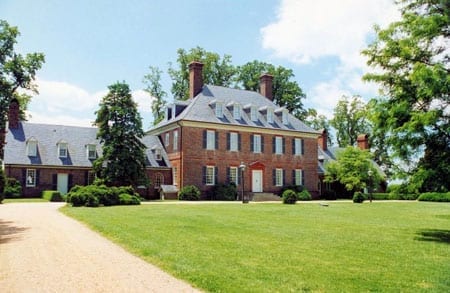
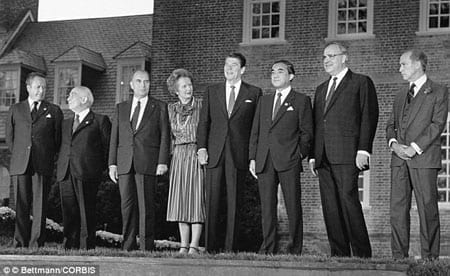
Carter’s Grove, 8797 Pocahontas Trail, Colonial Williamsburg, Virginia, VA 23187: considered to be one of America’s finest and most historic residences. It was bought by Halsey Minor in 2007 and has fallen into significant decline in the years since.The 1983 Group of Seven (G7) meeting at Carter’s Grove. Pictured outside the house are: Pierre Trudeau, Prime Minister, Canada; François Mitterrand, President, France; Helmut Kohl, Chancellor, West Germany; Amintore Fanfani, Prime Minister, Italy; Yasuhiro Nakasone, Prime Minister, Japan; Margaret Thatcher, Prime Minister, United Kingdom; Ronald Reagan, President, United States of America and Gaston Thorn, President, European Commission
In the same year, he also bought the Koshland Mansion and purchased 400 acres of land and a residence on the James River, the Carter’s Grove Plantation, for $15.3 million. Here, he planned a centre for thoroughbred horse breeding and at around the same time he attempted to buy both the Hialeah Park Race Track in Hialeah, Florida and the Pimlico Track in Baltimore. Both bids failed.
Minor’s investments were not just limited to property and the equine sector. In 2006, he placed a $3 million deposit on a $59 million Gulfstream G650 and at Sotheby’s in 2008, he was the winning bidder on a painting by Edward Hicks, The Peaceable Kingdom, at a hammer price of $9.6 million and also bought paintings by Andy Warhol and Childe Hassam.
Around this point, however, this dot-com tycoon’s fortune began to unravel when Merrill Lynch called in a $25 million loan and various legal suits connected to his art collection, investments and properties commenced. Several of his homes were repossessed and at a court hearing in August 2011, he claimed to have just $112,643 in cash and owned no publicly traded securities. Minor claimed to be majorly broke but the declaration did not cover illiquid assets such as art, real estate and shares in non-public companies. To this day, Minor remains listed in first place on the State of California’s Franchise Tax Board’s top 500 delinquent taxpayers owing some $10,455,580.69.
In response to his supposed progression from riches to rags, Minor wrote an article for The Huffington Post in July 2012 entitled “Why I Fight”:
“I often wonder what Thomas Jefferson would think of today’s America, a nation that is rapidly but silently abandoning the individual in favour of faceless corporations, rapacious banks and a collusive, unresponsive government… The simple answer is that someone must [fight] or we will emerge from this recession with wealth and power concentrated in a few tiny financial institutions representing a new ruling elite, not unlike the one that inspired Thomas Jefferson’s generation to revolution.”
Somehow, in spite of his changed circumstances, Minor has managed to hold on to 3800 Washington Street. Though, during his tenure, the house has fallen into decline and is now half covered in ivy, it is still one of San Francisco’s finest properties and it is still situated in one of the city’s best neighbourhoods. It is still an asset of considerable value and Minor’s decision to sell may well help him rake back some of what he has lost.
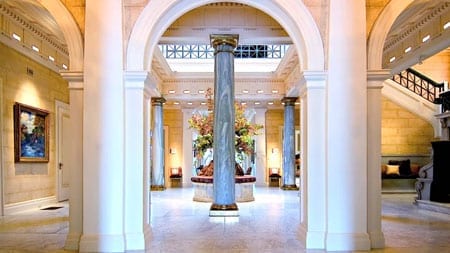
The hallway at 3800 Washington StreetA drawing room at 3800 Washington StreetOne of the property’s dining roomsThe opulent ballroom at 3800 Washington Street
Steven Mavromihalis of Pacific Union International launched 3800 Washington Street onto the market in May 2012 for $25,000,000. This move came just after two Abandoned Building Notices had been issued on the property by the City and County of San Francisco Department of Building Inspection. On offer is the 18,000 square foot main house at 3800 Washington Street, a 2,600 square foot 3-bedroom house at 3810 Washington Street and a vacant lot at 125 Maple Street. Though the agents don’t give much more in the way of details, they do refer to the house having a double marble Palladian staircase, 22 rooms, a “spectacular ballroom,” 8 bedrooms, 7 bathrooms, 9 fireplaces, 3 kitchens, an elevator and three original stained glass windows by the San Francisco poet, writer sculptor and artist Bruce Porter (1865 – 1964).
According to the agents, 3800 Washington Street is second only to Danielle Steele’s 55-room residence, The Spreckels Mansion, at 2080 Washington Street in the rankings of the largest homes in San Francisco. This is most certainly a mansion with a fair few tales to tell but whoever buys it will need both Steele’s wealth and imagination to get it back into good order. Dot-com tycoons and serial killers need not apply.
All enquiries about 3800 Washington Street, Presidio Heights, San Francisco, California, CA 94118 should be directed to Steven Mavromihalis of Pacific Union International on +1 (415) 345 3030 or email him at: [email protected].
More details are available at: http://www.pacunion.com/homes/CA/San_Francisco/94118/3800__Washington_St/AGT-107397278-685992/ whilst a video tour of the property can be viewed at: http://vimeo.com/42775765
Christian Huhnt recounts an evening of rock ‘n’ roll at the opening party for Hollywood Road’s latest venue, Honky Tonk
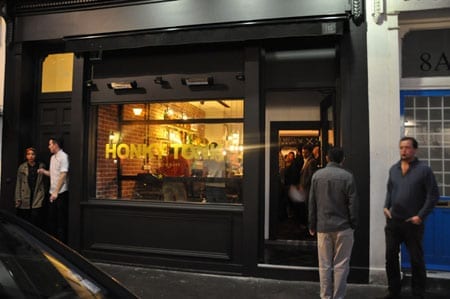
When you hear about the opening of a London-based “underground NYC inspired rock ‘n’ roll restaurant,” the last thing you expect is to find it in the very heart of an area that estate agents now call “Little Chelsea.”
Honky Tonk, 6 Hollywood Road, London, SW10 9HY
So, my companion Steffen and I headed off to determine what this mystery may be, and to learn what the owner, who is supposedly involved in The Supper Club, was willing to reveal that night. As soon as I arrived, I found myself sipping a chilled drink, while listening to some Screamin’ Jay Hawkins vibes. “The Gringo,” a mix of tequila, juice and wheat beer is described as “a delectable intertwining of Mexican and British” on Honky Tonk’s drinks menu and it is just such.
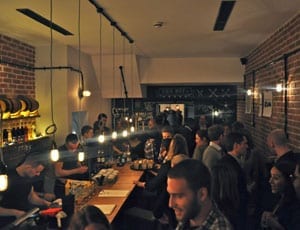
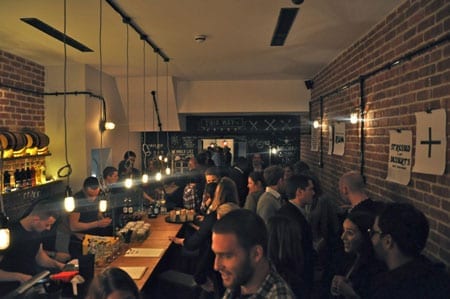
As I was pushed deeper into the venue, away from the bar at the entrance, I felt I had been left alone in the middle of Shoreditch, with a 60s-inspired retro-American “highway diner” flair interior of unrendered walls, raw lightbulbs, Formica tables, and pierced and tattooed modern-hippy looking 20-somethings; only the pretty waitresses reminded me, that I was in fact not in a greasy US-diner, but at an opening in Chelsea, West London.
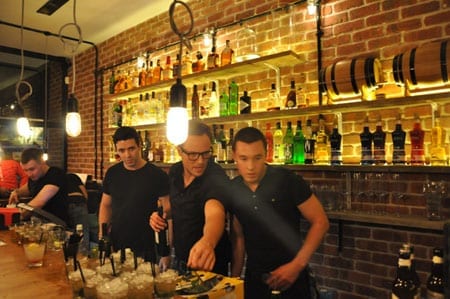
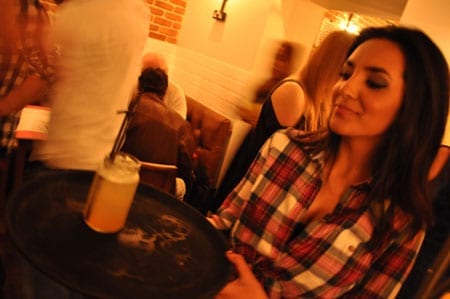
Guests enjoying Honky Tonk’s opening bashHonky Tonk’s bar staff creating cocktailsOne of Honky Tonk’s waitresses serving cocktails
When it came to the food, served as canapés, it again became clear, that I was in SW10. The “not” fried chicken, as the waitress educated me, is only coated with a “special recipe” and then oven-baked. It has as much crispy pleasure as it would have had fried, but it is far healthier and plainly designed so as not to dispossess the figure conscious guests of this elite neighborhood.
Almost finished with this delight, I tasted the next dish on the menu: New England crab cakes in a chili-mayo sauce, followed by little potato skins loaded with chilli con carne and sour cream. As I wasn’t sure anymore if this food could be solely called “good old-fashioned American bites,” the next dish was most definitely the tip of the iceberg: the macaroni cheese, apparently the “Baked Beans of America,” the synonym of cheap grub, the epitome of total culinary absence. Here at Honky Tonk, though, they controversially served this with a porcini béchamel and truffle oil sauce, along with roasted wild mushrooms. Believe it or not, it worked and it was bloody good.
While getting in the mood with another fancy drink, one of my favorites by the way, I tried a rum and ginger beer concoction topped with a slice of lime and listened to Elvis Presley’s Mystery Train playing in the background. Whilst enjoying this, I realise that the Chelsea boys and girls have arrived and are mingling with the hip East London crowd. I have seen this lot at many other openings and can’t assume they were shipped in, but nonetheless the spot is suddenly buzzing and a great evening follows.
Examples of the humour of Honky Tonk’s management adorn the venue’s walls
Honky Tonk promises to deliver the New York vibe, bringing cool Blues, Jazz and Rockabilly tones with regular live music to the heart of posh Chelsea. Well done so far.
This stylish Anglo-Italian entrepreneur was one of the founders of Quintessentially. Charm personified, Del Bono now assists wealthy foreigners invest in London’s finest homes and businesses. His most talked about venture is a £100 million project that will turn 50 St James’s Street into a member’s club, spa and hotel. In the residential sector, he represented a Ukranian who purchased Hanover Lodge in Regent’s Park for £120 million: Britain’s most expensive single family residence. His is a Rolodex that is second to none.