Tag: countryside

  • Windows on the WAGs

    Windows on the WAGs

    A £15 million mansion fit for a self-made tycoon or an upwardly mobile WAG


    While the youth of the Kings Road and Loughton have featured in the reality shows Made in Chelsea and The Only Way is Essex, their counterparts in Cheshire have yet to undergo the same social experiment. Having come across a fair few of their number though, I can only imagine their antics would result in television of comparable car crash proportions.
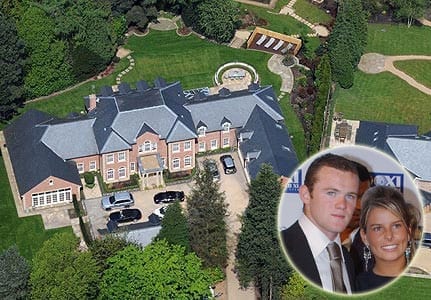

     

    Wayne and Coleen Rooney and their home on Collar House Drive in Prestbury, East Cheshire
    Warrington born Kerry Katona isn’t considered one of the “Cheshire set’s” finest exports


    Cheshire itself is a county of contrasts: there’s the farming and hunting set and then there’s the new money. From the 1950s onwards an invasion of nouveau riche footballers and self-made business people came to Alderley Edge and Wilmslow and it is said that there are more Rolls-Royces per square mile here than anywhere else in the UK.


    Though today’s Coronation Street actresses and Man United players generally favour brand new homes in Prestbury, the new wealth have not just consigned themselves to such. The likes of Take That’s Gary Barlow, for a time, owned Delamere Manor at Cuddington but sold it in 2005 due to his ever-growing commitments elsewhere. Equally, Neil Hamilton, whilst MP for Tatton, lived at The Old Rectory at Nether Alderley with his formidable wife Christine but when their days in politics came to an end, they too moved on. For a time, David and Victoria Beckham were the undoubted glitterati of this manor, but of those footballers still resident Wayne and Coleen Rooney are definitely now the best known.
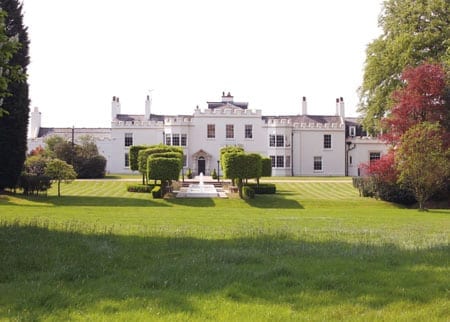
     

    Swettenham Hall, Swettenham, Congleton, Cheshire, CW12 2JZ
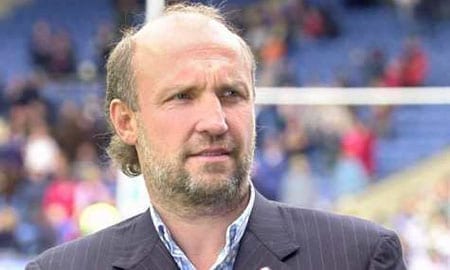
    Double glazing tycoon Brian Kennedy


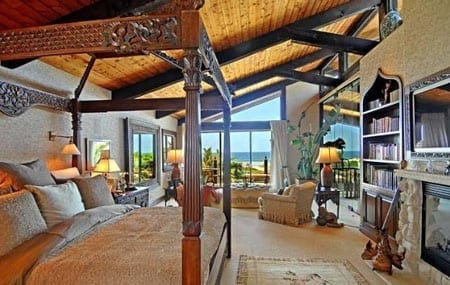
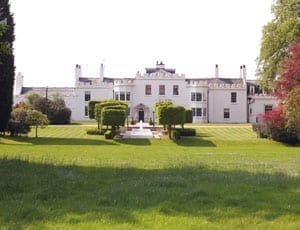
    In a “grey area between old and new” sits Swettenham Hall at Swettenham near Congleton. This 12,590 square foot Georgian mansion dates to 1795 but since it was acquired by Brian Kennedy, a double glazing, home improvements and mobile telephone entrepreneur, the house has been given a total makeover. The colourful style he’s given the house can best be described as being akin to: “Laurence Llewelyn-Bowen meets Austin Powers.”
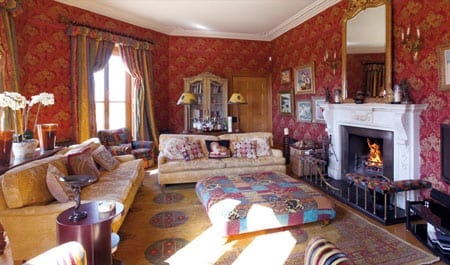
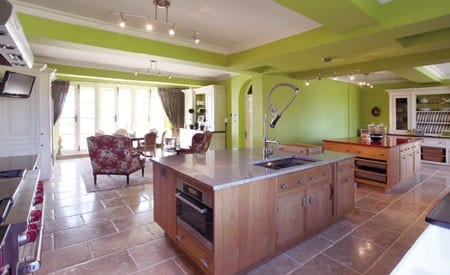
     

    Swettenham Hall’s drawing room is decorated and furnished in a cacophony of colours
    The kitchen is painted in an equally vivid shade of lime green
    A bedroom boasts a carpet that would make Austin Powers shout: “Yeah, baby, yeah!”
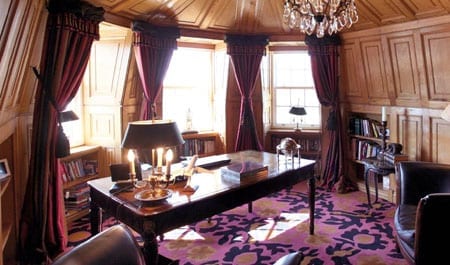
    The same carpeting continues into the wood paneled “gentleman’s study”
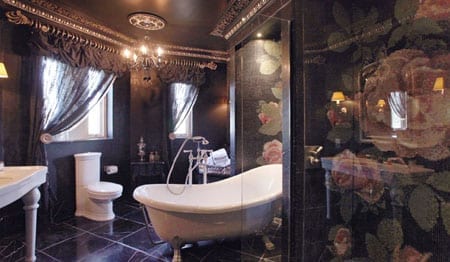
    At Swettenham Hall, bathrooms, equally, are far from neutral in their styling
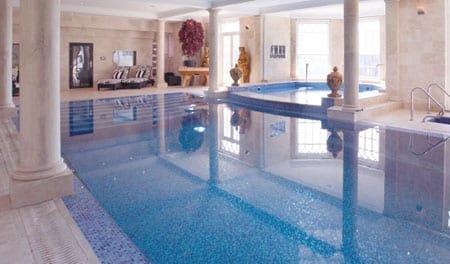
    Mr Kennedy and his wife Christine employed Julian Bicknell Associates to design an impressive leisure wing in 2004


    Swettenham Hall is most definitely a party palace and along with the addition of a leisure wing consisting of a swimming pool, Jacuzzi®, plunge pool, steam room and gymnasium in 2004, Kennedy has also constructed a 47ft by 44ft helicopter hangar complete with a retractable helicopter pad.


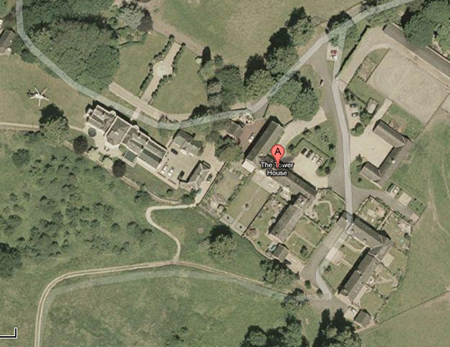
    Standing in 100 acres of grounds, the house does seem a tad expensive at £15 million especially since that the adjoining former farm buildings were sold off and converted into eight homes in 1999. The driveway is partly shared with these homes and for those seeking the ultimate in privacy, this could indeed be an issue. It is perhaps why Swettenham Hall has yet to sell.
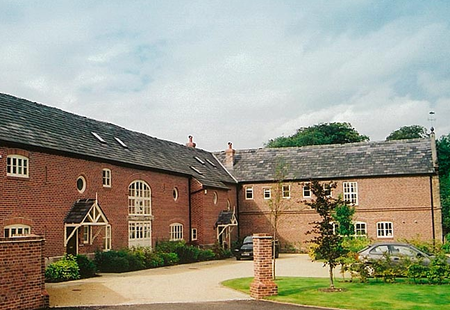
     

    The former farm buildings next to Swettenham Hall were sold off and converted into eight homes by Egerton Estates and Watts Developments in 1999
    The proximity of Swettenham Hall to the neighbouring barn conversions is illustrated in this Google Earth map

    Brian Kennedy is someone I hadn’t heard of until I came across Swettenham Hall but here is a fascinating man whose meteoric rise is frankly very clearly linked to windows. The son of a window cleaner from Edinburgh, this self-made tycoon started his career as a trainee manager at the Royal Bank of Scotland. He subsequently briefly worked as a trainee accountant but left when offered the chance to become youngest branch manager of Moben Kitchens at the age of 20.


    At around this time, Kennedy acquired a stake in Farouche Kitchens and with a Rochdale born property entrepreneur named David Russell, he was transformed from a door-to-door salesman to a pioneer in direct sales. In 1988, when Farouche was sold, Kennedy netted circa £1 million. From here, this entrepreneur returned to his family’s roots by venturing into double glazing with Weatherseal Windows and then home improvements with Space Kitchens & Bedrooms.


    In 1999, with the help of funds raised by private equity investors 3i, Kennedy paid £42 million for the well known brand Everest but sold part of his stake to the management for £63 million in 2003. In due course he added to his shareholding and then sold 21.5% of the company to Hutton Collins in a deal which valued the company at £150 million in 2007.


    Ever the empire builder, Kennedy paid £29 million for a conservatory manufacturer named Ultrafame in 2006 and then also added another double glazing brand, Zenith Staybrite, to his portfolio in 2008. Many other business ventures followed but not being afraid to diversify, Kennedy formed Patrick Properties, whose portfolio is now valued in excess of £100 million, in 2002 and Kennedy Renewables, which specialises in wind energy, in 2009.


    In the technology sector, a chance conversation in a Knutsford wine bar in 1995 led to him venturing into the mobile telephone market with a company named Genesis Communications. The business was sold to Dixons in 2002 for £31 million.


    In January 2012, Kennedy merged his main Latium Holdings business with Jim Rawson’s Epwin Group to form Epwin Holdings. The merger resulted in a company with more than 2,500 employees and brands numbering Spectus, Swish, CET and Kestrel.


    Of his success, Kennedy states:


    “Business is common sense [and] dealing with people is common sense. I don’t think I have any particular flair. I think it is about common sense, taking the opportunity when it comes and hard work.”


    Brian Kennedy’s wealth has allowed him to indulge many of his passions. A period of semi-retirement “drove [him] and [his] kids nuts,” but this Scotsman’s love of rugby resulted in him acquiring the Sale Sharks Rugby Club in 1999. He is said to have set the “club on a sound financial footing” and turned it into “one of the leading rugby clubs in Britain.”


    Philanthropy is something that Kennedy, a Jehovah’s Witness, has also dedicated his wealth to. Through his Brian Kennedy Trust, he has supported a number of charities and organisations but it is for his role as the main backer of Find Madeleine Fund that he has come to public attention. Of his reasoning for backing the missing child’s parents financially, he stated:


    “In light of the quite literally incredible accusations against Gerry and Kate McCann, which are clearly exacerbating their emotional torture, I felt compelled to offer, along with other like-minded businessmen, financial support and the full logistical support of the Latium team. That support is principally our in-house lawyer Ed Smethurst and [official spokesman] Clarence Mitchell.”
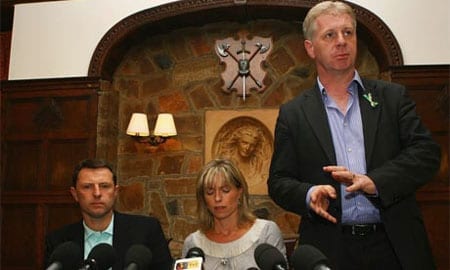

     

    Brian Kennedy was involved in the funding of a team that included Clarence Mitchell for the Find Madeleine Fund until 2009. Here Mitchell (standing) is pictured with Gerry and Kate McCann.
    An ex-lawyer and campaigner Anthony “Tony” Bennett is the former secretary of The Madeleine Foundation who has been involved in various legal disputes with Brian Kennedy and Gerry and Kate McCann


    Kennedy’s donation attracted much press attention in 2007 in the weeks following Madeleine McCann’s disappearance and he continues to support them to this day. A very public spat involving him, Gerry and Kate McCann and a campaigner named Tony Bennett, who also was involved in The Madeleine Foundation, has been the subject of various legal actions. In October 2011, Mr Bennett was forced to publicly apologise to Mr Kennedy and separately an August 2009 Evening Standard article by Mark Hollingsworth “investigat[ing] the investigators,” was pulled because for “legal and editorial reasons.” In it, “someone who worked closely with [Kennedy]” was quoted as saying:


    “He was appalled by the Portuguese police, but he also had visions of flying in by helicopter to rescue Madeleine.”


    Angelina Jolie, another avid aviator, once commented: “Wherever I am I find myself looking out of the window wishing I was somewhere else.” We do not know why Brian Kennedy is selling Swettenham Hall, but Jolie is indeed one of the few with the resources to take these particular windows off his hands.

     
    For more information about Swettenham Hall, Swettenham, Congleton, Cheshire, CW12 2JZ, contact Edward Welton of Knight Frank on +44 (0) 20 7861 1114.


    For more details about Brian Kennedy, go to: http://www.brian-kennedy.co.uk


    For more details about the Find Madeleine Fund go to: http://www.findmadeleine.com and for information on The Madeleine Foundation: http://www.madeleinefoundation.org.uk/
  • Video of the Week: The Queen morphs

    Video of the Week: The Queen morphs

    The Queen’s life in 3 minutes and 24 seconds


    This week we must thank Dan Large for having alerted us to an amazing YouTube video showing Her Majesty The Queen’s life in 3 minutes and 24 seconds.


    Elizabeth II

    Created by “an old retired guy who likes to play with computers” named “HerBunk” and using the technological wizardy of FantaMorph, the video has attracted nearly 6,000 likes and 300 dislikes. We look forward to hearing what readers of The Steeple Times make of it.


    Watch the video at: http://www.youtube.com/watch?v=E8nJhG1xE5o&feature=share

  • Rocking with royalty

    Rocking with royalty

    A £26 million residence with connections to rock, royalty and rectors


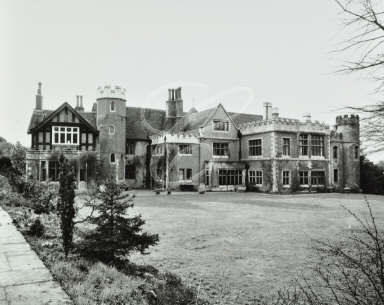
    Built in the early 1500s, The Old Rectory is Wimbledon’s oldest house. Standing in grounds of 2.5 acres, this 16,200 square foot property was once described by a biographer of Sir Henry Cecil as being “not luxurious, but adequate” but now once again it finds itself in an entirely different league.

    An image of The Old Rectory, 82 Church Road, Wimbledon, London, SW19 5AA in 1978. Present day imagery has been removed at the request of agents acting for the current owners.

    Priced at £26,000,000, it is almost certainly one of the most expensive homes to ever come to the market in Wimbledon and whoever moves there next will undoubtedly be either an oligarch, an A-list personality or a top achieving business person.


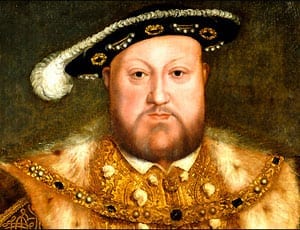
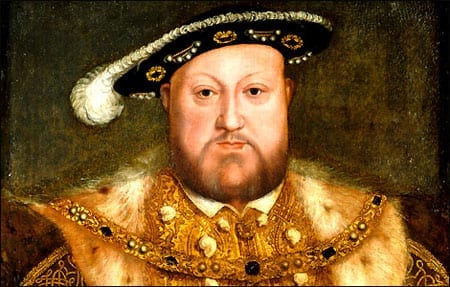
    The purchaser will follow in the footsteps of a fascinating array of historically important residents, the first of whom was Henry VIII (1491 – 1547). The King took up residence in 1547 in the months prior to his death and is said, as he was so bloated, to have been unable to climb the stairs to his sleeping chambers. His bed was relocated to the great hall of the house and here he slept next to the fire. Historical research recounts that, with a brewhouse, beer and wine cellars, a coal cellar, meat room, buttery and two dairy rooms, this was a “house fit for a king.”


    Henry VIII (1491 – 1547)
    Catherine Parr (1512 – 1548)

    Henry VIII gave The Old Rectory, which was originally called The Parsonage House, to his sixth and final wife, Catherine Parr (1512 – 1548). Preferring a residence in Chelsea, Parr left and the Dean and Chapter of Worcester Cathedral took possession. A lease was sold to Sir William Cecil (1520 – 1598), later Lord Burgley, and the manor then passed to his son Thomas Cecil (1542 – 1623), the 1st Earl of Exeter.


    In 1639, Charles I (1600 – 1649) bought the entire manor and gave it to Queen Henrietta Maria (1609 – 1669) but with the era of Comwell, The Old Rectory found itself occupied by General John Lambert (1619 – 1684). Shortly after, when a grander house was built next door, the property became first a laundry house and then servant accommodation and gradually fell into decline.


    The Old Rectory passed next to Sir Theodore Janssen (1658 – 1748) in 1720. This French-born English financier, who was said to be worth the staggering sum of £250,000 at the time of his purchase of the house, was a founder member of the Bank of English but later disgraced for his part in the South Sea Bubble. He was expelled from the House of Commons and with his ruination, The Old Rectory saw yet another chapter of abandonment.


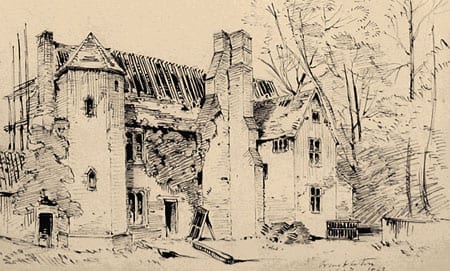
    The garden front of The Old Rectory by Charles Henry Money Mileham (1837 – 1917)

    By 1802, the house was described as an “uninhabited” ruin. A speculator credited with developing “modern Wimbledon” named John Augustus Beaumont bought it and restored and extended it but when it was sold to a Samuel Wilson in 1882 for £6,000, an era of truly comprehensive upgrades was to begin. Wilson added a pebble-dashed two-storey drawing room wing, carved oak doors and installed English, Flemish and Italian chimneypieces.


    The next owner was a marine engineer named Matthias Jacobs who had been responsible for the construction of tunnels in Paris and New York. After having purchased The Old Rectory in 1909, he commissioned his brother to add a new single storey billiards room, a service wing and a study extension to mask the medieval chapel of the house. Jacobs sold up in 1923 to a Thomas Lethaby, who fitted oak paneling from Chantry House in Newark and a plaster ceiling based on the one at Knole House, Kent.


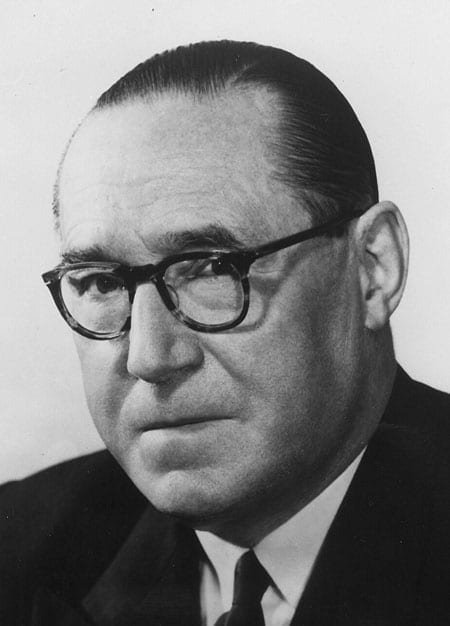
    Lord Brock FRCS, FRCP (1903 – 1980)

    In 1953, the eminent London surgeon and cardiologist, Lord Brock FRCS, FRCP (1903 – 1980), took possession of The Old Rectory after having paid £13,750 for it.  Brock is credited as on of the pioneers of modern open heart surgery and also founded the Lord Brock Memorial Trust that to this day funds the museum he founded, The Old Operating Theatre Museum and Herb Garret in Southwark, SE1.


    Following the death of his first wife Germaine Louise Ladavèze, Brock sold to an Iraqi entrepreneur and philanthropist named Basil Faidhi in 1978. Faidhi had fled Iraq for Britain and though he spent vast sums restoring the house with assistance from English Heritage, he also created a basement discotheque for his daughter, Nina, and a bar. Aside from bringing the house into the “yuppie era,” Faidhi also commissioned a historian named Richard Milward MA to write a history of the building in 1992 entitled: The Rectory – Wimbledon’s Oldest House.


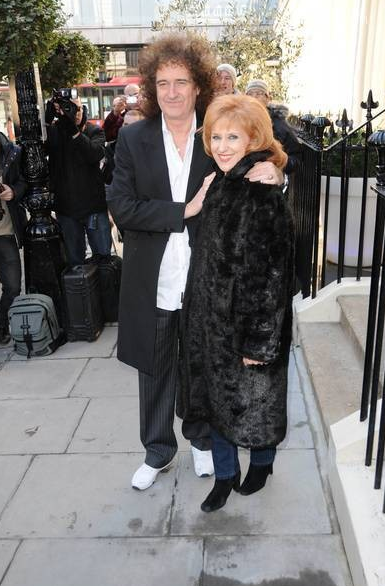
    The Queen lead vocalist and anti-badger cull campaigner Brian May CBE purchased The Old Rectory in 1994 for £4,000,000 with the intention of living there with the Eastenders actress Anita Dobson.


    Brian May CBE with his second wife Anita Dobson

    Dobson, who didn’t marry May until 2008, had other ideas and refused to move in. It was suggested that she preferred a smaller house the pair occupied in Kensington and, at the time, a friend commented:


    “[May] begged her to move into the new house so they can make a fresh start. Nobody can believe that Anita doesn’t want to be the lady of this fabulous house. But Brian says he can’t get through to her.”


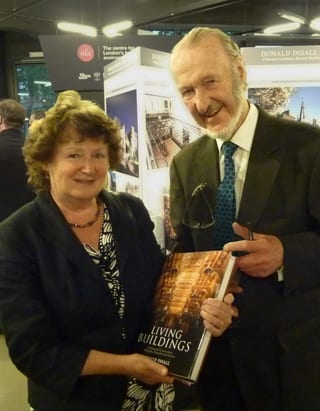
    Sir Donald Insall CBE

    As a result, May never properly moved into The Old Rectory and eventually decided to sell. In 2006, it achieved a record price of £16,000,000 and in the ensuing years, an Italian architect-owner named Antonella Carminati and her husband have lavished time and money on further restorations with the help of Sir Donald Insall CBE’s Insall Associates firm of architects.

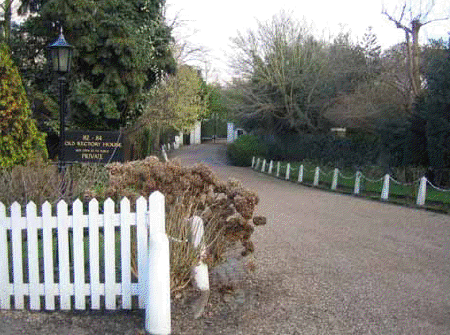
    The driveway that leads to The Old Rectory from Church Road gives plenty of privacy

    New fittings have been installed throughout and substantial extensions to the house have included a new kitchen and breakfast room with garaging beneath. The couple have demolished an early 20th century porch and an “unsightly” oak conservatory, remodeled the billiards room as a drawing room and removed a “bilious” blue swimming pool from the east lawn.


    Now featuring 12,882 square foot of accommodation in the main house and 3,320 square foot of additional accommodation, The Old Rectory has been planned to include 8 reception rooms; a vast kitchen with La Cornue appliances and an adjoining breakfast room; master bedroom suite with two dressing rooms, his and her bathrooms and a sitting room and 7 further bedrooms.


    Outside, the gardens feature an original medieval fig tree trail, shaded paths, lawns and a large pond as well as garaging for six cars. Planning permission for an indoor swimming pool complex has also been granted and ample staff accommodation is provided above one of the garages and in the gate lodge.


    Given the now limited financial resources of the traditional religious houses of Britain, will it be rock, royalty or new money that next takes possession of The Old Rectory? The historians of Wimbledon will undoubtedly be watching.


    The Old Rectory, 82 Church Road, Wimbledon, London, SW19 5AA is for sale through the Wimbledon office of Knight Frank. For more information call: +44 (0) 20 8946 0026.

  • Of mice and stags

    Of mice and stags

    In his first column as our rural affairs correspondent, Charles Mitford Cust tells of the stags rutting near his Devon home and discovers a remedy that sends mice on their merry way


    Down here in deepest Devon, the red deer rut has started and the majestic sight of the powerful stags proudly displaying their magnificent new antlers, freshly out of velvet, is an everyday occurrence on the hill opposite my house. At night my sleep is disturbed by their roaring, the primeval challenge to rivals for the possession of the beautiful young hinds in the locality. No political correctness in the deer world, the biggest and strongest stags get all the girls, and the wimpy nerds go without.


    However, it is not the roar of the stags which has been disturbing my sleep for the last few weeks but rather creatures from the other end of the animal kingdom, at least in terms of size, which have moved into my loft since the early autumn has brought its customary evening chill, namely mice.


    A red stag in bracken


    Mice can be a serious problem in any house. They have a penchant for eating their way through electrical cable amongst other things and if left alone, breed prodigiously and become a real health hazard. Unfortunately my mice are old hands at avoiding any conventional methods of reducing their numbers. I have tried every type of trap that has ever been invented and every sort of bait, cheese, chocolate, peanut butter, the lot. I also have tried every type of poisoned bait, but they simply laugh at my efforts.


    In frustration, I splashed out on the most expensive mouse trap ever designed which consists of a labyrinth of tunnels leading to an electric execution chamber which supposedly fries the mouse in a millisecond with a high voltage shock. Despite the manufacturers claim that this is the most effective mouse killing device ever devised by man, my  ‘uber mice‘ merely regarded it as an amusing challenge as they ate their way through the hard plastic wall of the execution chamber and helped themselves to the peanut butter whilst managing to stay clear of the 1000 volt electrodes.


    In despair, I turned to Google in my search for ancient remedies, as clearly the latest technology wasn’t working, and I found a most unlikely solution, peppermint oil. It turns out that the one thing mice really cannot stand is the smell of peppermint. It seems that your average mouse would rather face being dropped into a house full of cats whose senile owner has accidently got on a plane to Australia and left them starving than find themselves within a mile of a single drop of pure peppermint oil.


    Just the scent of this wonderful smelling liquid, was enough to send my mice packing. In fact when I went up into the loft with the intention of placing a few drops in half a dozen upturned bottle tops, I actually saw mice scurrying from their hiding places within a single second of unscrewing the lid. That was proof enough for me.


    Follow Charles Mitford Cust on Twitter at: http://www.twitter.com/mitfordcust


    Now my loft is perfumed with the sweet scent of peppermint rather than mouse droppings and the only noise at night is the roar of the stags, but they are music to my ears and finest lullaby nature can provide.

  • The land of Tarka and Salar

    The land of Tarka and Salar

    The North Devon countryside that inspired Henry Williamson, R. D. Blackmore and Charles Kingsley


    Much of my childhood was spent reading the works of superb authors and amongst the best of them were Arthur Ransome (1884 – 1967), Denys Watkins-Pitchford (1905 – 1990), who wrote many of his works under the pseudonym “B.B.”, and Henry Williamson (1895 – 1977). As a youngster, I was lucky enough to be read to by Ransome’s nephew, a most captivating professional storyteller, and was given first editions of many of the works of all three of these early to mid twentieth century authors.


    I had my first sailing lessons on Windermere, where Ransome set many of his works, and went shooting in the Forest of Bowland, a place dear to B.B. Though I also fished in many wonderful locations, until now I’d never been to the land of Henry Williamson and his most famous creation, Tarka the Otter. I currently find myself here enjoying a break from London and yesterday I randomly discovered, I am staying next to the setting of one of Williamson’s lesser known stories, Salar the Salmon, on the River Bray close to Exmoor.


    “Salar the Salmon” by Henry Williamson (1935)
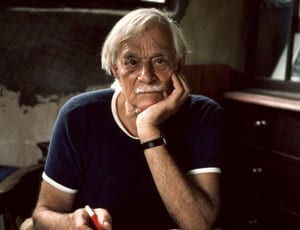
    Henry Williamson (1895 – 1977) photographed by Mark Gerson, cibachrome print from original transparency, August 1970
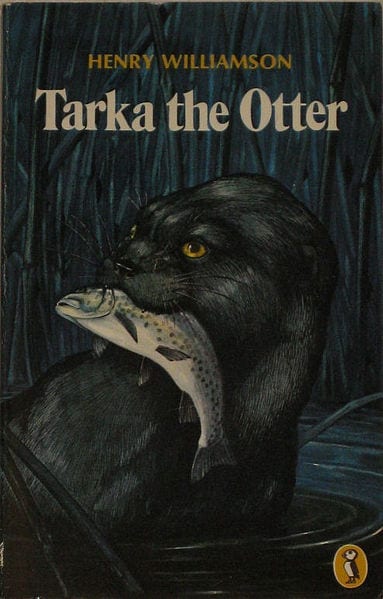
    “Tarka the Otter” by Henry Williamson (1927)

    Originally published in 1935, Salar the Salmon combines Henry Williamson’s great talent as a writer with his insight as a naturalist. The story tells the tale of a five-year old salmon named Salar, whose name means the “leaper,” and his return to the stream of his birth. Salar’s migration through the riverways of Devon involve him surviving porpoises, seals, nets, fishermen, otters, poachers and weirs and Williamson’s account truly gives the reader an insight into one of nature’s great journeys.


    Henry Williamson wrote both Salar the Salmon and The Children of Shallowford (1939) whilst living beside the River Bray in a hamlet named Shallowford, near Lynton in Devon. The river plainly inspired him and whilst he lived there on the Fortescue Estate he also sired four children, joined Oswald Moseley’s British Union of Fascists, was briefly imprisoned for his views and conducted several extra-marital affairs.


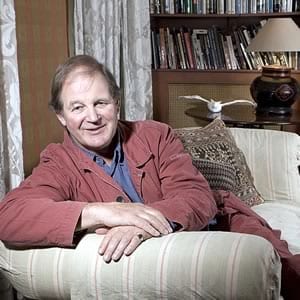
    “War Horse” author Michael Morpurgo OBE

    Salar the Salmon is a story I am not alone in recommending. Another Devon based author and poet, Michael Morpurgo OBE, best known for his acclaimed work, War Horse, speaks very fondly of Williamson and the novel in a dedication he prepared for a recent reprint of it:


    “It is a rare gift indeed for a storyteller to be poet as much as a storyteller, to tell a tale so deeply engaging that the reader wants to know what will happen and never want it to end, and yet at the same time tells it in such a way as to leave a reader wide-eyed with amazement at the sheer intensity of feeling that can be induced by the word-magic of a poet. Henry Williamson is just such a story-maker poet.”


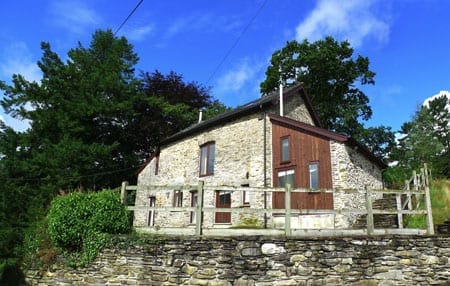
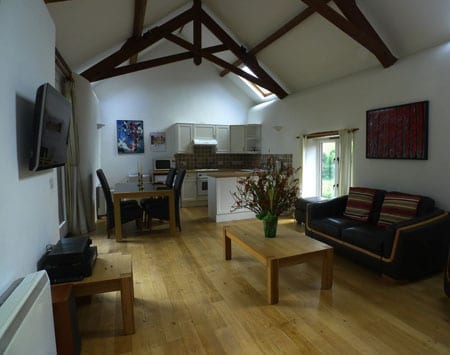
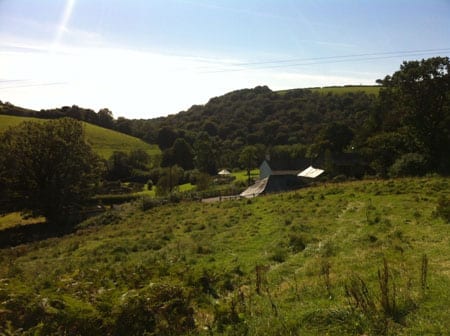
    Where I am staying, I have a view of the very river on which Salar made his journey and here also a detached barn conversion is currently available to rent at a price of £1,150 per month. Malle’s Barn is a 2-bedroom stone-built property that includes a 25ft by 12ft open plan sitting room with a fully fitted kitchen and a dining area, as well as a study and shower room.


    The exterior of Malle’s Barn, Brayford, Near Barnstaple, Devon, EX32 7QB
    A large open plan reception room includes sitting, dining and kitchen areas
    The setting of Malle’s Barn overlooking the valley of the River Bray


    Tenants of the house will have access to the owner’s 60-acre estate which includes a mile of salmon and brown trout fishing on both the Rivers Bray and Holewater, ancient woodland and a lake in addition to a private garden and adequate parking for several vehicles.


    Malle’s Barn would make a perfect retreat for any author or artist and is just 10 minutes from South Molton, Barnstaple is 9 miles away and Exeter 40 miles. The location is 30 minutes from J27 of the M5 and Tiverton Parkway Station, which provides mainline links to London Paddington within 2 hours.


    Close to Malle’s Barn are the prettiest sections of a footpath named the Tarka Trail. Consisting of over 180 miles of footpaths and cycle tracks that take in the Dartmoor and Exmoor National Parks and the North Devon Coast Area of Outstanding Natural Beauty. The trail takes in many of the locations described in Williamson’s most famous novel but this area of North Devon also galvanized the pens of a number of other authors.


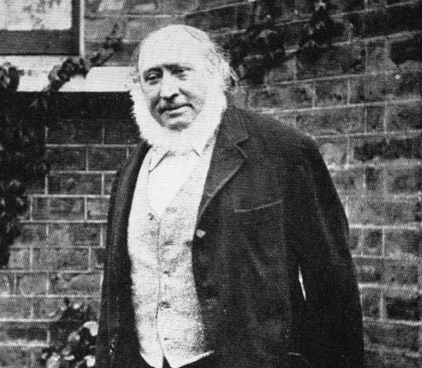
    Richard Doddridge Blackmore (1825 – 1900)
    Professor Charles Kingsley (1819 – 1875)

    Richard Doddridge Blackmore (1825 – 1900) set Lorna Doone: A Romance on Exmoor in the locality in 1869 and Professor Charles Kingsley (1819 – 1875) put pen to paper here when he wrote Westward Ho! in 1855. A village of the same name was subsequently established near Bideford in the 1860s by entrepreneurs, led by Lord Portsmouth, who saw an opportunity to capitalise on the novel’s success. Westward Ho! is the only place in the United Kingdom with an exclamation mark in its name. The only other place in the world that shares such is Saint-Louis-du-Ha! Ha! in Quebec, Canada.


    Aside from literary connections, the locality is famous for its excellent fieldsports. The Earl and Countess of Arran’s Castle Hill and the Molland shoot are considered amongst two of England’s finest high bird pheasant shoots and both the Devon and Somerset Staghounds and Devon and Somerset Foxhounds hunt on Exmoor.


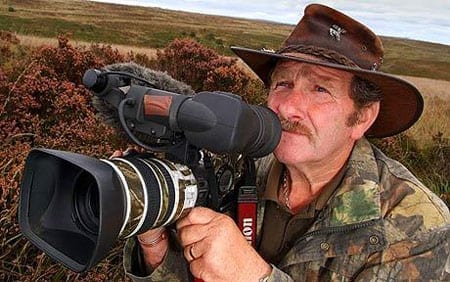
    Johnny Kingdom


    Johnny Kingdom, who describes himself as having been “a farmer, quarryman, forestry worker, gravedigger and, if truth be told, a poacher” in his youth, also lives in the locality and is well known as a wildlife photographer, filmmaker and television presenter. He sets many of his series on Exmoor because of the vast array of wildlife he comes across here and is, like Williamson before him, often to be found exploring the valley of the River Bray.


    In a 1965 BBC interview Henry Williamson was asked: “What influence has this [the Devon] countryside had on you?”:


    “Everything, I should say. I came down here as a youth, aged just 18 in 1914, spent a fortnight’s holiday here in the beginning of May, beginning of June. I walked 20 to 25 miles every day. Everything I saw was radiant and beautiful.”


    This idyllic part of Devon that Williamson loved so much remains unspoilt to this day. If you haven’t visited yet, it really should be added to your bucketlist.


    For more information about Henry Williamson, go to The Henry Williamson Society’s webpage: http://www.henrywilliamson.co.uk


    Watch the 1965 BBC interview with Williamson at: http://news.bbc.co.uk/local/devon/hi/people_and_places/history/newsid_8475000/8475989.stm


    For details and a map of the Tarka Trail, go to: http://www.devon.gov.uk/tarkatrail and http://www.devon.gov.uk/tarka-trail-circular-routes.pdf


    For information on the Molland shoot, go to: http://www.bettwshall.com/molland.htm


    For more information about the Devon and Somerset Staghounds, go to: http://www.devonandsomersetstaghounds.net


    For more information on the Devon and Somerset Foxhounds, go to: http://www.exmoorfoxhounds.co.uk


    View the official website of the author and poet Michael Morpurgo at: http://www.michaelmorpurgo.com


    View the official website of Johnny Kingdom at: http://www.johnnykingdom.co.uk/

    For more information about Malle’s Barn, contact Charles Mitford Cust at: [email protected]

  • Singing for a Diamond

    Singing for a Diamond

    Music fit for The Queen


    In recent days, Gary Barlow’s albumn Sing has topped the UK album charts with sales of 40,000 copies.


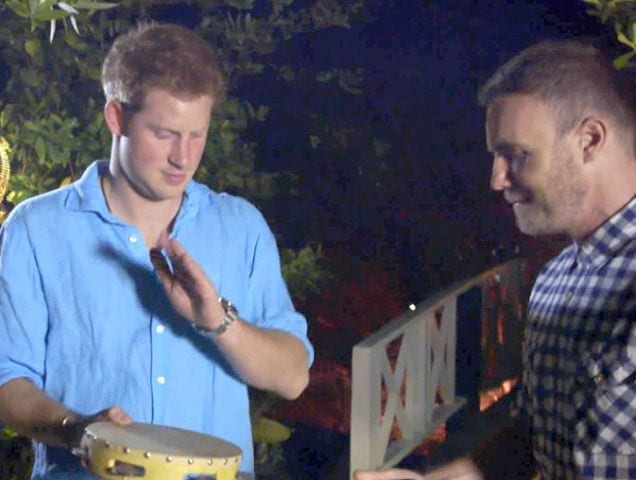
    Two hundred and ten musicians, including the African Children’s Choir and the Royal Solomon Islands Police Force Band, helped record this special tribute to The Queen. Produced by Barlow with the assistance of Andrew Lloyd Webber and Gareth Malone, Sing also features Prince Harry on the tambourine, Hayley Westenra, Alfie Boe and the Military Wives choir. Sing will be performed this evening at a special concert at Buckingham Palace in the presence of Her Majesty.


    Another tribute I was alerted to came from a singer named Anton Lorien who contacted me via Twitter. He was approached in 2011 by the British Monarchist League who asked him to produce a song for a lady he describes as having: “Given her life selflessly to the people of Britain and the Commonwealth.”

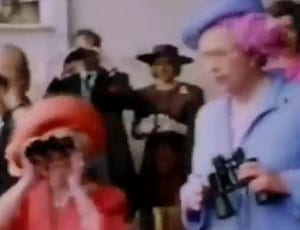
    Mr Lorien’s song, Like A Diamond, is available to download on iTunes but I wholeheartedly recommend that you watch the video clip available above. It contains some wonderful footage of The Queen and the clip at 3:33 where our Monarch runs to watch her racehorse is especially worth seeing.


    Gary Barlow pictured with Prince Harry on the tambourine working on Sing


    Both Sing and Like A Diamond capture the feelings of our nation brilliantly. Be sure to sing along tonight.


    For more information about Anton Lorien’s Like A Diamond, go to: http://www.antonlorien.com


    For more information on Gary Barlow & The Commonwealth Band’s Sing, got to: http://www.jubileesing.com

  • Her Majesty Queen Elizabeth II, Queen of the Commonwealth Realms

    Her Majesty Queen Elizabeth II, Queen of the Commonwealth Realms

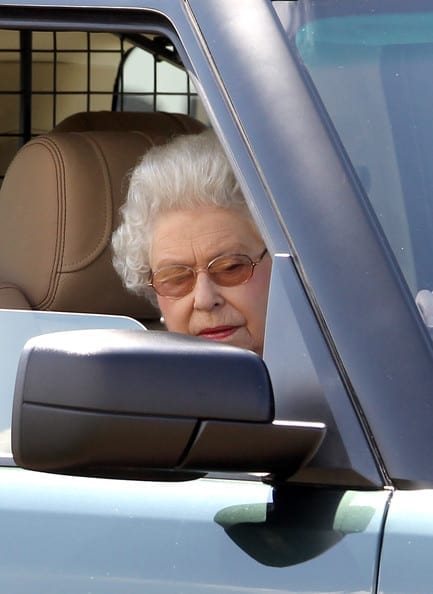
    Her Majesty Queen Elizabeth II  governed as constitutional monarch of 16 sovereign states and headed the 54-member Commonwealth of Nations. Supported by her gaffe prone husband, “Brenda,” as Private Eye nicknamed her, served steadfast through good times and bad. She liked to drive a little quickly when given control of the wheel of a Range Rover and also found washing up relaxing. This monarch like no other will never be forgotten.