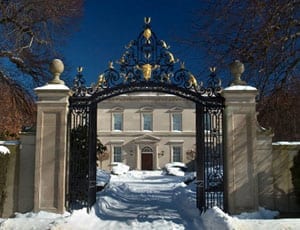
Tag: Christie’s

  • Reversing Fortunes: Tales of former home of Claus von Bulow

    Reversing Fortunes: Tales of former home of Claus von Bulow

    A most curious tale of playboys, socialites, lawyers and real estate moguls


    This week the mystery buyer of Clarendon Court, the former marital home of Claus and Martha “Sunny” Von Bülow (1932 – 2008), was revealed as a restaurateur and real estate mogul named Paul Roiff. Separately, the New York Post reported that Mr Von Bülow’s former lawyer, Alan Dershowitz, had purchased an apartment in Sutton Place, New York at the same time as a postal worker was on trial for killing his sister. The lives of the rich and famous are never anything other than dramatic.
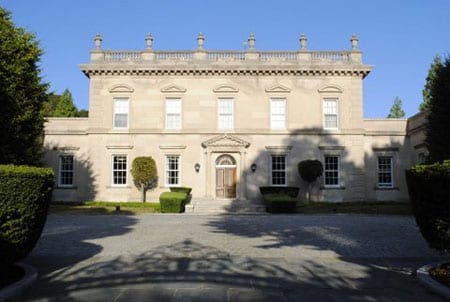
     

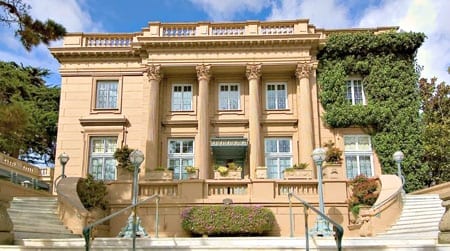
    The front elevation of the former residence of Claus von Bulow: Clarendon Court, 626 Bellvue Avenue, Newport, Rhode Island, RI 02840
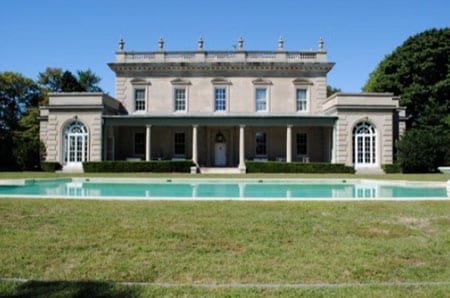
    The rear elevation of Clarendon Court, 626 Bellvue Avenue, Newport, RI 02840
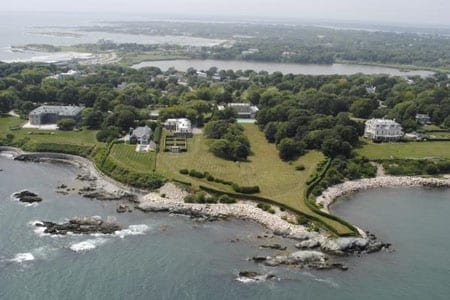
    An aerial shot of Clarendon Court from the Atlantic Ocean

    8-bedroomed Clarendon Court on Bellvue Avenue in Newport, Rhode Island is best known for the events surrounding the utilities heiress Martha Crawford Von Bülow falling into a 28-year coma there and her husband subsequently being tried, convicted and then acquitted for her attempted murder, but this fine residence has much else in its past as well.
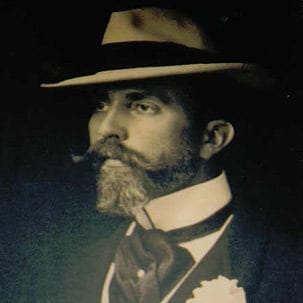
     

    Edward Collings Knight, Jr. (1863 – 1936)

    Designed by the most prominent Ameircan architect of the “Gilded Age,” Horace Trumbauer (1868 – 1938), this Palladian style villa was commissioned in 1903 by Edward Collings Knight, Jr. (1863 – 1936), a sugar-refiner and railroad executive, and his wife, Clara. It was built on an acre plot with views of the Narragansett Bay and is most curiously termed “one of Newport’s finest cottages.” The mansion that was constructed for the couple is an almost exact replica of a proposed house by Colin Campbell at Chester-le-Street in County Durham, England and features Doric columns, quoins and an urn-embellished balustrade. It provided a suitable illustration of Mr and Mrs Knight’s wealth and status.
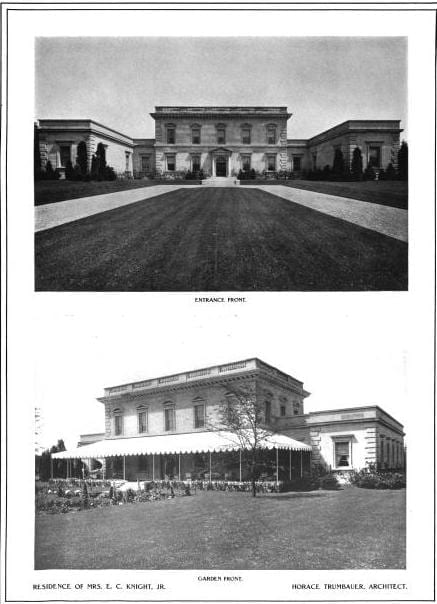
     

    Claradon Court in the early 1900s

    Edward Knight, who was once described as exhibiting “more talent at spending money than making it,” named the house Claradon Court in honour of his wife and shortly before it was completed in 1904, he acquired an additional six acres of land behind the plot with direct frontage to the Atlantic. Here, he had Trumbauer design a vast carriage house in an early Georgian vernacular as well as a series of high brick walls to protect the gardens from the ocean winds.
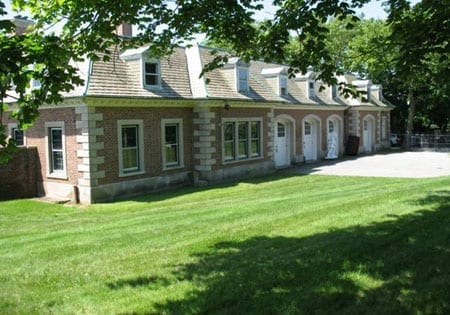
     

    The coach house at Clarendon Court today
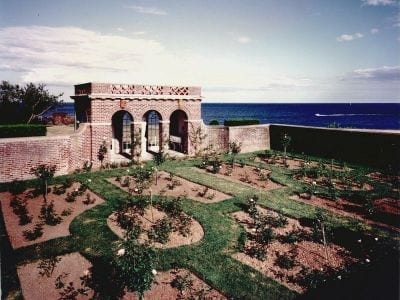
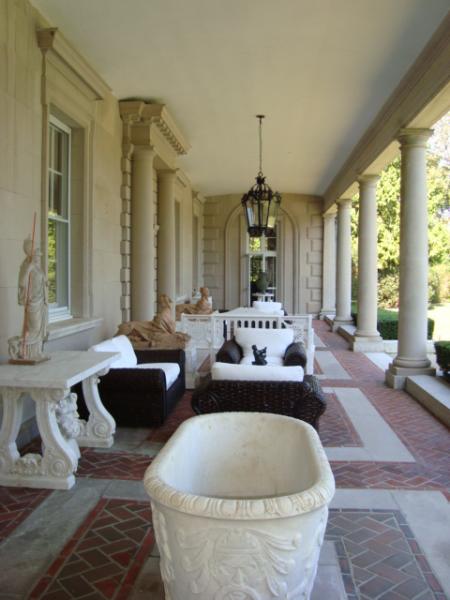
    The rear loggia was added by Mr & Mrs Knight at a later date
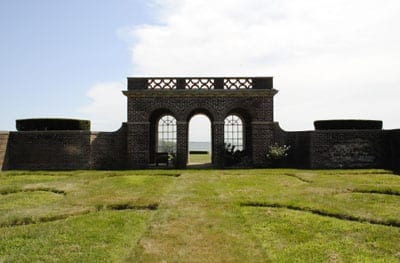
    This arch and walling was added to provide protection against the force of the Atlantic
    A more recent shot illustrates that the flower beds have been laid to lawn

    The Knights engaged a Parisian decorator named Jules Allard to decorate Claradon Court in the English Georgian manner and after several seasons in residence added two wings onto the back of the house. Following Clara Knight’s death in 1928, her husband sold the estate, moved to a more modest Trumbauer designed house in neighbouring Middleton and remarried. His second wife, Marie Louise LeBel, is remembered as a “foul-mouthed, hard-drinking [woman], who thought nothing of killing a neighbour’s dog with a shot from her pearl-handled pistol.”  Together they went on to spend the vast sum of constructing a $383,000 mansion in North Carolina as a hunting lodge. It is now the home of the Whalehead Club.
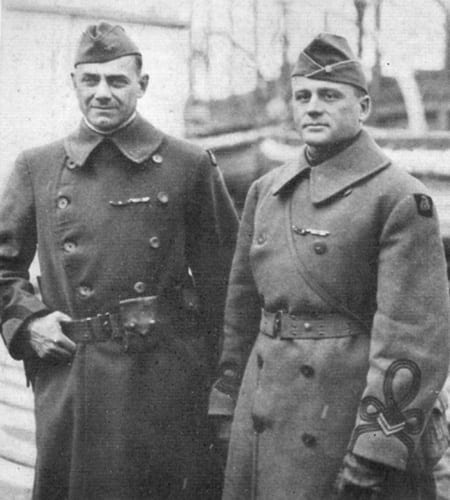
     

    Colonel William Hayward with Major Arthur W. Little

    The purchaser of Claradon Court was a First World War hero named Colonel William Hayward (1877 – 1944) and his wife, Mae (1880 – 1956). Whilst the colonel is remembered as the commander of the “Harlem Hellfighters,” a regiment that “never lost a man captured, a trench, or a foot of ground,” his wife was truly a character.


    Born in Connecticut, Mae Cadwell had divorced her first husband Selden B. Manwaring of Hartford in 1914 to marry the older and richer Morton F. Plant of New York and New London, Connecticut. Morton Plant adopted her son by her first marriage, Philip “Paul” Morgan Manwaring Plant (1901 – 1941), and when he married the well-known actress Constance Bennett (1904 – 1965) in 1925 more controversy followed. The millionaire socialite Plant’s life is well documented not only as it was for him that the term “playboy” was originally created but also because of his bitter divorce from Bennett in 1929.


    Following their purchase, Colonel and Mrs Hayward decided to have the name of Claradon Court changed to Clarendon Court to distance any lingering associations with Clara Knight and she is said to have filled the building with fine and decorative art. The colonel died in 1944 and his widow married for the fourth time, this time taking the president of the American Car & Foundry Company, John E. Rovensky, as her husband. After her death in 1956, Rovensky continued to use Clarendon Court until his own death in 1970 and even allowed it to be used as the set of the 1956 American musical comedy film High Society that starred Bing Crosby, Grace Kelly and Frank Sinatra.
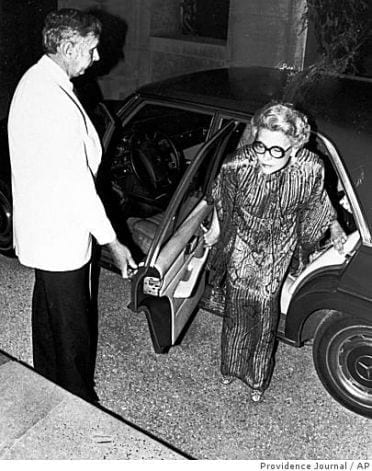
     

    Martha “Sunny” Von Bülow (1932 – 2008)
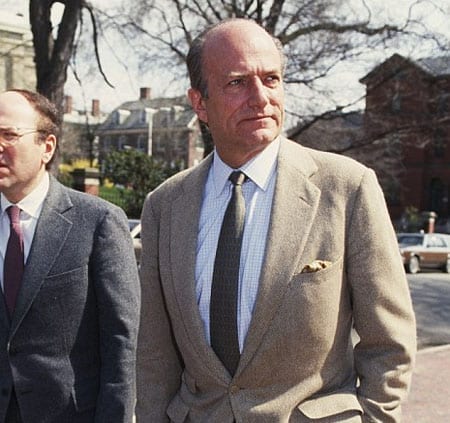
    Claus Von Bülow during one of his trials

    In 1970, Clarendon Court’s most notorious chapter commenced when the utilities heiress Sunny Von Bülow and her husband Claus purchased the house as it was here in December 1980 that Mrs Von Bülow fell into the irreversible coma that she was to remain in until her death in December 2008. The story of Claus Von Bülow’s trials for the attempted murder of his wife is well known and the 1990 film Reversal of Fortune, starring Jeremy Irons, Glenn Close and Ron Silver, is most definitely a true masterpiece.


    Considered a couple of “exceptional taste,” the Von Bülows were described as having filled Clarendon Court with exceptional 18th and 19th century English furniture. They also significantly improved the grounds by hiring the landscapers Innocenti & Webel to create an elegant allée to the sea by removing a hillock that had always deprived the ground floor rooms of an ocean view.
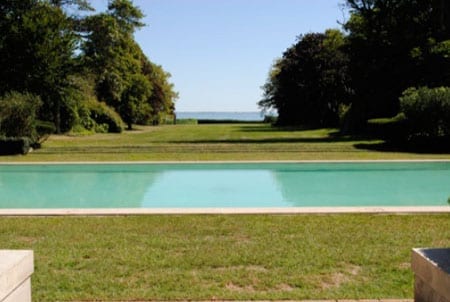
     

    The Von Bülow landcaped the grounds to create a better view from Clarendon Court towards the Atlantic Ocean

    In 1974, Claus Von Bülow wrote of Clarendon Court in an article for the Bulletin of the Newport Historical Society:


    “The author of this article has lived happily at ‘Clarendon’ for the past four years. As a European he has found much to admire in Newport, with its sense of history and its preservation of a unique architectural heritage. He hopes some future writer will cover the occupancy of his family at ‘Clarendon’ with as much wistful charity as he has endeavored to extend to its previous owners.”


    Von Bülow, at that time, plainly could not have imagined the tragic event that was to follow in December 1980 and for what the house would indeed become best known.
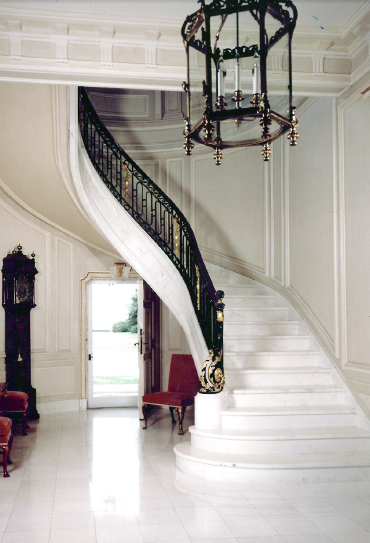
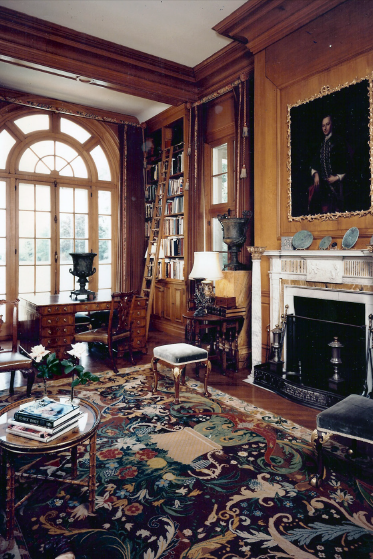
     

    The main staircase at Clarendon Court
    A study at Clarendon Court

    A committee managing Sunny Von Bülow’s affairs sold Clarendon Court in 1988 to a fine art and antique dealer named Glenn C. Randall and his wife Patricia for $4,300,000. The couple converted the service wing into a gallery for their collection and lived there until Mrs Randall died after a battle with cervical cancer in May 2010. The 12,800 square foot house and it’s 10,000 square foot coach house were placed on the market for $17,800,000 in October 2010 and whilst the price was subsequently was brought down to $15,800,000, it languished until being sold in July 2012.


    The new master of Clarendon Court, Paul G. Roiff, is a graduate of Boston University and Suffolk Law School. He is the president of a real estate company named Heath Properties and also co-owns a number of restaurants in Boston including Mistral, Mooo, Teatro and Sorellina as well as a 63-bedroom hotel named XV Beacon.
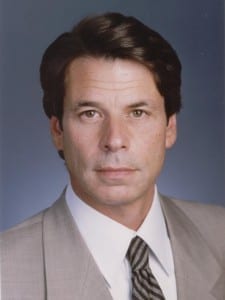
     

    Paul G. Roiff

    Plainly publicity shy, Roiff, who also owns homes in Florida and Michigan, used one of his employees, Keith Beardsley, to purchase Clarendon Court on his behalf. He paid $13,126,000 for the estate.
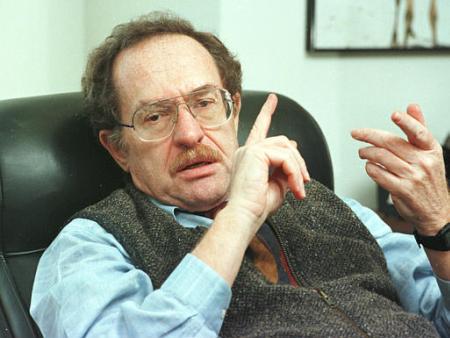
     

    Celebrity lawyer Alan Dershowitz
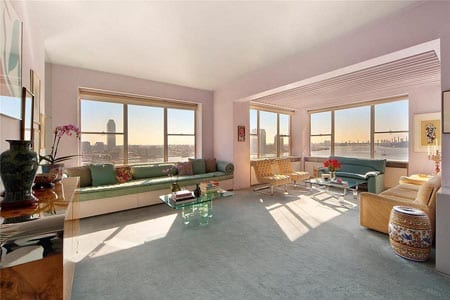
    Alan Dershowitz’s new pied-à-terre at 45 Sutton Place, New York, NY 10022, USA

    In another development, on the 25th September The New York Observer reported that the lawyer who became famous representing Claus Von Bülow, Alan M. Dershowitz, had bought a 3-bedroomed apartment in the “stronghold of old money,” 45 Sutton Place, for $1,680,000. Plainly Mr Dershowitz, who subsequently represented O. J. Simpson, has done well and is plainly now richer than his first “celebrity” client. He also owns a 6-bedroom residence in Cambridge, Massachusetts and was able to use his verbal talent to persuade the sellers of the Sutton Place co-op downwards from their original $2,290,000 asking price.


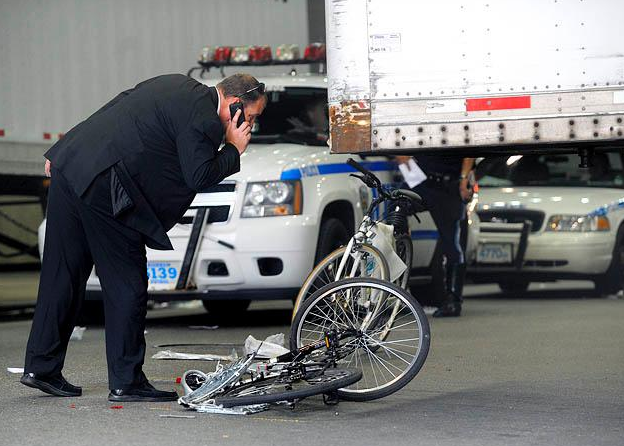
    Separately, late last month, Dershowitz and his family were in court for the trial of a postal worker named Ian Clement. A 7-tonne truck driven by Clement had crushed and killed Marilyn, the 68-year old sister-in-law of Alan Dershowitz, in New York in July 2011. Dershowitz, a retired special referee for the New York court system, had been out for a bicycle ride with her husband, Nathan, a partner at Dershowitz, Eiger & Anderson.
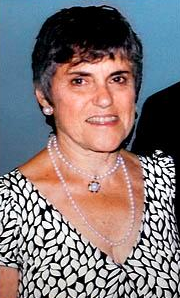
     

    Marilyn Dershowitz
    The scene of the fatal accident that killed Marilyn Dershowitz

    Surprisingly and much to the distaste of the Dershowitz family, Clement, who had been charged with leaving the scene of a fatal accident, was acquitted by a jury on the 20th September. Of this, Alan Dershowitz commented:


    “The facts clearly justified a guilty verdict… I think a stronger presentation might have brought about justice. Instead, we have an injustice.”


    Both the Von Bülows and the Dershowitz family have endured loss and a huge amount of media attention since the events of the early 1980s. Perhaps these most recent moves will bring with them a new chapter for both Clarendon Court and Mr Dershowitz himself. Meanwhile, Claus Von Bülow, though not quite as wealthy as he was in his days at Clarendon, prospers in London and is considered one of the city’s “finest wits.” How fortunes do indeed revolve.


    For more details about The Whalehead Club, go to: http://www.whaleheadclub.org


    Contact Alan M. Dershowitz at: Hauser Hall 520, 1575 Massachusetts Avenue, Cambridge, Massachusetts, MA 02138. Telephone: +1 (617) 495-4617. View his official website at: http://www.alandershowitz.com/ or follow him on Twitter at: http://www.twitter.com/alandersh


    The agent for Glenn C. Randall in the sale of Clarendon Court was Paul Leys of Gustave White who can be contacted on +1 (401) 848-6706 or by email at: [email protected]
  • Going under the Kosh

    Going under the Kosh

    The sale of a $25 million mansion modeled on Marie Antoinette’s favourite retreat that has connections to Levi Strauss & Co., Yehudi Menuhin, the Zodiac Killer and a controversial dot-com tycoon


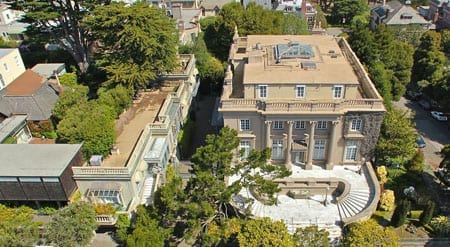
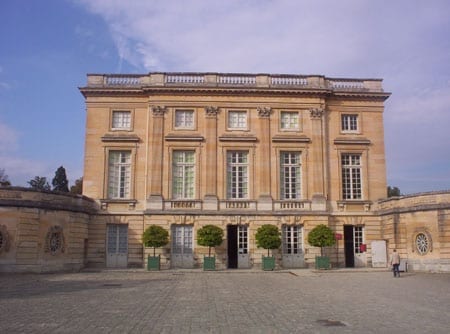
    Modeled on the Petit Trianon, a small château in the grounds of Versailles that was favoured by Louis XVI’s wife Marie Antoinette, the Koshland Mansion at 3800 Washington Street in Presidio Heights, San Francisco, California was built between 1902 and 1904 for a pioneer wool, hide and fur merchant named Marcus S. Koshland and his wife, Corrine.


    The Washington Street elevation of the former Koshland Mansion at 3800 Washington Street, San Francisco, California, CA 94118
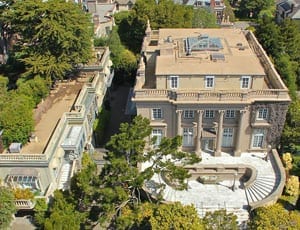
    An aerial view of the 18,000 square foot property and the 2,600 square foot guest accommodation
    The inspiration for the Koshland Mansion: The Petit Trianon, Château de Versailles, Place d’Armes – 78000 Versailles, France

    The Koshlands, whose son Daniel (1920 – 2007) was to become a president of Levi Strauss & Co., commissioned an architect named Frank S. Van Tree to design a replica of the Petit Trianon after having admired it whilst on holiday in France. The front of the building, facing onto Washington Street, is considered such a faithful representation of the neoclassical building the Koshlands copied and as a result the house is now designated a San Francisco Designated Landmark.


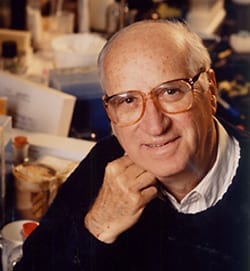
    Daniel E. Koshland, Jr.

    Some 20,000 square foot in size and set on a 2/3rd acre plot, the completion of this sandstone faced “single family residence” was celebrated by the Koshland family with a Marie Antoinette themed ball in 1904. The invitations to this legendary event were purchased and printed in Paris and hand delivered to the guests.


    The Koshland Mansion survived San Francisco’s 1906 earthquake with only a little damage to the front elevation

    The 1906 San Francisco earthquake, just two years after they’d completed the building, somewhat interrupted the Koshlands hectic party schedule at 3800 Washington Street. Though the disaster caused the front columns and roof balustrade to collapse, the couple generously opened the otherwise undamaged property to some 60 to 80 displaced family and friends. With no mains water, the guests had to fetch water from Fort Mason but they were no doubt happy to have had somewhere to take refuge.


    During subsequent renovations, as well as restoring the façade, a 5-car garage was added in 1909 and a greenhouse and extension in 1912. In the ensuing years, until her death in 1953, Corrine Koshland, better known as Cora, opened up 3800 Washington Street as a venue for concerts. A founder of the San Francisco Symphony Association and one of the first directors of the San Francisco Opera Company, Koshland invited music critics to review the performances and gave both Yehudi Menuhin and Isaac Stern their musical debuts at the house as child prodigies. Amongst the other big names to play in the masnion were Igor Stravinsky, Jascha Heifitz and Leonard Bernstein.


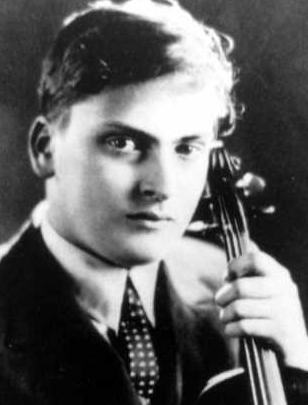
    Sir Yehudi Menuhin KBE (1916 – 1999) pictured in his youth

    In 1953, the Koshland Mansion was sold for $100,000 by the estate of Cora Koshland. The purchaser was Walter E. Buck (1884 – 1966), president of the American Distilling Company. Buck and his wife Emily, who were well known for “Gatsby-esque parties” at their 1,300 acre estate, Woodside, redecorated 3800 Washington Street by “painting the mahogany library white, removing the dark green, gold-tooled leather from the dining room and developing small card rooms in the basement.” It seems likely that the era of parties at 3800 Washington Street continued during their occupancy.


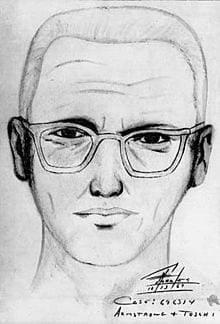
    On 11th October 1969, a murder occurred on the block where 3800 Washington Street stands when the Zodiac Killer, a to this day unidentified serial killer who operated in Northern California in the 1960s and 1970s, shot and killed a cab driver named Paul Stine. Stine had collected his passenger one block west of Union Square and had, as requested, driven him to the intersection of Washington and Maple Streets in Presidio Heights. Once there, the cab driver was shot once in the head with a 9mm before the killer, observed by three teenagers across the street, took his wallet and car keys. The Zodiac Killer tore off a section of Stine’s bloodstained shirt, wiped the cab clean and walked off into the night before the police could arrive.


    A sketch of the Zodiac Killer

    Subsequently, on the 14th October 1969, the San Francisco Chronicle were mailed a swatch of Stine’s shirt to prove he was the killer and then on 9th November 1969, a 7-page letter followed. Excerpts from it were published from it in the newspaper on 12th November which revealed that a police officer, Don Fouke, who had responded to the teenager’s call, had actually encountered the killer for 5 to 10 seconds on a stairway of a house close to the murder scene. Fouke had been told to look for a black suspect and on seeing a white man going into the yard of a house, had discounted the individual and drove on. The Zodiac Killer, in his letter, detailed the encounter but claimed that two policemen had actually spoken with him 3-minutes after he’d shot Stine.


    In 1975, a neighbour, Paul Renne purchased 3800 Washington Street for $675,000, supposedly to prevent it being acquired by property developers, but having been used as the 1982 San Francisco Decorator Showcase house, it was placed on the market and sold to a gallery owner named Heidi Betz and her business partner, an art collector named Charles Pankow. They paid $1.5 million for the house but failed in their bid to turn it into an art gallery due to objections from neighbouring residents.


    Halsey Minor

    In the two decades that followed 3800 Washington Street was sold several more times but finally it’s glory days looked set to return in 2007 when it was purchased by an “internet titan” named Halsey Minor and his second wife, Shannon. Having paid approximately $22 million for what essentially was going to be a very expensive renovation project, Minor supposedly assigned a further $15 million towards renovations and hired Michelle Obama’s favourite designer, Michael S. Smith, to oversee the project.


    Minor founded CNET, a tech media website that published news, articles, blogs and podcasts on technology and consumer electronics, in 1992 after leaving Merrill Lynch and built it into one of the first internet companies to achieve profitability. CNET was sold for $1.8 billion in 2008 and is now CBS Interactive. Another of the companies he co-founded in 2000, salesforce.com, was “one of the most successful companies of the decade” and achieved a market capitalisation of in excess of $15 billion.


    Having made a small fortune from his dot-com success, Minor diversified into investments that brought with them a lifestyle that would later be described as “a multi-millionaire who lived life as a billionaire.” In 2007, he began construction of a hotel in his hometown of Charlottesville, Virginia and announced this would be part of a series he’d open as part of the Minor Family Hotel group he planned. The hotel has never been completed.


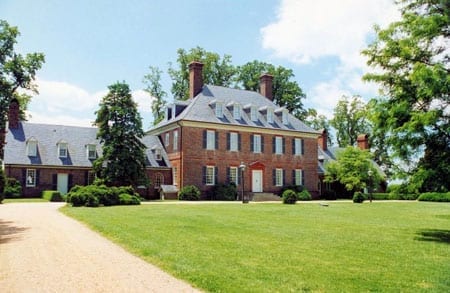
    Carter’s Grove, 8797 Pocahontas Trail, Colonial Williamsburg, Virginia, VA 23187: considered to be one of America’s finest and most historic residences. It was bought by Halsey Minor in 2007 and has fallen into significant decline in the years since.
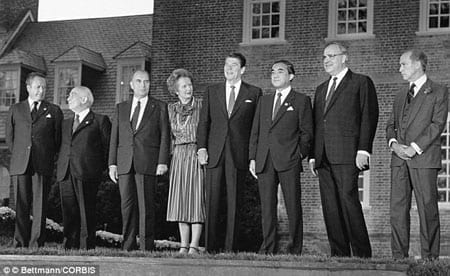
    The 1983 Group of Seven (G7) meeting at Carter’s Grove. Pictured outside the house are: Pierre Trudeau, Prime Minister, Canada; François Mitterrand, President, France; Helmut Kohl, Chancellor, West Germany; Amintore Fanfani, Prime Minister, Italy; Yasuhiro Nakasone, Prime Minister, Japan; Margaret Thatcher, Prime Minister, United Kingdom; Ronald Reagan, President, United States of America and Gaston Thorn, President, European Commission

    In the same year, he also bought the Koshland Mansion and purchased 400 acres of land and a residence on the James River, the Carter’s Grove Plantation, for $15.3 million. Here, he planned a centre for thoroughbred horse breeding and at around the same time he attempted to buy both the Hialeah Park Race Track in Hialeah, Florida and the Pimlico Track in Baltimore. Both bids failed.


    Minor’s investments were not just limited to property and the equine sector. In 2006, he placed a $3 million deposit on a $59 million Gulfstream G650 and at Sotheby’s in 2008, he was the winning bidder on a painting by Edward Hicks, The Peaceable Kingdom, at a hammer price of $9.6 million and also bought paintings by Andy Warhol and Childe Hassam.


    Around this point, however, this dot-com tycoon’s fortune began to unravel when Merrill Lynch called in a $25 million loan and various legal suits connected to his art collection, investments and properties commenced. Several of his homes were repossessed and at a court hearing in August 2011, he claimed to have just $112,643 in cash and owned no publicly traded securities. Minor claimed to be majorly broke but the declaration did not cover illiquid assets such as art, real estate and shares in non-public companies. To this day, Minor remains listed in first place on the State of California’s Franchise Tax Board’s top 500 delinquent taxpayers owing some $10,455,580.69.


    In response to his supposed progression from riches to rags, Minor wrote an article for The Huffington Post in July 2012 entitled “Why I Fight”:


    “I often wonder what Thomas Jefferson would think of today’s America, a nation that is rapidly but silently abandoning the individual in favour of faceless corporations, rapacious banks and a collusive, unresponsive government… The simple answer is that someone must [fight] or we will emerge from this recession with wealth and power concentrated in a few tiny financial institutions representing a new ruling elite, not unlike the one that inspired Thomas Jefferson’s generation to revolution.”


    Somehow, in spite of his changed circumstances, Minor has managed to hold on to 3800 Washington Street. Though, during his tenure, the house has fallen into decline and is now half covered in ivy, it is still one of San Francisco’s finest properties and it is still situated in one of the city’s best neighbourhoods. It is still an asset of considerable value and Minor’s decision to sell may well help him rake back some of what he has lost.


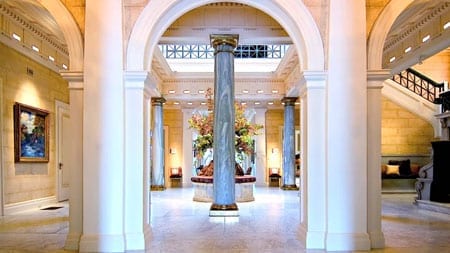
    The hallway at 3800 Washington Street
    A drawing room at 3800 Washington Street
    One of the property’s dining rooms
    The opulent ballroom at 3800 Washington Street

    Steven Mavromihalis of Pacific Union International launched 3800 Washington Street onto the market in May 2012 for $25,000,000. This move came just after two Abandoned Building Notices had been issued on the property by the City and County of San Francisco Department of Building Inspection. On offer is the 18,000 square foot main house at 3800 Washington Street, a 2,600 square foot 3-bedroom house at 3810 Washington Street and a vacant lot at 125 Maple Street. Though the agents don’t give much more in the way of details, they do refer to the house having a double marble Palladian staircase, 22 rooms, a “spectacular ballroom,” 8 bedrooms, 7 bathrooms, 9 fireplaces, 3 kitchens, an elevator and three original stained glass windows by the San Francisco poet, writer sculptor and artist Bruce Porter (1865 – 1964).


    According to the agents, 3800 Washington Street is second only to Danielle Steele’s 55-room residence, The Spreckels Mansion, at 2080 Washington Street in the rankings of the largest homes in San Francisco. This is most certainly a mansion with a fair few tales to tell but whoever buys it will need both Steele’s wealth and imagination to get it back into good order. Dot-com tycoons and serial killers need not apply.


    Read more about the Zodiac Killer at: http://en.wikipedia.org/wiki/Zodiac_Killer


    A profile of Daniel E. Koshland, Jr. is available at: http://en.wikipedia.org/wiki/Daniel_E._Koshland,_Jr.


    Read more about the downfall of Halsey Minor at: http://www.dailymail.co.uk/news/article-2154564/Halsey-Minor-tech-guru-files-bankruptcy-ruined-Carters-Grove-estate.html


    All enquiries about 3800 Washington Street, Presidio Heights, San Francisco, California, CA 94118 should be directed to Steven Mavromihalis of Pacific Union International on +1 (415) 345 3030 or email him at: [email protected].


    More details are available at: http://www.pacunion.com/homes/CA/San_Francisco/94118/3800__Washington_St/AGT-107397278-685992/ whilst a video tour of the property can be viewed at: http://vimeo.com/42775765

  • Jonathan Yeo

    Jonathan Yeo

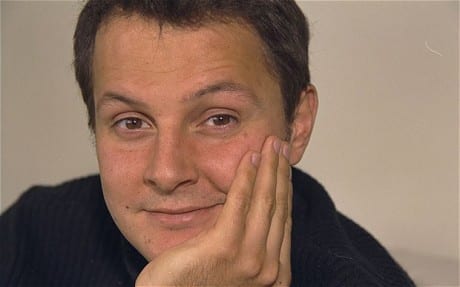
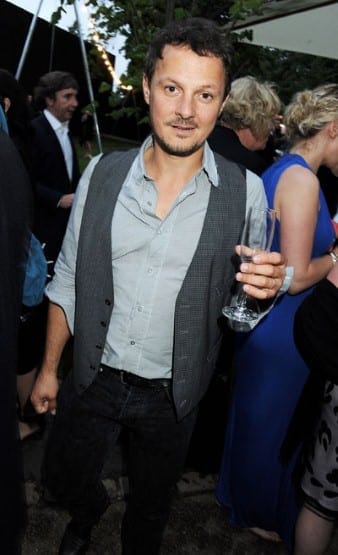
    There is barely anyone this contemporary portraist hasn’t painted. George W. Bush, David Cameron, Minnie Driver, Prince Philip, Paris Hilton and Rupert Murdoch all number amongst his subjects. The son of Conservative politician Tim Yeo, he’s now made it his mission to poke fun at the politicians and personalities he depicts and even went as far as to describe Tony Blair as a “tacit co-conspirator.”

  • Claus Von Bülow

    Claus Von Bülow

    Tried twice for the attempted murder of his wife, Sunny, who remained in a vegetative state for some 28 years, this socialite and writer has the most mischievous of wits. Subject of the Golden Globe award winning film Reversal of Fortune starring Jeremy Irons and Glenn Close, this distinguished gent is also renowned for telling macabre jokes.