Tag: business

  • Living on a Prayer

    Living on a Prayer

    Converted Methodist chapel in Wiltshire for sale


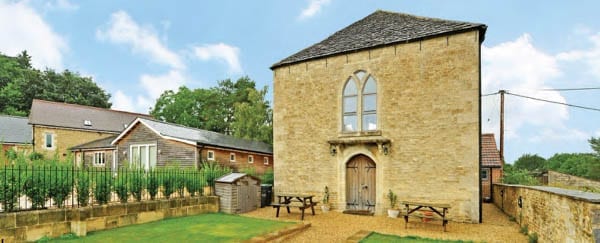
    Currently used as a “highly successful” holiday let, The Old Chapel at Lacock, near Chippenham in Wiltshire is for sale for £600,0000 ($755,000 or €703,000 or درهم‎‎2.8 million).


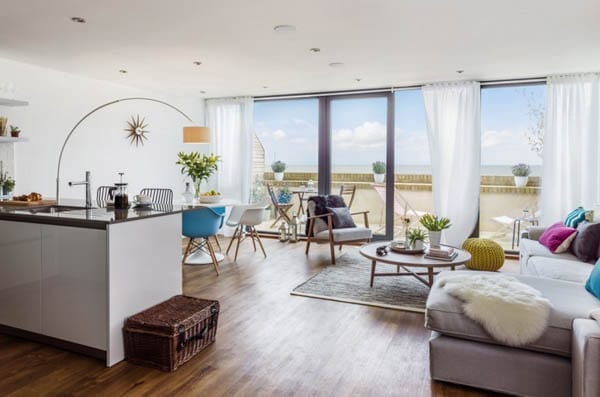
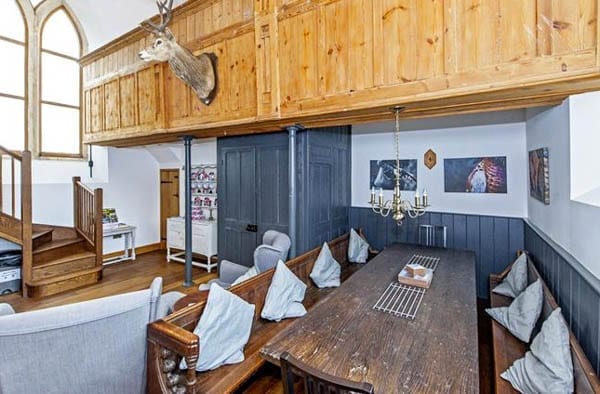
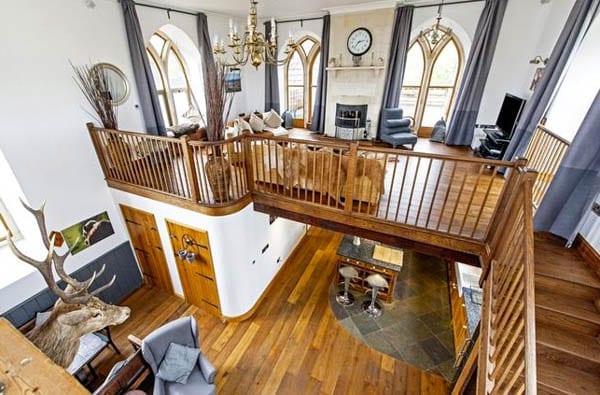
    A former Methodist chapel, the 2,725 square foot property includes accommodation over three floors and currently features 4 bedrooms and 4 bathrooms. It is dominated by a vast double height, open plan living space with kitchen. Above, in the former choir gallery, is a sitting room with Gothic style arched mullioned windows, and beyond one finds a roof deck with two rooms with planning permission for development to provide two further rooms and a bathroom.


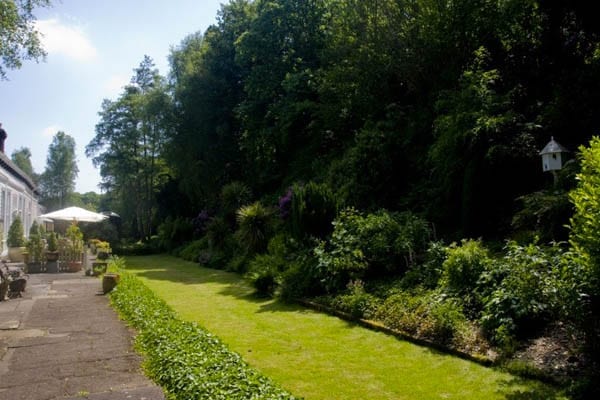
    To the front is a small lawned garden and parking is available on the nearby High Street.


    Selling agents Hamptons offer The Old Chapel either as a shell or with the existing furniture and fittings.

    Living on a Prayer – The Old Chapel, Chapel Hill, Lacock, Chippenham, Wiltshire, SN15 2LA – For sale through Hamptons for £600,000Living on a Prayer – The Old Chapel, Chapel Hill, Lacock, Chippenham, Wiltshire, SN15 2LA – For sale through Hamptons for £600,000Living on a Prayer – The Old Chapel, Chapel Hill, Lacock, Chippenham, Wiltshire, SN15 2LA – For sale through Hamptons for £600,000Living on a Prayer – The Old Chapel, Chapel Hill, Lacock, Chippenham, Wiltshire, SN15 2LA – For sale through Hamptons for £600,000Living on a Prayer – The Old Chapel, Chapel Hill, Lacock, Chippenham, Wiltshire, SN15 2LA – For sale through Hamptons for £600,000Living on a Prayer – The Old Chapel, Chapel Hill, Lacock, Chippenham, Wiltshire, SN15 2LA – For sale through Hamptons for £600,000Living on a Prayer – The Old Chapel, Chapel Hill, Lacock, Chippenham, Wiltshire, SN15 2LA – For sale through Hamptons for £600,000

  • Daphne McKinley – What’s on your mantelpiece?

    Daphne McKinley – What’s on your mantelpiece?

    A 20-question interview with businesswoman and founder of the Sean Edwards Foundation Daphne McKinley


    The Steeple Times shares “wit and wisdom”. What’s your guiding force?

    My guiding force is my son Sean who drives me forward since his death to make real changes in motorsport in order to stop unnecessary deaths.


    “Don’t get even, get medieval” is, in our humble opinion, a great motto. What’s yours?

    Follow your heart, live by the truth, stay strong, don’t let fear get in the way and live today as tomorrow may never come.


    Kerry Katona was considered unacceptable in 2007. Who or what is unacceptable in 2016?

    That there is poverty in the world.


    Tony Blair misses being Prime Minister. What do you miss most in your life?

    My son.


    What might you swap all your wealth for?

    To have him back.


    Donald Trump was once a case of: “If you owe the bank a thousand, they close you down; but if you owe the bank a billion, you own the bank”. What’s your view on the state of the financial system?

    Probably true – I think unrestrained greed was the cause of the collapse and for our current financial state which is good for the individual but not for the society in which that individual lives. I believe that the regulatory framework that has now been set up is not stringent enough and still doesn’t ensure another collapse.


    What phrase or word do you most loathe?

    #


    In the UK, some people consider charity to “begin at home”. What’s your view and what causes do you personally support?

    My belief is that charity should begin at himself. I believe that we should take care our family, friends, and others first before taking care of anyone else especially the old and the young.


    The judge in Law Abiding Citizen states: “I can pretty much do whatever I want” before being blown up whilst answering her mobile phone. What’s your view on the appropriate use of such devices?

    Get rid of them as much as you can. They fry your brain in more way then one.

    If you could fill a carriage on The Orient Express, who would be your fellow passengers?

    Jesus Christ, Winston Churchill, Mahatma Ghandi, Nelson Mandela, Mozart, Van Gogh, Mohammad, Eddie Murphy, George Carlin and my family – Natasha and Jeremy Dillahunt and Jade Edwards.


    If you were unfortunate enough to end up on death row, what would be your last meal and where would you eat it?

    A bottle of good red wine whilst kneeling and praying for a miracle.


    What time is it acceptable to consume the first drink of the day?

    After 6pm.


    A Negroni, a martini or a cup of tea?

    A martini.


    Whose parties do you enjoy the most and why?

    Dinners at home with family and friends as they have meaning.


    Who is the most positive person you know?

    My dog, Mr Darcy.


    What’s your most guilty pleasure?

    Chocolate.


    If a tattoo were to sum you up, what would it be of?

    “F*** off”.


    If you were a car, what marque would you be?

    A Ferrari.


    Cilla Black presented Surprise, Surprise. Tell us the most surprising thing about you.

    I’m probably mad.


    What’s currently sitting on your mantelpiece?

    The ‘Throphy wife’ by Alexander de Cadenet, candles, photos of my family, a large plant, a book titled Fuck The Resume by Jeremy Dillahunt and my daughter Jade’s film script.


    Businesswoman and mother of three Daphne McKinley was born in Ireland and grew up on a stud farm. She has a broad commercial background and decades of property development experience and also founded the Sean Edwards Foundation in honour of her late son.


    Follow her on Twitter at @DaphneMcKinley and the Sean Edwards Foundation at @SeanEdwardsF.


  • The Business of Blair

    The Business of Blair

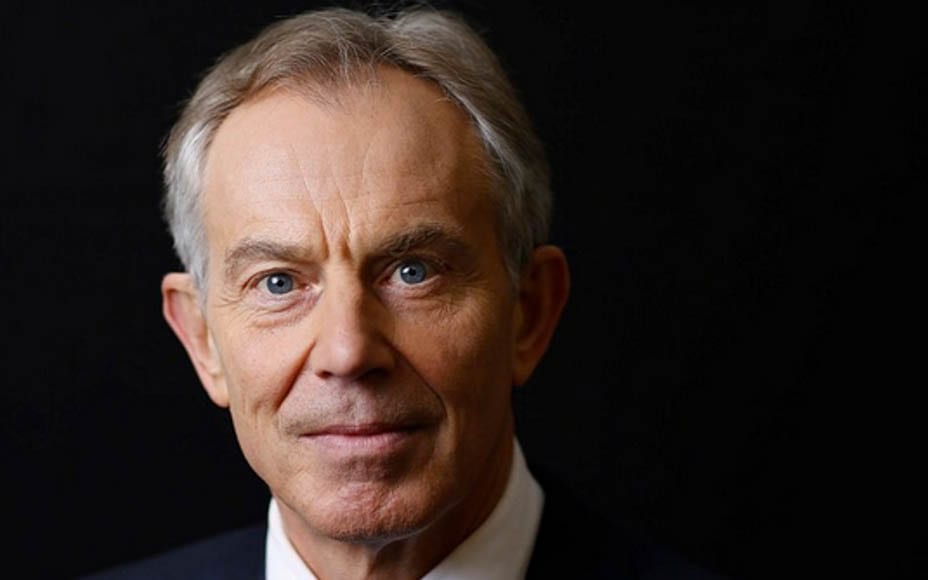
    Tony Blair ditches business and also denies a return to public office


    For weeks, the mainstream media have claimed Tony Blair is preparing to return to public office to save Britain from the nightmare of Brexit. They have claimed he’s ready to seize the support of the 48% and that him and Nick Clegg are colluding to create a new ‘centre left’. He did little to deny it at first but late last week, he shared a post on Facebook that frankly puts a stop to this kind of nonsense.


    Blair, a plainly toxic force in politics due to his highly unpopular backing of George W. over the War on Iraq (and because of his refusal to confine his equally disliked weirdo wife to social Siberia), will never make a comeback and now he’s finally acknowledged that in a very public way.


    In our view, Mr Blair is actually wrong. He’s not nearly as bad as #DarthVader Theresa May and he’s not nearly as ghastly as either the worst Prime Minister’s-in-living-history John Major and Gordon Brown and though we share with you his justifications for not getting involved again, we weirdly find ourselves actually lauding Mr Blair for saying the right thing (for once in his sorry lifetime).


    Mr Blair’s comment, in full, follows:


    Over the past nine years we have built a family of organisations which together employ nearly 200 people; have worked in over 30 countries; and have produced some real and lasting achievements. I am very proud of the commitment and impact of the people I have had the privilege to work with.


    The Africa Governance Initiative has become a respected partner and leader in effective governance where we have worked in 10 different African countries.


    The work we are doing in Africa has been right at the centre of government covering everything from boosting electricity, to improving child and maternal mortality rates to helping on the ground during the Ebola crisis in West Africa, a contribution praised for its impact by both the Presidents of the countries concerned and the international community.


    Outside of Africa in the work done by the commercial governance arm, we again made successful interventions in over 12 countries with 30 different projects promoting reform and change programmes with governments.


    The Tony Blair Faith Foundation has done ground-breaking work in interfaith relations, education and leadership, and most recently in the research and policy work on religiously based extremism through the Centre on Religion and Geopolitics which has been widely recognised as authoritative. 


    In the first years of the Quartet role in the Middle East, we hit double digit growth on the West Bank, drew up ambitious plans for Gaza’s infrastructure and changed the rules around entry of materials into Gaza. In 2011, we played a significant part in the attempt to agree terms of reference for a renewal of the peace process.


    Progress became much more difficult once the peace process stalled. We were partners in the later fresh attempts by the USA to revive the peace process, particularly around plans for the economy to support a future Palestinian state. Unfortunately these attempts also failed.


    Nonetheless, after stepping down from the Quartet position, our new Initiative for the Middle East has re-vitalised our work and means this stays a large part of what we do. I have made over 35 visits to the region this year alone.


    During the time since leaving office, I have learnt a huge amount about the world and frankly what I can do and can’t do to affect it positively.


    We built up a successful business side, though attracted a large measure of criticism for it, much of it inaccurate. It was entirely necessary to build the business to help with the funding to grow the organisations; but it was open to misrepresentation and to criticism either that we were conflating private and public roles or that we were working in countries which aroused controversy.


    Having said that, I also learnt a lot about the way the global economy functions from that experience and pay tribute to the great team I worked with who made much of the development of our work across the organisations possible.


    We are now at the stage and have built the financial infrastructure where it is time to enter a new phase. First we can take the work we have done in Africa, in governance, on extremism and in the Middle East to a new and more effective level; and secondly, in the past six months we have seen political earthquakes in the UK with Brexit and in the American election, as well as an explosion in populist movements all over the European continent. This impacts profoundly all the work we do and the future of globalisation.


    So I want us to bring all the different organisations together under one roof and to re-orient our mission.


    We have deliberately focused, up to now, on some of the greatest and most difficult challenges faced in the era of globalisation: how to give nations the governing capacity to overcome the problems of development and lift their people out of poverty; how to combat the religiously based extremism which threatens global security; how to resolve the most intractable peace process in the world.


    In each case, we have presented a new approach, with the aim of providing new ideas and thinking.


    In governance, especially in Africa, our analysis is that, today, building the capacity to govern effectively – making the way government works efficient as well as transparent – is as important for developing nations as aid.


    Look around the world, and see countries living next to each other – same size population, same resources, same natural potential – one succeeding, one failing. The reason for the difference is found in the quality of governance. Take the following examples: Venezuela and Colombia; Poland and Ukraine; Rwanda and Burundi. And the greatest example in contrasting, contiguous systems of governance the world has seen in modern political history – the Korean Peninsula, North and South Korea. The nation which is succeeding is applying the best rules and lessons of governance; the failing nation is ignoring or defying them.


    On religious extremism, we believe it is essential to widen the struggle, to tackle the ideology behind the violence and not simply the violence itself. So we can defeat ISIS militarily but unless we defeat the ideas behind Islamism – the belief that a particular view of religion should dominate society, politics and the economy, something incompatible with a modern world in which pluralism is the essence – we will never win this battle.


    On the Middle East peace process, we are convinced that a traditional peace process between Israelis and Palestinians with US guidance alone is inadequate; that what is required is a new approach which involves the wider region and the Arab nations and which resolves not just the final status issues like borders but which also resolves the underlying issues of cultural acceptance and regional stability. So we are now working on Arab-Israeli relations, and not simply Israeli-Palestinian relations.


    But it has become clear that there is much overlap between these different areas of work. Extremism is also today a barrier to development. The Middle East conflict impacts extremism. Changing and reforming government applies to Middle East nations as well.


    And since all of these approaches basically represent the open-minded response to global problems, the salience of these new approaches depends on us having an answer to the new populism of left and right which exploits the anger and drives the world apart.


    This new populism may differ in some respects between left and right – the left anti-business, the right anti-immigrant – but in others what is remarkable is the convergence between them, especially around isolationism and protectionism, in what is an essentially closed-minded approach to globalisation and its benefits and to international engagement.


    So we want to add a fourth pillar to what we do. I emphasise this is not in place of our other work but in addition to it.


    This is the creation of a platform designed to build a new policy agenda for the centre ground together with the networks which link people up, and allow a reasonable and evidence based discussion of the future which avoids the plague of social media-led exchanges of abuse. 


    This platform will have a policy unit which will draw on the best ideas and practical solutions, building partnerships with other organisations, in the public policy and private spheres, so that those in the frontline of politics have a bigger and better policy agenda to reflect upon; and a networking capability to join like-minded people up. 


    This is not a think tank. There are enough of those, many doing excellent work we would want to utilise. It is a platform for engagement to inform and support the practising politician.


    It is what I know I would want were I still in the frontline of politics.


    Part of its focus will plainly be around the European debate; but this will not be its exclusive domain. It has to go far wider than that since in many ways the Europe debate is a lightning rod for the whole of politics.


    We’re now planning to bring all of these four parts together in one new Not For Profit Institute. 


    The business side has been shut down and the assets, running into many millions of pounds, gifted to the Institute. In the New Year, we plan to merge the activities of the different organisations into the Institute, with any charitable funds used exclusively for the purposes for which they were originally given.


    This will allow us to work more coherently across the board; use the obvious synergies between the different elements of the work; and to be far stronger on the global policy side than we have been up to now. The focus previously was mainly on programmes. These will remain but the organisation will also be far more about thought leadership.


    This is not about my returning to the front line of politics. I have made it abundantly clear that this is not possible.


    However, I care about my country and the world my children and grandchildren will grow up in; and want to play at least a small part in contributing to the debate about the future of both.  


    The Africa Governance Initiative has become a respected partner and leader in effective governance where we have worked in 10 different African countries.


    The work we are doing in Africa has been right at the centre of government covering everything from boosting electricity, to improving child and maternal mortality rates to helping on the ground during the Ebola crisis in West Africa, a contribution praised for its impact by both the Presidents of the countries concerned and the international community.


    Outside of Africa in the work done by the commercial governance arm, we again made successful interventions in over 12 countries with 30 different projects promoting reform and change programmes with governments.


    The Tony Blair Faith Foundation has done ground-breaking work in interfaith relations, education and leadership, and most recently in the research and policy work on religiously based extremism through the Centre on Religion and Geopolitics which has been widely recognised as authoritative. 


    In the first years of the Quartet role in the Middle East, we hit double digit growth on the West Bank, drew up ambitious plans for Gaza’s infrastructure and changed the rules around entry of materials into Gaza. In 2011, we played a significant part in the attempt to agree terms of reference for a renewal of the peace process.


    Progress became much more difficult once the peace process stalled. We were partners in the later fresh attempts by the USA to revive the peace process, particularly around plans for the economy to support a future Palestinian state. Unfortunately these attempts also failed.


    Nonetheless, after stepping down from the Quartet position, our new Initiative for the Middle East has re-vitalised our work and means this stays a large part of what we do. I have made over 35 visits to the region this year alone.


    During the time since leaving office, I have learnt a huge amount about the world and frankly what I can do and can’t do to affect it positively.


    We built up a successful business side, though attracted a large measure of criticism for it, much of it inaccurate. It was entirely necessary to build the business to help with the funding to grow the organisations; but it was open to misrepresentation and to criticism either that we were conflating private and public roles or that we were working in countries which aroused controversy.


    Having said that, I also learnt a lot about the way the global economy functions from that experience and pay tribute to the great team I worked with who made much of the development of our work across the organisations possible.


    We are now at the stage and have built the financial infrastructure where it is time to enter a new phase. First we can take the work we have done in Africa, in governance, on extremism and in the Middle East to a new and more effective level; and secondly, in the past six months we have seen political earthquakes in the UK with Brexit and in the American election, as well as an explosion in populist movements all over the European continent. This impacts profoundly all the work we do and the future of globalisation.


    So I want us to bring all the different organisations together under one roof and to re-orient our mission.


    We have deliberately focused, up to now, on some of the greatest and most difficult challenges faced in the era of globalisation: how to give nations the governing capacity to overcome the problems of development and lift their people out of poverty; how to combat the religiously based extremism which threatens global security; how to resolve the most intractable peace process in the world.


    In each case, we have presented a new approach, with the aim of providing new ideas and thinking.


    In governance, especially in Africa, our analysis is that, today, building the capacity to govern effectively – making the way government works efficient as well as transparent – is as important for developing nations as aid.


    Look around the world, and see countries living next to each other – same size population, same resources, same natural potential – one succeeding, one failing. The reason for the difference is found in the quality of governance. Take the following examples: Venezuela and Colombia; Poland and Ukraine; Rwanda and Burundi. And the greatest example in contrasting, contiguous systems of governance the world has seen in modern political history – the Korean Peninsula, North and South Korea. The nation which is succeeding is applying the best rules and lessons of governance; the failing nation is ignoring or defying them.


    On religious extremism, we believe it is essential to widen the struggle, to tackle the ideology behind the violence and not simply the violence itself. So we can defeat ISIS militarily but unless we defeat the ideas behind Islamism – the belief that a particular view of religion should dominate society, politics and the economy, something incompatible with a modern world in which pluralism is the essence – we will never win this battle.


    On the Middle East peace process, we are convinced that a traditional peace process between Israelis and Palestinians with US guidance alone is inadequate; that what is required is a new approach which involves the wider region and the Arab nations and which resolves not just the final status issues like borders but which also resolves the underlying issues of cultural acceptance and regional stability. So we are now working on Arab-Israeli relations, and not simply Israeli-Palestinian relations.


    But it has become clear that there is much overlap between these different areas of work. Extremism is also today a barrier to development. The Middle East conflict impacts extremism. Changing and reforming government applies to Middle East nations as well.


    And since all of these approaches basically represent the open-minded response to global problems, the salience of these new approaches depends on us having an answer to the new populism of left and right which exploits the anger and drives the world apart.


    This new populism may differ in some respects between left and right – the left anti-business, the right anti-immigrant – but in others what is remarkable is the convergence between them, especially around isolationism and protectionism, in what is an essentially closed-minded approach to globalisation and its benefits and to international engagement.


    So we want to add a fourth pillar to what we do. I emphasise this is not in place of our other work but in addition to it.


    This is the creation of a platform designed to build a new policy agenda for the centre ground together with the networks which link people up, and allow a reasonable and evidence based discussion of the future which avoids the plague of social media-led exchanges of abuse.


    This platform will have a policy unit which will draw on the best ideas and practical solutions, building partnerships with other organisations, in the public policy and private spheres, so that those in the frontline of politics have a bigger and better policy agenda to reflect upon; and a networking capability to join like-minded people up. 


    This is not a think tank. There are enough of those, many doing excellent work we would want to utilise. It is a platform for engagement to inform and support the practising politician.


    It is what I know I would want were I still in the frontline of politics.


    Part of its focus will plainly be around the European debate; but this will not be its exclusive domain. It has to go far wider than that since in many ways the Europe debate is a lightning rod for the whole of politics.


    We’re now planning to bring all of these four parts together in one new Not For Profit Institute. 


    The business side has been shut down and the assets, running into many millions of pounds, gifted to the Institute. In the New Year, we plan to merge the activities of the different organisations into the Institute, with any charitable funds used exclusively for the purposes for which they were originally given.


    This will allow us to work more coherently across the board; use the obvious synergies between the different elements of the work; and to be far stronger on the global policy side than we have been up to now. The focus previously was mainly on programmes. These will remain but the organisation will also be far more about thought leadership.


    This is not about my returning to the front line of politics. I have made it abundantly clear that this is not possible.


    However, I care about my country and the world my children and grandchildren will grow up in; and want to play at least a small part in contributing to the debate about the future of both.  
     

  • Partnering With Pickett

    Partnering With Pickett

    Kathryn Fensterstock reports on a party to celebrate Pickett’s new partnership with the Mayor’s Fund for London


    On 16th November, to mark becoming an official charity partner of the Mayor’s Fund for London, Pickett hosted a drinks reception and raffle in Mayfair’s Burlington Gardens.


    Guests, including Sotheby’s director Joanna Booth, Cristina Maxson, the Mail on Sunday’s Alexis Parr and Matthew Steeples of The Steeple Times, enjoyed generous measures of gin and wine at the behest of Trevor Pickett before learning about the work the Mayor’s Fund for London does for the city and their plans for 2017.


    Partnering With Pickett – Kathryn Fensterstock reports on a party to celebrate Pickett’s new partnership with the Mayor’s Fund for London
    Matthew Patten chats with another guest
    Partnering With Pickett – Kathryn Fensterstock reports on a party to celebrate Pickett’s new partnership with the Mayor’s Fund for London
    Alexis Parr and Trevor Pickett enjoying some serious G&Ts
    Partnering With Pickett – Kathryn Fensterstock reports on a party to celebrate Pickett’s new partnership with the Mayor’s Fund for London
    Pickett backgammon boards


    In a heartfelt manner, Trevor Pickett and Matthew Patten shared a few words on why social mobility for young Londoners is so important and where their inspiration comes from.


    Trevor Pickett is passionate about nurturing talent in young people having learnt from hands-on experience himself. He is eager to support the Mayor’s Fund for London as he sees the unmistakable value in providing children with the key skills to climb the career ladder, gain confidence and improve their livelihood, just as the Mayor’s Fund for London does. Pickett looks forward to offering ongoing support to the charity for the foreseeable future as he has also done with Ormiston Families for the past twenty years.


    Matthew Patten, chief executive of the Mayor’s Fund for London told a packed room:


    “We are delighted to be an official charity partner of Pickett. Many young Londoners, particularly those from disadvantaged backgrounds, are not aware of all the opportunities that London has to offer. As the founder of a London-based handmade leather goods business, Trevor Pickett recognises the importance of aspiration and acquiring the skills needed so that all Londoners make the most of living in the greatest city on earth”.


    Pickett, 10 – 12 Burlington Gardens, London, W1S 3EY.


    To support the Mayor’s Fund for London at Christmas this year, Pickett will give a 15% donation to the charity on all purchases in-store and online. Quote the code ‘MFL15’.


    American born Kathryn Fensterstock is based in London and is part of the team at the leading marketing company Zambuni. Follow her on Twitter at @kjfensterstock.


  • Crook Bankrupt

    Crook Bankrupt

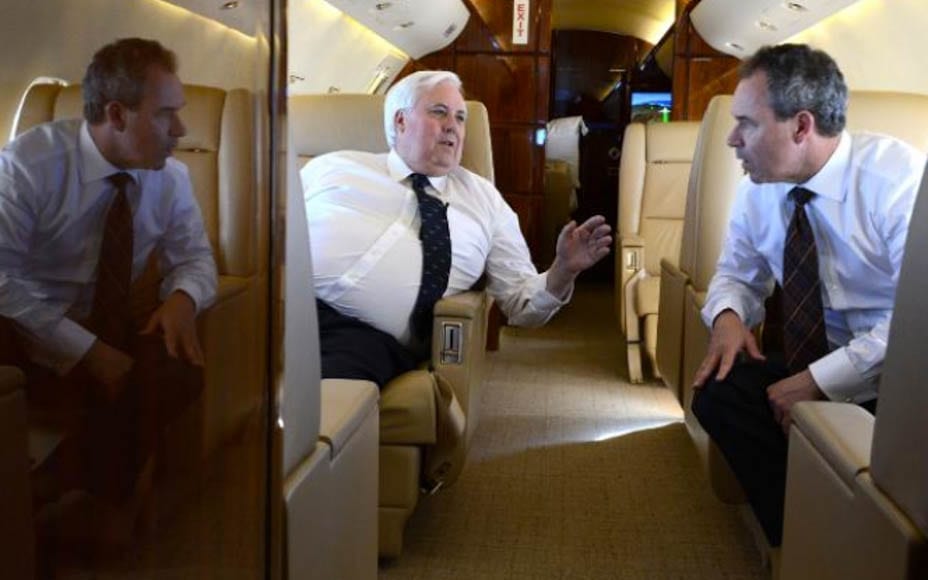
    PR man of fat Australian Clive Palmer who wanted to rebuild RMS Titanic goes broke; appropriately his surname is ‘Crook’


    In 2013, a larger-than-life Aussie gave a press conference at The Ritz, London after hanging out with a now deceased jailbird Astor scion in New York. He tastelessly announced he was rebuilding the RMS Titanic and when I asked him: “Will it sink it the same place?” he furiously had me banned from his party later that evening at the Victoria & Albert Museum.


    In late November, this somewhat now reduced tycoon’s very own PR, a man named Andrew Crook went bankrupt and frankly, given his project to recreate that disastrous voyage in 1912 has come to nothing, one has to ask: “Was it all one big crook?”


    That the fat man and failed politician Palmer got nowhere with his boat is one thing but that his sorry old henchman filed for bankruptcy is another. Crook, 50, of Brisbane, is said to have debts of AU$800,000 (£472,000 or $594,000 or €557,000 or درهم‎‎2.2 million). Who’s got that sinking feeling?


  • A Reminder of What Is To Come

    A Reminder of What Is To Come

    Donald Trump on ‘Saturday Night Live’ back in 2015 needs to be viewed again; it might be comedy but now it looks like an especially scary indicator of what is yet to come


    Back in 2015, Donald Trump and his daughter, Ivanka, appeared in a sketch on Saturday Night Live.


    At the time, ‘The Donald’ was still just a brash businessman, self-promoting ‘celebrity’ and possible Republican candidate but what he said during a 3:56 minute sketch back then now actually provides indication of how he truly views what being President of the United States of America is really about. For him, it appeared, the whole thing is nothing but an utter joke and an opportunity to make more money for the Trump Organization.


    In the video clip we share here, the then highly unlikely future winning opponent to ‘Crooked Hillary’ – as he later cruelly christened Mrs Clinton – behaved more like a comedy actor than the leader of the free world. He appeared – in a pretend setting of a fake “White House in 2018” – and stated: “I don’t have to get specific, with me it just works, it’s always been that way my whole life” whilst an actress playing his wife (plainly the real one was too incomprehensible to join in) remarked that 1600 Pennsylvania Avenue is “the smallest place Donald and I have ever lived but we made it work”.


    Aside from announcing that China is in debt to America and that the national anthem has been rewritten and retitled It’s yuuuge, one of Trump’s The Apprentice candidates, Omarosa Manigault, told Trump: “After your face-to-face meeting, Putin has withdrawn from Ukraine. Believe me, he does not want to be called a loser again. He cried for hours”.


    “You’ve really made America great again”, another of Trump’s fake cabinet added whilst his fake wife gibed: “See I told you. More than just words on a silly hat”.


    Complete with a fake Mexican President telling Trump: “Nothing brings two countries together like a wall” (before handing him a cheque that ‘The Donald’ promptly pocketed), the clip ends with his fake assistant remarking:


    “The American people are just sick of winning, they’re winning so much, it’s just too great sir”.


    Trump, always one for having the last word, responded:


    “Look, I know how they feel. It’s exhausting. Winning is that tough. It’s not that easy. If you think that’s how it’s going to be when I’m President, you’re wrong. It’s going to be even better”.


    “I said to the writer’s of this sketch: Keep it modest, OK. It’s better to start with low expectations. That way, you have no way to go but up”.


    At the time, this sketch was no doubt amusing to many. Now, frankly, it’s nothing but a scary indicator of what’s to come.


    #GodHelpAmerica #DumpTheTrump


  • The Times They are a-Changin’ (and All it Takes is a Tweet)

    The Times They are a-Changin’ (and All it Takes is a Tweet)

    Matthew Steeples highlights the workings and truths behind the changed political landscape of 2016


    2016 will be remembered as the year when the world flipped convention on its head. With the brutal monster Fidel Castro finally gone, Donald Trump headed for The White House and Brexit in Britain, comes a new era but it is not one that is actually as clear-cut as many make out.


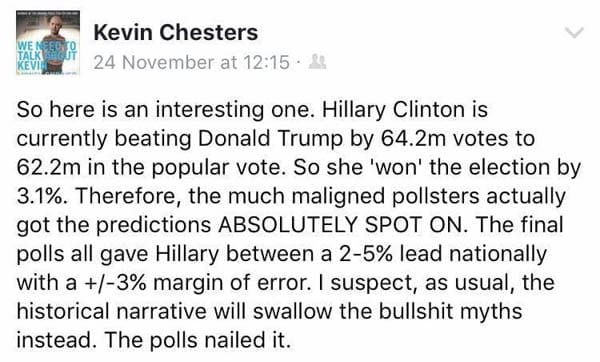
    Unlike in previous eras, social media undoubtedly has had more influence than the traditional media and pollsters have taken a bashing. In spite, for example, of the fact that “Hillary Clinton [is] currently beating Donald Trump by 64.2 million votes to 62.2 million in the popular vote” and thus “winning the election by 3.1%”, according to Kevin Chesters, chief strategy officer at Ogilvy & Mather Group UK, “as usual the historical narrative will swallow the bulls**t myths instead”. He rightly points out “the polls nailed it” as they predicted “all gave Hillary between a 2-5% lead nationally with a +/- 3% margin of error” but the likes of Breitbart, unsurprisingly instead, spread a myth that ‘The Donald’s’ victory was epic. It was just that, in the sense that he achieved a win in spite of being mocked as an extremist joker who’d fail at the beginning, but the true margin of support for him is indicated by the fact that nationwide turnout fell from 61.6% in 2008 to 57.9% in 2016.


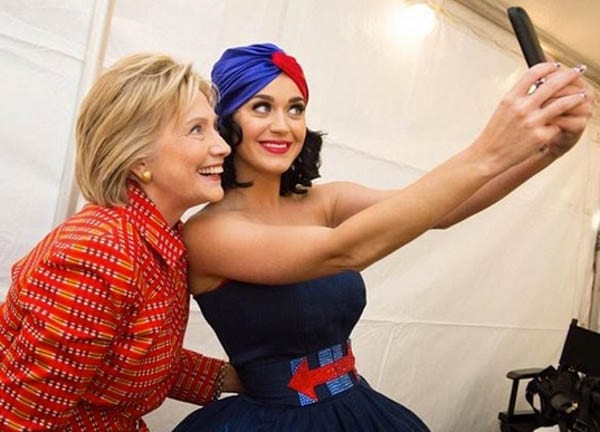
    The Times They are a-Changin’ (and All it Takes is a Tweet) – Matthew Steeples highlights the workings and truths behind the changed political landscape of 2016 – Donald Trump, Nigel Farage, Jared Kushner, Eric Schmidt, Peter Thiel, Dan Hodges, Kevin Chesters, Nicola Sturgeon, Hillary Clinton, Katy Perry, Fidel Castro, Brexit, Trump in The White HouseThe Times They are a-Changin’ (and All it Takes is a Tweet) – Matthew Steeples highlights the workings and truths behind the changed political landscape of 2016 – Donald Trump, Nigel Farage, Jared Kushner, Eric Schmidt, Peter Thiel, Dan Hodges, Kevin Chesters, Nicola Sturgeon, Hillary Clinton, Katy Perry, Fidel Castro, Brexit, Trump in The White HouseThe Times They are a-Changin’ (and All it Takes is a Tweet) – Matthew Steeples highlights the workings and truths behind the changed political landscape of 2016 – Donald Trump, Nigel Farage, Jared Kushner, Eric Schmidt, Peter Thiel, Dan Hodges, Kevin Chesters, Nicola Sturgeon, Hillary Clinton, Katy Perry, Fidel Castro, Brexit, Trump in The White House


    In Britain, equally, the Brexit vote was “won” by just 2.2% and thus both results can be described as being far less significant than the right-wing media make out. Nigel Farage is lauded as a “hero”, yet, despite standing seven times, has never won a seat in the House of Commons; Nicola Sturgeon’s SNP failed to get independence for Scotland yet she dominates our screens daily.


    Trump and Farage have clearly both been clever in their respective strategies and just as Castro opted to ignore convention and ruled Cuba with a rod of iron, these two ditched the politics we know and played an entirely different game. Hillary Clinton’s decision to stand with self-serving billionaires and loudmouth celebrities truly backfired and instead, in Jared Kushner, his 35-year old businessman son-in-law, and the tech tycoon Peter Thiel, Trump was led to a strategy that trounced traditional political convention.


    A truly revealing analysis of Kushner’s genius appeared in Forbes this week when he was interviewed by for the first time since Trump’s victory. In the feature article, Eric Schmidt, the former CEO of Google and designer of the Clinton campaign’s technology system, stated:


    “Best I can tell, [Kushner] actually ran the campaign and did it with essentially no resources… Jared understood the online world in a way the traditional media folks didn’t. He managed to assemble a presidential campaign on a shoestring using new technology and won. That’s a big deal”.


    Kushner himself added:


    “I helped facilitate a lot of relationships that wouldn’t have happened otherwise… People were being told in Washington that if they did any work for the Trump campaign, they would never be able to work in Republican politics again. I hired a great tax-policy expert who joined under two conditions: We couldn’t tell anybody he worked for the campaign, and he was going to charge us double”.


    “People really saw hope in [Donald Trump’s] message. They wanted the things that wouldn’t have been obvious to a lot of people I would meet in the New York media world, the Upper East Side or at Robin Hood [Foundation] dinners”.


    “I called some of my friends from Silicon Valley, some of the best digital marketers in the world, and asked how you scale this stuff. They gave me their subcontractors… Our best people were mostly the ones who volunteered for me pro bono. People from the business world, people from non-traditional backgrounds”.


    “We weren’t afraid to make changes. We weren’t afraid to fail. We tried to do things very cheaply, very quickly. And if it wasn’t working, we would kill it quickly… It meant making quick decisions, fixing things that were broken and scaling things that worked”.


    As Dan Hodges concluded in an editorial in today’s Mail Online:


    “Once, we used to send a gunboat. In the post-Brexit era, all it takes is a tweet”.


  • Nick Bell

    Nick Bell

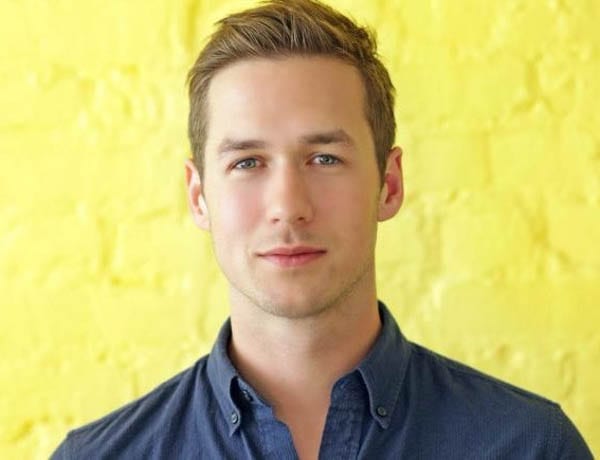
    Born in 1983 in Alnwick, Northumberland, Nick Bell is amongst the few youngsters who genuinely deserve the accolade “entrepreneur”. A former pupil of The Royal Grammar School, Newcastle, Bell sold his first company, Tennfront.com, for £1 million at the age of 16 and has been vice president of content at Snapchat since 2013. Meeting him has been described as being like a “golden ticket” to success. He has over 5,000 followers on Twitter.


  • A Soho Secret

    A Soho Secret

    Matthew Steeples meets Christopher Flourentzou, a little-known tailor but one well worth knowing


    There are tailors and then there’s Christopher Flourentzou. Described as a “master of copying a pattern” by the well-known hairstylist Luke Hersheson and originally from Liopetri, Cyprus, this talented Soho craftsman has made suits for many a Savile Row firm.


    Charging around half the price of the Mayfair institutions he’s worked for (at an average of around £2,500 for a suit compared to say Huntsman’s £7,500 average), Flourentzou operates from a tiny space in Berwick Street, W1 and claims to have “never been a single day without work”.


    His most enjoyable time, he remarks, was working with Morris Angel of the world’s longest established costume suppliers Angels Costumes: “I love making period clothing and working with this 176-year old firm taught me so much”.


    Flourentzou’s client list numbers royalty, business titans, diplomats, politicians and pop stars and though he’s naturally discreet about their names, this talented gent’s focus is creating garments that “fit like a glove and are proportionately balanced to complement the client”. He concludes: “My style is all about the individual” and with that, he is straight back to work at his cutting table.


    Christopher Flourentzou, 1st Floor, 72 Berwick Street, London, W1F 8TD. Telephone: +44 (0) 20 7439 1633.


  • Emir Bahadir – What’s on your mantelpiece?

    Emir Bahadir – What’s on your mantelpiece?

    A 20-question interview with 25-year old New York based BHDR real estate brokerage and development firm founder Emir Bahadir


    The Steeple Times shares “wit and wisdom”. What’s your guiding force?

    My driving force is being able to bridge the gap between international investors and local markets. Being a member of the fifth generation of my family, my guiding force is maintaining the business standards set forth by my ancestors.


    “Don’t get even, get medieval” is, in our humble opinion, a great motto. What’s yours?

    ‘More is more, work smart not hard’ and ‘Well done is better than well said’.


    Kerry Katona was considered unacceptable in 2007. Who or what is unacceptable in 2016?

    This is relative depending on the realm of the industry you are in. Two of the things that I find unacceptable are dishonesty and lack of communication.


    Tony Blair misses being Prime Minister. What do you miss most in your life?

    I miss my high school days when I had no responsibility and was surrounded by intellectual people. Maybe this has a lot to do with my young age and my active business life, even then. I feel I never got to be reckless after graduating from high school in Switzerland and became very responsible and focused instead.


    What might you swap all your wealth for?

    I would swap my wealth for helping end hunger and poverty throughout the world. Most people don’t have awareness of what the world’s real needs are.


    Donald Trump was once a case of: “If you owe the bank a thousand, they close you down; but if you owe the bank a billion, you own the bank”. What’s your view on the state of the financial system?

    Based on that comment, that statement is truthful. Based on that statement, today the banking system is changing for the better. I believe in the short-term we will see a lot of improvements.


    What phrase or word do you most loathe?

    I used to think: “The worst thing in life is to end up alone”. It’s not: “The worst thing in life is to end up with people who make you feel alone”. The reason why I hate this phrase is because it is so true.


    In the UK, some people consider charity to “begin at home”. What’s your view and what causes do you personally support?

    Charity does start at home. Growing up, my parents emphasised the importance of charity and then it became a way of life, a routine. I have volunteered in Zambia to help build schools and teach kids. Whilst there, we also took 500 mattresses to the schools in different tribes. Today, my family’s foundation helps hundreds of children with scholarships to study and become successful members of their communities.


    The judge in Law Abiding Citizen states: “I can pretty much do whatever I want” before being blown up whilst answering her mobile phone. What’s your view on the appropriate use of such devices?

    There is always a risk using any kind of technology regardless if it is security based or not. However, I think there is a strong need for technology, especially with the fast pace of the business world these days.


    If you could fill a carriage on The Orient Express, who would be your fellow passengers?

    Benjamin Franklin, Steve Jobs, Abraham Lincoln, Mozart and Picasso.


    If you were unfortunate enough to end up on death row, what would be your last meal and where would you eat it?

    I hope that won’t be my reality ever. However, to answer your question, I would like to eat the judge who sentenced me to death.


    What time is it acceptable to consume the first drink of the day?

    Lunchtime usually is the time to start. However, at weekends, noon bellinis are acceptable.


    A Negroni, a martini or a cup of tea?

    A martini; a very, very dirty martini.


    Whose parties do you enjoy the most and why?

    I do enjoy my own parties because I pay so much attention to the details prior. It means that, during the event itself, I can put all my energy and efforts into entertaining my guests.


    Who is the most positive person you know?

    My grandmother is one of the most positive people I know and my COO, Tanya, always calms me down when I get a little wound up.


    What’s your most guilty pleasure?

    Eating chocolate late at night.


    If a tattoo were to sum you up, what would it be of?

    Even though I have a tattoo of the OHM sign, it does not really sum me up. I wish it did. My other one, Dum Spiro Spero (When I Breath I Hope), would be the one to describe me. I tend to hope and dream and work hard to make my dreams come true.


    If you were a car, what marque would you be?

    A Bentley – Fast and furious, yet classy and comfortable.


    Cilla Black presented Surprise, Surprise. Tell us the most surprising thing about you.

    That I am humble and relatable to is a surprise to most people. Considering my background and my current motivation to succeed on another level, people don’t expect it.


    What’s currently sitting on your mantelpiece?

    I have a small sculpture by Jeff Koons.


    Emir Bahadir is a 25-year old entrepreneur based in New York. He was educated at the American School in Switzerland and New York University. Bahadir is the founder and CEO of the BHDR real estate brokerage and development firm, invests in tech startup firms and is also an art collector.


    Follow him on Instagram at @emirbahadir and use his own hashtag, #bahadiring


    Emir Bahadir – What’s on your mantelpiece? The Steeple Times conducts a 20 question interview with 25-year old New York based BHDR real estate brokerage and development firm founder Emir Bahadir – He is also a star of the website Rich Kids of InstagramEmir Bahadir – What’s on your mantelpiece? The Steeple Times conducts a 20 question interview with 25-year old New York based BHDR real estate brokerage and development firm founder Emir Bahadir – He is also a star of the website Rich Kids of Instagram Emir Bahadir – What’s on your mantelpiece? The Steeple Times conducts a 20 question interview with 25-year old New York based BHDR real estate brokerage and development firm founder Emir Bahadir – He is also a star of the website Rich Kids of InstagramEmir Bahadir – What’s on your mantelpiece? The Steeple Times conducts a 20 question interview with 25-year old New York based BHDR real estate brokerage and development firm founder Emir Bahadir – He is also a star of the website Rich Kids of Instagram