Tag: Brexit

  • Unlikely Bedfellows

    Unlikely Bedfellows

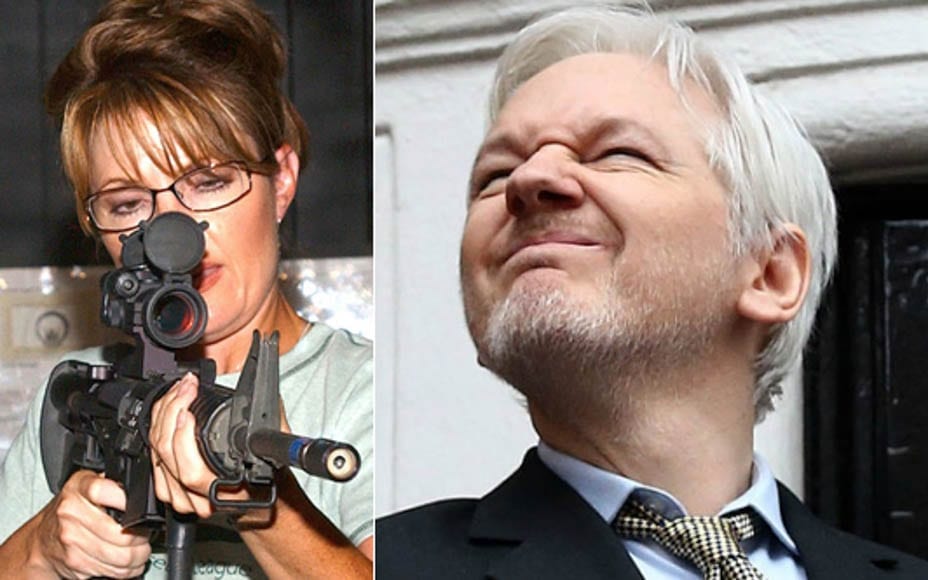
    Sarah Palin’s attempt to gain the support of Julian Assange shows that conventional politics have been consigned to history


    In a post Wednesday on her Facebook account, batty Sarah Palin did an about turn and apologised to Julian Assange – a man she’d described as “an anti-American operative with blood on his hands” in 2010.


    In a missive to her followers, the dimmest politician on the planet stated the Wikileaks founder had “exposed the truth” about what Assange had described as “the Obama administration’s attempt to delegitimise Donald Trump”. She went on to claim the fugitive, who remains holed up in the Ecuadorian Embassy in Knightsbridge, had shared “important information that finally opened people’s eyes to Democrat candidates and operatives” and concluded: “This would not have been exposed were it not for Julian Assange”.


    That Republican firebrand Mrs Palin said such a thing is yet another example of conventional politics being turned on its head. The election of Donald Trump and Brexit in Britain seemed bonkers but that this unhinged woman is seeking out the support of a man who is an evader of justice and a self-appointed crusader of vanity is something one simply could never have made up.


    2017 looks set to be the year when the loopy people of the world unite. God help us all.


    Sarah Palin’s Facebook post in full:


    To Julian Assange: I apologize.


    Please watch Sean Hannity’s interview with Julian Assange (Wikileaks).


    Exposing the truth re: the Left having been oh-so-guilty of atrocious actions and attitudes of which they’ve falsely accused others. The media collusion that hid what many on the Left have been supporting is shocking. This important information that finally opened people’s eyes to democrat candidates and operatives would not have been exposed were it not for Julian Assange.


    I apologize for condemning Assange when he published my infamous (and proven noncontroversial, relatively boring) emails years ago.


    As I said at the time of being targeted and my subsequent condemnation, though, the line must be drawn before our troops or innocent lives deserving protection would be put at risk as a result of published emails.


    Julian, I apologize.


    Sarah Palin


    P.S. If you get the chance, catch the movie “Snowden.” That movie and Hannity’s interview tonight are quite enlightening.


  • A Performing Peugeot

    A Performing Peugeot

    Best performing classic car in terms of value gain revealed; you’ll be surprised at the result


    We’ve featured several Peugeot 205s that have sold at auctions at prices as high as £156,800 and now the latest Haggerty Classic Index has revealed that the greatest classic car value gain this year has been on the 205 GTi.


    This year, Peugeot 205s have risen 28.5% to an average value of £11,275 and with an immaculate yet ordinary one we featured in July having gone for £30,938 at auction, this ‘hot hatch’ is becoming a ‘must have’ for car collectors.


    As examples, we select first a red 1993 1.9-litre CTi convertible. It is for sale for £7,250 ($9,100 or €8,600 or درهم‎‎33,500) through MSP Motors in Runcorn, Cheshire and has 69,000 miles on the clock. They term it “a great example of a future classic, a great investment”.


    Our second choice is also presented in red and is a 1989 1.6-litre GTi. It has 69,119 miles on the clock, has an electric glass sunroof and is for sale through AMS Vehicles of Stokesley, North Yorkshire. They describe it as “a desirable vehicle at a sensible price” and offer it for £11,000 ($13,800 or €13,100 or درهم‎‎50,800).


    Of the survey itself, Angus Forsyth, managing director of Hagerty remarked:


    “We’ve seen confidence return to the classic car market in the last few months of 2016 after a summer of uncertainty, and we believe the Q3 results were a reflection on people holding back following the initial uncertainty of the Brexit vote in June”.


    “However, now the financial markets have settled, people have bought into the car market albeit a few months later than they might have planned. Whether people still feel classics make good investments, or they just want to put their money into something fun, they are still definitely buying, and the values of the best classics are still on the rise”.


    A Performing Peugeot – Best performing classic car in terms of value gain revealed; you’ll be surprised at the result – Peugeot 205 GTi CTiA Performing Peugeot – Best performing classic car in terms of value gain revealed; you’ll be surprised at the result – Peugeot 205 GTi CTiA Performing Peugeot – Best performing classic car in terms of value gain revealed; you’ll be surprised at the result – Peugeot 205 GTi CTi

  • Animals and Animals

    Animals and Animals

    Social media has given a gang of angry old men a voice that is truly repugnant; weirdly they’re united by their adoration of cats and dogs


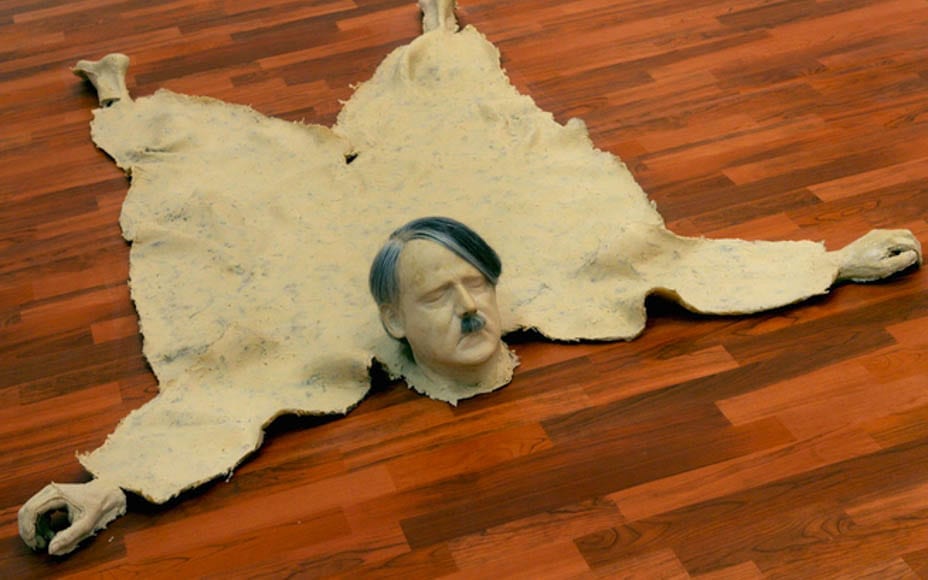
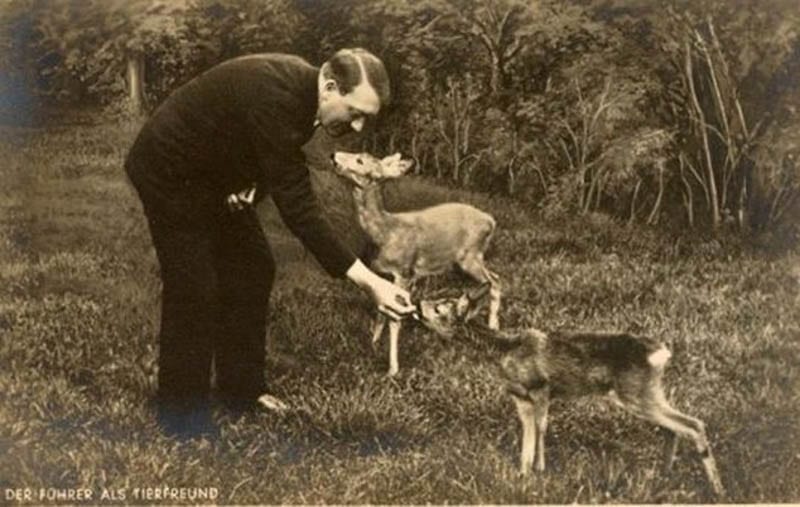
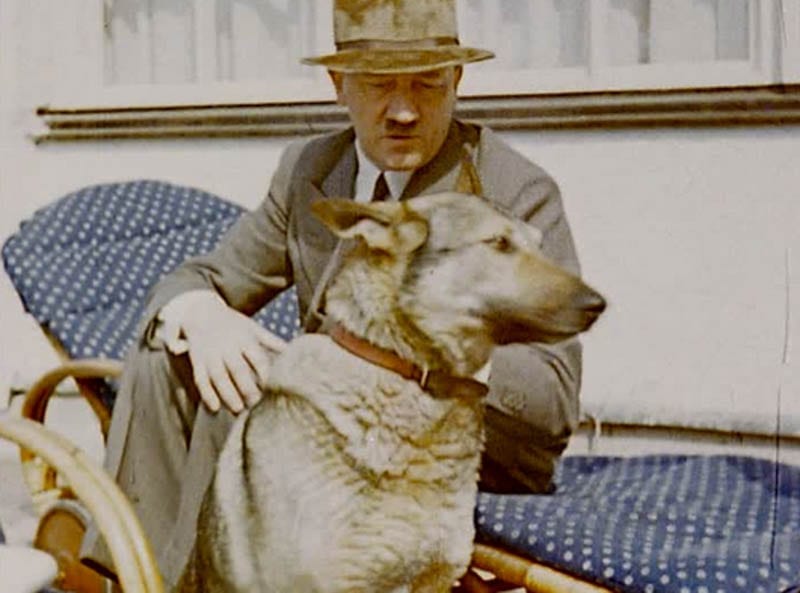
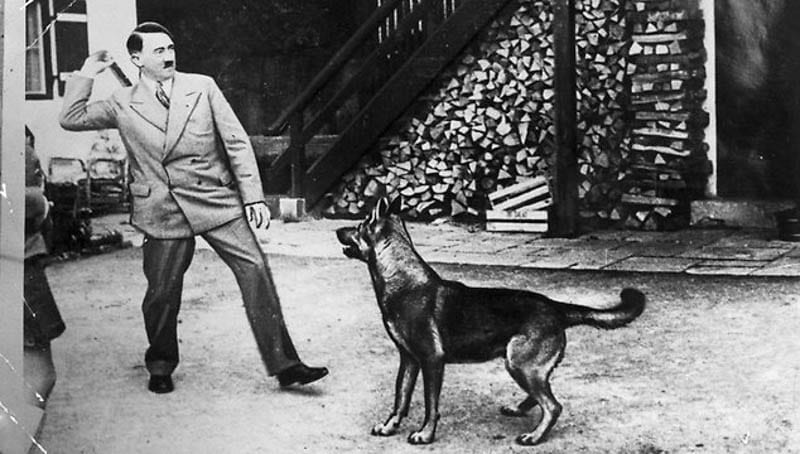
    Hitler loved animals. He didn’t like most humans and he especially didn’t like Jews, gypsies and gays. Now, a group of angry, bitter men have taken to social media in the wake of Brexit and the election of Trump and surprisingly, the one thing that unites them is that this mob also like sharing pictures of cats, dogs and other animals.


    Aside from their vile rants about Gina Miller – one offered a reward of £5,000 to anyone who might “accidentally run her over” – this nasty gaggle talk of how they “want to piss off the PC” and link to articles about robberies where they claim “blacks carry on this kind of work”. They brand anyone they don’t like “PC c**ts”, term them “feral dogs” and refer to Bernie Sanders as “a fascist neo-Liberal alt-left clown”. Surprisingly, however, these sorry excuses for humans also pepper their posts with images of wolves playing – accompanied by caption such as “how lovely” – and “lions running on grass for the first time” – “stunning, delightful”.


    Follow these people on Facebook and Twitter at your peril as all you’ll see is angry Middle England at its worst; the most intolerant animals have taken over the asylum and they love only the animals that can’t answer them back.


    Animals and Animals – Social media has given a gang of angry old men a voice that is truly repugnant; weirdly they’re united by a love of animals Animals and Animals – Social media has given a gang of angry old men a voice that is truly repugnant; weirdly they’re united by a love of animals Animals and Animals – Social media has given a gang of angry old men a voice that is truly repugnant; weirdly they’re united by a love of animals

  • Sexing up Brexit

    Sexing up Brexit

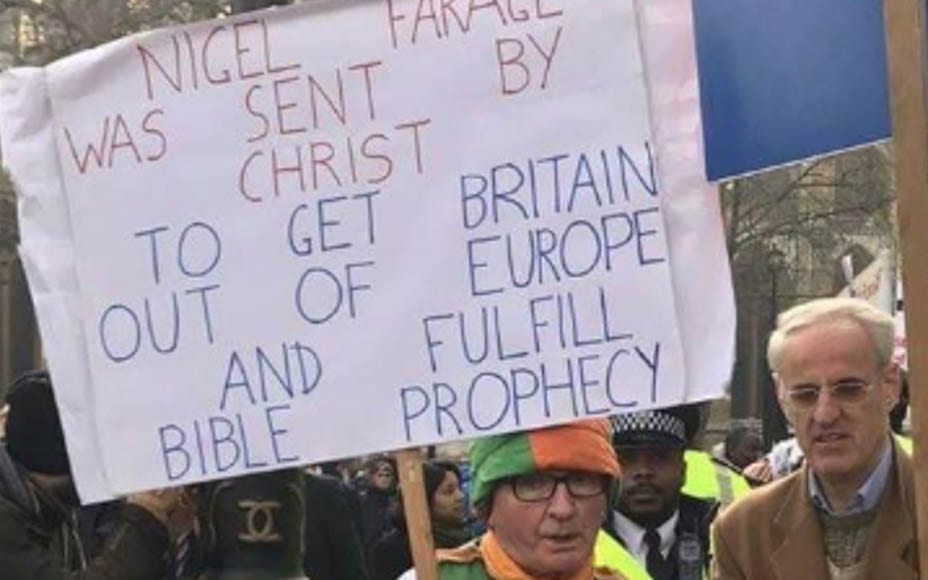
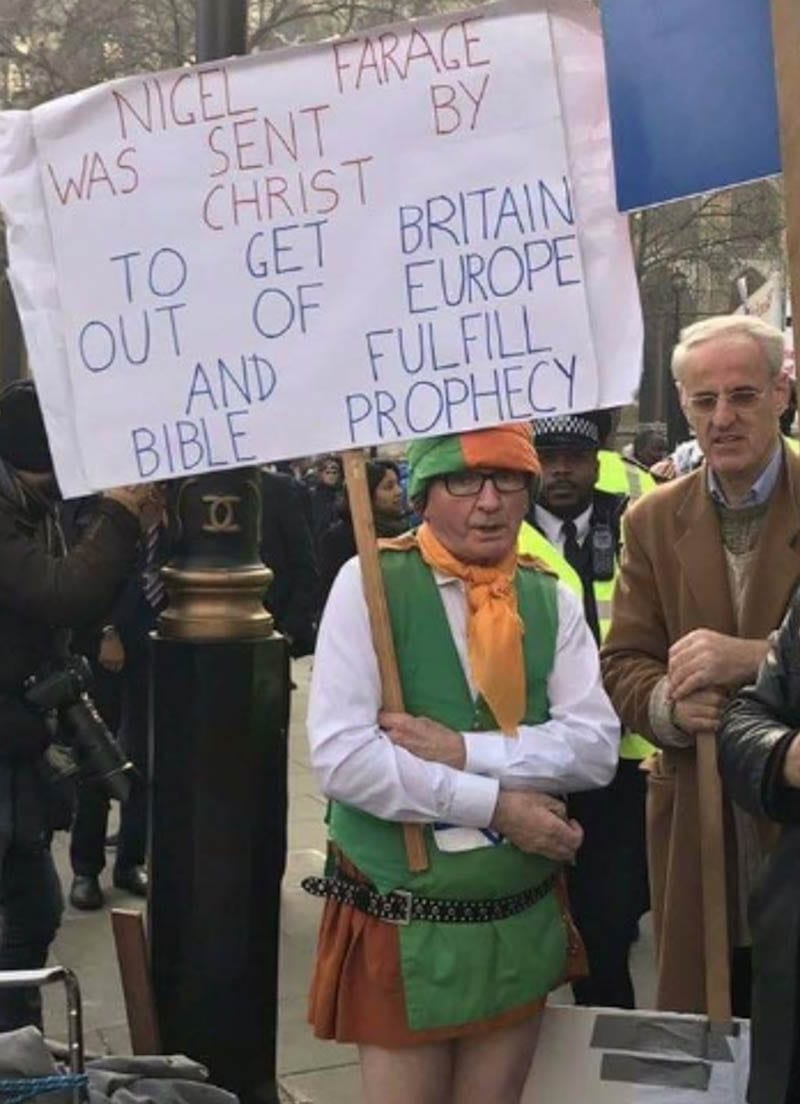
    Defrocked priest appears outside the Supreme Court dancing a jig without any trousers; he believes Nigel Farage was “sent by Christ”


    This week, as the Supreme Court debated one of the most serious constitutional cases in history, a strange little man dressed as a leprechaun danced a jig whilst holding placards about Nigel Farage, a Third World War and Brexit.


    The strange, trouser-less pensioner’s banners bizarrely were captioned:


    “Nigel Farage was sent by Christ to get Britain out of Europe and fulfill [sic] Bible prophecy”.


    “Britain will fight for Israel in the Third World War whereas Europe will fight against Israel and against Christ”.


    Dubbed a “sex elf” in one tweet, The Huffington Post later suggested the man to be Neil Horan, “a defrocked Irish Catholic priest who has previously disrupted major events like the Grand Prix and the Olympics and appeared on Britain’s Got Talent”. Horan was given an ASBO for attempting to disrupt the London Marathon in 2007 and his published works number A Glorious New World Very Soon to Come and Christ Will Soon Take Power From All Governments.


    In 2006, Horan was held for two months in custody in Germany during the World Cup. He had announced that he had planned to carry posters that declared “Adolf Hitler was a good leader who was following the word of Christ”.


    You truly couldn’t make it up.


    Sexing up Brexit – Defrocked priest Neil Horan appears outside the Supreme Court dancing a jig without any trousers; he believes Nigel Farage was “sent by Christ”Sexing up Brexit – Defrocked priest Neil Horan appears outside the Supreme Court dancing a jig without any trousers; he believes Nigel Farage was “sent by Christ”

  • The Business of Blair

    The Business of Blair

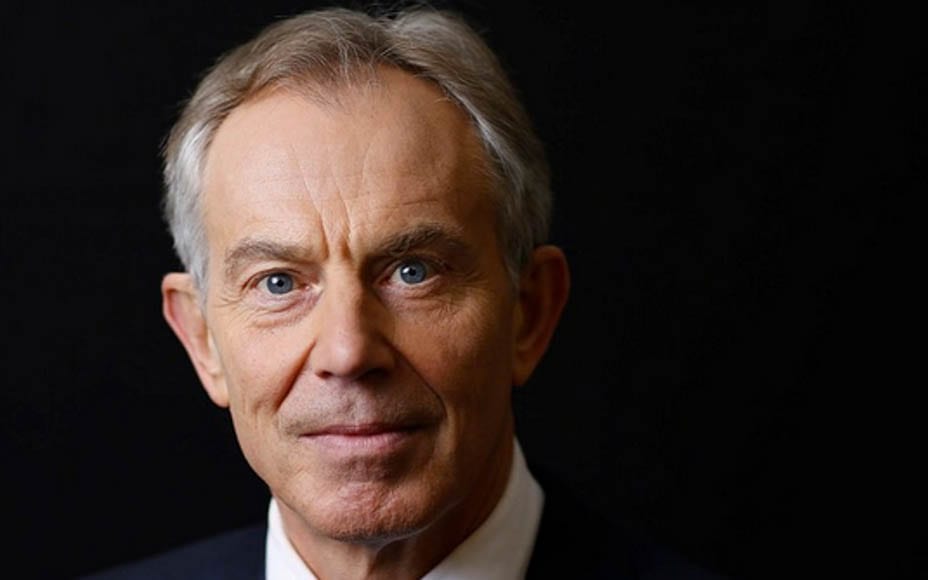
    Tony Blair ditches business and also denies a return to public office


    For weeks, the mainstream media have claimed Tony Blair is preparing to return to public office to save Britain from the nightmare of Brexit. They have claimed he’s ready to seize the support of the 48% and that him and Nick Clegg are colluding to create a new ‘centre left’. He did little to deny it at first but late last week, he shared a post on Facebook that frankly puts a stop to this kind of nonsense.


    Blair, a plainly toxic force in politics due to his highly unpopular backing of George W. over the War on Iraq (and because of his refusal to confine his equally disliked weirdo wife to social Siberia), will never make a comeback and now he’s finally acknowledged that in a very public way.


    In our view, Mr Blair is actually wrong. He’s not nearly as bad as #DarthVader Theresa May and he’s not nearly as ghastly as either the worst Prime Minister’s-in-living-history John Major and Gordon Brown and though we share with you his justifications for not getting involved again, we weirdly find ourselves actually lauding Mr Blair for saying the right thing (for once in his sorry lifetime).


    Mr Blair’s comment, in full, follows:


    Over the past nine years we have built a family of organisations which together employ nearly 200 people; have worked in over 30 countries; and have produced some real and lasting achievements. I am very proud of the commitment and impact of the people I have had the privilege to work with.


    The Africa Governance Initiative has become a respected partner and leader in effective governance where we have worked in 10 different African countries.


    The work we are doing in Africa has been right at the centre of government covering everything from boosting electricity, to improving child and maternal mortality rates to helping on the ground during the Ebola crisis in West Africa, a contribution praised for its impact by both the Presidents of the countries concerned and the international community.


    Outside of Africa in the work done by the commercial governance arm, we again made successful interventions in over 12 countries with 30 different projects promoting reform and change programmes with governments.


    The Tony Blair Faith Foundation has done ground-breaking work in interfaith relations, education and leadership, and most recently in the research and policy work on religiously based extremism through the Centre on Religion and Geopolitics which has been widely recognised as authoritative. 


    In the first years of the Quartet role in the Middle East, we hit double digit growth on the West Bank, drew up ambitious plans for Gaza’s infrastructure and changed the rules around entry of materials into Gaza. In 2011, we played a significant part in the attempt to agree terms of reference for a renewal of the peace process.


    Progress became much more difficult once the peace process stalled. We were partners in the later fresh attempts by the USA to revive the peace process, particularly around plans for the economy to support a future Palestinian state. Unfortunately these attempts also failed.


    Nonetheless, after stepping down from the Quartet position, our new Initiative for the Middle East has re-vitalised our work and means this stays a large part of what we do. I have made over 35 visits to the region this year alone.


    During the time since leaving office, I have learnt a huge amount about the world and frankly what I can do and can’t do to affect it positively.


    We built up a successful business side, though attracted a large measure of criticism for it, much of it inaccurate. It was entirely necessary to build the business to help with the funding to grow the organisations; but it was open to misrepresentation and to criticism either that we were conflating private and public roles or that we were working in countries which aroused controversy.


    Having said that, I also learnt a lot about the way the global economy functions from that experience and pay tribute to the great team I worked with who made much of the development of our work across the organisations possible.


    We are now at the stage and have built the financial infrastructure where it is time to enter a new phase. First we can take the work we have done in Africa, in governance, on extremism and in the Middle East to a new and more effective level; and secondly, in the past six months we have seen political earthquakes in the UK with Brexit and in the American election, as well as an explosion in populist movements all over the European continent. This impacts profoundly all the work we do and the future of globalisation.


    So I want us to bring all the different organisations together under one roof and to re-orient our mission.


    We have deliberately focused, up to now, on some of the greatest and most difficult challenges faced in the era of globalisation: how to give nations the governing capacity to overcome the problems of development and lift their people out of poverty; how to combat the religiously based extremism which threatens global security; how to resolve the most intractable peace process in the world.


    In each case, we have presented a new approach, with the aim of providing new ideas and thinking.


    In governance, especially in Africa, our analysis is that, today, building the capacity to govern effectively – making the way government works efficient as well as transparent – is as important for developing nations as aid.


    Look around the world, and see countries living next to each other – same size population, same resources, same natural potential – one succeeding, one failing. The reason for the difference is found in the quality of governance. Take the following examples: Venezuela and Colombia; Poland and Ukraine; Rwanda and Burundi. And the greatest example in contrasting, contiguous systems of governance the world has seen in modern political history – the Korean Peninsula, North and South Korea. The nation which is succeeding is applying the best rules and lessons of governance; the failing nation is ignoring or defying them.


    On religious extremism, we believe it is essential to widen the struggle, to tackle the ideology behind the violence and not simply the violence itself. So we can defeat ISIS militarily but unless we defeat the ideas behind Islamism – the belief that a particular view of religion should dominate society, politics and the economy, something incompatible with a modern world in which pluralism is the essence – we will never win this battle.


    On the Middle East peace process, we are convinced that a traditional peace process between Israelis and Palestinians with US guidance alone is inadequate; that what is required is a new approach which involves the wider region and the Arab nations and which resolves not just the final status issues like borders but which also resolves the underlying issues of cultural acceptance and regional stability. So we are now working on Arab-Israeli relations, and not simply Israeli-Palestinian relations.


    But it has become clear that there is much overlap between these different areas of work. Extremism is also today a barrier to development. The Middle East conflict impacts extremism. Changing and reforming government applies to Middle East nations as well.


    And since all of these approaches basically represent the open-minded response to global problems, the salience of these new approaches depends on us having an answer to the new populism of left and right which exploits the anger and drives the world apart.


    This new populism may differ in some respects between left and right – the left anti-business, the right anti-immigrant – but in others what is remarkable is the convergence between them, especially around isolationism and protectionism, in what is an essentially closed-minded approach to globalisation and its benefits and to international engagement.


    So we want to add a fourth pillar to what we do. I emphasise this is not in place of our other work but in addition to it.


    This is the creation of a platform designed to build a new policy agenda for the centre ground together with the networks which link people up, and allow a reasonable and evidence based discussion of the future which avoids the plague of social media-led exchanges of abuse. 


    This platform will have a policy unit which will draw on the best ideas and practical solutions, building partnerships with other organisations, in the public policy and private spheres, so that those in the frontline of politics have a bigger and better policy agenda to reflect upon; and a networking capability to join like-minded people up. 


    This is not a think tank. There are enough of those, many doing excellent work we would want to utilise. It is a platform for engagement to inform and support the practising politician.


    It is what I know I would want were I still in the frontline of politics.


    Part of its focus will plainly be around the European debate; but this will not be its exclusive domain. It has to go far wider than that since in many ways the Europe debate is a lightning rod for the whole of politics.


    We’re now planning to bring all of these four parts together in one new Not For Profit Institute. 


    The business side has been shut down and the assets, running into many millions of pounds, gifted to the Institute. In the New Year, we plan to merge the activities of the different organisations into the Institute, with any charitable funds used exclusively for the purposes for which they were originally given.


    This will allow us to work more coherently across the board; use the obvious synergies between the different elements of the work; and to be far stronger on the global policy side than we have been up to now. The focus previously was mainly on programmes. These will remain but the organisation will also be far more about thought leadership.


    This is not about my returning to the front line of politics. I have made it abundantly clear that this is not possible.


    However, I care about my country and the world my children and grandchildren will grow up in; and want to play at least a small part in contributing to the debate about the future of both.  
     

    The Africa Governance Initiative has become a respected partner and leader in effective governance where we have worked in 10 different African countries.


    The work we are doing in Africa has been right at the centre of government covering everything from boosting electricity, to improving child and maternal mortality rates to helping on the ground during the Ebola crisis in West Africa, a contribution praised for its impact by both the Presidents of the countries concerned and the international community.


    Outside of Africa in the work done by the commercial governance arm, we again made successful interventions in over 12 countries with 30 different projects promoting reform and change programmes with governments.


    The Tony Blair Faith Foundation has done ground-breaking work in interfaith relations, education and leadership, and most recently in the research and policy work on religiously based extremism through the Centre on Religion and Geopolitics which has been widely recognised as authoritative. 


    In the first years of the Quartet role in the Middle East, we hit double digit growth on the West Bank, drew up ambitious plans for Gaza’s infrastructure and changed the rules around entry of materials into Gaza. In 2011, we played a significant part in the attempt to agree terms of reference for a renewal of the peace process.


    Progress became much more difficult once the peace process stalled. We were partners in the later fresh attempts by the USA to revive the peace process, particularly around plans for the economy to support a future Palestinian state. Unfortunately these attempts also failed.


    Nonetheless, after stepping down from the Quartet position, our new Initiative for the Middle East has re-vitalised our work and means this stays a large part of what we do. I have made over 35 visits to the region this year alone.


    During the time since leaving office, I have learnt a huge amount about the world and frankly what I can do and can’t do to affect it positively.


    We built up a successful business side, though attracted a large measure of criticism for it, much of it inaccurate. It was entirely necessary to build the business to help with the funding to grow the organisations; but it was open to misrepresentation and to criticism either that we were conflating private and public roles or that we were working in countries which aroused controversy.


    Having said that, I also learnt a lot about the way the global economy functions from that experience and pay tribute to the great team I worked with who made much of the development of our work across the organisations possible.


    We are now at the stage and have built the financial infrastructure where it is time to enter a new phase. First we can take the work we have done in Africa, in governance, on extremism and in the Middle East to a new and more effective level; and secondly, in the past six months we have seen political earthquakes in the UK with Brexit and in the American election, as well as an explosion in populist movements all over the European continent. This impacts profoundly all the work we do and the future of globalisation.


    So I want us to bring all the different organisations together under one roof and to re-orient our mission.


    We have deliberately focused, up to now, on some of the greatest and most difficult challenges faced in the era of globalisation: how to give nations the governing capacity to overcome the problems of development and lift their people out of poverty; how to combat the religiously based extremism which threatens global security; how to resolve the most intractable peace process in the world.


    In each case, we have presented a new approach, with the aim of providing new ideas and thinking.


    In governance, especially in Africa, our analysis is that, today, building the capacity to govern effectively – making the way government works efficient as well as transparent – is as important for developing nations as aid.


    Look around the world, and see countries living next to each other – same size population, same resources, same natural potential – one succeeding, one failing. The reason for the difference is found in the quality of governance. Take the following examples: Venezuela and Colombia; Poland and Ukraine; Rwanda and Burundi. And the greatest example in contrasting, contiguous systems of governance the world has seen in modern political history – the Korean Peninsula, North and South Korea. The nation which is succeeding is applying the best rules and lessons of governance; the failing nation is ignoring or defying them.


    On religious extremism, we believe it is essential to widen the struggle, to tackle the ideology behind the violence and not simply the violence itself. So we can defeat ISIS militarily but unless we defeat the ideas behind Islamism – the belief that a particular view of religion should dominate society, politics and the economy, something incompatible with a modern world in which pluralism is the essence – we will never win this battle.


    On the Middle East peace process, we are convinced that a traditional peace process between Israelis and Palestinians with US guidance alone is inadequate; that what is required is a new approach which involves the wider region and the Arab nations and which resolves not just the final status issues like borders but which also resolves the underlying issues of cultural acceptance and regional stability. So we are now working on Arab-Israeli relations, and not simply Israeli-Palestinian relations.


    But it has become clear that there is much overlap between these different areas of work. Extremism is also today a barrier to development. The Middle East conflict impacts extremism. Changing and reforming government applies to Middle East nations as well.


    And since all of these approaches basically represent the open-minded response to global problems, the salience of these new approaches depends on us having an answer to the new populism of left and right which exploits the anger and drives the world apart.


    This new populism may differ in some respects between left and right – the left anti-business, the right anti-immigrant – but in others what is remarkable is the convergence between them, especially around isolationism and protectionism, in what is an essentially closed-minded approach to globalisation and its benefits and to international engagement.


    So we want to add a fourth pillar to what we do. I emphasise this is not in place of our other work but in addition to it.


    This is the creation of a platform designed to build a new policy agenda for the centre ground together with the networks which link people up, and allow a reasonable and evidence based discussion of the future which avoids the plague of social media-led exchanges of abuse.


    This platform will have a policy unit which will draw on the best ideas and practical solutions, building partnerships with other organisations, in the public policy and private spheres, so that those in the frontline of politics have a bigger and better policy agenda to reflect upon; and a networking capability to join like-minded people up. 


    This is not a think tank. There are enough of those, many doing excellent work we would want to utilise. It is a platform for engagement to inform and support the practising politician.


    It is what I know I would want were I still in the frontline of politics.


    Part of its focus will plainly be around the European debate; but this will not be its exclusive domain. It has to go far wider than that since in many ways the Europe debate is a lightning rod for the whole of politics.


    We’re now planning to bring all of these four parts together in one new Not For Profit Institute. 


    The business side has been shut down and the assets, running into many millions of pounds, gifted to the Institute. In the New Year, we plan to merge the activities of the different organisations into the Institute, with any charitable funds used exclusively for the purposes for which they were originally given.


    This will allow us to work more coherently across the board; use the obvious synergies between the different elements of the work; and to be far stronger on the global policy side than we have been up to now. The focus previously was mainly on programmes. These will remain but the organisation will also be far more about thought leadership.


    This is not about my returning to the front line of politics. I have made it abundantly clear that this is not possible.


    However, I care about my country and the world my children and grandchildren will grow up in; and want to play at least a small part in contributing to the debate about the future of both.  

     

  • Banishing Brexit

    Banishing Brexit

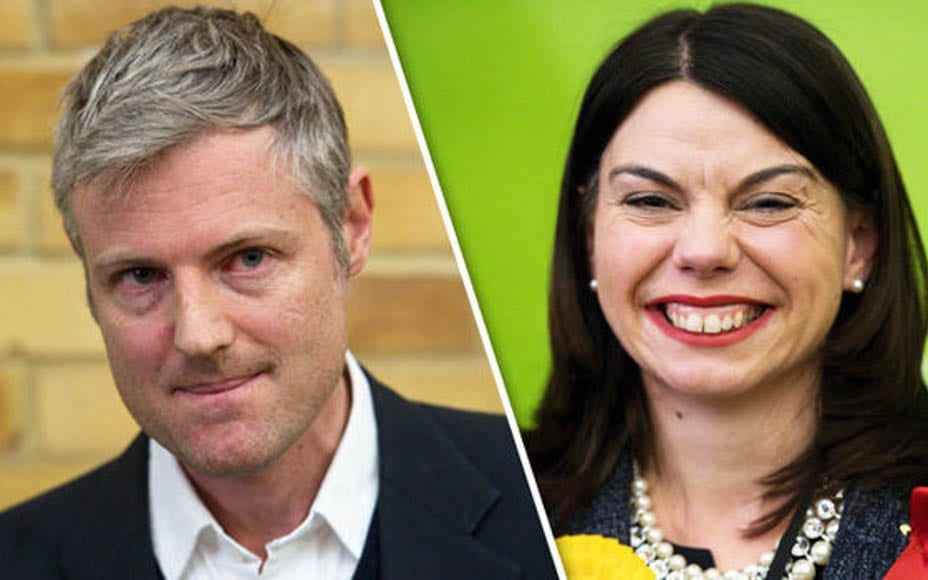
    Defeat of Zac Goldsmith in Richmond signals the 48%’s fight back is making headway


    Some would have you believe that yesterday’s by-election in Richmond was all about Zac Goldsmith’s opposition to the expansion of Heathrow Airport. It wasn’t and in her victory Liberal Democrat Sarah Olney proved one thing – the electorate of her new constituency wanted to give two fingers to Theresa May’s “Brexit means Brexit”.


    Despite the immensely wealthy Goldsmith being nothing other than principled and decent, we salute Olney’s victory. She has confirmed already that she’ll vote against the triggering of Article 50 and in her victory speech, she stated:


    “The people of Richmond Park and North Kingston have sent a shockwave through this Conservative Brexit government, and our message is clear: We do not want a hard Brexit”.


    “We do not want to be pulled out of the single market, and we will not let intolerance, division and fear win”.


    Elsewhere, last night, UKIP lost its sole seat on Dorset County Council and thus, it seems, those opposed to Theresa May’s stupidity are moving up a gear. Sense prevailed when Gina Miller’s legal challenge was successful and it did so again last night. This movement can now only grow and we urge our readers to continue to support a return to the right road.


    #BetterTogether


  • Going by God

    Going by God

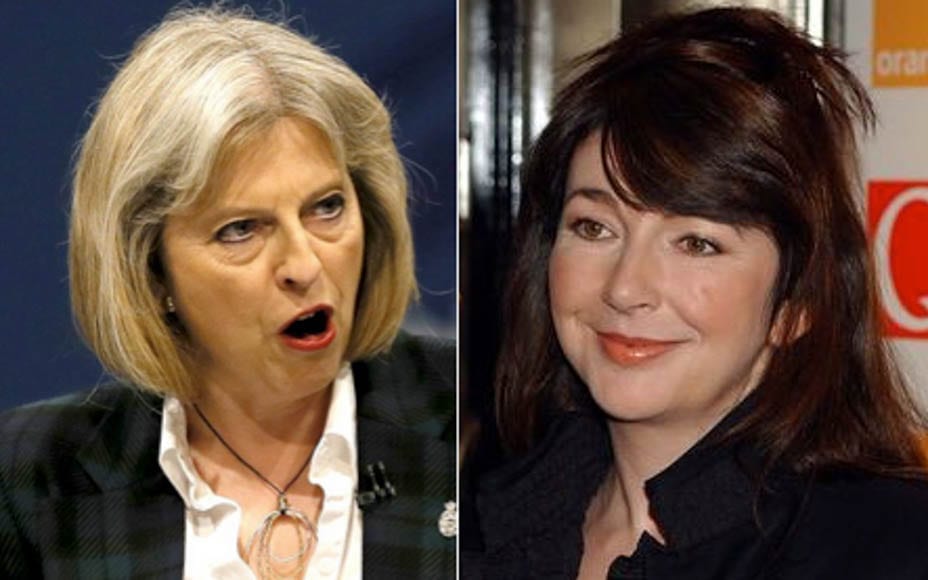
    After claiming she’s lead by God over Brexit, Theresa May bizarrely gets the backing of Kate Bush


    On Sunday, Theresa May told The Sunday Times Magazine that her Christian faith is guiding her decisions around Brexit and also spoke of how leaving the EU keeps her awake at night.


    Yesterday, in Maclean’s Magazine, a Canadian publication, the reclusive musician Kate Bush described piled praise on Theresa May and announced:


    “We have a female prime minister here in the UK. I actually really like her and think she’s wonderful. I think it’s the best thing that’s happened to us in a long time. She’s a very intelligent woman but I don’t see much to fear. I will say it is great to have a woman in charge of the country. She’s very sensible and I think that’s a good thing at this point in time”.


    News that Bush, previously a fan of Ken Livingstone and the writer of a song that stated: “Ken is the man that we all need”, shocked the likes of The Guardian and The Independent’s Geoff Norcott, but unsurprisingly, the majority of the fans of this singer-songwriter and supporter of changing to a bartering economy’s typically left-wing fans won’t be Running Up That Hill in support of her new found conversion.


  • The Times They are a-Changin’ (and All it Takes is a Tweet)

    The Times They are a-Changin’ (and All it Takes is a Tweet)

    Matthew Steeples highlights the workings and truths behind the changed political landscape of 2016


    2016 will be remembered as the year when the world flipped convention on its head. With the brutal monster Fidel Castro finally gone, Donald Trump headed for The White House and Brexit in Britain, comes a new era but it is not one that is actually as clear-cut as many make out.


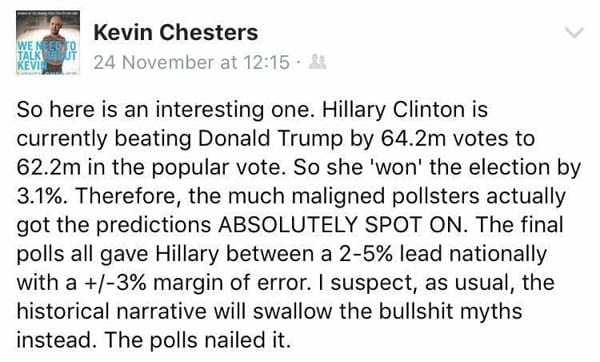
    Unlike in previous eras, social media undoubtedly has had more influence than the traditional media and pollsters have taken a bashing. In spite, for example, of the fact that “Hillary Clinton [is] currently beating Donald Trump by 64.2 million votes to 62.2 million in the popular vote” and thus “winning the election by 3.1%”, according to Kevin Chesters, chief strategy officer at Ogilvy & Mather Group UK, “as usual the historical narrative will swallow the bulls**t myths instead”. He rightly points out “the polls nailed it” as they predicted “all gave Hillary between a 2-5% lead nationally with a +/- 3% margin of error” but the likes of Breitbart, unsurprisingly instead, spread a myth that ‘The Donald’s’ victory was epic. It was just that, in the sense that he achieved a win in spite of being mocked as an extremist joker who’d fail at the beginning, but the true margin of support for him is indicated by the fact that nationwide turnout fell from 61.6% in 2008 to 57.9% in 2016.


    The Times They are a-Changin’ (and All it Takes is a Tweet) – Matthew Steeples highlights the workings and truths behind the changed political landscape of 2016 – Donald Trump, Nigel Farage, Jared Kushner, Eric Schmidt, Peter Thiel, Dan Hodges, Kevin Chesters, Nicola Sturgeon, Hillary Clinton, Katy Perry, Fidel Castro, Brexit, Trump in The White HouseThe Times They are a-Changin’ (and All it Takes is a Tweet) – Matthew Steeples highlights the workings and truths behind the changed political landscape of 2016 – Donald Trump, Nigel Farage, Jared Kushner, Eric Schmidt, Peter Thiel, Dan Hodges, Kevin Chesters, Nicola Sturgeon, Hillary Clinton, Katy Perry, Fidel Castro, Brexit, Trump in The White HouseThe Times They are a-Changin’ (and All it Takes is a Tweet) – Matthew Steeples highlights the workings and truths behind the changed political landscape of 2016 – Donald Trump, Nigel Farage, Jared Kushner, Eric Schmidt, Peter Thiel, Dan Hodges, Kevin Chesters, Nicola Sturgeon, Hillary Clinton, Katy Perry, Fidel Castro, Brexit, Trump in The White House


    In Britain, equally, the Brexit vote was “won” by just 2.2% and thus both results can be described as being far less significant than the right-wing media make out. Nigel Farage is lauded as a “hero”, yet, despite standing seven times, has never won a seat in the House of Commons; Nicola Sturgeon’s SNP failed to get independence for Scotland yet she dominates our screens daily.


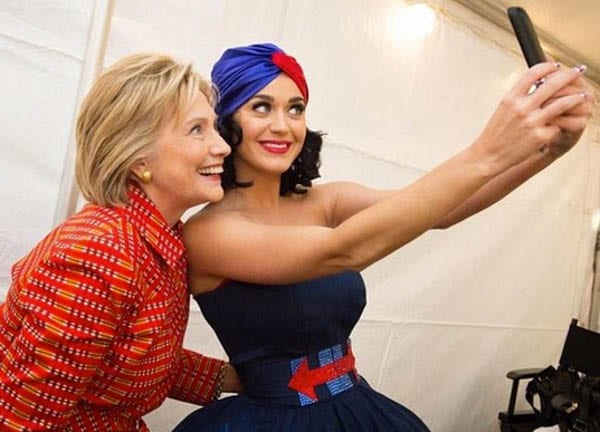
    Trump and Farage have clearly both been clever in their respective strategies and just as Castro opted to ignore convention and ruled Cuba with a rod of iron, these two ditched the politics we know and played an entirely different game. Hillary Clinton’s decision to stand with self-serving billionaires and loudmouth celebrities truly backfired and instead, in Jared Kushner, his 35-year old businessman son-in-law, and the tech tycoon Peter Thiel, Trump was led to a strategy that trounced traditional political convention.


    A truly revealing analysis of Kushner’s genius appeared in Forbes this week when he was interviewed by for the first time since Trump’s victory. In the feature article, Eric Schmidt, the former CEO of Google and designer of the Clinton campaign’s technology system, stated:


    “Best I can tell, [Kushner] actually ran the campaign and did it with essentially no resources… Jared understood the online world in a way the traditional media folks didn’t. He managed to assemble a presidential campaign on a shoestring using new technology and won. That’s a big deal”.


    Kushner himself added:


    “I helped facilitate a lot of relationships that wouldn’t have happened otherwise… People were being told in Washington that if they did any work for the Trump campaign, they would never be able to work in Republican politics again. I hired a great tax-policy expert who joined under two conditions: We couldn’t tell anybody he worked for the campaign, and he was going to charge us double”.


    “People really saw hope in [Donald Trump’s] message. They wanted the things that wouldn’t have been obvious to a lot of people I would meet in the New York media world, the Upper East Side or at Robin Hood [Foundation] dinners”.


    “I called some of my friends from Silicon Valley, some of the best digital marketers in the world, and asked how you scale this stuff. They gave me their subcontractors… Our best people were mostly the ones who volunteered for me pro bono. People from the business world, people from non-traditional backgrounds”.


    “We weren’t afraid to make changes. We weren’t afraid to fail. We tried to do things very cheaply, very quickly. And if it wasn’t working, we would kill it quickly… It meant making quick decisions, fixing things that were broken and scaling things that worked”.


    As Dan Hodges concluded in an editorial in today’s Mail Online:


    “Once, we used to send a gunboat. In the post-Brexit era, all it takes is a tweet”.


  • Overheard – 26th October

    Overheard – 26th October

    Clangers overheard and snippets spotted by readers of ‘The Steeple Times’


    Begging a feast

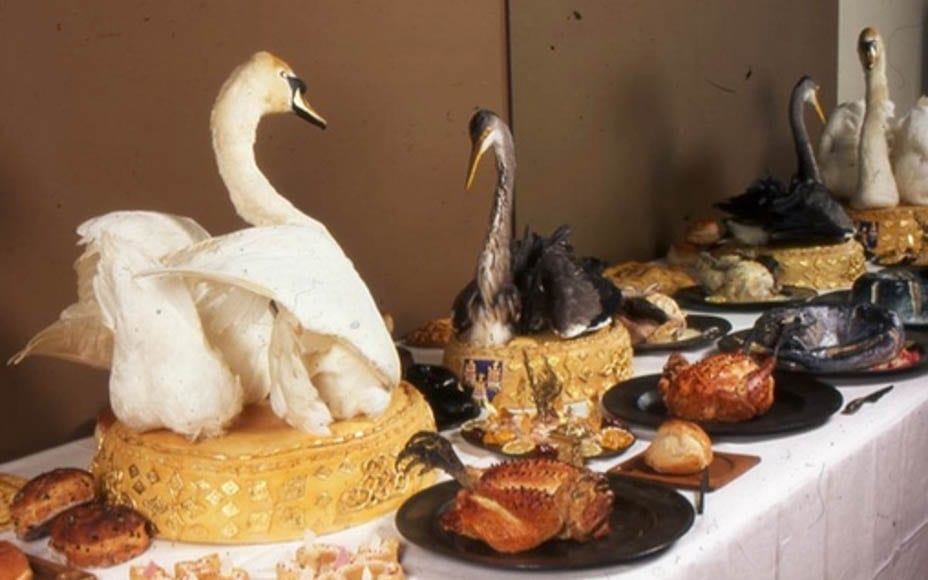
    In Gloucester Road, a beggar was overheard talking to an American old lady. He said: “I’m trying to get myself a feast”. She curtly answered: “Who do you think you are? Elizabeth I? Go to the park and kill a swan and you’ll be all set”.


    A girl on the side

    At La Brasserie’s bar, another elderly American settled down. This blazer and baseball cap wearing man announced to the bartender: “I’m from LA. I have to land”. The perplexed server looked bemused so, the stateside visitor carried on: “Make it a Johnny Walker Black Label. Ice, lemon and a girl on the side”.


    Connecting Meyer

    In a restaurant, former ambassador and all-round know-all Sir Christopher Meyer sat pontificating with his sons. He was overheard to loudly remark: “I’m very well connected, I’ll have you know”. Another guest, sat nearby, chirped up and told her companions: “Yes, of course he is. Appointed by the war criminal Tony Blair. That’s a connection and a half. One to be really proud of”.


    Knightsbridge vs. Chigwell

    In another restaurant in Knightsbridge, a set of louche men, throwbacks to the 1980s in fact, sat chatting about their glory days. One rudely pointed to a man minding his own business and shouted: “You’re not a Knightsbridge kind of guy. We’ve had Brexit. We’re reclaiming our land”. His target responded: “I hear you’re from Chigwell. You’re welcome to that land”.


    Submit comments you hear to [email protected]. We publish amusing and ridiculous chatter we receive and sometimes we change names and locations to protect the identities of the vain and the vacuous.


  • Going for Gold

    Matthew Steeples suggests though Zac Goldsmith MP proved himself a man of his word in standing down over the Heathrow decision, modern Britain actually needs yet more infrastructure improvements


    Zac Goldsmith MP is undoubtedly a man of principle and in resigning over what he refers to as “the catastrophic decision” to build an additional runway at Heathrow Airport he’s proven he’s someone who sticks to his word.


    As a Conservative Member of Parliament, Mr Goldsmith was one of the few to stick his neck out over historic VIP abuse in general and what went on at the Elm Guest House in particular. Unlike many of his lily-livered colleagues, he did what he could but whilst I salute him for that, he is wrong about the need to expand Heathrow.


    If – especially if Brexit actually does proceed – Britain needs to have the very best facilities and communication links possible to help maintain our attractiveness to the outside world. We cannot stand still and, quite frankly, there should be additional runways at Gatwick and Stansted and HS2 and Crossrail should proceed apace too. Bring them all on!