Space is at a premium in Central London, so here we share five of the best one bedroom apartments currently on the market. Prices range from £725,000 to an astounding £6,950,000.
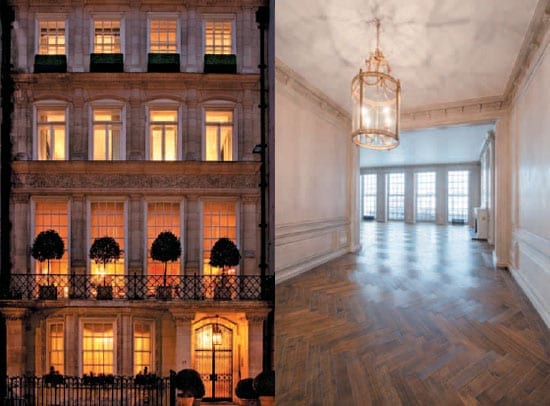
B.03.3, One Hyde Park, Knightsbridge, SW1X – £6,950,000
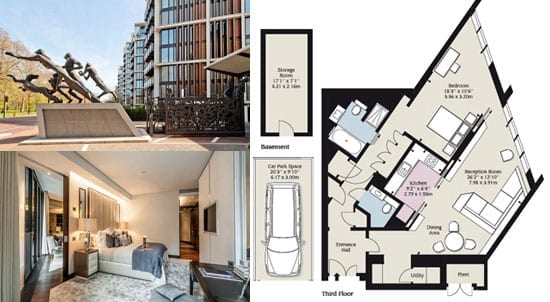
The highest priced apartment in this Candy & Candy landmark building sold for £136,000,000 so naturally even what agents Strutt & Parker described as a “the ultimate London pied-a-terre” was bound to be expensive. 989 square foot in size, there is a 26ft by 12ft reception room with a champagne bar, an 18ft by 10ft bedroom and even a car parking space. The service charge for the apartment is a not so insignificant £16,750 per annum but for that you get access to a 60 man Mandarin Oriental concierge team, a private spa and swimming pool, a squash court, an entertaining suite with spaces for canapé receptions for 100 guests and a private screening room with seating for 18 guests.
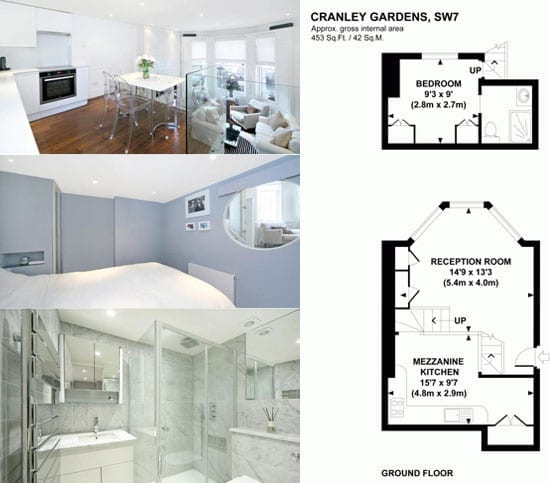
Cranley Gardens, South Kensington, SW7 – £725,000
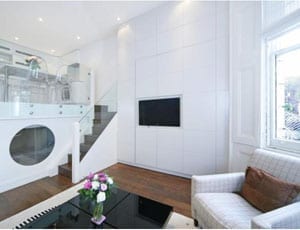
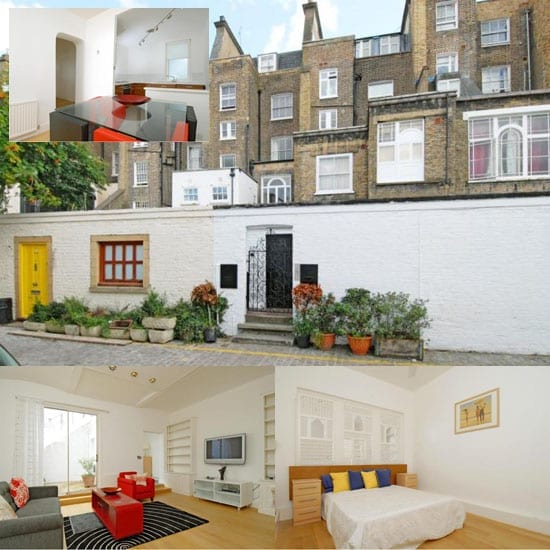
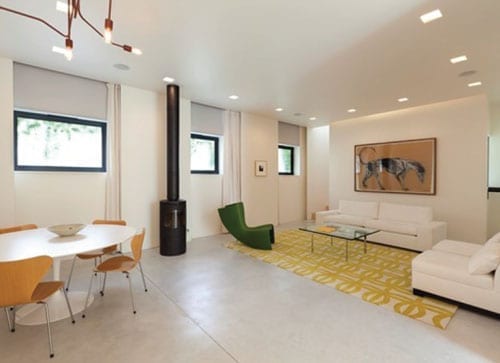
Converting a single high ceilinged room into a one bedroom flat wouldn’t normally work but the transformation of this 453 square foot ground floor apartment has produced spectacular results. As well as a bright 15ft by 13ft sitting room, there is a mezzanine kitchen with a dining area, a small internal double bedroom and what agents Marsh & Parsons call a “stylish” shower room.
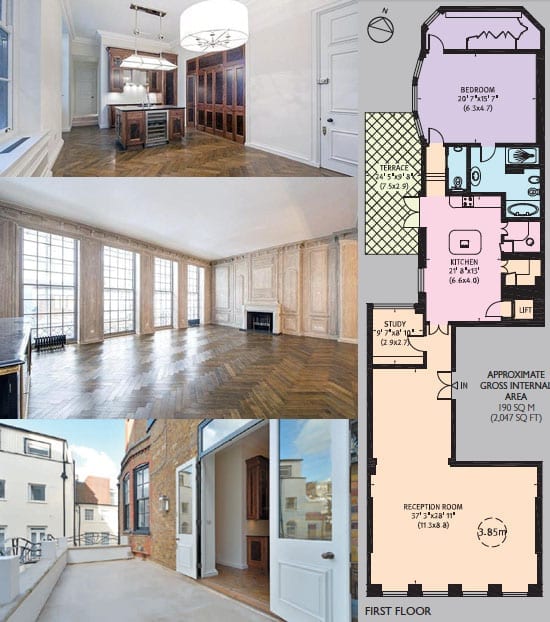
Upper Grosvenor Street, Mayfair, W1 – £6,000,000
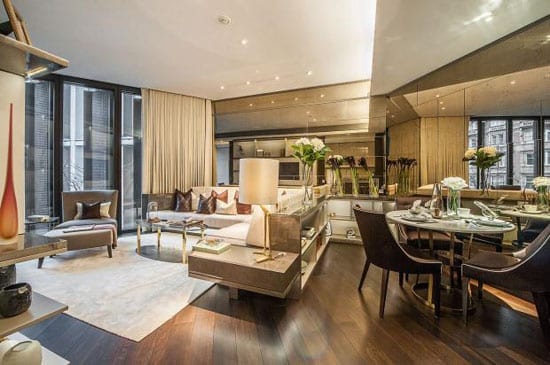
If you’re a bachelor who enjoys entertaining on a grand scale, the star attraction of this 2,047 square foot first floor apartment, which is for sale through Knight Frank, will be the 100 square foot paneled reception room with four floor to ceiling windows. For the dandy, there is a dressing room kitted out with burr walnut fittings and if you’re a studious sort, there’s a compact study/library.
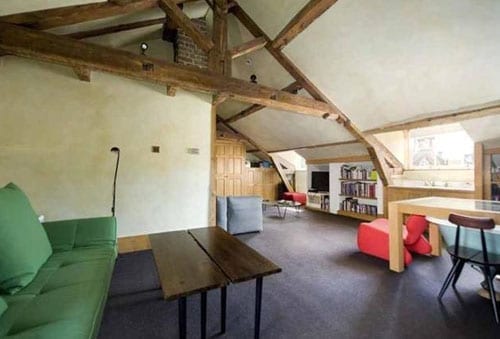
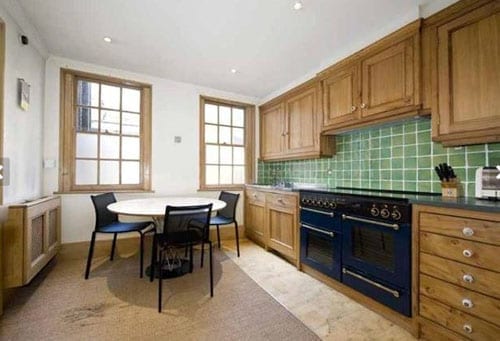
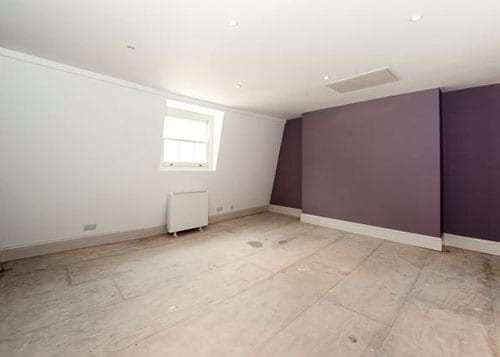
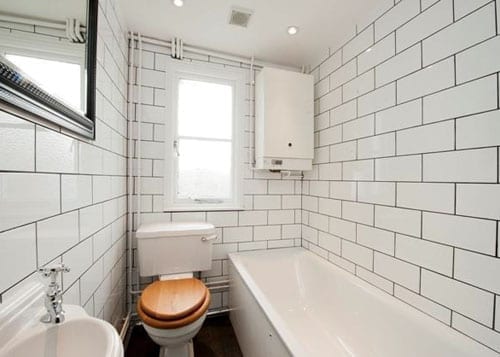
Queen’s Gate Mews, South Kensington, SW7 – £775,000
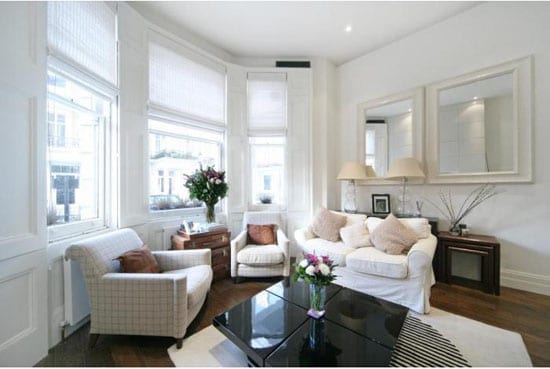
With a private entrance and 732 square foot of accommodation, this lower ground floor flat is surprisingly light. For sale through Marsh & Parsons and in need of a decorative makeover, it includes a 17ft by 13ft reception room, a dining room, kitchen, bedroom, bathroom and a small private courtyard garden.
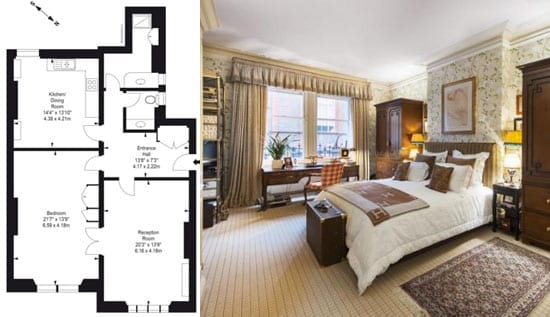
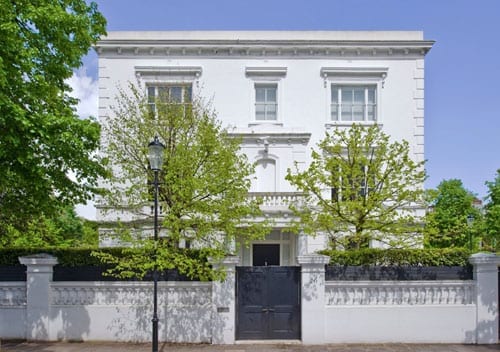
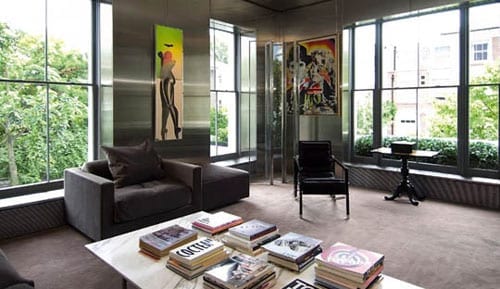
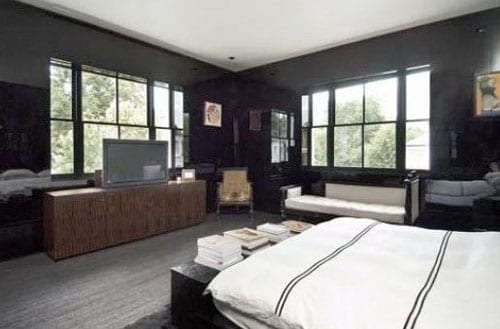
Within a purpose built portered Victorian mansion block, Aylesford are selling a 1,050 square foot ground floor apartment that has the look and feel of a smart boutique hotel. As well as a 20ft by 13ft reception room with double doors into a 27ft by 13ft bedroom, this stylish abode also features a large dining kitchen and is just moments from the Kings Road.
Subscribe to our free once daily email newsletter here.
The Steeple Times asks The Palm’s supervisor Ezio Arceri: “What’s on your mantelpiece?”
The Steeple Times shares “wit and wisdom”. What’s your guiding force?
My family and girlfriend.
“Don’t get even, get medieval” is, in our humble opinion, a great motto. What’s yours?
“Let’s do it”.
Kerry Katona was considered unacceptable in 2007. Who or what is unacceptable in 2013?
Who is Kerry Katona? That the average life is just 90 years. People should live longer.
Tony Blair misses being Prime Minister. What do you miss most in your life?
My family as I am far away from them.
What might you swap all your wealth for?
I’m happy as I am.
Donald Trump was once a case of: “If you owe the bank a thousand, they close you down; but if you owe the bank a billion, you own the bank”. What’s your view on the banking crisis?
I hope to be saved.
What phrase or word do you most loathe?
“As soon as possible”.
In the UK, some people consider charity to “begin at home”. What’s your view and what causes do you personally support?
I think charity is the bloodline of the community and I support the Red Cross.
The judge in Law Abiding Citizen states: “I can pretty much do whatever I want” before being blown up whilst answering her mobile phone. What’s your view on the appropriate use of such devices?
They are useful but they are like the demon in that they are intrusive.
Ezio Arceri pictured at The Palm London
If you could fill a carriage on The Orient Express, who would be your fellow passengers?
Friends, family and my girlfriend.
If you were unfortunate enough to end up on death row, what would be your last meal and where would you eat it?
A 30oz prime USDA New York strip steak from The Palm. I would eat it in the bedroom I had as a teenager.
What time is it acceptable to consume the first drink of the day?
It depends on what time you wake up.
A Negroni, a martini or a cup of tea?
A Negroni.
Whose parties do you enjoy the most and why?
When they are unexpected.
Who is the most positive person you know?
My mama.
What’s your most guilty pleasure?
I don’t know. I’m a good guy.
If a tattoo were to sum you up, what would it be of?
I have a tattoo and I designed it myself. It is full of meanings relating to letters, faces, butterflies, spirals, happy faces, sad faces and jackals. It is about freedom.
If you were a car, what marque would you be?
A Mercedes-Benz. I own a left-hand drive C-class with a British plate. I imported it to the UK.
Cilla Black presented Surprise, Surprise. Tell us the most surprising thing about you.
I’m always happy.
What’s currently sitting on your mantelpiece?
I don’t have one but if I did, pictures of my family.
Ezio Arceri is the supervisor at The Palm, 1 – 3 Pont Street, London, SW1X 9EJ. Telephone: +44 (0) 20 7201 0710. Website:http://www.thepalm.com/London
Co-owner of the Four Seasons in Beverly Hills with her husband R. J., Cohen is of surprisingly humble origins. She grew up on a chicken farm in Cleveland, Ohio but moved to LA with her divorced mother aged 13 when she opened a Kosher chicken killing plant on Santa Monica Boulevard. This hardworking lady now instead hosts the likes of Rod Stewart, John Tavolta, Quentin Tarrantino, Mel Gibson, Britney Spears and Ryan Seacrest. On an occasion Matthew McConaughey has even been known to park his Airstream on the front lot to barbeque steak for passersby.
A marine residence with a history tied to the Rolls-Royce Spirit of Ecstasy, the Special Operations Executive and Babycham
The House on the Shore on Thorns Beach at Beaulieu in Hampshire is a home that wouldn’t look out of place in the Hamptons or Rhode Island. Dramatically situated next to the Solent waters to the north of the Isle of Wight, this suitably named building wouldn’t have been out of place in the 1980s BBC series Howards’ Way. It could. Indeed, have been an ideal home for Gerald and Polly Urquhart. (more…)
Matthew Steeples delves into the history of Albany, Piccadilly and discovers an affordable way of living there
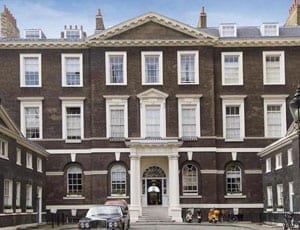
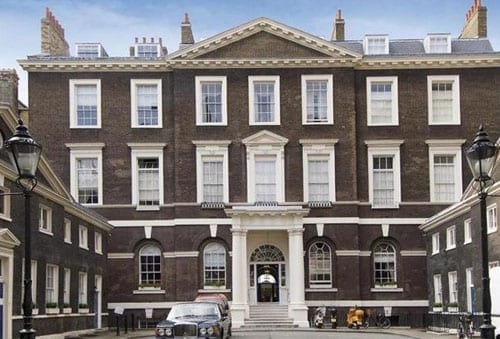
Albany, off Piccadilly in Mayfair, was most probably London’s first apartment block and it’s certainly the city’s most exclusive. It may be next to the Royal Academy and opposite Fortnum & Mason but surprisingly few have even heard of it.
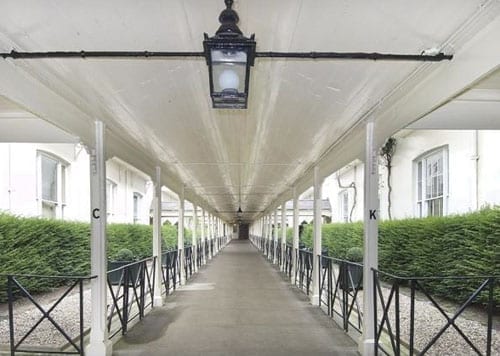
Considering its location, Albany, which some make the mistake of referring to as “The Albany,” is an amazingly quiet oasis of peace and tranquility but, equally, it is a place of intrigue and drama. Residents, or “proprietors,” as they prefer to be known, of the 69 “sets” are particular about the “the” part of the name as they’d rather their residence not be confused with a public house and they are even more protective of their privacy. A porters’ lodge guards the entrance to the building and it is staffed mostly by ex-servicemen, who, until the early 2000s, had to wear top hats and tailcoats. Those allowed to pass enter a rarefied world frequented by what the Irish novelist Marmion Savage (1803 – 1872) identified as “incurable oddities” and “superannuated fops” in The Bachelor of Albany.
The front courtyard and façade of Albany, Piccadilly, Mayfair, London, W1J 0ALThe rope-walk connecting the various sets of Albany has been traversed by some of the greatest names in history
Built by Sir William Chambers (1723 – 1796), who also designed Somerset House and the pagoda at Kew, between 1770 and 1774 for 1st Viscount Melbourne (1745 – 1828), Albany was originally known as Melbourne House and conceived as a three-storey mansion, seven bays wide with a pair of service wings flanking a front courtyard. From 1791 to 1802, the property was occupied by George III’s son, Prince Frederick, Duke of York and Albany (1763 – 1827), but after he left, the renowned architect Henry Holland (1745 – 1806) sub-divided the existing house and added two parallel sets of buildings running the length of the garden to create 69 “bachelor apartments” which he named “sets.”
The “roll call” of residents since could easily fill our very own pages thrice over. They number royalty, politicians, artists, playwrights, academics and philosophers and here is a brief selection:
– Anthony Armstong-Jones, later 1st Earl of Snowdon
– Sir Thomas Beecham
– Sir Isaiah Berlin
– Lord Byron
– George Canning
– Sir Kenneth Clark
– Baroness Pauline de Rothschild
– William Ewart Gladstone
– Sir Edward Heath
– David Hicks
– Aldous Huxley
– Sir Simon Jenkins
– Rupert Lycett Green
– Malcolm Muggeridge
– Sir Harold Nicholson
– J. B. Priestley
– Sir Terence Rattigan
– Roger Scruton
– Baroness Sharples
– W. Somerset Maugham
– Terence Stamp
– Sir Denis and Lady Thatcher
– Sir Herbert Beerbohm Tree
Each had to pass the vetting of a committee of trustees of this Grade I listed building. That committee forbids children under 14, pets, musical instruments and commercial activities and each approved resident has undoubtedly added to the history of this den dominated by a central walkway named the “rope-walk.” Incidentally, an example of a curious quirk at Albany is that no resident is allowed to speak to another on this walkway. If they do, a fine is incurred. Albany, indeed, is rather like a college in its systems of rules, regulations, order and hierarchy.
For several centuries, women were not even allowed to cross the threshold and one legendary tale tells of Lady Caroline Lamb (1785 – 1828), disguised as a page boy, stealing into Lord Byron’s (1788 – 1824) set in 1815 to leave a note: “Remember me, Byron.” He replied with a simple verse:
Remember thee, aye, doubt it not:
Thy husband too shall think of thee.
By neither shalt thou be forgot —
Thou false to him, thou fiend to me.
The strict and formal structure that controls Albany and ensured its maintenance has succeeded in the main because 34 of the 69 sets are owned by Peterhouse College, Cambridge. They and the other owners are highly particular in whom they lease to and on one occasion on hearing of an “unsuitable tenant,” the secretary of the trustees is reported to have shouted:
“He’s a foreigner. Don’t like him. Don’t trust him.”
Needless to say, that application didn’t progress and nor did one from a physiotherapist who planned to operate from the building. Bone bashing in Albany just wouldn’t do.
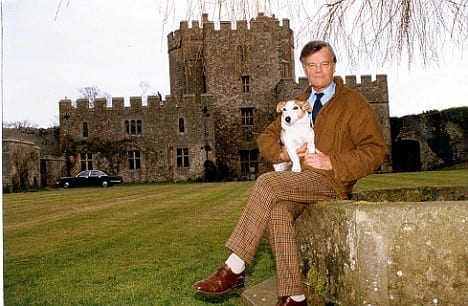
The Rt. Hon. Alan Clark MP (1928 – 1999) in the grounds of his main home, Saltwood Castle, near Hythe in Kent in 1993
A horsewhip, however, nearly crossed the threshold of set B5 in 1994, as it was here that the late Alan Clark MP (1928 – 1999) lived. The affable philanderer seduced the wife and both daughters of a certain South African named Judge Harkess and the wronged man stated he would “have horse-whipped Clark if he had known how comprehensively he had violated his honour.” B5, itself, was described as having the feel of “the straitened quarter of an Edwardian bachelor on his uppers” and the dotty, English attitude of the residents is best summed up by the reaction of Clark’s neighbour when he accidentally flooded their basement. When asked what he could do to make amends, their answer was quite simple: “Go and lie down in Piccadilly and wait for a double-decker bus.”
The dandy and journalist John Morgan (1959 – 2000) typified social change at Albany in the 20th century just as much as he himself redefined etiquette and manners at Debrett’s and The Times. Of “humble origins,” Morgan was brought up in a “modest” bungalow in St Madoes, Perth, Scotland but is credited with persuading William Hague to remove his baseball cap whilst Conservative leader and offering advice ranging from “how to eat a banana” to “how best to tell friends that the partner you would like to bring to their wedding will be of the same sex as you.”
Dandy and etiquette expert John Morgan (1959 – 2000)
For the bachelor and GQ style director, living in Albany was symbolic of his own personal social elevation but he did not disown his past. This modern day Beau Brummell was a man of social contradictions who cashed his cheques at Claridge’s but was a member of the National Union of Journalists. He was a Tory but still regularly attended chapel meetings as he had done in his youth. Here was a man of paradoxes who seemed unable to come to terms with the fact that he was a homosexual.
Morgan, an asthma sufferer, fell to his death from a fourth floor window on 9th July 2000. He was found in just a white shirt in a basement below a window whose sill was strangely undisturbed. The coroner left an open verdict with a suspicion of suicide and it was widely reported that police found 60 made-to-measure Savile row suits, 300 monogrammed shirts and 90 pairs of shoes in the etiquette expert’s small set. Mystery shrouds the story of his tragic demise to this day but Johnny Morgan will forever be remembered as an arbiter of both good taste and behaviour.
Whilst Morgan represented continuation of the trend of bachelors living in Albany, change also came in the 20th century when the building’s committee removed the restriction that allowed only bachelors to be resident. With that females were allowed in and amongst them Fleur Fenton Cowles (1908 – 2009) was one of the most fascinating.
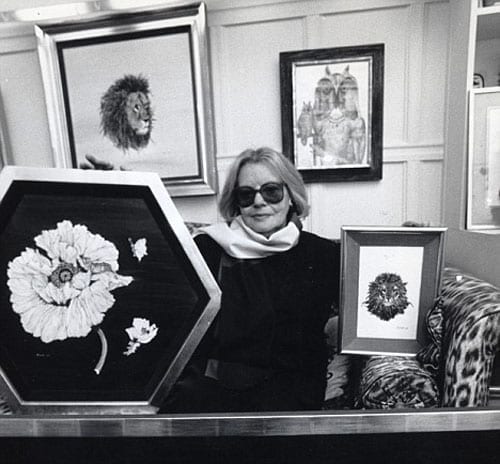
Fleur Fenton Cowles (1908 – 2009) in her set at Albany with some of her paintings and one by Salvador Dali
This writer and artist occupied five sets knocked into one with her fourth husband, timber merchant Tom Montague Meyer, and according to the Daily Mail’s Geoffrey Levy, hosted “elite soirees of the powerful and famous.” Levy recounts them at length but here is a flavour:
“On a Wednesday evening, a typical dinner party… would include Foreign Secretary Selwyn Lloyd, Labour leader Hugh Gaitskell, entertainer Danny Kaye and film star Douglas Fairbanks Jr. The Queen Mother regularly came to tea and was once joined by Pavarotti who sang Happy Birthday for the royal guest. ‘I don’t want her to die,’ said Fleur. ‘I couldn’t bear to think she doesn’t live just down the street.’ ”
Fenton Cowles, founder of the ill-fated Flair magazine and a “woman who knew everyone,” loved Albany and an exact replica of her “windowless, milk-yellow” study there has even been recreated at the University of Texas.
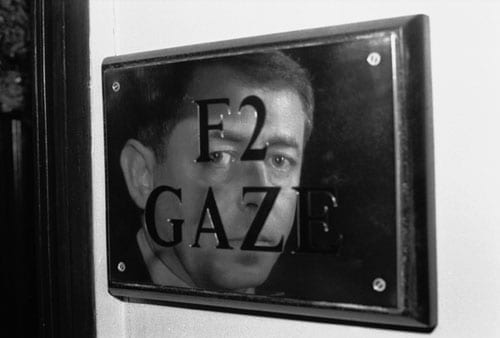
Another known for hosting extravagant bashes in Albany was my late friend, the Russian icon dealer John Gaze (1947 – 2011). Gaze had, as a boy, asked his father about the building when he passed it as a child and immediately declared he would live there one day. He took F2, the former set of Edward Heath that overlooked Savile Row to the rear, in the mid 1990s as he craved the safety that the building offered after having been kidnapped at gunpoint by an Oxford graduate conman named Sacheverell de Houghton in April 1991 from his then home in Fournier Street, E1. He made the most of his tenancy.
Russian icon dealer John Gaze (1947 – 2011) reflected in the brass plaque outside his Albany set, F2. It was formerly occupied by Sir Edward Heath.
Gaze’s parties included a fundraiser for people with AIDS hosted by a drag queen. This sparked fury with certain other residents and coverage in the Daily Telegraph and another incident there involved him encountering Alan Clark on the ropewalk carrying a portrait of Lenin. “Where the fuck are you taking that?” Clark supposedly bellowed but was “reassured” when he was told it was “destined for a less salubrious address in Whitechapel.” John Gaze remained at Albany for several years but, like a number of others I know, was forced out by ever rising rents and moved first to Chelsea and then Ennismore Gardens, Knightsbridge. He always remembered his time at Albany fondly and as a bon vivant, he truly belonged there.
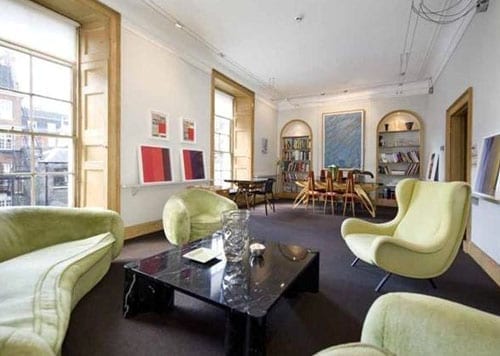
The main reception room in a £1,400 a week set currently available in AlbanyAn attic room in the set that could be used as a second reception room or second bedroomThe kitchen is lacking in character but offers ample space for informal dining
Contrary to what you’d expect, living in Albany is not quite as expensive as one might think. A 2-bedroomed 1,970 square foot set is currently available through Knight Frank for £1,400 a week: a figure that seems quite reasonable given the location, history and size of this property. Available on a minimum 8-year rental term, it includes a formal reception room, a dining kitchen, 2 bedrooms and 2 bathrooms.
This £300 per week set, D2, consists of just one roomThe communal bathroom D2 shares with other sets is basic but clean
For those looking for something cheaper, Savills offer D2 Albany at £300 per week. This set consists of a 221 square foot third floor attic room with access to a communal bathroom and the agents suggest that it: “would make an ideal reading or writing room or an occasional bedroom for a pied-a-terre.” It’s effectively a posh form of tenement but what a way to impress your peers and subordinates.
Damon and Sandra de László in their “duplex” in Albany
Those renting either of these sets would find the likes of the industrialist Damon de László, a descendant of the Hungarian painter Philip Alexius de László (1869 – 1937), as their neighbour. The couple occupy Lord Byron’s former set, A2, and have, on occasions, opened it for a charity dinner with Matthew Parris at £1,000 a ticket as well and for members of The Portrait Institute to view their collection of de László’s works.
Professor Philip C. Bobbitt in his grand freehold set
Another present day resident is a man Henry Kissinger calls “the outstanding philosopher of our times,” Professor Philip C. Bobbitt. This Texan lawyer is a nephew of Lyndon B. Johnson and the author of Terror and Consent, which Tony Blair describes as “required reading for political leaders.” Bobbitt owns an impressive flying freehold set that is described as having a masculine style of décor and a “kitchen he has designed to look like a bar.” In an interview for TheIndependent he states that he finds Albany: “a propitious place to work.”
Though governments and bankers come and go, behind this quintessentially English façade, order and disorder have always been maintained. The wildcards of this hidden haven have a knack for living by the doctrine “to live at Albany is to live in history” and indeed they make the most of that. Those who are lucky enough to be let in, do, indeed, truly find themselves in the “Paradise of Piccadilly.”
The latest James Bond film Skyfall is the talk of the town and it’s received many a rave review. The fictional James Bond allegedly lived in Royal Avenue, off the Kings Road in SW3, but if he were looking for a house today, we think 9 Hillgate Street would be the perfect pad.
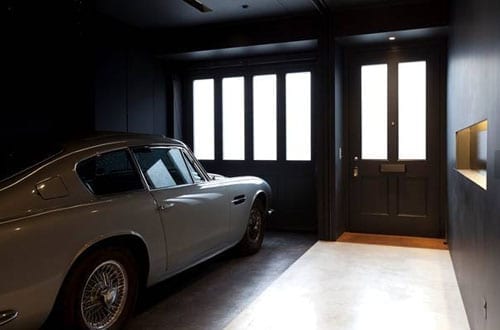
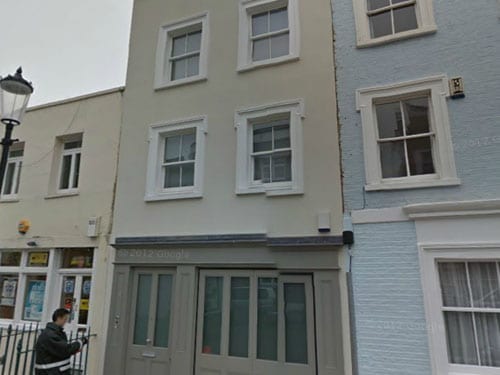
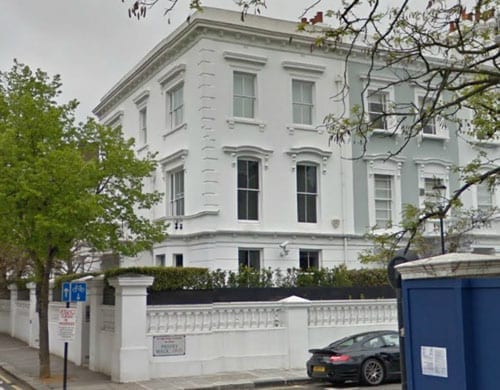
The entrance and garage at 9 Hillgate Street, London, W8 7SP. Sadly the Aston Martin isn’t included in the £7,950,000 asking price.Daniel Craig in a promotional shot for “Skyfall”The unasuming exterior of 9 Hillgate Street gives little away about what lies behind it
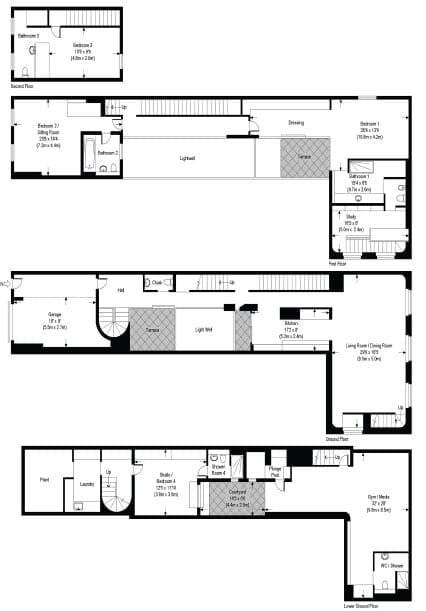
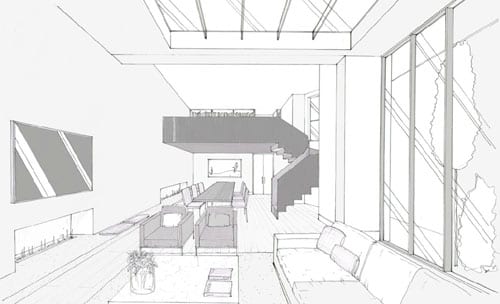
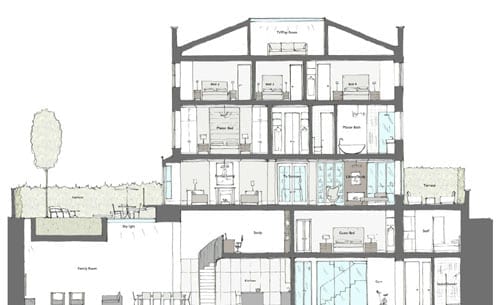
Utterly unassuming from the street, what lies behind the exterior of this four-storey building is deceptively a new build house constructed in 2010. Designed by Seth Stein Architects, the property is only 18ft wide but an amazing 85ft in length.
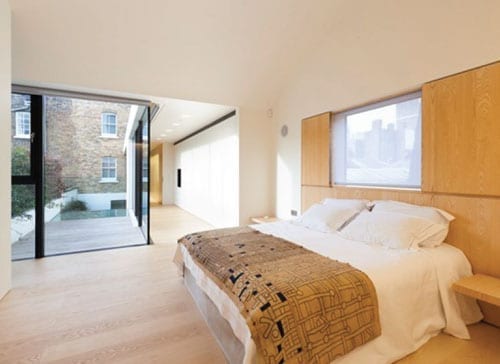
An internal lightwell and four terraces are amongst the features of the houseA reception room in the houseA bright walkway allows light to flood into the buildingThe master bedroom suite includes a bedroom, study, dressing area and bathroomSeth Stein Architects have developed a vast residence out of the tiniest of spaces
Bond would greatly appreciate the lower ground media room and gym with plunge pool and with a staff suite, there’s room to house someone to mix his martinis. A vast 29ft by 16ft living room is open plan to the kitchen and perfect for entertaining but it is most certainly the master bedroom suite that would make the perfect spot for his extra curricular activities. Four terraces arranged around a courtyard provide ample outdoor space and with all manner of techonological gadgets, 9 Hillgate Street most certainly would make an ideal bachelor pad.
What truly would suit Bond perfectly, though, in this 4,286 square foot £7,950,000 house is the garage. Cleverly disguised and decorated as a normal room, there’s even an Aston sat waiting parked there. Daniel Craig should put in a bid.
The flexible £12.75 million former home of Tom Ford
Number 26 Gilston Road in London’s SW10 is a property that has been on and off the market repeatedly in recent years. On each and every occasion it has been promoted as the “former home of the fashion icon Tom Ford” and though he hasn’t lived there in years, it is still just as he left it.
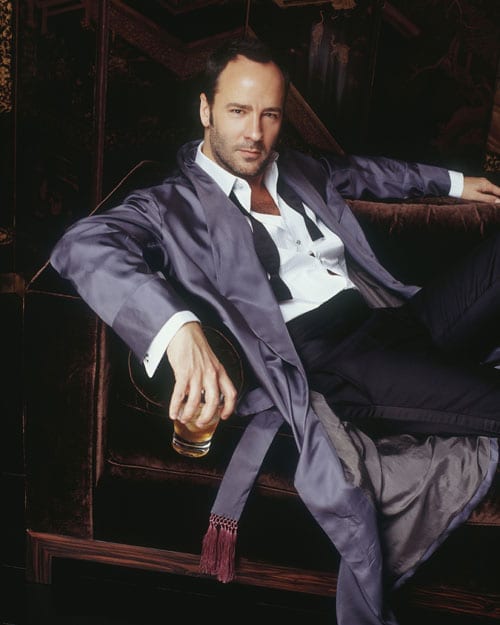
Designer and film producer Tom Ford“The former home of design icon Tom Ford”: 26 Gilston Road, London, SW10 9SS
Situated at the end of a terrace on the corner of Priory Walk, one can see why the house appealed to the Texan born designer credited with turning around the fortunes of Gucci and Yves Saint Laurent. Hidden behind a high wall and hedging, 26 Gilston Road is private yet minutes from the restaurants of Old Brompton and Fulham Roads.
This 4-storey townhouse was sold in June 1997 for £2,250,000 and again marketed in 2009 for £8,500,000 through Aylesford. In the time since, it has been available to let at prices ranging from £5,500 to £7,500 per week, but is now back for sale at the extraordinary figure of £12,750,00 through Russell Simpson.
One of the reception rooms, just as Tom Ford left itAnother of the Tom Ford styled roomsA Tom Ford designed bedroomThe garden of the property is extremely private
What explains such a rise during a period of economic downturn? Well, it’s because developers Equilibrium have gained permission to “de-Ford” the house. As is now the trend in London, they have planned a total redesign. Their illustrations incorporate a new sub-basement and as a result the gross internal area will increase from just over 3,700 square feet to just under 5,300 square feet.
Equilibrium’s plans include a vast living-dining-kitchen with a study in the void over. The space is lit by a skylight.A cutaway shows the extent of the redevelopment plannedA view of 26 Gilston Road from the corner of Priory Walk
Whilst the layout Tom Ford, himself a graduate in architecture from Parsons The New School of Design, created at 26 Gilston Road was ideal for A Single Man; the new floor plan with 4 bedrooms is much better suited to a family. Ford and his partner, Richard Buckley, announced the birth of their son, Alexander, in September. Perhaps they should put in a bid.
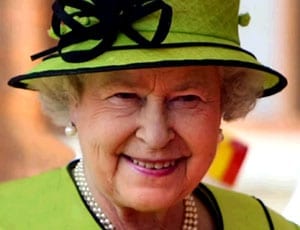
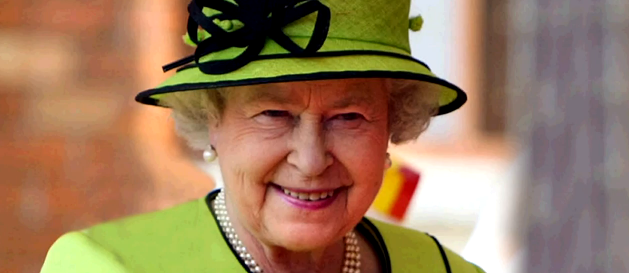
This week we must thank Dan Large for having alerted us to an amazing YouTube video showing Her Majesty The Queen’s life in 3 minutes and 24 seconds.
Elizabeth II
Created by “an old retired guy who likes to play with computers” named “HerBunk” and using the technological wizardy of FantaMorph, the video has attracted nearly 6,000 likes and 300 dislikes. We look forward to hearing what readers of The Steeple Times make of it.
Watch the video at: http://www.youtube.com/watch?v=E8nJhG1xE5o&feature=share
A £26 million residence with connections to rock, royalty and rectors
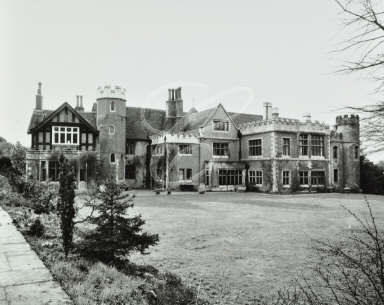
Built in the early 1500s, The Old Rectory is Wimbledon’s oldest house. Standing in grounds of 2.5 acres, this 16,200 square foot property was once described by a biographer of Sir Henry Cecil as being “not luxurious, but adequate” but now once again it finds itself in an entirely different league.
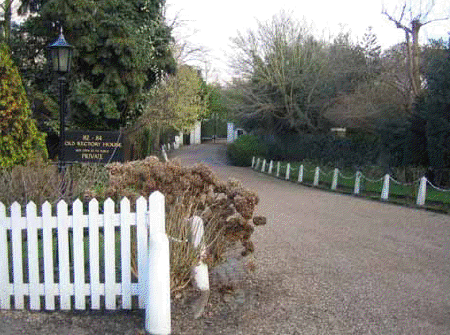
An image of The Old Rectory, 82 Church Road, Wimbledon, London, SW19 5AA in 1978. Present day imagery has been removed at the request of agents acting for the current owners.
Priced at £26,000,000, it is almost certainly one of the most expensive homes to ever come to the market in Wimbledon and whoever moves there next will undoubtedly be either an oligarch, an A-list personality or a top achieving business person.
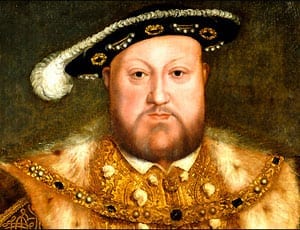
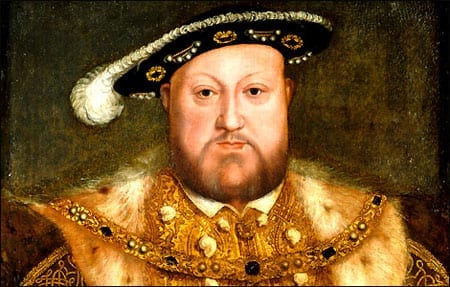
The purchaser will follow in the footsteps of a fascinating array of historically important residents, the first of whom was Henry VIII (1491 – 1547). The King took up residence in 1547 in the months prior to his death and is said, as he was so bloated, to have been unable to climb the stairs to his sleeping chambers. His bed was relocated to the great hall of the house and here he slept next to the fire. Historical research recounts that, with a brewhouse, beer and wine cellars, a coal cellar, meat room, buttery and two dairy rooms, this was a “house fit for a king.”
Henry VIII (1491 – 1547)Catherine Parr (1512 – 1548)
Henry VIII gave The Old Rectory, which was originally called The Parsonage House, to his sixth and final wife, Catherine Parr (1512 – 1548). Preferring a residence in Chelsea, Parr left and the Dean and Chapter of Worcester Cathedral took possession. A lease was sold to Sir William Cecil (1520 – 1598), later Lord Burgley, and the manor then passed to his son Thomas Cecil (1542 – 1623), the 1st Earl of Exeter.
In 1639, Charles I (1600 – 1649) bought the entire manor and gave it to Queen Henrietta Maria (1609 – 1669) but with the era of Comwell, The Old Rectory found itself occupied by General John Lambert (1619 – 1684). Shortly after, when a grander house was built next door, the property became first a laundry house and then servant accommodation and gradually fell into decline.
The Old Rectory passed next to Sir Theodore Janssen (1658 – 1748) in 1720. This French-born English financier, who was said to be worth the staggering sum of £250,000 at the time of his purchase of the house, was a founder member of the Bank of English but later disgraced for his part in the South Sea Bubble. He was expelled from the House of Commons and with his ruination, The Old Rectory saw yet another chapter of abandonment.
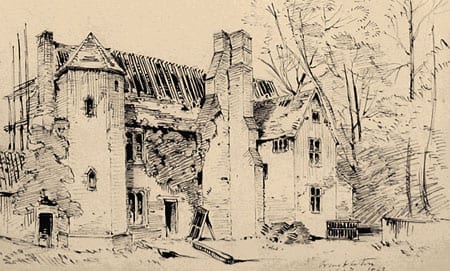
The garden front of The Old Rectory by Charles Henry Money Mileham (1837 – 1917)
By 1802, the house was described as an “uninhabited” ruin. A speculator credited with developing “modern Wimbledon” named John Augustus Beaumont bought it and restored and extended it but when it was sold to a Samuel Wilson in 1882 for £6,000, an era of truly comprehensive upgrades was to begin. Wilson added a pebble-dashed two-storey drawing room wing, carved oak doors and installed English, Flemish and Italian chimneypieces.
The next owner was a marine engineer named Matthias Jacobs who had been responsible for the construction of tunnels in Paris and New York. After having purchased The Old Rectory in 1909, he commissioned his brother to add a new single storey billiards room, a service wing and a study extension to mask the medieval chapel of the house. Jacobs sold up in 1923 to a Thomas Lethaby, who fitted oak paneling from Chantry House in Newark and a plaster ceiling based on the one at Knole House, Kent.
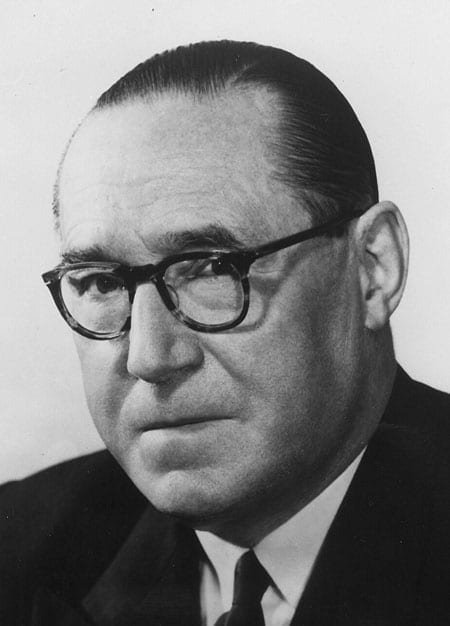
Lord Brock FRCS, FRCP (1903 – 1980)
In 1953, the eminent London surgeon and cardiologist, Lord Brock FRCS, FRCP (1903 – 1980), took possession of The Old Rectory after having paid £13,750 for it. Brock is credited as on of the pioneers of modern open heart surgery and also founded the Lord Brock Memorial Trust that to this day funds the museum he founded, The Old Operating Theatre Museum and Herb Garret in Southwark, SE1.
Following the death of his first wife Germaine Louise Ladavèze, Brock sold to an Iraqi entrepreneur and philanthropist named Basil Faidhi in 1978. Faidhi had fled Iraq for Britain and though he spent vast sums restoring the house with assistance from English Heritage, he also created a basement discotheque for his daughter, Nina, and a bar. Aside from bringing the house into the “yuppie era,” Faidhi also commissioned a historian named Richard Milward MA to write a history of the building in 1992 entitled: The Rectory – Wimbledon’s Oldest House.
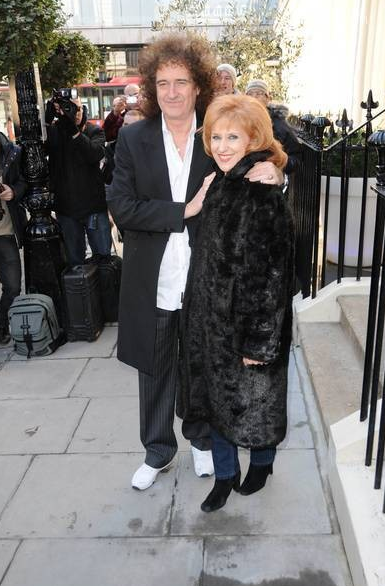
The Queen lead vocalist and anti-badger cull campaigner Brian May CBE purchased The Old Rectory in 1994 for £4,000,000 with the intention of living there with the Eastenders actress Anita Dobson.
Brian May CBE with his second wife Anita Dobson
Dobson, who didn’t marry May until 2008, had other ideas and refused to move in. It was suggested that she preferred a smaller house the pair occupied in Kensington and, at the time, a friend commented:
“[May] begged her to move into the new house so they can make a fresh start. Nobody can believe that Anita doesn’t want to be the lady of this fabulous house. But Brian says he can’t get through to her.”
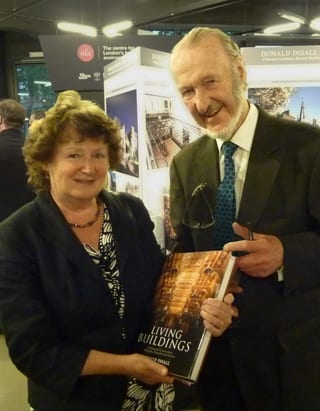
Sir Donald Insall CBE
As a result, May never properly moved into The Old Rectory and eventually decided to sell. In 2006, it achieved a record price of £16,000,000 and in the ensuing years, an Italian architect-owner named Antonella Carminati and her husband have lavished time and money on further restorations with the help of Sir Donald Insall CBE’s Insall Associates firm of architects.
The driveway that leads to The Old Rectory from Church Road gives plenty of privacy
New fittings have been installed throughout and substantial extensions to the house have included a new kitchen and breakfast room with garaging beneath. The couple have demolished an early 20th century porch and an “unsightly” oak conservatory, remodeled the billiards room as a drawing room and removed a “bilious” blue swimming pool from the east lawn.
Now featuring 12,882 square foot of accommodation in the main house and 3,320 square foot of additional accommodation, The Old Rectory has been planned to include 8 reception rooms; a vast kitchen with La Cornue appliances and an adjoining breakfast room; master bedroom suite with two dressing rooms, his and her bathrooms and a sitting room and 7 further bedrooms.
Outside, the gardens feature an original medieval fig tree trail, shaded paths, lawns and a large pond as well as garaging for six cars. Planning permission for an indoor swimming pool complex has also been granted and ample staff accommodation is provided above one of the garages and in the gate lodge.
Given the now limited financial resources of the traditional religious houses of Britain, will it be rock, royalty or new money that next takes possession of The Old Rectory? The historians of Wimbledon will undoubtedly be watching.
The Old Rectory, 82 Church Road, Wimbledon, London, SW19 5AA is for sale through the Wimbledon office of Knight Frank. For more information call: +44 (0) 20 8946 0026.