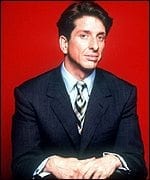
 This brilliantly named American started out in banking at Goldman Sachs and Morgan Stanley, but gave it up to become an “Iron Chef”. Having worked with Gordon Ramsay and at The French Laundry and The Fat Duck, she’s now executive of the Playboy Club London. Her Twitter handle states: “Everything is better with booze or bacon”. Bunnies beware.
Tag: banker
-

Judy Joo
-
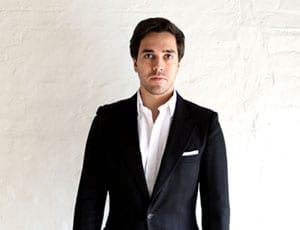
Diego Bivero-Volpe: “What’s on your mantelpiece?”
The Steeple Times asks nightlife entrepreneur Diego Bivero-Volpe: “What’s on your mantelpiece?”
The Steeple Times shares “wit and wisdom”. What’s your guiding force?
Be kind. Everyone you meet is fighting a tough battle.
“Don’t get even, get medieval” is, in our humble opinion, a great motto. What’s yours?
Get there on time.
Kerry Katona was considered unacceptable in 2007. Who or what is unacceptable in 2013?
Racism and injustice. I travel quite a bit and I am always taken aback by how prevalent both are everywhere in the world.
Tony Blair misses being Prime Minister. What do you miss most in your life?
My family. They are all spread out, far away in different corners of the globe. It is difficult to see them often.
What might you swap all your wealth for?
The wellbeing of my loved ones.
Donald Trump was once a case of: “If you owe the bank a thousand, they close you down; but if you owe the bank a billion, you own the bank”. What’s your view on the banking crisis?
I love that quote but sadly it is indicative of how failed the system is. I used to work in the equity derivatives arm of RBS’ investment bank and I can tell you first-hand it is a cowboy’s game, with a lot of cavalier moves being made at the expense of the general public.
What phrase or word do you most loathe?
Racist slurs.
In the UK, some people consider charity to “begin at home”. What’s your view and what causes do you personally support?
This is probably true but I think all humans have a primal desire and need to help each other. I personally support Nordoff Robbins and Kids Company, both charities that help and provide support and protection for children.
The judge in Law Abiding Citizen states: “I can pretty much do whatever I want” before being blown up whilst answering her mobile phone. What’s your view on the appropriate use of such devices?
Unfortunately I am incredibly addicted to my Blackberry. Thinking about it, I don’t think it one has ever been more than 5 feet away from my in almost 10 years. That is disturbing.
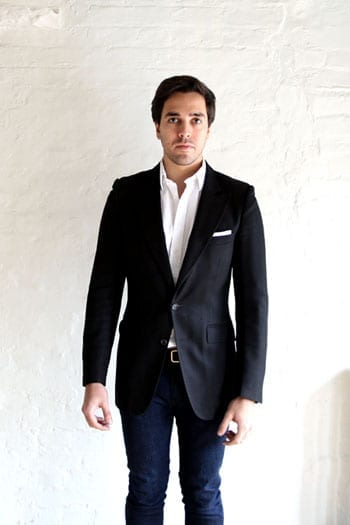
Diego Bivero-Volpe If you could fill a carriage on The Orient Express, who would be your fellow passengers?
So many… A random list off the top of my head: All of Led Zeppelin, Marcus Aurelius, Michelangelo, Rodin, Picasso, Piranesi, Buddy Holly, Hobbs, John Adams, Thomas Jefferson and maybe Daniel Tosh because he’s hysterical. It would certainly make for quite the journey all around.
If you were unfortunate enough to end up on death row, what would be your last meal and where would you eat it?
It’s hard to say, I am a lover of food, but I recently have developed a new obsession with steak, so maybe that and a spinach, avocado and mango salad. In any case, let’s just hope this situation never happens.
What time is it acceptable to consume the first drink of the day?
The conventional wisdom would dictate after 5pm. If you are on holiday somewhere sunny, a glass of wine or an Aperol Spritz (if in Italy) with lunch is always acceptable.
A Negroni, a martini or a cup of tea?
Vodka martini, dry, 3 olives.
Whose parties do you enjoy the most and why?
It’s a toss-up between very close friends and big luxurious bashes thrown by film studios and such. Both have their perks and are fun in different ways.
Who is the most positive person you know?
I am fortunate enough to have quite a few very positive people in my life.
What’s your most guilty pleasure?
Lazing about in Tuscany for 2 weeks every summer, doing nothing but eating pasta and tanning.
If a tattoo were to sum you up, what would it be of?
I strongly dislike tattoos.
If you were a car, what marque would you be?
A classic Ferrari.
Cilla Black presented Surprise, Surprise. Tell us the most surprising thing about you.
I have a masters in journalism and finance.
What’s currently sitting on your mantelpiece?
Lots of pictures of my family, a handmade sculpture made by Amazonian natives and some invites for events this week.
Diego Bivero-Volpe is a partner in Conduit Brands. For more information, go to: http://www.conduitbrands.com
Follow him on Twitter at: http://www.twitter.com/DiegoB_V -
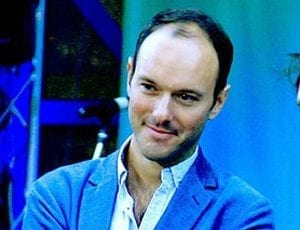
Alex Preston: “What’s on your mantelpiece?”
The Steeple Times asks author Alex Preston: “What’s on your mantelpiece?”
The Steeple Times shares “wit and wisdom”. What’s your guiding force?
Books, cooks and good looks.
“Don’t get even, get medieval” is, in our humble opinion, a great motto. What’s yours?
“Do no harm; or if you do, make sure it’s beautiful harm”.
-

Justin Timberlake
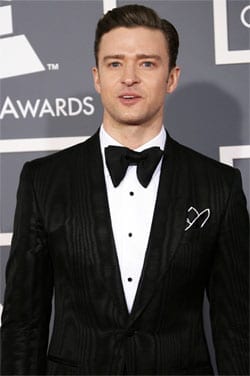 This child star has morphed via a stint on the Disney Channel and in boy band ‘N Sync into an internationally known singer-songwriter, actor, record producer, dancer and businessman. (more…)
 -

Till death do us part
The sale of a $100 million Californian estate with a catch
If you were to spend $100,000,000 on a house, you’d expect something impressive. I imagine you’d want acreage, vast amounts of space and something luxurious. Stunning views and a prime location would be a must but at the bottom of your list, no doubt, would be something that someone purchasing a place for even a $1 would expect – that being that you’d be able to actually move in.
-
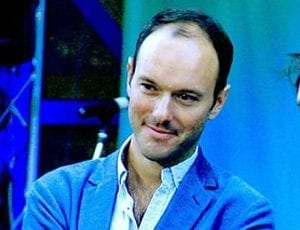
Alex Preston
 This talented Oxford educated author is a former credit derivatives trader who is now regular on BBC2’s The Review Show. This Bleeding City, his first novel, was based on his own working experiences and analyses how the financial crash could be seen as “our subconscious revenge, our way of bringing down the system that had ensnared us”. His second, The Revelations, was described by A. N. Wilson as a “strange and compulsively readable tale of City slickers seduced by a promise of spiritual awakening”. He predicts a bleak future for financiers in suggesting that we are still in the midst of “a crisis that will take more than a few bankers paying back their bonuses to solve”.
 -
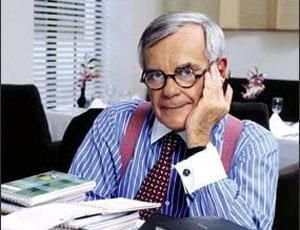
Dominick Dunne (1925 – 2009)
 This “Boswell of the bluebloods” was a writer whose tips came from unnamed sources and “waiter[s] serving [him] risotto at dinner parties”. (more…)
 -
Breakfast hawks
A review of Hawksmoor Guildhall, EC2V
In the first of a series, we publish a number of the most popular articles from the blog that conceived The Steeple Times. Here, in a February 2012 piece, Matthew Steeples reviews a boozy breakfast at Hawksmoor Guildhall with Anthony Brown. After seeing an image of their breakfast on Facebook this morning, we were reminded just how good it truly is, so if you haven’t tried it already – you really should.
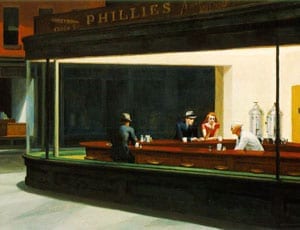
On arrival at the Hawksmoor Guildhall, in the heart of the City of London, I immediately found myself thinking about Edward Hopper’s iconic painting Nighthawks.

Nighthawks (Art Institute of Chicago, 1942) by Edward Hopper (1882 – 1967) 
The main dining area at Hawksmoor Guildhall
Here, in this vast space, which can seat 160 in the restaurant and 75 in the bar, was a venue that very much combines the feel of an old banking hall with something akin to a friendlier version of the American café diner in Hopper’s Nighthawks painting. Though, to my mind, the City is indeed a lonely place, the welcoming staff and the somewhat noisy suited brokers created an atmosphere that truly reflected the stature of this fine establishment.
My companion and I wrongly assumed that this relatively new restaurant had simply taken the space of something that had been there before. In fact, this was just a clever trick. The owners, Will Beckett and Huw Gott, collaborated with the Macaulay Sinclair design studio, who were also responsible for their Seven Dials site, to create a style that combines solid mahogany panels made out of Natural History Museum specimen cabinets, a bar formed out of the counter of a Dutch bank and teak flooring taken from the University of the Arts Building near Bond Street. The result is truly impressive.
We opted to share the Hawksmoor breakfast for two priced at £35. This superb offering was served in a large pan with a smoked bacon chop, the most phenomenal sausages made from pork, beef and mutton, black pudding, short-rib bubble and squeak, trotter baked beans, fried eggs, grilled mushrooms, roast tomatoes and HP gravy. Served with unlimited toast, not that it was actually required, this bargain of a meal was a breakfast fit for a king. After this, you really won’t need to eat again for several days.
Also on offer for breakfast, on a menu designed by the Hawksmoor’s executive chef, Richard Turner, are wild mushrooms on toast with poached eggs Hollandaise (£10), a 200g fillet steak with fried eggs and hash browns (£25) and a twist on McDonalds in the form of the sausage and egg HkMufin (£8.50). Scotch pancakes come available with streaky bacon and maple syrup (£6) or with roasted plums (£5).
Urged to try the breakfast cocktails, we sampled the Hawksmoor’s Marmalade Cocktail (£8) of gin, lemon juice, homemade orange bitters and a dash of Campari and another named Shaky Pete’s Ginger Brew (£8.50) that consisted of gin, homemade ginger syrup and lemon juice topped with London Pride. The first was sharp and a perfect awakener and the second, described on the menu as “a turbo –shandy for the discerning drinker,” surprisingly worked utterly brilliant in terms of the ingredients it combined.
Open for breakfast from 7am and serving until 10.30pm at night, this is a restaurant of which the Metro’s Marina O’Loughlin rightly comments: “As Homer Simspon might say, mmmnmnhrhmm…”
Hawksmoor Guildhall, 10 Basinghall Street, London, EC2V 5BQ. Telephone: +44 (0) 20 7397 8120. Website: http://thehawksmoor.com/locations/guildhall
Follow Hawksmoor on Twitter at: http://www.twitter.com/HawksmoorLondon
-
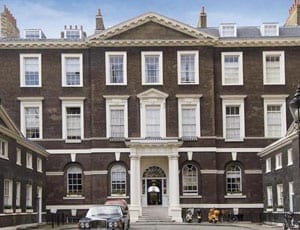
The badgers of Albany
Matthew Steeples delves into the history of Albany, Piccadilly and discovers an affordable way of living there
Albany, off Piccadilly in Mayfair, was most probably London’s first apartment block and it’s certainly the city’s most exclusive. It may be next to the Royal Academy and opposite Fortnum & Mason but surprisingly few have even heard of it.
Considering its location, Albany, which some make the mistake of referring to as “The Albany,” is an amazingly quiet oasis of peace and tranquility but, equally, it is a place of intrigue and drama. Residents, or “proprietors,” as they prefer to be known, of the 69 “sets” are particular about the “the” part of the name as they’d rather their residence not be confused with a public house and they are even more protective of their privacy. A porters’ lodge guards the entrance to the building and it is staffed mostly by ex-servicemen, who, until the early 2000s, had to wear top hats and tailcoats. Those allowed to pass enter a rarefied world frequented by what the Irish novelist Marmion Savage (1803 – 1872) identified as “incurable oddities” and “superannuated fops” in The Bachelor of Albany.
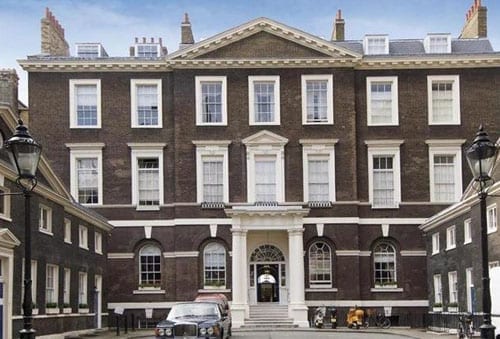
The front courtyard and façade of Albany, Piccadilly, Mayfair, London, W1J 0AL 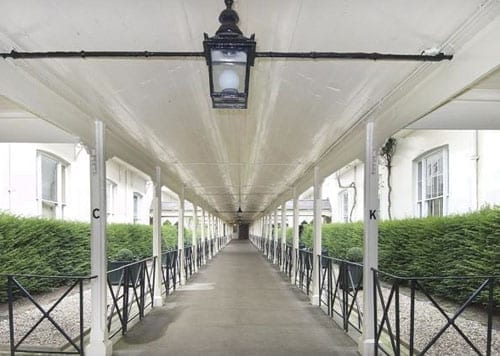
The rope-walk connecting the various sets of Albany has been traversed by some of the greatest names in history Built by Sir William Chambers (1723 – 1796), who also designed Somerset House and the pagoda at Kew, between 1770 and 1774 for 1st Viscount Melbourne (1745 – 1828), Albany was originally known as Melbourne House and conceived as a three-storey mansion, seven bays wide with a pair of service wings flanking a front courtyard. From 1791 to 1802, the property was occupied by George III’s son, Prince Frederick, Duke of York and Albany (1763 – 1827), but after he left, the renowned architect Henry Holland (1745 – 1806) sub-divided the existing house and added two parallel sets of buildings running the length of the garden to create 69 “bachelor apartments” which he named “sets.”
The “roll call” of residents since could easily fill our very own pages thrice over. They number royalty, politicians, artists, playwrights, academics and philosophers and here is a brief selection:
– Anthony Armstong-Jones, later 1st Earl of Snowdon
– Sir Thomas Beecham
– Sir Isaiah Berlin
– Lord Byron
– George Canning
– Sir Kenneth Clark
– Baroness Pauline de Rothschild
– William Ewart Gladstone
– Sir Edward Heath
– David Hicks
– Aldous Huxley
– Sir Simon Jenkins
– Rupert Lycett Green
– Malcolm Muggeridge
– Sir Harold Nicholson
– J. B. Priestley
– Sir Terence Rattigan
– Roger Scruton
– Baroness Sharples
– W. Somerset Maugham
– Terence Stamp
– Sir Denis and Lady Thatcher
– Sir Herbert Beerbohm Tree
Each had to pass the vetting of a committee of trustees of this Grade I listed building. That committee forbids children under 14, pets, musical instruments and commercial activities and each approved resident has undoubtedly added to the history of this den dominated by a central walkway named the “rope-walk.” Incidentally, an example of a curious quirk at Albany is that no resident is allowed to speak to another on this walkway. If they do, a fine is incurred. Albany, indeed, is rather like a college in its systems of rules, regulations, order and hierarchy.
For several centuries, women were not even allowed to cross the threshold and one legendary tale tells of Lady Caroline Lamb (1785 – 1828), disguised as a page boy, stealing into Lord Byron’s (1788 – 1824) set in 1815 to leave a note: “Remember me, Byron.” He replied with a simple verse:
Remember thee, aye, doubt it not:
Thy husband too shall think of thee.
By neither shalt thou be forgot —
Thou false to him, thou fiend to me.
The strict and formal structure that controls Albany and ensured its maintenance has succeeded in the main because 34 of the 69 sets are owned by Peterhouse College, Cambridge. They and the other owners are highly particular in whom they lease to and on one occasion on hearing of an “unsuitable tenant,” the secretary of the trustees is reported to have shouted:
“He’s a foreigner. Don’t like him. Don’t trust him.”
Needless to say, that application didn’t progress and nor did one from a physiotherapist who planned to operate from the building. Bone bashing in Albany just wouldn’t do.
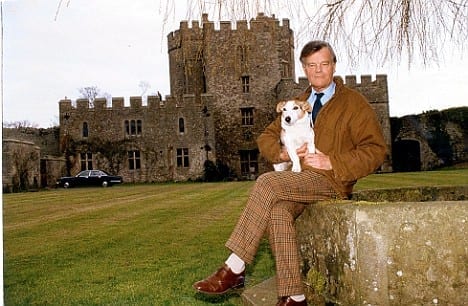
The Rt. Hon. Alan Clark MP (1928 – 1999) in the grounds of his main home, Saltwood Castle, near Hythe in Kent in 1993 A horsewhip, however, nearly crossed the threshold of set B5 in 1994, as it was here that the late Alan Clark MP (1928 – 1999) lived. The affable philanderer seduced the wife and both daughters of a certain South African named Judge Harkess and the wronged man stated he would “have horse-whipped Clark if he had known how comprehensively he had violated his honour.” B5, itself, was described as having the feel of “the straitened quarter of an Edwardian bachelor on his uppers” and the dotty, English attitude of the residents is best summed up by the reaction of Clark’s neighbour when he accidentally flooded their basement. When asked what he could do to make amends, their answer was quite simple: “Go and lie down in Piccadilly and wait for a double-decker bus.”
The dandy and journalist John Morgan (1959 – 2000) typified social change at Albany in the 20th century just as much as he himself redefined etiquette and manners at Debrett’s and The Times. Of “humble origins,” Morgan was brought up in a “modest” bungalow in St Madoes, Perth, Scotland but is credited with persuading William Hague to remove his baseball cap whilst Conservative leader and offering advice ranging from “how to eat a banana” to “how best to tell friends that the partner you would like to bring to their wedding will be of the same sex as you.”
Dandy and etiquette expert John Morgan (1959 – 2000) For the bachelor and GQ style director, living in Albany was symbolic of his own personal social elevation but he did not disown his past. This modern day Beau Brummell was a man of social contradictions who cashed his cheques at Claridge’s but was a member of the National Union of Journalists. He was a Tory but still regularly attended chapel meetings as he had done in his youth. Here was a man of paradoxes who seemed unable to come to terms with the fact that he was a homosexual.
Morgan, an asthma sufferer, fell to his death from a fourth floor window on 9th July 2000. He was found in just a white shirt in a basement below a window whose sill was strangely undisturbed. The coroner left an open verdict with a suspicion of suicide and it was widely reported that police found 60 made-to-measure Savile row suits, 300 monogrammed shirts and 90 pairs of shoes in the etiquette expert’s small set. Mystery shrouds the story of his tragic demise to this day but Johnny Morgan will forever be remembered as an arbiter of both good taste and behaviour.
Whilst Morgan represented continuation of the trend of bachelors living in Albany, change also came in the 20th century when the building’s committee removed the restriction that allowed only bachelors to be resident. With that females were allowed in and amongst them Fleur Fenton Cowles (1908 – 2009) was one of the most fascinating.
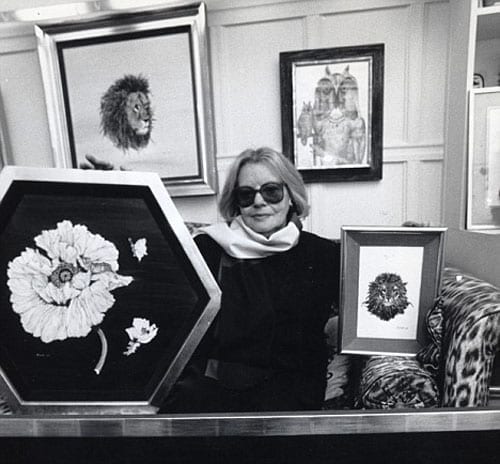
Fleur Fenton Cowles (1908 – 2009) in her set at Albany with some of her paintings and one by Salvador Dali This writer and artist occupied five sets knocked into one with her fourth husband, timber merchant Tom Montague Meyer, and according to the Daily Mail’s Geoffrey Levy, hosted “elite soirees of the powerful and famous.” Levy recounts them at length but here is a flavour:
“On a Wednesday evening, a typical dinner party… would include Foreign Secretary Selwyn Lloyd, Labour leader Hugh Gaitskell, entertainer Danny Kaye and film star Douglas Fairbanks Jr. The Queen Mother regularly came to tea and was once joined by Pavarotti who sang Happy Birthday for the royal guest. ‘I don’t want her to die,’ said Fleur. ‘I couldn’t bear to think she doesn’t live just down the street.’ ”
Fenton Cowles, founder of the ill-fated Flair magazine and a “woman who knew everyone,” loved Albany and an exact replica of her “windowless, milk-yellow” study there has even been recreated at the University of Texas.
Another known for hosting extravagant bashes in Albany was my late friend, the Russian icon dealer John Gaze (1947 – 2011). Gaze had, as a boy, asked his father about the building when he passed it as a child and immediately declared he would live there one day. He took F2, the former set of Edward Heath that overlooked Savile Row to the rear, in the mid 1990s as he craved the safety that the building offered after having been kidnapped at gunpoint by an Oxford graduate conman named Sacheverell de Houghton in April 1991 from his then home in Fournier Street, E1. He made the most of his tenancy.
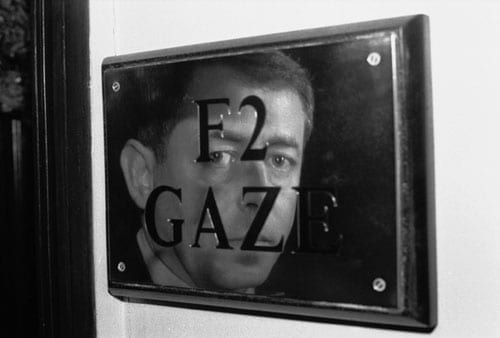
Russian icon dealer John Gaze (1947 – 2011) reflected in the brass plaque outside his Albany set, F2. It was formerly occupied by Sir Edward Heath. Gaze’s parties included a fundraiser for people with AIDS hosted by a drag queen. This sparked fury with certain other residents and coverage in the Daily Telegraph and another incident there involved him encountering Alan Clark on the ropewalk carrying a portrait of Lenin. “Where the fuck are you taking that?” Clark supposedly bellowed but was “reassured” when he was told it was “destined for a less salubrious address in Whitechapel.” John Gaze remained at Albany for several years but, like a number of others I know, was forced out by ever rising rents and moved first to Chelsea and then Ennismore Gardens, Knightsbridge. He always remembered his time at Albany fondly and as a bon vivant, he truly belonged there.
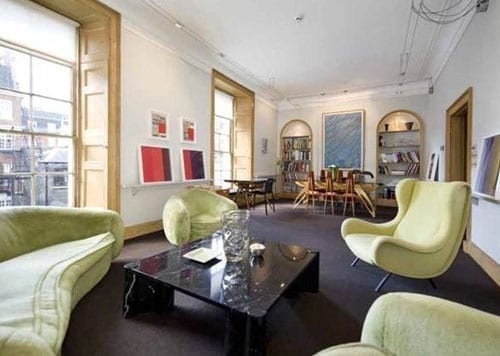
The main reception room in a £1,400 a week set currently available in Albany 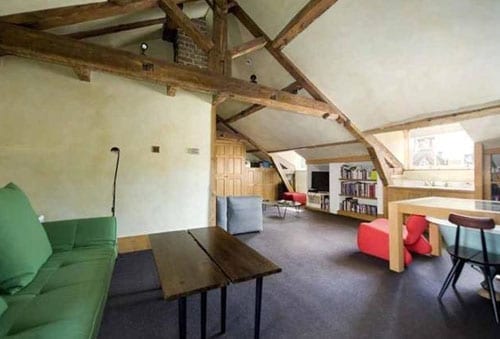
An attic room in the set that could be used as a second reception room or second bedroom 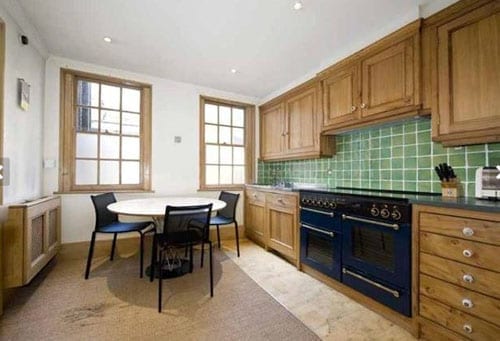
The kitchen is lacking in character but offers ample space for informal dining Contrary to what you’d expect, living in Albany is not quite as expensive as one might think. A 2-bedroomed 1,970 square foot set is currently available through Knight Frank for £1,400 a week: a figure that seems quite reasonable given the location, history and size of this property. Available on a minimum 8-year rental term, it includes a formal reception room, a dining kitchen, 2 bedrooms and 2 bathrooms.
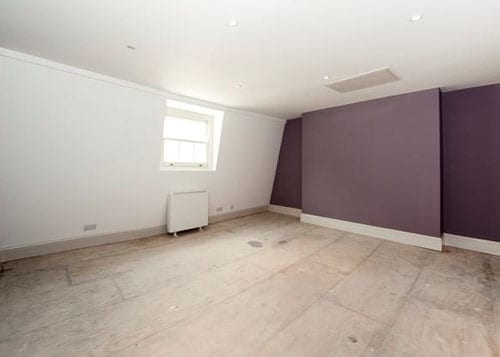
This £300 per week set, D2, consists of just one room 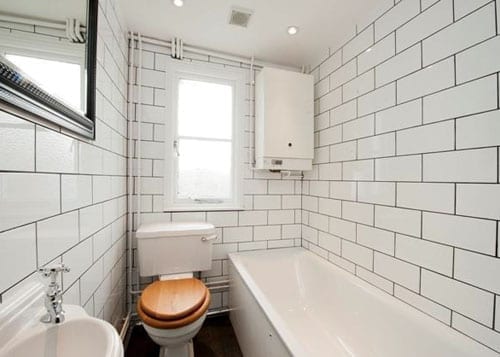
The communal bathroom D2 shares with other sets is basic but clean For those looking for something cheaper, Savills offer D2 Albany at £300 per week. This set consists of a 221 square foot third floor attic room with access to a communal bathroom and the agents suggest that it: “would make an ideal reading or writing room or an occasional bedroom for a pied-a-terre.” It’s effectively a posh form of tenement but what a way to impress your peers and subordinates.

Damon and Sandra de László in their “duplex” in Albany Those renting either of these sets would find the likes of the industrialist Damon de László, a descendant of the Hungarian painter Philip Alexius de László (1869 – 1937), as their neighbour. The couple occupy Lord Byron’s former set, A2, and have, on occasions, opened it for a charity dinner with Matthew Parris at £1,000 a ticket as well and for members of The Portrait Institute to view their collection of de László’s works.
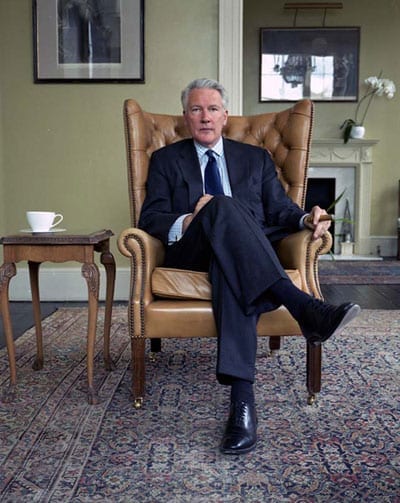
Professor Philip C. Bobbitt in his grand freehold set Another present day resident is a man Henry Kissinger calls “the outstanding philosopher of our times,” Professor Philip C. Bobbitt. This Texan lawyer is a nephew of Lyndon B. Johnson and the author of Terror and Consent, which Tony Blair describes as “required reading for political leaders.” Bobbitt owns an impressive flying freehold set that is described as having a masculine style of décor and a “kitchen he has designed to look like a bar.” In an interview for The Independent he states that he finds Albany: “a propitious place to work.”
Though governments and bankers come and go, behind this quintessentially English façade, order and disorder have always been maintained. The wildcards of this hidden haven have a knack for living by the doctrine “to live at Albany is to live in history” and indeed they make the most of that. Those who are lucky enough to be let in, do, indeed, truly find themselves in the “Paradise of Piccadilly.”
For more information about the £1,400 per week 2-bedroomed set in Albany, contact Knight Frank on +44 (0) 20 3641 2489 or go to: http://www.primelocation.com/to-rent/details/21089526?search_identifier=561863685a1a55b5da85141e12cfeec7
For more information about the £300 per week attic room in Albany, contact Savills on +44 (0) 20 3641 2584 or go to: http://www.primelocation.com/to-rent/details/26791351?search_identifier=561863685a1a55b5da85141e12cfeec7
-
Eddie Redmayne
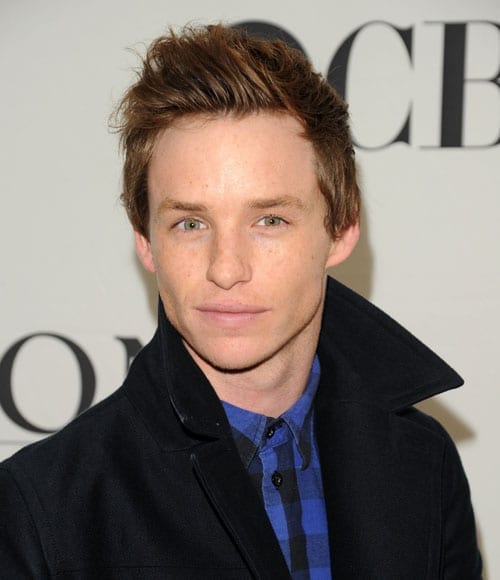 An Old Etonian and graduate of Trinity College, Cambridge, Redmayne has performed alongside Cate Blanchett, Dame Judi Dench and Julianne Moore. He’s noted for his manners but admits he “didn’t have a clue” when he did work experience in banking prior to embarking on a career as an actor. He’s modeled with Cara Delevingne for Burberry and has a whole cast of “Redmayniacs” as his fan club. Already honoured with a Tony and an Olivier, there’s undoubtedly many more awards to come.