Tag: African

  • A Gipsy flies

    A Gipsy flies

    The story of a 1929 bi-plane with a truly fascinating pedigree


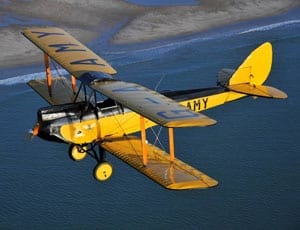
    Britain’s best-known wartime Prime Minister piloted a Gipsy Moth aeroplane that will be sold by auctioneers Bonhams in February 2013 at a guide of £120,000. The same craft was also featured in an iconic 1980s film and was also supposedly flown by a member of the Fiennes family who mysteriously disappeared in 1998.
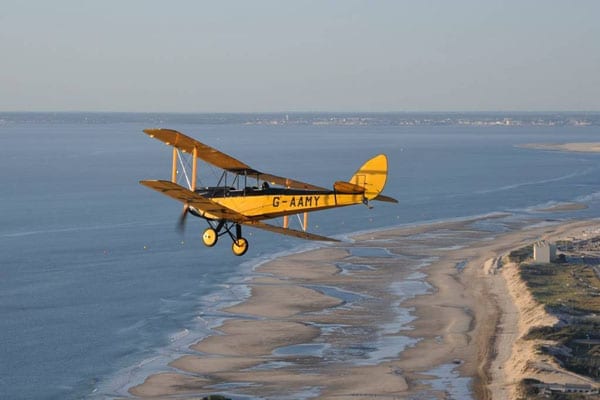
     

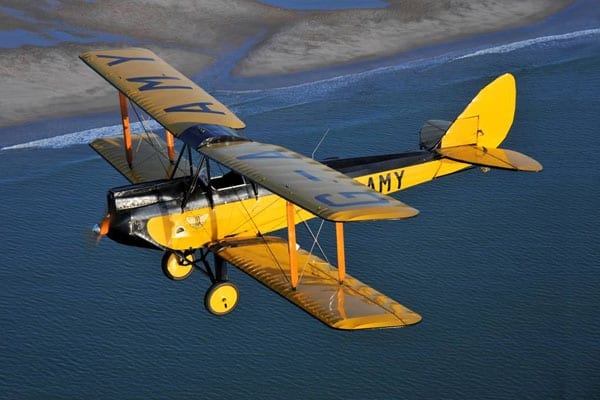
    The 1929 De Havilland DH 60 GMW Gipsy Moth bi-plane G-AAMY that will be sold by Bonhams at the Grand Palais in Paris in February 2013
    Sir Winston Churchill (1874 – 1965)

    Piloted several times by Sir Winston Churchill (1874 – 1965) and used in the Oscar award winning Out of Africa, this 1929 De Havilland Gipsy Moth bi-plane is 24-foot long and has a 30-foot wingspan. It is capable of a maximum speed of 105mph and “wears” a yellow and black livery. It’s registration is G-AAMY in homage to the pioneering English aviatrix Amy Johnson (1903 – 1941).


    In the film, the plane was flown by Robert Redford but though the life of the big game hunter Denys Finch Hatton he played is intriguing; the exploits of Redford’s aviator double are just as fascinating a story.
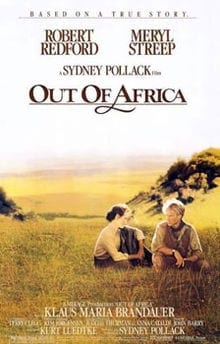

     

    Sydney Pollack’s “Out of Africa” (1985) starred Robert Redford and Meryl Streep
    Tom Danaher pictured whilst filming with Mel Gibson

    Few outside of the aviation world will have heard of Tom Danaher (1929 – ) but aside from Out of Africa, he’s pretty much done it all. After graduating from a high school in Dallas in 1941, he became a Marine Corps fighter pilot. Stationed on Okiwana in August 1945, he shot down the last Japanese bomber on the final night of the Second World War and also made history, aged 21, for downing three other Japanese “Betty” bombers in the eight nights before the ceasefire.


    Recalled to active service in 1951, Danaher flew one of the earliest jets, the F3D Skynight, with the Marines in Korea on night combat patrols and then was part of the last combat mission on a high altitude bombing strike over Pyongyang, North Korea in July 1953.


    Danaher’s passion for flying continued after the war and in 1954 he flew his own plane, a 1948 Bonanza, to England to visit friends he’d made from the RAF whilst in Korea. To make the journey, he built a 109-gallon auxiliary fuel tank so that he could fly straight across the Atlantic. On the way home he called in for an audience with Pope Pius XII in Rome.

     

    The surplus Second World War minesweeper from which Wonderful Radio London operated in the 1960s

    Danaher’s visits to England led to him becoming involved in a pirate radio station in from 1944 to 1967 named Wonderful Radio London. Like many others, Danaher was not impressed by the BBC’s monopolistic attitude to radio programming and so helped build a 17,000-watt station on a surplus Second World War minesweeper. It was anchored three and a half miles off the English coast and outside of Britain’s territorial limit. Of the experience, Danaher told Airport Journals:


    “We had someone in Dallas who would record KLIF, a top 40 station, and we put it right on the air… The Englishmen over there just ate it up… The station programmed news and top 40 music and was very successful. It had the largest listening audience of any of any commercial broadcast station at the time.”


    Back in America, Danaher owned three car dealerships in Wichita Falls, Texas but sold them in 1972 to open his own airport, the Tom Danaher Airport. Lake Wichita Airport (7TXO), as it was also known, kept the aviator busy but he has also piloted in films numbering Empire of the Sun, Sky Bandits, Air America, Bad Medicine, The Pleasure of Love, White Hunter Black Heart, Cliffhanger and Goldeneye.


    In 1985, Danaher was recruited to fly Gipsy Moth G-AAMY by Sydney Pollack (1934 – 2008), the American director of Out of Africa. He recounted his six week experience on set in Masai Mara, Kenya in an interview for his local Texan newspaper, the TimesRecordNews, in 2008. Here, he highlighted the problems of trying to film with a vintage plane that “has no brakes and is difficult to steer”:


    “Robert Redford couldn’t make the thing turn. It took considerable finesse to turn it on the ground… The third time, he gave it full throttle… The left wing contacted a thick thorn bush and it tore some of the fabric off the lower left wing of the plane. We couldn’t fly it the rest of the day.”


    Other dramas arose with G-AAMY in terms of Meryl Streep’s body double refusing to fly in it and the craft struggling to reach the high altitudes necessary to film a sweeping shot of the plane flying past a waterfall. Danaher took charge stating: “If I can get a piece of string and a ruler, I can fix this.” He found just such, cleverly installed them and Pollack: “got every single shot he wanted.”
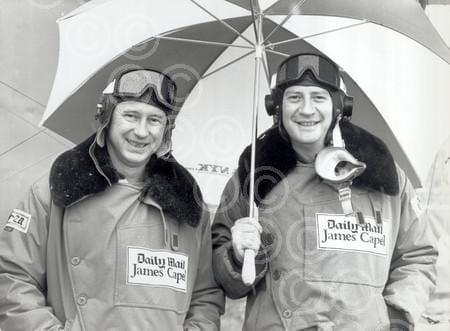
     

    Pilot Roger Fiennes (1944 – 1998) pictured with Alexy Zaitov during the 1989 Glasmoth project expedition to Moscow and back

    Another person to have piloted the Gipsy Moth G-AAMY, according to a comment left in the PPRuNe Professional Pilots Rumour Network forum, was a man named Roger Fiennes. Whether this “rumour” is true or not, the cousin of the actor Ralph Fiennes and the explorer Sir Ranulph Fiennes, is another character with a flying history as fascinating as his true family name – which turns out to be “Twisleton-Wykeham-Fiennes” when presented in full. Of why he did not use this lengthy and historic surname, Fiennes is said to have once commented:


    “You try writing that signature on a 6 foot long cheque book.”


    Fiennes flew many hours in a variety of planes and one of the best documented was an expedition supported by the Daily Mail from White Waltham Airfield in Berkshire to Sheremetyevo Airport in the Soviet Union in April 1989 and back. He flew one of three Tiger Moth bi-planes with a Russian navigator named Alexy Zaitov. The journey took three weeks to complete, involved 33 perilous stops and covered 5,000 miles.


    On 19th April 1998, Fiennes was piloting a 1941 DH82A Tiger Moth, G-BALX, from Dieppe to Headcorn Aerodrome in Kent but he failed to reach his destination. The Air Accidents Investigation Branch (AAIB) report into the disappearance concluded:


    “Although the pilot contacted Paris Information by radio, in the absence of a specific request, the flight plan was not activated. Lashenden was therefore unaware of the flight’s departure and ETA. When the aircraft was reported missing overdue action, and the subsequent Search and Rescue operation, which was activated on the morning of 21 April 1998. Since then there has been no sign of the aircraft or pilot.”


    Articles at the time and forums since are sparse in detail but several forum posters and articles suggest that Mr Fiennes had “mounting debts and a string of business collapses.” Whilst some go as far as to suggest a “Lord Lucan” style disappearance and make references to “paddling canoes” and “check[ing] the Panamanian register,” others remember a “nice guy, sadly missed.” Whatever really happened that fateful day, though, will probably never be solved.
     

    Another image of Gipsy Moth G-AAMY

    G-AAMY, which was marked G-AAMT for the filming of Out of Africa, is a plane with a remarkable past. We suspect there’ll be a few more dramas for this craft yet.

    The 1929 De Havilland DH 60 GMW Gipsy Moth bi-plane G-AAMY will be sold by Bonhams at the Grand Palais in Paris, France sale during Rétromobile week (6th to 7th February 2013). For more information telephone +33 1 42 61 10 11 or go to: http://www.bonhams.com


    To learn more about Tom Danaher’s experience flying G-AAMY in Out of Africa, read the full TimesRecordNews report by Lara K. Richards at: http://www.timesrecordnews.com/news/2008/jun/08/fly/?print=1


    To read the AAIB account of the disappearance of Roger Fiennes and DH82A Tiger Moth, G-BALX, go to: http://www.aaib.gov.uk/cms_resources.cfm?file=/dft_avsafety_pdf_502449.pdf


     

  • Jocelyn Wildenstein (née Périsset and also known as “Jocelynnys Dayannnys da Silva Bezerra”)

    Jocelyn Wildenstein (née Périsset and also known as “Jocelynnys Dayannnys da Silva Bezerra”)

    If one spent $2,000,000 on cosmetic surgery, one would expect to end up looking fantastic. It didn’t quite work out in the case of the billionairess “Bride of Wildenstein,” though, as instead she discovered the husband she thought she’d please in bed with a 19-year old Russian. Feline like in appearance, the purr of this New York socialite is said to be just as bad as her bite. She’s known to be a skilled hunter and pilot and once boasted her telephone bills were at least $60,000 a year. Surprisingly far from camera shy, what on earth will she look like at ninety?

  • Adele Adkins

    Adele Adkins

    “I don’t know what’s going to happen if my music career goes wrong,” states this Tottenham born singer. Having been named “one of the most influential people in the world” by TIME Magazine and broken the record for the longest number-1 album by a woman in Billboard history, she really need not worry. Adele’s still “Someone Like You,” except she’s now worth in excess of £23 million and is guaranteed a place amongst the music greats. Gordon Brown wrote to this Labour supporter to tell her that she’s a “light end of the tunnel” but we prefer the view of former Guns N’ Roses guitarist Slash. Of her, he proclaims: “She’s great. She’s a shot in the arm for this industry.”

  • Breakdancing stoats

    Breakdancing stoats

    Charles Mitford Cust tells of the breakdancing stoats at Bears Rock


    Apparently the 2012 “Braun Battle of the Year” breakdance championship is underway and the coolest movers are strutting their stuff right now down in Montpelier, France.


    “B-boying” or “breakdancing” as we recognise it today is a relatively new dance style which can trace its roots to James Brown’s Get on the Good Foot dance of 1969. There is, however, another species that has been practising the art for considerably longer and that is the stoat.


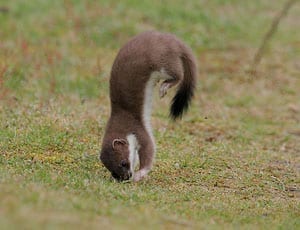
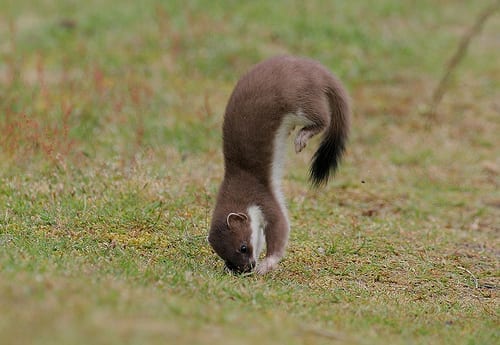
    A dancing stoat "Stan style" ©Tristan Bantock
    A dancing stoat “Stan style” ©Tristan Bantock


    The stoat is one of nature’s acrobats, with a level of agility, dexterity and stamina which places it in a class of it’s own in the animal kingdom. It is also incredibly strong. A stoat is quite capable of killing and dragging home a creature 10 times its size and weight.


    Although stoats, with their immaculately groomed ermine coats and pretty little black tails look almost unbearably cute and charming, they are also one of the most ruthless killers ever created. You see the stoat doesn’t dance just to amuse itself; it literally dances for its supper. For this reason, the stoat is and has to be the best “B-boyer” in the world.


    Stoats dance around potential victims in order to hypnotise them. They put on such dazzling displays of acrobatics, including the famous “headspin” that defines “breaking” that your average rabbit becomes so mesmerised that it allows the stoat to dance closer and closer. The next thing the bunny knows is that the “B-boy” stoat has sunk his teeth deep into its throat and then is on a one-way ticket to the great Watership Down in the sky. Nice.


    Stoats have danced their way through 7 million years of survival, and like so many highly successful predators, such as sharks and crocodiles, having once established their evolutionary niche and perfected their modus operandi, they have remained pretty much unchanged in all that time. We can therefore safely assume that stoats even breakdanced their way through the last ice age, during which time, according to the experts, they faired very well as a species with their compact dimensions and standard issue ermine to insulate them from the sub-zero temperatures. Seems like the Ice Age animation series should have featured a stoat rather than a sloth.


    About six months ago, a stoat, whom I have christened Stan, moved to Bears Rock. He is obviously a discerning type of chap because having looked all around the grounds for a suitable home, he decided to move into the basement of my wooden African style rondavel which sits on an elevated veranda overlooking my lake.


    Stan and Stella’s crib

    From this strategic vantage point, he, and Stella, as I have named his wife, have a lovely view of the lower garden some fifty feet below them in the mornings and can decide which of my rabbits they are going to eat for lunch.


    “Just popping out for a spot of busking Stella,” says Stan as he heads out. “Alright Stan,” Stella responds: “But be as quick as you can love: I need you to gnaw a bigger back exit for us in case that Charles bloke buys a Jack Russell.”


    I am sure that another reason why Stan found this des res so appealing is because the surrounding timber balustrade makes such a wonderful place to train their young, the kits, in acrobatics and the art of artistic killing.


    I have often watched enthralled by the dazzling high-speed display he and Stella put on as they free run all over the structure, often appearing to defy the laws of gravity and physics. They make a welcome interlude to my day trading routine, although they have probably cost me a fortune in bad trades. I now eagerly look forward to watching the kits getting their schooling from mum and dad in the spring.


    One thing is certain, it is lucky for the competitors in Montpelier that there isn’t an entry category for stoats: Stan and Stella would wipe the floor with the lot of them.


    Watch a BBC One video of breakdancing stoats at: https://www.youtube.com/watch?v=wHImJVJSJ08


    The 2012 Braun Battle of the Year: http://www.braunbattleoftheyear.com/

  • Aita Ighodaro

    Aita Ighodaro

    This statuesque Oxford graduate’s first novel, Sin Tropez, was a mighty success. The Independent described it as a “thrilling and scandalous read” and it got five out of five from OK! Magazine. Aita Ighodaro’s second novel, All That Gitters, came out in November 2012 and when she’s not writing, she’s often to be found enjoying a game of chess.

  • Alexander Mavros

    Alexander Mavros

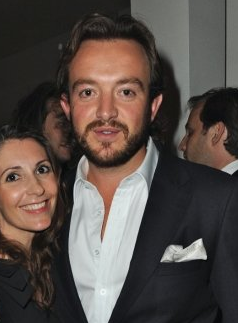
    The eldest of four brothers, Alex is a scion of the oldest family in Zimbabwe. His family’s business creates masterpieces in silver, gold and leather and brings the mystique of Africa to the West. Their patrons include HRH The Duchess of Cambridge, Denzel Washington and J. K. Rowling.