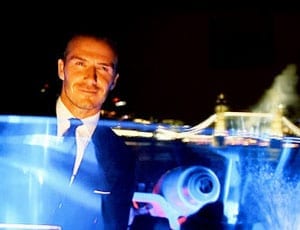
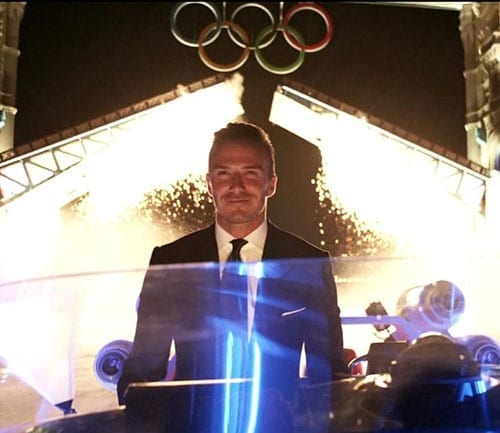
On Friday 27th July, a boat sped up the Thames that was watched by an estimated 900 million people across the globe. That craft, a Bladerunner BR RIB 35, was piloted by David Beckham and also carried Bladerunner’s managing director Jeremy Watts and the Olympic torch.
David Beckham aboard the 2008 “Torchbearer” Bladerunner BR RIB 35The Olympic torch aboard the 2008 “Torchbearer” Bladerunner BR RIB 35 (Photo credit: Action Images)
The boat’s journey under Tower Bridge was accompanied by a crescendo of pyrotechnics and complete with gadgets that numbered four smoke emitting dummy rockets, a high pressure waterjet bar and dozens of LED lights, it formed a significant part of the Danny Boyle orchestrated display that opened the London 2012 Olympic Games.
Now, the very same “heavily customised” boat is available for sale and will be auctioned on the 3rd December by at Mercedes-Benz World Brooklands. A price guide of £250,000 has been set for what Bonhams call the “ultimate Olympic souvenir.”
For more details on the 3rd December 2012 Bonhams Collectors’ Motor Cars and Automobilia auction telephone +44 (0) 20 7447 7447 or go to: http://www.bonhams.com/auctions/20148/
Christian Huhnt takes his first foray into the world of supper clubs
I don’t usually find myself in the east of London. It’s not because I don’t like it but simply because it’s just an awful journey to get there from where I live. Eventually, though, a “secret” was able to convince me to make this long journey. This “secret,” I was told, could only be revealed to me if I “attended” it. Of what, you may ask, am I am rambling on about? I am talking of something called: “The Secret Supper Club.”
Next, you’ll be asking: “What the heck is a ‘supper club’?” Well, in essence, a “supper club” is essentially a dinner in the company of a bunch of total randoms. It is a bit like blind dating, although you get to speak to many more people than just the one opposite you. As I had heard and read so much about supper clubs, I became very curious about attending one. Normally these gatherings happen in someone’s own home without any professional help, but the one to which I was invited was quite something else.
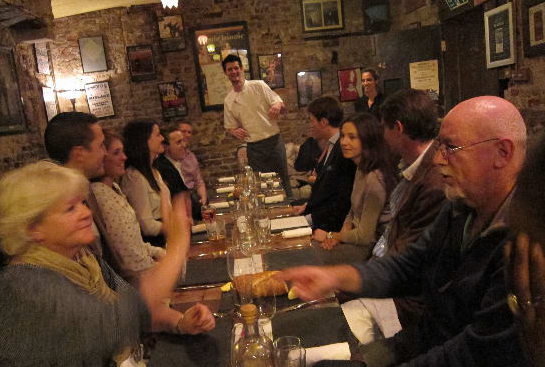
Lime&Tonic’s Secret Supper Club
This particular supper club is on another level. It is run by Lime&Tonic, an international firm of event planners and costs just £35 per head. Lime&Tonic made their philosophy to: “Save the world from boredom” according to its co-founder Stefan Cordiner and in the London supper club they operate I certainly found plenty that fascinated.
The major idea of Lime&Tonic’s take on the supper club is to make new contacts. In this case it was as far reaching as it could get. We were 14 in total. None of us knew each other beforehand, but almost everyone came as a couple or with a friend. What, I realised, made it particularly special was how wide an array of people came: Where else would a pharmaceutical product developer from Birmingham have dinner with an F-15 pilot from the US?
The “un-restaurant,” as it is also referred to by Lime&Tonic, happens every month at a “secret venue,” but never a private residence. The location is revealed to the attendees one day before the event. It’s usually held in a venue with a “unique feel” but wherever it may be, the focus is on somewhere with “authentic charm.”
Suspense and surprise is the order of the day here as the “secret menu” is not revealed until guests sit down at the table either. On arrival we were told that our chef for the night was Paul Hannagen, a good-humoured young Irish professional who established his own catering operation, Cuisson, in August 2011. His passion for his craft was infectious.
The one element of “surprise” that I found hard to deal with was the “bring your own” wine policy. Without knowing what would be served, how could I know what alcohol my wine buff companion ought to choose?
The food itself, though, was delightful. We started with some small ‘lollipops’ stuffed with chicken liver and chunks of apple as an amuse-bouche. This was followed by a ham that had been cooked for 36 hours and served in a “British farmer’s style” with mini-cauliflower, sliced carrots, a rocket salad and a truly wonderful chutney. For a main we were served salmon, cooked “hot and cold” on one side only at 44.5°C in basil oil served with marinated prawns, mashed potatoes and broccoli. It was a great dish but perhaps a little more salt could have made it perfect. The final course, equally, was a delight: chocolate fudge with Baileys ice cream and salted caramel. I was in heaven.
In general, Hannagen’s approach to slow cooking and his use of local produce reminded me very much of that of Jason Atherton at Pollen Street Social. I was therefore not surprised when he later told me that Atherton was his mentor. He did a great job and my companion and I agreed that he deserves huge success.
The meal over, we ended up downing Patrón XO Cafe shots together while happily exchanging numbers. Though I may have been sceptical in the beginning, this concept is brilliant. I am very much looking forward to attend the next Secret Supper Club soon.
The sale of the £20 million Bletchingdon Park, Oxfordshire
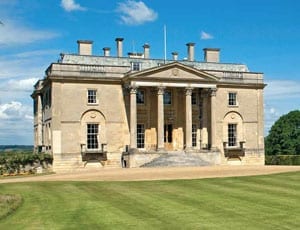
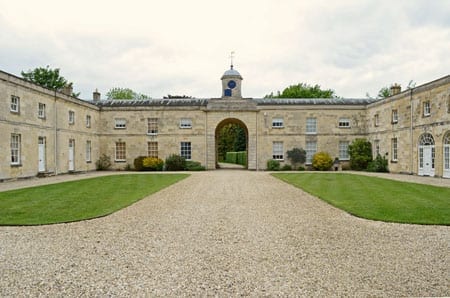
Bletchingdon Park House in Oxfordshire is one of those classic Palladian villas that would make the perfect setting for a period drama. Unlike vast Jacobean mansions like Highclere Castle, better known as Julian Fellowes’ Downton Abbey, however, Bletchingdon is of a far more manageable size.
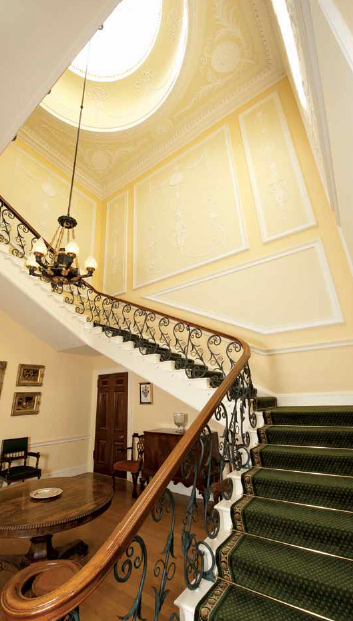
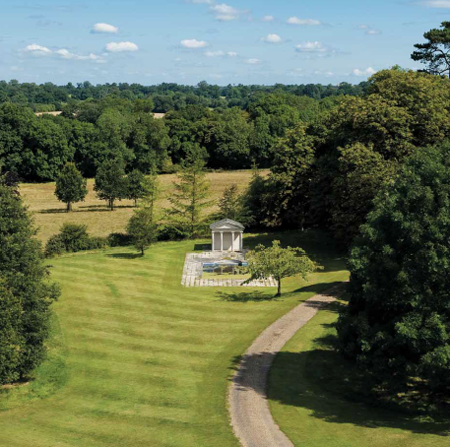
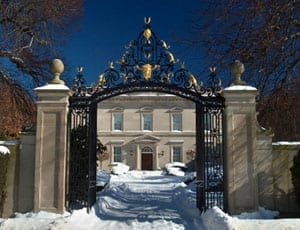
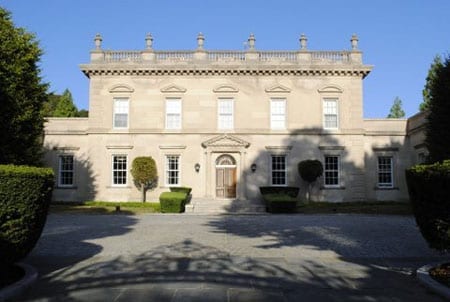
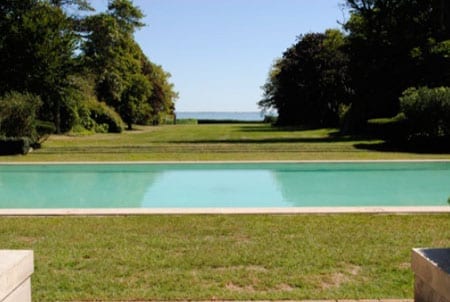
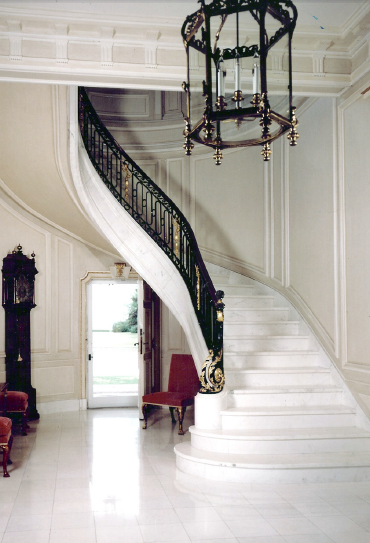
The facade of Bletchingdon Park, Bletchingdon, Kidlington, Oxfordshire, OX5 3DWThe staircase hallA formal reception roomThe grounds of Bletchingdon Park
This Grade II* listed Georgian house, built for Lord Valentina in 1782, may be some 24,600 square foot in size, but it has a layout that makes it both practical for living and suitable for entertaining on a grand scale. The accommodation, which has been renovated by the renowned building company Symm, includes 9 bedrooms and suites, well-proportioned formal reception rooms and a garden floor with further reception rooms, a billiards room and a fitness room with spa.
Whilst the original stable block has been sold off and converted to residential accommodation, Bletchingdon Park includes 2 staff flats, a 2-bedroomed lodge cottage and a further 3-bedroomed cottage. With parkland and grounds extending to 127 acres, maintaining Bletchingdon’s plot is large, but easily maintained.
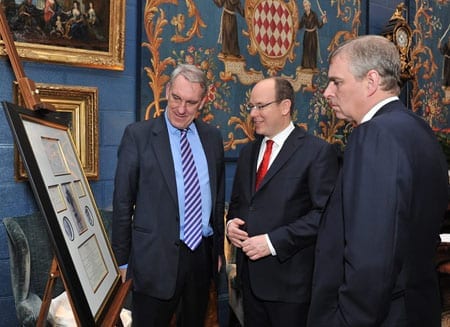
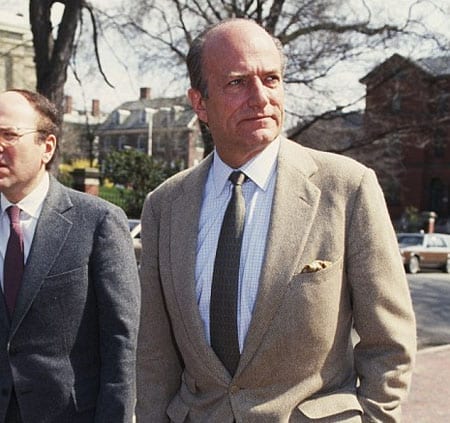
Dr Michael Peagram with Albert II, Prince of Monaco and Prince Andrew, The Duke of YorkThe former stables of Bletchingdon Park were sold off some years ago and have been converted into a number of homes
In the 20th century Bletchingdon was owned by Lord Astor and then Lord Rotherwick. The current owner, Dr Michael Peagram, purchased the estate in 1993. Peagram made his fortune in the chemicals industry after having led a management buyout of Huddersfield based Holliday Chemicals Holdings (HCH) in 1987. He revitalised the business, expanded into new markets and floated the company in 1993. The business was ultimately sold to Yule Catto for £225 million in 1997 and in 2001 Peagram sold another company for a reported £44 million.
At this point, this scientist turned tycoon moved to Monaco and saved himself, according to a 2009 Daily Mail article by Piers Morgan, some £13 million in capital gains tax. A wise businessman and a supporter of David Cameron, Peagram’s modus operandi is:
“Winning with honour and playing by the rules… And not cheating.”
In an interview with Monaco’s NeXt Generation Entrepreneur Forum, he states that he “did lots of work” to achieve his success but admits to “being a romantic at heart.” He has used much of his fortune to fund the philanthropic activities of Outward Bound Monaco with Prince Andrew, The Duke of York and Albert II, Prince of Moanco.
Peagram placed Bletchingdon Park on the market in May 2012 at a price of £20 million. Of why it hasn’t sold, one blogger commented that a footpath runs close to the house and that there is a lack of leisure facilities and outbuildings. Somehow neither seem insurmountable and whoever purchases this fine residence will be a very lucky man. If I were Dr Peagram, though, I’d keep it.
Bletchingdon Park, Bletchingdon, Kidlington, Oxfordshire, OX5 3DW is for sale through Knight Frank. For further details contact Damian Gray on +44 (0) 20 7629 8171 and to download a brochure go to: http://search.knightfrank.com/cho090098
Gina Miller asks if today’s “i” generation can still embody the proverbial maxim “see no evil, hear no evil, speak no evil”
The hysteria and media attention around the iPhone 5 and the iPad mini has made me take note and observe “i” gadget usage over the last few weeks. The idea of people queuing outside Apple stores in these times of austerity when so many are struggling seems totally absurd to me. Even more absurd is that these individuals behave like addicts and do not question what mobile phones are doing to their lives. They just can’t wait for the next high.
Do the “i” generation truly understand this principle?
My observations of “mobile junkies” started on the 21st September. During the day there was media coverage of the launch of the iPhone 5 and interviews with joyous consumers as they got their hands on these new toys. In the evening, I attended a truly inspiring concert to celebrate and publicise Peace for One Day. The concert marked the United Nations’ World Peace Day, which calls for a day of global ceasefire and non-violence. Prior to the music there were links from leaders around the world in support of the day including a speech about global action against domestic violence, an Afghan Leader in support of the day and the extraordinary director of Interpeace, Scott Webber. And what were the people at either side of me, above me, in front and behind me doing? They were texting, emailing, playing games and obsessively tinkering with their mobiles.
From the woman talking on her mobile as she steps into the road to cross without ever looking up, to the parents waiting in the playground for their children texting and emailing, the mobile has taken precedence over what we should really be paying attention to. In restaurants, couples and families do not talk to each other but instead have their mobiles in their hands as they eat and prop up mobiles or iPads playing cartoons for the children instead of talking to them. Have we lost all sense of propriety? When do we talk to each other? When do we get to know our children?
People text to ask someone out, they text to break up and they text to ask what is for supper. Trust in relationships is tested as women track their husband’s iPhones and if a partner doesn’t call or text at least five times a day then the other questions the depth of commitment or love. Children as young as seven demand iPads or mobiles from doting parents who don’t know how to say ‘no’ or instil the idea that you strive to attain the rewards of hard work. There are even reported increases in teenagers and a young adult complaining of aches and pains in their thumbs due to over-texting. 24/7 email access engenders expectations and stress that means people are never really shutting down from work mode. People on trains incessantly chatter and children get brutally attacked on their way home from school for their mobiles. All sense of privacy has been eroded as any celebrity or person in the public eye can be spied upon now that mobiles have cameras. All these negative trends are due to these gadgets but sales keep rocketing most especially amongst those who can least afford them.
I read with interest an account from a guide at the Sistine Chapel who said visitors come in, take photos on their phones and iPads and then move to the next room. No one, the guide suggested, really looks with their eyes, wonders or lingers at the beauty before, around and above them anymore. For these visitors, instead, it is all about taking the picture and instant gratification.
Whilst mobile phones keep us in touch and mean we can assure our loved ones we are safe, running late, find out about the children or ask whether grandmother is warm; this convenience appears to come at a very high price. Apple recently sold its 100 millionth iPad and reported profits of £5.08 billion in the three months to 29 September 2012. Apparently there were 2 million iPhone 5s ordered in the first 24 hours and similar figures are expected for the aggressively priced iPad mini. If you the average spend one of these new gadgets were to be conservatively calculated at £200, that gives a total spend of £400 million. Just think what a difference that amount of money would make if each person gave it instead to the extraordinary small community charities who battle at the coalface of the negative trends in our society?
The ancient three monkeys proverb associated with being of good mind, speech and action has been corrupted by gadgets and now in the modern world we turn a blind eye. We have grown an extra appendage that we appear unable to live without.
What if we all engaged in a national day of no phones or portable tablet? What if, as a social experiment, all networks were also to shut down for one day? Would we not have a different sort of ‘peace day’ that would start to rebuild our interaction, families, relationships and empathy? We would have to look into each other’s faces when we spoke and we might remember when we laughed more, talked more and maybe even tolerated more. If we took up this challenge, perhaps we might even rediscover some of our lost humanity and ‘we’ culture rather than the egotistical ‘i’ culture that sadly dominates society today.
Gina Miller, founder of Miller Philanthropy, is the host of Champions in the Community at The Hurlingham Club on 8th November 2012. For more information and to donate, go to:https://mydonate.bt.com/events/championsdinner
I first visited 32a Ovington Square in September 2009. At the time, this “hidden house” was the home of Lord Carrington and it had just come on the market at a price, if I recall correctly, of circa £3,000,000.
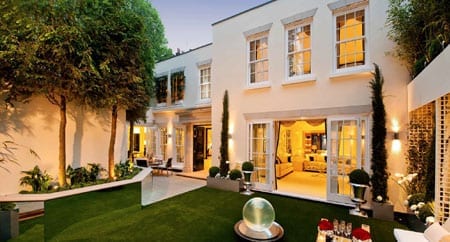
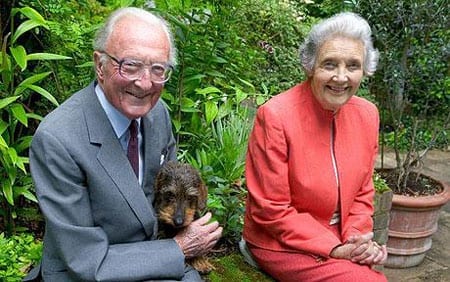
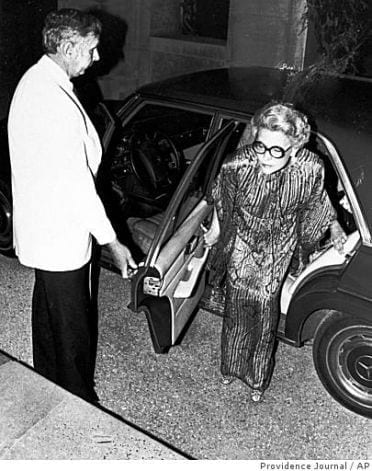
The newly redeveloped Carrington House, 32a Ovington Square, London, SW3 1LRThe Rt. Hon. The Lord Carrington KG, GCMG, CH, MC, PC, DL (born 6th June 1919) with his wife Lady Carrington (1920 – 2009) and their dog Edward
A friend was looking for somewhere to buy in London and I’d somehow come across the aforementioned property in a magazine. A detached house in Knightsbridge at this price seemed like a bargain and as he was keen to take a look and I lived round the corner, we arranged to see it together.
During this period, I had unfortunately made the mistake of making the acquaintance of a former ambassador’s wife who thought herself rather grand. Said woman somehow found out about my friend going to what Americans might term an “open house” at 32a Ovington Square and somehow muscled in. This individual happened to be selling her own home nearby and I reckon she, like my friend, thought she’d be onto a bargain. She’d previously unsuccessfully tried to persuade my friend to buy her individually styled, Ralph Lauren wallpapered home but as it actually rattled every time an underground train went underneath and as it was far from a bargain, he’d sensibly declined.
We arrived at the 2,240 square foot 32a Ovington Square to be told by a rather unhelpful estate agent that we’d have to just wander round by ourselves and that there was no brochure or floor plan. As a merry throng trailed through the house, Lord Carrington stood in the garden looking bemused and his secretary fussed around him. The pair plainly weren’t comfortable with all the interlopers and all in all, who could blame them.
The ex-ambassador’s wife, whose carelessness Rupert Everett most amusingly made reference to in his recent memoirs, spent the entire visit whingeing about the house being dark and stinking of damp. I had to agree with her as the neighbouring buildings towered over it and there was mould on the walls. My friend simply said: “It needs a fortune spending on it.” We left and later I heard that it sold for well above the asking price. The wife of the ex-ambassador thankfully departed from our lives soon after.
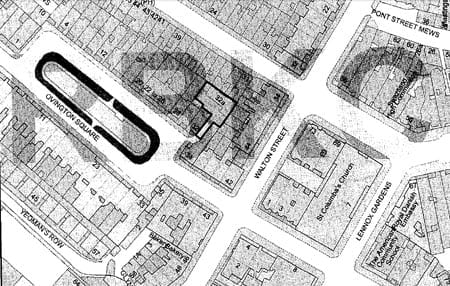
A site plan shows how hidden away 32a Ovington Square truly is – ideal for a government minister or indeed a wayward celebrity
About a year and a half later, I saw 32a Ovington Square for sale with planning permission to construct a far larger residence with a basement and sub-basement pool complex. The price was in the order of £14,000,000. I thought that somewhat ludicrous but now that the very same property is on the market at a price of £23,00,000, it seems that the world has just gone mad.
The brochure for the new residence, which has been renamed, Carrington House, reveals a three-storey low-built freehold building with 5,300 square foot of accommodation. Though 32a Ovington Square has been more than doubled in size by a developer named London City Developments, the sub-basement leisure complex has not been constructed. Could this have been because of planning problems or simply because such construction wasn’t deemed to add value?
In August 2002, Lord Carrington, whom The Mirror described as being “doddery” in a Scurra diary piece, was said to have objected to a bar named Townhouse behind his former home being given a 1am licence. That bar has since closed but as seven of the residents of Ovington Square and Beauchamp Place also took a dislike to the prospect of subterranean developments at his former home, only proposals for a single basement level were included in the January 2010 plans submitted by a Mr & Mrs R. Garner.
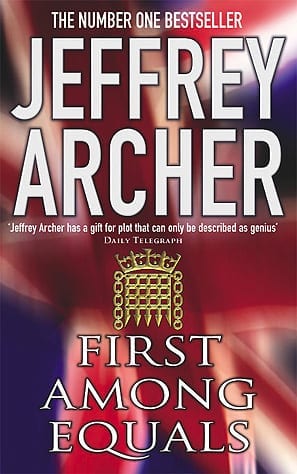
Jeffrey Archer’s 1984 novel “First Among Equals” (published in the UK by Hodder & Stoughton, ISBN: 0-340-35266-3)
Aside from controversy with residents and planning officials, this “heavily overlooked,” “dark” house gets a brief credit in Jeffrey Archer’s 1984 novel, First Among Equals:
“Charles would not have normally accepted the invitation. Lately he found cocktail parties to consist of nothing but silly little bits of food, never being able to get the right drink and rarely enjoying the trivial conversation. But when he glanced on his mantelpiece and saw an ‘At Home’ from Lady Carrington he felt it might be an amusing break from the routine he had fallen into since Fiona left. He was keen to discover more about the rumoured squabbles in Cabinet over expenditure cuts. He checked his tie in the mirror, removed an umbrella from the hat stand and left Eaton Square for Ovington Square… He arrived at Lord Carrington’s front door a little after six forty-five. A maid answered his knock, and he walked straight through to a drawing room that could have held fifty guests and very nearly did. He even managed to be served with the right blend of whiskey before joining his colleagues from both the Upper and Lower Houses.”
Turning to the real Lord Carrington, here is a man who has led a remarkable life. He served as Foreign Secretary in Margaret Thatcher’s cabinet between 1979 and 1982 and as Secretary General of NATO from 1984 to 1988. The last surviving member of the Cabinets of both Harold Macmillan and Sir Alec Douglas-Home was British High Commissioner in Australia between 1956 and 1959 and also chaired the 1979 Lancaster House conference that brought Zimbabwe’s revolutionary war to an end. In 1991, Carrington presided over diplomatic talks in the former Yugoslavia and commented:
“When I first talked to Presidents Milošević and Tudjman, it was quite clear that both of them had a solution which was mutually satisfactory – which was that they were going to carve up Bosnia between them.”
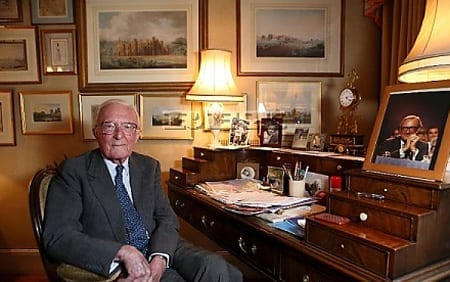
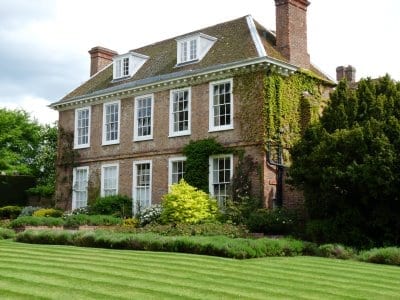
Lord Carrington at his desk in 32a Ovington Square, KnightsbridgeThe Manor House, Bledlow, Buckinghamshire, HP27 9PB is the country home of Lord Carrington
Milošević was found dead in his cell in 2006 but it is quite possible that Lord Carrington’s name will be mentioned in the trial of Goran Hadzic at the International Criminal Tribunal for the Former Yugoslavia that has just commenced at The Hague. It is amazing to think that matters involving this 93-year old politician are still current but Carrington’s stamina is shown in his roles as the longest serving member of the House of Lords and the second longest serving member of the Privy Council after HRH The Duke of Edinburgh.
Aside from politics, there is much on the internet, a considerable amount of it written by wildcards and fantasists whose number includes David Icke, about Carrington’s involvement with Henry Kissinger, the Illuminati, the Bilderberg Group and the Committee of 300. The consensus of these conspiracy theorists generally borders on the ludicrous, but it is without doubt that Lord Carrington had and continues to have influence in many high places. He was chairman of Christie’s International PLC from 1988 to 1993 and has held directorships on the boards of companies that have included Barclays Banks PLC, Hambros PLC, Cadbury Schweppes PLC, Amalgamated Metal Corporation PLC, British Metal Corpoation PLC, Rio Tinto PLC, Kissinger Associates Inc. and Hollinger Inc.
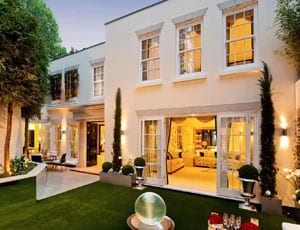
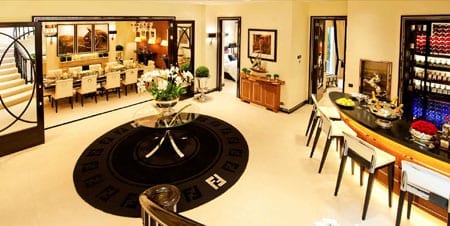
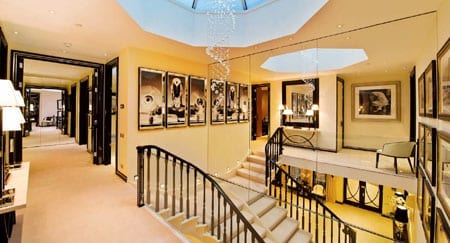
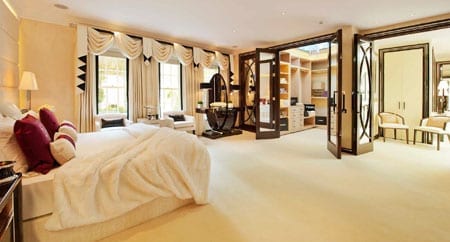
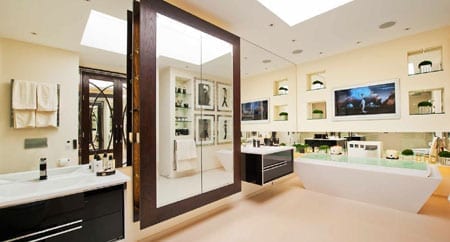
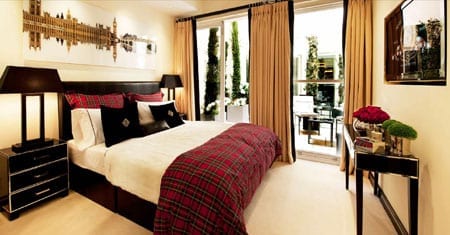
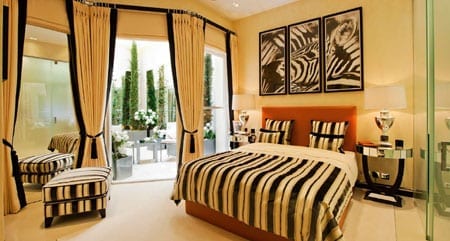
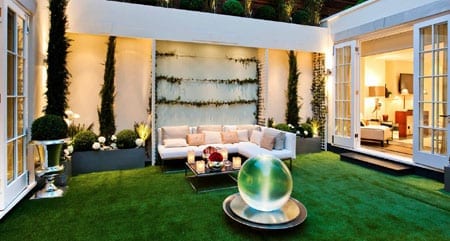
The main entrance to Carrington HouseThe main reception room of the house is decorated in a contemporary style and a far cry from the traditional decoration favoured by Lord and Lady CarringtonAn essential feature in any house priced over £10 million is a media roomCarrington House now boasts a bar that any dignitary would envyThe newly added basement level features an entertaining hall, dining room, bar, gym, media room and two bedroom suitesThe staircase is now lit by a glazed cupolaThe master bedroomThe master bathroomAnother bedroom, located at basement level, is decorated with a Scottish theme and has access to a shared courtyardThe other suite that shares the courtyard is decorated with an “Out of Africa” theme complete with an image of a zebra and matching linen and upholsteryWould the purchaser of a £23,000,000 home truly want an AstroTurf lawn?
Following on from this rather over the top redevelopment, a new chapter has certainly begun at 32a Ovington Square. Whether it is bought by a popstar or a Russian oligarch, they’ll definitely not be anywhere nearly as equal to Lord Carrington in terms of their league of influence.
Carrington House, 32a Ovington Square, London, SW3 1LR is for sale through Knight Frank. For further information contact Nick Vestey on +44 (0) 20 7591 8600. Full details of the house can be viewed at:http://search.knightfrank.com/sla100211
The bonfire sale of a monster of a mansion that has had a $15 million price reduction
A property was first built at 10425 West Sunset Boulevard in Lower Bel Air, Los Angeles in 1936. Here, in this most exclusive of districts, the homes of the prosperous residents are hidden from view and this address, this day, is no exception.
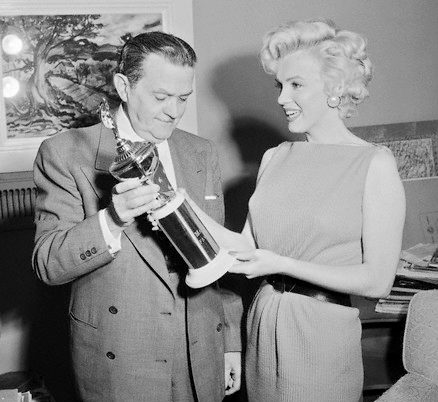
One of the original owners of a house on this site, which has a main access from the cul-de-sac Revuelta Way, was William R. Wilkerson (1890 – 1962), a nightclub owner and founder of The Hollywood Reporter. A compulsive gambler, he is also credited with contributing to Hollywood’s “Golden Era” through the venues he opened. These included Vendome, Café Tocadero, Sunset House, Ciro’s, LaRue, L’Aiglon and most famously The Flamingo Hotel. An involvement here with the ruthless gangster Ben “Bugsy” Siegel (1906 – 1947) turned sour in 1946 and resulted in him having to flee to Paris in fear of his life. Siegel’s death allowed him to return to Los Angeles in 1947 and having “quit gambling cold turkey” following the birth of a son in 1951, he led a much quieter life. He is remembered as being a man who preferred his “beloved French poodles to any wife or friend.”
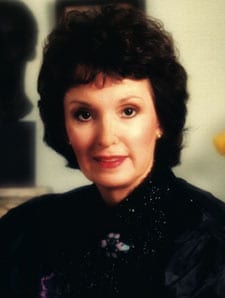
Media mogul William R. Wilkerson (1890 – 1962) pictured with Marilyn Monroe (1926 – 1962)American film personality and the publisher of “The Hollywood Reporter” Beatrice “Tichi” Wilkerson Kassel (1926 – 2004)
Wilkerson is first recorded as living at 10425 West Sunset Boulevard in the 1940 California Census with his fourth wife, Estelle Jackson Brown. He subsequently remained there with his fifth wife, Vivian DuBois, and sixth wife Beatrice “Tichi” Noble. After his death, Tichi Wilkerson (1926 – 2004) sold first 10425 West Sunset Boulevard and then, in 1988, The Hollywood Reporter for $26,700,000.
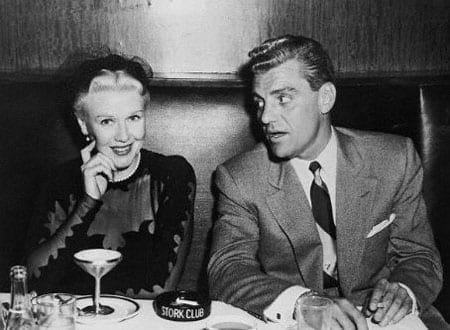
Another famous owner of 10425 West Sunset Boulevard was a “celebrity attorney” named Greg Bautzer (1911 – 1987). Bautzer is best known for having represented not only William R. Wilkerson but also Ginger Rogers, Ingrid Bergman, Joan Crawford, Kirk Kerkorian and Howard Hughes. He is described as having been “as dashing and popular as any successful Hollywood movie star” and was engaged to but did not marry the actresses Barbara Payton, Lana Turner and Dorothy Lamour. He did, however, make the actress Dana Wynter his second wife in 1956, then Buffy Cobb Chapman and finally Nicola Dantine. This “man-about-Beverly Hills,” it seems, was indeed plainly a magnet for anything dramatic.
Philanthropist and Bernini owner Yousuf Tar
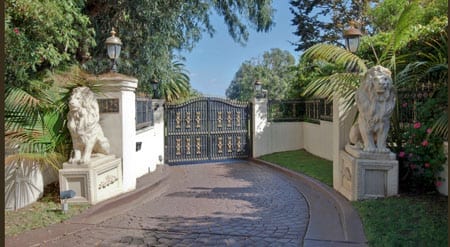
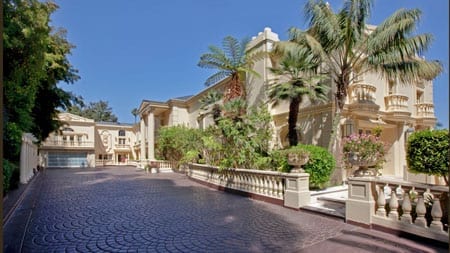
The current owner of the house, which is now somewhat ludicrously named Chateau d’Or or The House of Gold, is a man named Yousuf Tar. The president of the “faux-Italian mall fixture Bernini men’s clothing [company],” bought 10425 West Sunset Boulevard in 1992 for $6,000,000 and set about creating what his realtor, Sally Forster Jones, calls a “cross between The White House and Versailles.” The resulting remodeled residence isn’t quite either but frankly combines a mixture of one of the palaces of the deceased tyrant Colonel Gadaffi and the set of Dynasty.
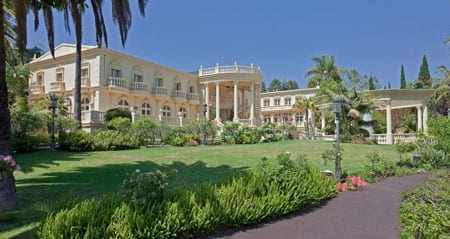
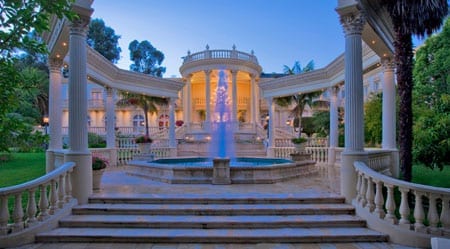
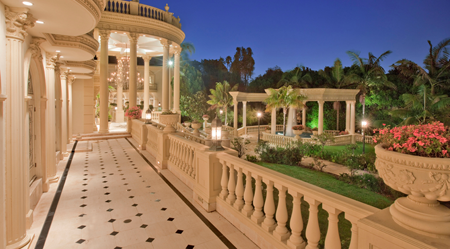
The gaudy gates to Chateau d’Or, 10425 West Sunset Boulevard, Bel Air, Los Angeles, California, CA 90077, USA are an indication of the “tackiness” that lies behindA 600ft main driveway leads to the front of the house from Revuelta Way. Secondary access comes from West Sunset Boulevard.The garden elevation of the Chateau d’OrThe exterior of Chateau d’Or is anything but understated
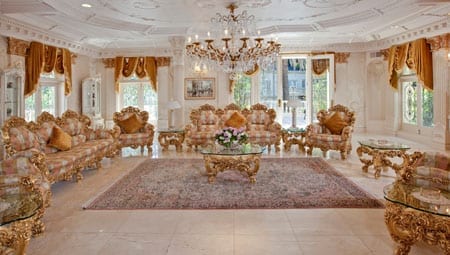
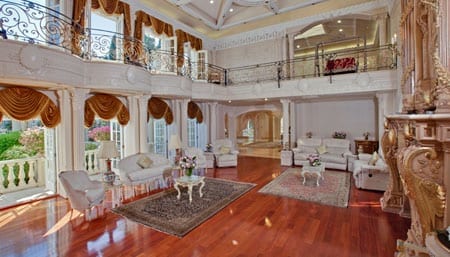
Decorated throughout in a white and gold, the aim of the redesign was to create the look of an 18th century palace complete with acres of marble, columns, cupolas, gold leaft and mouldings. Instead, the interpretation looks more Chigwell-esque than Parisian and has simply attracted criticism and mockery. An example, such as this from Curbed.com, gives a guide to the opinion of the majority about this ugly monstrosity:
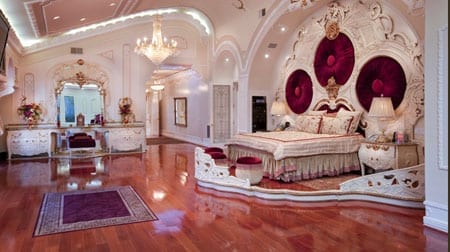
“[The mansion] houses some of the cheapest-looking French-inspired interiors ever made, highlighted (or, rather, lowlighted) by a towering, clunky fireplace and a cartoon-worthy master suite, with gilded everything. Even San Simeon’s William Randolph Hearst would object to this level of pointless expenditure.”
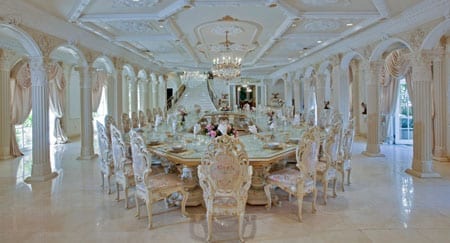
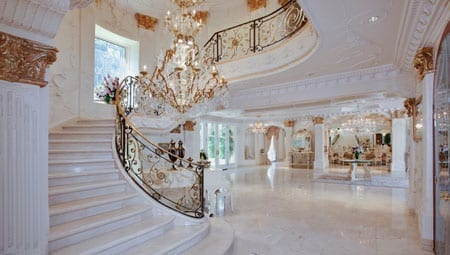
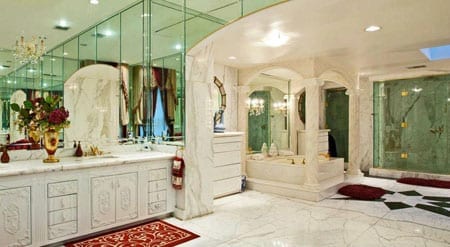
The dining hall is currently furnished with a $300,000 table capable of seating upto eighty for a formal dinner. With an entirely gold dinner service, realtor Sally Forster Jones comments: “Food tastes so much better off gold.”The opulent meets gaudy theme continues with a marble hallway and staircaseA sitting room fit for Saddam HusseinChateau d’Or’s double height media room is supposedly “styled like an opera house”The master bedroom suite is as nearly as large as most homes and is some 5,000 square foot in sizeNo restraint is shown in the choice of bathroom fittings either
Chateau d’Or, according to the listing on Forster Jones’s website, features 25,953 square foot of living space with 15 bedrooms and 16.5 bathrooms. There is a vast dining hall capable of seating upto 80 for a formal dinner which currently features a $300,000 dining table and a 1,600 square foot “oversized gourmet kitchen” complete with 800 square foot of cupboards, an “indoor sunlit gazebo” and a double Viking oven. A double height media room styled as an opera house has also been created and there’s also a cigar and wine tasting room. The Chateau d’Or is nothing other than a “home” on a lavish and ludicrous scale.
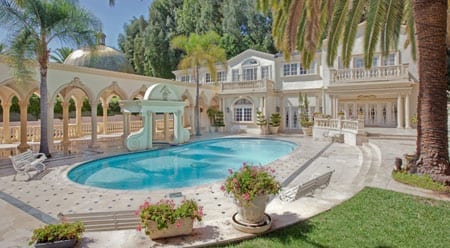
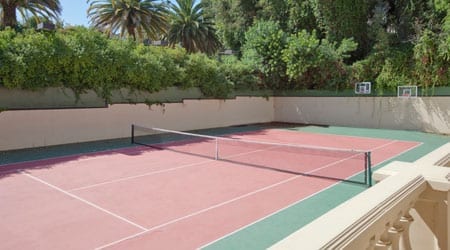
The pool sits alongside a 6-bedroomed guest houseChateau d’Or also has it’s own championship tennis courtOne of numerous terraces
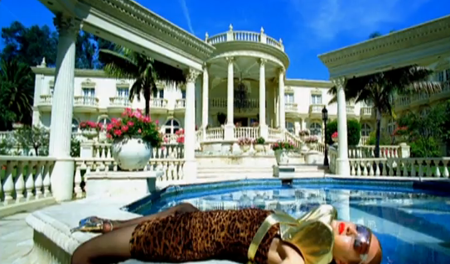
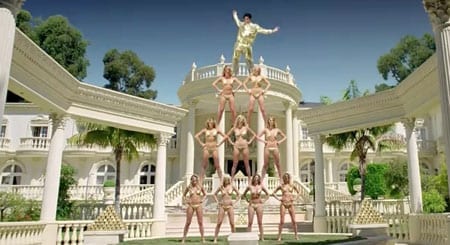
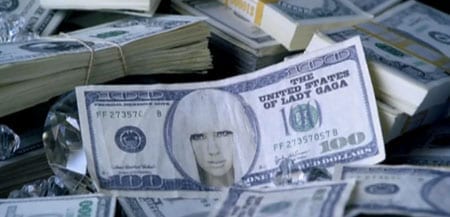
In addition to a swimming pool, spa and gym, Chateau d’Or also has a championship tennis court, guest accommodation and 1.7 acres of grounds. Accessed by a 600ft driveway and surrounded by privacy walls plainly designed to keep prying eyes out, the house featured in Lady Gaga’s 2009 video for her song Paparazzi. Mr Tar plainly isn’t that private at all.
Lady Gaga filmed the video for her 2009 song “Paparazzi” at Chateau d’OrStefani Joanne Angelina Germanotta (AKA Lady Gaga) in one of the “cheap looking” chairs at Chateau d’Or
Not shy of renting the house out for other purposes, it has also been used for a photoshoot for Versace, a television advert for Foot Locker and Addidas starring Ken Jeong and as a venue for a Dubai themed party for Donald Trump where Christina Aguilera performed.
Ken Jeong in a 2010 advert for Foot Locker and Addidas at Chateau d’OrDonald Trump, Sr. with his daughter Ivanka Trump and son Donald Trump, Jr. at a party at Chateau d’Or
Yousuf Tar put Chateau d’Or on the market in 2009 for just shy of $40,000,000 and though Michael Jackson supposedly wanted to buy it to create a “new Neverland,” his sad demise meant that this fell through. Relisted repeatedly since and despite the best efforts of Sally Forster Jones, Chateau d’Or’s gaudiness plainly hasn’t appealed to the market.
You’d had to have been gaga to have paid $40,000,000 for Chateau d’Or
Reduced by nearly $15,000,000 to $25,000,000 this month, Chateau d’Or still doesn’t look like much of a bargain. Somehow, we suspect, it’ll have to be marked down a fair bit more before anyone’s even vaguely tempted.
For more information Chateau d’Or, 10425 West Sunset Boulevard, Bel Air, Los Angeles, California, CA 90077, USA contact Sally Forster Jones of the SFJ Group at +1 (310) 281 3999 or email her at:[email protected]
A £26 million residence with connections to rock, royalty and rectors
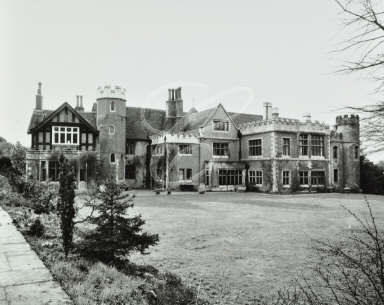
Built in the early 1500s, The Old Rectory is Wimbledon’s oldest house. Standing in grounds of 2.5 acres, this 16,200 square foot property was once described by a biographer of Sir Henry Cecil as being “not luxurious, but adequate” but now once again it finds itself in an entirely different league.
An image of The Old Rectory, 82 Church Road, Wimbledon, London, SW19 5AA in 1978. Present day imagery has been removed at the request of agents acting for the current owners.
Priced at £26,000,000, it is almost certainly one of the most expensive homes to ever come to the market in Wimbledon and whoever moves there next will undoubtedly be either an oligarch, an A-list personality or a top achieving business person.
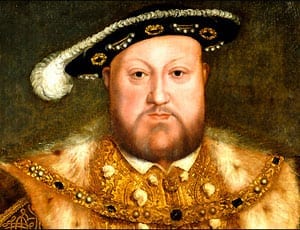
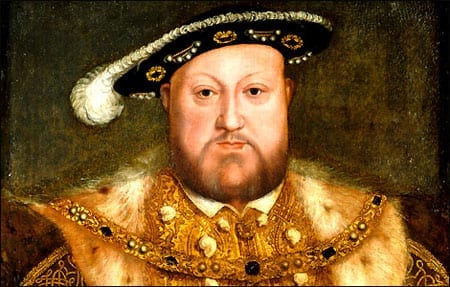
The purchaser will follow in the footsteps of a fascinating array of historically important residents, the first of whom was Henry VIII (1491 – 1547). The King took up residence in 1547 in the months prior to his death and is said, as he was so bloated, to have been unable to climb the stairs to his sleeping chambers. His bed was relocated to the great hall of the house and here he slept next to the fire. Historical research recounts that, with a brewhouse, beer and wine cellars, a coal cellar, meat room, buttery and two dairy rooms, this was a “house fit for a king.”
Henry VIII (1491 – 1547)Catherine Parr (1512 – 1548)
Henry VIII gave The Old Rectory, which was originally called The Parsonage House, to his sixth and final wife, Catherine Parr (1512 – 1548). Preferring a residence in Chelsea, Parr left and the Dean and Chapter of Worcester Cathedral took possession. A lease was sold to Sir William Cecil (1520 – 1598), later Lord Burgley, and the manor then passed to his son Thomas Cecil (1542 – 1623), the 1st Earl of Exeter.
In 1639, Charles I (1600 – 1649) bought the entire manor and gave it to Queen Henrietta Maria (1609 – 1669) but with the era of Comwell, The Old Rectory found itself occupied by General John Lambert (1619 – 1684). Shortly after, when a grander house was built next door, the property became first a laundry house and then servant accommodation and gradually fell into decline.
The Old Rectory passed next to Sir Theodore Janssen (1658 – 1748) in 1720. This French-born English financier, who was said to be worth the staggering sum of £250,000 at the time of his purchase of the house, was a founder member of the Bank of English but later disgraced for his part in the South Sea Bubble. He was expelled from the House of Commons and with his ruination, The Old Rectory saw yet another chapter of abandonment.
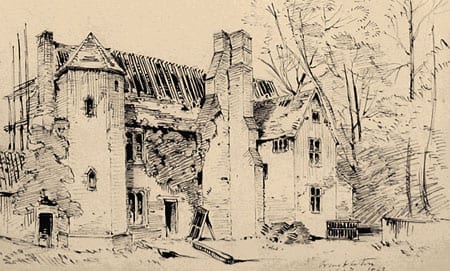
The garden front of The Old Rectory by Charles Henry Money Mileham (1837 – 1917)
By 1802, the house was described as an “uninhabited” ruin. A speculator credited with developing “modern Wimbledon” named John Augustus Beaumont bought it and restored and extended it but when it was sold to a Samuel Wilson in 1882 for £6,000, an era of truly comprehensive upgrades was to begin. Wilson added a pebble-dashed two-storey drawing room wing, carved oak doors and installed English, Flemish and Italian chimneypieces.
The next owner was a marine engineer named Matthias Jacobs who had been responsible for the construction of tunnels in Paris and New York. After having purchased The Old Rectory in 1909, he commissioned his brother to add a new single storey billiards room, a service wing and a study extension to mask the medieval chapel of the house. Jacobs sold up in 1923 to a Thomas Lethaby, who fitted oak paneling from Chantry House in Newark and a plaster ceiling based on the one at Knole House, Kent.
Lord Brock FRCS, FRCP (1903 – 1980)
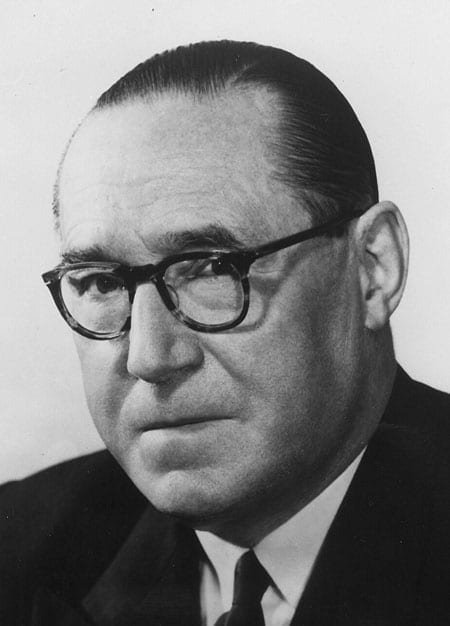
In 1953, the eminent London surgeon and cardiologist, Lord Brock FRCS, FRCP (1903 – 1980), took possession of The Old Rectory after having paid £13,750 for it. Brock is credited as on of the pioneers of modern open heart surgery and also founded the Lord Brock Memorial Trust that to this day funds the museum he founded, The Old Operating Theatre Museum and Herb Garret in Southwark, SE1.
Following the death of his first wife Germaine Louise Ladavèze, Brock sold to an Iraqi entrepreneur and philanthropist named Basil Faidhi in 1978. Faidhi had fled Iraq for Britain and though he spent vast sums restoring the house with assistance from English Heritage, he also created a basement discotheque for his daughter, Nina, and a bar. Aside from bringing the house into the “yuppie era,” Faidhi also commissioned a historian named Richard Milward MA to write a history of the building in 1992 entitled: The Rectory – Wimbledon’s Oldest House.
The Queen lead vocalist and anti-badger cull campaigner Brian May CBE purchased The Old Rectory in 1994 for £4,000,000 with the intention of living there with the Eastenders actress Anita Dobson.
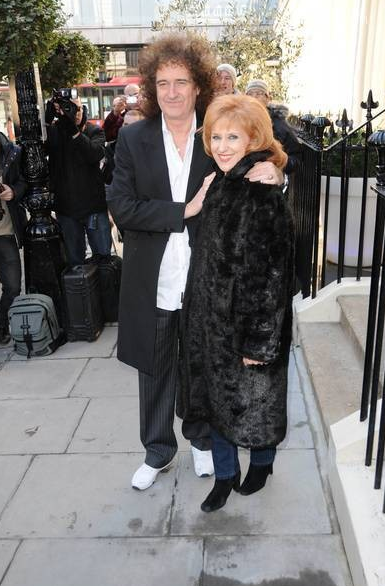
Brian May CBE with his second wife Anita Dobson
Dobson, who didn’t marry May until 2008, had other ideas and refused to move in. It was suggested that she preferred a smaller house the pair occupied in Kensington and, at the time, a friend commented:
“[May] begged her to move into the new house so they can make a fresh start. Nobody can believe that Anita doesn’t want to be the lady of this fabulous house. But Brian says he can’t get through to her.”
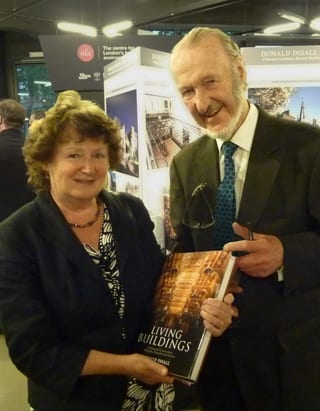
Sir Donald Insall CBE
As a result, May never properly moved into The Old Rectory and eventually decided to sell. In 2006, it achieved a record price of £16,000,000 and in the ensuing years, an Italian architect-owner named Antonella Carminati and her husband have lavished time and money on further restorations with the help of Sir Donald Insall CBE’s Insall Associates firm of architects.
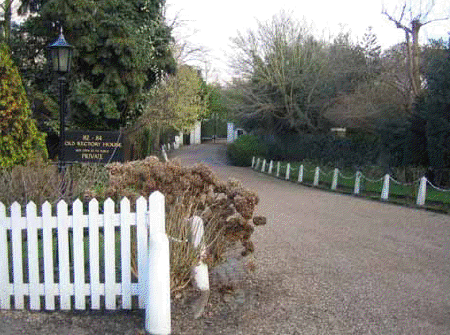
The driveway that leads to The Old Rectory from Church Road gives plenty of privacy
New fittings have been installed throughout and substantial extensions to the house have included a new kitchen and breakfast room with garaging beneath. The couple have demolished an early 20th century porch and an “unsightly” oak conservatory, remodeled the billiards room as a drawing room and removed a “bilious” blue swimming pool from the east lawn.
Now featuring 12,882 square foot of accommodation in the main house and 3,320 square foot of additional accommodation, The Old Rectory has been planned to include 8 reception rooms; a vast kitchen with La Cornue appliances and an adjoining breakfast room; master bedroom suite with two dressing rooms, his and her bathrooms and a sitting room and 7 further bedrooms.
Outside, the gardens feature an original medieval fig tree trail, shaded paths, lawns and a large pond as well as garaging for six cars. Planning permission for an indoor swimming pool complex has also been granted and ample staff accommodation is provided above one of the garages and in the gate lodge.
Given the now limited financial resources of the traditional religious houses of Britain, will it be rock, royalty or new money that next takes possession of The Old Rectory? The historians of Wimbledon will undoubtedly be watching.
The Old Rectory, 82 Church Road, Wimbledon, London, SW19 5AA is for sale through the Wimbledon office of Knight Frank. For more information call: +44 (0) 20 8946 0026.
An event to support the unsung heroes in our community
On the 8th November, The Steeple Times will be the media partner for a fundraising event jointly hosted by Gina and Alan Miller and The Rt. Hon Iain Duncan Smith MP at The Hurlingham Club in London, SW6. 100% of the funds raised by the “Celebrating Champions in the Community” evening will aid charities supported by Miller Philanthropy and The Centre for Social Justice.
Gina Miller of Miller Philanthropy comments:
“We increasingly hear and read in the media examples of how our society is breaking down. Yet there are unsung heroes battling every day, on all our behalves, trying to reverse these trends. We invite you to celebrate and support these individuals so please join us for an evening of entertainment, celebration and inspiration. 100% of your attendance donation will be going to these community heroes.”
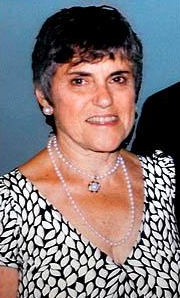
Gina Miller
The Rt. Hon Iain Duncan Smith MP
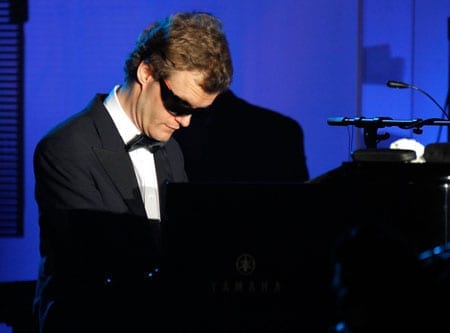
This black tie event, whose principal sponsor is the luxury couture house Ralph & Russo, will include a drinks reception, dinner and auction as well as entertainment from the BRIT-Award winning singer Beverley Craven; Antony Costa, a former member of the pop boy band sensation Blue; the Magpie Dance company and Derek Paravicini, one of the great musical entertainers of his generation.
Beverley CravenAntony CostaMagpie Dance
Derek Paravicini
A donation of £150 per person comes as the condition of attending, 100% of which goes to charities being supported.
Miller Philanthropy
Miller Philanthropy is a family foundation founded on passion and integrity with 100% transparency and 100% of funds raised going to charities and causes.
The foundation focuses on small community charities – the unsung heroes who undertake vital work at the coal face of the negative trends in our society; primarily, but not exclusively in the UK. Miller Philanthropy’s premise is based upon a strong belief that charity begins at home.
The foundation acts as a philanthropic incubator for chosen charities and projects who undertake transformational work but face a growing number of challenges and lack of resources. We mentor and partner these extraordinary individuals and organisations until they become sustainable.
Beneficiary Charities
The AMBER Trust
Best Beginnings
Chernobyl Children’s Project
Crossway Pregnancy Crisis Centre
Hebridean Whale & Dolphin Trust
HELP Counselling Centre
Magpie Dance
Pond Conservation
Street Kids International
Target Ovarian Cancer
The Centre for Social Justice
The Centre for Social Justice is an independent think-tank, established to put social justice at the heart of British politics. Moved by shocking levels of disadvantage across the nation, it studies the root causes of Britain’s acute social problems in partnership with its Alliance of over 350 grassroots charities and people whose lives have been affected by poverty.
This enables the CSJ to find and promote evidence-based, experience-led solutions to change lives and transform communities.
The CSJ believes that the surest way to reverse social breakdown – and the poverty it creates – is to build resilience within individuals, families and the innovative organisations able to help them.
Breakthrough Britain
In 2007, the CSJ published its landmark report Breakthrough Britain. This publication has had a significant impact on the previous and present government and has led to the current welfare reforms being implemented across the UK. In Autumn 2012, the CSJ is set to produce Breakthrough Britain II which will update its policy recommendations, with the aim of creating a cross-party consensus on some of the most important policy issues facing Britain today.
To book tickets to the Celebrating Champions in the Community event, contact Rachael Dove of Miller Philanthropy on +44 (0) 20 7838 8650 or email [email protected]
A most curious tale of playboys, socialites, lawyers and real estate moguls
This week the mystery buyer of Clarendon Court, the former marital home of Claus and Martha “Sunny” Von Bülow (1932 – 2008), was revealed as a restaurateur and real estate mogul named Paul Roiff. Separately, the New York Post reported that Mr Von Bülow’s former lawyer, Alan Dershowitz, had purchased an apartment in Sutton Place, New York at the same time as a postal worker was on trial for killing his sister. The lives of the rich and famous are never anything other than dramatic.
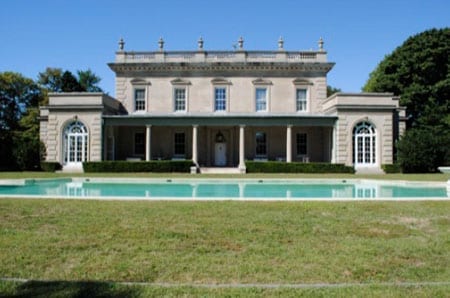
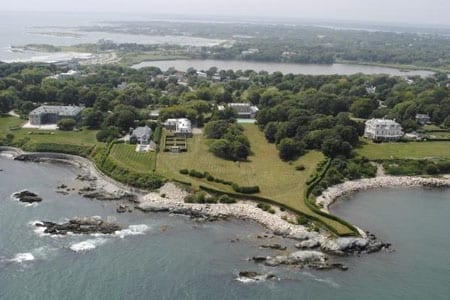
The front elevation of the former residence of Claus von Bulow: Clarendon Court, 626 Bellvue Avenue, Newport, Rhode Island, RI 02840The rear elevation of Clarendon Court, 626 Bellvue Avenue, Newport, RI 02840An aerial shot of Clarendon Court from the Atlantic Ocean
8-bedroomed Clarendon Court on Bellvue Avenue in Newport, Rhode Island is best known for the events surrounding the utilities heiress Martha Crawford Von Bülow falling into a 28-year coma there and her husband subsequently being tried, convicted and then acquitted for her attempted murder, but this fine residence has much else in its past as well.
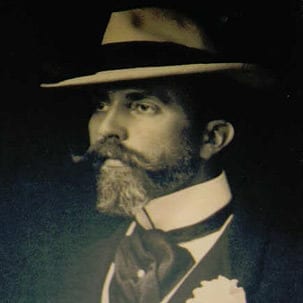
Edward Collings Knight, Jr. (1863 – 1936)
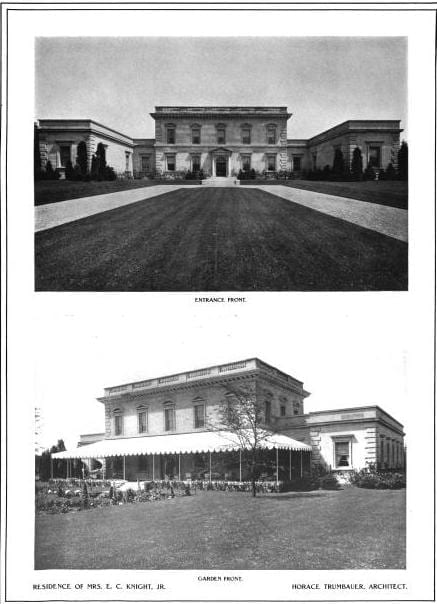
Designed by the most prominent Ameircan architect of the “Gilded Age,” Horace Trumbauer (1868 – 1938), this Palladian style villa was commissioned in 1903 by Edward Collings Knight, Jr. (1863 – 1936), a sugar-refiner and railroad executive, and his wife, Clara. It was built on an acre plot with views of the Narragansett Bay and is most curiously termed “one of Newport’s finest cottages.” The mansion that was constructed for the couple is an almost exact replica of a proposed house by Colin Campbell at Chester-le-Street in County Durham, England and features Doric columns, quoins and an urn-embellished balustrade. It provided a suitable illustration of Mr and Mrs Knight’s wealth and status.
Claradon Court in the early 1900s
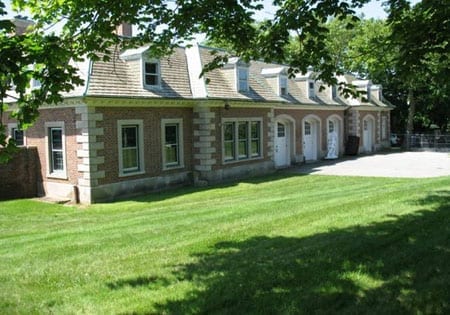
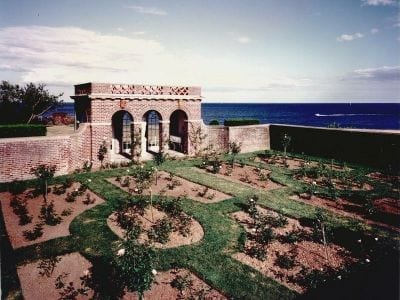
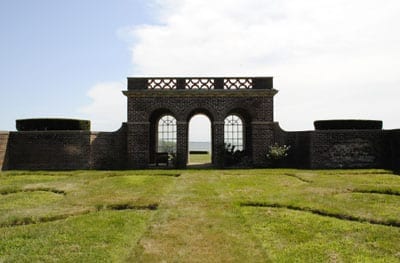
Edward Knight, who was once described as exhibiting “more talent at spending money than making it,” named the house Claradon Court in honour of his wife and shortly before it was completed in 1904, he acquired an additional six acres of land behind the plot with direct frontage to the Atlantic. Here, he had Trumbauer design a vast carriage house in an early Georgian vernacular as well as a series of high brick walls to protect the gardens from the ocean winds.
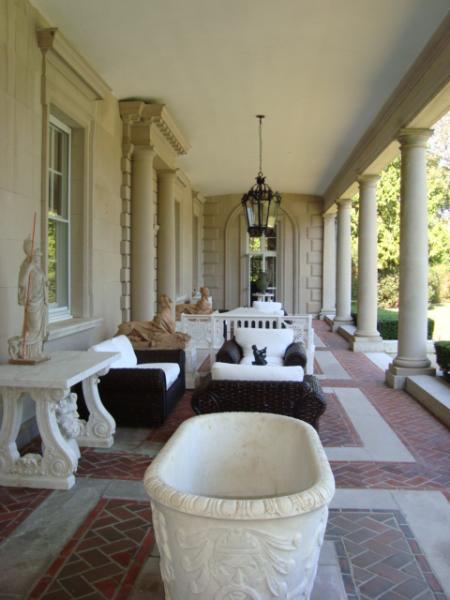
The coach house at Clarendon Court todayThe rear loggia was added by Mr & Mrs Knight at a later dateThis arch and walling was added to provide protection against the force of the AtlanticA more recent shot illustrates that the flower beds have been laid to lawn
The Knights engaged a Parisian decorator named Jules Allard to decorate Claradon Court in the English Georgian manner and after several seasons in residence added two wings onto the back of the house. Following Clara Knight’s death in 1928, her husband sold the estate, moved to a more modest Trumbauer designed house in neighbouring Middleton and remarried. His second wife, Marie Louise LeBel, is remembered as a “foul-mouthed, hard-drinking [woman], who thought nothing of killing a neighbour’s dog with a shot from her pearl-handled pistol.” Together they went on to spend the vast sum of constructing a $383,000 mansion in North Carolina as a hunting lodge. It is now the home of the Whalehead Club.
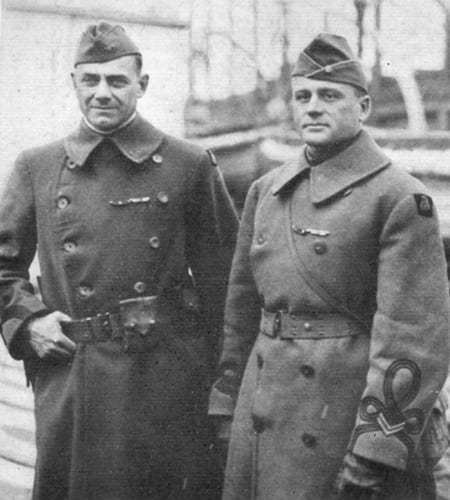
Colonel William Hayward with Major Arthur W. Little
The purchaser of Claradon Court was a First World War hero named Colonel William Hayward (1877 – 1944) and his wife, Mae (1880 – 1956). Whilst the colonel is remembered as the commander of the “Harlem Hellfighters,” a regiment that “never lost a man captured, a trench, or a foot of ground,” his wife was truly a character.
Born in Connecticut, Mae Cadwell had divorced her first husband Selden B. Manwaring of Hartford in 1914 to marry the older and richer Morton F. Plant of New York and New London, Connecticut. Morton Plant adopted her son by her first marriage, Philip “Paul” Morgan Manwaring Plant (1901 – 1941), and when he married the well-known actress Constance Bennett (1904 – 1965) in 1925 more controversy followed. The millionaire socialite Plant’s life is well documented not only as it was for him that the term “playboy” was originally created but also because of his bitter divorce from Bennett in 1929.
Following their purchase, Colonel and Mrs Hayward decided to have the name of Claradon Court changed to Clarendon Court to distance any lingering associations with Clara Knight and she is said to have filled the building with fine and decorative art. The colonel died in 1944 and his widow married for the fourth time, this time taking the president of the American Car & Foundry Company, John E. Rovensky, as her husband. After her death in 1956, Rovensky continued to use Clarendon Court until his own death in 1970 and even allowed it to be used as the set of the 1956 American musical comedy film High Society that starred Bing Crosby, Grace Kelly and Frank Sinatra.
Martha “Sunny” Von Bülow (1932 – 2008)Claus Von Bülow during one of his trials
In 1970, Clarendon Court’s most notorious chapter commenced when the utilities heiress Sunny Von Bülow and her husband Claus purchased the house as it was here in December 1980 that Mrs Von Bülow fell into the irreversible coma that she was to remain in until her death in December 2008. The story of Claus Von Bülow’s trials for the attempted murder of his wife is well known and the 1990 film Reversal of Fortune, starring Jeremy Irons, Glenn Close and Ron Silver, is most definitely a true masterpiece.
Considered a couple of “exceptional taste,” the Von Bülows were described as having filled Clarendon Court with exceptional 18th and 19th century English furniture. They also significantly improved the grounds by hiring the landscapers Innocenti & Webel to create an elegant allée to the sea by removing a hillock that had always deprived the ground floor rooms of an ocean view.
The Von Bülow landcaped the grounds to create a better view from Clarendon Court towards the Atlantic Ocean
In 1974, Claus Von Bülow wrote of Clarendon Court in an article for the Bulletin of the Newport Historical Society:
“The author of this article has lived happily at ‘Clarendon’ for the past four years. As a European he has found much to admire in Newport, with its sense of history and its preservation of a unique architectural heritage. He hopes some future writer will cover the occupancy of his family at ‘Clarendon’ with as much wistful charity as he has endeavored to extend to its previous owners.”
Von Bülow, at that time, plainly could not have imagined the tragic event that was to follow in December 1980 and for what the house would indeed become best known.
The main staircase at Clarendon CourtA study at Clarendon Court
A committee managing Sunny Von Bülow’s affairs sold Clarendon Court in 1988 to a fine art and antique dealer named Glenn C. Randall and his wife Patricia for $4,300,000. The couple converted the service wing into a gallery for their collection and lived there until Mrs Randall died after a battle with cervical cancer in May 2010. The 12,800 square foot house and it’s 10,000 square foot coach house were placed on the market for $17,800,000 in October 2010 and whilst the price was subsequently was brought down to $15,800,000, it languished until being sold in July 2012.
The new master of Clarendon Court, Paul G. Roiff, is a graduate of Boston University and Suffolk Law School. He is the president of a real estate company named Heath Properties and also co-owns a number of restaurants in Boston including Mistral, Mooo, Teatro and Sorellina as well as a 63-bedroom hotel named XV Beacon.
Paul G. Roiff
Plainly publicity shy, Roiff, who also owns homes in Florida and Michigan, used one of his employees, Keith Beardsley, to purchase Clarendon Court on his behalf. He paid $13,126,000 for the estate.
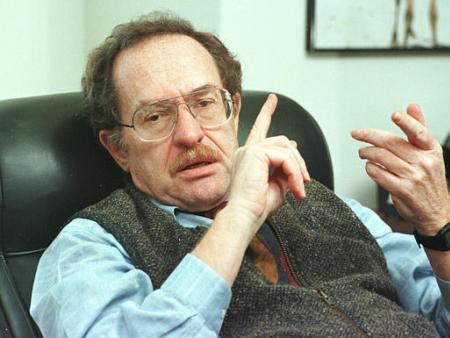
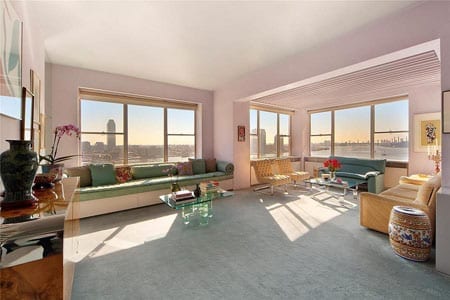
Celebrity lawyer Alan DershowitzAlan Dershowitz’s new pied-à-terre at 45 Sutton Place, New York, NY 10022, USA
In another development, on the 25th September The New York Observer reported that the lawyer who became famous representing Claus Von Bülow, Alan M. Dershowitz, had bought a 3-bedroomed apartment in the “stronghold of old money,” 45 Sutton Place, for $1,680,000. Plainly Mr Dershowitz, who subsequently represented O. J. Simpson, has done well and is plainly now richer than his first “celebrity” client. He also owns a 6-bedroom residence in Cambridge, Massachusetts and was able to use his verbal talent to persuade the sellers of the Sutton Place co-op downwards from their original $2,290,000 asking price.
Separately, late last month, Dershowitz and his family were in court for the trial of a postal worker named Ian Clement. A 7-tonne truck driven by Clement had crushed and killed Marilyn, the 68-year old sister-in-law of Alan Dershowitz, in New York in July 2011. Dershowitz, a retired special referee for the New York court system, had been out for a bicycle ride with her husband, Nathan, a partner at Dershowitz, Eiger & Anderson.
Marilyn DershowitzThe scene of the fatal accident that killed Marilyn Dershowitz
Surprisingly and much to the distaste of the Dershowitz family, Clement, who had been charged with leaving the scene of a fatal accident, was acquitted by a jury on the 20th September. Of this, Alan Dershowitz commented:
“The facts clearly justified a guilty verdict… I think a stronger presentation might have brought about justice. Instead, we have an injustice.”
Both the Von Bülows and the Dershowitz family have endured loss and a huge amount of media attention since the events of the early 1980s. Perhaps these most recent moves will bring with them a new chapter for both Clarendon Court and Mr Dershowitz himself. Meanwhile, Claus Von Bülow, though not quite as wealthy as he was in his days at Clarendon, prospers in London and is considered one of the city’s “finest wits.” How fortunes do indeed revolve.
Contact Alan M. Dershowitz at: Hauser Hall 520, 1575 Massachusetts Avenue, Cambridge, Massachusetts, MA 02138. Telephone: +1 (617) 495-4617. View his official website at: http://www.alandershowitz.com/or follow him on Twitter at: http://www.twitter.com/alandersh
The agent for Glenn C. Randall in the sale of Clarendon Court was Paul Leys of Gustave White who can be contacted on +1 (401) 848-6706 or by email at:[email protected]
The North Devon countryside that inspired Henry Williamson, R. D. Blackmore and Charles Kingsley
Much of my childhood was spent reading the works of superb authors and amongst the best of them were Arthur Ransome (1884 – 1967), Denys Watkins-Pitchford (1905 – 1990), who wrote many of his works under the pseudonym “B.B.”, and Henry Williamson (1895 – 1977). As a youngster, I was lucky enough to be read to by Ransome’s nephew, a most captivating professional storyteller, and was given first editions of many of the works of all three of these early to mid twentieth century authors.
I had my first sailing lessons on Windermere, where Ransome set many of his works, and went shooting in the Forest of Bowland, a place dear to B.B. Though I also fished in many wonderful locations, until now I’d never been to the land of Henry Williamson and his most famous creation, Tarka the Otter. I currently find myself here enjoying a break from London and yesterday I randomly discovered, I am staying next to the setting of one of Williamson’s lesser known stories, Salar the Salmon, on the River Bray close to Exmoor.
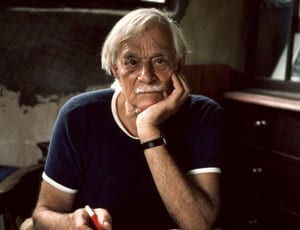
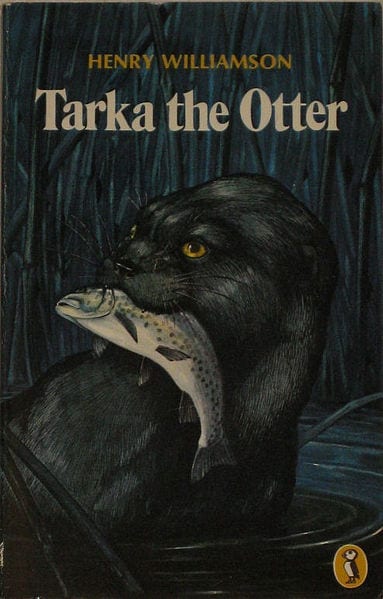
“Salar the Salmon” by Henry Williamson (1935)Henry Williamson (1895 – 1977) photographed by Mark Gerson, cibachrome print from original transparency, August 1970“Tarka the Otter” by Henry Williamson (1927)
Originally published in 1935, Salar the Salmon combines Henry Williamson’s great talent as a writer with his insight as a naturalist. The story tells the tale of a five-year old salmon named Salar, whose name means the “leaper,” and his return to the stream of his birth. Salar’s migration through the riverways of Devon involve him surviving porpoises, seals, nets, fishermen, otters, poachers and weirs and Williamson’s account truly gives the reader an insight into one of nature’s great journeys.
Henry Williamson wrote both Salar the Salmon and The Children of Shallowford (1939) whilst living beside the River Bray in a hamlet named Shallowford, near Lynton in Devon. The river plainly inspired him and whilst he lived there on the Fortescue Estate he also sired four children, joined Oswald Moseley’s British Union of Fascists, was briefly imprisoned for his views and conducted several extra-marital affairs.
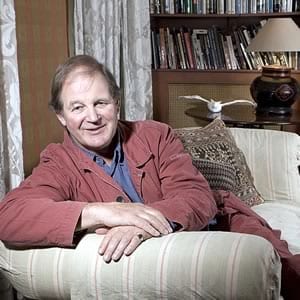
“War Horse” author Michael Morpurgo OBE
Salar the Salmon is a story I am not alone in recommending. Another Devon based author and poet, Michael Morpurgo OBE, best known for his acclaimed work, War Horse, speaks very fondly of Williamson and the novel in a dedication he prepared for a recent reprint of it:
“It is a rare gift indeed for a storyteller to be poet as much as a storyteller, to tell a tale so deeply engaging that the reader wants to know what will happen and never want it to end, and yet at the same time tells it in such a way as to leave a reader wide-eyed with amazement at the sheer intensity of feeling that can be induced by the word-magic of a poet. Henry Williamson is just such a story-maker poet.”
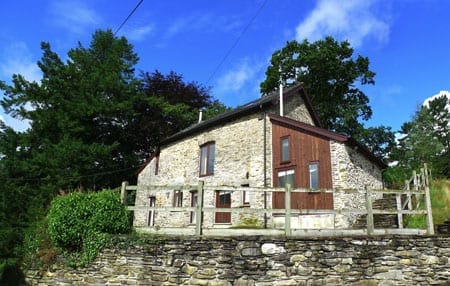
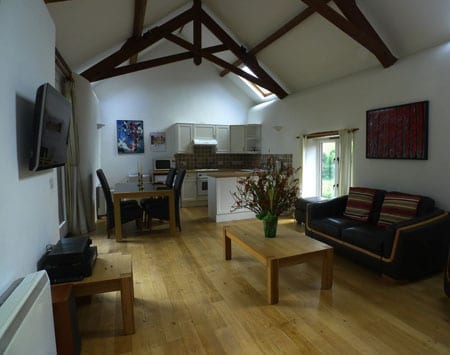
Where I am staying, I have a view of the very river on which Salar made his journey and here also a detached barn conversion is currently available to rent at a price of £1,150 per month. Malle’s Barn is a 2-bedroom stone-built property that includes a 25ft by 12ft open plan sitting room with a fully fitted kitchen and a dining area, as well as a study and shower room.
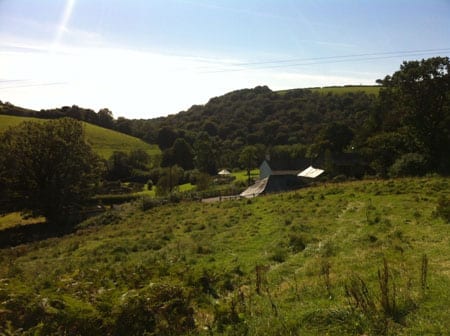
The exterior of Malle’s Barn, Brayford, Near Barnstaple, Devon, EX32 7QBA large open plan reception room includes sitting, dining and kitchen areasThe setting of Malle’s Barn overlooking the valley of the River Bray
Tenants of the house will have access to the owner’s 60-acre estate which includes a mile of salmon and brown trout fishing on both the Rivers Bray and Holewater, ancient woodland and a lake in addition to a private garden and adequate parking for several vehicles.
Malle’s Barn would make a perfect retreat for any author or artist and is just 10 minutes from South Molton, Barnstaple is 9 miles away and Exeter 40 miles. The location is 30 minutes from J27 of the M5 and Tiverton Parkway Station, which provides mainline links to London Paddington within 2 hours.
Close to Malle’s Barn are the prettiest sections of a footpath named the Tarka Trail. Consisting of over 180 miles of footpaths and cycle tracks that take in the Dartmoor and Exmoor National Parks and the North Devon Coast Area of Outstanding Natural Beauty. The trail takes in many of the locations described in Williamson’s most famous novel but this area of North Devon also galvanized the pens of a number of other authors.
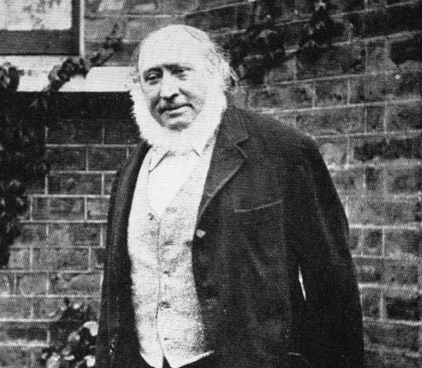
Richard Doddridge Blackmore (1825 – 1900)Professor Charles Kingsley (1819 – 1875)
Richard Doddridge Blackmore (1825 – 1900) set Lorna Doone: A Romance on Exmoor in the locality in 1869 and Professor Charles Kingsley (1819 – 1875) put pen to paper here when he wrote Westward Ho! in 1855. A village of the same name was subsequently established near Bideford in the 1860s by entrepreneurs, led by Lord Portsmouth, who saw an opportunity to capitalise on the novel’s success. Westward Ho! is the only place in the United Kingdom with an exclamation mark in its name. The only other place in the world that shares such is Saint-Louis-du-Ha! Ha! in Quebec, Canada.
Aside from literary connections, the locality is famous for its excellent fieldsports. The Earl and Countess of Arran’s Castle Hill and the Molland shoot are considered amongst two of England’s finest high bird pheasant shoots and both the Devon and Somerset Staghounds and Devon and Somerset Foxhounds hunt on Exmoor.
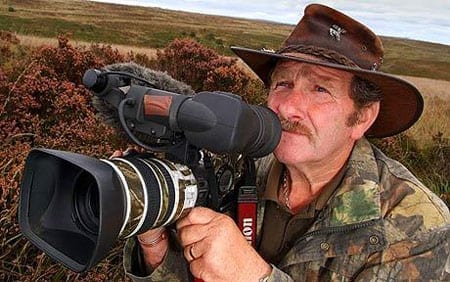
Johnny Kingdom
Johnny Kingdom, who describes himself as having been “a farmer, quarryman, forestry worker, gravedigger and, if truth be told, a poacher” in his youth, also lives in the locality and is well known as a wildlife photographer, filmmaker and television presenter. He sets many of his series on Exmoor because of the vast array of wildlife he comes across here and is, like Williamson before him, often to be found exploring the valley of the River Bray.
In a 1965 BBC interview Henry Williamson was asked: “What influence has this [the Devon] countryside had on you?”:
“Everything, I should say. I came down here as a youth, aged just 18 in 1914, spent a fortnight’s holiday here in the beginning of May, beginning of June. I walked 20 to 25 miles every day. Everything I saw was radiant and beautiful.”
This idyllic part of Devon that Williamson loved so much remains unspoilt to this day. If you haven’t visited yet, it really should be added to your bucketlist.