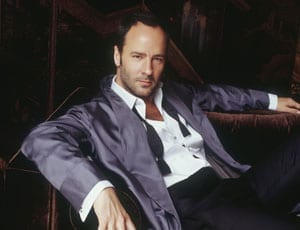
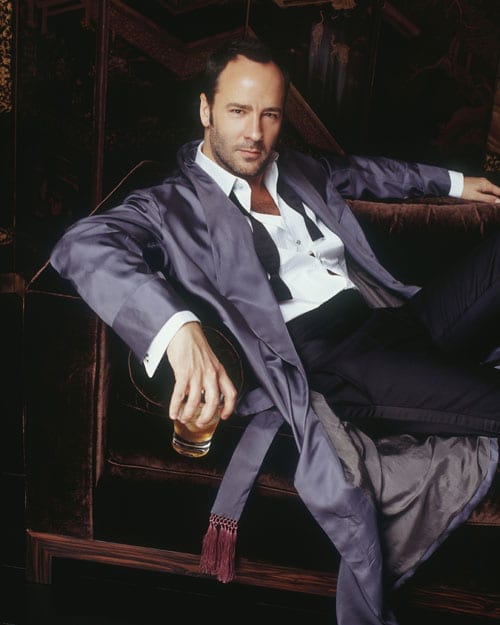
The flexible £12.75 million former home of Tom Ford
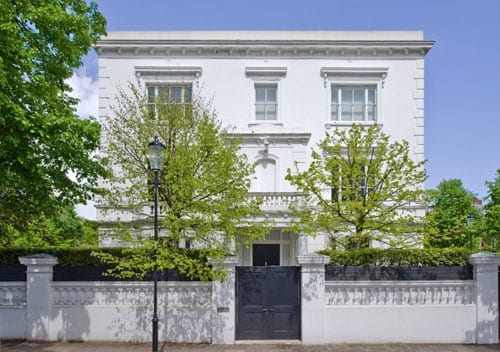
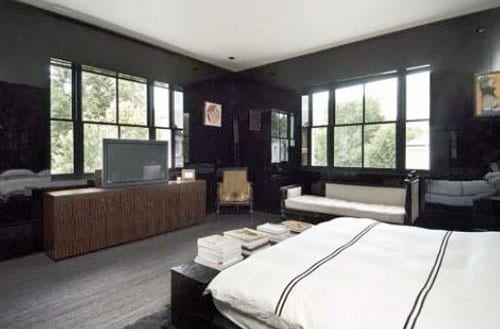
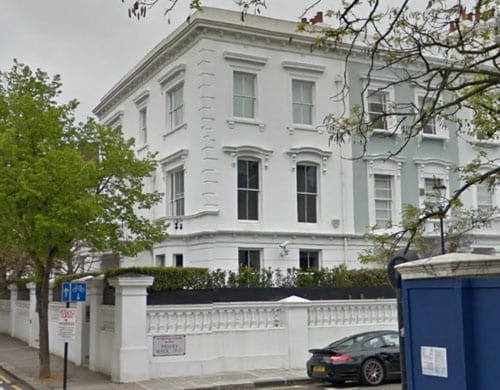
Number 26 Gilston Road in London’s SW10 is a property that has been on and off the market repeatedly in recent years. On each and every occasion it has been promoted as the “former home of the fashion icon Tom Ford” and though he hasn’t lived there in years, it is still just as he left it.
Designer and film producer Tom Ford“The former home of design icon Tom Ford”: 26 Gilston Road, London, SW10 9SS
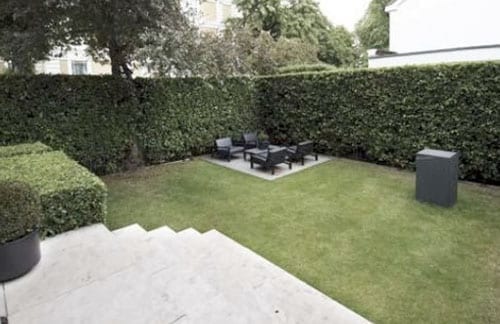
Situated at the end of a terrace on the corner of Priory Walk, one can see why the house appealed to the Texan born designer credited with turning around the fortunes of Gucci and Yves Saint Laurent. Hidden behind a high wall and hedging, 26 Gilston Road is private yet minutes from the restaurants of Old Brompton and Fulham Roads.
This 4-storey townhouse was sold in June 1997 for £2,250,000 and again marketed in 2009 for £8,500,000 through Aylesford. In the time since, it has been available to let at prices ranging from £5,500 to £7,500 per week, but is now back for sale at the extraordinary figure of £12,750,00 through Russell Simpson.
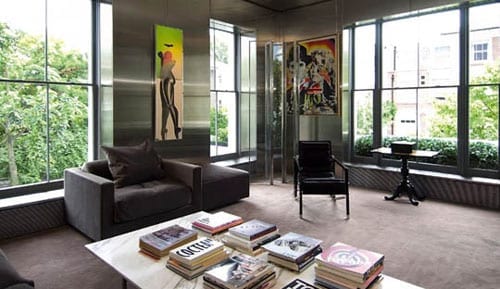
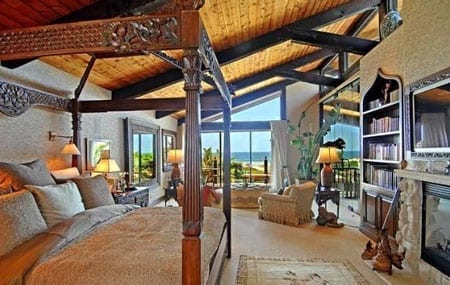
One of the reception rooms, just as Tom Ford left itAnother of the Tom Ford styled roomsA Tom Ford designed bedroomThe garden of the property is extremely private
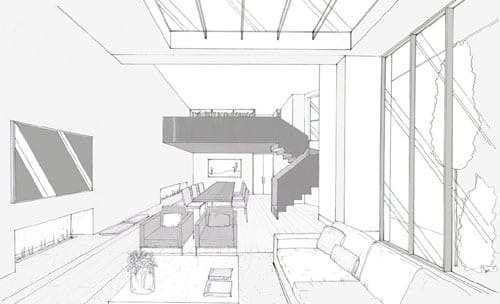
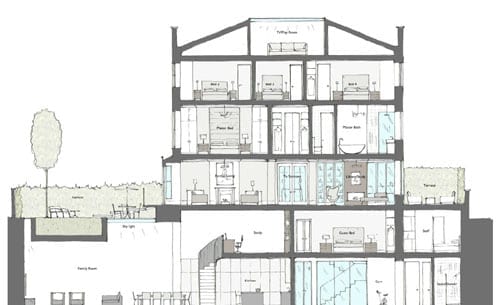
What explains such a rise during a period of economic downturn? Well, it’s because developers Equilibrium have gained permission to “de-Ford” the house. As is now the trend in London, they have planned a total redesign. Their illustrations incorporate a new sub-basement and as a result the gross internal area will increase from just over 3,700 square feet to just under 5,300 square feet.
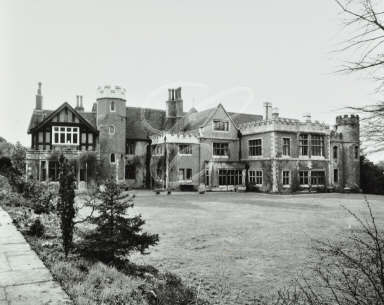
Equilibrium’s plans include a vast living-dining-kitchen with a study in the void over. The space is lit by a skylight.A cutaway shows the extent of the redevelopment plannedA view of 26 Gilston Road from the corner of Priory Walk
Whilst the layout Tom Ford, himself a graduate in architecture from Parsons The New School of Design, created at 26 Gilston Road was ideal for A Single Man; the new floor plan with 4 bedrooms is much better suited to a family. Ford and his partner, Richard Buckley, announced the birth of their son, Alexander, in September. Perhaps they should put in a bid.
A £15 million mansion fit for a self-made tycoon or an upwardly mobile WAG
While the youth of the Kings Road and Loughton have featured in the reality shows Made in Chelsea and The Only Way is Essex, their counterparts in Cheshire have yet to undergo the same social experiment. Having come across a fair few of their number though, I can only imagine their antics would result in television of comparable car crash proportions.
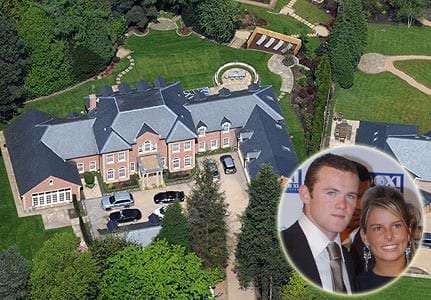
Wayne and Coleen Rooney and their home on Collar House Drive in Prestbury, East CheshireWarrington born Kerry Katona isn’t considered one of the “Cheshire set’s” finest exports
Cheshire itself is a county of contrasts: there’s the farming and hunting set and then there’s the new money. From the 1950s onwards an invasion of nouveau riche footballers and self-made business people came to Alderley Edge and Wilmslow and it is said that there are more Rolls-Royces per square mile here than anywhere else in the UK.
Though today’s Coronation Street actresses and Man United players generally favour brand new homes in Prestbury, the new wealth have not just consigned themselves to such. The likes of Take That’s Gary Barlow, for a time, owned Delamere Manor at Cuddington but sold it in 2005 due to his ever-growing commitments elsewhere. Equally, Neil Hamilton, whilst MP for Tatton, lived at The Old Rectory at Nether Alderley with his formidable wife Christine but when their days in politics came to an end, they too moved on. For a time, David and Victoria Beckham were the undoubted glitterati of this manor, but of those footballers still resident Wayne and Coleen Rooney are definitely now the best known.
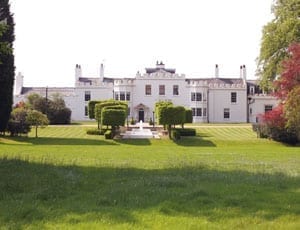
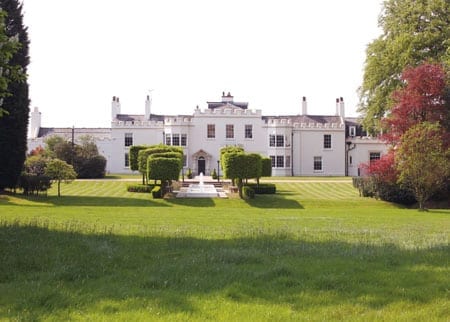
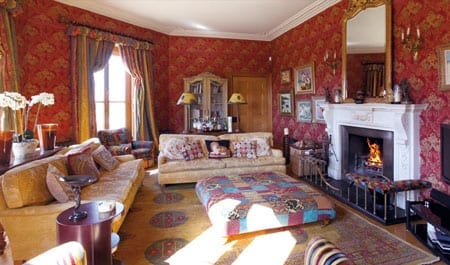
In a “grey area between old and new” sits Swettenham Hall at Swettenham near Congleton. This 12,590 square foot Georgian mansion dates to 1795 but since it was acquired by Brian Kennedy, a double glazing, home improvements and mobile telephone entrepreneur, the house has been given a total makeover. The colourful style he’s given the house can best be described as being akin to: “Laurence Llewelyn-Bowen meets Austin Powers.”
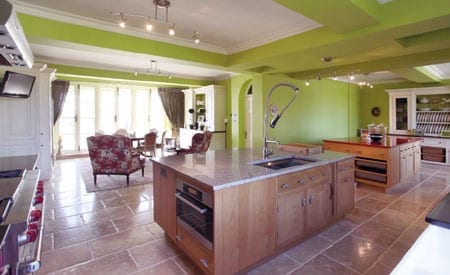
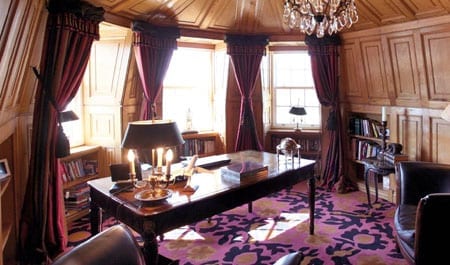
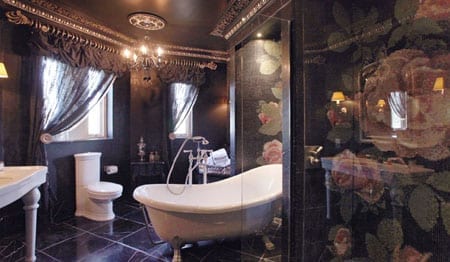
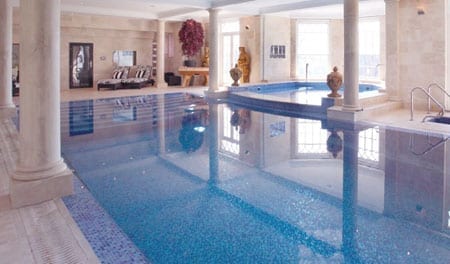
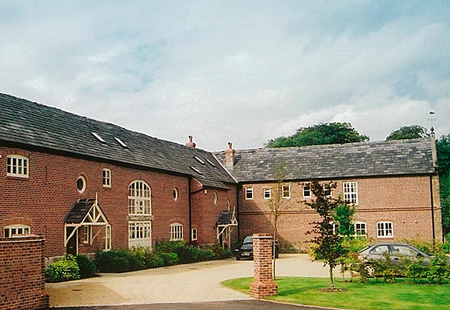
Swettenham Hall’s drawing room is decorated and furnished in a cacophony of coloursThe kitchen is painted in an equally vivid shade of lime greenA bedroom boasts a carpet that would make Austin Powers shout: “Yeah, baby, yeah!”The same carpeting continues into the wood paneled “gentleman’s study”At Swettenham Hall, bathrooms, equally, are far from neutral in their stylingMr Kennedy and his wife Christine employed Julian Bicknell Associates to design an impressive leisure wing in 2004
Swettenham Hall is most definitely a party palace and along with the addition of a leisure wing consisting of a swimming pool, Jacuzzi®, plunge pool, steam room and gymnasium in 2004, Kennedy has also constructed a 47ft by 44ft helicopter hangar complete with a retractable helicopter pad.
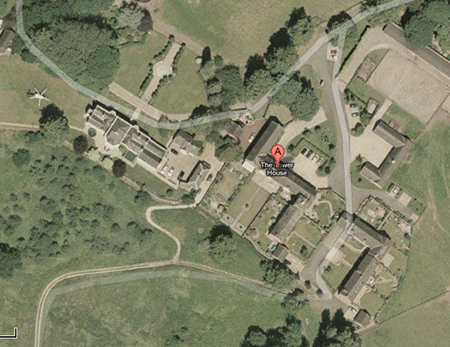
Standing in 100 acres of grounds, the house does seem a tad expensive at £15 million especially since that the adjoining former farm buildings were sold off and converted into eight homes in 1999. The driveway is partly shared with these homes and for those seeking the ultimate in privacy, this could indeed be an issue. It is perhaps why Swettenham Hall has yet to sell.
The former farm buildings next to Swettenham Hall were sold off and converted into eight homes by Egerton Estates and Watts Developments in 1999The proximity of Swettenham Hall to the neighbouring barn conversions is illustrated in this Google Earth map
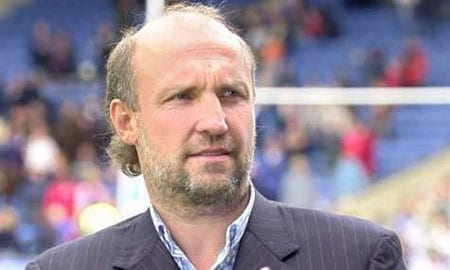
Brian Kennedy is someone I hadn’t heard of until I came across Swettenham Hall but here is a fascinating man whose meteoric rise is frankly very clearly linked to windows. The son of a window cleaner from Edinburgh, this self-made tycoon started his career as a trainee manager at the Royal Bank of Scotland. He subsequently briefly worked as a trainee accountant but left when offered the chance to become youngest branch manager of Moben Kitchens at the age of 20.
At around this time, Kennedy acquired a stake in Farouche Kitchens and with a Rochdale born property entrepreneur named David Russell, he was transformed from a door-to-door salesman to a pioneer in direct sales. In 1988, when Farouche was sold, Kennedy netted circa £1 million. From here, this entrepreneur returned to his family’s roots by venturing into double glazing with Weatherseal Windows and then home improvements with Space Kitchens & Bedrooms.
In 1999, with the help of funds raised by private equity investors 3i, Kennedy paid £42 million for the well known brand Everest but sold part of his stake to the management for £63 million in 2003. In due course he added to his shareholding and then sold 21.5% of the company to Hutton Collins in a deal which valued the company at £150 million in 2007.
Ever the empire builder, Kennedy paid £29 million for a conservatory manufacturer named Ultrafame in 2006 and then also added another double glazing brand, Zenith Staybrite, to his portfolio in 2008. Many other business ventures followed but not being afraid to diversify, Kennedy formed Patrick Properties, whose portfolio is now valued in excess of £100 million, in 2002 and Kennedy Renewables, which specialises in wind energy, in 2009.
In the technology sector, a chance conversation in a Knutsford wine bar in 1995 led to him venturing into the mobile telephone market with a company named Genesis Communications. The business was sold to Dixons in 2002 for £31 million.
In January 2012, Kennedy merged his main Latium Holdings business with Jim Rawson’s Epwin Group to form Epwin Holdings. The merger resulted in a company with more than 2,500 employees and brands numbering Spectus, Swish, CET and Kestrel.
Of his success, Kennedy states:
“Business is common sense [and] dealing with people is common sense. I don’t think I have any particular flair. I think it is about common sense, taking the opportunity when it comes and hard work.”
Brian Kennedy’s wealth has allowed him to indulge many of his passions. A period of semi-retirement “drove [him] and [his] kids nuts,” but this Scotsman’s love of rugby resulted in him acquiring the Sale Sharks Rugby Club in 1999. He is said to have set the “club on a sound financial footing” and turned it into “one of the leading rugby clubs in Britain.”
Philanthropy is something that Kennedy, a Jehovah’s Witness, has also dedicated his wealth to. Through his Brian Kennedy Trust, he has supported a number of charities and organisations but it is for his role as the main backer of Find Madeleine Fund that he has come to public attention. Of his reasoning for backing the missing child’s parents financially, he stated:
“In light of the quite literally incredible accusations against Gerry and Kate McCann, which are clearly exacerbating their emotional torture, I felt compelled to offer, along with other like-minded businessmen, financial support and the full logistical support of the Latium team. That support is principally our in-house lawyer Ed Smethurst and [official spokesman] Clarence Mitchell.”
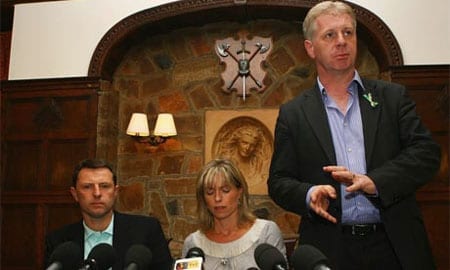
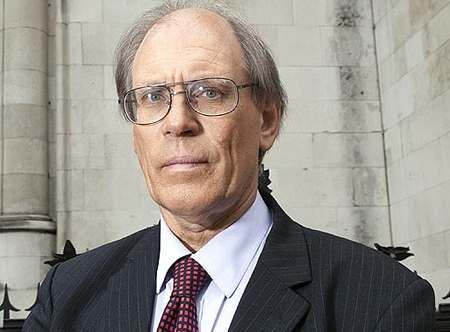
Brian Kennedy was involved in the funding of a team that included Clarence Mitchell for the Find Madeleine Fund until 2009. Here Mitchell (standing) is pictured with Gerry and Kate McCann.An ex-lawyer and campaigner Anthony “Tony” Bennett is the former secretary of The Madeleine Foundation who has been involved in various legal disputes with Brian Kennedy and Gerry and Kate McCann
Kennedy’s donation attracted much press attention in 2007 in the weeks following Madeleine McCann’s disappearance and he continues to support them to this day. A very public spat involving him, Gerry and Kate McCann and a campaigner named Tony Bennett, who also was involved in The Madeleine Foundation, has been the subject of various legal actions. In October 2011, Mr Bennett was forced to publicly apologise to Mr Kennedy and separately an August 2009 Evening Standard article by Mark Hollingsworth “investigat[ing] the investigators,” was pulled because for “legal and editorial reasons.” In it, “someone who worked closely with [Kennedy]” was quoted as saying:
“He was appalled by the Portuguese police, but he also had visions of flying in by helicopter to rescue Madeleine.”
Angelina Jolie, another avid aviator, once commented: “Wherever I am I find myself looking out of the window wishing I was somewhere else.” We do not know why Brian Kennedy is selling Swettenham Hall, but Jolie is indeed one of the few with the resources to take these particular windows off his hands.
For more information about Swettenham Hall, Swettenham, Congleton, Cheshire, CW12 2JZ, contact Edward Welton of Knight Frank on +44 (0) 20 7861 1114.
For more details about Brian Kennedy, go to: http://www.brian-kennedy.co.uk
For more details about the Find Madeleine Fund go to: http://www.findmadeleine.com and for information on The Madeleine Foundation: http://www.madeleinefoundation.org.uk/
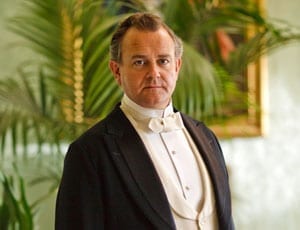
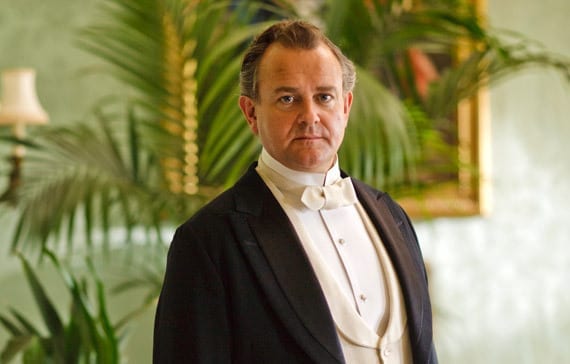
In his role as Downton Abbey’s Lord Grantham, this actor warned that “scandals” always have a habit of coming out. He graduated in Theology at Cambridge but, according to Adam Helliker of the Daily Express, Bonneville wasn’t especially keen to show Christian compassion towards Lord Archer at a party at The Cadogan Hotel when it was requested that the pair be photographed together.
A £26 million residence with connections to rock, royalty and rectors
Built in the early 1500s, The Old Rectory is Wimbledon’s oldest house. Standing in grounds of 2.5 acres, this 16,200 square foot property was once described by a biographer of Sir Henry Cecil as being “not luxurious, but adequate” but now once again it finds itself in an entirely different league.
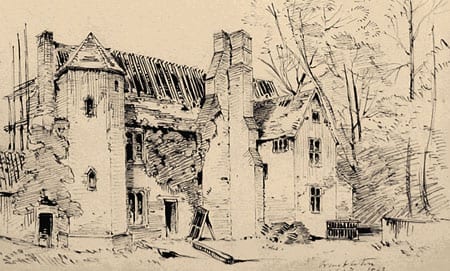
An image of The Old Rectory, 82 Church Road, Wimbledon, London, SW19 5AA in 1978. Present day imagery has been removed at the request of agents acting for the current owners.
Priced at £26,000,000, it is almost certainly one of the most expensive homes to ever come to the market in Wimbledon and whoever moves there next will undoubtedly be either an oligarch, an A-list personality or a top achieving business person.
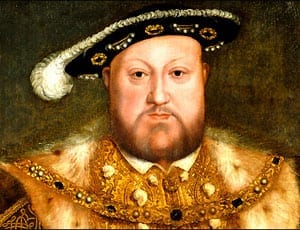
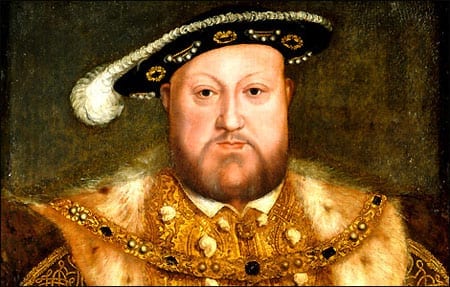
The purchaser will follow in the footsteps of a fascinating array of historically important residents, the first of whom was Henry VIII (1491 – 1547). The King took up residence in 1547 in the months prior to his death and is said, as he was so bloated, to have been unable to climb the stairs to his sleeping chambers. His bed was relocated to the great hall of the house and here he slept next to the fire. Historical research recounts that, with a brewhouse, beer and wine cellars, a coal cellar, meat room, buttery and two dairy rooms, this was a “house fit for a king.”
Henry VIII (1491 – 1547)Catherine Parr (1512 – 1548)
Henry VIII gave The Old Rectory, which was originally called The Parsonage House, to his sixth and final wife, Catherine Parr (1512 – 1548). Preferring a residence in Chelsea, Parr left and the Dean and Chapter of Worcester Cathedral took possession. A lease was sold to Sir William Cecil (1520 – 1598), later Lord Burgley, and the manor then passed to his son Thomas Cecil (1542 – 1623), the 1st Earl of Exeter.
In 1639, Charles I (1600 – 1649) bought the entire manor and gave it to Queen Henrietta Maria (1609 – 1669) but with the era of Comwell, The Old Rectory found itself occupied by General John Lambert (1619 – 1684). Shortly after, when a grander house was built next door, the property became first a laundry house and then servant accommodation and gradually fell into decline.
The Old Rectory passed next to Sir Theodore Janssen (1658 – 1748) in 1720. This French-born English financier, who was said to be worth the staggering sum of £250,000 at the time of his purchase of the house, was a founder member of the Bank of English but later disgraced for his part in the South Sea Bubble. He was expelled from the House of Commons and with his ruination, The Old Rectory saw yet another chapter of abandonment.
The garden front of The Old Rectory by Charles Henry Money Mileham (1837 – 1917)
By 1802, the house was described as an “uninhabited” ruin. A speculator credited with developing “modern Wimbledon” named John Augustus Beaumont bought it and restored and extended it but when it was sold to a Samuel Wilson in 1882 for £6,000, an era of truly comprehensive upgrades was to begin. Wilson added a pebble-dashed two-storey drawing room wing, carved oak doors and installed English, Flemish and Italian chimneypieces.
The next owner was a marine engineer named Matthias Jacobs who had been responsible for the construction of tunnels in Paris and New York. After having purchased The Old Rectory in 1909, he commissioned his brother to add a new single storey billiards room, a service wing and a study extension to mask the medieval chapel of the house. Jacobs sold up in 1923 to a Thomas Lethaby, who fitted oak paneling from Chantry House in Newark and a plaster ceiling based on the one at Knole House, Kent.
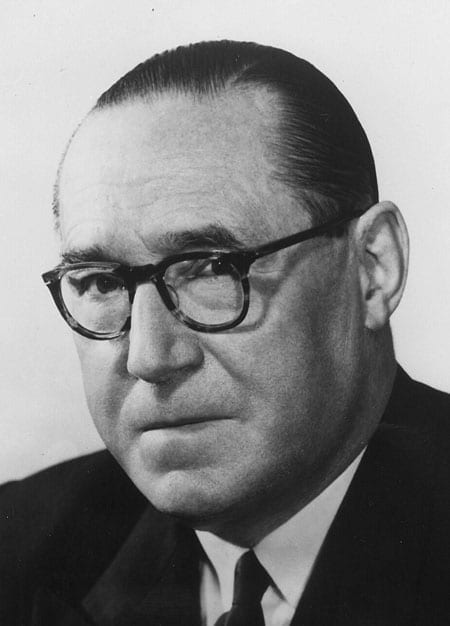
Lord Brock FRCS, FRCP (1903 – 1980)
In 1953, the eminent London surgeon and cardiologist, Lord Brock FRCS, FRCP (1903 – 1980), took possession of The Old Rectory after having paid £13,750 for it. Brock is credited as on of the pioneers of modern open heart surgery and also founded the Lord Brock Memorial Trust that to this day funds the museum he founded, The Old Operating Theatre Museum and Herb Garret in Southwark, SE1.
Following the death of his first wife Germaine Louise Ladavèze, Brock sold to an Iraqi entrepreneur and philanthropist named Basil Faidhi in 1978. Faidhi had fled Iraq for Britain and though he spent vast sums restoring the house with assistance from English Heritage, he also created a basement discotheque for his daughter, Nina, and a bar. Aside from bringing the house into the “yuppie era,” Faidhi also commissioned a historian named Richard Milward MA to write a history of the building in 1992 entitled: The Rectory – Wimbledon’s Oldest House.
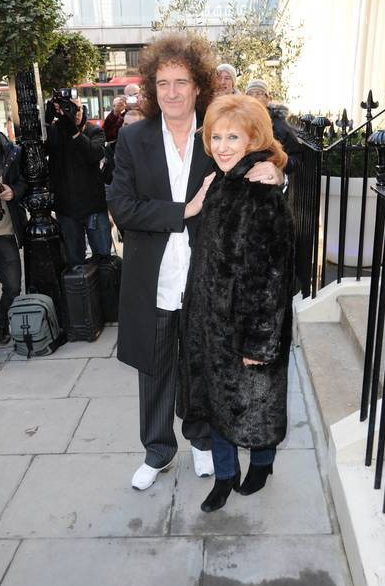
The Queen lead vocalist and anti-badger cull campaigner Brian May CBE purchased The Old Rectory in 1994 for £4,000,000 with the intention of living there with the Eastenders actress Anita Dobson.
Brian May CBE with his second wife Anita Dobson
Dobson, who didn’t marry May until 2008, had other ideas and refused to move in. It was suggested that she preferred a smaller house the pair occupied in Kensington and, at the time, a friend commented:
“[May] begged her to move into the new house so they can make a fresh start. Nobody can believe that Anita doesn’t want to be the lady of this fabulous house. But Brian says he can’t get through to her.”
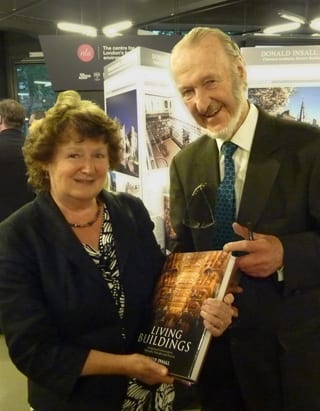
Sir Donald Insall CBE
As a result, May never properly moved into The Old Rectory and eventually decided to sell. In 2006, it achieved a record price of £16,000,000 and in the ensuing years, an Italian architect-owner named Antonella Carminati and her husband have lavished time and money on further restorations with the help of Sir Donald Insall CBE’s Insall Associates firm of architects.
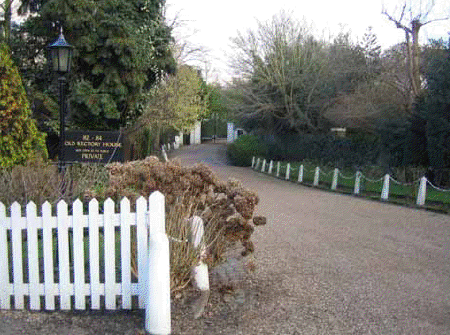
The driveway that leads to The Old Rectory from Church Road gives plenty of privacy
New fittings have been installed throughout and substantial extensions to the house have included a new kitchen and breakfast room with garaging beneath. The couple have demolished an early 20th century porch and an “unsightly” oak conservatory, remodeled the billiards room as a drawing room and removed a “bilious” blue swimming pool from the east lawn.
Now featuring 12,882 square foot of accommodation in the main house and 3,320 square foot of additional accommodation, The Old Rectory has been planned to include 8 reception rooms; a vast kitchen with La Cornue appliances and an adjoining breakfast room; master bedroom suite with two dressing rooms, his and her bathrooms and a sitting room and 7 further bedrooms.
Outside, the gardens feature an original medieval fig tree trail, shaded paths, lawns and a large pond as well as garaging for six cars. Planning permission for an indoor swimming pool complex has also been granted and ample staff accommodation is provided above one of the garages and in the gate lodge.
Given the now limited financial resources of the traditional religious houses of Britain, will it be rock, royalty or new money that next takes possession of The Old Rectory? The historians of Wimbledon will undoubtedly be watching.
The Old Rectory, 82 Church Road, Wimbledon, London, SW19 5AA is for sale through the Wimbledon office of Knight Frank. For more information call: +44 (0) 20 8946 0026.