One of Chelsea’s most important modernist houses comes to the market
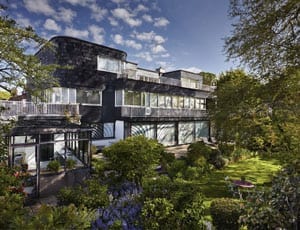
Built for the parliamentarian and playwright Benn Levy and his actress wife and designed by the Bauhaus school founder Walter Gropius, 66 Old Church Street is one of Chelsea’s most significant modernist houses. It’s no wonder that, even though in need of renovation, therefore, a £45 million price tag has been attached to the house by agents Beauchamp Estates. (more…)
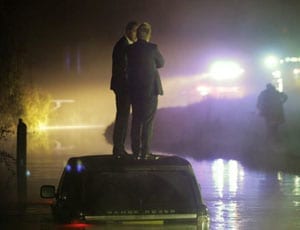
Just as Land Rover Jaguar have launched their fourth generation Range Rover L405, South Kensington garage Hexagon Classics are selling a much earlier example, a Range Rover Classic from 1973.
The sale of a historic £22 million residence on London’s Cheyne Walk
Cheyne Walk in Chelsea is amongst the addresses that an estate agent would describe as “the most sought after in London”. Up there in the company of the Bishops Avenue, Grosvenor Square and Cadogan Square, it has moved from having been home to artists such as Whistler, Turner and George Eliot to now being where such people as Mick Jagger, Roman Abramovich, Terry Venables and Sally Greene choose to live.
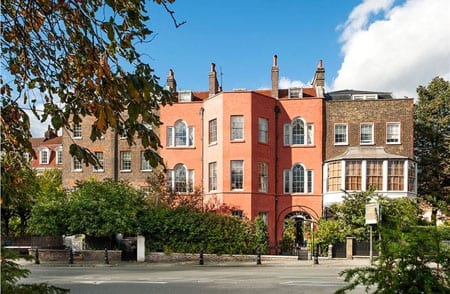
Belle Vue House, 92 Cheyne Walk, Chelsea, London, SW10 0DQ
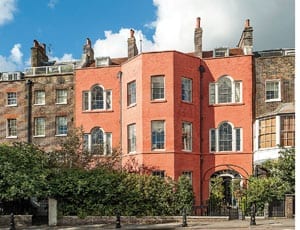
Of the houses there, No. 92, known as Belle Vue House is particularly impressive. Built in 1771, this terraced property stands in the original grounds of Beaufort House, the London residence of the Duke of Beaufort. It is currently for sale for £22,000,000.
The building was reputedly designed by Robert Adam and though no reference to this can be found in the collections of his designs at the Soane Museum, it certainly echoes his style. Constructed from stock brick, this Grade II listed house is nearly 50 foot wide and enjoys southward views across the River Thames.
The builder and first owner of Belle Vue House was John Hatchett, an “eminent 18th century coachbuilder”. He planted a mulberry tree in the garden of the house in 1776 that was described by the historian Faulkner as being what he “reckoned one of the finest trees of its kind in England”. It remains to this day. Hatchett let the house to Lady Prime from 1778 to 1797 and in due course the property passed to his son, Charles Hatchett F.R.S. (1765 – 1847), a chemist and “voluminous writer”.
The next resident was the Scottish pre-Raphaelite artist and poet William Bell Scott (1811 – 1890) and his wife, Laetitia. A friend and contemporary of Rosetti, he used the building as a “veritable museum” and lived there between 1871 and 1890.
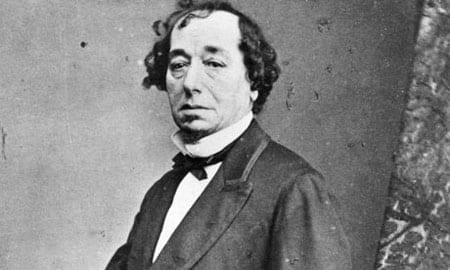
The Right Honourable The Earl of Beaconsfield KG PC FRS, Benjamin Disraeli (1804 – 1881) lived in Belle Vue House during his second term in officeThe canopy installed by Disraeli that protected Queen Victoria from the elements
At various times, other distinguished occupiers have included John Marshall F.R.S. (1818 – 1891), a “distinguished anatomist” and professor of anatomy at the Royal Academy and the British Prime Minister, Benjamin Disraeli (1804 – 1881). Disraeli lived in the house for two years during his second premiership and is said to have constructed the canopy that links the front door of the house to the road so that Queen Victoria could “visit in privacy and be protected from the weather”.
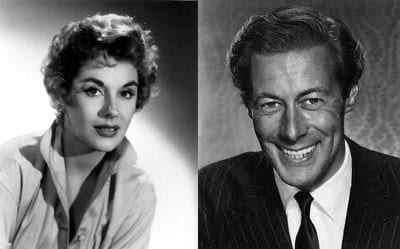
Sir Rex Harrison (1908 – 1990) and his actress wife Kay Kendall (1927 – 1959) lived in Belle Vue House in 1958
British film actor Sir Rex Harrison (1908 – 1990) lived in Belle Vue House in 1958 with his actress wife Kay Kendall (1927 – 1959). Their short-lived marriage from 1957 to 1959 ended a year later when the Genevieve star died from myeloid leukemia. Terence Rattigan later immortalised their love story in his 1973 play In Praise of Love and in it Harrison played himself.
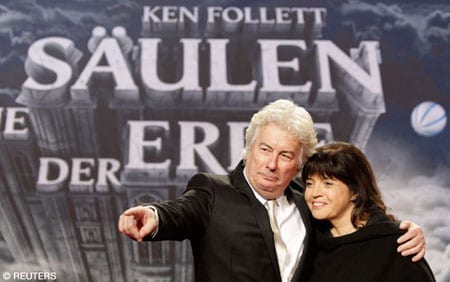
Ken and Barbara Follett are amongst other famous occupants of the property
The politician and army officer Sir Patrick Wall (1916 – 1998) took up residence during the 1960s and he was followed by the author Ken Follett and his politican wife, Barbara. Famous for smartening up the Labour Party during the 1980s with what became known as “Folletting”, the house no doubt made the perfect base for the couple’s political salons. The view of the Thames no doubt also provided Mr Follett with inspiration for several of his best-selling novels.
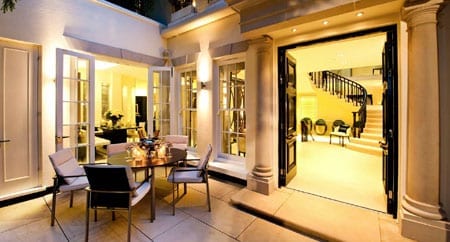
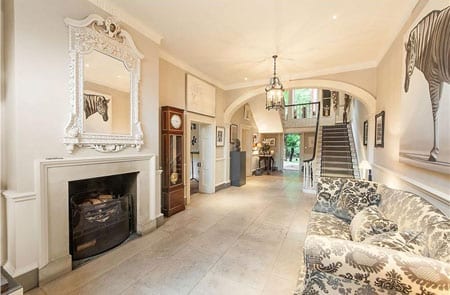
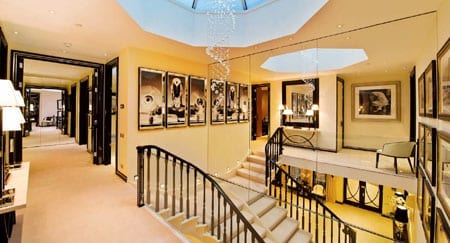
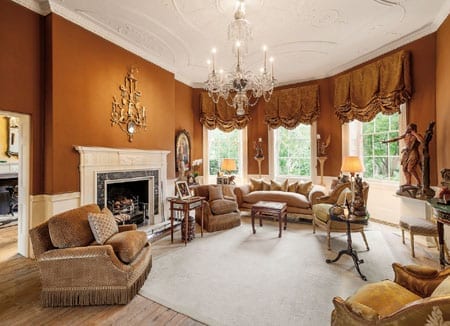
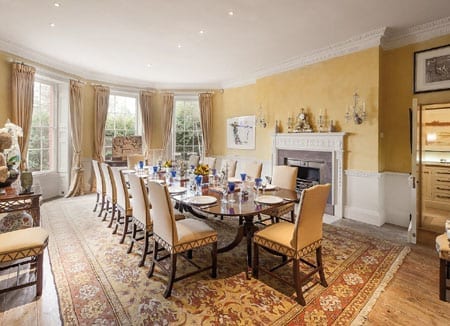
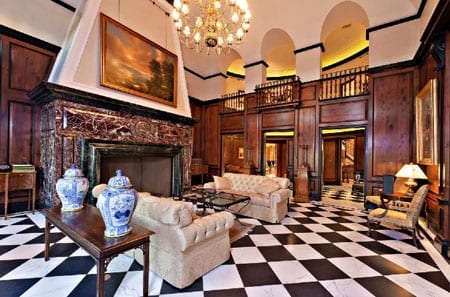
Visitors to the house pass through a grand entrance hallThe staircase is especially impressiveThe house features a double drawing roomThe dining room is perfect for grand scale entertainingOne of a number of other reception rooms
The last documented sale of Belle Vue House records that it was sold for £3,000,000 in May 2000. Since then, this house, now limewashed in a most distinctive Tuscan colour, has been sympathetically renovated and includes 8,400 square foot of internal accommodation. Grandly proportioned reception rooms number a first floor double drawing room, dining room, library and sitting room and in addition the house features a large kitchen, breakfast room, study, three bedroom suites, a gym and wine cellars.
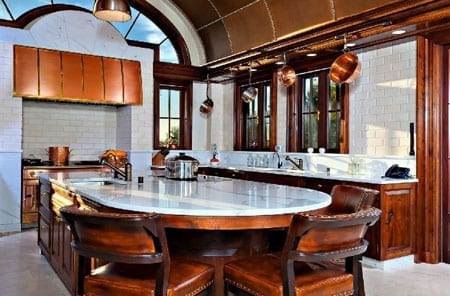
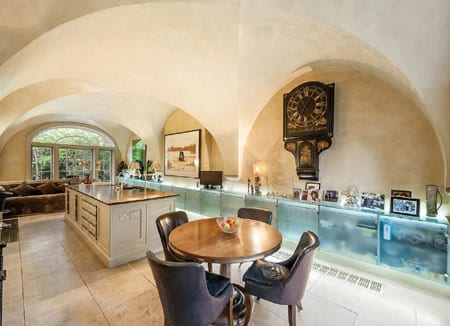
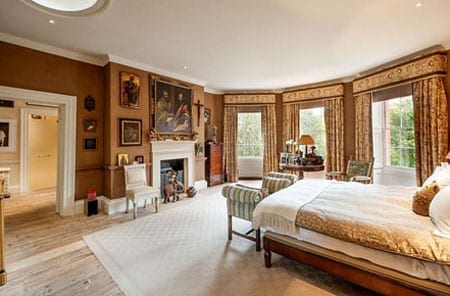
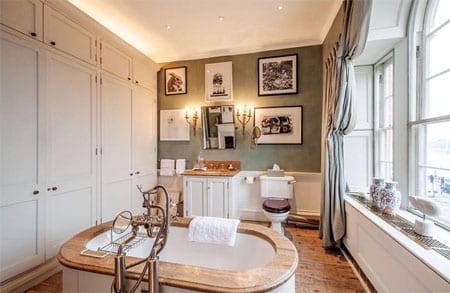
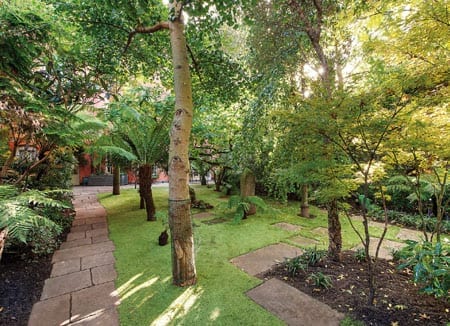
In the basement, there is is a large and well equipped kitchenIn addition, there is a separate breakfast roomOne of three bedroom suitesA bathroom in Belle Vue HouseThe 64′ garden features a mulberry tree from 1776
The rear garden is especially large for the location and measures some 64’2” by 47’7” and in addition there is a three car garage and additional parking.
Whilst the “beautiful view” has clearly changed since Belle Vue House was built, whoever purchases this house will undoubtedly be someone who will add to its remarkable history.
Belle Vue House, 92 Cheyne Walk, London, SW10 0DQ is for sale through Tancred Lidbury of Christie’s International Real Estate. For more information contact him on +44 (0) 20 7389 2478.
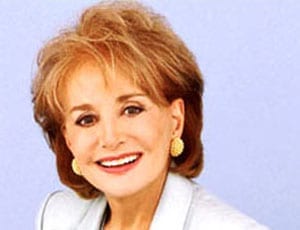
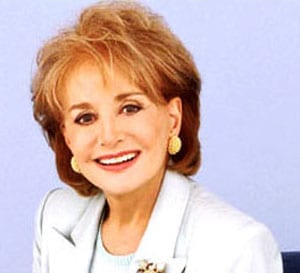
This dynamic American television personality and author was one of the first women to work in “hard news” and is best known for having hosted the Today show, the ABC Evening News, The View and 20/20. She grew up “in awe” of the famous people her father, a Broadway producer and nightclub owner, introduced her to, has been married four times to three different men and got chicken pox after ‘kissing’ actor Frank Langella at a New Year’s Eve party in Miami in 2012. Walters has interviewed everyone from Fidel Castro to Michael Jackson, but her March 1999 feature on Monica Lewinsky, watched by a record 74 million viewers, is indeed one for the history books. When she asked her subject: “What will you tell your children when you have them?”, Lewinsky replied: “Mommy made a big mistake”. At that point, Walters ended the show by stating: “And that is the understatement of the year”.
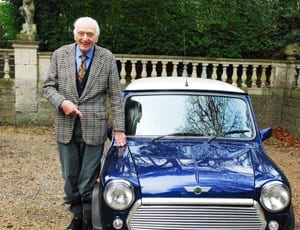
This genius of British design was told by leading bicycle manufacturer Raleigh that his lightweight, small-wheeled bicycle wouldn’t sell in the early 1960s. He proved them utterly wrong and his work with Sir Alexander Issigonis on the Austin Mini created a car that will be remembered forever. This unmarried and utterly eccentric engineer was also told by the Duke of Edinburgh “that he might end up under a glass case himself” and went as far as to swap his Rolls-Royce for a chauffeur driven Mini to beat ever escalating fuel costs.
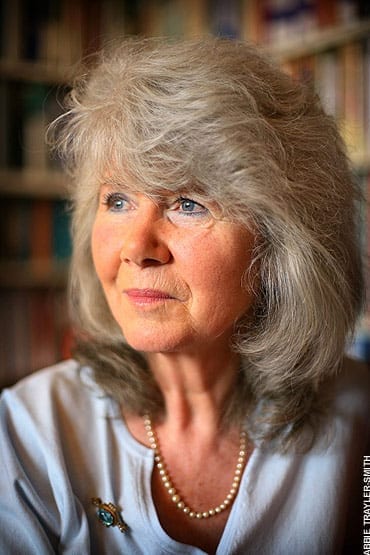
Jilly Cooper’s state of the nation style summary strikes chords with Matthew Steeples
Best-selling bonkbuster author Jilly Cooper might be best known for novels such as Riders and Jump! but in the 1980s and 90s she was equally lauded as “one of the Conservative Party’s most ardent supporters.”
Jilly Cooper
Cooper, born in 1937, showed she still has a grip on the nation’s pulse yesterday when she declared that the Conservative Party is “full of terrible people now” to The Spectator’s “Steerpike.”
Separately, in a comment to The Telegraph’s “Mandrake,” Mrs Cooper shared her thoughts on Pippa Middleton’s first book, Celebrate:
“[It] wasn’t a good idea. I don’t blame her – I think that she was ill-advised… All I can say is that I hope the British don’t demonise her because of it. She seems a lovely girl and her sister is wonderful.”
Ever the diplomat, Jilly Cooper, in these comments, shows herself as a truly brilliant wordsmith. She has tact and decency but at the same time doesn’t hold back when it comes to honesty.
Nigel Farage should put in a call. Mrs Cooper could be just the asset UKIP needs to transform them from a “bunch of loons” to electability.