Tag: 1960s

  • A Gipsy flies

    A Gipsy flies

    The story of a 1929 bi-plane with a truly fascinating pedigree


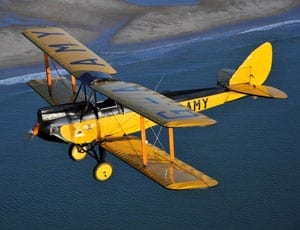
    Britain’s best-known wartime Prime Minister piloted a Gipsy Moth aeroplane that will be sold by auctioneers Bonhams in February 2013 at a guide of £120,000. The same craft was also featured in an iconic 1980s film and was also supposedly flown by a member of the Fiennes family who mysteriously disappeared in 1998.
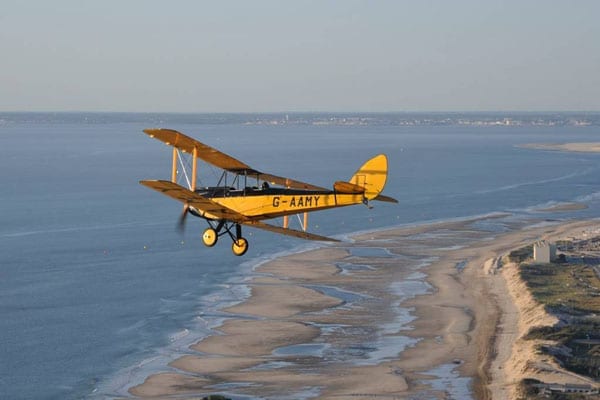
     

    The 1929 De Havilland DH 60 GMW Gipsy Moth bi-plane G-AAMY that will be sold by Bonhams at the Grand Palais in Paris in February 2013
    Sir Winston Churchill (1874 – 1965)

    Piloted several times by Sir Winston Churchill (1874 – 1965) and used in the Oscar award winning Out of Africa, this 1929 De Havilland Gipsy Moth bi-plane is 24-foot long and has a 30-foot wingspan. It is capable of a maximum speed of 105mph and “wears” a yellow and black livery. It’s registration is G-AAMY in homage to the pioneering English aviatrix Amy Johnson (1903 – 1941).


    In the film, the plane was flown by Robert Redford but though the life of the big game hunter Denys Finch Hatton he played is intriguing; the exploits of Redford’s aviator double are just as fascinating a story.
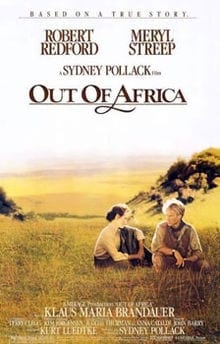
     

    Sydney Pollack’s “Out of Africa” (1985) starred Robert Redford and Meryl Streep
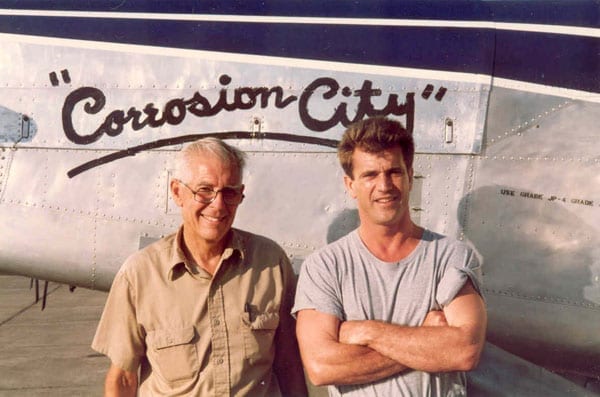
    Tom Danaher pictured whilst filming with Mel Gibson

    Few outside of the aviation world will have heard of Tom Danaher (1929 – ) but aside from Out of Africa, he’s pretty much done it all. After graduating from a high school in Dallas in 1941, he became a Marine Corps fighter pilot. Stationed on Okiwana in August 1945, he shot down the last Japanese bomber on the final night of the Second World War and also made history, aged 21, for downing three other Japanese “Betty” bombers in the eight nights before the ceasefire.


    Recalled to active service in 1951, Danaher flew one of the earliest jets, the F3D Skynight, with the Marines in Korea on night combat patrols and then was part of the last combat mission on a high altitude bombing strike over Pyongyang, North Korea in July 1953.


    Danaher’s passion for flying continued after the war and in 1954 he flew his own plane, a 1948 Bonanza, to England to visit friends he’d made from the RAF whilst in Korea. To make the journey, he built a 109-gallon auxiliary fuel tank so that he could fly straight across the Atlantic. On the way home he called in for an audience with Pope Pius XII in Rome.
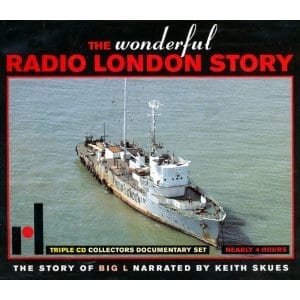
     

    The surplus Second World War minesweeper from which Wonderful Radio London operated in the 1960s

    Danaher’s visits to England led to him becoming involved in a pirate radio station in from 1944 to 1967 named Wonderful Radio London. Like many others, Danaher was not impressed by the BBC’s monopolistic attitude to radio programming and so helped build a 17,000-watt station on a surplus Second World War minesweeper. It was anchored three and a half miles off the English coast and outside of Britain’s territorial limit. Of the experience, Danaher told Airport Journals:


    “We had someone in Dallas who would record KLIF, a top 40 station, and we put it right on the air… The Englishmen over there just ate it up… The station programmed news and top 40 music and was very successful. It had the largest listening audience of any of any commercial broadcast station at the time.”


    Back in America, Danaher owned three car dealerships in Wichita Falls, Texas but sold them in 1972 to open his own airport, the Tom Danaher Airport. Lake Wichita Airport (7TXO), as it was also known, kept the aviator busy but he has also piloted in films numbering Empire of the Sun, Sky Bandits, Air America, Bad Medicine, The Pleasure of Love, White Hunter Black Heart, Cliffhanger and Goldeneye.


    In 1985, Danaher was recruited to fly Gipsy Moth G-AAMY by Sydney Pollack (1934 – 2008), the American director of Out of Africa. He recounted his six week experience on set in Masai Mara, Kenya in an interview for his local Texan newspaper, the TimesRecordNews, in 2008. Here, he highlighted the problems of trying to film with a vintage plane that “has no brakes and is difficult to steer”:


    “Robert Redford couldn’t make the thing turn. It took considerable finesse to turn it on the ground… The third time, he gave it full throttle… The left wing contacted a thick thorn bush and it tore some of the fabric off the lower left wing of the plane. We couldn’t fly it the rest of the day.”


    Other dramas arose with G-AAMY in terms of Meryl Streep’s body double refusing to fly in it and the craft struggling to reach the high altitudes necessary to film a sweeping shot of the plane flying past a waterfall. Danaher took charge stating: “If I can get a piece of string and a ruler, I can fix this.” He found just such, cleverly installed them and Pollack: “got every single shot he wanted.”
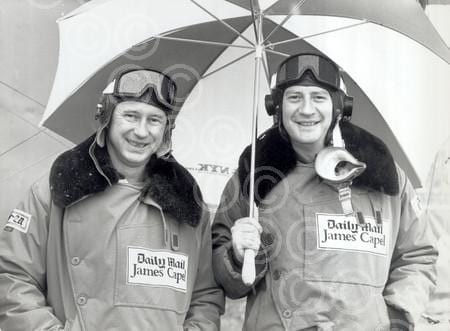
     

    Pilot Roger Fiennes (1944 – 1998) pictured with Alexy Zaitov during the 1989 Glasmoth project expedition to Moscow and back

    Another person to have piloted the Gipsy Moth G-AAMY, according to a comment left in the PPRuNe Professional Pilots Rumour Network forum, was a man named Roger Fiennes. Whether this “rumour” is true or not, the cousin of the actor Ralph Fiennes and the explorer Sir Ranulph Fiennes, is another character with a flying history as fascinating as his true family name – which turns out to be “Twisleton-Wykeham-Fiennes” when presented in full. Of why he did not use this lengthy and historic surname, Fiennes is said to have once commented:


    “You try writing that signature on a 6 foot long cheque book.”


    Fiennes flew many hours in a variety of planes and one of the best documented was an expedition supported by the Daily Mail from White Waltham Airfield in Berkshire to Sheremetyevo Airport in the Soviet Union in April 1989 and back. He flew one of three Tiger Moth bi-planes with a Russian navigator named Alexy Zaitov. The journey took three weeks to complete, involved 33 perilous stops and covered 5,000 miles.


    On 19th April 1998, Fiennes was piloting a 1941 DH82A Tiger Moth, G-BALX, from Dieppe to Headcorn Aerodrome in Kent but he failed to reach his destination. The Air Accidents Investigation Branch (AAIB) report into the disappearance concluded:


    “Although the pilot contacted Paris Information by radio, in the absence of a specific request, the flight plan was not activated. Lashenden was therefore unaware of the flight’s departure and ETA. When the aircraft was reported missing overdue action, and the subsequent Search and Rescue operation, which was activated on the morning of 21 April 1998. Since then there has been no sign of the aircraft or pilot.”


    Articles at the time and forums since are sparse in detail but several forum posters and articles suggest that Mr Fiennes had “mounting debts and a string of business collapses.” Whilst some go as far as to suggest a “Lord Lucan” style disappearance and make references to “paddling canoes” and “check[ing] the Panamanian register,” others remember a “nice guy, sadly missed.” Whatever really happened that fateful day, though, will probably never be solved.
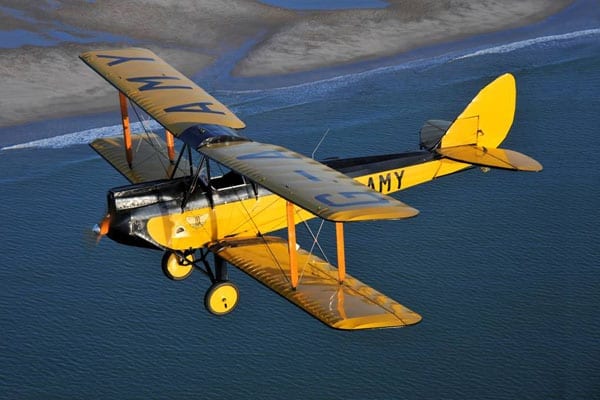
     

    Another image of Gipsy Moth G-AAMY

    G-AAMY, which was marked G-AAMT for the filming of Out of Africa, is a plane with a remarkable past. We suspect there’ll be a few more dramas for this craft yet.

    The 1929 De Havilland DH 60 GMW Gipsy Moth bi-plane G-AAMY will be sold by Bonhams at the Grand Palais in Paris, France sale during Rétromobile week (6th to 7th February 2013). For more information telephone +33 1 42 61 10 11 or go to: http://www.bonhams.com


    To learn more about Tom Danaher’s experience flying G-AAMY in Out of Africa, read the full TimesRecordNews report by Lara K. Richards at: http://www.timesrecordnews.com/news/2008/jun/08/fly/?print=1


    To read the AAIB account of the disappearance of Roger Fiennes and DH82A Tiger Moth, G-BALX, go to: http://www.aaib.gov.uk/cms_resources.cfm?file=/dft_avsafety_pdf_502449.pdf
     

  • Ecstasy and Babycham

    Ecstasy and Babycham

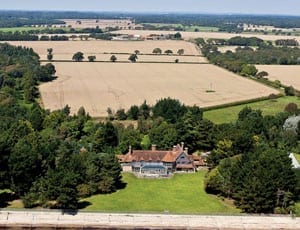
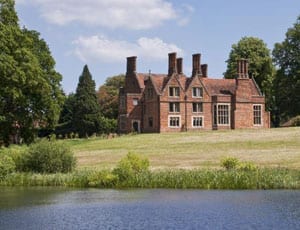
    A marine residence with a history tied to the Rolls-Royce Spirit of Ecstasy, the Special Operations Executive and Babycham
     

    The House on the Shore on Thorns Beach at Beaulieu in Hampshire is a home that wouldn’t look out of place in the Hamptons or Rhode Island. Dramatically situated next to the Solent waters to the north of the Isle of Wight, this suitably named building wouldn’t have been out of place in the 1980s BBC series Howards’ Way. It could. Indeed, have been an ideal home for Gerald and Polly Urquhart. (more…)

  • A Monarch Carries On

    A Monarch Carries On

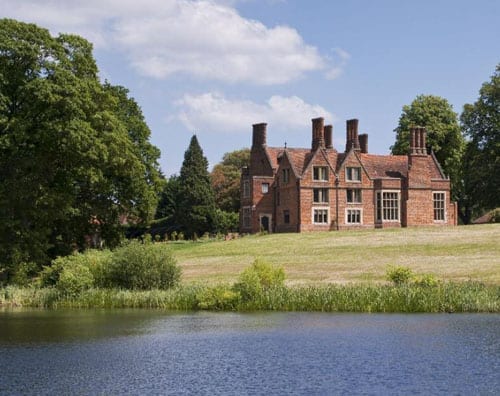
    The sale of the The Manor House, Stoke Poges


    In the blog that preceded “The Steeple Times,” Matthew Steeples took a look at The Manor House at Stoke Poges in March 2012. It’s still on the market at £13,500,000 and though the price has yet to be cut, there has been uproar about revelations that the former owners, South Buckinghamshire District Council, sold the freehold and a sculpture by John Deare for just £300,000. A link to the May 2012 “Bucks Free Press” article about this is included at the end of this article. What a Carry On!


    The Manor House, Park Road, Stoke Poges, Slough, Buckinghamshire, SL2 4PG
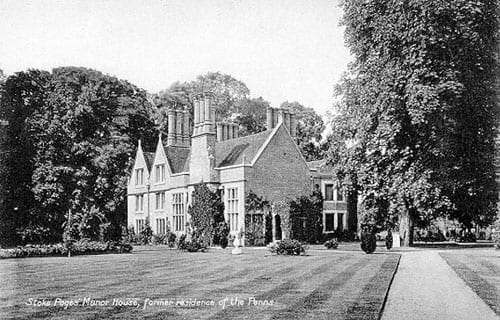
    An image of The Manor House sometime between 1910 and 1929

    Estate agents particulars are funny things. Normally gushing with nonsense such as “prestigious,” “luxurious” and “architect designed,” property agents rarely miss a trick when it comes to selling historical and personality related peculiarities.


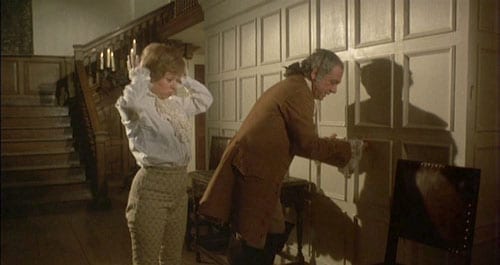
    Sidney James as The Reverend Flasher AKA “Big Dick” Turpin with Barbara Windsor as Harriett in a scene filmed in The Great Hall at The Manor House, Stoke Poges for the film Carry on Dick
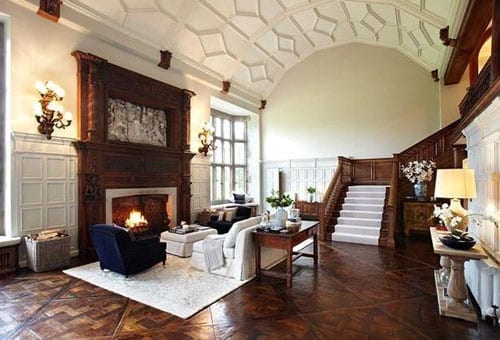
    The Great Hall at The Manor House today

    I was therefore somewhat perplexed that the brochure for The Manor House at Stoke Poges in Buckinghamshire didn’t contain reference to its appearance in the 1974 classic Carry on Dick.


    Agents Savills instead opted to gush about the house’s previous owners, who numbered Francis Hastings, second Earl of Huntingdon, Sir Edward Coke and Thomas Penn, son of William Penn, founder of Pennsylvania. The brochure also goes to the lengths of describing visitors who have included Queen Elizabeth I, Charles I and Sir Thomas Gray and points out that Sir Edwin Landseer used The Manor House as a studio whilst painting his most famous work, The Monarch of the Glen, in 1851. The filming of For Your Eyes Only and Bridget Jones’ Diary in the adjoining Stoke Park also get mention but Savills utterly neglect the starring role of the building as the home of the Reverend Flasher, played by Sid James, in Carry on Dick. Plainly “Big Dick” is not someone they wish this £13,500,000 house to be associated with.


    The Manor House is now a quarter of its original size as, on his return from America, Thomas Penn decided the house too dilapidated for his own occupation. He commissioned James Wyatt to build him the new mansion that is now Stoke Park Club in the 1790s and demolished the majority of The Manor House.


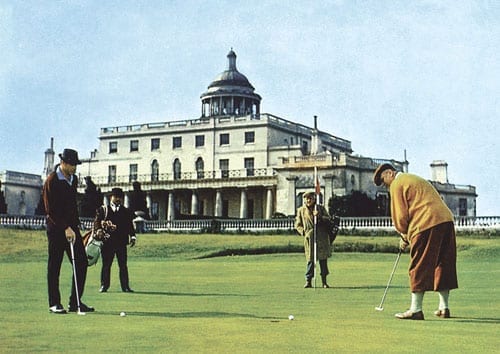
    Stoke Park as the backdrop to a golf match between James Bond (Sean Connery) and Auric Goldfinger (Gert Froebe) in For Your Eyes Only (1981). Oddjob (Toshiyuki Harold Sakata) caddies.

    In 1911, shortly after the Stoke Park golf course was laid out, further refurbishments were carried out that included the creation of the current Great Hall from the former kitchen, the introduction of bay windows and a new grand staircase.


    In 2010, Comer Homes acquired The Manor House and brought it into the 21st century. The 11,227 square foot main house and 7,966 square foot of guest and leisure accommodation were completely renovated and such things as multi-zoned, multi-sourced entertainment systems, CAT5 cabling and underfloor heating installed.


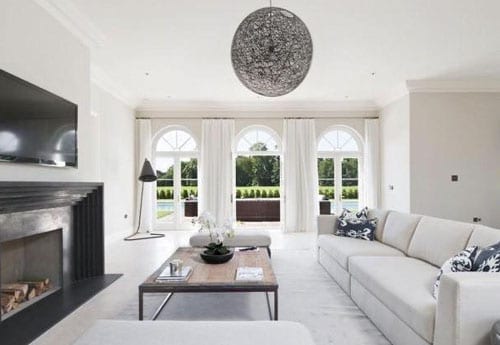
    The extremely neutral style of decoration is perhaps a reason that a buyer has yet to bite
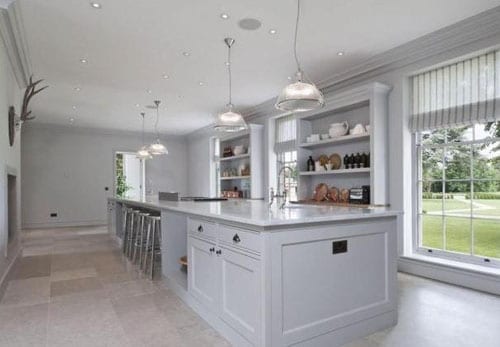
    The uninspired theme continues in the kitchen
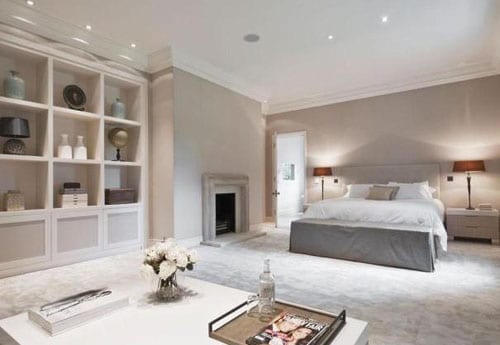
    Whilst this bedroom could be located, well, erm, just about anywhere

    Just 35 minutes drive from Mayfair and now looking somewhat like a hotel out of the Mr & Mrs Smith guide, The Manor House is an extremely manageable country home as it stands in just 10 acres of grounds. It will no doubt have huge appeal to a popstar, Euromillions winner or Russian oligarch. When viewing, however, they just better not mention “Big Dick” as no doubt soon the agent will have had “enough of it!”


    For more information on The Manor House, Park Road, Stoke Poges, Slough, Buckinghamshire, SL2 4PG contact Nick Ingle of Savills Beaconsfield on +44 (0) 1494 73152 or download a PDF brochure from: http://residentialsearch.savills.co.uk/property-detail/311852


    To see more images of The Manor House, Stoke Poges from when it was in Carry on Dick, go to: http://www.thewhippitinn.com/carry_on_film_locations/carry_on_dick


    View the trailer for Carry on Dick at: http://www.youtube.com/watch?v=8lk0NaWsbko


    To read the Bucks Free Press article about The Manor House and the £300,000 freehold sale, go to: http://www.bucksfreepress.co.uk/news/9701227._Why_was_historic_home_sold_for_so_little__/


  • The badgers of Albany

    The badgers of Albany

    Matthew Steeples delves into the history of Albany, Piccadilly and discovers an affordable way of living there


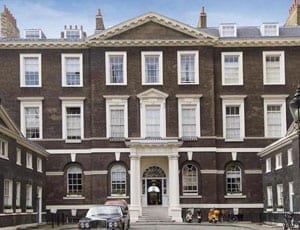
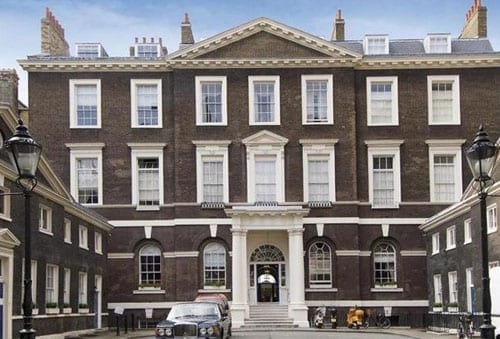
    Albany, off Piccadilly in Mayfair, was most probably London’s first apartment block and it’s certainly the city’s most exclusive. It may be next to the Royal Academy and opposite Fortnum & Mason but surprisingly few have even heard of it.


    Considering its location, Albany, which some make the mistake of referring to as “The Albany,” is an amazingly quiet oasis of peace and tranquility but, equally, it is a place of intrigue and drama. Residents, or “proprietors,” as they prefer to be known, of the 69 “sets” are particular about the “the” part of the name as they’d rather their residence not be confused with a public house and they are even more protective of their privacy. A porters’ lodge guards the entrance to the building and it is staffed mostly by ex-servicemen, who, until the early 2000s, had to wear top hats and tailcoats. Those allowed to pass enter a rarefied world frequented by what the Irish novelist Marmion Savage (1803 – 1872) identified as “incurable oddities” and “superannuated fops” in The Bachelor of Albany.


    The front courtyard and façade of Albany, Piccadilly, Mayfair, London, W1J 0AL
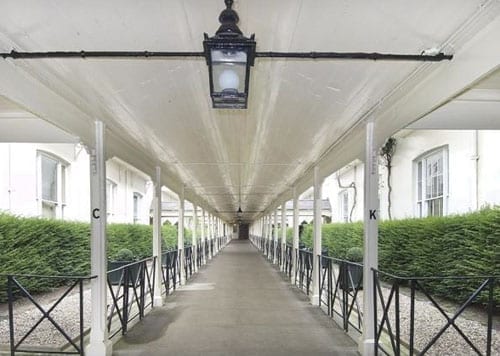
    The rope-walk connecting the various sets of Albany has been traversed by some of the greatest names in history

    Built by Sir William Chambers (1723 – 1796), who also designed Somerset House and the pagoda at Kew, between 1770 and 1774 for 1st Viscount Melbourne (1745 – 1828), Albany was originally known as Melbourne House and conceived as a three-storey mansion, seven bays wide with a pair of service wings flanking a front courtyard. From 1791 to 1802, the property was occupied by George III’s son, Prince Frederick, Duke of York and Albany (1763 – 1827), but after he left, the renowned architect Henry Holland (1745 – 1806) sub-divided the existing house and added two parallel sets of buildings running the length of the garden to create 69 “bachelor apartments” which he named “sets.”


    The “roll call” of residents since could easily fill our very own pages thrice over. They number royalty, politicians, artists, playwrights, academics and philosophers and here is a brief selection:


    –       Anthony Armstong-Jones, later 1st Earl of Snowdon

    –       Sir Thomas Beecham

    –       Sir Isaiah Berlin

    –       Lord Byron

    –       George Canning

    –       Sir Kenneth Clark

    –       Baroness Pauline de Rothschild

    –       William Ewart Gladstone

    –       Sir Edward Heath

    –       David Hicks

    –       Aldous Huxley

    –       Sir Simon Jenkins

    –       Rupert Lycett Green

    –       Malcolm Muggeridge

    –       Sir Harold Nicholson

    –       J. B. Priestley

    –       Sir Terence Rattigan

    –       Roger Scruton

    –       Baroness Sharples

    –       W. Somerset Maugham

    –       Terence Stamp

    –       Sir Denis and Lady Thatcher

    –       Sir Herbert Beerbohm Tree


    Each had to pass the vetting of a committee of trustees of this Grade I listed building. That committee forbids children under 14, pets, musical instruments and commercial activities and each approved resident has undoubtedly added to the history of this den dominated by a central walkway named the “rope-walk.” Incidentally, an example of a curious quirk at Albany is that no resident is allowed to speak to another on this walkway. If they do, a fine is incurred. Albany, indeed, is rather like a college in its systems of rules, regulations, order and hierarchy.


    For several centuries, women were not even allowed to cross the threshold and one legendary tale tells of Lady Caroline Lamb (1785 – 1828), disguised as a page boy, stealing into Lord Byron’s (1788 – 1824) set in 1815 to leave a note: “Remember me, Byron.” He replied with a simple verse:


    Remember thee, aye, doubt it not:

    Thy husband too shall think of thee.

    By neither shalt thou be forgot —

    Thou false to him, thou fiend to me.


    The strict and formal structure that controls Albany and ensured its maintenance has succeeded in the main because 34 of the 69 sets are owned by Peterhouse College, Cambridge. They and the other owners are highly particular in whom they lease to and on one occasion on hearing of an “unsuitable tenant,” the secretary of the trustees is reported to have shouted:


    “He’s a foreigner. Don’t like him. Don’t trust him.”


    Needless to say, that application didn’t progress and nor did one from a physiotherapist who planned to operate from the building. Bone bashing in Albany just wouldn’t do.


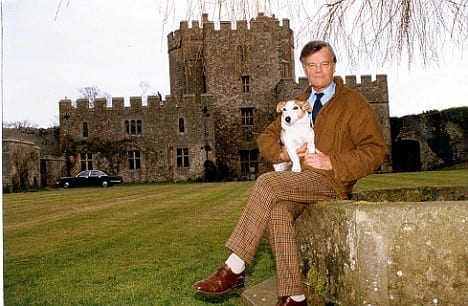
    The Rt. Hon. Alan Clark MP (1928 – 1999) in the grounds of his main home, Saltwood Castle, near Hythe in Kent in 1993

    A horsewhip, however, nearly crossed the threshold of set B5 in 1994, as it was here that the late Alan Clark MP (1928 – 1999) lived. The affable philanderer seduced the wife and both daughters of a certain South African named Judge Harkess and the wronged man stated he would “have horse-whipped Clark if he had known how comprehensively he had violated his honour.” B5, itself, was described as having the feel of “the straitened quarter of an Edwardian bachelor on his uppers” and the dotty, English attitude of the residents is best summed up by the reaction of Clark’s neighbour when he accidentally flooded their basement. When asked what he could do to make amends, their answer was quite simple: “Go and lie down in Piccadilly and wait for a double-decker bus.”


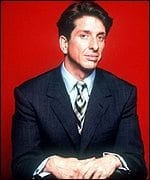
    The dandy and journalist John Morgan (1959 – 2000) typified social change at Albany in the 20th century just as much as he himself redefined etiquette and manners at Debrett’s and The Times. Of “humble origins,” Morgan was brought up in a “modest” bungalow in St Madoes, Perth, Scotland but is credited with persuading William Hague to remove his baseball cap whilst Conservative leader and offering advice ranging from “how to eat a banana” to “how best to tell friends that the partner you would like to bring to their wedding will be of the same sex as you.”


    Dandy and etiquette expert John Morgan (1959 – 2000)

    For the bachelor and GQ style director, living in Albany was symbolic of his own personal social elevation but he did not disown his past. This modern day Beau Brummell was a man of social contradictions who cashed his cheques at Claridge’s but was a member of the National Union of Journalists. He was a Tory but still regularly attended chapel meetings as he had done in his youth. Here was a man of paradoxes who seemed unable to come to terms with the fact that he was a homosexual.


    Morgan, an asthma sufferer, fell to his death from a fourth floor window on 9th July 2000. He was found in just a white shirt in a basement below a window whose sill was strangely undisturbed. The coroner left an open verdict with a suspicion of suicide and it was widely reported that police found 60 made-to-measure Savile row suits, 300 monogrammed shirts and 90 pairs of shoes in the etiquette expert’s small set. Mystery shrouds the story of his tragic demise to this day but Johnny Morgan will forever be remembered as an arbiter of both good taste and behaviour.


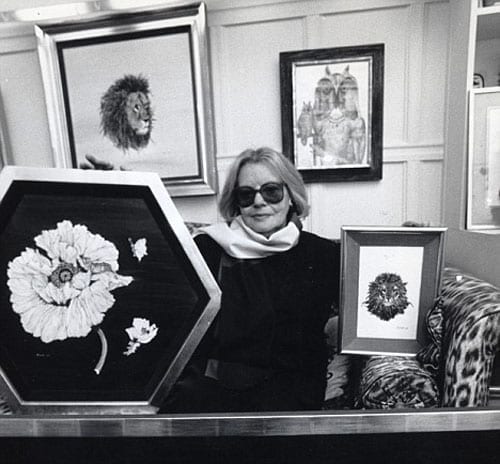
    Whilst Morgan represented continuation of the trend of bachelors living in Albany, change also came in the 20th century when the building’s committee removed the restriction that allowed only bachelors to be resident. With that females were allowed in and amongst them Fleur Fenton Cowles (1908 – 2009) was one of the most fascinating.


    Fleur Fenton Cowles (1908 – 2009) in her set at Albany with some of her paintings and one by Salvador Dali

    This writer and artist occupied five sets knocked into one with her fourth husband, timber merchant Tom Montague Meyer, and according to the Daily Mail’s Geoffrey Levy, hosted “elite soirees of the powerful and famous.” Levy recounts them at length but here is a flavour:


    “On a Wednesday evening, a typical dinner party… would include Foreign Secretary Selwyn Lloyd, Labour leader Hugh Gaitskell, entertainer Danny Kaye and film star Douglas Fairbanks Jr. The Queen Mother regularly came to tea and was once joined by Pavarotti who sang Happy Birthday for the royal guest. ‘I don’t want her to die,’ said Fleur. ‘I couldn’t bear to think she doesn’t live just down the street.’ ”


    Fenton Cowles, founder of the ill-fated Flair magazine and a “woman who knew everyone,” loved Albany and an exact replica of her “windowless, milk-yellow” study there has even been recreated at the University of Texas.


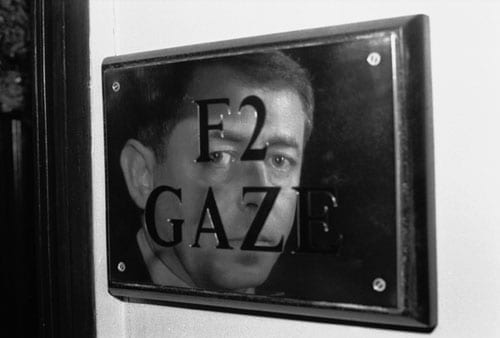
    Another known for hosting extravagant bashes in Albany was my late friend, the Russian icon dealer John Gaze (1947 – 2011). Gaze had, as a boy, asked his father about the building when he passed it as a child and immediately declared he would live there one day. He took F2, the former set of Edward Heath that overlooked Savile Row to the rear, in the mid 1990s as he craved the safety that the building offered after having been kidnapped at gunpoint by an Oxford graduate conman named Sacheverell de Houghton in April 1991 from his then home in Fournier Street, E1. He made the most of his tenancy.


    Russian icon dealer John Gaze (1947 – 2011) reflected in the brass plaque outside his Albany set, F2. It was formerly occupied by Sir Edward Heath.

    Gaze’s parties included a fundraiser for people with AIDS hosted by a drag queen. This sparked fury with certain other residents and coverage in the Daily Telegraph and another incident there involved him encountering Alan Clark on the ropewalk carrying a portrait of Lenin. “Where the fuck are you taking that?” Clark supposedly bellowed but was “reassured” when he was told it was “destined for a less salubrious address in Whitechapel.” John Gaze remained at Albany for several years but, like a number of others I know, was forced out by ever rising rents and moved first to Chelsea and then Ennismore Gardens, Knightsbridge. He always remembered his time at Albany fondly and as a bon vivant, he truly belonged there.


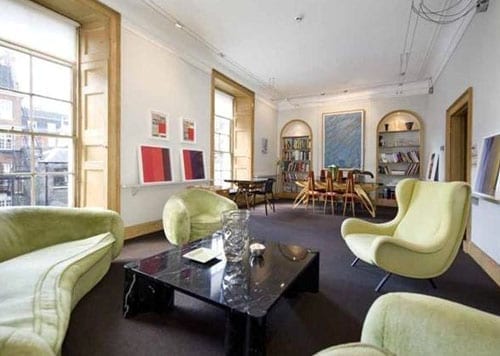
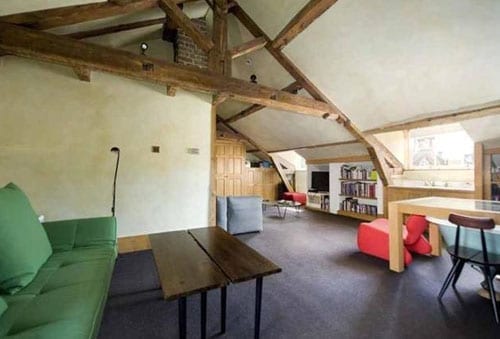
    The main reception room in a £1,400 a week set currently available in Albany
    An attic room in the set that could be used as a second reception room or second bedroom
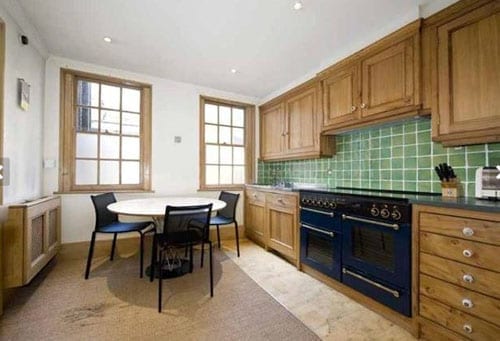
    The kitchen is lacking in character but offers ample space for informal dining

    Contrary to what you’d expect, living in Albany is not quite as expensive as one might think. A 2-bedroomed 1,970 square foot set is currently available through Knight Frank for £1,400 a week: a figure that seems quite reasonable given the location, history and size of this property. Available on a minimum 8-year rental term, it includes a formal reception room, a dining kitchen, 2 bedrooms and 2 bathrooms.


    This £300 per week set, D2, consists of just one room
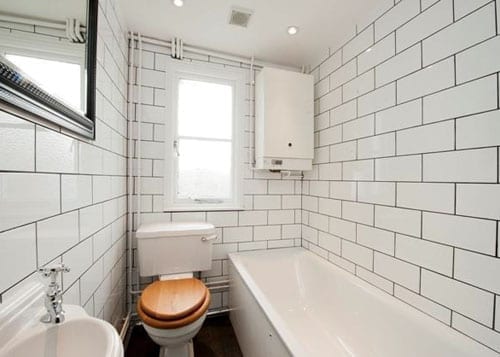
    The communal bathroom D2 shares with other sets is basic but clean

    For those looking for something cheaper, Savills offer D2 Albany at £300 per week. This set consists of a 221 square foot third floor attic room with access to a communal bathroom and the agents suggest that it: “would make an ideal reading or writing room or an occasional bedroom for a pied-a-terre.” It’s effectively a posh form of tenement but what a way to impress your peers and subordinates.


    Damon and Sandra de László in their “duplex” in Albany

    Those renting either of these sets would find the likes of the industrialist Damon de László, a descendant of the Hungarian painter Philip Alexius de László (1869 – 1937), as their neighbour. The couple occupy Lord Byron’s former set, A2, and have, on occasions, opened it for a charity dinner with Matthew Parris at £1,000 a ticket as well and for members of The Portrait Institute to view their collection of de László’s works.


    Professor Philip C. Bobbitt in his grand freehold set


    Another present day resident is a man Henry Kissinger calls “the outstanding philosopher of our times,” Professor Philip C. Bobbitt. This Texan lawyer is a nephew of Lyndon B. Johnson and the author of Terror and Consent, which Tony Blair describes as “required reading for political leaders.” Bobbitt owns an impressive flying freehold set that is described as having a masculine style of décor and a “kitchen he has designed to look like a bar.” In an interview for The Independent he states that he finds Albany: “a propitious place to work.”


    Though governments and bankers come and go, behind this quintessentially English façade, order and disorder have always been maintained. The wildcards of this hidden haven have a knack for living by the doctrine “to live at Albany is to live in history” and indeed they make the most of that. Those who are lucky enough to be let in, do, indeed, truly find themselves in the “Paradise of Piccadilly.”


    For more information about the £1,400 per week 2-bedroomed set in Albany, contact Knight Frank on +44 (0) 20 3641 2489 or go to: http://www.primelocation.com/to-rent/details/21089526?search_identifier=561863685a1a55b5da85141e12cfeec7


    For more information about the £300 per week attic room in Albany, contact Savills on +44 (0) 20 3641 2584 or go to: http://www.primelocation.com/to-rent/details/26791351?search_identifier=561863685a1a55b5da85141e12cfeec7


  • A long, long Savile road

    A long, long Savile road

    Why does the Savile story really keep running?


    We’re all Saviled out. It’s been more than eight weeks since revelations about Jimmy, formerly Sir Jimmy, Savile came to public attention. Yes, the horrors of his “activities” have appalled us all but frankly why do the media really keep this story running as a main news item?


    It does what it says on the tin

    We’ve been as much a part of this monstrous escapade as anyone else: our editor went on the BBC to talk about the scandal and we’ve even received messages of support from Savile’s twisted “friends.” We beat the Daily Mail in being the first to report on the sale of the paedophile’s flat in Leeds and spotted Sir George Young removing a photo of him and Savile from his website before any other. We admit it: our readers plainly are as intrigued by this story as much as we were curious enough to report on it.


    It suited our Prime Minister very nicely to wheel out Theresa May yesterday to announce an inquiry into the activities of another supposed child molester who just happened to be a member of Margaret Thatcher’s government. “Why so?” we hear you justifiably ask. Well, just like the spinner Jo Moore “burying bad news” on 9/11, the US elections were the perfect opportunity to dispense of the activities of a certain magnate beneath the Tarmac®. Somehow, though, and as much as she tried to smooth things over, we don’t think May’s attempts at concreting over this particular highway will set satisfactorily.

  • Charmian Brent (better known as Charmian Biggs)

    Charmian Brent (better known as Charmian Biggs)

    In the autumn of 2012, an ITV1 series, Mrs Biggs, dramatised the life story of this headmaster’s daughter from Reigate, Surrey. In it, Sheridan Smith (pictured here with the real Mrs Biggs) portrayed a lady of steely reserve who is intelligent, articulate and courageous. The former wife of the Great Train Robber Ronnie Biggs has now built a new life for herself in Melbourne, Australia as an editor, publisher and journalist and on crime, her views are simple: “[It] doesn’t pay in any way, shape or form.”

  • Where Dibnah mucked around

    Where Dibnah mucked around

    As Fred Dibnah’s former home comes to the market, Matthew Steeples is reminded of a true BBC legend


    As the nation continues to cringe in horror every time the name “Savile” is mentioned, memories of another BBC relic of the 1980s resurfaced when it was revealed that Fred Dibnah’s former home is for sale.


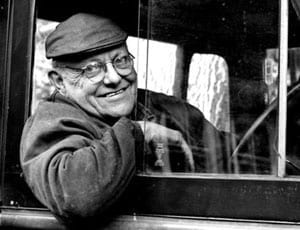
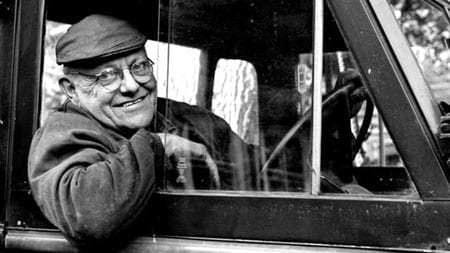
    Dr. Frederick “Fred” Dibnah MBE (1938 – 2004)
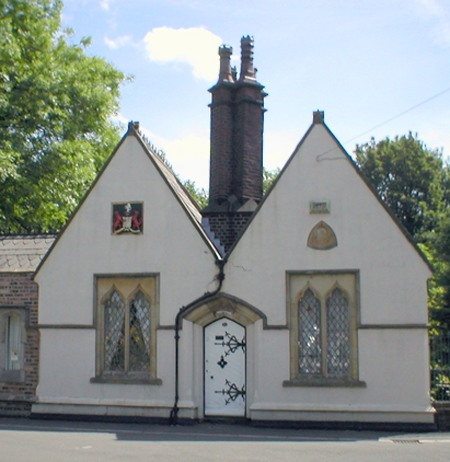
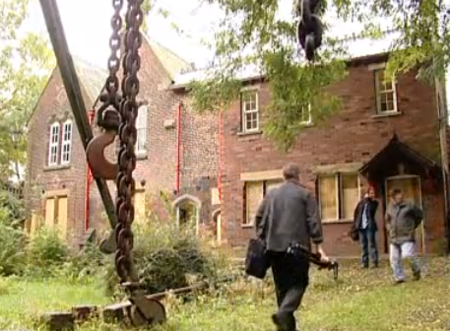
    121 Radcliffe Road, The Haulgh, Bolton, Lancashire, BL2 1NU (originally known as Park Cottage)

    For those of our readers who weren’t fortunate enough to be alive when Dibnah graced our screens, he, unlike Savile, was a legend who truly deserves the accolade of such a title. This thrice-married Lancastrian was a steeplejack who became a television personality just as his breed died out. He didn’t understand why he’d become famous and of it commented:


    “It’s a funny thing, this celebrity. If you don’t wave back you’re a miserable bugger, if you do wave back you’re a big-headed bugger. I don’t know.”


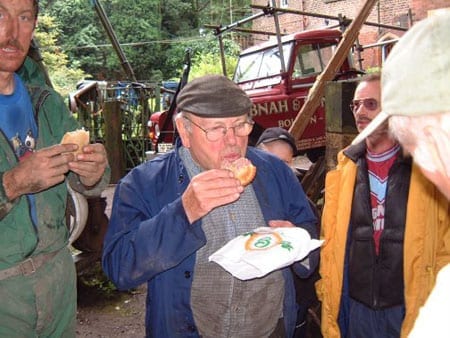
    Fred Dibnah in his garden
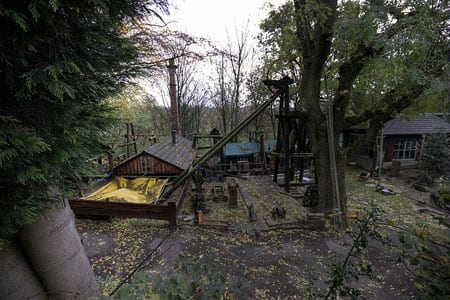
    A view of the “garden”

    Fred Dibnah preferred to think of himself as “just a bum who climbs chimneys” but he ought instead be remembered for his forthright manner. Amongst the legendary comments this “chimney feller” came out with were remarks like:


    “The modern world stinks… We’ve become a nation of con men, living by selling double-glazing to each other… Teaching boys to bake cakes? That’s no way to maintain an industrial empire… Them fancy London types don’t know the pleasure of eating chips with fingers… I prefer the past to the present. Because life today, with all its modern technology, isn’t very good, is it? And the future looks even worse.”


    Dibnah bought 121 Radcliffe Road in Bolton in 1967 for £5,000. A Grade II listed former park keeper’s lodge, the building is known as “Two Cats” locally because of the coat of arms of the Earl of Bradford on one of the gables features two leopards and is said to have been built in 1854.


    The cottage was the setting of the filming of many scenes from Dibnah’s shows and it was here also in 2003, whilst undergoing chemotherapy, that Dibnah decided to embark on the construction of a replica coal mine with his friend Alf Molyneux. His rationale for this was simple: “It’s not everyone who has a coal mine in their back garden.”


    An attempt to auction the house with a guide price of £300,000 to £350,000 in 2007 failed because of a boundary dispute
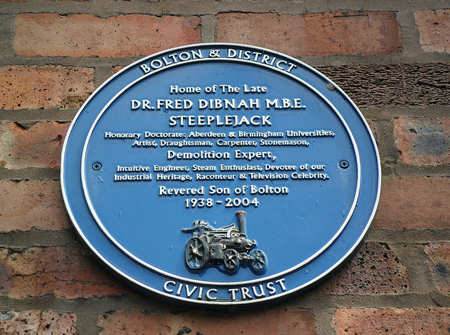
    A Bolton & District Civic Trust plaque commemorates Dibnah having lived there from 1967 until 2004

    Leon and Jeanette Powsney purchased the derelict property in 2009 for £185,000 and set about turning part of it into a 5-bedroomed home for themselves and the remainder into The Fred Dibnah Heritage Centre.


    Visitors, who come by the coachload, are able to tour the yard and see Dibnah’s machinery. Amongst that on show are steam-powered workshop with a circular saw, a band saw and a hydraulic hammer. The 70ft mine shaft remains and in addition there is a 50ft chimney, a gift shop and a small tearoom. The venture turns over about £100,000 per annum and is now for sale through agents Intelligent Business Transfer.


    Mr Powsney, who is planning to move abroad, commented:


    “We’re selling it as a going concern. It was a business set up against all the odds, we saved it from being flattened and from being redeveloped. We have worked hard to make the centre what it is, and have invested a lot of money in it. We think there’s potential for a buyer to make a tidy profit from it, but we’re looking to relax a bit more now.”


    If the asking price of £1,250,000 sought by Mr & Mrs Powsney is achieved, I’m sure the legendary steeplejack wouldn’t disagree that here is a case of: “Where there’s muck, there’s brass.”


    For further details about 121 Radcliffe Road, The Haulgh, Bolton, Lancashire, BL2 1NU contact Intelligent Business Transfer on +44 800 612 7718 or go to: http://www.intelligentbusinesstransfer.com/index.php/heritage-centre-meseum.html


    To visit the museum contact Leon Pownsey on +44 (0) 1204 531303 or via email at: [email protected]


    Watch a video of Fred Dibnah in his garden: http://www.youtube.com/watch?v=FFJq2zayy1s

  • Going under the Kosh

    Going under the Kosh

    The sale of a $25 million mansion modeled on Marie Antoinette’s favourite retreat that has connections to Levi Strauss & Co., Yehudi Menuhin, the Zodiac Killer and a controversial dot-com tycoon


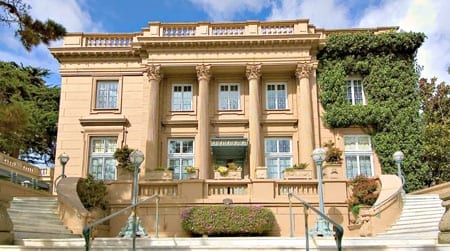
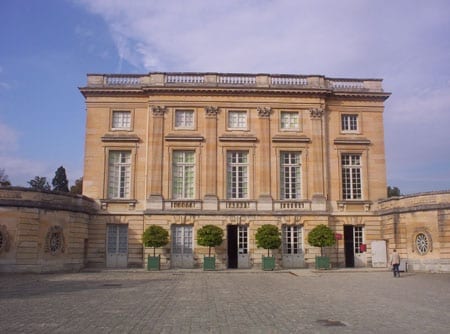
    Modeled on the Petit Trianon, a small château in the grounds of Versailles that was favoured by Louis XVI’s wife Marie Antoinette, the Koshland Mansion at 3800 Washington Street in Presidio Heights, San Francisco, California was built between 1902 and 1904 for a pioneer wool, hide and fur merchant named Marcus S. Koshland and his wife, Corrine.


    The Washington Street elevation of the former Koshland Mansion at 3800 Washington Street, San Francisco, California, CA 94118
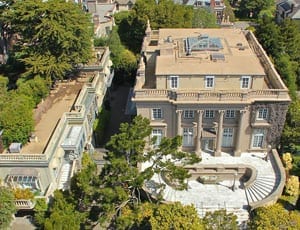
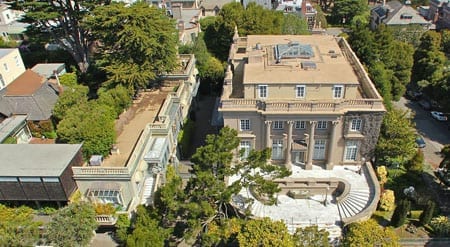
    An aerial view of the 18,000 square foot property and the 2,600 square foot guest accommodation
    The inspiration for the Koshland Mansion: The Petit Trianon, Château de Versailles, Place d’Armes – 78000 Versailles, France

    The Koshlands, whose son Daniel (1920 – 2007) was to become a president of Levi Strauss & Co., commissioned an architect named Frank S. Van Tree to design a replica of the Petit Trianon after having admired it whilst on holiday in France. The front of the building, facing onto Washington Street, is considered such a faithful representation of the neoclassical building the Koshlands copied and as a result the house is now designated a San Francisco Designated Landmark.


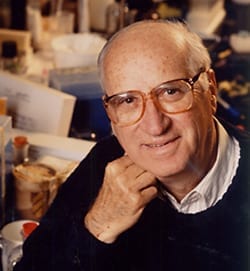
    Daniel E. Koshland, Jr.

    Some 20,000 square foot in size and set on a 2/3rd acre plot, the completion of this sandstone faced “single family residence” was celebrated by the Koshland family with a Marie Antoinette themed ball in 1904. The invitations to this legendary event were purchased and printed in Paris and hand delivered to the guests.


    The Koshland Mansion survived San Francisco’s 1906 earthquake with only a little damage to the front elevation

    The 1906 San Francisco earthquake, just two years after they’d completed the building, somewhat interrupted the Koshlands hectic party schedule at 3800 Washington Street. Though the disaster caused the front columns and roof balustrade to collapse, the couple generously opened the otherwise undamaged property to some 60 to 80 displaced family and friends. With no mains water, the guests had to fetch water from Fort Mason but they were no doubt happy to have had somewhere to take refuge.


    During subsequent renovations, as well as restoring the façade, a 5-car garage was added in 1909 and a greenhouse and extension in 1912. In the ensuing years, until her death in 1953, Corrine Koshland, better known as Cora, opened up 3800 Washington Street as a venue for concerts. A founder of the San Francisco Symphony Association and one of the first directors of the San Francisco Opera Company, Koshland invited music critics to review the performances and gave both Yehudi Menuhin and Isaac Stern their musical debuts at the house as child prodigies. Amongst the other big names to play in the masnion were Igor Stravinsky, Jascha Heifitz and Leonard Bernstein.


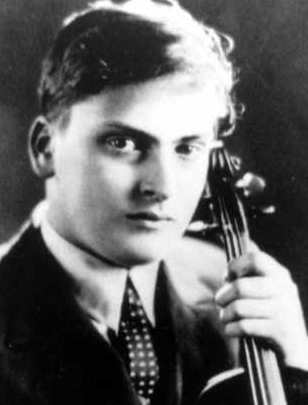
    Sir Yehudi Menuhin KBE (1916 – 1999) pictured in his youth

    In 1953, the Koshland Mansion was sold for $100,000 by the estate of Cora Koshland. The purchaser was Walter E. Buck (1884 – 1966), president of the American Distilling Company. Buck and his wife Emily, who were well known for “Gatsby-esque parties” at their 1,300 acre estate, Woodside, redecorated 3800 Washington Street by “painting the mahogany library white, removing the dark green, gold-tooled leather from the dining room and developing small card rooms in the basement.” It seems likely that the era of parties at 3800 Washington Street continued during their occupancy.


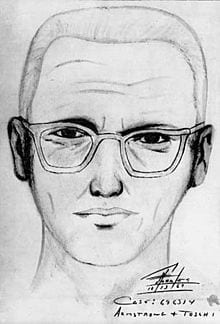
    On 11th October 1969, a murder occurred on the block where 3800 Washington Street stands when the Zodiac Killer, a to this day unidentified serial killer who operated in Northern California in the 1960s and 1970s, shot and killed a cab driver named Paul Stine. Stine had collected his passenger one block west of Union Square and had, as requested, driven him to the intersection of Washington and Maple Streets in Presidio Heights. Once there, the cab driver was shot once in the head with a 9mm before the killer, observed by three teenagers across the street, took his wallet and car keys. The Zodiac Killer tore off a section of Stine’s bloodstained shirt, wiped the cab clean and walked off into the night before the police could arrive.


    A sketch of the Zodiac Killer

    Subsequently, on the 14th October 1969, the San Francisco Chronicle were mailed a swatch of Stine’s shirt to prove he was the killer and then on 9th November 1969, a 7-page letter followed. Excerpts from it were published from it in the newspaper on 12th November which revealed that a police officer, Don Fouke, who had responded to the teenager’s call, had actually encountered the killer for 5 to 10 seconds on a stairway of a house close to the murder scene. Fouke had been told to look for a black suspect and on seeing a white man going into the yard of a house, had discounted the individual and drove on. The Zodiac Killer, in his letter, detailed the encounter but claimed that two policemen had actually spoken with him 3-minutes after he’d shot Stine.


    In 1975, a neighbour, Paul Renne purchased 3800 Washington Street for $675,000, supposedly to prevent it being acquired by property developers, but having been used as the 1982 San Francisco Decorator Showcase house, it was placed on the market and sold to a gallery owner named Heidi Betz and her business partner, an art collector named Charles Pankow. They paid $1.5 million for the house but failed in their bid to turn it into an art gallery due to objections from neighbouring residents.


    Halsey Minor

    In the two decades that followed 3800 Washington Street was sold several more times but finally it’s glory days looked set to return in 2007 when it was purchased by an “internet titan” named Halsey Minor and his second wife, Shannon. Having paid approximately $22 million for what essentially was going to be a very expensive renovation project, Minor supposedly assigned a further $15 million towards renovations and hired Michelle Obama’s favourite designer, Michael S. Smith, to oversee the project.


    Minor founded CNET, a tech media website that published news, articles, blogs and podcasts on technology and consumer electronics, in 1992 after leaving Merrill Lynch and built it into one of the first internet companies to achieve profitability. CNET was sold for $1.8 billion in 2008 and is now CBS Interactive. Another of the companies he co-founded in 2000, salesforce.com, was “one of the most successful companies of the decade” and achieved a market capitalisation of in excess of $15 billion.


    Having made a small fortune from his dot-com success, Minor diversified into investments that brought with them a lifestyle that would later be described as “a multi-millionaire who lived life as a billionaire.” In 2007, he began construction of a hotel in his hometown of Charlottesville, Virginia and announced this would be part of a series he’d open as part of the Minor Family Hotel group he planned. The hotel has never been completed.


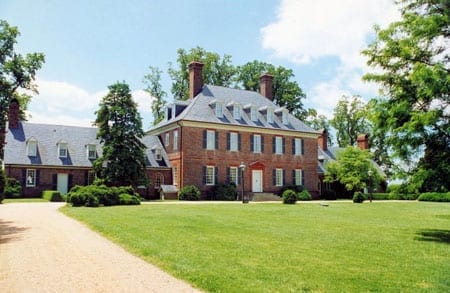
    Carter’s Grove, 8797 Pocahontas Trail, Colonial Williamsburg, Virginia, VA 23187: considered to be one of America’s finest and most historic residences. It was bought by Halsey Minor in 2007 and has fallen into significant decline in the years since.
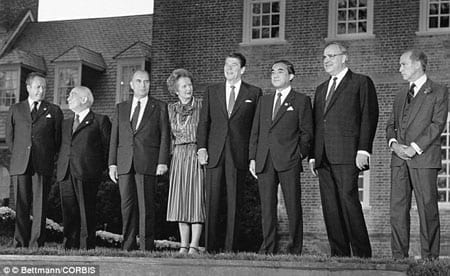
    The 1983 Group of Seven (G7) meeting at Carter’s Grove. Pictured outside the house are: Pierre Trudeau, Prime Minister, Canada; François Mitterrand, President, France; Helmut Kohl, Chancellor, West Germany; Amintore Fanfani, Prime Minister, Italy; Yasuhiro Nakasone, Prime Minister, Japan; Margaret Thatcher, Prime Minister, United Kingdom; Ronald Reagan, President, United States of America and Gaston Thorn, President, European Commission

    In the same year, he also bought the Koshland Mansion and purchased 400 acres of land and a residence on the James River, the Carter’s Grove Plantation, for $15.3 million. Here, he planned a centre for thoroughbred horse breeding and at around the same time he attempted to buy both the Hialeah Park Race Track in Hialeah, Florida and the Pimlico Track in Baltimore. Both bids failed.


    Minor’s investments were not just limited to property and the equine sector. In 2006, he placed a $3 million deposit on a $59 million Gulfstream G650 and at Sotheby’s in 2008, he was the winning bidder on a painting by Edward Hicks, The Peaceable Kingdom, at a hammer price of $9.6 million and also bought paintings by Andy Warhol and Childe Hassam.


    Around this point, however, this dot-com tycoon’s fortune began to unravel when Merrill Lynch called in a $25 million loan and various legal suits connected to his art collection, investments and properties commenced. Several of his homes were repossessed and at a court hearing in August 2011, he claimed to have just $112,643 in cash and owned no publicly traded securities. Minor claimed to be majorly broke but the declaration did not cover illiquid assets such as art, real estate and shares in non-public companies. To this day, Minor remains listed in first place on the State of California’s Franchise Tax Board’s top 500 delinquent taxpayers owing some $10,455,580.69.


    In response to his supposed progression from riches to rags, Minor wrote an article for The Huffington Post in July 2012 entitled “Why I Fight”:


    “I often wonder what Thomas Jefferson would think of today’s America, a nation that is rapidly but silently abandoning the individual in favour of faceless corporations, rapacious banks and a collusive, unresponsive government… The simple answer is that someone must [fight] or we will emerge from this recession with wealth and power concentrated in a few tiny financial institutions representing a new ruling elite, not unlike the one that inspired Thomas Jefferson’s generation to revolution.”


    Somehow, in spite of his changed circumstances, Minor has managed to hold on to 3800 Washington Street. Though, during his tenure, the house has fallen into decline and is now half covered in ivy, it is still one of San Francisco’s finest properties and it is still situated in one of the city’s best neighbourhoods. It is still an asset of considerable value and Minor’s decision to sell may well help him rake back some of what he has lost.


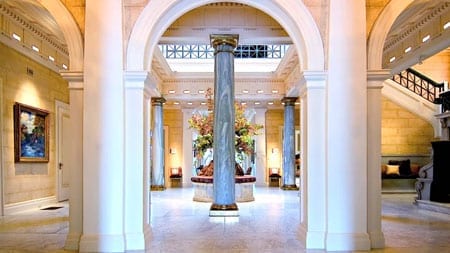
    The hallway at 3800 Washington Street
    A drawing room at 3800 Washington Street
    One of the property’s dining rooms
    The opulent ballroom at 3800 Washington Street

    Steven Mavromihalis of Pacific Union International launched 3800 Washington Street onto the market in May 2012 for $25,000,000. This move came just after two Abandoned Building Notices had been issued on the property by the City and County of San Francisco Department of Building Inspection. On offer is the 18,000 square foot main house at 3800 Washington Street, a 2,600 square foot 3-bedroom house at 3810 Washington Street and a vacant lot at 125 Maple Street. Though the agents don’t give much more in the way of details, they do refer to the house having a double marble Palladian staircase, 22 rooms, a “spectacular ballroom,” 8 bedrooms, 7 bathrooms, 9 fireplaces, 3 kitchens, an elevator and three original stained glass windows by the San Francisco poet, writer sculptor and artist Bruce Porter (1865 – 1964).


    According to the agents, 3800 Washington Street is second only to Danielle Steele’s 55-room residence, The Spreckels Mansion, at 2080 Washington Street in the rankings of the largest homes in San Francisco. This is most certainly a mansion with a fair few tales to tell but whoever buys it will need both Steele’s wealth and imagination to get it back into good order. Dot-com tycoons and serial killers need not apply.


    Read more about the Zodiac Killer at: http://en.wikipedia.org/wiki/Zodiac_Killer


    A profile of Daniel E. Koshland, Jr. is available at: http://en.wikipedia.org/wiki/Daniel_E._Koshland,_Jr.


    Read more about the downfall of Halsey Minor at: http://www.dailymail.co.uk/news/article-2154564/Halsey-Minor-tech-guru-files-bankruptcy-ruined-Carters-Grove-estate.html


    All enquiries about 3800 Washington Street, Presidio Heights, San Francisco, California, CA 94118 should be directed to Steven Mavromihalis of Pacific Union International on +1 (415) 345 3030 or email him at: [email protected].


    More details are available at: http://www.pacunion.com/homes/CA/San_Francisco/94118/3800__Washington_St/AGT-107397278-685992/ whilst a video tour of the property can be viewed at: http://vimeo.com/42775765

  • Charlie Richardson (1934 – 2012)

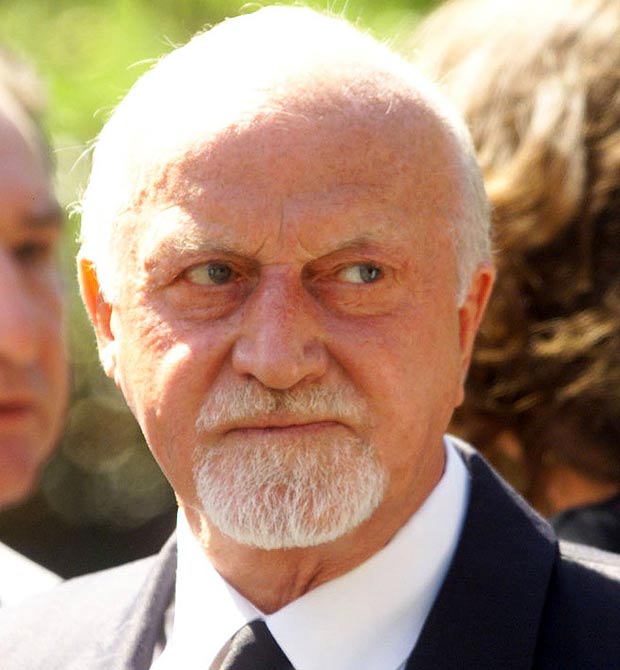
    Charlie Richardson (1934 – 2012)

    This father of six and his gang were amongst the most notorious and sadistic criminals in South London in the 1960s. Using scrap metal and slot machine businesses as fronts, they ran fraud, protection rackets and received stolen goods. They were best known for nailing those who displeased them to floor and then made them mop up their own blood. This process was known as “taking a shirt from Charlie,” since afterwards a clean shirt was provided for the victim to return home in. Richardson, however, maintained the torture stories were a myth. In his twilight years, Beckenham based Richardson mellowed and spent his time campaigning on behalf of young offenders.

  • Dame Mary Quant DBE FSCD (also known as Barbara Mary Plunket Greene)

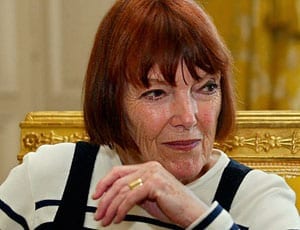
    Dame Mary Quant DBE FSCD (also known as Barbara Mary Plunket Greene)

    Mary QuantMary Quant is credited as the creator of the miniskirt, hot pants and most intriguingly duvet covers. This diminutive fashion designer also designed the interior of the Mini Quant back in 1988 but is now most likely to be spotted in La Brasserie in Brompton Cross. She married her business partner, Alexander Plunket-Greene, in 1953 and remained with him until his death in 1990.