The sale of the £18 million Sir John Soane designed Tyringham Hall
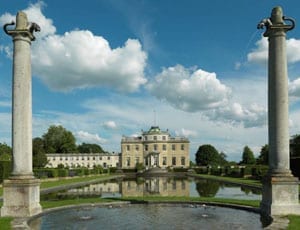
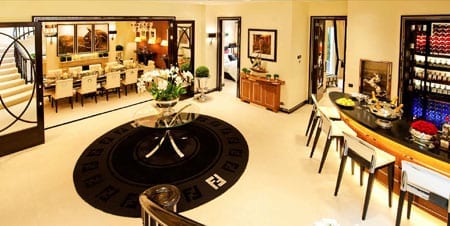
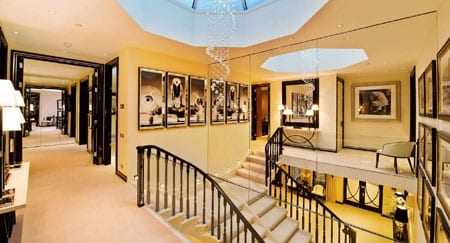
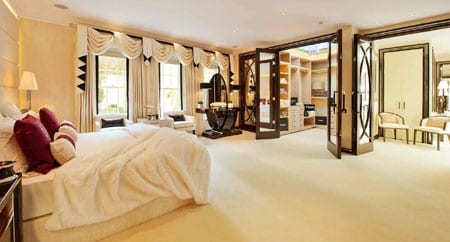
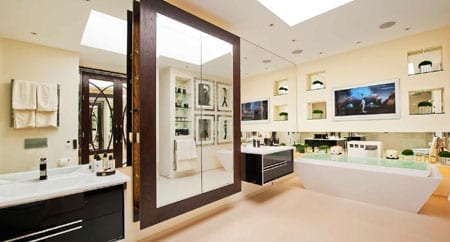
Property developer Anton Bilton and his Brooklyn born wife Lisa Barbuscia-Bilton (better known as Lisa B.) bought the Sir John Soane designed Tyringham Hall in Buckinghamshire for £2.5 million in 2001. They’ve recently put it on the market at the staggering price of £18 million.
“He condensed good and evil. An extraordinary personality” was Pier Ferdinando Casini, head of the Italian centrist Democratic Center Union party’s description of this seven times Prime Minister of Italy. Andreotti was given many nicknames by his detractors. Amongst them were the monikers of Beelzebub, The Hunchbank, The Black Pope and Divo Giulio (after Julius Caesar). Andreotti, famed for ambushing Margaret Thatcher at a 1990 summit on the single European currency, once stated: “Power wears out those who don’t have it” and he certainly was accused of using his to maximum effect in support of the Mafia.
A marine residence with a history tied to the Rolls-Royce Spirit of Ecstasy, the Special Operations Executive and Babycham
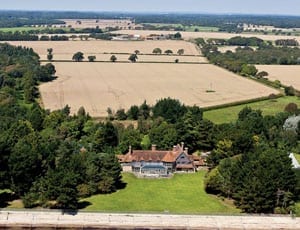
The House on the Shore on Thorns Beach at Beaulieu in Hampshire is a home that wouldn’t look out of place in the Hamptons or Rhode Island. Dramatically situated next to the Solent waters to the north of the Isle of Wight, this suitably named building wouldn’t have been out of place in the 1980s BBC series Howards’ Way. It could. Indeed, have been an ideal home for Gerald and Polly Urquhart. (more…)
Matthew Steeples explores the story of an empty Kensington mansion
A multi-million pound 8-bedroomed house in Kensington isn’t anything unusual. In fact, rather, they’re ten a penny. In this, one of the wealthiest boroughs in the land, large, expensive homes are just the norm.
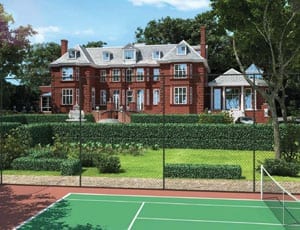
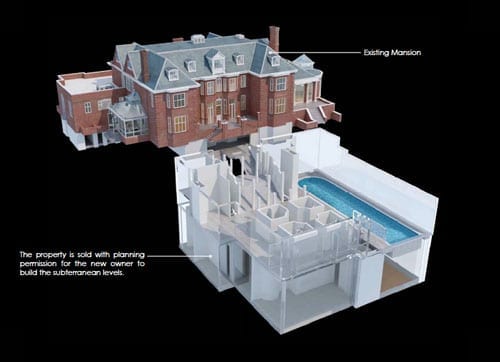
An image of the existing exterior of No. 1 Campden Hill, London, W8 7ADA rendered image of how the exterior of the renovated property might lookThe plans show a vast subterranean development that will vastly increase the size of No. 1 Campden Hill
No. 1 Campden Hill, which is being marketed for an undisclosed eight-figure sum, is in a quite different league. Here is a detached Edwardian house in an acre of grounds just to the north of Kensington High Street. It’s an unrenovated property but it attracted much press attention in October 2011 because it was place on the market in October 2011 at a price of £75,000,000. Yes, you heard it right: £75 million for a fixer-upper. Last week, Radio 4 made a hell of a fuss about a derelict semi-detached house in Newcastle selling for just £14,000 so this truly must be something special.
Architect Edward P. Warren (1856 – 1937), far right, in the offices of Bodley & Garner, 14 South Square, Gray’s Inn, London
The architect of the house Edward Prioleau Warren (1856 – 1937), a Bristol born architect and archaeologist, was best known for “Oxford colleges and minor country houses” but also designed the War Cemetery at Basra. He was a friend and adviser to the American novelist Henry James and in addition to building No. 1 Campden Hill in 1915, he also designed a house at 5 Palace Green in 1906 and another, Estcort House in Kensington Palace Gardens, in 1904. Warren’s guiding style is described as having been to recreate an “understated revival of English late 17th century” architecture and at No. 1 Campden Hill he created just that.
Colonel Edmond Grove-Hills (1864 – 1922), born Edmond Hills, and his wife, Juliet Spencer-Bell, were the architect’s clients. A plaque on the building bares their names and the following dedication:
This House I built for Me & Mine
May it be of Peace A Shrine
And no Enmity or Sin
Ever find its way therein
AD 1915
Sadly for the Grove-Hills, the following year, their son, Second Lieutenant Charles Herbert-Hills (1895 – 1916) was killed on the Somme aged just 21. His father, meanwhile, was awarded a CBE in 1918 after having served as the Assistant Chief Engineer of Eastern Command during the war.
Aside from his military exploits, Edmond Grove-Hills is best known for his role as president of the Royal Astronomical Society. He took part in observations of eclipse of the sun in Japan in 1896, India in 1898 and Russia in 1914 and contributed papers analysing both this and the causes of the irregular movements of the earth’s axis of rotation.
In 1951, No. 1 Campden Hill was purchased by the government of Uruguay and it became the residence of their ambassador to the United Kingdom. For the next fifty years the building was barely altered but when the lease from the Phillimore Kensington Estate came to an end, there were legal problems as the 1951 transfer had never been stamped. Of this, Sharon Mulroney of Forsters, the legal representatives of Phillimore, commented:
“It is highly unusual to be faced with complications of this kind when dealing with a registered London title, but this made the transaction all the more fascinating. Even the decision to allow ambassadorial staff to return to the property for security purposes after completion was fraught with potential problems about security of tenure, employment and tax.”
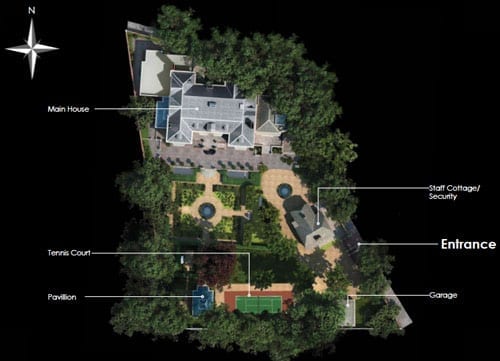
The proposed site plan shows the addition of a garden pavilion, staff/security cottage and a tennis court
Eventually, without issue, the Phillimore Estate sold on the house in 2001 for a price of approximately £17,000,000. In the years since, the property was effectively mothballed as all the purchasers have done is to have obtained planning permission to redevelop the building into a mammoth mansion of epic proportions.
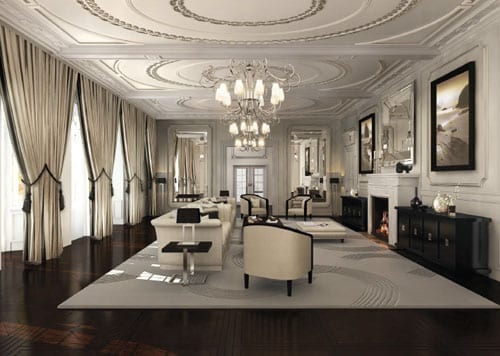
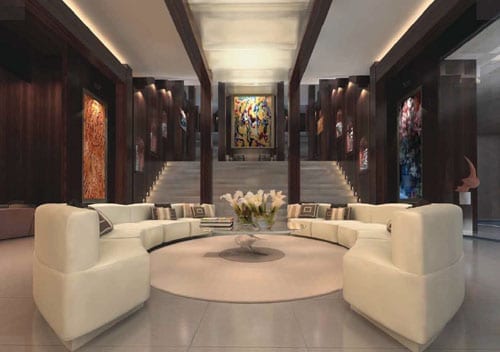
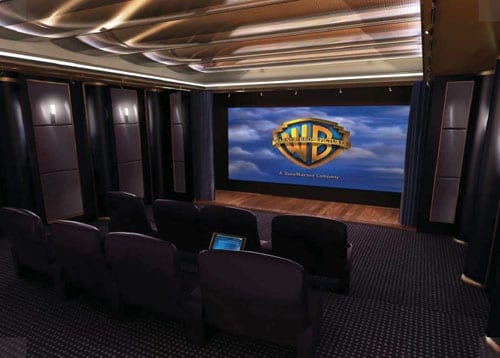
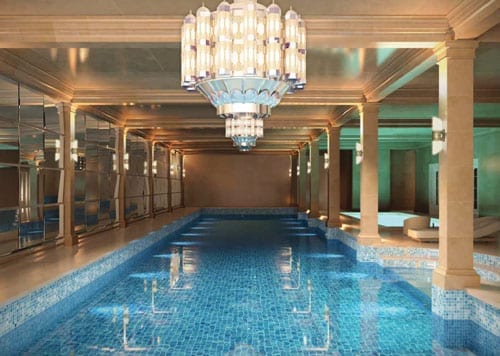
A computer rendered image of how the drawing room might lookThe “leisure area” is reminiscent of the entrance to The Mandarin Oriental Hyde Park HotelThe private home cinema would be the envy of any movie buffThe swimming poolThe wine cellar is rather like a contemporary take on Berry Bros. & Rudd’s flagship store in St. James’s StreetAnd to complete it all… The plans include your own version of Boujis in the basement
The approved plans show designs for something quite remarkable. Warren’s “understated” residence will be replaced with 8 vast bedroom suites, grand entertaining spaces, a lift and even bedrooms for 5 staff. In addition to a full-scale renovation of the original freehold house, there is scope to provide a total of 30,000 square feet of accommodation by adding a huge subterranean complex that will include a 25-metre swimming pool, court, squash court, gym, sauna, steam room, function room, entertainment room, home cinema, wine tasting room and even a nightclub to rival any of Kensington’s trendiest haunts.
On that basis alone, No. 1 Campden Hill is surely the ideal residence for Prince Harry: “Who needs Boujis?” we hear him cry.
No. 1 Campden Hill, London, W8 7AD is for sale through Knight Frank. For more details contact Roddy Craggs on +44 (0) 20 7938 4311 or go to:http://search.knightfrank.com/ken100161to download a brochure.
I first visited 32a Ovington Square in September 2009. At the time, this “hidden house” was the home of Lord Carrington and it had just come on the market at a price, if I recall correctly, of circa £3,000,000.
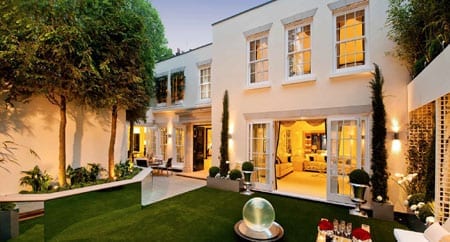
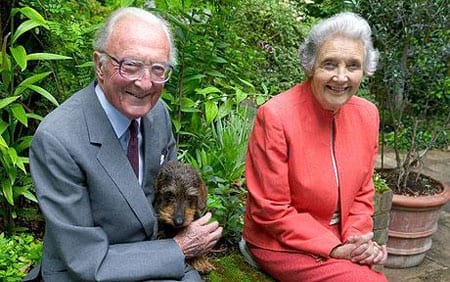
The newly redeveloped Carrington House, 32a Ovington Square, London, SW3 1LRThe Rt. Hon. The Lord Carrington KG, GCMG, CH, MC, PC, DL (born 6th June 1919) with his wife Lady Carrington (1920 – 2009) and their dog Edward
A friend was looking for somewhere to buy in London and I’d somehow come across the aforementioned property in a magazine. A detached house in Knightsbridge at this price seemed like a bargain and as he was keen to take a look and I lived round the corner, we arranged to see it together.
During this period, I had unfortunately made the mistake of making the acquaintance of a former ambassador’s wife who thought herself rather grand. Said woman somehow found out about my friend going to what Americans might term an “open house” at 32a Ovington Square and somehow muscled in. This individual happened to be selling her own home nearby and I reckon she, like my friend, thought she’d be onto a bargain. She’d previously unsuccessfully tried to persuade my friend to buy her individually styled, Ralph Lauren wallpapered home but as it actually rattled every time an underground train went underneath and as it was far from a bargain, he’d sensibly declined.
We arrived at the 2,240 square foot 32a Ovington Square to be told by a rather unhelpful estate agent that we’d have to just wander round by ourselves and that there was no brochure or floor plan. As a merry throng trailed through the house, Lord Carrington stood in the garden looking bemused and his secretary fussed around him. The pair plainly weren’t comfortable with all the interlopers and all in all, who could blame them.
The ex-ambassador’s wife, whose carelessness Rupert Everett most amusingly made reference to in his recent memoirs, spent the entire visit whingeing about the house being dark and stinking of damp. I had to agree with her as the neighbouring buildings towered over it and there was mould on the walls. My friend simply said: “It needs a fortune spending on it.” We left and later I heard that it sold for well above the asking price. The wife of the ex-ambassador thankfully departed from our lives soon after.
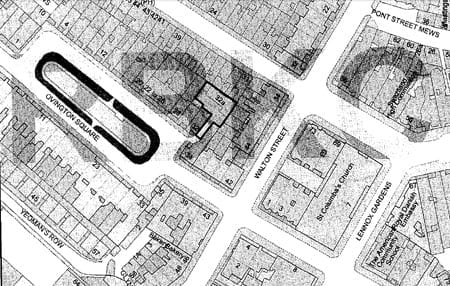
A site plan shows how hidden away 32a Ovington Square truly is – ideal for a government minister or indeed a wayward celebrity
About a year and a half later, I saw 32a Ovington Square for sale with planning permission to construct a far larger residence with a basement and sub-basement pool complex. The price was in the order of £14,000,000. I thought that somewhat ludicrous but now that the very same property is on the market at a price of £23,00,000, it seems that the world has just gone mad.
The brochure for the new residence, which has been renamed, Carrington House, reveals a three-storey low-built freehold building with 5,300 square foot of accommodation. Though 32a Ovington Square has been more than doubled in size by a developer named London City Developments, the sub-basement leisure complex has not been constructed. Could this have been because of planning problems or simply because such construction wasn’t deemed to add value?
In August 2002, Lord Carrington, whom The Mirror described as being “doddery” in a Scurra diary piece, was said to have objected to a bar named Townhouse behind his former home being given a 1am licence. That bar has since closed but as seven of the residents of Ovington Square and Beauchamp Place also took a dislike to the prospect of subterranean developments at his former home, only proposals for a single basement level were included in the January 2010 plans submitted by a Mr & Mrs R. Garner.
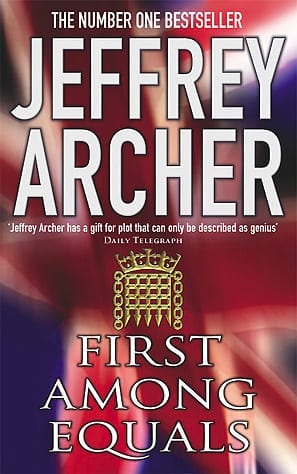
Jeffrey Archer’s 1984 novel “First Among Equals” (published in the UK by Hodder & Stoughton, ISBN: 0-340-35266-3)
Aside from controversy with residents and planning officials, this “heavily overlooked,” “dark” house gets a brief credit in Jeffrey Archer’s 1984 novel, First Among Equals:
“Charles would not have normally accepted the invitation. Lately he found cocktail parties to consist of nothing but silly little bits of food, never being able to get the right drink and rarely enjoying the trivial conversation. But when he glanced on his mantelpiece and saw an ‘At Home’ from Lady Carrington he felt it might be an amusing break from the routine he had fallen into since Fiona left. He was keen to discover more about the rumoured squabbles in Cabinet over expenditure cuts. He checked his tie in the mirror, removed an umbrella from the hat stand and left Eaton Square for Ovington Square… He arrived at Lord Carrington’s front door a little after six forty-five. A maid answered his knock, and he walked straight through to a drawing room that could have held fifty guests and very nearly did. He even managed to be served with the right blend of whiskey before joining his colleagues from both the Upper and Lower Houses.”
Turning to the real Lord Carrington, here is a man who has led a remarkable life. He served as Foreign Secretary in Margaret Thatcher’s cabinet between 1979 and 1982 and as Secretary General of NATO from 1984 to 1988. The last surviving member of the Cabinets of both Harold Macmillan and Sir Alec Douglas-Home was British High Commissioner in Australia between 1956 and 1959 and also chaired the 1979 Lancaster House conference that brought Zimbabwe’s revolutionary war to an end. In 1991, Carrington presided over diplomatic talks in the former Yugoslavia and commented:
“When I first talked to Presidents Milošević and Tudjman, it was quite clear that both of them had a solution which was mutually satisfactory – which was that they were going to carve up Bosnia between them.”
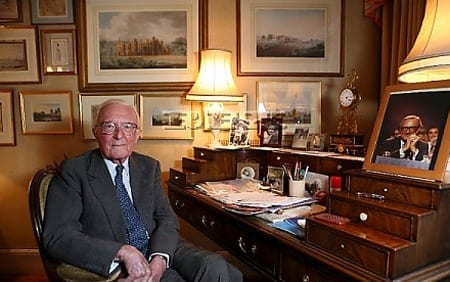
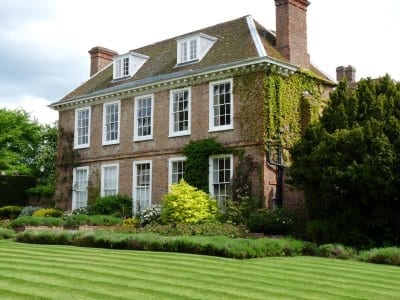
Lord Carrington at his desk in 32a Ovington Square, KnightsbridgeThe Manor House, Bledlow, Buckinghamshire, HP27 9PB is the country home of Lord Carrington
Milošević was found dead in his cell in 2006 but it is quite possible that Lord Carrington’s name will be mentioned in the trial of Goran Hadzic at the International Criminal Tribunal for the Former Yugoslavia that has just commenced at The Hague. It is amazing to think that matters involving this 93-year old politician are still current but Carrington’s stamina is shown in his roles as the longest serving member of the House of Lords and the second longest serving member of the Privy Council after HRH The Duke of Edinburgh.
Aside from politics, there is much on the internet, a considerable amount of it written by wildcards and fantasists whose number includes David Icke, about Carrington’s involvement with Henry Kissinger, the Illuminati, the Bilderberg Group and the Committee of 300. The consensus of these conspiracy theorists generally borders on the ludicrous, but it is without doubt that Lord Carrington had and continues to have influence in many high places. He was chairman of Christie’s International PLC from 1988 to 1993 and has held directorships on the boards of companies that have included Barclays Banks PLC, Hambros PLC, Cadbury Schweppes PLC, Amalgamated Metal Corporation PLC, British Metal Corpoation PLC, Rio Tinto PLC, Kissinger Associates Inc. and Hollinger Inc.
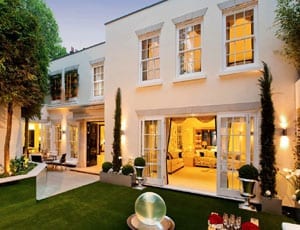
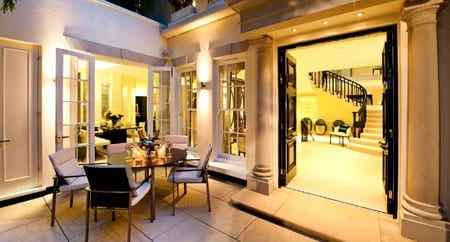
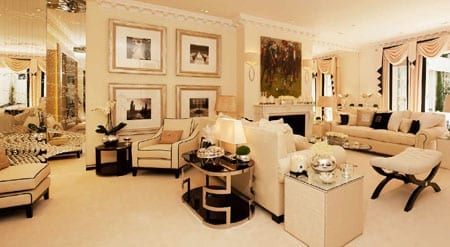
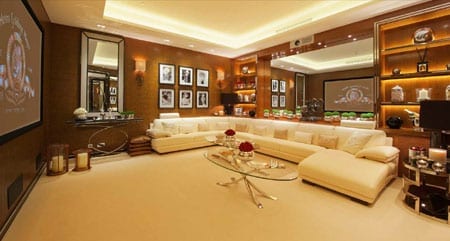
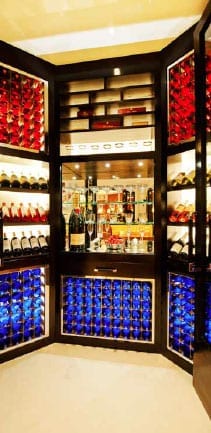
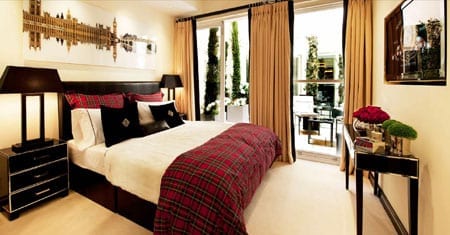
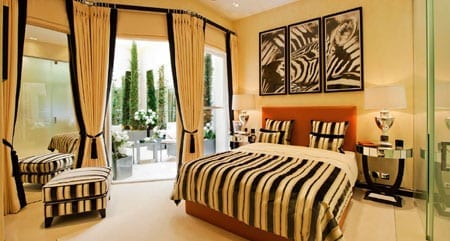
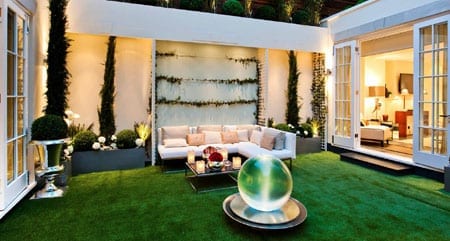
The main entrance to Carrington HouseThe main reception room of the house is decorated in a contemporary style and a far cry from the traditional decoration favoured by Lord and Lady CarringtonAn essential feature in any house priced over £10 million is a media roomCarrington House now boasts a bar that any dignitary would envyThe newly added basement level features an entertaining hall, dining room, bar, gym, media room and two bedroom suitesThe staircase is now lit by a glazed cupolaThe master bedroomThe master bathroomAnother bedroom, located at basement level, is decorated with a Scottish theme and has access to a shared courtyardThe other suite that shares the courtyard is decorated with an “Out of Africa” theme complete with an image of a zebra and matching linen and upholsteryWould the purchaser of a £23,000,000 home truly want an AstroTurf lawn?
Following on from this rather over the top redevelopment, a new chapter has certainly begun at 32a Ovington Square. Whether it is bought by a popstar or a Russian oligarch, they’ll definitely not be anywhere nearly as equal to Lord Carrington in terms of their league of influence.
Carrington House, 32a Ovington Square, London, SW3 1LR is for sale through Knight Frank. For further information contact Nick Vestey on +44 (0) 20 7591 8600. Full details of the house can be viewed at:http://search.knightfrank.com/sla100211